
The verdict
A struggling compact suv, strong on reliability and held back by performance.
The 2019 Envision is a quiet, soft-riding compact crossover that has aged into one of the better-kept used-car secrets — Consumer Reports rated it 5/5 for reliability, RepairPal puts annual repair and maintenance at $318 against a $494 group average, and there is not a single NHTSA safety recall against the model year. The catch is what you give up: the 197-hp 2.5-liter in the volume trims needs 8.3 seconds to reach 60 mph, cargo space is a cramped 26.9 cubic feet behind the second row, and automatic emergency braking and adaptive cruise were locked inside a package on the $44,595 Premium II, so four of five trims cannot have them at any price. Buy one used and the steep depreciation — about 47% of the original $36,795 Essence retained after five years, roughly $12,600 today — turns the original weakness into the argument for it. Buy it for the hushed cabin, the cheap upkeep and the sliding rear seat, not for driving pleasure or safety tech.
Jump to scoresStrengths
- Reliability that beats its own badge
- A genuinely hushed, comfortable cabin
- Cheap to keep on the road
What holds it back
- Driver-assistance tech barely exists on the trims people bought
- The engine most buyers get is slow and coarse
- Cargo space near the bottom of the class
Top alternatives
Cars shoppers cross-shop with the Buick Envision 2.63C+
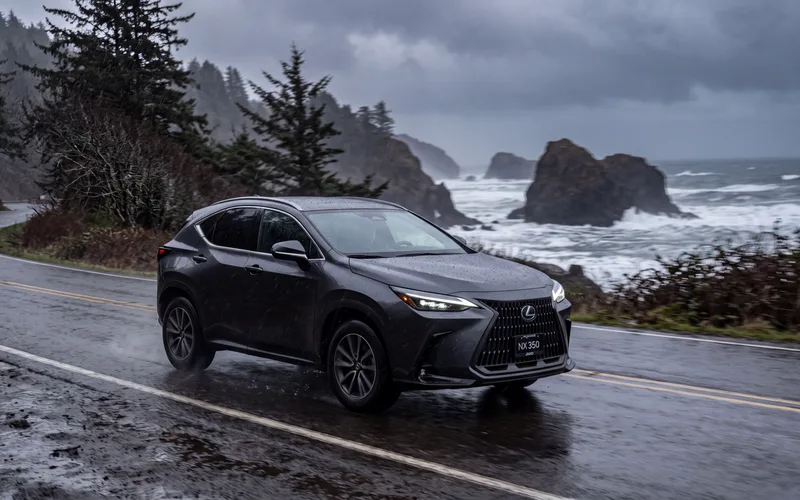 Lexus NXCompact Luxury SUVBetter at: Resale value
Hybrid and plug-in options that roughly halve your fuel bill, plus resale value that holds where Buick's does not.
Compare 2.46C+
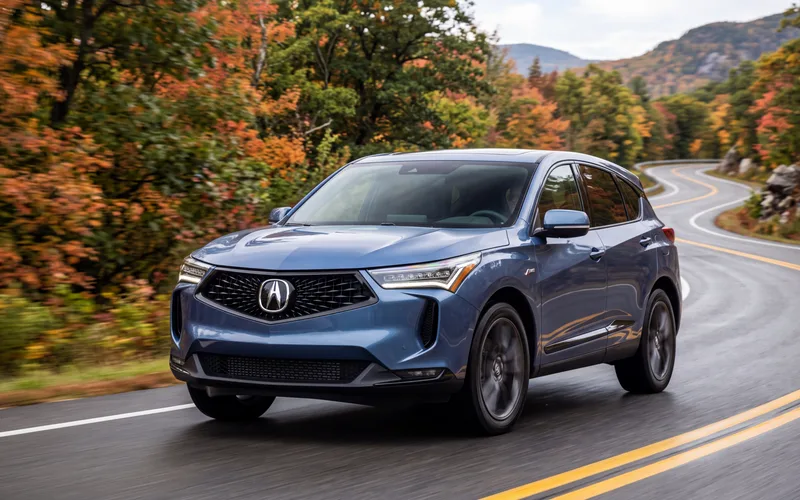 Acura RDXCompact Luxury SUVBetter at: Cargo and performance
Real power, sharper handling and substantially more cargo room for shoppers who found the Envision too soft and too small.
Compare 2.40C+
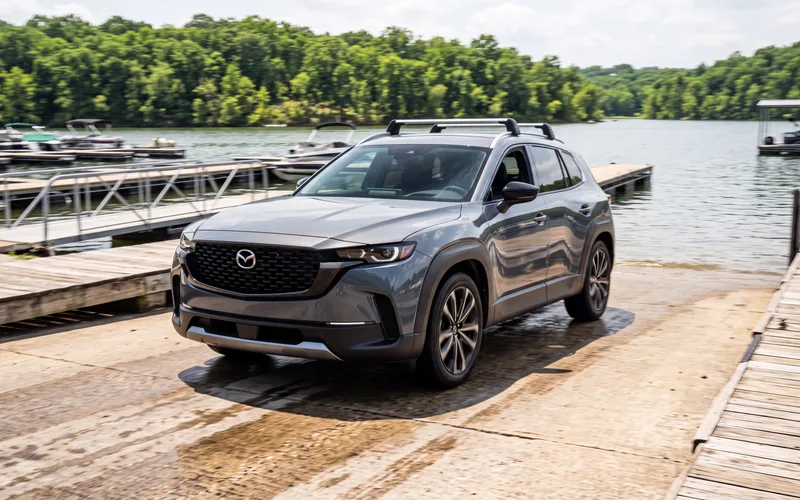 Mazda CX-50Compact SUVBetter at: Driving feel
Similar premium-feeling cabin and standard AWD for less money, with better steering and usable ground clearance for gravel roads.
CompareHow it's evolved
10 scored model years · 2017–2026
Subject scores by year
Hover or tap a score to see what moved it versus the year before. A corner mark flags a big swing.
| Year | Performance | Efficiency | Safety | Space | Cost | Reliability | Tech | Use-case | Driving | Value |
|---|---|---|---|---|---|---|---|---|---|---|
| 2026 | 32 | 50 | 73 | 47 | 50 | 69 | 82 | 55 | 63 | 69 |
| 2025 | 36 | 47 | 69 | 47 | 48 | 73 | 77 | 54 | 63 | 70 |
| 2024 | 33 | 47 | 69 | 47 | 49 | 70 | 76 | 54 | 63 | 72 |
| 2023 | 31 | 51 | 57 | 47 | 49 | 71 | 66 | 52 | 60 | 68 |
| 2022 | 31 | 51 | 64 | 47 | 51 | 68 | 65 | 53 | 60 | 65 |
| 2021 | 31 | 51 | 62 | 46 | 50 | 67 | 65 | 53 | 60 | 67 |
| 2020 | 25 | 52 | 48 | 47 | 51 | 76 | 48 | 50 | 52 | 54 |
| 2019 | 26 | 52 | 48 | 49 | 60 | 74 | 53 | 56 | 60 | 59 |
| 2018 | 26 | 52 | 48 | 47 | 61 | 77 | 52 | 54 | 56 | 54 |
| 2017 | 25 | 52 | 49 | 46 | 63 | 71 | 53 | 54 | 57 | 59 |
Compare two years
Best fit & conditions
Higher scores mean a better fit for that use case. Learn more about use-case fit →
Subject profile
Academic Probation · NHTSA safety recalls
No NHTSA safety recall is on record for the 2019 Buick Envision. Other model years of the Envision have 8 — listed below.
8 recalls on other model years of the Envision (2017, 2021–2024, 2026)
Feb 26, 2026Equipment: other: owners/service/other manualGeneral Motors has decided that certain 2027 Chevrolet Bolt EV, 2025-2026 Cadillac OPTIQ, Chevrolet Colorado, Equinox EV, GMC Canyon, 2026 Buick Enclave, Envision, Cadillac CT5, Escalade, Escalade ESV, Escalade IQ, Escalade IQL, LYRIQ, VISTIQ, Chevrolet Blazer EV, Corvette Convertible, Corvette Coupe, Corvette Convertible E-Ray, Equinox, Silverado 1500, 2500, 3500, Silverado EV, Suburban 1500, Tahoe, Traverse, GMC Acadia, Hummer EV Pickup, Hummer EV SUV, Sierra 1500, 2500, 3500, Sierra EV, Terrain, Yukon, and Yukon XL vehicles. The radio may not have been set to the correct status to download the electronic owner's manual during production. As such, these vehicles fail to comply with the requirements of Federal Motor Vehicle Safety Standard number 208, âOccupant Protection.â
Defect
General Motors has decided that certain 2027 Chevrolet Bolt EV, 2025-2026 Cadillac OPTIQ, Chevrolet Colorado, Equinox EV, GMC Canyon, 2026 Buick Enclave, Envision, Cadillac CT5, Escalade, Escalade ESV, Escalade IQ, Escalade IQL, LYRIQ, VISTIQ, Chevrolet Blazer EV, Corvette Convertible, Corvette Coupe, Corvette Convertible E-Ray, Equinox, Silverado 1500, 2500, 3500, Silverado EV, Suburban 1500, Tahoe, Traverse, GMC Acadia, Hummer EV Pickup, Hummer EV SUV, Sierra 1500, 2500, 3500, Sierra EV, Terrain, Yukon, and Yukon XL vehicles. The radio may not have been set to the correct status to download the electronic owner's manual during production. As such, these vehicles fail to comply with the requirements of Federal Motor Vehicle Safety Standard number 208, âOccupant Protection.â
Risk
Without an owner's manual to consult, owners may not know how to safely use and operate the vehicle, increasing the risk of injury in a crash.
Remedy
Dealers will reset the vehicle radio, which will facilitate automatic download of the electronic ownerâs manual, free of charge. Owner notification letters were mailed April 16, 2026. Owners may contact GM customer service at 1-866-467-9700, Chevrolet customer service at 1-800-222-1020 or Cadillac customer service at 1-800-333-4223. The manufacturer's number for this recall is N252540430. Vehicle Identification Numbers (VINs) involved in this recall became searchable on NHTSA.gov on February 26, 2026.
NHTSA campaign 26V114000 ↗Manufacturer no. N2525404305,861 vehicles potentially affected (all models in the campaign)Owners notified Apr 16, 2026Filed by General Motors, LLCFiled as ENVISIONSep 25, 2024Equipment: other: labelsThe vehicles are missing the label that states the tire size, pressure, and the loading information. As such, these vehicles fail to comply with the requirements of Federal Motor Vehicle Safety Standard number 110, "Tire Selection and Rims."
Defect
General Motors, LLC (GM) is recalling certain 2024 Buick Envision vehicles. The vehicles are missing the label that states the tire size, pressure, and the loading information. As such, these vehicles fail to comply with the requirements of Federal Motor Vehicle Safety Standard number 110, "Tire Selection and Rims."
Risk
Missing tire and load rating information may result in driving with improperly inflated tires or an overloaded vehicle, increasing the risk of a crash.
Remedy
Dealers will install the label, free of charge. Owner notification letters were mailed November 1, 2024. Owners may contact Buick Customer Service at 800-521-7300.
NHTSA campaign 24V710000 ↗Manufacturer no. N242474600527 vehicles potentially affected (all models in the campaign)Owners notified Nov 1, 2024Filed by General Motors, LLCFiled as ENVISIONDec 8, 2022Exterior lighting: lighting control module: softwareThe daytime running lights (DRLs) may not deactivate when the headlights are on. As such, these vehicles fail to comply with the requirements of Federal Motor Vehicle Safety Standard number 108, "Lamps, Reflective Devices, and Associated Equipment."
Defect
General Motors, LLC (GM) is recalling certain 2020-2023 Cadillac CT4 and CT5; 2021-2023 Buick Envision; and 2022-2023 Cadillac Escalade and Escalade ESV, Chevrolet Silverado 1500, Suburban, Tahoe, GMC Sierra 1500, Yukon, and Yukon XL vehicles. The daytime running lights (DRLs) may not deactivate when the headlights are on. As such, these vehicles fail to comply with the requirements of Federal Motor Vehicle Safety Standard number 108, "Lamps, Reflective Devices, and Associated Equipment."
Risk
DRLs that do not deactivate as intended may result in a glare, reducing visibility, and increasing the risk of a crash.
Remedy
The body control module software will be updated by a dealer, or through an over-the-air (OTA) update, free of charge. Owner notification letters were mailed January 23, 2023. Owners may contact GMC customer service at 1-888-988-7267, Chevrolet customer service at 1-800-222-1020, or Cadillac customer service at 1-800-458-8006. GM's number for this recall is N222386380. This recall expands previous recall number 22V-827.
NHTSA campaign 22V903000 ↗Manufacturer no. N222386380740,108 vehicles potentially affected (all models in the campaign)Owners notified Jan 23, 2023Filed by General Motors, LLCFiled as ENVISIONJun 10, 2021Air bags: srs malfunction warning lamp/light · Electrical system: softwareThe communications gateway module incorrectly processes a loss of communication with the sensing diagnostic module (SDM), causing the air bag malfunction indicator light to inconsistently illuminate.
Defect
General Motors, LLC (GM) is recalling certain 2021 Buick Envision, Cadillac CT4, CT5, Escalade, Escalade ESV, Chevrolet Tahoe, Corvette, Suburban, GMC Yukon, Yukon XL vehicles. The communications gateway module incorrectly processes a loss of communication with the sensing diagnostic module (SDM), causing the air bag malfunction indicator light to inconsistently illuminate.
Risk
The air bag malfunction indicator light may fail to warn the driver of a problem with the air bag, increasing the risk of injury.
Remedy
The communications gateway module software will be updated by a dealer, or through an over-the-air (OTA) update, free of charge. Owner notification letters were mailed on July 1, 2021. Owners may contact Buick customer service at 1-800-521-7300, Cadillac customer service at 1-800-458-8006, Chevrolet customer service at 1-800-222-1020, or GMC customer service at 1-800-462-8782. GM's number for this recall is N212338110.
NHTSA campaign 21V421000 ↗Manufacturer no. N212338110285,622 vehicles potentially affected (all models in the campaign)Owners notified Jul 1, 2021Filed by General Motors, LLCFiled as ENVISIONMay 31, 2018Fuel system, gasoline: delivery: fuel pumpThe high pressure fuel pump may detach from its mounting flange, possibly resulting in the pump damaging the high pressure fuel line.
Defect
General Motors LLC (GM) is recalling certain 2015-2018 GMC Canyon, 2016-2017 Buick Envision, 2016-2018 Chevrolet Colorado and Malibu, 2017-2018 GMC Acadia, 2018 Buick LaCrosse, Cadillac ATS, Chevrolet Equinox, and GMC Terrain vehicles. The high pressure fuel pump may detach from its mounting flange, possibly resulting in the pump damaging the high pressure fuel line.
Risk
A damaged fuel line can create a fuel leak, increasing the risk of a fire.
Remedy
GM will notify owners, and dealers will replace the high pressure fuel pump, and high pressure fuel pipe, free of charge. The recall began July 2, 2018. Owners may contact Buick customer service at 1-800-521-7300, Cadillac customer service at 1-800-458-8006, Chevrolet customer service at 1-800-222-1020, or GMC customer service at 1-800-462-8782. GM's number for this recall is 18188.
NHTSA campaign 18V358000 ↗Manufacturer no. 18188 18268895 vehicles potentially affected (all models in the campaign)Owners notified Jul 2, 2018Filed by General Motors LLCFiled as ENVISIONJun 29, 2017StructureThe affected vehicles received a replacement headliner as part of a repair. These service parts might not have had impact energy-absorbing foam blocks attached. As such, these vehicles fail to comply with the requirements of Federal Motor Safety Standard (FMVSS) number 201, "Occupant protection in interior impact."
Defect
General Motors LLC (GM) is recalling certain 2016-2017 Buick Envision vehicles. The affected vehicles received a replacement headliner as part of a repair. These service parts might not have had impact energy-absorbing foam blocks attached. As such, these vehicles fail to comply with the requirements of Federal Motor Safety Standard (FMVSS) number 201, "Occupant protection in interior impact."
Risk
If the service parts do not have energy-absorbing foam blocks, there may be an increased risk of occupant injury in the event of a crash.
Remedy
GM will notify owners, and dealers will replace the headliner assembly, free of charge. The recall began on July 28, 2017. Owners may contact Buick customer service at 1-800-521-7300. GM's number for this recall is 17275.
NHTSA campaign 17V412000 ↗Manufacturer no. 1727510 vehicles potentially affected (all models in the campaign)Owners notified Jul 28, 2017Filed by General Motors LLCFiled as ENVISIONJun 27, 2017Equipment · Seats: front assembly: head restraintAn accessory NSV Universal Tablet Holder may have been installed incorrectly onto the front seat head restraints, preventing the head restraint posts from fully engaging in the seat back. If so, the head restraints would fail to comply with the requirements of Federal Motor Vehicle Safety Standard (FMVSS) number 202a, "Head Restraints."
Defect
General Motors LLC (GM) is recalling certain 2016-2017 Buick Envision vehicles. An accessory NSV Universal Tablet Holder may have been installed incorrectly onto the front seat head restraints, preventing the head restraint posts from fully engaging in the seat back. If so, the head restraints would fail to comply with the requirements of Federal Motor Vehicle Safety Standard (FMVSS) number 202a, "Head Restraints."
Risk
If the head restraint posts are not fully engaging in the seat back, the head restraint may loosen or dislodge, increasing the risk of injury in a crash.
Remedy
GM will notify owners, and dealers will inspect the head restraints and tablet holders for the correct installation, reinstalling them as necessary, free of charge. The recall began July 27, 2017. Owners may contact Buick customer service at 1-800-521-7300. GM's number for this recall is 17239/17258.
NHTSA campaign 17V404000 ↗Manufacturer no. 17239/17258768 vehicles potentially affected (all models in the campaign)Owners notified Jul 27, 2017Filed by General Motors LLCFiled as ENVISIONJul 7, 2016Equipment: other: labelsThe Tire and Loading Information label may display the incorrect maximum weight information. As such, these vehicles fail to comply with the requirements of Federal Motor Vehicle Safety Standard (FMVSS) number 110, "Tire Selection and Rims."
Defect
General Motors LLC (GM) is recalling certain 2016-2017 Buick Envision vehicles manufactured February 4, 2016, to April 25, 2016. The Tire and Loading Information label may display the incorrect maximum weight information. As such, these vehicles fail to comply with the requirements of Federal Motor Vehicle Safety Standard (FMVSS) number 110, "Tire Selection and Rims."
Risk
Incorrect weight information may cause an owner to overload the vehicle. Overloading may reduce vehicle control, increasing the risk of a crash.
Remedy
GM will notify owners, and dealers will install a corrected label as necessary, free of charge. The began on August 22, 2016. Owners may contact Buick customer service at 1-800-521-7300. GM's number for this recall is 56340.
NHTSA campaign 16V516000 ↗Manufacturer no. 563404,558 vehicles potentially affected (all models in the campaign)Owners notified Aug 22, 2016Filed by General Motors LLCFiled as ENVISION
Source: NHTSA Office of Defects Investigation recall database, model years 2017–2026. Recalls are listed by model year as the manufacturer filed them; whether a specific car is affected depends on its VIN — check a VIN at nhtsa.gov ↗. NHTSA model names matched to this page: ENVISION.
Detailed scoring by subject
1Performance & PowertrainThe Envision's lowest-graded category.0.00F
2019 is the North American facelift year of the first-generation Envision, and the volume trims (1SV, Preferred, Essence) carry the naturally aspirated 2.5L four at an unchanged 197 hp. That sits near the floor of the SUV horsepower band; the 252-hp 2.0L turbo is a Premium-and-up engine rather than the representative configuration.
The volume 2.5L makes its 192 lb-ft peak high at 4,400 rpm, so a ~3,929 lb crossover has to be revved to reach it. The 2019 change lands entirely on the other engine: the new nine-speed let Buick retune the 2.0L turbo from 260 to 295 lb-ft, which does nothing for the trims most buyers take.
An instrumented 2019 Envision Essence AWD with the 2.5L ran 8.29 sec to 60 mph, and published figures for the engine cluster in the low-to-mid eights — slow for a compact SUV and consistent with reviewers finding it short of thrust for merging and grades. The 2.0T is nearly two seconds quicker but is not the volume configuration.
The volume 2.5L is the weakest part of the car by reviewer consensus: coarse and loud under throttle, unrefined off it, with idle vibration reaching the seat, and short of thrust for highway work. That is a poor showing in a premium-positioned Buick whose whole pitch is QuietTuning refinement. The 2019 facelift recalibrated stop/start — praised as among the smoothest in the segment — which is the one refinement gain, but it does not offset the engine itself.
The nine-speed automatic new for 2019 goes only to the 2.0L turbo; the volume 2.5L trims keep GM's older six-speed, which shifts smoothly in relaxed driving but leans on downshifts to reach the engine's high torque peak and is dated against the eight- and nine-speeds rivals were fielding. Competent and unobtrusive rather than good — squarely mid-band.
Buick rates the 2019 Envision at 1,500 lbs with an approved hitch regardless of engine or drivetrain — a small utility trailer and nothing more. That sits close to the floor of the SUV towing band.
All-wheel drive is offered right across the 2019 range — optional on the 2.5L trims and standard on the 2.0T Premium models — so it is widely available rather than restricted to the top of the lineup. But it is a basic on-demand system with no low range, no locking front/center differentials and no terrain-mode suite; the twin-clutch rear unit is tied to the expensive turbo engine.
A wholly pavement-oriented crossover: roughly 6.7–6.9 inches of ground clearance, no skid plates, no terrain modes, no low range, no off-road trim at any point in the 2019 lineup, and road-biased all-season tires. Snow-covered pavement and a gravel driveway are the limit of its remit.
Two genuinely distinct gas powertrains — the 197-hp 2.5L with a six-speed and, for 2019, a 252-hp/295-lb-ft 2.0L turbo behind a new nine-speed — plus a FWD/AWD choice on the base engine. That covers mainstream needs and is broader than the single-engine second generation that replaced it, but there is no hybrid, plug-in or EV anywhere in the range.
2Efficiency & RangeGrades below the middle of the scale.1.51D
EPA rates the volume 2.5L front-drive 2019 Envision at 25 MPG combined. Middling for a compact SUV — the naturally aspirated four and its six-speed give up ground to rivals already fielding CVTs and hybrids, and stepping up to the 2.0L turbo costs three more MPG.
22 MPG in town for the volume front-drive 2.5L. The recalibrated stop/start system introduced with the 2019 facelift helps, but with no electric assist and only six ratios to work with, a ~3,929 lb crossover lands right at the segment midpoint.
The Envision's best EPA showing is 29 MPG on the highway in 2.5L front-drive form — modestly above the compact-SUV midpoint, and the one place the low-output naturally aspirated engine works with rather than against the car.
EPA publishes a 432-mile total range for the volume front-drive 2.5L — a 17.3-gallon tank at its 25 MPG combined rating. Comfortably above the SUV band floor but nothing special, and the thirstier turbo cuts it to under 400 miles.
EPA's standard-assumption annual cost is $2,450 for the volume 2.5L front-driver, held down by its certification on regular unleaded. The roughly $1,000/yr penalty for the 2.0L turbo is the sharpest number in this category — it comes from the premium-fuel requirement as much as from the three-MPG deficit.
Mixed across the range, which is exactly the mid-band case: the volume 2.5L is certified on regular 87-octane, but the 2.0L turbo standard on Premium and Premium II is EPA-rated on premium — roughly a $1,000/yr swing. A buyer who stays on the base engine pays nothing extra; one who steps up to the turbo is committed to the expensive pump for the life of the car.
3SafetyOne of the Envision's weakest categories.1.22D
NHTSA crash-tested the 2019 Envision directly and gave the AWD car 5 stars overall, carried by a clean sweep of 5-star side results — side barrier driver and passenger, front and rear seating positions, and the side pole test all rate 5. Frontal is the weak spot at 4 stars for both driver and passenger, and rollover is 4 stars with No Tip, the ordinary outcome for a raised crossover. The FWD car posts identical frontal, side barrier and side pole scores but carries no overall rating at all, because NHTSA never ran its rollover measurement — so the 5-star headline strictly describes the AWD configuration.
Every IIHS crashworthiness test this car has ever been given, it passed with the top grade: driver-side small overlap front, moderate overlap front, side, roof strength and head restraints & seats are all Good, on a structure the Institute says is unchanged across 2016–20. That is genuinely strong and it is the best part of the 2019 Envision's safety case. Two things keep it out of the top band. One test was never run — the passenger-side small overlap front, which the IIHS added to its award criteria for 2019 and never performed on this generation — so a buyer has excellent evidence about five crash modes and none at all about a sixth. And the award has lapsed: the Envision was a Top Safety Pick+ for 2016 and 2017 and a Top Safety Pick for 2018, but no Buick appears anywhere on the IIHS 2019 Top Safety Pick list, not even in the make filter. The criteria moved and the car did not.
This is where the 2019 Envision collapses, and Buick's own trim grid states it plainly: of the five features this criterion names — AEB, adaptive cruise, lane keeping, blind-spot monitoring and rear cross-traffic alert — exactly zero are standard on any 2019 trim, and none at all are fitted to the base 1SV or Preferred, which leaves the entry car with a rear camera and rear park assist and nothing else. The ladder is steep and late: Lane Change Alert with Side Blind Zone Alert (and its Rear Cross Traffic Alert partner) first arrive on Essence; Forward Collision Alert, Lane Keep Assist with Lane Departure Warning and the Safety Alert Seat wait until Premium; and automatic braking together with adaptive cruise exist only inside the Driver Confidence Package, which the brochure restricts to Premium II — the top of a five-trim range. NHTSA independently records both forward collision warning and lane departure warning as 'Optional' rather than standard. Model year 2019 sat mid-way through the industry's voluntary commitment to make AEB standard by 2022 and much of the mainstream compact-SUV field had already got there, so a premium-priced crossover that cannot be ordered with autobrake on four of five trims is close to the worst distribution available that year.
Where the Envision has autobrake at all it works acceptably — the IIHS rated the Driver Confidence Package's Forward Automatic Braking 'Advanced', avoiding the target outright in the 12 mph run and cutting impact speed by 9 mph at 25 mph — but that is one grade short of Superior and, far more importantly, almost nobody can get it. The system lives only in a package restricted to the Premium II trim, so base, Preferred, Essence and Premium cars cannot be ordered with automatic braking at any price; the alternative Safety Package II is forward collision alert only, with no autobrake, and the IIHS rated that 'Basic'. Pedestrian capability is not weak, it is absent: the IIHS records pedestrian front crash prevention as 'Not available' on this vehicle, and the brochure's safety page describes Forward Automatic Braking purely as a vehicle-following function, with no pedestrian, bicyclist or intersection coverage anywhere in the range. A rated-Advanced system that four of five trims cannot have, with no pedestrian function at all, belongs in the bottom band.
Lane Change Alert with Side Blind Zone Alert is standard from Essence upward, its Rear Cross Traffic Alert partner comes with it, and rear vision camera plus rear park assist are standard on every trim including the base car — a reasonable floor for parking-speed awareness across three of the four trim groupings. Two things hold it mid-band. The coverage is alert-only in every direction: there is no blind-zone steering intervention and no rear cross-traffic braking anywhere in the 2019 range, so the systems warn and then leave the outcome to the driver, and the Safety Alert Seat that turns those warnings into directional seat-cushion pulses is itself withheld until Premium. And the entry 1SV and Preferred cars cannot be ordered with blind-spot or cross-traffic monitoring at all, which matters more than usual here because those same trims have the thick rear pillars reviewers complain about and no surround-view camera to compensate — Surround Vision is buried in the Premium II-only Driver Confidence Package.
Lane Keep Assist with Lane Departure Warning is a Premium-and-above feature on the 2019 Envision, marked flatly unavailable on the 1SV/Preferred and on the Essence — so the volume 2.5L trims that make up most of the range have no lane assistance of any kind, not even a departure warning, and NHTSA duly records LDW as 'Optional' rather than standard. Where it is fitted it is the ordinary GM nudge, described by Buick itself as 'gentle steering wheel turns' when the car drifts off a painted line and nothing more. There is no lane-centering or lane-following mode at any trim or any price, and nothing above it ever existed for this generation — Super Cruise was never attached to the first-generation Envision, and when GM did announce it for the 2024 refresh five model years later the feature was cancelled before production. Absent on the volume trims and reactive-only where present puts this in the bottom band.
The hardware is the good version — GM's radar-based Adaptive Cruise Control–Advanced, a full-speed-range system that manages the gap down to a stop rather than the older type that cuts out at low speed — but the distribution is close to the worst possible. It is standard on nothing, unavailable on the 1SV, Preferred, Essence and Premium, and reachable only through the Driver Confidence Package on the Premium II, the single most expensive trim in the range. The practical consequence is that the overwhelming majority of 2019 Envisions built have plain fixed-speed cruise control with no upgrade path, and that is what this criterion has to grade. There is also no highway assist to speak of even on a fully-loaded car: with no lane-centering mode anywhere in the 2019 range, the adaptive cruise manages speed and gap while the driver steers throughout, so it is an ACC rather than a combined system.
There is no hands-free highway driving on the 2019 Envision at any trim or any price, and no partial substitute either — the driver-assistance ceiling is an option-package adaptive cruise with no lane centering behind it, so the driver steers at all times even in a fully-optioned Premium II. Super Cruise was never offered on the first-generation Envision; GM first attached it to the nameplate when it revealed the 2024 refresh, five model years later, and then cancelled it before it reached production.
2019 is the year Buick fixed the Envision's worst safety liability, and it is a real year-specific change rather than a carry-over. Through 2018 the IIHS rated this car's headlights in two variants and one of them was Poor: the halogen projectors fitted to the Envision, Preferred, Essence and Premium trims produced excessive glare and inadequate visibility on all four curve tests, with no curve-adaptive function and no high-beam assist — four of five trims, which is to say almost every car sold. For 2019 the halogen units were deleted outright, HID projectors became standard on the base, Preferred and Essence, and Premium and Premium II moved up to Bi-LED. So no 2019 Envision leaves the factory with the Poor-rated hardware. What holds it to the middle band is that the improvement is undocumented: both published IIHS ratings are explicitly annotated 'Applies to 2016-18 models', the 2019 vehicle page carries no headlight row at all, and the Institute never re-tested. The best-evidenced comparable is the outgoing HID variant at Acceptable — good enough to keep it off the floor, not enough to claim the Good-across-the-range the top band asks for. Auto high-beam is also unconfirmed for 2019: the 2016–18 Premium II HID variant was curve-adaptive with high-beam assist, but no IntelliBeam item appears anywhere in the 2019 brochure.
Forward sightlines are decent — a relatively low beltline and upright windshield for a style-led crossover — but reviewers are consistent that the thick roof pillars giving the Envision its sloping profile create blind spots at both ends, with the rearward view the worse of the two. Camera compensation is only partial and badly distributed. A rear vision camera and rear park assist are standard on every trim, which covers straight-back manoeuvres properly, but the Surround Vision bird's-eye system that would fill in the flanks is locked inside the Premium II-only Driver Confidence Package, front park assist arrives only with Automatic Parking Assist on Premium II, and blind-spot monitoring cannot be had on the two cheapest trims at all — so an entry 2019 Envision has thick pillars and nothing but a reversing camera to offset them. Average visibility with real blind zones, unevenly compensated.
The space is fine and the hardware is not. The IIHS rated the Envision's LATCH ease of use Marginal — the second-lowest of four grades — for concrete, repeatable reasons: the lower anchors sit too deep in the seat bight and take too much force to attach, hardware near the tether anchors invites confusion, and the tether anchors lack contrasting labels within three inches. That is the daily-use failure mode that matters most, because a parent fighting a deep anchor is the parent who gives up and belts the seat in badly. Only two of the three rear positions carry complete LATCH hardware; the centre position has no lower anchors and a tether only. Against that, the underlying accommodation is one of this car's better features: a 108.3-inch wheelbase yields 37.5 inches of rear legroom on a second row that slides and reclines, and with a centre tether three tethered seats are physically possible even if three across is a squeeze in a compact crossover. Good room undercut by a Marginal-rated interface lands just below the midpoint.
4Space & ComfortOne of the Envision's weakest categories.1.25D
The first-generation Envision is a strictly two-row, five-passenger compact crossover across all five 2019 trims (1SV, Preferred, Essence, Premium, Premium II); Buick's three-row entry at the time was the larger Enclave.
40.0 inches is comfortably mid-pack for a compact SUV and reflects the Envision's relatively tall 67-inch roofline; the panoramic moonroof optional from Essence up trims it slightly.
40.9 inches sits near the bottom of the compact-SUV band — the Envision's packaging favors a generous, sliding second row over stretch-out room up front, and taller drivers notice the shortfall.
38.5 inches in the second row is above the compact-SUV midpoint and one of the reasons reviewers describe the cabin as spacious for the class; the optional panoramic roof costs a fraction of an inch.
37.5 inches is genuinely good for the segment, and the Envision's sliding second row lets owners trade legroom against cargo depth — reviewers repeatedly single out rear-seat space as a strength of this car.
There is no third row. The 2019 Envision is a two-row, five-seat compact crossover on a 108.2-inch wheelbase with no seven-seat option at any trim level, so this criterion scores in the bottom band by definition rather than by execution.
26.9 cubic feet is small once measured against the full SUV field — adequate for a weekly shop or two large suitcases, but the first-generation Envision's short body and steeply raked tailgate cost it real volume against boxier compact rivals.
57.3 cubic feet seats-down is near the floor of the SUV normalization band; the Envision can swallow flat-pack furniture but is beaten decisively by same-price two-row rivals and by any mid-size crossover.
Competent rather than clever. The sliding, reclining 60/40 second row is the genuinely useful trick — it lets you move the space between passengers and cargo — and there is an underfloor bin behind the tailgate, a deep covered console, and a hands-free power liftgate standard on every trim. What is missing is any storage innovation: no configurable console, no fold-flat front passenger seat, and a 110-volt outlet only as an extra.
A traditional Buick strength and one of the better arguments for the car. Heated, power-adjustable front seats are standard on every 2019 trim, the volume Essence adds leather and driver memory, and Premium II gains ventilation plus extendable thigh support for taller drivers. Held out of the top band because that thigh extension is confined to the priciest trim and the rear bench, though roomy, is flatter than the front buckets.
The ride is what Buick engineered this car around and reviewers agree it delivers: smooth, composed and unhurried over broken pavement, with the volume trims' 18-inch wheels doing the tire sidewall no harm. It falls just short of the top band because the same softness shows up as noticeable body roll and a touch of float when the road turns, and there is no adaptive damping offered at any 2019 trim.
The clearest thing the 2019 Envision does better than its price rivals. Buick's QuietTuning package — triple door seals, acoustic laminated glass and active noise cancellation — leaves the four-cylinder muted at a cruise, road roar surprisingly distant and wind noise almost absent, and it is the single feature reviewers reach for when explaining what makes the cabin feel upscale.
Unusually rich for 2019 and generous low in the range: dual-zone automatic climate, heated front seats and remote start are standard on the cheapest Envision built, and the volume Essence adds tri-zone automatic climate, a heated steering wheel and heated outboard rear seats. Only ventilated front seats are held back to the top trim, which is what keeps this out of the 90s.
5Cost of OwnershipOne of the Envision's strongest categories.2.04C
2019 is the North American facelift year of the first-generation Envision, and Buick cut prices across the board rather than raising them — every trim came down between $1,360 and $2,370 versus 2018, leaving the entry 1SV front-driver at $31,995 before a $995 destination charge. That is roughly $1,800 below where the 2023 second-generation car would start.
Essence is the top of the three naturally aspirated trims and the volume seller — the 1SV is a stripped fleet-oriented entry and Premium/Premium II are the 2.0T cars — so it is priced here in the 2.5L front-drive form this scorecard scores elsewhere. The $995 destination charge is included; the all-wheel-drive Essence lists at $37,550.
Published estimates diverge by a factor of three because they price different baskets: CarEdge's $2,875 is scheduled maintenance and wear items, while an Edmunds-style True Cost to Own adds unscheduled repairs and lands near $9,263. A scheduled-plus-repair figure around $5,000 is the fair middle and matches how the rest of the fleet is measured — set slightly below the second-generation car's $5,300 because the 2019 volume trims run the naturally aspirated 2.5L with GM's long-serving six-speed rather than the turbo-and-nine-speed combination, a cheaper and better-understood parts basket. Premium-badge dealer labor still keeps it above a mainstream compact SUV.
iSeeCars puts Envision five-year depreciation at 53.3% (46.7% retained), and the 2019 cars now sitting seven years out corroborate that curve almost exactly: iSeeCars' 65.8% seven-year depreciation applied to the $36,795 volume trim predicts $12,584, and KBB currently shows a real resale value of $12,600. Nudged to 47% because the 2019 model year hit its five-year mark in 2024, while used values were still modestly elevated. Weak in absolute terms, though line-ball with the luxury compact SUV category average, which depreciates faster than the market as a whole.
The 2019 Envision still carries Buick's pre-cut coverage of 4 years/50,000 miles — GM did not reduce Buick to 3 yr/36,000 mi until the 2020 model year, so a 2019 buyer gets a full year and 14,000 miles more comprehensive coverage than a 2023 buyer does. That is mid-band: matching most luxury rivals but short of Hyundai/Kia's 5 yr/60,000 mi.
Powertrain coverage on the 2019 Envision is 6 years/70,000 miles, the term Buick and Cadillac kept when Chevrolet and GMC were trimmed to 5/60,000 in 2015 and the one Buick itself lost for 2020. Better than the second-generation car's 5 yr/60,000 mi but still only a fifth of the way up a band that tops out at the 10 yr/100,000 mi offered by Hyundai and Kia.
2019 is the year GM gutted this: Buick, GMC and Cadillac all dropped to a single complimentary maintenance visit — one oil and filter change, tire rotation and multi-point inspection, redeemable within the first 12 months — replacing a program that had run to multiple visits, and leaving Buick behind BMW's three years and Jaguar's five. What keeps the 2019 car in the middle band, and slightly ahead of the 2023 Envision, is the surrounding coverage: roadside assistance and courtesy transportation run 6 years/70,000 miles rather than the later 5/60,000, rust-through is 6 years unlimited miles, and OnStar/Buick Connected Services arrive with a data trial.
$36,795 volume-trim price minus its estimated resale value after 5 years (47% retained, or about $17,294) leaves about $19,501 in depreciation. Add the projected $5,000 in 5-year maintenance and repairs, and owning this vehicle for 5 years costs about $24,501 in total.
6Reliability & QualityThe Envision's best-graded category.3.05B
2019 is the strongest reliability year the Envision nameplate has recorded. Consumer Reports rated it 5/5 for reliability with every major trouble spot at 5/5, ranked it 1st of 10 among 2019-model-year SUVs, and named it to its list of most-reliable three-year-old vehicles alongside the CR-V, NX, CX-5 and Crosstrek — company the Envision does not usually keep. RepairPal independently rates the model 5.0/5 and 1st of 32 in its group. What holds it out of the top band is that the picture is not spotless: CR's own trouble-spot detail marks fuel system and paint/trim at 3/5, and CR's later re-framing of the year softened to "about average reliability compared to other cars from the same model year."
This item lands on the one model year where the evidence is exactly on point: the J.D. Power 2022 U.S. Vehicle Dependability Study surveys three-year-old vehicles, which means it measured 2019 model-year cars specifically, and it placed Buick 2nd overall at 147 PP100 behind only Kia. That is not a one-off — Buick was 4th in the 2023 VDS and 2nd again in 2025, so the brand has sat in or near the top five across the whole window. Consumer Reports' brand ranking is more grudging, putting Buick around the middle of the field, which is the only thing keeping this short of the high 80s.
The 2019 Envision has no NHTSA safety recalls at all — the recallsByVehicle API returns zero campaigns and CarComplaints confirms it, seven model years after the car went on sale. That is rare for any vehicle and unmatched by the later Envision years. Owner complaints are correspondingly thin at 23 across seven years, spread across service brakes (4, mostly "Service Brake Assist" warnings), tires (3) and suspension shudder (3) with no single systemic failure. The bulletin side is what keeps this out of the 90s: GM's raw 763-TSB count for the year is inflated by lineup-wide informational notices, but the substantive ones are real — rear lower control arm bushings leaking, strut/shock fluid leaks, underbody corrosion, no-crank/no-start with key-fob faults, and the LCV oil-consumption family.
The volume 2019 trims (1SV, Preferred, Essence) run the naturally aspirated 2.5L LCV Ecotec through GM's six-speed 6T45/6T50, and both halves are old, high-volume, thoroughly understood hardware shared with the Malibu, Equinox, Terrain and Impala — owners routinely report 150,000–200,000 miles on the LCV, and the six-speed is one of the longest-serving automatics GM has fielded, notably free of the software and clutch teething the newer nine-speed brought. The documented weaknesses are the LCV's appetite for oil (piston rings and valve seals) and timing-chain-tensioner failure, both of which turn on maintenance discipline in a car now seven years into its life. The 2.0L turbo and its new-for-2019 nine-speed sit above the volume trim and are the less-proven pairing.
The weakest part of the car's quality case, and the gap between this pre-2021 cabin and the second generation's is where the criticism concentrates. Reviewers single out a wide expanse of fake wood spanning the passenger side of the dash as a budget-car shortcut — one large plastic moulding standing in for a more complex mix of materials — and note that the faux wood and plentiful hard plastics do not reach the luxury standard the Premium price class implies, reading instead like the top trim of a mainstream compact SUV. Leather on Essence and above genuinely helps, and the cabin is cleanly styled and feels sturdy, but the material budget is visible.
Assembly is competent rather than exemplary. SAIC-GM's build draws praise for a solid, well-finished feel and a quiet cabin, and Buick posted 92 PP100 in the contemporaneous J.D. Power 2019 Initial Quality Study — better than the 93 industry average, but only just, so initial quality was average rather than a strength. Against that sit Consumer Reports' flagged trouble spots for squeaks, rattles, wind noise and weather stripping plus a 3/5 for paint/trim, reviewers who find wind noise pronounced, and NHTSA filings for paint peeling along both body sides and doors that pop when opened. Scattered complaints across a generally solid car is squarely the middle band.
A 2019 buyer bought into a roughly 2,000-store Buick network and now owns an out-of-warranty car served by 745 franchises — a 47% contraction through GM's voluntary buyout program, and the largest proportional loss of any Envision model year we grade. The offsets are real: departing stores were mostly small-volume, survivors are higher-throughput and usually co-located with GMC, and GM brands score well on J.D. Power's Customer Service Index. But for a seven-year-old vehicle with no factory coverage left, the practical answer is increasingly an independent shop rather than a Buick service drive, and rural owners absorb the closures.
Running costs are the Envision's clearest ownership strength, and the 2019 volume drivetrain makes the case better than any later year's. RepairPal puts combined annual repair and maintenance at $318 against a $494 group average, with 0.2 unscheduled shop visits a year versus 1.0. The 2.5L LCV and the 6T45/6T50 six-speed are among the highest-volume components GM has ever built — shared with the Malibu, Equinox, Terrain, Impala and LaCrosse — so mechanical parts are cheap, stocked everywhere and well within an independent shop's competence, and at seven years old the used and aftermarket supply is deep. The China-built body panels and interior trim unique to this generation are the one place sourcing runs slower and dearer, and the thinned dealer network means fewer places to have dealer-only work done.
7Technology & InfotainmentGrades below the middle of the scale.1.54D
Eight inches was competitive when this generation launched in 2016 and merely acceptable by 2019; measured against the SUV field it is near the floor of the band, and there is no larger display available at any price on the 2019 Envision.
GM's Buick Infotainment System of this era is one of the easier systems of its generation to live with: a flat, phone-like tile layout, respectable response to touch, and — importantly for daily use — real knobs and buttons retained for volume, tuning and climate rather than buried in menus. What holds it back in 2026 terms is dated graphics, low screen resolution and a menu structure that shows its 2016 origins.
Wired Apple CarPlay and Android Auto are standard on every 2019 trim including the fleet-oriented 1SV, which is the good end of the middle band — nothing is paywalled. But wireless projection is not offered anywhere in the lineup, and wireless charging on Premium II does not extend to wireless phone mirroring.
Built-in navigation is confined to the Premium II — four of the five 2019 trims, including the volume Essence, have no native maps at all and rely on phone projection or OnStar turn-by-turn sent to the screen by a live advisor. The onboard voice control is a rigid command-word system, not natural language, and most owners default to Siri or Google via CarPlay/Android Auto.
The six-speaker base system is unremarkable but benefits from an exceptionally quiet cabin, which flatters it. The upgrade is a seven-speaker Bose system standard on Premium and Premium II — pleasant and clear, but a modest seven-channel setup rather than the 12-to-19-speaker premium arrays rivals were fielding, and it is unavailable on the volume Essence.
The 2019 Envision keeps conventional analog speedometer and tachometer dials flanking a small color driver information display for trip, audio and navigation prompts. There is no configurable full-digital cluster at any trim level, which by 2019 was already available on several direct rivals.
The 2019 Envision predates GM's Vehicle Intelligence Platform electrical architecture, which is what enabled genuine whole-vehicle over-the-air updates. What this car gets over the air is limited to infotainment and map content delivered through its 4G LTE connection; module firmware and vehicle software require a dealer visit or a USB stick.
The myBuick app covers the core set competently — remote start and climate, lock/unlock, vehicle locate, fuel level, tire pressure and oil life, plus send-to-car directions — and remote start hardware is standard on every 2019 trim rather than an upcharge. The deductions are that the remote functions run through an OnStar plan that eventually needs paying for, and that there is no digital key: the 2019 car cannot be unlocked with a phone as a credential.
Four USB ports standard across two rows was a genuinely good count for 2019 and means back-seat passengers are not fighting over one socket. But they are all USB-A at legacy charge rates with no USB-C anywhere in the car, wireless charging is locked to the top Premium II trim, and the 110-volt household outlet is an extra-cost item rather than standard.
Strong, and strong from the bottom of the range: keyless entry, push-button start, remote start and a hands-free power liftgate are all standard on the cheapest 2019 Envision, which is more than several luxury-badged rivals managed on their base cars that year. It stops short of the top band only because there is no phone-as-key or digital key sharing on this generation.
The volume trims get the basics done — rear vision camera and rear park assist sensors are standard on every 2019 Envision, and Premium adds front sensors. The surround-view camera and the automated parallel-park system, though, sit behind the Premium II trim and in the camera's case behind an option package on top of it, so an Essence buyer cannot get them at any price.
A head-up display is offered and reviewers rate it useful, but it is standard only on the Premium II — the most expensive of five trims, roughly $10,000 above the volume Essence — and cannot be optioned onto anything below it. That is textbook top-trim-only placement.
8Use-Case FitMid-pack among this car's ten categories.1.77C-
The sliding, reclining second row is the real asset here — it lets a family buy rear-facing seat clearance back from the cargo bay when they need it, and 37.5 inches of rear legroom means a bulky convertible seat does not force the front passenger forward. Wide rear door openings and a standard hands-free power liftgate help with arms full. The limit is cargo: 26.9 cubic feet behind the second row swallows a stroller or the week's shop, not comfortably both.
The crash results are excellent — Good in all five IIHS crashworthiness tests with a 2019 Top Safety Pick, and five NHTSA stars overall — but the driver-assist story is exactly the pattern this criterion penalizes. Automatic emergency braking and adaptive cruise are not standard anywhere; they arrive only in the Driver Confidence package on the range-topping Premium II, and IIHS rated the available front crash prevention system Basic. A family buying the volume Essence gets blind-spot monitoring and rear cross-traffic alert and no automatic braking at all.
Four adults travel well: the cabin is genuinely quiet, the ride is soft, tri-zone climate and heated outboard rear seats are standard on the volume Essence, and four USB ports keep the back seat charged. The compromise is luggage — with the second row occupied there are only 26.9 cubic feet for a family's bags — and there is no rear-seat entertainment or rear-seat reminder system offered.
This is the mission the car was designed for and it is the Envision's best score anywhere. Light steering, a soft and unhurried ride, a smooth six-speed automatic behind the 2.5-liter, remote start standard on every trim and a cabin that shuts the world out add up to a genuinely low-fatigue commute. The 2.5-liter's leisurely 8.1-8.3 second run to 60 mph is a merging annoyance rather than a daily one.
Mid-pack for 2019 and mediocre by any later standard. The volume 2.5-liter returns 25 mpg combined front-drive and 24 mpg with all-wheel drive on regular gasoline — no hybrid option existed — and the 2.0T that upper trims mandate drops to 22 mpg combined on premium fuel. Consumables are ordinary GM parts-bin items, which keeps running costs from being worse.
Easy to place for its size: 183.7 inches long with a tight 36.4-foot turning circle, light low-effort steering that reviewers specifically call out as good for parking, and a rear camera plus rear park sensors standard on every trim. Marked down because the surround-view camera and self-parking are Premium II-only and the tapering rear glass leaves an over-the-shoulder blind spot.
Not a work vehicle in any meaningful sense. The volume 2.5-liter is rated to tow just 1,000 pounds and even the 2.0T tops out at 1,500 — enough for a small utility trailer or a pair of jet skis, nothing more — and there is no bed, no meaningful payload headroom, and 57.3 cubic feet of maximum cargo volume.
A unibody near-luxury crossover with leather, soft-touch surfaces and carpeted cargo floors, built at SAIC-GM in China and sold overwhelmingly to retail buyers. There is no commercial variant, no vinyl-floor or work-package option, and no fleet track record under hard use — the components are mainstream GM and should last with normal care, but nothing about the vehicle is designed to be abused.
Few work provisions and no ecosystem behind them. Cargo tie-down loops and an underfloor bin are the extent of the standard fittings; the 110-volt household outlet is an option, roof rails and a hitch are dealer accessories, and there are no washable surfaces, no bed access features and no upfitter program for the model.
A better tourer than its size suggests. The QuietTuning cabin, soft ride and heated leather seats make hours pass easily, and a 17.2-gallon tank at 25 mpg combined gives roughly 430 miles of real cruising range — one road-test at a steady 65 mph returned 31.2 mpg. The deduction is driver assistance: adaptive cruise control is confined to a package on the top trim, so the volume Essence has plain cruise control and no lane centering for the fatigue-reducing part of this criterion.
Gravel-road competent and no more. All-wheel drive is optional on every trim and standard on Premium and above — with a twin-clutch rear unit on the turbo trims that can shuffle torque side to side — but ground clearance is a road-car 6.7 inches, there is no low range, no terrain modes and no skid plating, the tow rating is 1,000-1,500 pounds, and roof rails for carrying bikes or boxes are an accessory rather than standard fitment.
The shapes are right but the volume is not. A 60/40 split second row that both slides and folds, plus underfloor storage and a hands-free liftgate, make the space that exists easy to use — but 26.9 cubic feet with the seats up and 57.3 seats-down puts the Envision near the bottom of the SUV field, so bulky gear such as a bike without its front wheel or two large dog crates is a genuine squeeze.
9Driving ExperienceOne of the Envision's strongest categories.2.03C
Secure but soft. The Envision holds its line predictably and understeers benignly when pushed, but reviewers are unanimous that it leans noticeably in corners and has no interest in being hurried — the chassis was tuned for compliance and got it. No 2019 trim offers adaptive damping, so the volume Essence rides on passive dampers and 18-inch touring tires.
Deliberately light and deliberately mute. The electric rack is tuned for effortless low-speed parking and a restful highway cruise, and it delivers both, but it reports almost nothing about what the front tires are doing and never builds meaningful weight with lock. That is the right choice for the car's brief and the wrong one for this criterion.
A genuine 2019-model-year improvement: Buick fitted a revised brake booster for this year specifically to give better retardation with less pedal effort, and testers describe the car as confident and controlled under braking. Held out of the upper band because no instrumented stopping distance or fade test for the 2019 Envision is published, so the improvement is documented rather than measured.
The volume 2.5-liter naturally aspirated four and six-speed Hydra-Matic are an old-fashioned but well-sorted pairing: no turbo lag to manage, linear tip-in and unobtrusive shifts, at the cost of being plainly slow at 8.1-8.3 seconds to 60 mph. Buick recalibrated stop/start for 2019 to smooth restarts. The 2.0T that Premium trims mandate is quicker at 6.7 seconds and gained a nine-speed automatic this year, but brings turbo lag off the line with it.
At a cruise the engine is barely present — QuietTuning insulation and active noise cancellation leave it muted enough that reviewers list quietness among the car's defining traits. The mark against it is what happens under load: the 2.5-liter has to be revved hard to make its 197 horsepower and turns coarse and droning when it is, with no pleasing note to compensate.
36.4 feet is genuinely tight for a compact SUV and better than the second-generation Envision that replaced it, giving the first-generation car easy U-turns and untroubled parking-structure manners on its short 108.2-inch wheelbase.
Well judged for the audience. Power-adjustable heated front seats are standard on every trim, the hip point is high enough for a commanding view without making entry a climb, and — a real advantage over the screen-only cabins that followed — volume, tuning and climate keep dedicated physical controls. Deductions for a driver's cushion that only extends on the top Premium II trim, and for thick rear pillars that pinch the over-the-shoulder view.
Nobody takes the long way home in one. Light and feedback-free steering, body roll, an 8.3-second 0-60 from the engine most buyers get, no sport trim, no adaptive dampers and no paddles of consequence make it an appliance — a calm, well-insulated, entirely forgettable one. That is exactly what Buick set out to build, but this criterion measures enjoyment, not intent.
10Value & Market PositionMid-pack among this car's ten categories.1.98C-
Comfort and convenience content is genuinely generous — even the $32,990 entry car has heated power front seats, dual-zone automatic climate control, remote start, an 8-inch touchscreen with Apple CarPlay and Android Auto, a 4G LTE Wi-Fi hotspot, four USB ports, active noise cancellation, 18-inch alloys and, new for 2019, HID projector headlights standard across the range. What holds it to the middle of the band is a hole a premium-priced 2019 crossover should not have: not one of automatic emergency braking, adaptive cruise, lane keeping, blind-spot monitoring or rear cross-traffic alert is standard on any trim, at a time when Toyota, Honda and Nissan had made AEB standard on far cheaper vehicles and every luxury rival bundled a named safety suite.
The 2019 Envision's core problem is positional, and reviewers said so plainly: it asks luxury-adjacent money without delivering luxury, and the volume configuration backs that up — 197 hp and a six-speed automatic for $36,795, 8.3 seconds to 60 mph, 25 MPG combined, and no active safety content included. Against a $26,000 RAV4 it is expensive; against an Acura RDX or Lexus NX it is under-equipped on safety and under-powered. Buick's across-the-board 2019 price cuts and the heavy discounting that followed repair much of this at the transaction level, but content-for-list-price is no better than average for the segment.
One of the 2019 car's real strengths, and notably wider than the second-generation Envision would offer: five trims spanning $32,990 to $44,595, two genuinely distinct gas powertrains (the 197-hp 2.5L with a six-speed and the 252-hp/295-lb-ft 2.0L turbo with the nine-speed new for 2019), and a front- or all-wheel-drive choice on the three lower trims. The gaps are well spaced at roughly $2,000–$5,000 a step, so a buyer can land close to a budget rather than being pushed a tier.
A steady mid-pack seller with a modestly positive trajectory: 33,230 US deliveries in 2019, up 10.2% on 2018 and the second-best year the nameplate had managed, with Q2 alone up 28% to 9,138 units. But that recovery was against a 26.5% collapse in 2018 and still left the car well below its 41,040-unit 2017 peak, and in absolute terms 33,000 is a rounding error beside the compact-SUV leaders. Respectable for a near-luxury crossover, nowhere near a segment leader.
Buick's substance rated better than its image in 2019 — the brand finished fifth overall in that year's J.D. Power Vehicle Dependability Study, ahead of every mainstream badge but Chevrolet, with two models topping their segments. Against that sits little aspirational pull versus Lexus, Acura or Audi, a lineup already shrinking toward crossovers only, below-average resale, and a talking point specific to this car: the Envision was the first Chinese-built GM vehicle sold in America and drew persistent commentary for it. Net neutral, neither halo nor drag.
Scored on buyer benefit, this is the best thing about buying a 2019 Envision. Buick opened the model year by cutting every trim's list price $1,360–$2,370, then discounted hard on top of it all year — by November a conquest buyer could take roughly 20% off an Essence, combining a $1,581 price reduction with a $6,222 purchase allowance for $7,803 total. The scale of it does signal a car that was not moving on its merits, and the biggest allowances were conditional on owning a competitor, which is why this stops short of the top of the band rather than at it.
2019 is the North American facelift year, not a carry-over: revised front and rear styling with new headlight clusters, LED signature lighting and taillamps standard, recalibrated stop/start with a defeat switch, new seat design, and a Hydra-Matic nine-speed replacing the six-speed behind the 2.0L turbo, which also gained torque to 295 lb-ft. That is a real mid-cycle refresh. It sits mid-band rather than high because the underlying generation dates to 2014 in China and 2016 in the US, and the full second-generation redesign landed for 2021 — so a 2019 buyer was two model years from replacement.
Reviewers landed on 'pleasant but compromised' and the aggregate scores are split rather than bad: U.S. News gives it 7.8/10 and ranks it 9th among 2019 luxury compact SUVs, while The Car Connection scores it 5.5/10 and KBB's expert rating is 3.6. Praise is consistent for ride quality, steering and cabin quietness; criticism is equally consistent about the coarse 2.5L, the lack of athleticism and the between-segments pricing. It won nothing — no comparison-test victories, and the IIHS Top Safety Pick the Envision had held for 2016, 2017 and 2018 lapsed for 2019 when the criteria moved and the car did not.