
The verdict
A struggling compact suv, strong on reliability and held back by performance.
The 2020 Envision is the last of the first-generation cars, and it plays to one strength: it is a quiet, softly-sprung, comfortable place to sit that Buick built well and that has held up — zero NHTSA recalls for the model year, and Buick finished 2nd among mass-market brands in the dependability study that surveys these cars. Everything else asks you to accept less. The volume Essence at $36,995 gives you 197 hp through a six-speed automatic (about 8.5 seconds to 60 mph), 26.9 cubic feet of cargo where a RAV4 offers 37.6, and — the real problem — no automatic emergency braking, adaptive cruise or lane keeping at any price, because Buick locked those to the top Premium II trim. As a used buy it makes far more sense than it did new: it lost roughly 56% of its sticker in five years, so someone else already paid for the sharp part of that depreciation.
Jump to scoresStrengths
- Genuinely quiet and comfortable — the thing Buick actually delivered
- A clean reliability record and a strong service network behind it
- A crash structure that earned top marks in every test it was given
What holds it back
- Automatic emergency braking is unavailable on four of the five trims
- The engine most buyers got is the car's weak point
- Cargo space is the smallest number in the comparison
Top alternatives
Cars shoppers cross-shop with the Buick Envision 2.63C+
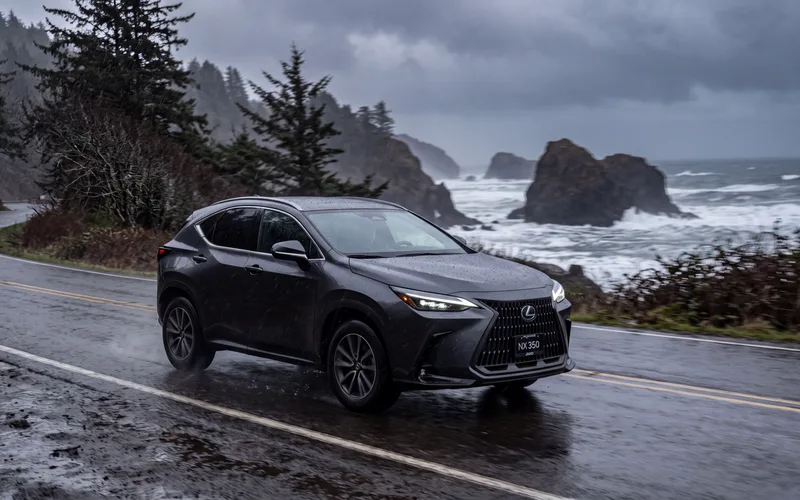 Lexus NXCompact Luxury SUVBetter at: Resale value
Hybrid and plug-in options that roughly halve your fuel bill, plus resale value that holds where Buick's does not.
Compare 2.46C+
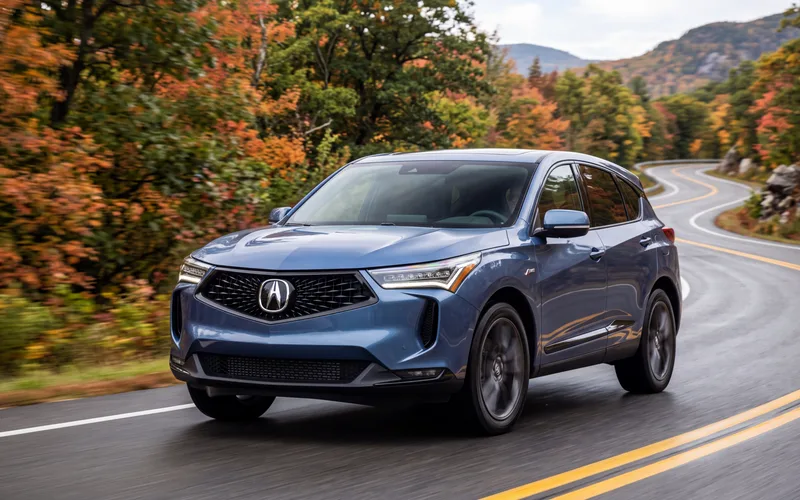 Acura RDXCompact Luxury SUVBetter at: Cargo and performance
Real power, sharper handling and substantially more cargo room for shoppers who found the Envision too soft and too small.
Compare 2.40C+
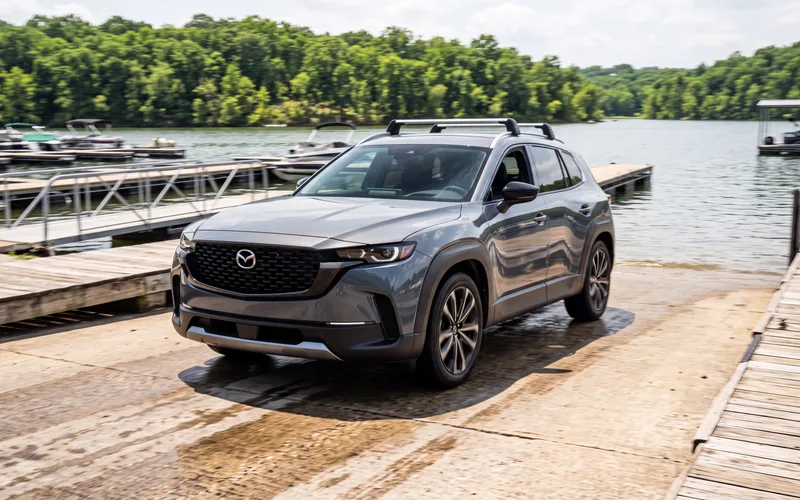 Mazda CX-50Compact SUVBetter at: Driving feel
Similar premium-feeling cabin and standard AWD for less money, with better steering and usable ground clearance for gravel roads.
CompareHow it's evolved
10 scored model years · 2017–2026
Subject scores by year
Hover or tap a score to see what moved it versus the year before. A corner mark flags a big swing.
| Year | Performance | Efficiency | Safety | Space | Cost | Reliability | Tech | Use-case | Driving | Value |
|---|---|---|---|---|---|---|---|---|---|---|
| 2026 | 32 | 50 | 73 | 47 | 50 | 69 | 82 | 55 | 63 | 69 |
| 2025 | 36 | 47 | 69 | 47 | 48 | 73 | 77 | 54 | 63 | 70 |
| 2024 | 33 | 47 | 69 | 47 | 49 | 70 | 76 | 54 | 63 | 72 |
| 2023 | 31 | 51 | 57 | 47 | 49 | 71 | 66 | 52 | 60 | 68 |
| 2022 | 31 | 51 | 64 | 47 | 51 | 68 | 65 | 53 | 60 | 65 |
| 2021 | 31 | 51 | 62 | 46 | 50 | 67 | 65 | 53 | 60 | 67 |
| 2020 | 25 | 52 | 48 | 47 | 51 | 76 | 48 | 50 | 52 | 54 |
| 2019 | 26 | 52 | 48 | 49 | 60 | 74 | 53 | 56 | 60 | 59 |
| 2018 | 26 | 52 | 48 | 47 | 61 | 77 | 52 | 54 | 56 | 54 |
| 2017 | 25 | 52 | 49 | 46 | 63 | 71 | 53 | 54 | 57 | 59 |
Compare two years
Best fit & conditions
Higher scores mean a better fit for that use case. Learn more about use-case fit →
Subject profile
Academic Probation · NHTSA safety recalls
No NHTSA safety recall is on record for the 2020 Buick Envision. Other model years of the Envision have 8 — listed below.
8 recalls on other model years of the Envision (2017, 2021–2024, 2026)
Feb 26, 2026Equipment: other: owners/service/other manualGeneral Motors has decided that certain 2027 Chevrolet Bolt EV, 2025-2026 Cadillac OPTIQ, Chevrolet Colorado, Equinox EV, GMC Canyon, 2026 Buick Enclave, Envision, Cadillac CT5, Escalade, Escalade ESV, Escalade IQ, Escalade IQL, LYRIQ, VISTIQ, Chevrolet Blazer EV, Corvette Convertible, Corvette Coupe, Corvette Convertible E-Ray, Equinox, Silverado 1500, 2500, 3500, Silverado EV, Suburban 1500, Tahoe, Traverse, GMC Acadia, Hummer EV Pickup, Hummer EV SUV, Sierra 1500, 2500, 3500, Sierra EV, Terrain, Yukon, and Yukon XL vehicles. The radio may not have been set to the correct status to download the electronic owner's manual during production. As such, these vehicles fail to comply with the requirements of Federal Motor Vehicle Safety Standard number 208, âOccupant Protection.â
Defect
General Motors has decided that certain 2027 Chevrolet Bolt EV, 2025-2026 Cadillac OPTIQ, Chevrolet Colorado, Equinox EV, GMC Canyon, 2026 Buick Enclave, Envision, Cadillac CT5, Escalade, Escalade ESV, Escalade IQ, Escalade IQL, LYRIQ, VISTIQ, Chevrolet Blazer EV, Corvette Convertible, Corvette Coupe, Corvette Convertible E-Ray, Equinox, Silverado 1500, 2500, 3500, Silverado EV, Suburban 1500, Tahoe, Traverse, GMC Acadia, Hummer EV Pickup, Hummer EV SUV, Sierra 1500, 2500, 3500, Sierra EV, Terrain, Yukon, and Yukon XL vehicles. The radio may not have been set to the correct status to download the electronic owner's manual during production. As such, these vehicles fail to comply with the requirements of Federal Motor Vehicle Safety Standard number 208, âOccupant Protection.â
Risk
Without an owner's manual to consult, owners may not know how to safely use and operate the vehicle, increasing the risk of injury in a crash.
Remedy
Dealers will reset the vehicle radio, which will facilitate automatic download of the electronic ownerâs manual, free of charge. Owner notification letters were mailed April 16, 2026. Owners may contact GM customer service at 1-866-467-9700, Chevrolet customer service at 1-800-222-1020 or Cadillac customer service at 1-800-333-4223. The manufacturer's number for this recall is N252540430. Vehicle Identification Numbers (VINs) involved in this recall became searchable on NHTSA.gov on February 26, 2026.
NHTSA campaign 26V114000 ↗Manufacturer no. N2525404305,861 vehicles potentially affected (all models in the campaign)Owners notified Apr 16, 2026Filed by General Motors, LLCFiled as ENVISIONSep 25, 2024Equipment: other: labelsThe vehicles are missing the label that states the tire size, pressure, and the loading information. As such, these vehicles fail to comply with the requirements of Federal Motor Vehicle Safety Standard number 110, "Tire Selection and Rims."
Defect
General Motors, LLC (GM) is recalling certain 2024 Buick Envision vehicles. The vehicles are missing the label that states the tire size, pressure, and the loading information. As such, these vehicles fail to comply with the requirements of Federal Motor Vehicle Safety Standard number 110, "Tire Selection and Rims."
Risk
Missing tire and load rating information may result in driving with improperly inflated tires or an overloaded vehicle, increasing the risk of a crash.
Remedy
Dealers will install the label, free of charge. Owner notification letters were mailed November 1, 2024. Owners may contact Buick Customer Service at 800-521-7300.
NHTSA campaign 24V710000 ↗Manufacturer no. N242474600527 vehicles potentially affected (all models in the campaign)Owners notified Nov 1, 2024Filed by General Motors, LLCFiled as ENVISIONDec 8, 2022Exterior lighting: lighting control module: softwareThe daytime running lights (DRLs) may not deactivate when the headlights are on. As such, these vehicles fail to comply with the requirements of Federal Motor Vehicle Safety Standard number 108, "Lamps, Reflective Devices, and Associated Equipment."
Defect
General Motors, LLC (GM) is recalling certain 2020-2023 Cadillac CT4 and CT5; 2021-2023 Buick Envision; and 2022-2023 Cadillac Escalade and Escalade ESV, Chevrolet Silverado 1500, Suburban, Tahoe, GMC Sierra 1500, Yukon, and Yukon XL vehicles. The daytime running lights (DRLs) may not deactivate when the headlights are on. As such, these vehicles fail to comply with the requirements of Federal Motor Vehicle Safety Standard number 108, "Lamps, Reflective Devices, and Associated Equipment."
Risk
DRLs that do not deactivate as intended may result in a glare, reducing visibility, and increasing the risk of a crash.
Remedy
The body control module software will be updated by a dealer, or through an over-the-air (OTA) update, free of charge. Owner notification letters were mailed January 23, 2023. Owners may contact GMC customer service at 1-888-988-7267, Chevrolet customer service at 1-800-222-1020, or Cadillac customer service at 1-800-458-8006. GM's number for this recall is N222386380. This recall expands previous recall number 22V-827.
NHTSA campaign 22V903000 ↗Manufacturer no. N222386380740,108 vehicles potentially affected (all models in the campaign)Owners notified Jan 23, 2023Filed by General Motors, LLCFiled as ENVISIONJun 10, 2021Air bags: srs malfunction warning lamp/light · Electrical system: softwareThe communications gateway module incorrectly processes a loss of communication with the sensing diagnostic module (SDM), causing the air bag malfunction indicator light to inconsistently illuminate.
Defect
General Motors, LLC (GM) is recalling certain 2021 Buick Envision, Cadillac CT4, CT5, Escalade, Escalade ESV, Chevrolet Tahoe, Corvette, Suburban, GMC Yukon, Yukon XL vehicles. The communications gateway module incorrectly processes a loss of communication with the sensing diagnostic module (SDM), causing the air bag malfunction indicator light to inconsistently illuminate.
Risk
The air bag malfunction indicator light may fail to warn the driver of a problem with the air bag, increasing the risk of injury.
Remedy
The communications gateway module software will be updated by a dealer, or through an over-the-air (OTA) update, free of charge. Owner notification letters were mailed on July 1, 2021. Owners may contact Buick customer service at 1-800-521-7300, Cadillac customer service at 1-800-458-8006, Chevrolet customer service at 1-800-222-1020, or GMC customer service at 1-800-462-8782. GM's number for this recall is N212338110.
NHTSA campaign 21V421000 ↗Manufacturer no. N212338110285,622 vehicles potentially affected (all models in the campaign)Owners notified Jul 1, 2021Filed by General Motors, LLCFiled as ENVISIONMay 31, 2018Fuel system, gasoline: delivery: fuel pumpThe high pressure fuel pump may detach from its mounting flange, possibly resulting in the pump damaging the high pressure fuel line.
Defect
General Motors LLC (GM) is recalling certain 2015-2018 GMC Canyon, 2016-2017 Buick Envision, 2016-2018 Chevrolet Colorado and Malibu, 2017-2018 GMC Acadia, 2018 Buick LaCrosse, Cadillac ATS, Chevrolet Equinox, and GMC Terrain vehicles. The high pressure fuel pump may detach from its mounting flange, possibly resulting in the pump damaging the high pressure fuel line.
Risk
A damaged fuel line can create a fuel leak, increasing the risk of a fire.
Remedy
GM will notify owners, and dealers will replace the high pressure fuel pump, and high pressure fuel pipe, free of charge. The recall began July 2, 2018. Owners may contact Buick customer service at 1-800-521-7300, Cadillac customer service at 1-800-458-8006, Chevrolet customer service at 1-800-222-1020, or GMC customer service at 1-800-462-8782. GM's number for this recall is 18188.
NHTSA campaign 18V358000 ↗Manufacturer no. 18188 18268895 vehicles potentially affected (all models in the campaign)Owners notified Jul 2, 2018Filed by General Motors LLCFiled as ENVISIONJun 29, 2017StructureThe affected vehicles received a replacement headliner as part of a repair. These service parts might not have had impact energy-absorbing foam blocks attached. As such, these vehicles fail to comply with the requirements of Federal Motor Safety Standard (FMVSS) number 201, "Occupant protection in interior impact."
Defect
General Motors LLC (GM) is recalling certain 2016-2017 Buick Envision vehicles. The affected vehicles received a replacement headliner as part of a repair. These service parts might not have had impact energy-absorbing foam blocks attached. As such, these vehicles fail to comply with the requirements of Federal Motor Safety Standard (FMVSS) number 201, "Occupant protection in interior impact."
Risk
If the service parts do not have energy-absorbing foam blocks, there may be an increased risk of occupant injury in the event of a crash.
Remedy
GM will notify owners, and dealers will replace the headliner assembly, free of charge. The recall began on July 28, 2017. Owners may contact Buick customer service at 1-800-521-7300. GM's number for this recall is 17275.
NHTSA campaign 17V412000 ↗Manufacturer no. 1727510 vehicles potentially affected (all models in the campaign)Owners notified Jul 28, 2017Filed by General Motors LLCFiled as ENVISIONJun 27, 2017Equipment · Seats: front assembly: head restraintAn accessory NSV Universal Tablet Holder may have been installed incorrectly onto the front seat head restraints, preventing the head restraint posts from fully engaging in the seat back. If so, the head restraints would fail to comply with the requirements of Federal Motor Vehicle Safety Standard (FMVSS) number 202a, "Head Restraints."
Defect
General Motors LLC (GM) is recalling certain 2016-2017 Buick Envision vehicles. An accessory NSV Universal Tablet Holder may have been installed incorrectly onto the front seat head restraints, preventing the head restraint posts from fully engaging in the seat back. If so, the head restraints would fail to comply with the requirements of Federal Motor Vehicle Safety Standard (FMVSS) number 202a, "Head Restraints."
Risk
If the head restraint posts are not fully engaging in the seat back, the head restraint may loosen or dislodge, increasing the risk of injury in a crash.
Remedy
GM will notify owners, and dealers will inspect the head restraints and tablet holders for the correct installation, reinstalling them as necessary, free of charge. The recall began July 27, 2017. Owners may contact Buick customer service at 1-800-521-7300. GM's number for this recall is 17239/17258.
NHTSA campaign 17V404000 ↗Manufacturer no. 17239/17258768 vehicles potentially affected (all models in the campaign)Owners notified Jul 27, 2017Filed by General Motors LLCFiled as ENVISIONJul 7, 2016Equipment: other: labelsThe Tire and Loading Information label may display the incorrect maximum weight information. As such, these vehicles fail to comply with the requirements of Federal Motor Vehicle Safety Standard (FMVSS) number 110, "Tire Selection and Rims."
Defect
General Motors LLC (GM) is recalling certain 2016-2017 Buick Envision vehicles manufactured February 4, 2016, to April 25, 2016. The Tire and Loading Information label may display the incorrect maximum weight information. As such, these vehicles fail to comply with the requirements of Federal Motor Vehicle Safety Standard (FMVSS) number 110, "Tire Selection and Rims."
Risk
Incorrect weight information may cause an owner to overload the vehicle. Overloading may reduce vehicle control, increasing the risk of a crash.
Remedy
GM will notify owners, and dealers will install a corrected label as necessary, free of charge. The began on August 22, 2016. Owners may contact Buick customer service at 1-800-521-7300. GM's number for this recall is 56340.
NHTSA campaign 16V516000 ↗Manufacturer no. 563404,558 vehicles potentially affected (all models in the campaign)Owners notified Aug 22, 2016Filed by General Motors LLCFiled as ENVISION
Source: NHTSA Office of Defects Investigation recall database, model years 2017–2026. Recalls are listed by model year as the manufacturer filed them; whether a specific car is affected depends on its VIN — check a VIN at nhtsa.gov ↗. NHTSA model names matched to this page: ENVISION.
Detailed scoring by subject
1Performance & PowertrainThe Envision's lowest-graded category.0.00F
2020 is the final US model year of the first-generation Envision, and the volume trims (1SV, Preferred, Essence) carry the naturally aspirated 2.5L four rated at 197 hp. That is well down the SUV horsepower band; the 252-hp 2.0L turbo is a Premium-trim upgrade rather than the representative configuration.
The 2.5L makes its 192 lb-ft peak high in the rev range at 4,400 rpm, so a ~3,755–3,929 lb crossover has to be worked hard to access it — the opposite of the low-rpm shove the optional turbo's 295 lb-ft provides.
Published figures for the 2.5L cluster in the low-to-mid 8-second range (8.3 sec for an instrumented 2019 Essence AWD, ~8.5 sec commonly quoted), which is slow for the segment and consistent with reviewers' complaints that it struggles uphill and when passing. The 2.0T is a different car at 6.6–7.0 sec but is not the volume configuration.
The volume 2.5L is the weak point of the whole car by reviewer consensus: coarse and loud under throttle, unrefined off it, with vibration reaching the seat, and short of thrust for highway merging or grades. That is a particularly poor showing in a premium-positioned Buick whose entire pitch is QuietTuning refinement — the optional 2.0T is markedly better but is not what most buyers got.
The volume trims use GM's older six-speed automatic, which shifts smoothly enough in relaxed driving but has neither the ratio spread nor the responsiveness of the nine-speed fitted to the 2.0T, and it leans on downshifts to compensate for the 2.5L's high-rpm torque peak. Competent and unobtrusive rather than good — squarely mid-band, and dated by 2020 standards where eight- and nine-speeds were the norm.
Buick rates the 2020 Envision at 1,500 lbs with an approved hitch regardless of engine or drivetrain — enough for a small utility trailer and nothing more. That sits near the floor of the SUV towing band.
All-wheel drive is offered across the range — a $1,750 option on the 2.5L trims and standard on the 2.0T Premium models — so it is widely available rather than restricted to the top of the lineup, but it is a basic on-demand system with no low range, no locking differentials and no terrain-mode suite. The 2.0T's AWD does add a twin-clutch rear unit, but that is tied to the expensive engine.
A wholly pavement-oriented crossover: roughly 6.7–6.9 inches of ground clearance, no skid plates, no terrain modes, no low range, no off-road trim of any kind, and road-biased all-season tires. Snow-covered pavement and a gravel driveway are the limit of its remit.
Two genuinely distinct gas powertrains — the 197-hp 2.5L with a six-speed and the 252-hp 2.0L turbo with a nine-speed — plus a FWD/AWD choice on the base engine. That covers mainstream needs and is broader than the single-engine second generation that replaced it, but there is no hybrid, plug-in or EV anywhere in the range.
2Efficiency & RangeOne of the Envision's strongest categories.1.51D
EPA rates the volume 2.5L front-drive Envision at 25 MPG combined. Middling for a compact SUV — the naturally aspirated four and its six-speed give up ground to rivals already fielding CVTs and hybrids, and stepping up to the 2.0L turbo costs three more MPG.
22 MPG in town for the volume front-drive 2.5L. Stop/start helps, but with no electric assist and only six ratios to work with, a ~3,755 lb crossover lands right at the segment midpoint.
The Envision's best EPA showing is 29 MPG on the highway in 2.5L front-drive form — modestly above the compact-SUV midpoint, and the one place the low-output naturally aspirated engine is working with rather than against the car.
A 17.3-gallon tank at the 25 MPG combined rating works out to roughly 430 miles between fills for the volume configuration — comfortably above the SUV band floor but nothing special, and the turbo's thirstier rating cuts it to under 400.
EPA's standard-assumption annual cost is $2,450 for the volume 2.5L front-driver, held down by its certification on regular unleaded. The $1,000/yr penalty for the 2.0L turbo is the sharpest number in this category — it comes from the premium-fuel requirement as much as from the three-MPG deficit.
Mixed across the range, which is exactly the mid-band case: the volume 2.5L is certified on regular 87-octane, but the 2.0L turbo on Premium and Premium II is rated by EPA on premium — a roughly $1,000/yr swing at EPA's standard assumptions. A buyer who stays on the base engine pays nothing extra; one who upgrades is committed to the expensive pump for the life of the car.
3SafetyGrades below the middle of the scale.1.20D
NHTSA crash-tested the 2020 Envision directly and awarded the AWD car 5 stars overall, carried by a clean sweep of 5-star side results — side barrier driver and passenger, front and rear seating positions, and the side pole test all rate 5. The frontal result is the soft spot at 4 stars for both driver and passenger, and rollover is 4 stars with No Tip, the ordinary outcome for a raised crossover. The FWD car shows identical frontal, side barrier and side pole scores but carries no overall rating at all because NHTSA never ran its rollover measurement, so the 5-star headline strictly describes the AWD configuration.
Every IIHS crashworthiness test this car has ever been given, it passed with the top grade: driver-side small overlap front, moderate overlap front, side, roof strength and head restraints & seats are all Good. That is a genuinely strong structure and it is the single best part of the 2020 Envision's safety case. What keeps it out of the top band is that the award lapsed and one test was never run. The Envision was a Top Safety Pick+ in 2016–17 and a Top Safety Pick in 2018, but it holds no IIHS award for 2019 or 2020 — the criteria moved and the car did not, most consequentially the passenger-side small overlap front test, which the IIHS added to the award requirements and never performed on this generation. The 2020 award also wanted Advanced or Superior front crash prevention and acceptable headlights across the range, and the Envision could only meet the first of those through an option package restricted to the top trim. So a buyer gets excellent evidence about five crash modes, no evidence at all about a sixth, and no current third-party award to point at.
This is where the 2020 Envision falls apart, and the official brochure's own trim grid states it plainly: of the five features this criterion names — AEB, adaptive cruise, lane keeping, blind-spot monitoring and rear cross-traffic alert — exactly zero are standard on any 2020 Envision trim, and none at all are fitted to the base 1SV/Preferred, which leaves the entry car with nothing beyond a rear camera and rear park assist. The ladder is steep and late: blind-spot and rear cross-traffic first appear as standard on Essence; forward collision alert and lane keep assist with lane departure warning wait until Premium; and automatic emergency braking together with adaptive cruise exist only inside the Driver Confidence Package, which the brochure restricts to Premium II — the top of a five-trim range. NHTSA independently records both forward collision warning and lane departure warning as 'Optional' rather than standard. By 2020 the mainstream compact-SUV field had made AEB standard on every trim for two or three model years, so this is not merely behind the segment, it is close to the worst distribution available in a new 2020 crossover — and it is a premium-priced one.
When the Envision has autobrake at all it works acceptably — the IIHS rated the Driver Confidence Package's Enhanced Automatic Emergency Braking 'Advanced', avoiding the target outright at 12 mph and cutting impact speed by 9 mph at 25 mph — but that is one grade short of Superior and, far more importantly, almost nobody gets it. The system is available only inside a package on the Premium II trim, so the base, Preferred, Essence and Premium cars cannot be ordered with automatic braking at any price; the alternative Safety Package II is forward collision alert only, with no autobrake, and the IIHS rated it 'Basic'. Pedestrian capability is not weak, it is absent: the IIHS records pedestrian front crash prevention as 'not available' on this vehicle, and the brochure lists no front pedestrian braking anywhere in the range, so there is no daytime pedestrian function to degrade at night, no bicyclist detection and no intersection support. A rated-Advanced system that four of five trims cannot have, with no pedestrian coverage at all, belongs in the bottom band.
Lane Change Alert with Side Blind Zone Alert and Rear Cross Traffic Alert are standard from Essence upward, so three of the four trim groupings get them at no extra cost, and rear vision camera plus rear park assist are standard on every trim including the base car — a reasonable floor for parking-speed awareness. Two things hold it mid-band. The coverage is alert-only in every direction: there is no blind-zone steering intervention and no rear cross-traffic braking anywhere in the 2020 range, so the systems warn and then leave the outcome to the driver, and the Safety Alert Seat that turns those warnings into directional seat pulses is itself withheld until Premium. And the entry 1SV/Preferred cars cannot be ordered with blind-spot or cross-traffic monitoring at all, which matters more than usual here because the same trims also have thick rear pillars and no surround-view camera to compensate — Surround Vision is buried in the Premium II-only Driver Confidence Package.
Lane Keep Assist with Lane Departure Warning is a Premium-and-above feature on the 2020 Envision, marked flatly unavailable on the 1SV/Preferred and on the Essence — so the volume 2.5L trims that account for most of the range have no lane assistance of any kind, not even a departure warning, and NHTSA duly records LDW as 'Optional' rather than standard. Where it is fitted it is the ordinary GM nudge: it corrects the car off a painted line and nothing more. There is no lane-centering or lane-following mode at any trim or any price, and nothing above it existed for this generation — Super Cruise was never attached to the first-generation Envision, and when GM did announce it for the 2024 refresh four years later the feature was cancelled before production. Absent on the volume trims and reactive-only where present puts this in the bottom band.
The hardware is the good version — GM's radar-based Adaptive Cruise Control–Advanced, a full-speed-range system that manages the gap down to a stop rather than the older cut-out-at-low-speed type — but the distribution is close to the worst possible. It is standard on nothing, unavailable on the 1SV, Preferred, Essence and Premium, and reachable only through the roughly $1,545 Driver Confidence Package on the Premium II, the single most expensive trim in the range. The practical consequence is that the overwhelming majority of 2020 Envisions on the road have plain fixed-speed cruise control with no upgrade path, which is what this criterion has to grade. There is also no highway assist to speak of even on a fully-loaded car: with no lane-centering mode in the range, the adaptive cruise handles speed and gap while the driver steers throughout, so it is an ACC rather than a combined system.
There is no hands-free highway driving on the 2020 Envision at any trim or any price, and no partial substitute either — the driver-assistance ceiling is an option-package adaptive cruise with no lane centering behind it, so the driver steers at all times even in a fully-optioned Premium II. Super Cruise was never offered on the first-generation Envision; GM first attached it to the nameplate at the 2023 reveal of the 2024 refresh, three generations of update later, and then cancelled it before it reached production.
The Envision's saving grace on lighting is that Buick never sold it in the US with the halogen projectors that would have sunk it — every trim gets at least HID headlamps, with LED units standard from Premium up — and on that hardware the IIHS rated it Acceptable rather than Marginal or Poor. Acceptable across the range with no bad variant is a middling but honest result, and it is one of the reasons the car could still qualify for a Top Safety Pick in its earlier years. It goes no higher than the low end of the middle band because there is no Good-rated variant published for any trim, which is what the top band asks for, and because the 2020 range has no auto high-beam function at all: IntelliBeam does not appear in the brochure's feature grid or its available-technology list, so the driver toggles high beams manually on every trim, and there is no curve-adaptive or adaptive-driving-beam capability anywhere in the lineup.
Forward sightlines are a genuine strength — reviewers single out the view out over the hood as excellent, helped by a low beltline and a relatively upright windshield for a style-led crossover. The problem is behind the driver: the thick rear roof pillars that give the Envision its sloping profile cut into the over-the-shoulder and rearward view, and reviewers consistently flag both front and rear pillar blind zones. Camera compensation is only partial and badly distributed. A rear vision camera and rear park assist are standard on every trim, which covers straight-back manoeuvres, but the Surround Vision bird's-eye system that would fill in the flanks is locked inside the Premium II-only Driver Confidence Package, front park assist arrives only with Automatic Parking Assist on Premium II, and blind-spot monitoring is unavailable on the two cheapest trims — so an entry car has thick pillars and nothing but a reversing camera to offset them. Average visibility with real blind zones, unevenly compensated.
The space is fine and the hardware is not. The IIHS rated the Envision's LATCH ease of use Marginal — the second-lowest of four grades — for concrete, repeatable reasons: the lower anchors sit too deep in the seat bight and take too much force to attach, and the tether anchors are easy to confuse with other hardware back there. That is the daily-use failure mode that matters most, because a parent fighting a deep anchor is the parent who gives up and belts the seat in badly. Against that, the underlying accommodation is one of the car's better features: a 108.3-inch wheelbase yields 37.5 inches of rear legroom, the second row slides and reclines, and there are two full LATCH sets in the outboard positions plus a top tether for the centre seat, so three tethered seats are physically possible even if three across is a squeeze in a compact crossover. Good room undercut by a Marginal-rated interface lands just below the midpoint.
4Space & ComfortOne of the Envision's weakest categories.1.11D
The first-generation Envision is a strictly two-row compact crossover; five seats across 1SV, Preferred, Essence, Premium and Premium II with no seven-seat variant sold in the US (the three-row Envision Plus is a China-only stretch introduced in 2021).
40.0 inches sits comfortably above the SUV band midpoint and is a genuine strength of the tall-glasshouse first-generation body — the second-generation 2021 car actually gave up four tenths here.
40.9 inches is near the bottom of the SUV legroom band — the Envision's long 108.3-inch wheelbase was spent on the rear compartment rather than the front, and tall drivers notice it.
38.5 inches in the second row is above the segment midpoint and enough for six-foot adults, though the optional panoramic roof eats into it on the trims that carry it.
37.5 inches is mid-band, but the number understates the car in use: the 60/40 bench slides fore-and-aft and reclines, so rear passengers can trade cargo depth for stretch-out room in a way most compact-SUV rivals of this vintage cannot.
There is no third row. The 2020 Envision is a two-row, five-seat compact crossover on every US trim, so buyers needing a third row have to leave the nameplate entirely — scored in the low band as the item directs rather than omitted.
26.9 cubic feet is the Envision's clearest packaging weakness — barely above the SUV band floor and well short of the 37-plus cubic feet a RAV4 or CR-V of the same year offers, a direct consequence of the sloping roofline and the space given to rear legroom.
Folding the bench roughly doubles the hold but 57.3 cubic feet still lands right at the bottom of the SUV band — a compact-SUV maximum in a car priced against mid-size rivals, and the single figure most likely to send a shopper to a RAV4.
Competent everyday storage with one genuinely useful trick and no headline feature: a deep covered center console and bin, decent door pockets, an underfloor compartment beneath the cargo deck, and a sliding/reclining rear bench that lets you buy cargo depth back from legroom. There is no giga-console, no frunk and no onboard household power beyond an optional 120V outlet.
Seats are one of the reasons people buy this car. The 2019 refresh brought a new seat design, and reviewers consistently describe nicely padded, supportive chairs front and rear; the volume Essence adds leather, eight-way power for the driver and heated outboard rear seats. It stops short of the top band only because there is no massage function and no ventilated fronts below the $44,795 Premium II.
Tuned unambiguously for comfort and good at it — a soft, composed ride on the volume trims' 18-inch all-seasons that absorbs broken pavement better than most compact SUVs of the year, with only mild float and no real penalty from the 19-inch wheels on upper trims. Body control in quick direction changes is the trade-off, covered under handling.
Buick's QuietTuning package — active noise cancellation, acoustic laminated windshield and front side glass, triple door seals — makes this one of the quieter compact crossovers at a highway cruise, and reviewers single it out. It is held out of the top band by the powertrain: the naturally aspirated 2.5L is coarse and loud when worked, so the car is library-quiet at steady speed and noticeably less so under acceleration.
Unusually rich at the trim people actually buy: the Essence carries tri-zone automatic climate control, heated front AND heated rear outboard seats, and a heated leather-wrapped steering wheel, with remote start and a hands-free power liftgate standard from the base 1SV. Ventilated front seats are the one notable feature locked to the top Premium II trim.
5Cost of OwnershipGrades below the middle of the scale.1.43D
2020 is the final model year of the first-generation Envision and the entry point was the stripped 1SV, a real published trim that shares the brochure's features column with the Preferred — $31,995 plus Buick's $1,195 destination charge. It is front-drive only and uses the 197-hp 2.5L with a six-speed automatic; all-wheel drive is not even offered on it.
Essence is the mid rung of the five-trim 2020 ladder and the volume seller — $35,800 plus the $1,195 destination charge — and front-wheel drive with the 197-hp 2.5L is the representative configuration scored elsewhere in this scorecard. Essence buys perforated leather, heated rear outboard seats, a heated steering wheel, tri-zone climate control and the first active-safety content in the range (blind-zone alert and rear cross-traffic alert); the 252-hp 2.0L turbo and standard all-wheel drive are locked to the Premium trims above it. A typically-optioned Essence ran closer to $39,000 — GM Authority's November 2019 incentive worked example used an Essence FWD stickering at $39,015.
Published estimates diverge because they price different baskets: CarEdge's ~$2,875 covers scheduled maintenance, wear items and expected repairs only, while Edmunds' True Cost to Own adds unscheduled repairs at 15,000 mi/yr for a figure near $9,000. Around $5,100 is the fair middle and matches how the rest of the fleet is measured. Pitched a couple of hundred dollars below the second-generation cars because the volume 2020 drivetrain is the naturally-aspirated 2.5L with a six-speed automatic rather than the 2.0L turbo and nine-speed — simpler, longer-serving hardware — while premium-badge parts pricing and Buick dealer labor rates still keep it above a mainstream compact SUV.
The 2020 cars are now six model years old, so this is measured rather than forecast: KBB's own valuation curve for the 2020 Envision puts the five-year (2025) resale value at $16,401, which is 44.3% of the $36,995 volume-trim sticker, and the current 2026 resale value has fallen to $14,450. iSeeCars' nameplate-level model is a touch kinder at 46.7% retention. 44% sits near the floor of the SUV band — weak in absolute terms, though the luxury compact SUV category as a whole depreciates faster than the market, and this particular year carried the extra drag of being an outgoing generation sold at heavy discounts, which pushes real-world retention against sticker lower still.
2020 is the model year GM cut Buick's coverage — bumper-to-bumper dropped from 4 yr/50,000 mi to 3 yr/36,000 mi, so a 2020 Envision buyer got a full year and 14,000 miles less than a 2019 buyer on an otherwise near-identical car. That is the floor of the segment band, against 5 yr/60,000 mi from Hyundai and Kia and 4 yr/50,000 mi from the luxury badges this car is cross-shopped with.
Powertrain coverage was cut alongside the basic warranty for 2020, from 6 yr/70,000 mi to 5 yr/60,000 mi — the bottom of the 5–10 year band and half of Hyundai and Kia's 10 yr/100,000 mi. It is at least transferable to a second owner, which is worth something on a car this exposed to depreciation.
The brochure confirms 24/7 Roadside Assistance and Courtesy Transportation for the full 5 yr/60,000 mi powertrain term — a long roadside window by class standards — alongside a built-in Wi-Fi hotspot data trial and an OnStar/Buick Connected Services trial, and GM covers one complimentary first scheduled maintenance visit (oil and filter, four-tire rotation, multi-point inspection). One free service is far thinner than Toyota's 2 yr/25,000 mi ToyotaCare, BMW's 3 yr Ultimate Care or the multi-year plans from Jaguar and Volvo, and thinner still than what a Buick buyer got before 2019, when GM cut the program from two visits to one. That keeps this in the middle band; the long roadside term is what keeps it out of the bottom.
$36,995 volume-trim price minus its estimated resale value after 5 years (44% retained, or about $16,278) leaves about $20,717 in depreciation. Add the projected $5,100 in 5-year maintenance and repairs, and owning this vehicle for 5 years costs about $25,817 in total.
6Reliability & QualityThe Envision's best-graded category.3.15B
2020 is the final, fully settled model year of the first-generation Envision (2016-2020) — five years of running changes behind it and the 2021 redesign already announced, so nothing about it is a launch-year gamble. Consumer Reports rates the 2020 Envision more reliable than the average 2020 vehicle, and J.D. Power's predicted-reliability score of 87/100 lands in its "Great" band. NHTSA holds only 10 owner complaints for the whole model year against 81 for 2017, with airbags/seat belts (3) the largest single cluster. What keeps it just below the top band is sample size: the 2020 was a short, low-volume run alongside the incoming second generation, so the survey and complaint pools behind these ratings are thin.
The dependability study that actually surveys 2020-model-year vehicles is the J.D. Power 2023 VDS (three-year-old cars), and Buick finished 4th overall at 159 PP100 — 2nd among mass-market brands, ahead of Chevrolet and Toyota and well clear of the industry average. Buick then improved to 3rd overall in the 2024 study, so this is a sustained multi-year standing rather than a single good year. Consumer Reports has historically placed Buick nearer mid-pack among brands, which is the one signal that stops this reaching the very top of the band.
The recall record is as clean as this framework ever sees: NHTSA's recall database returns zero campaigns against the 2020 Buick Envision, and zero against the 2019 and 2018 model years as well — no powertrain, fire, airbag or structural recall has touched the late first generation. For contrast, the redesigned 2021 immediately picked up two (airbag warning lamp, lighting-control-module software). It falls short of a perfect score on the bulletin side rather than the recall side: electrical system is the joint-largest complaint bucket in this model year's file, with instrument-cluster blackouts and loss of chimes/warning tones reported, and GM's 2.5L LCV carries the usual oil-consumption diagnostic bulletin family.
The volume 2020 trims (Preferred and Essence) run GM's naturally aspirated 2.5L Ecotec LCV four (197 hp / 192 lb-ft) through a six-speed automatic — no turbo, no nine-speed, and both are long-serving GM parts with a high-mileage record across Malibu/Equinox/Terrain fleets. That conservative pairing is the safer half of the range: Premium and Premium II step to the 2.0T (252 hp / 295 lb-ft) with the 9T50 nine-speed, whose early production had documented input-clutch snap-ring failures causing total loss of drive, torque-converter shudder and selectable-one-way-clutch faults. Complaint aggregation flags both first-gen engines with mid-range caution scores and lists transmission among the top three problem areas for the generation, and this model year's own file contains a stall-at-a-stoplight report. Proven hardware, not a benchmark powertrain.
This is the item where the Envision's premium price does it the most damage. The cabin is well assembled with convincing faux-wood trim and soft surfaces on the main touch points, and Essence and above add leather upholstery — but reviewers judge it against the Audi/Lexus money Buick asks and find hard plastics where a luxury compact SUV would not have them. The consensus reads as competent mainstream execution wearing a premium badge, which is the middle of this item's band rather than the top.
Assembly quality is a genuine strength of the SAIC-GM Yantai build and is decoupled from the material-grade complaint above. Buick posted 150 PP100 in the J.D. Power 2020 Initial Quality Study — comfortably better than the 166 industry average and mid-pack among the seven above-average domestic brands — and the Envision's QuietTuning package with acoustic laminated glass and active noise cancellation gives a hushed, rattle-free cabin that reviewers single out. It stops short of the top band because electrical faults are the joint-largest complaint category for this model year and include a fully blacked-out instrument cluster, which is a quality-of-build signal even when it is software.
Service support is the Envision's strongest reliability-adjacent asset. Buick ranked highest of all mass-market brands in the J.D. Power 2020 U.S. Customer Service Index — the study contemporaneous with this car being new — and has stayed in the top handful since (4th in 2025, 3rd in 2026 at 882 vs a 865 mass-market average). Coverage is dense because nearly every Buick store is a combined Buick-GMC franchise plugged into GM's nationwide service and parts infrastructure, roughly 750-plus US points. The one deduction is that the standalone Buick franchise count has been shrinking through consolidation, so rural coverage is thinner than Chevrolet's.
Running costs are low and mechanical parts are ordinary GM inventory: the 2.5L LCV, the six-speed automatic, the brakes and the suspension are shared across high-volume Chevrolet and GMC crossovers, so consumables are cheap and available anywhere. RepairPal puts the Envision's average annual repair and maintenance cost at $318 against $494 for the segment, with unscheduled shop visits far below average. The offset is that the first-generation Envision is assembled in Yantai, China and sold in modest US volume, so model-specific body panels, lighting, trim and interior pieces are effectively dealer-only with a longer supply chain and a thin aftermarket — normal, not cheap-and-abundant.
7Technology & InfotainmentOne of the Envision's weakest categories.1.17D
Eight inches on every 2020 trim from the $34,695 1SV to the $44,795 Premium II. Standardizing it is to Buick's credit, but there is no larger screen available at any price, and 8 inches sits near the floor of the SUV band by 2020 — the second-generation 2021 car jumped straight to 10.2 inches.
The Buick Infotainment System (GM's IO5/IO6 generation) is dated by 2020 but genuinely easy to live with: quick enough to the touch, a flat and logical menu structure, and — the part rivals were already abandoning — real volume and tune knobs plus hard shortcut buttons below the screen, with climate on its own physical panel. Marked down for low-resolution graphics and a look several years behind the price point, not for usability.
Wired Apple CarPlay and Android Auto are standard on all five trims — no trim tax, which is the good half. The bad half is that wireless projection is not offered at any price on the 2020 car; GM did not bring wireless CarPlay/Android Auto to the Envision until the second-generation 2021 model. That is textbook mid-band: wired standard, wireless unavailable.
Both halves of this item are weak. Built-in navigation is standard only on the $44,795 Premium II and an extra-cost option on Essence and Premium, so the volume trim ships without native maps; the embedded voice recognition is GM's pre-natural-language command-word system that most owners abandon for CarPlay's assistant. OnStar's live-advisor turn-by-turn is a subscription backstop, not a substitute.
The volume Essence gets the unbranded factory system, which is adequate and no more; the 7-speaker Bose upgrade does not arrive until the $41,895 Premium. A branded premium system that only exists above the volume trim, in a car sold on cabin refinement, is a mid-band result at best.
No full digital cluster is offered on the 2020 Envision at any trim. The driver faces conventional analog dials flanking a small color driver information center, configurable only in the narrow sense of cycling trip and vehicle data — the low band as the guidance defines it.
No meaningful over-the-air capability. The 2020 Envision predates GM's Vehicle Intelligence Platform, so there is no whole-vehicle software update path — module updates require a dealer visit — and the only over-the-air traffic is OnStar service data and, on nav-equipped cars, map content. This is the low band by definition.
The myBuick app with OnStar covers the core set properly — remote start, lock/unlock, vehicle locate, diagnostics and a 4G LTE hotspot — and the hardware to use it is standard rather than optional. It sits mid-band rather than high because there is no digital key, the app is functional rather than polished, and remote commands drop to a paid OnStar plan once the included trial expires.
USB-A only, front and rear — no USB-C anywhere in the car, which by 2020 was already behind. Wireless phone charging is locked to the single top Premium II trim, and the 110/120-volt household outlet is an option capped at 400 watts. Ports exist in both rows, which keeps it off the floor.
The strongest part of the Envision's tech case and unusually complete for 2020: proximity keyless entry, push-button start, remote engine start and a hands-free power liftgate are all standard from the base 1SV upward, not options. Only phone-as-key — which GM had not deployed on this platform — keeps it out of the top band.
Rear vision camera standard on every trim with rear park assist on the volume trims, which covers the basics — but Surround Vision (the 360-degree bird's-eye view) and Automatic Parking Assist are both restricted to the single $44,795 Premium II. A buyer of the $36,995 Essence gets a plain reversing camera of unremarkable resolution.
A head-up display is offered, which beats the many compact SUVs that offer none — but only on the top Premium II, roughly $7,800 above the volume Essence and only with the 2.0L turbo AWD powertrain. That is the mid-band case exactly: HUD limited to the top trim.
8Use-Case FitGrades below the middle of the scale.1.33D
The space is genuinely family-friendly — 37.5 inches of rear legroom on a 108.3-inch wheelbase, a bench that slides and reclines to buy room for a rear-facing seat, wide rear door openings and heated rear outboard seats on the volume Essence. The hardware undercuts it: IIHS rated the Envision's LATCH ease of use Marginal, with lower anchors buried too deep in the seat bight, and 26.9 cubic feet behind the rear seat is a tight fit for a stroller plus a week's gear.
Crash protection is strong — NHTSA 5 stars overall for the AWD car and Good in every IIHS crashworthiness test — but the driver-assistance side fails families at the trims they buy. Automatic emergency braking and adaptive cruise are option-package items, lane keeping is Premium-and-above so the volume Essence cannot have it at any price, and there is no rear-seat occupant reminder. Good crash structure with the crash-avoidance kit behind a paywall is the middle band, not the top.
For four people over several hours this is one of the Envision's better arguments: QuietTuning keeps the cabin quiet at a cruise, the ride is soft, the volume trim carries tri-zone climate and heated rear outboard seats, and the rear bench reclines. What thins it out is gear space with everyone aboard — 26.9 cubic feet is small for four people's luggage — and the absence of rear-seat entertainment, rear USB-C or any rear amenity beyond climate and heat.
Low-effort in the ways commuting rewards — light steering, a soft ride over city pavement, an excellent view out over the hood, a tight 36.4-foot turning circle and a six-speed automatic that shifts smoothly when not hurried. The drag on it is the 197-hp 2.5L: coarse and audibly strained when you need to merge or close a gap, with stop/start that reviewers found less than seamless.
Squarely average per mile for a 2020 compact SUV and no better: EPA 22/29/25 for the volume 2.5L front-driver on regular 87-octane, working out to roughly $2,450 a year on EPA's standard assumptions. No hybrid option existed, so there is no cheap-commute version of this car, and the 2.0L turbo trims take premium fuel and cost about $1,000 a year more.
Easy to place in a city. At 183.7 inches long the footprint is genuinely compact, the 36.4-foot curb-to-curb circle is tight for the class (and better than the second-generation car's 38.0 feet), forward sightlines are a reviewer-noted strength, and a rear camera is standard with rear park assist on the volume trims. Thick rear pillars and the fact that Surround Vision is Premium II-only keep it out of the top band.
Not a work vehicle in any sense. Buick rates the 2020 Envision at 1,500 lbs towing with an approved hitch regardless of engine or drivetrain — a small utility trailer and nothing more — and the load bay is 26.9 cubic feet behind a sloping tailgate. Neither the 197-hp 2.5L nor the unibody chassis was engineered for sustained load.
The mechanical base is not fragile — the 2.5L/6-speed combination is a long-serving GM pairing and Buick was the top-ranked mass-market brand in the 2020 J.D. Power Vehicle Dependability Study at 103 PP100 — but everything about the car's execution is luxury-oriented. Leather seating on the volume trim, carpeted surfaces, no wear-friendly interior option, no fleet or commercial version, and no track record of hard-use duty.
Essentially no work provisions. Cargo tie-downs and roof rails are the extent of it, onboard power is an optional 110/120-volt outlet capped at 400 watts, the 1,500-lb hitch rating rules out most trailer-borne upfits, and there is no commercial accessory ecosystem behind the nameplate the way there is behind a Transit Connect or even a Silverado.
A better mile-eater than its spec sheet suggests: QuietTuning with active noise cancellation and acoustic glass makes it quiet at a highway cruise, the seats are well padded, the ride is soft, and a 17.3-gallon tank at 25 MPG combined gives roughly 430 miles between fills. It falls short of the top band because the fatigue-reducing half of the equation is missing — adaptive cruise is an option package, lane keeping is not available on the volume trim at all, and the 2.5L has to be worked hard on long grades.
Pavement and well-graded gravel, and that is the honest limit. All-wheel drive is available across the range (a $1,750 option on 2.5L trims, standard on the 2.0T), which gets it off the floor, but there is roughly 6.7–6.9 inches of ground clearance, no skid plates, no terrain modes, no low range, road-biased all-season tires, and a 1,500-lb tow rating that will not move a serious toy hauler. Roof rails handle bikes or a box.
Flexible in shape, limited in volume. The 60/40 bench folds nearly flat and also slides and reclines, so you can dial the split between people and cargo, and there is underfloor storage plus available roof cross rails. But 26.9 cubic feet behind the seat and 57.3 with it folded are the smallest numbers in this comparison set, the tailgate opening slopes, and a 1,500-lb hitch limits what can be pulled behind instead.
9Driving ExperienceGrades below the middle of the scale.1.50D
Secure but deliberately uninvolving. The MacPherson-strut front / four-link rear chassis is tuned for compliance, so the Envision stays stable and predictable through a corner without ever feeling eager; reviewers describe it as not particularly nimble but very secure, with body roll and a soft front end that discourage pace. That is mid-band: composed, unremarkable.
The weakest dynamic element. Reviewers found the electric rack fine at commuting speeds but sluggish and inaccurate on a twisty road, with no feedback at all through the thick rim — you steer by sight rather than by feel, and off-centre response is vague. It avoids the bottom of the low band only because weighting is consistent and it never darts.
Unremarkable in the good sense: four-wheel discs with ABS, no published instrumented stop that stands out either way, and no pattern of reviewer or owner complaint about fade or pedal feel on a 3,755–3,929 lb crossover. The pedal is tuned soft and long to match the comfort brief, which suits the car but is not the crisp response the top band describes.
The volume 2.5L is the car's clearest dynamic failing. It makes peak torque at 4,400 rpm, so ordinary throttle requests provoke a downshift and a rev flare rather than thrust, tip-in is soft, and the stop/start restart is felt rather than merely heard. The six-speed automatic itself shifts smoothly in relaxed driving, which keeps the score off the floor; the optional nine-speed 2.0T is a substantially better-calibrated drivetrain the volume buyer does not get.
A pointed contrast with the rest of the cabin. QuietTuning shuts out wind and road noise so effectively that the 2.5L has nothing to hide behind — worked hard it is coarse and loud, it drones on a highway grade, and vibration carries into the seat and pedals. In a car sold on refinement that is a low-band result for the volume powertrain specifically.
36.4 feet is genuinely tight for a compact SUV and one of the first-generation Envision's quiet strengths — better than the 38.0 feet of the second-generation car that replaced it, and a real advantage in parking structures and U-turns.
A comfortable, easy place to sit and operate. The seating position is high with an excellent view out over the hood — reviewers single out forward sightlines — the volume Essence has eight-way power adjustment and a tilt/telescoping heated wheel, and the controls are still physical: real climate switchgear and volume/tune knobs below the 8-inch screen. Marked down for thick rear roof pillars that pinch the over-shoulder view.
Nobody takes the long way home in this. With roughly 8.5 seconds to 60 mph, no steering feedback, a chassis tuned away from pace and no drive-mode or sport calibration on the volume 2.5L, the Envision is an appliance by design — competent, quiet and entirely forgettable from the driver's seat. No enthusiast outlet recommends it on dynamics.
10Value & Market PositionOne of the Envision's strongest categories.1.64D
The comfort content is genuinely generous — even the $33,190 entry car has heated front seats, a hands-free power liftgate, dual-zone climate control, remote start, push-button start, 18-inch alloys, an 8-inch touchscreen with Apple CarPlay and Android Auto, and a Wi-Fi hotspot, more than a base RAV4 or CR-V of the same year carried. What drags it into the bottom band is the safety ladder, and the brochure's own trim grid makes it plain: not one of automatic emergency braking, adaptive cruise, lane keep assist, blind-spot monitoring or rear cross-traffic alert is standard on any 2020 Envision trim. The 1SV and Preferred get nothing beyond a rear camera and rear park assist; blind-zone and cross-traffic alert start at Essence; forward collision alert and lane keep wait for Premium; and AEB and adaptive cruise exist only inside a package restricted to the top-of-range Premium II. By 2020 the mainstream compact SUVs selling for $10,000 less had made AEB standard on every trim, so a premium-priced Buick charging a top-trim package for it is sparse where it counts.
At a $36,995 volume-trim sticker the 2020 Envision asks premium-crossover money for 197 hp through a six-speed automatic, 22/29 mpg, 26.9 cu ft of cargo behind the rear seats (well short of a RAV4's 37.6) and no standard active safety — while a Lexus NX, Acura RDX or Volvo XC60 costs several thousand more but delivers materially more car, and a loaded RAV4 or CR-V costs several thousand less with AEB fitted as standard. Reviewers landed on exactly that squeeze. It is not a bad car for the money so much as a car with no clear constituency at the money, which is what puts it at the bottom of the middle band rather than in it. The transaction-price picture was far better than the sticker picture, but that is the discounting scored under 10.2.3, not content per dollar.
Five published trims — 1SV, Preferred, Essence, Premium, Premium II — two engines and both drive layouts give seven distinct configurations spanning $33,190 to $44,795 delivered, a wider ladder than the three-trim second-generation car that replaced it and wide enough to cover a value shopper and a loaded buyer from one showroom. Held out of the top band by how rigidly the choices are bundled: all-wheel drive is a $1,750 option on Preferred and Essence only, unavailable on the 1SV and compulsory on both Premium trims, the 252-hp 2.0L turbo cannot be had below Premium, and the option sheet is just two packages for the whole range — Driver Confidence on Premium II and Experience Buick on Essence. Buying adaptive cruise therefore means buying the most expensive trim in the lineup.
34,943 US deliveries in calendar 2020, up 5.2% on 2019 and the nameplate's second-best year to that point behind 2017's 41,040 — a steady, mildly rising mid-pack result achieved in a pandemic-shortened selling year, which is a real accomplishment for a run-out generation. Two things keep it out of the top band. The figure is mid-pack in absolute terms for a compact crossover, a segment whose leaders clear several hundred thousand units, and the growth was bought rather than earned: discounts running to 20% off sticker moved the outgoing car, and the calendar-year total also includes the first second-generation deliveries from the autumn onward, so the 2020 model year itself accounts for less than the headline.
2020 was a good year for the badge on the metrics that matter to an owner: Buick was the top-ranked mass-market brand in the 2020 J.D. Power Vehicle Dependability Study at 103 PP100, third overall behind only two luxury marques, and its 150 PP100 Initial Quality result sat comfortably better than the 166 industry average. That is a real quality signal, and it is why this sits above the middle of the neutral band rather than at its floor. It is not aspirational pull, though — Buick carries little of that against Lexus, Acura or the Germans, skews toward an older value-driven buyer, and the Envision's Chinese assembly remained a friction point for some US shoppers. Note also that neither J.D. Power trophy was the Envision's own: the 2020 segment awards went to the Encore and the Regal.
Scored for buyer benefit as the item directs, and by that measure 2020 was one of the best years anyone has ever had buying an Envision. Discounts ran at 20% off sticker in November 2019 as the model year opened, 17% in December, $3,750 plus interest-free financing in January, and $6,350 in March — money on the hood essentially without interruption across the whole model year, on a car whose replacement had already been signalled. Held just below the ceiling precisely because this is desperation pricing rather than routine negotiability: a 20% haircut is a run-out clearance on an outgoing generation, and it corresponds to a resale curve that has since punished the original owner. But a buyer walking in with eyes open captured several thousand dollars of it.
This is the worst freshness position a model year can occupy. 2020 is the last of the 2016–2020 first generation, its only update was the 2019 refresh, and the changes for 2020 amounted to swapping two paint colors and deleting the factory splash guards. Worse for the buyer, the replacement was not merely imminent but public during the model year: GM introduced the all-new, E2XX-platform second generation in the United States in May 2020, so anyone signing for a 2020 in the back half of the year was knowingly buying the superseded car. The separate 2020 facelift Wikipedia describes was a China-market car and never reached the US. Squarely in the bottom band.
Reviewers were consistently lukewarm and occasionally pointed. U.S. News scored it 7.6/10 and ranked it #9 in the 2020 luxury compact SUV class, Consumer Reports found it 'not as thoroughly developed as most competitors' with a ride whose absorbency proves 'only a thin veneer' and noticeable wind noise, and Edmunds judged it too expensive for a mainstream SUV and not luxurious enough to be a luxury one. No comparison-test wins and no award for this model year: the IIHS Top Safety Pick the Envision held in 2016–18 had lapsed and was not regained for 2019 or 2020, and Buick's 2020 J.D. Power dependability trophies went to the Encore and Regal, not this car. Lower-middle band — well enough reviewed to be recommendable to the right buyer, never the pick of the class.