

The verdict
A strong full-size luxury sedan, strong on technology and held back by ownership.
The 2026 Celestiq is a hand-built, $340,000 four-seat electric flagship that Cadillac assembles roughly one per day — and on craftsmanship, cabin tech, and standard equipment it genuinely delivers, with a 55-inch pillar-to-pillar screen, 38-speaker AKG Dolby Atmos audio, and an interior reviewers put in Rolls-Royce territory. The engineering underneath is less special: 303 miles of EPA range from a 111 kWh battery works out to 81 MPGe, the worst electric efficiency in the class, and 200 kW peak charging means a 40-minute 10–80% stop where 800-volt rivals take 20. Nothing else about ownership is cheap either — a projected 40% five-year residual puts depreciation alone near $216,000, and bespoke body and interior parts mean six-figure collision estimates with no aftermarket to fall back on. Buy it because you want a coach-built American flagship almost nobody else will have; do not buy it expecting the best electric car $340,000 can get you.
Jump to scoresStrengths
- A cabin and screen setup nothing else on sale matches
- Materials and interior craft in Rolls-Royce territory
- 655 hp with zero drama
What holds it back
- Five-year ownership cost near a quarter-million dollars
- The worst electric efficiency in the class
- Charges like a much cheaper car
Top alternatives
Cars shoppers cross-shop with the Cadillac Celestiq 3.09B
3.09B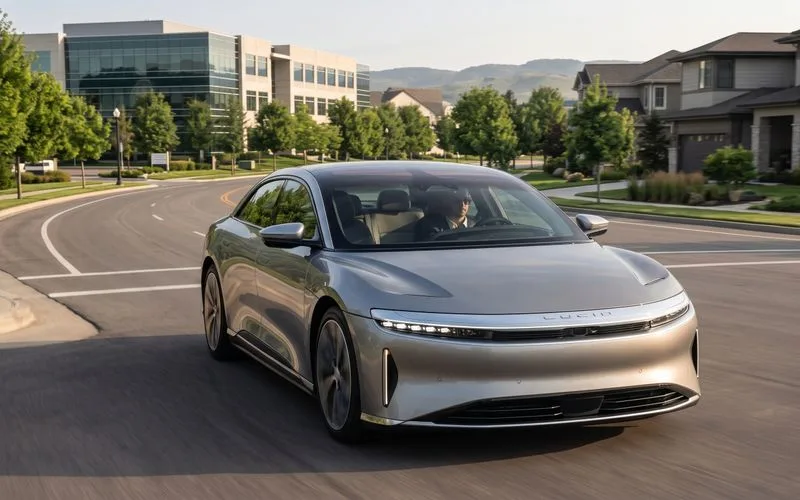 Lucid AirFull-Size Luxury SedanBetter at: Range and charging
It delivers up to 512 miles of range and 300-plus kW charging for roughly a third of the Celestiq's price, making it the objectively better electric car for anyone not paying for exclusivity.
Compare 3.52A-
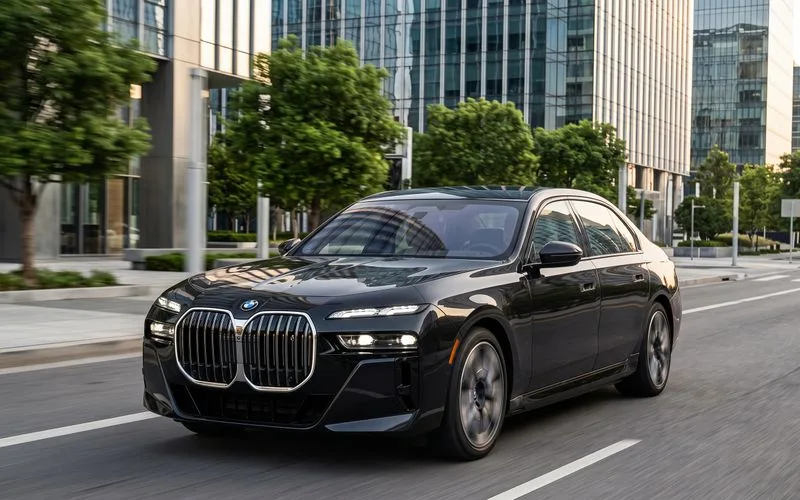 BMW i7Full-Size Luxury SedanBetter at: Practical flagship
A five-seat electric flagship with more range, published crash ratings, and a dealer network that can actually repair it — most of the experience with none of the bespoke-ownership risk.
Compare 3.50A-
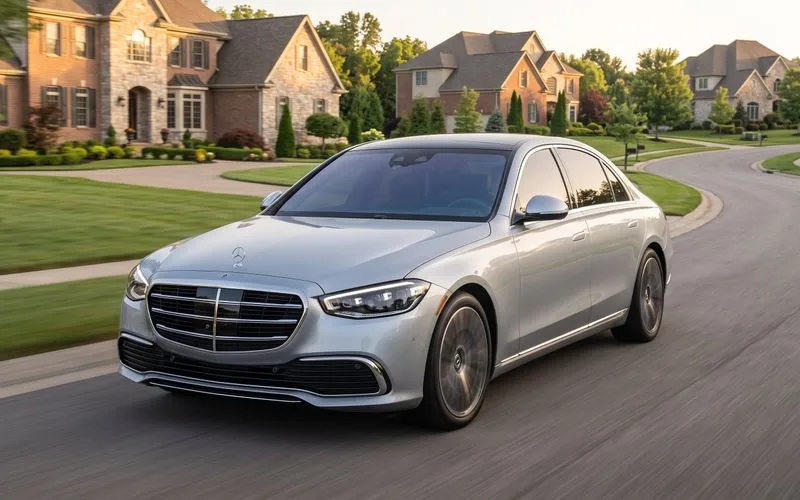 Mercedes-Benz S-ClassFull-Size Luxury SedanBetter at: Resale value
For a buyer whose real objection is 303 miles and 40-minute charge stops, the gasoline S-Class offers the same chauffeur-grade rear seat with no range math and a far more predictable resale curve.
CompareProduction history
Best fit & conditions
Higher scores mean a better fit for that use case. Learn more about use-case fit →
Subject profile
Academic Probation · NHTSA safety recalls
No NHTSA safety recall is on record for the 2026 Cadillac Celestiq. Nothing is on record for any 2025–2026 Celestiq either.
Source: NHTSA Office of Defects Investigation recall database, model years 2025–2026. Recalls are listed by model year as the manufacturer filed them; whether a specific car is affected depends on its VIN — check a VIN at nhtsa.gov ↗.
Detailed scoring by subject
1Performance & PowertrainOne of the Celestiq's strongest categories.3.90A+
Hand-built ultra-luxury flagship EV with a single powertrain: dual permanent-magnet motors on the Ultium platform producing 655 hp in Velocity Max launch mode; carried over from the 2024 launch spec for 2026.
Instant-on EV torque well above sedan-class norms; delivered by the dual-motor Ultium powertrain in Velocity Max launch mode.
Cadillac quotes 3.8 s to 60 mph in Velocity Max mode for this ~5,800 lb hand-built EV; instrumented independent tests are scarce given the ultra-low production volume.
Dual-motor EV delivery is silent, seamless, and utterly lag-free; reviewers uniformly describe the Celestiq as one of the most refined luxury powertrains on sale, with wafting effortlessness expected of a $340k Cadillac flagship.
Single-speed direct-drive reduction gear on each axle — no shifts, no hunting, no drone; paddles modulate regen rather than gear selection.
Dual-motor all-wheel drive is standard and the only configuration offered; paired with sophisticated torque distribution, standard four-wheel steering, and Magnetic Ride Control 4.0.
A single hand-built EV powertrain, take-it-or-leave-it — the Celestiq is bespoke on materials and trim but the drivetrain is not configurable; no gas, hybrid, PHEV, or alternate motor variant exists.
2Efficiency & RangeMid-pack among this car's ten categories.2.09C
EPA now lists the 2026 Celestiq (certified 2026-02-18), replacing the prior estimate: 81 MPGe combined, or 41.7 kWh/100 mi. That is the low end of the EV field — a ~6,300 lb hand-built aluminum-spaceframe liftback on GM's 400V Ultium BEV3 platform pays for its mass, and the Lucid Air's ~130 MPGe is a different league.
Regenerative braking lifts the city figure only modestly above combined — 84 MPGe against 81 — a narrow city/highway spread that is characteristic of heavy, low-drag EVs where mass, not aero, is the dominant loss.
77 MPGe highway on the EPA cycle, worth 287 miles of highway range. The swept liftback profile keeps the highway penalty small in percentage terms, but the absolute figure trails every mainstream EV sedan.
EPA confirms the 303-mile figure Cadillac has quoted since launch — now a certified rating rather than a manufacturer estimate. A 111 kWh pack returning only 303 miles is the efficiency story restated: the Lucid Air (410–512 mi) and Tesla Model S (~400 mi) go substantially farther on less energy, and the BMW i7 (~318 mi) and EQS (~340–390 mi) also clear it.
Cadillac quotes up to 200 kW peak DC, which the 400V Ultium architecture caps — respectable in absolute terms but middling for a $340k flagship next to the 800V Lucid Air (300+ kW), Taycan (320 kW) and Model S (250 kW). EVKX's independent charging-curve data puts the observed peak nearer 190 kW; the manufacturer figure is used here per source precedence.
Roughly 40 minutes for 10–80%, which is what a 78 kWh transfer at a 200 kW-peak, 400V-tapering curve implies and what published figures report. Slow for the class: 800V rivals do the same job in 18–25 minutes, so the Celestiq loses more time on a road trip than any of its price peers.
EPA's own annual energy cost is $950 — far cheaper than any gasoline full-size luxury sedan (EPA credits a $6,250 five-year saving vs. the average new vehicle), but the highest among EV sedans because 42 kWh/100 mi is the worst electric efficiency in the class. Replaces the prior derived ~$1,150 estimate.
No fuel grade to buy, but keeping a 111 kWh pack topped up is install-dependent: EPA lists 8 hours on a standard 240V Level 2 circuit, and cutting that to ~5h35m needs the optional 19.2 kW onboard charger and the 100A service to feed it. The 400V CCS architecture also means an adapter for the Tesla Supercharger network and the slowest DC sessions in the price class. Middling energy cost per mile at 42 kWh/100 mi. Scored below the 80+ band, which the framework reserves for 800V or NACS-native cars with low real-world cost per mile — the prior 88 overstated it.
3SafetyOne of the Celestiq's strongest categories.3.23B+
NHTSA has not crash-tested the Celestiq — hand-built, ultra-low-volume vehicles (~400/year target) typically fall outside NHTSA's tested fleet. Inferred at 4 stars from Ultium-platform siblings and the segment norm for large luxury EVs.
IIHS has not tested the Celestiq and, given the bespoke production volume, likely will not. No award status can be claimed. Body-in-white uses aluminum-intensive construction with mixed-material reinforcements — plausibly competitive if tested — but without published results the score has to reflect the absence of evidence rather than an assumed pass.
Every ADAS feature GM offers is standard: forward collision alert with AEB, front pedestrian & bicyclist detection with braking, lane keep assist with departure warning, lane change alert with side blind zone alert, rear cross traffic braking, rear pedestrian alert, adaptive cruise control, HD Surround Vision, night vision, and Super Cruise. There is only one trim, so no feature is optional.
GM's current-generation AEB with front pedestrian & bicyclist detection has performed well on IIHS front crash prevention testing across the Cadillac lineup (Lyriq, CT5, Escalade all rated well in vehicle-to-vehicle scenarios). Celestiq is not individually tested, but shares the sensor stack — camera plus radar with night pedestrian coverage from the standard night vision system.
Standard side blind zone alert with lane change alert, rear cross traffic braking (with intervention, not just alert), rear pedestrian alert, and safe exit alert. Coverage is comprehensive and active — one of the more complete blind-spot/cross-traffic packages available.
Standard lane keep assist and — via Super Cruise on mapped roads — the best-in-class hands-free lane centering GM offers, with high-precision LiDAR-mapped path following and confident, non-ping-ponging behavior widely praised in reviews of the shared Cadillac Escalade IQ / Lyriq platform.
Full-speed-range adaptive cruise with stop-and-go standard, and Super Cruise's automatic lane change functionality is a class-leading highway assist implementation. Reviewers consistently rate the combined behavior at or near the top of the segment.
Super Cruise is standard with the widest hands-free road network of any production system — over 750,000 miles of enabled divided highways across the US and Canada in 2026, plus automatic lane change and trailer support (unused here). Mature driver monitoring via infrared camera. Only limits vs. Ford BlueCruise 1.4 are broader city/undivided-road coverage.
Adaptive LED matrix headlights with intelligent beam and DRL choreography are standard. IntelliBeam auto high beam is standard. Headlights have not been individually IIHS-rated, but the hardware — matrix LEDs with beam-pattern segmentation — is best-in-class technology; performance is inferred as strong.
Long, low-slung sedan (~53 in tall) with a raked greenhouse, thick D-pillars, and a small rear glass area — natural sightlines are typical of a full-size luxury sedan, not great. Compensation is thorough: HD Surround Vision with a 360° camera, rear camera mirror, and standard night vision cover the deficits.
Standard configuration is a 4-passenger rear-executive layout with two reclining rear captains chairs (a full-length console between them), which precludes any center rear seat. LATCH anchors on both outboard rear seats are accessible and the wheelbase is enormous (121.8 in), so leg room is generous — but you cannot fit 3-across, and the low, wide doors sit close to the ground with a low roofline that can complicate loading a rear-facing seat.
4Space & ComfortGrades above the middle of the scale.2.97B-
Celestiq is sold exclusively as a hand-built 4-passenger bespoke sedan with a continuous console between the front and rear buckets — no 5-seat configuration is offered.
Fastback silhouette (~57-in overall height) with fixed Smart Glass Roof modestly constrains front headroom despite a low-mounted floor from the skateboard EV architecture.
Long (~121-in) wheelbase and bespoke ergonomics deliver generous front legroom typical of the ultra-luxury full-size class.
Sloping fastback roofline compromises rear headroom relative to formal three-box competitors like the Mercedes S-Class and BMW 7 Series.
Executive-style rear buckets with power recline and long wheelbase provide class-leading rear legroom, matching or exceeding LWB S-Class/i7 levels.
Fastback profile and rear battery packaging keep trunk capacity middle-of-the-pack for a full-size sedan; there is no frunk.
Continuous full-length console offers premium storage cubbies with crystal and metal detailing, but the 4-seat-only layout and console-heavy design limit outright flexibility versus 5-seat rivals.
26-way power front seats and executive-style rear buckets with massage, heat, and ventilation as standard place seat comfort at the top of the ultra-luxury segment.
Air suspension with Magnetic Ride Control 4.0 plus standard rear-wheel steering delivers a plush, composed ride widely praised in first-drive reviews.
Silent EV powertrain, laminated acoustic glass throughout, active noise cancellation, and hand-crafted sound insulation make the cabin among the quietest in any production sedan.
Four-zone automatic climate, heated/ventilated/massaging seats for all four occupants, heated armrests and steering wheel, and the SPD Smart Glass Roof with four-zone selectable tint place amenity content at the very top of the segment.
5Cost of OwnershipThe Celestiq's lowest-graded category.0.00F
The Celestiq is a hand-built, coach-built flagship EV commissioned at Cadillac House at GM's Warren, MI Global Technical Center; entry pricing starts at $340,000 including destination for 2026, far above the sedan normalization band.
There is no true 'volume trim' — every Celestiq is bespoke through Cadillac's commissioning studio. Reported representative build cost lands in the $340K–$400K+ range; used $360,000 as a mid-point.
EV powertrain reduces routine service (no oil changes, minimal brake wear from one-pedal driving), and Celestiq owners get white-glove pickup/delivery service. However, out-of-warranty repairs on bespoke interior/body parts and 23-inch bespoke wheels/tires could be very expensive; midrange sedan estimate reflects the EV upside offset by ultra-luxury parts risk.
New-generation ultra-luxury EVs have shown steep early depreciation (Lucid Air, Mercedes EQS), and no strong precedent for GM ultra-luxe residuals. Extreme rarity (very low production, ~1/day build cadence) provides some support, but the small buyer pool and rapid EV tech evolution limit resale strength.
Standard Cadillac bumper-to-bumper coverage of 4 years / 50,000 miles applies to the Celestiq — competitive with German luxury peers but no longer segment-leading.
As an EV, the load-bearing coverage is the 8-year / 100,000-mile battery and high-voltage propulsion warranty (federal minimum honored by Cadillac). The 6 yr / 70,000 mi conventional powertrain warranty also applies.
The Celestiq ownership package is white-glove: a dedicated concierge (single point of contact for the life of ownership), vehicle pickup/delivery for any service, personalized commissioning support, premium OnStar/connected-services trial, and inclusion in Cadillac House owner events. Cadillac dropped brand-wide complimentary scheduled maintenance in 2017, but the Celestiq's bespoke ownership experience delivers meaningful multi-year perks that go well beyond typical luxury programs.
$360,000 volume-trim price minus its estimated resale value after 5 years (40% retained, or about $144,000) leaves about $216,000 in depreciation. Add the projected $4,500 in 5-year maintenance and repairs, and owning this vehicle for 5 years costs about $220,500 in total.
6Reliability & QualityMid-pack among this car's ten categories.2.38C+
The Celestiq is far too new and low-volume (~400 units/year) for Consumer Reports predicted-reliability or J.D. Power dependability coverage. It inherits the Ultium platform, whose early implementations in the Lyriq and Hummer EV have seen recurring software, charging, and 12V-electronics teething issues. Hand assembly should catch some defects but also introduces per-unit variability.
Cadillac has landed mid-to-lower in Consumer Reports brand reliability rankings in recent years and typically posts average results in J.D. Power's VDS — improving but not top-tier. Recent Ultium launches have dragged the brand rather than lifted it.
The Celestiq itself has seen only a small number of NHTSA campaigns given its tiny fleet, but the shared Ultium hardware (LG battery modules, BMS software, integrated charging module) has been the subject of multiple broader GM EV recalls and stop-sale actions in 2023–2025. Nothing catastrophic specific to the Celestiq is known, but exposure to platform-wide campaigns is elevated.
The Celestiq's dual permanent-magnet Ultium motors, 111 kWh pack, and 400V architecture are only ~4 years into fleet exposure across the Ultium family, and the platform has had known software/BMS bugs. No widespread motor or pack-degradation red flags have surfaced yet, but the powertrain family remains unproven long-term versus Lexus or German legacy luxury drivetrains.
The Celestiq's cabin is essentially bespoke: hand-stitched semi-aniline leather, real hardwood veneers, exposed metals, crystalline switchgear, and unique fabrics/trims specified through Cadillac's Reserve personalization program. Reviewers consistently place it in Rolls-Royce/Bentley territory for material richness — well ahead of the Lucid Air (92) and Mercedes-Maybach EQS.
Each Celestiq is hand-assembled at GM's Global Technical Center in Warren, Michigan under a dedicated craft-build process with extensive QC, and early reviews describe assembly as tight and consistent. However, the model is far too new for J.D. Power IQS coverage, and hand-built low-volume vehicles historically show more per-unit variance than robot-built luxury sedans from Lexus or Mercedes.
Celestiq buyers deal with a small subset of Cadillac dealers certified for the model (a few dozen 'Celestiq-authorized' locations in the US) but benefit from a bespoke concierge program including home pickup/delivery, loaner cars, and direct factory support. Any GM-network dealer can still handle routine EV service, giving broader mechanical coverage than boutique EV brands like Lucid.
Nearly every visible component is bespoke or hand-fitted, including the 55-inch pillar-to-pillar OLED display, four-quadrant SmartGlass roof, custom leather sets, and cast-aluminum body sections; replacement lead times are effectively factory-order and collision repair requires factory-certified shops. There is no aftermarket, and insurance and repair costs are among the highest of any US-market sedan.
7Technology & InfotainmentThe Celestiq's best-graded category.4.00A+
Standard 55-inch advanced LED display spans the entire dashboard as a single pillar-to-pillar 4K unit containing driver cluster, infotainment, and a passenger screen with active privacy. Well beyond the sedan normalization cap.
Google Built-in stack (Assistant, Maps, Play Store) atop bespoke Celestiq graphics, backed by the industry's largest in-car display. Reviewers praise the responsiveness and integration; slight complexity from the multi-display architecture prevents a top-of-class rating.
Wireless Apple CarPlay and wireless Android Auto standard on the single trim.
Google Assistant handles natural-language voice, and Google Maps is the native navigation with live traffic and EV routing — regarded as the strongest OEM voice/nav stack in the segment.
Standard 38-speaker AKG Studio Reference system custom-engineered for the Celestiq, with front-seat headrest speakers and Dolby Atmos. Among the most elaborate audio installations in any production car.
Driver cluster is a fully configurable segment of the pillar-to-pillar 4K LED display, with high resolution and multiple layouts. Standard on the sole trim.
Built on GM's Ultifi software platform with full-vehicle OTA updates spanning infotainment, ADAS, and vehicle controls — the same pipeline delivering Super Cruise expansions to Cadillac EVs.
myCadillac app provides remote start/climate, lock/unlock, locate, charge scheduling and monitoring, plus Digital Key (phone-as-key) via UWB. Polished for the flagship, though some connected services are subscription-gated after the trial.
Wireless charging pad standard, USB-C ports across all four seating positions, plus dedicated rear-seat entertainment power and executive rear console. No AC household outlet, but ample device support otherwise.
Standard proximity entry with hands-free 'welcome' choreography (illuminated door handles, sequenced lighting), push-button start, remote start via app, and UWB Digital Key phone-as-key.
HD Surround Vision (360-degree camera) standard with high-resolution imagery, front and rear parking sensors, and Reverse Automatic Braking. Cameras also support the standard Super Cruise hands-free driver assist.
Celestiq does not offer a traditional windshield HUD; the pillar-to-pillar 55-inch display and its dedicated driver segment are positioned as the primary information surface. Loses points versus S-Class/EQS/i7, which pair AR-HUDs with their large displays.
8Use-Case FitOne of the Celestiq's weakest categories.1.33D
Bespoke 4-passenger 2+2 layout with a full-length center console dividing the rear buckets means no middle rear seat and no three-across — a hard structural limit for families with more than two kids. Low fastback roofline and delicate hand-crafted materials (crystal, wood inlays, Nappa leather) make daily car-seat wrangling stressful in a way ordinary luxury sedans aren't.
Every safety and ADAS system is standard (Super Cruise hands-free, AEB, blind-spot, rear-occupant alert, 360° camera) and the Ultium chassis is engineered to modern crash norms, but ultra-low production volume means no NHTSA or IIHS crash-test ratings exist and the $340k+ entry price is entirely outside the range families shop.
Executive rear buckets with massage, heat, and ventilation, quad-zone climate, four-zone electrochromic Smart Glass Roof, and a whisper-quiet cabin make the rear an exceptional lounge — but 4-seat-only capacity and a modest 15.6 cu-ft trunk with no frunk cap family utility, and 303-mi range is only middling.
Standard four-wheel steering, air suspension with Magnetic Ride Control 4.0, silent instant-torque EV powertrain, one-pedal driving, and Super Cruise hands-free adaptive cruise make daily manners as effortless as any luxury flagship — the only friction is a 217-inch, 6,300-lb footprint that owners will feel in tight environments.
EV per-kWh energy cost is low (≈$1,150/yr at 15k mi and 76 MPGe combined), but tires, insurance, and hand-built dealer service on a $340k+ coach-built vehicle are stratospheric — total per-mile commuting cost is dramatically higher than typical EVs like a Model 3 or Ioniq 6 despite the cheap electricity.
Standard rear-wheel steering meaningfully shrinks the turning circle and a 360° camera suite eases tight spots, but the Celestiq's ~217-inch overall length and near 6,300-lb curb weight make it a genuine handful in urban garages and older parking structures.
No manufacturer tow rating, no bed, no payload spec beyond four passengers, and a 15.6 cu-ft trunk oriented around luggage — nothing about the Celestiq is configured for work duty of any kind.
Hand-crafted crystal accents, wood veneers, semi-aniline leather, and the SPD Smart Glass Roof are the antithesis of a work-duty interior; the Celestiq has no fleet, commercial, or work-vehicle heritage — this is the least abuse-tolerant vehicle in the segment.
No V2L 120V outlets in US spec, no tie-downs, no bed access, no upfit ecosystem, and no washable surfaces — essentially none of the work-oriented provisions the framework rewards.
Executive rear seats, active noise cancellation, laminated acoustic glass, and Super Cruise hands-free highway assist make it a superb mile-eater on comfort and refinement, but the 303-mile EPA range trails the Lucid Air (up to 512 mi), EQS (~350–390 mi), and BMW i7 (~318 mi), and ~190-kW peak DC fast-charging is slower than 800V competitors.
Low-slung fastback with adaptive air suspension but sedan-class ground clearance, no factory roof rails, no tow rating, and a bespoke interior that recoils from mud or gear — AWD standard is the only genuine adventure asset.
Modest 15.6 cu-ft fastback trunk with no frunk, no rear-seat fold (the executive 2+2 rear buckets are fixed), no roof rails, and no factory hitch — gear-hauling flexibility is far behind hatchback rivals like the EQS (~22/63 cu ft) or the Lucid Air (32 cu ft with frunk and 60/40 fold).
9Driving ExperienceGrades above the middle of the scale.3.06B
Roughly 5,800-lb ultra-luxury EV with air suspension, standard Magnetic Ride Control 4.0, four-wheel steering, and dual-motor torque vectoring; first-drive reviews describe it as composed and more agile than its size and weight suggest, but firmly tuned for opulent isolation rather than sports-sedan sharpness. Trails a Lucid Air Sapphire or Taycan in cornering intent while comfortably clearing the full-size luxury bar.
Variable-ratio electric rack paired with active rear-wheel steering delivers precise, effortless response and a tight low-speed turn-in, but reviewers describe the on-center weighting as luxury-numb rather than communicative — appropriate for the mission, not memorable to enthusiasts.
Large fixed Brembo calipers with blended one-pedal regeneration haul down the ~5,800-lb sedan with a firm pedal and no reported fade in reviews; regen hand-off is transparent, though the ultra-low production volume means very little independent instrumented brake-test data exists.
Dual permanent-magnet motors on the Ultium platform deliver silent, lag-free thrust with no shift interruptions; tip-in calibration is soft-launch by default and only bites hard in Velocity Max, matching the flagship's wafting brief. Widely described as one of the most refined luxury powertrains on sale.
Standard acoustic laminated glass, extensive underbody sealing, and active noise cancellation keep the EV drivetrain effectively inaudible at cruise; motor whine is faint even under full-throttle launches. Class-leading NVH per reviewers.
Standard rear-wheel steering trims the effective turning circle of the 216-inch, 121-inch-wheelbase Celestiq to about 39.4 ft curb-to-curb — impressive for its footprint, but still near the bottom of the full-size sedan band because the car is enormous by segment norms.
Bespoke seat build with wide power adjustment, a commanding low-slung position, and generous sightlines; primary controls fall to hand cleanly, though the 55-inch pillar-to-pillar display and lack of a traditional gauge cluster take acclimation, and the low nose combined with the long hood limits close-in forward judgement.
Character is effortless GT wafting rather than driver-focused engagement — the 655-hp Velocity Max launch is genuinely thrilling in a straight line, but the Celestiq's soft-touch controls, isolation-first chassis tune, and massive mass make it a car to be enjoyed rather than exploited. Chauffeur-flagship charm, not a Lucid Sapphire or Taycan alternative.
10Value & Market PositionOne of the Celestiq's weakest categories.1.97C-
Every Celestiq is delivered turnkey with the full feature set — 55-inch pillar-to-pillar display, Ultra Cruise hands-free highway driving, four-quadrant SPD Smart Glass roof, executive rear seats with massage, Dolby Atmos AKG 38-speaker audio, air suspension with rear-wheel steering — all standard. There is no options checklist, only bespoke finishing choices; that is markedly more generous than a Rolls-Royce Spectre or Maybach EQS, which still price paint and cabin trims as extras.
Starting around $340,000 (typical bespoke builds land $360–420K), the Celestiq's underlying EV hardware — Ultium platform, ~600 hp dual motors, ~303-mile EPA range, ~200 kW DC fast-charging — is shared conceptually with Lyriq/Escalade IQ that cost a small fraction as much. A Lucid Air Grand Touring delivers longer range and faster charging for roughly one-third the money; the value case rests on bespoke craftsmanship and exclusivity, not tech-per-dollar.
The Celestiq is a one-trim, one-powertrain lineup — no cheaper on-ramp, no LWB/short-wheelbase choice, no performance variant. The bespoke commissioning process yields near-limitless personalization of paint, hides, veneers and finishes, but by the framework's definition (breadth of price points and configurations to match budgets) it is take-it-or-leave-it.
Production is intentionally ultra-low; reporting since the 2024 launch has pegged actual US deliveries in the low double digits per year, well beneath Rolls-Royce Spectre volumes. Judged as a mass-market metric this is a very slow seller, though exclusivity is the point rather than a failure of the product.
Cadillac carries strong nostalgic prestige in the US and has rebuilt luxury credibility with Escalade, Lyriq and the V-Series line, but still trails the top European ultra-luxury tier (Rolls-Royce, Bentley) in global cachet. The Celestiq is explicitly the halo intended to close that gap, and the willingness of buyers to sign at this price point signals meaningful, if still-emerging, aspirational pull.
Distributed by allocation through a limited Cadillac concierge dealer network with no negotiation, no factory incentives, and no financing subventions; buyers commission a car and pay MSRP (or above via aftermarket). There is essentially no buyer-side deal available.
All-new nameplate on GM's Ultium platform, first delivered in late 2023 as a 2024 model; 2026 is only the third model year with no announced refresh or replacement. As fresh as a nameplate gets.
Reviews from MotorTrend, Car and Driver and Road & Track consistently praise the hand-finished interior, the pillar-to-pillar display and Ultra Cruise integration, but temper enthusiasm over EV performance (range and DC-fast-charging peak trail Lucid Air) and value relative to European bespoke rivals. No major NACTOY/10Best-tier honors — the ultra-luxury bespoke segment does not lend itself to conventional comparison tests.