
The verdict
A mixed-report compact luxury suv, strong on value and held back by ownership.
The 2026 Optiq is the rare luxury EV that gives you almost everything on the cheapest version: $52,695 delivered buys a 33-inch curved screen, a 19-speaker AKG stereo, and Super Cruise hands-free highway driving with three years of service included — content rivals charge thousands for or don't sell at all. It's quiet, quick (4.5 seconds to 60 mph with the $3,500 all-wheel-drive setup), and startlingly cheap to run at about $700 a year in electricity. The catch list is real, though: no Apple CarPlay or Android Auto in any form, 150 kW fast charging that needs 40-plus minutes for a highway top-up, a 26 cu ft cargo hold with no front trunk, and depreciation that puts roughly 60% of your money on the floor in five years. Buy it if you charge at home, drive mostly locally, and can live without your phone on the screen.
Jump to scoresStrengths
- The cheapest luxury SUV to run, by a wide margin
- Super Cruise standard on every trim, including the base car
- Tech and audio that outclass the price tag
What holds it back
- Depreciation is brutal, and insurance isn't cheap either
- No Apple CarPlay or Android Auto — at all
- Almost nothing can be towed, hauled on the roof, or folded into the back
Top alternatives
Cars shoppers cross-shop with the Cadillac Optiq 2.60C+
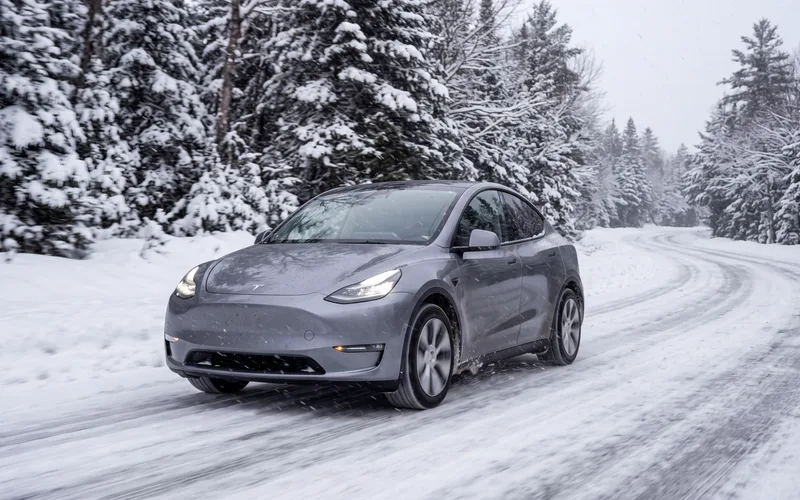 Tesla Model YCompact SUVBetter at: Charging speed
If you take road trips, the Model Y's charging speed and Supercharger density solve the Optiq's single worst practical weakness — and it depreciates less.
Compare 2.73B-
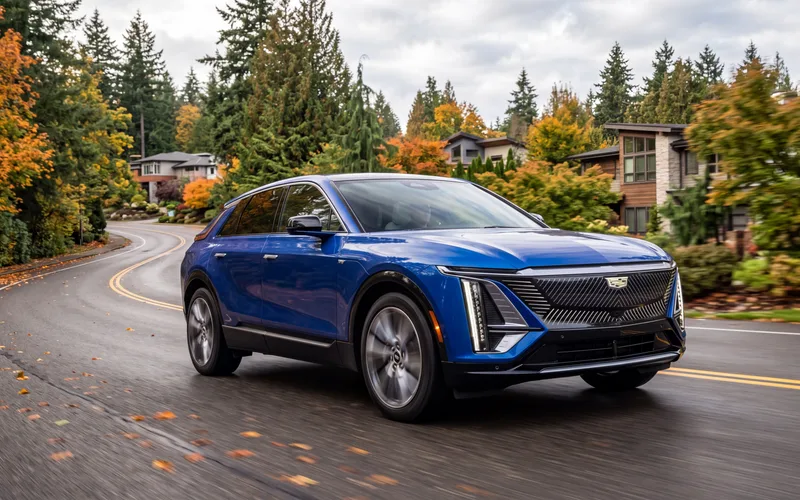 Cadillac LyriqMid-Size Luxury SUVBetter at: Space and CarPlay
Spend about $8,000 more in the same showroom and you get more space, more range and the Apple CarPlay the Optiq will never have.
Compare 2.06C
2.06C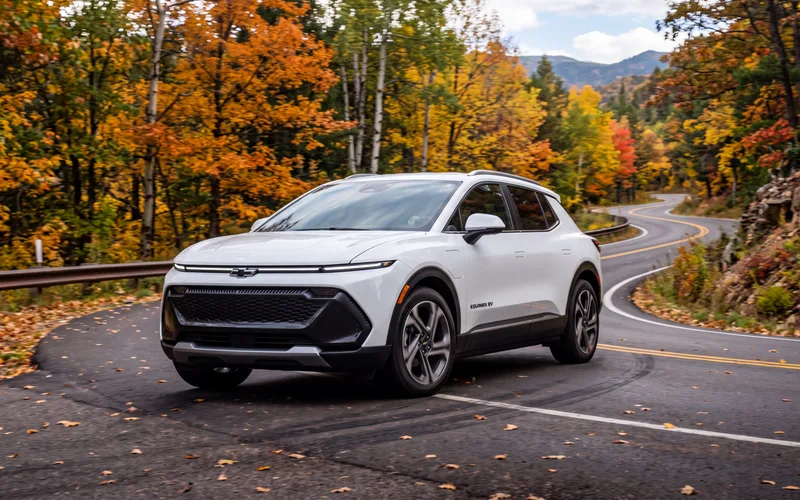 Chevrolet Equinox EVCompact SUVBetter at: Price
Same GM electric hardware and the same tech limitations for tens of thousands less, if the Cadillac badge and materials aren't what you're buying.
CompareProduction history
Best fit & conditions
Higher scores mean a better fit for that use case. Learn more about use-case fit →
Subject profile
Academic Probation · NHTSA safety recalls
Sep 24, 2026Electrical system: body control module: software · Visibility: power window devices and controlsWhen closed using the key fob's express-up function, the front windows may fail to detect an obstruction and reverse direction. As such, these vehicles fail to conform to Federal Motor Vehicle Safety Standard (FMVSS) number 118, "Power-Operated Window Systems."
Defect
General Motors, LLC (GM) is recalling certain 2025-2027 Cadillac OPTIQ vehicles. When closed using the key fob's express-up function, the front windows may fail to detect an obstruction and reverse direction. As such, these vehicles fail to conform to Federal Motor Vehicle Safety Standard (FMVSS) number 118, "Power-Operated Window Systems."
Risk
A closing window that does not reverse direction as expected can pinch a passenger before retracting, increasing the risk of injury.
Remedy
The body control module (BCM) software will be updated by a dealer or through an over-the-air (OTA) update, free of charge. Owner notification letters are expected to be mailed November 9, 2026. Owners may contact Cadillac customer service at 1-800-458-8006. GM's number for this recall is N262567230. Vehicle Identification Numbers (VINs) involved in this recall became searchable on NHTSA.gov on September 24, 2026.
NHTSA campaign 26V612000 ↗Manufacturer no. N26256723029,347 vehicles potentially affected (all models in the campaign)Filed by General Motors, LLCFiled as OPTIQFeb 26, 2026Equipment: other: owners/service/other manualGeneral Motors has decided that certain 2027 Chevrolet Bolt EV, 2025-2026 Cadillac OPTIQ, Chevrolet Colorado, Equinox EV, GMC Canyon, 2026 Buick Enclave, Envision, Cadillac CT5, Escalade, Escalade ESV, Escalade IQ, Escalade IQL, LYRIQ, VISTIQ, Chevrolet Blazer EV, Corvette Convertible, Corvette Coupe, Corvette Convertible E-Ray, Equinox, Silverado 1500, 2500, 3500, Silverado EV, Suburban 1500, Tahoe, Traverse, GMC Acadia, Hummer EV Pickup, Hummer EV SUV, Sierra 1500, 2500, 3500, Sierra EV, Terrain, Yukon, and Yukon XL vehicles. The radio may not have been set to the correct status to download the electronic owner's manual during production. As such, these vehicles fail to comply with the requirements of Federal Motor Vehicle Safety Standard number 208, âOccupant Protection.â
Defect
General Motors has decided that certain 2027 Chevrolet Bolt EV, 2025-2026 Cadillac OPTIQ, Chevrolet Colorado, Equinox EV, GMC Canyon, 2026 Buick Enclave, Envision, Cadillac CT5, Escalade, Escalade ESV, Escalade IQ, Escalade IQL, LYRIQ, VISTIQ, Chevrolet Blazer EV, Corvette Convertible, Corvette Coupe, Corvette Convertible E-Ray, Equinox, Silverado 1500, 2500, 3500, Silverado EV, Suburban 1500, Tahoe, Traverse, GMC Acadia, Hummer EV Pickup, Hummer EV SUV, Sierra 1500, 2500, 3500, Sierra EV, Terrain, Yukon, and Yukon XL vehicles. The radio may not have been set to the correct status to download the electronic owner's manual during production. As such, these vehicles fail to comply with the requirements of Federal Motor Vehicle Safety Standard number 208, âOccupant Protection.â
Risk
Without an owner's manual to consult, owners may not know how to safely use and operate the vehicle, increasing the risk of injury in a crash.
Remedy
Dealers will reset the vehicle radio, which will facilitate automatic download of the electronic ownerâs manual, free of charge. Owner notification letters were mailed April 16, 2026. Owners may contact GM customer service at 1-866-467-9700, Chevrolet customer service at 1-800-222-1020 or Cadillac customer service at 1-800-333-4223. The manufacturer's number for this recall is N252540430. Vehicle Identification Numbers (VINs) involved in this recall became searchable on NHTSA.gov on February 26, 2026.
NHTSA campaign 26V114000 ↗Manufacturer no. N2525404305,861 vehicles potentially affected (all models in the campaign)Owners notified Apr 16, 2026Filed by General Motors, LLCFiled as OPTIQOct 16, 2025Tires: tread/beltOne or more of these tires may experience partial or full tread detachment.
Defect
General Motors, LLC (GM) is recalling certain 2025-2026 Cadillac Optic and 2025-2026 Chevrolet Equinox EV vehicles equipped with 21-inch Continental all-season tires. One or more of these tires may experience partial or full tread detachment.
Risk
Tire tread detachment increases the risk of a crash.
Remedy
Dealers will inspect all four tires and replace those manufactured during DOT week 4024, free of charge. Owner notification letters were mailed November 19, 2025. Owners may contact Cadillac customer service at 1-800-333-4223, or Chevrolet customer service at 1-800-222-1020. GM's number for this recall is N252525030. Vehicle Identification Numbers (VINs) involved in this recall will be searchable on NHTSA.gov beginning October 16, 2025.
NHTSA campaign 25V704000 ↗Manufacturer no. N25252503022,914 vehicles potentially affected (all models in the campaign)Owners notified Nov 19, 2025Filed by General Motors, LLCFiled as OPTIQ
Source: NHTSA Office of Defects Investigation recall database, model years 2025–2026. Recalls are listed by model year as the manufacturer filed them; whether a specific car is affected depends on its VIN — check a VIN at nhtsa.gov ↗. NHTSA model names matched to this page: OPTIQ.
Detailed scoring by subject
1Performance & PowertrainMid-pack among this car's ten categories.2.03C
2026 is a major change year: the Optiq drops the 2025 AWD-only 300-hp setup for a new 315-hp single-motor RWD base and a re-rated 440-hp dual-motor AWD, plus a new 519-hp Optiq-V. Scored on the AWD configuration, consistent with how other RWD-base/AWD-optional EVs in this dataset are scored.
AWD torque rises from 354 lb-ft in 2025 to 498 lb-ft for 2026 — near the top of the SUV normalization band and a standout figure for a compact luxury crossover.
Cadillac does not publish a 0–60 figure on its own spec page; 4.5 s for the 440-hp AWD is the consistently reported 2026 figure. Instrumented 2026 testing so far covers the Optiq-V (Edmunds: 3.7 s) and the older 300-hp AWD car (Edmunds: 5.9 s), so the AWD number is not yet independently verified.
Typical of a well-sorted Ultium dual-motor EV: instant, linear thrust with no lag or driveline coarseness, and the 2026 power bump adds meaningful urgency. Marked below the Lyriq because the Optiq is the brand's entry EV and reviews are more mixed on overall polish.
Single-speed EV drive with seamless delivery and no gear hunting; full one-pedal driving with two intensity settings plus an on-demand regen paddle. Docked from the Lyriq's mark because reviewers criticize the paddle hardware itself rather than the calibration.
A token rating near the bottom of the SUV band — enough for a small utility trailer or a pair of bikes on a hitch carrier, well short of the 2,300–3,500 lbs its EV rivals manage. Uniform across the lineup, so there is no better-equipped configuration to score.
Dual-motor AWD is a $3,500 option on every trim and standard on the Optiq-V, so it is widely available but no longer standard as it was in 2025. Operation is straightforward electric torque split — no low range, locking differentials or terrain-specific modes.
Strictly pavement-oriented: 6.0 in of ground clearance is below even the Lyriq's 7.0 in, with no skid plates, no off-road trim, no locking differentials and a 5,000-lb-plus battery-floor architecture. Gravel and dirt roads are the practical ceiling.
One battery and one propulsion technology: a single 85 kWh Ultium pack in every US Optiq, offered as single-motor RWD, dual-motor AWD or the Optiq-V tune. Broader than the 2025 AWD-only car, but there is no gas, hybrid or alternative-battery choice at all.
2Efficiency & RangeMid-pack among this car's ten categories.2.17C
The Optiq is battery-electric only, so EPA rates it in MPGe: 105 combined for the single-motor RWD configuration that becomes the standard drivetrain for 2026. That is the most efficient Cadillac sold and comfortably ahead of the Lyriq (92 MPGe) — the same 85-kWh Ultium pack in a smaller, lighter compact body. 2026 is a change year, not a carry-over: RWD was added below the previously AWD-only lineup.
City is the Optiq's strongest cycle at 117 MPGe — one-pedal driving and the Regen on Demand paddle recover most stop-and-go energy, and at 5,192 lb the Optiq carries several hundred pounds less than the Lyriq it shares its architecture with.
Highway falls to 93 MPGe, the usual EV pattern for a tall crossover on standard 20-inch all-seasons (21s optional, which cost further efficiency). It still tops the segment's electric field, but it means sustained-speed road-trip range lands meaningfully under the 317-mile sticker.
317 miles from the 85-kWh usable Ultium pack is a competitive figure for a compact luxury EV and a 15-mile gain over the 2025 AWD-only car's 302 miles, earned by the new single-motor RWD drivetrain rather than a bigger battery. On the 230–600 mi SUV band — a scale shared with 500-mile gas crossovers — it still normalizes low, which is the structural penalty every EV takes on this item.
150 kW is the Optiq's weakest efficiency-category number: the 400 V Ultium architecture caps well below the 175–350 kW of 800 V rivals, and an independent Supercharger test measured a 147 kW peak that had already tapered to 67 kW by 65% state of charge. Native NACS access buys the Optiq more places to plug in, not more speed once it is plugged in.
Cadillac publishes miles-per-10-minutes rather than a 10–80% time, so this is corroborated from charging-curve data: ~59.5 kWh of the 85 kWh pack at a ~95 kW average works out near 40 minutes, and the early taper means road-trip stops run long for the segment. Confidence is MEDIUM because no manufacturer 10–80% number exists to check it against.
$700/yr on EPA's standard 15,000 mi assumption is the cheapest running cost of any vehicle in this dataset's luxury SUV field and roughly a fifth of what a premium-fuel compact luxury SUV burns. The standing caveat: the figure assumes home charging at the national average rate — a buyer who relies on public DC fast charging at $0.45–0.55/kWh would pay roughly triple.
Cheap home electricity replaces premium gasoline entirely, and 2026 fixes the biggest practical gripe: the Optiq is GM's first EV with a native J3400/NACS port, so Tesla Superchargers work plug-in without an adapter — 250,000+ public chargers including 29,000+ Superchargers. Level 2 hardware is strong (11.5 kW standard, 19.2 kW optional, dual-level cord included) and the small remaining deduction is needing a GM adapter at legacy CCS stations. Raised 2 points from the prior run: the slow 150 kW DC ceiling that had been held against this item is now scored directly at 2.2.4/2.2.5, and double-counting it here understated a genuinely easy car to keep charged.
3SafetyOne of the Optiq's strongest categories.3.35B+
NHTSA has the 2026 Optiq on file in both RWD and AWD form but has published no crash-test results — every subtest reads "Not Rated", as it does for the 2025 car — so there is no US star rating to cite for either year. Estimated at 4.5 stars from the Optiq's own 5-star Euro NCAP result and the strong US record of GM's Ultium siblings, discounted because no US test exists.
IIHS has never tested the Optiq — the Institute has no ratings page for the nameplate in any model year — so there is no Top Safety Pick to credit and not one individual crashworthiness result. What the Optiq does have is a crash record of its own rather than a sibling's: a 5-star Euro NCAP result with a stable passenger compartment in the offset frontal test, which is stronger evidence than the platform inference most untested EVs get, but weaker than a US test.
Nothing meaningful is trim-gated: the $50,900 base Luxury RWD carries enhanced AEB, intersection AEB, front pedestrian and bicyclist braking, lane keep assist with lane departure warning, adaptive cruise, blind zone steering assist, rear cross traffic braking, reverse automatic braking, HD Surround Vision and IntelliBeam — and Super Cruise is standard across the entire 2026 line with a 3-year OnStar One plan included.
No IIHS front crash prevention result exists, so the only measured evidence is Euro NCAP, which splits: the system handled pedestrians, cyclists and 'dooring' well and took full marks for motorcyclist detection, but car-to-car AEB was only adequate overall and the head-on scenario rated poor. Strong vulnerable-road-user behavior with a documented weakness in the highest-severity car-to-car case keeps this mid-pack rather than superior.
Blind Zone Steering Assist intervenes at the wheel rather than only lighting a mirror icon, and rear cross traffic braking plus reverse automatic braking and rear pedestrian alert are standard on the base RWD trim; a blind-spot camera feed to the 33-inch display supplements it. It falls short of the top band only because the mirrors it supports are unusually small, so the electronics carry more of the load than they should.
Lane keep assist with lane departure warning is standard, and Super Cruise's hands-on lane centering stays available off mapped roads, which reviewers describe as steady rather than ping-ponging. The deduction is for a real-world limit rather than tuning: the system loses the plot where lane markings are unclear or snow-covered.
Full-speed-range adaptive cruise is standard and folds into Super Cruise for a genuinely integrated highway assist — the 2026 system reads Google Maps route data and executes automated lane changes, signalling out to pass and back again unprompted. Minor behavioral rough edges (it sometimes loiters in the passing lane) keep it just short of the ceiling.
Super Cruise — the most mature hands-free system on sale in the US — is standard on every 2026 Optiq including the $50,900 base RWD, with a 3-year OnStar One Super Cruise plan bundled rather than sold separately, plus automatic lane change and driver-attention monitoring over a very large mapped road network. Cadillac markets it as segment-exclusive at this price.
IIHS has not rated the Optiq's headlights, so there is no verified result either way, and the volume Luxury and Sport trims get the lesser lamp — the up-level headlamps with cornering lights and headlamp leveling start at Premium Luxury. Standard LED lighting with approach illumination and IntelliBeam auto high beams is respectable equipment, but Cadillac's recent IIHS headlight record is a real concern (the Ultium sibling Lyriq rates Poor for excessive low-beam glare), so this is scored mid-band pending an actual test.
This is the Optiq's clearest everyday safety weakness and reviewers are unusually consistent about it: thick raked A-pillars, B-pillars combined with wide headrests that make left-shoulder checks futile, unusually small door mirrors, and a sharply raked rear window that leaves little to see in the mirror. Standard HD Surround Vision and the camera rearview mirror compensate rather than cure it.
Two full LATCH sets at the rear outboard positions plus a center tether anchor, with anchors reported easy to reach and wide-opening rear doors, and the flat Ultium skateboard floor and Cadillac's own emphasis on second-row space make installation straightforward. It stops short of the top band because it is a five-seat two-row compact — no third row and no realistic three-across in the class.
4Space & ComfortOne of the Optiq's weakest categories.1.31D
The Optiq is a strictly two-row, five-passenger compact luxury EV crossover across every 2026 trim (Luxury, Sport, Premium Luxury, Premium Sport, Optiq-V) — no third-row or six-seat configuration is offered.
39.6 in of front headroom is mid-pack for a compact luxury SUV; the standard fixed panoramic glass roof is packaged into the roofline rather than eating into the published figure.
41.6 in of front legroom is adequate but unremarkable for the class — the Ultium skateboard floor pushes the front seats up slightly relative to a comparable combustion crossover.
38.7 in is a good second-row headroom number on paper, though the sloping roofline and raised EV floor mean reviewers report six-footers sitting close to the headliner.
37.8 in of second-row legroom is competitive for a compact luxury SUV and Cadillac markets it as segment-leading; the flat EV floor makes the center position genuinely usable rather than a token perch.
The Optiq has no third row in any configuration — it is a two-row, five-seat compact SUV, and buyers needing seven seats are pushed up to the Vistiq or Escalade IQ.
26 cu ft behind the rear seats is a normal compact-crossover hold — fine for a few suitcases and a grocery run, but small against the SUV-wide band that stretches up to three-row haulers, and the Optiq offers no front trunk to offset it.
57 cu ft maximum is typical for the compact-luxury-EV class and the rear seats fold flat onto a level load floor, but it sits at the bottom of a band calibrated across all SUV sizes.
Genuinely useful everyday storage — a large felt-lined pass-through cubby beneath the floating console, a roomy console bin, deep door pockets and an underfloor cargo tray — but nothing class-leading, and the absence of a frunk is a real miss on an EV where rivals use that space for charge cables.
Front chairs draw consistent praise for being well-shaped, moderately bolstered and comfortable over long stints, with 8-way power and standard driver lumbar massage even on the base Luxury trim; the rear bench is comfortable and flat-floored but headroom limits tall adults on long trips.
The mainstream Optiq rides with the supple, slightly firm composure expected of a Cadillac, absorbing broken pavement well while staying controlled in corners; the score is held short of the top band because the Optiq-V's performance suspension turns rough surfaces harsh and resonant.
A standout for the segment — near-silent EV powertrain, minimal tire roar and heavy sound insulation make it one of the quieter compact luxury EVs; the only consistent complaint is wind rustle off the steeply raked A-pillars above roughly 50 mph.
Comfort kit is rich from the entry trim up: heated front seats, heated steering wheel, power driver's seat with memory and lumbar massage, dual-zone climate and a standard fixed panoramic glass roof are all standard on Luxury, with ventilated front seats and heated rear outboard seats on Premium Luxury; app-based remote pre-conditioning is standard EV equipment.
5Cost of OwnershipThe Optiq's lowest-graded category.0.69F
2026 is a change year: Cadillac added a single-motor RWD Optiq as the new standard powertrain on every non-V trim, which dropped the entry price roughly $2,000 versus the AWD-only 2025 car. At $52,695 delivered it undercuts the Lyriq by $8,000 and sits mid-band for the SUV price scale — the Optiq's clearest ownership advantage.
AWD remains the volume configuration in the compact luxury EV segment, and for 2026 the AWD system was reworked to a rear-biased 440 hp setup — a substantial upgrade over 2025's 300 hp, which pulls buyers to the $3,500 option rather than the new RWD base. CarEdge's observed average new-Optiq transaction of $56,096 lands almost exactly on Luxury AWD, corroborating it as the representative build.
The EV service schedule is genuinely thin — tire rotations, cabin filter, brake inspections, no oil, plugs, belts or exhaust — and at 5,192 lb the Optiq is far lighter on consumables than the Lyriq. Cadillac's luxury dealer labor rates and 20-/21-inch tires keep it above the Chevrolet Equinox EV, but the Optiq-specific estimates are among the lowest of any luxury EV SUV. The figure sits above the pure-maintenance sources because it carries out-of-warranty repair exposure that they exclude.
The Optiq inherits the luxury-EV depreciation problem — sources cluster between 53% and 63% loss — but it is meaningfully less exposed than the Lyriq because it starts $8,000 lower, so there is less absolute value to shed, and because the $7,500 federal credit that distorted percentage retention expired on 2025-09-30 before most 2026 cars were delivered. It still lands at the bottom of the SUV band, which is calibrated against gas SUVs that lose roughly 45%.
GM's standard luxury-division coverage, unchanged for 2026 — a year longer than the German 3-year norm, but short of the 5-year terms Genesis and the Korean brands offer.
The federally mandated EV floor of 8 years/100,000 miles on the 85 kWh Ultium pack and drive units — matched by nearly every EV rival and below the 10-year/100,000-mile terms from Hyundai, Kia and Genesis.
Cadillac covers only the first scheduled service visit — token value on an EV with no oil changes — and has not offered a real included-maintenance program since Premium Care Maintenance ended after 2020. What lifts this above a bare-roadside score is the three-year OnStar One Super Cruise plan bundled with every 2026 Optiq now that Super Cruise is standard across the lineup; at roughly $40/month afterward that is genuine retained value. A 20-ft dual-level charge cord and long roadside terms round it out, but there is no manufacturer home-charger or public-charging credit included for 2026 — only third-party installation discounts.
$56,195 volume-trim price minus its estimated resale value after 5 years (41% retained, or about $23,040) leaves about $33,155 in depreciation. Add the projected $4,600 in 5-year maintenance and repairs, and owning this vehicle for 5 years costs about $37,755 in total.
6Reliability & QualityMid-pack among this car's ten categories.2.04C
Consumer Reports expects the 2026 Optiq to be less reliable than the average new car, extrapolating from 2025 owner data plus Cadillac's brand score, with trouble spots flagged across the EV battery, charging, drive system, electrical accessories, body hardware and in-car electronics. It is below average but not the class-worst — CR singles out the Lyriq, not the Optiq, as having the lowest predicted reliability in its class, and rates the Optiq roughly level with the Audi Q4 e-tron and Genesis GV60 with only the Lexus RZ clearly ahead.
Cadillac's signals are genuinely split: strong three-year dependability on its older, mostly ICE product but poor initial quality on current builds, with the Ultium EV lineup dragging the brand down in Consumer Reports. Mid-pack overall rather than a top-5 or bottom-third brand.
The Optiq's own recall record is markedly cleaner than the Lyriq's — two campaigns total across both model years it has existed, and neither is a Cadillac design defect. One is a supplier tire batch shared with the Equinox EV, the other a trivial radio reset so the electronic owner's manual downloads. No battery, seat-belt or brake-module actions of the kind that hit the Lyriq. Typical activity, nothing systemic.
The Ultium/BEV3 drivetrain has roughly four years of US service with no design-level pack failure pattern — reported faults across the Lyriq, Blazer EV and Equinox EV are software, charging-handshake and module issues rather than motors or cells — and GM backs it with 8 years/100,000 miles. But it is not a proven high-mileage family, GM has run repeated HV-battery campaigns elsewhere in the Ultium range, and 2026 is a change year for the Optiq rather than a carry-over: a new single-motor RWD standard drivetrain and a substantially re-rated AWD system are unproven calibrations on known hardware. Mixed history, no red flag.
For an entry-luxury EV the Optiq's cabin punches above its price: woven recycled-textile surfaces on the dash, door panels and console that reviewers describe as reading genuinely rich, standard Inteluxe upholstery, optional PaperWood veneer, bright metal accents and a 33-inch curved display. Materials are a strength rather than a compromise relative to the Q4 e-tron and EQB it competes with.
Press cars assemble well — Edmunds reported no notable build flaws and reviewers consistently note a quiet, settled cabin — and the Optiq has not attracted the repeated center-console rattle complaints that follow the Lyriq. Against that, Cadillac's initial-quality result sits well below the industry average and CR still lists body hardware, paint/trim and noises/leaks among the Optiq's trouble spots, so this is 'generally solid with scattered complaints' rather than tight-and-consistent.
Roughly 590 Cadillac service points nationwide is good coverage for a luxury brand and dealer service satisfaction sits just above the premium average — but only about a third are standalone Cadillac stores, EV service capability varies store to store, and the brand trails Porsche, Infiniti and Lexus on satisfaction. Solid, not class-leading.
Projected upkeep is cheap by luxury-SUV standards and the Optiq benefits from sharing BEV3 hardware with the high-volume Equinox EV and Blazer EV, which keeps common components moving through GM's parts distribution. The offset is that EV-specific and body parts remain dealer-only with essentially no aftermarket, and the major-repair probability is unremarkable rather than good.
7Technology & InfotainmentOne of the Optiq's strongest categories.3.18B
Every 2026 Optiq trim carries the same 33-inch-diagonal curved 9K LED panel that spans the digital instrument cluster and the touch infotainment zone in one piece of glass, and Cadillac publishes only the 33-in total figure, never a per-zone diagonal. Recorded here as the estimated center infotainment section per this dataset's convention for GM's multi-zone panels — the same treatment given the Lyriq (14 in), Vistiq (14.1 in) and the Escalade/Escalade IQ 55-in panels.
Google built-in on the 9K Horizon Display draws consistent praise for speed and clarity, and unlike most screen-first EVs the Optiq keeps a full row of physical climate rockers below the display plus door-mounted seat controls, so the everyday functions never require a menu dive. Reviewers describe the interface as intuitive with fast responses and easy user-configurable shortcuts; held out of the 90s because Bluetooth is the only way to bring a phone into the car, which colors day-to-day usability no matter how good the native software is.
Neither Apple CarPlay nor Android Auto is offered on the 2026 Optiq in any form, wired or wireless, on any trim — GM has removed phone projection from its EV lineup and Bluetooth audio/calling is the only way to bring a phone into the car. The Lyriq is the lone Cadillac EV that kept projection; the Optiq did not. Bottom of the 'not offered' band, a few points above zero only because Bluetooth streaming and Google's own phone-tethered account sync still function.
Google built-in is standard on all five trims and supplies Google Assistant for natural-language commands, Google Maps as embedded EV-aware navigation, and Google Play for installing apps directly to the car — factory nav good enough that reviewers stop missing phone projection for routing specifically. With no CarPlay to fall back on this system has to carry the whole load, and by reviewer account it does; points come off only because the cloud features depend on an active connected-services plan once the three-year OnStar inclusion lapses.
A 19-speaker AKG Studio Surround system with Dolby Atmos is standard on every 2026 Optiq trim including the $52k entry Luxury — no thin base setup waiting to be upgraded, which is what separates it from the Lyriq (7 speakers on entry trims) and from most rivals in the compact luxury class. Reviewers rate the sound genuinely excellent in the quiet EV cabin.
The driver's zone of the standard 33-inch curved Horizon Display is a full-digital reconfigurable 9K panel, standard on every trim with no analog instrumentation anywhere in the range and no lesser cluster on the entry car. EV energy, charge and Super Cruise displays give it real content; a notch below the Lyriq only because the Optiq lacks the Lyriq's dedicated rotary cluster controller.
GM's VIP electrical architecture gives the Optiq true whole-vehicle over-the-air updates that add capability, not maps refreshes — GM launched Digital Key on the Lyriq and Optiq specifically as an OTA-delivered feature, and rolled a full Cadillac infotainment UI revision out over the air in July 2026. Firmly in the top band, short of the Lyriq's 92 only because the Optiq has no equivalent of the Lyriq's downloadable Velocity performance upgrade.
The myCadillac app covers remote lock/unlock, remote start and cabin preconditioning, vehicle locate, and charge scheduling and monitoring, and the Optiq is one of the two models GM chose to launch Digital Key on — a compatible iPhone or Apple Watch becomes the primary key with passive entry and walk-away locking. Held mid-band because Digital Key arrived on 2026 cars as an owner beta rather than a finished feature, pairing requires an active OnStar account, and remote commands are subscription-gated once the included services period ends.
USB-C throughout — two ports up front and two in the rear console — with a wireless phone charging pad standard on all five trims and a 110-volt household-style outlet on the rear face of the center console for second-row passengers. Comfortably above segment norm; short of the top band because there are four ports rather than the Lyriq's five and only one household outlet, with no vehicle-to-load export on the standard car.
Keyless Open and Keyless Start, remote keyless entry and remote start are standard from the base Luxury trim, the AutoSense hands-free power liftgate opens on approach or a kick under the bumper, and phone-as-key arrived via GM's Digital Key rollout, which chose the Optiq as a launch model. That is the full convenience list standard on the volume trim; a couple of points come off because Digital Key is iPhone/Apple Watch only at launch and still in beta rollout.
HD Surround Vision is standard on every trim rather than reserved for the top of the range, joined by front and rear park assist and Enhanced Automatic Parking Assist that handles both parallel and perpendicular spaces with little driver input. Top band; not maxed because image quality is very good rather than class-leading and there is no remote/summon-style parking maneuvering.
A head-up display is standard on Premium Luxury, Premium Sport and the Optiq-V but unavailable on the entry Luxury and Sport trims. The step up is only about $3,100 — far more reachable than the Lyriq's roughly $9,000 climb to its AR unit — so this sits at the top of the 'limited to upper trims' band rather than the middle. Not pushed into the 80s because the base trims cannot get it at any price and it is a conventional HUD, not the augmented-reality unit fitted to the Lyriq and Vistiq.
8Use-Case FitOne of the Optiq's weakest categories.1.89C-
Strong daily family logistics for a compact: wide-opening rear doors, a flat Ultium floor with no driveline tunnel, class-leading 37.8 in of second-row legroom and two full LATCH sets plus a center tether that reviewers describe as easy to reach. Held out of the top band by a 26 cu ft hold with no frunk to absorb the stroller-plus-groceries case, and by a 60/40 bench with no sliding or reclining adjustment.
The equipment side is exceptional for families on a budget — nothing is trim-gated, so the $50,900 base Luxury already carries enhanced and intersection AEB, pedestrian and bicyclist braking, blind zone steering assist, rear cross traffic braking, reverse automatic braking, HD Surround Vision and standard Super Cruise. What holds it below the top band is verification: neither NHTSA nor IIHS has published a single result for the Optiq in any model year, so the only measured crash evidence is European, and Euro NCAP flagged car-to-car AEB head-on performance as poor.
Rear-seat amenity is generous — heated outboard rear seats from Premium Luxury, two rear USB-C ports, a household-style 120V outlet, dual-zone climate, a standard fixed panoramic roof and a standard 19-speaker AKG system — inside one of the quieter cabins in the segment. The deduction is the long-haul math rather than the appointments: 26 cu ft of luggage space with all five aboard is only adequate, 38.7 in of rear headroom under a sloping roofline squeezes tall teenagers, and a 303–317 mile EPA range that drops on the highway cycle pairs with a 40-plus-minute fast charge to make family stops frequent and slow.
Close to an ideal commuter: silent instant torque, full one-pedal driving with two intensity settings plus a Regen on Demand paddle, a supple ride, and Super Cruise standard on every trim so the daily slog on mapped highways is genuinely hands-free. Two real everyday irritants keep it off the ceiling — GM ships no Apple CarPlay or Android Auto in any form, and outward visibility is poor enough that merging leans on the cameras.
Per-mile running cost is about as low as a luxury SUV gets: 105 MPGe combined on the standard RWD drivetrain, an EPA-estimated $700/yr in electricity at 15,000 miles, and an EV service schedule with no oil, plugs, belts or exhaust. It stops short of the maximum because the ancillary commuting costs are luxury-grade — roughly $2,744/yr to insure, 20- or 21-inch tires, and Cadillac dealer labor rates — and the cheap-energy figure assumes home charging rather than public DC.
This is where the Optiq's 'compact' label stops holding: 189.8 in long on a 116 in wheelbase with a roughly 40 ft curb-to-curb turning circle makes it longer and wider-swinging than a BMW X3 or GLC, and the thick A-pillars, wide-headrest B-pillar blockage, tiny door mirrors and steeply raked rear glass leave the driver dependent on electronics. Standard HD Surround Vision, front and rear park assist, a camera rearview mirror and Enhanced Automatic Parking Assist on every trim are what pull this back to manageable rather than awkward.
Not meaningfully work-capable. The tow rating is a token 1,500 lbs on every trim — under half what the Lyriq, Audi Q4 e-tron or a mainstream compact crossover manages — and there is no bed, no payload headroom worth quoting on a 5,121 lb curb weight, and no heavy-duty or trailering-focused configuration. The 440 hp AWD powertrain would pull a load easily; the chassis and rating simply do not permit one.
A luxury EV with no work pedigree to draw on: the nameplate has only been on sale in North America since early 2025, it is built in China by SAIC-GM with no fleet or commercial track record, and 2026 is a change year that introduced an all-new RWD drivetrain and a re-rated AWD system rather than proving out the old one. Interior surfaces are leather, suede and open-pore trim rather than wipe-clean, 6.0 in of ground clearance invites underbody damage on rough ground, and two recalls are already on the NHTSA file.
Almost nothing is provisioned for work. The Optiq ships with a naked roof — no rails, no rack, and no factory mounting points — so even the aftermarket falls back to vacuum-cup crossbars, and Cadillac offers no factory hitch on the model, leaving an aftermarket EcoHitch as the route to a receiver. What keeps this off the floor is genuine onboard power: household-style 120V outlets in the second row and the cargo hatch, and vehicle-to-home export through the GM Energy V2H kit, plus a flat load floor with an underfloor bin.
The comfort half is excellent — one of the quietest cabins in the class, supple Cadillac ride, front seats reviewers call genuinely comfortable over distance, a 19-speaker AKG system standard, and Super Cruise doing hands-free highway miles with automated lane changes, which is the single biggest fatigue reducer available. The range and refueling half drags it down: 317 mi RWD / 303 mi AWD on the EPA cycle falls further at sustained highway speed, and a 150 kW peak with a poor charging curve means a genuine 40–43 minute stop even on a Supercharger.
Pavement-bound by design. Ground clearance is 6.0 in — below even the Lyriq's 7.0 in — with no skid plates, terrain modes or locking differentials, AWD is a $3,500 option rather than standard, the 1,500 lb tow rating rules out most toy trailers, and the absence of roof rails or mounting points means no rooftop tent, kayak or ski box without a vacuum-cup workaround. The 120V cabin and cargo outlets and flat-folding rear seats give it some car-camping merit, and V2H can run a campsite load, but gravel roads are the honest ceiling.
The enclosed hold is competent — 26 cu ft behind the second row expanding to 57 cu ft with the 60/40 bench folded flat onto a level floor, plus an underfloor bin and a large felt-lined pass-through cubby under the console. Flexibility beyond that is unusually restricted for an SUV: no frunk to stow charge cables, no factory hitch and no roof rails or mounting points at all, which removes the two attachment methods bulky-gear owners actually use and leaves the hatch as the only place anything can go.
9Driving ExperienceGrades above the middle of the scale.3.02B
MacPherson-strut front / five-link rear on passive dampers gives the Optiq genuinely composed body control — reviewers consistently note it stays planted with minimal lean — and at 5,121 lb RWD it is roughly 500 lb lighter than a Lyriq, which shows in direction changes. Still comfort-biased on all-season tires, with adaptive damping reserved for the Optiq-V, so it is secure and tidy rather than sharp.
Weighting is well judged — substantial in Tour, heavier in Sport — and the rack tracks accurately, but every review that addresses feedback says the same thing: it tells the driver almost nothing about what the front tires are doing. Precise, not communicative.
Four-wheel discs with 12.64-in front rotors plus a well-blended regen system — one-pedal driving and the steering-wheel Regen on Demand paddle handle most daily deceleration without the friction/regen handoff being obvious. Pedal feel is reassuring rather than communicative, and no instrumented stop has been published for the volume RWD/AWD trims.
Single-speed EV drive with a deliberately de-lurched tip-in calibration: reviewers single out the throttle tuning as exceptional, delivering instant torque smoothly instead of the snatchy low-speed response common to EV rivals. New-for-2026 powertrains (315 hp RWD standard, 440 hp AWD optional, up from 2025's 300 hp AWD-only) make it quicker without disturbing the calibration.
The motors are effectively inaudible under load with no whine of note, and cabin quietness is the trait reviewers praise most — the one demerit is wind noise off the thick windshield pillars above 50 mph, which is aero rather than drivetrain.
A 116.0-in wheelbase and standard 20-in wheels (21s optional) give a 39.8 ft curb-to-curb circle — wide for a compact SUV and a real nuisance in parking structures, though marginally tighter than the larger Lyriq's 39.6-ft-plus footprint suggests for its class.
Heated power front buckets are standard and well-shaped — better than the platform-sharing Equinox EV's — but sightlines are the Optiq's weak point: thick sloping A-pillars and the rising roofline create a genuine driver's-side blind zone, and the screen-led control layout is repeatedly called unintuitive, with no CarPlay/Android Auto to route around it.
Quick, tidy and satisfying to hustle for a 2.5-ton EV crossover, and the 2026 power bump helps, but the volume Luxury/Sport trims are tuned as quiet cruisers on passive dampers — the car enthusiasts actually praise is the $67k Optiq-V with its adaptive Sachs dampers, Brembos and 0.91 g grip, which is a different vehicle.
10Value & Market PositionThe Optiq's best-graded category.3.54A-
The $50,900 base Luxury trim already includes the 33-inch 9K Horizon Display, Super Cruise hands-free driving with a 3-year OnStar plan, a 19-speaker AKG Studio audio system, Google built-in, SkyGlass roof with power shade, heated power front seats with memory, wireless charging, 5G Wi-Fi, V2H capability and a native NACS port — content rivals charge thousands extra for or do not offer at all.
For 2026 the Optiq got cheaper and more powerful at once — a $1,995 cut across most trims while standard output rose to a 315-hp RWD single motor with 317 miles of EPA range, and the optional AWD jumped from 300 hp to 440 hp; $50,900 for that plus Super Cruise undercuts the content-per-dollar of the Audi Q4 e-tron, Lexus RZ and Mercedes EQB. Held back from the top band by 150 kW peak DC charging that trails 800-volt rivals and the absence of Apple CarPlay/Android Auto, plus the loss of the $7,500 federal credit that flattered 2025 pricing.
Five trims spanning $50,900 to $67,300 in parallel Luxury and Sport aesthetic lanes (Luxury, Sport, Premium Luxury, Premium Sport) topped by a genuine Optiq-V performance flagship, with RWD or dual-motor AWD available on every non-V trim, 20- or 21-inch wheels and a choice of 11.5 or 19.2 kW onboard charging. Only the single 85 kWh battery limits configurability — there is no long-range or cheaper short-range pack.
A fast riser rather than a volume leader: US sales grew 66% year over year in Q1 2026 and reached 4,236 units in Q2 2026, making the Optiq one of the stronger-selling luxury EV SUVs and a key contributor to Cadillac passing 100,000 cumulative US EV sales in May 2026. Absolute volume is still modest against mainstream compact-SUV benchmarks.
Cadillac's EV push is pulling in buyers it never had — conquest on the Optiq runs near 80%, with trade-ins arriving from Tesla, Mercedes-Benz, BMW, Audi and Lexus, and Cadillac now leads US luxury EV share. The wider brand still trails the German marques and Lexus on prestige and residual-value reputation, and EV resale generally remains soft, so the halo helps without fully matching segment leaders.
Buyers can stack meaningful, broadly available money without any sign of desperation pricing: $2,000 competitive conquest cash covering nearly every rival luxury brand, $2,000 Cadillac loyalty cash, subsidized 2.9% APR financing, a national lease program and a Costco member rebate up to $1,250 — on top of the $1,995 MSRP cut Cadillac already baked into 2026.
A first-generation nameplate that only reached North America in early 2025, and 2026 is a substantive change year rather than a carry-over: new standard rear-drive single-motor layout, a 140-hp increase for the dual-motor AWD, a price reduction, a native NACS port and the addition of the Optiq-V. Redesign risk for a 2026 buyer is essentially nil.
Reviewers rate it well without making it the pick of the class — Edmunds gives 7.2/10, praising comfort, cabin space and real-world range (the Optiq beat its EPA figure in Edmunds' range test) but calling out disappointing smartphone integration and slow charging as what 'keep the Optiq from being a class leader'. Award recognition has gone elsewhere in the Cadillac lineup: the Optiq missed the 2026 North American Utility Vehicle of the Year finalist cut, while the Escalade IQ took 2026 MotorTrend SUV of the Year.