
The verdict
A struggling mid-size suv, strong on driving and held back by efficiency.
The launch-year 2019 Blazer is the sporty choice among two-row mid-size crossovers: its 308-hp V6 reaches 60 mph in about 6.4 seconds, it handles better than most rivals, and the rear seat is roomy. What you give up is practicality and peace of mind. Cargo space is only 30.5 cu ft, no trim came with automatic emergency braking as standard, the warranty is GM's minimum 3-year/36,000-mile coverage, and first-year reliability ratings are below average. Used, a well-optioned V6 RS or Premier can make sense for drivers who value how it drives. Families who want cargo room and standard safety tech will do better elsewhere.
Jump to scoresStrengths
- Quick, smooth V6 that's fun to drive
- Car-like handling and solid brakes
- Excellent crash-test results
What holds it back
- Small cargo hold for a mid-size SUV
- No standard emergency braking, and poor headlights
- Minimum warranty and weak resale
Top alternatives
Cars shoppers cross-shop with the Chevrolet Blazer 2.63C+
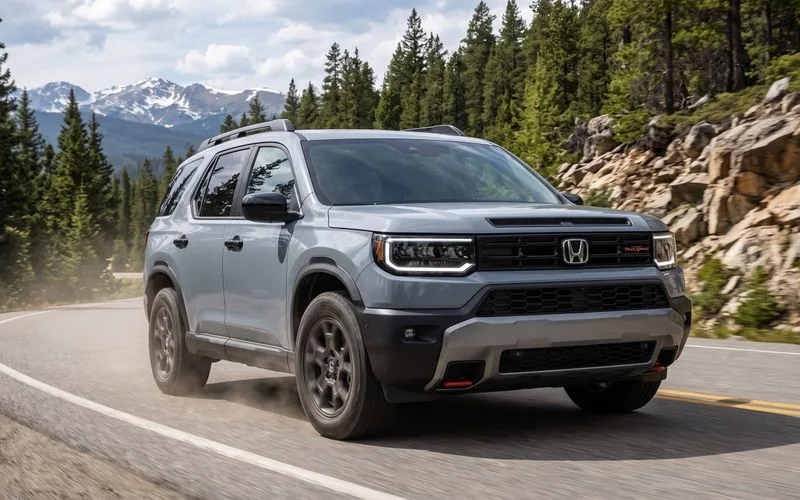 Honda PassportMid-Size SUVBetter at: Cargo and resale
It is the two-row mid-size SUV the Blazer is trying to be, with far more cargo room, real trail capability and much better resale, if your budget can stretch past $46,000.
Compare 2.40C+
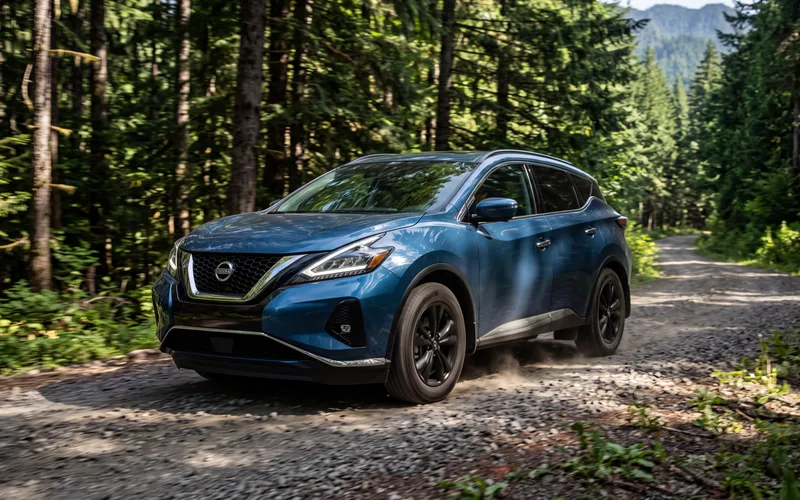 Nissan MuranoMid-Size SUVBetter at: Interior quality
A recently redesigned rival with a genuinely nicer cabin and standard ProPILOT driver assists, for shoppers who want current tech rather than the lowest price.
Compare 1.71C-
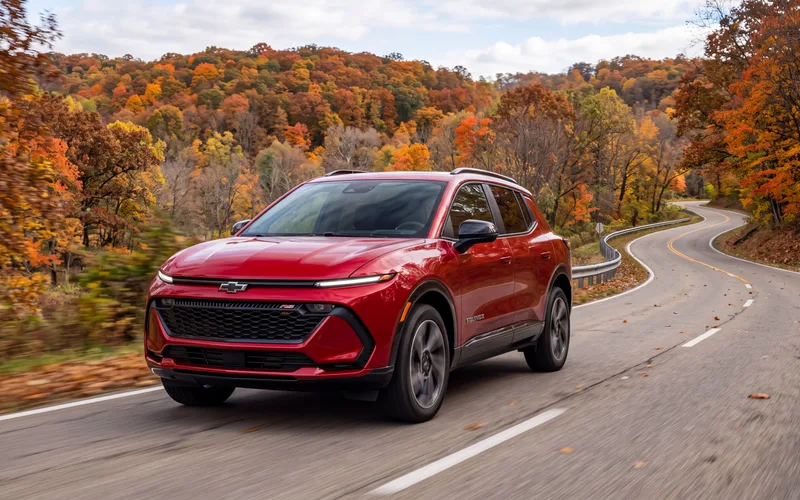 Chevrolet EquinoxCompact SUVBetter at: Value and freshness
The newer, cheaper Chevrolet that delivers similar cargo space and better MPG, and will not go out of production in September.
CompareHow it's evolved
8 scored model years · 2019–2026
Subject scores by year
Hover or tap a score to see what moved it versus the year before. A corner mark flags a big swing.
| Year | Performance | Efficiency | Safety | Space | Cost | Reliability | Tech | Use-case | Driving | Value |
|---|---|---|---|---|---|---|---|---|---|---|
| 2026 | 42 | 58 | 62 | 49 | 48 | 67 | 62 | 51 | 61 | 60 |
| 2025 | 42 | 57 | 60 | 48 | 48 | 65 | 61 | 52 | 61 | 62 |
| 2024 | 43 | 57 | 58 | 47 | 44 | 66 | 60 | 52 | 62 | 63 |
| 2023 | 42 | 57 | 60 | 45 | 51 | 66 | 57 | 53 | 60 | 60 |
| 2022 | 42 | 57 | 60 | 45 | 52 | 69 | 53 | 52 | 60 | 55 |
| 2021 | 42 | 57 | 58 | 44 | 56 | 63 | 51 | 52 | 60 | 57 |
| 2020 | 43 | 52 | 49 | 45 | 52 | 61 | 47 | 51 | 60 | 63 |
| 2019 | 49 | 42 | 48 | 45 | 51 | 62 | 48 | 51 | 63 | 61 |
Compare two years
Best fit & conditions
Higher scores mean a better fit for that use case. Learn more about use-case fit →
Subject profile
Academic Probation · NHTSA safety recalls
Feb 25, 2021TiresThe affected tires were cured for too long during production.
Defect
General Motors LLC (GM) is recalling certain 2020 Buick Enclave, Cadillac XT4, XT5, Escalade, Escalade ESV, Chevrolet Suburban, Tahoe, Traverse, GMC Yukon, Yukon XL, 2018-2021 Chevrolet Express, GMC Savana, 2019-2020 Chevrolet Blazer, Silverado 1500, GMC Acadia, Sierra 1500, and certain Continental tires sold to the aftermarket for various model year 2018-2021 vehicles. The affected tires were cured for too long during production.
Risk
Over cured tires may develop a break in the sidewall resulting in sudden air loss or a belt edge separation which could lead to a tread/belt loss. Either condition can cause a loss of vehicle control, increasing the risk of a crash.
Remedy
GM will notify owners, and dealers will inspect the tires, replacing them as necessary, free of charge. The recall began March 22, 2021. Owners may contact GMC customer service at 1-888-988-7267, Buick customer service at 1-866-608-8080, Chevrolet customer service at 1-800-222-1020 or Cadillac customer service at 1-800-458-8006. GM's number for this recall is N212329050.
NHTSA campaign 21V115000 ↗Manufacturer no. N21232905033,838 vehicles potentially affected (all models in the campaign)Owners notified Mar 22, 2021Filed by General Motors, LLCFiled as BLAZEROct 29, 2020Power train: automatic transmissionThe start/stop accumulator endcap may have missing bolts.
Defect
General Motors LLC (GM) is recalling certain 2018-2019 Chevrolet Cruze and Buick LaCrosse, 2018-2020 Chevrolet Equinox, Chevrolet Traverse and GMC Terrain, 2018 Chevrolet Malibu, 2019-2020 Buick Encore, Buick Enclave, Cadillac XT4, Chevrolet Blazer and GMC Acadia, and 2020 Cadillac XT6 vehicles. The start/stop accumulator endcap may have missing bolts.
Risk
Missing bolts on the start-stop accumulator endcap could result in a transmission oil leak and may progress to a loss of propulsion, increasing the risk of a crash. A transmission fluid leak in the presence of an ignition source may increase the risk of fire.
Remedy
GM will notify owners, and dealers will inspect the start-stop transmission accumulator and replace it if any bolts are missing, free of charge. The recall began December 15, 2020. Owners may contact GMC customer service at 1-888-988-7267, Buick Customer service at 1-866-608-8080, Chevrolet customer service at 1-800-222-1020 or Cadillac customer service at 1-800-458-8006. GM's number for this recall is N202313440.
NHTSA campaign 20V668000 ↗Manufacturer no. N202313440194,105 vehicles potentially affected (all models in the campaign)Owners notified Dec 15, 2020Filed by General Motors LLCFiled as BLAZER
7 recalls on other model years of the Blazer (2020–2025)
Oct 2, 2024Latches/locks/linkages: doors: latchThe door strikers were not properly heat-treated, which can cause them to break.
Defect
General Motors, LLC (GM) is recalling certain 2025 Chevrolet Blazer, Blazer EV, and Equinox vehicles. The door strikers were not properly heat-treated, which can cause them to break.
Risk
A broken door striker can cause the door to open unexpectedly, increasing the risk of injury.
Remedy
Dealers will replace all four side door strikers and attachment bolts, free of charge. All affected vehicles are still in dealership inventory and therefore no owner notification letters are expected to be mailed. Owners may call Chevrolet customer service at 1-800-222-1020. GM's number for this recall is N242477131.
NHTSA campaign 24V737000 ↗Manufacturer no. N242477131731 vehicles potentially affected (all models in the campaign)Filed by General Motors, LLCFiled as BLAZERDec 21, 2023Structure: body: doorThe door strikers may fracture, resulting in the door opening unexpectedly.
Defect
General Motors, LLC (GM) is recalling certain 2024 Chevrolet Blazer, Blazer EV, Equinox, and GMC Terrain vehicles. The door strikers may fracture, resulting in the door opening unexpectedly.
Risk
A door opening while the vehicle is being driven can increasing the risk of injury or a crash.
Remedy
Dealers will replace all four door strikers and attaching bolts, free of charge. Owner notification letters were mailed January 24, 2024. Owners may contact Chevrolet customer service at 1-800-222-1020 and GMC customer service at 1-800-462-8782. GM's number for this recall is N232429911.
NHTSA campaign 23V869000 ↗Manufacturer no. N232429911265 vehicles potentially affected (all models in the campaign)Owners notified Jan 24, 2024Filed by General Motors, LLCFiled as BLAZERMar 16, 2023Power train: automatic transmissionThe transmission may have been built with an incorrect sun gear, which can result in the driver-side half-shaft disengaging from the transmission.
Defect
General Motors, LLC (GM) is recalling certain 2023 Cadillac XT6, GMC Acadia, Chevrolet Blazer, Traverse, and 2022-2023 Cadillac XT5 vehicles. The transmission may have been built with an incorrect sun gear, which can result in the driver-side half-shaft disengaging from the transmission.
Risk
A half-shaft disengaging from the transmission can result in a loss of drive power or vehicle rollaway when the vehicle is placed in park. Either of these scenarios can increase the risk of a crash.
Remedy
Dealers will replace the sun gears, free of charge. Owner notification letters were mailed on July 27, 2023. The remedy is expected to become available August 31, 2023. Owners may contact Cadillac customer service at 1-800-458-8006, Chevrolet customer service at 1-800-222-1020, or GMC customer service at 1-800-462-8782. GMC's number for this recall is N222389310.
NHTSA campaign 23V172000 ↗Manufacturer no. N2223893108,744 vehicles potentially affected (all models in the campaign)Owners notified Jul 27, 2023Filed by General Motors, LLCFiled as BLAZERFeb 2, 2023Power train: driveline: driveshaftThe left-side half-shaft assemblies may be missing a retaining ring.
Defect
General Motors, LLC (GM) is recalling certain 2023 Chevrolet Blazer and Traverse vehicles. The left-side half-shaft assemblies may be missing a retaining ring.
Risk
A missing retaining ring on the half-shaft can cause half-shaft inner joint separation, resulting in a loss of drive power or vehicle rollaway when the vehicle is placed in park. Either of these scenarios can increase the risk of a crash.
Remedy
Dealers will replace the left-side half-shaft assembly, free of charge. Owner notification letters were mailed February 23, 2023. Owners may contact Chevrolet customer service at 1-800-222-1020. GM's number for this recall is N222390180.
NHTSA campaign 23V042000 ↗Manufacturer no. N22239018010 vehicles potentially affected (all models in the campaign)Owners notified Feb 23, 2023Filed by General Motors, LLCFiled as BLAZERMay 19, 2022SeatsThe driver's seat cushion frame may have an improper weld in the power tilt-adjustment mechanism.
Defect
General Motors, LLC (GM) is recalling certain 2021 Chevrolet Malibu, 2022 Chevrolet Equinox, Blazer and Cadillac XT4 vehicles. The driver's seat cushion frame may have an improper weld in the power tilt-adjustment mechanism.
Risk
An improperly welded seat frame may not adequately restrain the driver in a crash, increasing their risk of injury.
Remedy
Dealers will inspect the driver's seat and replace the cushion frame, as necessary, free of charge. Owner notification letters were mailed June 23, 2022. Owners may contact Chevrolet customer service at 1-800-222-1020 or Cadillac customer service at 1-800-458-8006. GM's number for this recall is N212356050.
NHTSA campaign 22V359000 ↗Manufacturer no. N212356050221 vehicles potentially affected (all models in the campaign)Owners notified Jun 23, 2022Filed by General Motors, LLCFiled as BLAZERDec 23, 2020Seat belts · Seat belts: critical fastenersIncorrect bolts may have been used at one or more fastening locations to secure the seat belts to the vehicle. If an incorrect bolt was used, the seat belt may not be properly attached to the vehicle.
Defect
General Motors, LLC (GM) is recalling certain 2020 Chevrolet Bolt EV and 2021 GMC Canyon and Sierra 1500, 2500 and 3500, Yukon, Yukon XL, Cadillac Escalade and Escalade ESV and Chevrolet Blazer, Camaro, Colorado, Equinox, Silverado 1500, 2500 and 3500, Suburban and Tahoe vehicles. Incorrect bolts may have been used at one or more fastening locations to secure the seat belts to the vehicle. If an incorrect bolt was used, the seat belt may not be properly attached to the vehicle.
Risk
If a seat belt assembly is not properly attached to the vehicle, the seat belt may not properly restrain an occupant in the event of a crash, increasing the risk of injury.
Remedy
GM will notify owners, and dealers will replace the suspect bolts, free of charge. The recall began January 29, 2021. Owners may contact GMC customer service at 1-800-462-8785, Cadillac customer service at 1-800-458-8006, or Chevrolet customer service at 1-800-222-1020. GM's number for this recall is N202322230.
NHTSA campaign 20V811000 ↗Manufacturer no. N202322230470 vehicles potentially affected (all models in the campaign)Owners notified Jan 29, 2021Filed by General Motors, LLCFiled as BLAZERJul 30, 2020Air bags: side/window: curtain: inflatorThe diffuser component of the Roof-Rail Air Bag (RRAB) inflator may not have been properly crimped to the inflator and could separate from the inflator during air bag deployment.
Defect
General Motors, LLC. (GM) is recalling certain 2020 Buick Enclave, Cadillac XT5 and XT6, Chevrolet Blazer, Silverado 1500, 2500 and 3500 and Traverse and GMC Acadia and Sierra 1500, 2500 and 3500 vehicles. The diffuser component of the Roof-Rail Air Bag (RRAB) inflator may not have been properly crimped to the inflator and could separate from the inflator during air bag deployment.
Risk
If the diffuser separates from the inflator during deployment, RRAB performance may be degraded, increasing the risk of injury in a crash.
Remedy
GM will notify owners, and dealers will replace the suspect RRAB modules, free of charge. The recall began September 3, 2020. Owners may contact Chevrolet customer service at 1-800-630-2438, Cadillac customer service at 1-800-333-4223, or Buick customer service at 1-800-521-7300. GM's number for this recall is N202305380.
NHTSA campaign 20V446000 ↗Manufacturer no. N202305380769 vehicles potentially affected (all models in the campaign)Owners notified Sep 3, 2020Filed by General Motors LLCFiled as BLAZER
Source: NHTSA Office of Defects Investigation recall database, model years 2019–2026. Recalls are listed by model year as the manufacturer filed them; whether a specific car is affected depends on its VIN — check a VIN at nhtsa.gov ↗. NHTSA model names matched to this page: BLAZER.
Detailed scoring by subject
1Performance & PowertrainGrades below the middle of the scale.1.26D
In the Blazer's 2019 launch year the volume LT, RS and Premier trims are built around the 3.6L V6, rated 308 hp. The base L and cloth trims use a 193-hp 2.5L four. The 2.0L turbo did not arrive until 2020.
The naturally aspirated V6 makes 270 lb-ft, but it peaks high in the rev range, which is ordinary for the segment. The 2.5L base engine is weak at 188 lb-ft.
Several instrumented tests of the V6 Blazer land between 6.1 and 6.6 seconds, which is quick for a mainstream two-row mid-size crossover. The 2.5L four is much slower.
The LGX V6 is smooth and linear and pulls strongly once revved. It gets a bit vocal near redline, and auto stop-start restarts are noticeable. The base 2.5L four is coarse and strained in this heavy body.
The 9-speed automatic is generally smooth, but reviewers note hesitant kickdowns and some gear hunting at moderate speeds.
Properly equipped with the V6 and the trailering package, the 2019 Blazer is rated to tow 4,500 lbs, which is typical for a two-row mid-size crossover. The 2.5L trims are limited to 1,500 lbs.
FWD is standard. AWD is offered only with the V6, so it is unavailable on the 2.5L L and cloth trims. The RS and Premier get a twin-clutch torque-vectoring system with a driver-selectable AWD disconnect.
This is a road-biased unibody crossover with about 7.5 in of ground clearance. It has no low range, lockers, skid plates or off-road trim, and its large wheels suit pavement.
Two gas engines are offered, a 2.5L four and a 3.6L V6, both with the 9-speed automatic, and AWD comes only with the V6. There is no turbo, hybrid or plug-in option in 2019.
2Efficiency & RangeThe Blazer's lowest-graded category.0.76F
The volume V6 is EPA-rated 22 MPG combined, below average for a gas mid-size crossover. The 2.5L four gains only 2 MPG while giving up a lot of performance.
20 MPG city is ordinary to weak for a non-hybrid mid-size crossover. Auto stop-start is the only economy aid.
The 9-speed helps highway cruising, but 26 MPG is still middling for the class.
A 19.4-gallon FWD tank at 22 MPG combined gives about 427 miles, which is adequate but unremarkable. AWD models carry a larger tank.
At EPA's standard 15,000 miles a year on regular gas, the V6 FWD costs about $2,950 a year. That is on the high side for a gas mid-size SUV.
Both engines run on 87-octane regular unleaded, with no premium requirement.
3SafetyOne of the Blazer's weakest categories.1.19D
NHTSA gives the 2019 Blazer, the first year of the new crossover generation, 5 stars overall, with 5-star frontal and side results and 4 stars for rollover.
Good in all six crash tests: both small-overlap tests, moderate overlap, side, roof strength and head restraints. Poor headlights on every trim kept it off the 2019 Top Safety Pick list, so it has no award.
In 2019, before Chevy Safety Assist, the Blazer had no standard AEB, forward collision alert or lane keep assist on any trim. The standard list was a rear camera, Teen Driver, hill start assist and a rear-seat reminder. AEB, pedestrian braking, LKA and ACC were in the Driver Confidence II package, available only on the RS and Premier.
The optional system rates Superior (vehicle-to-vehicle) and Advanced (daytime pedestrian) at IIHS. It is not fitted to the volume trims, though, and there is no nighttime pedestrian rating.
Side blind-zone alert with lane-change alert and rear cross-traffic alert came in the Driver Confidence package: optional on mid trims and standard on the upper trims. It only alerts, with no active intervention and no safe-exit alert. The L and base 1LT could not get it.
Lane Keep Assist with Lane Departure Warning came only with the Driver Confidence II package on the RS and Premier, so volume trims have no lane assistance. Where fitted it only nudges at the line and does not center.
Camera/radar adaptive cruise was available only in the Driver Confidence II package on the top RS and Premier trims. Volume 2LT/3LT buyers got conventional cruise, and there is no highway-assist function.
The 2019 Blazer offered no hands-free driving system. In 2019 Super Cruise was limited to the Cadillac CT6.
IIHS rates both 2019 headlight configurations Poor, including the upgraded lights with the Driver Confidence II package, citing excessive low-beam glare and inadequate high-beam reach. Auto high beams come only in that package.
The high beltline, sloping roof, thick rear pillars and tiny third side window restrict rear three-quarter visibility. The rear camera is standard, but the surround-view camera and rear camera mirror are limited to the RS and Premier packages.
IIHS rates the LATCH hardware Acceptable, with two full LATCH positions and a tether-only center seat. The roomy rear seat and wide rear doors take two child seats easily, but three across is tight.
4Space & ComfortOne of the Blazer's weakest categories.0.99F
The US-market 2019 Blazer is a two-row, five-seat crossover on every trim. The three-row long version is China-only.
Front headroom is roomy by two-row mid-size standards.
Front legroom is on the short side for the class.
Rear headroom holds up well despite the sloping roofline.
Generous second-row legroom is one of the launch-year Blazer's packaging strengths.
No third row is offered on any US-market 2019 Blazer, so it offers nothing to buyers who need seven seats.
Cargo space behind the rear seats is barely more than the compact Equinox's and trails the Passport, Murano and Edge.
Maximum cargo space is modest for the segment because of the coupe-like tail.
Everyday storage is competitive, with a decent console, door pockets and an available cargo rail system with an adjustable fence. There are no standout tricks, and the small cargo hold limits it.
The front seats give plenty of long-trip support, and the rear bench is roomy for adults but fairly flat. The rear seat slides and reclines.
The ride is firm but controlled, in a European style. The 18-inch wheels on the volume 2LT ride better than the 20–21-inch wheels on RS/Premier, which get busy on broken pavement.
Reviews split: Consumer Guide found it quiet, but others report notable wind, road and tire noise at highway speed, especially on large wheels. That puts it at or slightly below the segment average.
Dual-zone climate is available, and heated front seats can be added to the 2LT through a package. Heated/ventilated seats and a heated wheel concentrate on the $43k+ 3LT/Premier trims, and the base L is bare.
5Cost of OwnershipGrades below the middle of the scale.1.41D
In the 2019 launch year the lineup opened with a stripped-down L trim with the 193-hp 2.5L four, a price-leader model that most reviewers noted few dealers stocked. The next trim up, Cloth, started at $33,495 delivered.
The volume configuration is taken to be the 2LT (cloth, 3.6L V6) with AWD, the most commonly stocked mid-range build. Trim mix isn't published, which is why confidence is MEDIUM.
The conventional 3.6L V6/9-speed powertrain has typical GM parts costs, but first-year examples of the new generation drew more early service campaigns than later years, so the estimate sits a little above the refreshed 2023's $5,500.
Launch-year rebates of $2,000 or more by spring 2019, and up to ~$6,000 later on, pushed down transaction prices and in turn used values. Heavy rental and fleet volume keeps retention below the model-level average of ~48%.
GM's bumper-to-bumper coverage is 3 years/36,000 miles, the industry minimum. Hyundai Santa Fe and Kia Sorento rivals get 5 years/60,000 miles.
The powertrain is covered for 5 years/60,000 miles, the floor of the band and half the 10-year/100,000-mile term Hyundai and Kia give.
Chevrolet Complete Care for 2019 models covers one maintenance visit in the first year/12,000 miles, plus 5 years/60,000 miles of roadside assistance and courtesy transportation. OnStar and 4G LTE Wi-Fi come only as short trials. That is short included maintenance with basic roadside, the bottom of the middle band.
$37,195 volume-trim price minus its estimated resale value after 5 years (46% retained, or about $17,110) leaves about $20,085 in depreciation. Add the projected $5,800 in 5-year maintenance and repairs, and owning this vehicle for 5 years costs about $25,885 in total.
6Reliability & QualityOne of the Blazer's strongest categories.2.17C
2019 was the launch year of the revived crossover Blazer (production from December 2018), and Consumer Reports rates it below average for its model year, flagging transmission and engine-cooling complaints. J.D. Power's 85/100 owner-reported quality score is decent, so the sources are mixed and the first-year CR verdict keeps it at the bottom of the average band.
Around the 2019 model-year window Chevrolet was a mid-pack mass-market brand: near the industry average in J.D. Power's dependability studies and lower-middle in Consumer Reports' brand rankings, weighed down by new-generation launches. Slightly below the standing it held by 2023.
NHTSA lists two recalls covering the 2019 Blazer, both shared GM-wide campaigns rather than Blazer-specific design faults: missing bolts on the 9-speed's start/stop accumulator endcap (fluid leak, possible loss of propulsion or fire) and over-cured Continental tires. Typical activity for a launch year, nothing systemic, though the transmission one is a powertrain item.
For 2019 the Blazer offered only naturally aspirated engines — the 2.5L LCV four on L/1LT/2LT and the 3.6L LGX V6 on 2LT/3LT/RS/Premier — both widely used GM families with no major durability red flags (the troublesome 2.0T LSY did not arrive until 2020). The pull-down is the 9-speed 9T-family automatic, whose accumulator recall and owner shift/failure complaints give it a mixed reputation.
The Camaro-inspired cabin looks sporty, but reviewers widely criticized hard plastics across the dash and doors, with soft-touch surfaces limited to primary touch points — a weak showing at the Blazer's $30k-$45k+ price range against rivals.
First-year production at GM Ramos Arizpe brought the usual launch-year scatter of electrical and trim complaints; assembly is generally solid but less settled than later years of the generation.
Chevrolet has one of the densest dealer and service networks in the US, reaching rural markets most brands don't, with service satisfaction around the mass-market average.
The 2019 Blazer's 2.5L and 3.6L engines, 9-speed and C1 platform hardware are shared with high-volume GM models (Equinox, Traverse, Acadia, XT5), so parts are plentiful and cheap with strong independent-shop support; repair spend runs slightly below the class average.
7Technology & InfotainmentGrades below the middle of the scale.1.21D
Every 2019 Blazer gets an 8-inch touchscreen, a size that was only average in 2019 and small by later standards. The 10.2-inch unit came with the 2023 refresh.
GM's Infotainment 3 is quick, with big clear icons and a sensible menu structure, and it is among the simplest systems to navigate. The climate buttons are small and hard to read at a glance.
Apple CarPlay and Android Auto are standard on every 2019 trim but wired only. Wireless projection did not arrive until a later model year.
Built-in navigation is optional and mostly limited to upper trims, and the native voice control is basic. Most owners bypass both for phone projection.
The six-speaker base system is adequate, and the optional eight-speaker Bose is a modest upgrade rather than a premium standout.
The gauges are legible, colorful analog dials with a small 4.2-inch driver info screen. No full-digital cluster was offered in 2019.
The 2019 Blazer predates GM's Vehicle Intelligence Platform, so over-the-air updates are limited to connected-nav map data and apps rather than whole-vehicle updates.
The myChevrolet app offers remote start, lock and locate, but most connected features need an OnStar/Connected Services plan and there is no phone-as-key.
Four USB ports, including USB-C, are standard, which was ahead of many 2019 rivals. Wireless charging is limited to the $43k+ trims, and a 120V outlet is available.
Remote start and keyless open/start are available on most trims, but the base L is bare. The hands-free power liftgate is limited to top trims, and phone-as-key is not offered.
A rear camera is standard. Rear park assist comes in the Driver Confidence package, while HD Surround Vision and the rear camera mirror are limited to RS/Premier packages.
No head-up display is offered on any 2019 Blazer trim or package.
8Use-Case FitGrades below the middle of the scale.1.41D
The 39.6-in rear legroom, wide rear doors and a sliding/reclining rear seat take car seats easily, and IIHS rates LATCH Acceptable. The 30.5 cu ft cargo hold is tight for strollers plus gear.
Crash protection is strong: 5-star NHTSA overall and Good in every IIHS crash test. But no trim has standard AEB, blind-spot or lane keep, and on the volume 2LT they cost extra or are unavailable. The Poor headlights ruled out an award.
Rear passengers get good legroom and vents, and the front seats are supportive. But the cargo hold is small for a family's luggage, and highway noise is only average.
The volume V6 gives effortless, smooth responses in traffic, and the 9-speed is generally smooth, though its kickdowns can hesitate. Poor rear visibility is a daily annoyance.
At 22 MPG combined, the V6 is below average for a gas mid-size crossover. The 2.5L gains only 2 MPG at a big performance cost.
The turning circle (about 38.8 ft) is average, but the sloping roof and tiny rear quarter windows hurt rear visibility, and surround view is limited to top-trim packages.
The V6 volume trim tows 4,500 lbs with the trailering package, which suits light trailers, but the 2.5L is limited to 1,500 lbs and the cargo bay is modest.
It is a style-led consumer crossover with no fleet track record, and its interior plastics and large-wheel packages are not aimed at hard use. The proven LGX V6 helps.
Work provisions are basic: cargo tie-downs, an available cargo rail/fence system, a 120V outlet and a trailering package. There is no real upfit ecosystem.
Supportive front seats, a smooth V6 and roughly 427–456 miles of range help. But adaptive cruise and lane keeping are limited to top-trim packages, and highway noise is average.
AWD is available with the V6, and it tows up to 4,500 lbs, but modest ground clearance (about 7.5 in), road-biased wheels and no off-road trim keep it to gravel roads.
The 60/40 rear seats fold flat, roof rails and a hitch are available, and there is a cargo rail system. The 64.2 cu ft max and sloped tailgate limit bulky gear.
9Driving ExperienceThe Blazer's best-graded category.2.22C
It is one of the more composed two-row mid-size SUVs, with tight body control and 0.87 g of skidpad grip in testing. RS/Premier add twin-clutch AWD.
The steering is accurate enough but a little too light and short on feedback for keen drivers.
It stopped from 70 mph in a solid 165 ft in instrumented testing, which is good for the class, and no fade complaints were found.
The volume V6 is smooth and linear and the 9-speed shifts with muted refinement, but kickdowns hesitate and stop-start restarts are noticeable. The base 2.5L is strained.
The LGX V6 is refined and only gets vocal near redline. The 2.5L four is coarse under load.
The turning diameter is average for a mid-size SUV, carried from GM's spec for this generation (same 112.7-in wheelbase).
The seats are supportive and the controls simple, but the climate buttons are small and hard to read. The high beltline and sloping roof create large rear blind spots.
The volume V6 is sportier than most mainstream mid-size crossovers, reaching 60 mph in about 6.3 s with frisky handling, but the light steering dulls the engagement.
10Value & Market PositionOne of the Blazer's strongest categories.2.14C
In 2019 even the 2LT volume trim did not include automatic emergency braking, lane-keep assist or blind-spot monitoring as standard; they sat in option packages or higher trims. The $29,995 L was a bare price leader. CarPlay/Android Auto, a Wi-Fi hotspot and the V6 on 2LT are competitive, but rivals like the Honda Passport and Hyundai Santa Fe included more driver aids for the money.
The standard V6 from 2LT and the sporty handling are real strengths, but at MSRP a two-row, five-seat Blazer cost as much as three-row rivals and shipped with sparse safety tech. A loaded Premier approached the mid-$40ks, reaching into luxury pricing. Launch rebates improved real-world value, but on list price it was fair to middling.
Six trims (L, Cloth/1LT, 2LT, 3LT, RS, Premier), two engines (2.5L four and 3.6L V6) and FWD or AWD on every trim make a wide, well-spaced ladder from $30k to about $47k. The only gaps are no off-road trim and no three-row option.
A slow launch-year ramp (about 3,000 units in Q1 2019) was followed by strong growth, reaching 23,008 in Q4 and 58,115 for calendar 2019. That is solid mid-pack volume for a new two-row mid-size nameplate, well behind the Edge and Murano at the time.
Chevrolet has neutral mass-market recognition, and the Camaro-inspired styling drew buyers. But reviving the Blazer name as a car-based crossover alienated traditional Blazer fans in 2019, and Chevy doesn't lift resale the way Toyota or Honda do.
Although 2019 was the launch year, Chevrolet ran a national $2,000 cash allowance from spring 2019, and later in the year reported deals of $6,000 or more on slow-moving stock, plus low-APR financing. That is a strong buyer benefit, even if it signals soft demand at list price.
2019 is the launch year of an all-new generation on GM's current C1XX platform, the same platform as the Acadia and XT5, with a new 9-speed automatic. Brand-new styling and no imminent replacement risk for buyers.
Reviewers praised the styling, the responsive V6 and car-like handling, but criticized pricing, hard plastics in the cabin, rear visibility, and cargo space below rivals. It was rarely the pick in comparison tests, and no major award was found for 2019.