
The verdict
A mixed-report compact suv, strong on value and held back by performance.
The 2025 Equinox EV is the year Chevrolet finally delivered the cheap long-range electric SUV it promised: $34,995 delivered for 319 EPA miles, a 17.7-inch screen and the full Chevy Safety Assist suite standard on the base car, plus a 5-star NHTSA rating and about $700 a year in electricity. Buyers noticed — 57,945 of them, making it the best-selling non-Tesla EV in America — and MotorWeek named it Best of the Year outright. The compromises are real and specific: only 26.4 cu ft of cargo space with no frunk, a 150 kW charging ceiling that means roughly 42 minutes from 10 to 80 percent, no Apple CarPlay or Android Auto at any price, and resale around 40% after five years now that the $7,500 federal credit has lapsed. It is an outstanding home-charged commuter and a mediocre road-tripper or hauler.
Jump to scoresStrengths
- The most range per dollar on the market
- Cheap to run, and the range holds up on the highway
- Full safety kit on the cheapest trim
What holds it back
- The cargo hold is small, and there's no frunk
- Slow charging is the price of the cheap sticker
- No Apple CarPlay or Android Auto, at any price
Top alternatives
Cars shoppers cross-shop with the Chevrolet Equinox EV 2.74B-
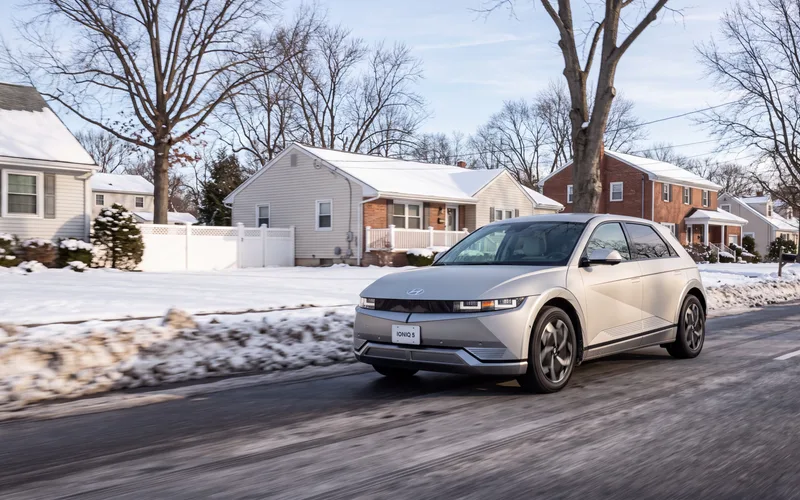 Hyundai Ioniq 5Compact SUVBetter at: Fast charging
Costs a few thousand more but charges roughly twice as fast on a DC plug, keeps CarPlay and Android Auto, and backs it with a 5-year/60,000-mile warranty plus three years of free maintenance.
Compare 2.60C+
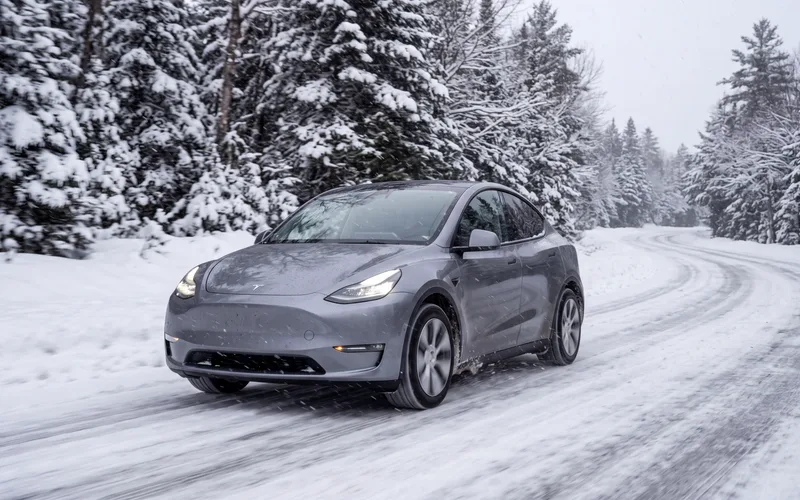 Tesla Model YCompact SUVBetter at: Resale value
Worth the roughly $10,000 premium if you tow up to 3,500 lbs, want a frunk, or plan to sell in five years — its residuals are meaningfully stronger.
Compare 1.71C-
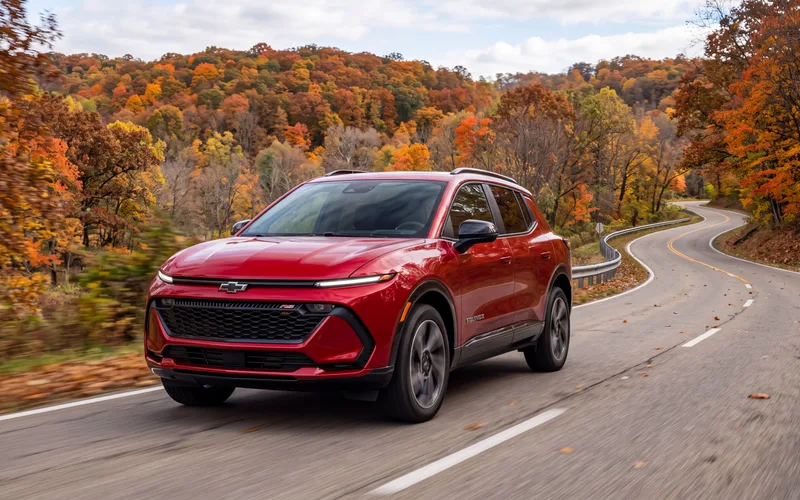 Chevrolet EquinoxCompact SUVBetter at: Upfront cost
The gas version starts about $5,000 lower, needs no home charger, keeps CarPlay, and retains roughly 47% of its value at five years — the safer buy if you can't charge at home.
CompareSubject scores by year
Hover or tap a score to see what moved it versus the year before. A corner mark flags a big swing.
| Year | Performance | Efficiency | Safety | Space | Cost | Reliability | Tech | Use-case | Driving | Value |
|---|---|---|---|---|---|---|---|---|---|---|
| 2026 | 35 | 60 | 80 | 48 | 56 | 57 | 66 | 65 | 65 | 72 |
| 2025 | 37 | 60 | 73 | 44 | 52 | 58 | 66 | 59 | 69 | 79 |
| 2024 | 35 | 61 | 74 | 46 | 52 | 65 | 63 | 61 | 66 | 78 |
Compare two years
Best fit & conditions
Higher scores mean a better fit for that use case. Learn more about use-case fit →
Subject profile
Academic Probation · NHTSA safety recalls
Feb 26, 2026Equipment: other: owners/service/other manualGeneral Motors has decided that certain 2027 Chevrolet Bolt EV, 2025-2026 Cadillac OPTIQ, Chevrolet Colorado, Equinox EV, GMC Canyon, 2026 Buick Enclave, Envision, Cadillac CT5, Escalade, Escalade ESV, Escalade IQ, Escalade IQL, LYRIQ, VISTIQ, Chevrolet Blazer EV, Corvette Convertible, Corvette Coupe, Corvette Convertible E-Ray, Equinox, Silverado 1500, 2500, 3500, Silverado EV, Suburban 1500, Tahoe, Traverse, GMC Acadia, Hummer EV Pickup, Hummer EV SUV, Sierra 1500, 2500, 3500, Sierra EV, Terrain, Yukon, and Yukon XL vehicles. The radio may not have been set to the correct status to download the electronic owner's manual during production. As such, these vehicles fail to comply with the requirements of Federal Motor Vehicle Safety Standard number 208, âOccupant Protection.â
Defect
General Motors has decided that certain 2027 Chevrolet Bolt EV, 2025-2026 Cadillac OPTIQ, Chevrolet Colorado, Equinox EV, GMC Canyon, 2026 Buick Enclave, Envision, Cadillac CT5, Escalade, Escalade ESV, Escalade IQ, Escalade IQL, LYRIQ, VISTIQ, Chevrolet Blazer EV, Corvette Convertible, Corvette Coupe, Corvette Convertible E-Ray, Equinox, Silverado 1500, 2500, 3500, Silverado EV, Suburban 1500, Tahoe, Traverse, GMC Acadia, Hummer EV Pickup, Hummer EV SUV, Sierra 1500, 2500, 3500, Sierra EV, Terrain, Yukon, and Yukon XL vehicles. The radio may not have been set to the correct status to download the electronic owner's manual during production. As such, these vehicles fail to comply with the requirements of Federal Motor Vehicle Safety Standard number 208, âOccupant Protection.â
Risk
Without an owner's manual to consult, owners may not know how to safely use and operate the vehicle, increasing the risk of injury in a crash.
Remedy
Dealers will reset the vehicle radio, which will facilitate automatic download of the electronic ownerâs manual, free of charge. Owner notification letters were mailed April 16, 2026. Owners may contact GM customer service at 1-866-467-9700, Chevrolet customer service at 1-800-222-1020 or Cadillac customer service at 1-800-333-4223. The manufacturer's number for this recall is N252540430. Vehicle Identification Numbers (VINs) involved in this recall became searchable on NHTSA.gov on February 26, 2026.
NHTSA campaign 26V114000 ↗Manufacturer no. N2525404305,861 vehicles potentially affected (all models in the campaign)Owners notified Apr 16, 2026Filed by General Motors, LLCFiled as EQUINOX EVDec 18, 2025Back over prevention: warnings: external/pedestrian alertThe pedestrian alert sound system may not produce a sufficient change in volume between the vehicle being stopped and moving at low speeds. As such, these vehicles fail to comply with the requirements of Federal Motor Vehicle Safety Standard (FMVSS) number 141, "Minimum Sound Requirements for Hybrid and Electric Vehicles."
Defect
General Motors, LLC (GM) is recalling certain 2025-2026 Equinox EV vehicles. The pedestrian alert sound system may not produce a sufficient change in volume between the vehicle being stopped and moving at low speeds. As such, these vehicles fail to comply with the requirements of Federal Motor Vehicle Safety Standard (FMVSS) number 141, "Minimum Sound Requirements for Hybrid and Electric Vehicles."
Risk
A vehicle that does not emit sufficient sound may fail to alert pedestrians of a moving vehicle, increasing the risk of a crash or injury.
Remedy
The body control module software will be updated by a dealer, or through an over-the-air (OTA) software update, free of charge. Owner notification letters were mailed January 29, 2026. Owners may contact GM customer service at 1-800-222-1020. GM's number for this recall is N252530690. Vehicle Identification Numbers (VINs) involved in this recall became searchable on NHTSA.gov on December 18, 2025.
NHTSA campaign 25V878000 ↗Manufacturer no. N25253069081,177 vehicles potentially affected (all models in the campaign)Owners notified Jan 29, 2026Filed by General Motors, LLCFiled as EQUINOX EVOct 16, 2025Tires: tread/beltOne or more of these tires may experience partial or full tread detachment.
Defect
General Motors, LLC (GM) is recalling certain 2025-2026 Cadillac Optic and 2025-2026 Chevrolet Equinox EV vehicles equipped with 21-inch Continental all-season tires. One or more of these tires may experience partial or full tread detachment.
Risk
Tire tread detachment increases the risk of a crash.
Remedy
Dealers will inspect all four tires and replace those manufactured during DOT week 4024, free of charge. Owner notification letters were mailed November 19, 2025. Owners may contact Cadillac customer service at 1-800-333-4223, or Chevrolet customer service at 1-800-222-1020. GM's number for this recall is N252525030. Vehicle Identification Numbers (VINs) involved in this recall will be searchable on NHTSA.gov beginning October 16, 2025.
NHTSA campaign 25V704000 ↗Manufacturer no. N25252503022,914 vehicles potentially affected (all models in the campaign)Owners notified Nov 19, 2025Filed by General Motors, LLCFiled as EQUINOX EVJan 16, 2025Forward collision avoidance: adaptive cruise control: software · Service brakes, hydraulicThe adaptive cruise control may fail to engage the brakes as expected, due to incorrect brake module software.
Defect
General Motors, LLC (GM) is recalling certain 2025 Chevrolet Equinox EV all-wheel drive electric vehicles. The adaptive cruise control may fail to engage the brakes as expected, due to incorrect brake module software.
Risk
A vehicle that does not automatically brake as expected increases the risk of a crash.
Remedy
Dealers will update the software calibration in the brake system control module, free of charge. Owner notification letters were mailed February 13, 2025. Owners may contact Chevrolet customer service at 1-800-222-1020. GM's number for this recall is N242481530.
NHTSA campaign 25V012000 ↗Manufacturer no. N2424815302,890 vehicles potentially affected (all models in the campaign)Owners notified Feb 13, 2025Filed by General Motors, LLCFiled as EQUINOX EVDec 12, 2024Electrical system: body control module/bcm · Forward collision avoidance: warnings: external/pedestrian alertThe pedestrian alert sound system may have incorrect software and not produce sound at a sufficient volume. As such, these vehicles fail to comply with the requirements of Federal Motor Vehicle Safety Standard (FMVSS) number 141, "Minimum Sound Requirements for Hybrid and Electric Vehicles."
Defect
General Motors LLC (GM) is recalling certain 2025 Chevrolet Equinox EV vehicles. The pedestrian alert sound system may have incorrect software and not produce sound at a sufficient volume. As such, these vehicles fail to comply with the requirements of Federal Motor Vehicle Safety Standard (FMVSS) number 141, "Minimum Sound Requirements for Hybrid and Electric Vehicles."
Risk
A vehicle that fails to make sufficient sound may result in pedestrians being unaware of an approaching vehicle, increasing the risk of injury.
Remedy
Dealers will update the software in the body control module (BCM), free of charge. Owner notification letters were mailed January 21, 2025. Owners may contact Chevrolet customer service at 1-800-222-1020. GM's number for this recall is N242479760.
NHTSA campaign 24V925000 ↗Manufacturer no. N2424797607,606 vehicles potentially affected (all models in the campaign)Owners notified Jan 21, 2025Filed by General Motors, LLCFiled as EQUINOX EVOct 2, 2024Latches/locks/linkages: doors: latchThe door strikers were not properly heat-treated, which can cause them to break.
Defect
General Motors, LLC (GM) is recalling certain 2025 Chevrolet Blazer, Blazer EV, and Equinox vehicles. The door strikers were not properly heat-treated, which can cause them to break.
Risk
A broken door striker can cause the door to open unexpectedly, increasing the risk of injury.
Remedy
Dealers will replace all four side door strikers and attachment bolts, free of charge. All affected vehicles are still in dealership inventory and therefore no owner notification letters are expected to be mailed. Owners may call Chevrolet customer service at 1-800-222-1020. GM's number for this recall is N242477131.
NHTSA campaign 24V737000 ↗Manufacturer no. N242477131731 vehicles potentially affected (all models in the campaign)Filed by General Motors, LLCFiled as EQUINOX EV
1 recall on other model years of the Equinox EV (2024)
Sep 25, 2025Forward collision avoidance: warnings: external/pedestrian alertThe pedestrian alert sound system may not produce a sufficient change in volume between the vehicle being stopped and moving at low speeds. As such, these vehicles fail to comply with the requirements of Federal Motor Vehicle Safety Standard (FMVSS) number 141, "Minimum Sound Requirements for Hybrid and Electric Vehicles."
Defect
General Motors LLC (GM) is recalling certain 2024 Chevrolet Equinox EV vehicles. The pedestrian alert sound system may not produce a sufficient change in volume between the vehicle being stopped and moving at low speeds. As such, these vehicles fail to comply with the requirements of Federal Motor Vehicle Safety Standard (FMVSS) number 141, "Minimum Sound Requirements for Hybrid and Electric Vehicles."
Risk
A vehicle that fails to make sufficient sound may result in pedestrians being unaware of an approaching vehicle, increasing the risk of injury.
Remedy
The vehicle's body control module software will be updated by a dealer, or through an over-the-air (OTA) update, free of charge. Owner notification letters were mailed November 17, 2025. Owners may contact Chevrolet customer service at 1-800-222-1020. GM's number for this recall is N252527170.
NHTSA campaign 25V639000 ↗Manufacturer no. N25252717023,700 vehicles potentially affected (all models in the campaign)Owners notified Nov 17, 2025Filed by General Motors, LLCFiled as EQUINOX EV
Source: NHTSA Office of Defects Investigation recall database, model years 2024–2026. Recalls are listed by model year as the manufacturer filed them; whether a specific car is affected depends on its VIN — check a VIN at nhtsa.gov ↗. NHTSA model names matched to this page: EQUINOX EV.
Detailed scoring by subject
1Performance & PowertrainThe Equinox EV's lowest-graded category.0.41F
2025 is the first full model year of the Equinox EV lineup and it brought a power bump: the single front motor on the 85 kWh Ultium pack rises from 213 hp to 220 hp, and the dual-motor eAWD from 288 hp to 300 hp. Even so, 220 hp sits near the bottom of the 150–550 hp compact-SUV band, and it is the configuration the $34,995 headline price buys.
243 lb-ft from the front motor is a modest absolute figure for a ~4,900 lb crossover, but it arrives from zero rpm, which is why the car feels more willing off the line than the number implies. The eAWD option's 355 lb-ft is roughly V6 territory and is the one configuration in the range with real thrust.
Chevrolet publishes no official FWD figure; instrumented tests of the 220 hp LT FWD cluster between 7.4 s (quarter mile 15.9 s at 88.2 mph) and 7.8 s, so 7.6 s is the converged value. That is unremarkable against both electric and gasoline compact SUVs, and the eAWD car's ≈5.9 s is the only quick configuration on offer.
Delivery is the battery-electric best case — no lag, no shift interruption, no combustion coarseness, and a notably quiet cabin at cruise, which reviewers repeatedly call the Equinox EV's most premium-feeling trait. It falls short of the very best dual-motor EVs only because the single front axle can scrabble under a hard launch and there is modest reserve thrust for highway passing.
A single-speed reduction gear means there is nothing to shift, nothing to hunt for, and no CVT drone — torque is continuous from rest. GM layers on one of the better regeneration setups in the class, with selectable one-pedal driving plus a steering-wheel Regen on Demand paddle that gives genuinely fine control over deceleration.
1,500 lbs properly equipped is the maximum in any 2025 configuration, near the floor of the 1,000–8,000 lb SUV band and well under the 3,500 lbs a Tesla Model Y or the 4,500 lbs a Blazer EV will pull. It covers a small utility trailer or a pair of jet skis, and towing anything costs a large fraction of the driving range.
Dual-motor eAWD is a factory option on both the LT and the RS rather than being locked to the top of the range, so any 2025 buyer can have it — but front-wheel drive is standard and is what the volume car leaves the lot with. Operation is basic all-weather traction from an electrically decoupling front/rear motor pair: no low range, no locking differentials, no terrain-mode hardware.
A pavement-oriented crossover with a floor-mounted battery, modest ground clearance, low-rolling-resistance tires and an exposed underbody — no skid plating, no locker, no all-terrain tire option and no off-road trim anywhere in the 2025 range (LT and RS only). Available eAWD earns it a little credit over the lowest crossovers, but this is a snow-and-gravel vehicle, not a trail vehicle.
Battery-electric is the only choice under this nameplate — the separately sold gasoline Equinox is a different vehicle, and no hybrid or plug-in hybrid Equinox EV exists. Within the EV the menu is narrower still: a single 85 kWh pack with a choice of front-wheel drive or eAWD, no standard-range or long-range battery alternative.
2Efficiency & RangeMid-pack among this car's ten categories.2.05C
EPA rates the 2025 FWD volume trim at 109 MPGe combined — 31 kWh/100 mi — which is a strong result for a tall compact electric SUV and sits in the upper half of the EV band. The eAWD configurations give back real efficiency, and specifying the 19.2 kW onboard charger costs a further 7 MPGe.
Regenerative braking and zero idle draw make the city cycle the Equinox EV's best showing, and 117 MPGe lands solidly above the middle of the EV SUV city band — though short of the 130+ MPGe the lightest and most aerodynamic compact EVs post.
A 17-point city-to-highway drop is normal for a tall crossover at sustained speed, but holding triple digits on the EPA highway cycle is genuinely good and is why real-world interstate range holds up better than the body shape suggests — Edmunds logged 356 miles on its range loop, 12% over the EPA number.
319 EPA miles is the Equinox EV's headline claim for 2025 and remains one of the longest ranges available anywhere near $35,000, sitting above the middle of the EV SUV range band. Choosing eAWD costs 12 miles. Note that Wikipedia's 326-mile figure for 2025 is not what EPA publishes; the EPA rating governs here.
150 kW is a hard ceiling and the weakest part of the Equinox EV's efficiency case: the 400-volt Ultium pack would need roughly 500 amps to go faster, so plugging into a 250 or 350 kW station buys nothing. Against 800-volt rivals that accept well over 200 kW this lands in the bottom third of the band.
A large pack behind a modest peak rate makes for a long stop — roughly 42 minutes from 10 to 80 percent, near the slow end of the band and close to double what the quickest 800-volt EVs manage. On a road trip this is the practical cost of the cheap sticker price, and it is what pulls this category down despite class-leading range and MPGe.
EPA's published figure for the 2025 FWD car is $700 a year at 15,000 miles — roughly a third of what the gasoline Equinox costs to feed. Owners on an overnight time-of-use rate will beat it; anyone relying on public DC fast charging will not come close.
No fuel grade to think about and a standard 11.5 kW onboard charger that refills the 85 kWh pack overnight on an ordinary Level 2 circuit for about $700 a year — the cheapest energy story in the compact SUV segment. Held at the bottom of the top band rather than higher because 2025 still ships the CCS1/J1772 port, so Tesla Supercharger access needs an adapter, and the 400-volt architecture means public charging costs real time; a buyer without home charging loses most of the advantage.
3SafetyOne of the Equinox EV's strongest categories.2.97B-
NHTSA tested both 2025 Equinox EV drivetrains and awarded five stars overall to each, with five stars in every sub-test. The only sub-five result anywhere in the file is the front passenger in the frontal barrier crash at four stars, which does not move the overall score.
The IIHS has never tested the Equinox EV — it does not appear in the Institute's small-SUV class summary and has no ratings page, so there is no crashworthiness data and no Top Safety Pick of any kind for the 2025 car (the 2025 Chevrolet Equinox ratings that surface in searches are the unrelated gas model on a different platform). Scored in the untested band rather than the middle: an award-eligible result cannot be assumed when GM's one IIHS-tested Ultium crossover, the Blazer EV, took Acceptable in small overlap and won no award.
2025 is the year the Equinox EV's cheap trims arrived, and Chevrolet did not thin the safety content to hit the $34,995 price: the base LT gets AEB, front pedestrian braking, intersection AEB, forward collision alert, lane keep assist with lane departure warning, adaptive cruise control, blind-zone steering assist, rear cross-traffic braking, side bicyclist alert, IntelliBeam and rear park assist as standard. Every item the framework asks about — AEB, ACC, LKA, BSM, RCTA — is on the base trim, which is unusual at this price; only surround vision and traffic sign recognition wait for the Active Safety Package on LT2/RS.
The hardware coverage is broad for the class — AEB with pedestrian detection, intersection AEB and (with the Active Safety Package) reverse automatic braking, all radar-plus-camera — but no IIHS front crash prevention result exists for the Equinox EV, so nothing confirms how it performs in the nighttime-pedestrian and motorcycle-target scenarios the current test emphasizes. Held to the middle band because a January 2025 recall found a brake-control calibration that could stop the car applying the brakes under adaptive cruise, which is the same actuation path AEB relies on.
This is the vehicle's strongest driver-assistance area: blind-zone steering assist and rear cross-traffic braking are both active-intervention systems rather than alerts, and both are standard from the base trim, joined by side bicyclist alert. The Active Safety Package's HD Surround Vision and rear pedestrian alert extend the coverage further, and Chevrolet's vibrating-seat alert gives the warnings a directional channel.
Standard lane keep assist with lane departure warning is a nudge-back-from-the-line system, not centering — owners specifically flag that the Equinox EV's LKA does not hold the car centered, and enhanced lane keep assist only arrives with the Active Safety Package. Genuine lane centering exists but is bundled into Super Cruise, and reviewers rate that steering well; buyers on the volume LT trim do not get it.
Full-speed-range adaptive cruise is standard on every trim including the $34,995 LT, and reviewers describe the Super Cruise-equipped cars as confident at highway speed and smooth in stop-and-go — the highway-assist integration is well above class norm when it is fitted. Kept out of the top band by two real edges: the January 2025 brake-calibration recall on non-Super-Cruise AWD cars, and reviewers reporting slow automated lane changes plus disengagement in heavy rain.
Super Cruise is the most mature hands-free system sold in the US and the 2025 Equinox EV is the cheapest way into it, with eyes-on/hands-off operation, automatic and on-demand lane changes, and a road network in the hundreds of thousands of miles including some undivided two-lane roads. Short of the ceiling only because it is not offered at all on the base LT1 and costs $3,395 as the Active Safety Package 3 on LT2, so the volume configuration does not have it.
LED projector headlamps and IntelliBeam automatic high beams are standard on every trim, so there is no trim penalty of the kind that drags most mainstream compact SUVs down here. Scored mid-band because the IIHS has published no headlight rating for the Equinox EV, and the one Ultium crossover it has measured — the Blazer EV — came back Acceptable rather than Good.
The upright greenhouse and low beltline give reasonable forward and side sightlines for a compact crossover, and HD Surround Vision compensates for the thick rear pillars — but only on LT2/RS or with the Active Safety Package, leaving the base LT on a plain reversing camera. The deciding issue is a documented design fault rather than a sightline: the slotted, sculpted dash top throws striped reflections onto the windshield that owners report as interfering with seeing the road in bright sun, to the point that aftermarket dash mats are sold to suppress it.
Two full LATCH sets at the rear outboard seats plus three top tethers, and the Ultium flat floor with a long wheelbase gives the second row enough legroom to take a rear-facing seat without forcing the front passenger forward — the common failure point in this segment. Held below the top band because three across is not realistic on the rear bench, the IIHS has published no LATCH ease-of-use rating for this vehicle, and there is at least one owner report of an infant base not seating solidly on the lower anchors.
4Space & ComfortOne of the Equinox EV's weakest categories.0.94F
Every 2025 Equinox EV trim — LT and RS, FWD or eAWD — is a strict five-seater, which is the floor of the 4–8 seat SUV band. GM offers no third row anywhere in the range; buyers wanting seven seats are pushed up to the Blazer EV's larger stablemates or out of the brand entirely.
39.2 inches is mid-pack for a compact SUV — enough that reviewers describe ample front headroom even in sunroof-equipped cars, but nothing like the airiness of a boxier crossover. The battery-in-the-floor packaging costs a little seat height without eating meaningfully into headroom.
41.7 inches sits in the lower half of the 40–44.5 inch SUV band — adequate for average-size adults but not a standout, and short of the stretch-out space some rivals extract from a dedicated EV platform. No trim varies it.
38.5 inches lands comfortably in the upper half of the 36–40 inch SUV band, though the sloping roofline means reviewers describe rear headroom as adequate rather than generous for taller passengers. It is the rear seat's weaker dimension relative to its excellent width and legroom.
38.0 inches on a 116.3-inch wheelbase is strong for a compact crossover and the dedicated EV platform's flat floor makes the middle seat genuinely usable — 55.5 inches of rear shoulder room means three abreast is realistic. Reviewers rate rear legroom as comparable to the Mustang Mach-E and Ioniq 5.
There is no third row in any 2025 Equinox EV — not as standard, not as an option, not on any trim. This is a two-row compact crossover by design, so the item scores near the bottom of the 0–49 band reserved for vehicles without the seating rather than for vehicles with a token one.
26.4 cubic feet behind the rear seats sits essentially at the floor of the 25–80 cu ft SUV band and is the Equinox EV's clearest packaging weakness — a Toyota RAV4 carries roughly eleven more cubic feet in the same footprint. The front-mounted drive unit also rules out a frunk, so there is no secondary hold to absorb charging cables or soft bags.
57.2 cubic feet seats-folded is barely above the 55 cu ft floor of the SUV band, and Cars.com calls it "competitive for the compact electric SUV category but slightly less" than its rivals. The long, flat load floor is useful in shape, but the absolute volume is simply small for a 190-inch crossover.
The cabin storage is thoughtfully done for the class — a tiered center console with separate zones for keys, phone and wallet plus an open pass-through shelf beneath it, long deep door pockets that hold a 24 oz bottle upright, and an under-floor bin in the cargo area that swallows the cargo cover and charge cords while still leaving room for a space-saver spare. It stops short of the top band because there is no frunk and no household AC outlet or vehicle-to-load power anywhere in the 2025 range.
Roomy and acceptable for commuting, but two independent testers land on the same criticisms: Consumer Reports found the front seats lack lateral support and the rear cushion offers minimal under-thigh support, and GreenCars agreed the fronts are comfortable but unsupportive when driving briskly. The volume LT compounds it — front seats are manually adjusted with no power or lumbar adjustment until the $8,300 Convenience Package.
Testers split on this one and it averages out mid-band: Consumer Reports found the suspension absorbs bumps well and rides more relaxed than the mechanically related Blazer EV, while Cars.com judged the ride "on the firm side over bumps and rough surfaces" even on the LT's standard 19-inch wheels and warned that the available 21s will be too stiff for many buyers. The battery mass keeps it settled at speed but does not disguise sharp impacts.
Quietness is the Equinox EV's most consistently praised comfort trait — Consumer Reports calls the cabin hushed on the strength of electric drive plus genuinely low road noise, and owner/reviewer accounts describe near-zero road noise and a markedly quieter cabin than the gasoline Equinox. It falls short of the top band only because there is no active noise cancellation or acoustic laminated side glass to match luxury-branded EVs.
The EV-native side is genuinely good — remote cabin pre-conditioning on a schedule through the myChevrolet app, free for eight years, is something no gasoline rival matches — and heated front seats are standard on the base LT. But GM de-contented the 2025 LT hard: a heated steering wheel, power driver's seat and wireless charging require the $8,300 Convenience Package, and ventilated front seats, heated rear seats and dual-zone automatic climate control do not appear until Convenience Package II or the RS. Comfort equipment on the trim most people buy is thin.
5Cost of OwnershipOne of the Equinox EV's weakest categories.1.47D
The 2025 model year is where the Equinox EV finally delivered the sub-$35,000 entry price GM promised at reveal — the 2024 lineup never built the 1LT and opened around $43,000, so this is a genuine year-over-year repositioning rather than a carry-over. At $34,995 delivered for an EPA 319-mile SUV it is the cheapest long-range EV sold in America.
The 2025 range has two real price points — LT1 at $34,995 delivered and LT2 at $43,295 — and inventory skewed to the better-equipped LT2, which reviewers call the sweet spot and which adds heated seats, heated wheel, power driver's seat, wireless charging and the power liftgate. The $40,839 market-observed average new price sits between the two and is the honest figure for a typically-equipped car, even though the headline that sold 58,000 of them was the $34,995 one.
There is no oil change, no spark plugs and no exhaust on the Ultium drivetrain, and one-pedal regen braking stretches pad life well past the gas Equinox's projected ~$6,100, so scheduled work is mostly tire rotations, cabin filters and brake fluid. It sits mid-pack among electric compact SUVs already scored here rather than at the cheap end, because early Ultium software and charging-module service history adds unscheduled dealer visits.
This is the category's weak point and the reason a cheap EV is not automatically a cheap car to own: the 2025 cars were transacted with $7,500 knocked off at the register, so used values anchor to a price well below MSRP, and the credit's expiry on 2025-09-30 marked down the whole used-EV pool on top of already-soft Chevrolet residuals. It lands with the ID.4 (~40%) and Mach-E (~41%) rather than the Ioniq 5 (~45%) or Model Y (~46%), and the gas Equinox's ~47% shows how much of the gap is the powertrain rather than the badge.
GM's new-vehicle limited warranty is the segment floor — the same 3/36 Ford and Honda offer, a year short of Tesla and VW's 4/50 and two years short of Hyundai and Kia's 5/60. Nothing about the EV powertrain earns the buyer extra bumper-to-bumper time.
Eight years and 100,000 miles on the Ultium pack and EV propulsion components is the federal minimum term and matches essentially every mainstream rival — Mach-E, ID.4, Model Y, Ariya — rather than beating any of them; Hyundai and Kia's 10/100 is the one that stands out. Owners have found the drive-unit boundary genuinely murky at point of sale, with some 2025 buyers told there is nothing between the 3/36 bumper-to-bumper and the 8/100 battery coverage, so treat the 8-year figure as covering the pack and propulsion components specifically.
Chevrolet Complete Care gives a 2025 EV buyer exactly one covered visit in the first 12 months — on an Equinox EV that is a four-tire rotation and a multi-point inspection — plus 5 yr / 60,000 mi roadside assistance with EV tow coverage extended to 8 yr / 100,000 mi, and OnStar connected services included on select 2025 models. The extended EV tow term is a real, EV-specific benefit that lifts it above the gas Equinox (57), but there is no bundled home charger and no charging credit, so it stays far below Toyota's bZ4X (2 yr / 25,000 mi of free maintenance plus complimentary charging, 75–82) and Hyundai's Ioniq 5 (3 yr / 36,000 mi included, 88).
$40,839 volume-trim price minus its estimated resale value after 5 years (40% retained, or about $16,336) leaves about $24,503 in depreciation. Add the projected $4,345 in 5-year maintenance and repairs, and owning this vehicle for 5 years costs about $28,848 in total.
6Reliability & QualityMid-pack among this car's ten categories.1.87C-
Consumer Reports carries no predicted-reliability score for the 2025 Equinox EV at all — every trouble spot reads NA because the nameplate is too new for survey coverage — so the only evidence available is the early field record, and that record is busy: six NHTSA recalls touching MY2025 plus three separate GM drive-unit service programs in roughly two model years. 2025 is also the volume-ramp year that added the FWD LT at $34,995, which puts the highest build volumes on the least-settled part of the launch.
The two major studies disagree in Chevrolet's favor on balance: J.D. Power ranks it third among mass-market brands for three-year dependability at 178 PP100 against a 204 industry average, and slightly better than average on initial quality, while Consumer Reports places the brand 17th overall. Averaging a strong JDP showing against a lower-middle CR standing puts Chevrolet above mid-pack but well short of the Toyota/Lexus tier.
Six NHTSA campaigns reach the 2025 model year in its first two years on sale — heavy activity by any standard, though the severity is mostly low: two FMVSS 141 pedestrian-sound software failures, an electronic owner's-manual compliance recall, an adaptive-cruise brake-module software fault, a Continental 21-inch tire tread-detachment supplier issue and an improperly heat-treated door striker. What keeps this below the 'typical activity' band is the parallel service-program record on the drive unit, which is hardware rather than a software push.
The 85 kWh Ultium pack carries an 8-year/100,000-mile warranty and GM targets 150,000–250,000 miles of real-world life, with no pattern of catastrophic pack failure resembling the preceding Bolt. The drive unit is the weak point rather than the battery: this exact model has drawn three GM service programs in two years, including a coolant leak from the electric drive unit, an electric drive transmission module replacement, and a December 2025 program replacing the drive motor power distribution control module outright at 4.9 hours of labor — alongside owner reports of software-induced reduced or lost propulsion.
This is the car's clearest quality strength: reviewers consistently judge the cabin above its price class, with broad soft-touch coverage, a 17.7-inch landscape display anchoring a clean dash design, and only a handful of switches that feel cheap. Measured against a $34,995 base FWD LT it reads generous rather than merely adequate, which is what lifts it above the mainstream-compact band without reaching a genuinely premium finish.
Physical assembly draws no criticism — reviewers describe the car as properly screwed together with no widespread panel-gap or rattle reports — and Chevrolet sits modestly better than the industry average on initial quality. The score is held to mid-band by the electronic side of initial quality, which is where this model actually generates complaints: infotainment screens freezing and rebooting, telematics and OnStar dropouts, and a heavily reported windshield glare off the sculpted dash top.
Chevrolet's franchised network is the densest single-brand footprint in the US — part of a 4,000-plus GM dealership service pool — which gives the Equinox EV coverage in rural and small-market areas where Tesla and the Korean EV brands are thin, and service satisfaction measures above the mass-market average rather than merely at it. The discount from the top band is EV-specific: franchise technician depth on Ultium hardware is still uneven, and the drive-module programs are dealer-only work.
Routine running cost is genuinely low — roughly $327/year in maintenance and about $1,673 across five years including wear items, close to half what a comparable gas SUV absorbs, since there is no oil, plug or transmission service and regen extends brake life. Against that, the parts that actually fail on this car are dealer-only high-voltage assemblies with multi-hour labor, the nameplate is too young to have meaningful aftermarket support, and insurance runs above the compact-SUV norm.
7Technology & InfotainmentMid-pack among this car's ten categories.2.47C+
17.7 inches clears the top of the 7–15.5 inch SUV band outright, and the remarkable part is that it is standard on the $34,995 LT rather than reserved for upper trims — no compact SUV at this price fits a larger screen. It is paired with a separate 11-inch driver display rather than being a single glued panel.
The Google built-in system is fast and legible — Cars.com credits "sharp graphics and simple menus" with controls "generally simple to use," and GreenCars calls it "super responsive, user-friendly," helped by the fact that Chevrolet kept physical climate and volume controls below the screen instead of burying them. It is held out of the top band by owner reports of infotainment glitches and by the fact that several updates have needed a dealer visit rather than arriving over the air.
Neither Apple CarPlay nor Android Auto is available in any form — wired or wireless, on any 2025 trim. This is GM's deliberate decision to force its EVs onto Google built-in, and it is the single most criticized aspect of the car: Consumer Reports calls it a significant gap versus the gasoline Equinox, which still offers projection. The item measures phone projection, so a capable native Google system does not redeem it here — it is credited under 7.1.4 instead.
This is the flip side of dropping phone projection and it is genuinely excellent: Google Maps is the native navigation with live traffic and EV-aware charge routing, Google Assistant handles natural-language requests including cabin temperature and reminders, and Google Play allows apps like Spotify and Waze to be installed directly. Very few vehicles at any price have native maps this good, and Chevrolet includes the Google services connectivity rather than metering it from day one.
The volume LT ships a plain six-speaker system that reviewers pass over without comment — adequate, unremarkable, and a conspicuously modest pairing for a 17.7-inch screen. A branded Bose upgrade exists only on upper configurations, so the buyer of the trim this scorecard describes is on the base system.
An 11-inch full-digital reconfigurable driver display is standard on every 2025 trim including the base LT — there is no analog fallback anywhere in the range — and reviewers rate its graphics as sharp. It sits just below the top band because the layout is less configurable than the best systems and there is no digital rear-view or cluster-integrated camera feed on lower trims.
The Equinox EV is built on GM's Ultium software platform with true whole-vehicle over-the-air update capability, and GM has shipped functional updates to it — including ones that added infotainment features. It falls short of the top band because delivery has been uneven in practice: owners report meaningful 2025-model-year updates that required a dealer visit rather than arriving over the air, so the capability is real but the cadence is not yet Tesla-like.
The myChevrolet app covers the full EV remote set — lock/unlock, remote start with cabin pre-conditioning, vehicle status and tire pressures, locate, charge scheduling, home-charge-location detection, charge-station search and route download — and Chevrolet includes remote start and unlock free for eight years rather than putting them behind an OnStar subscription, which is better than most rivals. It misses the top band only because there is no phone-as-key: GM reserves Digital Key for Silverado, Sierra and Cadillac models, so the Equinox EV cannot be unlocked or driven with a phone.
USB-C service is properly done for both rows — front ports in the console plus a pair at the base of the rear climate tower — but the device-power story stops there on the trim most buyers take: the wireless charging pad is inside the $8,300 Convenience Package rather than standard, and there is no 120 V household outlet and no vehicle-to-load export on any 2025 Equinox EV. For a car whose whole premise is a large battery, the absence of onboard AC power is a real gap.
The basics are all standard — proximity entry with hands-free start, push-button power-up, and remote start from either the fob or the app free for eight years. Two things hold it mid-band: the AutoSense power liftgate is optional rather than standard on the LT, and there is no phone-as-key at all, which GM restricts to its trucks and Cadillac lines. Consumer Reports also flags the retractable door handles as awkward, with rear doors that will not open on a simple pull.
A rear camera and parking sensors are standard, but HD Surround Vision sits inside the $8,300 Convenience Package, the Rear Camera Mirror inside Convenience Package II, and hands-free automated parking is an RS-level proposition. That is the textbook 50–79 pattern — good aids, priced up out of the volume trim — and it matters more here than usual because Consumer Reports found thick windshield pillars and chopped rear windows genuinely compromise sightlines.
A head-up display exists and is well regarded, but it is locked behind Convenience Package II — the second tier of options, layered on top of the first — or the RS trim, putting it well out of reach of the volume LT buyer. That is squarely the "HUD limited to top trims" case, and it lands at the bottom of that band because two stacked packages is a steeper climb than a single upper trim.
8Use-Case FitMid-pack among this car's ten categories.1.98C-
The rear bench is the strong half of the family case: 38.0 inches of legroom, 55.5 inches of shoulder room and a completely flat floor make three-abreast seating and rear-facing seats realistic, with two full LATCH sets outboard and top tethers at all three positions. The weak half is behind it — 26.4 cubic feet is a tight hold for a full-size stroller plus a week's groceries, and Consumer Reports' complaint that the rear doors won't open on a simple pull of the retractable handle is exactly the kind of thing that grates with an armful of child.
This is where the de-contented base LT actually works in a family's favor: Chevy Safety Assist is standard on the $34,995 car, bringing automatic emergency braking, front pedestrian braking, intersection AEB, lane keep assist, blind-zone steering assist and rear cross-traffic braking without an options box — precisely the "top credentials on the trims families actually buy" pattern. NHTSA gives it five stars overall. It stops short of the top band because IIHS has not tested the Equinox EV at all, so there is no Top Safety Pick to point to, and Super Cruise plus surround view still cost extra.
A hushed cabin and a genuinely roomy, flat-floored rear bench are the right foundation for long days with kids aboard, and 319 miles of range means fewer stops than most affordable EVs. Against that: Consumer Reports found the rear cushion gives minimal under-thigh support, heated rear seats and dual-zone climate only arrive with Convenience Package II, there is no rear entertainment or rear household outlet, and 26.4 cubic feet with four people aboard forces careful packing on a week-long trip.
Commuting is what this car is best at. Torque from rest with no shifts, a one-pedal mode reviewers describe as smooth and easy to time to a stop, plus a Regen on Demand paddle for topping up deceleration on the fly, make stop-and-go traffic close to effortless, and the quiet cabin keeps fatigue low. Held out of the very top by the firm ride over broken commuting pavement and the compromised sightlines from thick pillars.
109 MPGe combined and an EPA-estimated $700 a year at 15,000 miles is about a third of what a comparable gasoline compact SUV burns, and home charging on the standard 11.5 kW onboard charger recovers roughly 33 miles per hour overnight at off-peak rates. Consumables are minimal too — no oil, plugs, belts or exhaust, and regenerative braking spares the friction brakes. Not a perfect score only because the eAWD configuration gives back some efficiency and public DC charging erases much of the advantage for anyone without home charging.
A 38.0-foot curb-to-curb turning circle is genuinely tight for a 190.6-inch crossover and the instant low-speed torque makes garage shuffling easy. What pulls it down is what you can see: Consumer Reports singles out thick windshield pillars and chopped rear glass, owners complain of windshield glare from the sculpted dash, and the HD Surround Vision camera that would compensate is inside the $8,300 Convenience Package rather than standard.
1,500 pounds of towing properly equipped is the ceiling in any 2025 configuration — a small utility trailer or a pair of jet skis — and towing at all costs a large fraction of the driving range, which makes the capability close to theoretical for a work day. With 26.4 cubic feet behind the seats, no bed, and 220 hp driving the front wheels in the volume trim, there is no meaningful work headroom here.
This is a two-year-old nameplate on a two-year-old platform with no fleet history and no track record under abuse, and GM's Ultium rollout has been visibly rocky — the closely related Blazer EV drew a stop-sale over software early on. The interior is a passenger-car environment with cloth and soft surfaces rather than wear-friendly work trim, and there is no commercial or fleet variant of the Equinox EV.
Roof rails, cargo tie-downs and an under-floor bin cover the light end of hauling, and Hitch Guidance/Hitch View come with the Convenience Package for the little trailer it can pull. But the feature that would make an 85 kWh battery useful on a jobsite — onboard AC power, a household outlet or vehicle-to-load export — does not exist on any 2025 Equinox EV, the surfaces are not washable, and there is no upfit or accessory ecosystem around this nameplate.
The range is the headline and it is real — 319 miles EPA, and Edmunds' real-world test returned 356 miles, beating the sticker — in a cabin that is quiet enough for an all-day drive, with Super Cruise available for hands-free interstate stretches. The limits are the stops and the seats: 150 kW peak acceptance means roughly 42 minutes from 10 to 80 percent, which Consumer Reports explicitly flags as lagging rivals for road-trip use, and front seats without lateral support plus a firm ride wear on the driver over a long day.
It will do the gravel-road-and-bike-rack duty that defines the middle band — eAWD is a factory option on both trims rather than a top-trim lock, roof rails carry a box or a rack, and a hitch handles a light trailer. Beyond that it runs out quickly: 6.4 inches of ground clearance, low-rolling-resistance tires, no skid plating, no terrain modes, no all-terrain tire option, and no onboard AC power for camping.
The shape is better than the numbers: a 60/40 second row folds onto a long flat floor, the under-floor bin hides charge cords and the cargo cover while still leaving room for a space-saver spare, and roof rails plus a hitch extend the options outward. The numbers, though, are the constraint — 26.4 cubic feet behind the seats and 57.2 with them folded are near the bottom of the segment, and with no frunk there is nowhere else to put anything.
9Driving ExperienceOne of the Equinox EV's strongest categories.2.70B-
The floor-mounted battery gives it a low center of gravity that reviewers notice — Cars.com calls the handling "nicely balanced" and "composed and predictable" despite the mass, and it corners better through sharp bends than a 5,071 lb crossover has any right to. It stays mid-band because the limit behavior is plain understeer, front-biased even in eAWD form, on low-rolling-resistance tires chosen for range rather than grip.
Accurate enough to place the car but short on feedback, and reviewers split on the weighting: some call it responsive with decent feedback, others find it loose and underwhelming in Normal mode and only satisfactory once Sport firms it up. That inconsistency between drive modes — rather than any one bad trait — is what keeps it in the middle of the "precise enough but numb" band.
Instrumented stops bracket 111 to 121 feet from 60 mph — respectable for a five-thousand-pound crossover — with MotorWeek reporting smooth, consistent panic braking and only minor fade. The regen blending is the standout: testers found the pedal feels normal and easy to modulate, free of the grabbiness that afflicts many EVs, and one-pedal driving plus the Regen on Demand paddle give unusually fine control over deceleration. Only slight low-speed touchiness keeps it out of the top band.
A single-speed reduction gear driving one permanent-magnet front motor means no shifts to interrupt, no stop/start shudder and no combustion vibration — torque is continuous from rest and tip-in is cleanly calibrated. It falls short of a perfect score only because the 220 hp FWD volume trim has modest reserve for highway passing and can scrabble the front tires under a hard launch.
Near-silent under load, with no motor whine singled out as intrusive in any review and nothing transmitted through the pedals or wheel. Consumer Reports attributes the hushed cabin specifically to electric drive combined with low road noise, and owners consistently describe it as markedly quieter than the gasoline Equinox.
38.0 feet curb-to-curb sits mid-band for an SUV and is decent given the 116.3-inch wheelbase and 190.6-inch overall length — the Equinox EV turns more tightly than its footprint suggests, helped by not having to package a transverse engine and transmission ahead of the front axle.
Control layout is a genuine strength — Chevrolet kept physical climate controls and a volume knob below the 17.7-inch screen, and the steering wheel carries real buttons for audio, voice and the regen paddle, so little is buried in menus. Visibility and seat adjustment are the problems: Consumer Reports found thick windshield pillars and chopped rear windows compromise sightlines, owners report severe windshield glare off the sculpted dash, and the volume LT's front seats are manually adjusted with no power or lumbar until the $8,300 Convenience Package.
Pleasant and quietly competent rather than engaging: the volume 220 hp FWD car takes about 8 seconds to 60 mph, the steering goes numb in its default mode, and the tires are chosen for range. The low center of gravity and instant torque make it satisfying in everyday use, and the RS's 300 hp eAWD adds real pace, but no reviewer has argued anyone would take the long way home in one.
10Value & Market PositionThe Equinox EV's best-graded category.3.34B+
A $34,995 LT1 arrives with the segment's largest standard screen pairing — a 17.7-inch center display and 11-inch driver cluster with Google built-in — plus 19-inch wheels, an 11.5 kW onboard charger, remote start, the full Chevy Safety Assist suite, adaptive cruise, blind-zone steering assist and rear cross-traffic braking, all standard on the cheapest trim. The hole is structural rather than a trim gap: GM ships no Apple CarPlay or Android Auto on its EVs at any price, and every direct rival (Ioniq 5, EV6, ID.4, Ariya) includes both, which keeps this out of the 80s despite genuinely generous hardware.
This is the best value proposition in the electric SUV market during the 2025 model year and the reason the car exists: $34,995 delivered for an EPA-rated 319 miles made it the cheapest 300-plus-mile EV in America, and Edmunds' real-world test returned 356 miles, beating the sticker by 37. Through 2025 the $7,500 federal credit was still available at the point of sale, putting a long-range electric SUV under $28,000 net — a figure no rival approached — which is precisely the leverage the 2026 car lost when the credit lapsed on September 30, 2025.
2025 cut the lineup to LT and RS — effectively LT1, LT2 and RS — each offered FWD or eAWD on a single 85 kWh pack, so four or five meaningful configurations with no standard-range/long-range battery choice, no off-road or performance variant, and a wide unserved gap between the $34,995 LT1 and the $43,295 LT2. Option flexibility is better than the trim count suggests (Super Cruise packages, the 19.2 kW charger, the V2H PowerShift kit added during the year), but it is a narrower ladder than Hyundai's Ioniq 5 and narrower than the gas Equinox's own range.
Market acceptance in the 2025 model year was emphatic: 57,945 US sales, double the roughly 28,900 of 2024, making the Equinox EV the best-selling non-Tesla EV in America and the third best-selling EV overall behind only the Model Y and Model 3, having taken the non-Tesla crown off the Mustang Mach-E. Q3 2025 alone was up 156.7% year over year. It is held just short of the ceiling because the trajectory broke hard the moment the federal credit lapsed — Q4 2025 fell to 5,111 units — though that cliff belongs mostly to the model years sold after it.
Chevrolet is a broadly neutral mainstream brand — familiar and serviceable everywhere, but without the loyalty halo Toyota or Honda carry — and through 2025 the EV push genuinely lifted its electric credibility, with the Equinox EV carrying Chevrolet to a clear #2 US EV brand position behind Tesla. It sits only modestly above the segment midpoint because Ultium-era resale has been weak and because GM's subsequent EV retrenchment and hybrid pivot undercut confidence in the electric lineup's continuity, which is a real consideration for a buyer holding the car five years.
Scored on buyer benefit, this is as good as the segment got: for essentially the whole 2025 selling season the $7,500 federal credit was applied at the dealer, GM layered interest-free or low-APR financing on top in month after month, and lease support was aggressive enough that the electric Equinox leased for less than the gas one at $289/month on a 24-month term. Costco and first-responder allowances stacked further. A buyer who paid MSRP in 2025 was not paying attention.
2025 is the second year of a nameplate launched for model year 2024 on GM's current Ultium/BEV3 architecture, and it is a change year rather than a carry-over: output rose to 220 hp FWD and 300 hp eAWD, the big battery became standard across the range for 319 miles FWD, the trim ladder was simplified and repriced downward, sourcing was reworked to cut Chinese content, and vehicle-to-home capability arrived mid-year. Nothing is on the horizon to replace it, and the only dated element is the CCS1 inlet, which moves to NACS for 2027.
The 2025 car collected serious hardware — MotorWeek named it the outright Best of the Year in its 2025 Drivers' Choice Awards, not merely best EV, and InsideEVs called it Breakthrough of the Year — with Consumer Reports and Edmunds both landing on quick, quiet, comfortable, long-legged and cheap. It stops short of the high 80s because the criticisms are consistent and real: a 150 kW DC peak that collapses toward 100 kW in practice because the pack voltage sags as low as 260 V, no CarPlay or Android Auto, 7.8 seconds to 60 mph in FWD form, and ride and steering nobody calls memorable.