

The verdict
A capable compact suv, strong on value and held back by space.
The 2026 Ioniq 5 is the electric compact SUV that makes the fewest excuses about living with an EV: an 800-volt system refills 10–80% in about 18 minutes, the charge port is now a native Tesla-style NACS plug, and the RWD Long Range goes 318 miles on roughly $750 a year of electricity. Hyundai also cut prices hard for 2026 after the federal credit expired — $36,475 for a base SE Standard Range with the full safety suite standard — and backs it with a 10-year/100,000-mile battery and powertrain warranty. The catch is packaging: 27.2 cu ft of cargo behind the back seat is less than a subcompact crossover, projected 5-year resale sits near 45%, and the platform's charging control unit has been a repeated recall theme on earlier model years. Buy it for the back seat, the charging, and the price; look elsewhere if you haul gear.
Jump to scoresStrengths
- Charging and running costs that redefine cheap
- Aggressive 2026 pricing plus the industry's best warranty
- Full safety kit on the cheapest trim
What holds it back
- Cargo space is the deal-breaker
- Depreciation and insurance eat the fuel savings
- Tow rating and cargo rule out real work
Top alternatives
Cars shoppers cross-shop with the Hyundai Ioniq 5 2.60C+
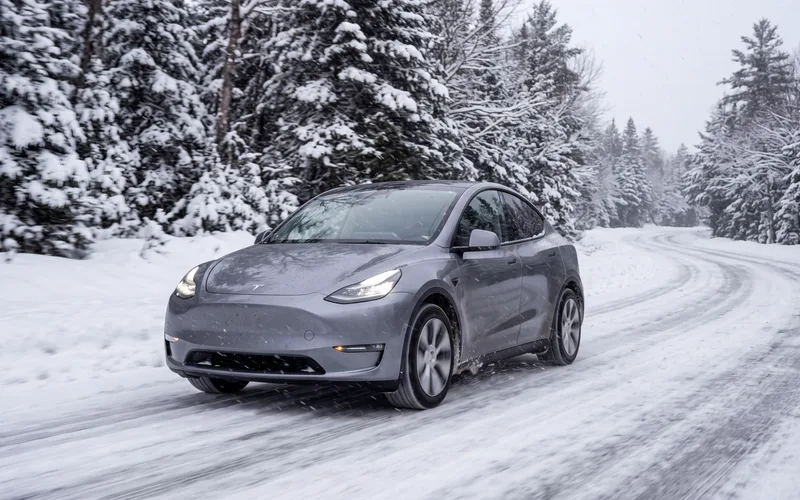 Tesla Model YCompact SUVBetter at: Cargo space
The default electric-crossover cross-shop, with substantially more cargo space and stronger resale for similar money.
Compare 2.66C+
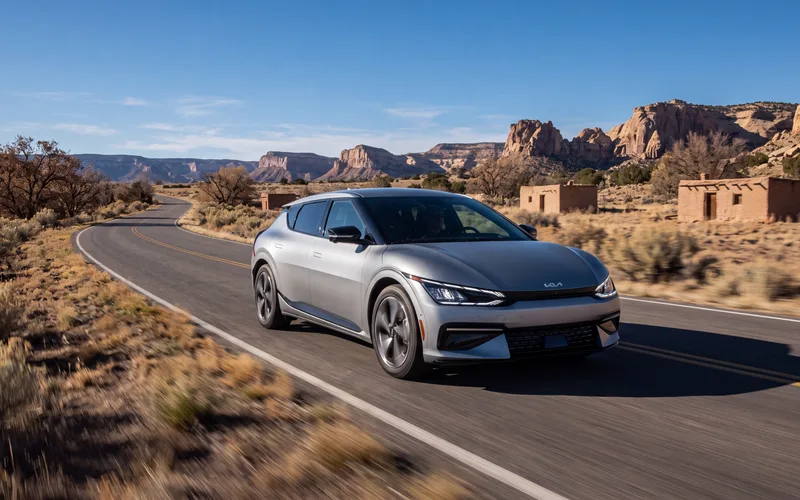 Kia EV6Compact SUVBetter at: Handling
Identical 800-volt hardware and charging speed in a sportier body, so it comes down to styling and whichever brand is discounting harder.
Compare 2.58C+
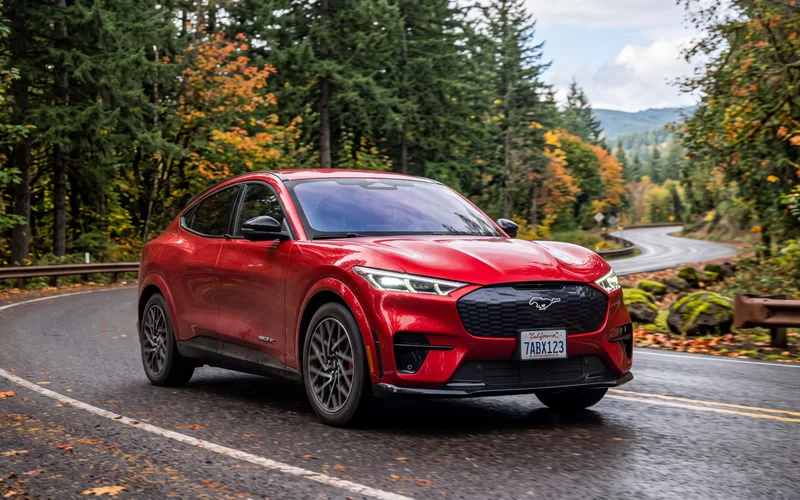 Ford Mustang Mach-ECompact SUVBetter at: Hands-free driving
Adds BlueCruise hands-free highway driving and a more engaging chassis for buyers who log serious interstate miles.
CompareSubject scores by year
Hover or tap a score to see what moved it versus the year before. A corner mark flags a big swing.
| Year | Performance | Efficiency | Safety | Space | Cost | Reliability | Tech | Use-case | Driving | Value |
|---|---|---|---|---|---|---|---|---|---|---|
| 2026 | 61 | 77 | 82 | 53 | 67 | 63 | 82 | 71 | 75 | 83 |
| 2025 | 61 | 77 | 81 | 53 | 57 | 57 | 81 | 70 | 75 | 83 |
| 2024 | 58 | 76 | 79 | 52 | 60 | 56 | 67 | 68 | 73 | 75 |
| 2023 | 58 | 76 | 81 | 52 | 60 | 55 | 70 | 65 | 73 | 79 |
| 2022 | 58 | 76 | 82 | 51 | 60 | 53 | 68 | 64 | 73 | 76 |
Compare two years
Best fit & conditions
Higher scores mean a better fit for that use case. Learn more about use-case fit →
Subject profile
Trims & configurations
5 trimsScores above reflect the volume trim. Per-trim specs and scores are rolling out — the full lineup:
Academic Probation · NHTSA safety recalls
Feb 5, 2026Electrical system: propulsion system: traction batteryThe high voltage battery system may contain an improperly tightened bus bar, which can cause a short-circuit.
Defect
Hyundai Motor America (Hyundai) is recalling certain 2025-2026 IONIQ 5 and 2026 IONIQ 9 vehicles. The high voltage battery system may contain an improperly tightened bus bar, which can cause a short-circuit.
Risk
An electrical short in the high voltage battery system increases the risk of a fire.
Remedy
Dealers will inspect and tighten the bus bar retention bolts and replace the battery system assembly, as necessary, free of charge. Owner notification letters were mailed April 3, 2026. Owners may contact Hyundai customer service at 1-855-371-9460. Hyundai's number for this recall is 294. Vehicle Identification Numbers (VINs) involved in this recall became searchable on NHTSA.gov on February 7, 2026.
NHTSA campaign 26V068000 ↗Manufacturer no. 29427 vehicles potentially affected (all models in the campaign)Owners notified Apr 3, 2026Filed by Hyundai Motor AmericaFiled as IONIQ 5Jan 26, 2026Electrical system: instrument cluster/panelDue to a software error, the instrument panel display may fail. As such, these vehicles fail to comply with the requirements of Federal Motor Vehicle Safety Standard (FMVSS) number 101, "Controls and Displays."
Defect
Hyundai Motor America (Hyundai) is recalling certain 2025-2026 Tucson Hybrid, Tucson Plug-In Hybrid Electric (PHEV), 2026 IONIQ 5, Santa Cruz, Kona, Palisade, Palisade Hybrid, Santa Fe, Santa Fe Hybrid, Sonata, Sonata Hybrid, and Tucson vehicles. Due to a software error, the instrument panel display may fail. As such, these vehicles fail to comply with the requirements of Federal Motor Vehicle Safety Standard (FMVSS) number 101, "Controls and Displays."
Risk
An instrument panel display that fails to show critical safety information, such as the speedometer or warning lights, increases the risk of a crash.
Remedy
The instrument panel display software will be updated over-the-air (OTA) or by a dealer, free of charge. Owner notification letters were mailed March 24, 2026. Owners may contact Hyundai's customer service at 855-371-9460. Hyundai's number for this recall is 293. Vehicle Identification Numbers (VINs) involved in this recall became searchable on NHTSA.gov on January 28, 2026.
NHTSA campaign 26V047000 ↗Manufacturer no. 29341,651 vehicles potentially affected (all models in the campaign)Owners notified Mar 24, 2026Filed by Hyundai Motor AmericaFiled as IONIQ 5
13 recalls on other model years of the Ioniq 5 (2022–2025)
Jul 2, 2026Electrical system: propulsion system: traction batteryThe high voltage battery cells may contain misaligned electrodes, which can lead to a fire while parked or driving.
Defect
Hyundai Motor America (Hyundai) is recalling certain 2023-2024 Ioniq 5 vehicles. The high voltage battery cells may contain misaligned electrodes, which can lead to a fire while parked or driving.
Risk
A fire increases the risk of injury.
Remedy
Owners are advised to park outside and away from structures and limit their charge to a maximum of 80% until the recall repair is complete. Dealers will replace the high voltage battery system assembly, free of charge. Owner notification letters are expected to be mailed August 31, 2026. Owners may contact Hyundai's customer service at 855-371-9460. Hyundai's number for this recall is 305. Vehicle Identification Numbers (VINs) involved in this recall became searchable on NHTSA.gov on July 3, 2026.
NHTSA campaign 26V432000 ↗Manufacturer no. 3056 vehicles potentially affected (all models in the campaign)Owners notified Jul 29, 2026Filed by Hyundai Motor AmericaFiled as IONIQ 5May 18, 2026Suspension: critical fastenersThe fasteners for the rear suspension may loosen and detach, which can result in a loss of vehicle control.
Defect
Hyundai Motor America (Hyundai) is recalling certain 2025 Ioniq 5 and 2026 Ioniq 9 vehicles. The fasteners for the rear suspension may loosen and detach, which can result in a loss of vehicle control.
Risk
A loss of vehicle control increases the risk of a crash.
Remedy
Dealers will inspect and replace the rear suspension fasteners and perform a rear vehicle alignment, as necessary, free of charge. Owner notification letters are expected to be mailed July 17, 2026. Owners may contact Hyundai customer service at 1-855-371-9460. Hyundai's number for this recall is 303. Vehicle Identification Numbers (VINs) involved in this recall became searchable on NHTSA.gov on May 20, 2026.
NHTSA campaign 26V314000 ↗Manufacturer no. 303172 vehicles potentially affected (all models in the campaign)Owners notified Jul 16, 2026Filed by Hyundai Motor AmericaFiled as IONIQ 5Nov 17, 2025Seat belts: front: retractorThe seat belt retractors for the driver and front passenger seats may not be securely fastened.
Defect
Hyundai Motor America (Hyundai) is recalling certain 2025 IONIQ 5 vehicles. The seat belt retractors for the driver and front passenger seats may not be securely fastened.
Risk
An improperly secured seat belt retractor may not function properly in a crash, increasing the risk of injury.
Remedy
Dealers will inspect and secure the seat belt retractors, as necessary, free of charge. Owner notification letters were mailed December 30, 2025. Owners may contact Hyundai customer service at 1-855-371-9460. Hyundai's number for this recall is 287. Vehicle Identification Numbers (VINs) involved in this recall became searchable on NHTSA.gov on November 19, 2025.
NHTSA campaign 25V797000 ↗Manufacturer no. 2871,535 vehicles potentially affected (all models in the campaign)Owners notified Dec 30, 2025Filed by Hyundai Motor AmericaFiled as IONIQ 5Sep 11, 2025Suspension: critical fastenersCertain rear suspension alignment adjustment bolts may have been improperly tightened, which can cause a loss of vehicle stability control.
Defect
Hyundai Motor America (Hyundai) is recalling certain 2025 IONIQ 5 electric vehicles. Certain rear suspension alignment adjustment bolts may have been improperly tightened, which can cause a loss of vehicle stability control.
Risk
A loss of vehicle stability control increases the risk of a crash.
Remedy
Dealers will replace the adjustment bolts, align the wheels, and replace tires if necessary, free of charge. Owner notification letters were mailed October 10, 2025. Owners may contact Hyundai customer service at 1-855-371-9460. Hyundai's number for this recall is 284. Vehicle Identification Numbers (VINs) involved in this recall became searchable on NHTSA.gov on September 13, 2025.
NHTSA campaign 25V605000 ↗Manufacturer no. 2848 vehicles potentially affected (all models in the campaign)Owners notified Oct 10, 2025Filed by Hyundai Motor AmericaFiled as IONIQ 5Jul 23, 2025Electrical system: propulsion system: traction batteryThe high voltage battery system may contain an improperly tightened bus bar, which can cause a short-circuit.
Defect
Hyundai Motor America (Hyundai) is recalling certain 2025 IONIQ 5 vehicles. The high voltage battery system may contain an improperly tightened bus bar, which can cause a short-circuit.
Risk
An electrical short in the high voltage battery system increases the risk of a fire.
Remedy
Owners are advised to park their vehicles outside and away from structures until the recall remedy is complete. Dealers will inspect and repair the high voltage battery system, as necessary, free of charge. Owner notification letters were mailed August 25, 2025. Owners may contact Hyundai customer service at 1-855-371-9460. Hyundai's number for this recall is 280.
NHTSA campaign 25V482000 ↗Manufacturer no. 28010 vehicles potentially affected (all models in the campaign)Owners notified Aug 25, 2025Filed by Hyundai Motor AmericaFiled as IONIQ 5Jun 3, 2025Exterior lighting: headlightsThe right-side headlight may have an incorrect headlight aim label, which can result in improperly aimed headlights. As such, these vehicles fail to comply with the requirements of Federal Motor Vehicle Safety Standard number 108, "Lamps, Reflective Devices, and Associated Equipment."
Defect
Hyundai Motor America (Hyundai) is recalling certain 2025 Hyundai IONIQ 5 vehicles. The right-side headlight may have an incorrect headlight aim label, which can result in improperly aimed headlights. As such, these vehicles fail to comply with the requirements of Federal Motor Vehicle Safety Standard number 108, "Lamps, Reflective Devices, and Associated Equipment."
Risk
Improperly aimed headlights can result in insufficient illumination of the road, decreasing the driver's visibility and increasing the risk of a crash.
Remedy
Hyundai will mail owners a corrected label with inspection and installation instructions. Owners may bring their vehicle to a dealer for the repair, free of charge. Owner notification letters were mailed July 15, 2025. Owners may contact Hyundai customer service at 1-855-371-9460. Hyundai's number for this recall is 279.
NHTSA campaign 25V373000 ↗Manufacturer no. 27910,409 vehicles potentially affected (all models in the campaign)Owners notified Jul 15, 2025Filed by Hyundai Motor AmericaFiled as IONIQ 5Apr 10, 2025Service brakes, hydraulic: power assist: electric: control module: softwareThe integrated electronic brake (IEB) and vehicle control unit (VCU) software may cause reduced braking performance when LFB is activated. Additionally, the vehicle may continue to accelerate after the pedal is released and the vehicle's N e-shift feature is engaged.
Defect
Hyundai Motor America (Hyundai) is recalling certain 2025 Hyundai IONIQ 5 "N" vehicles equipped with left-foot braking (LFB) and N e-shift features. The integrated electronic brake (IEB) and vehicle control unit (VCU) software may cause reduced braking performance when LFB is activated. Additionally, the vehicle may continue to accelerate after the pedal is released and the vehicle's N e-shift feature is engaged.
Risk
Reduced braking performance and unexpected, continued acceleration increase the risk of a crash.
Remedy
Owners are advised not to use the LFB or N e-Shift features until the remedy has been performed. The IEB and VCU software will be updated over-the-air (OTA) or by a dealer, free of charge. Owner notification letters were mailed April 25, 2025. This recall replaces NHTSA recall number 25V-065. Vehicles repaired under the previous recall will need to have the new remedy completed. Owners may contact Hyundai customer service at 1-855-371-9460. Hyundai's number for this recall is 277.
NHTSA campaign 25V235000 ↗Manufacturer no. 2771,589 vehicles potentially affected (all models in the campaign)Owners notified Apr 25, 2025Filed by Hyundai Motor AmericaFiled as IONIQ 5Feb 6, 2025Service brakes, hydraulic: power assist: electric: control module: softwareThe integrated electronic brake (IEB) and vehicle control unit (VCU) software may cause reduced braking performance when LFB is activated.
Defect
Hyundai Motor America (Hyundai) is recalling certain 2025 Hyundai IONIQ 5 "N" vehicles equipped with a left-foot braking (LFB) feature. The integrated electronic brake (IEB) and vehicle control unit (VCU) software may cause reduced braking performance when LFB is activated.
Risk
Reduced braking performance can increase the distance required to stop the vehicle, increasing the risk of a crash.
Remedy
Owners who have not received the recall remedy are advised not to use the LFB feature until the updated remedy has been performed. Additionally, owners who have received the recall remedy are advised not to use the 'N' E-shift feature until the updated remedy has been performed. Dealers will update the IEB and VCU software, free of charge. Owner notification letters were mailed March 12, 2025. This recall is replaced by NHTSA recall number 25V-235. Vehicles already repaired under this recall will need to have the new remedy completed. Owners may contact Hyundai customer service at 1-855-371-9460. Hyundai's number for this recall is 275.
NHTSA campaign 25V065000 ↗Manufacturer no. 2751,587 vehicles potentially affected (all models in the campaign)Owners notified Mar 12, 2025Filed by Hyundai Motor AmericaFiled as IONIQ 5Feb 6, 2025Air bags: side/window · Electrical system: wiringThe rear floor wiring harness may contain an open circuit, which can result in the rear side air bag not deploying as intended.
Defect
Hyundai Motor America (Hyundai) is recalling certain 2025 IONIQ 5 EV vehicles. The rear floor wiring harness may contain an open circuit, which can result in the rear side air bag not deploying as intended.
Risk
A rear side air bag that does not deploy as intended can increase the risk of injury in a crash.
Remedy
Dealers will inspect and replace the rear floor wiring harness, as necessary, free of charge. Owner notification letters were mailed March 12, 2025. Owners may contact Hyundai customer service at 1-855-371-9460. Hyundai's number for this recall is 274.
NHTSA campaign 25V064000 ↗Manufacturer no. 27433 vehicles potentially affected (all models in the campaign)Owners notified Mar 12, 2025Filed by Hyundai Motor AmericaFiled as IONIQ 5Nov 18, 2024Electrical system: 12v/24v/48v battery · Electrical system: propulsion system: charging: module: softwareThe Integrated Charging Control Unit (ICCU) may become damaged and stop charging the 12-volt battery, which can result in a loss of drive power.
Defect
Hyundai Motor America (Hyundai) is recalling certain 2022-2024 IONIQ 5, 2023-2025 IONIQ 6, Genesis GV60, Genesis GV70 "Electrified," and Genesis G80 "Electrified" vehicles. The Integrated Charging Control Unit (ICCU) may become damaged and stop charging the 12-volt battery, which can result in a loss of drive power.
Risk
A loss of drive power increases the risk of a crash.
Remedy
Dealers will inspect and replace the ICCU and its fuse, as necessary. In addition, dealers will update the ICCU software. All repairs will be performed free of charge. Owner notification letters were mailed December 20, 2024. Owners may contact Hyundai customer service at 1-855-371-9460 or Genesis customer service at 1-844-340-9741. Hyundai's numbers for this recall are 272 (Hyundai) and 025G (Genesis). This recall expands and replaces previous recall number 24V-204. Vehicles previously repaired under recall 24V-204 will need to have the new remedy completed.
NHTSA campaign 24V868000 ↗Manufacturer no. 272 (H), 025G (G)145,642 vehicles potentially affected (all models in the campaign)Owners notified Dec 20, 2024Filed by Hyundai Motor AmericaFiled as IONIQ 5Mar 15, 2024Electrical system: 12v/24v/48v battery · Electrical system: propulsion system: charging: module: softwareThe Integrated Charging Control Unit (ICCU) may become damaged and stop charging the 12-Volt battery, which can result in a loss of drive power.
Defect
Hyundai Motor America (Hyundai) is recalling certain 2022-2024 IONIQ 5, 2023-2024 IONIQ 6, Genesis GV60, Genesis GV70 "Electrified," and Genesis G80 "Electrified" vehicles. The Integrated Charging Control Unit (ICCU) may become damaged and stop charging the 12-Volt battery, which can result in a loss of drive power.
Risk
A loss of drive power increases the risk of a crash.
Remedy
This recall is replaced by NHTSA recall number 24V-868. Vehicles already repaired under this recall will need to have the new remedy completed. Dealers will inspect and replace the ICCU and its fuse, as necessary. In addition, dealers will update the ICCU software. All repairs will be performed free of charge. Owner notification letters were mailed April 22, 2024. Owners may contact Hyundai customer service at 1-855-371-9460. Hyundai's number for this recall is 257/021G.
NHTSA campaign 24V204000 ↗Manufacturer no. 257/021G99,055 vehicles potentially affected (all models in the campaign)Owners notified Apr 22, 2024Filed by Hyundai Motor AmericaFiled as IONIQ 5Feb 1, 2024Power train: driveline: driveshaftThe rear inner driveshaft may have been improperly heat-treated, allowing it to break under load and resulting in a loss of drive power.
Defect
Hyundai Motor America (Hyundai) is recalling certain 2023 IONIQ 5, IONIQ 6, and Genesis GV60 vehicles. The rear inner driveshaft may have been improperly heat-treated, allowing it to break under load and resulting in a loss of drive power.
Risk
A loss of drive power increases the risk of a crash.
Remedy
Dealers will replace the rear inner driveshaft, free of charge. Owner notification letters were mailed March 29, 2024. Owners may contact Hyundai customer service at 1-855-371-9460. Hyundai's numbers for this recall are 253(H), 017G(G).
NHTSA campaign 24V065000 ↗Manufacturer no. 253 (H), 017G (G)1,165 vehicles potentially affected (all models in the campaign)Owners notified Mar 29, 2024Filed by Hyundai Motor AmericaFiled as IONIQ 5May 11, 2022Parking brake: electrical: control module: softwareA software error in the Shifter Control Unit (SCU) may disengage the parking mechanism, which can allow the vehicle to rollaway.
Defect
Hyundai Motor America (Hyundai) is recalling certain 2022 Ioniq 5 vehicles. A software error in the Shifter Control Unit (SCU) may disengage the parking mechanism, which can allow the vehicle to rollaway.
Risk
Vehicle rollaway can increase the risk of a crash or injury.
Remedy
Drivers are recommended to use the Electronic Parking Brake (EPB) when parking their vehicles until the remedy has been performed. Dealers will update the Shifter Control Unit software, free of charge. Owner notification letters were mailed July 14, 2022. Owners may contact Hyundai customer service at 1-855-371-9460. Hyundai's number for this recall is 228.
NHTSA campaign 22V324000 ↗Manufacturer no. 22810,729 vehicles potentially affected (all models in the campaign)Owners notified Jul 14, 2022Filed by Hyundai Motor AmericaFiled as IONIQ 5
Source: NHTSA Office of Defects Investigation recall database, model years 2022–2026. Recalls are listed by model year as the manufacturer filed them; whether a specific car is affected depends on its VIN — check a VIN at nhtsa.gov ↗. NHTSA model names matched to this page: IONIQ 5.
Detailed scoring by subject
1Performance & PowertrainOne of the Ioniq 5's weakest categories.2.09C
Scored on the 84-kWh dual-motor Long Range AWD powertrain that anchors the SEL/Limited/XRT volume mix, consistent with how the Mach-E, Model Y, Prologue and Q4 e-tron were scored in this dataset. 320 hp is mid-pack for a premium compact EV SUV against a 150–550 hp SUV band.
Dual-motor combined torque of 446 lb-ft sits near the top of the 130–500 lb-ft SUV band and is delivered instantly, which is the practical reason the car feels quicker than its horsepower figure suggests.
Instrumented tests of the 320-hp AWD car have run in the mid-4s since the 2022 launch, and the 2025 refresh added weight but no power, so mid-4s remains the right figure. That is genuinely quick for a compact SUV and beats Hyundai's conservative published claim by roughly half a second.
The 800-volt E-GMP powertrain delivers torque instantly and near-silently with no lag, no step in delivery and no coarse notes under load — benchmark behavior for the class. Marked just below the Model Y (91) and Mach-E (92) because the Ioniq 5's motors are audibly whinier under hard acceleration than the best in class.
Single-speed reduction gear with nothing to hunt for, plus one of the best-judged regen implementations in the segment: steering-wheel paddles step through regen levels and i-Pedal gives true one-pedal driving with a smooth, predictable stop. That paddle-adjustable control is a real advantage over the fixed regen settings on most rivals.
The North American refresh brought a published tow rating, but at roughly 2,300 lbs on the AWD it is a bike-rack-and-small-trailer number that lands near the bottom of the 1,000–8,000 lb SUV band. Better than the Mach-E, which carries no US tow rating at all, and well short of the Ioniq 9's 5,000 lbs.
Dual-motor AWD is optional on every trim (SE, SEL, Limited) rather than locked to the top of the range, and is standard on the XRT; the 2025 refresh added Snow/Mud/Sand terrain modes to AWD cars. That combination of breadth and drive-mode sophistication puts it above the Model Y (76) and Mach-E (78), short of the low-range hardware that earns 90+.
The XRT trim introduced with the refresh is a real if modest effort: roughly 7.1 in of ground clearance (up about an inch), all-terrain tires, revised bumpers for better approach and departure angles, tow hooks and terrain modes. But there is no low range, no locker and no meaningful underbody protection, and non-XRT trims sit at about 6.1 in — squarely light-duty.
Battery-electric only, so the item's 80–100 band — multiple distinct powertrain types — is out of reach by definition. Scored at the top of the EV-only cluster (Model Y 28, Mach-E 28, Prologue 32, Q4 e-tron 40) because the lineup does span three genuinely distinct configurations — 63-kWh RWD, 84-kWh RWD and 84-kWh AWD — with a 601-hp N variant above it.
2Efficiency & RangeGrades above the middle of the scale.3.25B+
EPA rates the volume RWD Long Range at 114 MPGe combined — 30 kWh/100 mi, upper-middle of the electric compact-SUV field rather than the top of it, since the boxy E-GMP body is efficient but not aerodynamically extreme. Re-verified against the EPA's 2026 listing; unchanged from the prior score.
City is the Ioniq 5's best EPA figure — regenerative braking and the single rear motor make stop-and-go its strongest case.
Highway MPGe falls well below city — the tall, upright body pays an aerodynamic penalty at speed, which is where the Ioniq 5's real-world range shortfall shows up.
The 84-kWh pack adopted with the 2025 US-built (HMGMA) refresh carries into 2026 unchanged, giving the RWD Long Range 318 miles — the lineup's best. Solid mid-pack for an electric compact SUV: comfortably past the 200-mile floor of the EV band but short of the 400-mile cars.
Hyundai's 2026 compare-specs table now states the car-side acceptance directly — a ">250 kW (800V)" DC fast-charge row rather than only a charger rating — and measured curves put the 84-kWh pack's peak near 260 kW. That is among the highest acceptance rates of any mainstream EV and the reason its fill times beat 400-volt rivals stuck near 150 kW. Confidence raised from MEDIUM on the strength of the manufacturer figure; the value itself is unchanged.
Hyundai's own 2026 figure is 20 minutes on 800 V CCS hardware, identical across every 84-kWh trim and near the fastest in any segment. The caveat is real and load-bearing: the car's native port is NACS, and a 400-volt 150 kW Supercharger stretches the same fill to 30 minutes.
EPA puts annual energy cost at $700 for the volume RWD at 15,000 mi/yr — near the low end of the EV SUV band and a fraction of a comparable gas compact SUV.
No fuel grade to think about and the most flexible energy access in the segment: a native NACS port opens the Supercharger network with no adapter while the included CCS adapter covers 800 V hardware, a 240V home charger refills 10–100% in 7 hours 20 minutes, and V2L turns the pack into a power source. Held just short of the Kia EV6's 96 because the 800-volt speed advantage only appears on CCS hardware — on the car's own NACS port a 10–80% fill takes 30 minutes — and because V2L is unavailable on the SE Standard Range.
3SafetyOne of the Ioniq 5's strongest categories.3.55A-
The Ioniq 5 carries a 5-star NHTSA overall rating for this generation, including the US-built (Hyundai Metaplant Georgia) cars that the 2026 model year continues unchanged. Downgraded to MEDIUM because nhtsa.gov could not be reached to confirm a 2026-specific test entry.
The Ioniq 5 has held IIHS Top Safety Pick+ under the tightened post-2023 criteria, with Good results in the small-overlap front tests and the updated side test. Scored at the low end of the 80-100 award band rather than the top because the updated moderate-overlap (rear-passenger) result is the generation's weakest crashworthiness area.
Hyundai SmartSense is standard on every 2026 Ioniq 5 trim including the base SE Standard Range: Forward Collision-Avoidance Assist with pedestrian/cyclist and junction-turning detection, Lane Keeping and Lane Following Assist, Smart Cruise Control with Stop & Go, Blind-Spot Collision-Avoidance Assist, Rear Cross-Traffic Collision-Avoidance Assist, Safe Exit Assist and Driver Attention Warning. None of the core five (AEB/ACC/LKA/BSM/RCTA) is trim-locked, which is the top band.
Forward Collision-Avoidance Assist covers vehicle, pedestrian, cyclist and junction-turning scenarios and performs well in the IIHS vehicle-to-vehicle and daytime pedestrian evaluations. Placed at the bottom of the top band because nighttime pedestrian performance is the weaker half of the updated IIHS pedestrian test for this vehicle.
Blind-Spot Collision-Avoidance Assist and Rear Cross-Traffic Collision-Avoidance Assist are standard and both intervene with steering/braking rather than only warning, and Safe Exit Assist guards against door-opening into traffic. Upper trims add the Blind-Spot View Monitor camera feed in the gauge cluster; there is no trailer-aware coverage, which is why this is not higher.
Lane Following Assist provides genuine centering on all trims and Highway Driving Assist 2 on upper trims adds assisted lane change, but reviewers consistently describe Hyundai's centering as slightly busy — small side-to-side corrections on wider lanes and in curves — rather than the settled, trusted behavior of the top band.
Smart Cruise Control with Stop & Go is standard and full-speed-range, with machine-learning speed adaptation, and Highway Driving Assist 2 integrates cruise and centering cleanly on Limited. Kept at the band floor because it remains a hands-on system with the usual slightly conservative gap-keeping and unhurried resume.
Hyundai offers no hands-free highway driving system on the 2026 Ioniq 5 at any trim. Highway Driving Assist 2 is hands-on and requires steering-wheel torque, so this lands squarely in the 0-49 no-hands-free band, well behind Mustang Mach-E (BlueCruise), Lyriq (Super Cruise) and Model Y.
LED projector headlights with High Beam Assist are standard, and Top Safety Pick+ status implies no trim rates worse than Acceptable. Scored in the upper-middle band on the assumption that the best (Good) result is tied to upper trims — the per-trim IIHS headlight breakdown could not be verified for 2026.
Upright glass, a relatively low beltline and a boxy hatchback-SUV shape give better forward and quarter sightlines than most EV crossovers, and the 2025 facelift finally added a rear wiper that keeps the backlight usable in weather. Rear vision through the shallow, steeply raked hatch glass is still the weak point, and the 360-degree camera and Blind-Spot View Monitor compensate only on upper trims.
The 118.1-inch wheelbase, flat EV floor and near-vertical, wide-opening rear doors make the second row unusually easy to work in, with class-leading rear legroom for rear-facing seats and a sliding rear bench on most trims to buy more room. Held at the band floor because the outboard LATCH anchors sit in seat-cushion recesses rather than fully exposed, and the middle position relies on borrowed anchors.
4Space & ComfortThe Ioniq 5's lowest-graded category.1.57D
The Ioniq 5 is a two-row, five-passenger crossover across every 2026 trim (SE Standard Range, SE, SEL, XRT, Limited); no six- or seven-seat configuration is offered in the US.
The flat-floor E-GMP packaging and upright roofline give the Ioniq 5 competitive front headroom for a compact SUV; the Limited's panoramic roof costs about an inch.
Front legroom is merely adequate by the numbers — the Ioniq 5 spends its 118.1-inch wheelbase on the second row rather than the first, so it trails class leaders here despite a cavernous feel.
Rear headroom is good but not exceptional — the sloping rear glass and the raised floor over the battery pack trade away some of the roofline's advantage.
A 118.1-inch wheelbase — longer than a Palisade's — with no transmission tunnel yields mid-size-class rear legroom in a compact-SUV footprint, and the sliding/reclining bench extends it further.
The Ioniq 5 is a strictly two-row, five-seat vehicle with no third row offered on any 2026 trim. Buyers needing a third row are pointed to the Ioniq 9.
This is the Ioniq 5's clearest packaging weakness: despite a 185.6-inch body it holds barely more behind the second row than a subcompact, because the high battery floor and steeply raked hatch eat into the hold.
Seats-folded capacity stays near the bottom of the compact-SUV band, and the load floor sits high with a step at the folded seatbacks rather than folding flat.
The flat floor, a deep console with a large open pass-through beneath it, a front trunk, and standard Vehicle-to-Load power hit the guidance band's named examples (flat floors, onboard power) squarely; the 2025 refresh added second-row seatback pockets and an under-seat tray that carry into 2026.
Front seats are consistently praised for long-haul comfort, and the Limited's reclining 'relaxation' front seats with powered leg rests are a genuine standout for charging stops; the deduction is for thin, flat cushions and no power lumbar for the front passenger below Limited.
The 2025 refresh retuned the suspension and added structural stiffening, and that setup carries into 2026 — the ride is settled and well-damped at speed, with residual firmness over sharp urban impacts on the 20-inch wheels fitted to Limited.
No engine noise plus the refresh's added acoustic insulation and thicker glass make this one of the quieter compact crossovers at highway speed; road roar from the 20-inch tires is the main intrusion that keeps it out of the top band.
Comfort equipment is rich from the mid trims up — heated front seats and heated steering wheel, ventilated front seats and heated rear outboard seats on Limited, dual-zone climate, and remote preconditioning through Bluelink — with a standard heat pump that preserves comfort without gutting winter range.
5Cost of OwnershipMid-pack among this car's ten categories.2.56C+
Hyundai repriced the Ioniq 5 sharply downward for 2026 after the $7,500 federal clean-vehicle credit expired 2025-09-30, dropping the SE Standard Range to a $35,000 base — roughly $7,600 below the comparable 2025 trim and well under the compact-SUV band midpoint. Re-scored off a real 2026 price rather than the placeholder $50,995.
SEL RWD is the volume configuration — it pairs the 84 kWh pack and the longest RWD range with the equipment most buyers actually want. Estimated by applying the announced ~$7,600 2026 reduction to the 2025 SEL RWD delivered price (~$50,175).
As a BEV the Ioniq 5 has no oil changes, spark plugs, belts, or exhaust service; scheduled work is essentially cabin filters, tire rotations, brake fluid, and inspections, and one-pedal regen braking stretches pad and rotor life well past a comparable gas SUV. Lands near the low end of the SUV maintenance band.
The weakest part of the Ioniq 5's cost picture and the heaviest-weighted item in the category. EV residuals stay depressed by fast-moving battery and charging tech, and the 2026 MSRP cut itself marks down every earlier car in the used pool. Partly offset by the credit's expiry removing the new-vs-used price distortion that had been crushing EV trade-in values.
Hyundai's 5-year/60,000-mile new-vehicle limited warranty tops the SUV band outright — two years longer than the 3/36 industry standard.
Maxes the band. The 10-year/100,000-mile original-owner coverage extends to the high-voltage battery and drive units — the most expensive failure mode on an EV and the one buyers price in hardest.
Top-band package: 3 years / 36,000 miles of Hyundai Complimentary Maintenance, 5 years of unlimited-mileage roadside assistance, a Bluelink connected-services trial, and an EV charging benefit (home-charger credit or public fast-charging credit). The 2025 facelift's native NACS port also removes the adapter friction that costs rivals' owners time and money at Tesla Superchargers.
$44,475 volume-trim price minus its estimated resale value after 5 years (45% retained, or about $20,014) leaves about $24,461 in depreciation. Add the projected $3,900 in 5-year maintenance and repairs, and owning this vehicle for 5 years costs about $28,361 in total.
6Reliability & QualityOne of the Ioniq 5's weakest categories.2.24C
Signals are genuinely mixed rather than bad: the Ioniq 5 has drawn roughly average-to-favorable predicted reliability from Consumer Reports across recent survey years, but the well-documented ICCU (Integrated Charging Control Unit) failure mode on the E-GMP platform is a real, non-theoretical defect that has produced stranding events. The 2025 refresh also reset part of the risk profile — new 84-kWh pack, native NACS port, and a move of US-market production to the new Georgia plant — so 2026 units are not yet backed by a settled field record.
Hyundai is a solidly mid-pack dependability brand — consistently better than the domestic and European volume brands it competes with, consistently short of the Toyota/Lexus/Honda tier that anchors the 80-100 band. It has not been a bottom-third brand in years, but neither has it broken into the top five of the major dependability studies.
This generation carries a major, repeated powertrain-adjacent campaign: ICCU failures that stop the 12V battery from charging and can cause a loss of drive power, addressed across multiple Hyundai actions covering roughly 145,000 E-GMP vehicles (Ioniq 5/6 plus Genesis EVs) and mirrored by Kia on the EV6. That is squarely the 'major or repeated recalls' description, which is why this sits in the below-average band despite the rest of the record being unremarkable. It is scored at the top of that band because 2026 builds fall outside the recalled populations and ship with revised hardware and control software.
The core E-GMP drive unit and 800V battery architecture have held up well — no thermal-event recall of the kind that damaged the earlier Kona Electric's reputation, and permanent-magnet motors with single-speed reduction gearing are inherently low-wear. The offset is that the one component with a known systemic failure history, the ICCU, sits directly in the high-voltage charging path, which keeps this out of the 'proven, no red flags' upper band.
The cabin's strengths are architectural rather than material — flat floor, sliding center console, airy glasshouse, and recycled-content fabrics that read as deliberate rather than cheap. The 2025 refresh added soft-touch coverage and restored physical climate and audio controls, but hard plastics remain on the lower doors and console flanks, which is a fair criticism at this vehicle's premium price positioning.
Assembly quality has been a strong point for the Ioniq 5 — tight panel gaps, a rattle-free structure, and good initial-quality standing for Hyundai generally. The reason this is not higher is the production move to Hyundai's new Georgia plant for US-market cars, since new-plant ramps historically produce scattered early-build inconsistencies before settling; 2026 is the second full year of that line.
Raw coverage is a clear strength — Hyundai runs a dense nationwide network of roughly 800-plus US franchised dealers, so physical access to service is a non-issue almost anywhere. What holds the score to the upper-middle band is EV-specific service depth: high-voltage diagnostic capability is uneven across stores, and ICCU-related repairs generated widely reported multi-week vehicle downtime.
This is the weakest part of the ownership picture. High-voltage components are dealer-only with essentially no aftermarket, ICCU replacements were on documented backorder during the recall campaigns, and 800V architecture plus aluminum-intensive structure raises collision repair cost enough that insurers have been quick to total damaged examples. The long 10-year/100,000-mile battery and powertrain warranty offsets the owner's exposure meaningfully but does not make the parts themselves cheap or plentiful.
7Technology & InfotainmentOne of the Ioniq 5's strongest categories.3.55A-
The 2026 Ioniq 5 uses the panoramic curved display: a 12.3-inch center touchscreen paired with a 12.3-inch instrument cluster under one glass panel, standard from SE Standard Range through Limited with no smaller base screen and no larger optional screen. Mid-pack for the segment now that rivals field 14-15 inch panels.
The 2025 refresh moved the Ioniq 5 onto Hyundai's ccNC (connected car Navigation Cockpit) platform, which is quick to boot, logically laid out, and — unusually for an EV — kept a real row of physical climate controls plus proper steering-wheel buttons rather than pushing everything into menus. Held just inside the top band rather than higher because the menu depth for EV charging and drive settings still takes more taps than the best systems, and the capacitive shortcut bar below the screen is less positive than true buttons.
The ccNC changeover resolved the Ioniq 5's long-standing wired-only limitation — wireless Apple CarPlay and Android Auto are now standard across the 2026 range including the base SE Standard Range, alongside wired USB-C connection. Not scored higher because projection still runs windowed on the 12.3-inch panel rather than full-width, and the system occasionally needs a re-pair after a phone OS update.
Native navigation is standard and is genuinely EV-aware: charger search with live availability, range-aware routing, and automatic battery preconditioning when a DC fast charger is set as a destination — the kind of integration that gives owners a reason not to default to phone projection. Natural-language voice recognition handles climate, navigation and media commands offline as well as online. Kept below 90 because the assistant is more command-and-control than conversational and struggles with compound requests.
The Bose eight-speaker premium system with subwoofer is reserved for the Limited; SE, SEL and XRT run a six-speaker setup that is clear enough but thin at the low end and short on staging. The quiet EV cabin flatters both, but the premium upgrade is a modest one by segment standards rather than a headline system.
A 12.3-inch full-digital cluster is standard on every trim — no analog fallback anywhere in the range — with crisp rendering, configurable layouts, and the Blind-Spot View Monitor camera feed displayed directly in the gauge binnacle when a turn signal is used on SEL and above.
The Ioniq 5 supports whole-vehicle over-the-air updates, not just maps — Hyundai pushes software to infotainment, the digital cluster, and vehicle control units including battery/charging management and ADAS calibration, and has used OTA to deliver charging-behaviour improvements to cars already in customer hands. Scored at the lower end of the top band because Hyundai's release cadence is slower and less feature-additive than Tesla's or Rivian's, and some updates still route through the dealer.
Bluelink+ is complimentary in the US rather than a paid tier, which materially changes the ownership picture — remote climate preconditioning, lock/unlock, vehicle finder, charge scheduling and charge-limit control, and remote start all come without a recurring bill. Digital Key 2 lets a phone or smartwatch act as the key and be shared with other drivers. Short of the very top because the app is occasionally slow to wake the car and lacks the deeper telemetry Tesla and Rivian owners get.
USB-C data/charge ports are provided front and rear so second-row passengers are not an afterthought, wireless phone charging is standard from SEL up, and vehicle-to-load gives the Ioniq 5 real household power the segment mostly lacks: a 115V outlet under the second-row seat plus an exterior V2L adapter that turns the charge port into a 1.9 kW outlet. That combination is the top band on the outlet criterion, not just on port count.
Proximity entry with push-button start is standard across the range, Digital Key 2 adds ultra-wideband phone-as-key with shareable credentials on SEL and above, and SEL/Limited add the hands-free Smart Power Liftgate that opens when the key is detected behind the car. Limited further adds Remote Smart Parking Assist, which drives the car in and out of a tight space from outside using the fob. Slightly short of the ceiling because phone-as-key and the hands-free liftgate both skip the base SE trims.
Rear camera is standard and SEL adds front and rear parking distance warning plus the Blind-Spot View Monitor camera feed, but the Surround View Monitor is a Limited-only item and Remote Smart Parking Assist is likewise top-trim. That trim-gating puts it in the upper half of the middle band rather than the top band, despite good image quality and genuinely useful parking automation when you do pay for it.
Hyundai offers a 12-inch augmented-reality head-up display that overlays navigation arrows and lane-keeping graphics onto the road ahead — one of the better implementations at any price — but it is exclusive to the Limited, so the volume SEL buyer cannot get it at any cost. Placed at the top of the 'limited to top trims' band on quality, held out of the top band on availability.
8Use-Case FitGrades above the middle of the scale.2.83B-
The 118.1-inch wheelbase, flat E-GMP floor and near-vertical, wide-opening rear doors make the second row unusually easy to work in for car seats, and the sliding/reclining rear bench buys extra room for rear-facing seats — genuinely better daily family logistics than most compact crossovers. Held out of the top band by the 27.2 cu ft cargo hold, which is small for the class once a stroller is aboard, and by outboard LATCH anchors recessed in the seat cushions.
The full Hyundai SmartSense suite is standard on the $36,475 base SE Standard Range — forward collision avoidance with pedestrian/cyclist and junction-turning detection, blind-spot and rear cross-traffic collision-avoidance assist, Safe Exit Assist, rear occupant alert and stop-and-go adaptive cruise — so families buying the cheap trim get the same protection as Limited buyers. That plus 5-star NHTSA and IIHS Top Safety Pick+ is squarely the top band; kept off 90+ because the updated moderate-overlap rear-passenger result is the generation's weakest crash area and no hands-free system is offered.
A quiet cabin, supportive seats, a sliding and reclining second row with its own vents and USB-C ports, and a panoramic roof make the Ioniq 5 a pleasant multi-hour car for four. It stays mid-band because luggage space with all seats occupied is modest for a family of four on a week-long trip, there are no rear entertainment screens or standard rear sunshades, and highway range — the boxy body's weak spot — dictates the stop schedule more than passenger comfort does.
This is the Ioniq 5's best mission: silent, instantly responsive 800-volt propulsion with no lag or shift steps, paddle-adjustable regeneration and a true i-PEDAL one-pedal mode that removes most brake work in traffic, standard stop-and-go adaptive cruise, light steering and excellent forward sightlines. Ties the Model Y and Q4 e-tron at the class benchmark rather than exceeding them because the lane centering is slightly busy and the wide turning circle intrudes on tight low-speed maneuvers.
About 114 MPGe combined and 130 MPGe in the city translates to roughly $750 a year in energy at EPA assumptions, and an EV drivetrain with regenerative braking removes oil services and stretches brake-pad life to near-vehicle-lifetime — very cheap per commuting mile. Placed just below the Model Y and Q4 e-tron because the Ioniq 5 is slightly less efficient than the best in class and because high insurance premiums and expensive low-rolling-resistance tires on a heavy EV claw back part of the energy saving.
The footprint is genuinely compact and the upright glass and low beltline give better forward and quarter visibility than most EV crossovers, but the same long wheelbase that creates the back-seat space produces a 39-foot turning circle that makes U-turns and tight garage maneuvers a two-bite job. Rear vision through the shallow, steeply raked hatch glass is poor, and the 360-degree camera, Blind-Spot View Monitor and Remote Smart Parking Assist that would offset it are reserved for upper trims.
A 2,300-lb maximum tow rating (AWD, properly equipped; less on RWD), no bed, no meaningful payload rating and 27.2 cu ft of cargo make this a passenger crossover rather than a work tool — light trailer duty and a load of materials is the ceiling. It sits at the top of the not-work-capable band rather than the floor because the 1.9 kW vehicle-to-load system can run corded power tools directly off the car, which none of its EV crossover rivals offers.
The E-GMP platform now has several years and a large fleet behind it across the Ioniq 5, Ioniq 6, EV6 and GV60, US assembly at the Georgia Metaplant, and a 10-year/100,000-mile powertrain and battery warranty — reasons to expect it holds up. Against that, the integrated charging control unit has been a documented recall and service-bulletin theme for this nameplate, parts cost and availability are a weak point, and the light, soft interior trim is not chosen for abuse, so it stays mid-band as unproven under hard duty.
Vehicle-to-load is the whole case here and it is a real one: a 120 V household outlet under the second-row seat plus an exterior adapter that converts the charge port into an outlet, together good for about 1.9 kW — enough for saws, compressors and site lighting, which puts it far ahead of the Model Y (28) and Q4 e-tron (35) on this item. Everything else is thin: basic cargo tie-downs, no washable surfaces, a hitch only as an accessory, no factory roof rails on the volume trims and effectively no upfit ecosystem.
Quiet at speed, comfortable seats including front relaxation seats that make charging stops restful, and Highway Driving Assist 2 to cut fatigue on the volume trims up. The 800-volt architecture recovering 10-80% in roughly 18 minutes, plus the native NACS port added in the 2025 refresh that opens the Tesla Supercharger network, matter more to real road-trip pain than the raw number does — which is fortunate, because the boxy body's highway consumption pulls usable range well under the 318-mile rating. Good tourer with endurance limits, not a mile-eater.
The XRT trim adds raised ride height, all-terrain tires and tow hooks, dual-motor AWD is available across the Long Range trims, the front seats recline nearly flat for napping, and V2L will run a fridge, a cooktop or lights at a campsite — a genuine set of adventure enablers that puts it at the top of the EV-crossover group. It does not reach the top band because non-XRT trims sit low, there is no low range or locking differential, the 2,300-lb tow limit caps what toys come along, and DC fast-charging is sparse exactly where the trails are.
The shapes are good — a wide square hatch opening, hands-free power liftgate, 60/40 seats folding near-flat, an adjustable-height cargo floor with underfloor storage, a sliding rear bench that trades legroom for depth, and a frunk sized for the charging cables. The volumes are not: 27.2 cu ft behind the seats and 59.3 cu ft folded trail the compact-SUV mainstream badly, and with no factory roof rails on the volume trims a roof box is not the easy escape valve it is in a CR-V or Tucson.
9Driving ExperienceGrades above the middle of the scale.3.09B
The floor-mounted 84-kWh pack gives a very low center of gravity and the 2025 refresh's structural stiffening and retuned dampers — carried into 2026 — sharpened body control noticeably over the launch car. But this is a comfort-first tune on a 4,400–4,900 lb body with a 118.1-inch wheelbase and low-rolling-resistance tires: composed, stable and secure at speed rather than eager, with lateral grip around 0.85 g and clear understeer at the limit. Placed below the Mach-E (79) and Model Y (78), which are both tuned tauter, and above the softer Q4 e-tron (68) and Solterra (68).
Accurately geared and consistent off-center, with usable added weight in Sport mode, but the rack is effectively feedback-free — reviewers routinely describe it as light and isolated, telling you nothing about the front tires. That is the segment norm for an EV crossover, so it lands mid-band: above the Prologue (54) and Model Y (69) is not warranted, and it sits just under the Mach-E (76), whose rack is quicker and better weighted.
Regen blending is the Ioniq 5's strongest dynamic attribute: steering-wheel paddles step through four regen levels and i-Pedal delivers true one-pedal driving to a smooth, predictable standstill, with a handoff to the friction brakes that is genuinely hard to detect — better resolved than most rivals' fixed-setting systems. Mechanical stopping distances (roughly 170 ft from 70 mph) are merely adequate for the weight, which keeps it out of the high 80s, but pedal feel is firm and repeatable.
The 800-volt E-GMP drivetrain is close to the benchmark for the class — instant, perfectly linear torque with no lag, no shift event and no driveline shunt, plus well-judged tip-in calibration that does not make the car jumpy in traffic. Marked a point under the Model Y (90) and below the iX (92) because the dual-motor car's front-axle engagement can be felt as a slight step under part-throttle roll-on.
Near-silent in normal driving with no engine to isolate, and the refresh's added acoustic insulation and thicker glass cut what little powertrain noise reaches the cabin. Held under the 90s because the motors emit an audible whine under hard acceleration that the quietest luxury EVs suppress, and because road roar from the 20-inch tires — not the drivetrain — is the dominant sound at highway speed.
The 118.1-inch wheelbase — as long as a three-row Palisade's — is what drives this figure; E-GMP's engine-free packaging allows a good steering angle, but the wheelbase still puts the Ioniq 5 mid-to-low in the 34–42 ft SUV band. Rated LOW confidence because live manufacturer spec-sheet verification was not available on this run; the shorter-wheelbase platform twin Kia EV6 is listed at 38.6 ft, which brackets this figure sensibly.
A flat floor, a sliding Universal Island console, wide seat and wheel adjustment ranges, and an airy greenhouse make this one of the more accommodating driving positions in the class, and the 2025 refresh's restoration of a physical row of climate and audio controls — plus the added rear wiper — fixed the two ergonomic complaints that dogged the launch car. Held short of 80 by genuinely poor over-the-shoulder and rearward visibility: thick C-pillars and a split rear spoiler that bisects the backlight.
There is real character here — a mid-4-second 0–60 in the AWD car, the striking retro-futurist design, and paddle-controlled regen that gives the driver something genuinely engaging to do. But the chassis is tuned for calm, the steering tells you nothing, and the car is heavy, so it satisfies rather than delights on a good road. Above the Q4 e-tron (64) and EQE SUV (65), below the Mach-E (76), which backs its speed with a keener chassis.
10Value & Market PositionThe Ioniq 5's best-graded category.3.64A-
Even the base SE Standard Range carries dual 12.3-inch displays, wireless Apple CarPlay/Android Auto (added with the 2025 facelift), the full Hyundai SmartSense ADAS suite including Highway Driving Assist, Vehicle-to-Load power export, and a native NACS port with a CCS adapter included — content rivals charge option-package money for. Hyundai's 10-year/100,000-mile powertrain and EV battery warranty plus three years of complimentary maintenance add further standard value.
The 800-volt E-GMP architecture delivers roughly 18-minute 10-80% DC fast charging and up to ~318 miles of EPA range at prices no direct rival matches, and Hyundai cut 2026 pricing to absorb the loss of the federal clean-vehicle credit. Marked down from a higher score because the credit's expiry raised real out-of-pocket cost for cash buyers versus the 2024-25 era.
The lineup runs SE Standard Range, SE, SEL, the ruggedized XRT, and Limited, with RWD or dual-motor AWD available across most of the range and two battery sizes — then extends to the 601-hp Ioniq 5 N halo. That is an unusually wide, well-spaced ladder for a compact electric SUV.
The Ioniq 5 is Hyundai's best-selling EV and a consistent top-five non-Tesla EV in the US, with a record year in 2024 and a further pull-forward surge before the federal credit lapsed. It is a strong seller rather than a segment leader, and post-credit demand has been volatile.
Hyundai's image has climbed substantially over the past decade and the Ioniq 5 is itself the brand's design halo, but Hyundai remains a mainstream badge without luxury pull, and EV resale values across the segment — Ioniq 5 included — have depreciated hard.
Buyer-side incentives are among the strongest in the segment: Hyundai responded to the federal credit's expiry with outright MSRP reductions plus heavily subvented leases and low- or zero-APR financing offers. Scored on buyer benefit per the item's inverted guidance, though the aggressiveness does reflect soft post-credit EV demand.
2026 is the second year of a substantial MY2025 facelift that brought the larger 84 kWh battery, a native NACS port, revised fascias, restored physical controls and a rear wiper, the XRT trim, and US assembly. The underlying NE generation dates to 2022, so the car is mid-cycle rather than new, but its 800V hardware is still ahead of most rivals.
One of the most decorated EVs on sale: a rare World Car of the Year triple in 2022, repeated Car and Driver 10Best and EV-of-the-Year recognition, and a long record of winning or placing at the top of electric-SUV comparison tests. Reviewers consistently single out the charging speed, packaging, and ride-refinement balance.