
The verdict
A mixed-report compact suv, strong on safety and held back by performance.
The 2026 Equinox EV is the cheapest way to buy 300-plus miles of electric range in America — roughly $34,995 delivered for an EPA-rated 319 miles, with a 17.7-inch screen, a 5-star NHTSA rating and a genuinely complete driver-assist suite standard on the base LT. It's built to commute: about $800 a year in electricity, near-silent around town, and roomier in the back seat than most compact SUVs thanks to a wheelbase 10 inches longer than the gas Equinox. What you give up is muscle and flexibility — 213 hp and about 7.9 seconds to 60 in the volume front-drive trim, a 1,500-lb tow ceiling, no front trunk, and no Apple CarPlay or Android Auto at any price. Buy it if the math and the daily drive matter more than the driving, and go in expecting weak resale (roughly 42% after five years) now that the $7,500 federal credit is gone.
Jump to scoresStrengths
- The cheapest 300-mile EV you can buy
- Running costs are close to unbeatable
- Safety gear that isn't trim-locked
What holds it back
- It will lose money fast, and the warranty won't cushion it
- No Apple CarPlay, no Android Auto, no head-up display
- Cargo space is ordinary, and there's no frunk
Top alternatives
Cars shoppers cross-shop with the Chevrolet Equinox EV 2.74B-
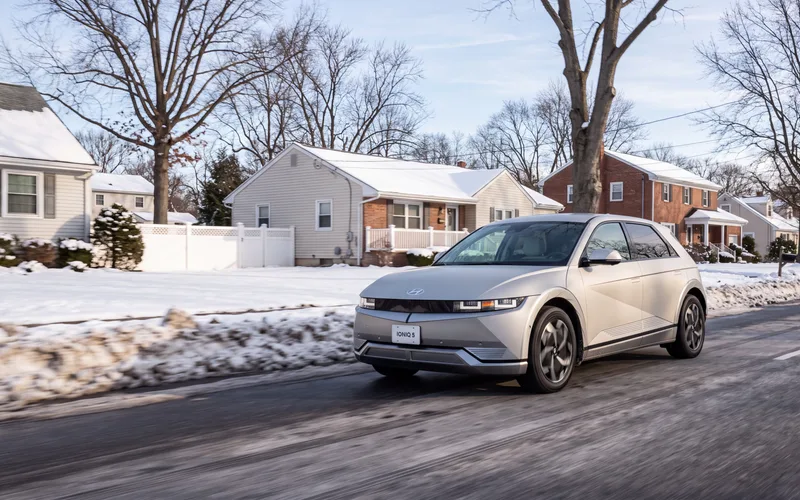 Hyundai Ioniq 5Compact SUVBetter at: Fast charging
Costs a few thousand more but charges roughly twice as fast on a DC plug, keeps CarPlay and Android Auto, and backs it with a 5-year/60,000-mile warranty plus three years of free maintenance.
Compare 2.60C+
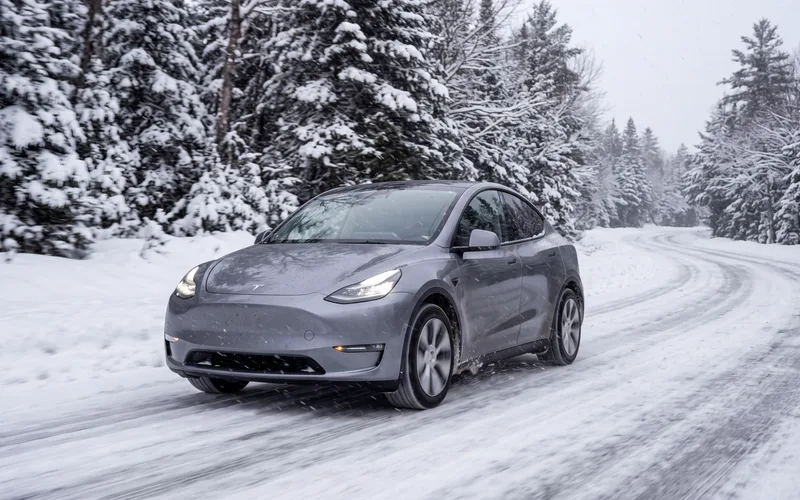 Tesla Model YCompact SUVBetter at: Resale value
Worth the roughly $10,000 premium if you tow up to 3,500 lbs, want a frunk, or plan to sell in five years — its residuals are meaningfully stronger.
Compare 1.71C-
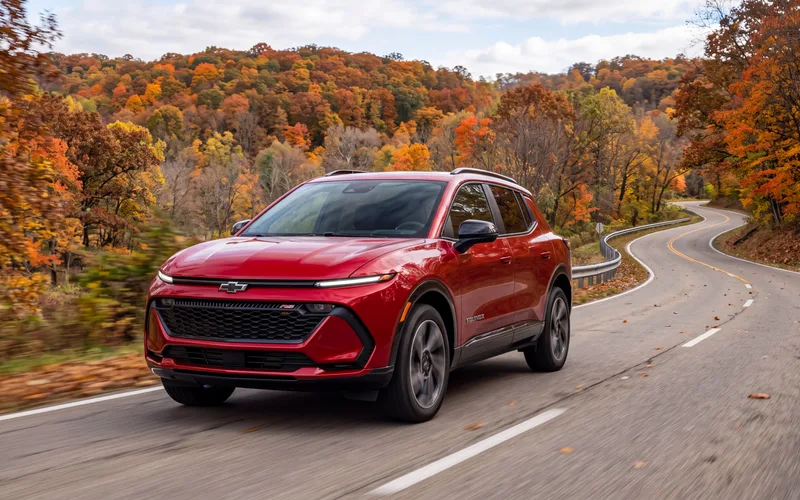 Chevrolet EquinoxCompact SUVBetter at: Upfront cost
The gas version starts about $5,000 lower, needs no home charger, keeps CarPlay, and retains roughly 47% of its value at five years — the safer buy if you can't charge at home.
CompareSubject scores by year
Hover or tap a score to see what moved it versus the year before. A corner mark flags a big swing.
| Year | Performance | Efficiency | Safety | Space | Cost | Reliability | Tech | Use-case | Driving | Value |
|---|---|---|---|---|---|---|---|---|---|---|
| 2026 | 35 | 60 | 80 | 48 | 56 | 57 | 66 | 65 | 65 | 72 |
| 2025 | 37 | 60 | 73 | 44 | 52 | 58 | 66 | 59 | 69 | 79 |
| 2024 | 35 | 61 | 74 | 46 | 52 | 65 | 63 | 61 | 66 | 78 |
Compare two years
Best fit & conditions
Higher scores mean a better fit for that use case. Learn more about use-case fit →
Subject profile
Academic Probation · NHTSA safety recalls
Feb 26, 2026Equipment: other: owners/service/other manualGeneral Motors has decided that certain 2027 Chevrolet Bolt EV, 2025-2026 Cadillac OPTIQ, Chevrolet Colorado, Equinox EV, GMC Canyon, 2026 Buick Enclave, Envision, Cadillac CT5, Escalade, Escalade ESV, Escalade IQ, Escalade IQL, LYRIQ, VISTIQ, Chevrolet Blazer EV, Corvette Convertible, Corvette Coupe, Corvette Convertible E-Ray, Equinox, Silverado 1500, 2500, 3500, Silverado EV, Suburban 1500, Tahoe, Traverse, GMC Acadia, Hummer EV Pickup, Hummer EV SUV, Sierra 1500, 2500, 3500, Sierra EV, Terrain, Yukon, and Yukon XL vehicles. The radio may not have been set to the correct status to download the electronic owner's manual during production. As such, these vehicles fail to comply with the requirements of Federal Motor Vehicle Safety Standard number 208, âOccupant Protection.â
Defect
General Motors has decided that certain 2027 Chevrolet Bolt EV, 2025-2026 Cadillac OPTIQ, Chevrolet Colorado, Equinox EV, GMC Canyon, 2026 Buick Enclave, Envision, Cadillac CT5, Escalade, Escalade ESV, Escalade IQ, Escalade IQL, LYRIQ, VISTIQ, Chevrolet Blazer EV, Corvette Convertible, Corvette Coupe, Corvette Convertible E-Ray, Equinox, Silverado 1500, 2500, 3500, Silverado EV, Suburban 1500, Tahoe, Traverse, GMC Acadia, Hummer EV Pickup, Hummer EV SUV, Sierra 1500, 2500, 3500, Sierra EV, Terrain, Yukon, and Yukon XL vehicles. The radio may not have been set to the correct status to download the electronic owner's manual during production. As such, these vehicles fail to comply with the requirements of Federal Motor Vehicle Safety Standard number 208, âOccupant Protection.â
Risk
Without an owner's manual to consult, owners may not know how to safely use and operate the vehicle, increasing the risk of injury in a crash.
Remedy
Dealers will reset the vehicle radio, which will facilitate automatic download of the electronic ownerâs manual, free of charge. Owner notification letters were mailed April 16, 2026. Owners may contact GM customer service at 1-866-467-9700, Chevrolet customer service at 1-800-222-1020 or Cadillac customer service at 1-800-333-4223. The manufacturer's number for this recall is N252540430. Vehicle Identification Numbers (VINs) involved in this recall became searchable on NHTSA.gov on February 26, 2026.
NHTSA campaign 26V114000 ↗Manufacturer no. N2525404305,861 vehicles potentially affected (all models in the campaign)Owners notified Apr 16, 2026Filed by General Motors, LLCFiled as EQUINOX EVDec 18, 2025Back over prevention: warnings: external/pedestrian alertThe pedestrian alert sound system may not produce a sufficient change in volume between the vehicle being stopped and moving at low speeds. As such, these vehicles fail to comply with the requirements of Federal Motor Vehicle Safety Standard (FMVSS) number 141, "Minimum Sound Requirements for Hybrid and Electric Vehicles."
Defect
General Motors, LLC (GM) is recalling certain 2025-2026 Equinox EV vehicles. The pedestrian alert sound system may not produce a sufficient change in volume between the vehicle being stopped and moving at low speeds. As such, these vehicles fail to comply with the requirements of Federal Motor Vehicle Safety Standard (FMVSS) number 141, "Minimum Sound Requirements for Hybrid and Electric Vehicles."
Risk
A vehicle that does not emit sufficient sound may fail to alert pedestrians of a moving vehicle, increasing the risk of a crash or injury.
Remedy
The body control module software will be updated by a dealer, or through an over-the-air (OTA) software update, free of charge. Owner notification letters were mailed January 29, 2026. Owners may contact GM customer service at 1-800-222-1020. GM's number for this recall is N252530690. Vehicle Identification Numbers (VINs) involved in this recall became searchable on NHTSA.gov on December 18, 2025.
NHTSA campaign 25V878000 ↗Manufacturer no. N25253069081,177 vehicles potentially affected (all models in the campaign)Owners notified Jan 29, 2026Filed by General Motors, LLCFiled as EQUINOX EVOct 16, 2025Tires: tread/beltOne or more of these tires may experience partial or full tread detachment.
Defect
General Motors, LLC (GM) is recalling certain 2025-2026 Cadillac Optic and 2025-2026 Chevrolet Equinox EV vehicles equipped with 21-inch Continental all-season tires. One or more of these tires may experience partial or full tread detachment.
Risk
Tire tread detachment increases the risk of a crash.
Remedy
Dealers will inspect all four tires and replace those manufactured during DOT week 4024, free of charge. Owner notification letters were mailed November 19, 2025. Owners may contact Cadillac customer service at 1-800-333-4223, or Chevrolet customer service at 1-800-222-1020. GM's number for this recall is N252525030. Vehicle Identification Numbers (VINs) involved in this recall will be searchable on NHTSA.gov beginning October 16, 2025.
NHTSA campaign 25V704000 ↗Manufacturer no. N25252503022,914 vehicles potentially affected (all models in the campaign)Owners notified Nov 19, 2025Filed by General Motors, LLCFiled as EQUINOX EV
4 recalls on other model years of the Equinox EV (2024–2025)
Sep 25, 2025Forward collision avoidance: warnings: external/pedestrian alertThe pedestrian alert sound system may not produce a sufficient change in volume between the vehicle being stopped and moving at low speeds. As such, these vehicles fail to comply with the requirements of Federal Motor Vehicle Safety Standard (FMVSS) number 141, "Minimum Sound Requirements for Hybrid and Electric Vehicles."
Defect
General Motors LLC (GM) is recalling certain 2024 Chevrolet Equinox EV vehicles. The pedestrian alert sound system may not produce a sufficient change in volume between the vehicle being stopped and moving at low speeds. As such, these vehicles fail to comply with the requirements of Federal Motor Vehicle Safety Standard (FMVSS) number 141, "Minimum Sound Requirements for Hybrid and Electric Vehicles."
Risk
A vehicle that fails to make sufficient sound may result in pedestrians being unaware of an approaching vehicle, increasing the risk of injury.
Remedy
The vehicle's body control module software will be updated by a dealer, or through an over-the-air (OTA) update, free of charge. Owner notification letters were mailed November 17, 2025. Owners may contact Chevrolet customer service at 1-800-222-1020. GM's number for this recall is N252527170.
NHTSA campaign 25V639000 ↗Manufacturer no. N25252717023,700 vehicles potentially affected (all models in the campaign)Owners notified Nov 17, 2025Filed by General Motors, LLCFiled as EQUINOX EVJan 16, 2025Forward collision avoidance: adaptive cruise control: software · Service brakes, hydraulicThe adaptive cruise control may fail to engage the brakes as expected, due to incorrect brake module software.
Defect
General Motors, LLC (GM) is recalling certain 2025 Chevrolet Equinox EV all-wheel drive electric vehicles. The adaptive cruise control may fail to engage the brakes as expected, due to incorrect brake module software.
Risk
A vehicle that does not automatically brake as expected increases the risk of a crash.
Remedy
Dealers will update the software calibration in the brake system control module, free of charge. Owner notification letters were mailed February 13, 2025. Owners may contact Chevrolet customer service at 1-800-222-1020. GM's number for this recall is N242481530.
NHTSA campaign 25V012000 ↗Manufacturer no. N2424815302,890 vehicles potentially affected (all models in the campaign)Owners notified Feb 13, 2025Filed by General Motors, LLCFiled as EQUINOX EVDec 12, 2024Electrical system: body control module/bcm · Forward collision avoidance: warnings: external/pedestrian alertThe pedestrian alert sound system may have incorrect software and not produce sound at a sufficient volume. As such, these vehicles fail to comply with the requirements of Federal Motor Vehicle Safety Standard (FMVSS) number 141, "Minimum Sound Requirements for Hybrid and Electric Vehicles."
Defect
General Motors LLC (GM) is recalling certain 2025 Chevrolet Equinox EV vehicles. The pedestrian alert sound system may have incorrect software and not produce sound at a sufficient volume. As such, these vehicles fail to comply with the requirements of Federal Motor Vehicle Safety Standard (FMVSS) number 141, "Minimum Sound Requirements for Hybrid and Electric Vehicles."
Risk
A vehicle that fails to make sufficient sound may result in pedestrians being unaware of an approaching vehicle, increasing the risk of injury.
Remedy
Dealers will update the software in the body control module (BCM), free of charge. Owner notification letters were mailed January 21, 2025. Owners may contact Chevrolet customer service at 1-800-222-1020. GM's number for this recall is N242479760.
NHTSA campaign 24V925000 ↗Manufacturer no. N2424797607,606 vehicles potentially affected (all models in the campaign)Owners notified Jan 21, 2025Filed by General Motors, LLCFiled as EQUINOX EVOct 2, 2024Latches/locks/linkages: doors: latchThe door strikers were not properly heat-treated, which can cause them to break.
Defect
General Motors, LLC (GM) is recalling certain 2025 Chevrolet Blazer, Blazer EV, and Equinox vehicles. The door strikers were not properly heat-treated, which can cause them to break.
Risk
A broken door striker can cause the door to open unexpectedly, increasing the risk of injury.
Remedy
Dealers will replace all four side door strikers and attachment bolts, free of charge. All affected vehicles are still in dealership inventory and therefore no owner notification letters are expected to be mailed. Owners may call Chevrolet customer service at 1-800-222-1020. GM's number for this recall is N242477131.
NHTSA campaign 24V737000 ↗Manufacturer no. N242477131731 vehicles potentially affected (all models in the campaign)Filed by General Motors, LLCFiled as EQUINOX EV
Source: NHTSA Office of Defects Investigation recall database, model years 2024–2026. Recalls are listed by model year as the manufacturer filed them; whether a specific car is affected depends on its VIN — check a VIN at nhtsa.gov ↗. NHTSA model names matched to this page: EQUINOX EV.
Detailed scoring by subject
1Performance & PowertrainThe Equinox EV's lowest-graded category.0.33F
The volume configuration is the LT with the standard single front motor on the 85 kWh Ultium pack, rated 213 hp; the optional dual-motor eAWD raises the model-range maximum to 300 hp. Even the eAWD figure sits in the lower half of the compact-SUV band, and the FWD number the majority of buyers actually take is near the floor.
Peak torque of the standard front motor is 236 lb-ft, delivered instantly from rest, which flatters low-speed drivability even though the absolute figure is modest. The eAWD option roughly matches a mid-pack V6 at 355 lb-ft combined.
At roughly 4,900 lb with 213 hp, the FWD volume trim needs about 7.9 seconds to 60 mph — slower than most electric compact crossovers and only mid-pack against gas rivals, though the instant off-the-line torque makes it feel brisker in traffic than the number suggests. The dual-motor eAWD cuts that to roughly 5.9 s.
Delivery is the usual battery-electric best case — no lag, no shift interruption, no combustion coarseness, and a quiet cabin at cruise — which reviewers consistently call out as the Equinox EV's most premium-feeling trait. It falls short of the very best dual-motor EVs only because the single front axle can scrabble for traction under a hard launch and there is little reserve thrust above 50 mph.
A single-speed reduction gear means there are no shifts to time, no hunting, and no CVT drone — torque is continuous from rest. GM layers on one of the better regeneration setups in the class, with selectable one-pedal driving and a steering-wheel Regen on Demand paddle that gives genuinely fine control over deceleration.
The maximum manufacturer rating in any configuration is 1,500 lbs, near the bottom of the SUV band and well under the 3,500 lbs a Tesla Model Y or the 4,500 lbs a Blazer EV will pull. It is enough for a small utility trailer or a pair of jet skis and nothing more, and towing at all costs a large fraction of the driving range.
Dual-motor eAWD is a factory option on both the LT and RS trims rather than being confined to the top of the range, so any buyer can have it, but front-wheel drive is what is standard and what most volume cars leave the lot with. Operation is basic all-weather traction — an electrically decoupling front-and-rear motor pair with no low range, no locking differentials and no terrain-mode hardware.
This is a pavement-oriented crossover with a floor-mounted battery pack, modest ground clearance, low-rolling-resistance tires and an exposed underbody — there is no skid plating, no locking differential and no dedicated off-road trim anywhere in the range. Available eAWD and slightly more clearance than a Model Y earn it a little credit over the lowest crossovers, but it is a snow-and-gravel vehicle, not a trail vehicle.
Battery-electric is the only choice under this nameplate — no gas, hybrid or plug-in hybrid variant exists, and the separately sold gas Equinox is a different vehicle. Within the EV itself the menu is narrower still: one 85 kWh pack with a choice of front-wheel drive or eAWD, with no standard-range or long-range battery alternative.
2Efficiency & RangeMid-pack among this car's ten categories.2.05C
Verified against fueleconomy.gov for the 2026 model year rather than carried forward: the FWD car rates 108 MPGe combined, four points better than the 104 MPGe this scorecard previously held from the 2024 launch spec. That is a strong number for a compact electric SUV and lands comfortably in the upper half of the EV band.
Regenerative braking and zero idle draw make the city cycle the Equinox EV's best, and 117 MPGe is solidly above the middle of the EV SUV city band — though short of the 130+ MPGe the lightest, most aerodynamic compact EVs post.
The largest correction in this run — the previous 92 MPGe was the 2024 figure, and the 2026 car is rated 100 MPGe highway. A 17-point city-to-highway drop is normal for a tall crossover at sustained speed, but holding triple digits on the highway cycle is genuinely good and is why the real-world interstate range holds up better than the shape suggests.
319 miles remains the Equinox EV's headline claim and one of the longest ranges available anywhere near $35,000, sitting well above the middle of the 200–400 mi EV SUV band. Confirmed unchanged for 2026, so no delta.
150 kW is the Equinox EV's hard ceiling and the weakest part of its efficiency case — the 400-volt Ultium pack would need 500 amps to go faster, so plugging into a 350 kW station buys nothing. Against 800-volt rivals like the Ioniq 5 and EV6 that accept well over 200 kW, this lands in the bottom third of the band.
A big pack behind a modest peak rate makes for a long stop: roughly 42 minutes from 10 to 80 percent, near the slow end of the band and close to double what the quickest 800-volt EVs manage. On a road trip this is the practical cost of the cheap sticker price, and it is what pulls this category down despite class-leading range and MPGe.
EPA's own published figure for the 2026 FWD car is $700 a year — replacing the $800 estimate the previous run derived by hand — and that is roughly a third of what the gasoline Equinox costs to feed. Owners on an overnight time-of-use rate will beat it; anyone relying on public DC fast charging will not come close.
No fuel grade to think about and a standard 11.5 kW onboard charger that fills the 85 kWh pack overnight on an ordinary Level 2 circuit, at about $700 a year in electricity — the cheapest energy story in the compact SUV segment. Held at the bottom of the top band rather than higher because 2026 still ships the CCS1/J1772 port, so Supercharger access requires an adapter, and the 400-volt architecture means public charging costs real time; a buyer without home charging loses most of the advantage.
3SafetyThe Equinox EV's best-graded category.3.42B+
NHTSA awarded the Equinox EV a 5-star overall vehicle score when it tested the current (2024-launch) generation, and the 2026 car is a carryover structurally, so the rating carries forward. Scored MEDIUM rather than HIGH because this run had no live access to nhtsa.gov to confirm the 2026 listing.
The Ultium-platform Equinox EV posts Good results in the core IIHS crashworthiness tests, but current TSP/TSP+ criteria also weigh the updated moderate-overlap (rear passenger) test, the updated pedestrian front crash prevention test, and headlight ratings across all trims — award status for the 2026 car could not be confirmed here, so it is scored in the upper 'mostly Good, award unconfirmed' band rather than the 80+ TSP+ band.
Chevy Safety Assist is standard on every Equinox EV trim (automatic emergency braking, front pedestrian braking, forward collision alert, lane keep assist with lane departure warning, following distance indicator, IntelliBeam auto high beams), and the EV adds adaptive cruise control plus side blind zone alert with rear cross traffic braking on the volume LT — a broader standard set than most compact-SUV rivals and than the gas Equinox.
GM's current camera-plus-radar AEB with front pedestrian braking performs well in daytime vehicle-to-vehicle work, but the Equinox EV has no confirmed result under the tougher updated IIHS front crash prevention protocol (higher closing speeds, nighttime pedestrian), so it is scored in the middle band rather than the Superior/Advanced band.
Side Blind Zone Alert with Lane Change Alert and Rear Cross Traffic Braking (active intervention, not alert-only) is standard rather than trim-locked, and HD Surround Vision on the RS fills in the remaining low-speed blind zones; there is no safe-exit-alert equivalent, which keeps it out of the top of the band.
Lane keep assist with lane departure warning is standard and reviewers describe GM's implementation as unobtrusive, but true hands-on lane centering is tied to the Super Cruise-equipped configurations rather than being a baseline feature — so the volume car gets competent nudge-style keeping instead of confident centering.
Full-speed-range adaptive cruise with stop-and-go is standard on the Equinox EV and blends smoothly with the single-pedal regen calibration; it trails the best in the class only on how early it releases after a cut-in and on the absence of route-aware speed adaptation below the Super Cruise tier.
Super Cruise is offered on the Equinox EV — a mature hands-free highway system with driver-attention camera, automatic lane change and towing support, mapped across a very large North American divided-highway network. It scores high on capability but not at the top of the band because it is a paid option with a limited trial rather than standard equipment, and it stays highway-bound.
LED projector headlamps with IntelliBeam automatic high beams are standard, which lifts the base trim above the class floor, but no confirmed IIHS headlight rating exists for the 2026 car and GM has a mixed record on this test — scored mid-band pending a verified rating.
The low-cowl, flat-floor EV packaging gives a good forward view and the greenhouse is squarer than most style-led electric crossovers, but thick rear pillars and a high beltline pinch the over-shoulder view; HD Surround Vision compensates well when fitted, and it is not standard on the volume trim.
A 116.3-inch wheelbase and a flat, tunnel-free rear floor give this compact SUV unusually good rear-seat space for two child seats plus a center passenger, with wide-opening rear doors; the lower anchors sit in the seat-bight and need some digging, and three-across remains tight, which keeps it out of the top band.
4Space & ComfortOne of the Equinox EV's weakest categories.1.20D
The Equinox EV is a two-row, five-passenger compact SUV in every 2026 trim (LT and RS, FWD or AWD); no six- or seven-seat configuration is offered. Scores low against an SUV band that runs to 8 seats.
Mid-pack front headroom for a compact SUV — the low, EV-specific roofline trades some height for aerodynamics. Figure is the Chevrolet-published dimension for the 2024–2026 generation, which received no interior redesign for 2026.
Front legroom is adequate but not generous by compact-SUV standards despite the 116.3-in wheelbase, because the packaging priority went to the second row. Unchanged for 2026.
Above-average second-row headroom for the class — the flat-floor Ultium skateboard lets the rear bench sit without an intruding transmission tunnel, though the battery raises the floor slightly.
The strongest passenger-space number on the car and a genuine class advantage: the EV's 116.3-in wheelbase (a full 10 in longer than the gas Equinox) buys near-mid-size rear legroom in a compact-SUV footprint.
No third row is offered in any 2026 Equinox EV trim — buyers needing seven seats have to move up to the Traverse or a three-row EV like the Kia EV9. Scored in the low band per the item's rule for two-row SUVs rather than omitted.
Competitive for a two-row compact SUV and roughly on par with the gas Equinox, but the framework's SUV band tops out at 80 cu ft (three-row hauling), so any two-row compact scores near the floor here.
Seats-folded capacity is usable and the load floor is nearly flat, but 57.2 cu ft sits at the bottom of an SUV band that runs to 100 cu ft, and there is no front trunk to add capacity.
Solid everyday storage rather than an innovation showcase: a deep center console with a sliding armrest, an open shelf under the console made possible by the flat EV floor, and an underfloor bin in the cargo area. The missing front trunk — where the Ford Mustang Mach-E gives you a drainable one — is the notable gap, and there is no Pro Power-style onboard AC outlet on the volume LT.
Front seats are supportive and well shaped for the price, and the class-leading rear legroom means passengers are not folded up. Held back by two familiar complaints: fairly flat cushions on the cloth LT seats with limited adjustment, and a raised rear floor over the battery that cuts under-thigh support for adults on longer trips.
One of the car's better traits — the low center of gravity and roughly 700-lb weight advantage over a three-row EV give it a settled, composed highway ride with well-damped body motions. Marked down for firmness over sharp expansion joints, especially on the RS trim's 21-inch wheels; the LT on 19s rides noticeably better.
The absence of an engine makes it clearly quieter than the gas Equinox around town, but sound insulation is mainstream-grade: wind noise around the mirrors and tire roar on coarse pavement are audible at highway speed, and there is no active noise cancellation to mask them. Quiet for its price, not for its segment's best.
Strong for a mainstream EV: heated front seats and a heated steering wheel are standard on the volume LT, dual-zone climate and rear vents are fitted, ventilated front seats and a heated rear bench are available on RS, and remote cabin pre-conditioning on shore power via the myChevrolet app is standard — a real winter advantage the gas Equinox cannot match. Short of the top band because ventilation and the heated rear seat require the RS.
5Cost of OwnershipOne of the Equinox EV's weakest categories.1.79C-
The Equinox EV's entire proposition is being the cheapest way into a 300-plus-mile EV: LT FWD opens under $35,000 delivered, roughly $2,800 below an Ioniq 5 SE Standard Range and $6,400 below a Model Y Standard. That is a strong result against the SUV band and the reason this replaces a placeholder that overstated the entry price by about $4,450.
LT with the $3,400 eAWD dual-motor option is the configuration most buyers land on, and at roughly $38,400 delivered it undercuts every mainstream electric compact SUV with comparable range — about $6,000 under an Ioniq 5 SEL RWD and $12,000 under a Model Y Premium AWD. The prior placeholder of $52,007 sat in luxury-EV territory the Equinox EV never occupies.
Scheduled work on the Ultium drivetrain is minimal and one-pedal regen braking stretches pad life well past a gas Equinox (~$6,100), while Chevrolet's dense dealer network and low labor rates keep out-of-warranty work cheaper than VW's. It lands just behind the Ioniq 5 (~$3,900) and its Ultium sibling the Prologue (~$4,200) because GM's early Ultium software and charging-module service history adds unscheduled visits.
This is the heaviest-weighted item in the category and the Equinox EV's worst result: it stacks weak Chevrolet residuals (the gas Equinox retains ~47%) on top of the general used-EV discount, and GM's heavy post-credit-expiry discounting on this exact model marks down every used car in the pool. It lands with the ID.4 (~40%) and Mach-E (~41%) rather than the Ioniq 5 (~45%) or Model Y (~46%). The placeholder's 58.5% credited retention no mainstream EV currently achieves.
GM's standard new-vehicle limited warranty is the segment floor — the same 3/36 as Ford and Honda, a year short of Tesla and VW's 4/50, and two years short of Hyundai's 5/60. The prior placeholder of 3.9 years credited coverage that does not exist.
Eight years and 100,000 miles on the Ultium pack and drive units is the relevant coverage for a BEV and matches essentially every rival (Prologue, ID.4, Mach-E, Model Y) rather than beating any of them — Hyundai and Kia's 10/100 is the one that stands out. The placeholder's 6.8 years understated real coverage.
Chevrolet Complete Care covers one maintenance visit in the first year (on an EV, essentially a tire rotation and multi-point inspection) plus 5 yr / 60,000 mi roadside assistance and courtesy transportation, and GM has bundled a home-charging benefit through GM Energy — a complimentary Level 2 charger or an installation credit, with a public-charging credit as the alternative. That charging perk is what lifts it above the gas Equinox (57) and Mach-E (50) to roughly Prologue territory (68), but a single service visit is still well short of Hyundai's 3 yr / 36,000 mi of included maintenance (Ioniq 5, 88).
$38,395 volume-trim price minus its estimated resale value after 5 years (42% retained, or about $16,126) leaves about $22,269 in depreciation. Add the projected $4,400 in 5-year maintenance and repairs, and owning this vehicle for 5 years costs about $26,669 in total.
6Reliability & QualityMid-pack among this car's ten categories.1.86C-
2026 is only the third model year of a nameplate launched for 2024 on GM's still-young Ultium/BEV3 architecture, and that architecture's early years were defined by software-quality problems rather than mechanical ones. Consumer Reports and J.D. Power have both placed GM's Ultium-based EVs below average on predicted reliability, and nothing in the 2026 configuration resets that history.
Chevrolet sits in the lower-middle of Consumer Reports brand reliability rankings while landing at or near industry average in J.D. Power's Vehicle Dependability Study — mid-pack, not a Toyota/Honda peer but clear of the bottom tier. Held identical to the gas Equinox's 6.1.2 in this dataset, since this item measures the brand rather than the vehicle.
The Ultium family the Equinox EV shares has an unusually heavy early recall and service-campaign record — the Blazer EV stop-sale and software rework of late 2023 set the tone, and GM's Ultium vehicles have since absorbed repeated software remedies plus high-voltage battery campaigns tied to LG-supplied cells. Scored in the low band because the pattern touches propulsion and battery systems rather than trim, though most remedies have been over-the-air or module-level rather than pack replacements.
An EV drivetrain has far fewer wear items than the turbo-four-plus-CVT it replaces, and GM's Ultium permanent-magnet drive units have not shown a systemic failure mode. But the platform only reached customers in 2022-2024, its NCM pouch cells come from a supplier with a prior GM battery-recall history, and there is no high-mileage fleet data yet — so this lands in the middle band as an unproven-but-unalarming design.
A clear step above the gas Equinox: the EV's dash is anchored by a 17.7-inch display with a cleaner, more modern design and better-finished upper surfaces, and reviewers generally judge it competitive for a mainstream EV at its price. Hard plastics still dominate the lower doors and console, which keeps it short of the class leaders.
Assembly quality is segment-typical with no widespread panel-gap or rattle complaints reported for the model. What holds the score to mid-band is that GM's Ultium launches drew their initial-quality criticism from electronics and software behavior rather than mechanical assembly — a distinction owners experience as a quality defect regardless of category.
Chevrolet's roughly 2,800-3,000 US franchised stores give the Equinox EV the densest service footprint of any EV in its segment, including rural markets where Tesla and the Korean brands are thin. Discounted from the gas Equinox's 82 because EV service is gated on dealer-level high-voltage certification and tooling, which not every store has, and GM EV owners report longer waits for high-voltage diagnostic work.
Conventional wear items — brakes, suspension, glass, body panels — are cheap and widely stocked given Chevrolet's parts distribution, and an EV skips oil changes, plugs and transmission service entirely. The offset is that the expensive failure modes are dealer-only: battery modules, drive units and the high-voltage electronics have no aftermarket, and out-of-warranty repairs carry EV-typical cost risk.
7Technology & InfotainmentOne of the Equinox EV's strongest categories.2.43C+
The Equinox EV carries a 17.7-inch diagonal center touchscreen standard on all trims for 2026 — no size upgrade or downgrade by trim, and among the largest screens in the compact SUV class. Prior placeholder value of 9.8 in was invented; replaced with the real spec.
The Android Automotive-based system is fast, sharply rendered, and Chevrolet kept a physical climate control row and volume control below the screen rather than burying them. Reviewers dock it for deep menu trees on vehicle settings and for making the built-in system the only option, which keeps it out of the top band.
Neither Apple CarPlay nor Android Auto is offered on any trim — GM deliberately removed phone projection from its EVs in favor of Google built-in, and the 2026 Equinox EV continues that policy. Scored in the 'not offered' band; the prior placeholder score of 77 assumed projection that does not exist on this vehicle.
Google built-in supplies Google Maps as the native navigation with live traffic and EV charge-stop routing tied to real battery state, plus Google Assistant for natural-language commands over nav, media, and climate. This is the strongest native nav/voice pairing in the mainstream compact SUV class and is the direct offset to the missing phone projection.
The base six-speaker system is adequate but unremarkable, and the available Bose premium upgrade is a modest eight-speaker setup rather than a headline audio system, reserved for upper trims. Solid mid-band, not a selling point.
An 11-inch diagonal full-digital driver display is standard on every trim, crisp and configurable, with no analog or partial-digital variant anywhere in the lineup. Clears the top-band requirement of a full-digital cluster standard.
GM's software platform supports whole-vehicle over-the-air updates reaching powertrain, chassis, and infotainment modules — not maps-only — and has delivered feature and app additions post-delivery. Falls just inside the top band, short of the cadence and scope of the strongest EV-native competitors.
The myChevrolet app covers the core set well for an EV — remote lock/unlock, cabin preconditioning, vehicle locate, charge scheduling and charge-limit control, and charging status. It stays out of the top band because there is no phone-as-key on this model and several remote commands revert to a paid plan once the included trial lapses.
Four USB-C ports serve both rows and wireless phone charging is fitted on most of the range, which is adequate-to-good, but there is no 120V household outlet in the cabin and no standard vehicle-to-load outlet on the volume trim — bidirectional power requires separate GM Energy home hardware.
Keyless entry with push-button start is standard and remote start/preconditioning comes through the app, but the hands-free power liftgate is an upper-trim item and there is no phone-as-key option, which caps this below the top band.
Rear vision camera is standard and the HD Surround Vision 360-degree system with front and rear park assist is available, with good image resolution — but surround view is not fitted to the volume LT trim, which is exactly the 'rear camera standard, 360 on top trims' mid-band description.
No head-up display is offered on any 2026 Equinox EV trim — the 11-inch driver display handles that role. Scored in the 'no HUD offered' band; the prior placeholder score of 66 implied an option that is not on the order sheet.
8Use-Case FitMid-pack among this car's ten categories.2.38C+
The Ultium skateboard's 116.3-in wheelbase — a full 10 inches longer than the gasoline Equinox — buys 39.4 in of rear legroom and a completely flat, tunnel-free floor, so two child seats plus a center passenger fit without the front seats being pushed forward, and rear doors open wide onto a low sill. What keeps it out of the top band is ordinary rather than clever family hardware: no sliding or reclining rear bench, no rear window sunshades, and the hands-free power liftgate is an upper-trim item, so the volume LT is a two-hands-full manual tailgate.
This is the strongest part of the Equinox EV's case for families: a 5-star NHTSA overall rating plus a standard driver-assist set that is genuinely complete on the $34,995 LT — Chevy Safety Assist (AEB with front pedestrian braking, forward collision alert, lane keep assist, IntelliBeam), full-speed adaptive cruise with stop-and-go, rear-seat reminder, and Side Blind Zone Alert with Rear Cross Traffic Braking that intervenes rather than just chiming. Held below the high 80s because there is no confirmed IIHS Top Safety Pick for the 2026 car, no headlight rating on record, and 360-degree surround view is an option rather than standard equipment.
Four adults travel well — class-leading rear legroom, rear air vents, dual-zone climate, a composed and reasonably quiet ride, and 26.4 cu ft of luggage space with all five seats occupied. The limits are endurance rather than accommodation: the 319-mile EPA figure shrinks meaningfully at interstate speed (92 MPGe highway against 115 city), DC fast charging peaks around 150 kW rather than the 235–350 kW of the Korean rivals, so a family day of driving takes more and longer stops, and the flat cloth seat cushions and thin rear amenities (no rear entertainment, heated rear seats only on upper trims) are mainstream-grade.
Commuting is what this car is built for. Single-speed electric delivery means no lag, no shift hunting and no engine noise in stop-and-go, GM's one-pedal driving with the regen-on-demand steering-wheel paddle is one of the better-calibrated systems in the class, adaptive cruise with stop-and-go is standard, heated seats and a heated steering wheel come on the volume LT, and Super Cruise is available for hands-free highway stretches. Two real daily annoyances keep it off the ceiling: no Apple CarPlay or Android Auto on any trim, and thick rear pillars with a high beltline pinch the over-shoulder view in traffic.
At 104 MPGe combined and 115 MPGe on the city cycle that dominates commuting, the Equinox EV burns roughly $800 of electricity a year at EPA's 15,000-mile assumptions — about a nickel a mile, and roughly a third of what the gasoline Equinox costs to run. Consumables are minimal too: no oil, plugs, belts or exhaust, and one-pedal regen stretches brake pads well past a gas crossover, giving a five-year maintenance estimate near $4,400. It falls short of a perfect score only because insurance runs above a comparable gas compact (~$2,150/yr) and tires on a ~4,900-lb EV wear faster and cost more.
The footprint is compact-SUV normal at roughly 190 in long and 74 in wide, but the stretched 116.3-in EV wheelbase works against low-speed agility — the turning circle is longer than the segment norm and the car needs an extra bite of a tight parking aisle. Rear vision is the bigger issue: a high beltline and thick rear pillars limit the over-shoulder view, and while a rear camera is standard, HD Surround Vision with front and rear park assist is an option, so the volume LT parks on a single camera and its mirrors.
The maximum rating in any configuration is 1,500 lbs with the available trailering equipment — enough for a small utility trailer or a pair of jet skis, but less than half of a Tesla Model Y's 3,500 lbs and a third of the Blazer EV's 4,500 — and towing at all collapses the usable range, which is the practical constraint on any work day. There is no bed, no payload story worth citing, and the volume front-drive trim makes 213 hp. The 57.2 cu ft of enclosed, near-flat cargo space is genuinely useful for light hauling, which is all that keeps this above the floor.
Nothing here is fragile — an electric drivetrain deletes most of the wear items that punish a hard-worked gas crossover, the cloth and synthetic interior takes abuse reasonably, and Chevrolet's roughly 2,800-store network means downtime is short wherever the truck works. But 2026 is only the third model year of a nameplate on a still-young Ultium platform whose early life was defined by software recalls and service campaigns, and there is no fleet track record to lean on. That is the textbook 'should hold up with care, unproven under hard use' case.
There is essentially no work-oriented provision on this vehicle: no 120V household outlet in the cabin, no standard vehicle-to-load export power (GM Energy's vehicle-to-home bundle needs a home hub and backs up a house, not a jobsite), basic cargo tie-downs, no washable floor package, and no upfit ecosystem of the kind that follows a pickup or cargo van. Credit where due — an underfloor cargo bin, an 11.5 kW onboard charger, and available roof rails for a rack are the whole list.
319 EPA miles is the longest range you can buy at this price and the single best reason to take one on a trip, and the touring hardware backs it up: a settled, low-center-of-gravity highway ride, Super Cruise for genuinely hands-free mapped-highway stretches, and Google Maps built in doing charge-stop routing against real battery state rather than a guess. Two things stop it short of the top band — DC fast charging peaks near 150 kW, so stops are longer than in an Ioniq 5 or EV6, and the flat seat cushions that reviewers criticize become the limiting factor before the battery does on a long day.
With the optional dual-motor eAWD it will handle a gravel forest road and a hitch- or roof-mounted bike rack without complaint, which is what most buyers in this class actually ask for. Beyond that it runs out quickly: no skid plating, modest ground clearance, low-rolling-resistance tires, an exposed battery underbody, a 1,500-lb tow ceiling that rules out most trailered toys, and — the real camping gap — no export power at all, so there is nothing to run a fridge or lights from overnight. eAWD is also a paid option, not standard.
Everyday gear duty is handled competently — 26.4 cu ft behind the second row expands to 57.2 with the 60/40 bench down onto a nearly flat load floor, and there is an underfloor bin for the charge cable and small items. The flexibility, though, is basic for an EV: no front trunk at all (a real gap against the Model Y and Ioniq 5, which use theirs for exactly this), a fixed non-sliding rear bench, a hitch limited to 1,500 lbs, and a power liftgate reserved for upper trims.
9Driving ExperienceMid-pack among this car's ten categories.2.40C+
The Ultium skateboard's floor-mounted battery gives the Equinox EV a low center of gravity, and the strut-front/five-link-rear setup keeps body motions well controlled for a mainstream compact SUV — but ~4,900 lb of curb weight and low-rolling-resistance all-seasons cap cornering grip and make direction changes feel deliberate rather than eager. Secure and composed, never engaging.
Accurate and consistent off-center, but heavily assisted and effectively feedback-free — Sport mode adds artificial heft without adding information. This is the weakest dimension of the car's dynamics and lands it below the segment's steering benchmarks.
Regen blending is a genuine GM strength: one-pedal driving plus a steering-wheel regen-on-demand paddle, with a friction-to-regen handoff that is hard to detect from the pedal. Outright stopping distances from 70 mph are only mid-pack because of the mass and efficiency-biased tires, so it stops adequately rather than impressively.
Single-speed EV drive means no shift shock, no stop/start shudder and clean, linear tip-in — a clear refinement win over the gas Equinox. Held back from the top band because the volume FWD LT's 213 hp / 236 lb-ft makes it merely adequate rather than urgent (roughly 8 seconds to 60 mph), and hard throttle from a stop can tug the wheel.
Near-silent under load with no combustion drone and no vibration through the pedals or wheel; motor whine is faint and only audible at hard throttle. Short of the very top only because tire and wind noise are less masked in an EV and the car does not go to the extra isolation lengths of luxury EVs.
Mid-pack for a compact SUV and unremarkable in parking maneuvers — the long 116.3-inch wheelbase relative to the body works against it, though it turns tighter than the larger Blazer EV on the same architecture.
Tall, commanding seating position with good forward sightlines, easy ingress/egress at a normal SUV step-in height, and — unusually for a modern EV — real physical toggles for climate temperature below the 17.7-inch screen. Marked down because most secondary functions live in the touchscreen, the base LT's driver seat adjustment range is limited, and the thick rear pillars pinch over-shoulder visibility.
Deliberately engineered as competent, quiet transportation rather than entertainment. In the volume FWD trim the acceleration is unremarkable, the steering tells you nothing, and there is no sport-tuned variant in the lineup — nobody takes the long way home in one, though nothing about it is unpleasant either.
10Value & Market PositionOne of the Equinox EV's strongest categories.2.90B-
Base LT arrives with the segment's largest standard display pairing — a 17.7-inch center touchscreen and 11-inch driver cluster with Google built-in — plus the Chevy Safety Assist suite (AEB with pedestrian detection, forward collision alert, lane keep assist, following distance indicator, IntelliBeam), an 11.5 kW onboard charger and 19-inch wheels, all under $35,000 delivered. The one real hole is structural rather than trim-related: GM omits Apple CarPlay and Android Auto on its EVs at every price, a feature every direct rival (Ioniq 5, EV6, ID.4, Ariya) includes as standard, which keeps this out of the 80s despite genuinely generous hardware.
This is the Equinox EV's whole reason to exist and its strongest card: roughly $34,995 delivered for an EPA-rated 319 miles makes it the cheapest 300-plus-mile EV sold in America, undercutting an Ioniq 5 SE by several thousand dollars and a Model Y by close to $10,000 while matching or beating both on range per dollar. It is marked down from the high 80s because the September 30, 2025 expiry of the $7,500 federal clean-vehicle credit removed the subsidy that made the math lopsided, leaving it a strong value inside the EV set but only par against a $30,000 gas Equinox.
The lineup is essentially two trims — LT and RS — each offered in FWD or eAWD on a single 85 kWh battery, so four meaningful configurations with no standard-range/long-range choice, no rugged or performance variant, and little standalone option flexibility beyond the Super Cruise package. That is narrower than Hyundai's Ioniq 5 ladder (SE/SEL/Limited across two battery sizes plus XRT and N) and narrower even than the gas Equinox's three trims, which is what puts it in the lower half of the band.
Market acceptance was emphatic through 2025 — the Equinox EV became the best-selling non-Tesla EV in the United States and the single biggest reason Chevrolet took the #2 US EV brand spot, so the nameplate is a proven volume product rather than a compliance car. The score is pulled back from the high 70s because the trajectory turned sharply after the federal credit lapsed at the end of September 2025: industry EV demand fell off in Q4, and GM responded with EV capacity charges and production cuts at the Ramos Arizpe plant that builds this car.
Chevrolet reads as a broadly neutral mainstream brand — familiar, universally serviceable, but without the loyalty halo Toyota or Honda carry — and the EV push has genuinely lifted its electric credibility to a clear #2 behind Tesla. Two things cap it near the segment midpoint: GM's public retrenchment on EV volume and its pivot back toward hybrids undercut confidence in the electric lineup's future, and Ultium-era resale has been weak, with the removal of the federal credit further depressing used EV values.
Scored on buyer benefit, this is near the top of the segment: GM is among the most incentive-active mainstream automakers, and with the federal credit gone and EV inventory heavy it has leaned hard on factory cash allowances, subvented low-APR financing and aggressive lease support to keep Equinox EVs moving. A buyer walking in should expect real money off rather than MSRP, which is exactly what the item's high band describes — though the offers are demand-driven rather than a sign of strength.
The Equinox EV is a first-generation car launched for model year 2024 in RS form with the volume LT trims following for 2025, so 2026 is the third year of a still-new nameplate on GM's current Ultium/BEV3 architecture — 400-volt pack, native NACS-era charging support, current-generation infotainment silicon. There is no replacement on the horizon, but it is now past its launch year and its known weak points (DC fast-charge rate, no phone projection) are the ones a mid-cycle update would address, so it sits below a just-launched car rather than at the top of the band.
Reviews have been consistently warm and the car has collected serious hardware — Car and Driver named the Equinox EV its EV of the Year — with the near-universal verdict being that nothing else delivers this much range for this little money. It stops short of the 80s because it is rarely the outright pick in a head-to-head: testers repeatedly dock it for a roughly 150 kW DC charging peak that trails the 800-volt Ioniq 5 and EV6, for unremarkable ride and steering, for hard interior plastics, and for the missing CarPlay/Android Auto.