
The verdict
A struggling minivan, strong on space and held back by performance.
The 2026 Voyager is the cheapest way into a new minivan, and what you get for roughly $42,000 is a genuine Chrysler Pacifica underneath — same body, same 287-hp V6, same fold-into-the-floor Stow 'n Go seats that open 140.5 cu ft of flat cargo space no rival can match. What you give up is nearly everything else: one trim, one powertrain, no all-wheel drive, no hybrid, 22 MPG combined, and a driver-assist list that leaves out features Honda, Toyota and Kia make standard on their base vans. The bigger catch is the back end of ownership — this is the segment's worst van for holding its value, so the money saved at the dealer largely comes back out at trade-in. Buy it if you need maximum space for minimum cash and plan to keep it a long time; almost every other shopper is better served by a discounted Pacifica or a Carnival.
Jump to scoresStrengths
- Class-leading cargo space, and every Voyager gets the full trick
- Real family-hauling space in all three rows
- Cheap to insure, cheap to fix, cheap to fuel up (per gallon)
What holds it back
- Fuel economy is the worst in the segment, with no hybrid escape hatch
- Depreciation and warranty give back most of the savings
- Driver-assistance features rivals give you for free are missing here
Top alternatives
Cars shoppers cross-shop with the Chrysler Voyager 2.17C
2.17C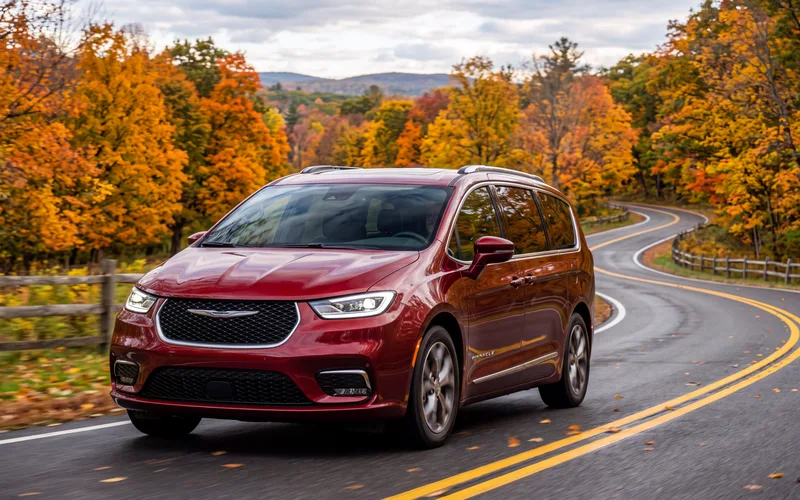 Chrysler PacificaMinivanBetter at: Features and versatility
It's the same van with all-wheel drive, a plug-in hybrid option and the features the Voyager deletes — and once incentives are applied the price walk is often smaller than the window stickers suggest.
Compare 2.71B-
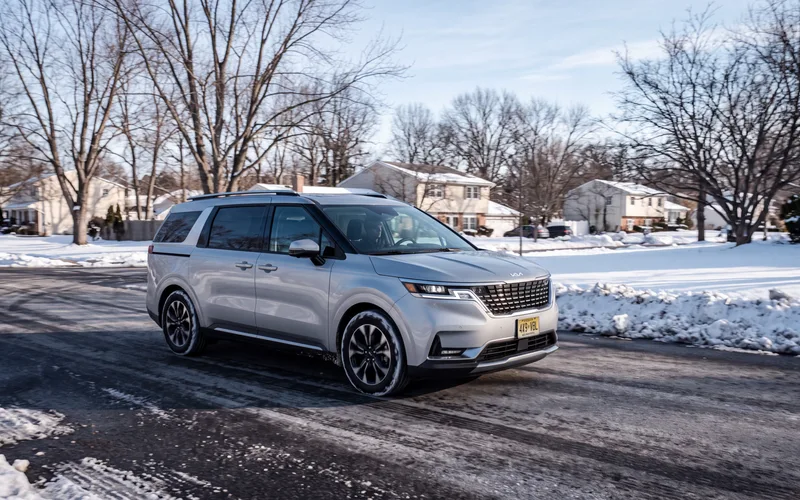 Kia CarnivalMinivanBetter at: Standard equipment
For roughly the same as a well-optioned Voyager you get a full driver-assist suite standard, a hybrid option and double the powertrain warranty.
Compare 2.71B-
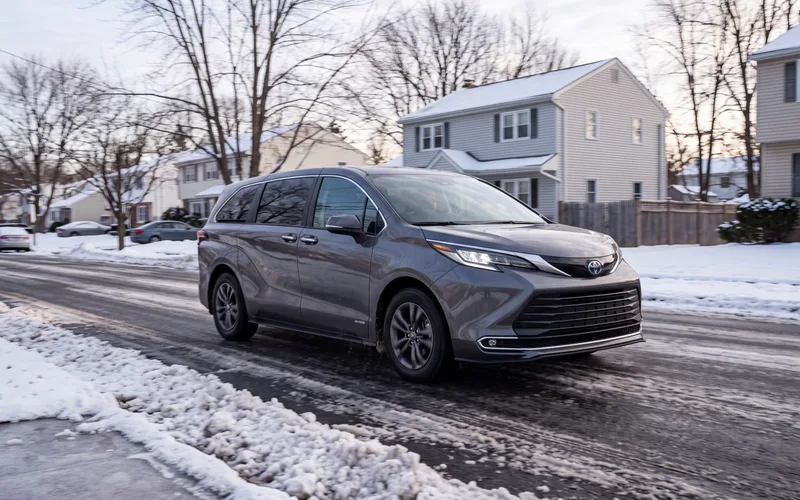 Toyota SiennaMinivanBetter at: Efficiency and resale
Costs more up front but the hybrid's 36 MPG and roughly 62% five-year resale make it dramatically cheaper to actually own.
CompareProduction history
Best fit & conditions
Higher scores mean a better fit for that use case. Learn more about use-case fit →
Subject profile
Academic Probation · NHTSA safety recalls
Sep 1, 2026Electronic stability control (esc)The brake pedal position sensor capacitor may be cracked, which can cause a loss of electronic stability control. As such, these vehicles fail to comply with the requirements of Federal Motor Vehicle Safety Standard number 126, "Electronic Stability Control Systems."
Defect
Chrysler (FCA US, LLC) is recalling certain 2025-2026 Chrysler Voyager, Chrysler Pacifica, and 2026 Chrysler Voyager Plug-In Hybrid Electric (PHEV) vehicles. The brake pedal position sensor capacitor may be cracked, which can cause a loss of electronic stability control. As such, these vehicles fail to comply with the requirements of Federal Motor Vehicle Safety Standard number 126, "Electronic Stability Control Systems."
Risk
A loss of electronic stability control increases the risk of a crash.
Remedy
Dealers will inspect and replace brake pedal position sensor, as necessary, free of charge. Owner notification letters were mailed September 17, 2026. Owners may contact FCA customer service at 1-800-853-1403. FCA's number for this recall is 69D. Vehicle Identification Numbers (VINs) involved in this recall will become searchable on NHTSA.gov beginning September 9, 2026.
NHTSA campaign 26V561000 ↗Manufacturer no. 69D2,017 vehicles potentially affected (all models in the campaign)Owners notified Sep 17, 2026Filed by Chrysler (FCA US, LLC)Filed as VOYAGERAug 13, 2026Back over prevention: sensing system: cameraThe rearview camera image may fail to display when the vehicle is placed in reverse. As such, these vehicles fail to comply with the requirements of Federal Motor Vehicle Safety Standard (FMVSS) number 111, "Rear Visibility."
Defect
Chrysler (FCA US, LLC) is recalling certain 2026 Jeep Wrangler, Jeep Gladiator, Jeep Compass, Jeep Cherokee, Jeep Grand Cherokee, Jeep Grand Cherokee L, Jeep Grand Wagoneer, Jeep Grand Wagoneer L, Ram Promaster, Ram Promaster EV, Ram 1500, Ram 2500, Chrysler Pacifica Plug-In Hybrid, Chrysler Voyager, and 2026-2027 Chrysler Pacifica and Dodge Charger vehicles. The rearview camera image may fail to display when the vehicle is placed in reverse. As such, these vehicles fail to comply with the requirements of Federal Motor Vehicle Safety Standard (FMVSS) number 111, "Rear Visibility."
Risk
A rearview camera image that fails to display reduces the driver's view behind the vehicle, increasing the risk of a crash.
Remedy
Radio software will be updated by a dealer or through an over-the-air (OTA) update, free of charge. Owner notification letters were mailed beginning September 2, 2026. Owners may contact Chrysler customer service at 800-853-1403. Chrysler's number for this recall is 78D. Vehicle Identification Numbers (VINs) involved in this recall will be searchable on NHTSA.gov on August 20, 2026.
NHTSA campaign 26V531000 ↗Manufacturer no. 78D844,027 vehicles potentially affected (all models in the campaign)Owners notified Sep 2, 2026Filed by Chrysler (FCA US, LLC)Filed as VOYAGERJun 2, 2026Air bags: frontalThe spring inside the front seat harness connector may contact electrical terminals.
Defect
Braun Corporation (Braun) is recalling certain 2023-2026 Chrysler Pacifica and Voyager vehicles. The spring inside the front seat harness connector may contact electrical terminals.
Risk
The unintended connection may prevent the air bags from deploying, increasing the risk of injury during a crash.
Remedy
Dealers will replace the spring, free of charge. Owner notification letters were mailed July 16, 2026. Owners may contact Braun's customer service at 1-800-488-0359.
NHTSA campaign 26V358000 ↗141 vehicles potentially affected (all models in the campaign)Owners notified Jul 16, 2026Filed by Braun CorporationFiled as VOYAGERMar 26, 2026Air bags: side/window: curtainThe right and left side curtain air bags may have insufficient pressure retention. As such, these vehicles fail to comply with the requirements of Federal Motor Vehicle Safety Standard (FMVSS) number 226, "Ejection Mitigation."
Defect
Chrysler (FCA US, LLC) is recalling certain 2022-2026 Pacifica and Voyager vehicles. The right and left side curtain air bags may have insufficient pressure retention. As such, these vehicles fail to comply with the requirements of Federal Motor Vehicle Safety Standard (FMVSS) number 226, "Ejection Mitigation."
Risk
Air bags with insufficient pressure retention increase the risk of ejection and injury during a crash.
Remedy
Dealers will replace the side curtain air bags, as necessary, free of charge. Owner notification letters were mailed May 14, 2026. Owners may contact Chrysler customer service at 800-853-1403. Chrysler's numbers for this recall are 06D, 10D, and 11D. Vehicle Identification Numbers (VINs) involved in this recall will be searchable on NHTSA.gov beginning April 2, 2026. This recall expands and replaces previous NHTSA recall numbers 25V302 and 25V573. Vehicles previously repaired under a prior recall will need to have the new remedy completed.
NHTSA campaign 26V189000 ↗Manufacturer no. 06D, 10D, 11D293,264 vehicles potentially affected (all models in the campaign)Owners notified May 14, 2026Filed by Chrysler (FCA US, LLC)Filed as VOYAGER
7 recalls on other model years of the Voyager (2020–2022, 2025)
Dec 17, 2025Equipment adaptive/mobility: wheelchair restraints/securement: latch/anchorPlease refer to Rollx's recall report for specific model year information. The retractors may not lock, preventing the wheelchair from being properly secured.
Defect
Rollx Vans (Rollx) is recalling certain GMC Yukon, Sierra, Chevrolet Express 2500, Ford Transit, E-250, Toyota Sienna, Sienna Hybrid, Honda Odyssey, Chrysler Town and Country, Voyager, Pacifica, Dodge Grand Caravan, and Ram Promaster vehicles equipped with QRT-Deluxe and QRT-Max wheelchair restraints. Please refer to Rollx's recall report for specific model year information. The retractors may not lock, preventing the wheelchair from being properly secured.
Risk
An unsecured wheelchair can move during transit, increasing the risk of injury.
Remedy
Rollx will work with Q'Straint to inspect and replace the retractors as necessary, free of charge. Owner notification letters were mailed February 5, 2026. Owners may contact Rollx's customer service at 1-800-956-6668.
NHTSA campaign 25V876000 ↗86 vehicles potentially affected (all models in the campaign)Owners notified Feb 5, 2026Filed by Rollx VansFiled as VOYAGERSep 4, 2025Air bags: side/window: curtainThe right and left side curtain air bags may have insufficient pressure retention from improperly sealed seams. As such, these vehicles fail to comply with the requirements of Federal Motor Vehicle Safety Standard (FMVSS) number 226, "Ejection Mitigation."
Defect
Chrysler (FCA US, LLC) is recalling certain 2025 Pacifica and Voyager vehicles. The right and left side curtain air bags may have insufficient pressure retention from improperly sealed seams. As such, these vehicles fail to comply with the requirements of Federal Motor Vehicle Safety Standard (FMVSS) number 226, "Ejection Mitigation."
Risk
An air bag with insufficient pressure retention increases the risk of ejection and injury during a crash.
Remedy
Dealers will replace the side curtain air bags, as necessary free of charge. Owner notification letters were mailed October 14, 2025. Owners may contact Chrysler customer service at 800-853-1403. Chrysler's numbers for this recall are 82C, 86C, 87C. Vehicle Identification Numbers (VINs) involved in this recall will be searchable on NHTSA.gov beginning September 11, 2025. This recall is replaced by NHTSA recall number 26V189. Vehicles already repaired under this recall will need to have the new remedy completed.
NHTSA campaign 25V573000 ↗Manufacturer no. 82C, 86C, 87C985 vehicles potentially affected (all models in the campaign)Owners notified Oct 14, 2025Filed by Chrysler (FCA US, LLC)Filed as VOYAGERMay 8, 2025Air bags: side/window: curtainThe right and left side curtain air bags may have insufficient pressure retention from improperly sealed seams. As such, these vehicles fail to comply with the requirements of Federal Motor Vehicle Safety Standard (FMVSS) number 226, "Ejection Mitigation."
Defect
Chrysler (FCA US, LLC) is recalling certain 2022-2025 Pacifica and Voyager vehicles. The right and left side curtain air bags may have insufficient pressure retention from improperly sealed seams. As such, these vehicles fail to comply with the requirements of Federal Motor Vehicle Safety Standard (FMVSS) number 226, "Ejection Mitigation."
Risk
An air bag with insufficient pressure retention increases the risk of ejection and injury during a crash.
Remedy
Dealers will replace the side curtain air bags, as necessary free of charge. Owner notification letters were mailed beginning October 14, 2025. Owners may contact Chrysler customer service at 800-853-1403. Chrysler's numbers for this recall are 06C, 54C, 55C. This recall is replaced by NHTSA recall number 26V189. Vehicles already repaired under this recall will need to have the new remedy completed.
NHTSA campaign 25V302000 ↗Manufacturer no. 06C, 54C, 55C250,651 vehicles potentially affected (all models in the campaign)Owners notified Oct 14, 2025Filed by Chrysler (FCA US, LLC)Filed as VOYAGEROct 24, 2024Air bags: side/window: curtainAn improperly secured connector for the side curtain air bags may prevent the air bags from deploying. As such, these vehicles fail to comply with the requirements of Federal Motor Vehicle Safety Standard numbers 214, "Side Impact Protection" and 226, "Ejection Mitigation."
Defect
Chrysler (FCA US, LLC) is recalling certain 2020-2023 Pacifica and 2020-2021, 2023 Voyager vehicles. An improperly secured connector for the side curtain air bags may prevent the air bags from deploying. As such, these vehicles fail to comply with the requirements of Federal Motor Vehicle Safety Standard numbers 214, "Side Impact Protection" and 226, "Ejection Mitigation."
Risk
An air bag that does not deploy during a crash increases the risk of injury.
Remedy
Dealers will secure the connector, free of charge. All vehicles have been remedied. Owner notification letters were mailed October 22, 2024. Owners may contact FCA customer service at 1-800-853-1403. FCA's number for this recall is A8B.
NHTSA campaign 24V793000 ↗Manufacturer no. A8B26 vehicles potentially affected (all models in the campaign)Owners notified Oct 22, 2020Filed by Chrysler (FCA US, LLC)Filed as VOYAGERJun 13, 2024Back over prevention: sensing system: cameraThe radio software may prevent the rearview image from displaying. As such, these vehicles fail to comply with the requirements of Federal Motor Vehicle Safety Standard number 111, "Rear Visibility."
Defect
Chrysler (FCA US, LLC) is recalling certain 2021-2022 Dodge Durango, 2021-2023 Chrysler Pacifica, Jeep Grand Cherokee L, 2022 Ram 1500, 2500, 3500, Chrysler Voyager, 2022-2023 Jeep Compass, Grand Cherokee, Wagoneer, Grand Wagoneer, and Ram Promaster vehicles. The radio software may prevent the rearview image from displaying. As such, these vehicles fail to comply with the requirements of Federal Motor Vehicle Safety Standard number 111, "Rear Visibility."
Risk
A rearview camera image that does not display decreases the driver's visibility, increasing the risk of a crash.
Remedy
Dealers will update the radio software or the software will be OTA, "Over-The-Air," free of charge. Owner notification letters were mailed beginning July 9, 2024. Owners may contact FCA US, LLC customer service at 1-800-853-1403. FCA US, LLC's numbers for this recall are 66B and 79B.
NHTSA campaign 24V436000 ↗Manufacturer no. 66B, 79B1,033,433 vehicles potentially affected (all models in the campaign)Owners notified Jul 9, 2024Filed by Chrysler (FCA US, LLC)Filed as VOYAGERAug 11, 2022Visibility: windshield wiper/washer: linkagesThe windshield wiper arm nuts may be improperly tightened, which can cause the wipers to not function properly.
Defect
Chrysler (FCA US, LLC) is recalling certain 2022 Voyager and Pacifica vehicles. The windshield wiper arm nuts may be improperly tightened, which can cause the wipers to not function properly.
Risk
Improperly functioning wipers can reduce the driver's visibility in certain weather conditions, increasing the risk of a crash.
Remedy
Dealers will tighten the wiper arm nuts, free of charge. Owner notification letters were mailed August 30, 2022. Owners may contact FCA US, LLC customer service at 1-800-853-1403. FCA US's number for this recall is Z80.
NHTSA campaign 22V619000 ↗Manufacturer no. Z80508 vehicles potentially affected (all models in the campaign)Owners notified Aug 30, 2022Filed by Chrysler (FCA US, LLC)Filed as VOYAGERMar 24, 2022Seats: mid/rear assemblyThe second-row seat-to-floor mounting latch may bind and stick open, preventing the seat from properly securing to the floor. As such, these vehicles fail to comply with the requirements of Federal Motor Vehicle Safety Standard number 225, "Child Restraint Anchorage Systems."
Defect
Chrysler (FCA US, LLC) is recalling certain 2021-2022 Pacifica and 2021 Voyager vehicles. The second-row seat-to-floor mounting latch may bind and stick open, preventing the seat from properly securing to the floor. As such, these vehicles fail to comply with the requirements of Federal Motor Vehicle Safety Standard number 225, "Child Restraint Anchorage Systems."
Risk
An unsecured seat increases the risk of injury in a crash.
Remedy
Dealers will inspect and, if necessary, replace the second-row seat cushion frame, free of charge. Owner notification letters were mailed April 7, 2022. Owners may contact FCA US, LLC customer service at 1-800-853-1403. FCA US LLC's number for this recall is Z22.
NHTSA campaign 22V181000 ↗Manufacturer no. Z221,160 vehicles potentially affected (all models in the campaign)Owners notified Apr 7, 2022Filed by Chrysler (FCA US, LLC)Filed as VOYAGER
Source: NHTSA Office of Defects Investigation recall database, model years 2020–2026. Recalls are listed by model year as the manufacturer filed them; whether a specific car is affected depends on its VIN — check a VIN at nhtsa.gov ↗. NHTSA model names matched to this page: VOYAGER.
Detailed scoring by subject
1Performance & PowertrainThe Voyager's lowest-graded category.0.37F
The Voyager is the de-contented version of the Pacifica on the same RU platform and uses the identical naturally-aspirated 3.6L Pentastar V6 rated at 287 hp @ 6,400 rpm. Unlike the Pacifica there is no PHEV alternative, so this is the only output figure in the lineup.
Peak torque of 262 lb-ft at 4,000 rpm from the Pentastar V6 — mid-pack for the minivan segment and identical to the Pacifica's gas powertrain. No low-end electric assist is available since the Voyager is not offered as a hybrid.
No instrumented test of the 2026 Voyager is available. Estimated at ~7.2 s from instrumented Pacifica gas FWD results (7.2–7.5 s), adjusted marginally quicker because the Voyager carries less standard equipment and is the lighter, FWD-only configuration. Adequate but unremarkable for the segment.
The Pentastar V6 is a mature, well-sorted engine with linear, lag-free delivery and no forced induction to manage — reviewers consistently describe it as smooth and responsive. Scored level with the Pacifica's gas V6 since the powertrain is mechanically identical.
Uses the same ZF-based 9-speed 948TE automatic as the gas Pacifica. Much improved over early versions of that gearbox but still drawing periodic criticism for gear hunting and unhurried kickdown; behind the Odyssey's smoother 10-speed. Scored level with the Pacifica for the shared unit.
Shares the Pacifica's chassis, V6 and 9-speed, which carry a 3,600 lb rating with the Trailer-Tow Group. Availability of that group on the value-oriented Voyager trim lineup is the uncertainty — where the group is not ordered the van is not tow-rated, so real-world capability for most Voyagers on dealer lots is effectively nil.
The Voyager is front-wheel drive only across the lineup — Chrysler reserves the Auto AWD system for the Pacifica. That is a clear disadvantage against the Pacifica, Sienna (AWD available) and Carnival, and puts the Voyager in the lowest band alongside the FWD-only Odyssey.
A pavement-only family minivan: roughly 5.4 in of ground clearance, no skid plates, no terrain or drive modes, no off-road trim, and — unlike the Pacifica — not even the mitigation of optional AWD for slippery surfaces. Scored just below the Pacifica for that reason.
One powertrain, one drivetrain: the 3.6L V6 with the 9-speed automatic driving the front wheels. No turbo option, no hybrid, no PHEV, no AWD — squarely the 'take-it-or-leave-it' band, and the narrowest lineup among mainstream minivans given the Pacifica's PHEV and the Sienna's standard hybrid.
2Efficiency & RangeOne of the Voyager's weakest categories.0.90F
The Voyager is the de-contented Pacifica and shares its sole powertrain — the 287-hp 3.6L Pentastar V6 with the 9-speed automatic, front-drive only — rated at 22 MPG combined. There is no AWD or hybrid variant to move the figure, so 22 MPG describes the entire lineup.
19 MPG city is weak even by minivan standards — a ~4,500-lb box moved by a naturally aspirated V6 with no electric assist. The hybrid Sienna nearly doubles it at 36 MPG city, and city driving is exactly where a family van spends most of its life.
Highway is the Pentastar's best case: the tall top gear drops cruising revs enough for 28 MPG, matching Pacifica FWD and Odyssey and beating the Carnival V6's 26 MPG. Road-trip economy is the one place this powertrain is genuinely competitive.
A 19.0-gallon tank at 22 MPG combined works out to roughly 418 miles — mid-pack for the segment and enough for a normal travel day, but well short of the hybrid Sienna's ~648 miles.
At 22 MPG combined the Voyager burns roughly 680 gallons a year over 15,000 miles, landing near $2,700 at EPA's reference regular price. Its low sticker is partly given back at the pump — the Sienna costs about $1,300/yr less to fuel, which compounds badly over a long ownership period.
The Pentastar V6 is specified for 87-octane regular, with no premium recommendation and no diesel or E85 complication — the cheapest pump at any station is the correct one. That flexibility is this powertrain's clearest efficiency-side virtue and the reason the annual cost is not worse than it is.
3SafetyOne of the Voyager's strongest categories.2.18C
The Voyager is the de-contented variant of the Pacifica on the identical RU unibody with the same crash structure, wheelbase and restraints, and NHTSA has rated it 5 stars overall in prior model years. The 2026 Pacifica carries a verified 5-star overall rating in this dataset, and no structural change is known for 2026.
Sharing the Pacifica's structure, the Voyager inherits the same crashworthiness profile: Good in the original small-overlap front test but Marginal in the updated moderate-overlap test (elevated second-row injury risk) and Acceptable in the updated side test. It earns no Top Safety Pick, and its lower-spec equipment removes any remaining award path, so it sits a touch below the Pacifica.
The Voyager is sold as a single value-oriented LX trim positioned beneath the Pacifica Select, and that de-contenting lands hardest on driver assistance: forward AEB and lane-departure warning are expected standard, but blind-spot monitoring and adaptive cruise — standard or near-standard across the Pacifica range — are understood to be optional or unavailable. That is the mid band, well short of the Odyssey (87), Sienna (89) and Carnival (89), all of which fit a full suite to their base trims.
When fitted, the Voyager uses the same Stellantis forward-collision hardware as the Pacifica, whose IIHS front crash prevention rates Acceptable vehicle-to-vehicle with Advanced daytime and nighttime pedestrian results. Scored below the Pacifica's 72 because the base van may carry a lesser sensor configuration and the system's standard fitment across the trim is unconfirmed.
Blind-spot monitoring with rear cross-path detection is a trim-gated feature in the Chrysler minivan lineup — standard from the Pacifica Limited up and packaged on Select — so on the single entry-level Voyager trim it is expected to be optional at best. Alert-only where present, with no active intervention. This is the clearest ADAS gap against rivals that make BSM/RCTA standard on every trim (Odyssey 82, Sienna 84, Carnival 88).
LaneSense lane-departure warning with corrective steering torque is expected on the Voyager, and reviewers consistently describe the Chrysler system as a nudge-style keep-assist rather than true confident centering. Scored below the Pacifica's 65 to reflect the possibility that the base trim gets warning-only LaneSense without the Plus steering intervention.
Adaptive cruise with stop-and-go is standard across the Pacifica range but is understood to be optional or absent on the entry Voyager, leaving conventional fixed-speed cruise as the likely standard fitment — the 0-49 'basic cruise only' band. There is no integrated highway-assist mode in any case.
No hands-free highway driving system is offered on the 2026 Voyager at any price. Stellantis has not brought a BlueCruise/Super Cruise equivalent to its minivans, and the Voyager is the least-equipped vehicle in that lineup.
IIHS headlight ratings are trim-specific, and the Pacifica's lamps rate only Acceptable. As the base variant the Voyager is expected to carry the lower-output projector setup, which historically lands at the Acceptable/Marginal boundary — scored below the Pacifica's 65 accordingly, and well behind the Sienna's Good-rated LED range (85).
Body, glass area and seating position are identical to the Pacifica, so the Voyager gets the same excellent minivan sightlines — tall greenhouse, low beltline, large side glass and a deep rear window. It loses the available 360-degree surround-view camera, but natural visibility is strong enough that the omission costs little.
Identical body and rear-door architecture to the Pacifica: wide sliding-door openings, a flat floor and easily reached second-row LATCH anchors make car-seat installation among the easiest in the class, with a usable third row for boosters. Scored a shade below the Pacifica for the base trim's lesser second-row seat adjustability.
4Space & ComfortThe Voyager's best-graded category.2.56C+
The 2026 Voyager is sold in one LX trim seating 7 via 2nd-row buckets and a 60/40 third-row bench. Unlike Sienna, Carnival and Odyssey it offers no 8-passenger configuration, costing it the top of the band.
Shares the RU-platform Pacifica body, so front headroom is the no-sunroof figure of 39.4 in — the Voyager LX has no sunroof option, so the 38.4 in reduced figure quoted for sunroof-equipped Pacificas does not apply here.
41.1 in of front legroom sits low in the minivan band (40–44.5 in), though it is actually better than Odyssey (40.9) and Sienna (40.3) — the whole segment clusters near the bottom of this band, so the score understates real-world front room.
The flat roofline and absence of any sunroof or rear-entertainment headliner hardware on the base LX preserve the full 39.4 in of 2nd-row headroom — a case where decontenting actually helps the numbers.
39.0 in of 2nd-row legroom is generous in absolute terms and the sliding Stow 'n Go buckets let owners rebalance 2nd- and 3rd-row space, but it trails the 39.9–40.9 in offered by Sienna, Carnival and Odyssey.
Identical third row to the Pacifica — roughly 38.7 in headroom and 36.5 in legroom, genuinely usable by adults on medium trips, with easy tilt-and-slide access past the 2nd-row buckets. Scored a couple of points under the Pacifica because the base van does without the third-row sunshades, extra USB ports and rear-seat amenities that make the back bench pleasant on long hauls.
Third-row Stow 'n Go drops flush into the floor well without removing seats, opening a large flat load bay behind the 2nd row. Comfortably past the top of the 25–80 cu ft band.
Dual Stow 'n Go leaves a flat floor from the front seatbacks to the tailgate without lifting a single seat out of the van. Because the Voyager is gas-only, it never suffers the ~100 cu ft ceiling the Pacifica PHEV lives with, so the entry van matches the best cargo hold in the segment.
Keeps the segment's best structural trick — the Stow 'n Go floor bins double as deep hidden storage whenever the seats are upright — plus a large center console and door bins. Drops well below the Pacifica because the LX forgoes Stow 'n Vac, the household power outlet, rear-seat entertainment and the denser multi-row USB provision.
Cloth upholstery over the same thin, fold-into-the-floor Stow 'n Go frames that reviewers already call the least plush buckets in the segment, and the base trim's limited seat adjustment leaves less scope to dial in a long-haul driving position. Fine for school runs, noticeably behind Odyssey and Carnival on a full day's drive.
Same well-damped RU-platform suspension that makes the Pacifica one of the better-riding minivans, and the LX's smaller wheels with taller sidewalls take a little more sting out of broken pavement than the Pacifica's 18s and 20s. FWD-only means none of the added firmness the AWD models carry.
The body structure is the same, but the entry van goes without the acoustic laminated glass and thicker insulation package fitted to Pacifica trims, so more road roar and Pentastar V6 boom reach the cabin. Still acceptable rather than loud — a minivan's tall glass area sets a floor here.
This is where the Voyager's single-trim, price-leader positioning bites hardest: tri-zone climate with 3rd-row vents is there, but heated front seats, a heated steering wheel and ventilated seats are absent with no trim to climb to, and there is no leather or rear climate control head. Because there are no upper trims to rescue it, the sparse-equipment band is the honest read even though the same body offers all of it as a Pacifica.
5Cost of OwnershipOne of the Voyager's weakest categories.0.67F
The Voyager exists to undercut the Pacifica: same RU platform, same 287-hp Pentastar V6, fewer features, roughly $3,500–$4,000 less on the sticker. That still leaves it near $42,000 — the cheap-minivan reputation the nameplate carried through 2022 (under $30,000) is gone, because the 2025 retail relaunch repositioned the Voyager as what used to be the Pacifica Touring.
With a single retail trim, the volume price is simply the LX with the option group most buyers add, which puts it around $43,500 — cheaper than a Pacifica Limited (~$49,240), an Odyssey EX-L or a Sienna XLE, and roughly level with a Carnival EX. The narrow trim ladder means there is no way to spend much more, which is the Voyager's whole pitch.
Mechanically identical to the Pacifica FWD — the Pentastar V6 and 9-speed automatic are high-volume, long-serving Stellantis hardware with cheap parts and universal service coverage. The Voyager should run modestly under the Pacifica's ~$5,000 because it carries less to break: no PHEV hardware, less power-operated equipment on the base spec, smaller wheels and tires, less electronic content.
The single worst number in this scorecard, and at weight 3 it drags the whole category down. The Voyager stacks every residual-killing factor at once: Chrysler-brand depreciation, base-spec configuration, and — uniquely — a 2023–2024 fleet-only run that dumps ex-rental vans into exactly the used market a five-year-old Voyager has to compete in. Most of the money saved at the dealer comes back out at trade-in.
Standard Chrysler basic coverage, applied brand-wide — 3 years / 36,000 miles. That sits at the very floor of the segment band and matches Toyota and Honda, but Kia's 5-yr/60k makes it look thin, and a value-first buyer is exactly the buyer who feels a short warranty.
5 yr / 60,000 mi — bottom of the band, half of Kia's 10-yr/100k. The Pacifica at least offers a PHEV whose 10-yr/100k battery coverage adds something; the Voyager is gas-only, so there is no longer-term coverage anywhere in the lineup.
Chrysler includes no factory scheduled maintenance — Stellantis sells prepaid service plans instead — which caps this item below 50 per the scoring guidance. What buyers do get is a genuinely long 5-yr/60,000-mi roadside assistance term and the standard Uconnect connected-services trial. Rated level with the Pacifica since the programs are brand-wide, and below the Sienna (ToyotaCare, 2 yrs of included service) and Carnival (longer roadside plus Kia Connect).
$43,500 volume-trim price minus its estimated resale value after 5 years (41.5% retained, or about $18,053) leaves about $25,448 in depreciation. Add the projected $4,800 in 5-year maintenance and repairs, and owning this vehicle for 5 years costs about $30,248 in total.
6Reliability & QualityGrades below the middle of the scale.1.54D
The Voyager is a de-contented Pacifica on the same RU platform, so it inherits the Pacifica's below-average predicted-reliability baseline, but it avoids the two variants that drag that baseline hardest — there is no PHEV and no AWD, only the FWD 3.6L V6. Model-specific predicted-reliability data is thin because the Voyager spent 2023-2024 as a fleet-only model and only returned to US retail for 2025, so it is rated just above the Pacifica rather than on its own survey record.
Chrysler has sat in the bottom third of Consumer Reports brand reliability rankings for several consecutive years and below the industry average in J.D. Power's Vehicle Dependability Study, on a product line thin enough (Pacifica and Voyager) that one weak nameplate defines the brand score. Scored identically to the 2026 Pacifica, since this is a brand-level judgment and both are the same brand in the same year.
The Voyager is exposed to the RU generation's gas-model recall stream — side-curtain airbag, 9-speed transmission and rearview-camera/electrical campaigns — which is heavier than segment norm but not systemic. Critically, it is not exposed to the Pacifica PHEV high-voltage battery fire campaigns, the most severe actions on this platform, which is why it scores above the Pacifica.
The 3.6L Pentastar V6 is one of the best-proven high-mileage engines in the Stellantis portfolio, in production since 2011 across millions of units, and the Voyager offers nothing else. The offsetting risk is the ZF-derived 948TE 9-speed automatic, which has a documented record of shift-quality and durability complaints across FCA/Stellantis applications; scored above the Pacifica because there is no PHEV drivetrain in the mix.
The Voyager exists to hit a lower price than the Pacifica and the cabin shows it — cloth upholstery, a smaller base infotainment screen, more hard plastic on the doors and lower dash, and none of the Pinnacle-grade trim that earns the Pacifica its class-leading materials rating. The underlying architecture and layout are good, so it lands mid-pack rather than poor, but it gives up roughly 20 points to its own showroom sibling.
Same body, same RU architecture and the same Windsor Assembly line as the Pacifica, so assembly consistency should be effectively identical — generally solid panel fit with scattered owner reports of interior rattles and trim squeaks emerging in early ownership. Scored level with the Pacifica; nothing about the lower trim content changes how the body is built.
Coverage is not the problem — the combined Chrysler/Dodge/Jeep/Ram store network is dense nationwide and a Voyager can be serviced almost anywhere. The drag is service satisfaction, where Chrysler has repeatedly landed below the mass-market average in J.D. Power Customer Service Index work. Identical network to the Pacifica, so scored identically.
This is the Voyager's strongest reliability-category showing. Every wear item is shared with the Pacifica and the wider Pentastar universe, so parts are abundant through both dealer and independent channels at competitive prices, with a healthy aftermarket. It scores above the Pacifica specifically because there is no PHEV variant — no high-voltage pack, no dealer-only hybrid components inflating the average repair picture.
7Technology & InfotainmentMid-pack among this car's ten categories.2.02C
The Voyager shares the post-2021-refresh RU dashboard with the Pacifica, which carries the 10.1-inch Uconnect 5 touchscreen across every trim; the Voyager LX inherits the same head unit rather than the 7-inch Uconnect 4 unit fitted to the pre-hiatus 2020–21 Voyager. Replaces a placeholder 11.6 in value that no Chrysler minivan has ever used.
Uconnect 5 is the same software and hardware the Pacifica runs — quick boot, snappy touch response, logical menu structure, and physical HVAC controls retained beneath the screen. Scored a couple of points under the Pacifica only because the Voyager runs the feature-thin configuration (no embedded nav tile, fewer connected services) rather than because the system behaves differently.
Wireless Apple CarPlay and wireless Android Auto come with Uconnect 5 and are standard on the LX — and since LX is the only 2026 Voyager trim, phone projection is standard fleet-wide. This is the Voyager's single strongest technology attribute and the main reason it does not fall further behind the segment.
Uconnect 5's natural-language voice assistant carries over, but embedded TomTom connected navigation is a Pacifica upper-trim feature and is not part of the Voyager's value configuration — so owners are dependent on CarPlay/Android Auto maps. Functional voice, no native nav, which puts it in the middle of the 50–79 band rather than the top.
The Voyager LX runs the base six-speaker Uconnect audio system with no upgrade path — the 13-speaker Alpine and 19-speaker Harman Kardon systems are Pacifica-only. Base sound is adequate for a family van, but the total absence of a premium option on any trim is what drops this below the halfway mark against rivals that all offer branded audio.
Same hybrid cluster as the Pacifica: a 7-inch reconfigurable color driver information display flanked by analog gauges, not a full-digital screen. Content is useful and configurable, but the presentation is a generation behind the 12.3-inch full-digital clusters offered by Carnival and Sienna.
Uconnect 5 receives over-the-air software updates via Wi-Fi or the embedded modem, but the scope is infotainment and connected services rather than whole-vehicle feature additions. Scored a notch under the Pacifica because the Voyager has no embedded navigation to receive OTA map updates.
The Chrysler Connect app covers remote start, remote lock/unlock, vehicle locator and diagnostics, and MY26 Chrysler vehicles include a long complimentary Chrysler Connect ONE term — real value on a sub-$42k van. Marked down from the Pacifica for the absence of any digital-key capability and because base-trim remote-start hardware fitment on the LX could not be confirmed.
The RU cabin distributes USB-A/USB-C charging across all three rows, which keeps the Voyager respectable for a family hauler, but the wireless charging pad (Ultra Console) and the 115V household outlet are both Pacifica-only equipment with no Voyager option box to tick.
Keyless Enter 'N Go proximity entry with push-button start is expected standard on the LX, and the 2025 retail relaunch added power sliding doors and a power liftgate as standard content — solid for the price. Held well below the Pacifica because hands-free (kick-activated) sliding doors and liftgate are Pacifica-exclusive and no phone-as-key exists anywhere in the Chrysler minivan line.
ParkView rear backup camera is standard (federally mandated) and ParkSense rear park assist is expected on the LX, which satisfies the basics for a 204-inch van. But the 360-degree surround-view camera and front parking sensors ride in the Pacifica's Safety Sphere package, leaving the Voyager with no path to surround view at any price — a real handicap in a vehicle this large.
No head-up display is offered on the Voyager on any trim — the color HUD is a Pacifica Limited/Pinnacle feature and the Voyager's single LX trim has no option group that includes it. Scored in the 0–49 "not offered" band per the item guidance.
8Use-Case FitMid-pack among this car's ten categories.2.14C
Keeps the RU-platform hardware that makes a minivan great for kids — dual sliding doors with huge openings, a low step-in height, second-row Stow 'n Go bucket seats that slide for walk-through access, and easily reached LATCH anchors. But the Voyager is the decontented Pacifica: the single LX trim drops FamCAM interior camera and Stow 'n Vac, and power sliding doors/liftgate are an option rather than standard equipment, which is a real daily annoyance with an armful of kid. Strong fundamentals, thin family tech.
Crash structure is the Pacifica's — NHTSA 5-star overall, but the same 2026 IIHS picture applies, with Marginal in the updated moderate-overlap test and no Top Safety Pick. The bigger gap is ADAS: the Voyager LX carries forward-collision warning with active braking and blind-spot monitoring with rear cross path, but does not get the Pacifica's standard full-speed adaptive cruise with stop-and-go or LaneSense lane-keep, and there is no surround-view option. Adequate safety floor at a low price, with the assistance features families most value missing.
Space is untouched from the Pacifica — 38.7 in of third-row headroom and 36.5 in of legroom make the back row genuinely adult-usable, and 87.5 cu ft behind the second row swallows a family's luggage. What the Voyager gives up is amenity: cloth seats, no Uconnect Theater rear-seat entertainment, no heated second row, and less sound deadening than the acoustic-glass Pacifica. Comfortable and roomy for long hauls, sparse in the back-seat extras that keep kids quiet.
Same 287-hp 3.6L Pentastar V6 and 9-speed 948TE as the Pacifica, so low-speed manners, the compliant ride, and the commanding minivan sightlines all carry over intact. It loses the Pacifica's standard full-speed adaptive cruise with stop-and-go, which is exactly the feature that takes the sting out of stop-and-go commuting, and inherits the 9-speed's occasional part-throttle gear hunting. Easy to drive, less relaxing in traffic than the van it is based on.
The 3.6L V6 with no hybrid assist returns roughly 19/28/22 MPG city/highway/combined in FWD form — near the bottom of the minivan class and miles behind the Sienna hybrid's ~36 MPG combined. The Voyager claws back a little ground on the rest of the per-mile equation: regular 87 octane, FWD only so no AWD economy penalty, smaller wheels and cheaper tires, plentiful Pentastar parts, and lower insurance premiums than the pricier Pacifica. Cheap to buy and service, expensive to fuel.
A ~204-inch van is never a city car, but the tall greenhouse, low beltline, huge glass area and 39.7-ft FWD turning circle make it easier to place than the footprint suggests, and sliding doors are a genuine advantage in tight parking bays. Unlike the Pacifica, no 360-degree surround-view camera is offered at any price, leaving the standard rear camera to do all the work in tight spots.
Dual Stow 'n Go is standard on every Voyager, and folding both rows into the floor opens 140.5 cu ft of flat, enclosed, lockable load space — enough for plywood, ladders, or a day's worth of trade tools without a rack, and better weather protection than any pickup bed. Towing is limited to the platform's 3,600-lb rating and only with a trailer-tow setup that is not a standard fitment on the single LX trim, there is no AWD, and the FWD chassis is not built for sustained heavy payload. A capable light-duty hauler, not a work truck.
The Voyager has something the Pacifica does not: an actual fleet track record. It spent 2023–2024 as a fleet-only model in rental, livery and commercial service, and the cloth seats and hard-wearing plastics of the LX cabin shrug off abuse far better than the Pacifica's Nappa-and-chrome interior. Working against it is the same below-average Chrysler reliability record — Consumer Reports and J.D. Power both place the RU minivan under the segment average, and the 948TE 9-speed has a mixed durability history across Stellantis products.
The fold-flat Stow 'n Go floor and wipe-clean cloth-and-plastic LX cabin are the work-friendly parts, and the underfloor bins are useful lockable tool storage when the seats are up. Beyond that the provisions are thin: no 115V household outlet, few tie-downs, no washable-floor or work-van package, no roof rails on the base trim, and no upfitter ecosystem — Stellantis points commercial buyers at the Ram ProMaster instead.
The well-damped RU chassis is a genuinely good highway platform and the 19-gallon tank at 22 MPG combined gives roughly 415 miles between fills. But the long-haul equation is where decontenting bites hardest: no adaptive cruise to shoulder the driver-fatigue load, cloth seats without ventilation or extended adjustment, and less acoustic glass and insulation than the Pacifica, so more road and wind noise reaches the cabin over a full day's drive.
Firmly pavement-bound. The Voyager is FWD only — the Pacifica's optional on-demand Auto AWD, one of just two AWD systems in the segment, is not offered here — and it carries about 5.4 in of ground clearance, no skid plates and no terrain modes. Roof rails are not base equipment and the trailer-tow setup is not a given on the LX, so even carrying bikes or kayaks takes aftermarket help. Camping in the back is the one real strength: dual Stow 'n Go makes a flat, sealed sleeping platform in seconds.
The Voyager's headline strength and the cheapest way to buy it. Both second- and third-row seats drop flat into the floor without removal for 140.5 cu ft of unobstructed, enclosed cargo — no rival minivan matches that, and unlike the Pacifica lineup there is no PHEV variant whose battery blocks second-row Stow 'n Go, so every Voyager gets the full trick. The underfloor bins double as hidden storage with the seats up. Only the missing roof rails and uncertain hitch availability keep it from matching the Pacifica's 90.
9Driving ExperienceOne of the Voyager's strongest categories.2.21C
The Voyager is the de-contented Pacifica on the identical RU unibody platform with the same FWD suspension hardware, so it inherits the Pacifica's composed, car-like body control — secure but soft-edged and floaty at the limit. Scored a few points under the Pacifica (68) because the LX runs exclusively on 17-inch wheels with taller-sidewall tires, trading a little lateral grip and turn-in crispness for ride compliance.
Same electric-assist rack and tuning as the Pacifica: accurate and light enough to make parking-lot maneuvers easy, but essentially devoid of feedback. Typical minivan calibration prioritizing low effort over engagement; no Voyager-specific hardware difference separates it from the Pacifica's 63.
Shares the Pacifica's brake hardware while carrying less standard equipment, so stopping performance should be at least on par with the Pacifica's about-average class result, with a progressive pedal. There is no PHEV variant, so none of the regen-blending inconsistency that affects the electrified Pacifica applies here.
The 287 hp / 262 lb-ft 3.6L Pentastar V6 paired with the 9-speed automatic is a mature, naturally aspirated combination with linear, lag-free tip-in and no forced induction to manage. Held marginally below the Pacifica because the gas V6 and its 9AT — which can still show occasional low-speed hesitation — are the whole story here, with no smoother PHEV variant in the range.
The Pentastar is pleasant and unobtrusive at cruise and never coarse, though it is audible under hard acceleration. Scored below the Pacifica's 72 because the Voyager LX is the decontented entry model and forgoes the acoustic laminated glass and added sound insulation that give higher Pacifica trims their hushed highway manners.
The Voyager shares the Pacifica's 121.6-in wheelbase, FWD-only layout and front suspension geometry, so its curb-to-curb turning diameter matches the Pacifica's FWD figure of 39.7 ft. Wide for the segment — this is a long-wheelbase minivan — though the Pacifica's AWD penalty does not apply since the Voyager is not offered with AWD.
Inherits the Pacifica's commanding upright seating position, excellent outward sightlines, easy ingress/egress and logical Uconnect layout with real physical climate controls. Marked down from the Pacifica's 74 because the single LX trim has a narrower seat-adjustment range and omits the memory settings and surround-view camera that help higher Pacifica trims fit every driver and place the van in tight spots.
It has the segment's strongest mainstream engine and the same fundamentally composed chassis reviewers praise in the Pacifica, so it is never unpleasant — but the Voyager is explicitly the value buy of the range, on the smallest wheels and without the equipment that makes the Pacifica feel special. Pleasant and capable, not a van anyone takes the long way home in.
10Value & Market PositionGrades below the middle of the scale.1.65D
The Voyager exists as the deliberately decontented Pacifica: the volume LX trim carries cloth seating, base wheels and a pared-back feature list, with power sliding doors, power liftgate, heated seats and the fuller driver-assist suite either reserved for the Limited or bundled into options. Stow 'n Go second- and third-row seating is the one genuinely class-exclusive item included, but rivals' base trims — notably the Carnival LX and Sienna LE — bundle power doors and a complete ADAS package as standard for money the Voyager does not save you.
This is the Voyager's entire reason to exist and it is a real but narrow case: it is the least expensive way into a new minivan in the US market, and the money still buys the 287-hp 3.6L Pentastar V6, seven seats and fold-into-the-floor Stow 'n Go — capability no rival offers at the bottom of its range. Against that, the gas-only V6 is the thirstiest powertrain in the class, resale is the segment's weakest, and the price walk up to a materially better-equipped Pacifica Select is small enough that the saving rarely feels decisive.
The narrowest lineup in the segment by a wide margin — essentially two trims (LX and Limited), a single 3.6L V6 powertrain, front-wheel drive only, and very limited option flexibility. There is no hybrid or PHEV path, no AWD, and no seating-configuration choice, so a buyer whose needs move even slightly upmarket is pushed out of the nameplate and into the Pacifica.
The Voyager is the smallest seller in an already-shrinking segment and its volume has historically skewed heavily toward fleet and rental channels — the nameplate was pulled from retail entirely for several model years before returning as a retail offering, which is not the trajectory of a healthy seller. Retail acceptance is thin because Chrysler's own Pacifica absorbs most of the demand.
Chrysler is a diminished two-nameplate brand with below-average reliability standing, and the Voyager carries an additional drag the Pacifica does not: years of rental-fleet association that buyers and the used market both price in. There is no aspirational halo here, and the badge actively works against resale.
Far and away the Voyager's strongest card as a purchase. Stellantis is among the most incentive-heavy manufacturers in the market, and a slow-selling entry minivan sitting on dealer lots is exactly the profile that attracts stacked cash rebates, subvented financing and genuine negotiating room. Heavy discounting signals soft demand, but this item scores buyer benefit and the buyer benefit is large.
The Voyager rides the RU architecture that launched for MY2017 and took its one substantive refresh for MY2021, making 2026 roughly the ninth model year on the platform with only detail changes since. The nameplate's retail revival is a marketing move, not a new vehicle, and a full redesign of the Chrysler minivan is overdue enough that replacement risk is real for a 2026 buyer.
The generation's award pedigree — MotorTrend Car of the Year, NACTOY Utility of the Year, repeated comparison-test wins — belongs to the Pacifica, not the Voyager, and reviewers rarely include the Voyager in group tests at all. When they do assess it the verdict is consistent and lukewarm: competent underlying minivan, sound V6, Stow 'n Go is a genuine draw, but the equipment gap makes it hard to recommend over a discounted Pacifica or a better-equipped base Carnival. It sits at or near the bottom of published minivan rankings.