

The verdict
A capable minivan, strong on efficiency and held back by performance.
The 2026 Toyota Sienna is the minivan you buy with your calculator. Every version is a hybrid returning 36 MPG combined — roughly 60% better than the V6 Odyssey and Pacifica — with about 650 miles of range on a tank, the segment's best resale (~62% after five years), the lowest maintenance bill (~$4,000 over five years), and the only all-wheel drive available on every trim. The trade-offs are real: 245 hp is the least in the class and the four-cylinder drones loudly on merges and grades, the second-row seats don't fold flat or stow like a Pacifica's, and strong demand means you'll pay close to sticker. If you want a family hauler that quietly saves money for a decade, this is it; if you want a van that drives well or swallows plywood, it isn't.
Jump to scoresStrengths
- Fuel economy no other minivan comes close to
- Cheapest minivan to keep — and to sell
- The most dependable van on the lot
What holds it back
- The slowest, loudest powertrain in the class when you actually push it
- The second row won't fold flat, stow, or come out
- Poor result in the crash test that measures rear-seat protection
Top alternatives
Cars shoppers cross-shop with the Toyota Sienna 2.54C+
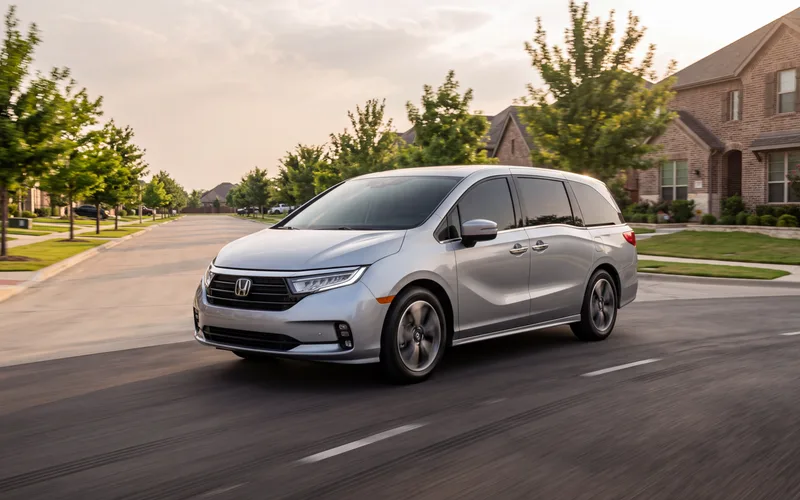 Honda OdysseyMinivanBetter at: Cargo flexibility
If you want a van that drives better and swallows more cargo — 280 hp, a removable second row and 158 cu ft — and you're willing to pay roughly $700-900 a year more in fuel for it.
Compare 2.17C
2.17C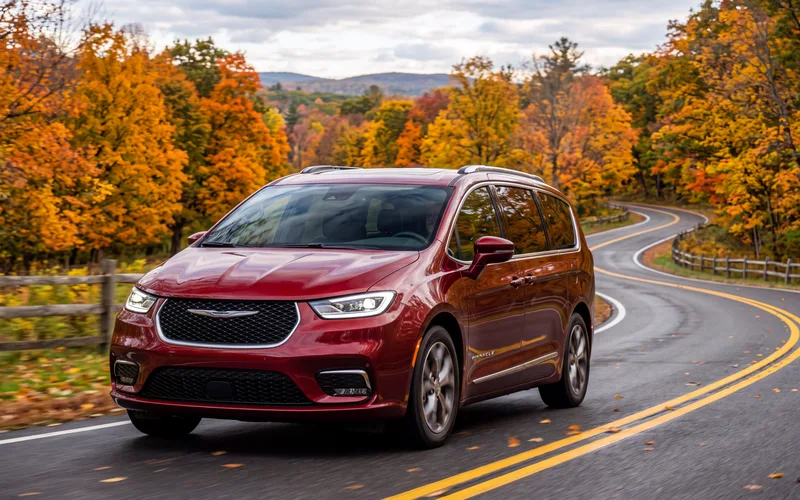 Chrysler PacificaMinivanBetter at: Seat flexibility
If a flat load floor via Stow 'n Go, a nicer cabin, or a plug-in hybrid option matters more than long-term reliability and resale — and the $3,000-5,000 in incentives seals it.
Compare 2.71B-
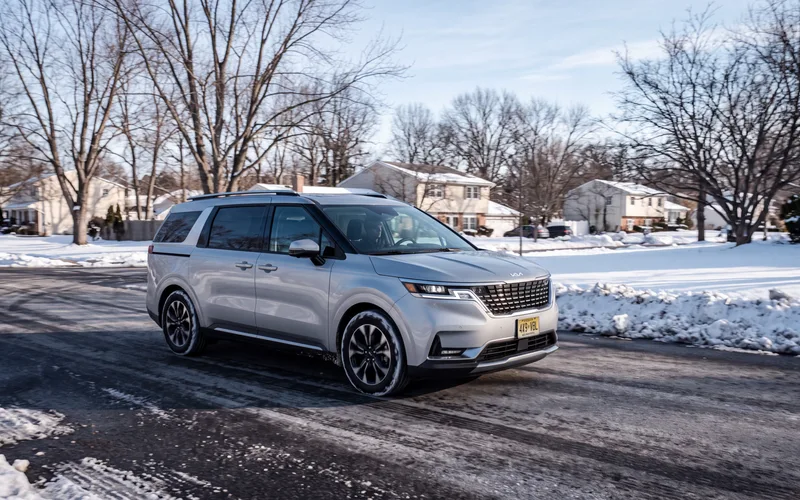 Kia CarnivalMinivanBetter at: Warranty & interior
If you want a more upscale interior and a 10-year/100,000-mile powertrain warranty for several thousand dollars less than a comparable Sienna.
CompareHow it's evolved
10 scored model years · 2017–2026
Subject scores by year
Hover or tap a score to see what moved it versus the year before. A corner mark flags a big swing.
| Year | Performance | Efficiency | Safety | Space | Cost | Reliability | Tech | Use-case | Driving | Value |
|---|---|---|---|---|---|---|---|---|---|---|
| 2026 | 40 | 98 | 76 | 69 | 62 | 83 | 73 | 75 | 65 | 75 |
| 2025 | 40 | 95 | 77 | 68 | 60 | 76 | 70 | 73 | 62 | 75 |
| 2024 | 40 | 95 | 78 | 69 | 64 | 82 | 57 | 74 | 63 | 72 |
| 2023 | 40 | 95 | 82 | 69 | 64 | 82 | 56 | 74 | 62 | 70 |
| 2022 | 40 | 95 | 81 | 68 | 68 | 81 | 52 | 69 | 61 | 73 |
| 2021 | 39 | 95 | 83 | 69 | 71 | 79 | 57 | 73 | 63 | 75 |
| 2020 | 43 | 38 | 62 | 72 | 66 | 82 | 40 | 64 | 61 | 59 |
| 2019 | 42 | 42 | 63 | 72 | 65 | 77 | 41 | 65 | 61 | 63 |
| 2018 | 42 | 42 | 61 | 71 | 61 | 77 | 34 | 62 | 60 | 62 |
| 2017 | 43 | 42 | 47 | 72 | 60 | 80 | 27 | 62 | 60 | 63 |
Compare two years
Best fit & conditions
Higher scores mean a better fit for that use case. Learn more about use-case fit →
Subject profile
Trims & configurations
6 trimsScores above reflect the volume trim. Per-trim specs and scores are rolling out — the full lineup:
Academic Probation · NHTSA safety recalls
No NHTSA safety recall is on record for the 2026 Toyota Sienna. Other model years of the Sienna have 20 — listed below.
20 recalls on other model years of the Sienna (2017–2025)
Dec 17, 2025Equipment adaptive/mobility: wheelchair restraints/securement: latch/anchorThe retractors may not lock, preventing the wheelchair from being properly secured.
Defect
Vantage Mobility, LLC (VM) is recalling certain 2021-2026 Honda Odyssey, 2021-2025 Chrysler Pacifica, and Toyota Sienna vehicles equipped with QRT-Deluxe and QRT-Max wheelchair restraints. The retractors may not lock, preventing the wheelchair from being properly secured.
Risk
An unsecured wheelchair can move during transit, increasing the risk of injury.
Remedy
Dealers will inspect and replace the retractors, free of charge. Owner notification letters was mailed January 27, 2026. Owners may contact Vantage Mobility customer service at 1-800-488-9082.
NHTSA campaign 25V877000 ↗1,019 vehicles potentially affected (all models in the campaign)Owners notified Jan 27, 2026Filed by Vantage MobilityFiled as SIENNA HYBRIDDec 17, 2025Equipment adaptive/mobility: wheelchair restraints/securement: latch/anchorPlease refer to Rollx's recall report for specific model year information. The retractors may not lock, preventing the wheelchair from being properly secured.
Defect
Rollx Vans (Rollx) is recalling certain GMC Yukon, Sierra, Chevrolet Express 2500, Ford Transit, E-250, Toyota Sienna, Sienna Hybrid, Honda Odyssey, Chrysler Town and Country, Voyager, Pacifica, Dodge Grand Caravan, and Ram Promaster vehicles equipped with QRT-Deluxe and QRT-Max wheelchair restraints. Please refer to Rollx's recall report for specific model year information. The retractors may not lock, preventing the wheelchair from being properly secured.
Risk
An unsecured wheelchair can move during transit, increasing the risk of injury.
Remedy
Rollx will work with Q'Straint to inspect and replace the retractors as necessary, free of charge. Owner notification letters were mailed February 5, 2026. Owners may contact Rollx's customer service at 1-800-956-6668.
NHTSA campaign 25V876000 ↗86 vehicles potentially affected (all models in the campaign)Owners notified Feb 5, 2026Filed by Rollx VansFiled as SIENNA, SIENNA HYBRIDOct 30, 2025Back over prevention: display functionPlease see the recall report for a complete list of models. A software error may cause the rearview camera to freeze or display a blank screen when the vehicle is in reverse. As such, these vehicles fail to comply with the requirements of Federal Motor Vehicle Safety Standard (FMVSS) number 111, "Rear Visibility."
Defect
Toyota Motor Engineering & Manufacturing (Toyota) is recalling certain 2022-2026 Toyota, Lexus, and Subaru Solterra vehicles equipped with a Panoramic View Monitor (PVM) system. Please see the recall report for a complete list of models. A software error may cause the rearview camera to freeze or display a blank screen when the vehicle is in reverse. As such, these vehicles fail to comply with the requirements of Federal Motor Vehicle Safety Standard (FMVSS) number 111, "Rear Visibility."
Risk
A rearview camera that fails to display an image can reduce the driver's view behind the vehicle, increasing the risk of a crash.
Remedy
Dealers will update the parking assist software, free of charge. Owner letters were mailed January 2, 2026. Owners may contact Toyota's customer service at 1-800-331-4331. Toyota's numbers for this recall are 25TB13 and 25LB06. Subaru's number for this recall is WRE25.
NHTSA campaign 25V744000 ↗Manufacturer no. 25TB13/25LB06/WRE251,024,407 vehicles potentially affected (all models in the campaign)Owners notified Dec 5, 2025Filed by Toyota Motor Engineering & ManufacturingFiled as SIENNA HYBRIDOct 7, 2025Seats: mid/rear assemblyThe second-row seat rails may be welded improperly.
Defect
Toyota Motor Engineering & Manufacturing (Toyota) is recalling certain 2025 Sienna Hybrid vehicles. The second-row seat rails may be welded improperly.
Risk
Improperly welded seat rails can prevent the seat from adequately restraining an occupant during a crash, increasing the risk of injury.
Remedy
Dealers will replace the second-row seat rails, free of charge. Owner letters were mailed May 15, 2026. This is a phased recall. Owners may contact Toyota's customer service at 1-800-331-4331. Toyota's numbers for this recall are 25TB12 and 25TA12.
NHTSA campaign 25V668000 ↗Manufacturer no. 25TB12/25TA1254,631 vehicles potentially affected (all models in the campaign)Owners notified May 15, 2026Filed by Toyota Motor Engineering & ManufacturingFiled as SIENNA HYBRIDFeb 13, 2025Seats: critical fasteners · Seats: mid/rear assembly: reclinerThe bolts for the seatbacks on the third-row seat assemblies may not be tightened properly. As such, these vehicles fail to comply with the requirements of Federal Motor Vehicle Safety Standard (FMVSS) numbers 202, "Head Restraints," 207, "Seating Systems," and 225, "Child Restraint Anchorage Systems."
Defect
Toyota Motor Engineering & Manufacturing (Toyota) is recalling certain 2021-2025 Sienna Hybrid vehicles. The bolts for the seatbacks on the third-row seat assemblies may not be tightened properly. As such, these vehicles fail to comply with the requirements of Federal Motor Vehicle Safety Standard (FMVSS) numbers 202, "Head Restraints," 207, "Seating Systems," and 225, "Child Restraint Anchorage Systems."
Risk
An improperly tightened seatback may not adequately restrain the occupant during a crash, increasing their risk of injury.
Remedy
Dealers will tighten the seat assembly bolts, free of charge. Owner notification letters were mailed April 1, 2025. Owners may contact Toyota's customer service at 1-800-331-4331. Toyota's number for this recall is 25TA05.
NHTSA campaign 25V086000 ↗Manufacturer no. 25TA05167,802 vehicles potentially affected (all models in the campaign)Owners notified Apr 1, 2025Filed by Toyota Motor Engineering & ManufacturingFiled as SIENNA HYBRIDDec 20, 2023Air bags: sensor: occupant classificationA short circuit may develop in the Occupant Classification System (OCS) sensor, preventing the front passenger air bag from deploying.
Defect
Toyota Motor Engineering & Manufacturing (Toyota) is recalling certain 2020-2021 Avalon, Avalon Hybrid, Corolla, Highlander, Highlander Hybrid, RAV4, RAV4 Hybrid, Lexus ES350, Lexus RX350, Lexus RX450H, 2021 Sienna Hybrid, Lexus ES250, 2020-2022 Camry, Camry Hybrid, and ES300H vehicles. A short circuit may develop in the Occupant Classification System (OCS) sensor, preventing the front passenger air bag from deploying.
Risk
An air bag that does not deploy during a crash increases the risk of injury.
Remedy
Dealers will inspect and replace the sensor as necessary, free of charge. Interim letters notifying owners of the safety risk were mailed in February 2024. Some final remedy owner letters were mailed October 31, 2024. Letters will continue to be mailed in phases through January 2026. Owners may contact Toyota customer service at 1-800-331-4331. Toyota's number for this recall is 23TB15/23TA15 Lexus 23LB03/23LA03.
NHTSA campaign 23V865000 ↗Manufacturer no. 23TA15, 23LA03999,901 vehicles potentially affected (all models in the campaign)Owners notified Oct 31, 2024Filed by Toyota Motor Engineering & ManufacturingFiled as SIENNA HYBRIDApr 13, 2022Electronic stability control (esc): control module: softwareThe Skid Control ECU software may not turn on the Vehicle Stability Control (VSC) system when the vehicle is restarted after the driver has disabled the VSC system. As such, these vehicles fail to comply with the requirements of Federal Motor Vehicle Safety Standard number 126, "Electronic Stability Control Systems."
Defect
Toyota Engineering & Manufacturing (Toyota) is recalling certain 2022 Lexus LX 600, Lexus NX 350h, Lexus NX 450h+, Toytoa RAV4 Hybrid, 2021-2022 Lexus LS 500h, Toyota Mirai, RAV4 PRIME, Sienna, Venza, and 2020-2022 Toyota Highlander Hybrid vehicles. The Skid Control ECU software may not turn on the Vehicle Stability Control (VSC) system when the vehicle is restarted after the driver has disabled the VSC system. As such, these vehicles fail to comply with the requirements of Federal Motor Vehicle Safety Standard number 126, "Electronic Stability Control Systems."
Risk
Driving with a deactivated stability control system increases the risk of a crash.
Remedy
Dealers will update the Skid Control ECU software, free of charge. Owner notification letters were mailed May 27, 2022. Owners may contact Toyota customer service at 1-800-331-4331. Toyota's number for this recall is 22TA03. Lexus' number for this recall is 22LA01.
NHTSA campaign 22V239000 ↗Manufacturer no. 22TA03, 22LA01458,110 vehicles potentially affected (all models in the campaign)Owners notified May 27, 2022Filed by Toyota Motor Engineering & ManufacturingFiled as REDUNDANT SIENNA, SIENNA HYBRIDNov 17, 2021Seat belts: rear/other: anchorageAn incorrect seat belt webbing guide may have been installed on the outboard second-row seat belt assemblies.
Defect
Toyota Motor Engineering & Manufacturing (Toyota) is recalling certain 2022 Sienna vehicles equipped with seating for eight passengers. An incorrect seat belt webbing guide may have been installed on the outboard second-row seat belt assemblies.
Risk
During seat belt pre-tensioner deployment, the incorrect webbing guide may damage the seat belt webbing, causing it to tear and increasing the risk of injury during a crash.
Remedy
Dealers will replace the outboard second-row seat belt assemblies, free of charge. Owner notification letters were mailed January 10, 2022. Owners may contact Toyota customer service at 1-800-331-4331. Toyota's numbers for this recall are 21TB08 and 21TA08.
NHTSA campaign 21V889000 ↗Manufacturer no. 21TB08 / 21TA082,259 vehicles potentially affected (all models in the campaign)Owners notified Jan 10, 2022Filed by Toyota Motor Engineering & ManufacturingFiled as REDUNDANT SIENNA, SIENNA HYBRIDNov 4, 2020Fuel system, gasoline: delivery: fuel pumpThe low-pressure fuel pump inside the fuel tank may fail.
Defect
Toyota Motor Engineering & Manufacturing (Toyota) is recalling certain 2018-2019 4Runner, 2019-2020 Avalon, 2019 Corolla Hatchback, 2017-2019 Highlander, 2018-2020 Camry, 2020 Corolla, 2018-2019 Land Cruiser, 2017-2020 Tacoma, 2019-2020 RAV4, 2019-2020 Sequoia, 2017-2020 Sienna, 2019-2020 Tundra, 2018-2020 Lexus ES350, 2017 Lexus GS200t, 2017-2019 Lexus GS350, 2019 Lexus GS300, 2018-2020 Lexus LC500h, 2019-2020 Lexus LS500, 2018-2019 Lexus GX460, 2017 Lexus IS200t, 2019 Lexus IS300, 2019 Lexus IS350, 2018-2020 Lexus LC500, 2018 Lexus LS500, 2019 Lexus LS500h, 2018-2019 Lexus LX570, 2017 Lexus RC200t, 2019 Lexus RC300, RC350, 2017 and 2019-2020 Lexus RX350, 2018-2020 RX350L, 2019 Lexus UX200, 2018-2019 Lexus NX300 vehicles. The low-pressure fuel pump inside the fuel tank may fail.
Risk
If the fuel pump fails, the engine can stall while driving, increasing the risk of a crash.
Remedy
Toyota will notify owners, and dealers will replace the fuel pump assembly with an improved one, free of charge. Owners of specific models were notified that remedy parts were available starting January 21, 2021. Owners of other models will be notified as remedy parts become available. Remedy parts should be available for all affected vehicles by late March 2021. Owners may contact Toyota customer service at 1-888-270-9371 or Lexus customer service at 1-800-255-3987. Note: This recall is an expansion of recall 20V-012. Toyota's number for this recall is 20TA02. Lexus' number for this recall is 20LA01.
NHTSA campaign 20V682000 ↗Manufacturer no. 20TA02, 20LA011,525,742 vehicles potentially affected (all models in the campaign)Owners notified Jan 21, 2021Filed by Toyota Motor Engineering & ManufacturingFiled as SIENNAJan 13, 2020Fuel system, gasoline: delivery: fuel pumpToyota Motor Engineering & Manufacturing (Toyota) recalled certain 2018-2019 4Runner, Highlander, Camry, Land Cruiser, Sequoia, Sienna, Tacoma and Tundra, and Lexus RC 300, RC 350, GS 350, GX 460, IS 300, LC 500, LS 500, LX 570, RX 350L, and 2019 Toyota Avalon and Corolla, and certain Lexus NX 300, and ES 350 vehicles on January 13, 2020. On March 4, 2020, Toyota expanded the recall to include certain 2014-2015 Toyota 4Runner and Land Cruiser, 2018 Avalon, Corolla, 2014 FJ Cruiser, 2017 Sienna and Lexus 2018 ES 350, 2018-2019 GS 300, 2013-2014 GS350, 2014-2015 GX 460, IS 350 and LX 570, 2014 IS F, 2018-2019 IS 350, LC 500H and LS 500H, 2013-2015 LS 460, 2015 NX 200T and RC350, 2017 RC 200T and RX 350. Toyota also removed the 2018-2019 Toyota 4Runner and Land Cruiser and 2018-2019 Lexus GX 460 and LX 570 and 2019 NX300 from inclusion in this recall. On March 19, 2020, Toyota expanded the recall to include 2015 Lexus GS350 vehicles. The low-pressure fuel pump inside the fuel tank may fail.
Defect
Toyota Motor Engineering & Manufacturing (Toyota) recalled certain 2018-2019 4Runner, Highlander, Camry, Land Cruiser, Sequoia, Sienna, Tacoma and Tundra, and Lexus RC 300, RC 350, GS 350, GX 460, IS 300, LC 500, LS 500, LX 570, RX 350L, and 2019 Toyota Avalon and Corolla, and certain Lexus NX 300, and ES 350 vehicles on January 13, 2020. On March 4, 2020, Toyota expanded the recall to include certain 2014-2015 Toyota 4Runner and Land Cruiser, 2018 Avalon, Corolla, 2014 FJ Cruiser, 2017 Sienna and Lexus 2018 ES 350, 2018-2019 GS 300, 2013-2014 GS350, 2014-2015 GX 460, IS 350 and LX 570, 2014 IS F, 2018-2019 IS 350, LC 500H and LS 500H, 2013-2015 LS 460, 2015 NX 200T and RC350, 2017 RC 200T and RX 350. Toyota also removed the 2018-2019 Toyota 4Runner and Land Cruiser and 2018-2019 Lexus GX 460 and LX 570 and 2019 NX300 from inclusion in this recall. On March 19, 2020, Toyota expanded the recall to include 2015 Lexus GS350 vehicles. The low-pressure fuel pump inside the fuel tank may fail.
Risk
If the fuel pump fails, the engine can stall while driving, increasing the risk of a crash.
Remedy
Toyota will notify owners, and dealers will replace the fuel pump, free of charge. The recall began May 4, 2020. Owners may contact Toyota customer service at 1-888-270-9371 or Lexus customer service at 1-800-255-3987. Toyota's numbers for this recall are 20TB02 and 20TA02 for Toyota vehicles and 20LB01 and 20LA01 for Lexus vehicles.
NHTSA campaign 20V012000 ↗Manufacturer no. 20TB02/20TA02/20LB011,830,752 vehicles potentially affected (all models in the campaign)Owners notified May 1, 2020Filed by Toyota Motor Engineering & ManufacturingFiled as SIENNAJul 25, 2019Service brakes, hydraulic: foundation components: hoses, lines/piping, and fittingsThe rubber brake hoses that attach to the rear wheel assembly may be too short, causing them to rub against the rear axle trailing arm.
Defect
Vantage Mobility International, LLC (Vantage) is recalling certain 2012-2018 AMS Genesis wheelchair vans, built on a Toyota Sienna vehicles. The rubber brake hoses that attach to the rear wheel assembly may be too short, causing them to rub against the rear axle trailing arm.
Risk
The contact may cause failure of the rear brake hoses, resulting in a loss of vehicle control and reduced braking ability, increasing the risk of a crash.
Remedy
Vantage will notify owners, and dealers will install a set of rear brake hoses that will provide the proper clearance, free of charge. The recall began December 16, 2019. Owners may contact Vantage customer service at 1-800-488-9082.
NHTSA campaign 19V553000 ↗303 vehicles potentially affected (all models in the campaign)Owners notified Dec 16, 2019Filed by Vantage Mobility International, LLCFiled as SIENNAJul 16, 2019SteeringThe steering shaft extensions may have been improperly manufactured, possibly causing the extensions to fracture.
Defect
Braun Corporation (Braun) is recalling certain modified 2017-2020 Toyota Sienna vehicles. The steering shaft extensions may have been improperly manufactured, possibly causing the extensions to fracture.
Risk
If the steering shaft extension completely fractures, it can cause a loss of steering, increasing the risk of a crash.
Remedy
Braun has notified owners, and dealers will replace the steering shaft extensions, free of charge. The recall began July 25, 2019. Owners may contact Braun customer service at 1-800-488-0359.
NHTSA campaign 19V532000 ↗595 vehicles potentially affected (all models in the campaign)Owners notified Jul 25, 2019Filed by Braun CorporationFiled as SIENNAJun 28, 2019Equipment: other: labelsThe load carrying capacity modification label may be incorrect. As such, these vehicles fail to comply with the requirements of Federal Motor Vehicle Safety Standard (FMVSS) number 110, "Tire Selection and Rims."
Defect
Southeast Toyota Distributors, LLC (SET) is recalling certain 2017-2019 Toyota Camry, Corolla, Rav4, Sienna, and Yaris iA vehicles equipped with factory-installed floor mats. The load carrying capacity modification label may be incorrect. As such, these vehicles fail to comply with the requirements of Federal Motor Vehicle Safety Standard (FMVSS) number 110, "Tire Selection and Rims."
Risk
An incorrect label may lead to unintentionally overloading the vehicle, increasing the risk of a crash.
Remedy
SET will notify owners and provide a corrected label for placement over the inaccurate label, free of charge. The recall began August 23, 2019. Owners may contact Toyota customer service at 1-888-270-9371. SET's number for this recall is SET19A.
NHTSA campaign 19V503000 ↗Manufacturer no. SET19A1,325 vehicles potentially affected (all models in the campaign)Owners notified Aug 23, 2019Filed by Southeast Toyota Distributors, LLCFiled as SIENNAJun 4, 2019Service brakes, hydraulic: foundation components: hoses, lines/piping, and fittingsThe brake lines may have incorrect tube nut fittings installed, which may cause a pressure drop within the braking system.
Defect
Braun Corporation (Braun) is recalling certain 2014-2019 Toyota Sienna mobility van conversions. The brake lines may have incorrect tube nut fittings installed, which may cause a pressure drop within the braking system.
Risk
The reduction in the braking system pressure may cause a loss of braking power in the rear braking system, increasing the risk of crash.
Remedy
Braun has notified owners, and dealers will install an adaptor to correct the issue, free of charge. The recall began June 25, 2019. Owners may contact Braun customer service at 1-800-488-0359.
NHTSA campaign 19V410000 ↗705 vehicles potentially affected (all models in the campaign)Owners notified Jun 25, 2019Filed by Braun CorporationFiled as SIENNAApr 23, 2019Air bags: frontal: passenger side: inflator module · Air bags: side/windowThe passenger front door may have incorrect welds inside, possibly affecting the air bag sensor readings for the passenger side front seat and curtain shield air bags.
Defect
Toyota Motor Engineering & Manufacturing (Toyota) is recalling certain 2019 Sienna vehicles. The passenger front door may have incorrect welds inside, possibly affecting the air bag sensor readings for the passenger side front seat and curtain shield air bags.
Risk
The incorrect air bag sensor readings could cause the affected air bags to unintentionally deploy or to not deploy when intended, increasing the risk of a crash and/or injury.
Remedy
Toyota will notify owners, and dealers will replace the passenger side front door sub assembly with a new one, free of charge. The recall began June 21, 2019. Owners may contact Toyota customer service at 1-888-270-9371. Toyota's number for this recall is K1G /K0G.
NHTSA campaign 19V318000 ↗Manufacturer no. K1G / K0G274 vehicles potentially affected (all models in the campaign)Owners notified Jun 21, 2019Filed by Toyota Motor Engineering & ManufacturingFiled as SIENNAMar 27, 2019Equipment: other: labelsThe text on the load capacity label may become illegible. As such, these vehicles fail to comply with the requirements of Federal Motor Vehicle Safety Standard (FMVSS) number 110, "Tire Selection and Rims."
Defect
Gulf States Toyota (GST) is recalling certain 2019 C-HR, 4Runner, Avalon, Avalon Hybrid, Camry, Camry Hybrid, Highlander, Land Cruiser, Prius, RAV4, Sequoia, Tacoma, Sienna, Tundra and Yaris vehicles. The text on the load capacity label may become illegible. As such, these vehicles fail to comply with the requirements of Federal Motor Vehicle Safety Standard (FMVSS) number 110, "Tire Selection and Rims."
Risk
If the driver cannot read the label, they may unknowingly overload the vehicle, increasing the risk of a crash.
Remedy
GST will notify owners, and dealers will provide corrected load carrying capacity modification labels, free of charge. The recall began May 24, 2019. Owners may contact GST customer service at 1-800-444-1074. GST's number for this recall is 19R1.
NHTSA campaign 19V244000 ↗Manufacturer no. 19R13,634 vehicles potentially affected (all models in the campaign)Owners notified May 24, 2019Filed by Gulf States Toyota, Inc.Filed as SIENNAApr 3, 2018Service brakes, hydraulic: power assist: vacuumDuring the manufacturing process, the oil galley in the rotor for the brake booster vacuum pump assembly may have been improperly machined possibly resulting in a sudden loss of brake assist.
Defect
Toyota Motor Engineering & Manufacturing (Toyota) is recalling certain 2018 Toyota Camry and Highlander vehicles, 2017 Toyota Sienna and Tacoma vehicles and 2017 Lexus RX350 vehicles. During the manufacturing process, the oil galley in the rotor for the brake booster vacuum pump assembly may have been improperly machined possibly resulting in a sudden loss of brake assist.
Risk
A sudden loss of braking assist can increase the risk of a crash.
Remedy
Toyota will notify owners, and dealers will replace the brake booster vacuum pump, free of charge. The recall began on May 9, 2018. Owners may contact Toyota customer service at 1-888-270-9371, or Lexus customer service at 1-800-255-3987. Toyota's numbers for this recall are J0K/JLD.
NHTSA campaign 18V211000 ↗Manufacturer no. J0K/JLD6,046 vehicles potentially affected (all models in the campaign)Owners notified May 9, 2018Filed by Toyota Motor Engineering & ManufacturingFiled as SIENNAFeb 22, 2018WheelsThese wheels may not have been properly cooled during manufacturing. As a result, the wheels may crack in the spokes from an impact while driving.
Defect
Toyota Motor Engineering & Manufacturing (Toyota) is recalling certain 2018 Toyota Sienna vehicles built with a specific lot of 10-spoke alloy wheels from one production facility. These wheels may not have been properly cooled during manufacturing. As a result, the wheels may crack in the spokes from an impact while driving.
Risk
If the wheels crack at the spokes, the wheel may separate from the hub assembly causing a loss of vehicle control and increasing the risk of a crash.
Remedy
Toyota began notifying owners initially by phone on February 26, 2018 and will mail letters to any unnotified owner starting on April 20, 2018. Dealers will inspect the wheels and replace them if necessary depending on their production location, free of charge. Owners may contact Toyota customer service at 1-888-270-9371. Toyota's number for this recall is J0J.
NHTSA campaign 18V130000 ↗Manufacturer no. J0J55 vehicles potentially affected (all models in the campaign)Owners notified Apr 20, 2018Filed by Toyota Motor Engineering & ManufacturingFiled as SIENNADec 20, 2017Equipment: other: labelsThese vehicles may have incorrect load carrying capacity modification labels. As such, these vehicles fail to comply with the requirements of Federal Motor Vehicle Safety Standard (FMVSS) number 110, "Tire Selection and Rims."
Defect
Toyota Motor Engineering & Manufacturing (Toyota) is recalling certain 2017-2018 Toyota 4Runner and Tundra, 2018 Toyota Highlander, RAV4 and Lexus GX460 and 2017 Toyota Sienna and Tacoma vehicles. These vehicles may have incorrect load carrying capacity modification labels. As such, these vehicles fail to comply with the requirements of Federal Motor Vehicle Safety Standard (FMVSS) number 110, "Tire Selection and Rims."
Risk
An incorrect load information label can result in the operator overloading the vehicle and increasing the risk of a crash.
Remedy
Toyota will notify owners and provide them with corrected labels, free of charge. The recall began on January 23, 2018. Owners may contact Toyota customer service at 1-800-331-4331. Toyota's numbers for this recall are H0Z for Toyota vehicles, and HLF for Lexus vehicles.
NHTSA campaign 17V831000 ↗Manufacturer no. Toyota H0Z Lexus HLF649 vehicles potentially affected (all models in the campaign)Owners notified Jan 23, 2018Filed by Toyota Motor Engineering & ManufacturingFiled as SIENNAMay 2, 2017Tires: temporary/emergency spare tireThe spare tire air pressure was not adjusted to the proper pressure as stated on the Tire Pressure Label.
Defect
Gulf States Toyota, Inc. (Gulf States) is recalling certain 2017 4Runner , 86, Avalon, Camry, Camry Hybrid, Corolla, Corolla iM, Highlander, Highlander Hybrid, Prius, Prius C, RAV4, RAV4 Hybrid, Sienna and Yaris vehicles. The spare tire air pressure was not adjusted to the proper pressure as stated on the Tire Pressure Label.
Risk
A spare tire that is not inflated to the proper value may not perform as intended, increasing the risk of a crash.
Remedy
Gulf States will notify owners, and dealers will inspect the spare tires, adjusting their pressure as necessary, free of charge. The recall began June 15, 2017. Owners may contact Gulf States customer service at 1-800-444-1074. Toyota's number for this recall is 17R2.
NHTSA campaign 17V295000 ↗Manufacturer no. 17R2409 vehicles potentially affected (all models in the campaign)Owners notified Jun 15, 2017Filed by Gulf States Toyota, Inc.Filed as SIENNA
Source: NHTSA Office of Defects Investigation recall database, model years 2017–2026. Recalls are listed by model year as the manufacturer filed them; whether a specific car is affected depends on its VIN — check a VIN at nhtsa.gov ↗. NHTSA model names matched to this page: REDUNDANT SIENNA, SIENNA, SIENNA HYBRID.
Detailed scoring by subject
1Performance & PowertrainThe Sienna's lowest-graded category.0.67F
The Sienna is hybrid-only: a 2.5L Atkinson-cycle four (189 hp) paired with Toyota's planetary hybrid system for 245 hp combined, identical on FWD and AWD and unchanged through the 2025 mid-cycle refresh into 2026. That is the lowest output in the minivan class — Odyssey 280 hp, Pacifica 287 hp gas — and it lands low against the segment's 150–550 hp normalization band.
Toyota publishes 176 lb-ft for the 2.5L engine and does not quote a combined system torque figure for the Sienna, so the engine number is the comparable published spec. The raw figure badly understates real-world thrust — the 180 hp / 199 lb-ft front motor delivers instant torque off the line — but against V6 rivals rated at 262 lb-ft the Sienna scores near the bottom of the 130–500 lb-ft minivan band.
Instrumented tests of the mechanically unchanged XL40 Sienna cluster around 7.7 seconds, with some outlets recording up to 8.0 s. Adequate for family duty and quick off the line thanks to electric torque, but the slowest of the mainstream minivans — Odyssey ~7.0 s, Pacifica gas ~7.3 s.
In everyday driving the hybrid is the smoothest powertrain in the segment — silent EV creep, imperceptible engine start/stop, and instant low-speed response with no turbo lag or cylinder-deactivation transitions. The penalty comes under load: a 2.5L four hauling a ~4,600 lb van revs high and turns coarse and loud on highway merges and grades, a consistent reviewer criticism that keeps it below the Odyssey's effortless V6.
Toyota's planetary power-split eCVT has no fixed gears to hunt between and no shift shock — delivery is genuinely seamless, and it never exhibits the ratio hunting that draws complaints on the Pacifica's 9-speed or the occasional busyness of the Odyssey's 10-speed. The only knock is the rubber-band feel at full throttle, where revs flare ahead of road speed; the accompanying engine noise is scored under powertrain refinement rather than double-counted here.
Rated at 3,500 lbs when properly equipped — level with the Odyssey and Carnival and 100 lbs behind the Pacifica, so squarely at the class norm. Enough for a small boat, a pair of jet skis, or a light utility trailer, but well short of a body-on-frame tow vehicle.
Best AWD availability in the segment: Toyota's Electronic On-Demand AWD is optional on every trim and standard on the Woodland Edition, driven by a dedicated 54 hp rear electric motor with no driveshaft or transfer case. Operation is basic, though — a traction aid that engages at low speed and on slip, with no low range, terrain modes, or torque vectoring — so it lands mid-band rather than high. Clearly ahead of the Pacifica (AWD unavailable on the base trim and on the PHEV) and of the FWD-only Odyssey.
The Woodland Edition is the only rugged-flavored minivan on sale — standard AWD, a 0.6 in suspension lift for roughly 6.9 in of ground clearance (class-best), roof rails, a factory tow hitch and a 1,500W onboard inverter. That earns a real advantage over the Pacifica and Odyssey for gravel roads, trailheads and snow. But the hardware stops there: no skid plates, no lockers, no terrain or crawl modes, all-season tires, and minivan approach/departure angles with sliding-door sills close to the ground. Light-duty unpaved use only.
One powertrain, take it or leave it: there is no gas-only, plug-in, or full-EV Sienna, and no engine upgrade anywhere in the range. The FWD/AWD choice is the only configuration decision a buyer gets. It sits slightly above the equally single-powertrain Odyssey because the one option offered is the electrified one most minivan buyers actually want, but it is far behind the Pacifica's gas-V6-plus-PHEV pairing.
2Efficiency & RangeThe Sienna's best-graded category.4.00A+
The 2026 Sienna carries over the hybrid-only 2.5L Dynamic Force I4 + THS II (245 hp combined) with eCVT, unchanged through the 2025 refresh; volume trims (LE/XLE) are FWD. It is the most efficient minivan sold in the US by a wide margin — roughly 60-80% better than the V6 Odyssey, Pacifica, and Carnival.
Full-hybrid operation with EV-mode creep and regenerative braking makes city economy equal to highway — a profile no gas minivan can match, and the reason the Sienna suits school-run and stop-and-go duty.
At highway speeds the hybrid's advantage narrows — the Atkinson-cycle four does most of the work — but 36 MPG still leads the segment by roughly 8-10 MPG over V6 rivals.
An 18.0-gallon tank paired with 36 MPG combined gives roughly 650 miles between fills — best in the minivan class and enough to clear most single-day road-trip legs on one stop.
At 36 MPG combined and 15,000 mi/yr on regular gas, EPA assumptions put the Sienna near $1,400/yr — roughly $700-900/yr less than a V6 minivan, which compounds into real money over a typical ownership period.
Regular 87-octane unleaded is specified for the 2.5L hybrid — no premium, no diesel, no plug, and no charging infrastructure to arrange. The battery self-charges, so the efficiency comes with zero added owner effort or cost.
3SafetyOne of the Sienna's strongest categories.3.16B
The fourth-generation (XL40) Sienna has carried a 5-star NHTSA overall rating since its 2021 launch, and the 2026 van is mechanically unchanged from the 2025 refresh, so the generation result carries forward.
The Sienna is not a 2026 IIHS Top Safety Pick. It rates Good in the original small-overlap and side evaluations, but earns a Poor result in the updated moderate-overlap front test — the rear-passenger protection measure on which IIHS found the whole minivan class wanting — which disqualifies it from the award.
Toyota Safety Sense 3.0 is standard on every 2026 Sienna trim including the base LE — pre-collision with pedestrian/motorcyclist detection and intersection support, full-speed-range dynamic radar cruise, lane departure alert with steering assist, lane tracing assist, road sign assist, automatic high beams and proactive driving assist. Blind Spot Monitor with Rear Cross-Traffic Alert and Safe Exit Assist are also standard across the range, so nothing on the core safety list is trim-locked.
TSS 3.0's pre-collision system covers vehicle-to-vehicle, pedestrian (day and night) and motorcyclist detection plus intersection turn assist — newer sensing hardware than the Odyssey's carryover Honda Sensing — but it is not a standout in the tougher current IIHS front-crash-prevention protocol, landing mid-pack rather than at the top.
Blind Spot Monitor with Rear Cross-Traffic Alert is standard on every trim, and Safe Exit Assist warns occupants about approaching traffic before the power sliding doors open — a genuinely useful addition on a van full of kids. Coverage is alert-only, without active steering or braking intervention, which keeps it out of the top band.
Lane Departure Alert with Steering Assist plus Lane Tracing Assist is standard and centers the van competently on well-marked highway, with TSS 3.0's Proactive Driving Assist adding gentle corrective input. Reviewers still describe some wander on faded markings and note the system nags rather than holding a truly serene line.
Full-Speed Range Dynamic Radar Cruise Control with stop-and-go is standard on all trims and is among the better-tuned mainstream systems for smooth following and restart. Paired with Lane Tracing Assist it functions as an effective hands-on highway assist, though Toyota does not offer the Sienna a dedicated traffic-jam-assist mode.
No hands-free highway driving is available on the 2026 Sienna at any trim — Toyota has not brought a BlueCruise/Super Cruise equivalent to its minivan, and every driver-assist feature requires hands on the wheel.
LED projector headlights with standard automatic high beams are fitted across the range, and the XL40 Sienna's Good IIHS headlight rating on all trims was a precondition of the Top Safety Pick+ awards it earned earlier in the generation — a clear advantage over the Acceptable-rated Pacifica and the Odyssey's mixed straightaway/curve results.
The usual minivan advantages apply — tall greenhouse, upright seating position and a big glass area give a commanding forward view. The Sienna's higher beltline, chunkier C-pillars and more steeply raked rear glass leave slightly more over-the-shoulder blind zone than an Odyssey, offset on XLE and up by the available 360-degree Panoramic View Monitor and a digital rearview mirror on Platinum.
Huge power sliding-door openings, a flat floor and second-row captain's chairs that slide fore and aft make car-seat work about as easy as family transport gets, and the second row offers multiple LATCH positions. The long-slide seat tracks bury the lower anchors a little deeper in the seat bight than the class-leading Odyssey, and the 8-passenger bench configuration is needed for a true three-across.
4Space & ComfortGrades above the middle of the scale.2.70B-
The XL40 Sienna tops out at 8 passengers via the second-row bench offered on the volume LE and XLE trims, matching the segment ceiling; upper trims trade the eighth seat for the Super Long Slide captain's chairs. Eight seats sits at the top of the 4–8 minivan band.
Toyota publishes 40.1 in of front headroom for the XL40, mid-pack for a minivan — a shade under the Odyssey's 40.4 in but well clear of the Pacifica's 38.4 in. Lands a little above the middle of the 37–42 in minivan band.
At 40.3 in the Sienna posts the shortest published front legroom of the mainstream minivans (Odyssey 40.9 in, Pacifica 41.1 in), sitting barely above the floor of the 40–44.5 in band and scoring near zero as a result. The measurement understates the real experience — the van's upright, high-hip driving position is roomy in practice — but the published spec is what the band grades.
Second-row headroom of 39.8 in is near the top of the 36–40 in minivan band and among the best in the class — the boxy XL40 roofline pays off directly here, beating the Pacifica's 38.0 in and effectively matching the Odyssey's 39.5 in.
The published 39.9 in already sits high in the 30–42 in band, and the spec badly undersells the upper trims: the Super Long Slide second row has roughly 25 in of fore/aft travel, giving limousine-grade space when the third row is empty. Only the Odyssey's 40.9 in beats it on paper.
The Sienna's third row is genuinely adult-usable: about 38.7 in of legroom — more than the Pacifica offers — plus a 60/40 split that slides and reclines, its own cupholders and vents, and easy walk-in access past the sliding second row through the wide power doors. It falls just short of the Odyssey because the bench sits low enough to push adult knees upward and third-row headroom (~37.4 in) is the tightest dimension in the cabin.
With the third row dropped into its rear well the Sienna opens up 75.2 cu ft, scoring high in the 25–80 cu ft band, and the 33.5 cu ft available with all three rows in use is a deep, genuinely useful grocery-and-strollers well. It trails the Pacifica (87.5) and Odyssey (92.0) only because those vans stow or remove their second rows to reach the same measurement point.
101.0 cu ft clears the top of the 55–100 cu ft band and maxes the score, but the figure hides the Sienna's biggest packaging compromise: its second-row seats neither fold into the floor like the Pacifica's Stow 'n Go nor lift out like the Odyssey's, so the real ceiling is 101 cu ft against 140.5 and 158 cu ft for those rivals. The band saturates well before that gap shows up, so the penalty is carried in 4.2.5 instead.
The bridge-style center console with a large open pass-through beneath it is one of the better front-cabin storage ideas in the class, and the available 1500W AC inverter (standard on Woodland) plus generous door bins, seatback pockets and USB-C ports cover family duty well. What keeps it out of the top band is the immovable second row — no Stow 'n Go well, no removable center seat — which means the Sienna can never present the flat, van-like load floor its rivals can, the single most useful 'clever solution' in the segment.
Second-row comfort is a genuine strength on upper trims, where the Super Long Slide captain's chairs add pop-up ottomans and recline into something close to business-class seating for long hauls. The front buckets draw milder reviews — supportive and well-positioned, but flat-cushioned and short on thigh support for taller drivers — and the low-mounted third row is fine for kids and tolerable rather than plush for adults, which places the Sienna between the Odyssey and the Pacifica overall.
The TNGA-K platform gives the Sienna a settled, well-damped ride with good body control for a tall van, and the low-mounted hybrid battery under the front seats helps keep it flat through corners and over crests. It stops short of the Pacifica's plushness — sharp expansion joints and broken pavement register more firmly, particularly on the larger wheels of Limited and Platinum trims.
Around town the hybrid is the quietest thing in the segment — it pulls away and creeps in silence with the engine off, which no gas-only rival can match. The score is capped by the flip side of a 2.5L four hauling a 4,600 lb van: hard merges and grades bring a loud, sustained drone that reviewers consistently flag, and highway road noise is merely average.
Tri-zone automatic climate control with second- and third-row vents is standard across the range, and the ladder climbs sensibly from heated front seats on XLE to ventilated front seats, a heated steering wheel, heated second-row captain's chairs and available rear-seat entertainment on Limited and Platinum. It sits just behind the Pacifica mainly because Toyota reserves the richest comfort content for the top two trims.
5Cost of OwnershipOne of the Sienna's weakest categories.2.19C
The 2026 Sienna is a carryover of the 2025-refreshed XL40, so the LE FWD remains the entry trim at roughly $40,000 before a ~$1,495 destination charge. It is the least expensive way into the minivan segment, undercutting the Odyssey Sport and Pacifica Select on sticker while being the only hybrid-standard van.
The XLE is the volume trim, adding power sliding doors, heated front seats and the larger touchscreen over the LE for roughly $43,500 plus destination. Even as-equipped it lands below the Odyssey EX-L/Sport-L and well under the Pacifica Limited.
The Sienna is the cheapest minivan to keep on the road: the Toyota Hybrid System II drivetrain has no starter, alternator, belt-driven accessories or conventional automatic to service, and regenerative braking stretches brake life well past the segment norm. ToyotaCare absorbs scheduled maintenance for the first two years, pushing real spend to the back half of the 5-year window.
The Sienna is the residual-value benchmark for minivans and one of the strongest value-holders Toyota sells. Hybrid-only efficiency, the brand's reliability reputation and persistent used-market demand keep 5-year depreciation in the mid-30s percent, where the segment average is closer to 50%.
Standard Toyota new-vehicle limited warranty at the industry floor, matching Honda and Chrysler and trailing Kia's 5-year basic coverage on the Carnival.
Headline powertrain coverage is the standard 5 yr / 60,000 mi, but because the Sienna is hybrid-only, every van also carries 8-year/100,000-mile hybrid-component coverage and a 10-year/150,000-mile traction-battery warranty — protection the scored 5-year figure does not capture.
ToyotaCare covers factory-scheduled maintenance for 2 years / 25,000 miles plus 2 years of unlimited-mileage roadside assistance, and the van ships with Safety Connect and Remote/Drive Connect trials. That is a genuine multi-year package and clearly ahead of Honda (no included maintenance) and Chrysler (prepaid plans only), but shorter than the 3-year programs Hyundai and Kia offer.
$45,000 volume-trim price minus its estimated resale value after 5 years (62% retained, or about $27,900) leaves about $17,100 in depreciation. Add the projected $4,000 in 5-year maintenance and repairs, and owning this vehicle for 5 years costs about $21,100 in total.
6Reliability & QualityOne of the Sienna's strongest categories.3.64A-
The Sienna is the reliability benchmark of the minivan class: it took a model-level segment award in J.D. Power's 2026 U.S. Vehicle Dependability Study, and Consumer Reports has rated the XL40 generation at or above average throughout its run on the strength of a hybrid-only, proven powertrain. Held just under the 90s because the 2025 refresh brought new Toyota Audio Multimedia infotainment and Safety Sense 3.0 hardware, and infotainment/software items are where recent Toyotas lose predicted-reliability points.
Toyota is the #1 brand in Consumer Reports' 2026 reliability survey, ahead of Subaru and Lexus, but slipped to 8th in J.D. Power's 2026 VDS after a four-spot drop — still better than the industry average, and Toyota Motor Corp collected the most model-level awards of any automaker. Best-in-class on the CR side with a JDP wobble; scored consistently with the other 2026 Toyotas in this dataset.
The XL40 generation has carried typical rather than systemic recall activity — the industry-wide Denso low-pressure fuel pump campaign that swept much of the Toyota lineup, plus power sliding-door and second-row seat-latch actions — with nothing touching the engine, hybrid transaxle or traction battery. Notably, the 2026 Toyota hybrid inverter campaign (NHTSA 25V869) covers Camry Hybrid and Corolla Cross Hybrid but not the Sienna. Scored well above the Odyssey's 55 for a materially quieter record, but conservatively because the 2026-specific NHTSA campaign list could not be checked this run.
The Sienna is hybrid-only, so every van gets the 2.5L A25A-FXS Atkinson four with Toyota's planetary power-split hybrid transaxle — the most documented high-mileage powertrain family on sale, shared with Camry, RAV4 and Highlander hybrids and hardened by heavy rideshare and livery duty in exactly this vehicle. There is no belt CVT, torque converter or step-gear to wear, and no less-proven turbo or PHEV alternative in the lineup to hedge against; only the AWD model's separate rear drive motor adds any unshared hardware.
The Sienna cabin is built for durability over richness: hard plastics dominate the lower dash, the bridge console and the door cards on the volume LE and XLE trims, and reviewers routinely rank it behind the Pacifica's soft-touch surfaces and the Carnival's upscale presentation. Limited and Platinum add leather and better trim but do not close the gap, landing this below the Odyssey's 74.
Assembly at Toyota Motor Manufacturing Indiana is consistent — tight panel gaps and no recurring rattle or misalignment theme across a line that has built the model since 2021 — and the J.D. Power 2026 VDS segment award implies few problems over three years of ownership. Capped short of the top band because Toyota tracks around industry average on initial quality and the 2025 infotainment changeover is the kind of tech integration that IQS penalizes.
Toyota runs one of the two densest mainstream service networks in the US, so warranty and routine hybrid service on a family van is reachable almost anywhere, including rural markets. Every Toyota store is effectively hybrid-competent given the brand's hybrid-heavy lineup, which matters for a hybrid-only model. Service satisfaction is good rather than class-topping, keeping this out of the 90s.
The Sienna shares its entire powertrain with Toyota's highest-volume hybrids, so wear parts, sensors and hybrid components are stocked everywhere and independent shops already know the architecture — a real advantage over the Pacifica's plug-in hardware. Estimated annual repair and maintenance runs below the minivan average. Held short of the top band because minivan-specific body parts (power sliding-door mechanisms, liftgate hardware) have a thin aftermarket and are largely dealer-sourced, and an out-of-warranty traction pack is still a four-figure item.
7Technology & InfotainmentGrades above the middle of the scale.2.95B-
The 2025 mid-cycle refresh replaced the outgoing 9-inch unit with Toyota Audio Multimedia: an 8.0-inch touchscreen on the base LE and the 12.3-inch screen on XLE and above. 2026 carries the refreshed hardware over. Scored on the volume XLE trim.
Toyota Audio Multimedia is among the better mainstream systems — quick to boot, crisp graphics, a logical home/menu structure, and retained physical volume and tune knobs plus hard climate controls. It sits ahead of Honda's refreshed Display Audio and roughly level with Uconnect 5, held back mainly by plain visual design and the number of features parked behind subscriptions.
Wireless Apple CarPlay and wireless Android Auto are standard on every Sienna trim, including the base LE, as part of Toyota Audio Multimedia — no trim walk and no subscription required for phone projection. This is the cleanest implementation in the minivan segment; the Odyssey still uses wired projection on its base LX.
Toyota's Intelligent Assistant is a genuine natural-language assistant ('Hey Toyota' — cabin temperature, destinations, media) and cloud navigation is current and well-integrated. The score is capped below the top band because both are tied to a Drive Connect subscription after the included trial; once it lapses the car falls back to basic embedded voice and most owners revert to phone projection.
The base system is a competent 6-speaker setup and a 12-speaker JBL Premium Audio system is available, standard on the upper grades. Having a branded premium option at all is a segment advantage — the Odyssey offers no branded audio on any trim — though JBL in Toyota applications is good rather than exceptional against the Pacifica's Harman Kardon.
The volume configuration pairs analog gauges with a 7-inch color multi-information display; a 12.3-inch full-digital configurable cluster is offered on the upper grades. That is squarely the 'partial digital, full digital on upper trims only' band — better than the Odyssey, which offers no full-digital cluster at all, but short of standard-fit digital.
Toyota Audio Multimedia supports over-the-air updates to the multimedia software and to cloud/embedded maps, so the head unit does improve over the ownership period. What the Sienna does not get is Tesla- or Rivian-style whole-vehicle OTA that adds driving or powertrain features, which keeps it in the middle band — still well clear of the Odyssey's maps-only position.
The Toyota app covers the expected remote set — remote start and climate precondition, lock/unlock, vehicle status, find-my-car, guest driver alerts — and the app itself is stable and well rated. The score is held down by Toyota's subscription posture: remote start and the connected-services features revert to a paid Remote Connect plan once the trial expires, which is a recurring owner complaint.
A real Sienna strength and exactly what a minivan buyer needs: USB-C charge ports distributed across all three rows after the refresh, Qi wireless phone charging on the volume trim upward, and 120V outlets — the Woodland Edition adds a 1500-watt inverter that will run household gear off the hybrid system. Only the lack of a household outlet on lower grades keeps it out of the top band.
Smart Key proximity entry with push-button start is standard, power sliding doors are standard on the volume trim, and hands-free kick-activated sliding doors and power liftgate are available on upper grades. Remote start is available both from the key fob and the app. Not top-band because full hands-free access is a trim-walk item rather than standard fitment.
Rear camera is standard across the range and Toyota Safety Sense 3.0 brings front and rear parking assist with automatic braking. A Panoramic View Monitor / Bird's Eye View camera with Perimeter Scan is available on the upper grades, and Platinum adds a digital display rearview mirror — meaningful for a vehicle this long with a loaded third row. Clearly ahead of the Odyssey, which offers no surround-view camera on any trim.
A 10-inch color head-up display has been part of the Sienna's top-grade equipment on this generation, which places it in the 'HUD limited to top trims' band rather than the no-HUD floor — but at the very bottom of that band, since a volume-trim buyer cannot get one at any price. Scored LOW because carry-over of the HUD through the 2025 refresh into 2026 could not be verified in this run.
8Use-Case FitGrades above the middle of the scale.3.06B
Dual power sliding doors are standard on every grade and the low, flat step-in plus 33.5 cu ft behind the third row make stroller-and-kids logistics easy; the second row's Super Long Slide travel opens a wide car-seat aisle, but only on upper trims, and the seats neither fold flat nor come out easily.
Toyota Safety Sense 3.0, blind-spot monitor with rear cross-traffic alert, Safe Exit Assist and rear seat reminder are standard all the way down to the base LE, which is exactly what families shopping the volume trims need — but the IIHS updated moderate overlap front test, the one that specifically measures rear-passenger protection, rates the Sienna Poor, and that is a genuine gap for a kid-hauler.
Tri-zone climate and USB-C in all three rows are standard, the third row is genuinely adult-usable at 38.7 in of legroom, and the deep well still swallows luggage with all seats occupied — the combination of amenities and gear space with a full load is what minivans exist for.
The hybrid eCVT drivetrain creeps and crawls in traffic on electric power with no shift shock at all, and full-speed adaptive cruise with lane tracing is standard on every grade rather than an upper-trim upsell; the 200-in footprint and coarse engine note under hard acceleration are the only real irritants.
At 36 MPG combined on regular unleaded the Sienna costs roughly 40% less per mile to commute in than any non-plug-in minivan on sale, and Toyota's segment-low maintenance burden, regenerative braking that spares the friction brakes, and best-in-class resale compound the advantage.
A 200-in-long, 78.5-in-wide van is never easy in a parking structure, but the low beltline, deep glass and sliding doors that need no swing clearance make it markedly less stressful than a same-length three-row SUV; the 360-degree camera that would help most is locked to XLE and above.
The 3,500 lb tow rating and 101 cu ft of volume cover light trade and courier duty, but the second row neither stows nor folds flat and is impractical to remove, so the Sienna can never present the long flat load floor that makes a Pacifica a credible work van.
This is the Sienna's strongest work credential: Toyota's hybrid system is the most fleet-proven powertrain in the industry and the Sienna is the default airport-shuttle and livery minivan, backed by a 10 yr / 150,000 mi hybrid battery warranty that no rival matches on a comparable drivetrain.
Onboard 120V power, a 1500W inverter, cargo-well tie-downs, available roof rails and a hitch cover the basics, and the mobility-conversion aftermarket for this van is deep — but there are no washable surfaces and no flat load floor, so it is a light-duty work platform at best.
Roughly 650 miles between fill-ups is 150-plus miles more than any rival minivan, and standard full-speed adaptive cruise with lane centering on every grade takes real fatigue out of an interstate day; a composed ride and reclining second row with ottomans back it up, with engine drone on long grades the main blemish.
The Sienna is the only minivan on sale with electrified all-wheel drive, and the Woodland Edition bundles the raised ride height, tow hitch, roof rails and a 1500W inverter into a legitimate car-camping package — but ground clearance stays near 7 in, there are no skid plates or all-terrain tires, and the non-folding second row rules out sleeping inside.
The deep well behind the third row is one of the best luggage spaces in any eight-seater and the third row folds flat into it, but the second row's refusal to stow, fold flat or come out easily costs the Sienna the flat load floor and roughly 40-55 cu ft of maximum volume against its two closest rivals.
9Driving ExperienceOne of the Sienna's weakest categories.2.40C+
The XL40 Sienna is tuned squarely for comfort: soft springs, noticeable body roll in quick direction changes, and modest grip from low-rolling-resistance tires on a ~4,600-4,800 lb van. It is secure and predictable — nothing nervous or floaty at the limit — but reviewers consistently rank it behind both the Odyssey and the Pacifica for body control, and the 2025 refresh left suspension tuning alone into 2026. Mid-band: unremarkable rather than clumsy.
Electric assist is calibrated for low effort at parking speeds and stays light and heavily isolated as speeds rise — accurate enough to place the van precisely, but essentially devoid of feedback and slower to build weight than the Odyssey's rack. Easy to live with, and the lightness genuinely helps in tight lots, but it is the numbest steering among the mainstream minivans.
Stopping distances from 70 mph test around 130 ft — average for a heavy minivan and roughly level with the Odyssey and Pacifica. Toyota's regen-to-friction blending is among the better hybrid calibrations and never grabs during the handoff, but the pedal is soft and somewhat artificial through the first inch of travel, and testers note longer stops with a full load aboard.
The Sienna's clearest dynamic advantage. The planetary power-split hybrid pulls away on electric torque with no turbo lag, no gearchange and no perceptible engine start or stop-start shudder, and the gas-to-electric handoffs are invisible in normal driving — smoother at low speed than the Odyssey's 10-speed and cleaner on tip-in than the Pacifica's 9-speed. It falls short of the top band only because full-throttle response is rubber-band-like, revs flaring ahead of road speed.
Near-silent in EV creep and around town, but the 2.5L four hauling a full-size van revs high and holds those revs on merges and grades, producing the coarse monotone drone that is the most repeated criticism of this powertrain. There is no meaningful vibration through the controls, so it is inoffensive rather than harsh — but the four has none of the V6 character rivals offer under load, and it is the noisiest of the three mainstream vans when worked.
Toyota publishes 36.9 ft curb-to-curb for the XL40 Sienna on the 17- and 18-inch wheels fitted to the volume LE and XLE trims, a figure carried unchanged across the generation. Tight for a 203.7-inch van on a 120.5-inch wheelbase — a couple of inches wider than the Odyssey's 36.7 ft but nearly three feet better than the Pacifica, and a real everyday advantage in parking structures and pickup lines.
Commanding, upright minivan seating with a wide range of power seat and tilt/telescope wheel adjustment, a high hip point that makes ingress and egress easy, and clear forward sightlines. The 2025 refresh made the 12.3-inch touchscreen standard while retaining physical climate and volume controls, keeping core functions easy to hit on the move. It lands just below the Odyssey and Pacifica because the tall 'bridge' center console crowds the driver's right knee and blocks front-row walkthrough, and the driver's seat draws recurring complaints about flat lower-back support on long stints.
The Sienna is engineered as a transportation appliance and succeeds on those terms — quiet, effortless, absurdly efficient — but there is nothing here to enjoy for its own sake. Light numb steering, soft body control, a droning four under load and an eCVT that disconnects throttle from thrust leave no character to reward a driver. It clears the bottom band only because it is genuinely pleasant and relaxing at a cruise, never unpleasant.
10Value & Market PositionGrades above the middle of the scale.3.09B
Volume LE trim (~$40K) includes the hybrid powertrain, Toyota Safety Sense 3.0, the 12.3-inch touchscreen made standard in the 2025 refresh, wireless Apple CarPlay/Android Auto, tri-zone climate, dual power sliding doors and 8-passenger seating — competitive content, but the power liftgate, heated seats and leather all require stepping up, and the hybrid-only lineup means the entry price sits above a Kia Carnival LXS.
The strongest bang-for-buck case in the segment: every Sienna is a hybrid returning roughly 36 MPG combined against 19-22 MPG for the V6 Odyssey, AWD is available on every trim for about $1K, and Toyota's resale and reliability record protect the money over a long ownership period. No rival delivers that fuel-cost and residual combination at mainstream minivan pricing.
Six well-spaced trims — LE, XLE, Woodland Edition, XSE, Limited, Platinum — with AWD available on every one and a choice of 7- or 8-passenger seating covers budgets from ~$40K to ~$56K, including the lightly-lifted Woodland that no rival answers directly. The single hybrid powertrain is the one real gap versus Pacifica's gas/PHEV choice.
Sienna is the US minivan sales leader or close #2 every year, running roughly 85-90K units and trading the top spot with the Odyssey while the segment as a whole contracts. Demand has consistently outrun hybrid supply since the fourth generation launched, which is the opposite of a slow-seller profile.
Toyota carries the strongest reliability-and-resale reputation of any mainstream brand, and that halo is worth real money to the risk-averse family buyer this vehicle targets. Not aspirational in a luxury sense, but the brand is a net positive on the Sienna's residuals and on shopper confidence in a way Chrysler's is not.
This is the Sienna's clear weak spot as a purchase: strong demand and constrained hybrid supply mean it is among the least-discounted vehicles in the class, routinely transacting at or above MSRP with dealer addendums still common on popular trims. Buyers get little cash on the hood and few subvented finance offers compared with the heavily incentivized Pacifica.
The fourth-generation (XL40) Sienna launched for MY2021 on the TNGA-K platform and took a substantial mid-cycle refresh for MY2025 — new front fascia, standard 12.3-inch touchscreen, updated Toyota Safety Sense 3.0 — leaving 2026 as a fresh carryover of that update. Mid-cycle rather than brand-new, but comfortably fresher than the 2018-generation Odyssey or 2017-generation Pacifica, with no imminent replacement risk.
Reviewers reliably rate the Sienna at or near the top of the class on the strength of its hybrid efficiency, available AWD and predicted reliability, and it collects recurring best-minivan and best-resale honors plus IIHS Top Safety Pick recognition. It loses comparison tests on driving refinement — the eCVT drone and modest 245-hp output draw consistent criticism — and on Stow 'n Go-style seat flexibility, so it is a frequent winner rather than an automatic one.