

The verdict
A struggling compact suv, strong on technology and held back by efficiency.
The 2025 Dodge Hornet is the compact SUV for someone who actually wants to enjoy the drive: 268 hp and standard all-wheel drive on the $32,995 GT, a 6.5-second 0-60 (5.6 with the plug-in R/T), and a chassis borrowed from the Alfa Romeo Tonale that genuinely out-handles a RAV4. The trade-offs are steep and they hit you every day, not just on a back road. Cargo space is near the bottom of the class at 27 cubic feet behind the rear seat, the GT wants premium fuel and returns just 24 MPG combined, the ride is stiff and noisy, and projected resale is roughly 38% after five years — among the worst in the segment. Buy it for the way it drives and negotiate hard; skip it if you need a practical family hauler.
Jump to scoresStrengths
- It's genuinely fun — the most engaging thing in the class
- All-wheel drive standard on every trim
- Uconnect 5 is one of the best mainstream infotainment systems
What holds it back
- Cargo space is near the bottom of the compact-SUV class
- Thirsty, and it wants premium
- Depreciation is brutal and the warranty is thin
Top alternatives
Cars shoppers cross-shop with the Dodge Hornet 2.42C+
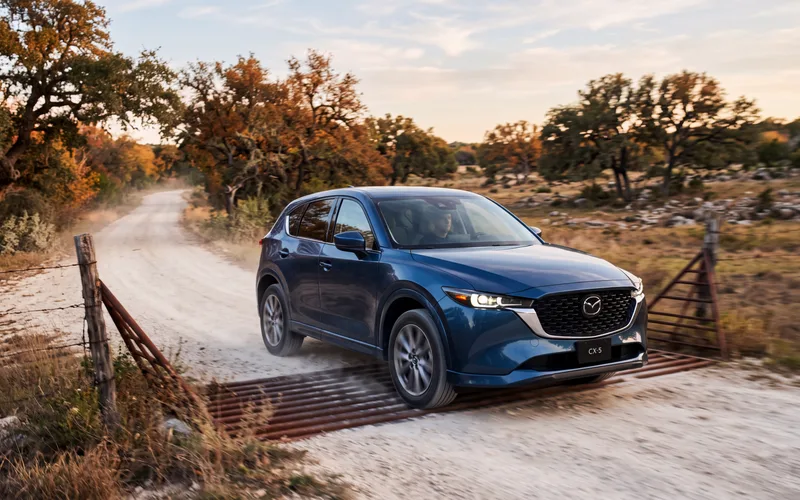 Mazda CX-5Compact SUVBetter at: Sporty without compromise
It scratches the same want-to-enjoy-driving itch with a nicer, quieter cabin and far better reliability and resale.
Compare 2.44C+
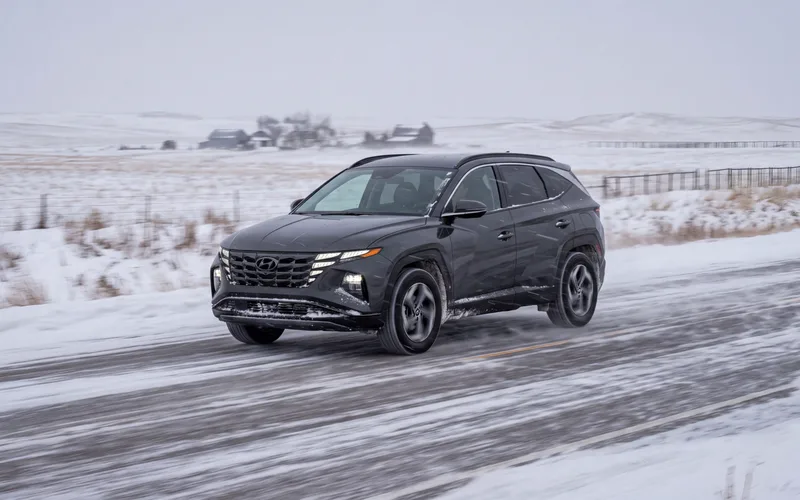 Hyundai TucsonCompact SUVBetter at: Value
More space and more features for less money, plus a 10-year powertrain warranty that directly answers the Hornet's biggest risk.
Compare 2.56C+
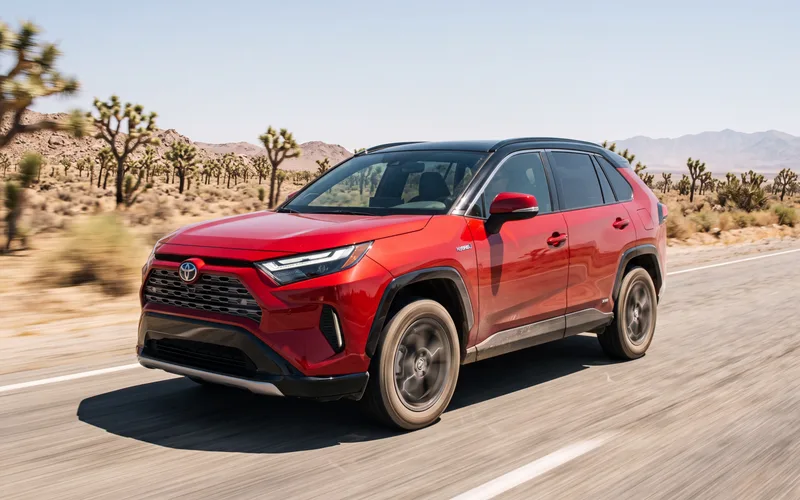 Toyota RAV4Compact SUVBetter at: Practicality
The default choice for a reason — vastly more cargo room, hybrid efficiency on regular fuel, and the best resale in the segment.
CompareSubject scores by year
Hover or tap a score to see what moved it versus the year before. A corner mark flags a big swing.
| Year | Performance | Efficiency | Safety | Space | Cost | Reliability | Tech | Use-case | Driving | Value |
|---|---|---|---|---|---|---|---|---|---|---|
| 2025 | 45 | 35 | 58 | 39 | 43 | 52 | 69 | 62 | 68 | 57 |
| 2024 | 45 | 38 | 47 | 38 | 42 | 53 | 64 | 54 | 67 | 56 |
| 2023 | 42 | 38 | 47 | 39 | 42 | 54 | 64 | 54 | 67 | 55 |
Compare two years
Best fit & conditions
Higher scores mean a better fit for that use case. Learn more about use-case fit →
Subject profile
Academic Probation · NHTSA safety recalls
Aug 6, 2026Seat belts: front: retractorThe rear outboard seat belts may become twisted and fail to retract properly.
Defect
Chrysler (FCA US, LLC) is recalling certain 2023-2025 Dodge Hornet and 2023-2026 Alfa Romeo Tonale vehicles. The rear outboard seat belts may become twisted and fail to retract properly.
Risk
A seat belt that does not retract may fail to restrain properly an occupant as intended, increasing the risk of injury.
Remedy
Dealers will replace the retractors and pillar trim, as necessary, free of charge. Interim notification letters, notifying owners of the safety risk, were mailed September 17, 2026. A second notice will be sent once the final remedy is available. Owners may contact Chrysler customer service at 800-853-1403. Chrysler's number for this recall is 84D. Vehicle Identification Numbers (VINs) involved in this recall became searchable on NHTSA.gov on August 15, 2026.
NHTSA campaign 26V510000 ↗Manufacturer no. 84D48,777 vehicles potentially affected (all models in the campaign)Filed by Chrysler (FCA US, LLC)Filed as HORNETApr 15, 2025Back over prevention: sensing system: cameraThe display module may not show the rearview camera image. As such, these vehicles fail to comply with the requirements of Federal Motor Vehicle Safety Standard (FMVSS) number 111, "Rear Visibility."
Defect
Chrysler (FCA US, LLC) is recalling certain 2023-2025 Alfa Romeo Tonale and Dodge Hornet vehicles. The display module may not show the rearview camera image. As such, these vehicles fail to comply with the requirements of Federal Motor Vehicle Safety Standard (FMVSS) number 111, "Rear Visibility."
Risk
A rearview image that does not display reduces the driver's view of what is behind the vehicle, increasing the risk of a crash.
Remedy
Dealers will update the software or replace the display as necessary free of charge. Owner notification letters were mailed beginning May 13, 2025. Owners may contact Chrysler customer service at 800-853-1403. Chrysler's numbers for this recall are 13C and 38C.
NHTSA campaign 25V246000 ↗Manufacturer no. 13C, 38C48,527 vehicles potentially affected (all models in the campaign)Owners notified May 13, 2025Filed by Chrysler (FCA US, LLC)Filed as HORNETOct 9, 2024Service brakes, hydraulic: pedals and linkagesThe brake pedal may collapse and cause a loss of brake function.
Defect
Chrysler (FCA US, LLC) is recalling certain 2024-2025 Dodge Hornet and Alfa Romeo Tonale vehicles. The brake pedal may collapse and cause a loss of brake function.
Risk
A loss of brake function increases the risk of a crash.
Remedy
Dealers will reinforce the brake pedal arm, free of charge. Owner notification letters were mailed October 17, 2024. Owners may contact FCA Customer Service at 1-800-853-1403. FCA's number for this recall is B7B.
NHTSA campaign 24V752000 ↗Manufacturer no. B7B21,069 vehicles potentially affected (all models in the campaign)Owners notified Oct 17, 2024Filed by Chrysler (FCA US, LLC)Filed as HORNET
5 recalls on other model years of the Hornet (2023–2024)
Dec 9, 2025Service brakes, hydraulic: pedals and linkagesThe brake pedal may collapse and cause a loss of brake function.
Defect
Chrysler (FCA US, LLC) is recalling certain 2024 Dodge Hornet and Alfa Romeo Tonale Plug-In Hybrid Electric (PHEV) vehicles. The brake pedal may collapse and cause a loss of brake function.
Risk
A loss of brake function increases the risk of a crash.
Remedy
Dealers will reinforce the brake pedal arm, free of charge. Owner notification letters were mailed January 13, 2026. Owners may contact FCA Customer Service at 1-800-853-1403. FCA's number for this recall is D0C. Vehicle Identification Numbers (VINs) involved in this recall will be searchable on NHTSA.gov beginning December 16, 2025. This recall is an expansion of previous NHTSA recall number 24V752.
NHTSA campaign 25V846000 ↗Manufacturer no. D0C5,974 vehicles potentially affected (all models in the campaign)Owners notified Jan 13, 2026Filed by Chrysler (FCA US, LLC)Filed as HORNET PHEVMar 19, 2024Equipment: other: labelsThe manufacturer label is missing the tire rim and tire size information. As such, these vehicles fail to comply with the requirements of Federal Motor Vehicle Safety Standard number 110, "Tire Selection and Rims."
Defect
Chrysler (FCA US, LLC) is recalling certain 2024 Dodge Hornet and Alfa Romeo Tonale vehicles. The manufacturer label is missing the tire rim and tire size information. As such, these vehicles fail to comply with the requirements of Federal Motor Vehicle Safety Standard number 110, "Tire Selection and Rims."
Risk
Missing rim and tire size information could lead to an incorrect wheel being installed, increasing the risk of a crash.
Remedy
Dealers will apply a corrected label, free of charge. Owner notification letters were mailed April 4, 2024. Owners may contact FCA customer service at 1-800-853-1403. FCA's number for this recall is 32B.
NHTSA campaign 24V209000 ↗Manufacturer no. 32B1,201 vehicles potentially affected (all models in the campaign)Owners notified Apr 4, 2024Filed by Chrysler (FCA US, LLC) (Stellantis)Filed as HORNETMar 5, 2024Equipment: other: labelsThe maximum vehicle capacity weight value on the tire placard label is incorrect. As such, these vehicles fail to comply with the requirements of Federal Motor Vehicle Safety Standard number 110, "Tire Selection and Rims."
Defect
Chrysler (FCA US, LLC) is recalling certain 2023-2024 Dodge Hornet and Alfa Romeo Tonale vehicles. The maximum vehicle capacity weight value on the tire placard label is incorrect. As such, these vehicles fail to comply with the requirements of Federal Motor Vehicle Safety Standard number 110, "Tire Selection and Rims."
Risk
A vehicle with an incorrect maximum capacity weight value may be overloaded, which can increase the risk of a crash.
Remedy
Dealers will add an overlay label to the tire placard information, free of charge. Owner notification letters were mailed March 28, 2024. Owners may contact FCA US, LLC customer service at 1-800-853-1403. FCA US, LLC's number for this recall is 28B.
NHTSA campaign 24V175000 ↗Manufacturer no. 28B36,094 vehicles potentially affected (all models in the campaign)Owners notified Mar 28, 2024Filed by Chrysler (FCA US, LLC) (Stellantis)Filed as HORNETOct 17, 2023Back over prevention: warnings: external/pedestrian alertThe pedestrian alert siren may be missing or disconnected and fail to alert pedestrians when the vehicle is in reverse. As such, these vehicles fail to comply with the requirements of Federal Motor Vehicle Safety Standard number 141, "Minimum Sound Requirements for Hybrid and Electric Vehicles."
Defect
Chrysler (FCA US, LLC) is recalling certain 2023-2024 Dodge Hornet and Alfa Romeo Tonale Plug-In Hybrid vehicles. The pedestrian alert siren may be missing or disconnected and fail to alert pedestrians when the vehicle is in reverse. As such, these vehicles fail to comply with the requirements of Federal Motor Vehicle Safety Standard number 141, "Minimum Sound Requirements for Hybrid and Electric Vehicles."
Risk
Failure to alert pedestrians when backing up increases the risk of injury.
Remedy
Dealers will inspect the rear pedestrian siren connection and, if necessary, secure and/or replace the connector or siren, free of charge. Owner notification letters were mailed November 14, 2023. Owners may contact FCA US, LLC customer service at 1-800-853-1403. Chrysler's number for this recall is B5A.
NHTSA campaign 23V696000 ↗Manufacturer no. B5A4,661 vehicles potentially affected (all models in the campaign)Owners notified Nov 14, 2023Filed by Chrysler (FCA US, LLC)Filed as HORNETSep 7, 2023Electrical system: 12v/24v/48v battery: cables · Electrical system: propulsion system: cables: fastener/connectorThe 12-volt battery positive cable and/or high voltage connector cable may not be tightened properly, which can overheat the electrical connections and result in a fire while parked or driving.
Defect
Chrysler (FCA US, LLC) is recalling certain 2023-2024 Alfa Romeo Tonale and 2023-2024 Dodge Hornet plug-in hybrid electric vehicles. The 12-volt battery positive cable and/or high voltage connector cable may not be tightened properly, which can overheat the electrical connections and result in a fire while parked or driving.
Risk
A fire while parked or driving can increase the risk of injury.
Remedy
Owners are advised to park outside and away from structures until the recall repair is complete. Dealers will inspect and tighten the cable connections as necessary, free of charge. Owner notification letters were mailed September 28, 2023. Owners may contact FCA US, LLC customer service at 1-800-853-1403. FCA US, LLC's number for this recall is 98A.
NHTSA campaign 23V623000 ↗Manufacturer no. 98A4,129 vehicles potentially affected (all models in the campaign)Owners notified Sep 28, 2023Filed by Chrysler (FCA US, LLC)Filed as HORNET
Source: NHTSA Office of Defects Investigation recall database, model years 2023–2025. Recalls are listed by model year as the manufacturer filed them; whether a specific car is affected depends on its VIN — check a VIN at nhtsa.gov ↗. NHTSA model names matched to this page: HORNET, HORNET PHEV.
Detailed scoring by subject
1Performance & PowertrainGrades near the bottom of the scale.0.98F
Volume GT trim uses the 2.0L Hurricane4 turbo rated at 268 hp; the top R/T PHEV combines a 1.3L turbo with a rear motor for 288 hp total system output. GT figure is well above the compact-SUV mean but scores modestly against the SUV-wide band that spans 150–550 hp.
GT's 2.0L turbo delivers 295 lb-ft; the R/T PHEV climbs to 383 lb-ft thanks to instant electric torque from the rear e-motor. Strong twist for the compact-SUV set, above rivals like RAV4 (184 lb-ft) and CR-V (179 lb-ft).
Manufacturer-cited 6.5 s for the GT; the PHEV R/T with PowerShot overboost runs 5.6 s. Both are quicker than the compact-SUV mainstream — most rivals sit in the 7.5–9 s range.
Reviewers flag noticeable turbo lag off the line before the 2.0L surges hard, and the R/T PHEV's gas–electric handoff isn't as seamless as class-leading hybrids. Solid mid-pack refinement — behind Mazda's turbos, comparable to Jeep Compass.
9-speed automatic on the GT mostly delivers quick, well-timed shifts (especially via paddles) but reviewers report an occasional hard shift under load. R/T PHEV uses a 6-speed automatic paired with an eAWD rear motor — competent but not seamless.
Rated at 2,000 lbs across GT and R/T PHEV — the low end for compact SUVs, well below the Grand Cherokee and roughly matching only the smallest crossovers. Reflects the Hornet's on-road performance positioning rather than utility.
AWD is standard on every 2026 Hornet trim — GT/GT Plus use a 9-speed automatic with torque vectoring, and R/T PHEV uses eAWD with a rear-mounted electric motor. No FWD-only base configuration in the lineup.
8.0-inch ground clearance on the GT is decent for light snow and gravel, but the R/T PHEV drops to just 6.1 inches. No terrain modes, no skid plates, no dedicated off-road trim — Dodge positions the Hornet as a performance compact, not a trail rig.
Two distinct powertrains covering mainstream (2.0L turbo gas, 268 hp) and electrified (R/T PHEV, 288 hp, ~32 mi EV range) buyers. No pure-EV or conventional hybrid option, but the PHEV addition earns solid marks for electrified breadth.
2Efficiency & RangeThe Hornet's lowest-graded category.0.30F
GT (2.0L turbo AWD) is the volume trim; PHEV R/T is a lower-volume premium variant. Volume-trim EPA combined is 24 MPG, near the bottom of the compact-SUV field.
Small turbo four with standard AWD and ~4,100 lb curb weight yields a weak city figure — below Honda CR-V, Toyota RAV4, and most rivals.
Highway figure is the Hornet's stronger EPA number but still trails hybrid rivals.
Small fuel tank paired with modest combined MPG puts the Hornet GT well below segment average for total range.
Premium-fuel requirement combined with 24 MPG combined pushes the GT's annual cost near the top of the compact-SUV band.
Both the GT (2.0L turbo) and R/T PHEV recommend/require 91-octane premium fuel — a real cost penalty vs. regular-fuel rivals like CR-V, RAV4, and Tucson.
3SafetyMid-pack among this car's ten categories.1.89C-
NHTSA testing of the current Hornet generation returned a 4-star overall rating with 4-star frontal and side results; 2026 carries the same structure and restraints unchanged.
The Hornet has not earned a Top Safety Pick or TSP+ award; IIHS records Good in moderate overlap front and updated side, but Acceptable in the updated small-overlap and pedestrian front-crash-prevention tests, keeping it out of award territory.
Forward collision warning with AEB, lane departure warning with lane keep assist, drowsy driver detection, and rear cross-path detection are standard across the lineup; blind-spot monitoring and adaptive cruise with stop-and-go are standard on the volume GT Plus / R/T Plus trims but bundled in an options pack on the base GT.
IIHS pedestrian front crash prevention rated Acceptable rather than Advanced or Superior on the current generation, indicating adequate daytime performance but weaker night/pedestrian discrimination.
Blind-spot monitoring and rear cross-path detection are standard on the volume Plus trims as alert-only systems; there is no active steering intervention or trailer coverage.
Lane departure warning with lane keep assist is standard; the Active Driving Assist lane-centering function on Plus trims is described by reviewers as usable but prone to ping-ponging on curves versus class-leading systems.
Full-speed-range adaptive cruise with stop-and-go is standard on Plus trims and pairs with lane centering as Active Driving Assist; reviewers rate its behavior competent but with occasional late braking and slower gap recovery than the segment's best.
Dodge does not offer any hands-free highway driving system on the Hornet — Stellantis has no BlueCruise/Super Cruise-equivalent product deployed on this platform for 2026.
LED headlights with automatic high beams are standard; IIHS has rated Hornet headlights Acceptable across trims rather than Good, keeping performance mid-pack for the segment.
Sporty rear-quarter styling produces thick C-pillars and a small rear window; the standard rearview camera and available 360-degree camera on Plus trims partially compensate but reviewers flag over-the-shoulder blind zones.
Standard LATCH lower anchors on the two outboard rear positions with tether anchors on all three rear seatbacks; the Hornet's compact rear cabin makes three-across installation tight and the lower anchors sit slightly buried in the seat crease.
4Space & ComfortOne of the Hornet's weakest categories.0.57F
Standard 5-passenger seating (2 front + 60/40-split rear bench) across all Hornet trims; no third-row option offered on the compact-SUV platform.
Front headroom of 38.8 in is mid-pack for a compact SUV; sunroof-equipped trims give up a fraction of an inch.
Front legroom of 41.7 in is competitive for a compact SUV, with an 8-way power-adjustable driver seat standard on all trims.
Rear headroom of 38.2 in is solidly mid-pack for the compact-SUV segment; the sloping roofline eats into it slightly on sunroof-equipped trims.
Rear legroom of 38 in is decent on paper for the segment, though reviewers repeatedly note the rear cabin feels tighter than the number suggests due to the sloping roofline and rising beltline.
No third row offered — the Hornet is strictly a 5-passenger compact SUV with only two rows.
Cargo volume behind the rear seats is 27 cu ft on the GT (gas) volume trim, dropping to 22.9 cu ft on the R/T PHEV because the plug-in battery pack raises the load floor — both figures are near the bottom of the compact-SUV set.
Maximum cargo volume with the 60/40 rear seat folded is 54.7 cu ft on the GT and just 50.5 cu ft on the R/T PHEV — well short of RAV4/CR-V/Tucson/CX-5 class benchmarks (65–70+ cu ft).
Storage is workmanlike but unexceptional: sculpted center console with an available wireless charging pad, covered armrest bin, decent door bins, and a small underfloor tray. No standout innovations like a mega-console or frunk — the PHEV places the battery under the floor rather than freeing storage.
Sport-styled front seats with heavy bolstering suit the Hornet's performance mission, and heated front seats plus an 8-way power driver seat with memory are standard, but Consumer Reports and Edmunds flag a compromised driving position (footrest too close, tight wheel relationship) and larger drivers report the bolsters pinching the hips.
Ride quality is a widely criticized weak point: Consumer Reports describes the suspension as 'stiff and choppy,' with the Hornet 'bouncing up and down over bumps like a pogo stick.' Tuning skews toward Dodge-branded 'performance' at real cost to daily compliance.
Cabin isolation is below segment average — Consumer Reports notes 'unusually high levels of road and wind noise,' and owners flag pronounced tire roar from the standard 20-inch performance rubber above 70 mph.
Comfort-feature content is competitive for the price: dual-zone automatic climate, heated front seats, a heated leather-wrapped steering wheel, and remote start are standard across the range; ventilated seats and rear vents lag some rivals, and there is no second-row climate zone.
5Cost of OwnershipOne of the Hornet's weakest categories.0.83F
The 2026 Hornet GT (AWD gas) opens the lineup around $33k with destination, holding roughly flat versus the 2025 MY. Well below the compact-SUV price ceiling but above true entry rivals (RAV4/CR-V) since AWD is standard.
The GT Plus is the volume trim thanks to standard leather, larger 10.25" cluster and Alpine audio; R/T PHEV starts far higher (~$42k+). Priced mid-pack for compact SUVs but with AWD standard.
Above segment average. The Hornet shares its GMP platform, turbo 2.0L and 1.3L PHEV powertrain with the Alfa Romeo Tonale; Italian-derived hardware plus premium-fuel recommendation lift parts and service pricing versus a RAV4/CR-V.
Among the weakest residuals in the compact-SUV segment. Slow sales, heavy factory incentives at launch and the closely priced Alfa Tonale sibling have hammered used values; iSeeCars flagged the Hornet as one of the fastest-depreciating vehicles in 2024–25.
Standard Stellantis basic coverage — bottom of the compact-SUV segment (Hyundai/Kia/Mitsubishi all offer 5 years).
Stellantis 5-year/60k powertrain trails Hyundai/Kia (10 yr) and Mitsubishi (10 yr) by a wide margin. R/T PHEV picks up the federally-mandated 8-year/100k battery warranty, but the ICE side stays at 5/60.
No complimentary scheduled maintenance — Dodge dropped its free-oil-change program years ago. Buyers get 5 yr/60k roadside assistance bundled with the powertrain warranty and a short Uconnect 5 connected-services trial; PHEV owners get no bundled charging credits.
$37,595 volume-trim price minus its estimated resale value after 5 years (38% retained, or about $14,286) leaves about $23,309 in depreciation. Add the projected $5,900 in 5-year maintenance and repairs, and owning this vehicle for 5 years costs about $29,209 in total.
6Reliability & QualityGrades below the middle of the scale.1.47D
Consumer Reports has given the Hornet a predicted reliability of 2/5 since its 2023 launch, citing early-life electrical, in-car electronics, and PHEV drive-system complaints. J.D. Power dependability data for the sibling Alfa Romeo Tonale platform is likewise below segment average.
Dodge has ranked in the bottom third of Consumer Reports brand reliability and near the bottom of J.D. Power VDS for multiple consecutive years, dragged down by newer platforms and Stellantis electrical/software issues.
The 2023–2024 Hornet has seen multiple NHTSA recalls including PHEV high-voltage battery software, brake pedal/booster issues, and instrument cluster/software defects — an above-average recall load for a young platform. TSB activity mirrors the shared Alfa Tonale.
The 2.0L GME-T4 turbo (GT) is a known Stellantis Global Medium Engine shared with Wrangler/Grand Cherokee 4xe and Alfa Giulia — adequate but not distinguished durability history. The R/T PHEV's 1.3L turbo plus e-axle setup is newer with no long-term proof and shares early-life PHEV issues with the Tonale.
Cabin uses soft-touch upper dash and stitched surfaces on higher trims, but reviewers note hard plastics on lower dash and door cards and switchgear that feels down-market for the price point.
Italian assembly at Pomigliano d'Arco brings uneven initial quality — reviewers and owner forums report squeaks, rattles, and inconsistent panel gaps on some units. Better than early Dodge/Jeep products but not class-competitive.
Dodge shares Stellantis' dense nationwide dealer footprint (~2,400+ Dodge/Chrysler/Jeep/Ram dealers), providing broad service coverage. Customer service satisfaction ratings (JDP CSI) sit mid-pack — access is easy but experience is average.
Italian-sourced platform components (chassis, PHEV drivetrain, some interior trim) can carry longer lead times and higher pricing than domestic-built rivals. Common Stellantis service parts remain widely available. Aftermarket support is thin given low volumes.
7Technology & InfotainmentThe Hornet's best-graded category.2.70B-
10.25-inch center touchscreen is the sole size across all Hornet trims — mid-pack for compact SUVs, well behind the 12-inch+ screens in newer Hyundai/Kia and EV rivals.
Uconnect 5 is one of the better mainstream systems — quick response, clean menu logic, retained physical volume/tune knobs and climate switches. Reviewers consistently praise it as a strength.
Wireless Apple CarPlay and wireless Android Auto are standard on every trim from GT base upward — no wired-only tier.
Amazon Alexa built-in plus Uconnect's natural-voice engine and TomTom native navigation (available/optional). Solid but most owners default to phone projection.
Optional 14-speaker, 465-watt Harman Kardon premium audio is very good for the compact segment; the six-speaker base system is adequate. Premium is bundled into Track Pack / Sun & Sound Group rather than widely available.
10.25-inch full-color reconfigurable digital gauge cluster is standard on every trim — matches size and content of premium-brand rivals like Genesis GV70 and Audi Q3.
Uconnect 5 supports over-the-air updates for infotainment, maps, and select telematics modules, but Stellantis has not delivered whole-vehicle feature-add OTAs the way Tesla/GM/Ford do.
Dodge Connect / Uconnect app covers remote start, lock/unlock, vehicle locate, and PHEV charge status, but nearly all functions become subscription-gated after the trial and there is no digital-key/phone-as-key.
Front USB-C plus USB-A and rear USB-C ports are standard, and a wireless charging pad is available in the console — no household AC outlets. R/T PHEV adds no meaningful outlet advantage.
Proximity Passive Entry with push-button start is standard on GT/R/T, plus key-fob remote start (gasoline preconditions cabin on GT, EV precondition on R/T PHEV). Hands-free power liftgate is optional. No phone-as-key.
Rear camera and front/rear parking sensors are standard, and a 360-degree surround-view camera is available via the Tech Pack on upper trims — no automated parking assist.
No head-up display is offered on any 2026 Hornet trim — a notable gap versus rivals like Hyundai Tucson, Kia Sportage HEV, and Mazda CX-50 where HUD is at least an option.
8Use-Case FitOne of the Hornet's strongest categories.2.16C
Rear doors open reasonably wide with LATCH anchors on outboard seats, but tight rear legroom (~40.6 in) and a narrow bench make loading rear-facing car seats or three-across a squeeze relative to segment leaders like CR-V and RAV4.
Standard blind-spot monitoring, rear cross-path detection, and rear-occupant alert on GT/R/T, but adaptive cruise with lane centering and the 360-view camera require the Tech package or higher trims. Hornet has not earned an IIHS Top Safety Pick.
Firm sport-tuned suspension and elevated road noise degrade multi-hour comfort; rear vents and USB-C are available but not standard on all trims, and cargo behind the rear seats (~27 cu ft GT / ~22.9 cu ft R/T) shrinks quickly with luggage for four.
Compact footprint and light steering help urban duty, but the 9-speed automatic hunts at low speed on the GT and the R/T PHEV has been criticized for jerky gas-to-electric handoffs and mode transitions in stop-and-go traffic.
GT returns just 21/29 mpg city/hwy — below the compact-SUV average — but the R/T PHEV nets 77 MPGe combined and about 33 miles of EV-only range, making sub-40-mile commutes near-free on electricity. Volume-trim split lands in the average-cost band.
At 178 in long on a 103.8 in wheelbase with a tight ~37 ft turning circle and standard rearview camera plus available 360-degree surround view, the Hornet threads urban lots easily and is among the more nimble compact SUVs.
Rated to tow just 2,000 lb with the R/T PHEV's Tow Group and even less on the GT; payload is modest and cargo floor length is short. Not meaningfully work-capable beyond small utility trailers.
Built on the Stellantis Small Wide platform in Italy (shared with the Alfa Tonale) with early reports of software and PHEV powertrain glitches; no fleet reputation and Consumer Reports predicted reliability trails segment leaders.
Cargo tie-downs and available roof rails cover the basics, and the R/T offers a 7.4 kW onboard charger, but there is no onboard AC outlet, no washable-interior option, and Mopar's upfit accessory catalog for the Hornet is thin.
GT delivers roughly 400 miles per 13.5-gal tank at 29 highway mpg and the R/T PHEV extends total range past 360 miles, but firmly damped seats, sport suspension, and elevated wind noise limit driver endurance; adaptive cruise with lane centering is optional rather than standard.
Standard AWD (mechanical on GT, eAWD on R/T) with a Snow drive mode and about 7.8 in of ground clearance handle gravel roads and light snow, but there is no dedicated off-road mode, hill descent control, or skid-plate hardware and roof/tow ratings are modest.
60/40 folding rear seat and available roof rails/hitch cover typical gear duty, but max cargo of 54.7 cu ft (GT) / 50.5 cu ft (R/T) trails class benchmarks like CR-V and RAV4, and the R/T's battery-raised floor limits load-length flexibility.
9Driving ExperienceOne of the Hornet's strongest categories.2.60C+
Sharing its architecture with the Alfa Romeo Tonale, the Hornet offers sharper turn-in and better body control than most mainstream compact SUVs. Reviewers praise the firm suspension and eager chassis but note grip limits with the all-season tires and a busy ride on rough pavement.
Quick ratio and firm on-center weighting make the Hornet feel more alert than typical compact CUVs, but the electric rack filters most road feedback in the way of Tonale-sibling systems.
Standard four-wheel discs deliver strong, consistent stops; the R/T PHEV's Brembo front brakes (Track Pack) further improve pedal feel and fade resistance. Regen blending on the PHEV is competent but can feel grabby in low-speed transitions.
The 2.0L turbo four is quick to respond but the 9-speed automatic can hesitate at low-speed part-throttle and clunk on downshifts. The R/T PHEV's transitions between electric and gas modes are noticeably abrupt versus best-in-class hybrids like the RAV4 Prime.
The 2.0T is audible and slightly coarse under hard acceleration, and the R/T's small 1.3L turbo three sounds thrashy when the battery is depleted. Vibration through the wheel and pedals is well-suppressed in normal driving.
Dodge publishes a 37.4 ft curb-to-curb turning circle for the 2026 Hornet, mid-pack for the compact SUV segment.
Driver-focused cockpit with a low-set sport seat, chunky flat-bottom wheel, and clear digital cluster. Downsides are a chunky windshield pillar and small rear glass that hurt outward visibility, and cargo-height ingress is a step down from taller SUVs.
Dodge markets the Hornet as the segment's performance pick and it broadly delivers: quick standard AWD (0-60 in ~6.5 s for the GT, ~5.5 s for the R/T with PowerShot e-boost), an eager chassis, and character its Toyota/Honda rivals lack. Refinement compromises keep it below premium sport-CUV benchmarks.
10Value & Market PositionMid-pack among this car's ten categories.1.80C-
GT includes standard AWD, 10.25-inch Uconnect 5 touchscreen with wireless Apple CarPlay/Android Auto, 12.3-inch digital cluster, dual-zone climate, blind-spot monitoring, forward collision warning, and remote start — competitive kit for the ~$32k starting price, but not a standout given rivals like the Hyundai Tucson and VW Taos offer comparable ADAS and infotainment for less.
Widely criticized as pricey for what you get: R/T PHEV lands north of $42k for a compact SUV with ~30 miles of EV range, and interior materials trail the price point. GT is more defensible at ~$32k but still costs more than a better-equipped Tucson, Sportage, or CX-5. Buyer-facing value trails direct rivals despite standard AWD.
Four core trims (GT, GT Plus, R/T, R/T Plus) plus Track Pack, and two distinct powertrains (2.0T gas and 1.3T PHEV) covers a reasonable spread — but there is no FWD-only or price-leader option, and package flexibility is narrower than Korean rivals with their long option ladders.
Sales have been well below segment expectations since the 2023 launch — annual US volume in the 20–30k range versus segment leaders (CR-V, RAV4) at 350k+ and mid-pack (Tucson, Sportage, CX-5) at 150k+. The Hornet routinely ranks near the bottom of the compact-SUV volume table.
Dodge's muscle-car brand identity translates awkwardly to a European-derived compact crossover, and the brand is mid-transition post-Hemi. Loyalists gravitate to Charger/Durango; crossover shoppers view Dodge as neutral-to-weak in this segment.
Slow sales translate to buyer-friendly deals: Stellantis routinely stacks $2,000–$5,000+ cash allowances, low-APR financing, and lease pull-aheads on Hornet, and dealer discounts off MSRP are common. Buyers who negotiate can transact well under sticker.
First-generation Hornet launched for MY2023 on the Stellantis Small Wide 4x4 platform (shared with Alfa Tonale), so by 2026 the design is mid-cycle — not brand-new but no major refresh yet, and the Uconnect 5 infotainment and PHEV powertrain remain current-generation tech.
Reviews have been consistently mixed to negative: Car and Driver rates it near the bottom of compact-SUV comparisons, Consumer Reports gives below-average predicted reliability and value marks, Edmunds does not recommend it. No 10Best, NACTOY finalist nod, or IIHS Top Safety Pick+ for the model.