
The verdict
A struggling compact suv, strong on driving and held back by performance.
Overall 1.12 (D) across 10 graded subjects. Its strongest is driving experience at 2.50 (C+), its weakest performance & powertrain at 0.00 (F). 4 of 10 subjects grade at C− or better.
Jump to scoresStrengths
- Driving Experience
- Efficiency & Range
- Cost of Ownership
What holds it back
- Performance & Powertrain
- Safety
- Technology & Infotainment
Top alternatives
Cars shoppers cross-shop with the Ford Escape 2.56C+
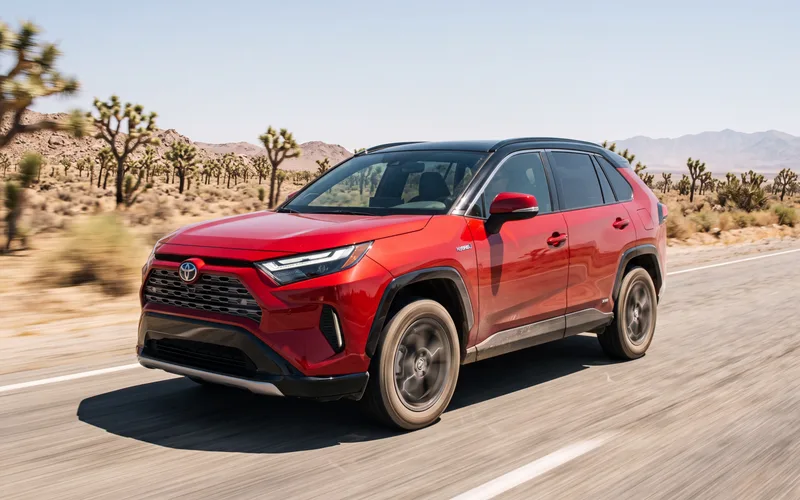 Toyota RAV4Compact SUVBetter at: Resale value
It holds roughly 58% of its value at five years against the Escape's 44%, which erases the Escape's cheaper sticker before the loan is paid off.
Compare 2.13C
2.13C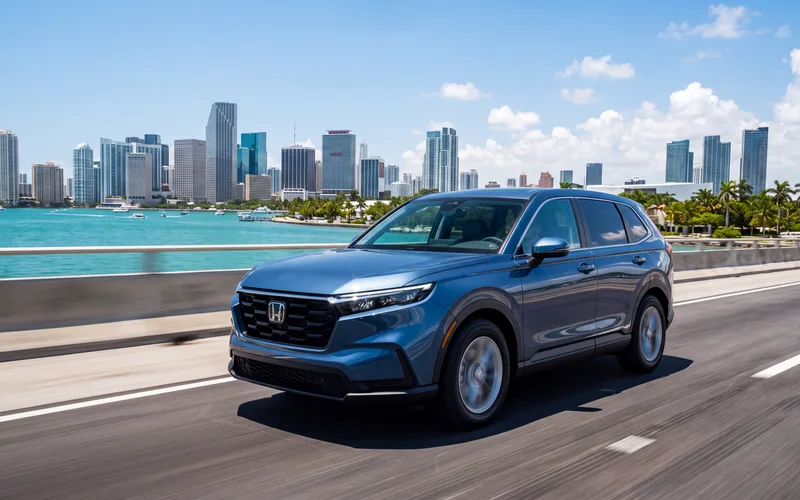 Honda CR-VCompact SUVBetter at: Cargo and refinement
A quieter, better-finished cabin with 76.5 cubic feet of maximum cargo and an IIHS Top Safety Pick award the Escape doesn't have.
Compare 2.44C+
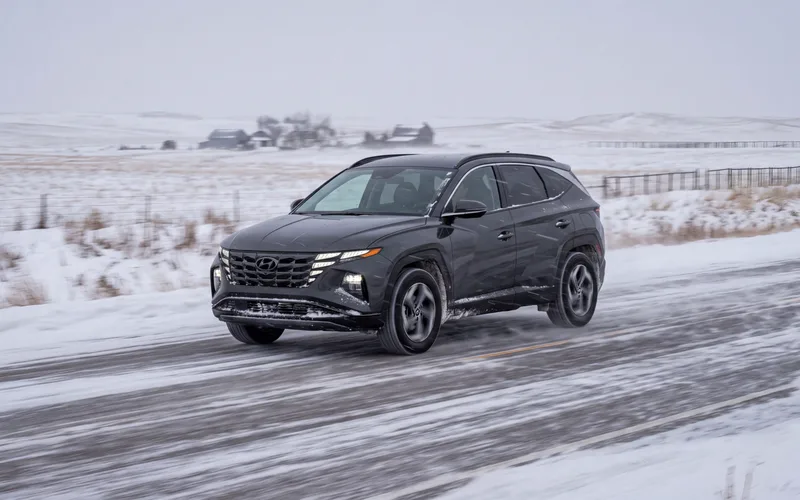 Hyundai TucsonCompact SUVBetter at: Warranty
Similar hybrid and plug-in choices in a nicer interior, backed by a 10-year/100,000-mile powertrain warranty instead of Ford's 5-year/60,000-mile floor.
CompareHow it's evolved
10 scored model years · 2017–2026
Subject scores by year
Hover or tap a score to see what moved it versus the year before. A corner mark flags a big swing.
| Year | Performance | Efficiency | Safety | Space | Cost | Reliability | Tech | Use-case | Driving | Value |
|---|---|---|---|---|---|---|---|---|---|---|
| 2026 | 37 | 70 | 69 | 49 | 46 | 62 | 69 | 66 | 61 | 64 |
| 2025 | 37 | 73 | 69 | 49 | 46 | 55 | 68 | 66 | 61 | 58 |
| 2024 | 37 | 70 | 67 | 49 | 50 | 55 | 69 | 66 | 61 | 63 |
| 2023 | 37 | 71 | 67 | 49 | 50 | 54 | 68 | 57 | 61 | 66 |
| 2022 | 39 | 75 | 76 | 50 | 49 | 43 | 54 | 58 | 59 | 60 |
| 2021 | 39 | 74 | 76 | 50 | 51 | 40 | 54 | 58 | 62 | 60 |
| 2020 | 35 | 73 | 73 | 50 | 55 | 47 | 54 | 57 | 57 | 64 |
| 2019 | 27 | 62 | 43 | 44 | 54 | 57 | 46 | 48 | 64 | 55 |
| 2018 | 28 | 62 | 46 | 44 | 52 | 54 | 43 | 52 | 67 | 57 |
| 2017 | 29 | 63 | 43 | 44 | 62 | 53 | 43 | 49 | 67 | 58 |
Compare two years
Best fit & conditions
Higher scores mean a better fit for that use case. Learn more about use-case fit →
Subject profile
Trims & configurations
4 trimsScores above reflect the volume trim. Per-trim specs and scores are rolling out — the full lineup:
Academic Probation · NHTSA safety recalls
Jun 9, 2026Visibility: power window devices and controlsThe power-operated windows may exert excessive force when encountering an object, before they automatically reverse. As such, these vehicles fail to comply with the requirements of Federal Motor Vehicle Safety Standard (FMVSS) number 118, "Power-Operated Window Systems."
Defect
Ford Motor Company (Ford) is recalling certain 2017 Escape vehicles previously repaired incorrectly under recall number 16V617. The power-operated windows may exert excessive force when encountering an object, before they automatically reverse. As such, these vehicles fail to comply with the requirements of Federal Motor Vehicle Safety Standard (FMVSS) number 118, "Power-Operated Window Systems."
Risk
A closing window that does not reverse direction as expected can pinch a driver or passenger before retracting, increasing the risk of injury.
Remedy
Dealers will update the power window operating system software, free of charge. Owner notification letters were mailed July 22, 2026. Owners may contact customer service at 1-866-436-7332. Ford's number for this recall is 26C29. Vehicle Identification Numbers (VINs) involved in this recall will become searchable on NHTSA.gov on July 6, 2026.
NHTSA campaign 26V374000 ↗Manufacturer no. 26C2918,124 vehicles potentially affected (all models in the campaign)Owners notified Jul 22, 2026Filed by Ford Motor CompanyFiled as ESCAPEJan 15, 2026Equipment: electrical: engine block heaterThe engine block heater may crack and develop a coolant leak, causing it to short circuit when the block heater is plugged in.
Defect
Ford Motor Company (Ford) is recalling certain 2013-2018 Focus, 2013-2019 Escape, and 2015-2016 MKC vehicles equipped with a 2.0L engine. The engine block heater may crack and develop a coolant leak, causing it to short circuit when the block heater is plugged in.
Risk
An electrical short circuit can increase the risk of a fire.
Remedy
Owners are advised not to plug in their block heater until the vehicle is remedied. Dealers will replace the block heater, free of charge. Owners will also have a alternative option to replace engine block heater element with a threaded plug, and remove the block heater electrical cord. Interim letters, notifying owners of the safety risk, were mailed March 6, 2026. Additional letters will be sent once the final remedy is available. Owners may contact Ford customer service at 1-866-436-7332. Ford's number for this recall is 26S01. Vehicle Identification Numbers (VINs) involved in this recall became searchable on NHTSA.gov on January 16, 2026.
NHTSA campaign 26V011000 ↗Manufacturer no. 26S01116,672 vehicles potentially affected (all models in the campaign)Filed by Ford Motor CompanyFiled as ESCAPEJun 10, 2022Power train: automatic transmission: gear position indication (prndl) · Power train: shift linkage/cable/rodThe bushing that attaches the shifter cable to the transmission may degrade or detach.
Defect
Ford Motor Company (Ford) is recalling certain 2013-2019 Escape, 2013-2018 C-Max, 2013-2016 Fusion, 2013-2021 Transit Connect, and 2015-2018 Edge vehicles. The bushing that attaches the shifter cable to the transmission may degrade or detach.
Risk
A damaged or missing bushing may prevent the vehicle from shifting into the intended gear, and cause the vehicle to move in an unexpected direction. Additionally, the vehicle may roll after the driver selects the 'Park' position. Either scenario increases the risk of a crash or injury.
Remedy
Dealers will replace the under hood shift bushing and add a protective cap over the shift cable bushing, free of charge. Interim owner notification letters, informing owners of the safety risk, were mailed July 1, 2022. Remedy parts are expected to be available in 4th Quarter 2022. Owner notification letters were mailed October 27, 2022. Owners may contact Ford customer service at 1-866-436-7332. Ford's number for this recall is 22S43.
NHTSA campaign 22V413000 ↗Manufacturer no. 22S432,925,968 vehicles potentially affected (all models in the campaign)Owners notified Oct 27, 2022Filed by Ford Motor CompanyFiled as ESCAPEAug 24, 2016Electrical system: software · Visibility: power window devices and controlsThe settings for the closing-force of the power-operated windows may allow the windows to close on an object such as a body part and injure it before the windows auto-reverse. As such, these vehicles fail to comply with the requirements of Federal Motor Vehicle Safety Standard (FMVSS) number 118, "Power-Operated Window Systems."
Defect
Ford Motor Company (Ford) is recalling certain model year 2017 Ford Escape Titanium and SE vehicles manufactured October 5, 2015, to May 12, 2016. The settings for the closing-force of the power-operated windows may allow the windows to close on an object such as a body part and injure it before the windows auto-reverse. As such, these vehicles fail to comply with the requirements of Federal Motor Vehicle Safety Standard (FMVSS) number 118, "Power-Operated Window Systems."
Risk
If a window closes on a body part, it can increase the risk of injury.
Remedy
Ford has notified owners, and dealers will update the power window operating system software, free of charge. The recall began on September 6, 2016. Owners may contact Ford customer service at 1-866-436-7332. Ford's number for this recall is 16C12.
NHTSA campaign 16V617000 ↗Manufacturer no. 16C1217,985 vehicles potentially affected (all models in the campaign)Owners notified Sep 6, 2016Filed by Ford Motor CompanyFiled as ESCAPE
49 recalls on other model years of the Escape (2018–2026)
May 12, 2026Power train: automatic transmission: internal: park pawlThe integrated park module may fail to lock into the park position when the driver shifts into park. As such, these vehicles fail to comply with the requirements of Federal Motor Vehicle Safety Standard (FMVSS) number 114, "Theft Protection and Rollaway Prevention."
Defect
Ford Motor Company (Ford) is recalling certain 2026 Escape and Lincoln Corsair vehicles. The integrated park module may fail to lock into the park position when the driver shifts into park. As such, these vehicles fail to comply with the requirements of Federal Motor Vehicle Safety Standard (FMVSS) number 114, "Theft Protection and Rollaway Prevention."
Risk
A loss of park function can allow the vehicle to rollaway, increasing the risk of a crash.
Remedy
The Secondary On Board Diagnostic Module C (SOBDMC) software will be updated over-the-air (OTA) or by a dealer, free of charge. Interim letters, notifying owners of the safety risk, were mailed June 5, 2026. Additional letters will be sent once the remedy is available, anticipated in August 2026. Owners may contact Ford customer service at 1-866-436-7332. Ford's number for this recall is 25C69. Vehicle Identification Numbers (VINs) involved in this recall became searchable on NHTSA.gov on May 15, 2026. This recall expands previous NHTSA recall number 25V863.
NHTSA campaign 26V301000 ↗Manufacturer no. 25C69208 vehicles potentially affected (all models in the campaign)Filed by Ford Motor CompanyFiled as ESCAPEMar 3, 2026Back over prevention: softwareThe image on the center display may flip or invert, resulting in an incorrectly displayed rearview image when the vehicle is placed in reverse. As such, these vehicles fail to comply with the requirements of Federal Motor Vehicle Safety Standard number 111, "Rear Visibility."
Defect
Ford Motor Company (Ford) is recalling certain 2020-2022 Escape, Lincoln Corsair, 2020-2024 Lincoln Aviator, and Explorer vehicles. The image on the center display may flip or invert, resulting in an incorrectly displayed rearview image when the vehicle is placed in reverse. As such, these vehicles fail to comply with the requirements of Federal Motor Vehicle Safety Standard number 111, "Rear Visibility."
Risk
An incorrectly displayed rearview image can reduce the driverâs view behind the vehicle, increasing the risk of a crash.
Remedy
Dealers will update the accessory protocol interface module (APIM) software, free of charge. Owner notification letters were mailed June 23, 2026. Owners may contact Ford customer service at 1-866-436-7332. Ford's number for this recall is 26C11. Vehicle Identification Numbers (VINs) involved in this recall became searchable on NHTSA.gov on March 5, 2026.
NHTSA campaign 26V123000 ↗Manufacturer no. 26C11889,950 vehicles potentially affected (all models in the campaign)Owners notified Jun 23, 2026Filed by Ford Motor CompanyFiled as ESCAPEMar 3, 2026Engine and engine cooling: exhaust system: emission control: gas recirculation valve (egr valve)The exhaust gas recirculation (EGR) valve may fail, resulting in an unexpected loss of drive power.
Defect
Ford Motor Company (Ford) is recalling certain 2025 Ranger, Lincoln Nautilus, Mustang, Maverick, Explorer, Escape, Lincoln Corsair, Bronco Sport, and Bronco vehicles. The exhaust gas recirculation (EGR) valve may fail, resulting in an unexpected loss of drive power.
Risk
An unexpected loss of drive power increases the risk of a crash.
Remedy
Dealers will replace the EGR valves, free of charge. Owner notification letters were mailed July 31, 2026. Owners may contact Ford customer service at 1-866-436-7332. Ford's number for this recall is 26S10. Vehicle Identification Numbers (VINs) involved in this recall became searchable on NHTSA.gov on March 4, 2026.
NHTSA campaign 26V122000 ↗Manufacturer no. 26S1047,804 vehicles potentially affected (all models in the campaign)Owners notified Jul 31, 2026Filed by Ford Motor CompanyFiled as ESCAPEMar 3, 2026Visibility: windshield wiper/washer: motorThe windshield wiper motor may fail and prevent the windshield wipers from operating properly.
Defect
Ford Motor Company (Ford) is recalling certain 2020-2022 Explorer, Escape, Lincoln Aviator, and Lincoln Corsair vehicles. The windshield wiper motor may fail and prevent the windshield wipers from operating properly.
Risk
Windshield wipers that fail to operate properly can reduce visibility, increasing the risk of a crash.
Remedy
Dealers will inspect and replace the front wiper motors as necessary, free of charge. Interim letters, notifying owners of the safety risk, were mailed April 2, 2026. Additional letters will be sent once the final remedy is available, anticipated in October 2026. Owners may contact Ford customer service at 1-866-436-7332. Ford's number for this recall is 26S14. Vehicle Identification Numbers (VINs) involved in this recall became searchable on NHTSA.gov on March 4, 2026.
NHTSA campaign 26V117000 ↗Manufacturer no. 26S14604,533 vehicles potentially affected (all models in the campaign)Filed by Ford Motor CompanyFiled as ESCAPEFeb 17, 2026Electrical system: propulsion system: traction batteryA manufacturing defect in one or more of the high voltage battery cells may result in an internal short circuit and battery failure.
Defect
Ford Motor Company (Ford) is recalling certain 2022-2026 Ford Escape and 2023-2026 Lincoln Corsair plug-in hybrid vehicles. A manufacturing defect in one or more of the high voltage battery cells may result in an internal short circuit and battery failure.
Risk
Battery failure can cause a loss of drive power, increasing the risk of a crash. Battery failure can also increase the risk of a fire.
Remedy
Dealers will update the battery energy control module (BECM) and hybrid powertrain control module (HPCM) software, free of charge. Owners are advised to only use "Auto EV" mode and will be instructed by mail to limit the maximum charge of the battery until the remedy has been completed. Owner notification letters were mailed September 4, 2026. Owners may contact Ford customer service at 1-866-436-7332. Ford's number for this recall is 25SC4. This recall expands previous recall numbers 24V954 and 25V489. Vehicle Identification Numbers (VINs) involved in this recall became searchable on NHTSA.gov on February 18, 2026.
NHTSA campaign 26V091000 ↗Manufacturer no. 25SC425,237 vehicles potentially affected (all models in the campaign)Owners notified Sep 4, 2026Filed by Ford Motor CompanyFiled as ESCAPE PHEVDec 18, 2025Power train: automatic transmission: control module (tcm/pcm/tecm)The Hybrid Powertrain Control Module (HPCM) software may cause the vehicle to shift into neutral unexpectedly, causing a loss of drive power.
Defect
Ford Motor Company (Ford) is recalling certain 2022-2024 Maverick Hybrid and 2020 Escape Hybrid vehicles. The Hybrid Powertrain Control Module (HPCM) software may cause the vehicle to shift into neutral unexpectedly, causing a loss of drive power.
Risk
A loss of drive power increases the risk of a crash.
Remedy
Dealers will update the HPCM software, free of charge. Owner notification letters were mailed February 12, 2026. Owners may contact Ford customer service at 1-866-436-7332. Ford's number for this recall is 24S33. Vehicle Identification Numbers (VINs) involved in this recall will be searchable on NHTSA.gov beginning January 15, 2026. This is an expansion of Recalls 24V330 (24S33) and 25V133 (25S16).
NHTSA campaign 25V881000 ↗Manufacturer no. 24S3387 vehicles potentially affected (all models in the campaign)Owners notified Feb 12, 2026Filed by Ford Motor CompanyFiled as ESCAPE HYBRIDDec 12, 2025Seat belts: rear/other: retractorThe seat belt retractors for the left and right rear passenger seats may not be securely fastened.
Defect
Ford Motor Company (Ford) is recalling certain 2025-2026 Corsair and Escape vehicles. The seat belt retractors for the left and right rear passenger seats may not be securely fastened.
Risk
An improperly secured seat belt retractor may not restrain an occupant as intended, increasing the risk of injury during a crash.
Remedy
Dealers will inspect and secure, or replace the seat belt retractor bolts, as necessary, free of charge. Owner notification letters were mailed December 26, 2025. Owners may contact Ford customer service at 1-866-436-7332. Ford's number for this recall is 25C68. Vehicle Identification Numbers (VINs) involved in this recall became searchable on NHTSA.gov on December 15, 2025.
NHTSA campaign 25V862000 ↗Manufacturer no. 25C68780 vehicles potentially affected (all models in the campaign)Owners notified Dec 26, 2025Filed by Ford Motor CompanyFiled as ESCAPEDec 1, 2025Structure: body: hatchback/liftgate: hinge and attachmentsThe liftgate hinge covers may not be properly secured and detach from the vehicle.
Defect
Ford Motor Company (Ford) is recalling certain 2020-2022 Escape and 2025 Escape vehicles. The liftgate hinge covers may not be properly secured and detach from the vehicle.
Risk
A detached liftgate hinge cover can create a distraction or a road hazard, increasing the risk of a crash.
Remedy
Dealers will inspect and reinstall, or replace any missing liftgate hinge covers as necessary, free of charge. Owner notification letters were mailed June 3, 2026. Owners may contact Ford customer service at 1-866-436-7332. Ford's number for this recall is 25SD6. Vehicle Identification Numbers (VINs) involved in this recall became searchable on NHTSA.gov on December 3, 2025.
NHTSA campaign 25V829000 ↗Manufacturer no. 25SD6108,762 vehicles potentially affected (all models in the campaign)Owners notified Jun 3, 2026Filed by Ford Motor CompanyFiled as ESCAPENov 14, 2025Electrical system: propulsion system: traction batteryA manufacturing defect in one or more of the high voltage battery cells may result in an internal short circuit and battery failure.
Defect
Ford Motor Company (Ford) is recalling certain 2020-2024 Ford Escape and 2021-2024 Lincoln Corsair plug-in hybrid vehicles. A manufacturing defect in one or more of the high voltage battery cells may result in an internal short circuit and battery failure.
Risk
Battery failure can cause a loss of drive power, increasing the risk of a crash. Battery failure can also increase the risk of a fire.
Remedy
Dealers will update the battery energy control module (BECM) and hybrid powertrain control module (HPCM), free of charge. Owners are advised to only use "Auto EV" mode and will be instructed by mail to limit the maximum charge of the battery until the remedy has been completed. Owner notification letters were mailed September 4, 2026. Owners may contact Ford customer service at 1-866-436-7332. Ford's number for this recall is 25SC4. Vehicles in this recall were previously recalled under 24V954 and will need to have the new remedy performed. Vehicle Identification Numbers (VINs) involved in this recall became searchable on NHTSA.gov on November 18, 2025.
NHTSA campaign 25V789000 ↗Manufacturer no. 25SC420,558 vehicles potentially affected (all models in the campaign)Owners notified Sep 4, 2026Filed by Ford Motor CompanyFiled as ESCAPE PHEVNov 14, 2025Electronic stability control (esc) · Service brakes, hydraulic: power assistThe cover for the electric brake booster's ECU may cause the printed circuit board to overheat and result in a loss of vehicle stability control systems (anti-lock braking, electronic stability control, and traction control) or a loss of brake power assist.
Defect
Ford Motor Company (Ford) is recalling certain 2025 Maverick and Escape vehicles. The cover for the electric brake booster's ECU may cause the printed circuit board to overheat and result in a loss of vehicle stability control systems (anti-lock braking, electronic stability control, and traction control) or a loss of brake power assist.
Risk
Loss of vehicle stability control or brake power assist can increase the risk of a crash.
Remedy
Dealers will replace the electric brake booster, free of charge. Owner notification letters were mailed on November 28, 2025. Owners may contact Ford customer service at 1-866-436-7332. Ford's number for this recall is 25SC6. Vehicle Identification Numbers (VINs) involved in this recall became searchable on NHTSA.gov on November 17, 2025.
NHTSA campaign 25V787000 ↗Manufacturer no. 25SC62 vehicles potentially affected (all models in the campaign)Owners notified Nov 28, 2025Filed by Ford Motor CompanyFiled as ESCAPEOct 10, 2025Service brakes, hydraulic: foundation components: disc: padsThe rear brake pads may have been manufactured incorrectly, which can reduce brake function in the event of a brake booster malfunction. As such, these vehicles fail to comply with the requirements of Federal Motor Vehicle Safety Standard number 135, "Light Vehicle Brake Systems."
Defect
Ford Motor Company (Ford) is recalling certain 2020 Escape vehicles. The rear brake pads may have been manufactured incorrectly, which can reduce brake function in the event of a brake booster malfunction. As such, these vehicles fail to comply with the requirements of Federal Motor Vehicle Safety Standard number 135, "Light Vehicle Brake Systems."
Risk
Reduced brake function can require the driver to apply more brake pedal force, and the distance required to stop the vehicle may be extended, increasing the risk of a crash.
Remedy
Dealers will replace the front brake pads, free of charge. Owner notification letters were mailed on November 5, 2025. Owners may contact Ford customer service at 1-866-436-7332. Ford's number for this recall is 21C31. Vehicle Identification Numbers (VINs) involved in this recall became searchable on NHTSA.gov on October 13, 2025. This recall is an expansion of NHTSA recall number 21V922.
NHTSA campaign 25V693000 ↗Manufacturer no. 21C3113,451 vehicles potentially affected (all models in the campaign)Owners notified Nov 5, 2025Filed by Ford Motor CompanyFiled as ESCAPEOct 10, 2025Equipment: electrical: engine block heaterThe engine block heater may crack and develop a coolant leak, causing it to short circuit when the block heater is plugged in.
Defect
Ford Motor Company (Ford) is recalling certain 2016-2019 Lincoln MKC, 2016-2023 Explorer, 2019-2020 Fusion, 2019-2024 Ranger, 2020-2022 Lincoln Corsair, Escape, 2021-2024 Bronco, Bronco Sport, and 2022-2024 Maverick vehicles. The engine block heater may crack and develop a coolant leak, causing it to short circuit when the block heater is plugged in.
Risk
An electrical short circuit can increase the risk of a fire.
Remedy
Owners are advised not to plug in their block heater until the vehicle is remedied. Dealers will replace the block heater, free of charge. Owners will also have a alternative option to replace engine block heater element with a threaded blanking plug, and remove the block heater electrical cord. Interim letters, notifying owners of the safety risk, were mailed December 3, 2025. Additional letters will be sent once the final remedy is available, anticipated September 2026. Owners may contact Ford customer service at 1-866-436-7332. Ford's number for this recall is 25SA4. Vehicle Identification Numbers (VINs) involved in this recall became searchable on NHTSA.gov on October 15, 2025.
NHTSA campaign 25V685000 ↗Manufacturer no. 25SA459,006 vehicles potentially affected (all models in the campaign)Filed by Ford Motor CompanyFiled as ESCAPEJul 11, 2025Fuel system, gasoline: fuel injection systemA fuel injector may crack and leak fuel inside the engine compartment.
Defect
Ford Motor Company (Ford) is recalling certain 2021-2024 Bronco Sport and 2020-2022 Escape vehicles equipped with 1.5L engines. A fuel injector may crack and leak fuel inside the engine compartment.
Risk
A fuel leak in the presence of an ignition source, such as hot engine or exhaust components, can increase the risk of a fire.
Remedy
Dealers will update the engine control software. In addition, dealers will replace the high-pressure fuel rail assembly and fuel injectors, free of charge. As an interim repair, dealers will update the engine control software, free of charge. Interim owner notification letters notifying owners of the safety risk were mailed August 29, 2025. Second letters will be sent once the final remedy is available, anticipated in July 2026. Owners may contact Ford customer service at 1-866-436-7332. Ford's number for this recall is 25S76. This recall expands and replaces previous recall numbers 22V-859, 24V187, and 25V165. Vehicles previously remedied under 22V-859, 24V187, and 25V165 will need to have the new final remedy performed once it is available.
NHTSA campaign 25V467000 ↗Manufacturer no. 25S76694,271 vehicles potentially affected (all models in the campaign)Filed by Ford Motor CompanyFiled as ESCAPEJun 27, 2025Back over prevention: softwareA software error may cause the rearview camera to display a blank image, or the image may remain on the display after the backing event has ended.
Defect
Ford Motor Company (Ford) is recalling certain 2018-2022 Transit Connect, 2019-2020 MKZ, MKX, Edge, Continental, F-150, Nautilus, Fusion, 2019-2023 Ranger, Mustang, 2020-2021 EcoSport, Expedition, Navigator, 2020-2022 Escape, F-250 SD, Corsair, 2020-2023 Aviator, Transit, 2020-2024 Explorer, 2021-2024 Bronco Sport, and 2022-2024 Maverick vehicles. A software error may cause the rearview camera to display a blank image, or the image may remain on the display after the backing event has ended.
Risk
A rearview camera that displays a blank image can reduce the driver's view behind the vehicle. A rearview image that continues to be displayed after the vehicle is shifted out of reverse may distract the driver. Both of these situations can increase the risk of a crash.
Remedy
Dealers will update the rearview camera software, free of charge. Owner notification letters were mailed September 4, 2025. Owners may contact Ford customer service at 1-866-436-7332. Ford's number for this recall is 25S72.
NHTSA campaign 25V442000 ↗Manufacturer no. 25S72200,237 vehicles potentially affected (all models in the campaign)Owners notified Sep 4, 2025Filed by Ford Motor CompanyFiled as ESCAPEJun 3, 2025EngineThe cylinder head may have been improperly manufactured, which can cause the ball plugs to fail, resulting in an oil leak.
Defect
Ford Motor Company (Ford) is recalling certain 2023-2025 Escape, and 2025 Bronco Sport vehicles. The cylinder head may have been improperly manufactured, which can cause the ball plugs to fail, resulting in an oil leak.
Risk
An oil leak can result in loss of drive power, increasing the risk of a crash. In addition, an oil leak in the presence of an ignition source such as hot engine or exhaust components, can increase the risk of a fire.
Remedy
Dealers will replace the cylinder head assembly as necessary, free of charge. Owner notification letters were mailed August 8, 2025. Owners may contact Ford customer service at 1-866-436-7332. Ford's number for this recall is 25S61.
NHTSA campaign 25V372000 ↗Manufacturer no. 25S61404 vehicles potentially affected (all models in the campaign)Owners notified Aug 8, 2025Filed by Ford Motor CompanyFiled as ESCAPEMay 23, 2025EngineIn the event of an engine failure, engine oil and fuel vapor may be released into the engine compartment and accumulate near ignition sources such as hot engine or exhaust components, possibly resulting in an engine compartment fire.
Defect
Ford Motor Company (Ford) is recalling certain 2020-2023 Escape, 2021-2023 Corsair, and 2022-2023 Maverick vehicles equipped with 2.5L HEV or PHEV engines that were repaired incorrectly under recall 23V380. In the event of an engine failure, engine oil and fuel vapor may be released into the engine compartment and accumulate near ignition sources such as hot engine or exhaust components, possibly resulting in an engine compartment fire.
Risk
An engine compartment fire increases the risk of injury.
Remedy
Owners are advised to park and shut off the engine as quickly as possible if they hear unexpected engine noises, notice a reduction in vehicle power, or see smoke. Dealers will update the powertrain control module software, free of charge. Owner notification letters were mailed June 27, 2025. Owners may contact Ford customer service at 1-866-436-7332. Ford's number for this recall is 25S54.
NHTSA campaign 25V345000 ↗Manufacturer no. 25S541,809 vehicles potentially affected (all models in the campaign)Owners notified Jun 27, 2025Filed by Ford Motor CompanyFiled as ESCAPEMay 23, 2025Electrical system · Equipment: electrical: engine block heaterThe engine block heater may overheat when the vehicle is parked with the block heater plugged in.
Defect
Ford Motor Company (Ford) is recalling certain 2024-2025 Lincoln Nautilus, 2023-2025 Escape, 2023 Lincoln Corsair, 2025 Lincoln Corsair, Maverick, and Bronco Sport vehicles equipped with a 1.5L or 2.0L MPC engine and an engine block heater. The engine block heater may overheat when the vehicle is parked with the block heater plugged in.
Risk
An overheated engine block heater can increase the risk of a fire.
Remedy
Dealers will replace the block heater element and inspect the electrical cord, replacing it if necessary, free of charge. Owners will also have a alternative option to replace engine block heater element with a threaded blanking plug coupled, and remove the block heater electrical cord. Owner notification letters were mailed June 9, 2026. Owners may contact Ford customer service at 1-866-436-7332. Ford's number for this recall is 25S52.
NHTSA campaign 25V343000 ↗Manufacturer no. 25S526,781 vehicles potentially affected (all models in the campaign)Owners notified Jun 9, 2026Filed by Ford Motor CompanyFiled as ESCAPEMay 9, 2025Back over prevention: softwareA software error may cause the rearview camera image to delay, freeze, or not display when the vehicle is in reverse.
Defect
Ford Motor Company (Ford) is recalling certain 2021-2024 Bronco, F-150, 2021-2024 Edge, 2022-2025 Escape, F-250, F-350, F-450, F-550, F-600, 2022-2024 Expedition, 2022-2025 Transit, 2021-2023 Mach-E, 2024 Ranger, Mustang, 2021-2023 Lincoln Nautilus, 2022-2024 Navigator, and 2023-2024 Corsair vehicles. A software error may cause the rearview camera image to delay, freeze, or not display when the vehicle is in reverse.
Risk
A frozen or missing rearview camera image can reduce the driver's view behind the vehicle, increasing the risk of a crash.
Remedy
The accessory protocol interface module (APIM) software will be updated by a dealer or through an over-the-air update, free of charge. This will be a phased campaign, with the remedy becoming available in different phases based on model and model years. Interim letters notifying owners of the safety risk were mailed on June 26, 2025. Additional letters will be mailed once the final remedy is available on each phase. Owner notification letters were sent on October 8, 2025. Owners may contact Ford customer service at 1-866-436-7332. Ford's number for this recall is 25S49.
NHTSA campaign 25V315000 ↗Manufacturer no. 25S491,076,138 vehicles potentially affected (all models in the campaign)Owners notified Oct 8, 2025Filed by Ford Motor CompanyFiled as ESCAPEMar 14, 2025Fuel system, gasoline: fuel injection systemA fuel injector may crack and leak fuel inside the engine compartment.
Defect
Ford Motor Company (Ford) is recalling certain 2020-2022 Escape and 2021-2023 Bronco Sport vehicles previously repaired incorrectly under recall numbers 22V-859 or 24V-187. A fuel injector may crack and leak fuel inside the engine compartment.
Risk
A fuel leak in the presence of an ignition source such as hot engine or exhaust components, can increase the risk of a fire.
Remedy
Dealers will update the powertrain control module (PCM) software, free of charge. Owner notification letters were mailed April 22, 2025. Owners may contact Ford customer service at 1-866-436-7332. Ford's number for this recall is 25S21.
NHTSA campaign 25V165000 ↗Manufacturer no. 25S2133,576 vehicles potentially affected (all models in the campaign)Owners notified Apr 22, 2025Filed by Ford Motor CompanyFiled as ESCAPEMar 14, 2025Back over prevention: sensing system: cameraThe rearview camera may incorrectly display an inverted image when the vehicle is in reverse. As such, these vehicles fail to comply with the requirements of Federal Motor Vehicle Safety Standard number 111, "Rear Visibility."
Defect
Ford Motor Company (Ford) is recalling certain 2025 Escape vehicles. The rearview camera may incorrectly display an inverted image when the vehicle is in reverse. As such, these vehicles fail to comply with the requirements of Federal Motor Vehicle Safety Standard number 111, "Rear Visibility."
Risk
An inverted rearview camera image will not accurately display what is behind the vehicle, increasing the risk of a crash or injury.
Remedy
Dealers will inspect and replace the rearview camera as necessary, free of charge. Owner notification letters were mailed March 28, 2025. Owners may contact Ford customer service at 1-866-436-7332. Ford's number for this recall is 25C08.
NHTSA campaign 25V161000 ↗Manufacturer no. 25C084,721 vehicles potentially affected (all models in the campaign)Owners notified Mar 28, 2025Filed by Ford Motor CompanyFiled as ESCAPEFeb 28, 2025Power train: automatic transmission: control module (tcm/pcm/tecm)The Hybrid Powertrain Control Module (HPCM) software may cause the vehicle to shift into neutral unexpectedly, causing a loss of drive power.
Defect
Ford Motor Company (Ford) is recalling certain 2022-2024 Maverick, 2022 Escape, and 2021-2022 Lincoln Corsair vehicles previously repaired incorrectly under recall number 24V-330. The Hybrid Powertrain Control Module (HPCM) software may cause the vehicle to shift into neutral unexpectedly, causing a loss of drive power.
Risk
A loss of drive power increases the risk of a crash.
Remedy
Dealers will update the HPCM software, free of charge. Owner notification letters were mailed April 11, 2025. Owners may contact Ford customer service at 1-866-436-7332. Ford's number for this recall is 25S16.
NHTSA campaign 25V133000 ↗Manufacturer no. 25S16207 vehicles potentially affected (all models in the campaign)Owners notified Apr 11, 2025Filed by Ford Motor CompanyFiled as ESCAPEJan 31, 2025Electrical system: instrument cluster/panelThe Instrument Panel Cluster (IPC) may not illuminate at startup or while driving. As such, these vehicles fail to comply with the requirements of Federal Motor Vehicle Safety Standard numbers 101, "Control and Displays" and 102, "Transmission shift lever sequence, starter interlock, and transmission braking effect" as well as FMVSS numbers 126, 108, 135, 138, 208, and 305.
Defect
Ford Motor Company (Ford) is recalling certain 2025 Bronco Sport, Escape, and Lincoln Corsair vehicles. The Instrument Panel Cluster (IPC) may not illuminate at startup or while driving. As such, these vehicles fail to comply with the requirements of Federal Motor Vehicle Safety Standard numbers 101, "Control and Displays" and 102, "Transmission shift lever sequence, starter interlock, and transmission braking effect" as well as FMVSS numbers 126, 108, 135, 138, 208, and 305.
Risk
An instrument panel display that fails to show critical safety information, such as the speedometer or warning lights, increases the risk of a crash.
Remedy
Dealers will replace the instrument panel cluster, free of charge. Owner notification letters were mailed February 17, 2025. Owners may contact Ford customer service at 1-866-436-7332. Ford's number for this recall is 25C02.
NHTSA campaign 25V049000 ↗Manufacturer no. 25C02298 vehicles potentially affected (all models in the campaign)Owners notified Feb 17, 2025Filed by Ford Motor CompanyFiled as ESCAPEDec 20, 2024Electrical system: propulsion system: traction battery: management system/energy control module (bms/becm)A manufacturing defect in one or more of the high voltage battery cells may result in an internal short circuit and battery failure.
Defect
Ford Motor Company (Ford) is recalling certain 2020-2024 Ford Escape, and 2021-2024 Lincoln Corsair vehicles. A manufacturing defect in one or more of the high voltage battery cells may result in an internal short circuit and battery failure.
Risk
Battery failure can cause a loss of drive power, increasing the risk of a crash. Battery failure can also increase the risk of a fire.
Remedy
Owners are advised not to charge battery till the remedy has been completed. Dealers will perform a battery energy control module (BECM) software update, and replace the high voltage battery pack, as necessary, free of charge. Owner notification letters were mailed on May 30, 2025. Owners may contact Ford customer service at 1-866-436-7332. Ford's number for this recall is 24S79.
NHTSA campaign 24V954000 ↗Manufacturer no. 24S7920,484 vehicles potentially affected (all models in the campaign)Owners notified May 30, 2025Filed by Ford Motor CompanyFiled as ESCAPENov 8, 2024Equipment: other: labelsThe air bag warning label may be missing from the dashboard. As such, these vehicles fail to comply with the requirement Federal Motor Vehicle Safety Standard number 208, "Occupant Crash Protection."
Defect
Ford Motor Company (Ford) is recalling certain 2020-2025 Explorer, Lincoln Aviator, 2020-2024 Escape, Lincoln Corsair, 2018-2024 F-150, Expedition and Lincoln Navigator vehicles. The air bag warning label may be missing from the dashboard. As such, these vehicles fail to comply with the requirement Federal Motor Vehicle Safety Standard number 208, "Occupant Crash Protection."
Risk
Without a label that shows the proper restraint usage guidelines, the occupants may have an increased risk of injury in the event of a crash.
Remedy
Ford will mail owners the warning labels, free of charge. Owner notification letters were mailed December 19, 2024. Owners may call Ford customer service at 1-866-436-7332. Ford's number for this recall is 24C39.
NHTSA campaign 24V852000 ↗Manufacturer no. 24C3927,678 vehicles potentially affected (all models in the campaign)Owners notified Dec 19, 2024Filed by Ford Motor CompanyFiled as ESCAPENov 8, 2024Air bags: frontal · Electrical system: instrument cluster/panelThe passenger side instrument panel cover may have been manufactured incorrectly, which can cause the air bag not to deploy as intended. As such, these vehicles fail to comply with the requirements of Federal Motor Vehicle Safety Standard number 208, "Occupant Crash Protection."
Defect
Ford Motor Company (Ford) is recalling certain 2024-2025 Escape vehicles. The passenger side instrument panel cover may have been manufactured incorrectly, which can cause the air bag not to deploy as intended. As such, these vehicles fail to comply with the requirements of Federal Motor Vehicle Safety Standard number 208, "Occupant Crash Protection."
Risk
During air bag deployment, the air bag cover may break and project fragments into the vehicle, or the air bag may deploy improperly, increasing the risk of occupant injury.
Remedy
Dealers will replace the passenger side instrument panel cover, free of charge. Owner notification letters were mailed on February 18, 2025. Owners may contact Ford customer service at 1-866-436-7332. Ford's number for this recall is 24C38.
NHTSA campaign 24V850000 ↗Manufacturer no. 24C3815 vehicles potentially affected (all models in the campaign)Owners notified Feb 18, 2025Filed by Ford Motor CompanyFiled as ESCAPEAug 23, 2024Fuel system, gasoline: fuel injection system: injectorsThe fuel injectors may have been assembled without O-ring support discs, which can result in a fuel leak.
Defect
Ford Motor Company (Ford) is recalling certain 2023 Lincoln Corsair, 2023-2024 Escape, 2024 Mustang, and 2025 Explorer vehicles. The fuel injectors may have been assembled without O-ring support discs, which can result in a fuel leak.
Risk
A fuel leak in the presence of an ignition source increases the risk of a fire.
Remedy
Dealers will install new fuel injector O-rings and O-ring support discs, free of charge. Owner notification letters were mailed on October 7, 2024. Owners may contact Ford customer service at 1-866-436-7332. Ford's number for this recall is 24S54.
NHTSA campaign 24V634000 ↗Manufacturer no. 24S5424 vehicles potentially affected (all models in the campaign)Owners notified Oct 7, 2024Filed by Ford Motor CompanyFiled as ESCAPEJun 14, 2024Forward collision avoidance: adaptive cruise controlThe cruise control radar module was misaligned during production.
Defect
Ford Motor Company (Ford) is recalling certain 2023-2024 Escape two-wheel drive vehicles equipped with adaptive cruise control. The cruise control radar module was misaligned during production.
Risk
Misalignment of the radar module can result in the Adaptive Cruise Control (ACC) misclassifying an overhead object as an object in the vehicle's path, causing the vehicle to unexpectedly slow and/or stop. Other safety systems that depend on the radar model (Pre-Collision Assist, Forward Collision Warning, and Auto Emergency Braking) could have diminished or lost function. These conditions increase the risk of a crash.
Remedy
Dealers will adjust the angle of the radar module, free of charge. Owner notification letters were mailed July 3, 2024. Owners may contact Ford customer service at 1-866-436-7332. Ford's number for this recall is 24S39.
NHTSA campaign 24V440000 ↗Manufacturer no. 24S39209 vehicles potentially affected (all models in the campaign)Owners notified Jul 3, 2024Filed by Ford Motor CompanyFiled as ESCAPEMay 10, 2024Power train: automatic transmission: control module (tcm/pcm/tecm)The Hybrid Powertrain Control Module (HPCM) software may cause the vehicle to shift into neutral unexpectedly, causing a loss of drive power.
Defect
Ford Motor Company (Ford) is recalling certain 2022-2024 Maverick, 2020-2022 Escape, and 2021-2022 Lincoln Corsair vehicles. The Hybrid Powertrain Control Module (HPCM) software may cause the vehicle to shift into neutral unexpectedly, causing a loss of drive power.
Risk
A loss of drive power increases the risk of a crash.
Remedy
Dealers will update the HPCM software, free of charge. Owner notification letters were mailed May 22, 2024. Owners may contact Ford customer service at 1-866-436-7332. Ford's number for this recall is 24S33.
NHTSA campaign 24V330000 ↗Manufacturer no. 24S339,312 vehicles potentially affected (all models in the campaign)Owners notified May 22, 2024Filed by Ford Motor CompanyFiled as ESCAPEMar 8, 2024Fuel system, gasoline: fuel injection systemA fuel injector may crack and leak fuel inside the engine compartment.
Defect
Ford Motor Company (Ford) is recalling certain 2022-2023 Bronco Sport and 2022 Escape vehicles equipped with 1.5L engines. A fuel injector may crack and leak fuel inside the engine compartment.
Risk
A fuel leak in the presence of an ignition source such as hot engine or exhaust components, can increase the risk of a fire.
Remedy
Dealers will update the engine control software to include fuel injector leak detection and install a drain tube, free of charge. Owner notification letters were mailed on April 24, 2024. Owners may contact Ford customer service at 1-866-436-7332. Ford's number for this recall is 24S16. This recall is an expansion of previous recall number 22V-859.
NHTSA campaign 24V187000 ↗Manufacturer no. 24S1642,652 vehicles potentially affected (all models in the campaign)Owners notified Apr 24, 2024Filed by Ford Motor CompanyFiled as ESCAPEJul 21, 2023Electrical system: instrument cluster/panelThe module may have been improperly soldered, preventing the instrument panel from illuminating. As such, these vehicles fail to comply with the requirements of Federal Motor Vehicle Safety Standard number 101, "Control and Displays."
Defect
Ford Motor Company (Ford) is recalling certain 2023 Escape, Super Duty F-250, Super Duty F-350, Super Duty F-450, and Super Duty F-550 vehicles equipped with a digital instrument panel cluster. The module may have been improperly soldered, preventing the instrument panel from illuminating. As such, these vehicles fail to comply with the requirements of Federal Motor Vehicle Safety Standard number 101, "Control and Displays."
Risk
An inoperable instrument panel cannot show critical safety information, such as the speedometer or warning lights, which may increase the risk of a crash.
Remedy
Dealers will replace the module or instrument panel as necessary, free of charge. Owner notification letters were mailed on November 4, 2023. Owners may contact Ford customer service at 1-866-436-7332. Ford's number for this recall is 23C25.
NHTSA campaign 23V506000 ↗Manufacturer no. 23C2538,695 vehicles potentially affected (all models in the campaign)Owners notified Dec 4, 2023Filed by Ford Motor CompanyFiled as ESCAPEMay 26, 2023EngineIn the event of an engine failure, engine oil and fuel vapor may be released into the engine compartment and accumulate near ignition sources such as hot engine or exhaust components, possibly resulting in an engine compartment fire.
Defect
Ford Motor Company (Ford) is recalling certain 2020-2023 Escape, 2022-2023 Maverick, and 2021-2023 Corsair vehicles equipped with 2.5L HEV or PHEV engines. In the event of an engine failure, engine oil and fuel vapor may be released into the engine compartment and accumulate near ignition sources such as hot engine or exhaust components, possibly resulting in an engine compartment fire.
Risk
An engine compartment fire increases the risk of injury.
Remedy
Owners are advised to park and shut off the engine as quickly as possible if they hear unexpected engine noises, notice a reduction in vehicle power, or see smoke. Dealers will replace the engine long-block in 2023 Escape and Corsair vehicles. For the other vehicles, dealers will update the powertrain control module software. If a connecting rod bearing failure is detected, dealers will replace the engine long-block. All inspections and repairs will be performed free of charge. Owner notification letters were mailed on June 14, 2024. Owners may contact Ford customer service at 1-866-436-7332. Ford's number for this recall is 23S27. This recall expands and replaces recall number 22V-484. Vehicles previously repaired under 22V-484 will need to have the new remedy completed.
NHTSA campaign 23V380000 ↗Manufacturer no. 23S27125,322 vehicles potentially affected (all models in the campaign)Owners notified May 3, 2024Filed by Ford Motor CompanyFiled as ESCAPENov 18, 2022Fuel system, gasoline: fuel injection systemA fuel injector may crack and leak fuel inside the engine compartment.
Defect
Ford Motor Company (Ford) is recalling certain 2020-2023 Escape and 2021-2023 Bronco Sport vehicles equipped with 1.5L engines. A fuel injector may crack and leak fuel inside the engine compartment.
Risk
A fuel leak in the presence of an ignition source such as hot engine or exhaust components, can increase the risk of a fire.
Remedy
Dealers will update the engine control software to include fuel injector leak detection and install a drain tube, free of charge. Interim owner notification letters informing owners of the safety risk were mailed January 9, 2023. Remedy parts are expected to be available in 1st Quarter of 2023. Owner notification letters were mailed February 28, 2023. Owners may contact Ford customer service at 1-866-436-7332. Ford's number for this recall is 22S73. This recall includes all vehicles previously recalled under 22V-191. Vehicles previously remedied under 22V-191 will need to have the new remedy performed.
NHTSA campaign 22V859000 ↗Manufacturer no. 22S73521,746 vehicles potentially affected (all models in the campaign)Owners notified Feb 28, 2023Filed by Ford Motor CompanyFiled as ESCAPEJul 7, 2022Engine and engine cooling · Structure: body: bumpers: active shutters/grill · Structure: frame and members: underbody shieldsIn the event of an engine failure, engine oil and fuel vapor may be released into the engine compartment and accumulate near ignition sources such as hot engine or exhaust components, possibly resulting in an engine compartment fire.
Defect
Ford Motor Company (Ford) is recalling certain 2020-2022 Escape, 2021-2022 Lincoln Corsair, and 2022 Maverick vehicles equipped with 2.5L HEV or PHEV engines. In the event of an engine failure, engine oil and fuel vapor may be released into the engine compartment and accumulate near ignition sources such as hot engine or exhaust components, possibly resulting in an engine compartment fire.
Risk
An engine compartment fire increases the risk of injury.
Remedy
Owners are advised to park and shut off the engine as quickly as possible if they hear unexpected engine noises, notice a reduction in vehicle power, or see smoke. Dealers will modify the under engine shield and active grille shutter, free of charge. Owner notification letters were mailed August 19, 2022. Owners may contact Ford customer service at 1-866-436-7332. Ford's number for this recall is 22S47.
NHTSA campaign 22V484000 ↗Manufacturer no. 22S47100,689 vehicles potentially affected (all models in the campaign)Owners notified Aug 19, 2022Filed by Ford Motor CompanyFiled as ESCAPEMay 13, 2022Electrical system: propulsion system: traction batteryInsufficient welds inside the high voltage battery may fail, resulting in a loss of drive power.
Defect
Ford Motor Company (Ford) is recalling certain 2020 Escape and 2021 Lincoln Corsair vehicles equipped with 2.5L hybrid powertrains. Insufficient welds inside the high voltage battery may fail, resulting in a loss of drive power.
Risk
A loss of drive power increases the risk of a crash.
Remedy
Dealers will replace the high voltage battery, free of charge. Interim owner notification letters notifying owners of the safety risk were mailed on July 12, 2022. Owner notification letters were mailed August 8, 2022. Owners may contact Ford customer service at 1-866-436-7332. Ford's number for this recall is 22S33.
NHTSA campaign 22V331000 ↗Manufacturer no. 22S3327 vehicles potentially affected (all models in the campaign)Owners notified Aug 8, 2022Filed by Ford Motor CompanyFiled as ESCAPEMar 25, 2022Engine and engine cooling: engine: oil/lubricationThe engine oil separator housing may crack and develop an oil leak.
Defect
Ford Motor Company (Ford) is recalling certain 2020-2022 Escape and 2021-2022 Bronco Sport vehicles equipped with 1.5L engines. The engine oil separator housing may crack and develop an oil leak.
Risk
An oil leak in the presence of an ignition source such as hot engine or exhaust components, can increase the risk of a fire.
Remedy
Dealers will inspect the oil separator for damage or oil leaks, and replace the oil separator and seals, as necessary, free of charge. Owner notification letters were mailed April 18, 2022. Owners may contact Ford customer service at 1-866-436-7332. Ford's number for this recall is 22S21.
NHTSA campaign 22V191000 ↗Manufacturer no. 22S21345,451 vehicles potentially affected (all models in the campaign)Owners notified Apr 18, 2022Filed by Ford Motor CompanyFiled as ESCAPEMar 11, 2022Electrical system: propulsion system: traction battery · Hybrid propulsion systemThe high voltage battery may fail, resulting in a sudden loss of drive power.
Defect
Ford Motor Company (Ford) is recalling certain 2022 Corsair and 2021-2022 Escape vehicles equipped with a 2.5L Hybrid powertrain. The high voltage battery may fail, resulting in a sudden loss of drive power.
Risk
A sudden loss of drive power increases the risk of a crash.
Remedy
Dealers will replace the high voltage battery, free of charge. Owner notification letters were mailed March 28, 2022. Owners may contact Ford customer service at 1-866-436-7332. Ford's number for this recall is 21S48.
NHTSA campaign 22V149000 ↗Manufacturer no. 21S483 vehicles potentially affected (all models in the campaign)Owners notified Mar 28, 2022Filed by Ford Motor CompanyFiled as ESCAPEFeb 24, 2022Engine and engine cooling: engine: hard parts internal/mechanicalThe engine crankshaft may have been manufactured incorrectly, which can result in engine damage.
Defect
Ford Motor Company (Ford) is recalling certain 2021 Escape Hybrid vehicles. The engine crankshaft may have been manufactured incorrectly, which can result in engine damage.
Risk
Engine damage can cause a vehicle stall or fire, increasing the risk of a crash or injury.
Remedy
Dealers will inspect the crankshaft and replace the engine, as necessary, free of charge. Interim letters notifying owners of the safety risk are expected to be mailed March 2, 2022. Owner notification letters were mailed on March 21, 2022. Owners may contact Ford customer service at 1-866-436-7332. Ford's number for this recall is 22S10.
NHTSA campaign 22V109000 ↗Manufacturer no. 22S10155 vehicles potentially affected (all models in the campaign)Owners notified Mar 21, 2022Filed by Ford Motor CompanyFiled as ESCAPE HYBRIDNov 23, 2021Service brakes, hydraulic: foundation components: disc: caliperThe rear brake linings may have been manufactured incorrectly, which can affect braking performance. As such, these vehicles fail to comply with the requirements of Federal Motor Vehicle Safety Standard number 135, "Light Vehicle Brake Systems."
Defect
Ford Motor Company (Ford) is recalling certain 2021-2022 Bronco Sport and Escape vehicles. The rear brake linings may have been manufactured incorrectly, which can affect braking performance. As such, these vehicles fail to comply with the requirements of Federal Motor Vehicle Safety Standard number 135, "Light Vehicle Brake Systems."
Risk
During certain situations, the driver may have to apply more brake pedal force, and the distance required to stop the vehicle may be extended, increasing the risk of a crash.
Remedy
Dealers will replace the front brake pads, free of charge. Owner notification letters were mailed August 17, 2022. Owners may contact Ford customer service at 1-866-436-7332. Ford's number for this recall is 21C31.
NHTSA campaign 21V922000 ↗Manufacturer no. 21C31114,666 vehicles potentially affected (all models in the campaign)Owners notified Aug 17, 2022Filed by Ford Motor CompanyFiled as ESCAPENov 10, 2021Electrical system: propulsion system: traction battery · Hybrid propulsion systemFord Motor Company (Ford) is recalling one 2021 Escape vehicle equipped with a 2.5L hybrid powertrain. The high voltage battery may fail, resulting in a sudden loss of drive power.
Defect
Ford Motor Company (Ford) is recalling one 2021 Escape vehicle equipped with a 2.5L hybrid powertrain. The high voltage battery may fail, resulting in a sudden loss of drive power.
Risk
A sudden loss of drive power increases the risk of a crash.
Remedy
A dealer will replace the high voltage battery, free of charge. The owner notification letters were mailed December 1, 2021. Owners may contact Ford customer service at 1-866-436-7332. Ford's number for this recall is 21S48.
NHTSA campaign 21V869000 ↗Manufacturer no. 21S481 vehicles potentially affected (all models in the campaign)Owners notified Dec 1, 2021Filed by Ford Motor CompanyFiled as ESCAPEAug 10, 2021Fuel system, gasoline: delivery: fuel pump: control/drive moduleThe fuel delivery module may leak inside the fuel tank, causing low fuel pressure which could result in an engine stall.
Defect
Ford Motor Company (Ford) is recalling certain 2021 Escape, Lincoln Corsair, and 2021-2022 Bronco Sport vehicles. The fuel delivery module may leak inside the fuel tank, causing low fuel pressure which could result in an engine stall.
Risk
An engine stall increases the risk of a crash.
Remedy
Dealers will replace the fuel delivery module, free of charge. Interim notification letters (remedy not available) were mailed on September 30, 2021. Owner notification letters were mailed on December 14, 2021. Owners may contact Ford customer service at 1-866-436-7332. Ford's number for this recall is 21S38.
NHTSA campaign 21V625000 ↗Manufacturer no. 21S3813,773 vehicles potentially affected (all models in the campaign)Owners notified Dec 14, 2021Filed by Ford Motor CompanyFiled as ESCAPEMar 10, 2021TiresOn the affected vehicles, it is possible that one or more tires were cured for too long during tire production.
Defect
Ford Motor Company (Ford) is recalling certain 2018 F-150, 2018-2020 F-250, F-350, and 2019 Escape vehicles equipped with Continental tires. On the affected vehicles, it is possible that one or more tires were cured for too long during tire production.
Risk
Over cured tires may develop a break in the sidewall, resulting in sudden air loss or belt edge separation which could lead to tread/belt loss. Either condition can cause a loss of vehicle control, increasing the risk of a crash.
Remedy
Ford will notify owners, and dealers will inspect the tires, and replace them as necessary, free of charge. The recall began on March 27, 2021. Owners may contact Ford customer service at 1-866-436-7332. Ford's number for this recall is 21S10.
NHTSA campaign 21V155000 ↗Manufacturer no. 21S1015,769 vehicles potentially affected (all models in the campaign)Owners notified Apr 27, 2021Filed by Ford Motor CompanyFiled as ESCAPEJan 15, 2021Power train: driveline: driveshaftAn inadequate amount of lubricant in the rear drive unit may cause seizure of the rear drive axle.
Defect
Ford Motor Company (Ford) is recalling certain 2020-2021 Edge, 2020 Lincoln Nautilus and Ford Escape and 2021 Lincoln Corsair and Ford Bronco Sport vehicles. An inadequate amount of lubricant in the rear drive unit may cause seizure of the rear drive axle.
Risk
If the rear drive unit seizes, there may be a loss of drive and/or a loss of vehicle control, increasing the risk of a crash.
Remedy
Ford will notify owners, and dealers will check the rear drive unit lubricant level. Axles found to have lubricant at the minimum level will be filled to the full level. Axles found to be below the minimum lubricant fill level will be replaced, free of charge. This recall began March 12, 2021. Owners may contact Ford customer service at 1-866-436-7332. Ford's number for this recall is 21S02.
NHTSA campaign 21V011000 ↗Manufacturer no. 21S02147 vehicles potentially affected (all models in the campaign)Owners notified Mar 12, 2021Filed by Ford Motor CompanyFiled as ESCAPEOct 15, 2020Electrical system: body control module/bcm · Tires: pressure monitoring and regulating systemsThe Body Control Module (BCM) intermittently may not pick up the signal from the rear Tire Pressure Monitoring System (TPMS) sensors or the Remote Key Fob. In the event of a low tire pressure condition, the TPMS system may not provide an adequate warning.
Defect
Ford Motor Company (Ford) is recalling certain 2020 Escape vehicles equipped with a key-start ignition system. The Body Control Module (BCM) intermittently may not pick up the signal from the rear Tire Pressure Monitoring System (TPMS) sensors or the Remote Key Fob. In the event of a low tire pressure condition, the TPMS system may not provide an adequate warning.
Risk
Low tire pressure may lead to poor vehicle handling and a possible loss of vehicle control, increasing the risk of crash.
Remedy
Ford will notify owners, and dealers will replace the BCM, free of charge. Owners are advised that two key fobs are required for the repair to be completed. The recall began December 1, 2020. Owners may contact Ford customer service at 1-866-436-7332. Ford's number for this recall is 20S59.
NHTSA campaign 20V635000 ↗Manufacturer no. 20S59689 vehicles potentially affected (all models in the campaign)Owners notified Dec 1, 2020Filed by Ford Motor CompanyFiled as ESCAPESep 23, 2020Back over prevention: sensing system: cameraDue to a poor electrical connection, the rearview camera may intermittently display a blank or distorted image. As such, these vehicles fail to comply with the requirements of Federal Motor Vehicle Safety Standard (FMVSS) number 111, "Rear Visibility."
Defect
Ford Motor Company (Ford) is recalling certain 2020 Ford F-150, F-250, F-350, F-450, F-550, Explorer, Mustang, Transit, Expedition, Escape, Ranger and Edge, and Lincoln Nautilus and Corsair vehicles. Due to a poor electrical connection, the rearview camera may intermittently display a blank or distorted image. As such, these vehicles fail to comply with the requirements of Federal Motor Vehicle Safety Standard (FMVSS) number 111, "Rear Visibility."
Risk
Reduced rearward visibility can increase the risk of a crash.
Remedy
Ford will notify owners, and dealers will replace the rearview camera, free of charge. The recall began November 17, 2020. Remedy became available on February 1, 2021. Owner notification letters were mailed on February 1, 2021. Owners may contact Ford customer service at 1-866-436-7332. Ford's number for this recall is 20C19.
NHTSA campaign 20V575000 ↗Manufacturer no. 20C19620,246 vehicles potentially affected (all models in the campaign)Owners notified Feb 1, 2021Filed by Ford Motor CompanyFiled as ESCAPESep 10, 2020Power train: automatic transmissionThe start/stop accumulator endcap may have missing or loose bolts.
Defect
Ford Motor Company (Ford) is recalling certain 2019-2020 Edge, Transit Connect and Lincoln MKX and 2020 Escape and Lincoln Corsair vehicles. The start/stop accumulator endcap may have missing or loose bolts.
Risk
Missing or loose bolts on the start stop accumulator endcap could result in a transmission fluid leak and may progress to a loss of transmission function. A transmission fluid leak in the presence of an ignition source may increase the risk of fire.
Remedy
Ford will notify owners, and dealers will replace the start/stop accumulator, free of charge. The recall began September 23, 2020. Owners may contact Ford customer service at 1-866-436-7332. Ford's number for this recall is 20S49.
NHTSA campaign 20V550000 ↗Manufacturer no. 20S4997 vehicles potentially affected (all models in the campaign)Owners notified Sep 23, 2020Filed by Ford Motor CompanyFiled as ESCAPEJul 17, 2020Air bags: side/windowThe affected vehicles may have an improperly crimped diffuser in the side curtain air bags which may result in the diffuser detaching from the inflator in the event of an air bag deployment.
Defect
Ford Motor Company (Ford) is recalling certain 2020 Escape and Transit vehicles. The affected vehicles may have an improperly crimped diffuser in the side curtain air bags which may result in the diffuser detaching from the inflator in the event of an air bag deployment.
Risk
In the event of a crash, if the diffuser detaches from the inflator during air bag deployment, the curtain air bag may not inflate properly, increasing the risk of injury.
Remedy
Ford will notify owners, and dealers will replace the side curtain air bag modules, free of charge. An interim letter notifying owners of the safety risk was mailed August 3, 2020. The recall began January 11, 2021. Owners may contact Ford's customer service at 1-866-436-7332. Ford's number for this recall is 20S35.
NHTSA campaign 20V415000 ↗Manufacturer no. 20S3568 vehicles potentially affected (all models in the campaign)Owners notified Jan 11, 2021Filed by Ford Motor CompanyFiled as ESCAPEAug 28, 2019Seats: front assembly: recliner · Seats: mid/rear assemblyAlso included are certain 2020 Ford Explorer and Lincoln Aviator vehicles equipped with rear outboard seats and manual seat back recliner mechanisms. The recliner mechanisms may be missing the third pawl required for seat back strength, resulting in a loose seat back. As such, these vehicles fail to comply with the requirements of Federal Motor Vehicle Safety Standard (FMVSS) numbers 202, "Head Restraints" and 207, "Seating Systems."
Defect
Ford Motor Company (Ford) is recalling certain 2018-2020 F-150 and 2019-2020 F-250, F-350, F-450, and F-550 Super Duty pickup trucks, and 2018-2019 Ford Explorer, 2019-2020 Expedition, and 2020 Escape vehicles equipped with driver and/or passenger's manual front seat back recliner mechanisms. Also included are certain 2020 Ford Explorer and Lincoln Aviator vehicles equipped with rear outboard seats and manual seat back recliner mechanisms. The recliner mechanisms may be missing the third pawl required for seat back strength, resulting in a loose seat back. As such, these vehicles fail to comply with the requirements of Federal Motor Vehicle Safety Standard (FMVSS) numbers 202, "Head Restraints" and 207, "Seating Systems."
Risk
A seat back with an improperly assembled recliner mechanism may have reduced strength and may not adequately restrain an occupant in a crash, increasing the risk of injury.
Remedy
Ford will notify owners, and Ford and Lincoln dealers will inspect the seat structure and replace them, as necessary, free of charge. The recall began October 21, 2019. Owners may contact Ford customer service at 1-866-436-7332. Ford's number for this recall is 19C07.
NHTSA campaign 19V633000 ↗Manufacturer no. 19C07639,137 vehicles potentially affected (all models in the campaign)Owners notified Oct 21, 2019Filed by Ford Motor CompanyFiled as ESCAPEFeb 12, 2018Service brakes, hydraulic: foundation components: hoses, lines/piping, and fittingsThese vehicles may be equipped with incorrect front brake hoses that may chafe against other components, possibly resulting in a brake fluid leak.
Defect
Ford Motor Company (Ford) is recalling certain 2018 Ford Escape and Lincoln MKC vehicles. These vehicles may be equipped with incorrect front brake hoses that may chafe against other components, possibly resulting in a brake fluid leak.
Risk
A brake fluid leak may lengthen the distance needed to stop the vehicle, increasing the risk of a crash.
Remedy
Ford will notify owners, and dealers will inspect the brake hoses, replacing any that are incorrect, free of charge. The recall is expected to begin March 2018. Owners may contact Ford customer service at 1-866-436-7332. Ford's number for this recall is 18S04.
NHTSA campaign 18V104000 ↗Manufacturer no. 18S0488 vehicles potentially affected (all models in the campaign)Owners notified Mar 14, 2018Filed by Ford Motor CompanyFiled as ESCAPEDec 18, 2017Air bags: side/windowThe side curtain air bags on these vehicles have a component that may detach during deployment of the inflatable curtain air bag.
Defect
Ford Motor Company (Ford) is recalling certain 2018 Ford Escape vehicles. The side curtain air bags on these vehicles have a component that may detach during deployment of the inflatable curtain air bag.
Risk
If the component detaches during deployment, it may enter the passenger compartment and be a projectile within the vehicle cabin, increasing the risk of injury.
Remedy
Ford will notify owners, and dealers will replace the driver and passenger side curtain air bags, as necessary, free of charge. The recall is expected to begin January 2018. Owners may contact Ford customer service at 1-866-436-7332. Ford's number for this recall is 17S44.
NHTSA campaign 17V803000 ↗Manufacturer no. 17S4411,113 vehicles potentially affected (all models in the campaign)Owners notified Feb 2, 2018Filed by Ford Motor CompanyFiled as ESCAPE
Source: NHTSA Office of Defects Investigation recall database, model years 2017–2026. Recalls are listed by model year as the manufacturer filed them; whether a specific car is affected depends on its VIN — check a VIN at nhtsa.gov ↗. NHTSA model names matched to this page: ESCAPE, ESCAPE HYBRID, ESCAPE PHEV.
Detailed scoring by subject
1Performance & PowertrainThe Escape's lowest-graded category.0.00F
The 1.5L EcoBoost was standard on the volume SE/Titanium trims; the base S used a 168 hp 2.5L and a 245 hp 2.0L EcoBoost was optional on Titanium.
Peak torque for the standard 1.5L EcoBoost on the volume SE trim; other engines had different outputs.
No direct instrumented test of the 1.5L EcoBoost was found; Edmunds' road test team noted it ran roughly 2.5 seconds behind the 7.1-second 2.0L EcoBoost, implying a mid-9-second 0-60 time.
The volume 1.5L EcoBoost delivered adequate but unremarkable power delivery — reviewers reserved praise for the smoother, quieter optional 2.0L EcoBoost, while the base 2.5L was called out for lacking punch; the 1.5L sat between the two with no major complaints about roughness.
The 6-speed automatic standard across the range was described by expert reviewers as a smooth, well-behaved unit with no major hunting complaints, though some owners noted extra downshifting under load with the 1.5L on grades.
Maximum conventional towing across the range required the top 2.0L EcoBoost engine and the factory Class II Trailer Tow Package; the volume 1.5L EcoBoost trim was rated lower at 2,000 lbs.
AWD was available on the SE and Titanium trims (the volume configuration) with a conventional on-demand system, but the base S trim was FWD-only and there were no low-range or terrain-mode features.
The Escape was a pavement-oriented crossover with car-like ground clearance, no skid plates or locking differentials, and no dedicated off-road trim.
Three gasoline four-cylinder engines were offered (2.5L, 1.5L EcoBoost, 2.0L EcoBoost) across the trim range, but there was no hybrid, PHEV, or EV variant for 2017.
2Efficiency & RangeOne of the Escape's strongest categories.2.22C
The 2017 Escape's volume trim (SE with the 1.5L EcoBoost turbo-four, FWD) is EPA-rated at 26 MPG combined; AWD drops to 24 combined and the base 2.5L and optional 2.0L EcoBoost land in the same low-20s-to-mid-20s range, so this is representative of the lineup.
EPA city figure for the volume 1.5L EcoBoost FWD configuration; AWD is slightly lower at 22 city.
EPA highway figure for the volume 1.5L EcoBoost FWD configuration; AWD is slightly lower at 28 highway.
Derived from the 15.7-gallon fuel tank and 26 MPG combined rating for the FWD 1.5L EcoBoost; a mid-pack range for a compact SUV of this era.
Estimated from EPA's standard 15,000 mi/yr assumption at 26 MPG combined and period-typical fuel pricing used on 2017 window stickers (~$2.50/gal); not pulled directly from an archived fueleconomy.gov page.
All 2017 Escape engines (2.5L, 1.5L EcoBoost, 2.0L EcoBoost) run on regular 87-octane unleaded; no premium requirement or complicated fueling needs.
3SafetyOne of the Escape's weakest categories.0.85F
NHTSA gave the 2017 Escape a 5-star overall rating, consistent across FWD and AWD configurations.
The 2017 Escape earned Good ratings in moderate-overlap front, side, roof strength, and head restraints, and improved its driver-side small-overlap front result to Acceptable (from Poor in 2013-2016). But it rated Poor in the passenger-side small-overlap test — significant intrusion and the side curtain airbag failed to deploy — and the optional front crash prevention system rated only Basic, so it did not earn IIHS Top Safety Pick despite the driver-side improvement.
Only a rearview camera and brake assist were standard across the 2017 Escape lineup. AEB, adaptive cruise, blind-spot monitoring, and lane-keeping were all optional and bundled only on the range-topping Titanium trim — unavailable on the volume S/SE trims.
IIHS rated the optional front crash prevention system "Basic" — the lowest tier on the vehicle-to-vehicle scale — and the system was not standard, only available as part of a Titanium option package.
BLIS with cross-traffic alert was alert-only (no active intervention) and offered solely on the Titanium trim via an options package — not available on S or SE, the volume trims.
The Lane-Keeping System (lane departure warning plus a basic corrective-steer aid) was optional only on Titanium and offered no true lane-centering function — period reviews described it as a rudimentary nudge-back system rather than continuous centering.
Adaptive Cruise Control was optional on Titanium only, with no stop-and-go capability and no integrated highway-assist/lane-centering pairing — a basic radar-cruise implementation typical of the era.
No hands-free highway driving system existed on the 2017 Escape or anywhere in Ford's lineup at the time — BlueCruise did not debut until 2021.
IIHS rated the standard halogen projector/reflector headlights Marginal; the optional headlight setup improved only to Acceptable. No trim reached a Good rating, and no adaptive/high-beam-assist function was offered.
Edmunds described front and rear outward visibility as only average for the segment — not notably airy but not compromised by thick pillars either. A standard rearview camera helps at low speed; no 360-degree camera was offered in 2017.
Cars.com's Car Seat Check gave the 2017 Escape "A" grades across every category — lower anchors are exposed and easy to find, tether anchors are visible through upholstery cutouts, and rear-facing infant, forward-facing convertible, rear-facing convertible, and booster seats all installed easily without compromising front passenger room.
4Space & ComfortGrades near the bottom of the scale.0.92F
The 2017 Ford Escape (third-generation, mid-cycle refresh year) is a five-passenger two-row compact SUV across all three trims (S, SE, Titanium) and all three engines (2.5L I4, 1.5L EcoBoost replacing the prior 1.6L, 2.0L EcoBoost). No third-row or hybrid option existed for this model year — those arrived with the 2020 redesign.
Front headroom of 39.9 inches on the volume SE trim is mid-pack for the compact SUV segment; the optional panoramic Vista Roof trims this figure on equipped trims. Unchanged from the prior facelift-generation figure since the 2017 refresh altered exterior sheet metal and interior trim, not the greenhouse.
Front legroom of 43.1 inches is competitive for the compact SUV class, giving front occupants a roomy stretch-out feel; the redesigned 2017 steering wheel and console layout did not change seating position or legroom.
Second-row headroom of 39.0 inches is toward the upper end of the compact SUV range, aided by the Escape's tall greenhouse — carried over unchanged from the pre-refresh model.
Rear legroom of 37.3 inches is below-average for the compact SUV class and notably trails the redesigned 2020+ Escape, which added a sliding second-row bench exceeding 40 inches — that feature did not exist for 2017.
The 2017 Escape is strictly a two-row, five-passenger compact SUV with no third-row option on any trim or engine. Scored per the segment's 'no third row' band.
Cargo volume behind the second row is 34.0 cubic feet, at the lower end of the compact SUV segment and trailing rivals like the CR-V (39.2) and RAV4 (37.6). No sliding second row exists in 2017 to trade legroom for cargo, unlike the later redesigned Escape.
Maximum cargo with the rear seats folded is 68.0 cubic feet, below competitors like the CR-V (75.8) and RAV4 (69.8), placing the 2017 Escape near the back of the compact SUV pack for outright hauling capacity.
The 2017 refresh's new electronic push-button parking brake freed up console space for a deeper, more usable bin and a redesigned center armrest, plus grippier cupholders and six total cupholders — a modest but real improvement over the pre-refresh Escape's console. Still no standout innovations (no frunk, no giga-console, no sliding rear bench to trade for cargo) versus newer competitors.
Reviewers cite supportive, all-day-comfortable cloth/leather seats with power adjustment available on higher trims, but the front seat cushions and seatbacks run narrow — less accommodating for larger occupants — and the passenger seat is noted as a bit tight. Rear seats are fairly flat with decent but unremarkable support.
The Escape's suspension tuning, aimed at driving engagement, was not revised as part of the 2017 refresh (which focused on styling, interior, and powertrain), so the firm, occasionally bumpy ride over rough pavement carries over from the pre-facelift car — behind class rivals that prioritize compliance.
The 2017 refresh newly added extra sound-deadening material and acoustic-lined front glass specifically to quiet the cabin, a noticeable step up from the pre-refresh Escape, though reviewers still note some wind and tire noise intrusion at highway speed — average-to-slightly-above for the segment.
Heated front seats are available on SE (often bundled in a package) and standard/included with leather seating on Titanium; a heated steering wheel is offered on Titanium as part of the Driver Assist and Comfort package. No trim offers ventilated seats or heated rear seats, leaving the comfort-feature roster behind segment leaders.
5Cost of OwnershipOne of the Escape's strongest categories.2.19C
2017 was a mid-cycle refresh year for the Escape (revised front/rear styling, new 1.5L EcoBoost replacing the 1.6L, SE Sport trim added, standard rearview camera and SYNC 3). Base S FWD opened at $23,600 + $895 destination = $24,495 — below the compact-SUV normalization floor, among the most affordable entries in the segment.
SE was the volume trim, opening at $25,100 + $895 destination = $25,995 in base FWD form; adding AWD (~+$1,500) and commonly-selected options (Equipment Group / Sport Appearance package trim) brings a typically-equipped SE to roughly $28,500–$29,000. Trim ladder ran S ($24,495) through SE (~$26,000 base) to Titanium (~$30,000 base, into the mid-$30s loaded).
CarEdge estimates ~$2,950 combined maintenance + repair over 5 years; RepairPal's separate annual maintenance (~$530) and average repair-visit figures imply a somewhat higher blended total. A midpoint estimate of ~$3,900 reflects generally low-to-average ownership costs for the segment, consistent with the Escape's 4.0/5 RepairPal reliability rating (16th of 26 compact SUVs).
iSeeCars measured the 2017 Ford Escape losing 51.3% of its value over 5 years (48.7% retained) — worse than both the compact-SUV class average (55.9% retained / 44.1% loss) and the all-SUV average (51% retained), placing it toward the weaker end of the segment's resale band.
Ford's standard new-vehicle limited warranty for 2017 was 3 years / 36,000 miles — the industry baseline and the bottom of the SUV normalization band.
Ford powertrain coverage in 2017 was 5 years / 60,000 miles — the industry floor, trailing Hyundai/Kia's longer plans. Bottom of the SUV normalization band.
No complimentary scheduled maintenance program for 2017 (unlike Toyota/BMW/Jaguar of the era). Ford did include 5-year/60,000-mile roadside assistance, above the industry norm, but no free oil changes/brake service and no factory connected-services trial — FordPass Connect embedded telematics arrived with the 2018 refresh, not 2017.
$28,595 volume-trim price minus its estimated resale value after 5 years (48.7% retained, or about $13,926) leaves about $14,669 in depreciation. Add the projected $3,900 in 5-year maintenance and repairs, and owning this vehicle for 5 years costs about $18,569 in total.
6Reliability & QualityGrades below the middle of the scale.1.52D
Sources disagree: J.D. Power gave the 2017 Escape an above-average 4/5 predicted reliability rating, while Consumer Reports rated it less reliable than other 2017 models. Split verdict lands it at average overall.
Ford was a mid-pack mainstream brand in mid-2010s dependability studies; J.D. Power's 2017 Vehicle Dependability Study showed Ford improving 21 PP100 year-over-year, but the brand was not a top-tier finisher.
The 2017 Escape carries four NHTSA recalls for its model year: a power-window auto-reverse defect that required a second corrective recall after the first repair proved insufficient, an engine block heater crack/coolant leak risk on 2.0L models, and a shifter cable bushing that could detach from the transmission. The repeat window recall and driveline-adjacent bushing issue push this above typical single-recall activity.
The 1.5L and 2.0L EcoBoost engines used in 2013–2019 Escapes (including 2017) are widely documented for coolant intrusion into cylinders, which can destroy the engine and transmission pump and has spurred lemon-law claims; the 6F35 automatic transmission paired with these engines is separately known for torque-converter shudder and slip at higher mileage.
The 2017 refresh added more padded surfaces than the 2016 model, but reviewers still flagged excessive hard plastic on the dash and a cheap-feeling steering wheel — competitive for a mainstream compact SUV but not class-leading.
Owner and reviewer accounts are split — some report fit and finish on par with pricier vehicles, others note assembly blunders — consistent with a generally solid but unremarkable mainstream build.
Ford operates one of the largest dealer networks in the US, giving Escape owners dense, convenient access to service nationwide, even if satisfaction scores are mid-pack rather than luxury-brand tier.
Routine maintenance parts are cheap and widely available given Escape's sales volume and large aftermarket, but the documented EcoBoost coolant-intrusion failures carry very high repair bills when they occur, pulling the average down from a 'cheap and abundant' rating.
7Technology & InfotainmentOne of the Escape's weakest categories.0.87F
The 2017 mid-cycle refresh introduced SYNC 3 with an 8-inch capacitive touchscreen, optional on SE and standard on Titanium, while the fleet-oriented base S keeps a 4.2-inch non-touch driver display. 8.0 in sits near the bottom of the compact-SUV norm for this generation.
SYNC 3 debuted on the Escape for the 2017 model year, replacing the widely criticized MyFord Touch, and reviewers immediately praised its clear graphics, quick response, and easy menu navigation — one of the better mainstream systems of its era, with physical volume/tuning controls retained alongside the touchscreen.
2017 was the first Escape model year to offer Apple CarPlay and Android Auto, bundled with the optional SYNC 3 system on SE (via the Technology Package) and standard on Titanium — wired-only, as wireless projection did not yet exist industry-wide, and entirely absent on the base S trim.
SYNC 3's voice recognition was praised as quick and accurate for a 2017 mainstream system, and voice-activated native navigation with 'clean, clear map views and easy menu functions' is offered on SE and standard on Titanium — solidly functional but the kind of system many owners still supplement with phone-projection turn-by-turn.
Base trims carry an unremarkable 6-speaker system with CD player; SE's optional 9-speaker system and Titanium's 10-speaker, 390-watt Sony premium system are genuine upgrades on paper, but Edmunds found the optional 9-speaker setup merely adequate ('won't blow away audiophile ears but should sound fine to most') rather than a standout.
The 2017 Escape retains traditional analog speedometer and tachometer gauges across all trims, flanking a small 4.2-inch color LCD driver information screen — a partial digital readout rather than a true full-digital, reconfigurable cluster, and not offered as a full-digital option on any trim this generation.
SYNC 3 supports map and software updates via the owner's home Wi-Fi or USB download rather than a mandatory dealer visit, but there is no whole-vehicle feature-adding OTA capability — standard for a 2017 mainstream vehicle and a clear weakness against later OTA-capable rivals.
The refreshed 2017 Escape introduced Ford's embedded-modem SYNC Connect system (the predecessor branding to FordPass Connect), enabling the FordPass app's remote start, lock/unlock, and vehicle-locator functions plus an onboard 4G LTE Wi-Fi hotspot — but it's an optional feature bundled with the SYNC 3 Technology Package/upper trims rather than standard across the lineup, and there is no digital-key functionality.
The base S includes a single USB port with the 6-speaker system; the SYNC 3 Technology Package adds a second USB port (front row only) alongside a 12V outlet. There is no rear-row USB, no USB-C (not yet in automotive use in 2017), and no wireless charging pad, which didn't arrive on the Escape until the 2020 redesign.
SecuriCode keypad entry and a foot-activated hands-free liftgate are available on SEL/Titanium, but true Intelligent Access proximity keyless entry with push-button start is exclusive to Titanium — SE and SEL use a traditional key fob with accessory remote start rather than full keyless proximity, so the convenience suite is meaningfully trim-gated rather than broadly standard.
A rear-view camera is standard across all 2017 Escape trims (per Edmunds' S-trim feature list), and rear parking sensors are standard on SEL and Titanium, but there is no factory 360-degree surround-view camera on this generation — that arrived only with the 2020 redesign.
No head-up display was offered on any 2017 Escape trim; Ford didn't add an available HUD to the Escape lineup until the redesigned 2020 (fourth-generation) model.
8Use-Case FitGrades below the middle of the scale.1.30D
Cars.com's Car Seat Check gave the 2017 Escape all-A grades — exposed, easy-to-find lower anchors and visible tether anchors let rear-facing, forward-facing, and booster seats all install cleanly. Wide rear door openings and a standard liftgate (foot-activated hands-free version on SE/Titanium) ease loading kids and gear, though the fixed 37.3-in rear legroom (no sliding bench) is tight once a rear-facing infant seat eats into front passenger space.
NHTSA gave the 2017 Escape 5 stars overall, but IIHS rated the passenger-side small-overlap front test Poor — with the side curtain airbag failing to deploy — and the volume S/SE trims carry no AEB, blind-spot monitoring, or lane-keeping at all; the full driver-assist suite is bundled only on the range-topping Titanium. Real safety gaps at the price points most families actually buy.
34.0 cu ft of cargo behind the second row trails class rivals like the CR-V (39.2) and RAV4 (37.6), and the fixed 37.3-in rear bench runs below-average for the segment with no rear climate vents on the volume trims. Front seats are supportive on long hauls but reviewers flagged narrow cushions, leaving all-day comfort for four-plus occupants and their gear a step behind class leaders.
The volume 1.5L EcoBoost paired with the 6-speed automatic is smooth and unfussy in stop-and-go traffic, and the compact 178.1-in footprint is easy to place in city traffic. But there's no stop-start on any 2017 trim, adaptive cruise/lane-keeping are Titanium-only options, and owner forums note occasional extra downshifting from the 1.5L on grades.
The volume 1.5L EcoBoost FWD is EPA-rated 26 MPG combined on regular 87-octane fuel, penciling out to roughly $1,450/yr in fuel at typical mileage — solid for a gas-only compact SUV of this era, though the 2017 Escape offered no hybrid alternative to undercut that further, unlike some rivals emerging by the late 2010s.
At 178.1 in long and 72.4 in wide the Escape's footprint is compact-SUV-typical, but its turning diameter of roughly 38.8 ft runs wider than class benchmarks like the RAV4 (~36 ft), making tight U-turns and parking-lot maneuvers slightly less nimble than segment leaders. A rearview camera is standard across the lineup, but there are no front sensors or 360-degree camera on any 2017 trim.
Max conventional towing tops out at 3,500 lbs, and only with the range-topping 2.0L EcoBoost plus the factory Class II Trailer Tow Package — the volume 1.5L EcoBoost trim is limited to 2,000 lbs. There's no factory bed and cargo volume (34/68 cu ft) trails class rivals, so this is light-duty-only work capability at best.
The 1.5L/2.0L EcoBoost engines used in the 2013-2019 Escape are widely documented for coolant-intrusion failures that can destroy the engine, and the paired 6F35 automatic is separately known for torque-converter shudder at higher mileage — a Ford Customer Service Program addressed the latter. Not an engine/transmission combination with a proven hard-use reputation.
Standard roof rails accept aftermarket/factory crossbars for ladder or box duty, and the factory Class II Trailer Tow Package is available as an option, but there's no factory 120V outlet, no factory bed liner, and only basic cargo-area tie-down points — a modest, not work-focused, provisions list.
The 2017 refresh added extra sound-deadening and acoustic-lined front glass for a noticeably quieter highway cabin, and the 1.5L EcoBoost's 30-MPG-highway rating with a 15.7-gal tank yields roughly 408 mi of range between fill-ups. But adaptive cruise and lane-keeping are Titanium-only options rather than standard fatigue-reducing tech, and front seats run narrow for all-day comfort.
AWD is available on the volume SE and Titanium trims with 7.8-7.9 in of ground clearance — enough for gravel roads and light snow, though there's no low-range gearing, locking differential, or terrain-mode software. Standard roof rails support bike/kayak racks, and the factory tow package handles small trailers and toy haulers within its 3,500-lb ceiling.
34.0 cu ft behind the second row and 68.0 cu ft with the 60/40 split-fold rear seatback folded are both below the compact-SUV norm (CR-V: 39.2/75.8, RAV4: 37.6/69.8), and there's no sliding second row to trade legroom for cargo like the later redesigned Escape offers. Roof rails and an optional factory hitch add some flexibility for bulkier gear, but raw volume is a genuine weak point.
9Driving ExperienceThe Escape's best-graded category.2.50C+
2017 was a mid-cycle facelift (new fascia, 1.5L EcoBoost, Sync 3) that carried over the second-generation Escape's chassis, suspension tuning, and wheelbase unchanged, preserving the tight, well-controlled cornering behavior that made this generation one of the more athletic compact SUVs of its era; period reviews ranked it near the top of the class, trailing mainly the Mazda CX-5 for outright engagement.
Electric power steering, unchanged from the pre-facelift model, is quick-geared and appropriately weighted, giving the Escape a sportier turn-in feel than most compact-SUV rivals, but reviewers consistently note it returns little genuine road feedback to the driver's hands.
Brakes are strong and the Escape remains stable and controlled during panic-stop testing, a genuine strength for the class, though the pedal is oversensitive/grabby just off the top of travel per contemporaneous testing, slightly undercutting everyday modulation.
2017 is the first model year the 1.5L EcoBoost replaced the outgoing 1.6L in the Escape lineup, paired with the carryover 6-speed automatic and newly added auto start-stop; the combination is adequately smooth in normal driving but shows turbo lag and hesitation on tip-in, occasional rough engine restarts from start-stop, and was the subject of Ford TSBs/owner-reported torque-converter shudder complaints that specifically named 2017-2018 Escapes.
At cruise the 1.5L EcoBoost four is reasonably hushed and inoffensive, but under hard acceleration it takes on a coarse, strained drone typical of small turbo fours of this era, and some early-build 2017 units exhibit the idle-noise/vibration condition addressed by Ford's service bulletin for this engine.
Ford's technical specification sheet for the facelifted 2017 Escape (unchanged wheelbase/chassis from the 2013-2016 generation) lists curb-to-curb turning circle as 38'9.5" right and 38'6.5" left, averaging 38.8 ft — toward the wide end of the compact-SUV norm.
The Escape offers a comfortable, reasonably adjustable driving position with clear primary gauges; 2017's headline cabin change is the replacement of MyFord Touch with Sync 3, a meaningfully quicker and more intuitive touchscreen that improves everyday usability over prior model years, though the sloping rear roofline and thick D-pillars still mildly compromise rear visibility.
Reviewers of the period consistently singled out the facelifted Escape, especially with the optional 2.0L EcoBoost and Sport Appearance Package, as a genuinely engaging drive for the segment — a rare mainstream compact SUV enthusiast outlets recommended on dynamics alone, even if outright thrills are modest.
10Value & Market PositionMid-pack among this car's ten categories.1.88C-
The base S trim (~$23,940 MSRP) gained the new SYNC 3 touchscreen and a standard rearview camera for the 2017 refresh, but dual-zone climate, heated seats, and driver-assist tech (blind-spot monitoring, adaptive cruise) remained gated to SEL/Titanium — competitive for a base crossover but not loaded relative to segment leaders.
The freshly revised 1.5L and 2.0L EcoBoost turbo engines (replacing the outgoing 1.6L) delivered strong power-per-dollar and the new SYNC 3 interface was a genuine step up, giving the 2017 Escape a slightly better value proposition than the following year's carryover trim, though pricing still tracked close to CR-V/RAV4 without a clear edge.
Four trims (S, SE, SEL, Titanium) spanned a base 2.5L four-cylinder through two EcoBoost turbo options with FWD or AWD availability on most grades, plus a new-for-2017 Sport Appearance Package — a reasonably wide spread from budget-focused S to loaded Titanium, though still no true off-road or performance variant.
US sales reached roughly 308,000 units in 2017, Escape's strongest year of the generation, holding a solid top-5 compact SUV position behind RAV4, CR-V, and Rogue — a steady, well-established mid-pack seller rather than a segment leader.
Ford's 2017 brand image remained solid but unglamorous for crossovers — the company's SUV/truck halo centered on F-150 and Mustang, while Escape carried a workaday, dependable-but-not-aspirational reputation relative to Honda/Toyota rivals.
As a just-refreshed model with strong demand, the 2017 Escape carried more modest incentives than later in its cycle — occasional rebates and competitive financing were available but Ford wasn't yet discounting heavily to move volume.
2017 was the third generation's mid-cycle refresh year: new EcoBoost engines, revised front/rear styling, and the debut of SYNC 3, giving the Escape current-generation tech even though the underlying platform dated to 2013 — solidly mid-cycle-fresh rather than aging.
Reviewers welcomed the refreshed EcoBoost engines and new SYNC 3 as genuine improvements, but the 2017 Escape was still routinely ranked behind the CR-V, RAV4, and Rogue in head-to-head comparison tests and collected no major NACTOY or 10Best recognition for the model year.