
The verdict
A mixed-report mid-size suv, strong on safety and held back by ownership.
The 2026 Explorer is America's best-selling three-row SUV for good reasons — a 5-star NHTSA crash rating, an IIHS Top Safety Pick, a standard 13.2-inch Google-powered touchscreen on every trim, and a genuinely off-road-capable Tremor version no Highlander or Pilot can match. What it does not offer is peace of mind about the long run: Consumer Reports scores its predicted reliability 30/100 and pulled its Recommended badge, resale is projected around 45% after five years, and the warranty is a bare 3-year/36,000-mile term. It also gives up ground on running costs, at 23 MPG combined and roughly $2,600 a year in fuel with no hybrid anywhere in the lineup. Buy it for the tech, safety and dealer network at roughly $47,155 as typically equipped — and go in expecting to pay for that ownership risk on the back end.
Jump to scoresStrengths
- Crash-test scores and standard safety gear are top-shelf
- The best infotainment in the mainstream three-row class
- Everybody sells it, and everybody can fix it
What holds it back
- Consumer Reports tells shoppers to avoid it
- Depreciation and warranty are the worst part of the deal
- Thirsty, with no hybrid to escape to
Top alternatives
Cars shoppers cross-shop with the Ford Explorer 2.79B-
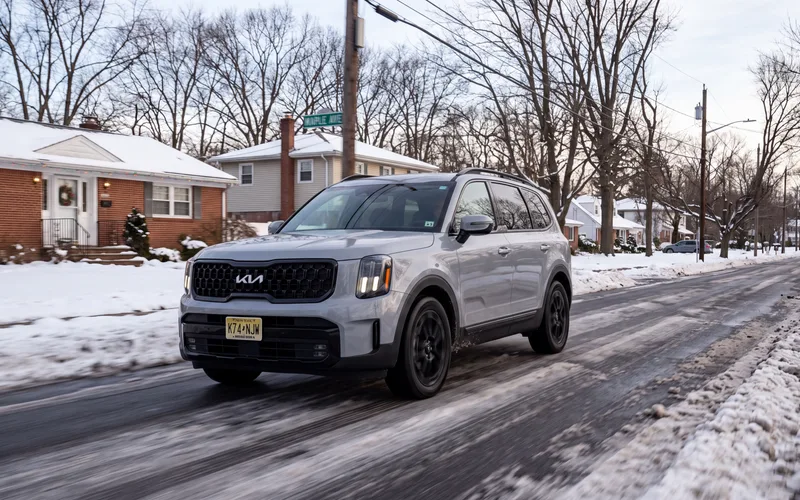 Kia TellurideMid-Size SUVBetter at: Warranty & resale
Same money buys a nicer cabin, a more usable third row, far better projected resale, and a 10-year/100,000-mile powertrain warranty instead of Ford's 5-year/60,000-mile term.
Compare 2.43C+
 Honda PilotMid-Size SUVBetter at: Reliability
The pick if you plan to keep the car a decade — much stronger predicted reliability and depreciation, plus a roomier third row and a smoother V6 in place of the 10-speed complaints.
Compare 2.88B-
 Toyota Grand HighlanderMid-Size SUVBetter at: Third row & MPG
Built for adults in row three with real cargo room behind it, and its hybrid drivetrains cut deep into the Explorer's 23 MPG combined and roughly $2,600-a-year fuel bill.
CompareHow it's evolved
10 scored model years · 2017–2026
Subject scores by year
Hover or tap a score to see what moved it versus the year before. A corner mark flags a big swing.
| Year | Performance | Efficiency | Safety | Space | Cost | Reliability | Tech | Use-case | Driving | Value |
|---|---|---|---|---|---|---|---|---|---|---|
| 2026 | 56 | 46 | 83 | 62 | 43 | 52 | 76 | 67 | 70 | 68 |
| 2025 | 54 | 46 | 82 | 66 | 34 | 51 | 77 | 65 | 64 | 61 |
| 2024 | 55 | 46 | 81 | 64 | 49 | 48 | 53 | 65 | 63 | 66 |
| 2023 | 57 | 45 | 73 | 65 | 53 | 42 | 51 | 57 | 63 | 59 |
| 2022 | 55 | 49 | 67 | 64 | 47 | 40 | 56 | 65 | 63 | 60 |
| 2021 | 53 | 47 | 80 | 64 | 56 | 41 | 52 | 62 | 69 | 58 |
| 2020 | 54 | 45 | 78 | 63 | 47 | 37 | 51 | 58 | 67 | 62 |
| 2019 | 44 | 23 | 55 | 64 | 44 | 61 | 45 | 52 | 59 | 50 |
| 2018 | 44 | 23 | 49 | 64 | 42 | 55 | 43 | 59 | 56 | 58 |
| 2017 | 44 | 39 | 47 | 64 | 44 | 48 | 39 | 56 | 56 | 62 |
Compare two years
Best fit & conditions
Higher scores mean a better fit for that use case. Learn more about use-case fit →
Subject profile
Trims & configurations
4 trimsScores above reflect the volume trim. Per-trim specs and scores are rolling out — the full lineup:
Academic Probation · NHTSA safety recalls
Sep 9, 2026Air bags: frontalThe active vent on the passenger side may not open as intended, preventing the air bag from deploying properly.
Defect
Ford Motor Company (Ford) is recalling certain 2026 Explorer vehicles. The active vent on the passenger side may not open as intended, preventing the air bag from deploying properly.
Risk
An air bag that does not deploy as intended increases the risk of injury in a crash.
Remedy
Dealers will replace the passenger air bag module, free of charge. Owner notification letters were mailed September 16, 2026. Owners may contact Ford customer service at 1-866-436-7332. Ford's number for this recall is 26S65. Vehicle Identification Numbers (VINs) involved in this recall became searchable on NHTSA.gov on September 14, 2026.
NHTSA campaign 26V581000 ↗Manufacturer no. 26S657 vehicles potentially affected (all models in the campaign)Owners notified Sep 16, 2026Filed by Ford Motor CompanyFiled as EXPLORERAug 25, 2026Engine and engine cooling: engine: hard parts internal/mechanicalThe engine piston domes may have been manufactured incorrectly, which can result in piston dome failure and lead to a loss of drive power.
Defect
Ford Motor Company (Ford) is recalling certain 2026 Explorer, Bronco, Bronco Sport, Mustang, and Ranger vehicles. The engine piston domes may have been manufactured incorrectly, which can result in piston dome failure and lead to a loss of drive power.
Risk
An unexpected loss of drive power increases the risk of a crash.
Remedy
Dealers will inspect the engine pistons and replace the engine long block, if necessary, free of charge. Interim letters, notifying owners of the safety risk, were mailed September 3, 2026. Additional letters will be sent once the remedy is available, anticipated in December 2026. Owners may contact Ford customer service at 1-866-436-7332. Ford's number for this recall is 26S61. Vehicle Identification Numbers (VINs) involved in this recall became searchable on NHTSA.gov on August 28, 2026.
NHTSA campaign 26V548000 ↗Manufacturer no. 26S6110,001 vehicles potentially affected (all models in the campaign)Filed by Ford Motor CompanyFiled as EXPLORERAug 13, 2026Engine and engine cooling: engine: hard parts internal/mechanicalThe engine connecting rod bearings may seize, which can result in engine failure.
Defect
Ford Motor Company (Ford) is recalling certain 2026 Explorer vehicles equipped with a 2.3L engine. The engine connecting rod bearings may seize, which can result in engine failure.
Risk
Engine failure can result in a loss of drive power, increasing the risk of a crash. In addition, bearing failure may cause a breach in the engine block, allowing oil to leak, increasing the risk of a fire.
Remedy
Dealers will replace the engine long blocks, free of charge. Owner notification letters were mailed August 25, 2026. Owners may contact Ford customer service at 1-866-436-7332. Ford's number for this recall is 26S58. Vehicle Identification Numbers (VINs) involved in this recall became searchable on NHTSA.gov on August 18, 2026.
NHTSA campaign 26V532000 ↗Manufacturer no. 26S586 vehicles potentially affected (all models in the campaign)Owners notified Aug 25, 2026Filed by Ford Motor CompanyFiled as EXPLORERJul 21, 2026Seats: front assembly: power adjustAn unoccupied driver's seat may recline unintentionally during certain scenarios, such as remote unlock or remote start.
Defect
Ford Motor Company (Ford) is recalling certain 2025-2027 Explorer and Lincoln Aviator vehicles. An unoccupied driver's seat may recline unintentionally during certain scenarios, such as remote unlock or remote start.
Risk
Unexpected movement of the driverâs seat back may trap a second-row occupant, increasing the risk of injury.
Remedy
Dealers will disable the driver seat module (DSM) feature until parts are available. Once available, the motor will be replaced. Repairs will be performed free of charge. Owner notification letters were mailed September 3, 2026. Owners may contact Ford customer service at 1-866-436-7332. Ford's number for this recall is 26S53.
NHTSA campaign 26V470000 ↗Manufacturer no. 26S5376,748 vehicles potentially affected (all models in the campaign)Owners notified Sep 3, 2026Filed by Ford Motor CompanyFiled as EXPLORERJul 14, 2026Seats: mid/rear assemblyThe switch for the easy-entry second-row outer seats may bind or stick, resulting in the seats unlatching, tipping, or sliding unexpectedly.
Defect
Ford Motor Company (Ford) is recalling certain 2020-2027 Aviator and 2020-2026 Explorer vehicles. The switch for the easy-entry second-row outer seats may bind or stick, resulting in the seats unlatching, tipping, or sliding unexpectedly.
Risk
A seat that moves unexpectedly may not properly restrain an occupant during a crash, increasing the risk of injury.
Remedy
Dealers will inspect and replace the bezel around the switch as necessary, free of charge. This will be a phased campaign, with the remedy becoming available in different phases based on model and model years. Interim letters explaining the safety risk were mailed August 19, 2026. Additional letters will be sent once the remedy is available, anticipated in January 2027. Lincoln Aviator owner notification letters were mailed August 21, 2026. Owners may contact Ford customer service at 1-866-436-7332. Ford's number for this recall is 26S52. This recall expands Recall 25V393. Vehicle Identification Numbers (VINs) involved in this recall became searchable on NHTSA.gov on July 16, 2026.
NHTSA campaign 26V451000 ↗Manufacturer no. 26S52387,911 vehicles potentially affected (all models in the campaign)Owners notified Aug 21, 2026Filed by Ford Motor CompanyFiled as EXPLORERJun 30, 2026Back over prevention: warnings: external/pedestrian alert · Forward collision avoidance: warnings: external/pedestrian alertA software error may prevent the vehicle from making the pedestrian warning sound at certain speeds.
Defect
Ford Motor Company (Ford) is recalling certain 2024-2027 Lincoln Nautilus Hybrid and 2025-2027 Explorer Hybrid vehicles. A software error may prevent the vehicle from making the pedestrian warning sound at certain speeds.
Risk
A vehicle that does not produce a warning sound may fail to alert pedestrians of an approaching vehicle, increasing the risk of injury.
Remedy
Note: This is an expansion of Recall 25V691. Any vehicles previously repaired under 25V691 must have the new remedy completed. Ford will release an over-the-air (OTA) update or dealers will update the APIM software, free of charge. Additionally, dealers will replace the digital signal processing module in Nautilus Hybrid vehicles equipped with 28 speakers, free of charge. This will be a phased campaign, with the remedy becoming available in different phases based on model and model years. Owner notification letters were mailed August 7, 2026. Owners may contact Ford customer service at 1-866-436-7332. Ford's number for this recall is 26S51. Vehicle Identification Numbers (VINs) involved in this recall will be searchable on NHTSA.gov beginning July 7, 2026.
NHTSA campaign 26V415000 ↗Manufacturer no. 26S5166,383 vehicles potentially affected (all models in the campaign)Owners notified Aug 7, 2026Filed by Ford Motor CompanyFiled as EXPLORER HYBRIDMay 27, 2026Engine and engine cooling: engine: hard parts internal/mechanicalThe engine may fail, which can result in a loss of drive power.
Defect
Ford Motor Company (Ford) is recalling certain 2025-2026 Explorer, Ranger, and Bronco vehicles. The engine may fail, which can result in a loss of drive power.
Risk
A sudden loss of drive power can increase the risk of a crash.
Remedy
Dealers will replace the engine long block, free of charge. Interim letters, notifying owners of the safety risk, were mailed June 5, 2026. Additional letters will be sent once the remedy is available, anticipated in November 2026. Owners may contact Ford customer service at 1-866-436-7332. Ford's number for this recall is 26S35. Vehicle Identification Numbers (VINs) involved in this recall became searchable on NHTSA.gov on May 28, 2026.
NHTSA campaign 26V343000 ↗Manufacturer no. 26S351,536 vehicles potentially affected (all models in the campaign)Filed by Ford Motor CompanyFiled as EXPLORERMar 31, 2026Engine and engine cooling: engine: hard parts internal/mechanicalThe engine piston circlips may have been incorrectly installed during manufacturing, which can result in piston failure and engine damage, leading to a loss of drive power.
Defect
Ford Motor Company (Ford) is recalling certain 2026 Explorer and Mustang vehicles. The engine piston circlips may have been incorrectly installed during manufacturing, which can result in piston failure and engine damage, leading to a loss of drive power.
Risk
An unexpected loss of drive power increases the risk of a crash.
Remedy
Dealers will inspect the engine for missing or mis-installed circlips and replace the engine as necessary, free of charge. Owner notification letters were mailed April 10, 2026. Owners may contact Ford customer service at 1-866-436-7332. Ford's number for this recall is 26S23. Vehicle Identification Numbers (VINs) involved in this recall became searchable on NHTSA.gov on April 2, 2026.
NHTSA campaign 26V205000 ↗Manufacturer no. 26S23278 vehicles potentially affected (all models in the campaign)Owners notified Apr 10, 2026Filed by Ford Motor CompanyFiled as EXPLORERMar 31, 2026Visibility: defroster/defogger/hvac system: fan/motorThe heating, ventilation and air-conditioning (HVAC) system may fail, which can cause the defrosting and defogging system to become inoperative.
Defect
Ford Motor Company (Ford) is recalling certain 2026 Lincoln Aviator and Explorer vehicles. The heating, ventilation and air-conditioning (HVAC) system may fail, which can cause the defrosting and defogging system to become inoperative.
Risk
An inoperative windshield defrosting and defogging system may decrease the driver's visibility, increasing the risk of a crash.
Remedy
Dealers will inspect and secure the instrument panel joints as necessary, free of charge. Owner notification letters were mailed April 10, 2026. Owners may contact Ford customer service at 1-866-436-7332. Ford's number for this recall is 26S22. Vehicle Identification Numbers (VINs) involved in this recall became searchable on NHTSA.gov beginning April 3, 2026.
NHTSA campaign 26V202000 ↗Manufacturer no. 26S2255 vehicles potentially affected (all models in the campaign)Owners notified Apr 10, 2026Filed by Ford Motor CompanyFiled as EXPLORERMar 17, 2026Seat beltsThe seat belt anchor bolts at the second-row outer seating positions may be improperly secured.
Defect
Ford Motor Company (Ford) is recalling certain 2020-2026 Explorer and Lincoln Aviator vehicles. The seat belt anchor bolts at the second-row outer seating positions may be improperly secured.
Risk
A loose seat belt buckle may not properly restrain an occupant during a crash, increasing the risk of injury.
Remedy
Dealers will inspect the second-row outer seat belt lower anchor bolts and replace or repair them as necessary, free of charge. Owner notification letters were mailed March 30, 2026. Owners may contact Ford customer service at 1-866-436-7332. Ford's number for this recall is 26C18. Vehicle Identification Numbers (VINs) involved in this recall became searchable on NHTSA.gov on March 19, 2026.
NHTSA campaign 26V159000 ↗Manufacturer no. 26C18561 vehicles potentially affected (all models in the campaign)Owners notified Mar 30, 2026Filed by Ford Motor CompanyFiled as EXPLORERMar 3, 2026Exterior lighting: headlightsThe Dynamic Bending Light (DBL) system software may cause the passenger-side headlight to turn in the wrong direction when driving through curves in the road. As such, these vehicles fail to comply with the requirements of Federal Motor Vehicle Safety Standard number 108, " Lamps, Reflective Devices, and Associated Equipment."
Defect
Ford Motor Company (Ford) is recalling certain 2025-2026 Explorer vehicles. The Dynamic Bending Light (DBL) system software may cause the passenger-side headlight to turn in the wrong direction when driving through curves in the road. As such, these vehicles fail to comply with the requirements of Federal Motor Vehicle Safety Standard number 108, " Lamps, Reflective Devices, and Associated Equipment."
Risk
A headlight that turns incorrectly can result in increased glare to other road users, increasing the risk of a crash.
Remedy
The headlight control module software will be updated by a dealer, or through an over-the-air (OTA) update, free of charge. Owner notification letters were mailed March 23, 2026. Owners may contact Ford customer service at 1-866-436-7332. Ford's number for this recall is 26C12. Vehicle Identification Numbers (VINs) involved in this recall became searchable on NHTSA.gov on March 5, 2026.
NHTSA campaign 26V121000 ↗Manufacturer no. 26C1235,772 vehicles potentially affected (all models in the campaign)Owners notified Mar 23, 2026Filed by Ford Motor CompanyFiled as EXPLORERJan 21, 2026Visibility: windshieldDuring manufacturing, the windshield may not have been properly bonded to the vehicle, allowing it to detach in a crash. As such, these vehicles fail to comply with the requirements of Federal Motor Vehicle Safety Standard (FMVSS) number 212, "Windshield Mounting."
Defect
Ford Motor Company (Ford) is recalling certain 2026 Explorer vehicles. During manufacturing, the windshield may not have been properly bonded to the vehicle, allowing it to detach in a crash. As such, these vehicles fail to comply with the requirements of Federal Motor Vehicle Safety Standard (FMVSS) number 212, "Windshield Mounting."
Risk
In the event of a crash, windshield detachment can increase the risk of injury.
Remedy
Dealers will remove and replace the windshield, free charge. Owner notification letters were mailed January 30, 2026. Owners may contact Ford customer service at 1-866-436-7332. Ford's number for this recall is 26C02. Vehicle Identification Numbers (VINs) involved in this recall became searchable on NHTSA.gov on January 22, 2026.
NHTSA campaign 26V024000 ↗Manufacturer no. 26C028 vehicles potentially affected (all models in the campaign)Owners notified Jan 30, 2026Filed by Ford Motor CompanyFiled as EXPLORERDec 1, 2025EngineThe cylinder head may have been improperly manufactured, which can cause the ball plugs to fail, resulting in an oil leak.
Defect
Ford Motor Company (Ford) is recalling certain 2026 Explorer, Mustang, Lincoln Corsair, and 2025 Maverick vehicles. The cylinder head may have been improperly manufactured, which can cause the ball plugs to fail, resulting in an oil leak.
Risk
An oil leak in the presence of an ignition source such as hot engine or exhaust components increases the risk of a fire. In addition, the loss of oil can result in engine seizure and loss of motive power, increasing the risk of a crash.
Remedy
Dealers will replace the cylinder head assembly, free of charge. All affected vehicles are still within dealership inventory and therefore no owner notification letters will be mailed. Owners may contact Ford customer service at 1-866-436-7332. Ford's number for this recall is 25SD3. Vehicle Identification Numbers (VINs) involved in this recall became searchable on NHTSA.gov on November 24, 2025.
NHTSA campaign 25V828000 ↗Manufacturer no. 25SD36 vehicles potentially affected (all models in the campaign)Filed by Ford Motor CompanyFiled as EXPLOREROct 24, 2025Visibility: windshieldThe windshield glass may have visible air bubbles, which can obscure the driver's visibility. As such, these vehicles fail to comply with the requirements of Federal Motor Vehicle Safety Standard number 205, "Glazing Materials."
Defect
Ford Motor Company (Ford) is recalling certain 2025-2026 Lincoln Corsair, Lincoln Aviator, and Explorer vehicles. The windshield glass may have visible air bubbles, which can obscure the driver's visibility. As such, these vehicles fail to comply with the requirements of Federal Motor Vehicle Safety Standard number 205, "Glazing Materials."
Risk
Reduced visibility while driving can increase the risk of a crash.
Remedy
Dealers will inspect and replace the windshield as necessary, free of charge. Owner notification letters were mailed November 6, 2025. Owners may contact Ford customer service at 1-866-436-7332. Ford's number for this recall is 25C60. Vehicle Identification Numbers (VINs) involved in this recall become searchable on NHTSA.gov beginning October 27, 2025.
NHTSA campaign 25V730000 ↗Manufacturer no. 25C6056,841 vehicles potentially affected (all models in the campaign)Owners notified Nov 6, 2025Filed by Ford Motor CompanyFiled as EXPLOREROct 10, 2025Trailer hitchesThe trailer hitch assembly bolts may be loose.
Defect
Ford Motor Company (Ford) is recalling certain 2024-2026 Explorer and 2024-2026 Lincoln Aviator vehicles. The trailer hitch assembly bolts may be loose.
Risk
While towing a trailer, loose trailer hitch bolts can cause a loss of vehicle handling and control, or cause the trailer to detach. Either of these conditions can increase the risk of a crash.
Remedy
Dealers will inspect and tighten the trailer hitch bolts, or replace them as necessary, free of charge. Owner notification letters were mailed October 29, 2025. Owners may contact Ford customer service at 1-866-436-7332. Ford's number for this recall is 25SA3. Vehicle Identification Numbers (VINs) involved in this recall became searchable on NHTSA.gov on October 15, 2025.
NHTSA campaign 25V687000 ↗Manufacturer no. 25SA31,412 vehicles potentially affected (all models in the campaign)Owners notified Oct 29, 2025Filed by Ford Motor CompanyFiled as EXPLORER
74 recalls on other model years of the Explorer (2017–2025)
Jul 14, 2026Structure: bodyThe roof rail covers may come loose and detach from the vehicle.
Defect
Ford Motor Company (Ford) is recalling certain 2016-2019 Explorer vehicles. The roof rail covers may come loose and detach from the vehicle.
Risk
A detached roof rail cover can create a road hazard, increasing the risk of a crash.
Remedy
Dealers will inspect the roof rail covers and as necessary, repair or replace the push-pins, rail clips, or roof rail covers, free of charge. Interim letters, notifying owners of the safety risk, were mailed August 28, 2026. Additional letters will be sent once the remedy is available, anticipated in January 2027. Owners may contact Ford customer service at 1-866-436-7332. Ford's number for this recall is 26S54. This recall expands previous NHTSA recall number 21V316. Vehicle Identification Numbers (VINs) involved in this recall became searchable on NHTSA.gov on July 16, 2026.
NHTSA campaign 26V448000 ↗Manufacturer no. 26S54288,314 vehicles potentially affected (all models in the campaign)Filed by Ford Motor CompanyFiled as EXPLORERJun 24, 2026Power train: automatic transmissionThe transmission park pawl may engage while the vehicle is in motion, resulting in park system damage.
Defect
Ford Motor Company (Ford) is recalling certain 2018-2021 Navigator, Expedition, 2020-2021 Explorer, Lincoln Aviator, and 2021 F-150 vehicles. The transmission park pawl may engage while the vehicle is in motion, resulting in park system damage.
Risk
Park system damage may result in a vehicle rollaway, increasing the risk of a crash.
Remedy
Dealers will update the powertrain control module software, and inspect and replace any damaged transmission components as necessary, free of charge. Interim letters, notifying owners of the safety risk, were mailed July 10, 2026. Additional letters will be sent once the remedy is available, anticipated in April 2027. Owners may contact Ford customer service at 1-866-436-7332. Ford's number for this recall is 26S48. Vehicle Identification Numbers (VINs) involved in this recall became searchable on NHTSA.gov on June 26, 2026.
NHTSA campaign 26V402000 ↗Manufacturer no. 26S48741,195 vehicles potentially affected (all models in the campaign)Filed by Ford Motor CompanyFiled as EXPLORERJun 9, 2026Power train: automatic transmissionAn unintentional powertrain control module (PCM) reset may occur while the vehicle is in motion and result in park system damage.
Defect
Ford Motor Company (Ford) is recalling certain 2024 Explorer vehicles equipped with a 2.3L engine and 10R60 automatic transmission. An unintentional powertrain control module (PCM) reset may occur while the vehicle is in motion and result in park system damage.
Risk
A park system that is damaged may not shift into "PARK," resulting in a vehicle rollaway and increasing the risk of injury or crash.
Remedy
Dealers will inspect for park system damage and replace the park system components as necessary, free of charge. Owner notification letters were mailed June 24, 2026. Owners may contact customer service at 1-866-436-7332. Ford's number for this recall is 26S39. Vehicle Identification Numbers (VINs) involved in this recall will become searchable on NHTSA.gov on June 12, 2026.
NHTSA campaign 26V371000 ↗Manufacturer no. 26S3958 vehicles potentially affected (all models in the campaign)Owners notified Jun 24, 2026Filed by Ford Motor CompanyFiled as EXPLORERMar 18, 2026Back over prevention: software · Electrical system: adasThe Image Processing Module A (IPMA) may experience multiple unexpected resets, resulting in loss of the rearview camera image and advanced driver assistance (ADAS) features, including pre-collision assist, lane-keeping assist, and blind-spot monitoring.
Defect
Ford Motor Company (Ford) is recalling certain 2022-2025 Lincoln Navigator, 2024-2025 Lincoln Nautilus, 2025 Lincoln Aviator and Explorer vehicles. The Image Processing Module A (IPMA) may experience multiple unexpected resets, resulting in loss of the rearview camera image and advanced driver assistance (ADAS) features, including pre-collision assist, lane-keeping assist, and blind-spot monitoring.
Risk
Loss of the rearview camera image and certain driver assistance features, can reduce the driverâs ability to detect hazards, increasing the risk of a crash.
Remedy
The Image Processing Module A software will be updated by a dealer, or through an over-the-air (OTA) update, free of charge. This is a Phased campaign. Phase 1 will include 2025 Aviator, 2025 Explorer, 2025 Nautilus notified owners on 4/13/2026. Phase 2 will include 2025 Navigator will notify owners on or about 4/20/2026. Phase 3 will include 2022-2024 Navigator will notify owners on or about 6/8/2026. Phase 4 will include 2024 Nautilus will notify owners on or about 6/22/2026. Owner notification letters were mailed April 13, 2026. Owners may contact Ford customer service at 1-866-436-7332. Ford's number for this recall is 26S21. Vehicle Identification Numbers (VINs) involved in this recall will be searchable on NHTSA.gov beginning March 25, 2026.
NHTSA campaign 26V165000 ↗Manufacturer no. 26S21254,640 vehicles potentially affected (all models in the campaign)Owners notified Apr 13, 2026Filed by Ford Motor CompanyFiled as EXPLORERMar 3, 2026Back over prevention: softwareThe image on the center display may flip or invert, resulting in an incorrectly displayed rearview image when the vehicle is placed in reverse. As such, these vehicles fail to comply with the requirements of Federal Motor Vehicle Safety Standard number 111, "Rear Visibility."
Defect
Ford Motor Company (Ford) is recalling certain 2020-2022 Escape, Lincoln Corsair, 2020-2024 Lincoln Aviator, and Explorer vehicles. The image on the center display may flip or invert, resulting in an incorrectly displayed rearview image when the vehicle is placed in reverse. As such, these vehicles fail to comply with the requirements of Federal Motor Vehicle Safety Standard number 111, "Rear Visibility."
Risk
An incorrectly displayed rearview image can reduce the driverâs view behind the vehicle, increasing the risk of a crash.
Remedy
Dealers will update the accessory protocol interface module (APIM) software, free of charge. Owner notification letters were mailed June 23, 2026. Owners may contact Ford customer service at 1-866-436-7332. Ford's number for this recall is 26C11. Vehicle Identification Numbers (VINs) involved in this recall became searchable on NHTSA.gov on March 5, 2026.
NHTSA campaign 26V123000 ↗Manufacturer no. 26C11889,950 vehicles potentially affected (all models in the campaign)Owners notified Jun 23, 2026Filed by Ford Motor CompanyFiled as EXPLORERMar 3, 2026Engine and engine cooling: exhaust system: emission control: gas recirculation valve (egr valve)The exhaust gas recirculation (EGR) valve may fail, resulting in an unexpected loss of drive power.
Defect
Ford Motor Company (Ford) is recalling certain 2025 Ranger, Lincoln Nautilus, Mustang, Maverick, Explorer, Escape, Lincoln Corsair, Bronco Sport, and Bronco vehicles. The exhaust gas recirculation (EGR) valve may fail, resulting in an unexpected loss of drive power.
Risk
An unexpected loss of drive power increases the risk of a crash.
Remedy
Dealers will replace the EGR valves, free of charge. Owner notification letters were mailed July 31, 2026. Owners may contact Ford customer service at 1-866-436-7332. Ford's number for this recall is 26S10. Vehicle Identification Numbers (VINs) involved in this recall became searchable on NHTSA.gov on March 4, 2026.
NHTSA campaign 26V122000 ↗Manufacturer no. 26S1047,804 vehicles potentially affected (all models in the campaign)Owners notified Jul 31, 2026Filed by Ford Motor CompanyFiled as EXPLORERMar 3, 2026Visibility: windshield wiper/washer: motorThe windshield wiper motor may fail and prevent the windshield wipers from operating properly.
Defect
Ford Motor Company (Ford) is recalling certain 2020-2022 Explorer, Escape, Lincoln Aviator, and Lincoln Corsair vehicles. The windshield wiper motor may fail and prevent the windshield wipers from operating properly.
Risk
Windshield wipers that fail to operate properly can reduce visibility, increasing the risk of a crash.
Remedy
Dealers will inspect and replace the front wiper motors as necessary, free of charge. Interim letters, notifying owners of the safety risk, were mailed April 2, 2026. Additional letters will be sent once the final remedy is available, anticipated in October 2026. Owners may contact Ford customer service at 1-866-436-7332. Ford's number for this recall is 26S14. Vehicle Identification Numbers (VINs) involved in this recall became searchable on NHTSA.gov on March 4, 2026.
NHTSA campaign 26V117000 ↗Manufacturer no. 26S14604,533 vehicles potentially affected (all models in the campaign)Filed by Ford Motor CompanyFiled as EXPLORERFeb 20, 2026Suspension: rearThe rear suspension toe links may fracture.
Defect
Ford Motor Company (Ford) is recalling certain 2017-2019 Explorer vehicles. The rear suspension toe links may fracture.
Risk
A rear toe link fracture can result in a loss of steering control, increasing the risk of a crash.
Remedy
Dealers will replace the toe links, free of charge. Owner notification letters were mailed on March 16, 2026. Owners may contact Ford Customer Service at 1-866-436-7332. Ford's number for this recall is 26S08. This recall is an expansion of previous NHTSA recall number 21V537. Vehicle Identification Numbers (VINs) involved in this recall will be searchable on NHTSA.gov beginning February 25, 2026.
NHTSA campaign 26V101000 ↗Manufacturer no. 26S08412,774 vehicles potentially affected (all models in the campaign)Owners notified Mar 16, 2026Filed by Ford Motor CompanyFiled as EXPLORERJan 15, 2026Equipment: electrical: engine block heaterThe engine block heater may crack and develop a coolant leak, causing it to short circuit when the block heater is plugged in.
Defect
Ford Motor Company (Ford) is recalling certain 2016-2018 Focus, 2019 Explorer, and 2024 Explorer vehicles. The engine block heater may crack and develop a coolant leak, causing it to short circuit when the block heater is plugged in.
Risk
An electrical short circuit can increase the risk of a fire.
Remedy
Owners are advised not to plug in their block heater until the vehicle is remedied. Dealers will replace the block heater, free of charge. Owners will also have a alternative option to replace engine block heater element with a threaded blanking plug, and remove the block heater electrical cord. Interim letters, notifying owners of the safety risk, were mailed February 13, 2026. Additional letters will be sent once the final remedy is available, anticipated in October 2026. Owners may contact Ford customer service at 1-866-436-7332. Ford's number for this recall is 25SA4. Vehicle Identification Numbers (VINs) involved in this recall became searchable on NHTSA.gov on January 16, 2026. This recall expands previous recall number 25V685.
NHTSA campaign 26V012000 ↗Manufacturer no. 25SA42,403 vehicles potentially affected (all models in the campaign)Filed by Ford Motor CompanyFiled as EXPLOREROct 10, 2025Back over prevention: warnings: external/pedestrian alert · Forward collision avoidance: warnings: external/pedestrian alertA software error may prevent the vehicle from emitting the pedestrian warning sound at certain speeds.
Defect
Ford Motor Company (Ford) is recalling certain 2024-2026 Lincoln Nautilus Hybrid and 2025 Explorer hybrid police vehicles. A software error may prevent the vehicle from emitting the pedestrian warning sound at certain speeds.
Risk
A vehicle that does not produce a warning sound may fail to alert pedestrians of an approaching vehicle, increasing the risk of injury.
Remedy
The audio control module and digital signal processing module software will be updated by a dealer, or through an over-the-air (OTA) update, free of charge. Owner notification letters were mailed November 5, 2025. Owners may contact Ford customer service at 1-866-436-7332. Ford's number for this recall is 25SA2. Vehicle Identification Numbers (VINs) involved in this recall became searchable on NHTSA.gov on October 10, 2025.
NHTSA campaign 25V691000 ↗Manufacturer no. 25SA243,438 vehicles potentially affected (all models in the campaign)Owners notified Nov 5, 2025Filed by Ford Motor CompanyFiled as EXPLORER HYBRIDOct 10, 2025Equipment: electrical: engine block heaterThe engine block heater may crack and develop a coolant leak, causing it to short circuit when the block heater is plugged in.
Defect
Ford Motor Company (Ford) is recalling certain 2016-2019 Lincoln MKC, 2016-2023 Explorer, 2019-2020 Fusion, 2019-2024 Ranger, 2020-2022 Lincoln Corsair, Escape, 2021-2024 Bronco, Bronco Sport, and 2022-2024 Maverick vehicles. The engine block heater may crack and develop a coolant leak, causing it to short circuit when the block heater is plugged in.
Risk
An electrical short circuit can increase the risk of a fire.
Remedy
Owners are advised not to plug in their block heater until the vehicle is remedied. Dealers will replace the block heater, free of charge. Owners will also have a alternative option to replace engine block heater element with a threaded blanking plug, and remove the block heater electrical cord. Interim letters, notifying owners of the safety risk, were mailed December 3, 2025. Additional letters will be sent once the final remedy is available, anticipated September 2026. Owners may contact Ford customer service at 1-866-436-7332. Ford's number for this recall is 25SA4. Vehicle Identification Numbers (VINs) involved in this recall became searchable on NHTSA.gov on October 15, 2025.
NHTSA campaign 25V685000 ↗Manufacturer no. 25SA459,006 vehicles potentially affected (all models in the campaign)Filed by Ford Motor CompanyFiled as EXPLORERAug 22, 2025Exterior lighting: tail lightsWhen towing a trailer, the tail lights on the trailer may fail to illuminate due to an improperly manufactured body control module. As such, these vehicles fail to comply with the requirements of Federal Motor Vehicle Safety Standard number 108, " Lamps, Reflective Devices, and Associated Equipment."
Defect
Ford Motor Company (Ford) is recalling certain 2025 Explorer and Aviator vehicles. When towing a trailer, the tail lights on the trailer may fail to illuminate due to an improperly manufactured body control module. As such, these vehicles fail to comply with the requirements of Federal Motor Vehicle Safety Standard number 108, " Lamps, Reflective Devices, and Associated Equipment."
Risk
Trailer tail lights that do not illuminate as intended can reduce visibility to other drivers, increasing the risk of a crash.
Remedy
Dealers will replace the body control module C on vehicles with less than 9,000 miles. For vehicles over 9,000 miles, dealers will perform a functional check on the body control module C and replace it as necessary. Repairs will be performed free of charge. Aviator 2025 owner notification letters were mailed October 13, 2025. Explorer 2025 owner letters were mailed November 25, 2025. Owners may contact Ford customer service at 1-866-436-7332. Ford's number for this recall is 25C42.
NHTSA campaign 25V543000 ↗Manufacturer no. 25C42213,121 vehicles potentially affected (all models in the campaign)Owners notified Oct 13, 2025Filed by Ford Motor CompanyFiled as EXPLORERJul 7, 2025Fuel system, gasoline: delivery: fuel pumpThe low-pressure fuel pump may fail, which can result in an engine stall while driving.
Defect
Ford Motor Company (Ford) is recalling certain 2021-2023 Bronco, Explorer, Lincoln Aviator, F-250 SD, F-350 SD, F-450 SD, F-550 SD, 2021-2022 Lincoln Navigator, Mustang, F-150, and 2022 Expedition vehicles. The low-pressure fuel pump may fail, which can result in an engine stall while driving.
Risk
An engine stall increases the risk of a crash.
Remedy
Dealers will replace the low pressure fuel pump on super duty vehicles and update the powertrain control module (PCM) software on all other affected vehicles, free of charge. Owner notification letters were mailed July 27, 2026. Owners may contact Ford customer service at 1-866-436-7332. Ford's number for this recall is 25S75.
NHTSA campaign 25V455000 ↗Manufacturer no. 25S75850,318 vehicles potentially affected (all models in the campaign)Owners notified Jul 27, 2026Filed by Ford Motor CompanyFiled as EXPLORERJun 27, 2025Back over prevention: softwareA software error may cause the rearview camera to display a blank image, or the image may remain on the display after the backing event has ended.
Defect
Ford Motor Company (Ford) is recalling certain 2018-2022 Transit Connect, 2019-2020 MKZ, MKX, Edge, Continental, F-150, Nautilus, Fusion, 2019-2023 Ranger, Mustang, 2020-2021 EcoSport, Expedition, Navigator, 2020-2022 Escape, F-250 SD, Corsair, 2020-2023 Aviator, Transit, 2020-2024 Explorer, 2021-2024 Bronco Sport, and 2022-2024 Maverick vehicles. A software error may cause the rearview camera to display a blank image, or the image may remain on the display after the backing event has ended.
Risk
A rearview camera that displays a blank image can reduce the driver's view behind the vehicle. A rearview image that continues to be displayed after the vehicle is shifted out of reverse may distract the driver. Both of these situations can increase the risk of a crash.
Remedy
Dealers will update the rearview camera software, free of charge. Owner notification letters were mailed September 4, 2025. Owners may contact Ford customer service at 1-866-436-7332. Ford's number for this recall is 25S72.
NHTSA campaign 25V442000 ↗Manufacturer no. 25S72200,237 vehicles potentially affected (all models in the campaign)Owners notified Sep 4, 2025Filed by Ford Motor CompanyFiled as EXPLORERJun 13, 2025Seats: mid/rear assemblyThe switch for the easy-entry second-row outer seats may bind or stick, resulting in the seats unlatching, folding, or sliding unexpectedly while driving.
Defect
Ford Motor Company (Ford) is recalling certain 2020-2025 Aviator, and Explorer vehicles. The switch for the easy-entry second-row outer seats may bind or stick, resulting in the seats unlatching, folding, or sliding unexpectedly while driving.
Risk
A seat that moves unexpectedly may not properly restrain an occupant during a crash, increasing their risk of injury.
Remedy
Dealers will inspect the second-row seat switch, and replace the bezel around the switch as necessary, free of charge. Owner notification letters were mailed August 7, 2025. Owners may contact Ford customer service at 1-866-436-7332. Ford's number for this recall is 25S67.
NHTSA campaign 25V393000 ↗Manufacturer no. 25S67304,662 vehicles potentially affected (all models in the campaign)Owners notified Aug 7, 2025Filed by Ford Motor CompanyFiled as EXPLORERJun 13, 2025Engine and engine cooling: engine: hard parts internal/mechanicalThe connecting rod and rod bearing components may have manufacturing defects that can lead to engine damage and engine failure.
Defect
Ford Motor Company (Ford) is recalling certain 2025 Transit, F-150, and Explorer vehicles. The connecting rod and rod bearing components may have manufacturing defects that can lead to engine damage and engine failure.
Risk
A damaged engine can result in engine failure and a stall, increasing the risk of a crash.
Remedy
Dealers will inspect the connecting rods and replace the engine long block assembly as necessary, free of charge. Owner notification letters were mailed August 15, 2025. Owners may contact Ford customer service at 1-866-436-7332. Ford's number for this recall is 25S55.
NHTSA campaign 25V344000 ↗Manufacturer no. 25S55156 vehicles potentially affected (all models in the campaign)Owners notified Aug 15, 2025Filed by Ford Motor CompanyFiled as EXPLORERJun 3, 2025Service brakes, hydraulic: foundation components: disc: caliperThe bolts securing the front brake caliper may not be tightened properly, which can result in a loss of front brake function and possible wheel damage.
Defect
Ford Motor Company (Ford) is recalling certain 2025 Explorer vehicles. The bolts securing the front brake caliper may not be tightened properly, which can result in a loss of front brake function and possible wheel damage.
Risk
Loss of brake function and wheel damage can increase the risk of a crash.
Remedy
Dealers will inspect and tighten the bolts as necessary. If bolts are missing, the brake caliper and pads will be replaced. Repairs will be performed free of charge. Owner notification letters were mailed June 19, 2025. Owners may contact Ford customer service at 1-866-436-7332. Ford's number for this recall is 25S60.
NHTSA campaign 25V371000 ↗Manufacturer no. 25S603 vehicles potentially affected (all models in the campaign)Owners notified Jun 20, 2025Filed by Ford Motor CompanyFiled as EXPLORERMay 23, 2025Structure: bodyThe driver and front passenger B-Pillar door trim may detach while driving.
Defect
Ford Motor Company (Ford) is recalling certain 2016-2017 Explorer vehicles. The driver and front passenger B-Pillar door trim may detach while driving.
Risk
Door trim that detaches while driving can create a road hazard, increasing the risk of a crash.
Remedy
Dealers will repair the B-pillar trim, free of charge. Interim letters, notifying owners of the safety risk, were mailed June 5, 2025. A second notice will be sent once the final remedy is available, anticipated November 2026. Owners may contact Ford customer service at 1-866-436-7332. Ford's number for this recall is 25S53.
NHTSA campaign 25V347000 ↗Manufacturer no. 25S53492,145 vehicles potentially affected (all models in the campaign)Filed by Ford Motor CompanyFiled as EXPLORERMay 9, 2025Structure: frame and membersA mounting bolt for the front subframe may have been tightened improperly.
Defect
Ford Motor Company (Ford) is recalling certain 2025 Explorer and Aviator vehicles. A mounting bolt for the front subframe may have been tightened improperly.
Risk
A loose subframe bolt may reduce the vehicle's performance in a crash, increasing the risk of injury.
Remedy
Dealers will inspect and tighten the subframe bolts as necessary, free of charge. Owners may contact Ford Customer Service at 1-866-436-7332. Owner notification letters were mailed May 21, 2025. Ford's number for this recall is 25S43.
NHTSA campaign 25V316000 ↗Manufacturer no. 25S43206 vehicles potentially affected (all models in the campaign)Owners notified May 21, 2025Filed by Ford Motor CompanyFiled as EXPLORERApr 11, 2025Power train: automatic transmission: control module: softwareThe powertrain control module (PCM) may reset while driving, which can damage the park system or cause an engine stall.
Defect
Ford Motor Company (Ford) is recalling certain 2025 Explorer vehicles. The powertrain control module (PCM) may reset while driving, which can damage the park system or cause an engine stall.
Risk
A damaged park system can result in a vehicle rollaway when the vehicle is placed in park without the parking brake applied. An engine stall while driving can result in a sudden loss of drive power. Either of these scenarios can increase the risk of a crash.
Remedy
Dealers will update the powertrain control module software, free of charge. Owner notification letters were mailed June 6, 2025. Owners may contact Ford customer service at 1-866-436-7332. Ford's number for this recall is 25S35.
NHTSA campaign 25V239000 ↗Manufacturer no. 25S3524,655 vehicles potentially affected (all models in the campaign)Owners notified Jun 6, 2025Filed by Ford Motor CompanyFiled as EXPLORERMar 14, 2025Power train: driveline: driveshaftThe rear axle horizontal mounting bolt may fracture and cause the driveshaft to disconnect.
Defect
Ford Motor Company (Ford) is recalling certain 2020-2022 Explorer vehicles previously repaired incorrectly under recall numbers 23V-199 or 22V-255. The rear axle horizontal mounting bolt may fracture and cause the driveshaft to disconnect.
Risk
A disconnected driveshaft can result in vehicle rollaway when the vehicle is placed in park without the parking brake applied. A disconnected driveshaft can also result in a loss of drive power. Either of these scenarios can increase the risk of a crash.
Remedy
Dealers will update the powertrain control module (PCM) software, free of charge. Owner notification letters were mailed April 25, 2025. Owners may contact Ford customer service at 1-866-436-7332. Ford's number for this recall is 25S22.
NHTSA campaign 25V166000 ↗Manufacturer no. 25S224,247 vehicles potentially affected (all models in the campaign)Owners notified Apr 25, 2025Filed by Ford Motor CompanyFiled as EXPLORERMar 14, 2025Power train: automatic transmission: fluid/lubricant: valves/valve bodyThe transmission valve body may have been machined incorrectly, which can cause reverse gear failure, or unexpected forward movement in reverse or neutral gear.
Defect
Ford Motor Company (Ford) is recalling certain 2024-2025 F-150, Bronco, 2024 Ranger, 2025 Mustang, Explorer, and Aviator vehicles. The transmission valve body may have been machined incorrectly, which can cause reverse gear failure, or unexpected forward movement in reverse or neutral gear.
Risk
Unexpected vehicle movement increases the risk of a crash.
Remedy
Dealers will replace the transmission main control valve body, free of charge. Owner notification letters were mailed April 11, 2025. Owners may contact Ford customer service at 1-866-436-7332. Ford's number for this recall is 25S19.
NHTSA campaign 25V164000 ↗Manufacturer no. 25S19269 vehicles potentially affected (all models in the campaign)Owners notified Apr 11, 2025Filed by Ford Motor CompanyFiled as EXPLORERMar 14, 2025Back over prevention: softwareThe video output may fail, preventing the rearview camera image from displaying.
Defect
Ford Motor Company (Ford) is recalling certain 2020-2023 Explorer, Lincoln Aviator, and 2020-2022 Lincoln Corsair vehicles previously repaired incorrectly under recall number 23V-342. The video output may fail, preventing the rearview camera image from displaying.
Risk
Loss of the rearview camera image can reduce the driver's rear visibility, increasing the risk of a crash.
Remedy
Dealers will update the Image Processing Module software, free of charge. Owner notification letters were mailed April 25, 2025. Owners may contact Ford customer service at 1-866-436-7332. Ford's number for this recall is 25S27.
NHTSA campaign 25V159000 ↗Manufacturer no. 25S2749,399 vehicles potentially affected (all models in the campaign)Owners notified Apr 25, 2025Filed by Ford Motor CompanyFiled as EXPLORERFeb 14, 2025Seat beltsThe seat belt buckle anchor bolts at one or more seating positions may be improperly secured. Additionally, vehicles may have an improperly secured seat belt retractor anchor bolt and/or seat belt anchor bolt at the second-row center seating position, if equipped.
Defect
Ford Motor Company (Ford) is recalling certain 2020-2021 Explorer and Aviator vehicles. The seat belt buckle anchor bolts at one or more seating positions may be improperly secured. Additionally, vehicles may have an improperly secured seat belt retractor anchor bolt and/or seat belt anchor bolt at the second-row center seating position, if equipped.
Risk
A loose seat belt or seat belt buckle may not properly restrain an occupant during a crash, increasing the risk of injury.
Remedy
Dealers will inspect seat belt buckle anchor bolts in all seating positions. Additionally, dealers will inspect the seat belt retractor anchor bolt and seat belt anchor bolt at the second-row center seating position, if equipped. If loose anchor bolts are found, the affected seat components will be replaced. Repairs will be performed free of charge. Owner notification letters were mailed on June 5, 2025. Owners may contact Ford customer service at 866-436-7332. Ford's number for this recall is 25S09.
NHTSA campaign 25V093000 ↗Manufacturer no. 25S09240,510 vehicles potentially affected (all models in the campaign)Owners notified Jun 5, 2025Filed by Ford Motor CompanyFiled as EXPLORERJan 17, 2025Power train: automatic transmission · Structure: frame and membersThe transmission may be improperly secured due to loose cross member bolts.
Defect
Ford Motor Company (Ford) is recalling certain 2025 Ford Explorer and Lincoln Aviator vehicles. The transmission may be improperly secured due to loose cross member bolts.
Risk
An improperly secured transmission can result in a loss of drive power, increasing the risk of a crash.
Remedy
Dealers will inspect and replace the transmission cross member bolts as necessary, free of charge. If the cross member bolts are missing, dealers will replace the cross member and install new bolts, free of charge. Owner notification letters were mailed January 29, 2025. Owners may contact Ford customer service at 1-866-436-7332. Ford's number for this recall is 25S03.
NHTSA campaign 25V020000 ↗Manufacturer no. 25S03259 vehicles potentially affected (all models in the campaign)Owners notified Jan 29, 2025Filed by Ford Motor CompanyFiled as EXPLORERNov 8, 2024Equipment: other: labelsThe air bag warning label may be missing from the dashboard. As such, these vehicles fail to comply with the requirement Federal Motor Vehicle Safety Standard number 208, "Occupant Crash Protection."
Defect
Ford Motor Company (Ford) is recalling certain 2020-2025 Explorer, Lincoln Aviator, 2020-2024 Escape, Lincoln Corsair, 2018-2024 F-150, Expedition and Lincoln Navigator vehicles. The air bag warning label may be missing from the dashboard. As such, these vehicles fail to comply with the requirement Federal Motor Vehicle Safety Standard number 208, "Occupant Crash Protection."
Risk
Without a label that shows the proper restraint usage guidelines, the occupants may have an increased risk of injury in the event of a crash.
Remedy
Ford will mail owners the warning labels, free of charge. Owner notification letters were mailed December 19, 2024. Owners may call Ford customer service at 1-866-436-7332. Ford's number for this recall is 24C39.
NHTSA campaign 24V852000 ↗Manufacturer no. 24C3927,678 vehicles potentially affected (all models in the campaign)Owners notified Dec 19, 2024Filed by Ford Motor CompanyFiled as EXPLOREROct 25, 2024Back over prevention: softwareThe rearview camera image may fail when the vehicle speed reaches 10 MPH or greater. As such, these vehicles fail to comply with the requirements of Federal Motor Vehicle Safety Standard number 111, "Rear Visibility."
Defect
Ford Motor Company (Ford) is recalling certain 2025 Explorer and Lincoln Aviator vehicles. The rearview camera image may fail when the vehicle speed reaches 10 MPH or greater. As such, these vehicles fail to comply with the requirements of Federal Motor Vehicle Safety Standard number 111, "Rear Visibility."
Risk
The loss of the rearview camera image while in reverse can reduce the driver's rear visibility, increasing the risk of a crash.
Remedy
The accessory protocol interface module (APIM) software will be updated through an over-the-air (OTA) update or by a dealer, free of charge. Owner notification letters were mailed on March 28, 2025. Owners may contact Ford customer service at 1-866-436-7332. Ford's number for this recall is 24C34.
NHTSA campaign 24V801000 ↗Manufacturer no. 24C34391 vehicles potentially affected (all models in the campaign)Owners notified Mar 28, 2025Filed by Ford Motor CompanyFiled as EXPLORERSep 13, 2024Electrical system: 12v/24v/48v battery: cables · Hybrid propulsion systemThe 12-Volt battery cable may chafe against the Belt-integrated Starter Generat (BiSG) and short circuit.
Defect
Ford Motor Company (Ford) is recalling certain 2024 Ford Explorer vehicles equipped with 3.3L Hybrid engines. The 12-Volt battery cable may chafe against the Belt-integrated Starter Generat (BiSG) and short circuit.
Risk
A short circuit increases the risk of a fire.
Remedy
Dealers will install a tie strap between the battery cable and high voltage cable, free of charge. Owner notification letters were mailed November 8, 2024. Owners may contact Ford customer service at 1-866-436-7332. Ford's number for this recall is 24S61.
NHTSA campaign 24V685000 ↗Manufacturer no. 24S6161 vehicles potentially affected (all models in the campaign)Owners notified Nov 8, 2024Filed by Ford Motor CompanyFiled as EXPLORERAug 23, 2024Engine and engine cooling: engine: hard parts internal/mechanicalThe engine intake valves may break while driving, which can result in engine failure and a loss of drive power.
Defect
Ford Motor Company (Ford) is recalling certain 2021-2022 Bronco, F-150, Edge, Explorer, Lincoln Nautilus, and Lincoln Aviator vehicles equipped with either a 2.7L or 3.0L Nano EcoBoost engine. The engine intake valves may break while driving, which can result in engine failure and a loss of drive power.
Risk
A loss of drive power increases the risk of a crash.
Remedy
Dealers will perform an engine cycle test and replace the engine as necessary, free of charge. Owner notification letters were mailed July 3, 2025. Owners may contact Ford customer service at 1-866-436-7332. Ford's number for this recall is 24S55.
NHTSA campaign 24V635000 ↗Manufacturer no. 24S5590,736 vehicles potentially affected (all models in the campaign)Owners notified Jul 3, 2025Filed by Ford Motor CompanyFiled as EXPLORERAug 23, 2024Fuel system, gasoline: fuel injection system: injectorsThe fuel injectors may have been assembled without O-ring support discs, which can result in a fuel leak.
Defect
Ford Motor Company (Ford) is recalling certain 2023 Lincoln Corsair, 2023-2024 Escape, 2024 Mustang, and 2025 Explorer vehicles. The fuel injectors may have been assembled without O-ring support discs, which can result in a fuel leak.
Risk
A fuel leak in the presence of an ignition source increases the risk of a fire.
Remedy
Dealers will install new fuel injector O-rings and O-ring support discs, free of charge. Owner notification letters were mailed on October 7, 2024. Owners may contact Ford customer service at 1-866-436-7332. Ford's number for this recall is 24S54.
NHTSA campaign 24V634000 ↗Manufacturer no. 24S5424 vehicles potentially affected (all models in the campaign)Owners notified Oct 7, 2024Filed by Ford Motor CompanyFiled as EXPLORERAug 9, 2024EngineIn the event of an engine failure, engine oil and fuel vapor may be released into the engine compartment and accumulate near ignition sources such as hot engine or exhaust components, possibly resulting in an engine compartment fire.
Defect
Ford Motor Company (Ford) is recalling certain 2020-2022 Explorer vehicles equipped with the Police Interceptor Utility Package. In the event of an engine failure, engine oil and fuel vapor may be released into the engine compartment and accumulate near ignition sources such as hot engine or exhaust components, possibly resulting in an engine compartment fire.
Risk
An engine compartment fire increases the risk of injury.
Remedy
Owners are advised to park and shut off the engine as promptly as possible upon hearing unexpected engine noises, or after experiencing an unexpected engine power reduction, or seeing smoke from the engine compartment. Dealers will update the Powertrain Control Module (PCM) software. In addition, dealers will inspect for connecting rod bearing failure and if necessary, replace the engine long block. All inspections and repairs will be performed free of charge. Owner notification letters were mailed August 15, 2025. Owners may contact Ford customer service at 1-866-436-7332. Ford's number for this recall is 24S52.
NHTSA campaign 24V598000 ↗Manufacturer no. 24S5285,238 vehicles potentially affected (all models in the campaign)Owners notified Aug 13, 2025Filed by Ford Motor CompanyFiled as EXPLORERMar 8, 2024Back over prevention: sensing system: cameraDue to a poor electrical connection, the rearview camera may intermittently display a blank or distorted image. As such, these vehicles fail to comply with the requirements of Federal Motor Vehicle Safety Standard number 111, "Rear Visibility."
Defect
Ford Motor Company (Ford) is recalling certain 2020 Explorer vehicles. Due to a poor electrical connection, the rearview camera may intermittently display a blank or distorted image. As such, these vehicles fail to comply with the requirements of Federal Motor Vehicle Safety Standard number 111, "Rear Visibility."
Risk
A rearview camera that displays a blank or distorted image can reduce the drivers view of what is behind the vehicle, increasing the risk of a crash.
Remedy
Dealers will replace the rearview camera, free of charge. Owner notification letters were mailed April 4, 2024. Owners may contact Ford customer service at 1-866-436-7332. Ford's number for this recall is 20C19. This recall is an expansion of NHTSA recall numbers 20V-575 and 22V-252.
NHTSA campaign 24V188000 ↗Manufacturer no. 20C191,988 vehicles potentially affected (all models in the campaign)Owners notified Apr 4, 2024Filed by Ford Motor CompanyFiled as EXPLORERFeb 8, 2024Steering: linkages: knuckle: spindle: arm · Suspension: front: macpherson strutThe right-front lower fastener connecting the steering knuckle and strut may be loose or missing.
Defect
Ford Motor Company (Ford) is recalling certain 2023 Explorer vehicles. The right-front lower fastener connecting the steering knuckle and strut may be loose or missing.
Risk
A loose or missing connection between the knuckle and strut can cause improper tire alignment, resulting in a steering pull or require increased steering effort. Additionally, the brake hose may contact the tire and become damaged, resulting in a brake fluid leak and a loss of braking ability. Either of these scenarios can increase the risk of a crash.
Remedy
Dealers will inspect the fasteners, and tighten or install them as necessary, free of charge. Owner notification letters were mailed March 08, 2024. Owners may contact Ford customer service at 1-866-436-7332. Ford's number for this recall is 24S04.
NHTSA campaign 24V091000 ↗Manufacturer no. 24S04121 vehicles potentially affected (all models in the campaign)Owners notified Mar 8, 2024Filed by Ford Motor CompanyFiled as EXPLORERJan 19, 2024Structure: body: roof and pillarsThe A-pillar trim retention clips may not be properly engaged, allowing the trim to detach.
Defect
Ford Motor Company (Ford) is recalling certain 2011-2019 Explorer vehicles. The A-pillar trim retention clips may not be properly engaged, allowing the trim to detach.
Risk
A detached trim piece can fall off the vehicle, becoming a road hazard and increasing the risk of a crash.
Remedy
Dealers will inspect and replace the A-pillar trim as necessary, free of charge. This will be a phased campaign, with the remedy becoming available in different phases based on model years. Owner notification letters were mailed between July 18, 2024 and December 16, 2025. Owners may contact Ford customer service at 1-866-436-7332. Ford's number for this recall is 24S02.
NHTSA campaign 24V031000 ↗Manufacturer no. 24S021,889,110 vehicles potentially affected (all models in the campaign)Owners notified Jul 18, 2024Filed by Ford Motor CompanyFiled as EXPLOREROct 13, 2023Back over prevention: display function · Electrical system: wiringDue to a manufacturing error in the wire harness, the rearview camera may display a blue image on the SYNC screen when the vehicle is placed in reverse. As such, these vehicles fail to comply with the requirements of Federal Motor Vehicle Safety Standard number 111, "Rear Visibility."
Defect
Ford Motor Company (Ford) is recalling certain 2023 Explorer vehicles equipped with a standard rearview camera. Due to a manufacturing error in the wire harness, the rearview camera may display a blue image on the SYNC screen when the vehicle is placed in reverse. As such, these vehicles fail to comply with the requirements of Federal Motor Vehicle Safety Standard number 111, "Rear Visibility."
Risk
A rearview camera that does not properly display an image can reduce the driver's rear view, increasing the risk of a crash.
Remedy
Dealers will inspect the rearview camera wire harness and repair any loose splices, free of charge. Owner notification letters were mailed November 2, 2023. Owners may contact Ford customer service at 1-866-436-7332. Ford's number for this recall is 23C31.
NHTSA campaign 23V686000 ↗Manufacturer no. 23C312,866 vehicles potentially affected (all models in the campaign)Owners notified Nov 2, 2023Filed by Ford Motor CompanyFiled as EXPLOREROct 6, 2023Power train: driveline: driveshaftThe rear axle horizontal mounting bolt may fracture and cause the driveshaft to disconnect.
Defect
Ford Motor Company (Ford) is recalling certain 2020-2022 Explorer vehicles. The rear axle horizontal mounting bolt may fracture and cause the driveshaft to disconnect.
Risk
A disconnected driveshaft can result in a loss of drive power or a vehicle rollaway if the parking brake is not applied. Either of these scenarios can increase the risk of a crash.
Remedy
Dealers will replace the subframe bushing and rear axle bolt. They will also inspect the rear axle cover for damage near the bolt hole location and replace with a new cover if any damage is found. Repairs will be performed free of charge. Owner notification letters were mailed January 19, 2024. Owners may contact Ford customer service at 1-866-436-7332. Ford's number for this recall is 23S55.
NHTSA campaign 23V675000 ↗Manufacturer no. 23S55238,364 vehicles potentially affected (all models in the campaign)Owners notified Jan 19, 2024Filed by Ford Motor CompanyFiled as EXPLORERSep 8, 2023Electrical system: propulsion system: traction batteryA manufacturing defect in one or more of the high voltage battery cells may result in an internal short circuit and battery failure.
Defect
Ford Motor Company (Ford) is recalling certain 2020-2022 Lincoln Aviator and Ford Explorer vehicles equipped with 3.0L PHEV engines. A manufacturing defect in one or more of the high voltage battery cells may result in an internal short circuit and battery failure.
Risk
Battery failure can cause a loss of drive power, increasing the risk of a crash. Battery failure can also increase the risk of a fire.
Remedy
Dealers will perform a Battery Energy Control Module (BECM) diagnostic test and replace the high voltage battery pack, as necessary, free of charge. Owner notification letters were mailed on April 8, 2024. Owners may contact Ford customer service at 1-866-436-7332. Ford Motor Company's number for this recall is 23S53.
NHTSA campaign 23V626000 ↗Manufacturer no. 23S532,954 vehicles potentially affected (all models in the campaign)Owners notified Apr 8, 2024Filed by Ford Motor CompanyFiled as EXPLORERAug 25, 2023Engine and engine cooling: engine: gasoline: turbo/supercharger · Engine and engine cooling: engine: oil/lubrication: pipes, hoses, and fittingsThe turbocharger oil supply line may be damaged, which can result in an oil leak inside the engine compartment.
Defect
Ford Motor Company (Ford) is recalling certain 2023 Explorer vehicles equipped with 2.3L GTDI engines. The turbocharger oil supply line may be damaged, which can result in an oil leak inside the engine compartment.
Risk
An oil leak in the presence of an ignition source such as hot engine or exhaust components, can increase the risk of a fire. In addition, the loss of oil can result in an engine stall, increasing the risk of a crash.
Remedy
Owners are advised to park and shut off the engine as soon as possible if they see an oil pressure warning light or smoke coming from the engine compartment. Dealers will replace the turbo oil supply line assembly, free of charge. Owner notification letters were mailed September 8, 2023. Owners may contact Ford customer service at 1-866-436-7332. Ford's number for this recall is 23S50.
NHTSA campaign 23V597000 ↗Manufacturer no. 23S5010 vehicles potentially affected (all models in the campaign)Owners notified Sep 8, 2023Filed by Ford Motor CompanyFiled as EXPLORERMay 12, 2023Back over prevention: sensing system: cameraThe video output may fail, preventing the rearview camera image from displaying.
Defect
Ford Motor Company (Ford) is recalling certain 2020-2023 Explorer, Lincoln Aviator, and 2020-2022 Lincoln Corsair vehicles equipped with a 360-degree camera. The video output may fail, preventing the rearview camera image from displaying.
Risk
Loss of the rearview camera image can reduce the driver's rear visibility, increasing the risk of a crash.
Remedy
Dealers will replace the 360-degree camera, free of charge. Owner notification letters were mailed November 10, 2023. Owners may contact Ford customer service at 1-866-436-7332. Ford's number for this recall is 23S23. This recall expands and replaces NHTSA recall number 23V-022. Vehicles previously repaired under 23V-022 will need to have the new remedy performed.
NHTSA campaign 23V342000 ↗Manufacturer no. 23S23442,973 vehicles potentially affected (all models in the campaign)Owners notified Nov 10, 2023Filed by Ford Motor CompanyFiled as EXPLORERApr 28, 2023Back over prevention: display functionWhen the Display On/Off Button is used to turn the display to "Off" prior to placing the vehicle in reverse, the backup camera rearview image will not appear on the display. As such, these vehicles fail to comply with the requirements of Federal Motor Vehicle Safety Standard number 111, "Rear Visibility."
Defect
Ford Motor Company (Ford) is recalling certain 2020-2022 Explorer Police Interceptor Utility vehicles equipped with a 12.1-inch Integrated Computer Screen (ICS). When the Display On/Off Button is used to turn the display to "Off" prior to placing the vehicle in reverse, the backup camera rearview image will not appear on the display. As such, these vehicles fail to comply with the requirements of Federal Motor Vehicle Safety Standard number 111, "Rear Visibility."
Risk
A rearview camera that does not display an image can reduce the driver's rear view, increasing the risk of a crash or injury.
Remedy
Dealers will update the ICS software, free of charge. Owner notification letters were mailed July 27, 2023. Owners may contact Ford customer service at 1-866-436-7332. Ford's number for this recall is 23C14.
NHTSA campaign 23V305000 ↗Manufacturer no. 23C14523 vehicles potentially affected (all models in the campaign)Owners notified Jul 27, 2023Filed by Ford Motor CompanyFiled as EXPLORERMar 24, 2023Parking brake: electrical · Power train: automatic transmission: control module (tcm/pcm/tecm)The previous powertrain control module (PCM) update completed under recall 22V-255 did not include the automatic electronic parking brake feature when the vehicle is shifted to park, as intended. In addition, the rear axle horizontal mounting bolt may fracture and cause the driveshaft to disconnect.
Defect
Ford Motor Company (Ford) is recalling certain 2020-2022 Explorer vehicles equipped with a 2.3L RWD, 3.3L GAS, 3.3L FHEV, or 3.0L ST powertrain. The previous powertrain control module (PCM) update completed under recall 22V-255 did not include the automatic electronic parking brake feature when the vehicle is shifted to park, as intended. In addition, the rear axle horizontal mounting bolt may fracture and cause the driveshaft to disconnect.
Risk
Without the electronic parking brake applied, the vehicle could rollaway if the driveshaft disconnects. A disconnected driveshaft can also result in a loss of drive power. Either of these scenarios can increase the risk of a crash.
Remedy
Dealers will update the PCM software, free of charge. Owner notification letters were mailed on May 31, 2023. Owners may contact Ford customer service at 1-866-436-7332. Ford's number for this recall is 23S16.
NHTSA campaign 23V199000 ↗Manufacturer no. 23S16674 vehicles potentially affected (all models in the campaign)Owners notified May 31, 2023Filed by Ford Motor CompanyFiled as EXPLORERFeb 10, 2023Power train: automatic transmissionThe transmission may contain a loose bolt which could prevent the transmission from engaging the park gear, although the gear shifter position may indicate that the vehicle has been shifted to "PARK."
Defect
Ford Motor Company (Ford) is recalling certain 2022-2023 F-150, Mustang, Explorer, Bronco, and 2023 Lincoln Aviator vehicles equipped with automatic transmissions. The transmission may contain a loose bolt which could prevent the transmission from engaging the park gear, although the gear shifter position may indicate that the vehicle has been shifted to "PARK."
Risk
The inability to secure the vehicle in the park position can result in a rollaway, increasing the risk of a crash or injury.
Remedy
Dealers will inspect and, if necessary, replace the transmissions, free of charge. Owner notification letters were mailed April 25, 2023. Owners may contact Ford customer service at 1-866-436-7332. Ford's number for this recall is 23S06.
NHTSA campaign 23V070000 ↗Manufacturer no. 23S061,138 vehicles potentially affected (all models in the campaign)Owners notified Apr 25, 2023Filed by Ford Motor CompanyFiled as EXPLORERFeb 10, 2023Power train: automatic transmission: control module (tcm/pcm/tecm)An unintentional powertrain control module (PCM) reset may occur while the vehicle is in motion and result in park system damage.
Defect
Ford Motor Company (Ford) is recalling certain 2020-2022 Explorer vehicles equipped with a 2.3L engine and 10R60 automatic transmission. An unintentional powertrain control module (PCM) reset may occur while the vehicle is in motion and result in park system damage.
Risk
A park system that is damaged may not shift into "PARK," resulting in a vehicle rollaway and increasing the risk of injury or crash.
Remedy
Dealers will inspect the park system for damage and repair as necessary, free of charge. Owner notification letters were mailed March 28, 2023. Owners may contact Ford customer service at 1-866-436-7332. Ford's number for this recall is 23S05.
NHTSA campaign 23V069000 ↗Manufacturer no. 23S053,674 vehicles potentially affected (all models in the campaign)Owners notified Mar 28, 2023Filed by Ford Motor CompanyFiled as EXPLORERJan 23, 2023Back over prevention: sensing system: cameraThe video output may fail, preventing the rearview camera image from displaying.
Defect
Ford Motor Company (Ford) is recalling certain 2020-2023 Explorer, Lincoln Aviator, and 2020-2022 Lincoln Corsair vehicles equipped with a 360-degree camera. The video output may fail, preventing the rearview camera image from displaying.
Risk
Loss of the rearview camera image can reduce the driver's rear visibility, increasing the risk of a crash.
Remedy
Dealers will update the image processing module (IPMB) software, free of charge. Interim owner notification letters informing owners of the safety risk were mailed April 25, 2023. Owner notification letters were mailed February 13, 2023. Owners may contact Ford customer service at 1-866-436-7332. Ford's number for this recall is 23S02. This recall expands and replaces NHTSA recall number 21V-735. Vehicles previously repaired under 21V-735 will need to have the new remedy performed.
NHTSA campaign 23V022000 ↗Manufacturer no. 23S02382,759 vehicles potentially affected (all models in the campaign)Owners notified Feb 13, 2023Filed by Ford Motor CompanyFiled as EXPLORERSep 14, 2022Fuel system, gasoline: delivery: hoses, lines/piping, and fittingsThe fuel line may be loose due to improper tightening of the fuel line connection.
Defect
Ford Motor Company (Ford) is recalling certain 2022 Explorer and Ranger vehicles equipped with 2.3L engines. The fuel line may be loose due to improper tightening of the fuel line connection.
Risk
An improperly tightened fuel line connection may result in a fuel leak, increasing the risk of fire.
Remedy
Ford will inspect and replace the fuel line assembly, if needed, free of charge. Owner notification letters were mailed September 29, 2022. Owners may contact Ford customer service at 1-866-436-7332. Ford's number for this recall is 22S60.
NHTSA campaign 22V685000 ↗Manufacturer no. 22S6069 vehicles potentially affected (all models in the campaign)Owners notified Sep 29, 2022Filed by Ford Motor CompanyFiled as EXPLORERJun 24, 2022Engine · Structure: frame and membersThe engine rails may have been improperly heat-treated. As such, these vehicles fail to comply with the requirements of Federal Motor Vehicle Safety Standard numbers 208, "Occupant Crash Protection" and 301, "Fuel System Integrity."
Defect
Ford Motor Company (Ford) is recalling certain 2022 Lincoln Aviator and Ford Explorer vehicles. The engine rails may have been improperly heat-treated. As such, these vehicles fail to comply with the requirements of Federal Motor Vehicle Safety Standard numbers 208, "Occupant Crash Protection" and 301, "Fuel System Integrity."
Risk
Improperly heat-treated engine rails may reduce the vehicle's structural protection in a crash, increasing the risk of injury. In addition, an engine rail may detach and contact the road while driving, increasing the risk of a crash.
Remedy
Dealers will perform an engine rail strength test and replace the rails as necessary, free of charge. If the engine rails require replacement, owners will have the option for a vehicle replacement or buyback. Owner notification letters were mailed August 22, 2022. Owners may contact Ford customer service at 1-866-436-7332. Ford's number for this recall is 22C13.
NHTSA campaign 22V454000 ↗Manufacturer no. 22C13776 vehicles potentially affected (all models in the campaign)Owners notified Aug 22, 2022Filed by Ford Motor CompanyFiled as EXPLORERApr 14, 2022Power train: axle assembly · Power train: driveline: driveshaftThe rear axle horizontal mounting bolt may fracture and cause the driveshaft to disconnect.
Defect
Ford Motor Company (Ford) is recalling certain 2020-2021 Explorer Police FHEV, Explorer Police 3.3L, and 2020-2022 Explorer 2.3L RWD, 3.0L PHEV, 3.3L FHEV, and 3.0L ST GAS vehicles. The rear axle horizontal mounting bolt may fracture and cause the driveshaft to disconnect.
Risk
A disconnected driveshaft can result in vehicle rollaway when the vehicle is placed in 'Park' without the parking brake applied, increasing the risk of a crash.
Remedy
Depending on the vehicle model, dealers will replace the bushing and axle cover, or update the electronic parking brake software. Repairs will be performed free of charge. Interim owner notification letters were mailed June 9, 2022, and March 10, 2023. Owner notification letters were mailed June 9, 2022. Owners may contact Ford customer service at 1-866-436-7332. Ford's number for this recall is 22S27.
NHTSA campaign 22V255000 ↗Manufacturer no. 22S27252,936 vehicles potentially affected (all models in the campaign)Owners notified Jun 9, 2022Filed by Ford Motor CompanyFiled as EXPLORER HYBRID, EXPLORER INTERCEPT HYBRID, EXPLORER PHEV, EXPLORER POLICE INTERCEPTFeb 16, 2022Fuel system, gasoline: storage: tank assembly: filler pipe and capThe fuel filler tube may detach during a crash. As such, these vehicles fail to comply with the requirements of Federal Motor Vehicle Safety Standard number 301, "Fuel System Integrity."
Defect
Ford Motor Company (Ford) is recalling certain 2022 Explorer and Lincoln Aviator vehicles. The fuel filler tube may detach during a crash. As such, these vehicles fail to comply with the requirements of Federal Motor Vehicle Safety Standard number 301, "Fuel System Integrity."
Risk
A detached fuel filler tube can result in a fuel leak, increasing the risk of a fire.
Remedy
Dealers will install a fuel vapor line redundant locking clip, free of charge. Owner notification letters were mailed on April 4, 2022. Owners may contact Ford customer service at 1-866-436-7332. Ford's number for this recall is 22C02.
NHTSA campaign 22V088000 ↗Manufacturer no. 22C0218,366 vehicles potentially affected (all models in the campaign)Owners notified Apr 4, 2022Filed by Ford Motor CompanyFiled as EXPLORERNov 10, 2021Suspension: rearIncorrect rear suspension module components may have been installed due to a labeling error.
Defect
Ford Motor Company (Ford) is recalling certain 2021 Explorer and Lincoln Aviator vehicles. Incorrect rear suspension module components may have been installed due to a labeling error.
Risk
A rear suspension module with incorrect components may affect vehicle handling, ride height, and braking characteristics, increasing the risk of a crash.
Remedy
Dealers will inspect the rear suspension module, and replace any incorrect parts, as necessary, free of charge. Owner notification letters were mailed December 3, 2021. Owners may contact Ford customer service at 1-866-436-7332. Ford's number for this recall is 21S47.
NHTSA campaign 21V870000 ↗Manufacturer no. 21S4720 vehicles potentially affected (all models in the campaign)Owners notified Dec 3, 2021Filed by Ford Motor CompanyFiled as EXPLORERSep 22, 2021Back over prevention: sensing system: camera · Back over prevention: softwareThe video output may fail, preventing the rearview camera image from displaying.
Defect
Ford Motor Company (Ford) is recalling certain 2020-2021 Explorer, Lincoln Corsair, and Lincoln Aviator vehicles equipped with 360-degree cameras. The video output may fail, preventing the rearview camera image from displaying.
Risk
A rearview camera that does not display an image reduces the driver's rear view, increasing the risk of a crash.
Remedy
Dealers will update the Image Processing Module (IPMB) software, free of charge. Owner notification letters were mailed November 16, 2021. Owners may contact Ford customer service at 1-866-436-7332. Ford's number for this recall is 21S44.
NHTSA campaign 21V735000 ↗Manufacturer no. 21S44228,297 vehicles potentially affected (all models in the campaign)Owners notified Nov 16, 2021Filed by Ford Motor CompanyFiled as EXPLORERAug 23, 2021Air bags: critical fasteners · Air bags: side/window: curtainThe side air bag attachment weld studs could detach during the deployment of the side air bag, resulting in an improper deployment. As such, these vehicles fail to comply with the requirements of Federal Motor Vehicle Safety Standard 214, "Side Impact Protection".
Defect
Ford Motor Company (Ford) is recalling certain 2021 Explorer and Lincoln Aviator vehicles. The side air bag attachment weld studs could detach during the deployment of the side air bag, resulting in an improper deployment. As such, these vehicles fail to comply with the requirements of Federal Motor Vehicle Safety Standard 214, "Side Impact Protection".
Risk
Improper deployment of a side air bag increases the risk of injury during a crash.
Remedy
Dealers will replace the side air bag assemblies, free of charge. Owner notification letters were mailed September 10, 2021. Owners may contact Ford customer service at 1-866-436-7332. Ford's number for this recall is 21C19.
NHTSA campaign 21V652000 ↗Manufacturer no. 21C19592 vehicles potentially affected (all models in the campaign)Owners notified Sep 10, 2021Filed by Ford Motor CompanyFiled as EXPLORERJul 15, 2021Suspension: rearExposure to road salt can cause the cross-axis ball joint to corrode and seize, resulting in a fracture of the outboard section of the rear suspension toe link.
Defect
Ford Motor Company (Ford) is recalling certain 2013-2017 Explorer vehicles originally sold, or ever registered, in Connecticut, Delaware, Illinois, Indiana, Iowa, Kentucky, Maine, Maryland, Massachusetts, Michigan, Minnesota, Missouri, New Hampshire, New Jersey, New York, Ohio, Pennsylvania, Rhode Island, Vermont, Virginia, West Virginia, Wisconsin, and the District of Columbia. Exposure to road salt can cause the cross-axis ball joint to corrode and seize, resulting in a fracture of the outboard section of the rear suspension toe link.
Risk
A rear toe-link fracture can result in a loss of steering control, increasing the risk of a crash.
Remedy
Dealers will inspect and replace as necessary, the cross-axis ball joint (CABJ) knuckle, and replace the rear suspension toe links, free of charge. This recall is an expansion of previous NHTSA recall numbers 16V-245, 19V-435, and 20V-675. Certain vehicles previously repaired will need to return for the new remedy. An interim notification letter notifying owners of the safety risk were mailed on September 10, 2021. Owner notification letters were mailed on March 16, 2022. Owners may contact Ford's customer service at 1-866-436-7332. Ford's number for this recall is 21S32.
NHTSA campaign 21V537000 ↗Manufacturer no. 21S32631,176 vehicles potentially affected (all models in the campaign)Owners notified Mar 16, 2022Filed by Ford Motor CompanyFiled as EXPLORERMay 5, 2021Structure: bodyThe retention pins could loosen and allow the roof rail covers to detach from the vehicle.
Defect
Ford Motor Company (Ford) is recalling certain 2016-2019 Explorer vehicles. The retention pins could loosen and allow the roof rail covers to detach from the vehicle.
Risk
A detached roof rail cover can create a road hazard, increasing the risk of a crash.
Remedy
Dealers will install push-pins and replace any damaged rail clips and roof rail covers, as necessary, free of charge. The interim owner notification letter was mailed on June 22, 2021. Owner notification letters (remedy available) were mailed on October 1, 2021. Owners may contact Ford customer service at 1-866-436-7332. Ford's number for this recall is 21S22.
NHTSA campaign 21V316000 ↗Manufacturer no. 21S22616,967 vehicles potentially affected (all models in the campaign)Owners notified Oct 1, 2021Filed by Ford Motor CompanyFiled as EXPLORERMar 12, 2021Suspension: rearThe outboard section of a rear suspension toe link may fracture.
Defect
Ford Motor Company (Ford) is recalling certain 2013-2017 Explorer vehicles originally sold, or currently registered in Connecticut, Delaware, the District of Columbia, Illinois, Indiana, Iowa, Kentucky, Maine, Maryland, Massachusetts, Michigan, Minnesota, Missouri, New Hampshire, New Jersey, New York, Ohio, Pennsylvania, Rhode Island, Vermont, Virginia, West Virginia, and Wisconsin that were previously repaired under a prior recall numbers 16V-245 or 19V-435. The outboard section of a rear suspension toe link may fracture.
Risk
A rear toe link fracture can result in a loss of steering control, increasing the risk of a crash.
Remedy
Ford will notify owners, and dealers will inspect the cross-axis ball joint (CABJ) knuckle attached to the rear suspension toe link and replace it as necessary, free of charge. The recall began November 27, 2020. Owners may contact Ford customer service at 1-866-436-7332. Ford's number for this recall is 20S62.
NHTSA campaign 20V675000 ↗Manufacturer no. 20S62454,941 vehicles potentially affected (all models in the campaign)Owners notified Nov 27, 2020Filed by Ford Motor CompanyFiled as EXPLORERMar 10, 2021Suspension: rearThe rear lower control arm (RLCA) bolts that attach the rear lower control arms to the wheel knuckles may not have been heat-treated, which could cause them to break.
Defect
Ford Motor Company (Ford) is recalling certain 2020 Lincoln Aviator and Ford Explorer vehicles. The rear lower control arm (RLCA) bolts that attach the rear lower control arms to the wheel knuckles may not have been heat-treated, which could cause them to break.
Risk
Broken RLCA bolts can cause a loss of steering control, and increase the risk of a crash.
Remedy
Ford will notify owners, and dealers will replace both RLCA bolts, free of charge. The recall began on April 2, 2021. Owners may contact Ford customer service at 1-866-436-7332. Ford's number for this recall is 21S11.
NHTSA campaign 21V154000 ↗Manufacturer no. 21S1149 vehicles potentially affected (all models in the campaign)Owners notified Apr 2, 2021Filed by Ford Motor CompanyFiled as EXPLORERJan 15, 2021Visibility: windshield wiper/washerThe affected vehicles contain windshield washer fluid that was contaminated with brake fluid. As such, these vehicles fail to comply with the requirements of Federal Motor Vehicle Safety Standard number 104, "Windshield Wiping and Washing Systems."
Defect
Ford Motor Company (Ford) is recalling certain 2020 Ford Explorer Police Interceptor Utility and 2020 Lincoln Aviator vehicles. The affected vehicles contain windshield washer fluid that was contaminated with brake fluid. As such, these vehicles fail to comply with the requirements of Federal Motor Vehicle Safety Standard number 104, "Windshield Wiping and Washing Systems."
Risk
A washer system contaminated with brake fluid can reduce the driver's ability to clear windshield, increasing the risk of a crash.
Remedy
Ford will notify owners, and dealers will flush out the washer system, replacing the washer bottle neck, washer pump assembly, fluid level sensor and the front and rear wiper blades. Dealers will also inspect and repair the vehicle's paint and exterior components if affected, free of charge. The recall began March 2, 2021. Owners may contact Ford customer service at 1-866-436-7332. Ford's number for this recall is 21C01.
NHTSA campaign 21V014000 ↗Manufacturer no. 21C01283 vehicles potentially affected (all models in the campaign)Owners notified Mar 2, 2021Filed by Ford Motor CompanyFiled as EXPLORER POLICE INTERCEPTDec 17, 2020EngineThe right hand motor mount fasteners may have been incorrectly tightened, and may loosen over time.
Defect
Ford Motor Company (Ford) is recalling certain 2020-2021 Explorer and Lincoln Aviator vehicles. The right hand motor mount fasteners may have been incorrectly tightened, and may loosen over time.
Risk
With a loose motor mount, motor vibration may cause the axle to disconnect from the engine and could result in loss of power, increasing the risk of a crash.
Remedy
Ford will notify owners, and dealers will remove and replace the right hand motor mount fasteners, free of charge. The recall began February 3, 2021. Owners may contact Ford customer service at 1-866-436-7332. Ford's number for this recall is 20S72.
NHTSA campaign 20V788000 ↗Manufacturer no. 20S721,405 vehicles potentially affected (all models in the campaign)Owners notified Feb 3, 2021Filed by Ford Motor CompanyFiled as EXPLORERNov 24, 2020Fuel system, gasoline: storageThe fuel tank inlet check valve may not be fully welded to the fuel tank shell.
Defect
Ford Motor Company (Ford) is recalling certain 2020 Explorer vehicles equipped with 2.3L engines and 19 gallon fuel tanks. The fuel tank inlet check valve may not be fully welded to the fuel tank shell.
Risk
An incomplete weld securing the inlet check valve to the fuel tank shell could result in a substantial fuel leak during a crash, increasing the risk of fire.
Remedy
Ford will notify owners, and dealers will replace the fuel tank shell, free of charge. The recall began December 8, 2020. Owners may contact Ford customer service at 1-866-436-7332. Ford's number for this recall is 20S68.
NHTSA campaign 20V730000 ↗Manufacturer no. 20S6817 vehicles potentially affected (all models in the campaign)Owners notified Dec 8, 2020Filed by Ford Motor CompanyFiled as EXPLORERNov 10, 2020Power train: driveline: driveshaftThe drive shaft may fracture along the weld seam.
Defect
Ford Motor Company (Ford) is recalling certain 2020 Explorer and Lincoln Aviator vehicles equipped with a 2.0L or 3.3L engine and a 10 Speed Automatic Transmission with the All Wheel Drive package. The drive shaft may fracture along the weld seam.
Risk
Defective drive shafts may fail and cause a loss of connection between the transfer case and rear axle, possibly resulting in a vehicle rollaway when in Park or a loss of drive. Either condition can increase the risk of a crash. The drive shafts can also deform and separate from the driveline and potentially contact the fuel tank, increasing the risk of fuel leaks and/or fire.
Remedy
Ford will notify owners, and dealers will inspect the drive shaft label inspected and replace it as necessary, free of charge. The recall began December 11, 2020. Owners may contact Ford customer service at 1-866-436-7332. Ford's number for this recall is 20S65.
NHTSA campaign 20V693000 ↗Manufacturer no. 20S6510,905 vehicles potentially affected (all models in the campaign)Owners notified Dec 11, 2020Filed by Ford Motor CompanyFiled as EXPLORERSep 23, 2020Back over prevention: sensing system: cameraDue to a poor electrical connection, the rearview camera may intermittently display a blank or distorted image. As such, these vehicles fail to comply with the requirements of Federal Motor Vehicle Safety Standard (FMVSS) number 111, "Rear Visibility."
Defect
Ford Motor Company (Ford) is recalling certain 2020 Ford F-150, F-250, F-350, F-450, F-550, Explorer, Mustang, Transit, Expedition, Escape, Ranger and Edge, and Lincoln Nautilus and Corsair vehicles. Due to a poor electrical connection, the rearview camera may intermittently display a blank or distorted image. As such, these vehicles fail to comply with the requirements of Federal Motor Vehicle Safety Standard (FMVSS) number 111, "Rear Visibility."
Risk
Reduced rearward visibility can increase the risk of a crash.
Remedy
Ford will notify owners, and dealers will replace the rearview camera, free of charge. The recall began November 17, 2020. Remedy became available on February 1, 2021. Owner notification letters were mailed on February 1, 2021. Owners may contact Ford customer service at 1-866-436-7332. Ford's number for this recall is 20C19.
NHTSA campaign 20V575000 ↗Manufacturer no. 20C19620,246 vehicles potentially affected (all models in the campaign)Owners notified Feb 1, 2021Filed by Ford Motor CompanyFiled as EXPLORERSep 10, 2020Seat belts: rear/other: buckle assemblyThe affected vehicles are equipped with second row center seat belt buckles that may not be properly secured to the seat.
Defect
Ford Motor Company (Ford) is recalling certain 2020 Explorer vehicles. The affected vehicles are equipped with second row center seat belt buckles that may not be properly secured to the seat.
Risk
Vehicles with seat belt buckles that are not properly secured may fail to restrain an occupant during a crash, increasing the risk of injury.
Remedy
Ford will notify owners, and dealers will replace the second row center seat assembly, free of charge. The recall began November 6, 2020. Owners may contact Ford customer service at 1-866-436-7332. Ford's number for this recall is 20S50.
NHTSA campaign 20V549000 ↗Manufacturer no. 20S5029 vehicles potentially affected (all models in the campaign)Owners notified Nov 6, 2020Filed by Ford Motor CompanyFiled as EXPLORERAug 21, 2020Air bags: critical fasteners · Air bags: side/window · SeatsThe side air bag and/or seat back module attachments may not have been properly tightened in the front seat backs.
Defect
Ford Motor Company (Ford) is recalling certain 2020 Explorer and 2020 Lincoln Aviator vehicles. The side air bag and/or seat back module attachments may not have been properly tightened in the front seat backs.
Risk
If the side air bag or seat back fasteners were not properly tightened, the side air bag deployment could be affected, increasing the risk of injury during a crash.
Remedy
Ford will notify owners, and dealers will remove front seat back panels from one or both front seats (VIN-specific) and verify that the fasteners have been properly tightened, free of charge. The recall began September 10, 2020. Owners may contact Ford customer service at 1-866-436-7332. Ford's number for this recall is 20S48.
NHTSA campaign 20V497000 ↗Manufacturer no. 20S48488 vehicles potentially affected (all models in the campaign)Owners notified Sep 10, 2020Filed by Ford Motor CompanyFiled as EXPLORERDec 4, 2019Fuel system, gasoline: delivery: hoses, lines/piping, and fittingsOver time, the protective sleeve on the vapor fuel line may chafe through the plastic liquid fuel line and cause a fuel leak.
Defect
Ford Motor Company (Ford) is recalling certain 2020 Explorer and Lincoln Aviator vehicles. Over time, the protective sleeve on the vapor fuel line may chafe through the plastic liquid fuel line and cause a fuel leak.
Risk
A fuel leak in the presence of an ignition source increases the risk of a fire.
Remedy
Ford will notify owners, and dealers will install a longer protective sleeve on the liquid fuel line, as necessary, free of charge. Ford issued owners and interim notification on January 29, 2020. Recall began March 23, 2020. A second notice will be sent once parts are available, expected to be late in the first quarter of 2020. A renotification letter was sent on July 10, 2020. Owners may contact Ford customer service at 1-866-436-7332. Ford's number for this recall is 19S49.
NHTSA campaign 19V859000 ↗Manufacturer no. 19S493,857 vehicles potentially affected (all models in the campaign)Owners notified Mar 23, 2020Filed by Ford Motor CompanyFiled as EXPLORERSep 30, 2019Electrical system: wiringThe wiring harness may not have been properly secured and may contact the air conditioner compressor (A/C) pulley, potentially damaging the harness or the A/C belt.
Defect
Ford Motor Company (Ford) is recalling certain 2020 Ford Explorer vehicles equipped with 2.3L or 3.3L engines. The wiring harness may not have been properly secured and may contact the air conditioner compressor (A/C) pulley, potentially damaging the harness or the A/C belt.
Risk
The A/C pulley may rub through the wiring harness insulation and contact the unfused battery positive wire, resulting in a short circuit, increasing the risk of a fire.
Remedy
Ford will notify owners, and dealers will install a tie strap to the wiring harness at the hand shock tower clip, free of charge. The recall began October 21, 2019. Owners may contact Ford customer service at 1-866-436-7332. Ford's number for this recall is 19S32.
NHTSA campaign 19V687000 ↗Manufacturer no. 19S3210,655 vehicles potentially affected (all models in the campaign)Owners notified Oct 21, 2019Filed by Ford Motor CompanyFiled as EXPLORERSep 11, 2019SeatsThe seat frames may have sharp edges.
Defect
Ford Motor Company (Ford) is recalling certain 2017 Ford Explorer vehicles equipped with power front seats. The seat frames may have sharp edges.
Risk
Occupants my contact the sharp edges when reaching between the power front seat and center console, increasing their risk of injury.
Remedy
Ford will notify owners, and dealers will install protective tape on the exposed inside edge and tab of the power seat frames, free of charge. The recall began November 8, 2019. Owners may contact Ford customer service at 1-866-436-7332. Ford's number for this recall is 19S29.
NHTSA campaign 19V651000 ↗Manufacturer no. 19S29311,907 vehicles potentially affected (all models in the campaign)Owners notified Nov 8, 2019Filed by Ford Motor CompanyFiled as EXPLORERAug 28, 2019Seats: front assembly: recliner · Seats: mid/rear assemblyAlso included are certain 2020 Ford Explorer and Lincoln Aviator vehicles equipped with rear outboard seats and manual seat back recliner mechanisms. The recliner mechanisms may be missing the third pawl required for seat back strength, resulting in a loose seat back. As such, these vehicles fail to comply with the requirements of Federal Motor Vehicle Safety Standard (FMVSS) numbers 202, "Head Restraints" and 207, "Seating Systems."
Defect
Ford Motor Company (Ford) is recalling certain 2018-2020 F-150 and 2019-2020 F-250, F-350, F-450, and F-550 Super Duty pickup trucks, and 2018-2019 Ford Explorer, 2019-2020 Expedition, and 2020 Escape vehicles equipped with driver and/or passenger's manual front seat back recliner mechanisms. Also included are certain 2020 Ford Explorer and Lincoln Aviator vehicles equipped with rear outboard seats and manual seat back recliner mechanisms. The recliner mechanisms may be missing the third pawl required for seat back strength, resulting in a loose seat back. As such, these vehicles fail to comply with the requirements of Federal Motor Vehicle Safety Standard (FMVSS) numbers 202, "Head Restraints" and 207, "Seating Systems."
Risk
A seat back with an improperly assembled recliner mechanism may have reduced strength and may not adequately restrain an occupant in a crash, increasing the risk of injury.
Remedy
Ford will notify owners, and Ford and Lincoln dealers will inspect the seat structure and replace them, as necessary, free of charge. The recall began October 21, 2019. Owners may contact Ford customer service at 1-866-436-7332. Ford's number for this recall is 19C07.
NHTSA campaign 19V633000 ↗Manufacturer no. 19C07639,137 vehicles potentially affected (all models in the campaign)Owners notified Oct 21, 2019Filed by Ford Motor CompanyFiled as EXPLORERAug 5, 2019Electrical system: instrument cluster/panel · Parking brake · Power train: automatic transmission: gear position indication (prndl)The Manual Park Release (MPR) cover may not be installed. In addition, the vehicles may be in Factory Mode, which disables warning alerts and does not display the transmission gear selected. As such, these vehicles fail to comply with the requirements of Federal Motor Vehicle Safety Standard (FMVSS) numbers 114, "Theft Prevention" and 102, "Trans Shift Lever Seq/Starter Interlock/Trans Braking Effect."
Defect
Ford Motor Company (Ford) is recalling certain 2020 Explorer and Lincoln Aviator vehicles. The Manual Park Release (MPR) cover may not be installed. In addition, the vehicles may be in Factory Mode, which disables warning alerts and does not display the transmission gear selected. As such, these vehicles fail to comply with the requirements of Federal Motor Vehicle Safety Standard (FMVSS) numbers 114, "Theft Prevention" and 102, "Trans Shift Lever Seq/Starter Interlock/Trans Braking Effect."
Risk
Without the cover, the MPR lever may be unintentionally moved, allowing the vehicle to roll away. Being in Factory Mode, the vehicle will not display warnings and/or gear selection on the instrument cluster. Both conditions increase the risk of a crash.
Remedy
Ford will notify owners, and dealers will inspect and, if necessary, install a MPR cover. Dealers will verify the instrument cluster is not in Factory Mode and clear any fault codes, free of charge. The recall began August 23, 2019. Owners may contact Ford customer service at 1-866-436-7332. Ford's number for this recall is 19C06.
NHTSA campaign 19V575000 ↗Manufacturer no. 19C0613,896 vehicles potentially affected (all models in the campaign)Owners notified Aug 23, 2019Filed by Ford Motor CompanyFiled as EXPLORERJun 10, 2019Suspension: rearThe rear suspension toe links may fracture due to stress on the rear suspension.
Defect
Ford Motor Company (Ford) is recalling certain 2011-2017 Explorer vehicles. The rear suspension toe links may fracture due to stress on the rear suspension.
Risk
A fractured rear toe link will cause a sudden change in vehicle handling and increase the risk of a crash.
Remedy
Ford will notify owners, and dealers will replace the rear suspension toe links, and inspect both rear toe link ball joints, replacing the rear wheel knuckle(s), if necessary, free of charge. The recall began June 26, 2019. Owners may contact Ford customer service at 1-866-436-7332. Ford's number for this recall is 19S17.
NHTSA campaign 19V435000 ↗Manufacturer no. 19S171,194,173 vehicles potentially affected (all models in the campaign)Owners notified Jun 26, 2019Filed by Ford Motor CompanyFiled as EXPLORERNov 14, 2018Fuel system, gasolineDue to an assembly error, the fuel pressure sensor may leak fuel.
Defect
Ford Motor Company (Ford) is recalling certain 2018 Ford Explorer vehicles equipped with 2.3L or 3.5L GTDI engine. Due to an assembly error, the fuel pressure sensor may leak fuel.
Risk
A fuel leak in the presence of an ignition source can increase the risk of a fire.
Remedy
Ford will notify owners, and dealers will replace the fuel line assembly, free of charge. The recall began December 7, 2018. Owners may contact Ford customer service at 1-866-436-7332. Ford's number for this recall is 18S35.
NHTSA campaign 18V807000 ↗Manufacturer no. 18S35144 vehicles potentially affected (all models in the campaign)Owners notified Dec 7, 2018Filed by Ford Motor CompanyFiled as EXPLORERAug 28, 2017SteeringThe steering gear heat shield fasteners may corrode, allowing the heat shield to detach.
Defect
Ford Motor Company (Ford) is recalling certain 2017 Explorer, Taurus and Police Interceptor Utility and Sedan vehicles. The steering gear heat shield fasteners may corrode, allowing the heat shield to detach.
Risk
If the heat shield detaches, the steering gear may overheat, increasing the steering effort required by the driver, especially at lower speeds, and increasing the risk of a crash.
Remedy
Ford will notify owners, and dealers to inspect and replace the heat shield fasteners as needed, free of charge. The recall began on September 13, 2017. Owners may contact Ford customer service at 1-866-436-7332. Ford's number for this recall is 17S23.
NHTSA campaign 17V530000 ↗Manufacturer no. 17S23253 vehicles potentially affected (all models in the campaign)Owners notified Sep 13, 2017Filed by Ford Motor CompanyFiled as EXPLORERAug 28, 2017Suspension: rear · Wheels: hubThese bearings assemblies were manufactured without a self retention feature, possibly resulting in the separation of the wheel or wheel end.
Defect
Ford Motor Company (Ford) is recalling certain Wheel Hub Bearing assemblies, part number HB5Z-1104-C, incorrectly listed as being for installation on the rear axles of 2011-2017 Ford Explorer 4X2 vehicles. These bearings assemblies were manufactured without a self retention feature, possibly resulting in the separation of the wheel or wheel end.
Risk
A loss of the wheel or wheel end can increase the risk of a crash.
Remedy
Ford will notify the distributors of the hubs specifying that they are to only be used on drive axles. It is believed that none of the hubs were purchased from Ford dealers for the incorrect application. Owners may contact Ford customer service at 1-866-436-7332.
NHTSA campaign 17E048000 ↗630 vehicles potentially affected (all models in the campaign)Owners notified Jul 31, 2017Filed by Ford Motor CompanyFiled as EXPLORERJun 26, 2017Seats: mid/rear assemblyThe affected vehicles may be missing the two front inboard attachments for the second row seats. As such, these vehicles fail to comply with the requirements of Federal Motor Vehicle Safety Standard (FMVSS) number 207, "Seating systems", and (FMVSS) number 210, "Seat belt assembly anchorages."
Defect
Ford Motor Company (Ford) is recalling certain 2017 Ford Explorer Police Interceptor vehicles. The affected vehicles may be missing the two front inboard attachments for the second row seats. As such, these vehicles fail to comply with the requirements of Federal Motor Vehicle Safety Standard (FMVSS) number 207, "Seating systems", and (FMVSS) number 210, "Seat belt assembly anchorages."
Risk
Seats with missing inboard attachments may not adequately restrain an occupant in a crash, increasing the risk of injury.
Remedy
Ford will notify owners, and dealers will inspect the vehicles to verify that they have the second row seat attachment studs, installing them if not, free of charge. The recall began on August 14, 2017. Owners may contact Ford customer service at 1-866-436-7332. Ford's number for this recall is 17C10.
NHTSA campaign 17V401000 ↗Manufacturer no. 17C104 vehicles potentially affected (all models in the campaign)Owners notified Aug 14, 2017Filed by Ford Motor CompanyFiled as EXPLORER POLICE INTERCEPTMay 22, 2017Seats · Seats: front assembly: reclinerIn the event of a crash, the seat back frame may not restrain the occupant due to having inadequate welds. As such, these vehicles may not meet the requirements of Federal Motor Vehicle Safety Standard (FMVSS) numbers 202a, "Head Restraints" and 207, "Seating Systems."
Defect
Ford Motor Company (Ford) is recalling certain 2017 Ford Explorer, F-150, F-250, F-350, F-450 and F-550 vehicles equipped with a manual driver's seat back recliner mechanism. In the event of a crash, the seat back frame may not restrain the occupant due to having inadequate welds. As such, these vehicles may not meet the requirements of Federal Motor Vehicle Safety Standard (FMVSS) numbers 202a, "Head Restraints" and 207, "Seating Systems."
Risk
If the occupant is not adequately restrained in the event of a crash, they have an increased risk of injury.
Remedy
Ford will notify owners, and dealers will inspect and, if necessary, replace the seat back frame, free of charge. The recall began on June 7, 2017. Owners may contact Ford at 1-866-436-7332. Ford's number for this recall is 17C08.
NHTSA campaign 17V332000 ↗Manufacturer no. 17C082,204 vehicles potentially affected (all models in the campaign)Owners notified Jun 7, 2017Filed by Ford Motor CompanyFiled as EXPLORERDec 22, 2016Engine and engine cooling: engine: gasoline: turbo/superchargerImproperly brazed turbocharger oil supply tubes may leak oil on engine components.
Defect
Ford Motor Company (Ford) is recalling certain model year 2016 Ford Taurus, 2016-2017 Ford Flex, Lincoln MKT, 2017 Ford Explorer and Ford Explorer Police Interceptor Utility vehicles equipped with 3.5L GTDI engines. Improperly brazed turbocharger oil supply tubes may leak oil on engine components.
Risk
An oil leak, in the presence of an ignition source, increases the risk of a fire.
Remedy
Ford will notify owners, and dealers will inspect, and if necessary, replace the turbocharger oil supply tubes, free of charge. The recall began on January 31, 2017. Owners may contact Ford customer service at 1-866-436-7332. Ford's number for this recall is 16S46.
NHTSA campaign 16V925000 ↗Manufacturer no. 16S461,163 vehicles potentially affected (all models in the campaign)Owners notified Jan 31, 2017Filed by Ford Motor CompanyFiled as EXPLORER, EXPLORER POLICE INTERCEPT
Source: NHTSA Office of Defects Investigation recall database, model years 2017–2026. Recalls are listed by model year as the manufacturer filed them; whether a specific car is affected depends on its VIN — check a VIN at nhtsa.gov ↗. NHTSA model names matched to this page: EXPLORER, EXPLORER HYBRID, EXPLORER INTERCEPT HYBRID, EXPLORER PHEV, EXPLORER POLICE INTERCEPT.
Detailed scoring by subject
1Performance & PowertrainMid-pack among this car's ten categories.1.73C-
Volume trim (ST-Line) runs the 2.3L turbo I4 at 300 hp; the optional 3.0L twin-turbo V6 ranges 365 hp (Platinum) to 400 hp (ST).
Volume 2.3L I4 peaks at 310 lb-ft; V6 ST variant reaches 415 lb-ft.
Base/volume I4 configuration is a mid-pack mid-size-SUV sprinter; the ST V6 is notably quicker but is a low-volume performance trim.
The 2.3L EcoBoost I4 delivers adequate low-end torque with mild turbo lag off idle; smooth enough for daily driving but lacks the effortless punch of segment-leading turbo-hybrid rivals.
Ford's 10-speed automatic shifts smoothly in normal driving with minor calibration refinements for 2026; some owner/forum reports still note occasional hunting on grades, short of best-in-class crispness.
Max conventional towing tops out at 5,600 lbs with the V6 and Class III Trailer Tow Package; the I4 configuration is rated slightly lower at 5,300 lbs. Some secondary sources conflate both engines at a flat 5,000 lbs, but manufacturer-aligned dealer spec pages consistently cite the higher, engine-differentiated figures.
RWD is standard with Ford's Intelligent 4WD available across the trim range (standard on Tremor and ST V6); system offers selectable drive modes but no low-range gearing outside Tremor's off-road setup.
The dedicated Tremor trim brings genuine hardware — all-terrain tires, TORSEN limited-slip rear differential, underbody protection, and 8.7-inch ground clearance — putting it a notch above typical crossover-based mid-size SUVs, though short of body-on-frame off-roaders.
Two gas EcoBoost engines (2.3L I4, 3.0L V6) cover the range but there is no hybrid, PHEV, or EV variant, unlike several mid-size SUV rivals now offering electrified options.
2Efficiency & RangeOne of the Explorer's weakest categories.1.06D
EPA combined rating for the volume 2.3L EcoBoost AWD configuration; V6 and RWD variants vary slightly around this figure.
EPA city rating for the volume 2.3L EcoBoost AWD configuration.
EPA highway rating for the volume 2.3L EcoBoost AWD configuration.
EPA-estimated total range on a full tank for the volume AWD configuration.
EPA-estimated annual fuel cost for the volume AWD configuration at standard 15,000 mi/yr assumptions.
Both the 2.3L I4 and 3.0L V6 EcoBoost engines run on regular unleaded gasoline; no premium requirement or specialized fuel/charging needs.
3SafetyThe Explorer's best-graded category.3.67A-
NHTSA awarded the 2026 Ford Explorer its highest possible overall crash-test rating.
IIHS named the 2026 Explorer a Top Safety Pick (not TSP+) after tightening 2026 criteria; it earned Good ratings across small/moderate overlap front, side, roof strength, and head restraints, with only two Acceptable results (driver lower leg/foot in small overlap, driver pelvis in side impact).
Ford Co-Pilot360 is standard on every 2026 Explorer trim, bundling forward-collision warning with AEB, lane-departure warning, lane-keeping assist, automatic high beams, blind-spot monitoring (BLIS), and adaptive cruise with stop-and-go — a broad standard suite for the segment.
IIHS rated the Explorer's front crash prevention Good for both vehicle-to-vehicle and pedestrian scenarios, a requirement for its Top Safety Pick award.
Blind Spot Information System (BLIS) is standard fleet-wide, but rear cross-traffic alert and the fuller Co-Pilot360 Assist+ package (360 camera, active park assist) are reserved for higher trims.
Standard lane-keeping assist and lane-departure warning perform adequately in reviews but aren't singled out for best-in-class smoothness compared to rivals with more refined centering.
Adaptive cruise with stop-and-go is standard and capable, but the more integrated hands-free highway assist (BlueCruise) is limited to the Platinum and ST trims rather than being broadly available.
BlueCruise hands-free highway driving (with a 90-day trial) is available and covers a mature, wide network of divided highways, but is restricted to the Platinum and ST trims rather than the full range.
IIHS rated the 2026 Explorer's headlights Good, a contributing factor to its Top Safety Pick award.
Reviewers note a bright, glassy cabin with good outward sightlines for the segment; a four-camera 360-degree view is available (not standard) to compensate for typical mid-size SUV blind spots.
The Explorer offers four full LATCH position sets (two second-row, two third-row on applicable trims) with easily located anchors and wide door openings, making multi-seat installs easy.
4Space & ComfortMid-pack among this car's ten categories.2.19C
Captain's chairs are the standard, volume-trim layout at 6 seats; a 35/30/35 bench bumping capacity to 7 is standard only on ST-Line and optional on other non-Tremor trims.
Front headroom is generous on non-panoramic-roof trims; Platinum trades roughly 1.8 in for its standard glass roof.
Front legroom is mid-pack for the mid-size three-row class, essentially flat across trims.
Second-row headroom is class-leading on non-panoramic-roof trims, exceeding the SUV norm even after the Platinum roof penalty.
Second-row legroom is competitive but not segment-leading; captain's chairs and bench trims are within half an inch of each other.
Third row (31.8 in legroom, 38.9 in headroom) is a known weak point — cramped, low seating position, and cumbersome access even with second-row tumble features; kid-only for anything beyond short trips.
Cargo volume with the third row folded is on the smaller side for the mid-size three-row class.
Max cargo with all rear seats folded is above the segment midpoint, a strength when rows aren't in use.
Cubbies throughout the cabin and a large vertical SYNC 4A touchscreen area provide competitive everyday storage, but nothing rises to class-leading innovation (no giga console or in-cabin trunk).
Front seats are comfortable, supportive, and generously adjustable; second-row captain's chairs are widely praised as comfortable and roomy.
Ride is planted but firmer than most three-row rivals, with more road imperfections transmitted into the cabin than class leaders, though owners report a generally smooth, well-absorbed ride.
Acoustic-laminate front side glass and enhanced sound dampening deliver little wind noise and reduced road noise — a genuine strength for the segment.
Tri-zone automatic climate with rear auxiliary controls is broadly available, and heated/ventilated/massaging front seats plus heated 2nd-row seats and a heated steering wheel are available on upper trims — good coverage without being standard fleet-wide.
5Cost of OwnershipThe Explorer's lowest-graded category.0.88F
Entry Active 100A RWD trim starts at $38,465 plus Ford's $1,695 destination charge for 2026.
ST-Line is the volume-selling trim for 2026; 4WD MSRP with destination sits just under $47,200, matching average transaction prices.
Industry class estimates for the Explorer span roughly $3,200–$6,000 over 5 years; a blended midpoint for the volume AWD 4-cylinder configuration lands near $5,400.
Explorer depreciation estimates run higher than the midsize-SUV segment norm (~50% retention), reflecting its weaker resale reputation versus Highlander/Telluride/Pathfinder rivals.
Standard mainstream-brand bumper-to-bumper coverage, at the low end of the segment band.
Standard Ford powertrain coverage, at the low end of the segment band versus Hyundai/Kia's longer terms.
FordPass Rewards grants a welcome bonus of roughly 42,000 points (about $210 in service credit), covering roughly the first two years of scheduled maintenance visits, plus roadside assistance bundled through the powertrain warranty term and a FordPass Connect trial — solid but shorter than rivals with true multi-year prepaid maintenance plans.
$47,155 volume-trim price minus its estimated resale value after 5 years (45% retained, or about $21,220) leaves about $25,935 in depreciation. Add the projected $5,400 in 5-year maintenance and repairs, and owning this vehicle for 5 years costs about $31,335 in total.
6Reliability & QualityOne of the Explorer's weakest categories.1.48D
Consumer Reports gives the 2026 Explorer a predicted reliability score of just 30/100 based on owner data from the 2023-2025 model years, and pulled its Recommended badge — one of only a handful of 2026 vehicles CR explicitly tells shoppers to avoid, despite decent road-test and owner-satisfaction scores.
Long-term dependability is Ford's weak spot: J.D. Power's 2026 Vehicle Dependability Study (3-year-old vehicles) ranks Ford among the bottom 10 mainstream/luxury brands at 228 problems per 100 vehicles, even though Ford topped the separate initial-quality (first 90 days) study the same year.
This generation (2020-2026 unibody Explorer) opened with serious safety recalls — a driveshaft-disconnect rollaway risk and an engine-fire risk on Police Interceptor models (25 recalls on the 2020 model year alone) — and a 2023 turbocharger oil-supply-tube crack recall (loss of oil pressure/possible fire) shows the pattern hasn't fully disappeared, though recall counts have dropped sharply on 2024-2025 models.
The 2.3L EcoBoost turbo-four (in production since 2015 across Explorer/Edge/Mustang/Bronco/Ranger) is a known quantity with no systemic failure pattern, but owners and TSBs report recurring turbo oil-line and carbon-buildup issues; Ford's 2025 dual-injection update addresses carbon buildup, and the 10-speed automatic has had scattered software-related shift-quality complaints rather than hard failures.
Reviewers note upgraded soft-touch surfaces and contrast stitching on the refreshed cabin, a step up from the outgoing design, but owner surveys still flag interior/build quality as the Explorer's weakest attribute relative to its styling and comfort.
Ford placed #1 among mainstream brands in the 2026 J.D. Power Initial Quality Study (152 problems per 100 vehicles, best of any mainstream automaker), a 41 PP100 improvement year-over-year and a strong proxy for assembly consistency and out-of-the-gate defect rates on the Explorer's build.
Ford/Lincoln run one of the largest dealer networks in the US at roughly 2,800 locations nationwide, giving Explorer owners exceptional service-access density in every region.
As a high-volume mainstream 3-row SUV, the Explorer benefits from wide parts availability and a large aftermarket, with repair costs typical for the mainstream mid-size SUV class rather than dealer-only or premium pricing.
7Technology & InfotainmentOne of the Explorer's strongest categories.3.13B
The redesigned 2026 Explorer standardizes a 13.2-inch center touchscreen across every trim, a large jump over the outgoing 10.4/11.4-inch setup.
The new Android-based Ford Digital Experience replaces the prior SYNC 4 UI with smartphone-like swipe gestures, pinch-to-zoom maps, and split-screen layouts, drawing praise for responsiveness in early dealer/media coverage.
Wireless Apple CarPlay and Android Auto are standard equipment on every 2026 Explorer trim, matching the segment's best-in-class offerings.
The Ford Digital Experience embeds Google built-in — Google Assistant voice control and Google Maps with real-time traffic and eco-routing — standard on the 13.2-inch display, a major upgrade over the prior SYNC voice/nav stack.
A 10-speaker Bang & Olufsen system is standard on ST-Line, Tremor, and ST, stepping up to a 14-speaker B&O setup with subwoofer on Platinum — solid mid-pack premium audio for the segment.
A 12.3-inch configurable digital instrument cluster is now standard across the entire 2026 Explorer lineup rather than gated to upper trims.
Explorer runs Ford's Power-Up over-the-air platform, which pushes whole-vehicle software updates (not just maps/infotainment) that can add new features post-purchase.
The FordPass app covers remote start, lock/unlock, vehicle locate, and status at no added cost, but the richer connected features (5G Wi-Fi hotspot, streaming) require the paid Ford Connectivity Package rather than being bundled free.
Ports are abundant — up to 8 USB-C outlets spread across rows — but Ford deleted the wireless charging pad from the 2026 Explorer lineup entirely, a step back from prior model years.
Proximity keyless entry and FordPass remote start are broadly available, and the new Open On Approach feature auto-opens the power liftgate when the fob is within ~3 feet, though that liftgate feature is standard only on ST and Platinum.
A 360-degree split-view camera is standard on ST-Line, Tremor, ST, and Platinum, but is not offered on the volume Active Base/Active 200A trims, which get rear camera and sensors only — matching the mid-tier band for this item.
A 10.1-inch head-up display is offered, but it's positioned as a premium-trim feature primarily tied to Platinum rather than being broadly available.
8Use-Case FitMid-pack among this car's ten categories.2.53C+
Wide rear door openings and standard second-row captain's chairs (bench available) make loading kids and gear easy; PowerFold third row on upper trims helps but LATCH access isn't a standout versus segment leaders.
IIHS Top Safety Pick+ and a 5-star NHTSA overall rating are paired with Ford Co-Pilot360 (AEB, blind-spot with cross-traffic alert, lane-keeping, rear camera) standard across every 2026 trim — no paywalled safety tech at the entry price point.
37.5 in of second-row legroom and 31.8 in in the third row keep multi-hour trips comfortable for most families, and the available 110V/150W outlet plus 6-8 USB ports serve devices well, but 16.3 cu ft behind the third row is only mid-pack and the wireless charging pad was deleted for 2026.
The 2.3L EcoBoost has enough low-end torque for effortless traffic driving, but the 10-speed automatic carries a well-documented reputation for harsh, jerky, or delayed shifts that undercuts everyday smoothness.
Volume 2.3L EcoBoost trims return 27-29 MPG highway (roughly mid-20s combined) — average for a mid-size 3-row gas SUV; the hybrid's 38 MPG highway is a stronger option but not the volume powertrain, and V6 ST/Tremor variants drop to 22-25 MPG.
A roughly 39-foot turning circle and mid-size 3-row footprint are typical for the class — manageable with the standard rear camera but no advantage over rivals like the Highlander or Pilot.
Every 2026 Explorer includes a standard Class III Tow Package rated to 5,000 lbs with a 2-inch receiver and 7-wire harness — solid for a crossover-based SUV but on par with, not ahead of, segment rivals like the Telluride and Palisade, and there's no cargo bed for real work loads.
Consumer Reports rates the current-generation Explorer's reliability well below average, driven largely by chronic 10-speed transmission failures (harsh shifting, slipping, complete failure) and multiple related recalls including unintended rollaway — a poor foundation for sustained hard use.
Standard hitch wiring, factory roof rails compatible with crossbar carriers, and an available 110V/150W outlet cover light-duty needs, but there's no meaningful upfit ecosystem or washable cargo surfaces aimed at work use.
Generous second-row space, a composed highway ride, and Co-Pilot360 driver-assist features reduce fatigue on long hauls; the 2.3L's mid-20s combined economy means more fuel stops than hybrid rivals, tempering an otherwise strong mile-eater case.
The new-for-2026 Tremor trim brings genuine off-road tuning — 8.7 in ground clearance, off-road-tuned suspension, underbody protection, and a Torsen limited-slip rear axle — a real differentiator versus most family 3-row SUVs, with AWD and roof rails available across the range.
85.8 cu ft of max cargo with the second and third rows folded, PowerFold third-row seating on upper trims, factory roof rails, and a standard tow hitch give the Explorer strong gear-hauling flexibility for a 3-row SUV.
9Driving ExperienceOne of the Explorer's strongest categories.2.71B-
The CD6 rear-drive-based platform gives the volume-trim (2.3L EcoBoost) Explorer quick steering and a firm suspension tune that make it feel more agile than its size suggests, with a planted, composed feel through corners for a 3-row midsize SUV — above-average for the class but not class-leading like the sportier ST.
Steering on mainstream trims is quick and direct with good on-center precision, though feedback is filtered compared to the sharper, more performance-tuned ST calibration.
No instrumented stopping-distance test was found for the 2026 volume trim; reviews of performance variants note 'good' brakes with red-painted calipers on ST/Tremor, implying adequate but unremarkable pedal feel on the mainstream configuration.
The standard 2.3L EcoBoost turbo-four (300 hp/310 lb-ft) paired with a 10-speed automatic delivers responsive acceleration and smooth, predictable shifts for daily driving and highway passing, with a settled and refined ride even at speed.
The turbocharged four-cylinder is generally unobtrusive at cruise but becomes more vocal under hard acceleration than the V6 units offered by some three-row rivals; no dedicated interior noise measurement was found for 2026.
Curb-to-curb turning diameter is 38.7 ft across all 2026 Explorer trims, mid-pack for the mid-size SUV segment band (34-42 ft).
Reviewers praise the intuitive control layout ('everything sits exactly where you'd reach for it naturally'), supportive front seats, and a clear 13.2-in touchscreen paired with an available 12.3-in digital cluster; physical climate buttons remain below the screen, though one reviewer wanted more dedicated buttons.
The volume EcoBoost trim is pleasant and composed but leans toward appliance-like family-hauler duty; the ST trim injects genuine enjoyment with its rear-biased chassis tune, but that character isn't present on the mainstream Active/XLT configuration being scored.
10Value & Market PositionMid-pack among this car's ten categories.2.63C+
Base Active trim ($38,465) comes with the new 13.2-inch SYNC 4A touchscreen, wireless Apple CarPlay/Android Auto, and Ford Co-Pilot360 driver-assist as standard, which is competitive but not class-leading equipment generosity for a mid-size 3-row.
Solid tech and capability spread across the range is undercut by 2026's reliability concerns, keeping value perception fair rather than a standout bargain.
Five distinct trims — Active ($38,465), ST-Line, Platinum ($50,965), new off-road Tremor ($49,460), and performance ST ($54,905) — cover family, luxury, off-road, and performance buyers across a wide price band.
The Explorer is America's best-selling 3-row SUV and led the segment with 222,706 units sold in 2025, up 14.7% year-over-year and its best sales year since 2020.
Ford is a well-established mainstream brand with strong SUV/truck credibility but no aspirational halo, and 2026 reliability headlines are a modest drag on image.
Meaningful factory incentives are commonly available — cash back and subsidized financing plus lease specials — without indicating desperation pricing.
The 6th-generation Explorer platform dates to 2020; 2026 brings a mid-cycle refresh (new front fascia, LED lighting, larger touchscreen, new off-road Tremor trim) rather than an all-new architecture.
The 2026 Explorer earned an IIHS Top Safety Pick+ award and positive reviews for cabin ergonomics and tech, but Consumer Reports pulled its recommended status over below-average predicted reliability, making reception mixed rather than a clear comparison-test winner.