
The verdict
A struggling sports car, strong on value and held back by use-case.
Overall 1.95 (C-) across 10 graded subjects. Its strongest is value & market position at 3.00 (B), its weakest use-case fit at 0.01 (F). 4 of 10 subjects grade at C− or better.
Jump to scoresStrengths
- Value & Market Position
- Performance & Powertrain
- Driving Experience
What holds it back
- Use-Case Fit
- Efficiency & Range
- Safety
Top alternatives
Cars shoppers cross-shop with the Ford Mustang Convertible 2.83B-
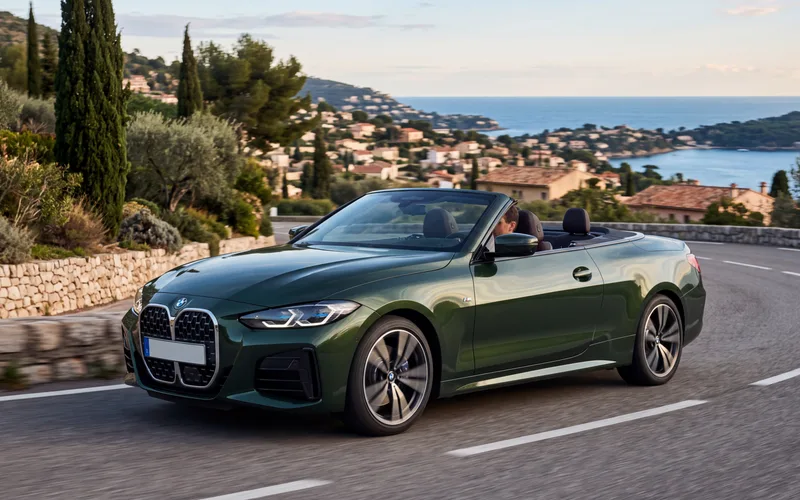 BMW 4 Series ConvertibleLuxury CoupeBetter at: Daily refinement
The closest four-seat drop-top rival, with a quieter top, real driver-assistance tech and a nicer interior — worth the price premium if you plan to drive it every day.
Compare 2.08C
2.08C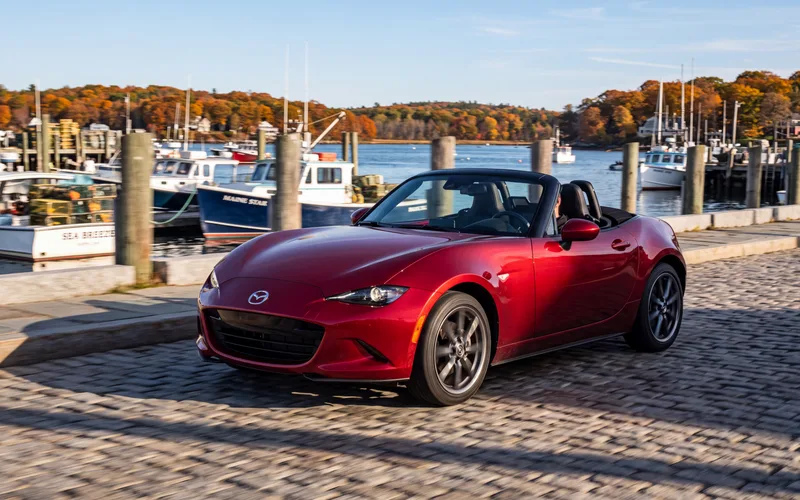 Mazda MX-5 MiataSports CarBetter at: Running costs
If open-air fun matters more than horsepower, the Miata delivers it for far less money and far less fuel, at the cost of the V8 and any back seat.
Compare 1.92C-
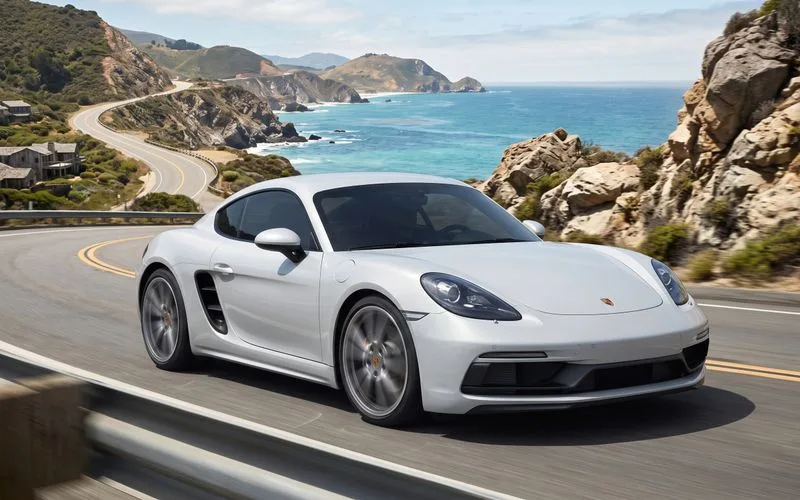 Porsche 718 BoxsterSports CarBetter at: Handling
For buyers who will stretch the budget for genuine mid-engine handling and structural rigidity the convertible Mustang cannot match.
CompareHow it's evolved
10 scored model years · 2017–2026
Subject scores by year
Hover or tap a score to see what moved it versus the year before. A corner mark flags a big swing.
| Year | Performance | Efficiency | Safety | Space | Cost | Reliability | Tech | Use-case | Driving | Value |
|---|---|---|---|---|---|---|---|---|---|---|
| 2026 | 72 | 37 | 54 | 50 | 40 | 72 | 71 | 34 | 73 | 84 |
| 2025 | 72 | 37 | 54 | 50 | 40 | 73 | 70 | 34 | 73 | 84 |
| 2024 | 72 | 37 | 54 | 50 | 44 | 67 | 70 | 34 | 73 | 84 |
| 2023 | 71 | 33 | 51 | 50 | 44 | 74 | 58 | 33 | 69 | 74 |
| 2022 | 71 | 29 | 62 | 49 | 47 | 74 | 53 | 32 | 73 | 71 |
| 2021 | 71 | 26 | 48 | 50 | 49 | 74 | 51 | 33 | 69 | 74 |
| 2020 | 70 | 31 | 51 | 50 | 49 | 73 | 49 | 33 | 71 | 78 |
| 2019 | 71 | 33 | 40 | 50 | 51 | 72 | 49 | 32 | 68 | 71 |
| 2018 | 71 | 32 | 40 | 50 | 47 | 67 | 50 | 31 | 67 | 74 |
| 2017 | 66 | 39 | 27 | 49 | 43 | 66 | 41 | 29 | 68 | 74 |
Compare two years
Best fit & conditions
Higher scores mean a better fit for that use case. Learn more about use-case fit →
Subject profile
Detailed scoring by subject
1Performance & PowertrainOne of the Mustang Convertible's strongest categories.2.83B-
The 2018 convertible offers the same two engines as the coupe: Gen-3 5.0L Coyote V8 in the GT (460 hp @ 7000 rpm, up 25 hp from 2017 via dual port + direct injection and a 7500 rpm redline) and the 2.3L EcoBoost turbo I4 at 310 hp. The Shelby GT350's 526-hp 5.2L Voodoo V8 was fastback-only, so the drop-top loses that top-of-range tier.
GT 5.0 delivers 420 lb-ft @ 4600 rpm for 2018 (up 20 lb-ft over 2017). EcoBoost 2.3T's torque was bumped to 350 lb-ft (from 320) via a revised twin-scroll turbo and improved cooling, giving a wider, flatter torque curve.
The convertible carries roughly 150 lb of chassis reinforcement over the fastback, adding ~0.2–0.3 s across the range. Instrumented coupe times — GT 10AT PP1 ~3.9–4.0 s, EcoBoost 10AT ~5.1 s — translate to a mid-4-second GT convertible and low-5s EcoBoost drop-top. Drag Strip Mode (new for 2018) helps launches.
Same Gen-3 5.0 Coyote and 2.3T EcoBoost as the fastback — no mechanical delta top-down. The revised V8 (port + direct injection, 7500 rpm redline) is praised as smoother and more urgent than the 2015-17 version; the EcoBoost pulls cleanly but exhibits occasional coarseness under load. The open cabin amplifies the V8's aural charm while making EcoBoost turbo hiss and drone more evident.
New-for-2018 10-speed automatic (co-developed with GM) replaced the aging 6-speed — reviewers praised quick, decisive shifts on the V8 but noted the calibration hunted more with the EcoBoost and could feel busy in city driving. The 6-speed manual gained rev-matching and remains one of the last affordable V8 manual convertibles. First-year calibration quirks held it below the mature-decade tier.
Every 2018 Mustang Convertible trim (EcoBoost Premium, GT Premium) is rear-wheel drive only — Ford does not offer AWD anywhere in the Mustang lineup, unlike AWD-capable drop-top rivals such as the BMW M4 Cabriolet xDrive or Audi S5 Cabriolet.
Only two powertrains available on the 2018 convertible: 2.3L EcoBoost turbo I4 and 5.0L Gen-3 Coyote V8 (GT). The V6 was discontinued for 2018 and the Shelby GT350's 5.2L Voodoo V8 was fastback-only, so the drop-top loses the top-of-range track special. Zero electrification (no hybrid, PHEV, or EV), which caps the score below the mid-band per the 'includes electrified options' criterion.
2Efficiency & RangeOne of the Mustang Convertible's weakest categories.0.07F
For 2018 the S550 Mustang Convertible dropped the V6 and adopted a 10-speed automatic on both EcoBoost and GT. The volume EcoBoost 2.3T 10AT convertible is EPA-rated 25 MPG combined; GT V8 trims drop to 18–19 MPG combined. Middling result against a convertible band whose top end is set by hybrids.
EcoBoost auto returns 21 MPG city — weak against a convertible band whose top end is set by hybrid-driven small cars. GT V8 trims sit at 15 city.
EcoBoost highway MPG (31) is the 2018 convertible's efficiency high-water mark — respectable for a topless performance car but well behind hybrid-driven rivals that clear 50 MPG. GT V8 trims deliver 25 hwy on both transmissions.
15.5-gallon fuel tank × EPA 25 MPG combined puts the EcoBoost convertible near 388 miles between fills — middling for the convertible band. GT V8 trims fall to roughly 279–294 miles.
At 15,000 mi/yr and premium at ~$3.75/gal, the volume EcoBoost 10AT burns ~600 gal for roughly $2,250/yr per fueleconomy.gov's current-year display. GT auto runs closer to $2,950/yr. The 2018 convertible's model average lands in the upper half of the segment cost band.
Both 2018 Mustang Convertible engines — 2.3T EcoBoost and 5.0 V8 GT — are rated on premium 91 octane for advertised power; Ford lists 87 octane as the minimum but published horsepower/torque figures assume premium. No E85, no diesel, no electrified option. Every convertible trim carries the same premium expectation, so the score sits in the lower half of the 'recommended but not required' band.
3SafetyOne of the Mustang Convertible's weakest categories.0.66F
NHTSA did not publish a separate overall rating for the 2018 Ford Mustang Convertible. The 2018 Mustang coupe on the same S550.2 platform earned 5 stars overall (frontal 5, side 5, rollover 4). Following the convention used elsewhere in this dataset, the convertible is estimated one star lower to reflect that the open-top structure is not directly comparable and is untested.
IIHS does not run its full crashworthiness battery on convertibles (no roof-strength test), so the Mustang Convertible cannot earn Top Safety Pick. The 2018 Mustang coupe on the same S550.2 platform earned Good in moderate overlap, driver-side small overlap, side, and head restraints, but Acceptable on passenger-side small overlap and only Marginal-to-Acceptable on headlights depending on trim — mixed results that sit in the middle-lower guidance band even before subtracting for the untested convertible structure.
For 2018, Ford Co-Pilot360 had not yet been introduced (it became standard on the 2019 Mustang). On the 2018 Mustang Convertible, only a rearview camera is federally-required standard equipment. Pre-Collision Assist with AEB, Adaptive Cruise Control, Lane Departure Warning, and Lane-Keeping Assist are all bundled in the optional Safe & Smart Package. BLIS with Cross-Traffic Alert is only offered on the (all-Premium) convertible trims via an equipment group. Almost nothing meaningful is standard — squarely in the bottom band for locked-away safety features.
When optioned with the Safe & Smart Package, the 2018 Mustang's Pre-Collision Assist with Pedestrian Detection earned Superior in IIHS vehicle-to-vehicle front-crash-prevention testing and Advanced in daytime pedestrian evaluation. However, the system was not tested at night (2018 predates IIHS nighttime pedestrian protocols) and was optional rather than standard, keeping performance well short of the top band.
BLIS with Cross-Traffic Alert is available on the 2018 Mustang Convertible via the Equipment Group 201A/301A option on EcoBoost Premium and GT Premium — the only convertible trims — meaning it is commonly ordered but not universally standard. Alert-only intervention (no active steering), no trailer coverage. Especially valuable on a convertible where the folded fabric roof creates a large rear-quarter blind zone with the top up.
The 2018 Mustang's Lane-Keeping System, bundled in the optional Safe & Smart Package, offers only lane-departure warning plus a corrective steering nudge (Lane Keep Aid) — no lane centering. Reviewers describe the nudge as reactive and easily overridden. Because the system is optional (not standard) and lacks centering entirely, it sits below the mid-band.
Adaptive Cruise Control was available on the 2018 Mustang only via the optional Safe & Smart Package and did not include stop-and-go — it disengaged at low speed (roughly under 20 mph) and required driver re-engagement. It also did not combine with lane-keep into a mature highway-assist mode. Reviewers rated the system as functional but noticeably behind the ACC available from German rivals in the same convertible price bracket.
No hands-free highway driving of any kind on the 2018 Mustang. Ford's BlueCruise did not debut until the 2021 F-150 and Mach-E and has never been offered on any Mustang. Bottom of the guidance band.
Full LED headlamps were standard on all 2018 Mustang Convertibles (Premium-only trims), but IIHS rated the 2018 Mustang's headlights only Marginal-to-Acceptable depending on trim configuration, with high-beam performance generally weaker than the low-beam figures. Auto high-beam was available via the Safe & Smart Package (optional). Firmly middle-lower band.
Top-down visibility is excellent, but with the fabric roof raised the over-the-shoulder and rear three-quarter views are severely blocked — the folded-top stack behind the rear seats and a small heated-glass rear window create large rear-quarter blind zones. The standard rearview camera helps when reversing but a 360-degree camera was not available on the 2018 Mustang, so daily-traffic visibility relies entirely on mirrors and (optional) BLIS.
The 2018 Mustang Convertible is a nominal 4-seater but the rear seat is essentially token space. LATCH access requires tumbling a front seat forward and ducking through a narrow single doorway; the folded-top mechanism intrudes on rear headroom and vertical clearance, making rear-facing seats particularly hard to fit. IIHS separately rated the 2018 Mustang's LATCH ease of use Marginal. Firmly in the bottom band.
4Space & ComfortGrades below the middle of the scale.1.33D
S550 convertible carries the same 2+2 layout as the fastback across EcoBoost and GT trims — two front buckets and a token rear bench.
Top-up front headroom matches the fastback's 37.6 in — no meaningful loss to the folded soft-top mechanism up front, mid-band for the segment.
Class-leading front legroom shared with the coupe — the driver's cell easily accommodates tall occupants, unchanged through the S550 generation.
With the top up the rear seat clears just 34.8 in — below the convertible band's 35 in floor and firmly kids-only, tighter than the S650-era 35.7 in.
Rear legroom sits below the 32 in convertible band floor — emergency/child-only bench, unchanged from the fastback but a touch better than the S650's 29 in.
The soft-top mechanism trims trunk volume versus the fastback's 13.5 cu ft, landing near the convertible band's floor — enough for a couple of weekender bags but not much more.
S550 cabin storage is functional-only — small console bin, shallow door pockets, tight glovebox — and the convertible loses the fastback's fold-flat rear seatbacks/trunk pass-through to the top-mechanism bulkhead. Older switchgear layout than the S650 with no wireless charging on early 2018 build orders.
Front buckets are comfortable for long stints but flat and under-bolstered without the optional Recaros (Performance Package territory, fastback-focused on 2018 — convertible availability was limited). Rear bench unusable for anyone over 5'6".
The 2018 refresh introduced optional MagneRide adaptive damping (via Performance Package on GT) which materially helps, but base convertibles ride firmer than the S650 and exhibit clear cowl shake over broken pavement due to reduced structural rigidity vs the coupe.
Soft-top construction admits substantial wind and road noise at highway speed even with the roof up, and the new-for-2018 Active Valve Performance Exhaust reads louder here than in premium-brand rivals. Well down on segment-leader 4 Series Convertible's insulated top; top-down cruising is obviously loud.
Dual-zone automatic climate, push-button start, keyless entry, and selectable drive modes standard on Premium trims (EcoBoost Premium, GT Premium); heated + ventilated front seats and heated steering wheel available on Premium. New-for-2018 optional 12-inch digital cluster and B&O Play audio add cabin ambiance, but no remote pre-conditioning or wind-deflector/neck-warmer that segment rivals offer.
5Cost of OwnershipGrades below the middle of the scale.1.13D
The 2018 Mustang EcoBoost Convertible opened at $29,500 base plus $995 destination — about $5k above the equivalent Fastback. Sits in the lower third of the convertible normalization band.
The EcoBoost Premium Convertible — the volume drop-top trim — opened around $34,995 + destination and reached roughly $37k with common option packs (Safe & Smart, Enhanced Security, 201A equipment group). GT Premium Convertible topped the range near $45k.
RepairPal ranks Ford Mustang around $709/yr average annual repair cost — slightly worse than average for midsize cars. Convertible top mechanism adds modest upkeep. Five-year projected maintenance + repair runs about $5,500–$6,500, with the EcoBoost turbo timing chain/intercooler service and convertible top hydraulics adding to the tally.
Mustang holds value better than most convertibles thanks to enduring nameplate demand, but the drop-top depreciates a couple points faster than the fastback. A 2018 EcoBoost Convertible bought at ~$30.5k typically retained ~48% ($14–16k) by 2023; GT Convertibles held closer to 55%. Puts it mid-band for the convertible segment.
Ford's 2018 new-vehicle limited warranty is 3 years / 36,000 miles — industry baseline and the floor of the convertible normalization band. Expired for original owners by 2021.
Ford 2018 powertrain coverage is 5 years / 60,000 miles — the industry floor and well behind Hyundai/Kia's 10-year plans of the era. Expired for original owners by 2023.
No complimentary scheduled maintenance program in 2018 (unlike BMW's 4-year Ultimate Care+ or Jaguar's included plans that year). Ford included 5-year/60,000-mile roadside assistance tied to the powertrain warranty and a short SYNC Connect/FordPass connected-services trial — decent but well short of segment leaders. Absent any free scheduled service holds the score in the low tier.
$37,000 volume-trim price minus its estimated resale value after 5 years (48% retained, or about $17,760) leaves about $19,240 in depreciation. Add the projected $6,000 in 5-year maintenance and repairs, and owning this vehicle for 5 years costs about $25,240 in total.
6Reliability & QualityMid-pack among this car's ten categories.2.51C+
The 2018 S550 refresh drew average predicted-reliability signals at launch (Consumer Reports 2018 Mustang predicted reliability 3/5, average) with the new 10R80 10-speed automatic driving most owner complaints; the convertible variant lands a couple points below the fastback because the folding-top mechanism, latch sensors, and top-well seals add failure points not present on the coupe. J.D. Power quality ratings for 2018 Mustang sit around 78-82/100.
Ford has consistently ranked mid-to-lower pack in Consumer Reports brand reliability and J.D. Power VDS through the late 2010s — competent but well behind Toyota/Lexus and Porsche in dependability studies covering 3+ year-old vehicles.
The 2018 Mustang has accumulated roughly 8-10 NHTSA recalls over its life (brake booster 20V-586, transmission clip 19V-018, backup camera image, fuel-tank strap), plus extensive TSB activity on the new 10R80 10-speed (shift judder, harsh 1-2 shifts); the convertible carries the same recall list and adds top-mechanism-related bulletins on rare occurrence — heavier activity than benchmark sports cars.
The Gen 3 5.0L Coyote V8 (new for 2018 with DI+PFI, 460 hp) has proven durable in the field with strong high-mileage owner reports, and the 2.3L EcoBoost has a solid track record on the S550; the 10R80 10-speed is mechanically durable once past early TCM/software calibration fixes documented in multiple TSBs.
The 2018 refresh added a soft-touch dashboard, better switchgear, and optional 12-inch digital cluster on higher trims, but reviewers still called out hard plastics on door panels and center console at premium pricing; convertibles get the same materials as coupes with no meaningful uplift, and the top-well liner and rear side panels drop to plainer trim than the coupe's rear quarters.
Assembly at Ford's Flat Rock plant is generally solid but the S550 has drawn scattered rattle, panel-gap, and trim fitment complaints, and the convertible body style inherently adds cowl shake, top-mechanism wear, wind-noise, and water-seal complaints not present on the coupe — 2018 owner forum threads document more rattles on drop-top cars than fastbacks.
Ford operated one of the densest US dealer networks in 2018 (~3,000 dealers) providing easy nationwide service access; J.D. Power CSI scores for Ford dealers historically land near mass-market average rather than premium-brand levels.
The Mustang has arguably the largest aftermarket support of any modern American car — 8+ years on for the 2018 MY, parts are extraordinarily abundant and competitively priced from countless suppliers (Ford Performance, Steeda, Roush, LMR, AmericanMuscle, Summit Racing); OEM parts remain cheap for the segment. Convertible-specific top hydraulics, motor, and headliner components remain dealer-sourced and add modest cost, holding the score a hair below the coupe's 94.
7Technology & InfotainmentGrades below the middle of the scale.1.37D
For 2018 Ford made SYNC 3 with the 8-inch color capacitive touchscreen standard across the Mustang range including the convertible (EcoBoost and GT, base and Premium), replacing the base 4.2-inch monochrome display used in earlier S550 cars.
SYNC 3 was widely praised in 2018 as one of the better mainstream systems — fast tile-based menus, pinch-zoom maps, retained physical volume/tuning knobs and hard climate controls, and a big step up from the old MyFord Touch it replaced. The convertible uses the identical head unit and control layout as the coupe.
The 2018 Mustang Convertible offered wired Apple CarPlay and Android Auto standard on every trim (via SYNC 3), which was leading for its time, but no wireless projection was available — buyers still had to plug in via USB-A.
SYNC 3 voice control handled phone, audio and destination commands with reasonable success and was a big improvement over MyFord Touch, but it remained command-based rather than natural-language; built-in navigation (part of Enhanced Package / GT Premium option) was competent but most owners defaulted to CarPlay/Waze.
Base convertibles shipped with a 6-speaker system, Premium stepped up to a 9-speaker Shaker, and the flagship optional B&O PLAY 12-speaker/1000-watt system (new for 2018 via Ford's tie-up with Harman-owned Bang & Olufsen) drew positive reviews for clarity and bass; the convertible sits a few points below the coupe because top-down driving significantly compromises the effectiveness of any audio system regardless of speaker count.
The 2018 refresh introduced an available 12-inch all-LCD digital instrument cluster (optional on Premium trims, coupe and convertible) with three configurable modes — Normal, Sport and Track — which was class-leading for a 2018 sports car; base and non-Premium cars kept analog gauges with a 4.2-inch center info display.
The 2018 Mustang Convertible with FordPass Connect/SYNC Connect (optional on Premium via the Enhanced Security & Convenience Package) supported WiFi/tethered SYNC and map updates rather than true whole-vehicle OTA; no powertrain, chassis or ADAS OTA updates were offered on this generation.
The 2018 Mustang was among the first Mustangs to offer FordPass Connect with an embedded 4G LTE modem (optional on Premium trims), enabling remote start, lock/unlock, vehicle status and locate via the FordPass phone app — a solid core feature set, though no digital key, remote start limited to automatic-transmission cars, and the feature gated behind an optional package.
The 2018 Mustang Convertible provided two front USB-A ports (no USB-C anywhere in the car), a 12V outlet, and no rear-passenger USB ports and no wireless phone charging on any trim — a spartan port loadout even for 2018.
Intelligent Access with push-button start was standard on Premium trims and optional on base EcoBoost/GT (via 101A/201A/301A packages); FordPass-based remote start added convenience on auto-equipped Premiums, but no phone-as-key and no hands-free entry on this generation.
Rear-view camera was standard, rear parking sensors were standard on Premium/optional on base, and no front sensors, no 360-degree camera and no automated parking were offered on any 2018 Mustang — a real gap for a convertible whose top-up rearward visibility is compromised by the fabric roof and thick rear buttresses.
No head-up display was offered on the 2018 Mustang Convertible on any trim, base or GT Premium — a notable omission versus rivals like the BMW 4 Series Convertible and Audi A5 Cabriolet, both of which offered HUD.
8Use-Case FitThe Mustang Convertible's lowest-graded category.0.01F
Two-door soft-top on the S550 platform with roughly 30.6 in of rear legroom and vestigial 2+2 rear seats; LATCH is present at the outboard rear positions but installing a rear-facing seat requires sliding the front seat far forward. Top-down access is marginally easier than the coupe; top-up requires ducking under a low header and threading a child past the long, heavy door. The convertible's fixed rear seatback (no fold-down, unlike the coupe) makes loading bulky child gear harder still.
The 2018 refresh made Pre-Collision Assist with Pedestrian Detection (AEB) and auto high-beams standard on every trim, but BLIS with cross-traffic alert, lane-departure warning + lane-keeping aid, and adaptive cruise all remained optional inside the Safe & Smart Package. NHTSA does not publish a full 5-star rating for the convertible body style, and IIHS did not test the convertible (2018 coupe was Acceptable/Marginal on small-overlap, headlights Marginal-to-Poor). Open-top structural crash performance is inherently less proven than the coupe.
Front seats are supportive on long stints but the 30.6 in rear legroom and thick soft-top structure render the back seat child-only for anything past a short hop. No rear HVAC vents, no rear USB, no rear-seat entertainment, and only 11.4 cu ft of trunk (down from 13.5 on the coupe) — barely enough for two soft duffels, nowhere near a family of four's long-weekend gear. Top-up wind and road noise elevate cabin fatigue further.
Volume 2.3L EcoBoost (310 hp / 350 lb-ft) paired with the new-for-2018 10-speed automatic is smooth in traffic and rides comfortably on standard 18-in wheels. But top-up rear visibility is markedly worse than the coupe — the small back window and thick fabric quarters close in the over-shoulder view on top of the wide 75.4 in body. Adaptive cruise is optional (Safe & Smart Package), no lane-centering, and heavy long doors are awkward in tight lots.
Volume EcoBoost 2.3T + 10AT posts EPA 21/32/25 MPG — decent for a rear-drive sports car — but Ford recommends 91-octane premium for full-power output on every 2018 Mustang engine (EcoBoost and GT alike). Estimated fuel cost roughly $2,250/yr on the EcoBoost, past $2,950 on the GT. Performance tires, brakes, and specialty-coupe service push per-mile costs above mainstream commuters, and the convertible adds a power-top mechanism to the maintenance ledger.
At 188.5 in long, 75.4 in wide, with a ~40 ft turning circle and long heavy doors, the S550 convertible is bulky in urban lots. Rear-view camera is standard and reverse sensing is standard on Premium — but no front sensors, no 360-degree camera, and no automated parking are offered on any 2018 trim. Top-up rear visibility is worse than the coupe because the small back window and fabric quarter panels close in the over-shoulder view.
Ford does not publish a factory tow capacity for the 2018 Mustang, and there is no bed, no meaningful payload, and only 11.4 cu ft of trunk with a shallow aperture (worse than the coupe's 13.5). Aftermarket hitches are bike-rack duty only. Essentially no work capability of any kind.
The Coyote 5.0L and 2.3L EcoBoost drivetrains are proven and Ford's dealer network is broad, but the convertible adds a power fabric roof (motors, latches, hydraulic lines) to the long-term maintenance ledger and offers no wash-out surfaces. Interior is trimmed in leather/ActiveX with low-profile 235/50 or 255/40 tires; no fleet or work-oriented variant sold in the US.
No factory 120V outlet, no factory tow hitch, no roof-rack system (the roof is a folding fabric top), no bed or bed-substitute. Cargo tie-downs are limited to a few small hooks in the trunk. Even less upfit-friendly than the coupe — the folding roof precludes rack accessories and the fixed rear seatback blocks a pass-through.
Front sport seats are comfortable over long hauls and the 10-speed's tall 10th gear settles the drivetrain at highway cruise; MagneRide dampers (new for 2018 on GT Performance Package) noticeably improve compliance. But the 15.5-gal tank yields ~496 mi highway range on the EcoBoost and ~388 mi on the GT, and top-up wind/road noise is markedly higher than the coupe. Adaptive cruise is optional (Safe & Smart Package) with no lane-centering, limiting fatigue reduction on multi-hour drives.
Rear-wheel drive only across the lineup — no AWD offered — with ~5 in of ground clearance, summer or all-season performance tires, no factory roof rails (folding fabric roof), and no factory hitch. Open-air appeal for scenic drives is genuine, but any gravel road with real texture scrapes the front splitter, and the convertible is more weather-exposed than the coupe. Pavement-bound with very little outdoor utility.
11.4 cu ft trunk (down from 13.5 on the coupe) with a shallow lid opening, and no fold-down rear seat pass-through — the convertible's soft-top mechanism precludes it. No roof rails, no factory hitch, no hatchback flexibility. Two soft-side weekend bags fit; skis, bikes, or bulky gear require an aftermarket trunk-mounted rack.
9Driving ExperienceOne of the Mustang Convertible's strongest categories.2.56C+
Shares the 2018-refresh S550 chassis with the coupe — independent rear suspension, revised bushings, and optionally MagneRide adaptive dampers with GT Performance Package Level 2. Base coupe was measured at 0.98 g on the skidpad, but the convertible pays a real structural penalty: reviewers report noticeable cowl shake and secondary body motions over rough pavement, so transitions feel less tied-down than the coupe (75). Still competent for a ~3,900-lb muscle convertible but well behind the mid-engine Cayman (80.1) and lighter Z4 (77.9) roadster.
Same three-mode electric power steering (Comfort/Normal/Sport) as the coupe; weight is accurate in Sport and turn-in is quick, but the flexier convertible structure transmits cowl shake through the rim on broken surfaces, slightly muddying feedback vs the coupe (71). Feel remains a step behind Porsche/BMW benchmarks.
Hardware is identical to the coupe: GT Performance Package adds 6-piston Brembo front calipers on 15.0-in rotors; Car and Driver measured 149 ft from 70 mph on a GT PP1 coupe. Pedal is firm and repeatable. The convertible carries ~150 lb of additional structural bracing over the same rotors, so repeated hard stops fade a hair sooner than the coupe (77). Base EcoBoost/GT without Performance Package uses smaller 13.9-in rotors and is a step behind.
Same revised 5.0L Coyote V8 (460 hp / 420 lb-ft) with new dual port + direct injection and 2.3L EcoBoost (310 hp / 350 lb-ft) as the coupe, paired to the all-new 10R80 10-speed automatic or MT-82 6-speed manual with rev-matching. Coyote is free-revving with immediate throttle response; 10AT shifts are sharp in Sport mode but the first-year calibration occasionally hunts at light throttle on the highway. Slightly below the coupe (80) because the softer convertible drivetrain mounts and open-top structure make low-speed shift shock marginally more perceptible.
New-for-2018 Active Valve Performance Exhaust unlocks the signature Coyote V8 growl on GT with Quiet/Normal/Sport/Track modes, and the convertible amplifies it with the top stowed — enthusiasts count that as a defining reason to buy. Grades slightly above the coupe (74) on soundtrack; the trade-off is that top-up highway drone and wind rush are more prominent than in the coupe. EcoBoost four-cylinder is coarse and synthesized, dragging the average down for that trim.
Ford's published turning diameter for the 2018 Mustang (coupe and convertible) is 40.0 ft curb-to-curb — at the wide end of the convertible band, reflecting the long 107.1-in S550 wheelbase (notably worse than the 2026 S650's 37.8 ft).
Refreshed S550 interior with optional 12-in reconfigurable digital cluster (a class first), cleaned-up center-stack switchgear, and standard sport buckets that fit a range of drivers (optional Recaros hold in hard cornering). Roof-down visibility is excellent — better than the coupe — but roof-up rear visibility is poor due to thick fabric quarters and a small heated glass rear window. Ingress/egress into the low seats is a compromise typical of the class. SYNC 3 8-in touchscreen is smaller and lower-res than the S650's dual-screen setup.
The 2018 refresh sharpened an already-iconic recipe with rear-wheel drive, 460-hp Coyote V8, available 6-speed manual with rev-match, new drag-strip mode with launch control, and the character/sound of the last mainstream affordable American V8 convertible. Top-down Coyote soundtrack is a definitive 'long-way-home' experience that edges the coupe (85) on visceral appeal at this price point. Only track-focused mid-engine rivals (Cayman/Boxster) rate meaningfully higher on outright driver engagement.
10Value & Market PositionThe Mustang Convertible's best-graded category.3.00B
The 2018 EcoBoost Convertible ($30,495 destination-in) includes LED headlights, rearview camera, dual-zone climate, MyKey, Track Apps, and a power-folding cloth top with heated glass rear window, but only a 4.2-inch center display — SYNC 3 with the 8-inch touchscreen requires the Premium trim or the SYNC 3 option. Advanced driver aids (auto emergency braking, adaptive cruise, blind-spot monitor) are bundled in the optional Safe & Smart package rather than standard; Ford Co-Pilot360 didn't become standard on Mustang until MY2020. Roughly on par with the coupe's kit for the drop-top surcharge.
Standout bang-for-buck in the sports convertible segment: the 2018 GT Premium Convertible delivered the reworked 460-hp 5.0L Coyote V8 for about $44,995 — the only mainstream V8 drop-top on the US market at any price near that. A Camaro SS 2SS Convertible ran $44,895 with 455 hp, and a BMW M240i Convertible opened at $50,195 with 335 hp. EcoBoost Convertible at ~$30.5k undercuts BMW 230i Convertible (~$40k) and Audi A3 Cabrio (~$40k) while offering 310 hp and RWD.
Narrower than the coupe: only three convertible trims — EcoBoost, EcoBoost Premium, and GT Premium (the standalone GT trim is coupe-only, so V8 convertibles must step up to Premium). Both engines pair with the standard 6-speed manual or optional new 10-speed automatic, and Performance Package Level 1 is available on EcoBoost and GT; PP2 with the aero splitter and Michelin PS Cup 2 tires is coupe-only. Shelby GT350/GT350R halos are coupe-only. Reasonable choice for the segment but noticeably fewer options than the fastback.
Mustang was the world's best-selling sports coupe for a fourth straight year in 2018 with 75,842 US units total; convertibles typically ran ~15–20% of the mix (roughly 12–15k drop-tops), which comfortably outsold Camaro Convertible and made the Mustang the volume leader among sports-car convertibles. Segment overall was contracting, but Mustang held share strongly against Camaro and Challenger.
The Mustang nameplate is one of the most iconic in the automotive industry — 50+ years of continuous production and deep pop-culture presence give it aspirational pull that transcends Ford's mainstream badge positioning. However, Ford lacks the premium cachet of BMW, Mercedes, or Porsche in the drop-top tier, capping halo appeal for luxury cross-shoppers who often view a Mustang Convertible as a step down from a 2 Series or SLC in image, if not in performance.
Ford routinely offered subvented APR (0–1.9%) and cash rebates ($500–$2,000) on 2018 Mustang EcoBoost and GT models, and convertibles typically carried slightly bigger discounts than coupes as inventory built later in the model year. Buyers could reliably move a GT Premium Convertible several thousand off sticker. No desperation pricing, but meaningful buyer-side value.
2018 is the mid-cycle refresh of the S550 generation (2015–2023), introducing genuinely substantive updates: revised styling (lower hood, LED headlights and taillights), the 460-hp reworked 5.0L Coyote V8 with dual port + direct injection and 7,400-rpm redline, the new 10R80 10-speed automatic, MagneRide adaptive dampers with GT PP, Active Valve Performance Exhaust, and a first-in-segment optional 12-inch all-digital instrument cluster. Not a new platform, but one of the most comprehensive mid-cycle refreshes in the segment.
Broadly positive reception for the refreshed powertrain, tech, and chassis — Car and Driver praised the more capable GT and 10AT (measured 4.3s 0–60 on the coupe), The Car Connection scored 7.3/10, and MotorWeek called it precision-balanced. The convertible specifically drew consistent notes about cowl shake, secondary chassis motions with the top down, and top-up rear visibility, so reviewers rarely picked it as class winner against Porsche 718 or BMW 4 Series drop-tops. Wins on all-around usability and value; loses on refinement and rigidity.