
The verdict
A mixed-report sports car, strong on reliability and held back by use-case.
The 2019 Mustang Convertible is one of the last affordable ways to drive a V8 with the roof down. The GT's 460-hp Coyote V8 and the rev-matching manual or quick 10-speed automatic make it a real thrill, and a base price of $31,940 undercuts European drop-tops by thousands. You pay for that elsewhere: key safety tech was optional, the rear seat is for kids at most, the soft top is noisy and hard to see past, and Ford's warranty was the industry minimum. If you want a used weekend car and don't need a practical daily driver, it's hard to beat on fun per dollar.
Jump to scoresStrengths
- Big V8 power at a mainstream price
- Top-down fun and a great soundtrack
- Proven powertrains and cheap, plentiful parts
What holds it back
- Most safety tech was optional
- The back seat is for kids only
- Thirsty, and it wants premium fuel
Top alternatives
Cars shoppers cross-shop with the Ford Mustang Convertible 2.83B-
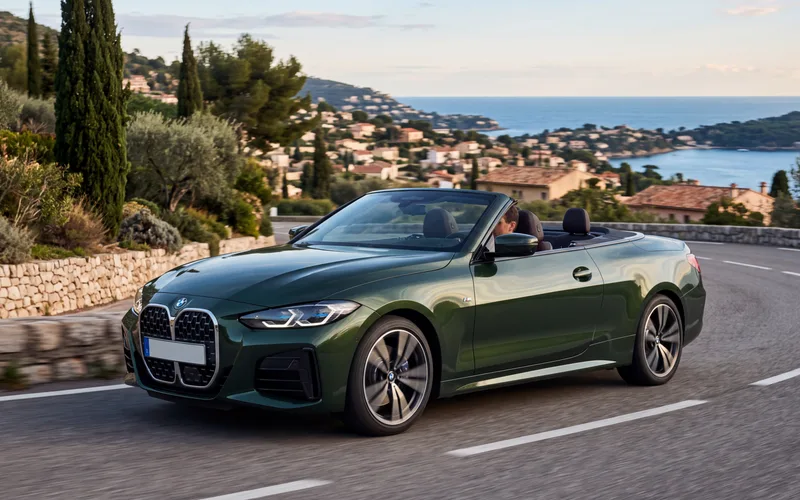 BMW 4 Series ConvertibleLuxury CoupeBetter at: Daily refinement
The closest four-seat drop-top rival, with a quieter top, real driver-assistance tech and a nicer interior — worth the price premium if you plan to drive it every day.
Compare 2.08C
2.08C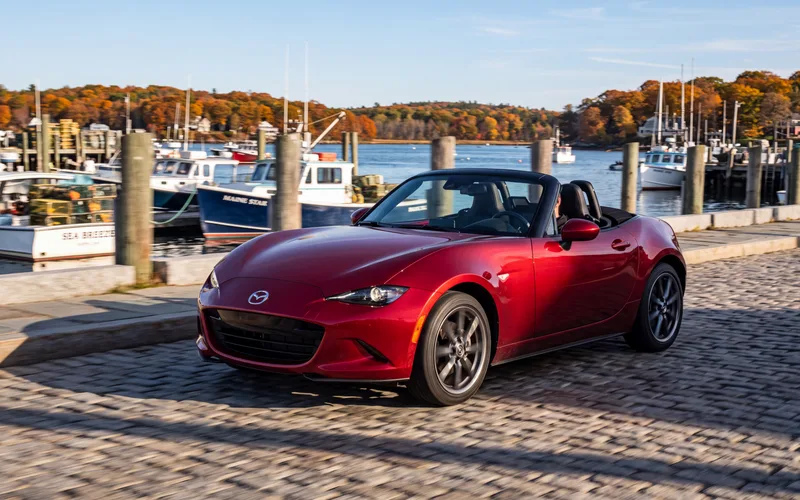 Mazda MX-5 MiataSports CarBetter at: Running costs
If open-air fun matters more than horsepower, the Miata delivers it for far less money and far less fuel, at the cost of the V8 and any back seat.
Compare 1.92C-
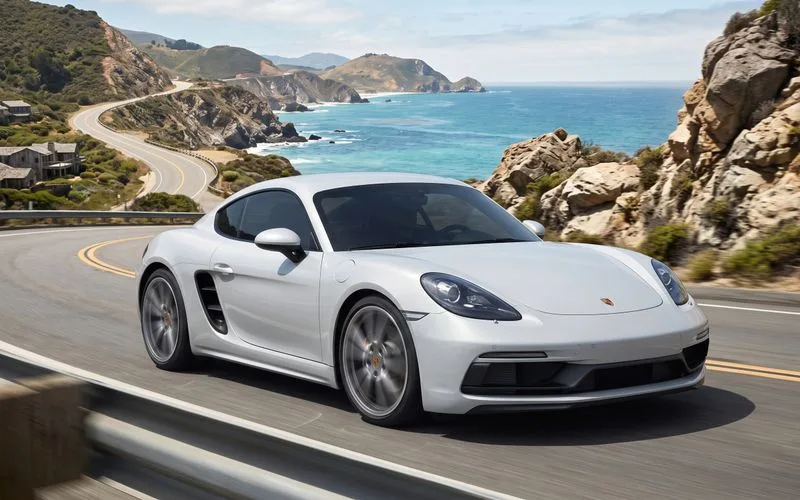 Porsche 718 BoxsterSports CarBetter at: Handling
For buyers who will stretch the budget for genuine mid-engine handling and structural rigidity the convertible Mustang cannot match.
CompareHow it's evolved
10 scored model years · 2017–2026
Subject scores by year
Hover or tap a score to see what moved it versus the year before. A corner mark flags a big swing.
| Year | Performance | Efficiency | Safety | Space | Cost | Reliability | Tech | Use-case | Driving | Value |
|---|---|---|---|---|---|---|---|---|---|---|
| 2026 | 72 | 37 | 54 | 50 | 40 | 72 | 71 | 34 | 73 | 84 |
| 2025 | 72 | 37 | 54 | 50 | 40 | 73 | 70 | 34 | 73 | 84 |
| 2024 | 72 | 37 | 54 | 50 | 44 | 67 | 70 | 34 | 73 | 84 |
| 2023 | 71 | 33 | 51 | 50 | 44 | 74 | 58 | 33 | 69 | 74 |
| 2022 | 71 | 29 | 62 | 49 | 47 | 74 | 53 | 32 | 73 | 71 |
| 2021 | 71 | 26 | 48 | 50 | 49 | 74 | 51 | 33 | 69 | 74 |
| 2020 | 70 | 31 | 51 | 50 | 49 | 73 | 49 | 33 | 71 | 78 |
| 2019 | 71 | 33 | 40 | 50 | 51 | 72 | 49 | 32 | 68 | 71 |
| 2018 | 71 | 32 | 40 | 50 | 47 | 67 | 50 | 31 | 67 | 74 |
| 2017 | 66 | 39 | 27 | 49 | 43 | 66 | 41 | 29 | 68 | 74 |
Compare two years
Best fit & conditions
Higher scores mean a better fit for that use case. Learn more about use-case fit →
Subject profile
Academic Probation · NHTSA safety recalls
Jun 9, 2026Electrical system: instrument cluster/panelAt vehicle start-up, the Instrument Panel Cluster Assembly (IPC) may not function, showing a blank display. As a result, these vehicles fail to comply with Federal Motor Vehicle Safety Standard (FMVSS) number 101, "Controls and Displays."
Defect
Ford Motor Company (Ford) is recalling certain 2019 Ford Mustang, Lincoln Nautilus, and Lincoln Navigator vehicles previously repaired incorrectly under recall number 19V076. At vehicle start-up, the Instrument Panel Cluster Assembly (IPC) may not function, showing a blank display. As a result, these vehicles fail to comply with Federal Motor Vehicle Safety Standard (FMVSS) number 101, "Controls and Displays."
Risk
A blank instrument cluster that fails to display critical safety information, such as vehicle speed or safety system warnings, increases the risk of a crash.
Remedy
Dealers will reprogram the Instrument Panel Cluster Assembly (IPC) software, free of charge. Owner notification letters were mailed July 13, 2026. Owners may contact customer service at 1-866-436-7332. Ford's number for this recall is 26C27. Vehicle Identification Numbers (VINs) involved in this recall will become searchable on NHTSA.gov on July 6, 2026.
NHTSA campaign 26V372000 ↗Manufacturer no. 26C272,349 vehicles potentially affected (all models in the campaign)Owners notified Jul 13, 2026Filed by Ford Motor CompanyFiled as MUSTANGSep 3, 2025Back over prevention: sensing system: cameraThe rearview camera may display a distorted, inverted, or blank image when the vehicle is in reverse.
Defect
Ford Motor Company (Ford) is recalling certain 2015-2019 Lincoln MKC, Mustang, F-350 SD, F-250 SD, F-450 SD, 2015-2017 Lincoln Navigator, Expedition, 2015-2018 Edge, Transit Connect, 2016-2019 F-550 SD, Transit, 2017-2019 Econoline, and 2019 Ranger vehicles. The rearview camera may display a distorted, inverted, or blank image when the vehicle is in reverse.
Risk
A rearview camera that displays an inverted, distorted, or blank image can reduce the driverâs view behind the vehicle, increasing the risk of a crash.
Remedy
Dealers will inspect and replace the rearview camera as necessary, free of charge. Owner notification letters were mailed January 13, 2026. Ford owners will receive letters in phases, beginning January 2026 and June 2026. Owners may contact Ford customer service at 1-866-436-7332. Ford's number for this recall is 25S89. This recall expands previous NHTSA recall number 25V270. Vehicle Identification Numbers (VINs) involved in this recall will be searchable on NHTSA.gov beginning September 8, 2025.
NHTSA campaign 25V572000 ↗Manufacturer no. 25S891,456,417 vehicles potentially affected (all models in the campaign)Owners notified Jan 13, 2026Filed by Ford Motor CompanyFiled as MUSTANGJun 27, 2025Back over prevention: softwareA software error may cause the rearview camera to display a blank image, or the image may remain on the display after the backing event has ended.
Defect
Ford Motor Company (Ford) is recalling certain 2018-2022 Transit Connect, 2019-2020 MKZ, MKX, Edge, Continental, F-150, Nautilus, Fusion, 2019-2023 Ranger, Mustang, 2020-2021 EcoSport, Expedition, Navigator, 2020-2022 Escape, F-250 SD, Corsair, 2020-2023 Aviator, Transit, 2020-2024 Explorer, 2021-2024 Bronco Sport, and 2022-2024 Maverick vehicles. A software error may cause the rearview camera to display a blank image, or the image may remain on the display after the backing event has ended.
Risk
A rearview camera that displays a blank image can reduce the driver's view behind the vehicle. A rearview image that continues to be displayed after the vehicle is shifted out of reverse may distract the driver. Both of these situations can increase the risk of a crash.
Remedy
Dealers will update the rearview camera software, free of charge. Owner notification letters were mailed September 4, 2025. Owners may contact Ford customer service at 1-866-436-7332. Ford's number for this recall is 25S72.
NHTSA campaign 25V442000 ↗Manufacturer no. 25S72200,237 vehicles potentially affected (all models in the campaign)Owners notified Sep 4, 2025Filed by Ford Motor CompanyFiled as MUSTANGMay 27, 2022Power train: automatic transmission: control module (tcm/pcm/tecm)The Powertrain Control Module (PCM) may broadcast an unintended faulted signal to the modules controlling the reverse camera, reverse light, and driver assist features, which may disable all of these functions.
Defect
Ford Motor Company (Ford) is recalling certain 2019-2020 Mustang vehicles equipped with 5.0L engines and manual transmissions. The Powertrain Control Module (PCM) may broadcast an unintended faulted signal to the modules controlling the reverse camera, reverse light, and driver assist features, which may disable all of these functions.
Risk
A rearview camera or reverse light that is disabled reduces the driver's rear view, increasing the risk of a crash. Disabled driver assist features (traction control, forward collision warning, blind spot warning, cross traffic indicator) may increase the risk of a crash.
Remedy
Dealers will update the PCM software, free of charge. Owner notification letters were mailed June 15, 2022. Owners may contact Ford customer service at 1-866-436-7332. Ford's number for this recall is 22S37.
NHTSA campaign 22V382000 ↗Manufacturer no. 22S3725,032 vehicles potentially affected (all models in the campaign)Owners notified Jun 15, 2022Filed by Ford Motor CompanyFiled as MUSTANGMay 8, 2020Electrical system: instrument cluster/panel · Power train: automatic transmission: gear position indication (prndl)The "Transmission Not In Park" warning message and associated chime duration are shorter than intended.
Defect
Ford Motor Company (Ford) is recalling certain 2019 Expedition and 2019-2020 Mustang vehicles. The "Transmission Not In Park" warning message and associated chime duration are shorter than intended.
Risk
If the driver exits the vehicle without the transmission being shifted into park, unintended vehicle movement may result, increasing the risk of injury or crash.
Remedy
Ford will notify owners, and dealers will reprogram the instrument cluster, free of charge. The recall began May 26, 2020. Owners may contact Ford customer service at 1-866-436-7332. Ford's number for this recall is 20S21.
NHTSA campaign 20V263000 ↗Manufacturer no. 20S2110,460 vehicles potentially affected (all models in the campaign)Owners notified May 26, 2020Filed by Ford Motor CompanyFiled as MUSTANGFeb 11, 2019Electrical system: instrument cluster/panelAt vehicle start-up, the Instrument Panel Cluster Assembly (IPC) may not function, showing a blank display. As a result, these vehicles fail to comply with Federal Motor Vehicle Safety Standard (FMVSS) number 101, "Controls and Displays."
Defect
Ford Motor Company (Ford) is recalling certain 2019 Ford Mustang, Lincoln Nautilus, and Lincoln Navigator vehicles. At vehicle start-up, the Instrument Panel Cluster Assembly (IPC) may not function, showing a blank display. As a result, these vehicles fail to comply with Federal Motor Vehicle Safety Standard (FMVSS) number 101, "Controls and Displays."
Risk
A blank instrument cluster will not show important information like vehicle speed, fuel or temperature level, or safety system warnings. Driving with an inoperative cluster can increase the risk of a crash.
Remedy
Ford has notified owners, and dealers will reprogram the Instrument Panel Cluster Assembly (IPC), free of charge. The recall began March 8, 2019. Owners may contact customer service at 1-866-436-7332. Ford's number for this recall is 19C03.
NHTSA campaign 19V076000 ↗Manufacturer no. 19C034,212 vehicles potentially affected (all models in the campaign)Owners notified Mar 8, 2019Filed by Ford Motor CompanyFiled as MUSTANG
39 recalls on other model years of the Mustang Convertible (2017–2018, 2020–2026)
Aug 25, 2026Engine and engine cooling: engine: hard parts internal/mechanicalThe engine piston domes may have been manufactured incorrectly, which can result in piston dome failure and lead to a loss of drive power.
Defect
Ford Motor Company (Ford) is recalling certain 2026 Explorer, Bronco, Bronco Sport, Mustang, and Ranger vehicles. The engine piston domes may have been manufactured incorrectly, which can result in piston dome failure and lead to a loss of drive power.
Risk
An unexpected loss of drive power increases the risk of a crash.
Remedy
Dealers will inspect the engine pistons and replace the engine long block, if necessary, free of charge. Interim letters, notifying owners of the safety risk, were mailed September 3, 2026. Additional letters will be sent once the remedy is available, anticipated in December 2026. Owners may contact Ford customer service at 1-866-436-7332. Ford's number for this recall is 26S61. Vehicle Identification Numbers (VINs) involved in this recall became searchable on NHTSA.gov on August 28, 2026.
NHTSA campaign 26V548000 ↗Manufacturer no. 26S6110,001 vehicles potentially affected (all models in the campaign)Filed by Ford Motor CompanyFiled as MUSTANGAug 25, 2026Electrical system: wiringThe engine compartment wiring harness ground connections may fracture and result in a loss of drive power, or a loss of function in the windshield washing system, headlights, air conditioning, or engine cooling fan. As such, these vehicles fail to comply with the requirements of Federal Motor Vehicle Safety Standard (FMVSS) numbers 108, "Lamps, Reflective Devices, and Associated Equipment," and 104, "Windshield Wiping and Washing Systems."
Defect
Ford Motor Company (Ford) is recalling certain 2024-2026 Mustang vehicles. The engine compartment wiring harness ground connections may fracture and result in a loss of drive power, or a loss of function in the windshield washing system, headlights, air conditioning, or engine cooling fan. As such, these vehicles fail to comply with the requirements of Federal Motor Vehicle Safety Standard (FMVSS) numbers 108, "Lamps, Reflective Devices, and Associated Equipment," and 104, "Windshield Wiping and Washing Systems."
Risk
A loss of driver power increases the risk of a crash. In addition, a loss of headlight function or windshield washing system function can reduce visibility, increasing the risk of a crash.
Remedy
Dealers will replace the engine compartment wiring harness ground terminals, free of charge. Interim letters, notifying owners of the safety risk, were mailed September 5, 2026. Additional letters will be sent once the remedy is available, anticipated in March 2027. Owners may contact Ford customer service at 1-866-436-7332. Ford's number for this recall is 26C40. Vehicle Identification Numbers (VINs) involved in this recall became searchable on NHTSA.gov on August 28, 2026.
NHTSA campaign 26V547000 ↗Manufacturer no. 26C40148,663 vehicles potentially affected (all models in the campaign)Filed by Ford Motor CompanyFiled as MUSTANGJun 30, 2026Visibility: windshield wiper/washer: motorDuring certain cold temperature conditions, the windshield wipers may function only at their high-speed setting and the washing system may fail to function properly.
Defect
Ford Motor Company (Ford) is recalling certain 2024-2026 Mustang and 2025-2026 Mustang GTD vehicles. During certain cold temperature conditions, the windshield wipers may function only at their high-speed setting and the washing system may fail to function properly.
Risk
Windshield wipers or a washing system that fails to function as intended can reduce visibility, increasing the risk of a crash.
Remedy
Dealers will inspect and replace the wiper motor as necessary, free of charge. Owner notification letters were mailed August 11, 2026. Owners may contact Ford customer service at 1-866-436-7332. Ford's number for this recall is 26C32. Vehicle Identification Numbers (VINs) involved in this recall became searchable on NHTSA.gov on July 2, 2026.
NHTSA campaign 26V418000 ↗Manufacturer no. 26C3267,842 vehicles potentially affected (all models in the campaign)Owners notified Aug 11, 2026Filed by Ford Motor CompanyFiled as MUSTANGMar 31, 2026Engine and engine cooling: engine: hard parts internal/mechanicalThe engine piston circlips may have been incorrectly installed during manufacturing, which can result in piston failure and engine damage, leading to a loss of drive power.
Defect
Ford Motor Company (Ford) is recalling certain 2026 Explorer and Mustang vehicles. The engine piston circlips may have been incorrectly installed during manufacturing, which can result in piston failure and engine damage, leading to a loss of drive power.
Risk
An unexpected loss of drive power increases the risk of a crash.
Remedy
Dealers will inspect the engine for missing or mis-installed circlips and replace the engine as necessary, free of charge. Owner notification letters were mailed April 10, 2026. Owners may contact Ford customer service at 1-866-436-7332. Ford's number for this recall is 26S23. Vehicle Identification Numbers (VINs) involved in this recall became searchable on NHTSA.gov on April 2, 2026.
NHTSA campaign 26V205000 ↗Manufacturer no. 26S23278 vehicles potentially affected (all models in the campaign)Owners notified Apr 10, 2026Filed by Ford Motor CompanyFiled as MUSTANGMar 3, 2026Engine and engine cooling: exhaust system: emission control: gas recirculation valve (egr valve)The exhaust gas recirculation (EGR) valve may fail, resulting in an unexpected loss of drive power.
Defect
Ford Motor Company (Ford) is recalling certain 2025 Ranger, Lincoln Nautilus, Mustang, Maverick, Explorer, Escape, Lincoln Corsair, Bronco Sport, and Bronco vehicles. The exhaust gas recirculation (EGR) valve may fail, resulting in an unexpected loss of drive power.
Risk
An unexpected loss of drive power increases the risk of a crash.
Remedy
Dealers will replace the EGR valves, free of charge. Owner notification letters were mailed July 31, 2026. Owners may contact Ford customer service at 1-866-436-7332. Ford's number for this recall is 26S10. Vehicle Identification Numbers (VINs) involved in this recall became searchable on NHTSA.gov on March 4, 2026.
NHTSA campaign 26V122000 ↗Manufacturer no. 26S1047,804 vehicles potentially affected (all models in the campaign)Owners notified Jul 31, 2026Filed by Ford Motor CompanyFiled as MUSTANGDec 1, 2025EngineThe cylinder head may have been improperly manufactured, which can cause the ball plugs to fail, resulting in an oil leak.
Defect
Ford Motor Company (Ford) is recalling certain 2026 Explorer, Mustang, Lincoln Corsair, and 2025 Maverick vehicles. The cylinder head may have been improperly manufactured, which can cause the ball plugs to fail, resulting in an oil leak.
Risk
An oil leak in the presence of an ignition source such as hot engine or exhaust components increases the risk of a fire. In addition, the loss of oil can result in engine seizure and loss of motive power, increasing the risk of a crash.
Remedy
Dealers will replace the cylinder head assembly, free of charge. All affected vehicles are still within dealership inventory and therefore no owner notification letters will be mailed. Owners may contact Ford customer service at 1-866-436-7332. Ford's number for this recall is 25SD3. Vehicle Identification Numbers (VINs) involved in this recall became searchable on NHTSA.gov on November 24, 2025.
NHTSA campaign 25V828000 ↗Manufacturer no. 25SD36 vehicles potentially affected (all models in the campaign)Filed by Ford Motor CompanyFiled as MUSTANGOct 13, 2025Back over prevention: sensing system: cameraThe rearview camera may display a distorted, intermittent, or blank image when the vehicle is in reverse.
Defect
Ford Motor Company (Ford) is recalling certain 2015-2019 Flex, 2015 Explorer, Lincoln MKT, Lincoln MKZ, 2015-2016 C-Max, Escape, Taurus, 2016 Fusion, 2018-2019 Taurus, 2019 Lincoln MKT, Fiesta, and 2020 Mustang vehicles. The rearview camera may display a distorted, intermittent, or blank image when the vehicle is in reverse.
Risk
A rearview camera that fails to properly display an image can reduce the driverâs view behind the vehicle, increasing the risk of a crash.
Remedy
Dealers will inspect and replace the rearview camera as necessary, free of charge. This will be a phased campaign, with the remedy becoming available in different phases based on model and model years. Interim letters notifying owners of the safety risk were mailed on October 25, 2025. Additional letters will be mailed once the final remedy is available on each phase. Mustang owner notification letters were mailed January 2, 2026. Owners may contact Ford customer service at 1-866-436-7332. Ford's number for this recall is 25SA9. Vehicle Identification Numbers (VINs) involved in this recall became searchable on NHTSA.gov on October 14, 2025.
NHTSA campaign 25V695000 ↗Manufacturer no. 25SA91,448,655 vehicles potentially affected (all models in the campaign)Owners notified Jan 2, 2026Filed by Ford Motor CompanyFiled as MUSTANGOct 10, 2025Electrical system: body control module/bcmThe brake fluid level sensor may not activate the visual warning indicator when the brake fluid is low. As such, these vehicles fail to comply with the requirements of Federal Motor Vehicle Safety Standard number 135, "Light Vehicle Brake Systems."
Defect
Ford Motor Company (Ford) is recalling certain 2021-2023 Mustang vehicles repaired incorrectly under recall number 23V727. The brake fluid level sensor may not activate the visual warning indicator when the brake fluid is low. As such, these vehicles fail to comply with the requirements of Federal Motor Vehicle Safety Standard number 135, "Light Vehicle Brake Systems."
Risk
Without a low brake fluid warning light, the vehicle may be driven with low brake fluid, reducing braking performance and increasing the risk of a crash.
Remedy
Dealers will update the body control module software, free of charge. Owner notification letters were mailed December 11, 2025. Owners may contact Ford customer service at 1-866-436-7332. Ford's number for this recall is 25C55. Vehicle Identification Numbers (VINs) involved in this recall will be searchable on NHTSA.gov beginning November 17, 2025.
NHTSA campaign 25V689000 ↗Manufacturer no. 25C552,101 vehicles potentially affected (all models in the campaign)Owners notified Dec 11, 2025Filed by Ford Motor CompanyFiled as MUSTANGSep 12, 2025Seat belts: pretensionerWater and road salt may corrode the front seat belt anchor pretensioner cables.
Defect
Ford Motor Company (Ford) is recalling certain 2015-2017 Mustang vehicles. Water and road salt may corrode the front seat belt anchor pretensioner cables.
Risk
A corroded cable can break, preventing the seat belt from properly restraining an occupant, and increasing the risk of injury during a crash.
Remedy
Dealers will inspect and replace both front seat belt anchor pretensioner assemblies, as necessary. In addition, dealers will remove sections of the carpet and underlayment that contact the cables. Dealers will also inspect the A-pillar sealing patches, and as necessary, install A-pillar body plugs, and/or inspect and replace the front outboard seat bolts. Repairs will be performed free of charge. Interim letters, notifying owners of the safety risk, were mailed October 20, 2025. Additional letters will be sent once the final remedy is available, anticipated December 2026. Owners may contact Ford customer service at 1-866-436-7332. Ford's number for this recall is 25S92. Vehicle Identification Numbers (VINs) involved in this recall became searchable on NHTSA.gov September 17, 2025.
NHTSA campaign 25V614000 ↗Manufacturer no. 25S92332,778 vehicles potentially affected (all models in the campaign)Filed by Ford Motor CompanyFiled as MUSTANGAug 22, 2025Exterior lightingWater may enter the body control module and cause a loss of communication with the exterior lighting, including the license plate light, side marker, and tail lights. As such, these vehicles fail to comply with the requirements of Federal Motor Vehicle Safety Standard number 108, "Lamps, Reflective Devices, and Associated Equipment."
Defect
Ford Motor Company (Ford) is recalling certain 2024-2025 Mustang, and Mustang GTD vehicles. Water may enter the body control module and cause a loss of communication with the exterior lighting, including the license plate light, side marker, and tail lights. As such, these vehicles fail to comply with the requirements of Federal Motor Vehicle Safety Standard number 108, "Lamps, Reflective Devices, and Associated Equipment."
Risk
License plate, side marker, and tail lights that fail to illuminate as intended can reduce visibility to other drivers, increasing the risk of a crash.
Remedy
Dealers will inspect and seal the body seams as necessary. Dealers will also inspect the body control module for corrosion and replace it, if necessary. Repairs will be performed free of charge. Owner notification letters were mailed October 10, 2025. Owners may contact Ford customer service at 1-866-436-7332. Ford's number for this recall is 25C43.
NHTSA campaign 25V546000 ↗Manufacturer no. 25C43105,545 vehicles potentially affected (all models in the campaign)Owners notified Oct 10, 2025Filed by Ford Motor CompanyFiled as MUSTANGAug 8, 2025Exterior lighting: lighting control moduleThe LED Driver Modules may contain a burnt diode, which can cause the low-beam and high-beam headlights, daytime running lights, front position lights, and front turn signals to fail in the affected headlight. On Nautilus vehicles only, this condition may also cause the rear tail light, rear turn signal, and rear position light to fail. As such, these vehicles fail to comply with the requirements of Federal Motor Vehicle Safety Standard number 108, "Lamps, Reflective Devices, and Associated Equipment."
Defect
Ford Motor Company (Ford) is recalling certain 2025 Lincoln Nautilus, Mustang Mach E, and Mustang vehicles. The LED Driver Modules may contain a burnt diode, which can cause the low-beam and high-beam headlights, daytime running lights, front position lights, and front turn signals to fail in the affected headlight. On Nautilus vehicles only, this condition may also cause the rear tail light, rear turn signal, and rear position light to fail. As such, these vehicles fail to comply with the requirements of Federal Motor Vehicle Safety Standard number 108, "Lamps, Reflective Devices, and Associated Equipment."
Risk
Exterior lighting failure can reduce visibility for the driver and other road users, increasing the risk of a crash.
Remedy
Dealers will inspect and replace the LED Driver Modules, as necessary, free of charge. Owner notification letters were mailed September 22, 2025. Owners may contact Ford customer service at 1-866-436-7332. Ford's number for this recall is 25C39.
NHTSA campaign 25V519000 ↗Manufacturer no. 25C393,270 vehicles potentially affected (all models in the campaign)Owners notified Sep 22, 2025Filed by Ford Motor CompanyFiled as MUSTANGAug 8, 2025Electrical system: instrument cluster/panelFord Motor Company (Ford) is recalling one 2024 Mustang vehicle that was repaired incorrectly under recall 24V802. The Instrument Panel Cluster (IPC) may not illuminate at startup or while driving. As such, these vehicles fail to comply with the requirements of Federal Motor Vehicle Safety Standard numbers 101, "Control and Displays" and 102, "Transmission shift lever sequence, starter interlock, and transmission braking effect."
Defect
Ford Motor Company (Ford) is recalling one 2024 Mustang vehicle that was repaired incorrectly under recall 24V802. The Instrument Panel Cluster (IPC) may not illuminate at startup or while driving. As such, these vehicles fail to comply with the requirements of Federal Motor Vehicle Safety Standard numbers 101, "Control and Displays" and 102, "Transmission shift lever sequence, starter interlock, and transmission braking effect."
Risk
An instrument panel display that does not show critical information, such as warning lights or vehicle speed, increases the risk of a crash.
Remedy
A dealer will update the instrument panel cluster software, free of charge. Owner notification letters were mailed on September 12, 2025. Owners may contact Ford customer service at 1-866-436-7332. Ford's number for this recall is 25C35.
NHTSA campaign 25V516000 ↗Manufacturer no. 25C351 vehicles potentially affected (all models in the campaign)Owners notified Sep 12, 2025Filed by Ford Motor CompanyFiled as MUSTANGJul 7, 2025Fuel system, gasoline: delivery: fuel pumpThe low-pressure fuel pump may fail, which can result in an engine stall while driving.
Defect
Ford Motor Company (Ford) is recalling certain 2021-2023 Bronco, Explorer, Lincoln Aviator, F-250 SD, F-350 SD, F-450 SD, F-550 SD, 2021-2022 Lincoln Navigator, Mustang, F-150, and 2022 Expedition vehicles. The low-pressure fuel pump may fail, which can result in an engine stall while driving.
Risk
An engine stall increases the risk of a crash.
Remedy
Dealers will replace the low pressure fuel pump on super duty vehicles and update the powertrain control module (PCM) software on all other affected vehicles, free of charge. Owner notification letters were mailed July 27, 2026. Owners may contact Ford customer service at 1-866-436-7332. Ford's number for this recall is 25S75.
NHTSA campaign 25V455000 ↗Manufacturer no. 25S75850,318 vehicles potentially affected (all models in the campaign)Owners notified Jul 27, 2026Filed by Ford Motor CompanyFiled as MUSTANGMay 9, 2025Back over prevention: softwareA software error may cause the rearview camera image to delay, freeze, or not display when the vehicle is in reverse.
Defect
Ford Motor Company (Ford) is recalling certain 2021-2024 Bronco, F-150, 2021-2024 Edge, 2022-2025 Escape, F-250, F-350, F-450, F-550, F-600, 2022-2024 Expedition, 2022-2025 Transit, 2021-2023 Mach-E, 2024 Ranger, Mustang, 2021-2023 Lincoln Nautilus, 2022-2024 Navigator, and 2023-2024 Corsair vehicles. A software error may cause the rearview camera image to delay, freeze, or not display when the vehicle is in reverse.
Risk
A frozen or missing rearview camera image can reduce the driver's view behind the vehicle, increasing the risk of a crash.
Remedy
The accessory protocol interface module (APIM) software will be updated by a dealer or through an over-the-air update, free of charge. This will be a phased campaign, with the remedy becoming available in different phases based on model and model years. Interim letters notifying owners of the safety risk were mailed on June 26, 2025. Additional letters will be mailed once the final remedy is available on each phase. Owner notification letters were sent on October 8, 2025. Owners may contact Ford customer service at 1-866-436-7332. Ford's number for this recall is 25S49.
NHTSA campaign 25V315000 ↗Manufacturer no. 25S491,076,138 vehicles potentially affected (all models in the campaign)Owners notified Oct 8, 2025Filed by Ford Motor CompanyFiled as MUSTANGMar 14, 2025Power train: automatic transmission: fluid/lubricant: valves/valve bodyThe transmission valve body may have been machined incorrectly, which can cause reverse gear failure, or unexpected forward movement in reverse or neutral gear.
Defect
Ford Motor Company (Ford) is recalling certain 2024-2025 F-150, Bronco, 2024 Ranger, 2025 Mustang, Explorer, and Aviator vehicles. The transmission valve body may have been machined incorrectly, which can cause reverse gear failure, or unexpected forward movement in reverse or neutral gear.
Risk
Unexpected vehicle movement increases the risk of a crash.
Remedy
Dealers will replace the transmission main control valve body, free of charge. Owner notification letters were mailed April 11, 2025. Owners may contact Ford customer service at 1-866-436-7332. Ford's number for this recall is 25S19.
NHTSA campaign 25V164000 ↗Manufacturer no. 25S19269 vehicles potentially affected (all models in the campaign)Owners notified Apr 11, 2025Filed by Ford Motor CompanyFiled as MUSTANGFeb 14, 2025Steering: electric power assist systemThe secondary steering torque sensor may not be calibrated properly, which can cause the steering wheel to turn side to side against the driver's intentions.
Defect
Ford Motor Company (Ford) is recalling certain 2022-2023 Ford Mustang vehicles previously repaired incorrectly under recall number 24V-493. The secondary steering torque sensor may not be calibrated properly, which can cause the steering wheel to turn side to side against the driver's intentions.
Risk
A steering wheel that turns unintentionally can cause a loss of vehicle control and increase the risk of a crash.
Remedy
Dealers will update the power steering control module (PSCM) software, free of charge. Owner notification letters were mailed March 25, 2025. Owners may contact Ford customer service at 866-436-7332. Ford's number for this recall is 25S11.
NHTSA campaign 25V096000 ↗Manufacturer no. 25S11332 vehicles potentially affected (all models in the campaign)Owners notified Mar 25, 2025Filed by Ford Motor CompanyFiled as MUSTANGOct 25, 2024Electrical system: instrument cluster/panel · Electrical system: softwareThe Instrument Panel Cluster (IPC) may not illuminate at startup or while driving. As such, these vehicles fail to comply with the requirements of Federal Motor Vehicle Safety Standard numbers 101, "Control and Displays" and 102, "Transmission shift lever sequence, starter interlock, and transmission braking effect."
Defect
Ford Motor Company (Ford) is recalling certain 2024 Mustang vehicles. The Instrument Panel Cluster (IPC) may not illuminate at startup or while driving. As such, these vehicles fail to comply with the requirements of Federal Motor Vehicle Safety Standard numbers 101, "Control and Displays" and 102, "Transmission shift lever sequence, starter interlock, and transmission braking effect."
Risk
An instrument panel display that does not show critical information, such as warning lights or vehicle speed, increases the risk of a crash.
Remedy
Dealers will update the instrument panel cluster software, free of charge. Owner notification letters were mailed on February 25, 2025. Owners may contact Ford customer service at 1-866-436-7332. Ford's number for this recall is 24C35.
NHTSA campaign 24V802000 ↗Manufacturer no. 24C356,212 vehicles potentially affected (all models in the campaign)Owners notified Feb 25, 2025Filed by Ford Motor CompanyFiled as MUSTANGAug 23, 2024Fuel system, gasoline: fuel injection system: injectorsThe fuel injectors may have been assembled without O-ring support discs, which can result in a fuel leak.
Defect
Ford Motor Company (Ford) is recalling certain 2023 Lincoln Corsair, 2023-2024 Escape, 2024 Mustang, and 2025 Explorer vehicles. The fuel injectors may have been assembled without O-ring support discs, which can result in a fuel leak.
Risk
A fuel leak in the presence of an ignition source increases the risk of a fire.
Remedy
Dealers will install new fuel injector O-rings and O-ring support discs, free of charge. Owner notification letters were mailed on October 7, 2024. Owners may contact Ford customer service at 1-866-436-7332. Ford's number for this recall is 24S54.
NHTSA campaign 24V634000 ↗Manufacturer no. 24S5424 vehicles potentially affected (all models in the campaign)Owners notified Oct 7, 2024Filed by Ford Motor CompanyFiled as MUSTANGAug 9, 2024Suspension: rearThe rear suspension knuckles may have a casting defect that causes them to fail, which can result in a loss of vehicle handling and steering control.
Defect
Ford Motor Company (Ford) is recalling certain 2024 Mustang vehicles. The rear suspension knuckles may have a casting defect that causes them to fail, which can result in a loss of vehicle handling and steering control.
Risk
A loss of vehicle handling and steering control increases the risk of a crash.
Remedy
Dealers will inspect and replace the rear suspension knuckle as necessary, free of charge. Owner notification letters were mailed August 26, 2024. Owners may contact Ford customer service at 1-866-436-7332. Ford's number for this recall is 24S49.
NHTSA campaign 24V593000 ↗Manufacturer no. 24S494,595 vehicles potentially affected (all models in the campaign)Owners notified Aug 26, 2024Filed by Ford Motor CompanyFiled as MUSTANGJun 28, 2024Service brakes, hydraulic: brake fluid low warning: switch/sensor/floatThe brake fluid level sensor may not be properly configured after a Body Control Module (BCM) service update, resulting in a constantly illuminated brake fluid level warning light that can conceal a low brake fluid condition.
Defect
Ford Motor Company (Ford) is recalling certain 2024 Mustang vehicles. The brake fluid level sensor may not be properly configured after a Body Control Module (BCM) service update, resulting in a constantly illuminated brake fluid level warning light that can conceal a low brake fluid condition.
Risk
An undetected low brake fluid condition can lead to a loss of braking function, increasing the risk of a crash.
Remedy
Dealers will update the body control module (BCM) software, free of charge. Owner notification letters were mailed July 12, 2024. Owners may contact Ford customer service at 1-866-436-7332. Ford's number for this recall is 24S43.
NHTSA campaign 24V496000 ↗Manufacturer no. 24S4310 vehicles potentially affected (all models in the campaign)Owners notified Jul 12, 2024Filed by Ford Motor CompanyFiled as MUSTANGJun 28, 2024Steering: electric power assist systemThe secondary steering torque sensor may not be calibrated properly, which can cause the steering wheel to turn side to side against the driver's intentions.
Defect
Ford Motor Company (Ford) is recalling certain 2022-2023 Ford Mustang vehicles. The secondary steering torque sensor may not be calibrated properly, which can cause the steering wheel to turn side to side against the driver's intentions.
Risk
A steering wheel that turns unintentionally can cause a loss of vehicle control and increase the risk of a crash.
Remedy
Dealers will update the power steering control module (PSCM) software, free of charge. Owner notification letters were mailed on October 11, 2024. Owners may contact Ford customer service at 1-866-436-7332. Ford's number for this recall is 24S44.
NHTSA campaign 24V493000 ↗Manufacturer no. 24S4430,735 vehicles potentially affected (all models in the campaign)Owners notified Oct 11, 2024Filed by Ford Motor CompanyFiled as MUSTANGJun 3, 2024Power train: clutch assembly: linkage: hydraulic hose/fittingsThe clutch pressure line may be improperly secured and contact hot exhaust components, which can result in melting of the clutch pressure line and cause a brake fluid leak.
Defect
Ford Motor Company (Ford) is recalling certain 2024 Mustang vehicles. The clutch pressure line may be improperly secured and contact hot exhaust components, which can result in melting of the clutch pressure line and cause a brake fluid leak.
Risk
A melted clutch pressure line can result in a loss of drive power, increases the risk of a crash. A brake fluid leak increases the risk of fire in the presence of an ignition source.
Remedy
Dealers will inspect the clutch pressure line and repair it as necessary, free of charge. Owner notification letters were mailed June 14, 2024. Owners may contact Ford customer service at 1-866-436-7332. Ford's number for this recall is 24S36.
NHTSA campaign 24V394000 ↗Manufacturer no. 24S368,161 vehicles potentially affected (all models in the campaign)Owners notified Jun 14, 2024Filed by Ford Motor CompanyFiled as MUSTANGMar 22, 2024Fuel system, gasoline: delivery: hoses, lines/piping, and fittingsThe low-pressure fuel supply line may be damaged or cut, which can result in a fuel leak.
Defect
Ford Motor Company (Ford) is recalling certain 2024 Mustang vehicles equipped with 2.3L engines. The low-pressure fuel supply line may be damaged or cut, which can result in a fuel leak.
Risk
A fuel leak in the presence of an ignition source such as hot engine or exhaust components, can increase the risk of a fire. In addition, a loss of fuel may result in an engine stall, increasing the risk of a crash.
Remedy
Dealers will replace the low-pressure fuel supply line, free of charge. Owner notification letters were mailed April 4, 2024. Owners may contact Ford customer service at 1-866-436-7332. Ford's number for this recall is 24S19.
NHTSA campaign 24V220000 ↗Manufacturer no. 24S19362 vehicles potentially affected (all models in the campaign)Owners notified Apr 4, 2024Filed by Ford Motor CompanyFiled as MUSTANGNov 28, 2023Service brakes, hydraulic: pedals and linkagesThe brake pedal assembly may have been manufactured incorrectly, which can result in a loose brake pedal.
Defect
Ford Motor Company (Ford) is recalling certain 2024 Mustang vehicles. The brake pedal assembly may have been manufactured incorrectly, which can result in a loose brake pedal.
Risk
A loose brake pedal can result in a loss of braking function, increasing the risk of a crash.
Remedy
Owners are advised not to drive their vehicle until the repair has been performed. Dealers will replace the brake pedal and bracket assembly, free of charge. Owner notification letters were mailed December 21, 2023. Owners may contact Ford customer service at 1-866-436-7332. Ford's number for this recall is 23S61.
NHTSA campaign 23V800000 ↗Manufacturer no. 23S6166 vehicles potentially affected (all models in the campaign)Owners notified Dec 21, 2023Filed by Ford Motor CompanyFiled as MUSTANGOct 27, 2023Electrical system: body control module/bcmThe brake fluid level sensor may not activate the visual warning indicator when the brake fluid is low. As such, these vehicles fail to comply with the requirements of Federal Motor Vehicle Safety Standard number 135, "Light Vehicle Brake Systems."
Defect
Ford Motor Company (Ford) is recalling certain 2020-2023 Mustang vehicles. The brake fluid level sensor may not activate the visual warning indicator when the brake fluid is low. As such, these vehicles fail to comply with the requirements of Federal Motor Vehicle Safety Standard number 135, "Light Vehicle Brake Systems."
Risk
Without a low brake fluid warning light, the vehicle may be driven with low brake fluid, reducing braking performance and increasing the risk of a crash.
Remedy
Dealers will update the body control module software, free of charge. Owner notification letters were mailed December 21, 2023. Owners may contact Ford customer service at 1-866-436-7332. Ford's number for this recall is 23C35.
NHTSA campaign 23V727000 ↗Manufacturer no. 23C35187,922 vehicles potentially affected (all models in the campaign)Owners notified Dec 21, 2023Filed by Ford Motor CompanyFiled as MUSTANGFeb 10, 2023Power train: automatic transmissionThe transmission may contain a loose bolt which could prevent the transmission from engaging the park gear, although the gear shifter position may indicate that the vehicle has been shifted to "PARK."
Defect
Ford Motor Company (Ford) is recalling certain 2022-2023 F-150, Mustang, Explorer, Bronco, and 2023 Lincoln Aviator vehicles equipped with automatic transmissions. The transmission may contain a loose bolt which could prevent the transmission from engaging the park gear, although the gear shifter position may indicate that the vehicle has been shifted to "PARK."
Risk
The inability to secure the vehicle in the park position can result in a rollaway, increasing the risk of a crash or injury.
Remedy
Dealers will inspect and, if necessary, replace the transmissions, free of charge. Owner notification letters were mailed April 25, 2023. Owners may contact Ford customer service at 1-866-436-7332. Ford's number for this recall is 23S06.
NHTSA campaign 23V070000 ↗Manufacturer no. 23S061,138 vehicles potentially affected (all models in the campaign)Owners notified Apr 25, 2023Filed by Ford Motor CompanyFiled as MUSTANGMay 13, 2022Forward collision avoidance: sensing system: cameraThe camera is misaligned to the vehicle, resulting in the camera not functioning as intended.
Defect
Ford Motor Company (Ford) is recalling certain 2022 Mustang vehicles equipped with an Image Processing Module A (IPMA) or forward-facing camera. The camera is misaligned to the vehicle, resulting in the camera not functioning as intended.
Risk
A front-facing camera that is not functioning properly may restrict or disable certain features including Pre-Collision Assist, Adaptive Cruise Control, Lane Keeping System, Driver Alert, and Auto High Beam Control, increasing the risk of a crash.
Remedy
Dealers will realign the front-facing camera, free of charge. Owner notification letters were mailed on May 27, 2022. Owners may contact Ford customer service at 1-866-436-7332. Ford's number for this recall is 22S34.
NHTSA campaign 22V334000 ↗Manufacturer no. 22S3432 vehicles potentially affected (all models in the campaign)Owners notified May 27, 2022Filed by Ford Motor CompanyFiled as MUSTANGFeb 16, 2022Air bags: knee bolsterAn insufficient weld on the front passenger knee air bag may result in an improper air bag deployment.
Defect
Ford Motor Company (Ford) is recalling certain 2021-2022 Mustang vehicles. An insufficient weld on the front passenger knee air bag may result in an improper air bag deployment.
Risk
An improper air bag deployment can increase the risk of injury during a crash.
Remedy
Dealers will replace the front passenger knee air bag, free of charge. Owner notification letters were mailed on March 8, 2022. Owners may contact Ford customer service at 1-866-436-7332. Ford's number for this recall is 22S07.
NHTSA campaign 22V083000 ↗Manufacturer no. 22S07327 vehicles potentially affected (all models in the campaign)Owners notified Mar 8, 2022Filed by Ford Motor CompanyFiled as MUSTANGFeb 16, 2022Back over prevention: sensing system: cameraThe rearview camera wiring may be loose or damaged, which can result in a blank or distorted image.
Defect
Ford Motor Company (Ford) is recalling certain 2015-2017 Mustang vehicles. The rearview camera wiring may be loose or damaged, which can result in a blank or distorted image.
Risk
A rearview camera that displays a blank or distorted image can reduce the driver's rear view, increasing the risk of a crash.
Remedy
Dealers will inspect and repair the decklid wiring harness and/or replace the rearview camera, as necessary, free of charge. Owner notification letters were mailed December 23, 2022 and June 26, 2023. Remedy parts are expected to become available in the 4th Quarter of 2022. Owners may contact Ford customer service at 1-866-436-7332. Ford's number for this recall is 22S06.
NHTSA campaign 22V082000 ↗Manufacturer no. 22S06330,784 vehicles potentially affected (all models in the campaign)Owners notified Dec 23, 2022Filed by Ford Motor CompanyFiled as MUSTANGDec 16, 2021Air bags: side/window: curtainThe side curtain air bag inflators may have been manufactured with the incorrect amount of compressed gas, which can result in improper air bag inflation. As such, these vehicles fail to comply with the requirements of Federal Motor Vehicle Safety Standard numbers 226, "Ejection Mitigation," and 214, "Side Impact Protection."
Defect
Ford Motor Company (Ford) is recalling certain 2021 Mustang vehicles. The side curtain air bag inflators may have been manufactured with the incorrect amount of compressed gas, which can result in improper air bag inflation. As such, these vehicles fail to comply with the requirements of Federal Motor Vehicle Safety Standard numbers 226, "Ejection Mitigation," and 214, "Side Impact Protection."
Risk
An air bag that does not inflate properly can increase the risk of injury in a crash.
Remedy
Dealers will replace the side curtain air bags, free of charge. An interim owner notification letter was mailed on February 3, 2022. Owner notification letters were mailed on April 22, 2022. Owners may contact Ford customer service at 1-866-436-7332. Ford's number for this recall is 21C37.
NHTSA campaign 21V980000 ↗Manufacturer no. 21C3793 vehicles potentially affected (all models in the campaign)Owners notified Apr 22, 2022Filed by Ford Motor CompanyFiled as MUSTANGSep 23, 2020Back over prevention: sensing system: cameraDue to a poor electrical connection, the rearview camera may intermittently display a blank or distorted image. As such, these vehicles fail to comply with the requirements of Federal Motor Vehicle Safety Standard (FMVSS) number 111, "Rear Visibility."
Defect
Ford Motor Company (Ford) is recalling certain 2020 Ford F-150, F-250, F-350, F-450, F-550, Explorer, Mustang, Transit, Expedition, Escape, Ranger and Edge, and Lincoln Nautilus and Corsair vehicles. Due to a poor electrical connection, the rearview camera may intermittently display a blank or distorted image. As such, these vehicles fail to comply with the requirements of Federal Motor Vehicle Safety Standard (FMVSS) number 111, "Rear Visibility."
Risk
Reduced rearward visibility can increase the risk of a crash.
Remedy
Ford will notify owners, and dealers will replace the rearview camera, free of charge. The recall began November 17, 2020. Remedy became available on February 1, 2021. Owner notification letters were mailed on February 1, 2021. Owners may contact Ford customer service at 1-866-436-7332. Ford's number for this recall is 20C19.
NHTSA campaign 20V575000 ↗Manufacturer no. 20C19620,246 vehicles potentially affected (all models in the campaign)Owners notified Feb 1, 2021Filed by Ford Motor CompanyFiled as MUSTANGSep 23, 2020Service brakes · Service brakes, hydraulic: pedals and linkagesThe brake pedal bracket may fracture during sudden stopping.
Defect
Ford Motor Company (Ford) is recalling certain 2020 Mustang vehicles equipped with automatic transmissions. The brake pedal bracket may fracture during sudden stopping.
Risk
A broken brake pedal could affect braking ability, increasing the risk of a crash.
Remedy
Ford will notify owners, and dealers will replace the brake pedal bracket assembly, free of charge. The recall began January 26, 2021. Owners may contact Ford customer service at 1-866-436-7332. Ford's number for this recall is 20S52.
NHTSA campaign 20V573000 ↗Manufacturer no. 20S5238,005 vehicles potentially affected (all models in the campaign)Owners notified Jan 26, 2021Filed by Ford Motor CompanyFiled as MUSTANGMay 27, 2020Electrical system: software · Forward collision avoidance: sensing system: cameraThe camera may be misaligned to the vehicle and features that are dependent on the camera such as Pre-Collision Assist, Adaptive Cruise Control, Lane Keeping System, Driver Alert, and Auto High Beam Control may not function as intended.
Defect
Ford Motor Company (Ford) is recalling certain 2020 Mustang vehicles equipped a forward-looking camera. The camera may be misaligned to the vehicle and features that are dependent on the camera such as Pre-Collision Assist, Adaptive Cruise Control, Lane Keeping System, Driver Alert, and Auto High Beam Control may not function as intended.
Risk
If the driver is unaware that the Pre-Collision Assist feature is not operating effectively, they may rely on a system that is not functional, increasing the risk of a crash or injury.
Remedy
Ford will notify owners, and dealers will perform the Lane Departure Warning System camera alignment procedure, free of charge. This recall began June 17, 2020. Owners may contact Ford customer service at 1-866-436-7332. Ford's number for this recall is 20S26.
NHTSA campaign 20V306000 ↗Manufacturer no. 20S2624 vehicles potentially affected (all models in the campaign)Owners notified Jun 17, 2020Filed by Ford Motor CompanyFiled as MUSTANGMay 24, 2018Engine and engine cooling: engine: gasoline: turbo/supercharger · Fuel system, gasolineThe hose barb fittings on the supercharger kits may be manufactured incorrectly, possibly causing damage to the fuel lines and resulting in a fuel leak.
Defect
Roush Performance Products, Inc. (Roush) is recalling certain aftermarket supercharger kits, part number R1318-6006P1-AA, sold for installation on 2018 Ford Mustangs. The hose barb fittings on the supercharger kits may be manufactured incorrectly, possibly causing damage to the fuel lines and resulting in a fuel leak.
Risk
A fuel leak can increase the risk of a fire.
Remedy
Roush will notify the known owners and replace the defective fuel rail subassemblies, free of charge. The recall began on May 31, 2018. Owners may contact Roush customer service at 1-800-597-6874. Roush's number for this recall is REMay2018.
NHTSA campaign 18E035000 ↗Manufacturer no. REMay2018146 vehicles potentially affected (all models in the campaign)Owners notified May 31, 2018Filed by Roush Performance Products, Inc.Filed as MUSTANGApr 4, 2018Power train: automatic transmissionA roll pin may not have been installed in the transmission, potentially causing a loss of the "Park" function.
Defect
Ford Motor Company (Ford) is recalling certain 2017-2018 Ford F-150 and 2018 Ford Expedition and Mustang and Lincoln Navigator vehicles equipped with 10-speed automatic transmissions. A roll pin may not have been installed in the transmission, potentially causing a loss of the "Park" function.
Risk
Despite the transmission shift lever being placed in 'Park' and the instrument panel display indicating 'Park,' the vehicle may roll away after it has been exited if the parking brake has not been applied, increasing the risk of injury or a crash.
Remedy
Ford will notify owners, and dealers will inspect the transmission to make sure it has the roll pin, installing one if it is missing, free of charge. The recall began on April 13, 2018. Owners may contact Ford customer service at 1-866-436-7332. Ford's number for this recall is 18S09.
NHTSA campaign 18V213000 ↗Manufacturer no. 18S09142 vehicles potentially affected (all models in the campaign)Owners notified Apr 13, 2018Filed by Ford Motor CompanyFiled as MUSTANGDec 18, 2017Electrical system: instrument cluster/panel · Electrical system: softwareIf the ignition is turned off when the transmission is not in PARK, the instrument cluster may not illuminate the PRNDL gear position display and the operator may not receive the "Key in Ignition" chime when the driver's door is opened. As such, these vehicles fails to comply with the requirements of Federal Motor Vehicle Safety Standard (FMVSS) number 102, "Transmission Shift Lever Sequence/Starter Interlock/Transmission Braking Effect," and number 114, "Theft Protection."
Defect
Ford Motor Company is recalling certain 2018 Ford Mustang vehicles equipped with an automatic transmission and a 12.4" digital instrument cluster. If the ignition is turned off when the transmission is not in PARK, the instrument cluster may not illuminate the PRNDL gear position display and the operator may not receive the "Key in Ignition" chime when the driver's door is opened. As such, these vehicles fails to comply with the requirements of Federal Motor Vehicle Safety Standard (FMVSS) number 102, "Transmission Shift Lever Sequence/Starter Interlock/Transmission Braking Effect," and number 114, "Theft Protection."
Risk
Without a visual or audible warning to the driver that the vehicle is in PARK, the vehicle may roll away after it has been exited if the parking brake has not been applied, increasing the risk of injury or a crash.
Remedy
Ford will notify owners, and dealers will update the instrument cluster software, as necessary, free of charge. The recall is expected to begin February 5, 2018. Owners may contact Ford customer service at 1-866-436-7332. Ford's number for this recall is 17C21.
NHTSA campaign 17V814000 ↗Manufacturer no. 17C212,100 vehicles potentially affected (all models in the campaign)Owners notified Jan 31, 2018Filed by Ford Motor CompanyFiled as MUSTANGAug 28, 2017Air bags: frontal: passenger side: inflator moduleThe air bag inflator within the passenger frontal air bag module may rupture in the event of a crash.
Defect
Ford Motor Company (Ford) is recalling certain 2017 F-150 and Mustang vehicles. The air bag inflator within the passenger frontal air bag module may rupture in the event of a crash.
Risk
An inflator rupture may result in metal fragments striking the vehicle occupants resulting in serious injury or death.
Remedy
Ford will notify owners, and dealers will replace the passenger frontal air bag module, free of charge. The recall began October 11, 2017. Owners may contact Ford customer service at 1-866-436-7332. Ford's number for this recall is 17S26.
NHTSA campaign 17V529000 ↗Manufacturer no. 17S26650 vehicles potentially affected (all models in the campaign)Owners notified Oct 11, 2017Filed by Ford Motor CompanyFiled as MUSTANGMar 13, 2017Latches/locks/linkages: doors: latchThe return spring for the driver side interior door handle may come loose, allowing the driver's door to unlatch in a side impact crash. As such, these vehicles fail to comply with the requirements of Federal Motor Vehicle Safety Standard (FMVSS) number 206, "Door Locks and Door Retention Components."
Defect
Ford Motor Company (Ford) is recalling certain 2017 Ford Mustang vehicles. The return spring for the driver side interior door handle may come loose, allowing the driver's door to unlatch in a side impact crash. As such, these vehicles fail to comply with the requirements of Federal Motor Vehicle Safety Standard (FMVSS) number 206, "Door Locks and Door Retention Components."
Risk
If the door unlatches in a crash it can increase the risk of injury.
Remedy
Ford will notify owners, and dealers will inspect the driver-side interior door handle and repair the return spring, as necessary, free of charge. The recall began April 14, 2017. Owners may contact Ford at 1-866-436-7332. Ford's number for the recall is 17C04.
NHTSA campaign 17V168000 ↗Manufacturer no. 17C045,470 vehicles potentially affected (all models in the campaign)Owners notified Apr 14, 2017Filed by Ford Motor CompanyFiled as MUSTANGOct 26, 2016Engine and engine cooling: cooling system: hoses/lines/piping/fittingsA hose may separate from the engine oil cooler tube assembly causing an oil leak.
Defect
Ford Motor Company (Ford) is recalling certain model year 2015-2017 Mustang vehicles manufactured February 24, 2015, to August 30, 2016. A hose may separate from the engine oil cooler tube assembly causing an oil leak.
Risk
A sudden loss of engine oil may cause engine failure, increasing the risk of a crash. Additionally, an oil leak, in the presence of an ignition source, increases the risk of a fire.
Remedy
Ford will notify owners, and dealers will replace the engine oil cooler tube assembly, free of charge. The recall began on March 23, 2017. Owners may contact Ford customer service at 1-866-436-7332. Ford's number for this recall is 16S40.
NHTSA campaign 16V779000 ↗Manufacturer no. 16S406,582 vehicles potentially affected (all models in the campaign)Owners notified Mar 23, 2017Filed by Ford Motor CompanyFiled as MUSTANG
Source: NHTSA Office of Defects Investigation recall database, model years 2017–2026. Recalls are listed by model year as the manufacturer filed them; whether a specific car is affected depends on its VIN — check a VIN at nhtsa.gov ↗. NHTSA model names matched to this page: MUSTANG.
Detailed scoring by subject
1Performance & PowertrainOne of the Mustang Convertible's strongest categories.2.79B-
The 2019 GT Convertible carries the Gen 3 5.0L Coyote V8 introduced in the 2018 mid-cycle refresh — dual port + direct injection lifts output to 460 hp @ 7,000 rpm (up from 435 hp in 2017). EcoBoost Convertible retains the 2.3L turbo four at 310 hp. No Shelby GT350, GT500, or BULLITT convertible was offered — those remained fastback-only.
GT 5.0 delivers 420 lb-ft @ 4,600 rpm (up from 400 lb-ft in 2017 pre-refresh). EcoBoost 2.3T produces 350 lb-ft on a broad plateau. Same figures as the coupe — convertible chassis reinforcement does not change engine output.
Instrumented tests of the 2018–2019 GT coupe with the new 10-speed auto and Performance Package hit 60 in 3.9–4.1 s. The convertible carries ~150 lb of additional chassis reinforcement, adding roughly 0.3 s across the range — GT drop-top lands in the mid-4-second zone, EcoBoost convertible in the mid-5s. First-year 10AT calibration was strong out of the gate.
The Gen 3 Coyote's dual-injection tuning improves off-idle response and part-throttle smoothness over the 2015–2017 mill, and free-revs cleanly to its 7,500-rpm redline. EcoBoost 2.3T pulls hard but shows more coarseness and audible turbo character than the V8, and the open-air cabin amplifies both the good (V8 exhaust note) and the less-good (turbo hiss under load). First-year 10AT paired to the four-cylinder occasionally hunts.
The Ford/GM-co-developed 10-speed automatic (new for 2018) is decisive and quick-shifting behind the V8, keeping the Coyote in its sweet spot without hunting. The 6-speed manual (Getrag MT-82) received a revised shifter and adds a rev-matching downshift function on GT — one of the few affordable V8 manual convertibles. Early 10AT calibration with the EcoBoost was occasionally busy in stop-and-go traffic per period reviews.
Every 2019 Mustang Convertible is rear-wheel drive — Ford has never offered AWD on the Mustang, unlike period AWD convertible rivals such as the BMW M4 Cabriolet and Audi RS 5 Cabriolet. Scores at the low end of the guidance band for RWD-only.
Convertible buyers get two engine choices — 2.3T EcoBoost I4 and 5.0 V8 GT — and no electrification of any kind. The V6 was retired after 2017, and Shelby GT350 / BULLITT variants (available on the coupe for 2019) are not offered on the drop-top. Mid-band per the guidance because two powertrains cover mainstream needs but there are no hybrid/PHEV/EV options.
2Efficiency & RangeOne of the Mustang Convertible's weakest categories.0.17F
The volume EcoBoost Premium Convertible with the new-for-2018 10-speed automatic returns 25 mpg combined; the GT drop-top's 460-hp Coyote V8 lands well down in the teens. All powertrains are conventional gas — no hybrid or EV path on the S550.
EPA city rating for the volume EcoBoost 2.3L automatic; the GT's 5.0L V8 idles and cruises in city traffic in the mid-teens.
The 10-speed's tall top gears help the EcoBoost cruise in the low-30s on the highway; the GT sits at 25 mpg regardless of transmission, tolerable for a 460-hp V8 but nothing like a modern sedan.
Computed from Ford's 15.5-gallon fuel tank (shared across S550 trims) and EPA combined MPG. Real-world range on the GT with any spirited use drops well under 300 mi.
EPA-style estimate at 15,000 mi/yr, 55/45 city/hwy split, on premium unleaded (Ford recommends 91 octane for both engines for rated output). GT's larger displacement roughly a third more per year than the EcoBoost.
Both the 2019 EcoBoost 2.3T and the Coyote Gen 3 5.0L V8 are tuned for 91-octane premium — Ford lists premium as recommended to achieve advertised power (310/460 hp). The EcoBoost will run on 87 with reduced output; the GT effectively demands premium in normal use. No E85, no diesel, no home-charge option. Lands mid-band of 'premium recommended, not strictly required'.
3SafetyOne of the Mustang Convertible's weakest categories.0.63F
NHTSA did not publish a comprehensive overall rating for the 2019 Ford Mustang Convertible; convertibles routinely skip the full test battery. The 2019 S550 coupe on the same body-in-white earned 5-star overall (5 frontal, 5 side, 4 rollover). Estimated at 4 stars for the convertible because the open-top structure and pop-up roll bars are not directly comparable to the coupe.
IIHS does not run its full crashworthiness battery on convertibles (no roof-strength test, no side pole), so the 2019 Mustang Convertible cannot earn Top Safety Pick. The 2019 S550 coupe posted Good moderate overlap and Good side/roof, but only Acceptable driver-side small overlap and Marginal passenger-side small overlap — the convertible has not been independently verified and typically loses structural rigidity compared with the coupe. Bottom of the guidance band.
For 2019 the Mustang Convertible's only standard driver-assistance content was a rearview camera. Pre-Collision Assist with AEB, BLIS with Cross-Traffic Alert, Lane-Keeping System, and adaptive cruise were all bundled into the optional Safe & Smart Package (Equipment Group 201A/401A on Premium trims). With core safety features locked behind option packages, this falls firmly in the low-band range. Ford Co-Pilot360 did not become standard on the Mustang until the 2020 model year.
Pre-Collision Assist with Pedestrian Detection was optional (not standard) on the 2019 Mustang Convertible, and IIHS did not individually rate the Mustang for front crash prevention. When equipped the system provided daytime vehicle and pedestrian braking, but night-pedestrian performance had not been validated. Middle-lower guidance band.
BLIS with Cross-Traffic Alert was optional on the 2019 Mustang Convertible — available via the Safe & Smart Package on Premium trims only, not orderable at all on base equipment groups. Alert-only, no active steering intervention. The feature is especially useful with the fabric top raised, which creates significant rear-quarter blind zones — scored a hair higher than the coupe to reflect that added value, but still in the optional-on-few-trims territory.
The 2019 Mustang's Lane-Keeping System offered only lane-departure warning plus a corrective steering nudge — and it was optional via the Safe & Smart Package. There is no lane-centering mode. Reviewers described the nudge system as reactive rather than confident.
Adaptive Cruise Control was optional on 2019 Premium trims via the Safe & Smart Package. It offered follow-distance control at highway speeds but did not integrate with lane-keeping into a highway-assist mode, and it lacked stop-and-go functionality. Contemporary reviews found it functional but with occasional late braking events.
No hands-free highway driving system was offered on the 2019 Mustang Convertible — BlueCruise did not launch until April 2021 (for 2021 F-150 and Mustang Mach-E) and has never been offered on the Mustang coupe or convertible. Bottom of the guidance band.
The 2019 Mustang came standard with HID headlamps; the LED Signature Lighting package brought adaptive LED beams. IIHS rated the 2018–2020 S550 Mustang headlights Marginal to Acceptable depending on trim, with better performance only from the optional adaptive LED setup. Middle-of-band — Good on upper trims but weaker on volume trims.
Top-down visibility is excellent, but with the fabric roof raised the over-the-shoulder and rear three-quarter views are severely blocked — worse than the coupe because of the folded-top stack behind the rear seats and a smaller heated-glass rear window. A standard rearview camera helps in reverse, but no 360-degree camera was offered for 2019, so no compensation for daily-driving blind zones. Below average even against other convertibles.
The Mustang Convertible is a 4-seater on paper but the rear seat is largely a token space. LATCH access requires tumbling a front seat forward and reaching through a narrow single door per side; the folded top mechanism intrudes on rear headroom and vertical clearance for rear-facing seats. Slightly worse than the S550 coupe due to the top mechanism eating into rear-seat volume. Firmly in the difficult-anchors, tight-quarters band.
4Space & ComfortGrades below the middle of the scale.1.32D
Standard 2+2 layout shared with the S550 fastback across EcoBoost, EcoBoost Premium, and GT Premium convertible trims; front buckets plus a token rear bench.
S550 convertible carries the same 37.6 in front headroom as the fastback with the top up — mid-band for the segment, unchanged through the generation.
Class-leading front legroom shared with the coupe — a generous driver's cell that easily accommodates tall occupants.
With the top up the S550 convertible's rear headroom matches the fastback's crushed 34.8 in — below the segment band floor. Kids-only rear row; even worse when the top is lowered and the boot cover pinches airflow around the rear head area.
Rear legroom sits below the convertible band's 32 in floor — the back seats are emergency/child-only, unchanged from the S550 fastback and slightly better than the later S650 (29 in) but still cramped.
The soft-top mechanism trims trunk volume versus the fastback's 13.5 cu ft, landing near the convertible band's floor — enough for a couple of soft weekender bags but not much more.
Same modest sports-coupe storage as the S550 fastback — small console bin, shallow door pockets, tight glovebox — but the convertible loses the coupe's fold-flat rear seatbacks/trunk pass-through to the top-mechanism bulkhead. Functional at best, no clever solutions.
Front buckets carry over from the coupe — comfortable for daily driving with adequate cushioning — but Recaro sport seats were tied to Performance Pack Level 2 and the Bullitt (coupe-only), so 2019 convertible buyers can't get the more supportive seats. Rear bench is punishing for anyone over 5'6".
S550 IRS delivers a firm-but-livable ride, but chopping the roof introduces noticeable cowl shake over broken pavement and the extra ~150 lbs blunts body control versus the coupe. MagneRide (optional with GT Performance Pack Level 1 on GT Premium Convertible) helps composure but can't fully mask the softer structure.
Soft-top construction admits substantial wind and road noise at highway speed even with the roof up — clearly noisier than the S550 fastback, and well down on premium soft-tops like the BMW 4 Series Convertible. Active valve exhaust (GT Premium) adds drama but hurts cruising serenity; top-down cruising is obviously loud.
Dual-zone automatic climate, heated + ventilated front seats, and heated steering wheel are standard on EcoBoost Premium and GT Premium convertibles; base EcoBoost Convertible gets single-zone manual A/C and cloth seats. No neck-warmer or top-down-specific comfort features (unlike the Mercedes AIRSCARF systems), and no rear climate given the vestigial back seat.
5Cost of OwnershipGrades below the middle of the scale.1.43D
The entry 2019 Mustang EcoBoost Convertible opened at $30,945 MSRP plus $995 destination = $31,940 — several thousand under premium-brand droptops (BMW 4 Series, Audi A5) and mid-band for the convertible normalization range.
EcoBoost Premium Convertible was the volume drop-top configuration for 2019, opening at $36,040 base + $995 destination = $37,035. GT Premium Convertible was $43,845 + destination; well-optioned EcoBoost Premium approached $40k with common packs.
Retrospective 5-year maintenance+repair for a 2019 Mustang clusters around $5,500–$6,200 per RepairPal/CarEdge — EcoBoost turbo-4 and Coyote V8 both proven, but sports-coupe consumables (tires, brakes) elevate spend. Convertible top mechanism adds modest service premium over the coupe.
Pandemic-era used-market strength lifted actual 2019→2024 Mustang retention to roughly 50–55% — iSeeCars ranked Mustang among the top sports cars for value retention. Bullitt/GT variants (limited or enthusiast-favored) held even better; EcoBoost Convertible tracks slightly under the Fastback due to top-mechanism aging concerns.
Ford's standard new-vehicle limited warranty for 2019 Mustang was 3 years / 36,000 miles — industry baseline and the floor of the convertible normalization band.
Ford powertrain coverage on 2019 Mustang was 5 years / 60,000 miles — the industry floor for the era, well behind Hyundai/Kia's 10-year plans.
No complimentary scheduled maintenance (unlike BMW/Jaguar included plans of the era). Ford did include 5-year/60,000-mile roadside assistance — above the industry norm — plus a FordPass Connect connected-services trial and FordPass Rewards. Absent free scheduled service caps the score below segment mid-pack.
$37,035 volume-trim price minus its estimated resale value after 5 years (53% retained, or about $19,629) leaves about $17,406 in depreciation. Add the projected $5,800 in 5-year maintenance and repairs, and owning this vehicle for 5 years costs about $23,206 in total.
6Reliability & QualityThe Mustang Convertible's best-graded category.2.91B-
The 2019 Mustang landed in the second year of the S550 refresh, a well-sorted platform by that point. Consumer Reports gave 2019 Mustang predicted reliability around 3/5 (average) with the coupe scoring slightly better than the convertible, and J.D. Power VDS ratings for 2019 Mustang came in around 83/100 ('Great') for Quality & Reliability. Convertible-specific top mechanism adds risk.
Ford's late-2010s brand dependability was middle-of-the-pack in J.D. Power VDS and mid-teens in Consumer Reports brand rankings — competent but not a dependability leader like Toyota/Lexus or Porsche.
The 2019 Mustang has accumulated a handful of NHTSA recalls over its ownership lifespan (rearview camera image, fuel pump control module on some units, brake booster on some 2019-2020 units, and a few smaller software/manufacturing items) — typical activity for the segment, none catastrophic, and by 2026 most fixes have been performed under warranty.
The 3rd-gen Coyote 5.0L V8 (2018+, port + direct injection, 460 hp for 2019 GT) is a proven high-mileage engine with a massive enthusiast community documenting 200k+ mile reliability, and the 2.3L EcoBoost I4 has established durability across the Ford lineup. The 10-speed automatic (introduced for 2018 Mustang) had some early shift-quality TSBs but no widespread failures; the Getrag MT-82 6-speed manual remains the weakest link.
The 2019 S550 interior received the 2018-refresh 12-inch optional digital gauge cluster and aluminum-trim upgrades, but reviewers still called out hard plastics on the doors and lower dash, and switchgear that trails German competition at the same price. GT Premium leather seats help but don't fully close the gap.
By 2019, the S550 platform was five model years old and Ford's Flat Rock assembly had ironed out early-generation panel-gap complaints — initial-quality scores were near segment norms. Convertible body style still adds inherent cowl shake and higher long-term wind-noise/rattle complaint density than the coupe.
Ford operates one of the densest US dealer networks (~3,000 dealers in 2019), giving Mustang owners nationwide service access — though J.D. Power CSI scores put Ford service satisfaction near mass-market average, not premium.
The Mustang has the largest aftermarket ecosystem of any modern American car — a 2019 model year benefits from seven years of accumulated parts supply from Ford Performance, Steeda, Roush, LMR, and AmericanMuscle, with OEM parts pricing well below sports-car and premium-convertible norms. Convertible-specific top components remain dealer-sourced but rarely fail early.
7Technology & InfotainmentGrades below the middle of the scale.1.29D
For 2019, the S550 Mustang Convertible standardized the 8-inch SYNC 3 touchscreen across every trim (the previous 4.2-inch base display was dropped in the 2018 refresh).
SYNC 3 was widely praised in 2019 as one of the more intuitive and responsive systems in its era, with logical tile layout, capacitive-touch response, and retained physical climate/volume/tuning knobs — a strong pairing for a top-down car.
Wired Apple CarPlay and wired Android Auto are standard across all 2019 Mustang Convertible trims via SYNC 3, but wireless phone projection is not offered on any trim in 2019.
SYNC 3 voice recognition is command-based rather than natural language and works reasonably for phone and audio, and factory navigation is available as an option — competent for 2019 but most owners default to phone projection.
Base 6-speaker system is average; a 9-speaker Shaker Sound System is standard on Premium trims and an available 12-speaker Shaker Pro Audio delivers respectable sound, though open-top acoustics limit top-tier fidelity.
A configurable 12-inch full-digital LCD instrument cluster is optional (standard on GT Premium as part of the top-tier package, optional on EcoBoost Premium/GT); the base EcoBoost gauge cluster remains conventional analog with a small central info display — cutting-edge on upper trims but not standard.
SYNC 3 supports Wi-Fi-triggered infotainment/map updates on FordPass Connect-equipped cars, but there is no whole-vehicle OTA in 2019 — vehicle modules and driver-assist software still require dealer visits.
FordPass Connect 4G LTE modem became widely available across the 2019 Mustang lineup and enables the FordPass app with remote start, lock/unlock, locate, and vehicle status — solid core functionality, but requires the equipped hardware and subscription for continued service.
Only USB-A ports are provided (dual front, one accessory) — no USB-C anywhere in the 2019 Mustang, no wireless phone charging option, and no household outlet. Dated even for 2019 and a real weakness today.
Intelligent Access proximity entry with push-button start is standard on the Premium trims that make up the volume of convertible sales (EcoBoost Premium, GT Premium), and remote start is available via FordPass Connect — but proximity entry is not offered on the base EcoBoost/GT convertibles and there is no phone-as-key.
Rear-view camera is standard (federal mandate as of May 2018), and reverse sensing is available on Premium trims — but no front parking sensors and no 360-degree surround-view camera are offered, a real gap for a wide car with fabric-top blind spots.
Ford does not offer a head-up display on the 2019 Mustang Convertible on any trim — a persistent capability gap versus European convertible rivals (BMW 4 Series/Z4, Mercedes-Benz E-Class Cabriolet) that offered HUD in 2019.
8Use-Case FitThe Mustang Convertible's lowest-graded category.0.07F
S550 convertible is a 2-door with a token 2+2 rear bench — 30.6 in of rear legroom (slightly better than the later S650's 29.0 in) and only 34.8 in of rear headroom with the top up. Long, heavy doors mean you need a wide parking bay to buckle a rear-facing seat, and installation requires tumbling and sliding the front seat well forward. LATCH is present at the outboard positions but the folded soft-top mechanism further compresses vertical clearance versus the fastback.
For 2019 the only standard driver-assistance feature was a rearview camera — Pre-Collision Assist with AEB, BLIS with Cross-Traffic Alert, Lane-Keeping System, and Adaptive Cruise were all bundled in the optional Safe & Smart Package on Premium trims only (Ford Co-Pilot360 did not become standard on Mustang until 2020). IIHS did not run its full battery on the convertible; the S550 coupe posted Marginal passenger-side small overlap. Safety gaps at the trims families actually buy.
Front seats are livable for long stints but 30.6 in of rear legroom and the crushed 34.8 in of rear headroom render the back seat unusable for adults or older kids on multi-hour trips. No rear vents, no rear USB, and elevated wind/road noise with the top up raise fatigue. The 11.4 cu ft trunk (versus 13.5 on the fastback) will not carry four people's long-weekend luggage.
Volume EcoBoost Premium Convertible pairs a 310-hp 2.3T with the new-for-2018 10-speed automatic; ride quality on 18-in wheels is comfortable and the powertrain is easy in traffic once past first-year 10AT low-speed shift busyness noted by period reviewers. Adaptive cruise is optional, not standard, and top-up outward visibility through the small heated rear glass is severely limited on top of a 75.4 in wide body. Fine on nice days with the top down, weather-dependent otherwise.
Volume EcoBoost 10AT returns 21/32/25 mpg on the EPA cycle — decent for a rear-drive sports car but below modern hybrid commuters. GT drops to 16/25/19 mpg. EcoBoost runs on regular fuel; GT owner's manual recommends premium for rated output. Performance tires, brakes, and dealer service on a specialty convertible push consumables above mainstream commuter cars.
At 188.3 in long and 75.4 in wide with a ~40 ft turning circle, the S550 Convertible is a mid-size two-door that feels wide in urban lots. Top-up rear-quarter visibility is worse than the coupe because the folded fabric stack and small back window close off over-shoulder views. Standard rearview camera helps in reverse, but no 360-degree camera was offered for 2019 — no compensation for the wide body and heavy doors.
Not rated for towing in the US — Ford does not publish a factory tow capacity for any S550 Mustang, and dealer-installed hitches are bike-rack only. No bed, no meaningful payload, and only 11.4 cu ft of trunk with a shallow aperture behind the top mechanism (worse than the fastback's 13.5 cu ft). Essentially no work capability of any kind.
The Gen 3 5.0L Coyote V8 and 2.3T EcoBoost drivetrains are proven with a broad Ford dealer service network, but the convertible adds a power fabric roof, its motors/latches, and pop-up roll bars to the maintenance ledger and offers no wash-out cargo area. Cabin trimmed in cloth or leather with low-profile summer/all-season performance tires — nothing wear-friendly. Not marketed for hard-use duty and no fleet variant.
No factory 120V outlet, no factory tow hitch, no roof-rack system (the roof is a folding fabric top), and no bed or bed-substitute. Cargo tie-downs are limited to a few small hooks in the trunk. The folding roof precludes rack accessories, so the convertible is even less upfit-friendly than the fastback.
Front sport seats are comfortable over long hauls (though Recaros were unavailable on the 2019 convertible — coupe-only via Performance Pack Level 2/Bullitt), and the 10-speed auto settles the cabin at highway cruise. The EcoBoost's 15.5-gal tank at 32 hwy MPG yields ~496 mi highway range; GT drops to ~388 mi on premium at 25 hwy. Top-up wind and tire noise are noticeably higher than the coupe, and ACC is optional rather than standard on volume trims — limiting fatigue reduction on multi-hour drives.
Rear-wheel drive only — Ford has never offered AWD on the Mustang — with roughly 5.7 in of ground clearance, low-profile summer or all-season performance tires, no roof rails (folding fabric roof), and no factory hitch. Open-air appeal for scenic drives is genuine, but any gravel road with real texture will scrape the front splitter, and weather exposure is greater than the coupe. Pavement-bound with very little outdoor utility.
11.4 cu ft trunk with a shallow lid opening, and no fold-down rear seat pass-through — the folding-roof mechanism blocks the coupe's ski-through. No roof rails, no factory hitch, and no hatchback flexibility. Two soft-side weekend bags fit; skis, bikes, or bulky gear demand an aftermarket trunk-mounted rack.
9Driving ExperienceMid-pack among this car's ten categories.2.62C+
S550 Convertible carries the same independent rear-suspension architecture that transformed Mustang handling in 2015 — GT Performance Package adds larger anti-roll bars, unique springs and dampers, a Torsen limited-slip and 255-front / 275-rear Michelin Pilot Sport 4S rubber — but MagneRide is coupe-only (Performance Pack Level 2), and the roofless structure surrenders meaningful rigidity. Period tests of the S550 GT PP coupe hit 0.98–1.00 g on the skidpad; the convertible loses several tenths and reviewers note real cowl shake, secondary ride disturbance and squeaks over broken pavement. Secure and capable but not tied-down, and clearly behind purpose-built lighter roadsters like Z4/Miata (77.9) and mid-engine Cayman (80.1).
Electric power-assist steering with three selectable modes (Comfort/Normal/Sport) is accurate and linear with a natural buildup off-center; period reviewers preferred Sport for weight but universally called feedback filtered compared to Porsche or BMW benchmarks. The flexier convertible structure telegraphs a bit of cowl shake through the rim on broken pavement — a step behind the coupe, which itself is a step behind the sports-car class.
GT Performance Package brings 6-piston Brembo front calipers on 15-in rotors — the same hardware family the S650 still uses — and instrumented tests of PP1 coupes measured 60-0 mph in ~102–105 ft with firm, fade-resistant pedal feel. Base EcoBoost trades to 4-piston fronts on 13.9-in rotors; still strong but less consistent through repeat stops. Convertible loses a few feet to added mass over the same rotors, and no PP2/Recaro brake-cooling package was offered on the drop-top.
Gen 3 5.0L Coyote V8 (new for 2018 with dual port + direct injection) is smoother off-idle and freer-revving to its 7,500-rpm redline than the pre-refresh mill, with immediate throttle tip-in. The Ford/GM 10-speed automatic (also new for 2018) is decisive behind the V8 but shows more hunting when paired to the EcoBoost 2.3T in stop-and-go traffic per multiple period reviews — first-year 10AT/turbo-four calibration was a known friction point that Ford refined in later years.
GT's optional Active Valve Performance Exhaust (introduced 2018) opens the Coyote V8 up to a signature growl that is magnified with the roof stowed — one of the segment's great soundtracks. Base exhaust is quieter but still charismatic. EcoBoost 2.3T is torquey but sounds strained and turbo-hissy under sustained load, and the open cabin amplifies both engines' character. Vibration through wheel and pedals is low at cruise; top-up highway drone is more noticeable than the coupe.
Ford's 2019 Mustang tech spec sheet lists the curb-to-curb turning diameter at 37.6 ft on 18-in wheels and grows to roughly 40.0 ft with the 20-in Performance Package package — 38.0 ft is representative of the volume EcoBoost Premium / GT Premium Convertible on 18–19-in rolling stock. Same 107.1-in wheelbase as the coupe.
S550 offers a low, wheels-forward driving position, wide seat/wheel adjustment range, and the 2018-refresh SYNC 3 8-in touchscreen with clear physical HVAC controls and available 12-in configurable digital cluster. Ergonomics are class-typical, if plasticky compared to European rivals. Top-down visibility is excellent; top-up over-shoulder visibility is compromised by thick fabric quarters and a small heated glass rear window, and ingress/egress into low buckets is a two-door compromise. Recaros were coupe-only on the 2019 (via Performance Pack Level 2 / Bullitt).
One of the last affordable V8 convertibles in the US market — rear-wheel drive, 460-hp Coyote, available 6-speed manual with rev-matching downshifts (new for 2018 GT) and no-lift-shift, and that active-exhaust soundtrack at full volume with the roof down. Character, sound, and responsiveness make it a definitive 'long-way-home' car with genuine enthusiast credibility. Trails only purpose-built roadsters (Cayman, Z4, Miata) on pure driver engagement, and it lacks the S650's Electronic Drift Brake — but the core visceral formula is intact.
10Value & Market PositionOne of the Mustang Convertible's strongest categories.2.83B-
The 2019 EcoBoost Convertible (~$31,895 MSRP) starts about $5,500 above the coupe and gets the same base spec — cloth sport seats, standard SYNC (not SYNC 3), 17-inch wheels, single-zone manual climate — plus the power soft top. Apple CarPlay/Android Auto, LED headlights, rearview camera, and Pre-Collision Assist with AEB were made standard across the 2019 line, a real improvement. But leather, SYNC 3 with 8-inch touch, dual-zone climate, and keyless entry still require Premium; the higher entry price makes the standard content feel a touch thin per dollar versus the coupe.
Standout value in the V8 convertible slice of the market: the 2019 GT Convertible delivered a 460-hp Gen-3 Coyote, 6-speed manual with rev-match, MagneRide-available chassis, Track Apps and line lock for a base ~$40,355 — a Camaro SS Convertible was $43K with less standard content, a BMW M4 Cabrio started near $75K, and an Audi S5 Cabrio near $60K. The EcoBoost Convertible undercuts a base BMW 430i Convertible by $15K+. No Bullitt or Shelby drop-tops means the coupe still wins the enthusiast-value crown, but at every price point the Mustang delivers more engine and content than any direct rival convertible.
The 2019 Mustang Convertible is offered in only four core trims — EcoBoost, EcoBoost Premium, GT, GT Premium — with 2.3L turbo-four or 5.0L V8, and 6-speed manual or 10-speed automatic on GT. The California Special appearance package returns. But the Bullitt and Shelby GT350/GT350R halos are coupe-only, which narrows the convertible ladder materially versus the coupe's seven-family lineup. Still wider than most European convertible ranges, but a step down.
Mustang was the best-selling sports/pony car in the US and globally in 2019 at 72,489 total units, and the convertible body style — historically ~15–20% of the mix — remained the volume leader among mid-price convertibles, outpacing the Camaro Convertible and the BMW 4 Series Convertible. The convertible market overall was shrinking, but Mustang held the top of it comfortably.
The Mustang nameplate carries 55 years of continuous production, ubiquitous pop-culture presence, and a huge enthusiast community — the badge itself is a halo, and the drop-top is a lifestyle icon in its own right. The 2019 Bullitt refresh and the Shelby halos kept the badge culturally hot even though those variants weren't offered as convertibles, so some prestige-transfer to the drop-top is indirect. Ford brand overall is mid-pack in premium perception, capping pull for shoppers cross-shopping BMW/Mercedes cabrios.
Convertible body styles historically turn slower than coupes, and 2019 Mustang Convertibles carried steadier and slightly heavier incentives than the fastbacks — typical $2,500–$4,000 cash-back or subvented APR on EcoBoost and GT trims, and end-of-model-year runout discounts commonly reached 8–10% off sticker on lot inventory. No desperation pricing, but real buyer-side value.
The S550 generation launched for 2015 and received a substantial mid-cycle refresh for 2018 (Gen-3 Coyote V8 with dual injection to 460 hp, 10-speed automatic, MagneRide adaptive dampers, 12-inch digital cluster, restyled fascias, standard LED lighting). 2019 is year two of that refresh — very current, with no redesign imminent (S650 didn't arrive until 2024). Powertrain, chassis-electronics, and interior tech are all mid-cycle-fresh for the convertible segment.
The 2019 Mustang Convertible earned generally positive reviews for the open-air V8 experience, refresh-year tech upgrades, and value, but rarely won direct comparisons — Miata took every affordable-convertible fight (10Best repeatedly), BMW/Audi/Mercedes cabrios won premium comparisons on refinement, and the convertible's added mass hurt it in dynamic tests versus its own coupe sibling. No 10Best, NACTOY, or IIHS Top Safety Pick nod for 2019. Beloved and recommended, but not the pick of the class.