
The verdict
A mixed-report compact luxury sedan, strong on reliability and held back by efficiency.
The 2026 Lexus IS is a rear-drive compact luxury sedan you buy for how it holds up, not for how modern it is. Its platform dates to 2014, and it shows: 32.2 inches of rear legroom and a 10.8 cu ft trunk are the worst in the class, the base 241-hp turbo four needs 6.9 seconds to reach 60 mph, and 24 MPG combined on premium fuel costs roughly $2,475 a year. What you get in exchange is genuine: best-in-class predicted reliability, about 56% of your money back after five years, roughly $5,100 in five-year maintenance versus $7,000 for a BMW 3 Series, and a naturally aspirated V6 with rear-wheel drive that almost nobody else still sells. It's a two-person car with a great warranty story, not a family sedan.
Jump to scoresStrengths
- Reliability and build quality at the top of the class
- The cheapest luxury sedan to own once you've bought it
- A naturally aspirated V6 and rear-wheel drive nobody else sells
What holds it back
- The rear seat and trunk are the smallest in the class
- Thirsty, and it wants premium fuel
- Zero electrification, and a thirteenth model year on sale
Top alternatives
Cars shoppers cross-shop with the Lexus IS 3.07B
3.07B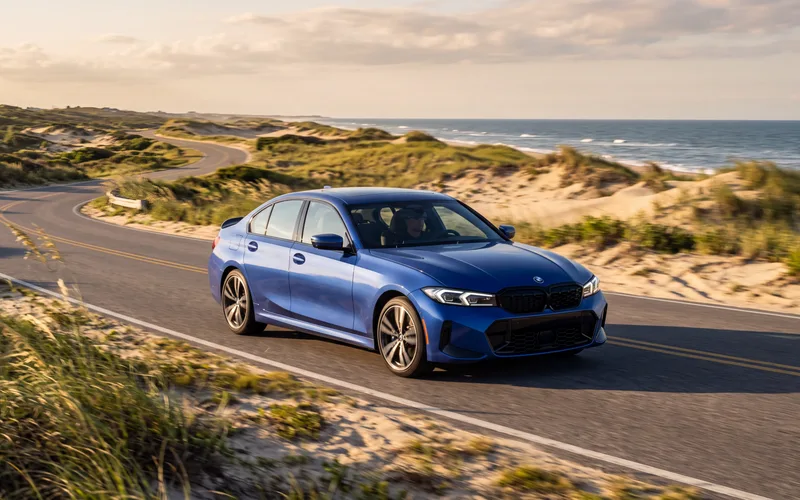 BMW 3 SeriesCompact Luxury SedanBetter at: Space and pace
For about $3,000 more it fixes nearly every practical complaint about the IS — rear seat, trunk, fuel economy, screens, and pace — if you can accept higher running costs.
Compare 2.71B-
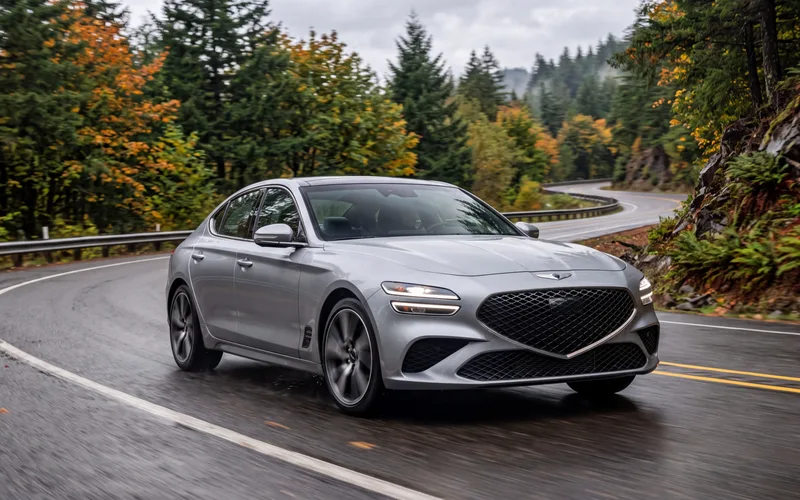 Genesis G70Compact Luxury SedanBetter at: Content per dollar
Delivers more standard equipment, a modern infotainment system, and a 10-year/100,000-mile powertrain warranty for similar money.
Compare 3.11B
3.11B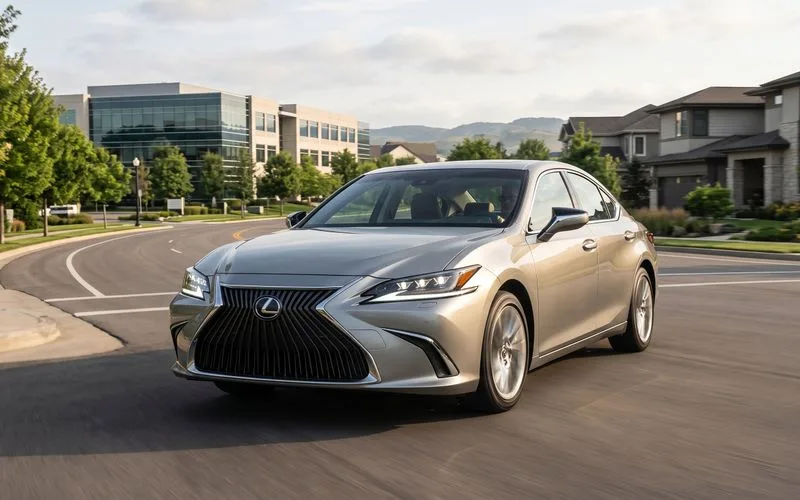 Lexus ESMid-Size Luxury SedanBetter at: Space and efficiency
The same Lexus reliability and service experience in a bigger, quieter, hybrid-available sedan for buyers who don't need rear-wheel drive.
CompareHow it's evolved
10 scored model years · 2017–2026
Subject scores by year
Hover or tap a score to see what moved it versus the year before. A corner mark flags a big swing.
| Year | Performance | Efficiency | Safety | Space | Cost | Reliability | Tech | Use-case | Driving | Value |
|---|---|---|---|---|---|---|---|---|---|---|
| 2026 | 50 | 32 | 67 | 57 | 55 | 86 | 62 | 45 | 80 | 63 |
| 2025 | 48 | 27 | 73 | 52 | 58 | 87 | 45 | 39 | 70 | 66 |
| 2024 | 46 | 27 | 74 | 56 | 60 | 87 | 46 | 43 | 73 | 67 |
| 2023 | 48 | 27 | 79 | 52 | 58 | 88 | 44 | 43 | 67 | 66 |
| 2022 | 48 | 27 | 78 | 55 | 59 | 85 | 46 | 43 | 72 | 65 |
| 2021 | 47 | 27 | 80 | 56 | 67 | 88 | 46 | 45 | 73 | 68 |
| 2020 | 45 | 23 | 64 | 55 | 63 | 87 | 31 | 41 | 65 | 57 |
| 2019 | 45 | 23 | 67 | 56 | 61 | 84 | 34 | 46 | 71 | 61 |
| 2018 | 44 | 30 | 70 | 54 | 59 | 86 | 33 | 46 | 69 | 70 |
| 2017 | 44 | 30 | 69 | 54 | 60 | 80 | 30 | 44 | 62 | 66 |
Compare two years
Best fit & conditions
Higher scores mean a better fit for that use case. Learn more about use-case fit →
Subject profile
Academic Probation · NHTSA safety recalls
No NHTSA safety recall is on record for the 2026 Lexus IS. Other model years of the IS have 3 — listed below.
3 recalls on other model years of the IS (2017–2019, 2022)
Apr 8, 2026Fuel system, gasoline: delivery: fuel pumpThe low-pressure fuel pump inside the fuel tank may fail.
Defect
Toyota Motor Engineering & Manufacturing (Toyota) is recalling certain 2015-2022 Lexus RC, 2016-2020 GS, and 2022 IS vehicles. The low-pressure fuel pump inside the fuel tank may fail.
Risk
Fuel pump failure can cause an engine stall, increasing the risk of a crash.
Remedy
Dealers will replace the fuel pump assembly, free of charge. Owner letters were mailed October 15, 2026. Owners may contact Toyota's customer service at 1-800-331-4331. Toyota's numbers for this recall are 26LB05 and 26LA05.
NHTSA campaign 26V222000 ↗Manufacturer no. 26LB05/26LA059,139 vehicles potentially affected (all models in the campaign)Owners notified Oct 14, 2026Filed by Toyota Motor Engineering & ManufacturingFiled as ISNov 4, 2020Fuel system, gasoline: delivery: fuel pumpThe low-pressure fuel pump inside the fuel tank may fail.
Defect
Toyota Motor Engineering & Manufacturing (Toyota) is recalling certain 2018-2019 4Runner, 2019-2020 Avalon, 2019 Corolla Hatchback, 2017-2019 Highlander, 2018-2020 Camry, 2020 Corolla, 2018-2019 Land Cruiser, 2017-2020 Tacoma, 2019-2020 RAV4, 2019-2020 Sequoia, 2017-2020 Sienna, 2019-2020 Tundra, 2018-2020 Lexus ES350, 2017 Lexus GS200t, 2017-2019 Lexus GS350, 2019 Lexus GS300, 2018-2020 Lexus LC500h, 2019-2020 Lexus LS500, 2018-2019 Lexus GX460, 2017 Lexus IS200t, 2019 Lexus IS300, 2019 Lexus IS350, 2018-2020 Lexus LC500, 2018 Lexus LS500, 2019 Lexus LS500h, 2018-2019 Lexus LX570, 2017 Lexus RC200t, 2019 Lexus RC300, RC350, 2017 and 2019-2020 Lexus RX350, 2018-2020 RX350L, 2019 Lexus UX200, 2018-2019 Lexus NX300 vehicles. The low-pressure fuel pump inside the fuel tank may fail.
Risk
If the fuel pump fails, the engine can stall while driving, increasing the risk of a crash.
Remedy
Toyota will notify owners, and dealers will replace the fuel pump assembly with an improved one, free of charge. Owners of specific models were notified that remedy parts were available starting January 21, 2021. Owners of other models will be notified as remedy parts become available. Remedy parts should be available for all affected vehicles by late March 2021. Owners may contact Toyota customer service at 1-888-270-9371 or Lexus customer service at 1-800-255-3987. Note: This recall is an expansion of recall 20V-012. Toyota's number for this recall is 20TA02. Lexus' number for this recall is 20LA01.
NHTSA campaign 20V682000 ↗Manufacturer no. 20TA02, 20LA011,525,742 vehicles potentially affected (all models in the campaign)Owners notified Jan 21, 2021Filed by Toyota Motor Engineering & ManufacturingFiled as IS 300, IS 350, IS200TJan 13, 2020Fuel system, gasoline: delivery: fuel pumpToyota Motor Engineering & Manufacturing (Toyota) recalled certain 2018-2019 4Runner, Highlander, Camry, Land Cruiser, Sequoia, Sienna, Tacoma and Tundra, and Lexus RC 300, RC 350, GS 350, GX 460, IS 300, LC 500, LS 500, LX 570, RX 350L, and 2019 Toyota Avalon and Corolla, and certain Lexus NX 300, and ES 350 vehicles on January 13, 2020. On March 4, 2020, Toyota expanded the recall to include certain 2014-2015 Toyota 4Runner and Land Cruiser, 2018 Avalon, Corolla, 2014 FJ Cruiser, 2017 Sienna and Lexus 2018 ES 350, 2018-2019 GS 300, 2013-2014 GS350, 2014-2015 GX 460, IS 350 and LX 570, 2014 IS F, 2018-2019 IS 350, LC 500H and LS 500H, 2013-2015 LS 460, 2015 NX 200T and RC350, 2017 RC 200T and RX 350. Toyota also removed the 2018-2019 Toyota 4Runner and Land Cruiser and 2018-2019 Lexus GX 460 and LX 570 and 2019 NX300 from inclusion in this recall. On March 19, 2020, Toyota expanded the recall to include 2015 Lexus GS350 vehicles. The low-pressure fuel pump inside the fuel tank may fail.
Defect
Toyota Motor Engineering & Manufacturing (Toyota) recalled certain 2018-2019 4Runner, Highlander, Camry, Land Cruiser, Sequoia, Sienna, Tacoma and Tundra, and Lexus RC 300, RC 350, GS 350, GX 460, IS 300, LC 500, LS 500, LX 570, RX 350L, and 2019 Toyota Avalon and Corolla, and certain Lexus NX 300, and ES 350 vehicles on January 13, 2020. On March 4, 2020, Toyota expanded the recall to include certain 2014-2015 Toyota 4Runner and Land Cruiser, 2018 Avalon, Corolla, 2014 FJ Cruiser, 2017 Sienna and Lexus 2018 ES 350, 2018-2019 GS 300, 2013-2014 GS350, 2014-2015 GX 460, IS 350 and LX 570, 2014 IS F, 2018-2019 IS 350, LC 500H and LS 500H, 2013-2015 LS 460, 2015 NX 200T and RC350, 2017 RC 200T and RX 350. Toyota also removed the 2018-2019 Toyota 4Runner and Land Cruiser and 2018-2019 Lexus GX 460 and LX 570 and 2019 NX300 from inclusion in this recall. On March 19, 2020, Toyota expanded the recall to include 2015 Lexus GS350 vehicles. The low-pressure fuel pump inside the fuel tank may fail.
Risk
If the fuel pump fails, the engine can stall while driving, increasing the risk of a crash.
Remedy
Toyota will notify owners, and dealers will replace the fuel pump, free of charge. The recall began May 4, 2020. Owners may contact Toyota customer service at 1-888-270-9371 or Lexus customer service at 1-800-255-3987. Toyota's numbers for this recall are 20TB02 and 20TA02 for Toyota vehicles and 20LB01 and 20LA01 for Lexus vehicles.
NHTSA campaign 20V012000 ↗Manufacturer no. 20TB02/20TA02/20LB011,830,752 vehicles potentially affected (all models in the campaign)Owners notified May 1, 2020Filed by Toyota Motor Engineering & ManufacturingFiled as IS 300, IS 350, IS200T
Source: NHTSA Office of Defects Investigation recall database, model years 2017–2026. Recalls are listed by model year as the manufacturer filed them; whether a specific car is affected depends on its VIN — check a VIN at nhtsa.gov ↗. NHTSA model names matched to this page: IS, IS 300, IS 350, IS200T.
Detailed scoring by subject
1Performance & PowertrainOne of the IS's weakest categories.1.33D
Volume IS 300 RWD uses the 2.0L turbo I4 (8AR-FTS) rated 241 hp, unchanged since the 2021 facelift; the 3.5L V6 (2GR-FKS) makes 260 hp in IS 300 AWD and 311 hp in IS 350. Replaces a placeholder value that was roughly 67% too high.
The turbo four's 258 lb-ft arrives low and flat (1,650-4,400 rpm) and actually exceeds the naturally aspirated IS 300 AWD V6's 236 lb-ft, an unusual inversion within one trim name.
Lexus quotes 6.9 s for the volume IS 300 RWD; instrumented tests have run slightly quicker (~6.6 s). Either way it is the slowest base powertrain among compact luxury sedans — roughly a full second behind a Cadillac CT4 2.0T or BMW 330i on effectively identical output.
Lexus NVH isolation is a genuine strength and the naturally aspirated V6 trims deliver linear, lag-free response, but the volume 2.0L turbo is consistently criticized as coarse and strained under load with noticeable off-boost lag — adequate rather than luxury-grade. Lands mid-band alongside the CT4 (73) and A4 (72) rather than near the 3 Series (85).
The RWD trims' 8-speed automatic shifts smoothly and decisively with a credible manual mode and rev-matching on F SPORT, but choosing AWD drops the car to a dated 6-speed automatic — a gear-count and calibration deficit no direct rival imposes. Below the ZF-equipped 3 Series (92), a shade under the CT4 (76).
Full-time mechanical AWD is offered on both IS 300 and IS 350, so it is broadly available rather than restricted to top trims, but it carries the 6-speed penalty and offers no torque vectoring or drive-mode terrain logic. Sits between the CT4 (64, AWD optional) and standard-quattro A4 (80).
Two distinct gas engines (2.0L turbo I4, 3.5L V6) cover mainstream needs, but there is no hybrid, PHEV or EV option anywhere in the range — a conspicuous gap for a Lexus, and for a segment where the 3 Series fields a PHEV and the C-Class is fully mild-hybrid. Scored just below the CT4 (60), which offers three gas engines with the same zero-electrification limitation.
2Efficiency & RangeThe IS's lowest-graded category.0.06F
The IS 300's 2.0L turbo-four with an 8-speed automatic returns roughly 24 MPG combined — near the bottom of the compact luxury sedan set, where turbo-four rivals sit at 27–31 and hybrid/EV entries land far higher. The V6 and V8 trims drop further.
City economy is the IS's weakest figure: no hybrid assist, no 48V mild-hybrid system, and a rear-drive layout with a conventional torque-converter automatic. It trails the BMW 330i (28 city) and Cadillac CT4 2.0T (23 city) outright.
Highway economy is the IS's best case at roughly 30 MPG, but it still lands below the 330i (35), CT4 2.0T (34), and A4 — a consequence of an aging platform and 8-speed transmission rather than of the powertrain's output.
A relatively large 17.4-gallon tank partly offsets weak fuel economy, giving a usable but unremarkable ~418-mile range — still behind the 330i (~484 mi) and CT4 (~459 mi) despite the bigger tank.
The combination of 24 MPG combined and a premium-fuel diet produces one of the higher running costs in the compact luxury class — roughly $275/yr more than the Cadillac CT4 2.0T and well above hybrid-equipped rivals.
Premium 91-octane is recommended across the IS range for full rated output and is effectively required on the IS 500's naturally aspirated V8. Regular fuel is tolerated on the turbo-four and V6 with reduced performance, but there is no regular-fuel trim, no E85 or diesel option, and no home-charging alternative — owners pay the premium spread on every fill. Scored just below the CT4 (55), which has the same premium-recommended pattern at better economy.
3SafetyOne of the IS's strongest categories.2.50C+
NHTSA does not publish a current combined overall star rating for the low-volume Lexus IS; the XE30 structure is unchanged since its original NHTSA evaluation, which returned strong frontal and side results. Value carried forward as an inference, not a published 2026 figure.
The IS posts Good results across the original IIHS crashworthiness battery (small overlap driver and passenger, original moderate overlap, roof, head restraints), but the 2014-vintage XE30 structure has not been shown to clear the updated moderate-overlap and updated side tests that current awards require, so no Top Safety Pick for 2026.
Lexus Safety System+ 2.5 is standard on every IS trim — Pre-Collision System with pedestrian and daytime cyclist detection plus intersection turn assist, full-speed-range Dynamic Radar Cruise Control, Lane Departure Alert with Steering Assist, Lane Tracing Assist, Road Sign Assist and Automatic High Beams — with Blind Spot Monitor and Rear Cross-Traffic Alert also standard. Held below the 90s because it is the older 2.5 suite, without the Front Cross-Traffic Alert, Safe Exit Assist and lane-change assist of LSS+ 3.0.
Toyota/Lexus Pre-Collision System has a strong record in IIHS vehicle-to-vehicle front crash prevention testing, but the LSS+ 2.5 generation has no published result against the updated nighttime-pedestrian protocol that the top band requires.
Blind Spot Monitor with Rear Cross-Traffic Alert is standard rather than optional, but the implementation is alert-only — no active steering or braking intervention and no Safe Exit Assist, which the newer Lexus sedans add.
Lane Departure Alert with Steering Assist and Lane Tracing Assist are standard and work reliably, but reviewers consistently describe Toyota/Lexus lane centering of this generation as tentative — quick to hand back on curves and prone to wander compared with German rivals.
Full-Speed Range Dynamic Radar Cruise Control with stop-and-go is standard on every trim and is smooth and well calibrated in traffic; it falls short of the top band because the 2.5 suite lacks the curve-speed management and lane-change assist that make a genuinely integrated highway assist.
No hands-free highway system is offered on the IS at any trim or price — Lexus Teammate / Advanced Drive has never been extended to this platform, so every driver-assist feature requires hands on the wheel.
LED headlamps with Automatic High Beams are standard and the F Sport's triple-beam LED units perform well, but the base projector units are the weaker of the two and current IIHS criteria require Good ratings across all trims for the top band.
The IS trades sightlines for style — a high beltline, low seating position, thick C-pillars and a shallow rear window make rearward and over-the-shoulder views among the tightest in the compact luxury class, and the Panoramic View Monitor that would compensate is a trim/package item rather than standard.
Two outboard LATCH positions with lower anchors set deep in the seat bight, a narrow rear-door aperture and roughly 32 inches of rear legroom — the tightest in the compact luxury sedan set — make installing and living with a rear-facing seat genuinely awkward, and three-across is not realistic.
4Space & ComfortMid-pack among this car's ten categories.1.82C-
The 2026 IS is a five-passenger sedan across IS 300, IS 300 AWD and IS 350 F Sport. The rear center position sits over a tall transmission tunnel on this rear-drive platform and is realistically a short-trip seat only.
Front headroom of 38.2 in is mid-pack for a compact luxury sedan — behind the BMW 3 Series (38.7 in) and roughly level with the Cadillac CT4 (38.4 in). Six-foot drivers fit, but the low-slung seating position and available moonroof leave little surplus.
Front legroom of 44.8 in is a genuine class standout, exceeding the 3 Series (42.0 in), CT4 (42.4 in) and the Audi and Mercedes compact luxury entries. The IS devotes its cabin length almost entirely to the front occupants — which is exactly why the rear is so tight.
Rear headroom of 36.9 in is below the 3 Series (37.6 in) but comfortably clear of the CT4 (35.7 in). The tapering roofline means passengers over about six feet will graze the headliner, though the low rear cushion recovers some clearance.
At 32.2 in the IS has the tightest rear legroom in the compact luxury sedan segment — behind even the Cadillac CT4 (33.4 in) and far behind the 3 Series (35.2 in) and Genesis G70. Behind a tall driver the rear seat is effectively a child or cargo space, and this is the single largest drag on the category score.
The 10.8 cu ft trunk is near the bottom of the segment, trailing the BMW 3 Series (17.0 cu ft), Mercedes C-Class (~12.6) and Audi A4 (~12.0), and only fractionally ahead of the CT4 (10.7). It shrank from the pre-facelift car's larger trunk when the rear structure and exhaust packaging changed, and the narrow opening limits how much of the volume is usable for luggage.
Cabin storage is sparse even by sport-sedan standards: a shallow center console bin, small door pockets, a modest covered tray ahead of the shifter, and a wireless charging pad on upper trims. There are no clever storage features, no fold-flat surfaces, and rear-passenger storage is minimal — a consequence of a cabin architecture that dates to the original XE30 layout.
The front seats are a strength — well-shaped and supportive, with the F Sport buckets earning repeated praise for holding occupants without punishing them on long drives, plus power lumbar and adjustable bolstering on upper trims. The rear bench is the opposite story: short cushions, a low seating position and 32.2 in of legroom make it uncomfortable for adults beyond short trips, which caps an otherwise strong item.
The IS rides with typical Lexus damping polish — compliant over broken pavement and well controlled in body motions, better isolated than the firmer German sport-sedan setups on base suspension. F Sport trims with the larger wheel-and-tire package and stiffer tuning trade some of that suppleness for sharper control, and the aging platform shows more impact harshness over sharp expansion joints than the segment's best.
Noise isolation is a Lexus hallmark and the IS delivers a hushed highway cabin for the class, with extensive sound deadening and acoustic front glass keeping wind noise low. It falls short of the larger ES and LS on outright silence, and coarse-surface tire roar is more audible on F Sport rubber, but it comfortably outdoes most compact luxury rivals.
Dual-zone automatic climate control is standard and heated and ventilated front seats are available (standard on Premium and F Sport-equipped builds), with a heated steering wheel offered via cold-weather packaging. Rear occupants get essentially nothing — no rear climate zone and no rear air vents, a long-standing IS omission — and remote pre-conditioning depends on a Lexus connected-services subscription, which keeps this item mid-pack.
5Cost of OwnershipGrades below the middle of the scale.1.68D
The IS enters at the rear-drive IS 300 with the 241-hp 2.0L turbo four — the cheapest way into a compact luxury sedan from a premium Japanese brand, roughly $3,000 under a base BMW 330i. Estimated from 2025 IS 300 RWD pricing (~$42,000–$42,500 before a ~$1,150–$1,195 destination charge) plus a customary model-year increase on an otherwise unchanged car; not verified against a live Lexus price sheet.
IS buyers skew heavily toward an F SPORT-badged trim and, in snow-belt states, toward AWD, so the realistic as-sold configuration lands roughly $4,000 above the stripped IS 300 RWD. Estimated from the base figure plus the customary F SPORT Design and AWD walk; unverified for 2026.
This is the IS's strongest ownership argument. Lexus posts the lowest maintenance and repair costs of any luxury brand, and the XE30 IS compounds that with a decade-old, fully debugged platform whose 2.0L turbo four and 2GR-FKS V6 are high-volume, long-serving Toyota units with cheap, widely stocked parts. Scored a shade below the ES because the ES's hybrid regenerative braking extends brake life the IS has no equivalent for, and F SPORT trims wear staggered performance tires.
The IS is a genuine depreciation standout — repeatedly on slowest-depreciating-vehicle lists, propped up by the Lexus reliability reputation, low production volume, and enthusiast demand for a naturally aspirated V6 rear-drive sedan no rival still offers. The luxury sedan segment's broad decline and the platform's age are the only real caps. Best 5-year retention of any compact luxury sedan in this dataset.
Lexus's long-standing brand-wide basic coverage, unchanged for 2026. Matches the German luxury standard and Cadillac, and beats parent-brand Toyota's 3 yr / 36,000 mi, but trails Genesis's 5 yr / 60,000 mi.
Lexus's standard 6 yr / 70,000 mi powertrain term — better than BMW and Mercedes, which offer no extended powertrain coverage beyond the 4-year basic, but far behind Genesis's 10 yr / 100,000 mi. The IS is gas-only, so there is no hybrid-component or high-voltage battery coverage to extend it.
The Lexus ownership program is brand-wide, so the IS gets exactly what the ES does: complimentary scheduled maintenance of only 1 yr / 10,000 mi (the first two services) — shorter than ToyotaCare's 2 yr / 25,000 mi and well short of BMW's 3 yr / 36,000 mi — offset by class-leading 4-year unlimited-mileage roadside assistance, Lexus connected-services trials, and loaner/concierge treatment at the dealer. Real coverage, but the thinnest included-maintenance period in the segment.
$48,000 volume-trim price minus its estimated resale value after 5 years (56% retained, or about $26,880) leaves about $21,120 in depreciation. Add the projected $5,100 in 5-year maintenance and repairs, and owning this vehicle for 5 years costs about $26,220 in total.
6Reliability & QualityThe IS's best-graded category.3.87A+
The IS is the compact luxury class's dependability benchmark: the XE30 platform has been in production since 2014 and the 2026 car is a fully debugged carryover with no new powertrain, platform or electrical architecture to introduce first-year faults. Consumer Reports has rated the IS at or near the top of the segment for predicted reliability across many consecutive years. Held below the Corolla (92) because the volume trim's 8AR-FTS turbo four is a slightly less bulletproof unit than Toyota's naturally aspirated fours, and no 2026-specific CR/J.D. Power figure could be verified in this run.
Lexus is a permanent fixture in the top tier of US dependability research — habitually first or second in J.D. Power's Vehicle Dependability Study and top-five in Consumer Reports' brand rankings. Scored a notch below the 93 recorded on the 2026 ES because CR's 2026 survey actually places Lexus third (60) behind Toyota (66) and Subaru (63), so the brand no longer sweeps both major studies outright.
The facelifted XE30 IS (2021 onward) has run an unusually clean NHTSA record — no powertrain, fire or ADAS campaigns of the kind that have hit German rivals — and Lexus TSB volume is low by class standards. Scored well above the Camry (58, active inverter-bolt campaign) and 3 Series (72) but short of the top band because the generation's earlier model years were swept up in the industry-wide Takata inflator and Denso low-pressure fuel-pump campaigns, and no live NHTSA query was possible to confirm the 2026 car is campaign-free.
Every engine and gearbox in the IS is a long-serving, high-mileage-proven Toyota unit. The V6 trims use the 2GR-FKS, a D-4S dual-injection member of the 2GR family that has been in production for two decades with no chronic failure mode, and the Aisin 8-speed (RWD) and 6-speed (AWD) automatics are old, torque-converter-conventional designs with excellent field records. The volume IS 300 RWD's 8AR-FTS 2.0L turbo four is the weakest link — solid overall, but a direct-injected turbo with more carbon-buildup and turbo/water-pump exposure than the naturally aspirated alternatives — which is what holds this below the ES's hybrid eCVT (92).
The IS cabin is genuinely well-made — soft-touch upper surfaces, stitched trim, Lexus's characteristically damped switchgear, and excellent F SPORT seats — but the underlying dashboard architecture dates to 2014 and the price now buys a noticeably more modern, more visually ambitious cabin from the 3 Series (80) or the redesigned ES (84). Reviewers' criticism is aimed at how dated and tight the interior looks rather than at cheap materials, which is why it sits clearly above the CT4 (68) despite similar age.
This is the IS's single strongest quality attribute. It is built at Toyota's Tahara plant in Japan under the brand's takumi inspection regime, on a body and assembly line that have had over a decade to converge — tight, repeatable panel gaps, essentially no squeak-and-rattle thread in owner reports, and consistently strong initial-quality results. Scored a point above the all-new 2026 ES (89), which carries first-year-of-production variance the IS no longer has, and above the 3 Series (86).
Coverage is thinner than BMW's or Mercedes-Benz's at roughly 240 US stores, but Lexus is the industry reference point for luxury service satisfaction, regularly leading or placing top-three in J.D. Power's Customer Service Index, with loaners and pickup-and-delivery standard practice. Scored identically to the 2026 ES since the network is brand-wide, and above BMW (85) and Cadillac (78).
Twelve model years of a single generation sharing engines and driveline hardware with high-volume Toyotas is close to the best case for a luxury sedan: OEM mechanical parts are abundant and cheap by class standards, a deep used and salvage supply exists, an enthusiast aftermarket serves the IS/RC/GS family, and independent shops will work on the car. Scored above the ES (80), whose all-new generation has model-specific parts the aftermarket has not caught up with, and far above the dealer-dependent Germans (3 Series 55); short of the Corolla (95) because luxury-specific trim, glass, lighting and body panels still price at a premium.
7Technology & InfotainmentMid-pack among this car's ten categories.2.16C
The fourth-generation IS carries the touchscreen conversion introduced for the 2024 model year: an 8.0-inch standard center display with a 10.25-inch unit bundled into the navigation package. Both are small by 2026 luxury-sedan standards because the IS still uses the deep-dash XE30 architecture. Replaces the placeholder value of 12 in.
Deleting the widely-disliked Remote Touch touchpad in favor of a real touchscreen was the single biggest usability gain in this car's life, and Lexus kept physical volume/tune knobs and hard climate buttons. But the display is small, mounted far down the dash, and runs dated graphics on a stopgap system rather than the full Lexus Interface stack used by the NX/RX/ES.
The touchscreen system brought wireless Apple CarPlay and wireless Android Auto as standard equipment across the IS range, with no wired-only base trim — and on a car whose native software is weak, phone projection is what most owners actually use.
The IS uses the older embedded Lexus voice-command system rather than the cloud-based natural-language 'Hey Lexus' assistant and Drive Connect cloud navigation found on Lexus Interface vehicles, and native navigation is not standard on the volume trim — it arrives with the 10.25-inch navigation package. Most owners default to CarPlay/Android Auto maps.
The available Mark Levinson Premium Surround system (17 speakers, 1,800 watts) remains one of the better branded systems in the compact luxury class and is the strongest single element of this car's tech package; the standard Lexus premium system is competent but unremarkable.
F Sport trims get the LFA-inspired 8-inch digital meter with the sliding center ring, which is distinctive and legible, but non-F Sport IS 300 models retain conventional analog dials with a small multi-information display. Full digital is trim-gated rather than standard, and even the F Sport display is a decade-old design.
The IS is not on the connected-services architecture that supports meaningful over-the-air software delivery. Update capability is effectively limited to map/multimedia data rather than the feature-adding whole-vehicle campaigns BMW, Tesla, and newer Lexus Interface cars run.
The Lexus app covers the core set — remote start and climate precondition, lock/unlock, vehicle locate, and status — but Remote Connect and Safety Connect revert to paid subscriptions after the included trial, and the IS is not among the Lexus models offering Digital Key phone-as-key.
Device power is where the XE30 platform's age shows most plainly: a small number of front ports, a Qi wireless charging pad only as part of an option package, no household AC outlet, and no meaningful rear-seat charging provision in a cabin designed before USB-C existed.
Smart Key proximity entry with push-button start is standard, and remote start is available through the key fob and the Lexus app. There is no phone-as-key option, and as a sedan there is no hands-free power trunk to add convenience points.
A rear camera is standard and Intuitive Parking Assist with front/rear sonar and auto braking is available on upper trims, but the IS does not offer a Panoramic View Monitor — a surround-view camera is simply not on the options sheet in a class where rivals offer one. There is no automated parking either.
A color head-up display is offered on the IS, projecting speed, navigation, and audio data onto the windshield, but it is package-gated to upper trims rather than available on the volume IS 300 — a partial-credit case under this item's guidance.
8Use-Case FitOne of the IS's weakest categories.0.97F
The IS is the hardest car in its class to run family logistics in: 32.2 in of rear legroom is the segment-worst figure, the rear door aperture is narrow and steeply raked, and the LATCH lower anchors sit deep in the seat bight, so a rear-facing seat forces the front passenger well forward. The 10.8 cu ft trunk with a narrow opening swallows a compact stroller only if it is the sole item aboard. Scored below the Cadillac CT4 (42), which has more rear legroom and a folding rear seatback.
The standard-equipment story is genuinely good for families on a budget: Lexus Safety System+ 2.5 is standard on every trim including full-speed-range adaptive cruise, pre-collision with pedestrian detection and lane tracing, and Blind Spot Monitor with Rear Cross-Traffic Alert is standard rather than a package item — nothing important is paywalled behind an expensive trim. What holds it out of the top band is credentials rather than content: the 2014-vintage XE30 structure carries no current IIHS Top Safety Pick, the base headlamps are the weaker of the two units, and there is no Safe Exit Assist or rear cross-traffic braking. Scored between the CT4 (58) and the German pair (82).
For two adults up front the IS is a pleasant long-haul car — quiet, well damped, good seats — but as a four-person road-tripper it fails on the details that matter: no rear air vents and no rear climate zone, minimal rear storage and device power, short rear cushions, and 32.2 in of legroom that leaves adults folded up. Luggage for four does not fit in a 10.8 cu ft trunk that cannot be extended into the cabin. Scored below the C-Class (62) and near the CT4 (48).
Commuting is where the IS's Lexus-ness pays off: a smooth torque-converter 8-speed with none of the low-speed hesitancy of dual-clutch rivals, compliant damping over broken pavement, a hushed cabin, and full-speed-range Dynamic Radar Cruise Control with stop-and-go standard on every trim rather than optional. The drag is ergonomic rather than mechanical — restricted rear and over-the-shoulder sightlines, a low seating position that makes curb work fiddly, and a small standard 8-inch screen on an aging interface. Placed above the CT4 (73) and just under the C-Class (78).
Per-mile fuel cost is the worst part of owning an IS: roughly 24 MPG combined on the volume IS 300 (about 22 for the V6 AWD trims) with premium 91-octane recommended works out near $2,475/yr at 15,000 miles — well behind the BMW 330i and every hybrid in the wider sedan market, with no hybrid or 48V option anywhere in the range. It scores above the C-Class (34) because the consumables side is genuinely cheap for a luxury car: class-leading predicted reliability, strong parts availability and repair costs, and a dense Lexus service network mean fewer unscheduled bills between fill-ups. Scored a little under the CT4 (54), which posts similar premium-fuel economy.
The footprint is on the IS's side — roughly 185 in long and 72 in wide is compact for the class, and the rear-drive layout gives a tight turning circle of about 34 ft (wider on F SPORT trims with the 19-inch wheel package). The camera and sightline side is not: thick C-pillars and a shallow backlight make the over-the-shoulder view among the worst in the segment, and front parking sensors and the Panoramic View Monitor are trim/package items rather than standard, so a base car parks on a plain reversing camera. Held below the CT4 (82) and 3 Series (80) on that visibility and camera deficit.
There is essentially no work case for this car. Lexus publishes no US tow rating for the IS and no factory hitch is offered, the 10.8 cu ft trunk is the smallest in the compact luxury class, and the rear seatbacks do not fold to extend it, so even a load of trade tools or flat-pack materials is out. The 2.0T and V6 have output to spare but nothing to apply it to. Scored below the CT4 (18) and 3 Series (18), both of which at least offer a folding rear seat.
This is the one work-adjacent item where the IS genuinely outscores its rivals: the 2GR-FKS V6 and Aisin 8-speed automatic are long-serving, over-engineered Toyota units with a strong high-mileage record, brand reliability is the best in the segment, and the service network is dense — a hard-driven fleet IS would hold together far better than a German equivalent. It stays mid-pack in absolute terms because everything above the mechanicals is luxury-oriented: leather and soft-touch surfaces with no wear-friendly vinyl or rubber-floor option, low-profile F SPORT tires, and roughly 5 in of ground clearance that punishes rough sites. Scored well above the CT4 (35) and 3 Series (25).
Nothing here is aimed at work: no 120V household outlet, no bed or load floor, no roof rails or factory rack provision, no factory hitch, no tie-down system beyond trunk bag hooks, and carpet-and-leather surfaces that cannot be hosed out. The upfit ecosystem for a rear-drive luxury sport sedan is aftermarket cosmetics, not work equipment. Scored level with the C-Class (8) and below the CT4 (12).
As a two-up highway tourer the IS is convincing: one of the quietest cabins in the compact luxury class, well-damped high-speed ride, front seats (especially the F SPORT buckets) that hold up over long stints, standard full-speed radar cruise, an available head-up display and Mark Levinson audio, and about 418 miles between stops from the 17.4-gal tank. It gives up ground to the 3 Series (84) on three counts — tentative lane centering with no hands-free option, a trunk too small for two people's touring luggage, and premium fuel at 24 MPG making each leg expensive. Scored just above the C-Class (74) and CT4 (70).
All-wheel drive is available on the IS 300 and IS 350 and will get a ski trip up a snowy access road, which is where the credit ends. Ground clearance of roughly 5 in and low-profile tires rule out anything unpaved and rutted, there are no roof rails or rack provisions for bikes, boxes or boards, no tow rating for a small trailer, no 120V outlet for camp power, and no fold-flat cargo mode. Scored just below the CT4 (30), which shares the AWD-but-nothing-else profile, and above the AWD-limited C-Class (22).
The IS is the most restrictive luggage proposition in its class. The 10.8 cu ft trunk is already near the segment floor, the aperture is narrow enough that reviewers flag usable volume as less than the number suggests, and the rear seatbacks do not fold on the current generation — so unlike almost every rival there is no way to convert cabin space into cargo space for skis, a bike wheel or a flat-packed box. No roof rails, no hitch, no underfloor storage of consequence. Scored below the CT4 (40) and C-Class (30) specifically because both retain a split-folding rear seat.
9Driving ExperienceOne of the IS's strongest categories.3.45B+
The 2026 IS carries over the 2021-refreshed XE30 chassis — stiffened body structure, wider rear track on F Sport, double-wishbone front/multi-link rear — and is genuinely composed with real rear-drive balance and roughly 0.90 g of skidpad grip on the IS 350 F Sport. It is secure and well-tied-down rather than eager, though: at roughly 3,700 lb on an aging platform it turns in more slowly and feels less alert than the BMW 3 Series or Giulia, and the F Sport Handling package (adaptive dampers, Yamaha performance dampers, limited-slip differential) is what closes most of the gap.
The IS's electric rack is accurate and sensibly weighted, and it builds effort predictably off-center, but feedback is the car's weakest dynamic trait — road texture is filtered out and the rack stays isolated even in F Sport's Sport S+ mode. Precise enough to place the car confidently, short of the communicative racks in the class.
Pedal feel is firm and linear with the consistency Lexus is known for, and the F Sport Handling package adds larger front rotors and opposed-piston calipers that hold up well to repeated hard stops. Measured 60-0 mph distances in the low-110-ft range for the IS 350 F Sport are competitive but not class-leading on the all-season rubber most cars leave the lot with.
The volume IS 350's naturally aspirated 3.5L V6 paired to an 8-speed torque-converter automatic is one of the smoothest and most predictable powertrains in the compact luxury class — no turbo lag, no dual-clutch low-speed shunt, clean linear tip-in, and none of the rough stop/start behavior that hurts several rivals. The turbocharged 2.0L IS 300 is a step less polished but still well calibrated.
The V6 is hushed at cruise and turns pleasant rather than coarse when extended, with F Sport models routing an enhanced intake note into the cabin; there is no diesel-like clatter or three-cylinder thrum to isolate and effectively no vibration through the wheel or pedals. Only the 2.0L turbo four sounds ordinary under load.
A short 110.2-in wheelbase and compact overall length give the IS a genuinely tight curb-to-curb circle — a real outlier against German rear-drive rivals that sit at 37–38 ft. The 34.2 ft F Sport figure is used as the conservative volume number rather than the 33.5 ft standard-wheel spec.
A low, sporty hip point with a wide seat and wheel adjustment range and excellent F Sport buckets, and the switch to the Lexus Interface touchscreen (8-in standard, 10.3-in optional) fixed the old Remote Touch trackpad that made this car frustrating to operate on the move. Working against it: a narrow footwell that crowds larger drivers' left legs, a low roofline that makes ingress and egress a duck-and-drop, and thick rear pillars that pinch over-the-shoulder visibility.
An increasingly rare combination — naturally aspirated V6, rear-wheel drive, a conventional automatic and an available limited-slip differential — gives the IS real character and a linear, rev-happy soundtrack that enthusiasts actively seek out, and the V8 IS 500 F Sport Performance is the halo that colors the whole lineup's reputation. The volume car is enjoyable and honest rather than thrilling, though: the numb steering and unhurried responses keep it out of the 'take the long way home' tier that the 3 Series and Giulia occupy.
10Value & Market PositionMid-pack among this car's ten categories.2.24C
Safety content is genuinely generous at base — Lexus Safety System+ 2.5, blind-spot monitor with rear cross-traffic alert, and wireless CarPlay/Android Auto are all standard, more active-safety kit than the German rivals include at their base prices — but comfort and tech content is thin, with navigation, head-up display, heated/ventilated seats and the larger 10.25-in display all package-gated and no surround-view camera offered at any price. Lands in the middle of the 'competitive for the price' band: strong on the safety half of the sheet, below par on the convenience half.
At roughly $44k to start the IS 300 delivers 241 hp, segment-worst rear legroom (32.2 in) and the smallest trunk in the class (10.8 cu ft) on a platform dating to 2014 — weak content-and-capability per dollar against a BMW 330i or Genesis G70, only partly offset by the IS undercutting the German entries by $3,000–$5,000. The mid-range walk is the better buy: the IS 350 F Sport's 311-hp naturally aspirated V6, available Torsen limited-slip differential and Mark Levinson audio are real mechanical content no rival matches at the price. Scored low in the 'fair value' band rather than the poor-value band because the price undercut and the V6 trims buy back some of the deficit.
Reasonable choice with real gaps: two distinct engines (2.0L turbo four, 3.5L V6), both RWD and AWD, and Premium / F Sport Design / F Sport Handling tiers give buyers meaningful spread across roughly a $20,000 price ladder, but there is no electrified variant anywhere in the range and the V8 halo appears to have concluded with the 2025 IS 500 Final Edition, removing the top rung.
Stronger standing than the previous score credited: the IS has held roughly 20,000–24,000 US units annually in recent years and has trended UP late in its life cycle, making it a clear number-three in the compact luxury sedan segment behind only the BMW 3 Series and Mercedes-Benz C-Class, and multiples ahead of the Cadillac CT4, Genesis G70, Audi A4/A5 sedan and Alfa Romeo Giulia. Rising volume on a twelve-year-old platform in a contracting segment is genuine market acceptance, so this belongs at the top of the 'steady mid-pack seller' band rather than its middle. Raised from 64, which read the IS as generically mid-pack and understated both its rank and its trajectory.
Lexus carries one of the strongest ownership reputations in the US market — top-tier dependability, class-leading residuals, and consistently high service satisfaction driving unusual loyalty — and it is the single best card the IS holds in this category. It stops short of the top band because Lexus lacks the enthusiast aspiration BMW and Porsche bring to a rear-drive sport sedan, and the IS's dated cabin blunts the halo.
Occasional-to-decent buyer benefit: Lexus runs leaner cash-on-hood than the German brands' heavy lease subvention, but an end-of-cycle model in a shrinking segment sees real dealer discounting and supported APR/lease programs, and the IS's class-best residuals make its lease math favorable without any desperation pricing. Placed at the top of the 'occasional modest incentives' band rather than in the meaningful-incentives band, because Lexus's production discipline keeps transaction prices near MSRP more often than its rivals'.
The clear weak point and the largest single drag on this category: the fourth-generation XE30 IS has been on sale since the 2014 model year, making 2026 its thirteenth. The 2021 facelift brought new sheetmetal and a wider track and MY2024 finally swapped the Remote Touch trackpad for a proper touchscreen, but the underlying platform, interior architecture and electronics are by a wide margin the oldest in the compact luxury sedan class in 2026 — the Alfa Romeo Giulia's generation dates to 2017 and the Cadillac CT4's to 2020 — with no electrified variant and visible end-of-life signals. Buyers face genuine replacement risk.
Well-reviewed but rarely the pick of the class: reviewers reliably praise the IS's build integrity, quietness, reliability outlook and the increasingly rare analog appeal of a naturally aspirated V6 with rear drive, then place it at or near the bottom of compact-luxury comparison rankings on rear-seat space, cargo room, infotainment and the 2.0T's pace. Its recurring honors are dependability and resale awards rather than 10Best or NACTOY wins — a real but narrow form of recognition.