
The verdict
A mixed-report mid-size suv, strong on safety and held back by efficiency.
The fully redesigned 2026 Passport trades the old car-like crossover for a boxy, genuinely trail-capable two-row SUV — and the second row is the payoff, with 40.9 inches of legroom and 40.7 inches of headroom that shame most three-row rivals. Standard i-VTM4 all-wheel drive, Honda Sensing 360 on every trim, 8.3 inches of ground clearance and factory 31-inch all-terrain tires on TrailSport make it one of the few unibody SUVs you can take down a rough forest road without worrying. The bill comes due at the pump and at the dealer: the 285-hp V6 is the only engine offered, returns just 20–21 MPG combined, and the volume TrailSport lands at $51,295 — money that buys a hybrid three-row elsewhere. Buy it if you want space and off-pavement ability in five seats; skip it if fuel bills or a third row matter.
Jump to scoresStrengths
- Second-row space that embarrasses bigger SUVs
- Real off-road hardware, not an appearance package
- Every safety feature standard on every trim
What holds it back
- Thirsty, with no hybrid escape hatch
- Five seats at three-row money
- One engine, three trims, no choices
Top alternatives
Cars shoppers cross-shop with the Honda Passport 2.38C+
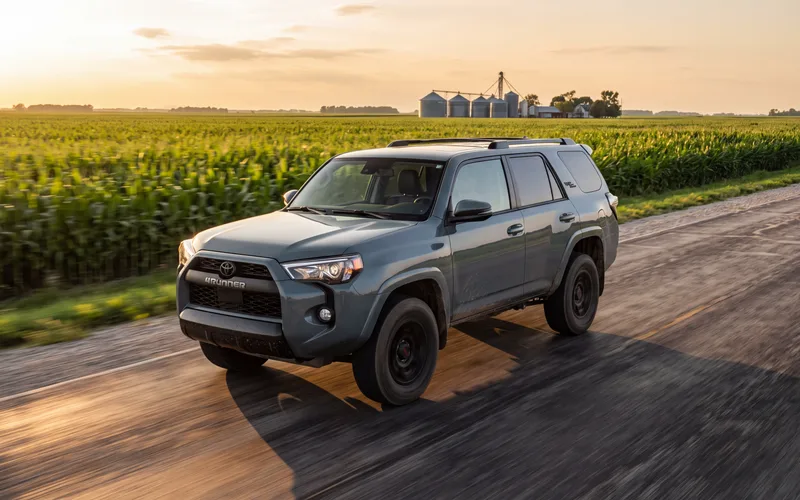 Toyota 4RunnerOff-Road SUVBetter at: Off-road capability
If your Passport shortlist is driven by the TrailSport's off-road hardware, the 4Runner's body-on-frame chassis, low range and locking rear diff go meaningfully further for similar money.
Compare 2.43C+
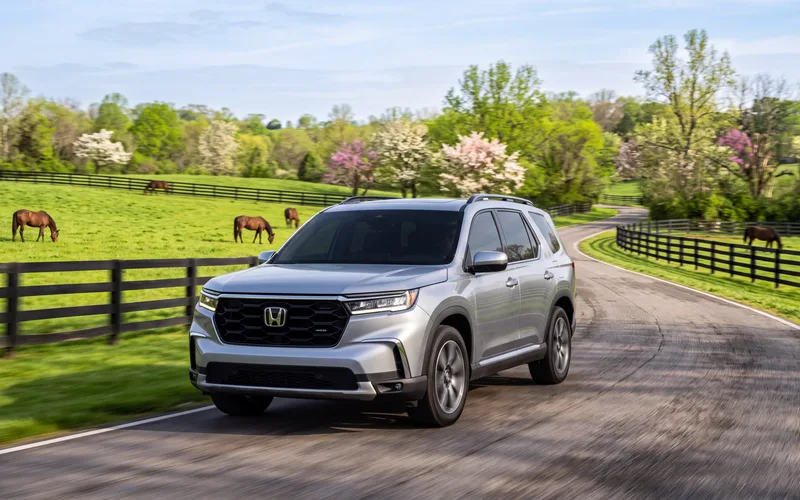 Honda PilotMid-Size SUVBetter at: Seating capacity
The same drivetrain and dealer experience with a third row and usually a lower price — the obvious pick if you ever need to seat more than five.
Compare 2.79B-
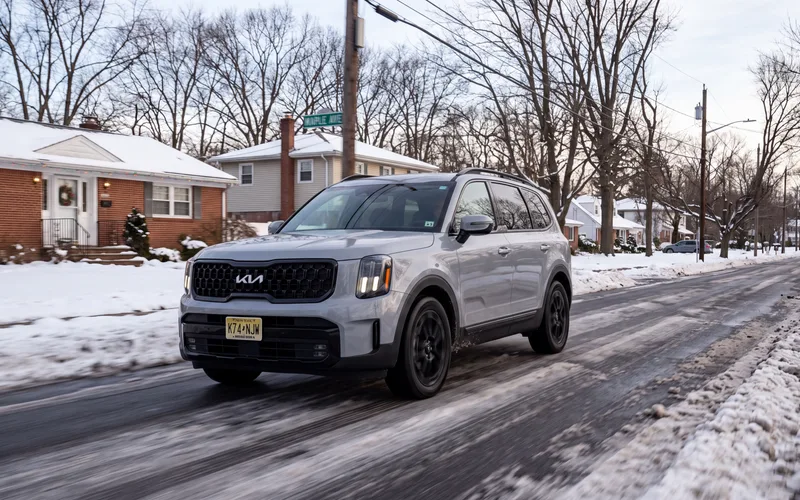 Kia TellurideMid-Size SUVBetter at: Value
Three rows, a quieter ride and a 10-year/100,000-mile powertrain warranty for less than the $51,295 TrailSport asks.
CompareHow it's evolved
8 scored model years · 2019–2026
Subject scores by year
Hover or tap a score to see what moved it versus the year before. A corner mark flags a big swing.
| Year | Performance | Efficiency | Safety | Space | Cost | Reliability | Tech | Use-case | Driving | Value |
|---|---|---|---|---|---|---|---|---|---|---|
| 2026 | 52 | 41 | 82 | 61 | 50 | 73 | 74 | 78 | 65 | 67 |
| 2025 | 54 | 35 | 65 | 58 | 48 | 75 | 43 | 60 | 62 | 57 |
| 2024 | 53 | 35 | 66 | 53 | 53 | 75 | 46 | 62 | 63 | 59 |
| 2023 | 53 | 36 | 66 | 53 | 56 | 74 | 47 | 62 | 61 | 60 |
| 2022 | 52 | 36 | 66 | 53 | 60 | 74 | 47 | 62 | 61 | 61 |
| 2021 | 52 | 36 | 64 | 53 | 62 | 71 | 45 | 61 | 61 | 66 |
| 2020 | 52 | 36 | 66 | 53 | 58 | 71 | 43 | 61 | 60 | 65 |
| 2019 | 52 | 36 | 64 | 53 | 58 | 70 | 43 | 61 | 60 | 65 |
Compare two years
Best fit & conditions
Higher scores mean a better fit for that use case. Learn more about use-case fit →
Subject profile
Academic Probation · NHTSA safety recalls
Jul 1, 2026Structure: frame and members · Suspension: rearThe rear subframe bolts may have been tightened improperly.
Defect
Honda (American Honda Motor Co.) is recalling certain 2026 Pilot and Passport vehicles. The rear subframe bolts may have been tightened improperly.
Risk
Loose rear subframe bolts can lead to a loss of vehicle stability or rear subframe detachment, increasing the risk of a crash or injury.
Remedy
Dealers will inspect and replace the rear subframe bolts as necessary, free of charge. Owner notification letters were mailed August 24, 2026. Owners may contact Honda's customer service at 1-888-234-2138. Honda's number for this recall is OOY. Vehicle Identification Numbers (VINs) involved in this recall will be searchable on NHTSA.gov beginning July 10, 2026.
NHTSA campaign 26V424000 ↗Manufacturer no. OOY3,933 vehicles potentially affected (all models in the campaign)Owners notified Aug 24, 2026Filed by Honda (American Honda Motor Co.)Filed as PASSPORT
16 recalls on other model years of the Passport (2019–2024)
Jun 4, 2026Structure: frame and members · Suspension: rearThe rear subframe may corrode at the suspension mounting points, which can result in rear suspension component failure.
Defect
American Honda Motor Company (Honda) is recalling certain 2016-2022 Honda Pilot, 2017-2023 Ridgeline, 2019-2023 Passport, and 2014-2020 Acura MDX vehicles that were sold in Connecticut, Delaware, District of Columbia, Illinois, Indiana, Iowa, Kentucky, Maine, Maryland, Massachusetts, Michigan, Minnesota, Missouri, New Hampshire, New Jersey, New York, Ohio, Pennsylvania, Rhode Island, Vermont, Virginia, West Virginia, or Wisconsin. The rear subframe may corrode at the suspension mounting points, which can result in rear suspension component failure.
Risk
Failure of rear suspension components, such as the rear control arm, can cause a loss of vehicle handling and control, increasing the risk of a crash or injury.
Remedy
Dealers will inspect the rear subframe and install a rear subframe reinforcement kit and, as necessary, repair or replace the rear subframe components, free of charge. Interim letters notifying owners of the safety risk were mailed July 27, 2026. Additional letters will be sent once the final remedy is available, anticipated in the fall of 2026. Owners may contact Honda's customer service at 1-888-234-2138. Honda's numbers for this recall are AOU and AOT. Vehicle Identification Numbers (VINs) involved in this recall will become searchable on NHTSA.gov beginning June 10, 2026.
NHTSA campaign 26V365000 ↗Manufacturer no. AOU, AOT965,561 vehicles potentially affected (all models in the campaign)Filed by Honda (American Honda Motor Co.)Filed as PASSPORTMay 21, 2026Air bags: sensor: occupant classification: front passengerThe front passenger seat weight sensor may crack and short circuit, which can cause the air bags to deploy unintentionally during a crash.
Defect
Honda (American Honda Motor Co.) is recalling certain 2018-2021, 2023 Acura TLX, 2019-2024 RDX, 2017-2020, 2022-2026 MDX, 2017-2021, 2023, 2025 Honda Ridgeline, 2017-2022 Pilot, 2019-2021 Passport, 2018-2026 Odyssey, 2019-2022 Insight, 2019-2021 HR-V, 2018-2020 Fit, 2020-2022 CR-V Hybrid, 2017-2022 CR-V, 2017-2018, 2021 Civic Type R, 2017-2021 Civic hatchback, 2016-2020 Civic coupe, 2016-2022 Civic, 2017-2022 Accord Hybrid, and 2016-2022 Accord vehicles. The front passenger seat weight sensor may crack and short circuit, which can cause the air bags to deploy unintentionally during a crash.
Risk
Air bags that deploy unintentionally during a crash increase the risk of injury.
Remedy
Dealers will replace the seat weight sensors, free of charge. Owner notification letters were mailed July 7, 2026. Owners may contact Honda's customer service at 1-888-234-2138. Honda's numbers for this recall are BOL, WO9, OOA, WOM, XOH, NOC, POD, BOE, UOF, POB, EOG, AOI, QO8, TOJ, DO7, and SOK. This recall expands previous NHTSA recall number 24V064. Vehicle Identification Numbers (VINs) involved in this recall will be searchable on NHTSA.gov beginning May 29, 2026.
NHTSA campaign 26V332000 ↗Manufacturer no. Refer to Comments98,892 vehicles potentially affected (all models in the campaign)Owners notified Jul 6, 2026Filed by Honda (American Honda Motor Co.)Filed as PASSPORTNov 27, 2024Fuel system, gasoline: storage: tank assembly: filler pipe and capThe fuel filler neck tube and fuel filler pipe may separate, allowing fuel to leak.
Defect
Honda (American Honda Motor Co.) is recalling certain 2023-2024 Passport and 2023-2025 Pilot vehicles. The fuel filler neck tube and fuel filler pipe may separate, allowing fuel to leak.
Risk
A fuel leak in the presence of an ignition source increases the risk of a fire.
Remedy
Dealers will inspect and repair the fuel filler neck tube and pipe as necessary, free of charge. Owner notification letters were mailed January 7, 2025. Owners may contact Honda customer service at 1-888-234-2138. Honda's number for this recall is OKM.
NHTSA campaign 24V900000 ↗Manufacturer no. OKM205,760 vehicles potentially affected (all models in the campaign)Owners notified Jan 7, 2025Filed by Honda (American Honda Motor Co.)Filed as PASSPORTMar 7, 2024Steering: rack and pinionThe inner ball joint housing in the steering gearbox assembly may loosen and detach from the steering rack and result in a loss of steering control.
Defect
Honda (American Honda Motor Co.) is recalling certain 2023 Passport and Ridgeline vehicles. The inner ball joint housing in the steering gearbox assembly may loosen and detach from the steering rack and result in a loss of steering control.
Risk
A loss of steering control increases the risk of a crash.
Remedy
Dealers will inspect and replace the steering gearbox as necessary, free of charge. Owner notification letters were mailed April 11, 2024. Owners may contact Honda customer service at 1-888-234-2138. Honda's number for this recall is LHY.
NHTSA campaign 24V184000 ↗Manufacturer no. LHY245 vehicles potentially affected (all models in the campaign)Owners notified Apr 11, 2024Filed by Honda (American Honda Motor Co.)Filed as PASSPORTFeb 1, 2024Air bags: sensor: occupant classification: front passengerThe front passenger seat weight sensor may crack and short circuit, failing to suppress the air bag as intended.
Defect
Honda (American Honda Motor Co.) is recalling certain 2020-2022 Pilot, Accord, Civic sedan, HR-V, Odyssey, 2020 Civic coupe, Fit, 2021-2022 Civic hatchback, 2021 Civic Type R, Insight, 2020-2021 CR-V, CR-V Hybrid, Passport, Ridgeline, Accord Hybrid, 2020 Acura MDX, 2022 Acura MDX, 2020-2022 Acura RDX, and 2020-2021 Acura TLX vehicles. The front passenger seat weight sensor may crack and short circuit, failing to suppress the air bag as intended.
Risk
An air bag that deploys unintentionally during a crash can increase the risk of injury.
Remedy
Dealers will replace the seat weight sensors, free of charge. Owner notification letters were mailed March 28, 2024. This is a phased recall. Owners may contact Honda customer service at 1-888-234-2138. Honda's numbers for these recalls are XHP and VHQ.
NHTSA campaign 24V064000 ↗Manufacturer no. XHP, VHQ750,114 vehicles potentially affected (all models in the campaign)Owners notified Mar 28, 2024Filed by Honda (American Honda Motor Co.)Filed as PASSPORTDec 18, 2023Fuel system, gasoline: delivery: fuel pumpThe fuel pump inside the fuel tank may fail.
Defect
Honda (American Honda Motor Co.) is recalling certain 2013-2023 Honda Accord, Civic Coupe, Civic Sedan, Civic Hatchback, Civic Type R, CR-V, HR-V, Ridgeline, Odyssey, Acura ILX, MDX, MDX Hybrid, RDX, RLX, TLX, 2019-2022 Honda Insight, Passport, 2020 Honda CR-V Hybrid, 2018-2019 Honda Clarity PHEV, Fit, and 2015-2020 Honda Accord Hybrid, Pilot, Acura NSX vehicles. The fuel pump inside the fuel tank may fail.
Risk
Fuel pump failure can cause an engine stall while driving, increasing the risk of a crash.
Remedy
Dealers will replace the fuel pump module, free of charge. Owner letters were mailed September 6, 2024. Owners may contact Honda customer service at 1-888-234-2138. Honda's numbers for this recall are KGC and KGD. This recall is an expansion of NHTSA recall numbers 21V-215 and 20V-314.
NHTSA campaign 23V858000 ↗Manufacturer no. KGC, KGD2,490,460 vehicles potentially affected (all models in the campaign)Owners notified Mar 29, 2024Filed by Honda (American Honda Motor Co.)Filed as PASSPORTJun 29, 2023Service brakes, hydraulic: foundation components: master cylinderThe tie rod fastener that connects the brake booster and the brake master cylinder may have been improperly assembled during manufacturing, which can cause the brake master cylinder to separate from the booster assembly.
Defect
Honda (American Honda Motor Co.) is recalling certain 2020-2021 Civic, 2020-2023 Ridgeline, 2021-2023 Passport, 2021-2022 Pilot, and 2020 Acura MDX vehicles. The tie rod fastener that connects the brake booster and the brake master cylinder may have been improperly assembled during manufacturing, which can cause the brake master cylinder to separate from the booster assembly.
Risk
Brake master cylinder separation can cause a loss of brake function and increase the risk of a crash.
Remedy
Dealers will inspect and repair the brake booster assembly as necessary, free of charge. Owner notification letters were mailed August 7, 2023. Owners may contact Honda customer service at 1-888-234-2138. Honda's numbers for this recall are VEU, AEV, and ZET.
NHTSA campaign 23V458000 ↗Manufacturer no. VEU, AEV, ZET124,077 vehicles potentially affected (all models in the campaign)Owners notified Aug 7, 2023Filed by Honda (American Honda Motor Co.)Filed as PASSPORTJun 15, 2023Back over prevention: display functionDue to a faulty Media Oriented Systems Transport (MOST) communication coaxial cable connector, the rearview camera image may not appear on the display. As such, these vehicles fail to comply with the requirements of Federal Motor Vehicle Safety Standard number 111, "Rear Visibility."
Defect
Honda (American Honda Motor Co.) is recalling certain 2018-2023 Odyssey, 2019-2022 Pilot, and 2019-2023 Passport vehicles. Due to a faulty Media Oriented Systems Transport (MOST) communication coaxial cable connector, the rearview camera image may not appear on the display. As such, these vehicles fail to comply with the requirements of Federal Motor Vehicle Safety Standard number 111, "Rear Visibility."
Risk
A rearview camera that does not display an image can reduce the driver's rear view, increasing the risk of a crash or injury.
Remedy
Dealers will replace the MOST cable harness and install a straightening cover over the vehicle cable connector, free of charge. Owner notification letters were mailed July 24, 2023. Owners may contact Honda customer service at 1-888-234-2138. Honda's numbers for this recall are EEL, ZEM, and SFC.
NHTSA campaign 23V431000 ↗Manufacturer no. EEL, ZEM, SFC1,209,673 vehicles potentially affected (all models in the campaign)Owners notified Jul 24, 2023Filed by Honda (American Honda Motor Co.)Filed as PASSPORTMar 16, 2023Visibility: rearview mirrors/devices: exteriorThe heating pads behind both side-view mirrors may not be bonded properly, allowing the mirror glass to detach. As such, these vehicles fail to comply with the requirements of Federal Motor Vehicle Safety Standard number 111, "Rear Visibility."
Defect
Honda (American Honda Motor Co) is recalling certain 2020-2021 Pilot and Ridgeline, and 2020-2022 Passport and Odyssey vehicles. The heating pads behind both side-view mirrors may not be bonded properly, allowing the mirror glass to detach. As such, these vehicles fail to comply with the requirements of Federal Motor Vehicle Safety Standard number 111, "Rear Visibility."
Risk
Detached mirror glass can reduce driver visibility, increasing the risk of a crash.
Remedy
Dealers will replace both left and right side-view mirrors, free of charge. Owner letters were mailed January 17, 2024. Owners may contact Honda customer service at 1-888-234-2138. Honda's number for this recall is FE5.
NHTSA campaign 23V174000 ↗Manufacturer no. FE5339,404 vehicles potentially affected (all models in the campaign)Owners notified Jan 17, 2024Filed by Honda (American Honda Motor Co.)Filed as PASSPORTNov 29, 2021Latches/locks/linkages: hood: latch · Structure: body: hoodThe hood latch striker may become damaged and separate from the hood, which can result in the hood opening while driving.
Defect
Honda (American Honda Motor Co.) is recalling certain 2019 Passport, 2016-2019 Pilot, and 2017-2020 Ridgeline vehicles. The hood latch striker may become damaged and separate from the hood, which can result in the hood opening while driving.
Risk
A hood that opens while driving can obstruct the driver's view and increase the risk of a crash.
Remedy
Dealers will either repair the hood latch striker, or replace the hood if necessary, free of charge. Owner notification letters were mailed January 18, 2022. Owners may contact Honda customer service at 1-888-234-2138. Honda's number for this recall is PBV.
NHTSA campaign 21V932000 ↗Manufacturer no. PBV724,826 vehicles potentially affected (all models in the campaign)Owners notified Jan 18, 2022Filed by Honda (American Honda Motor Co.)Filed as PASSPORTMar 25, 2021Fuel system, gasoline: delivery: fuel pumpThe low-pressure fuel pump inside the fuel tank may fail.
Defect
Honda (American Honda Motor Co.) is recalling certain 2019-2020 Acura MDX, MDX Sport Hybrid, RDX, TLX, Honda Accord, Civic Hatchback, Insight, 2019 Acura ILX, Honda Accord Hybrid, Civic Coupe, Civic Coupe Si, Civic Sedan, Civic Sedan Si, Civic Type R, Fit, HR-V, Odyssey, Passport, Pilot and Ridgeline, and 2018-2019 CR-V vehicles. The low-pressure fuel pump inside the fuel tank may fail.
Risk
Fuel pump failure can cause an engine stall while driving, increasing the risk of a crash.
Remedy
Honda will notify owners, and dealers will replace the fuel pump assembly, free of charge. Owner letters were mailed May 18, 2021. Owners may contact Honda customer service at 1-888-234-2138. Note: This recall is an expansion of recall 20V-314.
NHTSA campaign 21V215000 ↗Manufacturer no. Multiple Codes624,552 vehicles potentially affected (all models in the campaign)Owners notified May 18, 2021Filed by Honda (American Honda Motor Co.)Filed as PASSPORTMar 11, 2021TiresOn the affected vehicles, it is possible that one or more tires were cured for too long during tire production.
Defect
Honda (American Honda Motor Co.) is recalling certain 2019-2020 Passport and Pilot vehicles equipped with Continental tires. On the affected vehicles, it is possible that one or more tires were cured for too long during tire production.
Risk
Overcured tires may develop a break in the sidewall, resulting in sudden air loss or belt edge separation, which could lead to tread/belt loss. Either condition can cause a loss of vehicle control, increasing the risk of a crash or injury.
Remedy
Honda will notify owners, and dealers will inspect all four tires and replace them as necessary, free of charge. The recall began April 22, 2021. Owners may contact American Honda Motor Co. customer service at 1-888-234-2138. Honda's number for this recall is UA2.
NHTSA campaign 21V165000 ↗Manufacturer no. UA21,093 vehicles potentially affected (all models in the campaign)Owners notified Apr 22, 2021Filed by Honda (American Honda Motor Co.)Filed as PASSPORTJul 28, 2020Back over prevention: sensing system: camera · Electrical system: softwareIncorrect central network software programming may cause several errors to occur that can delay or prevent the rearview camera image from displaying. As such, these vehicles fail to comply with the requirements of Federal Motor Vehicle Safety Standard (FMVSS) number 111, "Rearview Mirrors."
Defect
Honda (American Honda Motor Co.) is recalling certain 2019-2021 Pilot, 2019-2020 Odyssey and 2019-2020 Passport vehicles. Incorrect central network software programming may cause several errors to occur that can delay or prevent the rearview camera image from displaying. As such, these vehicles fail to comply with the requirements of Federal Motor Vehicle Safety Standard (FMVSS) number 111, "Rearview Mirrors."
Risk
A delayed or inoperative rearview camera display can reduce the driver's view of what is behind the vehicle, increasing the risk of a crash.
Remedy
Honda will notify owners that updated software is available. Owners have the option to either follow the mailed instructions to download and update the software for free, or visit a dealer to have the software update performed, free of charge. The recall began September 23, 2020. Owners may contact Honda customer service at 1-888-234-2138. Honda's number for this recall is Y7Y.
NHTSA campaign 20V440000 ↗Manufacturer no. Y7Y499,344 vehicles potentially affected (all models in the campaign)Owners notified Sep 23, 2020Filed by Honda (American Honda Motor Co.)Filed as PASSPORTJul 28, 2020Back over prevention: sensing system: camera · Electrical system: softwareIncorrect instrument panel control module software can cause the instrument panel to not display critical information, such as engine oil pressure, speedometer, and gear selector position until the next ignition cycle. Additionally, it can prevent the rearview camera image from displaying. As such, these vehicles fail to comply with the requirements of Federal Motor Vehicle Safety Standard (FMVSS) numbers 101, "Control and Displays" and 111, "Rearview Mirrors."
Defect
Honda (American Honda Motor Co.) is recalling certain 2018-2020 Odyssey, 2019-2020 Passport, and 2019-2021 Pilot vehicles. Incorrect instrument panel control module software can cause the instrument panel to not display critical information, such as engine oil pressure, speedometer, and gear selector position until the next ignition cycle. Additionally, it can prevent the rearview camera image from displaying. As such, these vehicles fail to comply with the requirements of Federal Motor Vehicle Safety Standard (FMVSS) numbers 101, "Control and Displays" and 111, "Rearview Mirrors."
Risk
Operating a vehicle without a functioning instrument panel or rearview camera display increases the risk of a crash.
Remedy
Honda will notify owners, and dealers will reprogram the instrument panel control module software, free of charge. The recall began September 23, 2020. Owners may contact Honda customer service at 1-888-234-2138. Honda's number for this recall is T89.
NHTSA campaign 20V439000 ↗Manufacturer no. T89607,786 vehicles potentially affected (all models in the campaign)Owners notified Sep 23, 2020Filed by Honda (American Honda Motor Co.)Filed as PASSPORTFeb 6, 2020Equipment: other: labelsThe certification label may have been printed with ink that can be wiped away with a solvent, removing the Gross Axle Weight Rating (GAWR) and Gross Vehicle Weight Rating (GVWR) information.
Defect
Honda (American Honda Motor Co.) is recalling certain 2020 Passport and Pilot vehicles. The certification label may have been printed with ink that can be wiped away with a solvent, removing the Gross Axle Weight Rating (GAWR) and Gross Vehicle Weight Rating (GVWR) information.
Risk
If the operator is unable to refer to the label information, the vehicle may be overloaded, increasing the risk of a crash.
Remedy
Honda will notify owners, and dealers will replace the certification label, free of charge. The recall began March 24, 2020. Owners may contact Honda customer service at 1-888-234-2138. Honda's number for this recall is B6T.
NHTSA campaign 20V067000 ↗Manufacturer no. B6T10,050 vehicles potentially affected (all models in the campaign)Owners notified Mar 24, 2020Filed by Honda (American Honda Motor Co.)Filed as PASSPORTOct 31, 2019Structure: bodyThe front frame left and right side upper members may not have been welded completely to the unibody. As such, these vehicles may fail to comply with the requirements of Federal Motor Vehicle Safety Standard (FMVSS) numbers 208, "Occupant Crash Protection" and 219, "Windshield Zone Intrusion."
Defect
Honda (American Honda Motor Co.) is recalling certain 2019-2020 Pilot and 2019 Passport vehicles. The front frame left and right side upper members may not have been welded completely to the unibody. As such, these vehicles may fail to comply with the requirements of Federal Motor Vehicle Safety Standard (FMVSS) numbers 208, "Occupant Crash Protection" and 219, "Windshield Zone Intrusion."
Risk
In the event of a crash, incomplete body welding may provide inadequate protection to occupants, increasing the risk of an injury.
Remedy
Honda will notify owners, and dealers will inspect the vehicle for missing welds, free of charge. If the vehicle is identified as missing welds, the dealer will offer to repurchase the vehicle or provide a similar replacement vehicle. Owner notification began November 6 2019. Owners may contact Honda customer service at 1-888-234-2138. Honda's number for this recall is X6J.
NHTSA campaign 19V784000 ↗Manufacturer no. X6J10 vehicles potentially affected (all models in the campaign)Owners notified Nov 6, 2019Filed by Honda (American Honda Motor Co.)Filed as PASSPORT
Source: NHTSA Office of Defects Investigation recall database, model years 2019–2026. Recalls are listed by model year as the manufacturer filed them; whether a specific car is affected depends on its VIN — check a VIN at nhtsa.gov ↗. NHTSA model names matched to this page: PASSPORT.
Detailed scoring by subject
1Performance & PowertrainOne of the Passport's weakest categories.1.48D
Fully redesigned 2026 Passport uses a 3.5L NA V6 producing 285 hp (up 5 hp from prior gen), shared across all trims.
Peak torque of the standard (and only) 3.5L V6 across all trims.
Car and Driver's TrailSport instrumented run posted ~7.3 s; heavier TrailSport Elite has been clocked at 8.0 s flat. 7.3 s is a fair mid-range figure for the volume TrailSport.
Reviewers praise the V6's smooth mid-range and confident highway passing, but Consumer Reports flagged some low-speed hesitation where power arrives abruptly. Overall competent but not class-leading versus turbo-4/hybrid rivals.
New 10-speed automatic (up from 9-speed) shifts smoothly at cruise with better highway ratios, but low-speed calibration draws criticism for hesitation and occasional abruptness.
Manufacturer rating of 5,000 lbs when properly equipped; unchanged from prior generation and typical for the two-row mid-size class.
i-VTM4 torque-vectoring AWD is standard on every 2026 Passport trim (RTL, TrailSport, TrailSport Elite, Black Edition) — no FWD option — with updated calibration and quicker torque response than the prior generation.
TrailSport trims add genuine hardware: 8.3" ground clearance, 23° approach / 23.1° departure / 16.7° breakover, 4 mm steel engine skid plate plus fuel-tank skid, 31" General Grabber A/T tires, available rock rails, and Trail mode. A credible light-to-mid off-roader but lacks a low range, lockers, or disconnecting sway bars, so it trails dedicated body-on-frame off-roaders (4Runner, Wrangler, Bronco).
Single powertrain across the entire 2026 lineup — 3.5L V6 with 10-speed auto and standard AWD. No turbocharged, hybrid, PHEV, or EV variant offered; Honda's electrified two-row SUV coverage sits with Prologue and CR-V hybrid instead.
2Efficiency & RangeThe Passport's lowest-graded category.0.70F
Fully redesigned 2026 Passport uses a 3.5L V6 with standard AWD across the lineup; no hybrid option, so combined MPG is well below segment mid-size SUV norms.
V6 + standard AWD + ~4,500 lb curb weight and no hybrid assist yields poor city figures compared with segment leaders that offer hybrid powertrains.
Blended volume-trim highway figure reflects the mainstream RTL AWD; TrailSport trims give up ~2 MPG on the highway due to knobbier tires and a lifted stance.
Large 21-gallon fuel tank paired with modest combined MPG produces a decent, not exceptional, single-tank range for a mid-size two-row SUV.
Fueleconomy.gov's standard 15k-mile assumption combined with sub-21 MPG combined pushes annual fuel spend well above the segment mid-size SUV median, hurt further on TrailSport trims.
Passport runs on regular 87-octane unleaded across all trims — no premium requirement, no diesel or E85 complication. Simple, cheap-to-refuel fuel needs offset the poor economy somewhat.
3SafetyThe Passport's best-graded category.3.57A-
Redesigned 2026 Passport is new to market and not yet officially rated by NHTSA; all prior generations (2019-2025) earned 5-star overall, and Honda's global light truck platform architecture is engineered for top crash performance.
2026 Passport is a new generation not yet fully IIHS-tested; Honda's shared platform vehicles have earned strong (but not universally Top Safety Pick+) results. Expect Good ratings on core crash tests but pending updated small-overlap and side-impact evaluation.
Honda Sensing 360 is standard on every 2026 Passport trim (RTL, TrailSport, TrailSport Elite), including CMBS/AEB, ACC with Low-Speed Follow, LKAS, LDW, RDM, Traffic Jam Assist, plus standard Blind Spot Information with Cross Traffic Monitor across the lineup.
Honda's Collision Mitigation Braking System with pedestrian detection has consistently earned Superior/Advanced ratings in IIHS front-crash prevention tests on related Honda models; 2026 uses upgraded front radar and wide-angle camera per Honda Sensing 360.
Blind Spot Information with Cross Traffic Monitor is standard on all 2026 Passport trims (alert-only, no active steering intervention). Trailer coverage not extended for towing scenarios.
Honda Sensing 360 upgrades LKAS with improved sensor fusion and adds lane change assistance on the new Passport; reviewers of related Honda Sensing 360 vehicles (Accord, CR-V) note competent centering with occasional light interventions but no severe ping-ponging.
Full-speed range ACC with Low-Speed Follow paired with Traffic Jam Assist provides smooth stop-and-go behavior. Highway assist function integrates ACC with LKAS/lane centering for hands-on-wheel highway driving, well reviewed on other Honda Sensing 360 vehicles.
Honda does not offer a true hands-free highway driving system on the 2026 Passport. Honda Sensing 360 requires hands on the wheel; no equivalent to Ford BlueCruise, GM Super Cruise, or Tesla Autopilot/FSD is available.
Standard LED headlights with auto high beams across all 2026 Passport trims. Prior-generation Passport headlights earned IIHS Good ratings on higher trims. TrailSport trims add off-road-oriented LED fog lights.
The redesigned 2026 Passport adopts a more upright, boxy body with taller greenhouse and improved sightlines vs. the outgoing model. Standard multi-angle rear camera; 360-degree camera available on upper trims. Reviewers praise the improved forward and side visibility.
Two-row 5-passenger layout with wide rear-door openings and generous rear-seat space provides easy LATCH anchor access and room to install multiple child seats without space compromises typical of 3-row SUVs.
4Space & ComfortMid-pack among this car's ten categories.2.12C
Redesigned 2026 Passport remains a 5-passenger, two-row SUV across all trims (RTL, TrailSport, TrailSport Elite, Black Edition). No third-row option is offered — Honda positions the three-row Pilot separately.
Volume TrailSport uses the standard roof for 40.5 in front headroom; Elite and Black Edition drop to 39.1 in with the panoramic moonroof.
Front legroom is 41.1 in across all 2026 Passport trims — solid but not class-leading for a mid-size SUV.
Second-row headroom of 40.7 in on TrailSport's standard roof is exceptional for the segment; moonroof-equipped trims still deliver a strong 39.6 in.
40.9 in of second-row legroom is near-limousine for a two-row SUV — a signature strength of the redesigned Passport.
The 2026 Passport is a strictly two-row, five-seat SUV — no third row is offered on any trim. Per the framework, absence of any third row anchors this near the floor.
44.0 cu ft behind the second row is roughly average for a two-row mid-size SUV — the Passport prioritizes passenger space and off-road hardware over raw cargo volume.
83.8 cu ft with the 60/40 rear seat folded — a strong number for a two-row SUV and a meaningful step up over the previous-generation Passport.
New Passport adds a large center console with removable tray, an underfloor cargo well, dedicated device slots, and (TrailSport+) roof-rail crossbar mounts plus a versatile cargo area with tie-downs. Well-executed for utility, though not class-defining vs. Ford Pro Power or Rivian's gear tunnel.
TrailSport adds bolstered leather-trimmed seats with contrast stitching and 10-way power for the driver; early reviews consistently praise long-haul comfort and back-seat spaciousness vs. the prior generation.
Retuned suspension and TrailSport-specific dampers plus 31-inch General Grabber A/T tires deliver composed on-road manners with some added float and firmness over sharp impacts. Non-TrailSport RTL rides slightly smoother on all-season tires.
Active noise cancellation and acoustic windshield help, but TrailSport's all-terrain tires and the boxier body generate more highway road and wind noise than segment quieter picks. Non-TrailSport RTL runs noticeably quieter.
Heated front seats and dual-zone automatic climate are standard; TrailSport adds a heated steering wheel; Elite and Black Edition add ventilated front seats, heated rear outboard seats, and a 12-speaker Bose system. Rear vents standard across the lineup.
5Cost of OwnershipOne of the Passport's weakest categories.1.32D
Redesigned third-gen 2026 Passport starts at the RTL trim, well above the outgoing model — Honda repositioned it as a rugged, higher-content mid-size two-row SUV with standard AWD.
TrailSport is the marketing hero and volume trim for the redesigned Passport; adds off-road hardware, all-terrain tires, and TrailWatch camera. Pricier than mainstream three-row rivals like Pilot Touring.
Honda's 3.5L V6 and 10-speed automatic are proven, low-maintenance drivetrains; TrailSport's all-terrain tires and higher-content trim modestly raise wear-item costs vs a base Pilot.
Honda's brand-wide resale strength plus the redesigned Passport's rugged TrailSport positioning support strong residuals; slightly below CR-V/HR-V because of higher transaction prices to absorb.
Honda's standard 3/36 bumper-to-bumper coverage is industry-baseline — well short of Hyundai/Kia (5/60) and Genesis (5/60).
Honda's 5/60 powertrain matches most mainstream OEMs but trails Hyundai/Kia's 10/100,000 by half.
Honda includes 24-hour roadside assistance during the 3-year basic warranty and a HondaLink connected-service trial, but offers no complimentary scheduled maintenance program (unlike Toyota's 2-year ToyotaCare, Chevrolet's 1-yr free maintenance, or luxury rivals with 3-yr plans).
$51,295 volume-trim price minus its estimated resale value after 5 years (61% retained, or about $31,290) leaves about $20,005 in depreciation. Add the projected $5,300 in 5-year maintenance and repairs, and owning this vehicle for 5 years costs about $25,305 in total.
6Reliability & QualityGrades above the middle of the scale.2.93B-
All-new 3rd-generation Passport shares the current Pilot's TrailSport chassis and 3.5L V6/10AT powertrain; Pilot has posted below-average CR predicted reliability since its 2023 redesign, and first-year new-body Hondas historically carry elevated risk.
Honda consistently ranks in the top third of CR brand reliability and J.D. Power VDS in the last several years, though it has slipped from its historical top-5 dominance.
New model has no owned recall history yet, but the shared Pilot/Ridgeline platform saw multiple NHTSA recalls in 2023-2025 (fuel pump, hood latch, transmission software) and Honda's J35 V6 line was affected by the 2023-2024 connecting-rod investigation on select US-built engines.
The 3.5L J35Y V6 has a strong long-term durability reputation across two decades of Pilot/Ridgeline/Odyssey/Passport use; the ZF-derived 10-speed automatic has matured since its 2019 introduction with no widespread failure pattern.
TrailSport-only 2026 lineup pushes premium orange-stitched leather, soft-touch upper dash, and unique trim vs. base Pilot — reviewers call the cabin a clear step up from the outgoing Passport, though still short of near-luxury rivals like Grand Cherokee Overland.
Honda's Lincoln, AL plant produces generally solid assembly, but first-year launches for the Pilot/Passport family have historically shown higher initial-quality complaints in the first 6-12 months of production.
Honda operates roughly 1,000+ US franchised dealers with dense coverage in every state and consistently ranks above the industry average in J.D. Power Customer Service Index for mass-market brands.
The 3.5L V6 and 10AT are shared with Pilot, Ridgeline, Odyssey, and Acura MDX — enormous parts commonality, strong aftermarket, and RepairPal average annual repair cost in the low-$500s for Passport historically.
7Technology & InfotainmentOne of the Passport's strongest categories.3.00B
All-new 4th-gen 2026 Passport moves to a 12.3-inch center touchscreen standard on every trim (RTL, TrailSport, TrailSport Elite) — Honda calls it a 54% larger display than the outgoing model.
New Google built-in system (Google Assistant, Google Maps, Play Store) replaces Honda's older HondaLink stack; Prologue and Acura MDX/RDX use similar Google-native software and have been praised for responsiveness and clean layout. Physical volume/tune knobs retained.
Wireless Apple CarPlay and wireless Android Auto are standard on every 2026 Passport trim — no wired-only base trim.
Google Assistant provides natural-language voice control and Google Maps is the native navigation system — best-in-class in-car nav that most owners will actually use rather than bypass.
TrailSport Elite comes standard with a 12-speaker Bose Premium Audio system; RTL and TrailSport get an 8-speaker system. Bose in Honda applications is solid but not class-leading — Palisade's Harman Kardon and Grand Highlander's JBL are comparable.
10.2-inch full-digital driver display on TrailSport Elite; lower trims use a partial-digital cluster with a 7-inch info screen flanked by analog gauges. Not a full-digital-across-the-board setup like Kia/Hyundai's mid-size 3-rows.
Google built-in delivers OTA updates for Google Maps, Assistant, and Play Store apps, but Honda does not push full-vehicle firmware updates (powertrain, ADAS calibrations). Infotainment/maps OTA only.
HondaLink app provides remote start, lock/unlock, locate, and vehicle status. Reliable but not as polished as MyHyundai / Kia Access, and premium remote features require a paid subscription after the trial. No phone-as-key on Passport.
USB-C ports in the first and second rows (up to four total), 15W wireless phone charger standard on TrailSport and above, plus a 12V outlet. No household 115V outlet on the gas-only Passport, unlike some hybrid rivals.
Smart Entry with push-button start standard on all trims; remote engine start via key fob standard; hands-free power tailgate on TrailSport Elite. Phone-as-key not offered.
Multi-angle rear-view camera standard on all trims; front and rear parking sensors on TrailSport; Multi-View (surround) camera system on TrailSport Elite. No automated parking assist.
HUD offered only on the top TrailSport Elite trim; the volume TrailSport and base RTL do not offer one. Limits reach for most buyers.
8Use-Case FitOne of the Passport's strongest categories.3.27B+
Boxy, tall body opens wide with big door apertures for easy car-seat loading; unusually generous 3 full LATCH sets across the second row (vs. 2 typical for the class) and a flat cargo floor with 60/40 flat-folding seats make stroller/gear logistics easy. Tall step-in is the only real friction for younger kids.
IIHS 2026 TOP SAFETY PICK+ and NHTSA 5-star overall, with Honda Sensing standard across every trim (adaptive cruise, LKAS, forward-collision warning/braking, road-departure mitigation, blind-spot monitoring) and eight standard airbags — a stronger safety proposition than most sub-$50K family SUVs where key ADAS still costs extra.
40.9 in rear legroom, 40.7 in rear headroom and 61.7 in shoulder room make row 2 genuinely adult-friendly, and 44.0 cu ft behind row 2 swallows a family's luggage easily. Tri-zone climate with rear vents, wireless charging, and available panoramic roof help; only knock is no third row for larger families and gas-only 20 mpg cuts range vs. hybrid rivals.
285 hp 3.5L V6 with 10-speed auto delivers smooth, unstressed daily power and standard i-VTM4 AWD adds confidence in weather. Commanding seating position and good outward visibility from the upright greenhouse help in traffic, but the 191.5 in length and squared-off body create more wind noise and less nimble low-speed feel than smaller commuter SUVs.
18/23/20 mpg on the sole V6 gas powertrain is the Passport's weakest use-case dimension — meaningfully thirstier per commuting mile than hybridized mid-size SUVs (RAV4 Hybrid ~39 combined, CR-V Hybrid ~37, even Grand Highlander Hybrid ~34). No hybrid or PHEV option makes daily fuel spend a real drag.
At 191.5 in long by 79.4 in wide the Passport is larger than the typical commuter mid-size crossover, so tight urban parking takes care. Standard rearview camera plus multi-view camera on TrailSport Elite and the tall, upright glass area help offset the footprint, but the boxier front end and A/T tires on TrailSport widen the turning envelope.
5,000 lb tow rating (with the towing package) is competitive for a mid-size 2-row unibody SUV and the V6's 262 lb-ft plus 10-speed handle grades under load. Boxy 83.8 cu ft cargo hold with flat load floor swallows light-commercial gear. Not truck territory, but a legit light-duty work companion.
Honda's long-run reliability reputation and the proven J35 V6 / 10-speed drivetrain (shared with Pilot/Ridgeline) give solid confidence for repetitive duty. All-new 2026 platform hasn't accumulated fleet miles yet, and it's a unibody crossover so heavy off-pavement work will stress components more than a body-on-frame truck.
Standard roof rails on TrailSport, factory hitch (with tow prep), tie-downs and underfloor storage cover the basics, and TrailSport adds recovery points and skid plates. No factory 120V outlet or work-truck upfit ecosystem; cargo surfaces are carpeted rather than washable rubber, limiting true jobsite duty.
Comfortable, wide seats and a quiet-for-a-box highway ride per first-drive reviews, plus standard Honda Sensing (adaptive cruise, LKAS) reduces driver fatigue on the interstate. ~420-mile theoretical range from 20 mpg combined and roughly 21-gal tank is adequate but well behind hybrid or diesel tourers.
Genuine adventure hardware: 8.3 in ground clearance on TrailSport, 23°/28° approach/departure, standard AWD across all trims with upgraded i-VTM4 that can send 100% of torque to a single rear wheel, factory 31-in General Grabber A/T tires, skid plates and recovery hooks. Among unibody mid-size SUVs, this is a top-tier off-pavement package — well above the outgoing Passport and above rivals like Murano/Edge.
44.0 cu ft behind row 2 and 83.8 cu ft with row 2 folded is class-leading for a mid-size two-row SUV, backed by a flat load floor, 60/40 flat-folding rear seats, underfloor storage bin, standard roof rails on TrailSport and a factory hitch. Bulky gear (bikes, coolers, camping kit) loads and hauls with less compromise than most rivals.
9Driving ExperienceMid-pack among this car's ten categories.2.42C+
Fully redesigned 2026 Passport shifts to a more truck-like architecture with higher ground clearance (8.3+ in) and increased body roll versus the outgoing car-based generation. Composed and secure but no longer agile; reviews describe it as capable rather than sporty.
Honda's electric power steering is accurate and consistently weighted but numb, similar to Pilot. Adequate precision for the class with limited feedback.
Four-wheel disc brakes with progressive pedal and confident stopping power for a two-row mid-size SUV; no reports of fade issues.
3.5L V6 paired with the 10-speed automatic delivers smooth linear thrust with well-calibrated shifts and no hybrid or stop-start harshness (Passport is gas-only).
V6 is smooth and pleasantly muted under normal load; some engine boom at wide-open throttle and A/T tire noise on TrailSport trims, but volume RTL/EX-L trims stay civil.
Honda's published curb-to-curb turning diameter for the 2026 Passport; the longer wheelbase versus the previous generation keeps it near the upper end of the mid-size SUV range.
Excellent outward visibility from the taller, more upright cabin, wide seat/wheel adjustment range, and clean control layout with physical HVAC knobs. Ingress/egress is very good thanks to the more truck-like proportions.
Competent and comfortable but not engaging — the redesign trades the outgoing model's carlike sportiness for off-road character. Pleasant to drive daily; enthusiasts will find it forgettable.
10Value & Market PositionMid-pack among this car's ten categories.2.51C+
Base RTL trim includes standard AWD, full Honda Sensing suite, wireless Apple CarPlay/Android Auto, LED headlights, heated front seats, and a 12.3-inch touchscreen — competitive kit for the price, but starting at ~$46K it isn't loaded relative to a base 4Runner SR5 or Bronco Big Bend that undercut it.
You get a 285-hp V6, standard AWD, real off-road hardware on TrailSport (31-inch General Grabber A/Ts, steel skid plates, hill descent), and modern tech, but MSRPs climbed ~$3–5K vs. the outgoing generation, so bang-for-buck is fair rather than exceptional versus a Grand Cherokee or Explorer.
Lineup is only three core trims (RTL, TrailSport, Black Edition) with a single V6/10AT/AWD powertrain — no hybrid, no cheaper FWD variant — narrower than the CR-V/Pilot ladder and thinner than the wide-spread 4Runner or Bronco lineups.
Passport historically moves ~40–55K units/year in the US — a mid-pack mid-size SUV, well behind CR-V, RAV4, or the redesigned Pilot; the 2026 redesign should nudge volume upward but it remains a niche 2-row play.
Honda carries strong buyer trust for reliability, resale, and low ownership cost, and the new rugged/TrailSport identity gives Passport more brand character than before; still doesn't have Toyota 4Runner's cult status.
As an all-new 2026 launch with constrained early inventory, transaction prices are typically at or above MSRP with minimal cash/APR incentives — poor buyer benefit at this stage of the cycle.
Fourth-generation Passport, fully redesigned for 2026 on Honda's new light-truck platform with new body, interior, tech stack, and dedicated off-road TrailSport hardware — no redesign risk for years.
Early reviews praise ruggedness, cabin quality, ride, and real off-road capability from the TrailSport, with pricing and the V6-only powertrain as the main knocks; too new for major awards but has drawn positive comparison-test finishes against 4Runner and Grand Cherokee.