
The verdict
A mixed-report off-road suv, strong on reliability and held back by efficiency.
The 2026 4Runner is in year two of its first redesign since 2010, and it finally has modern hardware to go with its legendary badge: a 6,000-lb tow rating across the range, TRD Pro and Trailhunter trims with Fox and Old Man Emu suspension out of the box, and an available 326-hp hybrid with a 2,400-watt outlet that runs power tools at a campsite. It's still a body-on-frame truck, though, and the compromises are real — 21 MPG combined, 32.9 inches of second-row legroom that's the tightest in any mid-size SUV here, and a coarse 2.4L turbo four that sounds cheap for a vehicle whose volume trim runs about $51,000. Buy it for what it does off pavement and for resale value nothing else in the class matches. Don't buy it expecting a comfortable, efficient family crossover — that's not what this is.
Jump to scoresStrengths
- Genuinely serious off-road hardware, not a trim badge
- Resale value is the best reason to buy one
- 6,000 lbs of towing — a full ton more than before
What holds it back
- It drinks, and the tank got smaller
- The back seat is genuinely cramped
- Expensive to buy, with nothing on the hood and a short warranty
Top alternatives
Cars shoppers cross-shop with the Toyota 4Runner 1.95C-
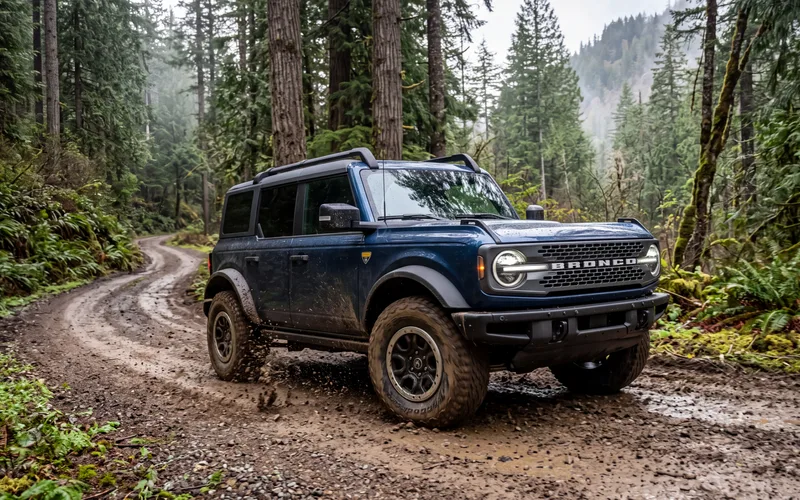 Ford BroncoOff-Road SUVBetter at: Daily comfort
The head-to-head rival: more rear legroom, open-air doors and roof, better on-road manners and actual discounts — worth taking unless you need the 4Runner's 6,000-lb tow rating, hybrid option or resale value.
Compare 2.40C+
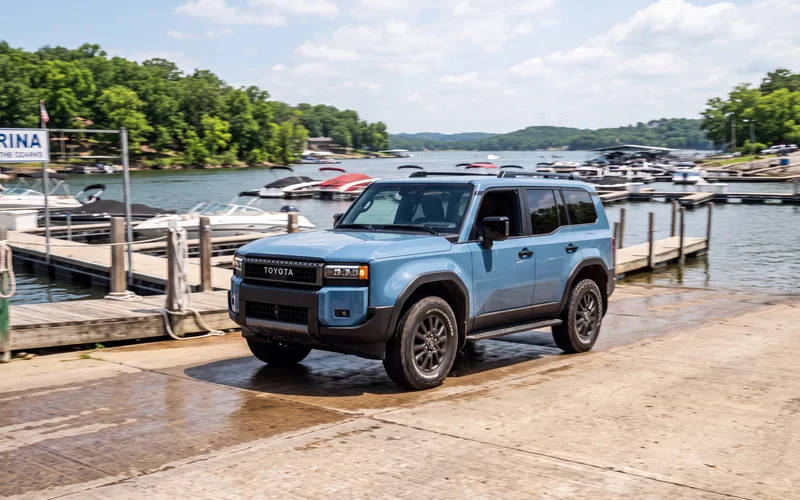 Toyota Land CruiserOff-Road SUVBetter at: Refinement
Sits in the same showroom on the same platform with the hybrid standard and a plusher cabin, overlapping a loaded 4Runner on price — the move if you want one nice off-roader rather than a purpose-built one.
Compare 2.63C+
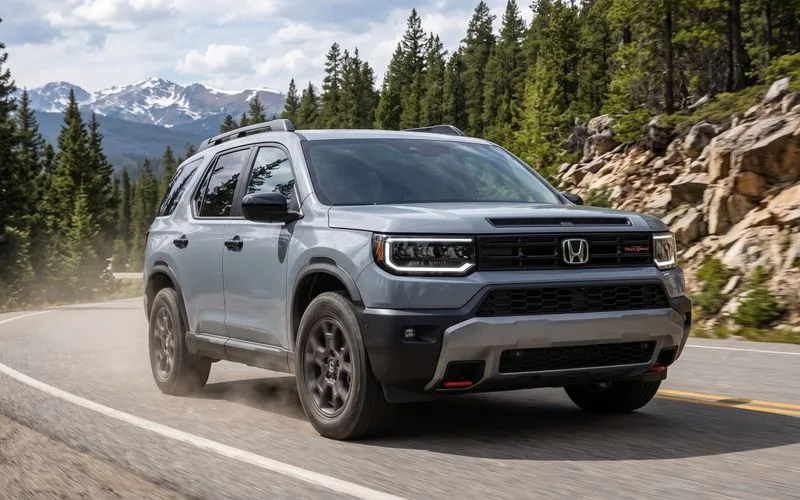 Honda PassportMid-Size SUVBetter at: Everyday livability
Rides, steers and seats people far better for less money while still handling forest roads and snow, giving up low range, the 6,000-lb tow rating and 4Runner-grade resale.
CompareHow it's evolved
10 scored model years · 2017–2026
Subject scores by year
Hover or tap a score to see what moved it versus the year before. A corner mark flags a big swing.
| Year | Performance | Efficiency | Safety | Space | Cost | Reliability | Tech | Use-case | Driving | Value |
|---|---|---|---|---|---|---|---|---|---|---|
| 2026 | 59 | 38 | 65 | 50 | 62 | 75 | 68 | 67 | 65 | 74 |
| 2025 | 58 | 41 | 64 | 47 | 61 | 75 | 68 | 64 | 58 | 76 |
| 2024 | 49 | 25 | 54 | 44 | 61 | 83 | 46 | 61 | 54 | 59 |
| 2023 | 47 | 21 | 52 | 46 | 62 | 83 | 46 | 61 | 53 | 56 |
| 2022 | 47 | 24 | 52 | 46 | 62 | 83 | 46 | 61 | 56 | 56 |
| 2021 | 47 | 31 | 43 | 46 | 62 | 86 | 39 | 60 | 52 | 55 |
| 2020 | 46 | 31 | 43 | 42 | 64 | 82 | 33 | 60 | 54 | 58 |
| 2019 | 46 | 27 | 26 | 44 | 70 | 84 | 25 | 57 | 59 | 53 |
| 2018 | 46 | 25 | 25 | 44 | 70 | 81 | 22 | 56 | 57 | 52 |
| 2017 | 46 | 25 | 25 | 44 | 70 | 86 | 22 | 56 | 59 | 54 |
Compare two years
Best fit & conditions
Higher scores mean a better fit for that use case. Learn more about use-case fit →
Subject profile
Trims & configurations
7 trimsScores above reflect the volume trim. Per-trim specs and scores are rolling out — the full lineup:
Academic Probation · NHTSA safety recalls
Sep 2, 2026Equipment: other: labelsThe load carrying capacity modification label may display inaccurate added weight values. As such, these vehicles fail to comply with the requirements of Federal Motor Vehicle Safety Standard number 110, "Tire Selection and Rims."
Defect
Toyota Motor Engineering & Manufacturing (Toyota) is recalling certain 2024 Toyota Tacoma Hybrid, 2025 Tundra Hybrid, Tundra, 2026 RAV4 Hybrid, 4Runner i-Force Max Hybrid, and 4Runner vehicles. The load carrying capacity modification label may display inaccurate added weight values. As such, these vehicles fail to comply with the requirements of Federal Motor Vehicle Safety Standard number 110, "Tire Selection and Rims."
Risk
A vehicle with an incorrect maximum capacity weight value may be overloaded, increasing the risk of a crash.
Remedy
Dealers will replace the load carrying capacity modification label, free of charge. Owner notification letters are expected to be mailed October 18, 2026. Owners may contact Toyota's customer service at 1-800-331-4331. Toyota's number for this recall is 26TA18.
NHTSA campaign 26V571000 ↗Manufacturer no. 26TA18135 vehicles potentially affected (all models in the campaign)Filed by Toyota Motor Engineering & ManufacturingFiled as 4RUNNER, 4RUNNER I-FORCE MAX HYBRIDMay 4, 2026Equipment: other: labelsThe load carrying capacity modification label states the incorrect load carrying capacity. As such, these vehicles fail to comply with the requirements of Federal Motor Vehicle Safety Standard number 110, "Tire Selection and Rims."
Defect
Gulf States Toyota, Inc. (GST) is recalling certain 2026 4Runner vehicles. The load carrying capacity modification label states the incorrect load carrying capacity. As such, these vehicles fail to comply with the requirements of Federal Motor Vehicle Safety Standard number 110, "Tire Selection and Rims."
Risk
An incorrect load carrying capacity label may lead to improper loading of the vehicle, increasing the risk of a crash.
Remedy
GST will mail a new modification label to owners, free of charge. Owner notification letters were mailed June 18, 2026. Owners may contact GST customer service at 1-800-444-1074. GST's number for this recall is 26R1.
NHTSA campaign 26V282000 ↗Manufacturer no. 26R194 vehicles potentially affected (all models in the campaign)Owners notified Jun 18, 2026Filed by Gulf States Toyota, Inc.Filed as 4RUNNER
14 recalls on other model years of the 4Runner (2017–2025)
Sep 11, 2025Electrical system: instrument cluster/panelDue to an error in the instrument panel software at vehicle startup, the instrument panel may fail to display vehicle speed, brake system, and tire pressure warning lights.
Defect
Toyota Motor Engineering & Manufacturing (Toyota) is recalling certain 2023-2024 Toyota Venza, 2023-2025 RAV4 Prime, RAV4, Highlander, GR Corolla, Crown, 2024-2025 Lexus TX, LS, Toyota Tacoma, Grand Highlander, and 2025 Lexus RX, Toyota Crown Signia, Camry, RAV 4 Plug-in Hybrid (PHEV), and 4 Runner vehicles. Due to an error in the instrument panel software at vehicle startup, the instrument panel may fail to display vehicle speed, brake system, and tire pressure warning lights.
Risk
An instrument panel display that does not show critical information can increase the risk of a crash or injury.
Remedy
Dealers will update the instrument panel software over-the-air (OTA) for non-PHEV vehicles, free of charge. For PHEV vehicles, dealers will inspect the instrument panel assembly, and either replace it, or update the software, free of charge. Owner letters were mailed December 5, 2025. Additional letters will be sent, anticipated in May 2026. This is a phased recall. Owners may contact Toyota's customer service at 1-800-331-4331. Toyota's numbers for this recall are 25TB08 and 25TA08. Lexus' numbers for this recall are 25LB05 and 25LA05.
NHTSA campaign 25V595000 ↗Manufacturer no. See Part 573 Report591,377 vehicles potentially affected (all models in the campaign)Owners notified Dec 5, 2025Filed by Toyota Motor Engineering & ManufacturingFiled as 4RUNNERJul 23, 2024Equipment: other: labelsThe load carrying capacity modification label may display inaccurate added weight values. As such, these vehicles fail to comply with the requirements of Federal Motor Vehicle Safety Standard number 110, "Tire Selection and Rims."
Defect
Gulf States Toyota, Inc. (GST) is recalling certain Toyota 2023 GR Supra, 2024 4 Runner, Corolla, Grand Highlander, Grand Highlander Hybrid, Land Cruiser Hybrid, Tacoma, Tacoma Hybrid, 2023-2024 BZ4X, Corolla Cross Hybrid, GR Corolla, GR86, Highlander, Highlander Hybrid, Prius, Prius Prime, Sequoia Hybrid, Tundra, Tundra Hybrid, Venza Hybrid, 2023-2025 Crown, and 2025 Camry Hybrid vehicles equipped with GST accessories. The load carrying capacity modification label may display inaccurate added weight values. As such, these vehicles fail to comply with the requirements of Federal Motor Vehicle Safety Standard number 110, "Tire Selection and Rims."
Risk
A vehicle with an incorrect maximum capacity weight value may be overloaded, which can increase the risk of a crash.
Remedy
GST will mail new labels to owners, free of charge. Owner notification letters were mailed September 16, 2024. Owners may contact GST customer service at 1-800-444-1074. GST's number for this recall is 24R2.
NHTSA campaign 24V548000 ↗Manufacturer no. 24R233,848 vehicles potentially affected (all models in the campaign)Owners notified Sep 16, 2024Filed by Gulf States Toyota, Inc.Filed as 4RUNNEROct 12, 2023Equipment: other: labelsThe load carrying capacity modification label states the incorrect load carrying capacity, which can result in an overloaded vehicle. As such, these vehicles fail to comply with the requirements of Federal Motor Vehicle Safety Standard number 110, "Tire Selection and Rims."
Defect
Southeast Toyota Distributors, LLC (SET) is recalling certain 2023 Toyota 4Runner vehicles. The load carrying capacity modification label states the incorrect load carrying capacity, which can result in an overloaded vehicle. As such, these vehicles fail to comply with the requirements of Federal Motor Vehicle Safety Standard number 110, "Tire Selection and Rims."
Risk
An overloaded vehicle increases the risk of a crash.
Remedy
Southeast Toyota Distributors, LLC will mail a new modified label, free of charge. Owner notification letters were mailed December 1, 2023. Owners may contact SET's customer service at 1-866-405-4226. SET's number for this recall is SET23A.
NHTSA campaign 23V680000 ↗Manufacturer no. SET23A13 vehicles potentially affected (all models in the campaign)Owners notified Dec 1, 2023Filed by Southeast Toyota Distributors, LLCFiled as 4RUNNERJul 6, 2022Equipment: other: labelsThe load carrying capacity modification labels are incorrect. As such, these vehicles fail to comply with the requirements of Federal Motor Vehicle Safety Standard number 110, "Tire Selection and Rims."
Defect
Southeast Toyota Distributors, LLC (SET) is recalling certain 2020-2022 4Runner vehicles equipped with 20-inch Black Gunner Wheels. The load carrying capacity modification labels are incorrect. As such, these vehicles fail to comply with the requirements of Federal Motor Vehicle Safety Standard number 110, "Tire Selection and Rims."
Risk
An incorrect label may lead to unintentionally overloading the vehicle, increasing the risk of a crash.
Remedy
SET will mail replacement labels to owners, free of charge. Owner notification letters are expected to be mailed September 4, 2022. Owners may contact SET's customer service at 954-429-2000. SET's number for this recall is SET22A.
NHTSA campaign 22V480000 ↗Manufacturer no. SET22A280 vehicles potentially affected (all models in the campaign)Owners notified Sep 1, 2022Filed by Southeast Toyota Distributors, LLCFiled as 4RUNNERMay 6, 2022Equipment: other: labelsThe load carrying capacity modification labels may not be permanent and can fade, becoming illegible. As such, these vehicles fail to comply with the requirements of Federal Motor Vehicle Safety Standard number 110, "Tire Selection and Rims."
Defect
Gulf States Toyota, Inc. (GST) is recalling certain 2022 4Runner, Tacoma, Highlander, and Highlander Hybrid vehicles. The load carrying capacity modification labels may not be permanent and can fade, becoming illegible. As such, these vehicles fail to comply with the requirements of Federal Motor Vehicle Safety Standard number 110, "Tire Selection and Rims."
Risk
An illegible label may allow the vehicle to be overloaded, increasing the risk of a crash.
Remedy
GST will notify owners by mail, including a replacement load carrying capacity modification label for their vehicle and detailed replacement instructions, free of charge. Owner notification letters were mailed June 30, 2022. Owners may contact GST customer service at 1-800-444-1074. GST's number for this recall is 22R1.
NHTSA campaign 22V310000 ↗Manufacturer no. 22R1661 vehicles potentially affected (all models in the campaign)Owners notified Jun 30, 2022Filed by Gulf States Toyota, Inc.Filed as 4RUNNERDec 13, 2021Exterior lighting: headlightsThe driver's side high beam may be inoperable after the installation of accessory fog lights. As such, these vehicles fail to comply with the requirements of Federal Motor Vehicle Safety Standard number 108, "Lamps, Reflective Devices, and Associated Equipment."
Defect
Southeast Toyota Distributors, LLC (SET) is recalling certain 2022 Toyota 4Runner vehicles. The driver's side high beam may be inoperable after the installation of accessory fog lights. As such, these vehicles fail to comply with the requirements of Federal Motor Vehicle Safety Standard number 108, "Lamps, Reflective Devices, and Associated Equipment."
Risk
An inoperable driver's side high beam may reduce visibility, increasing the risk of a crash.
Remedy
Dealers will install an updated wiring harness, free of charge. Owner notification letters were mailed February 11, 2022. Owners may contact SET customer service at 1-866-405-4226. SET's number for this recall is SET21A.
NHTSA campaign 21V963000 ↗Manufacturer no. SET21A78 vehicles potentially affected (all models in the campaign)Owners notified Feb 11, 2022Filed by Southeast Toyota Distributors, LLCFiled as 4RUNNERNov 4, 2020Fuel system, gasoline: delivery: fuel pumpThe low-pressure fuel pump inside the fuel tank may fail.
Defect
Toyota Motor Engineering & Manufacturing (Toyota) is recalling certain 2018-2019 4Runner, 2019-2020 Avalon, 2019 Corolla Hatchback, 2017-2019 Highlander, 2018-2020 Camry, 2020 Corolla, 2018-2019 Land Cruiser, 2017-2020 Tacoma, 2019-2020 RAV4, 2019-2020 Sequoia, 2017-2020 Sienna, 2019-2020 Tundra, 2018-2020 Lexus ES350, 2017 Lexus GS200t, 2017-2019 Lexus GS350, 2019 Lexus GS300, 2018-2020 Lexus LC500h, 2019-2020 Lexus LS500, 2018-2019 Lexus GX460, 2017 Lexus IS200t, 2019 Lexus IS300, 2019 Lexus IS350, 2018-2020 Lexus LC500, 2018 Lexus LS500, 2019 Lexus LS500h, 2018-2019 Lexus LX570, 2017 Lexus RC200t, 2019 Lexus RC300, RC350, 2017 and 2019-2020 Lexus RX350, 2018-2020 RX350L, 2019 Lexus UX200, 2018-2019 Lexus NX300 vehicles. The low-pressure fuel pump inside the fuel tank may fail.
Risk
If the fuel pump fails, the engine can stall while driving, increasing the risk of a crash.
Remedy
Toyota will notify owners, and dealers will replace the fuel pump assembly with an improved one, free of charge. Owners of specific models were notified that remedy parts were available starting January 21, 2021. Owners of other models will be notified as remedy parts become available. Remedy parts should be available for all affected vehicles by late March 2021. Owners may contact Toyota customer service at 1-888-270-9371 or Lexus customer service at 1-800-255-3987. Note: This recall is an expansion of recall 20V-012. Toyota's number for this recall is 20TA02. Lexus' number for this recall is 20LA01.
NHTSA campaign 20V682000 ↗Manufacturer no. 20TA02, 20LA011,525,742 vehicles potentially affected (all models in the campaign)Owners notified Jan 21, 2021Filed by Toyota Motor Engineering & ManufacturingFiled as 4RUNNERSep 20, 2019Steering · SuspensionDuring installation, certain steering and suspension components may not have been properly tightened.
Defect
Southeast Toyota Distributors, LLC (SET) is recalling certain 2018-2019 Toyota 4Runner vehicles. During installation, certain steering and suspension components may not have been properly tightened.
Risk
Loose fasteners may cause a loss of vehicle control, or cause an accessory to detach from the vehicle and become a road hazard. Either of these scenarios can increase the risk of a crash or injury.
Remedy
SET will notify owners, and dealers will inspect and re-tighten the steering and suspension fasteners as necessary, free of charge. The recall is expected to begin November 19, 2019. Owners may contact SET customer service at 1-866-405-4226. SET's number for this recall is SET19B.
NHTSA campaign 19V670000 ↗Manufacturer no. SET19B34 vehicles potentially affected (all models in the campaign)Owners notified Oct 28, 2019Filed by Southeast Toyota Distributors, LLCFiled as 4RUNNERMar 27, 2019Equipment: other: labelsThe text on the load capacity label may become illegible. As such, these vehicles fail to comply with the requirements of Federal Motor Vehicle Safety Standard (FMVSS) number 110, "Tire Selection and Rims."
Defect
Gulf States Toyota (GST) is recalling certain 2019 C-HR, 4Runner, Avalon, Avalon Hybrid, Camry, Camry Hybrid, Highlander, Land Cruiser, Prius, RAV4, Sequoia, Tacoma, Sienna, Tundra and Yaris vehicles. The text on the load capacity label may become illegible. As such, these vehicles fail to comply with the requirements of Federal Motor Vehicle Safety Standard (FMVSS) number 110, "Tire Selection and Rims."
Risk
If the driver cannot read the label, they may unknowingly overload the vehicle, increasing the risk of a crash.
Remedy
GST will notify owners, and dealers will provide corrected load carrying capacity modification labels, free of charge. The recall began May 24, 2019. Owners may contact GST customer service at 1-800-444-1074. GST's number for this recall is 19R1.
NHTSA campaign 19V244000 ↗Manufacturer no. 19R13,634 vehicles potentially affected (all models in the campaign)Owners notified May 24, 2019Filed by Gulf States Toyota, Inc.Filed as 4RUNNEROct 25, 2018Equipment: other: labelsThe Gross Vehicle Weight Rating (GVWR) on the certification label may be incorrect, possibly resulting in the vehicle being overloaded. As such, these vehicles fail to comply with the requirements of Federal Motor Vehicle Safety Standard (FMVSS) number 110, "Tire Selection and Rims."
Defect
Southeast Toyota Distributors, LLC (SET) is recalling certain 2017-2019 Toyota 4Runner vehicles that SET modified to be equipped with a TRD wheel package. The Gross Vehicle Weight Rating (GVWR) on the certification label may be incorrect, possibly resulting in the vehicle being overloaded. As such, these vehicles fail to comply with the requirements of Federal Motor Vehicle Safety Standard (FMVSS) number 110, "Tire Selection and Rims."
Risk
An overloaded vehicle can increase the risk of a crash.
Remedy
SET will notify owners and mail them corrected certification labels, free of charge. The recall began November 28, 2018. Owners may contact SET customer service at 1-866-405-4226. SET's number for this recall is SET18A.
NHTSA campaign 18V753000 ↗Manufacturer no. SET18A1,295 vehicles potentially affected (all models in the campaign)Owners notified Nov 28, 2018Filed by Southeast Toyota Distributors, LLCFiled as 4RUNNERDec 20, 2017Equipment: other: labelsThese vehicles may have incorrect load carrying capacity modification labels. As such, these vehicles fail to comply with the requirements of Federal Motor Vehicle Safety Standard (FMVSS) number 110, "Tire Selection and Rims."
Defect
Toyota Motor Engineering & Manufacturing (Toyota) is recalling certain 2017-2018 Toyota 4Runner and Tundra, 2018 Toyota Highlander, RAV4 and Lexus GX460 and 2017 Toyota Sienna and Tacoma vehicles. These vehicles may have incorrect load carrying capacity modification labels. As such, these vehicles fail to comply with the requirements of Federal Motor Vehicle Safety Standard (FMVSS) number 110, "Tire Selection and Rims."
Risk
An incorrect load information label can result in the operator overloading the vehicle and increasing the risk of a crash.
Remedy
Toyota will notify owners and provide them with corrected labels, free of charge. The recall began on January 23, 2018. Owners may contact Toyota customer service at 1-800-331-4331. Toyota's numbers for this recall are H0Z for Toyota vehicles, and HLF for Lexus vehicles.
NHTSA campaign 17V831000 ↗Manufacturer no. Toyota H0Z Lexus HLF649 vehicles potentially affected (all models in the campaign)Owners notified Jan 23, 2018Filed by Toyota Motor Engineering & ManufacturingFiled as 4RUNNERNov 29, 2017Structure: body: hoodThe U-nut that secures the overlay grille may fracture, allowing the Billet Grille Overlay to detach from the vehicle.
Defect
Southeast Toyota Distributors, LLC (SET) is recalling certain 2015-2018 Toyota 4Runner vehicles equipped with an accessory Billet Grille Overlay installed by SET or provided by SET and installed by SET dealers. The U-nut that secures the overlay grille may fracture, allowing the Billet Grille Overlay to detach from the vehicle.
Risk
If the Billet Grille Overlay detaches while driving, it can become a road hazard, increasing the risk of a crash.
Remedy
SET will notify owners, and dealers will replace the securing U-nuts with upgraded hardware, free of charge. The recall is expected to begin January 26, 2018. Owners may contact SET customer service at 1-866-405-4226. SET's number for this recall is SET17C.
NHTSA campaign 17V763000 ↗Manufacturer no. SET17C431 vehicles potentially affected (all models in the campaign)Owners notified Jan 17, 2018Filed by Southeast Toyota Distributors, LLCFiled as 4RUNNERMay 2, 2017Tires: temporary/emergency spare tireThe spare tire air pressure was not adjusted to the proper pressure as stated on the Tire Pressure Label.
Defect
Gulf States Toyota, Inc. (Gulf States) is recalling certain 2017 4Runner , 86, Avalon, Camry, Camry Hybrid, Corolla, Corolla iM, Highlander, Highlander Hybrid, Prius, Prius C, RAV4, RAV4 Hybrid, Sienna and Yaris vehicles. The spare tire air pressure was not adjusted to the proper pressure as stated on the Tire Pressure Label.
Risk
A spare tire that is not inflated to the proper value may not perform as intended, increasing the risk of a crash.
Remedy
Gulf States will notify owners, and dealers will inspect the spare tires, adjusting their pressure as necessary, free of charge. The recall began June 15, 2017. Owners may contact Gulf States customer service at 1-800-444-1074. Toyota's number for this recall is 17R2.
NHTSA campaign 17V295000 ↗Manufacturer no. 17R2409 vehicles potentially affected (all models in the campaign)Owners notified Jun 15, 2017Filed by Gulf States Toyota, Inc.Filed as 4RUNNERMay 1, 2017EquipmentThe fasteners for the aftermarket roof rack may have been improperly tightened.
Defect
Gulf States Toyota, Inc (Gulf States) is recalling certain 2016-2017 4Runner vehicles equipped with the TFORCE accessory package. The fasteners for the aftermarket roof rack may have been improperly tightened.
Risk
If the roof rack fasteners loosen, the roof rack may detach from the vehicle, increasing the risk of a crash.
Remedy
Gulf States will notify owners, and dealers will inspect and, as necessary, tighten the roof rack fasteners, free of charge. The recall began June 15, 2017. Owners may contact Gulf States customer service at 1-800-444-1074. Gulf States' number for this recall is 17R1.
NHTSA campaign 17V291000 ↗Manufacturer no. 17R11,019 vehicles potentially affected (all models in the campaign)Owners notified Jun 15, 2017Filed by Gulf States Toyota, Inc.Filed as 4RUNNER
Source: NHTSA Office of Defects Investigation recall database, model years 2017–2026. Recalls are listed by model year as the manufacturer filed them; whether a specific car is affected depends on its VIN — check a VIN at nhtsa.gov ↗. NHTSA model names matched to this page: 4RUNNER, 4RUNNER I-FORCE MAX HYBRID.
Detailed scoring by subject
1Performance & PowertrainOne of the 4Runner's weakest categories.1.95C-
The sixth-generation (N300) 4Runner's volume SR5 and TRD Off-Road trims use the 2.4L turbocharged i-FORCE four rated at 278 hp @ 6,000 rpm; the optional i-FORCE MAX hybrid (standard on Platinum, TRD Pro and Trailhunter) raises combined output to 326 hp. No V6 is offered in this generation.
Peak torque of the volume 2.4L turbo four, delivered on a broad low-rpm plateau that suits a body-on-frame SUV; the hybrid's 465 lb-ft is a substantial step up and is the reason reviewers recommend it for towing.
Instrumented testing of the 2.4L turbo 4Runner lands in the mid-7-second range — adequate but unremarkable for a roughly 5,000 lb body-on-frame SUV; the heavier hybrid is meaningfully quicker despite the extra mass.
The 2.4L turbo four pulls strongly from low rpm but is consistently described as coarse and gravelly under load, with audible turbo lag off the line and none of the effortless smoothness of the outgoing V6; the i-FORCE MAX hybrid adds welcome torque but its engine start/stop and regenerative-brake transitions are not seamless.
The 8-speed automatic is well-matched to the turbo four's torque plateau and shifts smoothly at cruise, but reviewers note low-speed hesitation and occasional gear hunting, and the hybrid's motor sandwiched into the bellhousing makes stop-start creep less polished than a conventional automatic.
The sixth-generation 4Runner is rated at 6,000 lbs across the lineup, up 1,000 lbs from the previous generation and comfortably ahead of the Ford Bronco's 3,500 lbs (4,500 lbs Raptor) — a genuine strength for a mid-size off-road SUV.
Four-wheel drive is available on every trim with a genuine 2-speed transfer case, and the system is sophisticated: part-time 4WD on the volume trims, full-time 4WD with a locking center differential on Limited, Platinum, TRD Pro and Trailhunter, plus Multi-Terrain Select, CRAWL Control and Downhill Assist Control. It falls just short of the Bronco only because rear-wheel drive remains the standard configuration on SR5, TRD Sport and Limited rather than 4WD being standard fleet-wide.
Two dedicated halo off-road trims anchor the range — TRD Pro with 2.5-inch Fox QS3 internal-bypass shocks and 33-inch all-terrain tires, and Trailhunter with Old Man Emu position-sensitive dampers, ARB rock rails and a high-mount air intake — atop hardware that includes an electronic locking rear differential, Toyota's Stabilizer Bar Disconnect Mechanism, skid plates, Multi-Terrain Select with a Multi-Terrain Monitor, and CRAWL Control. Ground clearance runs to roughly 10 inches on the top off-road grades.
Two distinct powertrains cover the range — the 2.4L i-FORCE turbo and the electrified i-FORCE MAX hybrid — which puts an electrified option in a segment where the Bronco offers none. It stops short of the top band because both share the same 2.4L four, there is no V6 or V8 alternative, and no PHEV or EV variant is offered.
2Efficiency & RangeThe 4Runner's lowest-graded category.0.51F
The sixth-generation (N300) 4Runner's body-on-frame TNGA-F platform, part-time 4WD hardware, boxy profile and all-terrain rubber hold the volume 2.4L turbo four to roughly 21 MPG combined — near the bottom of the SUV normalization band despite downsizing from the old 4.0L V6.
Stop-and-go driving is the non-hybrid 4Runner's weakest environment — roughly 4,800 lb of ladder-frame SUV with no electric assist off the line puts city economy at the low end of the segment.
Highway is the 4Runner's best case — the turbo four cruises at low load and the 8-speed keeps revs down — but a brick-shaped body-on-frame SUV still trails unibody crossovers badly, and the hybrid is actually slightly worse here than the gas model.
A roughly 19-gallon tank paired with 21 MPG combined yields about 400 miles of cruising range — mid-pack for the SUV band and a step back from the fifth-generation 4Runner's larger 23-gallon tank, which is a real loss for the overlanding buyers this vehicle courts.
At 21 MPG combined on regular unleaded and EPA's 15,000 mi/yr assumption, the 4Runner burns roughly 715 gallons a year — around $2,750, near the costly end of the SUV band and identical to the similarly-rated Ford Bronco.
Both the i-FORCE 2.4L turbo and the i-FORCE MAX hybrid are specified for regular 87-octane unleaded, with no premium requirement and no diesel, E85 or charging infrastructure to plan around. The 4Runner drinks a lot, but every gallon it drinks is the cheapest grade at the pump — the same result as the Bronco (88).
3SafetyMid-pack among this car's ten categories.2.36C+
NHTSA has not published an overall rating for the sixth-generation (2025+) 4Runner as of this scoring run, so the value is carried from the established pattern for this body style and platform: the outgoing fifth-gen 4Runner rated 4 stars overall (4 frontal / 5 side / 3 rollover), and the TNGA-F Tacoma sibling also rated 4 stars overall. Body-on-frame SUVs are consistently capped near 4 stars by the 3-star rollover result their ride height and track produce.
The 4Runner carries no IIHS Top Safety Pick or TSP+ award. Toyota's recent body-on-frame TNGA-F products have posted mixed results under the current test regime — the Tacoma's updated moderate-overlap front test (rear-passenger protection) came in below Good, and the outgoing 4Runner was never an award winner and rated poorly on the updated side test and headlights. Scored in the middle band: the core crashworthiness structure is competent, but there is no award and at least one sub-Good result is likely.
Toyota Safety Sense 3.0 is standard on every 4Runner trim including the base SR5 — pre-collision system with pedestrian and intersection support, full-speed-range dynamic radar cruise control, lane departure alert with steering assist, lane tracing assist, road sign assist, automatic high beams and proactive driving assist — with Blind Spot Monitor and Rear Cross-Traffic Alert also standard across the range. That is a comprehensive suite with nothing meaningful paywalled to upper trims, which places it in the top band; it stops short of the 90s only because the coverage is alert-and-assist rather than active-intervention (no blind-spot steering or evasive assist).
TSS 3.0's pre-collision system adds motorcyclist detection, improved low-light pedestrian detection and intersection turning support over TSS 2.5, and Toyota systems have generally rated well in vehicle-to-vehicle front crash prevention. Held in the upper-middle band because the current IIHS front crash prevention test is far stricter at night and at higher closing speeds, and no confirmed result exists for this vehicle.
Blind Spot Monitor with Rear Cross-Traffic Alert is standard across the lineup, which is better than the segment norm of making it a mid-trim option, but coverage is alert-only — there is no active braking or steering intervention, no safe-exit alert, and no trailer-aware blind-spot extension despite a 6,000 lb tow rating. A 360-degree camera helps only on upper trims.
Lane Departure Alert with steering assist is standard and Lane Tracing Assist provides genuine centering, but only while the adaptive cruise is engaged — a real limitation next to systems that center independently. Reviewers of Toyota's current implementation describe it as usable but prone to wandering within the lane and to nagging on faded or narrow markings, and the 4Runner's tall, slow-geared steering does not help.
Full-Speed Range Dynamic Radar Cruise Control is standard on every trim and includes stop-and-go operation with automatic resume, and TSS 3.0 improved curve-speed handling and cut-in response. Combined with Lane Tracing Assist it functions as a competent highway assist. It lands short of the top band because gap-closing can be conservative and resume from a full stop is slow relative to the best systems in this price class.
No hands-free highway driving system is offered on the 4Runner at any trim or option level. Toyota's hands-free Teammate technology remains confined to a small number of Lexus and low-volume Toyota models and has never been extended to the truck-based line, so buyers cross-shopping a BlueCruise Expedition or a Super Cruise Tahoe get nothing comparable here.
The sixth-generation 4Runner uses LED projector headlights across the range with standard automatic high beams, an improvement over the outgoing model whose IIHS headlight ratings were Marginal on volume trims. Scored mid-band pending a confirmed IIHS result: the upper trims get the more capable lighting hardware, and Toyota's recent truck-based products have not consistently earned Good headlight ratings on base configurations.
One of the 4Runner's genuine safety strengths: an upright, boxy greenhouse with a low beltline, large squared-off side glass, a flat hood whose corners the driver can place, and slim front pillars give a commanding, easy-to-judge view out — markedly better than the high-belt, thick-pillar crossovers it competes with. Points come off for a thick D-pillar and rear headrests that clutter the mirror view, plus the fact that the panoramic camera that would compensate is confined to upper trims.
Tall, square rear doors and a boxy cabin make loading a child seat physically easy, and the flat second-row bench takes two seats side by side without a fight. Held to the middle band because the lower anchors sit recessed in the seat bight and take some digging, the high floor makes lifting a child up into the vehicle harder than in a crossover, and the optional third row eats the space behind a rear-facing seat.
4Space & ComfortOne of the 4Runner's weakest categories.1.38D
The volume configuration (SR5 / TRD Off-Road) is a two-row five-seater; the sixth-generation N280 returns an optional third row, but only on gas i-FORCE trims because the i-FORCE MAX battery occupies the space under the cargo floor. Scored on the five-seat volume config per the item definition.
Upright body-on-frame SUV packaging gives mid-pack front headroom for the segment — a little more than the Tacoma double cab it shares its front structure with (39.6 in in this dataset), well short of the Wrangler's 42.6 in.
Front legroom is adequate rather than generous, consistent with the shared TNGA-F front structure (Tacoma double cab measures 41.8 in in this dataset). The 4Runner's higher seating position makes it feel roomier than the Tacoma despite near-identical numbers.
The boxy roofline pays off in the second row, where headroom is a relative strength against crossover rivals — above the SUV band midpoint even if short of the Bronco (40.1 in) and Wrangler (41.7 in).
The weakest dimension in the vehicle and the main reason this category lands low: on a 112.2 in wheelbase shared with the Land Cruiser, the second row is tight for a 195 in SUV, trailing the Bronco (36.3 in), Wrangler (38.3 in), and every mid-size crossover in the dataset.
A third row exists again — which alone puts the 4Runner ahead of the Bronco and Wrangler, both two-row-only — but it is a small-children-only bench with a high floor and low cushion that forces a knees-up posture, reached past a second row that already has little legroom to give. Availability is the bigger limit: gas i-FORCE trims only, so hybrid, TRD Pro, and Trailhunter buyers cannot get it at all.
Respectable in absolute terms but modest for the exterior footprint, and the figure degrades on the hybrid, where the battery under the load floor raises it and creates a step — a demerit reviewers single out because it costs both volume and flat-floor usability.
With the second row down, the square body and near-vertical tailgate deliver genuinely large maximum capacity — the strongest spec in this category and well clear of the Bronco (77.6 cu ft) and Wrangler (72.4 cu ft).
The 4Runner keeps the segment's most distinctive party trick — the power roll-down rear tailgate window — and adds a deep center console, underfloor cargo storage, and an available sliding rear cargo deck that doubles as a tailgate work surface. i-FORCE MAX trims add a 2400-watt AC inverter with cabin and cargo outlets. Held back from the top band by the hybrid's raised, stepped load floor.
Front seats are a clear step up from the Tacoma's criticized low-slung position — the 4Runner sits taller with a more natural driving posture and adequate long-haul cushioning, and the TRD Pro's IsoDynamic Performance Seats are a genuine standout off-road. The second row is flatter and short on legroom, which caps the score below the plush crossover set.
The new platform's coil-sprung multi-link rear is a substantial improvement over the fifth generation and comfortably better resolved than the Wrangler or Bronco, but this is still a body-on-frame truck: there is secondary motion over broken pavement, and the off-road trims on 33-inch all-terrains ride noticeably busier than the road-biased SR5 and Limited.
Wind and road noise are ordinary for a boxy body-on-frame SUV, but the 2.4-liter turbo four is the weak link — coarse and unrefined under load, a criticism that follows this engine across the Tacoma, 4Runner, and Land Cruiser. Quieter than a Wrangler, not close to library-quiet.
Solid mainstream provision: dual-zone automatic climate control across most of the range, heated front seats and heated steering wheel from the mid trims, ventilated front seats and rear-seat amenities on Limited and Platinum, plus remote pre-conditioning through the Toyota app. Ventilation and the richest content stay locked to upper trims, keeping it out of the top band.
5Cost of OwnershipMid-pack among this car's ten categories.2.18C
Second model year of the sixth-generation (N300) 4Runner, which launched for 2025 on the TNGA-F platform; 2026 entry pricing extrapolated ~1–2% from the 2025 SR5 ($40,770 + $1,450 destination = $42,220). The generation change pushed the entry point roughly $2,500 above the outgoing fifth-gen, leaving the 4Runner priced above mainstream mid-size SUVs and near body-on-frame off-road rivals.
The 4Runner's mix has long centred on the off-road-equipped middle of the range rather than the price-leader SR5, so TRD Off-Road 4WD is used as the representative volume configuration. At roughly $51,000 it sits well above the segment's mainstream mid-size SUVs and close to a Wrangler Sahara, which is the main drag on this category.
Toyota's service pricing and parts availability keep running costs low, and ToyotaCare absorbs the first two years of scheduled service outright. The turbocharged 2.4-litre four is a more service-intensive engine than the naturally aspirated 4.0 V6 it replaced, and body-on-frame consumables (tyres, brakes, 4WD driveline fluids) push the estimate above a unibody Toyota like the Highlander.
Resale is the 4Runner's defining ownership strength — the outgoing fifth generation repeatedly topped iSeeCars' five-year retention rankings at roughly 70–75%, and the nameplate has been a perennial KBB/ALG residual-value award winner. The projection is trimmed to ~67% because those exceptional figures were set by a long-in-the-tooth, supply-constrained model at much lower MSRPs; the new generation carries a higher base price and an unproven turbocharged four, both of which historically soften residuals.
Toyota's standard 36-month/36,000-mile basic coverage is the segment floor — the same term as Ford and Jeep, and half the length of what Hyundai/Kia offer. No 4Runner-specific extension applies.
The 60-month/60,000-mile powertrain term is the segment minimum and scores at the bottom of the band. Buyers who choose the i-FORCE MAX hybrid (standard on Platinum, Trailhunter and TRD Pro, optional on several Premium trims) get materially longer coverage on the hybrid hardware, but that does not extend the base powertrain term used for the gas volume trim scored here.
ToyotaCare provides two years/25,000 miles of no-cost scheduled maintenance plus two years of unlimited-mileage roadside assistance as standard, which is real included coverage rather than a points scheme — comfortably ahead of the Wrangler (no complimentary maintenance) and the Bronco (rewards-points credit). It falls short of the 80+ band because 2 yr/25,000 mi is a short window for a vehicle in this price class, and the connected-services perks are trial-length rather than included outright.
$51,000 volume-trim price minus its estimated resale value after 5 years (67% retained, or about $34,170) leaves about $16,830 in depreciation. Add the projected $5,000 in 5-year maintenance and repairs, and owning this vehicle for 5 years costs about $21,830 in total.
6Reliability & QualityThe 4Runner's best-graded category.3.06B
Genuinely mixed signals: the nameplate's dependability reputation is exceptional, but that reputation was earned by the fifth generation, and 2026 is only the second model year of an all-new N300 that shares the fourth-generation Tacoma's 2.4L turbo four and 8-speed automatic — a combination that has drawn steady owner complaints about low-speed shift quality rather than hard failures. Scored just above the Tacoma because the 4Runner launched a year later and benefits from calibration and build fixes already worked through on the truck line.
Toyota is the mass-market benchmark for dependability, topping Consumer Reports' brand reliability survey and finishing above industry average in J.D. Power's Vehicle Dependability Study year after year. Held just below the top of the band because J.D. Power's most recent VDS placed Toyota eighth rather than top-five, so the two major studies are not in lockstep.
The N300 has picked up the cluster of early campaigns typical of an all-new body-on-frame platform in its first two model years, along with TSB activity around transmission calibration and driveline noise shared with the Tacoma. Critically, the T24A-FTS four is not exposed to the V35A twin-turbo V6 machining-debris campaign that shadows Tundra and Sequoia, which keeps this comfortably in the typical-activity band rather than the failing one.
The 2.4L T24A-FTS turbo four now runs across Highlander, Grand Highlander, Crown, Tacoma and the Lexus NX/RX with no systemic failure pattern attached to it, but it replaced the 1GR-FE 4.0L V6 — an engine with one of the strongest 200,000-mile reputations Toyota ever built — and the i-FORCE MAX hybrid adds a bellhousing motor-generator that has only been on sale since 2024. Scored a notch under the Tacoma's identical hardware because the reputational step down from the 1GR-FE is steeper than the truck's, and the 4Runner is bought disproportionately by high-mileage, long-hold owners.
An enormous step up from the fifth generation's decade-old cabin — modern dashboard architecture, proper switchgear, and up to a 14-inch touchscreen — with materials chosen for wash-out ruggedness over richness. Hard plastics still dominate the lower dash and door bases, and against a Premium price class where the platform-mate Land Cruiser and Lexus GX sit within reach, perceived quality reads as competitive rather than class-leading.
Japanese assembly gives the 4Runner tighter, more consistent panel work than the Mexico-built Tacoma or Texas-built Sequoia it shares a platform with, and there is no recurring squeak, rattle or misalignment theme in coverage of the new generation. Capped short of the top band because Toyota tracks only around industry average in J.D. Power Initial Quality and early-build cars of any all-new platform draw scattered trim complaints.
Toyota runs one of the densest US dealer networks at roughly 1,200 franchised stores, so warranty work and routine service are within reach almost anywhere — including the rural and mountain markets 4Runner buyers actually use the truck in. Service satisfaction rates solidly among mass-market brands without leading it, and high-demand trims like TRD Pro and Trailhunter can mean long waits for both allocation and shop time.
The 4Runner sits behind only the Wrangler and Tacoma for aftermarket depth — suspension, armor, bumpers, racks and overlanding hardware are abundant and competitively priced — and heavy component sharing with the Tacoma kept OEM parts supply strong from launch. Routine maintenance costs run below the SUV average; the offsets are that the N300-specific aftermarket is still filling in versus the 15-year-old outgoing generation, and turbo and hybrid components cost meaningfully more out of warranty than the old naturally aspirated V6's did.
7Technology & InfotainmentOne of the 4Runner's strongest categories.2.60C+
The volume SR5 and TRD Off-Road ship with the base 8.0-inch Toyota Audio Multimedia head unit; the 14.0-inch screen arrives with the Premium grades and the trims above them. Scored on the standard unit for the volume trim, the same convention applied to the 2026 Tacoma (8.0 in) — that puts the 4Runner near the floor of the SUV band despite the big screen being available. The placeholder 10.5 in described no 4Runner configuration.
Toyota Audio Multimedia is among the better native off-road-SUV systems: quick to boot and respond, a shallow menu tree with a persistent home row, and a full set of physical controls kept alongside it — real HVAC knobs, volume and tune dials, and hard buttons for 4WD, terrain modes and the rear locker. It stops short of the top band because the app catalog is thin and the base 8-inch unit looks marooned in the wide dash of the volume trims.
Wireless Apple CarPlay and wireless Android Auto are standard on every 4Runner trim including the base SR5 with the 8-inch screen — no package, no subscription, no trim gate. Held just below the ceiling only because Qi wireless charging to keep the phone alive is not standard alongside it on the volume trims.
The cloud-backed 'Hey Toyota' assistant handles natural phrasing for climate, media, navigation and point-of-interest search, a genuine step above the command-word systems still common in body-on-frame SUVs. Native cloud navigation is the weak half: it runs on a Drive Connect subscription after the included trial, so most owners fall back to CarPlay maps.
The available JBL Premium system is competitive with the B&O and Alpine setups in rival off-road SUVs, and the removable JBL Flex portable Bluetooth speaker docked in the dash suits the vehicle's outdoor brief in a way no Bronco or Wrangler option does. The base system on SR5 and TRD Off-Road is merely adequate, which keeps this out of the high 80s.
The volume trims get a partial setup — a 7-inch digital display flanked by analog dials — with the 12.3-inch fully digital configurable cluster reserved for the Premium grades and above. That is textbook 'full digital on upper trims only' territory rather than the near-standard full-digital display the placeholder 69 implied.
Toyota pushes over-the-air updates to the multimedia head unit and map data on Toyota Audio Multimedia vehicles, which clears the 'no meaningful OTA' floor, but there is no evidence of the regular whole-vehicle, feature-adding update cadence Rivian, Tesla and Ford's Power-Up program deliver.
The Toyota app covers the core set well — remote start and climate, lock/unlock, vehicle status, vehicle finder, guest driver alerts, plus an available Digital Key. It sits mid-band because Toyota subscription-gates Remote Connect after the included trial, so remote start stops working unless the owner keeps paying; the placeholder 83 credited a free-and-rich app tier Toyota does not occupy.
USB-C is used throughout with ports for both rows, and the i-FORCE MAX hybrid adds a 2,400-watt onboard AC power system with cabin and cargo-area outlets that turns the SUV into a campsite generator — a real advantage over the non-electrified Bronco and the Wrangler's more limited outlets. Qi wireless charging not being standard on the volume trims is what keeps it out of the top band.
Smart Key proximity entry with push-button start covers the volume trims, remote start works through both the fob and the app, Digital Key offers phone-as-key, and a power liftgate — plus the 4Runner's signature power roll-down rear window — adds convenience the Tacoma cannot earn credit for. It lands short of the top band because the liftgate and hands-free operation are upper-trim items and the app-based remote functions lapse to a subscription.
Backup camera plus front and rear parking sensors with Parking Support Brake are standard on the volume trims, and the available Panoramic View Monitor adds a genuinely useful Multi-Terrain Monitor mode for spotting obstacles off-road, with a digital rearview mirror on upper grades. The 360-degree system remains an upper-trim item, image resolution is unremarkable, and no automated parking is offered. Score is unchanged from the placeholder, but it now rests on real equipment rather than a guess.
A head-up display appears to be offered only at the very top of the range, on the Platinum grade, and is absent from the SR5 and TRD Off-Road trims most buyers take — the bottom of the 'HUD limited to top trims' band. This is the least certain item in the category: if Toyota does not in fact fit a HUD to any 2026 4Runner, the correct score is near 10, as recorded for the Tacoma.
8Use-Case FitMid-pack among this car's ten categories.2.56C+
Tall, square rear doors open wide onto a flat second-row bench that takes two seats side by side without a fight, and 42.6 cu ft behind the second row swallows a stroller easily — but 32.9 in of second-row legroom is the tightest in any mid-size SUV here and genuinely constrains a rear-facing seat, and the high body-on-frame step-in means lifting a toddler up rather than across. The optional third row (gas i-FORCE trims only) is a real advantage over the two-row-only Bronco and Wrangler.
The standard-equipment story is the strong half and it is exactly what matters here: Toyota Safety Sense 3.0 plus Blind Spot Monitor with Rear Cross-Traffic Alert are standard on every trim including the base SR5, so families buying at the bottom of the range get the same suite as a Platinum buyer — better than the Bronco, which trim-gates blind-spot monitoring. It is held out of the top band by the credentials rather than the content: no IIHS Top Safety Pick, an estimated 4-star NHTSA overall, and a likely sub-Good result on the updated moderate-overlap front test that the shared-platform Tacoma already posted.
Four adults will travel in more comfort here than in any other body-on-frame off-roader — a fixed steel roof, dual-zone automatic climate with second-row vents, and 42.6 cu ft of luggage space behind occupied rear seats put it well clear of the Bronco's noisy removable top. The ceiling is set by the cramped, flat second-row bench and by a coarse 2.4-litre turbo four that intrudes on every uphill mile; there is no rear-seat entertainment, and the optional third row is a children-only bench that consumes the cargo hold when raised.
The commanding, upright driving position and genuinely excellent sightlines make the 4Runner easy to place in traffic, and standard full-speed-range radar cruise with stop-and-go takes real work out of a congested commute. Against that, this is roughly 4,800 lb of ladder-frame SUV: the turbo four is laggy off the line and coarse when pressed, the 8-speed hesitates at low speed, and the slow, truck-like steering asks for more input than any unibody crossover. Civilised for the class, tiring next to the mainstream SUVs most commuters cross-shop.
Roughly 21 MPG combined on the volume 2.4L turbo 4WD is a poor number to commute on — about $2,750 a year in fuel — and the i-FORCE MAX hybrid is tuned for torque rather than economy, buying only about 2 MPG. What lifts it clear of the Bronco and Wrangler at the same economy is everything around the fuel bill: regular 87-octane, Toyota's cheap parts and service, and two years of included scheduled maintenance. All-terrain tyres on the TRD grades are an expensive consumable that pulls the other way.
Visibility is the saving grace — the upright greenhouse, low beltline and flat hood whose corners the driver can actually see make this far easier to judge in a tight space than its dimensions suggest, and front and rear parking sensors with Parking Support Brake are standard rather than optional. But it remains a roughly 195-inch, 78-inch-wide, very tall SUV on a body-on-frame chassis with a wide turning circle, the 360-degree Panoramic View Monitor is confined to upper trims, and no automated parking is offered at any price.
A 6,000 lb tow rating across the entire lineup is the headline and a genuine step up — 1,000 lb more than the outgoing generation and comfortably ahead of the Bronco's 3,500 lb — and the hybrid's 465 lb-ft makes hauling that trailer far less strained than the numbers alone suggest. Payload of roughly 1,300–1,600 lb covers light trade duty. What keeps it out of the top band is structural: there is no bed, so dirty, tall or overlong loads have to go inside a carpeted cabin, and the 42.6 cu ft enclosed hold is no substitute for an open box.
Few vehicles sold in the US carry a stronger durability reputation than the 4Runner — a fully boxed ladder frame, decades of agency and backcountry fleet service, and a well-documented record of high-mileage survival are exactly what the top band describes. The reservation is the powertrain: the reputation was built on a naturally aspirated 4.0-litre V6, and this generation replaces it with a turbocharged 2.4-litre four (plus, on some trims, a hybrid battery) that adds heat, boost and complexity and has only two model years of field history behind it.
Better provisioned than most SUVs for work: i-FORCE MAX trims carry a 2,400-watt AC inverter with cabin and cargo outlets that will run corded tools at a site, the available sliding rear cargo deck doubles as a tailgate-height work surface, the signature power roll-down rear window lets long stock overhang without dropping the tailgate, and roof rails plus a mature TRD and aftermarket rack ecosystem cover the rest. It stops short of the top band because there is no bed, no washable vinyl-floor work trim of the kind fleet buyers order, and no factory upfitter body programme.
A decent rather than distinguished mile-eater. The fixed steel roof, improved coil-sprung multi-link rear axle and a front seating position press coverage rates above the Tacoma's make it the most restful body-on-frame off-roader in the segment, and standard full-speed radar cruise with lane tracing genuinely cuts highway fatigue. But roughly 400 miles of range from a 19-gallon tank is a step backwards from the previous generation's 23-gallon tank — a real loss for the overlanders this vehicle courts — the coarse turbo four and all-terrain tyre roar keep the cabin busy, and there is no hands-free system to rival a BlueCruise or Super Cruise rival.
This is what the 4Runner is for, and the sixth generation is the most capable version yet. Two factory halo trims bracket the range — TRD Pro on 2.5-inch Fox QS3 internal-bypass shocks and 33-inch all-terrains, Trailhunter on Old Man Emu position-sensitive dampers with ARB rock rails and a high-mount air intake — over hardware that includes an electronic locking rear differential, a disconnecting front stabiliser bar, CRAWL Control, Multi-Terrain Select with a Multi-Terrain Monitor and a two-speed transfer case. Add a class-leading 6,000 lb rating for toys and a 2,400-watt inverter that runs a campsite, and only the Wrangler and Bronco's superior articulation and fording keep it off the very top.
The square body and near-vertical tailgate deliver 89.5 cu ft with the second row folded — more enclosed, lockable, weatherproof volume than the Bronco or Wrangler can offer — and the power roll-down rear window remains a genuinely useful trick for long items, ventilation and loading through the glass. An available sliding cargo deck, underfloor storage, load-rated roof rails and a 6,000 lb hitch for bike and cargo racks round it out. The demerit is real, though: on i-FORCE MAX models the battery raises the load floor into a step, costing both volume and the flat surface that made the gas car so easy to sleep or pack in.
9Driving ExperienceMid-pack among this car's ten categories.2.39C+
Second year of the N400 generation on the TNGA-F ladder frame: independent double-wishbone front, coil-sprung solid rear axle. A large step up from the 2009-vintage fifth generation in body control and on-center stability, but the live rear axle still patters and hops over choppy pavement and the tall body-on-frame stance limits cornering composure. Slots between the similarly configured Ford Bronco (IFS + solid rear) and the far floppier solid-axle-both-ends Wrangler.
The sixth generation moved to electric rack-and-pinion power steering, replacing the fifth gen's hydraulic setup — meaningfully more accurate and far easier to place than the recirculating-ball Wrangler, but light and numb off-center with little genuine feedback. Precise enough, not communicative.
Four-wheel discs hauling down roughly 4,800-5,300 lb (the i-FORCE MAX hybrid sits at the top of that range) produce long stops by SUV standards, though street-biased SR5 tires give it an edge over off-road-trim rivals on knobbier rubber. Pedal is firm and predictable in the gas truck; the hybrid's regen-to-friction handoff is the less polished of the two.
Volume configuration is the i-FORCE 2.4L turbo I4 (278 hp / 317 lb-ft) with an 8-speed automatic — strong, flexible midrange, but noticeable lag off idle and low-speed shift calibration that can feel indecisive in traffic. The optional i-FORCE MAX hybrid (326 hp / 465 lb-ft) fills the low-end hole but adds its own perceptible engine-start and regen transitions.
The turbocharged 2.4-liter four is the weakest link in refinement — coarse and thrashy under load with a gruff, unpremium note for a vehicle at this price, a criticism levelled at every TNGA-F application of this engine (Tacoma, Land Cruiser, 4Runner). Inoffensive at a steady cruise, intrusive when worked.
Derived rather than published-verified: the N400 4Runner's 112.2-in wheelbase sits below its TNGA-F siblings already measured in this dataset, and interpolating their published turning diameters against wheelbase lands near 38.4 ft. Cross-checks against the fifth generation's 37.4 ft on a 109.8-in wheelbase, scaled for the longer sixth-gen wheelbase (~38.2 ft).
A genuine strength: commanding upright seating, a tall glasshouse with excellent forward and over-shoulder sightlines, and a dash that keeps physical knobs and hard buttons for climate and drive modes rather than burying them in the touchscreen. Marked down only for a high step-in that really wants the running boards and a tall hood that hides the near ground.
Character rather than chassis: the appeal is the boxy retro-inflected design, real off-road hardware (electronic locking rear differential, stabilizer-bar disconnect and Multi-Terrain Select on TRD Off-Road; FOX dampers on TRD Pro), and a devoted enthusiast following. On pavement it is competent and forgettable — nobody takes the long way home for the way it corners.
10Value & Market PositionOne of the 4Runner's strongest categories.3.01B
Safety and connectivity content is genuinely generous for the segment — Toyota Safety Sense 3.0, Blind Spot Monitor with Rear Cross-Traffic Alert, front and rear parking sensors, and wireless Apple CarPlay/Android Auto are standard on every trim including the base SR5, where most body-on-frame rivals gate blind-spot monitoring behind a mid-trim package. Convenience and cabin content are the offset: the volume SR5 and TRD Off-Road ship with the small 8.0-inch head unit and a part-digital 7-inch cluster, while the 14.0-inch screen, 12.3-inch digital cluster, power liftgate, wireless charging and 360-degree camera all wait for the Premium grades and above, and app-based remote start lapses to a paid subscription after the trial.
Fair value rather than a bargain. The ~$51,000 TRD Off-Road 4WD volume configuration buys a 278 hp 2.4L turbo four, an 8.0-inch screen and cloth-grade trim — modest hardware for the money next to a similarly priced Bronco Badlands — and the sixth generation pushed the entry point roughly $2,500 above the outgoing model. What holds it mid-band is everything that does not show on the spec sheet: class-leading resale, ToyotaCare's two years/25,000 miles of included maintenance, a full standard ADAS suite at every price point, and an i-FORCE MAX hybrid option that adds 465 lb-ft and a 2,400-watt onboard AC supply no Bronco or Wrangler can match.
One of the widest ladders in the segment: nine grades — SR5, TRD Sport, TRD Sport Premium, TRD Off-Road, TRD Off-Road Premium, Limited, Platinum, TRD Pro and Trailhunter — spanning roughly $43,000 to $69,000, crossed with rear- or four-wheel drive, the i-FORCE 2.4L turbo or the i-FORCE MAX hybrid, and an available third row. Crucially the range is well spaced rather than merely long, with two distinct halo builds serving different buyers (TRD Pro for high-speed desert work, Trailhunter for overlanding) and a genuine street-biased Limited for people who never leave pavement.
The 4Runner is one of the most durably popular body-on-frame SUVs in the US, running around 100,000–125,000 units a year late in the fifth generation — remarkable volume for a vehicle that had gone more than a decade without a redesign — and the nameplate carries that acceptance into the N300 with a broader lineup and a hybrid option that widen its addressable buyer set. It sits below the top band rather than in it because the generation changeover disrupted supply, transaction prices have climbed, and the Wrangler still leads the off-road niche on raw volume.
Few mainstream nameplates carry this much goodwill. The 4Runner sits at the intersection of Toyota's dependability reputation and one of the strongest enthusiast followings in the US — overlanding, expedition and trail communities treat it as a default, the aftermarket depth is third only to Wrangler and Tacoma, and the resulting resale strength is the model's single best ownership metric. Held just short of the ceiling because the halo belongs partly to the outgoing V6 generation, and some of that loyal base is openly sceptical of the turbo four that replaced it.
Scored on buyer benefit, this is the 4Runner's weakest showing in the category. Toyota has historically put little cash on the 4Runner's hood — demand and best-in-class residuals mean the model does not need it — and the halo TRD Pro and Trailhunter grades have a long record of transacting at or above sticker with dealer markups. The second year of a fresh generation is the low point of the discount cycle; what keeps this off the floor is that mainstream SR5 and TRD Sport stock is more negotiable than the halo trims, and Toyota's captive finance arm does run periodic regional APR and lease programs.
2026 is only the second model year of the all-new sixth-generation (N300) 4Runner, which replaced a fifth generation that had run since 2010 — among the oldest designs on sale anywhere. The new car moves to the TNGA-F body-on-frame platform shared with Tacoma, Land Cruiser and Sequoia, swaps the 4.0L V6 for the 2.4L i-FORCE turbo and an i-FORCE MAX hybrid, and brings current-generation multimedia and driver assistance. Redesign risk for a 2026 buyer is essentially nil, which is the opposite of the position the model was in two years ago.
Well received without being the class pick. Reviewers have broadly welcomed the redesign — a vastly better cabin, real off-road hardware, the Trailhunter's factory overland build, and the hybrid's torque and onboard power draw consistent praise — but the recurring criticisms are substantive: a coarse-sounding 2.4L turbo four that reviewers rate below the old V6 for character, a firm and busy unladen ride, a cramped optional third row, and pricing that pushes a well-equipped example toward Land Cruiser money. In head-to-head comparisons the Bronco is generally judged the better on-road daily driver, which keeps the 4Runner in the well-reviewed band rather than the comparison-winning one.