

The verdict
A struggling compact suv, strong on ownership and held back by performance.
The refreshed 2019 Tucson is a cheap, well-protected compact SUV. It started at $24,245 delivered, came with automatic emergency braking and lane keep assist on every trim, and still carries the class's best warranty: 10 years/100,000 miles on the powertrain for the original owner. In return you accept one of the slowest and thirstiest cars in its class, with a 9.1-second 0–60 run and 23 MPG combined for the 2.4L AWD, plus a smaller cargo hold than the CR-V or RAV4. Buy it for value, dependability and an easy daily drive, not for performance or road-trip efficiency.
Jump to scoresStrengths
- Class-leading warranty
- Low price and low cost to own
- Strong standard equipment and easy deals
What holds it back
- Slow acceleration
- Below-average fuel economy
- Driver aids and headlights fall short below the top trim
Top alternatives
Cars shoppers cross-shop with the Hyundai Tucson 2.13C
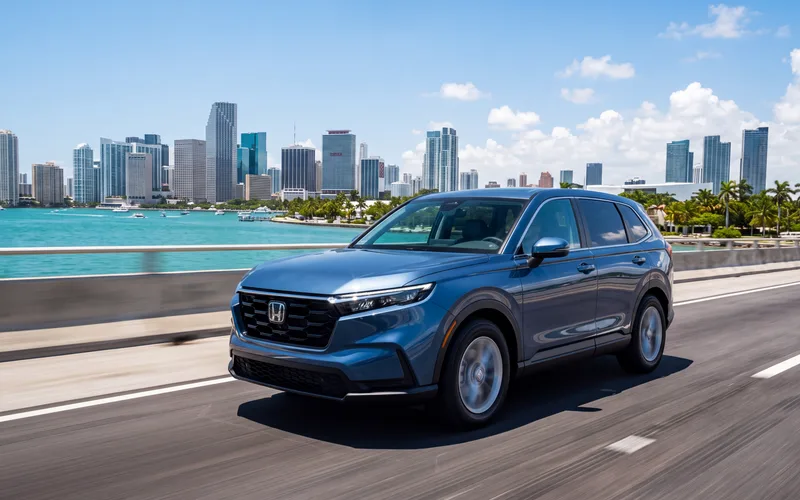 Honda CR-VCompact SUVBetter at: Resale value
Shoppers who want better gas mileage and stronger resale value in an equally roomy compact SUV will lean toward the CR-V.
Compare 2.56C+
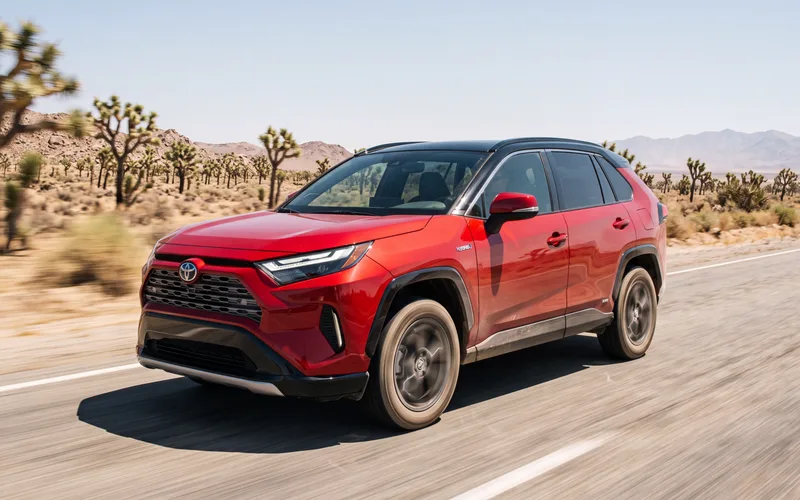 Toyota RAV4Compact SUVBetter at: Efficiency
Buyers who prioritize hybrid efficiency, a 3,500-lb tow rating and Toyota's resale value will pick the RAV4.
Compare 2.40C+
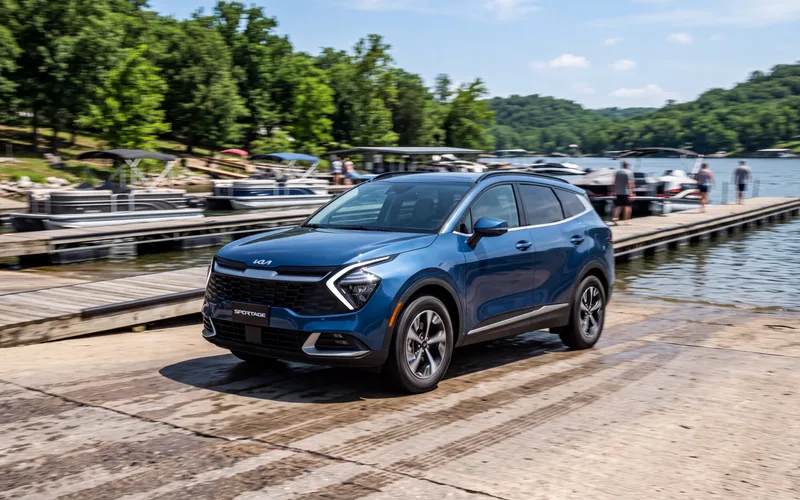 Kia SportageCompact SUVBetter at: Interior storage
The Sportage offers the same platform and powertrains with different styling and cleverer interior storage, so it is the natural cross-shop when chasing the best deal.
CompareHow it's evolved
8 scored model years · 2019–2026
Subject scores by year
Hover or tap a score to see what moved it versus the year before. A corner mark flags a big swing.
| Year | Performance | Efficiency | Safety | Space | Cost | Reliability | Tech | Use-case | Driving | Value |
|---|---|---|---|---|---|---|---|---|---|---|
| 2026 | 37 | 52 | 81 | 58 | 80 | 71 | 78 | 69 | 62 | 74 |
| 2025 | 35 | 52 | 77 | 58 | 83 | 67 | 76 | 67 | 61 | 76 |
| 2024 | 33 | 47 | 77 | 57 | 82 | 72 | 57 | 65 | 60 | 73 |
| 2023 | 33 | 47 | 78 | 57 | 80 | 64 | 56 | 65 | 59 | 76 |
| 2022 | 34 | 52 | 76 | 56 | 87 | 63 | 55 | 64 | 59 | 73 |
| 2021 | 29 | 51 | 61 | 46 | 87 | 63 | 41 | 53 | 63 | 63 |
| 2020 | 28 | 51 | 60 | 46 | 83 | 63 | 43 | 53 | 62 | 65 |
| 2019 | 27 | 41 | 61 | 47 | 79 | 68 | 42 | 52 | 61 | 68 |
Compare two years
Best fit & conditions
Higher scores mean a better fit for that use case. Learn more about use-case fit →
Subject profile
Trims & configurations
5 trimsScores above reflect the volume trim. Per-trim specs and scores are rolling out — the full lineup:
Academic Probation · NHTSA safety recalls
Sep 4, 2020Service brakes, hydraulic: antilock/traction control/electronic limited slip: control unit/moduleHyundai Motor America (Hyundai) recalled certain 2019-2021 Tucson vehicles on September 4, 2020. On December 30, 2020, Hyundai expanded the recall population, and added certain 2016-2018 Tucson vehicles. The Anti-lock Brake Hydraulic Electronic Control Unit (HECU) could corrode internally and cause an electrical short, possibly resulting in an engine compartment fire.
Defect
Hyundai Motor America (Hyundai) recalled certain 2019-2021 Tucson vehicles on September 4, 2020. On December 30, 2020, Hyundai expanded the recall population, and added certain 2016-2018 Tucson vehicles. The Anti-lock Brake Hydraulic Electronic Control Unit (HECU) could corrode internally and cause an electrical short, possibly resulting in an engine compartment fire.
Risk
An engine compartment fire can increase the risk of injury or crash.
Remedy
Hyundai will notify owners, and dealers will replace the HECU fuse. For 2019-2021 model years, the Electronic Stability Control (ESC) software will also be updated. Recall repairs will be performed free of charge. Owners are advised to park outside and away from structures as a precaution until the recall repair is complete. The recall began November 2, 2020. Owners may contact Hyundai customer service at 1-855-371-9460. Hyundai's number for this recall is 195.
NHTSA campaign 20V543000 ↗Manufacturer no. 195652,024 vehicles potentially affected (all models in the campaign)Owners notified Nov 2, 2020Filed by Hyundai Motor AmericaFiled as TUCSON
16 recalls on other model years of the Tucson (2017, 2022–2026)
Jun 23, 2026Electrical system: instrument cluster/panelDue to a software error, the instrument panel display may fail. As such, these vehicles fail to comply with the requirements of Federal Motor Vehicle Safety Standard (FMVSS) number 101, "Controls and Displays."
Defect
Hyundai Motor America (Hyundai) is recalling certain 2025-2026 Tucson, Tucson Hybrid, Tucson Plug-In Hybrid Electric (PHEV) vehicles. Due to a software error, the instrument panel display may fail. As such, these vehicles fail to comply with the requirements of Federal Motor Vehicle Safety Standard (FMVSS) number 101, "Controls and Displays."
Risk
An instrument panel display that fails to show critical safety information, such as the speedometer or warning lights, increases the risk of a crash.
Remedy
The instrument panel display software will be updated over-the-air (OTA) or by a dealer, free of charge. Owner notification letters are expected to be mailed August 22, 2026. Owners may contact Hyundai's customer service at 855-371-9460. Hyundai's number for this recall is 304. Vehicle Identification Numbers (VINs) involved in this recall became searchable on NHTSA.gov on June 25, 2026.
NHTSA campaign 26V400000 ↗Manufacturer no. 30496,310 vehicles potentially affected (all models in the campaign)Owners notified Jul 17, 2026Filed by Hyundai Motor AmericaFiled as TUCSON, TUCSON HYBRID, TUCSON PLUG-IN HYBRIDMay 18, 2026Forward collision avoidance: automatic emergency brakingSoftware in the front cameras may cause the forward collision avoidance system to activate prematurely and unexpectedly apply the brakes.
Defect
Hyundai Motor America (Hyundai) is recalling certain 2025-2026 Santa Cruz, Tucson, Tucson Hybrid, and Tucson Plug-In Hybrid Electric (PHEV) vehicles. Software in the front cameras may cause the forward collision avoidance system to activate prematurely and unexpectedly apply the brakes.
Risk
Unexpected braking increases the risk of a crash.
Remedy
Dealers will update the front camera software, free of charge. Owner notification letters are expected to be mailed July 17, 2026. Owners may contact Hyundai customer service at 1-855-371-9460. Hyundai's number for this recall is 302. Vehicle Identification Numbers (VINs) involved in this recall became searchable on NHTSA.gov on May 20, 2026.
NHTSA campaign 26V316000 ↗Manufacturer no. 302423,062 vehicles potentially affected (all models in the campaign)Owners notified Jun 22, 2026Filed by Hyundai Motor AmericaFiled as TUCSON, TUCSON HYBRID, TUCSON PLUG-IN HYBRIDApr 20, 2026Air bags: sensor: side impactThe B-pillar impact sensors may have been misassembled, which can delay air bag deployment.
Defect
Hyundai Motor America (Hyundai) is recalling certain 2025 Elantra N, 2026 Tucson, Tucson Hybrid, Tucson Plug-In Hybrid Electric (PHEV), and Elantra vehicles. The B-pillar impact sensors may have been misassembled, which can delay air bag deployment.
Risk
Air bags that do not deploy as intended increase the risk of injury in a crash.
Remedy
Dealers will inspect and replace the impact sensor(s), as necessary, free of charge. Owner notification letters were mailed June 11, 2026. Owners may contact Hyundai's customer service at 855-371-9460. Hyundai's number for this recall is 299. Vehicle Identification Numbers (VINs) involved in this recall became searchable on NHTSA.gov on April 22, 2026.
NHTSA campaign 26V254000 ↗Manufacturer no. 2992,931 vehicles potentially affected (all models in the campaign)Owners notified Jun 11, 2026Filed by Hyundai Motor AmericaFiled as TUCSON, TUCSON HYBRID, TUCSON PLUG-IN HYBRIDJan 26, 2026Electrical system: instrument cluster/panelDue to a software error, the instrument panel display may fail. As such, these vehicles fail to comply with the requirements of Federal Motor Vehicle Safety Standard (FMVSS) number 101, "Controls and Displays."
Defect
Hyundai Motor America (Hyundai) is recalling certain 2025-2026 Tucson Hybrid, Tucson Plug-In Hybrid Electric (PHEV), 2026 IONIQ 5, Santa Cruz, Kona, Palisade, Palisade Hybrid, Santa Fe, Santa Fe Hybrid, Sonata, Sonata Hybrid, and Tucson vehicles. Due to a software error, the instrument panel display may fail. As such, these vehicles fail to comply with the requirements of Federal Motor Vehicle Safety Standard (FMVSS) number 101, "Controls and Displays."
Risk
An instrument panel display that fails to show critical safety information, such as the speedometer or warning lights, increases the risk of a crash.
Remedy
The instrument panel display software will be updated over-the-air (OTA) or by a dealer, free of charge. Owner notification letters were mailed March 24, 2026. Owners may contact Hyundai's customer service at 855-371-9460. Hyundai's number for this recall is 293. Vehicle Identification Numbers (VINs) involved in this recall became searchable on NHTSA.gov on January 28, 2026.
NHTSA campaign 26V047000 ↗Manufacturer no. 29341,651 vehicles potentially affected (all models in the campaign)Owners notified Mar 24, 2026Filed by Hyundai Motor AmericaFiled as TUCSON, TUCSON HYBRID, TUCSON PLUG-IN HYBRIDDec 18, 2025Trailer hitchesThe wiring harness may have been installed incorrectly, allowing water into the control module. Moisture accumulation may cause the trailer lighting to fail or an electrical short circuit.
Defect
Hyundai Motor America (Hyundai) is recalling certain 2022-2024 Tucson vehicles equipped with an optional Mobis tow hitch wiring harness. The wiring harness may have been installed incorrectly, allowing water into the control module. Moisture accumulation may cause the trailer lighting to fail or an electrical short circuit.
Risk
Nonfunctioning trailer lights can increase the risk of a crash. A short circuit can increase the risk of a fire.
Remedy
Owners are advised to park outside and away from structures until the recall repair is complete. Dealers will remove the trailer wiring harness and install a dust cap over the wiring receptacle, free of charge. Owner notification letters were mailed May 11, 2026. Owners may contact Hyundai customer service at 1-855-371-9460. Hyundai's number for this recall is 290. Vehicle Identification Numbers (VINs) involved in this recall became searchable on NHTSA.gov on December 20, 2025.
NHTSA campaign 25V893000 ↗Manufacturer no. 29051,587 vehicles potentially affected (all models in the campaign)Owners notified May 11, 2026Filed by Hyundai Motor AmericaFiled as TUCSONNov 20, 2025Air bags: side/window: curtainThe side curtain air bags may not have been installed properly, which can cause the air bags not to deploy as intended.
Defect
Hyundai Motor America (Hyundai) is recalling certain 2025 Tucson, 2025-2026 Santa Cruz, Santa Fe, Santa Fe Hybrid, and 2026 Genesis GV70 vehicles. The side curtain air bags may not have been installed properly, which can cause the air bags not to deploy as intended.
Risk
Side curtain air bags that do not deploy as intended increase the risk of injury in a crash.
Remedy
Dealers will reinstall the side curtain air bags, free of charge. Owner notification letters were mailed beginning December 29, 2025. Owners may contact Hyundai customer service at 1-855-371-9460. Hyundai's numbers for this recall are 289 and 029G. Vehicle Identification Numbers (VINs) involved in this recall became searchable on NHTSA.gov on November 22, 2025.
NHTSA campaign 25V809000 ↗Manufacturer no. 289 (H); 029G (G)258 vehicles potentially affected (all models in the campaign)Owners notified Dec 29, 2025Filed by Hyundai Motor AmericaFiled as TUCSONAug 25, 2025Engine and engine cooling: critical fastenersThe connecting rod bolts in the engine may have been improperly tightened, which can cause a loss of drive power and engine damage, possibly resulting in an oil leak.
Defect
Hyundai Motor America (Hyundai) is recalling certain 2025-2026 Tucson and Santa Fe vehicles. The connecting rod bolts in the engine may have been improperly tightened, which can cause a loss of drive power and engine damage, possibly resulting in an oil leak.
Risk
A loss of drive power increases the risk of a crash. An oil leak in the presence of hot engine components can increase the risk of an engine compartment fire.
Remedy
Dealers will replace the engine, free of charge. Owner notification letters were mailed October 23, 2025. Owners may contact Hyundai customer service at 1-855-371-9460. Hyundai's number for this recall is 281.
NHTSA campaign 25V549000 ↗Manufacturer no. 28129 vehicles potentially affected (all models in the campaign)Owners notified Oct 23, 2025Filed by Hyundai Motor AmericaFiled as TUCSONNov 20, 2024Electrical system: wiringThe console extension wiring assembly may be routed improperly, allowing the transmission to be shifted out of Park without applying the brake pedal.
Defect
Hyundai Motor America (Hyundai) is recalling certain 2025 Tucson and Santa Cruz vehicles. The console extension wiring assembly may be routed improperly, allowing the transmission to be shifted out of Park without applying the brake pedal.
Risk
A transmission that can shift out of Park without applying the brake pedal can result in a vehicle roll away, increasing the risk of a crash.
Remedy
Owners are advised to use the parking brake when parking the vehicle. Dealers will reroute the console extension wiring assembly, free of charge. Owner notification letters were mailed December 17, 2024. Owners may contact Hyundai customer service at 1-855-371-9460. Hyundai's number for this recall is 273.
NHTSA campaign 24V877000 ↗Manufacturer no. 27342,465 vehicles potentially affected (all models in the campaign)Owners notified Dec 17, 2024Filed by Hyundai Motor AmericaFiled as TUCSONSep 13, 2024Equipment: other: labelsThe glove box air bag warning label may be missing. As such, these vehicles fail to comply with the requirements of Federal Motor Vehicle Safety Standard number 208, "Occupant Crash Protection."
Defect
Hyundai Motor America (Hyundai) is recalling certain 2025 Tucson vehicles. The glove box air bag warning label may be missing. As such, these vehicles fail to comply with the requirements of Federal Motor Vehicle Safety Standard number 208, "Occupant Crash Protection."
Risk
Without the glove box label, operators may be unaware of the increased risks that an air bag poses to an infant or child in the front seat, increasing the risk of injury to occupants.
Remedy
Hyundai will mail owners the warning labels, free of charge. Owner notification letters were mailed October 4, 2024. Owners may contact Hyundai Customer service at 1-855-371-9460. Hyundai's number for this recall is 268.
NHTSA campaign 24V691000 ↗Manufacturer no. 26865 vehicles potentially affected (all models in the campaign)Owners notified Oct 4, 2024Filed by Hyundai Motor AmericaFiled as TUCSONJun 5, 2024Steering: electric power assist systemThe circuit board in the motor-driven power steering assembly may short circuit, resulting in a loss of power steering assist.
Defect
Hyundai Motor America (Hyundai) is recalling certain 2024 Tucson and Santa Cruz vehicles. The circuit board in the motor-driven power steering assembly may short circuit, resulting in a loss of power steering assist.
Risk
A loss of power steering assist can increase the risk of a crash.
Remedy
Dealers will replace the motor-driven power steering electric power pack, free of charge. Owner notification letters were mailed July 11, 2024. Owners may contact Hyundai customer service at 1-855-371-9460. Hyundai's number for this recall is 261.
NHTSA campaign 24V412000 ↗Manufacturer no. 261795 vehicles potentially affected (all models in the campaign)Owners notified Jul 11, 2024Filed by Hyundai Motor AmericaFiled as TUCSONAug 4, 2023Equipment: other: labelsThe tire and loading information label may incorrectly indicate information about a spare tire. As such, these vehicles fail to comply with the requirements of Federal Motor Vehicle Safety Standard number 110, "Tire Selection and Rims."
Defect
Hyundai Motor America (Hyundai) is recalling certain 2024 Tucson vehicles. The tire and loading information label may incorrectly indicate information about a spare tire. As such, these vehicles fail to comply with the requirements of Federal Motor Vehicle Safety Standard number 110, "Tire Selection and Rims."
Risk
A label that incorrectly states spare tire pressure when there is no spare tire on-board may cause confusion during an emergency tire replacement, increasing the risk of a crash or injury.
Remedy
Dealers will inspect and replace the tire and loading information label, as necessary, free of charge. Owner notification letters were mailed September 5, 2023. Owners may contact Hyundai customer service at 1-855-371-9460. Hyundai's number for this recall is 247.
NHTSA campaign 23V556000 ↗Manufacturer no. 24730 vehicles potentially affected (all models in the campaign)Owners notified Sep 5, 2023Filed by Hyundai Motor AmericaFiled as TUCSONJul 27, 2023Power train: automatic transmission: fluid/lubricant: pumpThe electronic controller for the Idle Stop & Go oil pump assembly may contain damaged electrical components that can cause the pump controller to overheat.
Defect
Hyundai Motor America (Hyundai) is recalling certain 2023-2024 Palisade Tucson, 2023 Sonata, Elantra, and Kona vehicles. The electronic controller for the Idle Stop & Go oil pump assembly may contain damaged electrical components that can cause the pump controller to overheat.
Risk
An electric oil pump assembly that overheats increases the risk of a vehicle fire.
Remedy
Owners are advised to park outside and away from structures until the recall repair is complete. Dealers will inspect and replace the electric oil pump controller, as necessary, free of charge. Owner notification letters were mailed starting September 7, 2023. Owners may contact Hyundai customer service at 1-855-371-9460. Hyundai's number for this recall is 246.
NHTSA campaign 23V526000 ↗Manufacturer no. 24652,109 vehicles potentially affected (all models in the campaign)Owners notified Sep 7, 2023Filed by Hyundai Motor AmericaFiled as TUCSONJan 31, 2023Structure: body: roof and pillars · Structure: critical fastenersThe roof moldings may detach.
Defect
Hyundai Motor America (Hyundai) is recalling certain 2022 Tucson and 2022-2023 Santa Cruz vehicles. The roof moldings may detach.
Risk
A detached roof molding could become a road hazard, increasing the risk of a crash.
Remedy
Dealers will inspect and replace, or secure the roof moldings, as necessary, free of charge. Owner notification letters were mailed March 30, 2023. Owners may contact Hyundai customer service at 1-855-371-9460. Hyundai's number for this recall is 241.
NHTSA campaign 23V038000 ↗Manufacturer no. 24116,104 vehicles potentially affected (all models in the campaign)Owners notified Mar 30, 2023Filed by Hyundai Motor AmericaFiled as TUCSONDec 2, 2021Electrical system: software · Exterior lightingThe software installed in the Integrated Central Control Unit (ICU) may be incompatible with the vehicle, which could result in inoperative headlights and/or taillights.
Defect
Hyundai Motor America (Hyundai) is recalling certain 2022 Tucson vehicles. The software installed in the Integrated Central Control Unit (ICU) may be incompatible with the vehicle, which could result in inoperative headlights and/or taillights.
Risk
Inoperative headlights or taillights can decrease visibility for both the driver and surrounding traffic, increasing the risk of a crash.
Remedy
Dealers updated the ICU software, free of charge. All affected vehicles have been repaired and therefore no owner notification letters will be mailed. Owners may contact Hyundai customer service at 1-855-371-9460. Hyundai's number for this recall is 214.
NHTSA campaign 21V938000 ↗Manufacturer no. 21412 vehicles potentially affected (all models in the campaign)Owners notified Dec 2, 2021Filed by Hyundai Motor AmericaFiled as TUCSONSep 17, 2021EngineThe connecting rod bearings inside the engine may wear prematurely, which can result in engine damage.
Defect
Hyundai Motor America (Hyundai) is recalling certain 2017 Tucson and Sonata Hybrid vehicles. The connecting rod bearings inside the engine may wear prematurely, which can result in engine damage.
Risk
A damaged engine can increase the risk of a fire or it can cause an engine stall, increasing the risk of a crash.
Remedy
Dealers will inspect the engine. If bearing damage is found, the engine will be replaced. Dealers will also install a software update containing a new Knock Sensor Detection System (KSDS). Repairs will be performed free of charge. Owners were notified of the defect on November 16, 2021. Owner notification letters were mailed January 15, 2022. Owners may contact Hyundai customer service at 1-855-371-9460. Hyundai's number for this recall is 209.
NHTSA campaign 21V727000 ↗Manufacturer no. 20995,515 vehicles potentially affected (all models in the campaign)Owners notified Jan 15, 2022Filed by Hyundai Motor AmericaFiled as TUCSONNov 21, 2016Electrical system: wiring · Trailer hitchesThe affected vehicles may be equipped with an accessory trailer hitch wiring harness that, due to a malfunction of the tow hitch module, may result, in the trailer brake lights being constantly illuminated. As such, these vehicles fail to comply with the requirements of Federal Motor Vehicle Safety Standard (FMVSS) number 108, " Lamps, Reflective Devices, and Associated Equipment."
Defect
Hyundai Motor America (Hyundai) is recalling certain model year 2016-2017 Tucson vehicles manufactured May 19, 2015, to November 14, 2016, and 2017 Santa Fe vehicles manufactured November 28, 2015, to November 14, 2016. The affected vehicles may be equipped with an accessory trailer hitch wiring harness that, due to a malfunction of the tow hitch module, may result, in the trailer brake lights being constantly illuminated. As such, these vehicles fail to comply with the requirements of Federal Motor Vehicle Safety Standard (FMVSS) number 108, " Lamps, Reflective Devices, and Associated Equipment."
Risk
If the trailer brake lights stay illuminated while being used, other drivers may be confused, increasing the risk of a crash.
Remedy
Hyundai will notify owners, and dealers will replace the affected accessory trailer hitch wiring harnesses, free of charge. The recall is expected to begin January 13, 2017. Owners may contact Hyundai customer service at 1-800-633-5151. Hyundai's number for this recall is 153.
NHTSA campaign 16V842000 ↗Manufacturer no. 1536,172 vehicles potentially affected (all models in the campaign)Owners notified Jan 13, 2017Filed by Hyundai Motor AmericaFiled as TUCSON
Source: NHTSA Office of Defects Investigation recall database, model years 2017–2026. Recalls are listed by model year as the manufacturer filed them; whether a specific car is affected depends on its VIN — check a VIN at nhtsa.gov ↗. NHTSA model names matched to this page: TUCSON, TUCSON HYBRID, TUCSON PLUG-IN HYBRID.
Detailed scoring by subject
1Performance & PowertrainThe Tucson's lowest-graded category.0.00F
2019 was the third-generation (TL) Tucson's mid-cycle refresh. The 1.6T was dropped, so the volume SEL and the trims above it use the 2.4L GDI four at 181 hp @ 6,000 rpm, while the SE and Value keep the 161-hp 2.0L. That's at the low end of the compact-SUV class.
The naturally aspirated 2.4L makes 175 lb-ft at a high 4,000 rpm. That's well short of the turbo engines in the Escape, CX-5 Turbo and the outgoing 1.6T Tucson.
Edmunds' instrumented test of a 2.4L Tucson took 9.1 seconds to reach 60 mph, which is slow for the class. Other outlets quote 8.5–9.0 s for the 2.4L, and the 2.0L is slower still.
The 2.4L is smoother and more linear than the 1.6T's laggy DCT setup it replaced, and it's quiet at a cruise. But it's short on midrange punch and grows coarse when worked hard for merges and passes.
The conventional 6-speed automatic shifts smoothly and avoids both CVT drone and the low-speed hesitation of the 7-speed DCT used before 2019. It's slow to kick down, though, and has fewer ratios than rivals' 8- and 9-speeds.
Every 2019 Tucson is rated to tow 1,500 lbs. That's only enough for a small utility trailer or jet ski, and it's below the RAV4 and CX-5.
AWD is optional on every trim from SE to Ultimate and includes a driver-selectable AWD lock, plus hill-start assist and downhill brake control. It's a basic reactive system with no terrain modes or torque vectoring.
With 6.4 in of minimum ground clearance and a pavement-oriented AWD system, the Tucson handles gravel roads and snow, not trails. There's no off-road trim, no skid plates and no lockers.
For 2019 the choice is two naturally aspirated four-cylinders (2.0L and 2.4L), both on the same 6-speed automatic. There's no turbo, hybrid or plug-in option; the hybrid and PHEV arrived with the 2022 redesign.
2Efficiency & RangeOne of the Tucson's weakest categories.0.72F
The volume SEL with the 2.4L and AWD gets 23 MPG combined, which is among the weakest figures for a 2019 gas compact SUV. The 2.0L FWD manages 26.
The 2.4L AWD is rated at 21 MPG in the city, which trails turbocharged and CVT-equipped rivals like the CR-V and Rogue.
A highway figure of 26 MPG is low for the class. The 6-speed automatic's tall-gear spread can't match the CR-V AWD's 31 or the RAV4's 32.
The 16.4-gallon tank is generous for the class, but at 23 MPG combined it gives only about 377 miles between fill-ups, which is adequate rather than long.
On regular fuel, EPA estimates $2,800 a year for the 2.4L AWD at its standard assumptions, which is on the high side for a gas compact SUV. FWD versions save $250–350 a year.
Both the 2.0L and the 2.4L run on regular 87-octane unleaded, so there's no premium fuel cost.
3SafetyMid-pack among this car's ten categories.2.14C
NHTSA gave the refreshed 2019 Tucson a 5-star overall NCAP rating, the top result.
The Tucson rates Good in every crashworthiness test that applied in 2019. The Top Safety Pick+ award, though, covers only Sport/Limited/Ultimate models built after March 2019 with the optional pedestrian-detecting AEB and Good headlights. The volume SEL has Poor headlights, so it misses the award, and the later updated side test came back Marginal.
From 2019, SmartSense is standard on every trim: forward collision-avoidance assist (AEB), lane keep assist and driver attention warning. Blind-spot and rear cross-traffic alerts start one trim up from the base SE (on the Value and above). Adaptive cruise is limited to the top Ultimate trim, so the volume SEL has no ACC.
On the Ultimate, the radar/camera system with pedestrian detection earned IIHS Superior (vehicle-to-vehicle) and Advanced (daytime pedestrian) ratings. Lower trims, including the volume SEL, get the camera-only vehicle-detection AEB without pedestrian detection. No nighttime pedestrian test existed for 2019.
Blind-spot detection and rear cross-traffic alert are standard on the Value and above, which includes the volume SEL, but not on the base SE. Both systems only warn: they don't steer or brake, and there is no safe-exit assist.
Lane keep assist is standard on every trim, but it only nudges the car back when it reaches a lane line. There is no lane-centering (Lane Following Assist) on any 2019 Tucson trim, unlike rivals with active centering.
Full-speed Smart Cruise Control with Stop & Go comes only on the top Ultimate trim, so the volume SEL has conventional cruise. The Tucson also has no combined highway-assist function on any trim.
No 2019 Tucson trim offers hands-free driving or even lane centering.
IIHS rated the headlights on the volume SEL (and on the SE and Value) Poor. Sport, Limited and Ultimate models built after March 2019 rate Good, and earlier builds of those trims rate Acceptable. High-beam assist is limited to the Ultimate.
In a seven-car comparison, Cars.com found the Tucson tied the Jeep Cherokee for the worst visibility, with a pinched view toward the rear corners. Blind-spot alerts on the Value and above help, and the surround-view monitor new for 2019 is limited to the Ultimate.
In Cars.com's Car Seat Check the Tucson scored A for LATCH and A/A/B/B across the four seat types, with easy installations. IIHS was harsher, rating LATCH ease of use Acceptable on cloth seats and Marginal on leather. The car has only two sets of lower anchors, in the outboard positions.
4Space & ComfortGrades below the middle of the scale.1.12D
Two-row, five-seat compact SUV; no third row offered on the 2019 (TL-generation) Tucson.
Competitive front headroom for the class on non-sunroof trims such as the volume SEL.
Front legroom is on the short side of the compact-SUV range.
Generous rear headroom for a compact SUV; Cars.com called the back seat comfortable for tall adults.
Solid rear legroom, though a few inches shy of the CR-V's class-leading figure.
No third row is offered on any 2019 Tucson; it is a strict two-row, five-seat SUV.
Below-average cargo space for the class; reviewers note it trails the CR-V and Rogue.
Maximum cargo space is modest against rivals in the 70+ cu ft range.
Competitive everyday storage with a two-tier adjustable cargo floor and 60/40 split seats, but nothing standout and no onboard AC power.
Front seats (redesigned for 2019 on leather trims) are supportive on long drives; rear cushion is somewhat stiff and short, and cloth SEL seats lack the new leather-seat design.
Firm-ish but well-damped ride that absorbs potholes and freeway seams well; among the better-riding compact SUVs of 2019.
Road and wind noise well controlled at cruise, but the 2.4L can clatter under load; average for the class overall.
Heated front seats from the Value trim and dual-zone auto climate from SEL; heated wheel on Limited and up, ventilated fronts and heated rear seats only on Ultimate.
5Cost of OwnershipThe Tucson's best-graded category.3.36B+
MY2019 was the third-generation (TL) Tucson's mid-cycle refresh, and the SE FWD opened the range at $23,200 before freight. That was at the low end of the compact-SUV class, and it now came with standard Hyundai SmartSense and Apple CarPlay/Android Auto.
SEL (2.4L) is the volume trim, matching the configuration scored in cat1, and most buyers add HTRAC AWD. That puts a typically equipped car at about $28,000 delivered.
The naturally aspirated 2.4L GDI with a conventional 6-speed automatic is inexpensive to service, and the 5-year/60,000-mile basic warranty covers early repairs. Unlike MY2020 and later, though, 2019 buyers got no complimentary scheduled maintenance, so they paid for oil changes and rotations themselves. The 2.4L Theta II has also been the subject of engine-related campaigns. The estimate is set a little above the ~$5,000 used for later years of this nameplate.
The 2019 Tucson is now worth about 46% of its original MSRP roughly seven years in. Backing that out to the 60-month mark, which fell during the 2023–24 used-car market, gives about 52%. That is at or slightly below the compact-SUV norm, behind the CR-V and RAV4.
Hyundai's 5-year/60,000-mile new-vehicle limited warranty tops the band. Most compact-SUV rivals in 2019 offered 3 years/36,000 miles.
The 10-year/100,000-mile powertrain warranty for original owners is double the class-typical 5-year/60,000-mile coverage.
MY2019 came before Hyundai Complimentary Maintenance, which began with new 2020–2021 models sold on or after Feb 1, 2020. A 2019 Tucson had no free scheduled service, only 5-year/unlimited-mile roadside assistance and a Blue Link Connected Care trial on equipped trims. That falls short of ToyotaCare (2 yr/25k) on maintenance but beats rivals on roadside coverage.
$28,045 volume-trim price minus its estimated resale value after 5 years (52% retained, or about $14,583) leaves about $13,462 in depreciation. Add the projected $5,500 in 5-year maintenance and repairs, and owning this vehicle for 5 years costs about $18,962 in total.
6Reliability & QualityOne of the Tucson's strongest categories.2.58C+
2019 was the mid-cycle refresh of the third-generation (TL) Tucson. That generation was mature by then, and the refresh kept the proven 2.0L engine and 6-speed automatic as the core setup. J.D. Power rates the 2019 'Great' for quality and reliability, and Consumer Reports' owner data puts it above average. That places it at the low end of the top band, level with the strongest compact-SUV rivals of its year.
Around 2019 Hyundai sat mid-pack to slightly above average on dependability. It did well in J.D. Power's Initial Quality and was around industry average in the 3-year VDS, but its reputation was dented by the Theta II engine failures and the related class-action settlement and recalls running through 2017–2020.
The 2019 has only one NHTSA safety recall, but it is serious: an ABS hydraulic control unit that can corrode internally and short-circuit, with an engine-compartment fire risk and a park-outside advisory, across about 652k Tucsons. On top of that, an oil-consumption TSB and the KSDS knock-sensor software campaign apply to the 2.4L. That puts it toward the lower end of the 'typical' band.
The volume trims use the 2.0L Nu MPI port-injected four with a conventional 6-speed automatic. That simple, well-proven pairing replaced the 1.6T/7-speed DCT for 2019. The upper trims' 2.4L Theta II GDI carries the brand's well-known rod-bearing and oil-consumption reputation, and owners report oil-consumption complaints on both engines. That keeps the score mid-band rather than high.
The 2019 refresh brought a redesigned dash with a floating touchscreen and more soft-touch surfaces. Reviewers called the cabin well built and sensibly laid out for the price, though hard plastics remain on the doors and lower console. Overall it is competitive with the CR-V and RAV4 of the era rather than class-leading.
As a refresh of a generation in its fourth year, assembly was well settled, and there is no systemic rattle, panel-gap or trim complaint pattern for 2019. J.D. Power's 'Great' quality rating backs up strong build consistency.
Hyundai's roughly 830 US dealers give solid metro and suburban coverage, though the network is thinner than Chevrolet's, Ford's, Toyota's or Honda's, which matters in rural areas. Service satisfaction is around the mainstream average.
The TL Tucson sold in high volume from 2016 to 2021 and shares its Nu/Theta engines and 6-speed automatic with the Kia Sportage and many other Hyundai/Kia models. Parts are plentiful, both OEM and aftermarket, and routine repair costs are mainstream-low. An out-of-warranty Theta II engine replacement is the main cost risk; the 10-year/100k powertrain warranty covers original owners.
7Technology & InfotainmentOne of the Tucson's weakest categories.0.77F
The 2019 refresh brought a tablet-style 7-inch touchscreen standard; only the Ultimate gets the 8-inch navigation unit.
Simple, responsive Hyundai interface with physical shortcut buttons and knobs flanking the screen; dated graphics but easy daily use.
Apple CarPlay and Android Auto are standard on every trim, but wired only; wireless projection was not offered on the 2019 Tucson.
Native navigation only on the top Ultimate trim; the volume SEL relies on phone projection and basic command-style voice control.
Basic six-speaker audio on SE–SEL; an eight-speaker Infinity system on Limited/Ultimate earns praise for the price point.
Analog gauges with a small center TFT driver display; no full-digital cluster on any trim.
No over-the-air vehicle or infotainment updates; map/software updates are handled via dealer or USB download.
Blue Link telematics from the Value trim offers remote start/climate, lock/unlock and locate via app, with paid packages after the trial; no digital key.
USB-A only: one front data port plus a rear charge-only port from SEL, two 12V outlets; Qi wireless charging new for 2019 but only on upper trims; no USB-C or AC outlet.
Proximity key entry from the Value trim and push-button start on mid trims and up; remote start via Blue Link app; hands-free liftgate on upper trims; no phone-as-key.
Rear camera standard with rear cross-traffic alert from Value; a 360-degree surround-view camera arrives only at the top of the range and reviewers found its image small and soft.
No head-up display offered on any 2019 Tucson trim.
8Use-Case FitGrades below the middle of the scale.1.47D
Roomy, reclining rear seat and strong Cars.com car-seat grades make daily family duty easy, but the 31 cu ft cargo hold is tight for a stroller plus groceries.
NHTSA 5-star overall and IIHS Top Safety Pick with forward collision-avoidance and lane keep assist standard; blind-spot monitoring from Value, but pedestrian detection and good headlights only on upper trims.
Comfortable ride and generous rear headroom, but rear amenities are thin (single charge-only USB, heated rear seats only on Ultimate) and luggage space with the seats up is below class average.
Easy, smooth-riding commuter with a conventional 6-speed automatic, though the 2.4L feels underpowered when merging and stop-start is a little rough.
Regular fuel and cheap consumables, but 23 MPG combined for the volume 2.4L AWD is below class average for 2019 (CR-V/RAV4 ~28-30).
Short 176-inch body and tight 34.9 ft turning circle make it easy to park, offset by poor rear-corner visibility on trims without the surround camera.
1,500 lb tow rating and modest 31-62 cu ft cargo hold limit it to light errands; not a meaningful work tool.
Conventional 6-speed and simple naturally aspirated engines should hold up with care, but Theta II 2.4L engine-failure recalls cloud long-term toughness and it has no fleet-duty reputation.
Cargo tie-down hooks, roof side rails and a dealer hitch are about the extent of it; no onboard AC power or work-oriented upfit ecosystem.
Composed, quiet highway ride, but ~377 mi range on the 2.4L AWD, no adaptive cruise below Ultimate and a loose on-center feel limit its appeal as a mile-eater.
AWD with a center lock and downhill brake control handles gravel and snow roads, but 6.4 in clearance and a 1,500 lb tow rating keep it soft-road only.
60/40 folding rear seat, adjustable two-tier floor and roof rails help, but 61.9 cu ft max trails most rivals and bulky gear is a squeeze.
9Driving ExperienceMid-pack among this car's ten categories.2.12C
Competent, controlled cornering with moderate lean; secure but not sporty, a step behind the CX-5.
Reasonably weighted for a Hyundai of the era but numb, and one tester noted on-center looseness at highway speed.
Smooth, progressive pedal and class-average stopping distance.
The conventional 6-speed automatic shifts smoothly (no CVT drone or DCT hesitation), but the 2.4L is short on low-end response and the auto stop-start is a little rough.
Reviewers disagree — one found the engine never coarse, another heard diesel-like clatter from the 2.4L; audible but generally inoffensive.
One of the tightest turning circles among compact SUVs.
Logical controls with physical buttons and an 8-way power driver's seat from Value, but rear-corner visibility is among the worst in its class.
Pleasant but appliance-like; with the 1.6T dropped for 2019, the slow 2.4L leaves little character.
10Value & Market PositionOne of the Tucson's strongest categories.2.63C+
The 2019 refresh made Hyundai SmartSense standard on every trim: forward collision-avoidance assist, lane keeping assist, driver attention warning and high-beam assist. Apple CarPlay/Android Auto on a 7-inch screen also became standard. At a time when some rivals still charged extra for driver aids, that was generous for a $24k SUV. The volume SEL adds blind-spot and rear cross-traffic alert, dual-zone climate, and heated seats.
Prices undercut the CR-V and RAV4 by roughly $1,000–2,000 at comparable equipment, and the warranty is class-leading. On the other hand, the 161/181-hp engines and 6-speed automatic make it one of the slowest and least efficient in the class, and resale lags. That works out to fair-to-good value rather than a standout bargain.
There were six trims (SE, Value, SEL, Sport, Limited, Ultimate) plus a Night edition, two engines, and FWD or HTRAC AWD on every trim. That gives a well-spaced ladder from about $24k to about $34k. There was no hybrid in 2019, so the gas-only lineup is the one gap.
In 2019 the Tucson set a US sales record of about 137,000 units and was Hyundai's best-selling SUV. That is still mid-pack in a segment where the RAV4, CR-V, Rogue and Equinox each sold 340k–450k.
In 2019 Hyundai was seen as a value brand with strong warranty and improving quality scores, but without the loyalty or resale halo of Toyota, Honda or Subaru. Theta II engine-recall headlines also weighed on its image that year.
Through 2019 Hyundai routinely supported the Tucson with customer cash, low- or zero-APR financing, and inexpensive lease deals, and transaction prices commonly fell well below MSRP. That is a meaningful buyer benefit in a pre-shortage market.
The third generation launched for MY2016, and 2019 brought its mid-cycle refresh with new styling, a revised interior, standard SmartSense, and the 2.4L replacing the 1.6T. It was current but not cutting-edge, and the all-new fourth-generation Tucson followed for MY2022.
Reviewers praised the refreshed Tucson's value, features, ride, and warranty, and it earned an IIHS 2019 Top Safety Pick (with specific headlights). It was criticized as underpowered and rarely won comparison tests against the CR-V, CX-5 and RAV4.