

The verdict
A mixed-report compact suv, strong on safety and held back by performance.
The 2026 Tucson is one of the most sensible compact SUVs on sale. It pairs a near-mid-size back seat and 74.8 cu ft of cargo room with an IIHS Top Safety Pick+, twin 12.3-inch screens on every trim, and a 10-year/100,000-mile powertrain warranty, starting at $30,800. The trade-offs are the 187-hp gas engine, which needs 8.8 seconds to reach 60 mph and returns only 26 MPG with AWD, and the fact that this is the final year before an all-new 2027 model. Big incentives on run-out stock make it a strong buy if you can live with either.
Jump to scoresStrengths
- Best-in-class warranty and free maintenance
- Back seat and cargo space that punch above the class
- Top-tier crash and crash-avoidance results
What holds it back
- Slow, strained base engine
- Thirsty for a gas compact, with short range
- Final year of an outgoing design
Top alternatives
Cars shoppers cross-shop with the Hyundai Tucson 2.13C
2.13C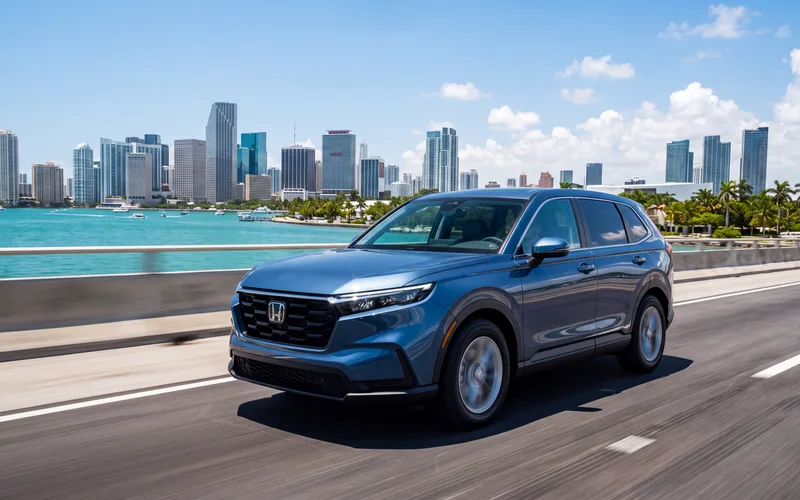 Honda CR-VCompact SUVBetter at: Resale value
Shoppers who want better gas mileage and stronger resale value in an equally roomy compact SUV will lean toward the CR-V.
Compare 2.56C+
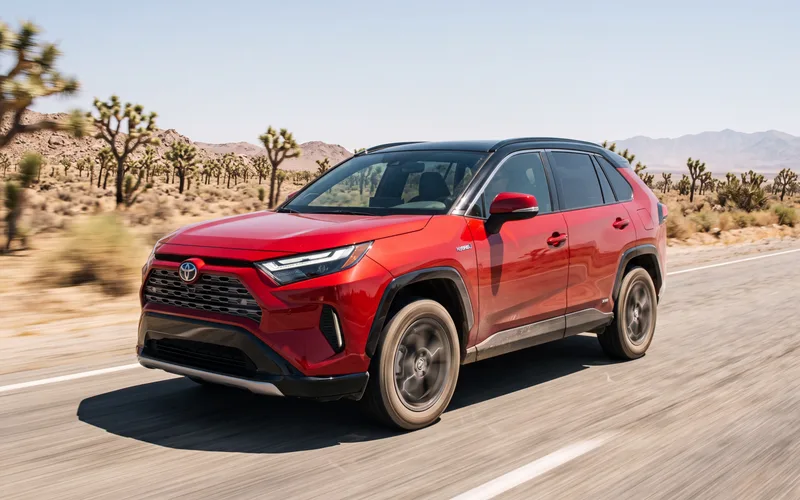 Toyota RAV4Compact SUVBetter at: Efficiency
Buyers who prioritize hybrid efficiency, a 3,500-lb tow rating and Toyota's resale value will pick the RAV4.
Compare 2.40C+
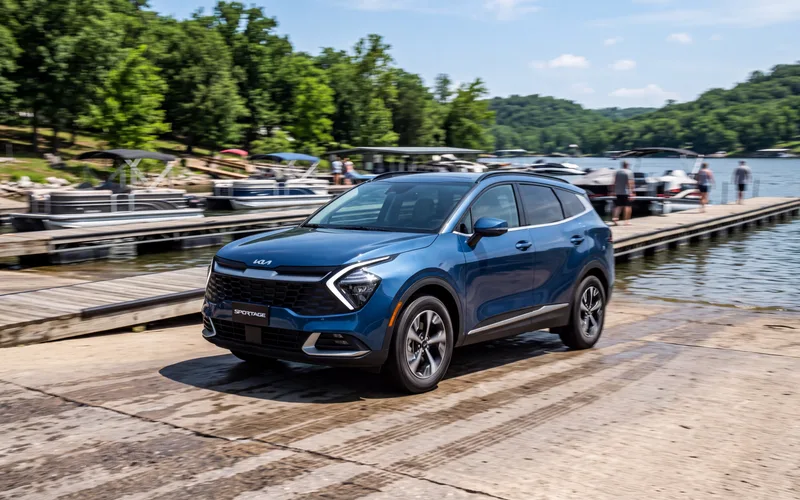 Kia SportageCompact SUVBetter at: Interior storage
The Sportage offers the same platform and powertrains with different styling and cleverer interior storage, so it is the natural cross-shop when chasing the best deal.
CompareHow it's evolved
8 scored model years · 2019–2026
Subject scores by year
Hover or tap a score to see what moved it versus the year before. A corner mark flags a big swing.
| Year | Performance | Efficiency | Safety | Space | Cost | Reliability | Tech | Use-case | Driving | Value |
|---|---|---|---|---|---|---|---|---|---|---|
| 2026 | 37 | 52 | 81 | 58 | 80 | 71 | 78 | 69 | 62 | 74 |
| 2025 | 35 | 52 | 77 | 58 | 83 | 67 | 76 | 67 | 61 | 76 |
| 2024 | 33 | 47 | 77 | 57 | 82 | 72 | 57 | 65 | 60 | 73 |
| 2023 | 33 | 47 | 78 | 57 | 80 | 64 | 56 | 65 | 59 | 76 |
| 2022 | 34 | 52 | 76 | 56 | 87 | 63 | 55 | 64 | 59 | 73 |
| 2021 | 29 | 51 | 61 | 46 | 87 | 63 | 41 | 53 | 63 | 63 |
| 2020 | 28 | 51 | 60 | 46 | 83 | 63 | 43 | 53 | 62 | 65 |
| 2019 | 27 | 41 | 61 | 47 | 79 | 68 | 42 | 52 | 61 | 68 |
Compare two years
Best fit & conditions
Higher scores mean a better fit for that use case. Learn more about use-case fit →
Subject profile
Trims & configurations
5 trimsScores above reflect the volume trim. Per-trim specs and scores are rolling out — the full lineup:
Academic Probation · NHTSA safety recalls
Jun 23, 2026Electrical system: instrument cluster/panelDue to a software error, the instrument panel display may fail. As such, these vehicles fail to comply with the requirements of Federal Motor Vehicle Safety Standard (FMVSS) number 101, "Controls and Displays."
Defect
Hyundai Motor America (Hyundai) is recalling certain 2025-2026 Tucson, Tucson Hybrid, Tucson Plug-In Hybrid Electric (PHEV) vehicles. Due to a software error, the instrument panel display may fail. As such, these vehicles fail to comply with the requirements of Federal Motor Vehicle Safety Standard (FMVSS) number 101, "Controls and Displays."
Risk
An instrument panel display that fails to show critical safety information, such as the speedometer or warning lights, increases the risk of a crash.
Remedy
The instrument panel display software will be updated over-the-air (OTA) or by a dealer, free of charge. Owner notification letters are expected to be mailed August 22, 2026. Owners may contact Hyundai's customer service at 855-371-9460. Hyundai's number for this recall is 304. Vehicle Identification Numbers (VINs) involved in this recall became searchable on NHTSA.gov on June 25, 2026.
NHTSA campaign 26V400000 ↗Manufacturer no. 30496,310 vehicles potentially affected (all models in the campaign)Owners notified Jul 17, 2026Filed by Hyundai Motor AmericaFiled as TUCSON, TUCSON HYBRID, TUCSON PLUG-IN HYBRIDMay 18, 2026Forward collision avoidance: automatic emergency brakingSoftware in the front cameras may cause the forward collision avoidance system to activate prematurely and unexpectedly apply the brakes.
Defect
Hyundai Motor America (Hyundai) is recalling certain 2025-2026 Santa Cruz, Tucson, Tucson Hybrid, and Tucson Plug-In Hybrid Electric (PHEV) vehicles. Software in the front cameras may cause the forward collision avoidance system to activate prematurely and unexpectedly apply the brakes.
Risk
Unexpected braking increases the risk of a crash.
Remedy
Dealers will update the front camera software, free of charge. Owner notification letters are expected to be mailed July 17, 2026. Owners may contact Hyundai customer service at 1-855-371-9460. Hyundai's number for this recall is 302. Vehicle Identification Numbers (VINs) involved in this recall became searchable on NHTSA.gov on May 20, 2026.
NHTSA campaign 26V316000 ↗Manufacturer no. 302423,062 vehicles potentially affected (all models in the campaign)Owners notified Jun 22, 2026Filed by Hyundai Motor AmericaFiled as TUCSON, TUCSON HYBRID, TUCSON PLUG-IN HYBRIDApr 20, 2026Air bags: sensor: side impactThe B-pillar impact sensors may have been misassembled, which can delay air bag deployment.
Defect
Hyundai Motor America (Hyundai) is recalling certain 2025 Elantra N, 2026 Tucson, Tucson Hybrid, Tucson Plug-In Hybrid Electric (PHEV), and Elantra vehicles. The B-pillar impact sensors may have been misassembled, which can delay air bag deployment.
Risk
Air bags that do not deploy as intended increase the risk of injury in a crash.
Remedy
Dealers will inspect and replace the impact sensor(s), as necessary, free of charge. Owner notification letters were mailed June 11, 2026. Owners may contact Hyundai's customer service at 855-371-9460. Hyundai's number for this recall is 299. Vehicle Identification Numbers (VINs) involved in this recall became searchable on NHTSA.gov on April 22, 2026.
NHTSA campaign 26V254000 ↗Manufacturer no. 2992,931 vehicles potentially affected (all models in the campaign)Owners notified Jun 11, 2026Filed by Hyundai Motor AmericaFiled as TUCSON, TUCSON HYBRID, TUCSON PLUG-IN HYBRIDJan 26, 2026Electrical system: instrument cluster/panelDue to a software error, the instrument panel display may fail. As such, these vehicles fail to comply with the requirements of Federal Motor Vehicle Safety Standard (FMVSS) number 101, "Controls and Displays."
Defect
Hyundai Motor America (Hyundai) is recalling certain 2025-2026 Tucson Hybrid, Tucson Plug-In Hybrid Electric (PHEV), 2026 IONIQ 5, Santa Cruz, Kona, Palisade, Palisade Hybrid, Santa Fe, Santa Fe Hybrid, Sonata, Sonata Hybrid, and Tucson vehicles. Due to a software error, the instrument panel display may fail. As such, these vehicles fail to comply with the requirements of Federal Motor Vehicle Safety Standard (FMVSS) number 101, "Controls and Displays."
Risk
An instrument panel display that fails to show critical safety information, such as the speedometer or warning lights, increases the risk of a crash.
Remedy
The instrument panel display software will be updated over-the-air (OTA) or by a dealer, free of charge. Owner notification letters were mailed March 24, 2026. Owners may contact Hyundai's customer service at 855-371-9460. Hyundai's number for this recall is 293. Vehicle Identification Numbers (VINs) involved in this recall became searchable on NHTSA.gov on January 28, 2026.
NHTSA campaign 26V047000 ↗Manufacturer no. 29341,651 vehicles potentially affected (all models in the campaign)Owners notified Mar 24, 2026Filed by Hyundai Motor AmericaFiled as TUCSON, TUCSON HYBRID, TUCSON PLUG-IN HYBRIDAug 25, 2025Engine and engine cooling: critical fastenersThe connecting rod bolts in the engine may have been improperly tightened, which can cause a loss of drive power and engine damage, possibly resulting in an oil leak.
Defect
Hyundai Motor America (Hyundai) is recalling certain 2025-2026 Tucson and Santa Fe vehicles. The connecting rod bolts in the engine may have been improperly tightened, which can cause a loss of drive power and engine damage, possibly resulting in an oil leak.
Risk
A loss of drive power increases the risk of a crash. An oil leak in the presence of hot engine components can increase the risk of an engine compartment fire.
Remedy
Dealers will replace the engine, free of charge. Owner notification letters were mailed October 23, 2025. Owners may contact Hyundai customer service at 1-855-371-9460. Hyundai's number for this recall is 281.
NHTSA campaign 25V549000 ↗Manufacturer no. 28129 vehicles potentially affected (all models in the campaign)Owners notified Oct 23, 2025Filed by Hyundai Motor AmericaFiled as TUCSON
12 recalls on other model years of the Tucson (2017–2025)
Dec 18, 2025Trailer hitchesThe wiring harness may have been installed incorrectly, allowing water into the control module. Moisture accumulation may cause the trailer lighting to fail or an electrical short circuit.
Defect
Hyundai Motor America (Hyundai) is recalling certain 2022-2024 Tucson vehicles equipped with an optional Mobis tow hitch wiring harness. The wiring harness may have been installed incorrectly, allowing water into the control module. Moisture accumulation may cause the trailer lighting to fail or an electrical short circuit.
Risk
Nonfunctioning trailer lights can increase the risk of a crash. A short circuit can increase the risk of a fire.
Remedy
Owners are advised to park outside and away from structures until the recall repair is complete. Dealers will remove the trailer wiring harness and install a dust cap over the wiring receptacle, free of charge. Owner notification letters were mailed May 11, 2026. Owners may contact Hyundai customer service at 1-855-371-9460. Hyundai's number for this recall is 290. Vehicle Identification Numbers (VINs) involved in this recall became searchable on NHTSA.gov on December 20, 2025.
NHTSA campaign 25V893000 ↗Manufacturer no. 29051,587 vehicles potentially affected (all models in the campaign)Owners notified May 11, 2026Filed by Hyundai Motor AmericaFiled as TUCSONNov 20, 2025Air bags: side/window: curtainThe side curtain air bags may not have been installed properly, which can cause the air bags not to deploy as intended.
Defect
Hyundai Motor America (Hyundai) is recalling certain 2025 Tucson, 2025-2026 Santa Cruz, Santa Fe, Santa Fe Hybrid, and 2026 Genesis GV70 vehicles. The side curtain air bags may not have been installed properly, which can cause the air bags not to deploy as intended.
Risk
Side curtain air bags that do not deploy as intended increase the risk of injury in a crash.
Remedy
Dealers will reinstall the side curtain air bags, free of charge. Owner notification letters were mailed beginning December 29, 2025. Owners may contact Hyundai customer service at 1-855-371-9460. Hyundai's numbers for this recall are 289 and 029G. Vehicle Identification Numbers (VINs) involved in this recall became searchable on NHTSA.gov on November 22, 2025.
NHTSA campaign 25V809000 ↗Manufacturer no. 289 (H); 029G (G)258 vehicles potentially affected (all models in the campaign)Owners notified Dec 29, 2025Filed by Hyundai Motor AmericaFiled as TUCSONNov 20, 2024Electrical system: wiringThe console extension wiring assembly may be routed improperly, allowing the transmission to be shifted out of Park without applying the brake pedal.
Defect
Hyundai Motor America (Hyundai) is recalling certain 2025 Tucson and Santa Cruz vehicles. The console extension wiring assembly may be routed improperly, allowing the transmission to be shifted out of Park without applying the brake pedal.
Risk
A transmission that can shift out of Park without applying the brake pedal can result in a vehicle roll away, increasing the risk of a crash.
Remedy
Owners are advised to use the parking brake when parking the vehicle. Dealers will reroute the console extension wiring assembly, free of charge. Owner notification letters were mailed December 17, 2024. Owners may contact Hyundai customer service at 1-855-371-9460. Hyundai's number for this recall is 273.
NHTSA campaign 24V877000 ↗Manufacturer no. 27342,465 vehicles potentially affected (all models in the campaign)Owners notified Dec 17, 2024Filed by Hyundai Motor AmericaFiled as TUCSONSep 13, 2024Equipment: other: labelsThe glove box air bag warning label may be missing. As such, these vehicles fail to comply with the requirements of Federal Motor Vehicle Safety Standard number 208, "Occupant Crash Protection."
Defect
Hyundai Motor America (Hyundai) is recalling certain 2025 Tucson vehicles. The glove box air bag warning label may be missing. As such, these vehicles fail to comply with the requirements of Federal Motor Vehicle Safety Standard number 208, "Occupant Crash Protection."
Risk
Without the glove box label, operators may be unaware of the increased risks that an air bag poses to an infant or child in the front seat, increasing the risk of injury to occupants.
Remedy
Hyundai will mail owners the warning labels, free of charge. Owner notification letters were mailed October 4, 2024. Owners may contact Hyundai Customer service at 1-855-371-9460. Hyundai's number for this recall is 268.
NHTSA campaign 24V691000 ↗Manufacturer no. 26865 vehicles potentially affected (all models in the campaign)Owners notified Oct 4, 2024Filed by Hyundai Motor AmericaFiled as TUCSONJun 5, 2024Steering: electric power assist systemThe circuit board in the motor-driven power steering assembly may short circuit, resulting in a loss of power steering assist.
Defect
Hyundai Motor America (Hyundai) is recalling certain 2024 Tucson and Santa Cruz vehicles. The circuit board in the motor-driven power steering assembly may short circuit, resulting in a loss of power steering assist.
Risk
A loss of power steering assist can increase the risk of a crash.
Remedy
Dealers will replace the motor-driven power steering electric power pack, free of charge. Owner notification letters were mailed July 11, 2024. Owners may contact Hyundai customer service at 1-855-371-9460. Hyundai's number for this recall is 261.
NHTSA campaign 24V412000 ↗Manufacturer no. 261795 vehicles potentially affected (all models in the campaign)Owners notified Jul 11, 2024Filed by Hyundai Motor AmericaFiled as TUCSONAug 4, 2023Equipment: other: labelsThe tire and loading information label may incorrectly indicate information about a spare tire. As such, these vehicles fail to comply with the requirements of Federal Motor Vehicle Safety Standard number 110, "Tire Selection and Rims."
Defect
Hyundai Motor America (Hyundai) is recalling certain 2024 Tucson vehicles. The tire and loading information label may incorrectly indicate information about a spare tire. As such, these vehicles fail to comply with the requirements of Federal Motor Vehicle Safety Standard number 110, "Tire Selection and Rims."
Risk
A label that incorrectly states spare tire pressure when there is no spare tire on-board may cause confusion during an emergency tire replacement, increasing the risk of a crash or injury.
Remedy
Dealers will inspect and replace the tire and loading information label, as necessary, free of charge. Owner notification letters were mailed September 5, 2023. Owners may contact Hyundai customer service at 1-855-371-9460. Hyundai's number for this recall is 247.
NHTSA campaign 23V556000 ↗Manufacturer no. 24730 vehicles potentially affected (all models in the campaign)Owners notified Sep 5, 2023Filed by Hyundai Motor AmericaFiled as TUCSONJul 27, 2023Power train: automatic transmission: fluid/lubricant: pumpThe electronic controller for the Idle Stop & Go oil pump assembly may contain damaged electrical components that can cause the pump controller to overheat.
Defect
Hyundai Motor America (Hyundai) is recalling certain 2023-2024 Palisade Tucson, 2023 Sonata, Elantra, and Kona vehicles. The electronic controller for the Idle Stop & Go oil pump assembly may contain damaged electrical components that can cause the pump controller to overheat.
Risk
An electric oil pump assembly that overheats increases the risk of a vehicle fire.
Remedy
Owners are advised to park outside and away from structures until the recall repair is complete. Dealers will inspect and replace the electric oil pump controller, as necessary, free of charge. Owner notification letters were mailed starting September 7, 2023. Owners may contact Hyundai customer service at 1-855-371-9460. Hyundai's number for this recall is 246.
NHTSA campaign 23V526000 ↗Manufacturer no. 24652,109 vehicles potentially affected (all models in the campaign)Owners notified Sep 7, 2023Filed by Hyundai Motor AmericaFiled as TUCSONJan 31, 2023Structure: body: roof and pillars · Structure: critical fastenersThe roof moldings may detach.
Defect
Hyundai Motor America (Hyundai) is recalling certain 2022 Tucson and 2022-2023 Santa Cruz vehicles. The roof moldings may detach.
Risk
A detached roof molding could become a road hazard, increasing the risk of a crash.
Remedy
Dealers will inspect and replace, or secure the roof moldings, as necessary, free of charge. Owner notification letters were mailed March 30, 2023. Owners may contact Hyundai customer service at 1-855-371-9460. Hyundai's number for this recall is 241.
NHTSA campaign 23V038000 ↗Manufacturer no. 24116,104 vehicles potentially affected (all models in the campaign)Owners notified Mar 30, 2023Filed by Hyundai Motor AmericaFiled as TUCSONDec 2, 2021Electrical system: software · Exterior lightingThe software installed in the Integrated Central Control Unit (ICU) may be incompatible with the vehicle, which could result in inoperative headlights and/or taillights.
Defect
Hyundai Motor America (Hyundai) is recalling certain 2022 Tucson vehicles. The software installed in the Integrated Central Control Unit (ICU) may be incompatible with the vehicle, which could result in inoperative headlights and/or taillights.
Risk
Inoperative headlights or taillights can decrease visibility for both the driver and surrounding traffic, increasing the risk of a crash.
Remedy
Dealers updated the ICU software, free of charge. All affected vehicles have been repaired and therefore no owner notification letters will be mailed. Owners may contact Hyundai customer service at 1-855-371-9460. Hyundai's number for this recall is 214.
NHTSA campaign 21V938000 ↗Manufacturer no. 21412 vehicles potentially affected (all models in the campaign)Owners notified Dec 2, 2021Filed by Hyundai Motor AmericaFiled as TUCSONSep 17, 2021EngineThe connecting rod bearings inside the engine may wear prematurely, which can result in engine damage.
Defect
Hyundai Motor America (Hyundai) is recalling certain 2017 Tucson and Sonata Hybrid vehicles. The connecting rod bearings inside the engine may wear prematurely, which can result in engine damage.
Risk
A damaged engine can increase the risk of a fire or it can cause an engine stall, increasing the risk of a crash.
Remedy
Dealers will inspect the engine. If bearing damage is found, the engine will be replaced. Dealers will also install a software update containing a new Knock Sensor Detection System (KSDS). Repairs will be performed free of charge. Owners were notified of the defect on November 16, 2021. Owner notification letters were mailed January 15, 2022. Owners may contact Hyundai customer service at 1-855-371-9460. Hyundai's number for this recall is 209.
NHTSA campaign 21V727000 ↗Manufacturer no. 20995,515 vehicles potentially affected (all models in the campaign)Owners notified Jan 15, 2022Filed by Hyundai Motor AmericaFiled as TUCSONSep 4, 2020Service brakes, hydraulic: antilock/traction control/electronic limited slip: control unit/moduleHyundai Motor America (Hyundai) recalled certain 2019-2021 Tucson vehicles on September 4, 2020. On December 30, 2020, Hyundai expanded the recall population, and added certain 2016-2018 Tucson vehicles. The Anti-lock Brake Hydraulic Electronic Control Unit (HECU) could corrode internally and cause an electrical short, possibly resulting in an engine compartment fire.
Defect
Hyundai Motor America (Hyundai) recalled certain 2019-2021 Tucson vehicles on September 4, 2020. On December 30, 2020, Hyundai expanded the recall population, and added certain 2016-2018 Tucson vehicles. The Anti-lock Brake Hydraulic Electronic Control Unit (HECU) could corrode internally and cause an electrical short, possibly resulting in an engine compartment fire.
Risk
An engine compartment fire can increase the risk of injury or crash.
Remedy
Hyundai will notify owners, and dealers will replace the HECU fuse. For 2019-2021 model years, the Electronic Stability Control (ESC) software will also be updated. Recall repairs will be performed free of charge. Owners are advised to park outside and away from structures as a precaution until the recall repair is complete. The recall began November 2, 2020. Owners may contact Hyundai customer service at 1-855-371-9460. Hyundai's number for this recall is 195.
NHTSA campaign 20V543000 ↗Manufacturer no. 195652,024 vehicles potentially affected (all models in the campaign)Owners notified Nov 2, 2020Filed by Hyundai Motor AmericaFiled as TUCSONNov 21, 2016Electrical system: wiring · Trailer hitchesThe affected vehicles may be equipped with an accessory trailer hitch wiring harness that, due to a malfunction of the tow hitch module, may result, in the trailer brake lights being constantly illuminated. As such, these vehicles fail to comply with the requirements of Federal Motor Vehicle Safety Standard (FMVSS) number 108, " Lamps, Reflective Devices, and Associated Equipment."
Defect
Hyundai Motor America (Hyundai) is recalling certain model year 2016-2017 Tucson vehicles manufactured May 19, 2015, to November 14, 2016, and 2017 Santa Fe vehicles manufactured November 28, 2015, to November 14, 2016. The affected vehicles may be equipped with an accessory trailer hitch wiring harness that, due to a malfunction of the tow hitch module, may result, in the trailer brake lights being constantly illuminated. As such, these vehicles fail to comply with the requirements of Federal Motor Vehicle Safety Standard (FMVSS) number 108, " Lamps, Reflective Devices, and Associated Equipment."
Risk
If the trailer brake lights stay illuminated while being used, other drivers may be confused, increasing the risk of a crash.
Remedy
Hyundai will notify owners, and dealers will replace the affected accessory trailer hitch wiring harnesses, free of charge. The recall is expected to begin January 13, 2017. Owners may contact Hyundai customer service at 1-800-633-5151. Hyundai's number for this recall is 153.
NHTSA campaign 16V842000 ↗Manufacturer no. 1536,172 vehicles potentially affected (all models in the campaign)Owners notified Jan 13, 2017Filed by Hyundai Motor AmericaFiled as TUCSON
Source: NHTSA Office of Defects Investigation recall database, model years 2017–2026. Recalls are listed by model year as the manufacturer filed them; whether a specific car is affected depends on its VIN — check a VIN at nhtsa.gov ↗. NHTSA model names matched to this page: TUCSON, TUCSON HYBRID, TUCSON PLUG-IN HYBRID.
Detailed scoring by subject
1Performance & PowertrainThe Tucson's lowest-graded category.0.42F
The volume SE/SEL trims use the 2.5L Smartstream GDI four rated at 187 hp, unchanged for 2026 (the second model year after the 2025 facelift of the NX4 generation that began in 2022). The hybrid and plug-in hybrid lift the range maximum to 268 hp.
The naturally aspirated 2.5L makes 178 lb-ft, arriving high in the rev range. That's modest next to turbocharged compact-SUV rivals, though the turbo hybrid's 271 lb-ft comes in much lower.
The 2.5L AWD needs about 8.8 seconds to reach 60 mph, near the back of the compact-SUV field. The 2026 powertrain is unchanged from the 2025 car that was tested, so that time still holds.
The 2.5L is quiet at cruise but sounds coarse and strained when worked hard, and throttle response is only adequate. The 1.6T hybrid is the more polished unit.
The conventional 8-speed automatic shifts smoothly and holds sensible gears, though it is a beat slow to kick down for passing. Because it is a torque-converter automatic, there is no CVT drone and none of the low-speed shunt of a dual-clutch.
For 2026 Hyundai USA raised the gas Tucson's braked tow rating from 2,000 to 2,750 lbs. That is still short of the RAV4's 3,500 lbs but comfortably ahead of the CR-V's 1,500. Score up because of the new rating.
HTRAC all-wheel drive is optional on every gas trim and standard on the Hybrid and PHEV. It adds AWD Lock plus Snow/Mud/Sand terrain modes, but there is no low range or torque vectoring.
About 8.3 inches of ground clearance with AWD, plus the terrain modes, make it competent on snow and gravel. The XRT, however, is largely an appearance package, with no lockers or skid plates.
There are three distinct powertrains: naturally aspirated gas, a turbo hybrid and a plug-in hybrid. That is one of the broader menus among mainstream compact SUVs.
2Efficiency & RangeOne of the Tucson's weakest categories.1.52D
The volume 2.5L AWD configuration returns 26 MPG combined, which is middling to thirsty for a gas compact SUV and behind the CR-V 1.5T AWD's 29.
With no electric assist for stop-and-go driving, the naturally aspirated 2.5L posts its weakest figure in town.
Highway is where the 2.5L is most competitive: the 8-speed automatic keeps cruising revs low, roughly level with the CR-V AWD.
A 14.3-gallon tank at 26 MPG combined gives about 372 miles between fills. That's adequate but short of the CR-V (~406 mi) and RAV4.
The EPA's own annual fuel-cost estimate for the AWD 2.5L is $2,450 at 15,000 mi/yr on regular fuel. The earlier ~$2,250 was derived, not read off the EPA record, and it understated the cost, so the score is down.
The 2.5L runs on regular 87-octane unleaded with no premium recommendation, so there is no costly or complicated energy requirement.
3SafetyThe Tucson's best-graded category.3.50A-
NHTSA rates the 2026 Tucson (gas) 5 stars overall in both FWD and AWD form; the only sub-5 results are the 4-star driver-side frontal and the 4-star rollover, typical for the class.
The 2026 Tucson is an IIHS Top Safety Pick+, with Good in small overlap (driver and passenger), the updated moderate overlap and the updated side test. The earlier score assumed Acceptable updated moderate-overlap and side results; IIHS shows Good for vehicles built after March 2024 once Hyundai added rear-seat belt pretensioners and load limiters. It stays short of the top of the band because the rear-passenger head/neck metric is only Acceptable and the whiplash (head restraint) rating is Poor.
Hyundai SmartSense is unusually complete on the base SE. It includes forward collision-avoidance with pedestrian, cyclist and junction-turning detection, lane keeping and lane following, blind-spot warning, rear cross-traffic collision-avoidance with braking, Safe Exit Warning, driver attention warning and stop-and-go adaptive cruise. Only active blind-spot intervention and Highway Driving Assist are reserved for higher trims.
In the current, tougher IIHS protocols the Tucson rates Good on both vehicle-to-vehicle 2.0 and pedestrian, including the nighttime crossing-adult scenario. It avoided collisions in every test run. That replaces the earlier assumption of a mid-pack Acceptable grade.
Blind-spot warning, rear cross-traffic collision-avoidance with automatic braking, Safe Exit Warning and rear automatic braking are standard from the base SE. Active blind-spot steering and braking, plus the camera-based Blind-Spot View Monitor, arrive on upper trims. Confirming that cross-traffic braking (not just a warning) is standard on the base trim moves it up slightly.
Lane Following Assist is standard on every trim and holds the lane center competently on marked highways. Reviewers note mild ping-ponging on curves and faded markings compared with the best systems in the class.
Full-speed-range Smart Cruise Control with stop-and-go is standard on every trim, which is uncommon at this price. Highway Driving Assist, which combines cruise and centering with navigation-based speed adjustment, is limited to higher trims.
The 2026 Tucson offers no hands-free highway system on any trim. Highway Driving Assist is a hands-on lane-centering aid with a steering-wheel torque check, not an equivalent of BlueCruise or Super Cruise.
IIHS confirms the split: the Limited's headlights rate Good, while the volume SE, SEL and XRT trims rate only Acceptable. Most buyers therefore get the weaker lamps.
The tall greenhouse and upright seating give a good forward and side view. The thick rear pillars and the spoiler-split rear glass hurt the over-shoulder and rearward view, and the surround-view and blind-spot view cameras that would compensate are upper-trim items.
The roughly 41-inch rear legroom and wide rear doors make loading car seats easy, but IIHS rates LATCH ease of use only Acceptable. There are two complete LATCH positions plus one tether-only seat. The earlier score was higher because this grade had not been checked.
4Space & ComfortOne of the Tucson's weakest categories.1.88C-
Two-row compact SUV with five-passenger seating on every 2026 trim (SE, SEL, SEL Premium, XRT, N Line, Limited) and every powertrain. The NX4 Tucson has never offered a third row.
The without-sunroof figure is used so vehicles compare on the same basis, as the prompt asks. The panoramic sunroof on upper trims costs roughly an inch, and 2026 is a carry-over body from the 2025 facelift.
The same across trims and powertrains, and mid-pack for a compact SUV. The Tucson spends its packaging advantage on the second row rather than the front.
Near the top of the compact-SUV class. The long 108.5-inch wheelbase and upright roofline give the second row generous head clearance.
Second-row legroom leads the class, essentially level with the CR-V and well clear of the RAV4 and Rogue, and the reclining rear seatbacks make it usable for adults. The plug-in hybrid gives up nearly two inches.
No 2026 Tucson trim or powertrain has a third row, so the item scores in the prompt's no-third-row band (0–49). Buyers who need one step up to the Santa Fe or Palisade.
Hyundai publishes two cargo figures for the same space: 38.7 cu ft by the SAE method and 41.2 cu ft by its own method. The SAE number is used so the Tucson compares on the same basis as rivals, and it is roughly level with the CR-V.
With the 60/40 second row folded, the gas Tucson holds 74.8 cu ft by the SAE method, near the top of the class. KBB and CarsDirect quote Hyundai's 80.3 cu ft figure for the same space.
Everyday storage is competitive but has no standout idea. The facelifted console has an open tray and pass-through shelf, the door bins are deep and there is an underfloor cargo well, but it stops short of the Kia Sportage's console or onboard power.
Comfortable for most people without leading the segment. The front seats are well shaped and the reclining rear bench with its big legroom is a real strength, but base cloth seats are flatter and adjustment is limited on lower trims.
One of the softer-riding compact SUVs, absorbing broken pavement well. Body control is adequate rather than tight, and the N Line's 19-inch wheels add impact harshness.
Around the segment average. The facelift's added insulation helps at a cruise, but road noise on coarse surfaces still reaches the cabin and the 2.5L gets vocal under hard throttle.
Comfort features are rich for the price. Heated front seats and dual-zone climate come early in the range, rear vents are standard, and the Limited adds ventilated front seats, heated rear outboard seats and a heated steering wheel.
5Cost of OwnershipOne of the Tucson's strongest categories.3.41B+
The 2026 Tucson starts with the gas SE FWD at $30,800 including destination. That keeps the final-year fourth-generation (NX4) Tucson among the cheaper ways into the compact-SUV class. The destination charge rose to $1,600, and that accounts for most of the year-over-year price increase.
The SEL is the Tucson's volume trim, and most buyers add HTRAC AWD for $1,500, which brings the typical car to $33,650 delivered. That undercuts the CR-V's volume trims. The price is now verified against published 2026 pricing; before, it was estimated from model knowledge.
KBB's 2026 cost-to-own data puts maintenance and repairs on the gas Tucson at about $1,309 a year, or $6,546 over five years. That is clearly above the ~$5,400 the previous run estimated from model knowledge, and the score falls with it. Hyundai's 3-year/36,000-mile complimentary maintenance offsets part of the early cost, and the hybrid projects much lower at $4,648.
Sourced residual estimates cluster around 53–57% retained after five years, which puts the Tucson at about the compact-SUV norm but still behind the CR-V and RAV4. One risk: 2026 is the outgoing generation, with the boxier MY2027 model already revealed, and that may push residuals down. The value is now sourced rather than recalled.
Hyundai's 5-year/60,000-mile new-vehicle limited warranty is the longest basic coverage among mainstream compact SUVs and tops the normalization band. The CR-V, RAV4, Forester and Rogue all stop at 3 years/36,000 miles.
The 10-year/100,000-mile powertrain warranty tops the normalization band and is double what the Japanese rivals offer. Hybrid and PHEV buyers get matching coverage on the high-voltage battery.
Hyundai includes 3 years/36,000 miles of complimentary scheduled maintenance, 5 years of unlimited-mileage roadside assistance, and complimentary Bluelink connected services. That package is longer than ToyotaCare (2 yr/25,000 mi) or Honda's offering. It is held below 100 because the free service covers oil, filter and rotation intervals rather than a full maintenance schedule.
$33,650 volume-trim price minus its estimated resale value after 5 years (55% retained, or about $18,508) leaves about $15,143 in depreciation. Add the projected $6,546 in 5-year maintenance and repairs, and owning this vehicle for 5 years costs about $21,689 in total.
6Reliability & QualityGrades above the middle of the scale.2.78B-
Raised: Consumer Reports' 2026 survey data puts the gas-only Tucson (the scored configuration) at the top of the compact-SUV class for predicted reliability, ahead of the CR-V and RAV4, with a better-than-average new-car prediction built on 2023–2025 model data. The 2026 car is the fifth year of the NX4 platform and second of the 2025 facelift, so the prediction rests on mature owner data; the PHEV is only average, which matters little for the gas volume trim.
Raised slightly: Hyundai has moved into the top third of J.D. Power's 2026 Vehicle Dependability Study and continues to collect segment wins in the 2026 Initial Quality Study, so it now sits in the upper half of mainstream brands rather than at the average. It is still not a consistent top-five dependability brand like Toyota/Lexus, and the Theta II engine legacy still weighs on long-term reputation.
Lowered: the NHTSA feed now shows five campaigns covering the 2026 model year after one full year on sale, and the largest is a safety-system defect — front-camera software that can trigger AEB braking without cause (423,062 units). Two more are instrument-cluster software failures (FMVSS 101). The rest are small assembly lots (B-pillar airbag sensors, 29 engines with under-torqued con-rod bolts). Most of it is software and fixable over the air or at a dealer rather than mechanical, which keeps it out of the 0–49 band. Earlier NX4 years add a tow-hitch harness fire recall with a park-outside advisory and a 2022 ICU software campaign.
Raised slightly: the gas Tucson's naturally aspirated 2.5L Smartstream I4 with a conventional 8-speed torque-converter automatic now has three-plus years of owner data behind it, and CR's top-of-class prediction for the gas model says that data is clean. There is no DCT or CVT in the lineup. The engine family is still young next to Toyota's and Honda's high-mileage-proven units, and a small 2025–26 con-rod-bolt recall (29 engines, an assembly-torque issue rather than a design flaw) keeps it out of the 80s.
The 2025 facelift's cabin carries into 2026 unchanged: curved dual 12.3-inch displays, physical HVAC and audio controls restored, and perceived quality that reviewers place at or near the top of mainstream compact SUVs. Hard plastics remain in the lower door and console areas, which is normal at this price.
Hyundai's initial-quality results keep running ahead of its dependability standing, with three segment wins in the 2026 IQS, and the NX4 Tucson has no systemic rattle or panel-gap complaint pattern. A few 2025–26 assembly-lot recalls (curtain airbags, B-pillar sensors, console wiring) keep it below the top band.
Hyundai's roughly 830–870 US franchised dealers give solid metro and suburban coverage, but the network is much thinner than Chevrolet's, Ford's or Toyota's, which shows in rural markets. Service satisfaction is around the mainstream average.
The Tucson is one of the highest-volume US compact SUVs and shares its platform, 2.5L engine and 8-speed automatic with the Kia Sportage and Hyundai Santa Fe, so parts are widely stocked and independent shops know the hardware. Repair costs sit in the normal mainstream band. Its aftermarket is smaller than the RAV4's or CR-V's.
7Technology & InfotainmentOne of the Tucson's strongest categories.3.30B+
Every 2026 Tucson, including the base SE, gets the 12.3-inch center touchscreen. Toyota and Nissan reserve their large screens for upper trims.
Hyundai's ccNC software is quick and logically organized, and the facelift brought back physical climate and volume knobs after the touch-capacitive panel on the 2022–2024 cars was widely criticized.
Wireless Apple CarPlay and Android Auto are standard on every 2026 trim, including the base SE.
Connected navigation and a natural-language voice assistant come with the ccNC system, and both work well. They fall short of the Google built-in systems in the Equinox and Rogue.
The standard six-speaker system is adequate. The eight-speaker Bose system, offered only on the Limited, is competent rather than a class standout.
A 12.3-inch configurable digital cluster sits beside the touchscreen in one curved housing on every trim. On the Limited it also shows the blind-spot camera feed.
The ccNC platform takes over-the-air updates for infotainment, maps and some vehicle controllers, but the Tucson does not get regular whole-vehicle updates that add features.
Bluelink+ is standard from the SE and gives core remote functions without a subscription: remote start with climate, lock/unlock and vehicle locate. Digital Key 2 is offered on upper trims.
There are USB-C ports in both rows and wireless phone charging, but no household-style AC outlet on the gas trims, which keeps it out of the top band.
Proximity entry and push-button start are widespread, the SEL adds a hands-free smart liftgate with auto open, and Digital Key 2 lets a phone act as the key on upper trims.
The Limited packs a 360-degree camera, blind-spot cameras, automated parking and front, side and rear sensors. The volume SEL gets only the rear camera and lacks surround view, which keeps the score in the 50–79 band.
A head-up display is offered only on the top Limited trim, which places it in the prompt's 'limited to top trims' band.
8Use-Case FitMid-pack among this car's ten categories.2.65C+
Family logistics are a Tucson strength: 41.3 in of rear legroom, wide rear doors, 38.7 cu ft of cargo space (SAE) for a stroller, and a hands-free auto-open liftgate from the SEL. Down 2 because IIHS now rates its LATCH ease of use only Acceptable.
The base SE already carries the safety features families need, including AEB with pedestrian, cyclist and junction detection, blind-spot and rear cross-traffic braking, stop-and-go cruise and rear occupant alert. Raised 8 because the 2026 car's crash credentials are top-tier: IIHS Top Safety Pick+ and NHTSA 5 stars.
Four adults travel well, with near mid-size rear legroom, reclining rear seatbacks, rear vents and USB-C ports, and generous luggage space with everyone aboard. Heated rear seats are Limited-only, and highway road noise holds it just short of the top band.
Light steering, an absorbent ride, good forward sightlines, physical climate controls and standard stop-and-go Smart Cruise make it relaxing in traffic. The 187-hp 2.5L gets buzzy when merging.
The gas SEL AWD returns 26 MPG combined, and the EPA puts its annual fuel cost at about $2,450, which is middling now that hybrid CR-Vs and RAV4s commute at about 40 MPG. Regular fuel and three years of free maintenance help. Down 2 because the EPA's own fuel-cost figure is higher than the earlier derived ~$2,250.
At 182.7 in long on a 108.5-in wheelbase, the Tucson sits at the large end of the compact class, and its 38.6-ft turning circle is only average. Surround view is Limited-only, and the heavy D-pillars hurt over-shoulder visibility.
For 2026 Hyundai raised the gas Tucson's braked tow rating from 2,000 to 2,750 lbs, enough for a small utility trailer or jet-ski and well beyond the CR-V's 1,500 lbs. It still trails the RAV4's 3,500 lbs, and with 178 lb-ft the 2.5L works hard near that limit. Up 8 for the higher tow rating.
The mechanicals are reassuring: a naturally aspirated 2.5L with a conventional 8-speed automatic and a 10-year/100,000-mile powertrain warranty. But it is a family crossover with no heavy-duty hardware or fleet track record, and the 2026 model year has already collected several recalls.
Provisions stop at the compact-crossover minimum: cargo tie-downs, a 12V outlet, a dual-level load floor, roof rails from the SEL and an accessory hitch. There is no household AC power on any Tucson and no commercial upfit ecosystem.
The comfort-tuned chassis and Highway Driving Assist make it an easy mile-eater. Range is the limit: a 14.3-gal tank at 26 MPG gives about 372 miles, and highway road noise is a mild complaint.
HTRAC AWD with AWD Lock and about 8.3 in of ground clearance handles gravel, trailheads and snow. For 2026 the XRT gains Terrain Mode and the gas car can tow 2,750 lbs of toys, but there are still no skid plates, no locker, no all-terrain tires and no camp power. Up 2 for the higher tow rating and XRT terrain modes.
Cargo space is a real strength: 38.7/74.8 cu ft by the SAE method (41.2/80.3 on Hyundai's alternate figures), a wide square opening, a dual-level floor, roof rails from the SEL and a 2,750-lb hitch. The PHEV gives up space to its battery.
9Driving ExperienceMid-pack among this car's ten categories.2.18C
The Tucson is tuned for ride comfort: it leans early, and grip from the all-season tires runs out before the chassis feels playful. It is secure but uninvolving, behind the CX-5/CX-50 and Tiguan and roughly level with the RAV4.
The steering is accurate and light, which makes parking easy, but it transmits essentially no road feel.
Stopping power is mid-pack for a compact SUV, but the pedal is soft and long-travel, so the brakes feel confident in an emergency and less satisfying day to day.
This is a relative strength: the 2.5L pairs with a conventional 8-speed torque-converter automatic, so the Tucson avoids both CVT drone and dual-clutch low-speed hesitation. It is held back by the base engine's leisurely response.
It is quiet at a cruise, but the 2.5L needs revs to make its power and turns coarse under hard acceleration. It is audible but inoffensive overall.
Hyundai's published 2026 figure is 38.6 ft, wider than the 38.1 ft recalled on the previous run. That is about average to slightly wide for a compact SUV on a 108.5-in wheelbase. Corrected value, so the score moves down.
This is the Tucson's driving-experience high point. The facelift restored physical climate and audio controls and moved the shifter to the column, and an upright, high seating position with tall glass gives good sightlines.
It is competent and pleasant but has no character. Numb steering, soft body control and an unhurried 2.5L make it a well-executed appliance.
10Value & Market PositionGrades above the middle of the scale.2.99B-
Since the MY2025 facelift, every Tucson trim, including the $30,800 SE, has the twin 12.3-inch curved displays, wireless Apple CarPlay/Android Auto and the full Hyundai SmartSense suite. That suite includes blind-spot monitoring, which some rivals' base trims still omit. It stays below 80 because the SE has cloth upholstery and manual seats, with no heated seats or power liftgate.
Trim for trim, the Tucson undercuts the CR-V and RAV4 while carrying more standard screen and driver-assist content and a much longer warranty. For 2026 Hyundai added Hybrid SE and SEL FWD trims, lowering the price of a hybrid. It falls short of the standout band because the 187-hp 2.5L gas engine trails turbocharged rivals on performance per dollar, and the PHEV Limited climbs to $49,900.
The 2026 Tucson offers three powertrains and FWD or AWD on both gas and hybrid models. The ladder now runs to about 13 trims: gas SE, SEL, XRT, SEL Premium and Limited; hybrid SE/Blue, SEL, SEL Convenience, Night and Limited; and PHEV SEL and Limited. Prices are evenly spaced from $30,800 to $49,900. The score rises because the mid-year expansion filled the old gap at the bottom of the hybrid ladder.
The Tucson is Hyundai's best seller at roughly 30% of the brand's US volume. It is up 10% year to date, with a record Q3 and September up 32% even in its final year before replacement. That rising trajectory reaches the fast-riser band, but it still trails the RAV4 and CR-V in raw volume. The score rises because sales are now verified rather than estimated.
Hyundai's image has climbed substantially, helped by bold design, the segment-leading warranty, strong IIHS results (seven 2026 Top Safety Pick awards) and the Ioniq/Genesis halo. It still trails Toyota and Honda on resale and on its reputation for durability, so perception is neutral-positive rather than aspirational.
Hyundai is clearing 2026 stock ahead of the next-generation MY2027 model, and buyers currently get 0–0.9% APR for 60 months with up to $3,000 in bonus cash, plus $3,250–$5,000 in lease cash. These are real buyer benefits on a model that is still selling at record pace, not distress pricing. The score rises because the offers are now verified and are richer than the previous estimate.
2026 is the final model year of the fourth-generation NX4, which launched for MY2022 and was facelifted for MY2025. The next-generation Tucson was unveiled in August 2026 as a 2027 model, so a 2026 buyer is buying an outgoing design with replacement imminent. That puts it in the aging-generation band, and the score drops sharply from the previous mid-cycle rating.
Reviewers consistently recommend the Tucson without making it the class pick. They praise the styling, the facelifted cabin, space, safety and warranty, and criticize the slow 2.5L gas engine and its unremarkable handling. The confirmed 2026 IIHS Top Safety Pick+ is a top-tier safety award, but the Tucson rarely wins comparison tests against the CR-V, RAV4 and CX-50.