

The verdict
A capable minivan, strong on space and held back by performance.
The 2026 Kia Carnival is the most van you can get for the money. It starts around $39,200 — the cheapest way into the segment — and gives you the biggest cargo hold (40.2 cu ft behind a raised third row, 145.1 cu ft with the seats out), the nicest-looking cabin in the class, dual 12.3-inch screens standard, and a 10-year/100,000-mile powertrain warranty nobody else comes near. The catch list is short but real: front-wheel drive only on every trim, 22 MPG combined from the volume V6 (the 33-MPG hybrid fixes that for about $3,000), the widest turning circle in the class at 39 feet, and Kia resale that still trails Toyota and Honda by a meaningful margin. Buy it for space, features and price; skip it if you need all-wheel drive or plan to sell it in five years.
Jump to scoresStrengths
- The biggest, most usable cargo hold in the segment
- Cheapest to buy, longest warranty in the class
- Safety gear that actually intervenes, standard from the base trim
What holds it back
- No all-wheel drive at any price
- The V6 drinks like it's still 2010
- You hand back the savings at trade-in
Top alternatives
Cars shoppers cross-shop with the Kia Carnival 2.71B-
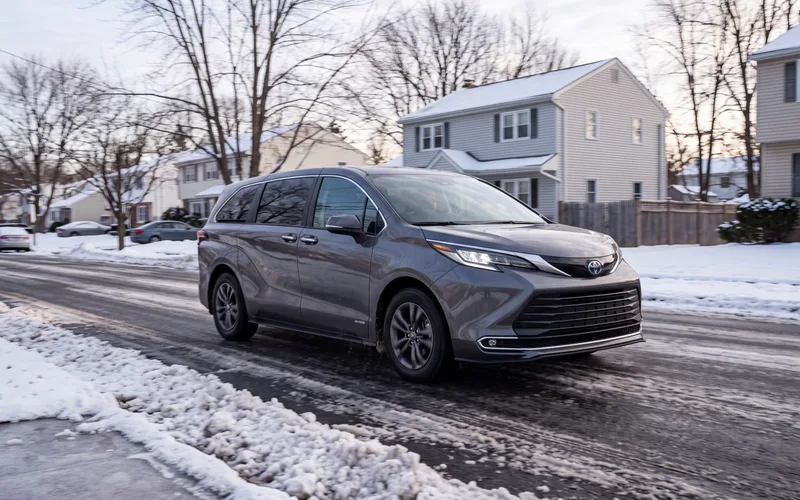 Toyota SiennaMinivanBetter at: Fuel economy & resale
If you drive a lot of miles, need all-wheel drive, or care about what the van is worth in five years, the hybrid-only Sienna beats the Carnival on every one of those counts.
Compare 2.54C+
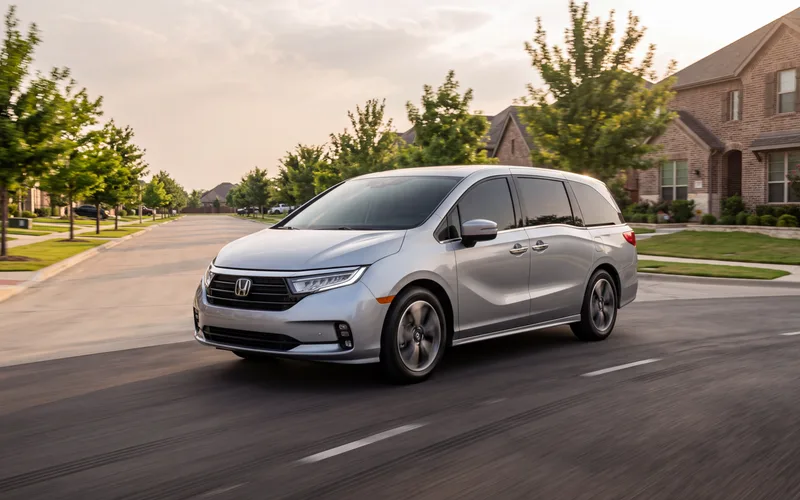 Honda OdysseyMinivanBetter at: Driving & family seating
The Odyssey is the one to drive if you want a van that handles like a car and has the segment's most thoughtful car-seat and kid-hauling layout.
Compare 2.17C
2.17C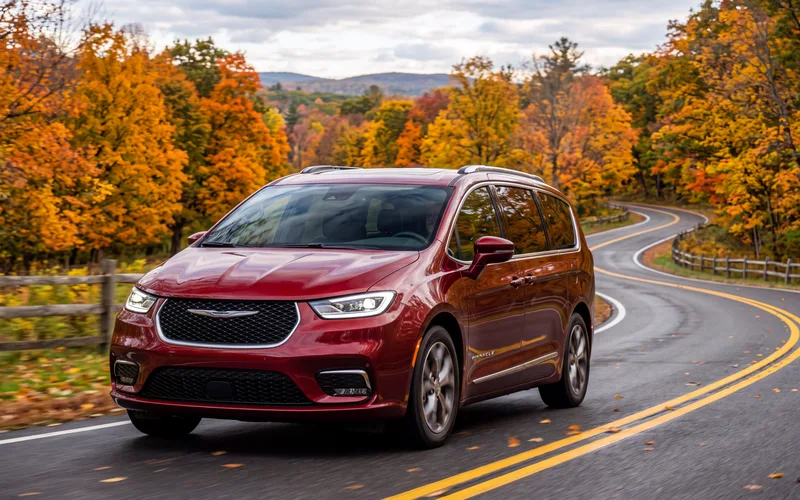 Chrysler PacificaMinivanBetter at: Seat flexibility
Pick the Pacifica if you regularly need a flat load floor without wrestling seats out of the van, or want a plug-in option and available all-wheel drive.
CompareSubject scores by year
Hover or tap a score to see what moved it versus the year before. A corner mark flags a big swing.
| Year | Performance | Efficiency | Safety | Space | Cost | Reliability | Tech | Use-case | Driving | Value |
|---|---|---|---|---|---|---|---|---|---|---|
| 2026 | 41 | 43 | 77 | 80 | 64 | 70 | 75 | 69 | 65 | 78 |
| 2025 | 40 | 35 | 72 | 76 | 69 | 71 | 74 | 64 | 67 | 78 |
| 2024 | 38 | 40 | 66 | 76 | 62 | 74 | 60 | 67 | 66 | 70 |
| 2023 | 39 | 40 | 56 | 76 | 66 | 68 | 58 | 65 | 66 | 72 |
| 2022 | 39 | 40 | 58 | 76 | 69 | 61 | 57 | 65 | 66 | 70 |
Compare two years
Best fit & conditions
Higher scores mean a better fit for that use case. Learn more about use-case fit →
Subject profile
Academic Probation · NHTSA safety recalls
Apr 10, 2026Fuel system, gasoline: delivery: hoses, lines/piping, and fittingsFuel may leak at the pipe connection between the fuel pipe and fuel rail.
Defect
Kia America, Inc. (Kia) is recalling certain 2022-2026 Carnival vehicles. Fuel may leak at the pipe connection between the fuel pipe and fuel rail.
Risk
A fuel leak increases the risk of a fire.
Remedy
Dealers will inspect and tighten, or replace the fuel pipe as necessary, free of charge. Owner notification letters were mailed June 2, 2026. Owners may contact Kia customer service at 1-800-333-4542. Kia's number for this recall is SC368. Vehicle Identification Numbers (VINs) involved in this recall will be searchable on NHTSA.gov on April 24, 2026.
NHTSA campaign 26V232000 ↗Manufacturer no. SC368141,032 vehicles potentially affected (all models in the campaign)Owners notified Jun 2, 2026Filed by Kia America, Inc.Filed as CARNIVALJan 26, 2026Electrical system: instrument cluster/panelDue to a software error, the instrument panel display may fail. As such, these vehicles fail to comply with the requirements of Federal Motor Vehicle Safety Standard (FMVSS) numbers 101, "Controls and Displays" and 138, "Tire Pressure Monitoring System."
Defect
Kia America, Inc. (Kia) is recalling certain 2025 Kia K4, 2025-2026 Sorento, Sorento Hybrid, Sorento Plug-In Hybrid Electric (PHEV), 2026 Sportage, Sportage Hybrid, Sportage PHEV, K5, EV9, Carnival, and Carnival Hybrid vehicles. Due to a software error, the instrument panel display may fail. As such, these vehicles fail to comply with the requirements of Federal Motor Vehicle Safety Standard (FMVSS) numbers 101, "Controls and Displays" and 138, "Tire Pressure Monitoring System."
Risk
An instrument panel display that fails to show critical safety information, such as the speedometer, tire pressure, or warning lights, increases the risk of a crash.
Remedy
The instrument panel display software will be updated over-the-air (OTA) or by a dealer, free of charge. Owner notification letters are expected to be mailed March 26, 2026. Owners may contact Kia Customer Service at 1-800-333-4542. Kia's number for this recall is SC361. Vehicle Identification Numbers (VINs) involved in this recall will become searchable on NHTSA.gov on February 9, 2026.
NHTSA campaign 26V046000 ↗Manufacturer no. SC36142,677 vehicles potentially affected (all models in the campaign)Owners notified Mar 13, 2026Filed by Kia America, Inc.Filed as CARNIVAL, CARNIVAL HYBRID
5 recalls on other model years of the Carnival (2022–2024)
Jan 18, 2024Structure: body: roof and pillarsThe roof molding may loosen and detach.
Defect
Kia America, Inc. (Kia) is recalling certain 2023-2024 Sportage and 2022-2024 Carnival vehicles. The roof molding may loosen and detach.
Risk
A detached roof molding can create a road hazard for other vehicles, increasing the risk of a crash.
Remedy
Dealers will inspect the roof molding and replace or secure it as necessary, free of charge. Owner notification letters were mailed March 15, 2024. Owners may contact Kia customer service at 1-800-333-4542. Kia's number for this recall is SC292.
NHTSA campaign 24V025000 ↗Manufacturer no. SC292101,049 vehicles potentially affected (all models in the campaign)Owners notified Mar 15, 2024Filed by Kia America, Inc.Filed as CARNIVALMar 31, 2023Structure: body: doorKia America, Inc. (Kia) is recalling all 2022 and certain 2023 Carnival vehicles. The auto-reverse feature for the power sliding doors (PSD) may not activate in all situations.
Defect
Kia America, Inc. (Kia) is recalling all 2022 and certain 2023 Carnival vehicles. The auto-reverse feature for the power sliding doors (PSD) may not activate in all situations.
Risk
A power sliding door that does not auto-reverse can close on an occupant, increasing the risk of injury.
Remedy
Dealers will update the power sliding door control module software, free of charge. Owner notification letters were mailed April 28, 2023. Owners may contact Kia customer service at 1-800-333-4542. Kia's number for this recall is SC266.
NHTSA campaign 23V236000 ↗Manufacturer no. SC26651,568 vehicles potentially affected (all models in the campaign)Owners notified Apr 28, 2023Filed by Kia America, Inc.Filed as CARNIVALMar 17, 2023Trailer hitchesWater accumulation on the tow hitch harness module printed circuit board (PCB) may cause an electrical short, which can result in a fire.
Defect
Kia America, Inc. (Kia) is recalling certain 2022-2023 Carnival vehicles equipped with a tow hitch harness installed as original equipment, or purchased as an accessory through a Kia dealership. Water accumulation on the tow hitch harness module printed circuit board (PCB) may cause an electrical short, which can result in a fire.
Risk
A fire while parked or driving can increase the risk of injury.
Remedy
Owners are advised to park their vehicles outside and away from structures until the remedy is completed. Dealers will inspect and verify whether the vehicle is equipped with a Genuine Kia accessory trailer tow hitch assembly. If equipped, dealers will install a new fuse and wire extension kit. Repairs will be performed free of charge. Owner notification letters were mailed May 16, 2023. Owners may contact Kia customer service at 1-800-333-4542. Kia's number for this recall is SC265.
NHTSA campaign 23V179000 ↗Manufacturer no. SC2653,555 vehicles potentially affected (all models in the campaign)Owners notified May 16, 2023Filed by Kia America, Inc.Filed as CARNIVALNov 19, 2021Latches/locks/linkages: electronic lock/latch actuator · Structure: body: doorThe remote controller assembly for the passenger-side power sliding door may malfunction, preventing the passenger-side sliding door from securely latching.
Defect
Kia Motors America (Kia) is recalling certain 2022 Carnival vehicles. The remote controller assembly for the passenger-side power sliding door may malfunction, preventing the passenger-side sliding door from securely latching.
Risk
A power sliding door that fails to latch may open while moving, increasing the risk of injury.
Remedy
Dealers will replace the passenger-side power sliding door release actuator's drum and holder inside the remote controller assembly, free of charge. Owner notification letters were mailed December 16, 2021. Owners may contact Kia customer service at 1-800-333-4542. Kia's number for this recall is SC221.
NHTSA campaign 21V908000 ↗Manufacturer no. SC2212,956 vehicles potentially affected (all models in the campaign)Owners notified Dec 16, 2021Filed by Kia Motors AmericaFiled as CARNIVALApr 21, 2021Fuel system, gasoline: fuel injection system: fuel railThe plastic fuel rail tube may have been damaged.
Defect
Kia Motors America (Kia) is recalling certain 2022 Carnival vehicles. The plastic fuel rail tube may have been damaged.
Risk
A damaged fuel rail tube may leak fuel, increasing the risk of a fire.
Remedy
Kia will notify owners, and dealers will inspect, and if necessary, replace the multi-port injection fuel rail, free of charge. The recall began April 30, 2021. Owners may contact Kia customer service at 1-800-333-4542. Kia's number for this recall is SC211.
NHTSA campaign 21V277000 ↗Manufacturer no. SC2112,744 vehicles potentially affected (all models in the campaign)Owners notified Apr 30, 2021Filed by Kia Motors AmericaFiled as CARNIVAL
Source: NHTSA Office of Defects Investigation recall database, model years 2022–2026. Recalls are listed by model year as the manufacturer filed them; whether a specific car is affected depends on its VIN — check a VIN at nhtsa.gov ↗. NHTSA model names matched to this page: CARNIVAL, CARNIVAL HYBRID.
Detailed scoring by subject
1Performance & PowertrainThe Carnival's lowest-graded category.0.75F
The volume Carnival's standard powertrain is Kia's naturally-aspirated 3.5L Smartstream V6 GDI, rated 287 hp after the 2025 mid-cycle facelift retuned it down from the 290 hp of the 2022–2024 pre-facelift van; the optional 1.6L turbo hybrid makes 242 hp combined. 287 hp ties the Pacifica's gas V6 for the segment's highest output and beats the Odyssey (280 hp) and Sienna (245 hp combined), but against a 150–550 hp band drawn to include high-output vans it still lands low.
Peak torque of the volume trim's 3.5L V6 is 260 lb-ft, a high-rpm peak typical of a naturally-aspirated direct-injection six and effectively level with the Odyssey and Pacifica at 262 lb-ft. Notably, the optional hybrid out-torques the V6 (271 lb-ft, available far lower in the rev range) and feels stronger in traffic despite its lower horsepower.
Instrumented tests of the V6 Carnival cluster around 7.0–7.5 seconds, and 7.2 s is the fair central estimate for the facelifted van, which carries slightly less power and slightly more weight than the 2022 model that recorded the quickest times. That is mid-pack for the class — a touch behind the Odyssey (~7.0 s), a touch ahead of the Pacifica (~7.3 s), and comfortably ahead of the Sienna hybrid (~7.7 s). The Carnival Hybrid is the slow one of the pair at roughly 7.8–8.0 s.
The 3.5L V6 is a strong, quiet, linear engine with no forced-induction lag and ample thrust for a loaded van — reviewers consistently rate it among the better minivan powertrains, and it is quieter under load than the Sienna's strained 2.5L four. It stops short of the top band for two reasons: a mild off-the-line delay as the 8-speed engages, and the fact that the alternative hybrid powertrain is the less polished of the two, with gas-to-electric handoffs that are more noticeable than Toyota's planetary system and a 1.6L four that sounds coarser than the V6 when pushed.
The V6's 8-speed torque-converter automatic is one of the better boxes in the segment: well-spaced ratios, prompt and unobtrusive kickdown, and none of the ratio hunting that draws complaints on the Pacifica's 9-speed. It sits just above the Odyssey's 10-speed, which is smooth but occasionally busy among its tall top gears. The hybrid's 6-speed automatic is a genuine differentiator against CVT-based rivals — real gears, no drone — though it can hesitate at low speed when handing off between electric and gas drive.
Rated at 3,500 lbs when properly equipped — exactly the class norm, tied with the Odyssey and Sienna and 100 lbs behind the Pacifica. That covers a small boat, a pair of jet skis, or a light utility trailer; it is not a substitute for a body-on-frame tow vehicle, and the absence of any AWD option (see 1.3.1) makes launching a trailer on a wet ramp harder than in an AWD Pacifica or Sienna.
The Carnival is front-wheel drive only on every trim and with either powertrain — Kia has never offered all-wheel drive on the US-market van, and the 2025 facelift that added the hybrid did not add AWD. This is the Carnival's single biggest capability gap: the Sienna offers AWD across its range, the Pacifica offers it on most gas trims, and only the Odyssey shares the Carnival's FWD-only limitation. Snow-belt buyers are left with tires as their only answer.
The Carnival's SUV-flavored styling is not backed by hardware. It does carry roughly 6.8 in of ground clearance — the most of any non-Woodland minivan and a real advantage over the Pacifica (~5.4 in) and Odyssey (~4.5 in) on rutted gravel or a snowy driveway lip — but there are no skid plates, no terrain or drive modes for loose surfaces, no off-road trim, all-season tires, and, decisively, no AWD to put power down. It scores just below the Pacifica, whose available AWD matters more for unpaved traction than the Carnival's clearance edge, and well above the low-slung FWD Odyssey.
Two genuinely distinct powertrains — the 3.5L V6 for buyers who want effortless thrust and the 1.6L turbo hybrid for buyers who want roughly 34 MPG combined — spanning most of the lineup and covering mainstream minivan needs well. That is more choice than the single-powertrain Odyssey or Sienna offer. It lands just under the Pacifica because the Pacifica's second powertrain is a plug-in hybrid with real EV range, a more meaningful step than a conventional hybrid, and because Chrysler also offers a drivetrain choice the Carnival cannot match at all.
2Efficiency & RangeOne of the Carnival's weakest categories.0.83F
Scored on the 3.5L V6 as the representative volume configuration — it is the standard and only powertrain on the base LX and remains the default across the lineup, with the hybrid an extra-cost option on LXS and above. The V6 sits at the bottom of the minivan pack alongside the gas Pacifica and Odyssey; buyers who step up to the hybrid gain roughly 50% on combined economy.
A 287-hp naturally-aspirated V6 hauling a 4,600-lb van with no electric assist gives up the most in stop-and-go driving — the exact duty cycle most minivans live in. The hybrid nearly doubles it and is the reason to pay the premium.
26 MPG highway trails the gas Pacifica and Odyssey (28 MPG) by two, a function of the Carnival's 8-speed automatic and boxier profile. The gap between gas and hybrid narrows considerably at steady speed.
A large 19.0-gallon tank rescues the V6's mediocre economy, yielding a mid-pack ~418 miles between fills — line-ball with the gas Pacifica. The hybrid shares the tank and stretches past 600 miles, which is genuine road-trip territory and close to the Sienna.
At 22 MPG combined the V6 costs the same to feed as the Odyssey and gas Pacifica — roughly $2,700 a year at EPA's 15,000-mile assumption. The hybrid saves on the order of $900 annually, which recovers a good share of its price premium over a typical ownership period.
Both powertrains run on regular 87-octane unleaded — Kia recommends but does not require higher grades, and the turbocharged hybrid carries no premium-fuel requirement. There is no diesel, E85, or charging infrastructure to plan around, so running costs are entirely predictable and no home-charging setup is needed.
3SafetyOne of the Carnival's strongest categories.3.25B+
The KA4 Carnival has carried a 5-star NHTSA overall rating since its 2022 US launch, and the 2026 van is structurally unchanged from the 2025 facelift — that update was styling, interior and powertrain, not a new body structure — so the generation result carries forward.
The Carnival is not a current IIHS Top Safety Pick, but it is the strongest crashworthiness performer among mainstream minivans: when IIHS ran the updated moderate overlap front test (which measures rear-passenger protection) across the segment, the Carnival was the only van to earn Acceptable while the Pacifica took Marginal and the Odyssey and Sienna both took Poor. Good results in the original small-overlap and side evaluations round out a mostly-Good record that still falls short of the tightened award criteria.
Kia Drive Wise is fitted broadly across the 2026 range: Forward Collision-Avoidance Assist with pedestrian, cyclist and junction-turning detection, Lane Keeping Assist and Lane Following Assist, Blind-Spot Collision-Avoidance Assist, Rear Cross-Traffic Collision-Avoidance Assist, Safe Exit Assist, Driver Attention Warning, and Smart Cruise Control with Stop & Go paired with Highway Driving Assist. Nothing on the core AEB/ACC/LKA/BSM/RCTA list is locked behind an upper trim, and Kia goes further than its rivals by making the blind-spot and cross-traffic systems avoidance-capable rather than alert-only.
Forward Collision-Avoidance Assist 2 is a feature-complete system on paper — vehicle, pedestrian and cyclist detection plus junction turning assist, with evasive steering support on upper trims — which is broader coverage than the Odyssey's carryover Honda Sensing hardware. Without a confirmed grade in the tougher current IIHS front-crash-prevention protocol it scores on system capability and segment position rather than a measured result.
This is the Carnival's clearest ADAS advantage over the segment. Blind-Spot Collision-Avoidance Assist and Rear Cross-Traffic Collision-Avoidance Assist both intervene with braking rather than only warning — the top-band criterion the alert-only Sienna and Odyssey systems miss — and Safe Exit Assist holds the power sliding doors when traffic is approaching. SX Prestige adds the Blind-Spot View Monitor, which pipes a camera feed of the adjacent lane into the instrument cluster on signal.
Lane Following Assist centers the van confidently on marked highway and is generally rated among the better mainstream systems for holding a steady line without ping-ponging, helped by Highway Driving Assist tying steering to the adaptive cruise. Reviewers do flag Kia's Lane Keeping Assist as nag-prone in default settings and note it hunts on faded or patched markings.
Smart Cruise Control with Stop & Go covers the full speed range and is well regarded for smooth following distances and prompt restarts in traffic, and Highway Driving Assist combines it with lane centering into a genuinely useful hands-on highway mode. Navigation-based predictive speed adjustment on upper trims sharpens it further; it stops short of the top band only because the Carnival gets the base HDA rather than Kia's lane-change-capable second-generation system.
No hands-free highway driving is offered on the 2026 Carnival at any trim. Highway Driving Assist is a hands-on system that requires steering-wheel torque, and Kia has not brought a BlueCruise or Super Cruise equivalent to its minivan.
The 2025 facelift brought new vertically stacked LED headlamps across the range with standard automatic high beams, and projector-LED units on upper trims have historically rated Good while the lower-trim reflector setup has trailed at Acceptable. That split — good performance on the trims buyers upgrade to, merely adequate on the volume trims — puts it above the Odyssey and Pacifica but well short of the Sienna's Good-across-the-range result.
The Carnival keeps minivan fundamentals — upright seating, a tall glass area and a low cowl give a commanding forward view — while its SUV-styled bodywork adds slightly thicker D-pillars and a higher beltline than an Odyssey, leaving a bigger over-the-shoulder blind zone at the rear quarter. Upper trims compensate well with a 360-degree Surround View Monitor and the Blind-Spot View Monitor camera feed.
Wide power sliding-door openings, a flat floor and a genuinely tall cabin make the Carnival easy to work in with a car seat, and the second row carries LATCH in the outboard positions. It lands below the class-leading Odyssey because the second-row seats are heavy and not removable on most trims, three-across requires the 8-passenger bench configuration, and the SX Prestige's reclining VIP lounge seats are poorly suited to child seats.
4Space & ComfortThe Carnival's best-graded category.3.41B+
Carnival is offered in 7- and 8-passenger configurations; the 8-seat bench layout on lower trims sets the maximum and ties the segment ceiling.
The Carnival's tall, boxy roofline gives it more front headroom than Odyssey (40.4 in) or Sienna (40.1 in) — near the top of the minivan band.
Front legroom is mid-pack for a minivan — ahead of Sienna (40.3 in) and Odyssey (40.9 in) but well short of the 44.5 in top of the segment band, so it normalizes low despite feeling spacious in practice.
Second-row headroom tops the minivan band, beating Odyssey (39.5 in), Sienna (39.8 in) and Pacifica (38.0 in).
Second-row legroom is near the top of the segment — behind Odyssey (40.9 in) but ahead of Sienna (39.9 in) and Pacifica (39.0 in), and the chairs slide far aft when the third row is unoccupied.
Genuinely adult-usable three-across third row (roughly 35.6 in legroom, 38.8 in headroom) with easy walk-in access past sliding second-row chairs and wide power sliding doors; the 60/40 bench folds flat into a deep floor well in one motion.
Class-leading in both measures — the 40.2 cu ft behind the raised third row is the largest in the segment, and 86.9 cu ft behind the second row clears the top of the band outright.
Maximum volume is among the largest offered by any minivan and far exceeds the top of the band, though unlike Pacifica's Stow 'n Go it requires physically removing the heavy second-row seats.
Strong everyday storage — deep underfloor well behind the third row, large console with pass-through, generous door bins and up to six USB-C ports — but the second-row seats neither stow into the floor (Pacifica's Stow 'n Go) nor slide side-to-side (Odyssey's Magic Slide), and the VIP Lounge chairs are too heavy to remove practically.
Broad, well-padded front seats with power adjustment and available ventilation on volume trims; the SX Prestige VIP Lounge second row with power recline and pop-up leg rests is the most comfortable second row in the segment, though it is confined to the top trim.
Composed and settled at highway speed with good body control for a 4,700 lb van, but the softer-riding Pacifica remains the segment reference — Carnival transmits more impact harshness over broken pavement, especially on the 19-inch wheels of SX and SX Prestige.
Acoustic front glass and added sound deadening keep wind noise low, and the hybrid's electric-only low-speed running is notably quiet; some road roar remains over coarse surfaces and the 3.5L V6 is audible under hard acceleration.
Among the best-equipped minivans for the money: tri-zone automatic climate with second- and third-row vents and rear controls, heated and ventilated front seats, heated steering wheel, heated second row, power sliding doors and liftgate, rear sunshades and a dual-panel sunroof — most of it available from mid trims up rather than reserved for the flagship.
5Cost of OwnershipOne of the Carnival's weakest categories.2.31C+
The Carnival is the price leader of the minivan segment: its LX base trim undercuts the Sienna LE, Odyssey Sport and Pacifica Select by roughly $2,000–$6,500. Score up sharply from the placeholder because the real entry price is far below the segment-typical figure that was seeded.
The EX carries the equipment most minivan buyers actually shop for (power sliding doors, heated seats, the full driver-assist suite) and is the volume seller; it lands a couple thousand under an Odyssey EX-L and roughly level with a Sienna XLE. The placeholder had assumed a near-$51k volume trim, which is really SX Prestige territory.
Kia's 5-yr/60k bumper-to-bumper and 10-yr/100k powertrain coverage absorb most unscheduled repair inside the five-year window, holding out-of-pocket cost below the minivan average; scheduled service on the 3.5L V6 is conventional and inexpensive. Sits between the Sienna's class-best figure and the Odyssey's.
This is the Carnival's weak spot and the main drag on the category: Kia residuals have improved substantially but still trail Toyota and Honda in the minivan class, so much of the low transaction price is handed back at trade-in. Scored down from the placeholder, which had assumed better-than-average retention.
Kia's 5-yr/60,000-mi basic warranty is the longest in the minivan segment and tops the normalization band outright — every Japanese and domestic rival here stops at 3 yr/36,000 mi.
The 10-yr/100k powertrain warranty tops the band and is the single strongest ownership-cost argument for the Carnival, doubling the coverage of every rival in the segment.
Kia offers no factory complimentary scheduled-maintenance program in the US, which caps this item below 50 per the scoring guidance; what it does include is a longer-than-average 5-yr/60k roadside assistance term and a Kia Connect trial. Rated above the Odyssey and Pacifica on roadside duration and connected-services breadth, well below the Sienna, which includes two years of ToyotaCare service. Warranty length is deliberately not double-counted here — it is scored in 5.3.1/5.3.2.
$44,500 volume-trim price minus its estimated resale value after 5 years (50% retained, or about $22,250) leaves about $22,250 in depreciation. Add the projected $4,700 in 5-year maintenance and repairs, and owning this vehicle for 5 years costs about $26,950 in total.
6Reliability & QualityGrades above the middle of the scale.2.77B-
The KA4 Carnival's predicted-reliability signals are mixed rather than strong: Kia scores well in J.D. Power initial-quality work, but Consumer Reports has held the fourth-generation Carnival at or below average across its US run, with power sliding doors, infotainment and electrical complaints the recurring themes rather than mechanical failures. 2026 is the second year of the facelifted car — new dual 12.3-inch curved display hardware and a hybrid powertrain that is still early in its US minivan life — so the mature-design discount the Odyssey and Sienna earn does not apply here. Scored in the middle of the average band, above the Pacifica (42) and Voyager but clearly below the Odyssey (76) and Sienna (88).
Kia is one of the last decade's genuine dependability turnarounds — a perennial top mass-market finisher in J.D. Power's Initial Quality Study and a solid mid-to-upper performer in the Vehicle Dependability Study and Consumer Reports brand rankings. It stops short of the 80–100 'consistently top-5' band because CR brand placement bounces around the upper middle rather than locking in year after year, and the Hyundai Motor Group carries a heavy recent recall load. Set between the two other real Kia scorecards in this dataset (Telluride 80, Sportage 70) since this is a brand-level judgment that should not swing by model.
The KA4 generation has drawn typical-to-elevated recall activity rather than a systemic defect: campaigns and service actions have clustered on the power sliding doors, seat and restraint hardware, and rear-camera/electronics software, with the broader Hyundai/Kia group recall load as background. Nothing has hit the V6 or the transmission the way the Pacifica's repeated hybrid and electrical actions have, but this is not the quiet record the Sienna enjoys. Lands level with the Odyssey's 55, above the Pacifica's 40 and the Telluride's fire-recall-scarred 50.
The volume powertrain is the naturally aspirated 3.5L Lambda II V6 GDI with Kia's in-house 8-speed automatic — the same NA V6/8AT architecture family as the Telluride and Palisade, free of the systemic rod-bearing and fire failures that defined the Theta II four-cylinder era, and with a good high-mileage record. Scored a few points below the Telluride's 82 because the lineup now also offers the 1.6L turbo hybrid, only in its second US model year in this vehicle, which adds a turbo, a hybrid starter-generator and a traction battery to the risk surface even though the same system has been running in the Sportage, Sorento and Santa Fe for several years.
The Carnival's cabin is the model's signature strength and the best-presenting interior in the segment at the price: the 2025 facelift's dual 12.3-inch curved panoramic display, the quilted-leather SX Prestige with its reclining second-row VIP lounge seats, and generally convincing switchgear are routinely described by reviewers as near-luxury for minivan money. Scored at the top of the class — above the Pacifica's 78, the Odyssey's 74 and well above the Sienna's hard-plastic 66 — but short of the 90s because volume LX and LXS trims use noticeably plainer materials than the halo trims that earned the reputation.
Assembly at Kia's Gwangmyeong plant is consistent and matches Kia's strong initial-quality showings — panel fit and material alignment draw no recurring criticism, and a fifth model year on the same body means the tooling is fully sorted. Held in the upper half of the 'generally solid' band rather than the 80+ band because owner reports of interior rattles and infotainment/electronic gremlins persist across the generation, and the power sliding doors are the component most often cited as feeling less than fully sorted.
Kia's roughly 775-dealer US network makes nationwide coverage a non-issue for a mainstream buyer, and service satisfaction sits around the industry average rather than being a weak point. Scored below the Telluride's 80 because the Carnival is a much lower-volume nameplate, so hybrid-trained technicians and van-specific familiarity are thinner on the ground than for Kia's best-selling SUV — and the network is still materially thinner than Toyota's or Honda's, which is why this trails the Odyssey's 84.
Ordinary parts pricing and availability: the 3.5L V6 and 8-speed automatic are shared across the Hyundai/Kia three-row family so mechanical parts are plentiful and reasonably priced, and Kia's 10-year/100,000-mile powertrain warranty shields early owners from the expensive failures. Scored below the Telluride's 83 because minivan-specific hardware — power sliding-door motors and tracks, the long body's glass and trim — is lower-volume and dealer-dependent, and aftermarket depth for a Korean van is thin next to a domestic SUV.
7Technology & InfotainmentGrades above the middle of the scale.3.11B
The MY2025 facelift replaced the pre-facelift van's split 12.3-in nav / 8-in base arrangement with Kia's ccNC dual-panel panoramic curved display — a 12.3-in digital cluster and a 12.3-in center touchscreen under one curved glass, with a small dedicated climate readout between them — and 2026 carries that hardware over. The 12.3-in center screen is the largest in the minivan class (Pacifica 10.1 in, Odyssey 9.0 in, Sienna 12.3 in but only on XLE and above), and the Carnival's is fitted from the base LX rather than being a trim-walk item.
Kia's ccNC system is among the best mainstream infotainment platforms on sale — high-resolution widescreen graphics, near-instant touch response, a customizable widget home screen, and a retained physical volume/tune knob. The one real demerit is the capacitive touch bar below the screen that toggles between climate and audio functions: it works, but it replaces hard buttons with a mode-dependent surface that reviewers consistently flag as a step backward for eyes-off use. Scored a shade above Uconnect 5 and Toyota Audio Multimedia (both 78 in this dataset) on screen quality and speed, with the touch bar keeping it out of the high 80s.
The move to ccNC resolved the Carnival's biggest infotainment complaint: the pre-facelift van forced wired-only phone projection on exactly the navigation-equipped trims buyers were most likely to order. The 2025-onward system supports wireless Apple CarPlay and wireless Android Auto on the big screen, no subscription required. Scored just below the Pacifica's 90 only because the base LX's projection fitment could not be confirmed in this run — if wireless is genuinely standard from LX up, this item belongs at 90.
Kia Connect brings cloud-based native navigation with live traffic, over-the-air map updates and connected routing that feeds the navigation-based smart cruise control, plus a server-assisted natural-language voice assistant that handles climate, destination and media commands. It is a genuinely usable native stack rather than one owners immediately abandon for phone projection. Held below the top band because the assistant is a step behind the best conversational systems and because Kia Connect reverts to a paid subscription once the complimentary trial lapses.
The base six-speaker system is unremarkable but adequate, and a 12-speaker Bose premium system is available on the upper trims — a branded option the Odyssey cannot match at any price. Bose in Kia applications is good rather than exceptional; it sits roughly level with the Sienna's JBL and below the Pacifica Pinnacle's 19-speaker Harman Kardon, which is why this lands just under those two rather than above them.
The clearest tech win in the segment. The Carnival's 12.3-in full-digital reconfigurable cluster is the left half of the standard panoramic display, so even a base van gets a crisp configurable digital gauge display — where the Pacifica still uses analog dials with a 7-in strip, the Odyssey offers no full-digital cluster at all, and the Sienna reserves its 12.3-in cluster for upper grades. The Blind-Spot View Monitor also pipes live side-camera video into the cluster when you signal, which is a real use for the screen rather than decoration.
ccNC was designed around over-the-air updating, and the Carnival receives OTA updates to the infotainment software and navigation map data without a dealer visit — an improvement on the pre-facelift van's USB-stick map updates. Kia has extended OTA to some vehicle controllers on its newer platforms, but nothing in the Carnival's release material promises the Tesla-style whole-vehicle, feature-adding updates the top band describes, so it sits in the upper half of the middle band — ahead of Uconnect 5 and Toyota Audio Multimedia (both 62 here) and well clear of the Odyssey's 40.
The Kia Access app covers the full expected remote set — remote start with climate preconditioning, lock/unlock, vehicle status, find-my-car, and remote door/window checks — and the app is well rated and stable. What lifts it above every rival in this segment is Digital Key: a phone- and smartwatch-as-key implementation available on the upper trims that none of the Pacifica, Odyssey or Sienna offers. Kept out of the top band by Kia's subscription posture, since remote features move to a paid Kia Connect plan after the included trial.
Exactly what a minivan buyer needs: USB-C charge ports distributed across all three rows, including seatback-mounted ports for the second row, plus a Qi wireless charging pad on the volume trim upward. It is level with the Pacifica and Odyssey rather than ahead of them, and short of the Sienna's 82 because the Carnival's household AC power provision is the weaker part of the package — an outlet is not the broadly-fitted feature it is on the Toyota, and nothing here approaches the Sienna Woodland's 1500W inverter.
Smart Key proximity entry with push-button start and fob remote start are fitted broadly across the range, dual power sliding doors are standard on the volume trims, and a Smart Power Liftgate opens hands-free when you stand behind the van with the key. Digital Key on the upper trims adds genuine phone-as-key access and key sharing, which is what pushes this into the bottom of the top band and ahead of the Pacifica (74), Odyssey (74) and Sienna (76) — all of which stop at conventional proximity entry.
Rear camera and rear parking distance warning are standard, front and rear sensors arrive with the mid trims, and a Surround View Monitor is available on the upper trims. The differentiator is the Blind-Spot View Monitor, which shows a live camera view down the relevant flank in the instrument cluster on signal — unusually valuable in a van this long with a loaded third row and rear headrests blocking the mirror. Ahead of the Sienna (74) and far ahead of the Odyssey (58), which offers no surround-view camera at all; short of the top band because the 360 camera is a top-trim item rather than a volume-trim one.
A windshield-projected Head-Up Display has been part of the Carnival SX Prestige's equipment on this generation, which places the van in the 'HUD limited to top trims' band rather than at the no-HUD floor — but near the bottom of that band, since it is confined to the single most expensive trim and a volume LX or EX buyer cannot order one. Scored LOW: carry-over of the HUD through the MY2025 facelift into 2026 could not be verified in this run, and this dataset's Odyssey scorecard asserts the Carnival offers no HUD at all, a conflict that needs resolving before publication.
8Use-Case FitGrades above the middle of the scale.2.70B-
Dual power sliding doors are standard on every trim, the load floor is low, and the 40.2 cu ft well behind the third row swallows strollers without folding anything — but the second row does not stow into the floor and the SX Prestige VIP Lounge chairs are not removable at all, so configurability trails Pacifica's Stow 'n Go and Odyssey's laterally sliding second row.
The full Drive Wise suite — forward collision avoidance with junction-turning, lane keeping and lane following, blind-spot and rear cross-traffic avoidance with braking, Safe Exit Assist, adaptive cruise with stop-and-go and Highway Driving Assist — is standard from the base LX, which is exactly the trim family buyers shop, and NHTSA rates the Carnival 5 stars overall. IIHS credentials are the soft spot: Acceptable rather than Good in the updated moderate-overlap front (rear passenger) test, and headlight performance holds it back from the awards Sienna and Odyssey collect.
This is where the Carnival is strongest: 40.0 in of second-row headroom and 40.4 in of legroom, a genuinely adult-usable third row, tri-zone automatic climate standard, USB-C power in all three rows, and — critically for a full load — 40.2 cu ft of luggage space still available with all seats occupied, the largest in the segment. Rear-seat entertainment is an option rather than standard, and cabin quietness is good rather than class-leading.
The 287-hp V6 and 8-speed automatic are smooth and decisive in stop-and-go, outward visibility is good, and standard Smart Cruise Control with Stop & Go plus Highway Driving Assist take real strain out of a congested commute. It stays a 203-inch box with no one-pedal mode, and the hybrid's clutch-based 6-speed is marginally less seamless at crawl speeds than Toyota's eCVT in the Sienna.
The volume V6 trims return 22 MPG combined (19 city / 26 highway) for roughly $2,700 a year at 15,000 miles — weak in a segment where the Sienna is hybrid-only at 36 MPG and the Pacifica offers a plug-in. The 1.6T hybrid fixes most of that at 33 MPG combined and about $1,800 a year, and both powertrains run on regular 87 octane with cheap, widely shared consumables.
A 203-inch, 78.5-inch-wide van is never easy in a city, and the 37.6 ft turning circle is merely average, but the upright glasshouse gives good sightlines, a rear camera and reverse parking sensors are standard, and the power sliding doors are a genuine advantage in tight bays where a hinged SUV door cannot open. Surround View and Blind-Spot View monitors that make it easy are reserved for upper trims.
With the third row folded into its well and the second row removed, the Carnival opens up 145.1 cu ft behind the front seats — the biggest load box in the segment — reached through sliding doors on both sides over a low, flat floor, which makes it a credible light-duty delivery or trades van. But it tows only 3,500 lbs properly equipped, is front-drive-only with no low-range or locking anything, and pulling the heavy second-row seats is a two-person job rather than a Stow 'n Go lever.
The Lambda II V6 and 8-speed automatic are long-serving, widely shared Hyundai/Kia hardware with a solid durability reputation, and the 10-year/100,000-mile powertrain warranty backs a hard-working first owner. Against that, Carnival recall activity has concentrated on the power sliding doors and seat/restraint hardware — precisely the high-cycle components a work van hammers — and the US cabin is trimmed in family-and-luxury materials with no vinyl or wear-friendly fleet option.
The basics are there — cargo tie-downs and the deep underfloor well behind the third row, 12V and USB-C power in all three rows, factory roof rails on upper trims and a dealer tow hitch for a rack or small trailer. What is missing is everything above the basics: no 115V household outlet as the Pacifica offers, no washable-floor or partition option, and no upfitter ecosystem, because Kia does not sell a commercial Carnival in the US.
A strong tourer: comfortable front seats, a settled ride, acoustic glass added in the facelift, Highway Driving Assist with navigation-based adaptive cruise to blunt fatigue, and — the part rivals cannot match — 40.2 cu ft of luggage room with seven or eight people aboard. Range is the caveat, at roughly 418 miles for the V6 on a 19-gallon tank versus about 627 for the hybrid, and there is no hands-free driving mode.
The Carnival is one of only two major minivans with no all-wheel-drive option at any price, and about 6.8 in of ground clearance with no skid plates keeps it on graded surfaces — the Sienna and Pacifica both sell AWD to exactly the trailhead-and-ski-weekend buyer this item measures. It still reaches a campground fine, carries bikes on a roof rack or hitch, tows 3,500 lbs of small trailer, and the 145 cu ft flat floor with the seats out makes a legitimate sleeping platform.
On raw capacity nothing in the segment beats it — 40.2 cu ft behind the third row, 86.9 behind the second and 145.1 maximum, with the third row folding flat into a deep floor well and roof rails and a hitch available for anything that will not fit inside. The asterisk is that reaching the maximum means physically removing heavy second-row seats rather than dropping them into the floor, and on SX Prestige the VIP Lounge chairs do not come out at all.
9Driving ExperienceMid-pack among this car's ten categories.2.37C+
Strut-front/multi-link-rear KA4 chassis is composed and well-damped with good body control for a 4,400–4,800 lb van, but the longest wheelbase in the class (121.7 in) and SUV-like tuning make it feel large rather than agile. Secure and unflappable, short of the Odyssey's eagerness.
Electric rack is accurate and easy to place but light off-center and essentially devoid of feedback — the weakest link in the Carnival's dynamics and a clear step behind the Odyssey's more naturally weighted setup.
V6 models stop from 70 mph in roughly 180 ft with a firm, predictable pedal — competitive for the class. The 1.6T hybrid's regen blending is slightly softer and less linear at low speed, which costs it a few points against the gas-only rivals.
The 287-hp 3.5L V6 with the 8-speed automatic is the strongest and one of the smoothest powertrains in the segment (roughly 6.6 s to 60 mph), with clean tip-in and decisive shifts. The hybrid's conventional 6-speed automatic avoids CVT rubber-banding, though engine start/stop hand-offs are occasionally noticeable.
V6 is subdued at cruise and inoffensive under load, and the hybrid's stepped automatic spares it the constant drone of an eCVT rival. Against that, the 1.6L turbo four sounds strained and coarse at full throttle with a loaded van — audible but not intrusive overall.
Kia's published curb-to-curb turning diameter for the Carnival is 39.0 ft — a consequence of the class-longest 121.7-in wheelbase and the widest figure among mainstream minivans (Odyssey 36.7 ft, Sienna ~36.9 ft). Noticeably wider arcs in parking garages and three-point turns.
Commanding, high seating position with generous seat and wheel adjustment, a wide flat floor, low step-in, and excellent glass area for sightlines. The 2025-refresh dual 12.3-in curved display brought a touch-sensitive switchable climate/media bar in place of dedicated knobs, which costs it against the Odyssey's retained physical HVAC controls.
The V6's genuine muscle gives the Carnival more personality than most vans and the sharp styling flatters it, but numb steering, FWD-only traction, and the widest turning circle in class keep it in pleasant-appliance territory rather than the Odyssey's enthusiast-approved band.
10Value & Market PositionOne of the Carnival's strongest categories.3.32B+
Kia's signature strength in this segment: the base LX undercuts every rival's entry price while still including dual power sliding doors, tri-zone climate and the full Drive Wise driver-assist suite (forward collision avoidance with junction turning, blind-spot collision avoidance, Highway Driving Assist, safe exit assist), with the post-refresh twin 12.3-inch curved displays arriving low in the range. A comparably equipped Sienna or Odyssey costs meaningfully more.
The strongest content-and-capability-per-dollar case in the class: a 287-hp 3.5L V6 standard, class-leading cargo volume behind the first row, the segment's largest screens and Kia's 10-year/100,000-mile powertrain warranty, all from the lowest entry price in the segment. The 1.6T hybrid closes most of the Sienna's fuel-cost gap for roughly $3-4K over the gas van. Weaker residuals than Toyota and Honda are the one real offset.
Five trims — LX, LXS, EX, SX, SX Prestige — spanning roughly $38K to $55K, two powertrains, and 7- or 8-passenger seating including the SX Prestige's reclining second-row lounge chairs give broader choice than the Odyssey's single-powertrain ladder. The one real gap is drivetrain: the Carnival is front-drive only, so any buyer who needs AWD has to shop the Sienna or Pacifica instead.
Solidly mid-pack in volume rather than a leader — the Carnival runs behind both the Sienna and the Odyssey — but it is the segment's clearest riser: the hybrid added in the 2025 refresh has drawn demand that outstrips supply and lifted volume inside a shrinking segment. Trajectory is the positive here, absolute volume is not.
Kia's image has climbed sharply — top-tier finishes in J.D. Power initial-quality studies, genuine design leadership, and an industry-best 10-year/100,000-mile powertrain warranty that buys shopper confidence. It still trails Toyota and Honda on the two things that matter most to a family-van buyer, long-term resale and the reflexive reliability assumption, so the brand is a mild positive rather than the halo Toyota carries.
Good news for buyers: Kia is an active incentive brand and Carnival gas models routinely carry customer cash plus subvented APR with real negotiating room at the dealer — the opposite of the at-or-above-MSRP Sienna. Hybrid trims are supply-constrained and discount far less, which keeps this below the Pacifica's near-fire-sale level.
The fourth-generation KA4 Carnival arrived for MY2022 and took a thorough mid-cycle refresh for MY2025 — restyled front and rear with vertical LED lighting, a new dual-12.3-inch curved-display interior, and the addition of the 1.6L turbo hybrid — leaving 2026 as a carryover of a genuinely recent update with no replacement imminent. That makes it the freshest mainstream minivan alongside the Sienna and far newer than the 2018-generation Odyssey or 2017-generation Pacifica.
Reviewers rate the Carnival at or near the top of the class and regularly name it the value pick, praising its space, cabin quality, SUV-adjacent styling and the refresh's hybrid, and it holds IIHS Top Safety Pick-level recognition plus recurring best-minivan and best-value honors. It loses comparison tests to the Sienna on efficiency and AWD availability and to the Pacifica on seat flexibility, so it is a frequent runner-up about as often as a winner.