

The verdict
A mixed-report minivan, strong on space and held back by performance.
The 2026 Odyssey is still the most practical box in the minivan class and the most enjoyable one to drive, with 158 cu ft of maximum cargo space, a genuinely adult-sized third row, and the Magic Slide second row that makes three car seats across a non-event. The catch is that it is the only minivan left without any electrification: a 280-hp V6 returning 19 city / 28 highway (22 combined) costs about $2,700 a year in gas, roughly $1,000 more than a Sienna hybrid. It is also front-wheel drive only, misses the 2026 IIHS Top Safety Pick on a Poor rear-passenger moderate-overlap result, and enters its eighth model year on the same platform. Buy it for the interior and the driving manners; skip it if fuel bills, all-wheel drive, or the newest safety credentials are what you are shopping on.
Jump to scoresStrengths
- Cargo space no rival comes close to matching
- The best minivan in the class for kids and car seats
- Five-star crash results and driver aids on every trim
What holds it back
- The thirstiest way to buy a minivan
- No all-wheel drive at any price
- Warranty and depreciation work against you
Top alternatives
Cars shoppers cross-shop with the Honda Odyssey 2.71B-
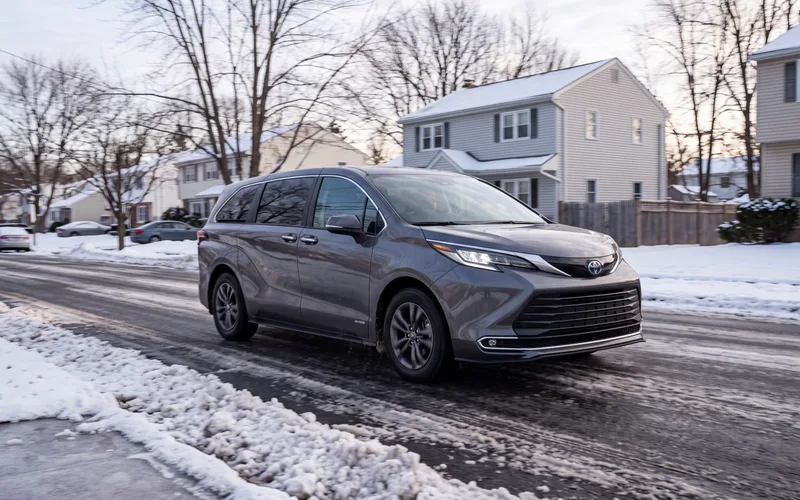 Toyota SiennaMinivanBetter at: Fuel economy
Standard hybrid power at roughly 36 MPG city and available all-wheel drive fix the Odyssey's two biggest weaknesses in one move.
Compare 2.71B-
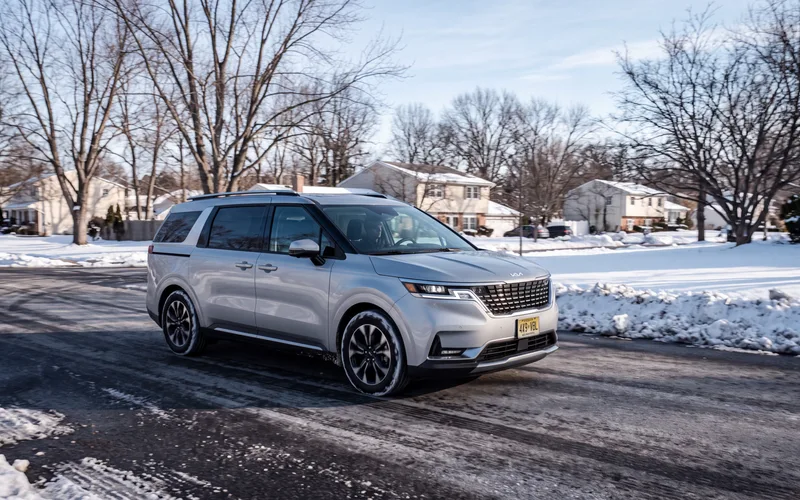 Kia CarnivalMinivanBetter at: Value & warranty
Costs less, feels newer inside with a 360-degree camera and larger screens, and its 10-year/100,000-mile powertrain warranty doubles Honda's coverage.
Compare 2.17C
2.17C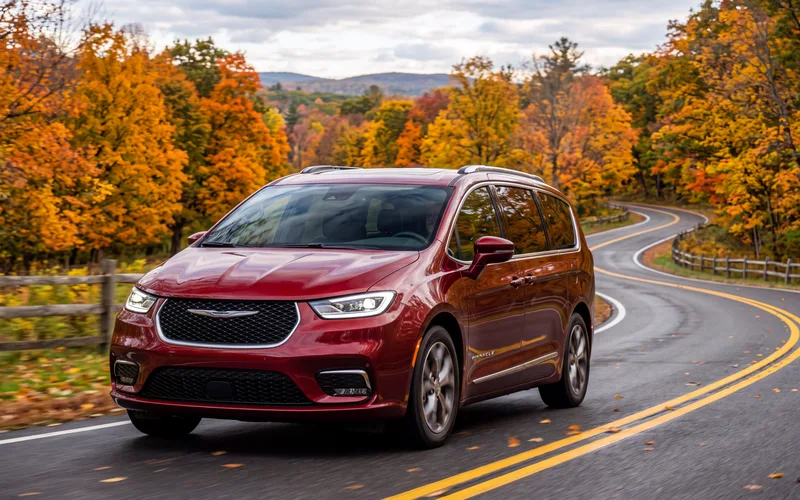 Chrysler PacificaMinivanBetter at: Seat flexibility
The only plug-in-hybrid minivan, and Stow 'n Go second-row seats fold into the floor instead of having to be removed and stored.
CompareHow it's evolved
10 scored model years · 2017–2026
Subject scores by year
Hover or tap a score to see what moved it versus the year before. A corner mark flags a big swing.
| Year | Performance | Efficiency | Safety | Space | Cost | Reliability | Tech | Use-case | Driving | Value |
|---|---|---|---|---|---|---|---|---|---|---|
| 2026 | 38 | 44 | 74 | 80 | 47 | 75 | 59 | 68 | 71 | 67 |
| 2025 | 38 | 41 | 75 | 73 | 53 | 71 | 56 | 67 | 68 | 68 |
| 2024 | 37 | 42 | 77 | 78 | 57 | 73 | 50 | 67 | 67 | 68 |
| 2023 | 37 | 42 | 80 | 76 | 57 | 73 | 50 | 67 | 67 | 65 |
| 2022 | 37 | 42 | 78 | 75 | 57 | 73 | 49 | 67 | 67 | 61 |
| 2021 | 37 | 42 | 78 | 75 | 57 | 69 | 47 | 67 | 67 | 64 |
| 2020 | 37 | 42 | 72 | 75 | 58 | 68 | 46 | 66 | 66 | 66 |
| 2019 | 36 | 42 | 72 | 75 | 58 | 64 | 46 | 66 | 66 | 68 |
| 2018 | 37 | 42 | 72 | 75 | 60 | 61 | 45 | 65 | 66 | 68 |
| 2017 | 33 | 44 | 46 | 74 | 60 | 73 | 29 | 63 | 70 | 59 |
Compare two years
Best fit & conditions
Higher scores mean a better fit for that use case. Learn more about use-case fit →
Subject profile
Trims & configurations
4 trimsScores above reflect the volume trim. Per-trim specs and scores are rolling out — the full lineup:
Academic Probation · NHTSA safety recalls
May 21, 2026Air bags: sensor: occupant classification: front passengerThe front passenger seat weight sensor may crack and short circuit, which can cause the air bags to deploy unintentionally during a crash.
Defect
Honda (American Honda Motor Co.) is recalling certain 2018-2021, 2023 Acura TLX, 2019-2024 RDX, 2017-2020, 2022-2026 MDX, 2017-2021, 2023, 2025 Honda Ridgeline, 2017-2022 Pilot, 2019-2021 Passport, 2018-2026 Odyssey, 2019-2022 Insight, 2019-2021 HR-V, 2018-2020 Fit, 2020-2022 CR-V Hybrid, 2017-2022 CR-V, 2017-2018, 2021 Civic Type R, 2017-2021 Civic hatchback, 2016-2020 Civic coupe, 2016-2022 Civic, 2017-2022 Accord Hybrid, and 2016-2022 Accord vehicles. The front passenger seat weight sensor may crack and short circuit, which can cause the air bags to deploy unintentionally during a crash.
Risk
Air bags that deploy unintentionally during a crash increase the risk of injury.
Remedy
Dealers will replace the seat weight sensors, free of charge. Owner notification letters were mailed July 7, 2026. Owners may contact Honda's customer service at 1-888-234-2138. Honda's numbers for this recall are BOL, WO9, OOA, WOM, XOH, NOC, POD, BOE, UOF, POB, EOG, AOI, QO8, TOJ, DO7, and SOK. This recall expands previous NHTSA recall number 24V064. Vehicle Identification Numbers (VINs) involved in this recall will be searchable on NHTSA.gov beginning May 29, 2026.
NHTSA campaign 26V332000 ↗Manufacturer no. Refer to Comments98,892 vehicles potentially affected (all models in the campaign)Owners notified Jul 6, 2026Filed by Honda (American Honda Motor Co.)Filed as ODYSSEYDec 17, 2025Equipment adaptive/mobility: wheelchair restraints/securement: latch/anchorThe retractors may not lock, preventing the wheelchair from being properly secured.
Defect
Vantage Mobility, LLC (VM) is recalling certain 2021-2026 Honda Odyssey, 2021-2025 Chrysler Pacifica, and Toyota Sienna vehicles equipped with QRT-Deluxe and QRT-Max wheelchair restraints. The retractors may not lock, preventing the wheelchair from being properly secured.
Risk
An unsecured wheelchair can move during transit, increasing the risk of injury.
Remedy
Dealers will inspect and replace the retractors, free of charge. Owner notification letters was mailed January 27, 2026. Owners may contact Vantage Mobility customer service at 1-800-488-9082.
NHTSA campaign 25V877000 ↗1,019 vehicles potentially affected (all models in the campaign)Owners notified Jan 27, 2026Filed by Vantage MobilityFiled as ODYSSEY
26 recalls on other model years of the Odyssey (2017–2024)
Jul 1, 2026Back over prevention: sensing system: cameraWater may enter into the rearview camera, which can cause the rearview camera image to fail to display when the vehicle is in reverse. As such, these vehicles fail to comply with the requirements of Federal Motor Vehicle Safety Standard number 111, "Rear Visibility."
Defect
Honda (American Honda Motor Co.) is recalling certain 2018-2020 Odyssey vehicles. Water may enter into the rearview camera, which can cause the rearview camera image to fail to display when the vehicle is in reverse. As such, these vehicles fail to comply with the requirements of Federal Motor Vehicle Safety Standard number 111, "Rear Visibility."
Risk
A rearview image that does not display reduces the driver's view behind the vehicle, increasing the risk of a crash.
Remedy
Dealers will replace the rearview camera, free of charge. Owner notification letters were mailed August 24, 2026. Owners may contact Honda's customer service at 1-888-234-2138. Honda's number for this recall is HOX. This recall expands previous NHTSA recall number 20V438. Vehicle Identification Numbers (VINs) involved in this recall will become searchable on NHTSA.gov beginning July 9, 2026.
NHTSA campaign 26V423000 ↗Manufacturer no. HOX325,588 vehicles potentially affected (all models in the campaign)Owners notified Aug 24, 2026Filed by Honda (American Honda Motor Co.)Filed as ODYSSEYApr 9, 2026Air bags: air bag/restraint control module: softwareA software programming error can cause the side and side curtain air bags to deploy unexpectedly.
Defect
Honda (American Honda Motor Co.) is recalling certain 2018-2022 Odyssey vehicles. A software programming error can cause the side and side curtain air bags to deploy unexpectedly.
Risk
Air bags that deploy unexpectedly can increase the risk of injury.
Remedy
Dealers will reprogram the supplemental restraint system (SRS) electronic control unit (ECU) software or replace the ECU, as necessary, free of charge. Owner notification letters were mailed May 27, 2026. Owners may contact Honda's customer service at 1-888-234-2138. Honda's number for this recall is UNW. Vehicle Identification Numbers (VINs) involved in this recall will become searchable on NHTSA.gov beginning April 16, 2026. The information in your report suggests that Honda (American Honda Motor Co.) may have been aware of this issue more than five business days before filing a report with NHTSA. Please be reminded that under Federal law, this agency is to be notified of all safety defect and/or noncompliance decisions within five business days. 49 CFR 573.6 Significant civil penalties can be assessed for this violation.
NHTSA campaign 26V227000 ↗Manufacturer no. UNW440,830 vehicles potentially affected (all models in the campaign)Owners notified May 26, 2026Filed by Honda (American Honda Motor Co.)Filed as ODYSSEYFeb 15, 2024SteeringThe steering gear box assembly may not have been tightened properly, allowing water to enter the assembly and cause corrosion and binding gears.
Defect
Honda (American Honda Motor Co.) is recalling certain 2023-2024 Odyssey and 2024 Acura RDX vehicles. The steering gear box assembly may not have been tightened properly, allowing water to enter the assembly and cause corrosion and binding gears.
Risk
Corroded and binding steering gears can result in a loss of steering control and increase the risk of a crash.
Remedy
Dealers will replace the electric power steering rack, free of charge. Owner notification letters were mailed April 4, 2024. Owners may contact Honda customer service at 1-888-234-2138. Honda's numbers for this recall are LHU and FHT.
NHTSA campaign 24V114000 ↗Manufacturer no. LHU, FHT186 vehicles potentially affected (all models in the campaign)Owners notified Apr 4, 2024Filed by Honda (American Honda Motor Co.)Filed as ODYSSEYFeb 1, 2024Air bags: sensor: occupant classification: front passengerThe front passenger seat weight sensor may crack and short circuit, failing to suppress the air bag as intended.
Defect
Honda (American Honda Motor Co.) is recalling certain 2020-2022 Pilot, Accord, Civic sedan, HR-V, Odyssey, 2020 Civic coupe, Fit, 2021-2022 Civic hatchback, 2021 Civic Type R, Insight, 2020-2021 CR-V, CR-V Hybrid, Passport, Ridgeline, Accord Hybrid, 2020 Acura MDX, 2022 Acura MDX, 2020-2022 Acura RDX, and 2020-2021 Acura TLX vehicles. The front passenger seat weight sensor may crack and short circuit, failing to suppress the air bag as intended.
Risk
An air bag that deploys unintentionally during a crash can increase the risk of injury.
Remedy
Dealers will replace the seat weight sensors, free of charge. Owner notification letters were mailed March 28, 2024. This is a phased recall. Owners may contact Honda customer service at 1-888-234-2138. Honda's numbers for these recalls are XHP and VHQ.
NHTSA campaign 24V064000 ↗Manufacturer no. XHP, VHQ750,114 vehicles potentially affected (all models in the campaign)Owners notified Mar 28, 2024Filed by Honda (American Honda Motor Co.)Filed as ODYSSEYDec 18, 2023Fuel system, gasoline: delivery: fuel pumpThe fuel pump inside the fuel tank may fail.
Defect
Honda (American Honda Motor Co.) is recalling certain 2013-2023 Honda Accord, Civic Coupe, Civic Sedan, Civic Hatchback, Civic Type R, CR-V, HR-V, Ridgeline, Odyssey, Acura ILX, MDX, MDX Hybrid, RDX, RLX, TLX, 2019-2022 Honda Insight, Passport, 2020 Honda CR-V Hybrid, 2018-2019 Honda Clarity PHEV, Fit, and 2015-2020 Honda Accord Hybrid, Pilot, Acura NSX vehicles. The fuel pump inside the fuel tank may fail.
Risk
Fuel pump failure can cause an engine stall while driving, increasing the risk of a crash.
Remedy
Dealers will replace the fuel pump module, free of charge. Owner letters were mailed September 6, 2024. Owners may contact Honda customer service at 1-888-234-2138. Honda's numbers for this recall are KGC and KGD. This recall is an expansion of NHTSA recall numbers 21V-215 and 20V-314.
NHTSA campaign 23V858000 ↗Manufacturer no. KGC, KGD2,490,460 vehicles potentially affected (all models in the campaign)Owners notified Mar 29, 2024Filed by Honda (American Honda Motor Co.)Filed as ODYSSEYNov 13, 2023Engine and engine cooling: engine: hard parts internal/mechanicalDue to a manufacturing error, the connecting rod bearing in the engine may wear and seize, damaging the engine.
Defect
Honda (American Honda Motor Co.) is recalling certain 2015-2020 Acura TLX, 2016-2020 Acura MDX, 2016 and 2018-2019 Pilot, 2017 and 2019 Ridgeline, and 2018-2019 Odyssey vehicles. Due to a manufacturing error, the connecting rod bearing in the engine may wear and seize, damaging the engine.
Risk
A damaged engine may run improperly or stall while driving, increasing the risk of a fire, crash, or injury.
Remedy
Dealers will inspect and repair, or replace the engine as necessary, free of charge. Owner letters were mailed March 28, 2024. 2016-2017 Acura MDX owner letters were mailed November 1, 2024. 2016-2020 Acura MDX owner letters are expected to be mailed in mid-December 2024. Honda began mailing owner notification letters as of March 18, 2024. 2015-2016 Acura owner letters are expected to be mailed mid-December 2024, 2018 Acura TLX owner letters are expected to be mailed the end of March/early April 2024, 2019 Acura TLX owner letters are expected to be mailed mid-May 2024, 2020 Acura TLX owner letters are expected to be mailed mid-June 2024, and 2016-2020 Acura MDX owner letters are expected to be mailed January 27, 2025. Owners may contact Honda customer service at 1-888-234-2138. Honda's numbers for these recalls are XG1 and GG0.
NHTSA campaign 23V751000 ↗Manufacturer no. XG1, GG0248,999 vehicles potentially affected (all models in the campaign)Owners notified Mar 28, 2024Filed by Honda (American Honda Motor Co.)Filed as ODYSSEYJun 15, 2023Back over prevention: display functionDue to a faulty Media Oriented Systems Transport (MOST) communication coaxial cable connector, the rearview camera image may not appear on the display. As such, these vehicles fail to comply with the requirements of Federal Motor Vehicle Safety Standard number 111, "Rear Visibility."
Defect
Honda (American Honda Motor Co.) is recalling certain 2018-2023 Odyssey, 2019-2022 Pilot, and 2019-2023 Passport vehicles. Due to a faulty Media Oriented Systems Transport (MOST) communication coaxial cable connector, the rearview camera image may not appear on the display. As such, these vehicles fail to comply with the requirements of Federal Motor Vehicle Safety Standard number 111, "Rear Visibility."
Risk
A rearview camera that does not display an image can reduce the driver's rear view, increasing the risk of a crash or injury.
Remedy
Dealers will replace the MOST cable harness and install a straightening cover over the vehicle cable connector, free of charge. Owner notification letters were mailed July 24, 2023. Owners may contact Honda customer service at 1-888-234-2138. Honda's numbers for this recall are EEL, ZEM, and SFC.
NHTSA campaign 23V431000 ↗Manufacturer no. EEL, ZEM, SFC1,209,673 vehicles potentially affected (all models in the campaign)Owners notified Jul 24, 2023Filed by Honda (American Honda Motor Co.)Filed as ODYSSEYMar 16, 2023Visibility: rearview mirrors/devices: exteriorThe heating pads behind both side-view mirrors may not be bonded properly, allowing the mirror glass to detach. As such, these vehicles fail to comply with the requirements of Federal Motor Vehicle Safety Standard number 111, "Rear Visibility."
Defect
Honda (American Honda Motor Co) is recalling certain 2020-2021 Pilot and Ridgeline, and 2020-2022 Passport and Odyssey vehicles. The heating pads behind both side-view mirrors may not be bonded properly, allowing the mirror glass to detach. As such, these vehicles fail to comply with the requirements of Federal Motor Vehicle Safety Standard number 111, "Rear Visibility."
Risk
Detached mirror glass can reduce driver visibility, increasing the risk of a crash.
Remedy
Dealers will replace both left and right side-view mirrors, free of charge. Owner letters were mailed January 17, 2024. Owners may contact Honda customer service at 1-888-234-2138. Honda's number for this recall is FE5.
NHTSA campaign 23V174000 ↗Manufacturer no. FE5339,404 vehicles potentially affected (all models in the campaign)Owners notified Jan 17, 2024Filed by Honda (American Honda Motor Co.)Filed as ODYSSEYMar 9, 2023Seat belts: front: buckle assemblyA manufacturing issue with the front seat belts may cause the seat belt buckle channel to interfere with the release button, preventing the seat belt buckle from latching.
Defect
Honda (American Honda Motor Co.) is recalling certain 2017-2020 CR-V, 2018-2019 Accord and Accord Hybrid, 2018-2020 Odyssey, 2019 Insight, and 2019-2020 Acura RDX vehicles. A manufacturing issue with the front seat belts may cause the seat belt buckle channel to interfere with the release button, preventing the seat belt buckle from latching.
Risk
An unlatched seat belt cannot properly restrain the seat occupant during a crash, increasing their risk of injury.
Remedy
Dealers will replace the driver and front passenger seat belt buckle release buttons or the buckle assemblies as necessary, free of charge. Owner notification letters were mailed April 18, 2023. Owners may contact Honda customer service at 1-888-234-2138. Honda's numbers for this recall are NDA, QDB, BDC, MDD, LD9. TDF, FDG, ODH, YDI, ZDE.
NHTSA campaign 23V158000 ↗Manufacturer no. NDA, QDB, BDC, MDD448,613 vehicles potentially affected (all models in the campaign)Owners notified Apr 18, 2023Filed by Honda (American Honda Motor Co.)Filed as ODYSSEYSep 29, 2021Tires: sidewallThe affected vehicles may have a tire that contains a pinhole, causing a slow air leak. As such, these tires fail to comply with the requirements of Federal Motor Vehicle Safety Standard (FMVSS) number 139, "New Pneumatic Radial Tires for Light Vehicles."
Defect
Honda (American Honda Motor Co.) is recalling certain 2022 Odyssey vehicles equipped with Bridgestone tires. The affected vehicles may have a tire that contains a pinhole, causing a slow air leak. As such, these tires fail to comply with the requirements of Federal Motor Vehicle Safety Standard (FMVSS) number 139, "New Pneumatic Radial Tires for Light Vehicles."
Risk
A slow air leak can affect tire performance, and increase the risk of a crash.
Remedy
Dealers will inspect all four tires and replace the tire if a pinhole is found, free of charge. Owner notification letters were mailed November 24, 2021. Owners may contact Honda customer service at 1-888-234-2138. Honda's number for this recall is HBL.
NHTSA campaign 21V768000 ↗Manufacturer no. HBL181 vehicles potentially affected (all models in the campaign)Owners notified Nov 24, 2021Filed by Honda (American Honda Motor Co.)Filed as ODYSSEYJun 7, 2021SeatsThe second-row outboard seats may have deformed seat rail locking mechanisms, which could prevent the seat rails from locking into place.
Defect
Honda (American Honda Motor Co.) is recalling certain 2022 Odyssey vehicles. The second-row outboard seats may have deformed seat rail locking mechanisms, which could prevent the seat rails from locking into place.
Risk
A seat that is not locked into place can move unexpectedly, increasing the risk of injury.
Remedy
Dealers will replace both second-row outboard seat frames, free of charge. Owner notification letters were mailed August 4, 2021. Owners may contact Honda customer service at 1-888-234-2138. Honda's number for this recall is YBE.
NHTSA campaign 21V432000 ↗Manufacturer no. YBE649 vehicles potentially affected (all models in the campaign)Owners notified Aug 4, 2021Filed by Honda (American Honda Motor Co.)Filed as ODYSSEYMar 25, 2021Fuel system, gasoline: delivery: fuel pumpThe low-pressure fuel pump inside the fuel tank may fail.
Defect
Honda (American Honda Motor Co.) is recalling certain 2019-2020 Acura MDX, MDX Sport Hybrid, RDX, TLX, Honda Accord, Civic Hatchback, Insight, 2019 Acura ILX, Honda Accord Hybrid, Civic Coupe, Civic Coupe Si, Civic Sedan, Civic Sedan Si, Civic Type R, Fit, HR-V, Odyssey, Passport, Pilot and Ridgeline, and 2018-2019 CR-V vehicles. The low-pressure fuel pump inside the fuel tank may fail.
Risk
Fuel pump failure can cause an engine stall while driving, increasing the risk of a crash.
Remedy
Honda will notify owners, and dealers will replace the fuel pump assembly, free of charge. Owner letters were mailed May 18, 2021. Owners may contact Honda customer service at 1-888-234-2138. Note: This recall is an expansion of recall 20V-314.
NHTSA campaign 21V215000 ↗Manufacturer no. Multiple Codes624,552 vehicles potentially affected (all models in the campaign)Owners notified May 18, 2021Filed by Honda (American Honda Motor Co.)Filed as ODYSSEYJan 14, 2021Fuel system, gasoline: storageThe fuel tank assembly installed by Braun may be susceptible to the fuel tank overfilling into the charcoal canister. If the charcoal canister fills with a sufficient amount of fuel, fuel may leak out.
Defect
Braun Corporation (Braun) is recalling certain 2018-2021 Braun-modified Honda Odyssey vehicles. The fuel tank assembly installed by Braun may be susceptible to the fuel tank overfilling into the charcoal canister. If the charcoal canister fills with a sufficient amount of fuel, fuel may leak out.
Risk
A fuel leak in the presence of an ignition source may increase the risk of fire.
Remedy
Braun will notify owners, and dealers will inspect vehicles. If evidence of a fuel leak is present, a new fuel tank assembly and a new Honda charcoal canister will be installed, free of charge. The recall began February 22, 2021. Owners may contact Braun customer service at 1-800-488-0359.
NHTSA campaign 21V010000 ↗Manufacturer no. N/A1,258 vehicles potentially affected (all models in the campaign)Owners notified Feb 22, 2021Filed by Braun CorporationFiled as ODYSSEYJul 28, 2020Back over prevention: sensing system: camera · Electrical system: softwareIncorrect central network software programming may cause several errors to occur that can delay or prevent the rearview camera image from displaying. As such, these vehicles fail to comply with the requirements of Federal Motor Vehicle Safety Standard (FMVSS) number 111, "Rearview Mirrors."
Defect
Honda (American Honda Motor Co.) is recalling certain 2019-2021 Pilot, 2019-2020 Odyssey and 2019-2020 Passport vehicles. Incorrect central network software programming may cause several errors to occur that can delay or prevent the rearview camera image from displaying. As such, these vehicles fail to comply with the requirements of Federal Motor Vehicle Safety Standard (FMVSS) number 111, "Rearview Mirrors."
Risk
A delayed or inoperative rearview camera display can reduce the driver's view of what is behind the vehicle, increasing the risk of a crash.
Remedy
Honda will notify owners that updated software is available. Owners have the option to either follow the mailed instructions to download and update the software for free, or visit a dealer to have the software update performed, free of charge. The recall began September 23, 2020. Owners may contact Honda customer service at 1-888-234-2138. Honda's number for this recall is Y7Y.
NHTSA campaign 20V440000 ↗Manufacturer no. Y7Y499,344 vehicles potentially affected (all models in the campaign)Owners notified Sep 23, 2020Filed by Honda (American Honda Motor Co.)Filed as ODYSSEYJul 28, 2020Back over prevention: sensing system: camera · Electrical system: softwareIncorrect instrument panel control module software can cause the instrument panel to not display critical information, such as engine oil pressure, speedometer, and gear selector position until the next ignition cycle. Additionally, it can prevent the rearview camera image from displaying. As such, these vehicles fail to comply with the requirements of Federal Motor Vehicle Safety Standard (FMVSS) numbers 101, "Control and Displays" and 111, "Rearview Mirrors."
Defect
Honda (American Honda Motor Co.) is recalling certain 2018-2020 Odyssey, 2019-2020 Passport, and 2019-2021 Pilot vehicles. Incorrect instrument panel control module software can cause the instrument panel to not display critical information, such as engine oil pressure, speedometer, and gear selector position until the next ignition cycle. Additionally, it can prevent the rearview camera image from displaying. As such, these vehicles fail to comply with the requirements of Federal Motor Vehicle Safety Standard (FMVSS) numbers 101, "Control and Displays" and 111, "Rearview Mirrors."
Risk
Operating a vehicle without a functioning instrument panel or rearview camera display increases the risk of a crash.
Remedy
Honda will notify owners, and dealers will reprogram the instrument panel control module software, free of charge. The recall began September 23, 2020. Owners may contact Honda customer service at 1-888-234-2138. Honda's number for this recall is T89.
NHTSA campaign 20V439000 ↗Manufacturer no. T89607,786 vehicles potentially affected (all models in the campaign)Owners notified Sep 23, 2020Filed by Honda (American Honda Motor Co.)Filed as ODYSSEYJul 28, 2020Back over prevention: sensing system: cameraWater may get into the rearview camera mounting holes and enter the camera lens and cause a distorted image, or no image at all. Additionally, if the rearview camera view mode is set to top-down view, or switched from that view to another mode in a bright environment, the image may not display. As such, these vehicles fail to comply with the requirements of Federal Motor Vehicle Safety Standard number 111, "Rearview Mirrors."
Defect
American Honda Motor Co. (Honda) is recalling certain 2019-2020 Odyssey vehicles. Water may get into the rearview camera mounting holes and enter the camera lens and cause a distorted image, or no image at all. Additionally, if the rearview camera view mode is set to top-down view, or switched from that view to another mode in a bright environment, the image may not display. As such, these vehicles fail to comply with the requirements of Federal Motor Vehicle Safety Standard number 111, "Rearview Mirrors."
Risk
A distorted or inoperative rearview camera display can reduce the driver's view of what is behind the vehicle, increasing the risk of a crash.
Remedy
Honda will notify owners, and dealers will replace the rearview camera, free of charge. The recall began September 23, 2020. Owners may contact Honda customer service at 1-888-234-2138. Honda's number for this recall is W83.
NHTSA campaign 20V438000 ↗Manufacturer no. W83212,070 vehicles potentially affected (all models in the campaign)Owners notified Sep 23, 2020Filed by Honda (American Honda Motor Co.)Filed as ODYSSEYJul 28, 2020Latches/locks/linkages: doors: latchWater may enter the outer door handle cables for the sliding doors. If this occurs, the outer door handle cables may freeze in cold temperatures, preventing the front and rear sliding door latches from securely latching.
Defect
Honda (America Honda Motor Co.) is recalling certain 2018-2020 Odyssey vehicles. Water may enter the outer door handle cables for the sliding doors. If this occurs, the outer door handle cables may freeze in cold temperatures, preventing the front and rear sliding door latches from securely latching.
Risk
A power sliding door that fails to latch may open while moving, increasing the risk of injury.
Remedy
Honda will notify owners, and dealers will replace the power sliding door outer handle cables, free of charge. The recall began September 23, 2020. Owners may contact Honda customer service at 1-888-234-2138. Honda's number for this recall is A88.
NHTSA campaign 20V437000 ↗Manufacturer no. A88324,196 vehicles potentially affected (all models in the campaign)Owners notified Sep 23, 2020Filed by Honda (American Honda Motor Co.)Filed as ODYSSEYFeb 6, 2020Electrical system: wiringThe wire harness for the third row seat accessory power outlet may get pinched between the unibody and rear trim panel, possibly damaging the wires and causing an electrical short.
Defect
Honda (American Honda Motor Co.) is recalling certain 2018-2020 Odyssey vehicles. The wire harness for the third row seat accessory power outlet may get pinched between the unibody and rear trim panel, possibly damaging the wires and causing an electrical short.
Risk
An intermittent electrical short could overheat the wire harness, increasing the risk of a fire.
Remedy
Honda will notify owners, and dealers will inspect the third row seat accessory power outlet wire harness for damage, replacing it as necessary. If no damage is found, the dealer will apply protective tape and re-route the harness. All repairs will be performed free of charge. The recall began March 16, 2020. Owners may contact Honda customer service at 1-888-234-2138. Honda's number for this recall is T6U.
NHTSA campaign 20V066000 ↗Manufacturer no. T6U241,339 vehicles potentially affected (all models in the campaign)Owners notified Mar 16, 2020Filed by Honda (American Honda Motor Co.)Filed as ODYSSEYApr 12, 2019Electrical system: 12v/24v/48v battery · Power train: automatic transmissionLoose battery terminal connections or a degraded battery may cause the Transmission Control Unit (TCU) to unexpectedly reboot. Upon rebooting, the TCU may shift the transmission to the "Park" position, possibly damaging the parking rod.
Defect
Honda (American Honda Motor Co.) is recalling certain 2018-2019 Odyssey vehicles. Loose battery terminal connections or a degraded battery may cause the Transmission Control Unit (TCU) to unexpectedly reboot. Upon rebooting, the TCU may shift the transmission to the "Park" position, possibly damaging the parking rod.
Risk
A damaged parking rod can allow the vehicle to roll when parked, increasing the risk of a crash or injury.
Remedy
Honda will notify owners, and dealers will ensure the battery terminal connections are secure and will update the TCU software, free of charge. Additionally, the parking rod effectiveness will be checked. The recall began May 31, 2019. Owners may contact Honda customer service at 1-888-234-2138. Honda's numbers for this recall are Z4J, Y4K.
NHTSA campaign 19V299000 ↗Manufacturer no. Z4J, Y4K50,504 vehicles potentially affected (all models in the campaign)Owners notified May 31, 2019Filed by Honda (American Honda Motor Co.)Filed as ODYSSEYApr 12, 2019Engine and engine cooling: engine: gasoline: belts and associated pulleysThe timing belt teeth may separate from the belt.
Defect
Honda (American Honda Motor Co.) is recalling certain 2018-2019 Acura MDX and Honda Pilot vehicles and 2019 Acura RLX, RLX Sport Hybrid, TLX and Honda Odyssey and Ridgeline vehicles. The timing belt teeth may separate from the belt.
Risk
Teeth separation from the timing belt may result in an engine stall, increasing the risk of crash.
Remedy
Honda will notify owners, and dealers will inspect the vehicle and replace any affected timing belt free of charge. Vehicles receiving a replacement timing belt will also have the engine inspected and any damaged components will be replaced for free. The recall began June 7, 2019. Honda owners may contact customer service at 1-888-234-2138. Honda's number for this recall is L4M. Acura owners may contact customer service at 1-888-234-2138. Acura's number for this recall is Z4L.
NHTSA campaign 19V298000 ↗Manufacturer no. L4M, Z4L93,946 vehicles potentially affected (all models in the campaign)Owners notified Jun 7, 2019Filed by Honda (American Honda Motor Co.)Filed as ODYSSEYMar 20, 2019Service brakes, air: antilock: wheel speed sensorThe rear wheel speed sensor harnesses may have been routed to the incorrect rear wheels, resulting in the possibility that the anti-lock brake system will not recognize each rear wheel speed properly. As such, these vehicles fail to comply with the requirements of Federal Motor Vehicle Safety Standard (FMVSS) number 135, "Light Vehicle Brake System" and 404, "Electronic Stability Control Systems."
Defect
Braun Corporation (Braun) is recalling certain 2018-2019 Honda Odyessy vehicles modified to be equipped with an in-floor wheelchair ramp conversion. The rear wheel speed sensor harnesses may have been routed to the incorrect rear wheels, resulting in the possibility that the anti-lock brake system will not recognize each rear wheel speed properly. As such, these vehicles fail to comply with the requirements of Federal Motor Vehicle Safety Standard (FMVSS) number 135, "Light Vehicle Brake System" and 404, "Electronic Stability Control Systems."
Risk
If the rear wheel speeds cannot be correctly monitored, the anti-lock brake system may not engage properly to prevent the wheels from locking up, increasing the risk of crash.
Remedy
Braun has notified owners, and dealers will inspect and correct the rear wheel speed sensor harnesses, if necessary, free of charge. The recall began on April 4, 2019. Owners may contact Braun customer service at 1-800-488-0359.
NHTSA campaign 19V213000 ↗404 vehicles potentially affected (all models in the campaign)Owners notified Apr 4, 2019Filed by Braun CorporationFiled as ODYSSEYNov 9, 2018Latches/locks/linkages: doors: latchThe latch assemblies for the power sliding doors may stick and not properly latch to the door strikers.
Defect
Honda (American Honda Motor Co.) is recalling certain model year 2018 and 2019 Honda Odyssey vehicles. The latch assemblies for the power sliding doors may stick and not properly latch to the door strikers.
Risk
If the power sliding doors fails to latch, the doors may open while moving, increasing the risk of injury.
Remedy
Honda will notify owners, and dealers will replace the left and right power sliding door rear latch assemblies, free of charge. The recall began January 3, 2019. Owners may contact Honda customer service at 1-888-234-2138. Honda's numbers for this recall are Z33 and O36.
NHTSA campaign 18V795000 ↗Manufacturer no. Z33, O36107,774 vehicles potentially affected (all models in the campaign)Owners notified Jan 3, 2019Filed by Honda (American Honda Motor Co.)Filed as ODYSSEYNov 1, 2018Service brakes, hydraulic: foundation components: disc: caliperThe rear brake caliper pistons may have an insufficient coating, causing gas pockets to form, reducing brake performance. As such, these vehicles fail to comply with the requirements of Federal Motor Vehicle Safety Standard (FMVSS) number 135, "Light Vehicle Brake Systems."
Defect
Honda (American Honda Motor Co.) is recalling certain 2017-2019 Acura MDX, 2017-2018 Acura MDX Sport Hybrid, 2018-2019 Honda HR-V and Honda Odyssey, and 2016 Honda HR-V vehicles. The rear brake caliper pistons may have an insufficient coating, causing gas pockets to form, reducing brake performance. As such, these vehicles fail to comply with the requirements of Federal Motor Vehicle Safety Standard (FMVSS) number 135, "Light Vehicle Brake Systems."
Risk
A reduction of braking performance increases the risk of a crash.
Remedy
Owners will be notified, and Honda or Acura dealers will bleed the brakes, free of charge. The recall began December 11, 2018. Owners may contact Honda customer service at 1-888-234-2138. Honda's numbers for this recall are C31 and L30.
NHTSA campaign 18V777000 ↗Manufacturer no. C31, L3064,785 vehicles potentially affected (all models in the campaign)Owners notified Dec 11, 2018Filed by Honda (American Honda Motor Co.)Filed as ODYSSEYSep 27, 2018Air bags · Air bags: air bag/restraint control module · Seat belts: pretensionerThe Supplemental Restraint System (SRS) control unit may have a manufacturing error, possibly resulting in the air bags or seatbelt pretensioners not deploying in the event of a crash.
Defect
Honda (American Honda Motor Co.) is recalling certain 2019 Honda Insight, Odyssey, and Ridgeline vehicles. The Supplemental Restraint System (SRS) control unit may have a manufacturing error, possibly resulting in the air bags or seatbelt pretensioners not deploying in the event of a crash.
Risk
In the event of a crash, if the air bags or seatbelt pretensioners do not function as intended, there would be an increased risk of injury.
Remedy
Honda will notify owners, and dealers will replace the SRS unit, free of charge. The recall began November 8, 2018. Owners may contact Honda customer service at 1-888-234-2138. Honda's numbers for this recall are B2R, C2P, and Z2Q.
NHTSA campaign 18V664000 ↗Manufacturer no. B2R, C2P, Z2Q118 vehicles potentially affected (all models in the campaign)Owners notified Nov 8, 2018Filed by Honda (American Honda Motor Co.)Filed as ODYSSEYNov 17, 2017Seats: mid/rear assemblyThe second row outboard seats can slide sideways to one of two positions. If a seat is placed between either of the two positions when attaching the seat to the vehicle floor, the seat will not latch properly to the seat striker, allowing the seat to tip forward unexpectedly during braking.
Defect
Honda (American Honda Motor Co.) is recalling certain 2011-2017 Honda Odyssey vehicles. The second row outboard seats can slide sideways to one of two positions. If a seat is placed between either of the two positions when attaching the seat to the vehicle floor, the seat will not latch properly to the seat striker, allowing the seat to tip forward unexpectedly during braking.
Risk
If the seat tips forward during braking, it can increase the risk of injury.
Remedy
Honda will notify owners, and dealers will install a bracket to the second row outboard floor strikers, free of charge. The recall began April 2, 2018. Owners may contact American Honda Customer Support & Campaign Center at 1-888-234-2138. Honda's number for this recall is S0G.
NHTSA campaign 17V725000 ↗Manufacturer no. P0Q806,936 vehicles potentially affected (all models in the campaign)Owners notified Apr 2, 2018Filed by Honda (American Honda Motor Co.)Filed as ODYSSEYJun 23, 2017Seat beltsThe seat belt tongue for the third row center seating position may not be compatible with the latch, preventing the seat belt from latching securely. As such, these vehicles fail to comply with the requirements of Federal Motor Vehicle Safety Standard (FMVSS) number 208, "Occupant Crash Protection."
Defect
Honda (American Honda Motor Co.) is recalling certain 2018 Honda Odyssey vehicles. The seat belt tongue for the third row center seating position may not be compatible with the latch, preventing the seat belt from latching securely. As such, these vehicles fail to comply with the requirements of Federal Motor Vehicle Safety Standard (FMVSS) number 208, "Occupant Crash Protection."
Risk
If in the event of a crash, the seat belt cannot restrain the occupant they have an increased risk of being injured.
Remedy
Honda will notify owners, and dealers will inspect the third row center seat belt to make sure that it has the correct tongue, replacing the seat belt, if necessary, free of charge. The recall began July 31, 2017. Owners may contact Honda customer service at 1-888-234-2138. Honda's number for this recall is KF7.
NHTSA campaign 17V397000 ↗Manufacturer no. KF73,927 vehicles potentially affected (all models in the campaign)Owners notified Jul 31, 2017Filed by Honda (American Honda Motor Co.)Filed as ODYSSEY
Source: NHTSA Office of Defects Investigation recall database, model years 2017–2026. Recalls are listed by model year as the manufacturer filed them; whether a specific car is affected depends on its VIN — check a VIN at nhtsa.gov ↗. NHTSA model names matched to this page: ODYSSEY.
Detailed scoring by subject
1Performance & PowertrainThe Odyssey's lowest-graded category.0.49F
Honda's 3.5L SOHC i-VTEC V6 is the sole powertrain across all Odyssey trims (Sport, EX-L, Sport-L, Touring, Elite), carried over unchanged from the 2025 mid-cycle refresh.
Peak torque of the standard (and only) 3.5L V6 powertrain, unchanged from 2025 refresh.
Independent instrumented tests of the mechanically identical 2024–2025 Odyssey put 0–60 at roughly 7.0 seconds — among the quickest minivans thanks to the V6's power and the 10-speed's ratios.
The 3.5L V6 delivers smooth, linear power with a pleasant note under load and no turbo lag. Variable Cylinder Management can occasionally intrude with audible transitions, and there is no hybrid seamlessness like the Sienna, so refinement lands strong but short of best-in-class.
The 10-speed automatic (Honda in-house, introduced 2018) generally selects gears well and shifts smoothly, with occasional hunting between the taller top gears at part-throttle cruising. No harsh downshift complaints in current-gen reviews.
Honda rates the Odyssey at 3,500 lbs when properly equipped — tied with Sienna and Carnival for the minivan class; Pacifica is nominally 100 lbs higher.
The Odyssey is front-wheel drive only across all trims — no AWD option at any price point. This is a significant gap versus the Sienna (standard hybrid AWD) and Pacifica (optional AWD).
Strictly pavement-oriented family minivan: ~4.5 in ground clearance, no skid plates, no terrain modes, no off-road trim. Even light unpaved-road duty is compromised by the low front air dam.
Single 3.5L V6 gas powertrain across every trim — no hybrid, PHEV, or EV option. Odyssey is the least electrified minivan in the segment (Sienna hybrid-only, Pacifica offers PHEV, Carnival offers V6 + hybrid).
2Efficiency & RangeOne of the Odyssey's weakest categories.0.94F
Single powertrain across the lineup — 3.5L V6 with 10-speed automatic and FWD only. No hybrid assist puts Odyssey at the bottom of the minivan pack alongside the gas Pacifica.
Weakest-in-segment city figure — no hybrid assist to recapture energy in stop-and-go traffic. Ties gas Pacifica and trails Sienna's hybrid (36 city) badly.
Highway figure is competitive for a V6 minivan thanks to tall 10-speed gearing; matches Pacifica gas FWD and lags Sienna hybrid by only ~2 MPG on the interstate.
Range computed from EPA combined and Honda's published 19.5-gal fuel tank. Marginally better than Pacifica gas (~418 mi) on the strength of a slightly larger tank; well short of the Sienna hybrid's ~600+ mi total range.
Regular fuel keeps per-gallon costs low, but the 22-combined-MPG figure translates directly into higher pump costs — EPA pegs annual fuel cost near the top of the minivan set, matching gas Pacifica and roughly $1,000/yr above the Sienna hybrid.
Honda specifies regular 87-octane unleaded for normal driving — no premium, no diesel, no charging infrastructure. Owner's information recommends premium when towing at maximum capacity, a minor caveat that puts it a touch below zero-caveat regular-only rivals.
3SafetyOne of the Odyssey's strongest categories.3.04B
NHTSA awards the 2026 Odyssey a 5-star overall rating, with 5 stars in frontal and side crash tests and 4 stars in rollover — top of the segment.
The Odyssey is NOT a 2026 IIHS Top Safety Pick — Honda's 2026 TSP list is Passport, HR-V, Accord and Civic; Odyssey is absent. Testing still relies on the 2018 platform and the van earns a Poor rating in the updated moderate-overlap front test (rear-passenger protection), which is the primary reason it misses the award.
Honda Sensing is standard on every 2026 Odyssey trim and includes AEB (CMBS), Adaptive Cruise Control with Low-Speed Follow, Lane Keeping Assist, Road Departure Mitigation, Blind Spot Information with Cross Traffic Monitor, and Traffic Sign Recognition — a comprehensive suite at base price.
Honda's CMBS handles vehicle-to-vehicle and daytime pedestrian scenarios reliably in current IIHS front-crash-prevention testing, but the Odyssey's older sensor generation is not a leader in the updated nighttime pedestrian evaluations that top scorers now clear.
Blind Spot Information with Rear Cross Traffic Monitor is standard on all trims; alert-only (no active steering intervention) but reliable coverage for a family van.
LKAS with Lane Departure Warning is standard and centers competently on marked highways, but reviewers note the system is not as smooth as newer Honda Sensing 360+ implementations and can ping-pong slightly on faded lines.
Adaptive Cruise Control with Low-Speed Follow (full stop-and-go) is standard and works well in traffic, but Honda has no combined highway-assist mode that fuses ACC with active lane centering into a single supervised experience.
Honda offers no hands-free highway driving system on any 2026 vehicle — no equivalent to Ford BlueCruise, GM Super Cruise, or Tesla FSD is available on the Odyssey at any trim.
IIHS headlight testing on the 2026 Odyssey shows Good visibility on the right straightaway but only Fair on the left straightaway and sharp curves, with Inadequate visibility on the gradual left curve — decent but a step behind class leaders.
Excellent forward and side sightlines from the tall greenhouse and thin A-pillars typical of the minivan format; standard multi-angle rearview camera with available Multi-View camera system on upper trims aids parking and lane changes.
IIHS rates the Odyssey's LATCH system Good+ (among the best in the industry) with four rear seating positions equipped; exposed second-row lower anchors, clearly labeled tethers, huge sliding-door openings, and Magic Slide second-row seats make three-across installations easier than any rival.
4Space & ComfortThe Odyssey's best-graded category.3.43B+
Odyssey is offered exclusively as an 8-passenger minivan; Magic Slide 2nd row seats three with a removable center jump seat.
Honda-published front headroom; matches or slightly betters key minivan rivals.
Honda-published front legroom; on the lower end of the minivan band but seat travel and layout are ample in practice.
Honda-published 2nd-row headroom; among the roomiest in the segment.
Honda-published 2nd-row legroom; near limo-class and among the best in the segment.
3rd row seats three across with 38.1 in legroom and 38.3 in headroom — genuinely adult-usable, easy access via wide sliding doors and Magic Slide 2nd row, and Magic Seat one-motion fold flat into the floor for a flat load surface.
With the Magic Seat 3rd row folded flush into the floor, the Odyssey exposes a huge flat cargo hold — near the top of the minivan class.
Removing the 2nd-row Magic Slide seats and folding the Magic Seat 3rd row unlocks class-leading maximum cargo volume — 158 cu ft handily beats Pacifica (~140.5) and Sienna (~101).
Standout minivan-specific solutions: Magic Slide 2nd row (side-to-side and fore-aft), Magic Seat one-motion 3rd-row fold-into-floor, deep well behind 3rd row, HondaVAC built-in vacuum on Touring/Elite, CabinWatch rear-seat camera and CabinTalk PA, huge center console with removable trash bin.
Front seats offer long-haul support with 8-way power on EX and above; 2nd-row Magic Slide outboard seats with available extending footrest (Elite) draw strong road-trip praise. Slight demerit vs. Pacifica for less premium bolstering in base trims.
Composed, well-controlled ride that skews slightly firmer/sportier than Sienna or Pacifica — impact harshness over sharp expansion joints is noticeable but body motions are well contained. Not the plushest in class but very livable.
Active Noise Cancellation and acoustic windshield keep wind and road noise well suppressed at highway speed, but the 3.5L V6 sends more powertrain noise into the cabin under load than the electrified Sienna hybrid or Pacifica PHEV.
Tri-zone automatic climate standard, heated front seats standard on EX and above, ventilated fronts and heated steering wheel on Touring/Elite, rear sunshades and 115V outlet on Elite. Broad availability across mid-and-up trims, though no heated rear seats.
5Cost of OwnershipOne of the Odyssey's weakest categories.1.16D
2026 Honda Odyssey is a carryover of the refreshed 2025 lineup; Sport is the entry trim priced just above the $42,905 2025 figure with the typical model-year bump.
EX-L and the mid-cycle Sport-L are the volume trims; 2025 EX-L was ~$45,905 total, and 2026 nudges toward $46,500 as equipped.
Honda's 3.5L V6 is a mature, well-supported platform; maintenance is typical for a mainstream V6 minivan with routine oil/tire/brake needs. CarEdge/Edmunds class data for Odyssey run in the $5.0–6.0k range over 5 years.
Honda holds value reasonably well, but gas-only V6 lags Sienna hybrid's residuals; Odyssey depreciation runs ~45–50% over 5 years, so retention around 50–55%.
Standard Honda new-vehicle limited warranty; below Kia/Hyundai's 5-year segment leaders.
Honda's 5/60 powertrain coverage is the industry floor; Kia Carnival's 10/100 is the segment benchmark.
Honda does not include complimentary scheduled maintenance (unlike ToyotaCare or Hyundai's 3-year plan). Standard perks are limited to 24/7 roadside assistance during the 3/36 basic warranty and a HondaLink connected-services trial. Basic package for the segment.
$46,500 volume-trim price minus its estimated resale value after 5 years (53% retained, or about $24,645) leaves about $21,855 in depreciation. Add the projected $5,500 in 5-year maintenance and repairs, and owning this vehicle for 5 years costs about $27,355 in total.
6Reliability & QualityOne of the Odyssey's strongest categories.3.12B
Consumer Reports has rated the current-gen Odyssey's predicted reliability in the average-to-above-average band, and J.D. Power VDS scores for the fifth-generation Odyssey have been mid-pack — solid but held back by numerous recall-driven issues (see 6.1.3).
Honda is consistently a top-6 mainstream brand in CR reliability rankings and in the middle-to-upper tier of the J.D. Power VDS, trailing Toyota/Lexus but well ahead of the mainstream average.
The fifth-generation Odyssey has been recalled repeatedly since launch — sliding door latch, hood latch, fuel pump (Denso), rear seat belt tensioner, and 10-speed transmission software have all triggered NHTSA campaigns, giving it one of the busier recall histories in the segment.
The J35 3.5L V6 is one of the longest-running, most durable powertrains in the US market with a strong high-mileage reputation, and the ZF-based 10-speed automatic has been in service since 2018 with no systemic failure patterns.
For a mainstream minivan the Odyssey's cabin uses soft-touch materials on the upper dash and doors with reasonable switchgear feel — competitive with Sienna and Carnival but not class-leading; lower-trim EX cabins get called out for harder plastics.
Assembly at Honda's Lincoln, Alabama plant is generally consistent with tight panel gaps and few reported rattles, though J.D. Power IQS ratings for the Odyssey have slipped slightly since the 2021 refresh.
Honda has one of the densest US dealer networks (~1,000 dealers) with strong customer service satisfaction — J.D. Power CSI has consistently placed Honda above the mainstream average, though it trails Buick and Mini at the top.
Honda parts are widely stocked with a large aftermarket ecosystem — RepairPal pegs Odyssey annual maintenance near $547, below the minivan average, and OEM parts are competitively priced versus Sienna and Pacifica.
7Technology & InfotainmentMid-pack among this car's ten categories.1.96C-
The 2025 mid-cycle refresh introduced a 9.0-inch color touchscreen on EX and above; the base LX retains a 7.0-inch display audio unit. 2026 carries over unchanged.
The refreshed 9-inch system is a clear step up from the pre-2025 unit — sharper graphics, quicker response, and a retained physical volume knob. Menus are logical but the platform still trails Uconnect 5 and Toyota's Multimedia 3.0 on speed and polish. Integrates uniquely with CabinWatch rear-seat camera and CabinTalk PA.
Wireless Apple CarPlay and Android Auto are standard on EX and above — every trim from the volume EX-L upward. Only the entry LX (about 5% of volume) uses wired projection.
Honda's built-in voice control handles basic commands (call, tune, temp) but is not a natural-language assistant. Native satellite navigation is included only on Touring and Elite; on other trims most drivers default to phone projection.
Base 7-speaker system is adequate; the top premium setup is an 11-speaker Honda audio system on Touring/Elite. Notably, the Odyssey has no branded premium option (no Bose, JBL, or Harman/Kardon) — a segment gap versus Pacifica (Alpine/Harman Kardon) and Sienna (JBL).
A 7-inch color Driver Information Interface sits between analog gauges on EX and above — partial digital rather than a full reconfigurable cluster. LX uses a smaller monochrome display. No full-digital cluster is offered on any trim.
Honda has been slow to roll out over-the-air software. The Odyssey supports periodic map/system updates but does not receive whole-vehicle feature-adding OTAs the way Uconnect 5 (Pacifica) or Toyota's newer platforms do.
HondaLink app covers the core remote functions — remote start, lock/unlock, vehicle status, find-my-car — but the more useful features require a paid HondaLink subscription after the trial period. No digital-key/phone-as-key on Odyssey.
A genuine Odyssey strength: multiple USB ports across all three rows (USB-C added in the 2025 refresh on higher trims), plus a 115V household AC outlet in the second row on Touring/Elite. Wireless phone charging standard on Touring/Elite. Family-friendly by design.
Smart Entry with push-button start is standard on EX and above; remote engine start is standard on EX+; hands-free power tailgate on Touring/Elite; power sliding doors on EX and above. Phone-as-key is not offered.
Multi-angle rear camera is standard across the lineup; front and rear parking sensors are standard on Touring/Elite. However, the Odyssey does NOT offer a 360-degree surround-view camera on any trim — a real gap versus Sienna, Carnival, and Pacifica which all offer one.
No head-up display is offered on any Honda Odyssey trim through 2026. Not a segment outlier — Sienna and Carnival also lack HUD — but scored per absolute item guidance.
8Use-Case FitMid-pack among this car's ten categories.2.58C+
Segment benchmark for family logistics. Magic Slide 2nd row (fore-aft and side-to-side) is uniquely built for three-across car-seat installations, four rear LATCH positions with a Good+ IIHS anchors rating, huge sliding-door openings, removable center jump seat, class-leading 92 cu ft behind row 2 for strollers, plus HondaVAC and CabinWatch to check on kids.
Strong headline safety — 5-star NHTSA overall and Honda Sensing (AEB, ACC w/ LSF, LKAS, RDM, BSI+RCTA) standard on every trim including the volume EX-L. But Odyssey is NOT a 2026 IIHS Top Safety Pick — a Poor rating in the updated moderate-overlap front test (rear-passenger protection) is a genuine family-safety gap on a van whose whole purpose is hauling kids in the back.
Near limo-class 2nd-row legroom (40.9 in), an actually usable 3rd row (38.1 in legroom), tri-zone climate standard, heated fronts from EX, ventilated fronts + heated wheel on Touring/Elite, USB ports across all three rows, 115V outlet in row 2 and rear sunshades on Elite, plus CabinTalk PA and CabinWatch camera.
Composed 10-speed drivetrain and standard ACC with Low-Speed Follow make stop-and-go traffic effortless, and the tall greenhouse gives commanding visibility. Downsides: 205-inch overall length, no hands-free assist mode, and reviewers describe the ride as firm-edged relative to Sienna/Pacifica — livable but not the segment's most relaxing daily driver.
Weakest-in-class fuel economy — 22 combined MPG (19 city / 28 hwy), tying gas Pacifica and trailing the Sienna hybrid by 14 city MPG. EPA pegs annual fuel cost around $2,700, roughly $1,000/yr above Sienna hybrid. Insurance and maintenance are normal for the segment, so fuel is the whole story — expensive to commute in.
A 205-inch, 78.5-inch-wide van with a 38.9-ft turning circle — respectable for a minivan but still oversized for city work. Multi-angle rear camera is standard and outward visibility is excellent, but Honda offers NO surround-view camera on any Odyssey trim — a real gap versus Sienna, Carnival, and Pacifica which all offer 360°. Parking sensors are Touring/Elite-only.
3,500-lb tow rating (tied Sienna/Carnival, 100 lb below Pacifica) plus class-leading 158 cu ft max cargo make it a competent light-hauler — 280 hp V6 is unstressed under load. But FWD-only, no bed, and no work-oriented trim mean it's a family cargo tool, not a job-site vehicle.
Honda's 3.5L SOHC V6 and 10-speed automatic are proven mainstream powertrains with a solid long-term reputation, and the platform has been in service since 2018. But Odyssey has no cargo/fleet variant, no wear-friendly interior option, and no commercial-fleet track record — durability under family duty is strong, under work abuse it's unproven.
USB ports in all three rows and a 115V AC outlet on Touring/Elite give it more usable onboard power than most family vans, and removing the Magic Slide 2nd row opens genuine cargo space. But there's no dedicated upfit ecosystem, no roof-rack system on most trims, no washable interior option, and basic cargo tie-downs only — well behind purpose-built work vans.
Excellent all-row space, Active Noise Cancellation and acoustic windshield hush the cabin at cruise, and standard ACC + LKAS reduce highway fatigue. Range is decent at ~429 mi from the 19.5-gal tank at 22 combined but trails Sienna hybrid (~600 mi), the V6 is audibly present under load, and there's no unified highway-assist mode — a good tourer, short of best-in-class.
FWD-only across every trim (no AWD option at any price), ~4.5 in ground clearance, no skid plates, no terrain modes, low front air dam. It can pull 3,500 lb of light toys and swallow gear inside, but any real dirt/gravel duty is compromised — pavement-bound versus the Sienna hybrid's standard AWD.
Class-leading gear flexibility: 158 cu ft max cargo (beats Pacifica ~140 and Sienna ~101), Magic Seat one-motion 3rd row folds flat into a deep floor well, Magic Slide 2nd row seats are removable for a cavernous open floor, and HondaVAC handles cleanup. Roof rails and factory hitch available via accessory. Exceptional gear-swallower.
9Driving ExperienceGrades above the middle of the scale.2.78B-
Odyssey remains the most engaging minivan to drive: tight body control, well-tuned suspension, and Honda's traditional chassis focus keep it composed in corners. Not sporty — still a 4,500+ lb van — but the class benchmark for agility.
Electric-assist rack is direct, accurate, and appropriately weighted for a large van, but feedback is muted — typical of Honda's minivan/SUV steering calibration. Better than most rivals, still filtered.
Firm, linear pedal with predictable response; stopping distances typical for the class. No regen blending complications (gas-only). Testers note somewhat longer stops when fully loaded.
3.5L V6 with the 10-speed automatic is smooth and responsive at moderate throttle; some low-speed transmission hunting and firmer tip-in than Sienna's hybrid, but no start/stop harshness or hybrid handoff issues.
V6 is subdued at cruise and pleasantly musical under load — better character than the Sienna's droney four — but louder overall at highway speed than the electrified rivals.
Honda's published curb-to-curb turning diameter for the 5th-gen Odyssey has been 36.7 ft since launch; carries over unchanged for the 2026 refresh. Tight for a full-size minivan and best-in-class or tied.
Commanding minivan seating with wide seat/steering adjustment range, clear sightlines, and easy step-in. The 2025 refresh added a 9-inch touchscreen and cleaned up the center stack while retaining physical HVAC knobs.
Within the minivan set, the Odyssey is the one enthusiasts single out — V6 has real character and the chassis responds to inputs — but it is still a large FWD van, so the ceiling is limited.
10Value & Market PositionMid-pack among this car's ten categories.2.50C+
Honda pruned the entry LX/EX trims a few years back, so the 2026 lineup starts at EX-L (~$42K) with leather, tri-zone climate, power tailgate/sliding doors, 8-inch infotainment, and Honda Sensing standard. Content is generous once you're in, but the higher floor gives Kia Carnival LXS (~$37K) a class-leading equipment-for-dollar entry point.
Solid 280-hp V6, Magic Slide 2nd row, CabinWatch/CabinTalk on upper trims, and Honda's reliability halo give real content per dollar — but the lack of a hybrid variant (Sienna is hybrid-only, Pacifica offers PHEV) hurts total cost of ownership math versus rivals at similar sticker prices.
Only four trims (EX-L, Sport-L, Touring, Elite), no AWD option (Sienna and 2025+ Carnival offer AWD), and no powertrain choice — everyone gets the V6. Reasonable trim ladder but noticeable configuration gaps versus the class.
Odyssey is consistently the #1 or #2 US minivan behind Toyota Sienna, with roughly 90K+ US sales in recent years. Segment overall is shrinking but Odyssey remains a dependable top-two seller.
Honda enjoys an unusually strong reputation among family buyers for reliability, resale, and low-drama ownership, and the Odyssey nameplate carries specific family-hauler credibility. Not aspirational in a luxury sense, but very high positive brand association for the intended shopper.
Honda historically runs modest but real incentives on Odyssey — lease specials and small cash allowances are typical, and as the segment softens and the generation ages, dealer discounts have loosened. Not fire-sale territory like some rivals, but negotiable.
Fifth-generation Odyssey launched for 2018 with a mid-cycle refresh for 2021 — that makes 2026 the eighth model year on the current platform with only carryover changes. A next-generation Odyssey (likely with hybrid) is widely expected in the near term, creating real replacement risk for buyers.
Reviewers still praise Odyssey for family ergonomics, driving feel, and the Magic Slide second row, and it remains a Car and Driver Editors' Choice-caliber pick — but comparison tests increasingly hand the class win to Sienna (hybrid efficiency) or Carnival (freshness/value). Well-reviewed, no longer the default winner.