

The verdict
A struggling subcompact suv, strong on ownership and held back by performance.
The 2026 Kia Seltos is a lot of subcompact SUV for the money — $25,085 to get in the door, class-leading space (26.6 cu ft of cargo, 38.0 in of rear legroom) and the best warranty in the business at 10 years/100,000 miles on the powertrain. The catch is what it feels like to drive: the 147-hp 2.0-liter in the volume trims takes about 9.6 seconds to reach 60 mph, the ride is stiff, and the cabin is loud enough that reviewers call it a poor long-haul companion. It's also the final year of the outgoing generation — the bigger, hybrid-equipped 2027 redesign is already on sale, which sharpens the discount but hurts resale. Buy it for the space, price and warranty; don't buy it expecting refinement.
Jump to scoresStrengths
- Genuinely cheap to buy, and the content backs it up
- Best-in-class warranty and cheap upkeep
- The roomiest small SUV in the class
What holds it back
- The engine most buyers get is genuinely slow
- Stiff ride and a loud cabin
- IIHS results and safety-tech gaps undercut the 5-star NHTSA headline
Top alternatives
Cars shoppers cross-shop with the Kia Seltos 1.96C-
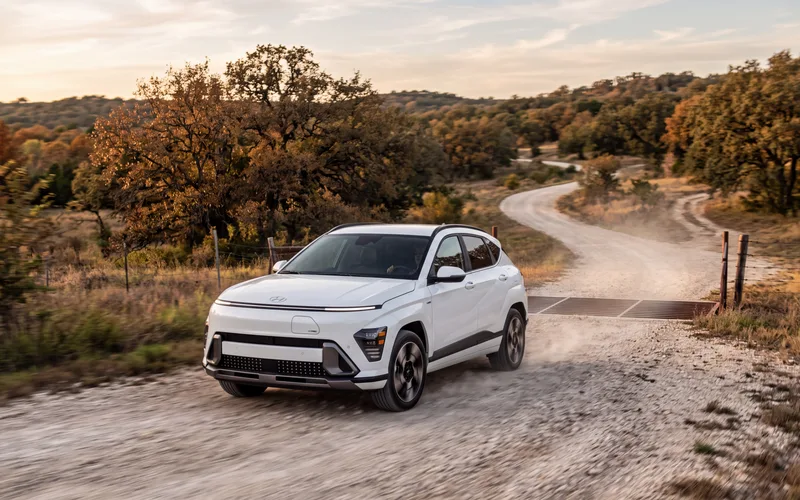 Hyundai KonaSubcompact SUVBetter at: Refinement
Same warranty and roughly the same money, but a fresher design, a better ride and a stronger available turbo engine — the obvious first stop for anyone considering a Seltos.
Compare 1.54D
1.54D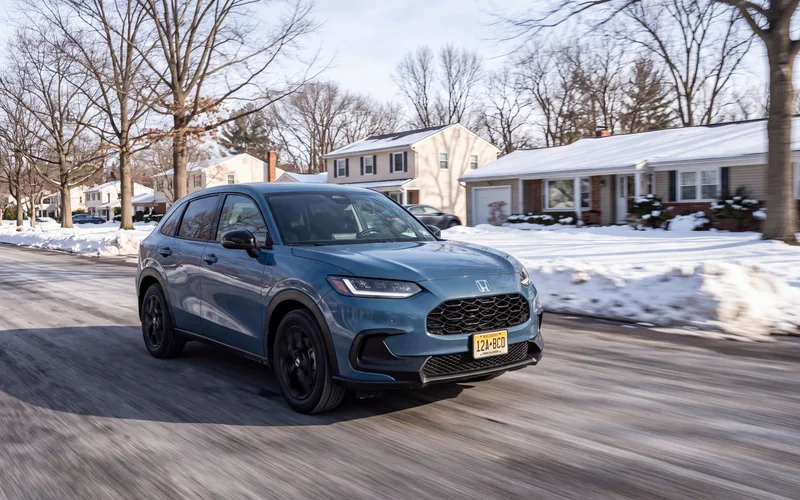 Honda HR-VSubcompact SUVBetter at: Resale value
Costs more up front but rides quieter, feels more grown-up and holds its value far better over five years than the run-out-year Seltos.
Compare 2.05C
2.05C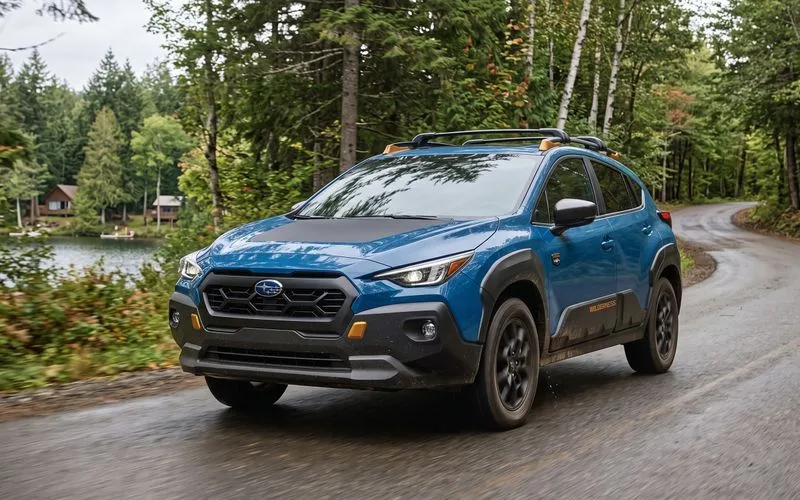 Subaru CrosstrekSubcompact SUVBetter at: All-weather capability
Standard all-wheel drive, real ground clearance and an actual tow rating make it the better pick for anyone who heads for trailheads or snow rather than parking garages.
CompareHow it's evolved
6 scored model years · 2021–2026
Subject scores by year
Hover or tap a score to see what moved it versus the year before. A corner mark flags a big swing.
| Year | Performance | Efficiency | Safety | Space | Cost | Reliability | Tech | Use-case | Driving | Value |
|---|---|---|---|---|---|---|---|---|---|---|
| 2026 | 22 | 66 | 58 | 40 | 80 | 67 | 57 | 55 | 57 | 69 |
| 2025 | 22 | 61 | 57 | 43 | 80 | 68 | 54 | 55 | 63 | 71 |
| 2024 | 23 | 71 | 49 | 40 | 80 | 69 | 56 | 54 | 58 | 72 |
| 2023 | 22 | 61 | 58 | 40 | 81 | 66 | 51 | 55 | 57 | 70 |
| 2022 | 23 | 61 | 58 | 40 | 85 | 63 | 50 | 54 | 58 | 69 |
| 2021 | 23 | 61 | 53 | 40 | 86 | 64 | 47 | 54 | 58 | 74 |
Compare two years
Best fit & conditions
Higher scores mean a better fit for that use case. Learn more about use-case fit →
Subject profile
Academic Probation · NHTSA safety recalls
No NHTSA safety recall is on record for the 2026 Kia Seltos. Other model years of the Seltos have 4 — listed below.
4 recalls on other model years of the Seltos (2021–2024)
Feb 17, 2025Engine and engine cooling: engine: hard parts internal/mechanicalThe piston oil rings may have been manufactured incorrectly, which can result in engine damage.
Defect
Kia America, Inc. (Kia) is recalling certain 2021-2023 Seltos and Soul vehicles. The piston oil rings may have been manufactured incorrectly, which can result in engine damage.
Risk
Engine damage can cause a vehicle stall or fire, increasing the risk of a crash or injury.
Remedy
Dealers will inspect and replace the engine as necessary, free of charge. Dealers will also install piston-ring noise sensing system (PNSS) software, free of charge. Owner notification letters were mailed April 4, 2025. Owners may contact Kia customer service at 800-333-4542. Kia's number for this recall is SC336.
NHTSA campaign 25V099000 ↗Manufacturer no. SC336137,256 vehicles potentially affected (all models in the campaign)Owners notified Apr 4, 2025Filed by Kia America, Inc.Filed as SELTOSDec 22, 2023Air bagsDue to a manufacturing error, the side curtain air bags may deploy unexpectedly.
Defect
Kia America, Inc. (Kia) is recalling certain 2023 Soul and 2024 Seltos vehicles. Due to a manufacturing error, the side curtain air bags may deploy unexpectedly.
Risk
An air bag that deploys unexpectedly can increase the risk of injury or crash.
Remedy
Dealers will inspect and replace both side curtain air bag modules as necessary, free of charge. Owner notification letters were mailed January 31, 2024. Owners may contact Kia customer service at 1-800-333-4542. Kia's number for this recall is SC289.
NHTSA campaign 23V830000 ↗Manufacturer no. SC2892,967 vehicles potentially affected (all models in the campaign)Owners notified Jan 31, 2024Filed by Kia America, Inc.Filed as SELTOSJul 31, 2023Power train: automatic transmission: fluid/lubricant: pumpThe electronic controller for the Idle Stop & Go oil pump assembly may contain damaged electrical components that can cause the pump to overheat.
Defect
Kia America, Inc. (Kia) is recalling certain 2023 Soul, Sportage, and 2023-2024 Seltos vehicles. The electronic controller for the Idle Stop & Go oil pump assembly may contain damaged electrical components that can cause the pump to overheat.
Risk
An electric oil pump assembly that overheats increases the risk of a vehicle fire.
Remedy
Owners are advised to park outside and away from structures until the recall repair is complete. Dealers will inspect and replace the electric oil pump controller, as necessary, free of charge. Owner notification letters are expected to be mailed September 28, 2023. Owners may contact Kia customer service at 1-800-333-4542. Kia's number for this recall is SC275.
NHTSA campaign 23V531000 ↗Manufacturer no. SC27539,765 vehicles potentially affected (all models in the campaign)Owners notified Sep 28, 2023Filed by Kia America, Inc.Filed as SELTOSApr 13, 2021EngineThe piston oil rings may not have been properly heat-treated, which may result in engine damage.
Defect
Kia Motors America (Kia) is recalling certain 2020-2021 Soul, and 2021 Seltos vehicles equipped with 2.0L Nu MPI engines. The piston oil rings may not have been properly heat-treated, which may result in engine damage.
Risk
A damaged engine may stall, increasing the risk of a crash. In addition, oil may leak onto hot exhaust components, increasing the risk of a fire.
Remedy
Kia will notify owners, and dealers will inspect and, if necessary, replace the engine, free of charge. In addition, Kia will deploy Piston Ring Noise Sensing System (PNSS) software. The recall began June 11, 2021. Owners may contact Kia customer service at 1-800-333-4542. Kia's number for this recall is SC209.
NHTSA campaign 21V259000 ↗Manufacturer no. SC209147,249 vehicles potentially affected (all models in the campaign)Owners notified Jun 11, 2021Filed by Kia Motors AmericaFiled as SELTOS
Source: NHTSA Office of Defects Investigation recall database, model years 2021–2026. Recalls are listed by model year as the manufacturer filed them; whether a specific car is affected depends on its VIN — check a VIN at nhtsa.gov ↗. NHTSA model names matched to this page: SELTOS.
Detailed scoring by subject
1Performance & PowertrainThe Seltos's lowest-graded category.0.00F
The 2026 US Seltos is a carryover final year of the first generation: the volume LX/S/EX trims use the 2.0-liter naturally aspirated four rated at 147 hp, with the 190-hp 1.6T reserved for the top SX AWD. At 147 hp the volume powertrain sits just below the floor of the SUV normalization band.
Peak torque of the volume 2.0-liter is 132 lb-ft, delivered high in the rev range — barely above the bottom of the SUV band and modest even by subcompact-crossover standards.
The unchanged 2.0L/IVT combination runs to 60 mph in roughly 9.6 seconds, which reviewers consistently describe as sluggish off the line; the turbo SX is nearly a second and a half quicker but is not the volume configuration.
The 2.0L four is smooth and quiet at cruise but needs to be revved hard to make progress, where it turns buzzy; throttle response is adequate rather than eager. The optional 1.6T is markedly more responsive but is confined to the SX.
Kia's IVT simulates eight steps, which mutes the usual CVT rubber-band effect and keeps around-town driving pleasant, but hard acceleration still brings a drone and elastic response. The SX's conventional 8-speed automatic shifts cleanly and is the better unit.
Kia does not publish a US trailer-weight rating for the Seltos and the US owner's manual advises against trailer towing; no factory tow package is offered. Aftermarket Class I hitches exist but carry no manufacturer rating, so this scores as not tow-capable.
AWD is available across the whole 2026 range — optional on LX, S and EX and standard on SX — and the system adds a driver-selectable Lock mode holding a 50/50 split plus torque vectoring, along with a multi-link rear suspension that FWD cars don't get. That is unusually broad and slightly more sophisticated than the basic on-demand systems typical of the segment.
7.3 inches of ground clearance is decent for a subcompact crossover and Lock mode helps on snow or gravel, but there is no low range, no locking differential, no underbody protection and — with X-Line gone from the 2026 lineup — no off-road-oriented trim. It is a light-duty, pavement-first crossover.
Two gas engines — the 2.0L NA with IVT and the 1.6T with an 8-speed — cover the range, but the turbo is locked to a single trim and there is no hybrid, PHEV or EV variant in the US for 2026. The hybrid arrives only with the redesigned second generation for 2027.
2Efficiency & RangeMid-pack among this car's ten categories.2.46C+
Volume S trim with the 147-hp 2.0L and AWD is EPA-rated 29 mpg combined; FWD 2.0L models reach 31 and the turbo SX drops to 25. Mid-pack for a subcompact SUV with no electrified option to lift the average.
EPA city rating for the 2.0L AWD volume configuration. The conventional Atkinson-cycle 2.0L with a CVT has no electric assist, so city economy trails hybrid-equipped rivals badly.
EPA highway rating for the 2.0L AWD volume trim; the FWD 2.0L is notably better at 34 mpg. Highway economy is the Seltos' stronger EPA figure, roughly average for the class.
Computed from the 13.2-gallon tank and the 29 mpg EPA combined rating for the 2.0L AWD volume trim. The small tank caps total range despite reasonable economy — the turbo SX falls to roughly 330 miles.
EPA publishes $1,500/yr for the most efficient 31-mpg Seltos; scaling the same 15,000 mi/yr basis to the 29-mpg AWD volume trim gives roughly $1,600. Regular-grade fuel keeps running costs well under the budget-SUV average.
Both 2026 powertrains run on 87-octane regular unleaded — Kia recommends regular even for the 1.6L turbo in the SX, so there is no premium penalty anywhere in the lineup. No diesel or E85 flexibility, and no home-charging upside, which keeps it short of the top of the band.
3SafetyMid-pack among this car's ten categories.1.87C-
The facelifted Seltos was retested by NHTSA and earns the full 5-star overall rating, with 5 stars frontal and side and 4 stars rollover (15.1% rollover probability); 2026 is an unchanged carryover of that structure.
No IIHS award: Good in small overlap front but only Acceptable in the updated moderate overlap test and Marginal in the updated side test — a weak result in one of the two key current crashworthiness evaluations.
Forward Collision-Avoidance Assist with car/pedestrian/cyclist detection, lane keeping and Lane Following Assist are standard on every trim, but blind-spot warning and rear cross-traffic avoidance start at S and adaptive cruise is locked to the top SX — so the volume trims miss two of the five core items.
IIHS rates the Seltos Poor — the lowest grade — in the updated higher-speed vehicle-to-vehicle front crash prevention test; the Acceptable pedestrian result is the only thing keeping this out of the basement.
Blind-Spot Collision Warning and Rear Cross-Traffic Collision-Avoidance Assist are standard from the S trim up (so on most of the volume mix) with active rear braking, and the SX adds the camera-based Blind-Spot View Monitor — but the base LX goes without entirely.
Lane Keeping Assist plus Lane Following Assist — true lane centering, not just a bounce off the line — is standard on every trim including the base LX, which is generous at this price; reviewers describe the centering as holding the lane well even on secondary roads, though it is tied to cruise operation.
Smart Cruise Control with Stop & Go and Highway Driving Assist are restricted to the top SX trim — buyers of the volume LX/S/EX trims get plain fixed-speed cruise control, a rare gap now that most subcompact SUVs make full-range ACC standard.
No hands-free highway system is offered on the Seltos at any trim; Kia's Highway Driving Assist is a hands-on lane-centering aid, and HDA2 is reserved for larger and more expensive models.
IIHS rates the two headlight variations offered on the current Seltos between Acceptable and Poor — no trim gets a Good-rated setup, and the cheaper units are the lowest possible grade. Standard High Beam Assist compensates for some of the low-beam shortfall.
The Seltos keeps an upright, boxy greenhouse with a tall side glass and a squared-off rear hatch, giving better natural sightlines than the fastback-roofed rivals in this class; a rear camera is standard, rear parking sensors arrive on EX and a Surround View Monitor with blind-view camera is available on SX.
IIHS rates LATCH ease of use Acceptable — two complete outboard sets plus a center top tether, with anchors that take some digging in the seat bight; the rear seat is roomy for a subcompact SUV but too narrow for three seats across.
4Space & ComfortOne of the Seltos's weakest categories.0.64F
The 2026 Seltos is a two-row subcompact SUV seating five on every trim (LX/S/EX/SX); no third row or 6/7-seat configuration is offered. Corrects a placeholder that claimed 6 seats.
Volume trims without the sunroof measure 40.0 in of front headroom, dropping to 38.5 in when the power sunroof is fitted — a strong figure for a subcompact SUV thanks to the Seltos's tall, boxy roofline.
41.4 in of front legroom is mid-pack for the subcompact SUV class and sits in the lower third of the 40–44.5 in SUV normalization band, which is anchored to much larger utilities.
Second-row headroom is 38.4 in and, unusually, is not reduced by the sunroof since the glass panel sits over the front seats only — good adult clearance for the class.
38.0 in of second-row legroom is a standout for a subcompact SUV — near compact-class territory and well ahead of rivals like the Kona and Trax — and is the single strongest passenger-space number on the car.
The Seltos is a strictly two-row, five-seat SUV — no third row is offered on any 2026 trim, so this item scores in the bottom band by definition. Corrects a placeholder that scored it as if a third row existed.
26.6 cu ft behind the second row is competitive-to-good for a subcompact SUV (the Seltos out-carries a Kona or Trax), but it sits at the very bottom of the 25–80 cu ft SUV band that spans three-row full-size utilities.
Folding the 60/40 rear bench opens 62.8 cu ft, aided by the dual-level cargo floor that yields a flat load surface in its upper position — respectable for the class but low against a band calibrated to 100 cu ft full-size SUVs.
Competitive everyday storage with one genuinely useful trick: the two-position dual-level cargo floor (flat load deck up top, deeper well below). Console, door bins and a wireless charging pad on EX/SX are class-normal — no standout innovation, but nothing sparse either.
A split verdict: testers find the front seats short on lower-back and thigh support on long drives, while the rear bench is unusually comfortable and reclines. Fine around town, tiring on a road trip — bottom of the mid band.
A consistently criticized weak point: the firm suspension passes bumps straight through and the short wheelbase makes the body jumpy on broken pavement. Below the class average set by the softer-riding Kona and Crosstrek.
Notably loud for the class — sustained road noise at highway speed plus a coarse drone from the 2.0-liter under load. Reviewers single it out alongside ride quality as the reason the Seltos is a poor long-haul companion. Corrects a placeholder that had rated it near class-leading.
Key comfort kit arrives from the S trim up rather than being standard fleet-wide: heated front seats and remote start on S and above, dual-zone automatic climate with rear vents on EX, power driver's seat and wireless charging on EX, ventilated front seats only via the SX sunroof package. Solid mid-band coverage, with the LX left plainly equipped.
5Cost of OwnershipThe Seltos's best-graded category.3.41B+
Kia America's 2026 Seltos pricing release lists the newly added LX FWD at $23,690 before destination; with the $1,395 destination charge the entry price is $25,085, among the cheapest new SUVs sold in the US. Re-scored from placeholder to the real figure.
The S with AWD is the value sweet spot and the expected volume seller: it adds blind-spot monitoring, rear cross-traffic alert and safe-exit warning over the LX for a modest step up. S FWD is $26,985 with destination and AWD adds $1,500, putting the representative configuration at $28,485. Re-scored from placeholder.
CarEdge projects $520/yr in maintenance across the first five years (~$2,600), with roughly $1,600 more in unscheduled repair and wear items typical of the class; the 5yr/60k bumper-to-bumper warranty absorbs most component failures inside the window. The naturally aspirated 2.0L in LX/S/EX is a simple, cheap-to-service unit. Re-scored from placeholder.
Residual estimates disagree: iSeeCars measures 55.6% retention while CarEdge and KBB both land near 48%, so we blend to 50% — right at or slightly below the subcompact-SUV norm. 2026 is the final year of the outgoing first generation before the substantially larger, hybrid-equipped 2027 redesign arrives, which typically pressures run-out-year residuals further. Re-scored from placeholder.
Kia's standard 5-year/60,000-mile limited basic warranty carries over unchanged for 2026 and remains best-in-class alongside Hyundai/Genesis, two years longer than the 3yr/36k industry norm. Re-scored from placeholder, which badly understated it.
The 10-year/100,000-mile limited powertrain warranty is unchanged for 2026 and tops the mainstream-SUV field; it applies to the original owner, with a shorter 5yr/60k term for subsequent owners. Re-scored from placeholder.
Kia includes no complimentary scheduled maintenance on 2026 models — a real gap against Toyota (2yr/25k ToyotaCare) and Hyundai (3yr/36k), and Kia's own earlier program was discontinued. What buyers do get is an unusually long 5-year/60,000-mile roadside assistance plan and a Kia Connect subscription trial, which lands this squarely in the 'basic roadside only' band rather than the no-coverage floor. Re-scored down from the placeholder's optimistic 63.
$28,485 volume-trim price minus its estimated resale value after 5 years (50% retained, or about $14,243) leaves about $14,243 in depreciation. Add the projected $4,200 in 5-year maintenance and repairs, and owning this vehicle for 5 years costs about $18,443 in total.
6Reliability & QualityOne of the Seltos's strongest categories.2.53C+
Two authoritative sources bracket the 2026 Seltos at average-to-slightly-above: Consumer Reports predicts about average reliability, while J.D. Power's dependability data ranks the Seltos as one of the strongest models in Kia's own lineup. Replaces a placeholder estimate that ran optimistically high.
Kia now sits in the upper-middle of the industry in both major dependability studies and has been trending upward for several years, but it is not yet a consistent top-5 brand alongside Lexus, Buick or Toyota.
The 2026 car itself carries no open recalls, but this generation's record includes a powertrain recall with fire risk whose remedy is now under federal audit, plus an unexpected-airbag-deployment recall — repeated, severity-weighted activity that the guidance places at the bottom of the average band.
Mixed picture. The volume 2.0L Nu/Smartstream MPI with IVT is the same engine family implicated in the 2021–2023 oil-ring failures, though later production was remediated; on the other side, the 1.6T's move from the overheating-prone 7-speed DCT to a conventional 8-speed torque-converter automatic in 2024 materially de-risks the turbo drivetrain.
Reviewers consistently describe an interior built to a $23,790 price: hard plastics across the dash top, door panels and lower console, with only the center dash section soft-touch. Higher trims add synthetic leather and ambient lighting, and the plastics are judged well-grained rather than scratchy, keeping it mid-pack rather than poor.
Assembly quality is a relative strength: reviewers call out minimal panel gaps and a solid feel even on cloth-trimmed lower grades, and the Seltos is Kia's best-scoring model in J.D. Power dependability, which is heavily weighted toward squeaks, rattles and build defects. Prior placeholder score understated this.
Roughly 800–1,050 US Kia stores give genuinely nationwide coverage for a subcompact SUV buyer, and service satisfaction sits near the mass-market average rather than at the top — Subaru leads the segment in J.D. Power's CSI study, and Kia has drifted slightly in recent years.
Routine upkeep is cheap and parts are commodity-grade, sharing a bin with Hyundai's high-volume small crossovers, and the 10-year/100,000-mile powertrain warranty absorbs the expensive failures for most first owners. Aftermarket depth still trails Toyota and Honda, which keeps it short of the top band.
7Technology & InfotainmentMid-pack among this car's ten categories.1.84C-
The 2026 US Seltos carries over the facelifted first-generation dash (the all-new second-gen car arrives as a 2027); the volume S/EX trims run a 10.25-inch center touchscreen while only the base LX uses an 8-inch unit.
Kia's pre-ccNC system is fast, logically laid out and keeps real climate/volume/tune knobs alongside the screen, which reviewers consistently praise; the knock is that the graphics now look dated against newer subcompact rivals.
Backwards availability: wireless CarPlay/Android Auto is standard only on the 8-inch base LX, while the 10.25-inch navigation head unit fitted to the volume S, EX and SX trims is wired-only — so most buyers plug in.
Built-in navigation is standard on the 10.25-inch trims — better than rivals that offer none — but the voice assistant is command-list based rather than natural-language, and testers routed via phone projection instead.
A six-speaker system is standard and adequate; the eight-speaker Bose upgrade is locked to the top SX AWD trim and reviewers split on it, calling it clear and punchy in one test and short on definition in another.
LX and S use analog dials with a small color LCD; the full 10.25-inch configurable digital cluster that forms the dual panoramic display arrives on EX and SX, so it is an upper-trim item rather than near-standard.
The Seltos is not on Kia's ccNC platform, so it gets over-the-air map and infotainment/system stability updates through Kia Connect on nav-equipped trims rather than feature-adding whole-vehicle OTA.
The Kia Access / Kia Connect app is a polished, well-rated package covering remote start with climate preconditioning, lock/unlock, vehicle locate and status, with Digital Key 2 Touch offered on the SX; core features move to a paid subscription after the complimentary trial.
Modern port set for the class — USB-C outlets for both front and rear passengers — with a wireless charging pad available from EX up; there is no household AC outlet.
Smart key with proximity entry and push-button start is standard from S upward (the LX still uses a conventional key), remote start comes via fob or app, and EX/SX add the hands-free Smart Power Liftgate; phone-as-key is limited to the SX.
Rear camera is standard but rear parking sensors only begin on EX, and the 360-degree Surround View Monitor plus Blind-Spot View Monitor are confined to the top SX; no automated parking is offered.
No head-up display is offered on any 2026 US Seltos trim — the windshield HUD exists on the Canadian SX and Australian GT-Line but is not a US option, and the redesign that brings one arrives for 2027.
8Use-Case FitOne of the Seltos's weakest categories.1.70C-
Family practicality is the Seltos's strongest suit: class-leading 26.6 cu ft behind the rear seat swallows strollers, and 38.0 in of rear legroom is among the roomiest in the subcompact class, with tall, square door openings that ease car-seat loading. Held back from the top band by LATCH anchors buried deep in the seat bight (IIHS 'Acceptable') and a rear bench too narrow for three car seats across.
Kia gives every trim, including the $25k LX, forward collision avoidance with pedestrian and cyclist detection plus lane keeping and lane following — genuinely strong standard content at family price points, and NHTSA awards 5 stars overall. But the IIHS record undercuts it: a Poor result on the updated vehicle-to-vehicle front crash prevention test, only Acceptable on the updated moderate overlap front, headlights ranging to Poor, and no Top Safety Pick; adaptive cruise with stop-and-go is reserved for the $31k SX.
The back seat is properly habitable for adults and kids alike — reclining seatbacks, dedicated rear A/C vents and rear USB-C charging — and cargo stays usable with all five seats occupied. What limits it to medium-haul duty is the cabin environment: Consumer Reports faults a loud cabin, a stiff suspension that passes bumps straight through, and front seats short on lower-back support.
Small dimensions, light controls, a commanding seating position and standard Lane Following Assist make the Seltos easy to place in traffic, and the SX's stop-and-go adaptive cruise works well in the crawl. Everyday polish is what's missing — the 147-hp 2.0L is sluggish away from a stop with IVT drone under load, and the firm ride plus road noise add fatigue on a long commute.
Running costs are ordinary-to-good rather than exceptional: 31 mpg combined in FWD form on regular 87 octane, roughly $1,500–1,600 a year in fuel, and cheap scheduled maintenance. The reason it can't reach the top band is that no hybrid is offered for 2026 — the electrified Seltos arrives with the second-generation 2027 car — so hybridized rivals in the class beat it outright on cost per commuting mile.
At 172.6 in long and 70.9 in wide with a tight ~34.8 ft turning circle, the Seltos threads city streets and slots into compact spaces easily, and the upright greenhouse with thin pillars gives genuinely good sightlines backed by a standard rear camera with dynamic guidelines. Just short of the top band because a surround-view monitor and front parking sensors are SX-only.
Kia publishes no trailer weight rating for the Seltos in North America and sells no factory tow package, so there is no sanctioned towing headroom at all, and a 147-hp unibody subcompact has nothing in reserve under load. The generous cargo hold is the only work-relevant asset here; anything requiring a trailer or a payload rating rules the Seltos out.
The Smartstream 2.0L and the Seltos platform are proven in ordinary consumer service and Kia's 10-year/100,000-mile powertrain warranty backs them, but nothing about this car is built for abuse: no fleet or commercial track record, cloth and synthetic-leather trim rather than wipe-clean work surfaces, and no heavy-duty suspension or skid protection.
Provisions amount to roof rails from the S trim up, cargo tie-down hooks, a dual-level cargo floor and a 60/40 folding rear seat — enough to strap down tools, not enough to call it a work vehicle. There is no onboard AC inverter or V2L (that capability arrives with the 2027 hybrid), no factory hitch or receiver, and no upfit ecosystem beyond consumer roof-rack accessories.
Range is adequate rather than notable — roughly 383 miles from the 13.2-gallon tank in 2.0L AWD form, about 409 in FWD — and Highway Driving Assist meaningfully cuts fatigue, but only on the top SX. Against that, the endurance limits are real and well documented: a loud cabin at speed, a stiff ride over expansion joints, and front seats that reviewers say run out of lower-back support before the miles do.
Torque-vectoring AWD with a center Lock Mode that splits torque 50/50, 7.3 inches of ground clearance, Snow drive mode and standard roof rails make the Seltos a competent trailhead and gravel-road companion — better equipped than the FWD-only end of the class. It stops well short of a genuine adventure enabler though: no tow rating for a boat or camper, no skid plates or off-road tires, and no cabin power for camping.
Cargo capacity is the Seltos's headline advantage — 26.6 cu ft behind the second row and 62.8 cu ft folded lead the subcompact SUV class outright — and the dual-level cargo floor, 60/40 split fold and roof rails cover awkward loads well. The absence of any factory hitch, and therefore of a bike or cargo tray option, is what keeps it out of the top band.
9Driving ExperienceMid-pack among this car's ten categories.1.87C-
The 2026 Seltos is the carryover final year of the first generation, and its dynamics are a split verdict: Consumer Reports praises responsive, secure handling and an admirably high avoidance-maneuver speed with well-tuned stability control, while instrumented testing puts grip at the bottom of the subcompact class with noticeable body lean and front-end push at the limit. AWD trims add an independent multi-link rear axle that firms up cornering stability versus the FWD torsion beam.
Weighting is consistent and the rack is accurate enough to place the car precisely, but reviewers consistently describe it as devoid of genuine feedback — competent, not communicative. It is typical electric-assist subcompact-crossover steering rather than a differentiator.
Panic stops from 60 mph land around 135 feet — middling for the class, with several rivals stopping meaningfully shorter. Pedal feel and modulation are unobjectionable and testers reported no fade or nervousness; the car simply takes longer to shed speed.
The volume 147-hp 2.0-liter paired with Kia's IVT is the weak point of the driving experience: roughly 9.6 seconds to 60 mph, sluggish off the line, and testers report jerky throttle tip-in and a hesitant transmission. The stepped IVT programming keeps the rubber-band effect in check around town, and the SX's 1.6T/8-speed combination is far better calibrated — but that is a single trim, not the volume configuration.
This is the Seltos' most criticized refinement trait. Because the 2.0-liter has to be worked hard to make progress, it spends a lot of time in the coarse, droning part of its rev range, and the cabin does little to suppress it — reviewers single out engine drone plus loud road noise as what makes the car tiring on the highway.
At 34.8 feet curb-to-curb (10.6 m) the Seltos sits at the tight end of the SUV normalization band, a genuine strength for urban parking and U-turns and consistent with its short 103.5-inch wheelbase. Kia's US specifications carry this figure unchanged across the 2026 trim range.
Packaging is the Seltos' strong suit: a fairly high hip point, a boxy greenhouse with thin A-pillars and good sightlines in every direction, a wide-angle backup camera, and retained physical climate and audio controls. Power seat adjustment with lumbar arrives on higher trims while base trims are manual but still easy to set up; the main demerit is front seats short on thigh support that testers found uncomfortable on long drives.
In its volume 2.0L/IVT form the Seltos is transportation rather than entertainment — slow, vocal in the wrong way, low on grip, and stiff-riding without the payoff of sharp responses. It is easy to drive in traffic and the SX turbo is appreciably livelier, but no reviewer recommends the Seltos on driving enjoyment, and Edmunds' overall 6.4/10 for the outgoing generation reflects that.
10Value & Market PositionOne of the Seltos's strongest categories.2.64C+
The 2026 LX opens at $25,285 with destination and includes an 8-inch touchscreen with wireless Apple CarPlay/Android Auto, keyless entry and a nine-item standard driver-assist pack (AEB with pedestrian and cyclist detection, lane-keeping and lane-following assist, driver attention warning) plus six airbags — competitive rather than class-leading content, since heated seats, wireless charging, the 10.25-inch touchscreen with navigation and the digital cluster all wait for EX and above. Kia's 5-yr/60k basic and 10-yr/100k powertrain warranty is real added value at the base price.
One of the strongest content-per-dollar propositions in the subcompact class: $25,285 to start (vs. $27,595 for a Honda HR-V LX and roughly $2,000 under a Crosstrek), 28/34 mpg, an available 190-hp turbo four that out-muscles most rivals' single engine, and the longest powertrain warranty in the segment. Outgoing-model-year pricing on a 2026 sitting alongside the redesigned 2027 sharpens the deal further.
Four well-spaced trims (LX, S, EX, SX) spanning roughly $7,700 from base to loaded, with 2026 newly adding a front-drive LX to lower the entry point while AWD stays available across most of the range. The main gap is that the 190-hp turbo is locked to SX AWD, so there is no way to buy power without buying the top trim.
A steady mid-pack seller rather than a segment leader — 56,798 US units in 2025, down 5.3% from 59,958 in 2024, well behind volume subcompacts like the Trax and Crosstrek. Global demand is far stronger (Kia's second-best-selling model worldwide), but US trajectory is flat-to-declining heading into the changeover.
Kia's image has climbed steadily — record US sales in 2025 and a design halo from the Telluride, EV9 and current Sportage — putting it comfortably above the segment's weakest badges. It still trails Toyota, Honda and Subaru on resale and long-term reputation, which caps the halo effect on a value-focused subcompact.
Meaningful buyer-side support without desperation pricing: up to $750 cash back, subsidized APR as low as 1.9% for 48 months, and advertised leases from around $239/month, with extra room to negotiate because the redesigned 2027 is already on sale and dealers are clearing 2026 stock. Lease residuals are the weak spot — the Seltos is called out as one of the poorer lease values.
The weakest part of the case: 2026 is the last year of the first-generation Seltos (US launch 2021, facelifted for 2024) and it carries over unchanged apart from the new FWD LX. The all-new, larger second-generation 2027 — Kia's current SUV design language, more rear legroom and cargo space, with a hybrid arriving by the end of 2026 — is already configurable on kia.com, so a 2026 buyer is knowingly taking the superseded car.
Consistently well-regarded without being the class benchmark — KBB rates it #2 among subcompact SUVs (4.7 expert score) and US News scores it 8.8, praising styling, roominess and tech value, while Edmunds is much cooler at 6.4/10 over a stiff ride, loud cabin and weak base-engine performance. No NACTOY, 10Best or comparable major award, and it rarely wins outright comparison tests.