
The verdict
A mixed-report subcompact suv, strong on safety and held back by performance.
The 2026 Subaru Crosstrek is the cheapest honest way to get all-wheel drive, 8.7 inches of ground clearance and a full driver-assist suite — the volume Premium trim lands around $28,265 with all of it standard, and it returns 30 MPG combined on regular gas. What you give up is pace and space: the 152-hp 2.0L takes about 9.2 seconds to reach 60 mph, cargo behind the back seat is just 20.0 cu ft (one of the smallest in the class), and the cabin is noisy enough that reviewers keep mentioning it. Buy it if trailheads, snow and a sub-$30k price matter more than merging speed and a big trunk; the new-for-2026 Toyota-derived Hybrid fixes some of the pace and economy complaints for roughly $36k.
Jump to scoresStrengths
- All-wheel drive and real ground clearance on every single trim
- Safety equipment that doesn't depend on which trim you buy
- Priced low and cheap to own over five years
What holds it back
- The volume engine is one of the slowest powertrains on sale
- Basic warranty coverage and nothing included for maintenance
- Cargo room is the smallest part of the package
Top alternatives
Cars shoppers cross-shop with the Subaru Crosstrek 2.26C
2.26C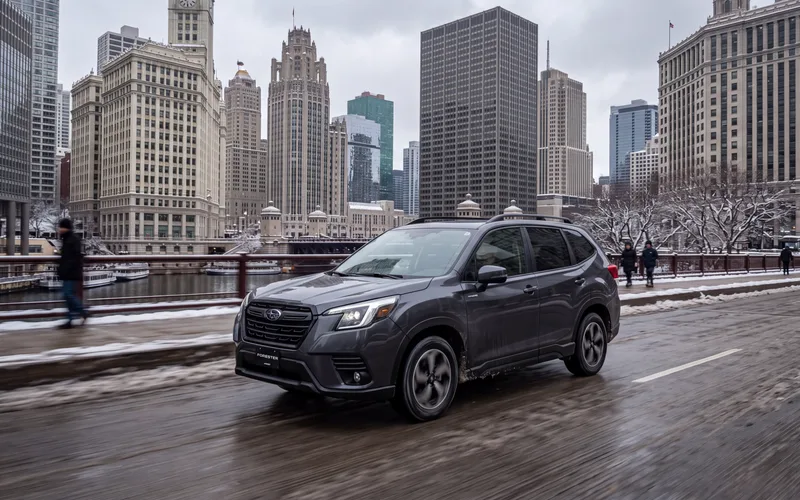 Subaru ForesterCompact SUVBetter at: Cargo space
Same standard AWD, X-MODE and Subaru dealer, but with 74.4 cu ft of cargo instead of 54.7 and a back seat adults can live in.
Compare 1.93C-
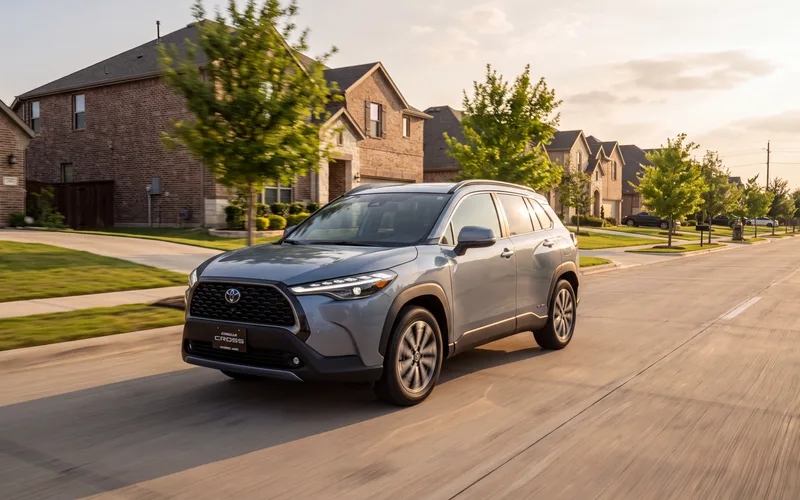 Toyota Corolla CrossSubcompact SUVBetter at: Efficiency
The hybrid version is quicker and thriftier than any gas Crosstrek, with a quieter cabin and two years of included maintenance.
Compare 1.71C-
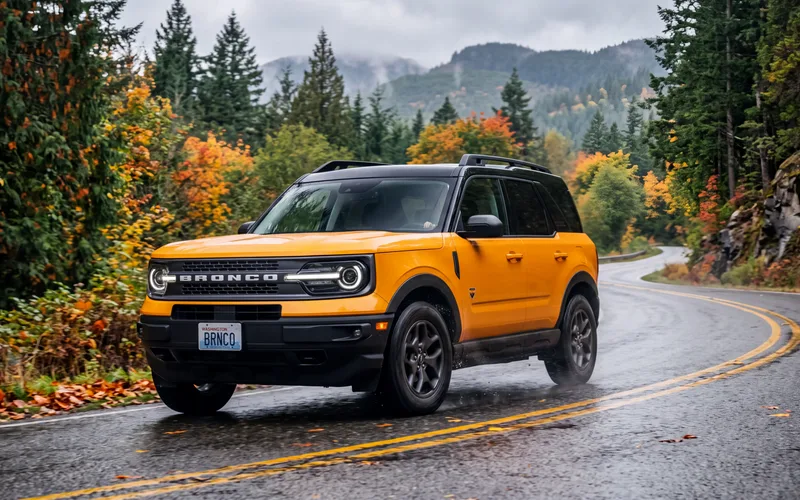 Ford Bronco SportSubcompact SUVBetter at: Off-road
For buyers who actually use the trail, the Badlands trim brings a turbo engine and real off-road hardware the Wilderness can't match.
CompareHow it's evolved
10 scored model years · 2017–2026
Subject scores by year
Hover or tap a score to see what moved it versus the year before. A corner mark flags a big swing.
| Year | Performance | Efficiency | Safety | Space | Cost | Reliability | Tech | Use-case | Driving | Value |
|---|---|---|---|---|---|---|---|---|---|---|
| 2026 | 36 | 76 | 77 | 43 | 63 | 70 | 53 | 67 | 64 | 73 |
| 2025 | 38 | 72 | 74 | 43 | 68 | 80 | 54 | 61 | 66 | 75 |
| 2024 | 31 | 73 | 74 | 42 | 68 | 74 | 52 | 63 | 64 | 75 |
| 2023 | 28 | 76 | 66 | 42 | 69 | 79 | 34 | 61 | 63 | 66 |
| 2022 | 28 | 76 | 68 | 42 | 70 | 75 | 34 | 60 | 63 | 66 |
| 2021 | 28 | 76 | 69 | 41 | 69 | 68 | 30 | 52 | 53 | 63 |
| 2020 | 26 | 76 | 67 | 40 | 70 | 74 | 35 | 51 | 55 | 70 |
| 2019 | 26 | 72 | 66 | 40 | 71 | 74 | 35 | 54 | 54 | 66 |
| 2018 | 26 | 73 | 62 | 41 | 72 | 61 | 34 | 53 | 56 | 67 |
| 2017 | 26 | 70 | 59 | 37 | 79 | 62 | 20 | 47 | 54 | 57 |
Compare two years
Best fit & conditions
Higher scores mean a better fit for that use case. Learn more about use-case fit →
Subject profile
Trims & configurations
5 trimsScores above reflect the volume trim. Per-trim specs and scores are rolling out — the full lineup:
Academic Probation · NHTSA safety recalls
Jul 7, 2026Equipment: other: labelsThese vehicles were manufactured with an incorrect Gross Axle Weight Rating (GAWR) on the certification label. As such, these vehicles fail to comply with the requirements of Federal Motor Vehicle Safety Standard (FMVSS) 110, "Tire selection and rims."
Defect
Subaru of America, Inc. (Subaru) is recalling certain 2026 Crosstrek Hybrid, 2025-2026 Forester Hybrid, Forester, and 2019-2026 Ascent vehicles. These vehicles were manufactured with an incorrect Gross Axle Weight Rating (GAWR) on the certification label. As such, these vehicles fail to comply with the requirements of Federal Motor Vehicle Safety Standard (FMVSS) 110, "Tire selection and rims."
Risk
An incorrect GAWR label may lead to an overloaded vehicle, increasing the risk of a crash.
Remedy
Subaru will mail a new certification label to owners, free of charge. Owners may also choose to have a dealer install the new label, free of charge. Letters informing owners of the safety risk were mailed August 27, 2026. Additional letters will be mailed once the remedy is available. Owners may contact Subaru customer service at 1-844-373-6614. Subaru's number for this recall is WRH-26.
NHTSA campaign 26V436000 ↗Manufacturer no. WRH-26541,237 vehicles potentially affected (all models in the campaign)Filed by Subaru of America, Inc.Filed as CROSSTREK HYBRIDFeb 23, 2026Fuel system, gasoline: storage: tank assembly: filler pipe and capWhen the fuel tank is near full capacity, an increase in ambient temperature may cause the fuel to expand and spill out of the filler neck due to an insufficient seal on the fuel cap.
Defect
Subaru of America, Inc. is recalling certain 2026 Crosstrek hybrid, and 2025 Forester hybrid vehicles. When the fuel tank is near full capacity, an increase in ambient temperature may cause the fuel to expand and spill out of the filler neck due to an insufficient seal on the fuel cap.
Risk
A fuel leak in the presence of an ignition source increases the risk of a fire.
Remedy
Owners are advised to park outside and away from structures, and to limit the fuel level to 50% until the remedy is completed. Dealers will replace the fuel filler cap gasket, free of charge. Owner notification letters were mailed March 25, 2026. Owners may contact Subaru customer service at 1-844-373-6614. Subaru's number for this recall is WRD-26. Vehicle Identification Numbers (VINs) involved in this recall became searchable on NHTSA.gov on February 16, 2026.
NHTSA campaign 26V106000 ↗Manufacturer no. WRD-2669,870 vehicles potentially affected (all models in the campaign)Owners notified Mar 25, 2026Filed by Subaru of America, Inc.Filed as CROSSTREK HYBRID
14 recalls on other model years of the Crosstrek (2017–2022, 2024)
Nov 9, 2023Power train: automatic transmission: park/neutral start interlock switchAn insufficient weld may allow water to enter the inhibitor switch, causing it to fail.
Defect
Subaru of America, Inc. is recalling certain model year 2021 Crosstrek, 2022 Forester, 2021-2023 Legacy, and Outback vehicles. An insufficient weld may allow water to enter the inhibitor switch, causing it to fail.
Risk
An inoperative inhibitor switch may prevent the reverse lights from illuminating and the rearview camera image from displaying, increasing the risk of a crash.
Remedy
Dealers will replace the inhibitor switch, free of charge. Owner notification letters were mailed January 8, 2024. Owners may contact Subaru customer service at 1-800-782-2783. Subaru's number for this recall is WRQ-23.
NHTSA campaign 23V755000 ↗Manufacturer no. WRQ-2395,830 vehicles potentially affected (all models in the campaign)Owners notified Jan 8, 2024Filed by Subaru of America, Inc.Filed as CROSSTREKNov 9, 2023Power train: driveline: driveshaftThe front driveshaft assemblies' outer race may develop cracks and break.
Defect
Subaru of America, Inc. (Subaru) is recalling certain 2024 Crosstrek, Impreza, 2023-2024 Forester, and 2023 WRX vehicles. The front driveshaft assemblies' outer race may develop cracks and break.
Risk
A broken driveshaft can cause a loss of drive power while driving or vehicle rollaway when the vehicle is in park without the parking brake engaged. Either of these scenarios can increase the risk of a crash.
Remedy
Dealers will inspect and replace the left and right front driveshafts as necessary, free of charge. Owner notification letters were mailed January 8, 2024. Owners may contact Subaru's customer service at 1-844-373-6614. Subaru's number for this recall is WRP-23.
NHTSA campaign 23V754000 ↗Manufacturer no. WRP-234,701 vehicles potentially affected (all models in the campaign)Owners notified Jan 8, 2024Filed by Subaru of America, Inc.Filed as CROSSTREKAug 4, 2023Electrical system: instrument cluster/panelDue to insufficient clearance, the instrument panel harness may contact the steering beam bracket, damaging the wire insulation and causing a short circuit.
Defect
Subaru of America, Inc. (Subaru) is recalling certain 2024 Crosstrek and Impreza vehicles. Due to insufficient clearance, the instrument panel harness may contact the steering beam bracket, damaging the wire insulation and causing a short circuit.
Risk
A short circuit may cause a loss of drive power, increasing the risk of a crash.
Remedy
Dealers will inspect the harness and install an additional clamp on the steering beam bracket. If damage is found, dealers will add protective tape or replace the instrument panel harness, as necessary. Repairs will be performed free of charge. Owner notification letters are expected to be mailed October 3, 2023. Owners may contact Subaru customer service at 1-844-373-6614. Subaru's number for this recall is WRL-23.
NHTSA campaign 23V551000 ↗Manufacturer no. WRL-2335,357 vehicles potentially affected (all models in the campaign)Owners notified Oct 3, 2023Filed by Subaru of America, Inc.Filed as CROSSTREKFeb 14, 2023Electrical system: 12v/24v/48v batteryThe harness terminal that supplies low-voltage power from the converter to the 12-Volt battery may corrode and break, preventing the 12-Volt battery from charging.
Defect
Subaru of America, Inc. (Subaru) is recalling certain 2019-2022 Crosstrek Hybrid vehicles. The harness terminal that supplies low-voltage power from the converter to the 12-Volt battery may corrode and break, preventing the 12-Volt battery from charging.
Risk
A 12-Volt battery that is unable to recharge can cause a loss of drive power, increasing the risk of a crash.
Remedy
Dealers will replace the converter terminal mounting bracket. If corrosion is found on the terminals, the 12-Volt output harness and terminals will also be replaced. Repairs will be performed free of charge. Owner notification letters were mailed May 12, 2023. Owners may contact Subaru's customer service at 1-844-373-6614. Subaru's number for this recall is WRD-23.
NHTSA campaign 23V080000 ↗Manufacturer no. WRD-238,413 vehicles potentially affected (all models in the campaign)Owners notified May 12, 2023Filed by Subaru of America, Inc.Filed as CROSSTREK HYBRIDApr 15, 2021Electrical system: ignition · Electrical system: software · Engine and engine cooling: engine: engine control module (ecu/ecm): software · Engine and engine cooling: exhaust system: manifold/header/muffler/tail pipeThe Engine Control Module (ECM) may continue to power the ignition coil after the engine is shut off, causing a short circuit.
Defect
Subaru of America, Inc. (Subaru) is recalling certain 2017-2019 Subaru Impreza and 2018-2019 Crosstrek vehicles. The Engine Control Module (ECM) may continue to power the ignition coil after the engine is shut off, causing a short circuit.
Risk
A short circuit in the ignition coils may cause a stall, increasing the risk of a crash.
Remedy
Subaru will notify owners, and dealers will update the ECM software, replace the ignition coils and, if necessary, the front exhaust pipe, free of charge. Owner notification letters were mailed beginning June 1, 2021. Owners can contact Subaru customer service at 1-844-373-6614. Subaru's number for this recall is WRE-21. Note: This recall includes all vehicles previously repaired under Recall 19V743.
NHTSA campaign 21V264000 ↗Manufacturer no. WRE-21466,205 vehicles potentially affected (all models in the campaign)Owners notified Jun 1, 2021Filed by Subaru of America, Inc.Filed as CROSSTREKApr 15, 2021Suspension: rearThe rear stabilizer bracket bolts may loosen and detach.
Defect
Subaru of America, Inc. (Subaru) is recalling certain 2018-2019 Subaru Crosstrek, 2019 Crosstrek Hybrid, and 2019 Forester vehicles. The rear stabilizer bracket bolts may loosen and detach.
Risk
Missing bolts may allow the rear stabilizer bracket to shift, increasing the risk of a crash.
Remedy
Subaru will notify owners, and dealers will retorque and replace any missing bolts, free of charge. Owner notification letters were mailed May 17, 2021. Owners may contact Subaru customer service at 1-844-373-6614. Subaru's number for this recall is WRD-21.
NHTSA campaign 21V263000 ↗Manufacturer no. WRD-21408,271 vehicles potentially affected (all models in the campaign)Owners notified May 17, 2021Filed by Subaru of America, Inc.Filed as CROSSTREKMar 31, 2020Seat belts: rear/otherThe seat belt webbing sensor locking mechanism may not lock as intended.
Defect
Subaru of America, Inc. (Subaru) is recalling certain 2019 Crosstrek vehicles with rear seat belt assemblies with a dual-mode locking mechanism. The seat belt webbing sensor locking mechanism may not lock as intended.
Risk
In the event of a crash involving multiple impacts, the seat belt may not properly restrain the occupant, increasing the risk of injury.
Remedy
Subaru will notify owners, and dealers will replace rear seat belt assemblies, free of charge. The began April 15, 2020. Owners may contact Subaru customer service at 1-844-373-6614. Subaru's number for this recall is WRC-20.
NHTSA campaign 20V189000 ↗Manufacturer no. WRC-204,862 vehicles potentially affected (all models in the campaign)Owners notified Apr 15, 2020Filed by Subaru of America, Inc.Filed as CROSSTREKDec 2, 2019Engine and engine cooling: exhaust system: emission control: crankcase (pcv)The aluminum Positive Crankcase Ventilation (PCV) valve can separate, allowing the separated components to enter the engine, resulting in a loss of power while driving.
Defect
Subaru of America, Inc. (Subaru) is recalling certain 2019 Crosstrek, Forester, and Ascent vehicles. The aluminum Positive Crankcase Ventilation (PCV) valve can separate, allowing the separated components to enter the engine, resulting in a loss of power while driving.
Risk
An unexpected loss of power while driving can increase the risk of a crash.
Remedy
Subaru will notify owners, and dealers will inspect and replace the PCV valve, free of charge. If the PCV valve has separated and the components cannot be found, the short block engine will be replaced, free of charge. The recall began January 31, 2020. Owners may contact Subaru customer service at 1-844-373-6614. Subaru's number for this recall is WUW-08.
NHTSA campaign 19V856000 ↗Manufacturer no. WUW-0851,613 vehicles potentially affected (all models in the campaign)Owners notified Jan 31, 2020Filed by Subaru of America, Inc.Filed as CROSSTREKOct 18, 2019Electrical system: ignition · Electrical system: softwareThe Engine Control Module (ECM) may continue to power the ignition coil after the engine is shut off, which could result in a short circuit and blown fuse.
Defect
Subaru of America, Inc. (Subaru) is recalling certain 2017-2019 Impreza and 2018-2019 Crosstrek vehicles. The Engine Control Module (ECM) may continue to power the ignition coil after the engine is shut off, which could result in a short circuit and blown fuse.
Risk
If a short circuit occurs while driving, the vehicle may stall, increasing the risk of a crash.
Remedy
Subaru will notify owners, and dealers will update the ECM software and inspect and replace the ignition coil, as necessary, free of charge. In addition, on vehicles with confirmed ignition coil damage and a certain stored diagnostic trouble code (DTC), Subaru will replace the front exhaust pipe, free of charge. The recall began December 4, 2019. Owners may contact Subaru customer service at 1-844-373-6614. Subaru's number for this recall is WUQ-02.
NHTSA campaign 19V743000 ↗Manufacturer no. WUQ-02466,205 vehicles potentially affected (all models in the campaign)Owners notified Dec 4, 2019Filed by Subaru of America, Inc.Filed as CROSSTREKOct 17, 2019Engine and engine cooling: exhaust system: emission control: crankcase (pcv)The PCV valve may come apart, allowing the separated components to enter the engine, possibly resulting in a loss of power while driving.
Defect
Subaru of America, Inc. (Subaru) is recalling certain 2017-2018 Impreza and 2018 Crosstrek vehicles equipped with an aluminum Positive Crankcase Ventilation (PCV) valve. The PCV valve may come apart, allowing the separated components to enter the engine, possibly resulting in a loss of power while driving.
Risk
An unexpected loss of power while driving can increase the risk of a crash.
Remedy
Subaru will notify owners, and dealers will inspect and, if necessary, replace the PCV valve, free of charge. If the PCV valve has separated and the components cannot be found, the engine will be replaced, free of charge. The recall began December 2, 2019. Owners may contact Subaru customer service at 1-844-373-6614. Subaru's number for this recall is WUP-01.
NHTSA campaign 19V744000 ↗Manufacturer no. WUP-01205,000 vehicles potentially affected (all models in the campaign)Owners notified Dec 2, 2019Filed by Subaru of America, Inc.Filed as CROSSTREKMay 30, 2019Visibility · Visibility: glass, side/rearThe driver's side rear-door window glass may be improperly tempered. As such, these vehicles fail to comply with the requirements of Federal Motor Vehicle Safety Standard (FMVSS) number 205, "Glazing Materials."
Defect
Subaru of America, Inc. (Subaru) is recalling certain 2019 Crosstrek vehicles. The driver's side rear-door window glass may be improperly tempered. As such, these vehicles fail to comply with the requirements of Federal Motor Vehicle Safety Standard (FMVSS) number 205, "Glazing Materials."
Risk
Improperly tempered glass can shatter into large pieces, increasing the risk of injury.
Remedy
Subaru will notify owners, and dealers will replace the driver's side rear-door window glass, free of charge. The recall began June 11, 2019. Owners may contact Subaru customer service at 1-844-373-6614. Subaru's number for this recall is WUG-92.
NHTSA campaign 19V404000 ↗Manufacturer no. WUG-92256 vehicles potentially affected (all models in the campaign)Owners notified Jun 11, 2019Filed by Subaru of America, Inc.Filed as CROSSTREKFeb 28, 2019Exterior lighting: brake lights: switchExposure to certain contaminants may cause the brake light switch to malfunction, preventing the brake lights from illuminating and also preventing keyless ignition vehicles from starting and CVT/automatic transmissions from being able to be shifted out of Park.
Defect
Subaru of America, Inc. (Subaru) is recalling certain 2014-2016 Forester, 2008-2016 Impreza sedans, 2012-2016 Impreza station wagons, 2008-2014 WRX sedans (including STI), and 2013-2017 Crosstrek vehicles. Exposure to certain contaminants may cause the brake light switch to malfunction, preventing the brake lights from illuminating and also preventing keyless ignition vehicles from starting and CVT/automatic transmissions from being able to be shifted out of Park.
Risk
Brake lights that do not illuminate properly will not alert other drivers that the vehicle is slowing or stopping, increasing the risk of crash.
Remedy
Subaru will notify owners, and dealers will replace the brake light switch, free of charge. The recall began April 15, 2019. Owners may contact Subaru customer service at 1-844-373-6614. Subaru's number for this recall is WUE-90.
NHTSA campaign 19V149000 ↗Manufacturer no. WUE-901,303,530 vehicles potentially affected (all models in the campaign)Owners notified Apr 15, 2019Filed by Subaru of America, Inc.Filed as CROSSTREKFeb 6, 2019Steering: electric power assist systemA connector inside the Electronic Power Steering (EPS) unit may short circuit resulting in a loss of electric power steering assistance.
Defect
Subaru of America, Inc. (Subaru) is recalling certain 2019 Forester and Crosstrek vehicles. A connector inside the Electronic Power Steering (EPS) unit may short circuit resulting in a loss of electric power steering assistance.
Risk
Loss of power steering assist would require higher steering effort, increasing the risk of a crash.
Remedy
None of the affected vehicles have been sold yet. Subaru has notified dealers and they will inspect the steering gearbox, replacing it as necessary, free of charge. The recall began February 7, 2019. Owners may contact Subaru customer service at 1-844-373-6614. Subaru's number for this recall is WUC-88.
NHTSA campaign 19V065000 ↗Manufacturer no. WUC-8810,417 vehicles potentially affected (all models in the campaign)Owners notified Feb 7, 2019Filed by Subaru of America, Inc.Filed as CROSSTREKNov 7, 2017Service brakes · Vehicle speed control: accelerator pedalThese vehicles may be equipped with an incorrect floor mat retention bracket, allowing the floor mat to move out of position and interfere with the accelerator or brake pedal operation.
Defect
Subaru of America, Inc. (Subaru) is recalling certain 2018 Crosstrek vehicles. These vehicles may be equipped with an incorrect floor mat retention bracket, allowing the floor mat to move out of position and interfere with the accelerator or brake pedal operation.
Risk
If the floor mat moves out of position and interferes with the accelerator or brake pedal operation, it can increase the risk of a crash.
Remedy
Subaru has notified owners, and dealers will inspect the floor mat retention bracket and replace it if necessary, free of charge. The recall began November 14, 2017. Owners may contact Subaru customer service at 1-800-782-2783. Subaru's number for this recall is WTR-77.
NHTSA campaign 17V701000 ↗Manufacturer no. WTR-772,367 vehicles potentially affected (all models in the campaign)Owners notified Nov 14, 2017Filed by Subaru of America, Inc.Filed as CROSSTREK
Source: NHTSA Office of Defects Investigation recall database, model years 2017–2026. Recalls are listed by model year as the manufacturer filed them; whether a specific car is affected depends on its VIN — check a VIN at nhtsa.gov ↗. NHTSA model names matched to this page: CROSSTREK, CROSSTREK HYBRID.
Detailed scoring by subject
1Performance & PowertrainThe Crosstrek's lowest-graded category.0.34F
Volume Premium trim uses the 2.0L FB20 flat-four rated at 152 hp; upper trims step to the FA25 2.5L at 182 hp, and the new-for-2026 hybrid pairs the 2.5L with a Toyota-derived hybrid system for ~194 combined hp. All well below the SUV band midpoint.
Volume Premium 2.0L makes 145 lb-ft at 4,000 rpm; the 2.5L bumps that to 178 lb-ft. Both figures sit near the bottom of the SUV torque band, though hybrid instant torque helps low-speed drivability.
Instrumented tests peg the 2.0L Premium at roughly 9.2 seconds to 60 mph — one of the slowest new SUVs on sale; the 2.5L trims and the new hybrid drop it to about 8.1 seconds, still well behind turbo rivals like the VW Taos and Hyundai Kona N-Line.
The 2.0L boxer is routinely called strained and buzzy by reviewers during merges and grade climbs; the 2.5L is more relaxed but still coarse under load. Hybrid transitions on the new variant are smooth but do not lift the volume trim's reputation.
Subaru's Lineartronic CVT with eight simulated ratios is calibrated to hold revs less objectionably than earlier versions, and paddle response is decent, but reviewers still flag CVT drone during hard acceleration and mountain climbs.
Wilderness trim is rated to 3,500 lbs thanks to its transmission cooler and CVT tuning; all other trims (2.0L and 2.5L alike) cap at 1,500 lbs. Middle of the pack for the subcompact SUV segment.
Symmetrical full-time all-wheel drive is standard on every Crosstrek trim, paired with X-MODE (dual-mode Snow/Dirt and Deep Snow/Mud on higher trims). One of the strongest AWD stories in the subcompact SUV segment — no FWD base, no optional-only AWD anywhere in the lineup.
Standard 8.7 in of ground clearance already leads the subcompact class; the Wilderness trim lifts clearance to 9.3 in and adds all-terrain Yokohama Geolandars, a front skid plate, revised approach/departure/breakover angles (20.0/33.0/21.1°), and a rugged suspension tune. No lockers or low range keep it short of Bronco Sport Badlands / Wrangler territory, but it is the class's most credible dirt-road tool.
Two distinct gas engines (2.0L, 2.5L) plus the new-for-2026 Toyota-based hybrid give shoppers three meaningful choices covering economy, capability, and electrification. No PHEV or full EV option, so it stops short of the Kia Niro / Toyota Corolla Cross depth of electrification.
2Efficiency & RangeOne of the Crosstrek's strongest categories.3.17B
Volume trim is the Premium 2.0L CVT AWD, whose EPA rating carries over from 2025. The new 2026 Hybrid variant materially lifts the ceiling but is not the volume configuration.
EPA city rating for the volume 2.0L CVT AWD Premium carries over from 2025.
EPA highway rating for the volume 2.0L CVT AWD Premium carries over from 2025; strongest of the three EPA cycles thanks to CVT and modest displacement.
Range on the volume 2.0L Premium AWD is roughly EPA combined times the 16.6-gallon tank; well above the subcompact-SUV median.
Modest displacement plus CVT keeps annual fuel spend near the middle of the subcompact-SUV band; Hybrid variant would drop this materially (~$1,650).
Entire Crosstrek lineup — gas 2.0L, gas 2.5L, and new Hybrid — runs on regular 87-octane unleaded with no premium recommendation and no diesel/E85 complications.
3SafetyThe Crosstrek's best-graded category.3.22B+
Current-generation Crosstrek earned a 5-star overall NHTSA rating in 2024 testing; the 2026 shares the same body/structure so ratings carry forward.
Current-gen Crosstrek earned IIHS Top Safety Pick with Good scores in moderate overlap, small overlap (driver and passenger), updated side, roof, and head restraints; headlight and LATCH results kept it from TSP+.
EyeSight (AEB, adaptive cruise, lane departure/sway warning, lane centering, lead-vehicle start alert) is standard on every trim including base — one of the broadest standard suites in the segment. Blind-spot detection with rear cross-traffic alert is only standard on Sport/Limited/Wilderness, optional on Base and Premium.
IIHS front crash prevention testing rated the Crosstrek Superior for vehicle-to-vehicle and Advanced for pedestrian detection, with strong daytime and adequate nighttime pedestrian performance.
Blind-spot detection with rear cross-traffic alert is available across most of the lineup and standard on Sport/Limited/Wilderness, but Base and Premium require an option package. Alert-only, no active steering intervention.
EyeSight's lane departure warning and lane centering function work at highway speeds and are standard on every trim; reviewers describe centering as functional but with occasional ping-pong on faded lines, trailing best-in-class systems.
EyeSight adaptive cruise offers full-speed-range with stop-and-go and integrates with lane centering to form a competent highway assist; smooth throttle/brake modulation is a strength versus segment peers.
Subaru does not offer a hands-free highway driving system on the Crosstrek; EyeSight is a hands-on driver monitoring system only.
Steering-responsive LED headlights rate Good on Sport, Limited, and Wilderness; base and Premium's fixed LEDs test as Acceptable, keeping the Crosstrek from TSP+.
Subaru's tall greenhouse, thin A-pillars, low beltline, and generous side glass give the Crosstrek among the best natural sightlines in any segment — a repeated highlight in every review. Standard rear camera; 360-degree camera available on higher trims.
IIHS rates the Crosstrek's LATCH hardware Acceptable+: two clearly marked lower anchor pairs and three top tethers, but subcompact rear packaging limits three-across seat fitment; rear doors open wide for good access.
4Space & ComfortOne of the Crosstrek's weakest categories.0.87F
All 2026 Crosstrek trims (Base, Premium, Sport, Limited, Wilderness, Hybrid) seat five across two rows.
Manufacturer spec for the 5th-gen Crosstrek carried into 2026; moonroof-equipped trims (Sport, Limited, Hybrid) drop to 38.4 in.
Front legroom is toward the top of the subcompact SUV segment and identical across all 2026 Crosstrek trims.
Rear headroom is competitive for the subcompact SUV segment; moonroof-equipped trims lose 0.6 in.
Rear legroom is average for the subcompact SUV class — fine for two adults on short trips, tight with three across.
The Crosstrek is a two-row subcompact SUV; no third-row option is offered on any trim.
Cargo behind the second row is below the SUV normalization band (25–80 cu ft) — the Crosstrek is one of the smaller subcompact SUVs on sale. Hybrid retains full cargo volume via underfloor battery packaging.
Max cargo with the 60/40 rear seat folded lands right at the low edge of the SUV band (55–100 cu ft); useful for gear but well behind compact SUVs like the Forester (74.4 cu ft).
Sensible everyday storage — deep center console, sizable door bins, a reconfigurable underfloor cargo tray, and standard roof rails from Premium up — but no standout innovations like a frunk, in-bed trunk, or Pro Power outlets. Wilderness adds anywhere-anchor cargo tie-downs.
Front seats are well-cushioned with good all-day support and 10-way power on Limited/Hybrid; rear bench is flat but acceptable for two. Reviewers routinely rate Subaru seats among the better cloth options in the class, though no massage or ventilated options exist.
Long-travel suspension with 8.7 in ground clearance (9.3 in on Wilderness) delivers a compliant, absorbent ride that handles rough pavement better than most subcompact rivals; some head-toss on undulating surfaces is the tradeoff.
Below-segment-average — the boxer engine and CVT drone under acceleration are recurring critic complaints, and highway wind/road noise are audible despite 5th-gen refresh improvements. Hybrid is noticeably quieter around town under EV assist.
Dual-zone auto climate, heated front seats, and heated steering wheel are standard from Premium up; rear vents on higher trims. No ventilated seats, no heated rear seats, and no remote climate pre-conditioning even on Hybrid (limited to key-fob remote start).
5Cost of OwnershipMid-pack among this car's ten categories.2.28C
Subaru positioned the 2026 Crosstrek Base near the 2025 MY's $26,415 with a modest inflationary bump; standard AWD keeps it among the least-expensive AWD subcompact SUVs.
Premium is the volume-selling Crosstrek trim; it adds heated seats, larger touchscreen, and popular option packages while staying under $29k.
Subaru boxer/AWD service is mid-pack — cheaper than luxury, slightly above Toyota/Honda class averages, and Crosstrek's small displacement keeps consumables inexpensive.
Crosstrek is a perennial KBB Best Resale Value awardee — standard AWD, cult following, and steady demand keep depreciation slow.
Standard industry basic coverage — no advantage over the segment; well behind Hyundai/Kia (5/60).
Baseline powertrain coverage — far shorter than Hyundai/Kia's 10/100k and Mitsubishi's 10/100k plans.
Subaru does not include complimentary scheduled maintenance — a persistent weakness versus Toyota (2 yr ToyotaCare), BMW, and most luxury brands. Included perks are limited to 3-year roadside assistance and short Starlink safety/concierge trials.
$28,265 volume-trim price minus its estimated resale value after 5 years (56% retained, or about $15,828) leaves about $12,437 in depreciation. Add the projected $4,700 in 5-year maintenance and repairs, and owning this vehicle for 5 years costs about $17,137 in total.
6Reliability & QualityGrades above the middle of the scale.2.74B-
Crosstrek historically posts average-to-above-average predicted reliability at Consumer Reports; the 2024 redesign (sixth generation) introduced normal first-year growing pains that have largely settled by the third year of the platform. The all-new 2026 hybrid variant adds first-year risk but leans on Toyota-derived hybrid hardware with a strong track record.
Subaru sits mid-pack in recent multi-year dependability studies — no longer a top-5 brand as it was a decade ago, but consistently above the industry-worst tier. J.D. Power VDS and CR brand rankings put Subaru around the industry average in the most recent cycles.
The current-generation Crosstrek (2024–) has had a modest handful of recalls typical of a redesigned platform (windshield adhesive, minor electronic and fuel-system items) without a systemic powertrain or safety-critical pattern. No fire or airbag mass recalls tied to this generation.
The FB20/FB25 boxer engines and Lineartronic CVT combination has matured into a generally durable pairing; earlier-decade CVT and head-gasket concerns have largely been addressed in current designs. The new hybrid uses Toyota's proven eCVT/nickel-metal-hydride hybrid architecture, which is class-leading for long-term durability but is new to Subaru's assembly.
The redesigned cabin uses better soft-touch surfaces on the dash and door tops than the outgoing car, but reviewers consistently note hard plastics on the lower dash and door cards, and switchgear feel that trails class benchmarks like the HR-V and Corolla Cross. Materials are appropriate for the price rather than class-leading.
Subaru's Gunma (Japan) assembly generally delivers tight panel gaps and low incidence of rattles, and initial-quality reports for the current Crosstrek have been solid without notable widespread complaints. Not class-leading but consistently competent.
Subaru operates roughly 630 US dealerships — dense coverage in the Northeast, Pacific Northwest, and Mountain West, adequate elsewhere but noticeably thinner than Toyota/Honda in the South and rural Midwest. Service satisfaction scores are around industry average in J.D. Power CSI.
OEM parts pricing is moderate — a step above Toyota/Honda/Ford volume-brand levels because of the boxer engine and Subaru-specific driveline hardware, but not luxury-tier. Aftermarket support is strong thanks to a large Crosstrek/Outback enthusiast base for outdoor and lift/protection accessories.
7Technology & InfotainmentOne of the Crosstrek's weakest categories.1.53D
Volume Sport/Limited trims use the 11.6-inch portrait Starlink touchscreen; the Base/Premium retain the dual 7-inch stacked layout.
Subaru's Starlink on the 11.6-inch screen has been widely criticized for slow response, laggy menus, and burying HVAC in touch controls; a mid-pack subcompact-SUV result.
Wireless Apple CarPlay and Android Auto are standard on all 11.6-inch trims (Sport and up, including Hybrid); Base and Premium get wired-only projection with the smaller display.
Basic Starlink voice command with TomTom-based native navigation (standard on Limited/Wilderness/Hybrid, unavailable below); competent but most owners default to CarPlay/Waze.
Base 6-speaker system is adequate but flat; optional Harman Kardon 10-speaker premium audio (Limited/Hybrid) is a solid step up but not class-leading.
Crosstrek retains analog primary gauges with a small 4.2-inch color multi-info display between them; no full digital cluster is offered on any trim.
Subaru's OTA scope is limited to Starlink infotainment/map updates via Wi-Fi; no whole-vehicle OTA that adds ADAS or powertrain features like Tesla, GM Ultifi, or Hyundai ccNC.
MySubaru + Starlink Safety Plus/Security Plus app offers remote start, lock/unlock, vehicle locator, and service scheduling, but functions are subscription-gated after the trial and there is no digital key.
Two front USB-A/USB-C and two rear USB ports on 11.6-inch trims; wireless phone charging on Sport/Limited/Wilderness/Hybrid; no 120V household outlet.
Push-button start standard on Premium and above; passive proximity entry on Sport and up; no hands-free liftgate and no phone-as-key on any trim.
Standard rearview camera and available front-view (Sport/Limited/Wilderness) plus Subaru's Reverse Automatic Braking with rear sensors on Limited; no 360-degree surround-view camera is offered on Crosstrek.
No head-up display is offered on any 2026 Crosstrek trim.
8Use-Case FitMid-pack among this car's ten categories.2.52C+
Wide-opening rear doors, low step-in height, thin A-pillars for backing-up sight lines, and 43.1 in front / 36.5 in rear legroom make daily kid loading straightforward, and IIHS rates LATCH ease-of-use Acceptable+. But 20.0 cu ft cargo behind row 2 is one of the smallest in the subcompact SUV segment — bulky strollers plus a weekly Costco run gets tight fast, and rear-facing seats behind six-foot parents are a squeeze.
Strong overall family safety proposition: NHTSA 5-star overall, IIHS Top Safety Pick, and EyeSight (AEB, adaptive cruise, lane departure/sway warning, lane centering, rear-occupant reminder) standard on every trim including the $26.9k Base — one of the broadest standard ADAS suites at family-friendly price points. Blind-spot detection with rear cross-traffic alert is only standard from Sport up, keeping it just shy of a top-tier score.
Rear headroom (38.0 in) and legroom (36.5 in) are fine for two adults or three kids on medium hauls, and ride quality is compliant. But 20.0 cu ft behind row 2 makes four-up luggage packing a real puzzle, cabin quietness is below the subcompact SUV average (boxer/CVT drone, road noise), rear vents only appear on higher trims, and there is no rear entertainment ecosystem. Decent for weekends, thin for extended family trips.
Class-leading outward visibility (thin pillars, tall greenhouse, low beltline), tight subcompact footprint, and EyeSight lane centering + full-speed adaptive cruise as standard equipment make daily commuting genuinely low-stress. The 2.0L boxer feels overwhelmed and the CVT drones on merges, dragging the score below segment leaders — the 2026 hybrid variant addresses this but is not the volume trim.
30 MPG combined on the 2.0L Premium volume trim (28/33 city/hwy) on regular unleaded is above the subcompact SUV average, and standard AWD saves the $1,500–$2,000 upcharge rivals typically levy for it. The new 2026 hybrid variant lifts the ceiling to ~35+ MPG for shoppers who upgrade. Insurance runs ~$1,800/yr and consumables are moderate.
Subcompact footprint (176.4 in long), 39.3 ft turning circle, thin A/B/C-pillars, and low beltline give a natural sight-line advantage in tight urban parking that rivals like the Trax and Kicks lack. Standard rearview camera, optional front-view camera on Sport/Limited/Wilderness, but no 360-degree surround view offered on any Crosstrek trim.
Volume Premium 2.0L trim is rated to only 1,500 lb tow, adequate for a small utility trailer or two kayaks but not real work. The Wilderness trim lifts capacity to a segment-strong 3,500 lb (small pop-up camper or 16-ft boat) thanks to a transmission cooler and revised CVT calibration, meaningfully broadening the vehicle's work case. Payload and 54.7 cu ft max cargo remain modest across the lineup.
Symmetrical AWD, the proven FB-series boxer engine, and Subaru's long snow-belt/utility fleet reputation give the Crosstrek stronger work-duty credentials than most subcompact SUVs. Wilderness adds StarTex water-repellent upholstery, anywhere-anchor cargo tie-downs, a front skid plate, and all-terrain Yokohama Geolandars for genuine abuse tolerance. No commercial trim, unibody-only, and moderate payload keep it from a serious work-truck score.
Roof rails standard from Premium up (removable crossbars on Wilderness), a strong aftermarket ecosystem for racks and Yakima/Thule accessories, and Wilderness-specific anywhere-anchor cargo tie-downs give real gear-hauling flexibility. But no 120V household outlet on any trim, no bed, and no factory upfit program — this is a gear-hauler for outdoor pros, not a commercial upfit platform.
~498 mi cruising range (16.6-gal tank × 30 MPG combined) is well above the subcompact SUV median, and EyeSight full-speed adaptive cruise plus lane centering standard on every trim materially cuts highway fatigue. Compliant long-travel suspension helps on broken pavement. But cabin quietness is below segment average (boxer/CVT drone, wind noise), no ventilated seats or massage available, and the 2.0L labors on grades.
Segment benchmark for adventure use — standard symmetrical AWD and 8.7 in ground clearance already lead the subcompact SUV class, and the Wilderness lifts clearance to 9.3 in with all-terrain Yokohama Geolandars, front skid plate, revised approach/departure/breakover angles (20.0/33.0/21.1°), 3,500 lb tow, and Dual-Function X-MODE with hill descent control. Roof rails standard from Premium up; deep enthusiast aftermarket. Only real gap versus Bronco Sport Badlands / Wrangler is no low range or lockers.
60/40 split-folding rear seat opens to 54.7 cu ft max cargo — usable but at the very low end of the SUV segment. Roof rails from Premium up, factory-optional hitch, reconfigurable underfloor cargo tray, and Wilderness anywhere-anchor cargo tie-downs materially improve gear-hauling flexibility. Interior volume is the limiter; strap it on the roof and the Crosstrek excels.
9Driving ExperienceMid-pack among this car's ten categories.2.32C+
Secure, predictable handling with standard symmetrical AWD, but the tall 8.7" ride height (9.3" on Wilderness) produces pronounced body roll and modest cornering limits versus lower-riding subcompact SUV rivals; competent rather than engaging on pavement.
Subaru's electric-assist rack is accurate and appropriately weighted for a raised-ride crossover, but feedback is muted and on-center feel is light — precise enough for daily use, unremarkable for enthusiasts.
Four-wheel discs deliver linear pedal feel and adequate stopping power for a ~3,200-lb subcompact; no exceptional short stops in instrumented tests, and no fade complaints in routine use.
The volume 2.0L boxer paired with the Lineartronic CVT is a persistent weak point — lazy tip-in, elastic response, and rubber-band engine flare under acceleration; the new-for-2026 hybrid (Toyota THS-based) is markedly smoother but is not yet the volume seller.
Subaru's flat-four exhibits its characteristic thrash under load, and the CVT holds revs high during hard acceleration or grade climbs, producing intrusive drone in the cabin that reviewers regularly flag.
Short 105.1" wheelbase and compact footprint give the Crosstrek one of the tighter turning circles in the subcompact SUV set — a real asset in tight parking and off-road switchbacks.
Elevated seating position with class-leading outward visibility thanks to slim A-pillars and generous glass; controls are logically placed with physical knobs for climate and volume retained alongside the 11.6" tablet interface — a genuine Subaru strength.
Volume 2.0L/CVT trims read as appliance-like on pavement; the Wilderness variant has genuine off-road character that appeals to a specific buyer, but for the mainstream Premium/Sport shopper this is transportation, not entertainment.
10Value & Market PositionOne of the Crosstrek's strongest categories.2.93B-
Standard symmetrical AWD and EyeSight driver-assist across every trim is a meaningful advantage over FWD-standard subcompact SUV rivals (HR-V, Kona, Trax, Corolla Cross); base trim otherwise runs modest with cloth seats, halogen headlights, and 17-inch wheels, while volume Premium adds heated seats, roof rails, and the larger 11.6-inch StarLink screen on many builds.
Sub-$30k Premium AWD with EyeSight and legitimate light off-road ability undercuts equivalently equipped AWD rivals; the new 2026 Hybrid (Toyota-derived planetary hybrid system) adds a strong value proposition against Kona Hybrid and Corolla Cross Hybrid at competitive pricing.
Broad six-trim lineup — Base, Premium, Sport, Limited, Wilderness, and new Hybrid — spans mainstream commuter through rugged off-road specialist and now efficiency-focused hybrid, with two engines (2.0L and 2.5L flat-4) and consistent standard AWD across the range.
Consistently among the top-selling subcompact SUVs in the US with roughly 150,000+ annual sales — typically Subaru's #2 nameplate after Forester and one of the strongest performers in its segment alongside HR-V and Corolla Cross.
Subaru enjoys unusually strong brand loyalty and a clear outdoor/all-weather image — particularly resonant in the Northeast, Mountain West, and Pacific Northwest — which supports strong resale on the Crosstrek relative to mainstream subcompact SUV rivals.
Subaru historically runs modest incentive programs and Crosstrek sells close to MSRP thanks to steady demand and constrained supply of the popular Wilderness and new Hybrid trims; occasional financing offers appear but not the aggressive cash-on-hood common at Chevrolet, Ford, or Hyundai.
Third-generation Crosstrek launched for 2024 model year, Wilderness added shortly after, and the all-new Hybrid trim debuts for 2026 — a genuinely fresh platform with meaningful additions each year and no imminent redesign risk.
Well-regarded by mainstream reviewers (Car and Driver, Edmunds, KBB) for standard AWD, ground clearance, safety, and outdoor utility, and a regular IIHS Top Safety Pick+ recipient; critics flag slow acceleration on the 2.0L, CVT drone, and a plain interior that keep it from topping comparison tests against the Mazda CX-30 or VW Taos.