
The verdict
A struggling subcompact suv, strong on reliability and held back by performance.
The 2026 Honda HR-V is a sensible, cheap-to-live-with subcompact SUV that asks you to forgive a genuinely slow engine. Starting at $27,950 with destination, it pairs Honda's reliability reputation and roughly $3,200 in five-year maintenance with a Civic-derived chassis that rides and steers better than most cars in this class. The catch is a 158-hp 2.0L four and CVT that need about 9.4 seconds to reach 60 mph, 24.4 cu ft of cargo behind the back seat that trails the segment, a 7-inch touchscreen on the trims most people buy, and no hybrid option at all. If your commute is short, your loads are light, and you want a car that just works for a decade, it fits; if you want speed, gadgets, or 40-plus mpg, rivals do it better for similar money.
Jump to scoresStrengths
- Cheap to buy and cheap to keep
- Honda durability you can plan around
- One of the easiest small SUVs to see out of and park
What holds it back
- Seriously short on power
- Warranty is the industry minimum
- Not rated to tow, and not built to work
Top alternatives
Cars shoppers cross-shop with the Honda HR-V 1.93C-
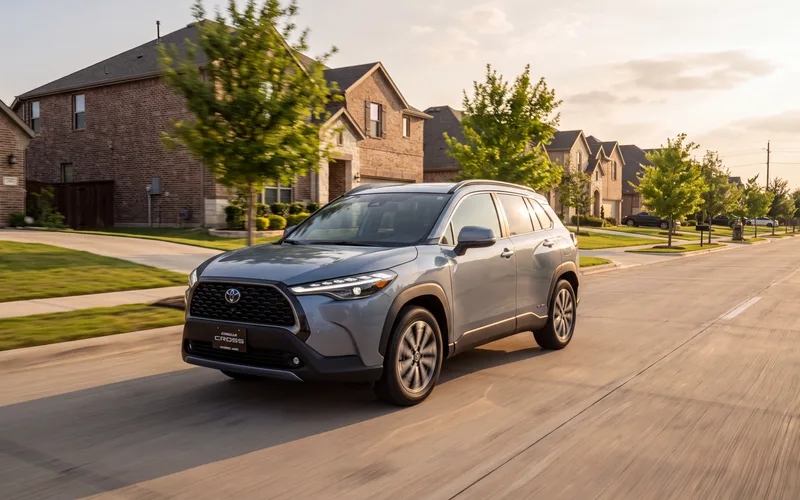 Toyota Corolla CrossSubcompact SUVBetter at: Fuel economy
Its hybrid version returns roughly 42 mpg versus the HR-V's 28 and includes two years of scheduled maintenance, which erases the Honda's ownership-cost edge.
Compare 2.13C
2.13C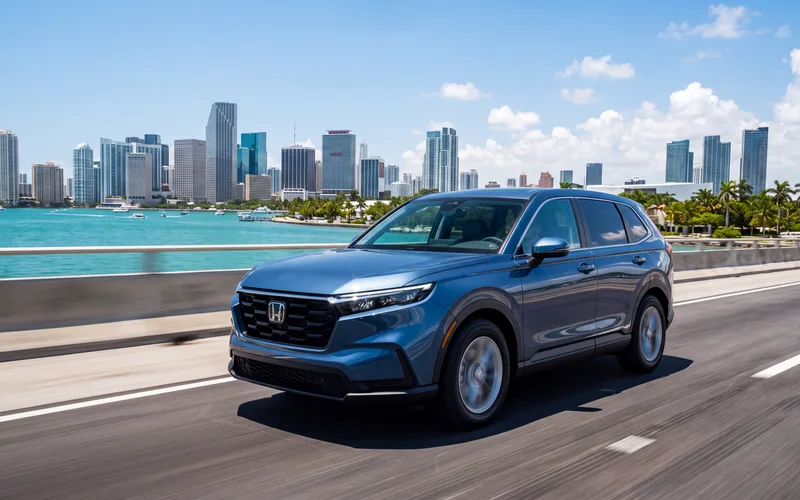 Honda CR-VCompact SUVBetter at: Space and power
A few thousand dollars more buys substantially more cargo room, a hybrid option, a 9-inch screen, and an actual tow rating.
Compare 1.52D
1.52D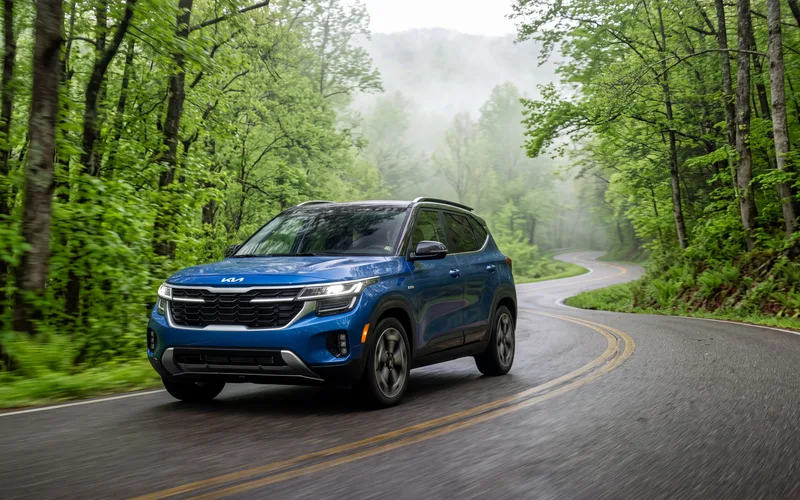 Kia SeltosSubcompact SUVBetter at: Tech and warranty
It matches the HR-V on price while adding a bigger touchscreen, an available turbo engine, and a 10-year/100,000-mile powertrain warranty.
CompareHow it's evolved
10 scored model years · 2017–2026
Subject scores by year
Hover or tap a score to see what moved it versus the year before. A corner mark flags a big swing.
| Year | Performance | Efficiency | Safety | Space | Cost | Reliability | Tech | Use-case | Driving | Value |
|---|---|---|---|---|---|---|---|---|---|---|
| 2026 | 18 | 64 | 60 | 40 | 65 | 76 | 43 | 57 | 62 | 62 |
| 2025 | 18 | 60 | 72 | 40 | 65 | 76 | 42 | 55 | 59 | 63 |
| 2024 | 18 | 60 | 71 | 40 | 66 | 74 | 43 | 56 | 62 | 65 |
| 2023 | 18 | 60 | 72 | 40 | 71 | 68 | 43 | 57 | 62 | 64 |
| 2022 | 14 | 67 | 52 | 37 | 66 | 67 | 30 | 47 | 52 | 37 |
| 2021 | 15 | 67 | 53 | 41 | 75 | 72 | 32 | 46 | 53 | 54 |
| 2020 | 12 | 68 | 48 | 36 | 67 | 65 | 27 | 44 | 51 | 48 |
| 2019 | 16 | 73 | 59 | 35 | 79 | 65 | 37 | 46 | 46 | 63 |
| 2018 | 14 | 71 | 32 | 38 | 78 | 65 | 24 | 45 | 53 | 60 |
| 2017 | 16 | 71 | 38 | 38 | 78 | 69 | 24 | 44 | 53 | 65 |
Compare two years
Best fit & conditions
Higher scores mean a better fit for that use case. Learn more about use-case fit →
Subject profile
Trims & configurations
3 trimsScores above reflect the volume trim. Per-trim specs and scores are rolling out — the full lineup:
Academic Probation · NHTSA safety recalls
No NHTSA safety recall is on record for the 2026 Honda HR-V. Other model years of the HR-V have 12 — listed below.
12 recalls on other model years of the HR-V (2018–2025)
May 21, 2026Air bags: sensor: occupant classification: front passengerThe front passenger seat weight sensor may crack and short circuit, which can cause the air bags to deploy unintentionally during a crash.
Defect
Honda (American Honda Motor Co.) is recalling certain 2018-2021, 2023 Acura TLX, 2019-2024 RDX, 2017-2020, 2022-2026 MDX, 2017-2021, 2023, 2025 Honda Ridgeline, 2017-2022 Pilot, 2019-2021 Passport, 2018-2026 Odyssey, 2019-2022 Insight, 2019-2021 HR-V, 2018-2020 Fit, 2020-2022 CR-V Hybrid, 2017-2022 CR-V, 2017-2018, 2021 Civic Type R, 2017-2021 Civic hatchback, 2016-2020 Civic coupe, 2016-2022 Civic, 2017-2022 Accord Hybrid, and 2016-2022 Accord vehicles. The front passenger seat weight sensor may crack and short circuit, which can cause the air bags to deploy unintentionally during a crash.
Risk
Air bags that deploy unintentionally during a crash increase the risk of injury.
Remedy
Dealers will replace the seat weight sensors, free of charge. Owner notification letters were mailed July 7, 2026. Owners may contact Honda's customer service at 1-888-234-2138. Honda's numbers for this recall are BOL, WO9, OOA, WOM, XOH, NOC, POD, BOE, UOF, POB, EOG, AOI, QO8, TOJ, DO7, and SOK. This recall expands previous NHTSA recall number 24V064. Vehicle Identification Numbers (VINs) involved in this recall will be searchable on NHTSA.gov beginning May 29, 2026.
NHTSA campaign 26V332000 ↗Manufacturer no. Refer to Comments98,892 vehicles potentially affected (all models in the campaign)Owners notified Jul 6, 2026Filed by Honda (American Honda Motor Co.)Filed as HR-VJan 29, 2026Seats: critical fastenersThe driver's seat cushion frame may not have been tightened properly, which can result in a loose seat. As such, these vehicles fail to comply with the requirements of Federal Motor Vehicle Safety Standard number 207, "Seating Systems."
Defect
Honda (American Honda Motor Co.) is recalling certain 2023 Honda Accord, Accord Hybrid, and 2024 HR-V, Pilot, and Acura Integra vehicles. The driver's seat cushion frame may not have been tightened properly, which can result in a loose seat. As such, these vehicles fail to comply with the requirements of Federal Motor Vehicle Safety Standard number 207, "Seating Systems."
Risk
A loose driver's seat may not adequately restrain the driver during a crash, increasing the risk of injury.
Remedy
Dealers will replace the driver's seat cushion frame, free of charge. Owner notification letters were mailed March 10, 2026. Owners may contact Honda's customer service at 1-888-234-2138. Honda's numbers for this recall are ONC, KND, BNE and ZNF. Vehicle Identification Numbers (VINs) involved in this recall will become searchable on NHTSA.gov beginning February 5, 2026. This recall expands previous NHTSA recall number 24V859.
NHTSA campaign 26V054000 ↗Manufacturer no. ONC, KND, BNE, ZNF32 vehicles potentially affected (all models in the campaign)Owners notified Mar 9, 2026Filed by Honda (American Honda Motor Co.)Filed as HR-VNov 14, 2024Seats: critical fastenersThe driver's seat cushion frame may not have been tightened properly, which can result in an unsecured seat. As such, these vehicles fail to comply with the requirements of Federal Motor Vehicle Safety Standard number 207, "Seating Systems."
Defect
Honda (American Honda Motor Co.) is recalling certain 2023-2024 Honda Accord, Accord Hybrid, Civic Sedan, Civic Hatchback, Pilot, and 2024 HR-V, Acura Integra and Acura Integra Type S vehicles. The driver's seat cushion frame may not have been tightened properly, which can result in an unsecured seat. As such, these vehicles fail to comply with the requirements of Federal Motor Vehicle Safety Standard number 207, "Seating Systems."
Risk
An unsecured driver's seat may not adequately restrain the driver during a crash, increasing the risk of injury.
Remedy
Dealers will replace the driver's seat cushion frame, free of charge. Owner notification letters were mailed January 6, 2025. Owners may contact Honda customer service at 1-888-234-2138.
NHTSA campaign 24V859000 ↗121 vehicles potentially affected (all models in the campaign)Owners notified Jan 6, 2025Filed by Honda (American Honda Motor Co.)Filed as HR-VOct 3, 2024SteeringThe steering gearbox assembly may have been manufactured incorrectly, which can cause excessive internal friction and lead to difficulty steering the vehicle.
Defect
Honda (American Honda Motor Co.) is recalling certain 2023-2025 Acura Integra, Civic Type R, CR-V Hybrid, CR-V, HR-V, 2022-2025 Civic, Civic Hatchback, 2024-2025 Acura Integra Type S, 2025 CR-V Fuel Cell EV, Civic Hybrid, and Civic Hatchback Hybrid vehicles. The steering gearbox assembly may have been manufactured incorrectly, which can cause excessive internal friction and lead to difficulty steering the vehicle.
Risk
Difficulty steering can increase the risk of a crash.
Remedy
Dealers will replace the worm gear spring and redistribute or add grease as necessary, free of charge. Owner notification letters were mailed November 18, 2024. Owners may contact Honda Customer Service at 1-888-234-2138. Honda's numbers for this recall are SJS, MJU, QJT and VJV.
NHTSA campaign 24V744000 ↗Manufacturer no. SJS, MJU, QJT, VJV1,693,199 vehicles potentially affected (all models in the campaign)Owners notified Nov 18, 2024Filed by Honda (American Honda Motor Co.)Filed as HR-VMay 31, 2024Back over prevention: display function · Back over prevention: softwareThe rearview camera image may not display when the engine is started with a key, due to a design error in the audio display power circuit. As such, these vehicles fail to comply with the requirements of Federal Motor Vehicle Safety Standard number 111, "Rear Visibility."
Defect
Honda (America Honda Motor Co.) is recalling certain 2018-2020 Fit and 2019-2022 HR-V vehicles that were previously recalled under NHTSA recall number 23V-046. The rearview camera image may not display when the engine is started with a key, due to a design error in the audio display power circuit. As such, these vehicles fail to comply with the requirements of Federal Motor Vehicle Safety Standard number 111, "Rear Visibility."
Risk
An inoperative rearview camera display can reduce the driver's rear visibility, increasing the risk of a crash.
Remedy
Dealers will update the display audio unit software, free of charge. Owner notification letters were mailed July 8, 2024. Owners may contact Honda service at 1-888-234-2138. Honda's numbers for this recall are TIQ and DIR. Vehicles previously repaired under recall 23V-046 will need to have the new remedy completed.
NHTSA campaign 24V384000 ↗Manufacturer no. TIQ, DIR114,686 vehicles potentially affected (all models in the campaign)Owners notified Jul 8, 2024Filed by Honda (American Honda Motor Co.)Filed as HR-VFeb 1, 2024Air bags: sensor: occupant classification: front passengerThe front passenger seat weight sensor may crack and short circuit, failing to suppress the air bag as intended.
Defect
Honda (American Honda Motor Co.) is recalling certain 2020-2022 Pilot, Accord, Civic sedan, HR-V, Odyssey, 2020 Civic coupe, Fit, 2021-2022 Civic hatchback, 2021 Civic Type R, Insight, 2020-2021 CR-V, CR-V Hybrid, Passport, Ridgeline, Accord Hybrid, 2020 Acura MDX, 2022 Acura MDX, 2020-2022 Acura RDX, and 2020-2021 Acura TLX vehicles. The front passenger seat weight sensor may crack and short circuit, failing to suppress the air bag as intended.
Risk
An air bag that deploys unintentionally during a crash can increase the risk of injury.
Remedy
Dealers will replace the seat weight sensors, free of charge. Owner notification letters were mailed March 28, 2024. This is a phased recall. Owners may contact Honda customer service at 1-888-234-2138. Honda's numbers for these recalls are XHP and VHQ.
NHTSA campaign 24V064000 ↗Manufacturer no. XHP, VHQ750,114 vehicles potentially affected (all models in the campaign)Owners notified Mar 28, 2024Filed by Honda (American Honda Motor Co.)Filed as HR-VDec 18, 2023Fuel system, gasoline: delivery: fuel pumpThe fuel pump inside the fuel tank may fail.
Defect
Honda (American Honda Motor Co.) is recalling certain 2013-2023 Honda Accord, Civic Coupe, Civic Sedan, Civic Hatchback, Civic Type R, CR-V, HR-V, Ridgeline, Odyssey, Acura ILX, MDX, MDX Hybrid, RDX, RLX, TLX, 2019-2022 Honda Insight, Passport, 2020 Honda CR-V Hybrid, 2018-2019 Honda Clarity PHEV, Fit, and 2015-2020 Honda Accord Hybrid, Pilot, Acura NSX vehicles. The fuel pump inside the fuel tank may fail.
Risk
Fuel pump failure can cause an engine stall while driving, increasing the risk of a crash.
Remedy
Dealers will replace the fuel pump module, free of charge. Owner letters were mailed September 6, 2024. Owners may contact Honda customer service at 1-888-234-2138. Honda's numbers for this recall are KGC and KGD. This recall is an expansion of NHTSA recall numbers 21V-215 and 20V-314.
NHTSA campaign 23V858000 ↗Manufacturer no. KGC, KGD2,490,460 vehicles potentially affected (all models in the campaign)Owners notified Mar 29, 2024Filed by Honda (American Honda Motor Co.)Filed as HR-VNov 21, 2023Seat belts: frontThe front seat belt pretensioners may be missing the rivet that secures the quick connector and wire plate. As such, these vehicles fail to comply with the requirements of Federal Motor Vehicle Safety Standard numbers 208, "Occupant Crash Protection," 209, "Seat Belt Assembles," and 210, "Seat Belt Assembly Anchorages."
Defect
Honda (American Honda Motor Co.) is recalling certain 2023-2024 Accord and HR-V vehicles. The front seat belt pretensioners may be missing the rivet that secures the quick connector and wire plate. As such, these vehicles fail to comply with the requirements of Federal Motor Vehicle Safety Standard numbers 208, "Occupant Crash Protection," 209, "Seat Belt Assembles," and 210, "Seat Belt Assembly Anchorages."
Risk
A seat belt pretensioner missing a rivet will not properly restrain the occupant, increasing the risk of injury during a crash.
Remedy
Dealers will inspect and replace the seat belt pretensioner assemblies as necessary, free of charge. Owner notification letters were mailed January 8, 2024. Owners may contact Honda customer service at 1-888-234-2138. Honda's numbers for this recall are MG7 and NG5.
NHTSA campaign 23V782000 ↗Manufacturer no. MG7, NG5303,770 vehicles potentially affected (all models in the campaign)Owners notified Jan 8, 2024Filed by Honda (American Honda Motor Co.)Filed as HR-VFeb 2, 2023Back over prevention: sensing system: camera · Back over prevention: display functionThe rearview camera image may not display when the engine is started with a key, due to a design error in the audio display power circuit. As such, these vehicles fail to comply with the requirements of Federal Motor Vehicle Safety Standard number 111, "Rear Visibility."
Defect
Honda (American Honda Motor Co.) is recalling certain 2018-2020 Fit and 2019-2022 HR-V vehicles. The rearview camera image may not display when the engine is started with a key, due to a design error in the audio display power circuit. As such, these vehicles fail to comply with the requirements of Federal Motor Vehicle Safety Standard number 111, "Rear Visibility."
Risk
An inoperative rearview camera display can reduce the driver's rear visibility, increasing the risk of a crash.
Remedy
Dealers will update the display audio unit software, free of charge. Owner notification letters were mailed March 13, 2023. Owners may contact Honda customer service at 1-888-234-2138. Honda's number for this recall is 6DW. This recall has been superseded by NHTSA recall number 24V-384. Vehicles previously repaired under recall 23V-046 will need to have the new remedy completed under recall 24V-384.
NHTSA campaign 23V046000 ↗Manufacturer no. 6DW114,686 vehicles potentially affected (all models in the campaign)Owners notified Mar 13, 2023Filed by Honda (American Honda Motor Co.)Filed as HR-VMar 25, 2021Fuel system, gasoline: delivery: fuel pumpThe low-pressure fuel pump inside the fuel tank may fail.
Defect
Honda (American Honda Motor Co.) is recalling certain 2019-2020 Acura MDX, MDX Sport Hybrid, RDX, TLX, Honda Accord, Civic Hatchback, Insight, 2019 Acura ILX, Honda Accord Hybrid, Civic Coupe, Civic Coupe Si, Civic Sedan, Civic Sedan Si, Civic Type R, Fit, HR-V, Odyssey, Passport, Pilot and Ridgeline, and 2018-2019 CR-V vehicles. The low-pressure fuel pump inside the fuel tank may fail.
Risk
Fuel pump failure can cause an engine stall while driving, increasing the risk of a crash.
Remedy
Honda will notify owners, and dealers will replace the fuel pump assembly, free of charge. Owner letters were mailed May 18, 2021. Owners may contact Honda customer service at 1-888-234-2138. Note: This recall is an expansion of recall 20V-314.
NHTSA campaign 21V215000 ↗Manufacturer no. Multiple Codes624,552 vehicles potentially affected (all models in the campaign)Owners notified May 18, 2021Filed by Honda (American Honda Motor Co.)Filed as HR-VMay 28, 2020Fuel system, gasoline: delivery: fuel pumpThe low-pressure fuel pump inside the fuel tank may fail.
Defect
Honda (American Honda Motor Co.) is recalling certain 2018-2019 Acura NSX, 2019 Acura RDX, RLX and RLX Sport Hybrid, 2018-2019 Honda Accord, Civic Hatchback, Civic Type R and HR-V, 2019-2020 Insight and 2019 Fit vehicles. The low-pressure fuel pump inside the fuel tank may fail.
Risk
If the fuel pump fails, the engine can stall while driving, increasing the risk of a crash.
Remedy
Honda will notify owners and dealers will replace the fuel pump assembly, free of charge. The recall began July 22, 2020. Owners may contact Honda customer service at 1-888-234-2138.
NHTSA campaign 20V314000 ↗135,995 vehicles potentially affected (all models in the campaign)Owners notified Jul 22, 2020Filed by Honda (American Honda Motor Co.)Filed as HR-VNov 1, 2018Service brakes, hydraulic: foundation components: disc: caliperThe rear brake caliper pistons may have an insufficient coating, causing gas pockets to form, reducing brake performance. As such, these vehicles fail to comply with the requirements of Federal Motor Vehicle Safety Standard (FMVSS) number 135, "Light Vehicle Brake Systems."
Defect
Honda (American Honda Motor Co.) is recalling certain 2017-2019 Acura MDX, 2017-2018 Acura MDX Sport Hybrid, 2018-2019 Honda HR-V and Honda Odyssey, and 2016 Honda HR-V vehicles. The rear brake caliper pistons may have an insufficient coating, causing gas pockets to form, reducing brake performance. As such, these vehicles fail to comply with the requirements of Federal Motor Vehicle Safety Standard (FMVSS) number 135, "Light Vehicle Brake Systems."
Risk
A reduction of braking performance increases the risk of a crash.
Remedy
Owners will be notified, and Honda or Acura dealers will bleed the brakes, free of charge. The recall began December 11, 2018. Owners may contact Honda customer service at 1-888-234-2138. Honda's numbers for this recall are C31 and L30.
NHTSA campaign 18V777000 ↗Manufacturer no. C31, L3064,785 vehicles potentially affected (all models in the campaign)Owners notified Dec 11, 2018Filed by Honda (American Honda Motor Co.)Filed as HR-V
Source: NHTSA Office of Defects Investigation recall database, model years 2017–2026. Recalls are listed by model year as the manufacturer filed them; whether a specific car is affected depends on its VIN — check a VIN at nhtsa.gov ↗. NHTSA model names matched to this page: HR-V.
Detailed scoring by subject
1Performance & PowertrainThe HR-V's lowest-graded category.0.00F
Every 2026 HR-V trim (LX, Sport, EX-L) uses the same 2.0L DOHC i-VTEC inline-4 rated at 158 hp @ 6,500 rpm; no optional powertrain is offered.
Peak torque of 138 lb-ft @ 4,200 rpm is identical across all HR-V trims and drivetrains, well below the SUV segment norm.
Independent instrumented tests place the 2026 HR-V's 0–60 mph time around 9.4 seconds; reviewers consistently rank it among the slowest subcompact SUVs sold today.
Reviewers describe the 2.0L four as coarse and buzzy when pushed, with the CVT holding revs high under load; light-throttle around-town driving is smoother but merging and grade climbs feel strained.
The CVT is well-mapped for gentle around-town driving with simulated 'shift' points, but drones and holds high rpm during hard acceleration and highway passing; no paddle shifters on any trim.
Honda does not publish a US towing rating for the 2026 HR-V in any trim or drivetrain configuration; the vehicle is not approved to tow a trailer.
Honda's Real Time AWD with Intelligent Control System is optional on every trim (LX, Sport, EX-L) but never standard; it is a reactive on-demand system without terrain modes or torque vectoring.
Ground clearance is just 7.0 in (LX/EX-L) to 7.3 in (Sport) with no skid plates, no locking differential, no terrain-select modes, and no dedicated off-road trim; strictly a pavement-oriented crossover.
The 2026 HR-V ships with a single gas 2.0L I4/CVT combination across all three trims; no hybrid, PHEV, or EV option is offered in the US, unlike subcompact rivals such as Kia Niro, Toyota Corolla Cross, and Hyundai Kona.
2Efficiency & RangeOne of the HR-V's strongest categories.2.29C
2026 HR-V is gas-only with a 2.0L I4 and CVT; FWD volume trims rate 28 MPG combined, AWD 27 MPG combined per EPA. Below-average for a subcompact SUV lacking any electrified option.
EPA city rating for the FWD volume config is 26 MPG. A non-hybrid subcompact SUV at this level trails hybrid rivals (Corolla Cross Hybrid, Kona Hybrid) that top 40 city.
FWD volume config posts 32 MPG highway per EPA — mid-pack for a subcompact SUV, notably behind hybrid rivals but respectable for pure gas.
14.0-gallon tank at 28 MPG combined yields ~392 mi driving range for the FWD volume trim; AWD ~378 mi. Highway range extends to roughly 448 mi FWD / 420 mi AWD.
At 28 MPG combined and EPA's ~$3.65/gal regular unleaded assumption, 15,000 mi/yr = ~536 gal ≈ $1,950/yr. AWD variant runs roughly $50–$100 higher.
Runs on regular unleaded (87 octane) — no premium requirement, no diesel or E85 complications, no charging infrastructure needed. Cheapest and most convenient fuel spec available.
3SafetyMid-pack among this car's ten categories.2.07C
Current-generation HR-V (2023+, carried into 2026 with no structural changes) earned a 4-star overall NHTSA rating, with 4-star frontal and rollover and 5-star side results.
HR-V held IIHS Top Safety Pick status early in the generation but was dropped from the 2025 TSP list under tightened criteria — Good in original moderate overlap and side but Marginal in updated moderate overlap rear-passenger and only Acceptable in updated side. Structure and restraints remain solid but no longer award-winning.
Honda Sensing is standard on every trim (LX/Sport/EX-L) — includes AEB with pedestrian detection, Road Departure Mitigation, Lane Keeping Assist, full-speed Adaptive Cruise with low-speed follow, Traffic Sign Recognition, and Auto High Beam. However, Blind Spot Information and Rear Cross Traffic Monitor are only standard on the top EX-L trim, not on LX or Sport.
IIHS rates Honda's Collision Mitigation Braking on this platform as Superior for vehicle-to-vehicle front crash prevention, with pedestrian detection performing well in daytime and Acceptable at night. Solid all-round system for the class but not a class leader.
Blind Spot Information with Rear Cross Traffic Monitor is optional and locked behind the top EX-L trim — the volume LX and Sport trims lack it entirely. Alert-only implementation, no active steering intervention.
Honda Sensing's Lane Keeping Assist plus Road Departure Mitigation are standard and reviewers generally describe centering as smooth without excessive ping-ponging, though the HR-V's system lacks the polish of newer Toyota Safety Sense 3.0 or Hyundai SmartSense-equipped rivals.
Adaptive Cruise Control with Low Speed Follow is standard across every trim and handles full-speed-range stop-and-go competently, with well-integrated Traffic Jam Assist. Well-regarded ACC but no combined highway-driving mode branding, and gap adjustments can feel slow to resume.
Honda offers no hands-free highway driving system on the HR-V — no equivalent to Ford BlueCruise, GM Super Cruise, or Tesla Autopilot supervised. Standard system requires hands on wheel at all times.
IIHS rates HR-V headlights Acceptable across most trims — LED reflector projectors are standard but low-beam reach and glare control are middle-of-pack for the subcompact class. Auto High Beam is standard.
One of the HR-V's genuine strengths — Civic-based platform yields a low beltline, upright greenhouse, relatively thin A-pillars, and generous side glass. Reviewers routinely cite excellent forward and side sightlines; only minor rear-quarter thickness from thicker C-pillars.
Wide rear-door opening angle (thanks to Civic-derived architecture) and easily accessible outboard LATCH anchors make installations straightforward for the subcompact class; two full LATCH sets outboard, tether anchors visible. Center seat is narrow — 3-across is a squeeze — but two seats install cleanly.
4Space & ComfortOne of the HR-V's weakest categories.0.68F
HR-V is a two-row, five-passenger subcompact SUV across all trims (LX, Sport, EX-L).
LX (base, no moonroof) rated 39.4 in; Sport/EX-L drop to 38.0 in due to standard moonroof.
Front legroom 41.9 in across all trims — mid-pack for a subcompact SUV.
Rear headroom 38.0 in — competitive for the subcompact SUV segment.
37.7 in rear legroom is among the best in the subcompact SUV class — a benefit of the Civic-based platform's stretched wheelbase.
HR-V is a two-row vehicle with no third-row option — token score under this framework.
24.4 cu ft behind the rear seat is below the subcompact SUV average and under the framework's 25 cu ft SUV floor — Kicks, Trailblazer, and Kona all outclass it here.
55.1 cu ft max cargo sits right at the framework's SUV floor — modest for the class; no Magic Seat trickery in this generation.
Conventional center console, deep door pockets, and a small tray under the shifter — competent everyday storage but no standout features; the previous generation's Magic Seat was dropped when HR-V moved to the Civic platform.
Front seats are well-shaped with adequate bolstering for the class; some reviewers note firm cushions on longer drives. Rear bench is flat but roomy thanks to segment-leading legroom.
Civic-derived multi-link rear suspension gives the HR-V one of the more composed rides in the subcompact SUV class — controlled body motions and reasonable compliance over broken pavement.
158-hp 2.0L NA four is coarse under load and the CVT lets revs hang — reviewers consistently flag powertrain drone at highway speed. Wind and road noise are otherwise average for the class.
Heated front seats standard on Sport and EX-L; single-zone AC on LX/Sport, dual-zone climate and heated steering wheel only on EX-L. No ventilated seats, no rear vents, no remote pre-conditioning — sparser than several rivals.
5Cost of OwnershipOne of the HR-V's strongest categories.2.41C+
Honda's official 2026 HR-V pricing: LX starts at $26,500 MSRP + $1,450 destination. Very affordable for the subcompact SUV segment.
Sport is the volume seller; Sport FWD is $28,300, Sport AWD adds ~$1,500, plus $1,450 destination. Well-equipped Sport AWD lands around $31,250. Trim range: LX $27,950–EX-L ~$33,300 with AWD.
Honda's 2.0L NA drivetrain is known for very low maintenance costs. CarEdge estimates ~$2,347 over 5 years; using a slightly more conservative blended estimate to include tires/brakes wear items.
KBB residuals imply LX retains ~54%, Sport ~56%, EX-L ~58% after 5 years. Honda badge helps but HR-V trails CR-V in retention. Good but not exceptional for the segment.
Honda offers the industry-minimum 3-year/36,000-mile bumper-to-bumper warranty. No change from prior years and well behind Hyundai/Kia/Mitsubishi.
Honda's 5-year/60,000-mile powertrain warranty is well below Hyundai/Kia's 10-year/100,000-mile coverage and Mitsubishi's 10/100k.
Honda includes 24-hour roadside assistance during the 3-year basic warranty period but offers no complimentary scheduled maintenance program (unlike Toyota's ToyotaCare 2 yr/25k). HondaLink connected-services trial is included but limited.
$31,250 volume-trim price minus its estimated resale value after 5 years (56% retained, or about $17,500) leaves about $13,750 in depreciation. Add the projected $3,200 in 5-year maintenance and repairs, and owning this vehicle for 5 years costs about $16,950 in total.
6Reliability & QualityThe HR-V's best-graded category.3.18B
Current-gen HR-V (launched 2023) has posted above-average predicted reliability from Consumer Reports and mid-pack J.D. Power quality; the mechanically simple 2.0L NA + CVT drivetrain shared with Civic keeps failure surface area low. Not top-tier because the platform is still relatively new and CR data pool is limited.
Honda consistently ranks top-10 (frequently top-5) across Consumer Reports brand reliability rankings and J.D. Power VDS. Not perfect — some recent misses on the fuel-pump recall and the L15 turbo — but the brand baseline for long-term dependability remains one of the highest in the mainstream market.
Current-gen HR-V (2023–2025) has been swept up in Honda brand-wide fuel-pump and rearview-camera software recalls but nothing model-specific and systemic; TSB activity is typical for a new platform in its first three years. No powertrain or safety-critical recurring issue has emerged.
The 2.0L naturally-aspirated K20C-family engine and Honda's CVT are among the most durable mainstream powertrains sold today — high-mileage examples are common, with no oil-dilution or head-gasket issues that dog the L15 turbo. Simple NA + CVT is a proven combination that owners routinely take past 200k miles.
HR-V borrows the Civic's cabin design and hex-mesh vent treatment — a well-reviewed interior for the segment. Soft-touch materials in the primary contact zones, competitive switchgear feel, though hard plastics predominate in the lower dash and door cards as expected at the price. Above segment average, not class-leading.
Assembly is tight and consistent per reviewer commentary, with Honda's Celaya, Mexico plant delivering typical Honda build discipline. Panel gaps are even and interior trim is well-aligned; no notable rattle or squeak reports have emerged in the current generation.
Honda operates one of the densest dealer networks in the US (~1,000 franchised Honda dealers) with strong nationwide coverage even in rural markets. Service satisfaction scores are mid-to-upper pack in J.D. Power's Customer Service Index — solid, if not the very top like Buick or Lexus.
Honda parts are among the most abundant and affordable in the US market — heavy OEM stocking, huge aftermarket, and shared components with the Civic keep repair costs low. RepairPal-style annual maintenance estimates for HR-V are typically well below the segment average.
7Technology & InfotainmentOne of the HR-V's weakest categories.0.83F
The current-generation HR-V (2023-onward, carried into 2026) uses a 7-inch color touchscreen as standard on LX and Sport, with a larger 9-inch unit reserved for the top EX-L. The volume Sport trim gets the 7-inch, which sits at the bottom of the SUV-segment band and is dwarfed by rivals fitting 10–12-inch displays.
The 7-inch head unit on volume trims is functional and retains a physical volume knob and hard shortcut keys, but reviewers consistently flag the small screen, dated graphics and slow response versus newer Hyundai/Kia and VW/Mazda subcompact rivals. EX-L's 9-inch unit is markedly better but is not the volume configuration.
Wireless Apple CarPlay and wireless Android Auto are limited to the EX-L (9-inch head unit). LX and Sport buyers — the volume of the model — get wired-only CarPlay/Android Auto. This is exactly the guidance's mid-band scenario: wired standard, wireless on upper trim only.
The HR-V does not offer factory embedded navigation on any U.S. trim, and unlike the top CR-V it does not get Google built-in with Google Assistant. Voice control is limited to Bluetooth phone commands and the basic HondaLink assistant; most owners rely on phone-projection for nav and voice.
LX runs a 4-speaker system; Sport and EX-L step up to a 6- and 8-speaker setup respectively. There is no premium branded audio option (no Bose, Harman, Meridian or similar) — a notable gap versus Trailblazer's Bose option or Kia Seltos' available premium systems.
All trims use a partial-digital cluster: analog speedometer flanked by a 7-inch color TFT information display. Unlike the CR-V's EX-L and above, no HR-V trim gets the 10.2-inch fully-digital driver display.
HondaLink supports over-the-air map and infotainment updates on connected trims, but there is no whole-vehicle OTA for ADAS calibration, powertrain or new feature drops. HR-V's older head unit architecture on volume trims further limits OTA scope compared with the CR-V Sport Touring.
HondaLink app supports remote start, remote lock/unlock, vehicle status and find-my-car, but core remote functions require the Remote Package subscription (~$110/year after a short trial). No digital key / phone-as-key. App itself is functional but frequently criticized for reliability and clunky UX in owner forums.
Wireless phone charging is standard only on the EX-L. LX and Sport get a single USB-C data/charging port up front plus a USB-A port; second-row USB ports are limited. No 120V household outlet offered on any trim.
Smart Entry proximity entry with push-button start is standard on Sport and EX-L but LX still ships with a traditional key and turn-cylinder ignition. Remote engine start requires a HondaLink subscription. No power liftgate, no hands-free access, no digital key.
Multi-angle rearview camera with dynamic guidelines is standard, but the HR-V does not offer a 360-degree surround-view camera on any U.S. trim, and front/rear parking sensors are not listed as available equipment on any trim. This is a segment weak spot versus Trailblazer, Encore GX, Seltos and Kona.
No head-up display is offered on any 2026 HR-V trim. Honda reserves HUD for the Accord, Prologue and Passport TrailSport — the HR-V is not on that list.
8Use-Case FitMid-pack among this car's ten categories.1.83C-
Civic-derived architecture yields wide-opening rear doors and segment-leading 37.7 in rear legroom for easy car-seat loading; two outboard LATCH sets with accessible anchors and a low, flat load floor help daily kid logistics. But 24.4 cu ft cargo behind the rear seat is below the subcompact SUV average — bulky strollers plus a week's groceries is a squeeze, and the center seat is narrow for 3-across.
Honda Sensing (AEB with pedestrian detection, adaptive cruise with low-speed follow, LKAS, road-departure mitigation, auto high beam, rear-occupant reminder) is standard from the $27,950 LX — a real value for family shoppers. But NHTSA is only 4-star overall (not 5) and the HR-V lost 2025 IIHS Top Safety Pick status (Marginal in updated moderate-overlap rear-passenger, Acceptable in updated side), and Blind Spot Info + Rear Cross Traffic Monitor is locked behind the top EX-L trim.
Segment-leading 37.7 in rear legroom and Civic-based ride manners make the back seat livable for adults on longer drives, and outward visibility is a strength. But no rear HVAC vents, single-zone climate on LX/Sport (dual-zone reserved for EX-L), engine drone under CVT load, and only 24.4 cu ft cargo behind row 2 mean four-up road trips with luggage get cramped fast.
Low beltline, thin A-pillars, and an upright greenhouse deliver excellent sightlines; Civic-derived multi-link rear suspension gives one of the more composed rides in the class; Honda Sensing lane-centering and stop-and-go adaptive cruise are standard and reduce commute fatigue. The 158-hp 2.0L NA + CVT is competent but coarse under load — the drivetrain is the main knock in an otherwise easy daily driver.
FWD volume trims post 28 MPG combined (26/32) on regular unleaded, AWD 27 MPG combined (25/30) — mid-pack for the segment. Honda's cheap parts network, dense dealer coverage, and simple NA+CVT drivetrain keep per-mile costs down. But the lack of any hybrid option leaves the HR-V well behind Corolla Cross Hybrid (~42 mpg), Kona Hybrid, and Kia Niro Hybrid for genuine commuting efficiency.
Subcompact footprint on a Civic-based wheelbase, tight turning circle, and outstanding outward visibility make city parking easier than most of the segment. Multi-angle rearview camera with dynamic guidelines is standard. But no 360-degree camera or factory front/rear parking sensors on any trim — a gap versus Trailblazer, Seltos, Encore GX, and Kona.
Honda does not publish an official US towing rating for the 2026 HR-V — effectively a zero-tow vehicle for buyers who need a spec sheet to hitch legally. Max cargo of 55.1 cu ft is at the very bottom of the SUV floor, payload is modest, and the 158-hp NA engine is undersized for hauling. Not a meaningful work tool.
Honda's 2.0L NA K-series engine and CVT combination is one of the most durable mainstream powertrains on sale — commonly seen past 200k miles — and Honda's brand reliability is top-10 with Consumer Reports. But there is no HD trim, no work-grade interior, no fleet-service reputation, and the small-displacement engine will struggle under sustained load.
Cargo tie-downs and a 12V outlet are provided and Honda offers a dealer-installed hitch and roof rails (Sport/EX-L), but no 120V household outlet on any trim, no bed, no wipe-down interior, no factory upfit ecosystem, and Honda's own literature stops short of even publishing a tow spec. Effectively a passenger CUV with no work-oriented provisions.
14.0-gal tank × 28 MPG FWD gives ~392 mi combined / ~448 mi highway range — respectable but not class-leading. Ride is well-damped and adaptive cruise + LKAS are standard, easing highway fatigue. But engine drone under CVT load, mid-pack cabin quietness, and no ventilated seats or massage anywhere in the lineup keep this from being a great mile-eater.
Real Time AWD is available (~$1,500 upcharge on Sport/EX-L), 60/40 split-folding rear seats fold for camping gear, and roof crossbars are offered — but ground clearance is only ~7.3 in, there is no skid plate, no terrain mode, no locking or torque-vectoring diff, and no dedicated off-road TrailSport variant like the CR-V or Passport. Firmly pavement-plus, not adventure.
55.1 cu ft max cargo is right at the SUV floor — the Civic-based HR-V lost the previous generation's clever Magic Seat and doesn't recover the flexibility. 60/40 split-folding rear seats fold nearly flat, roof crossbars are dealer-optional on Sport/EX-L, dealer hitch available (though no rated tow). Adequate for weekend gear; below segment average for real bulky-load flexibility.
9Driving ExperienceMid-pack among this car's ten categories.2.21C
Civic-derived platform with multi-link rear suspension and brake-based Agile Handling Assist gives the HR-V tidy, secure cornering for a subcompact SUV, though it lacks the sharpness of a Mazda CX-30. Composed and capable when pushed, but not engaging.
Steering is precise and accurate but slow-ratio, artificially light, and largely devoid of feedback — a common HR-V complaint that keeps it from feeling engaging on twistier roads.
Strong, fade-resistant brakes with well-tuned pedal feel are the HR-V's dynamic high point. Instrumented 70–0 mph stopping distance is a competitive 172 ft for the class.
The 158-hp 2.0L I-4 paired to a CVT is a weak point — smooth off the line but slow to respond and lacking mid-range punch. Instrumented 0–60 mph of 9.4–9.8 s ranks near the bottom of the segment and highway passing requires patience.
The CVT drones and the naturally aspirated four gets buzzy under hard acceleration, a character flaw Active Noise Cancellation and added sound deadening only partially mask. Around town it is inoffensive; under load it is not.
Compact 35.1 ft curb-to-curb diameter for the FWD volume trim is tight for a subcompact SUV, making tight parking and U-turns easy; AWD models grow to 37.4 ft.
Raised H-point, slim A-pillars, tall side mirrors, and a low cowl deliver excellent outward visibility. Front seats have well-shaped lumbar/side support with a wide adjustment range (8-way power available), and controls fall to hand naturally.
Tidy handling and confident brakes give the HR-V competence, but the sluggish CVT-and-2.0L combo, numb steering, and generally muted character make it a pleasant appliance rather than a car enthusiasts would recommend for its own sake.
10Value & Market PositionMid-pack among this car's ten categories.2.21C
Base LX includes Honda Sensing (AEB, LKAS, RDM, adaptive cruise, Traffic Sign Recognition) — a solid safety baseline — but pairs it with a small 7-inch touchscreen, wired-only CarPlay/Android Auto, a 4-speaker audio system, traditional key ignition, and no Blind Spot Info. The volume Sport trim adds heated front seats, Smart Entry with push-button start, a 6-speaker system, roof rails and paddleless CVT sport mode, keeping the equation reasonable — but still no BSM/RCTA (EX-L only) and still the small screen, which rivals like the Kia Seltos and Chevy Trailblazer beat at similar price.
At $27,950 LX to ~$33,300 EX-L AWD (with destination), the HR-V is priced fairly for a Honda-badged subcompact and benefits from strong reliability, resale, and a roomy interior. But the value equation is weighed down by the aging 158-hp 2.0L/CVT (9.4 s 0–60), no hybrid option, a 7-inch screen and wired-only CarPlay on volume trims, and industry-minimum 3/36k basic warranty — content and capability per dollar trail Kia Seltos, Toyota Corolla Cross Hybrid and VW Taos.
Just three trims (LX, Sport, EX-L) spanning about $28K–$33K, one powertrain (2.0L NA + CVT), and FWD/AWD as the only configurability. No hybrid, no PHEV, no off-road trim, no performance variant — narrow versus the CR-V's seven-trim ladder and rivals like Kia Seltos (5 trims incl. turbo), Chevy Trax (5 trims), Toyota Corolla Cross (LE/S/XLE plus a full hybrid line).
The HR-V is a top-tier subcompact SUV seller in the US — Honda moved 137,090 HR-Vs in calendar 2024, a segment-leading tally that trailed only the Chevy Trax and Toyota Corolla Cross, and volumes have held up through 2026 as Honda leans on the nameplate to fill in below the CR-V. Not a runaway hit like the CR-V, but a durable, high-volume nameplate that dealers rarely have trouble moving.
Honda enjoys strong mainstream brand equity built on reliability, resale value and engineering credibility, with high owner loyalty and cross-shop dominance in the segment. Not aspirational the way a luxury badge is, but the Honda name is a positive signal to subcompact-SUV shoppers and it supports both pricing power and residual values relative to Chevy, Nissan, Mitsubishi and VW rivals.
Honda historically avoids aggressive cash rebates on the HR-V; buyers see modest lease specials and Honda Financial Services promotional APR tiers rather than headline discounts, and dealer markups have largely faded post-supply-crunch but negotiation room is limited. Reasonable buyer benefit but nothing exceptional, mirroring the broader Honda incentive posture on core models.
The current (third-generation US-market) HR-V launched for MY2023 on the Civic platform, so 2026 is model year four with no substantive refresh — the CR-V got the 2026 mid-cycle refresh (new TrailSport Hybrid, 9-in screen across the line) while the HR-V carried over. Not aging into imminent replacement (a refresh is expected around MY2027), but tech and powertrain feel a generation behind.
Reviewers consistently praise the HR-V's mature ride, quiet cabin, class-leading rear-seat and cargo packaging, and standard Honda Sensing — but ding it hard for a slow 2.0L/CVT powertrain, no hybrid, small 7-inch touchscreen, wired-only CarPlay on volume trims, and dated interior tech. It routinely finishes mid-pack in subcompact SUV comparisons (behind Corolla Cross Hybrid, Kia Seltos, VW Taos) and was dropped from the IIHS Top Safety Pick list in 2025 as updated tests hit rear-passenger and side-crash results. Solid all-rounder, not a class-winner.