

The verdict
A mixed-report compact suv, strong on safety and held back by performance.
The 2026 Sportage is the compact SUV that gives you the most room and the most equipment for the least money — 41.3 inches of rear legroom leads the class, the freshly facelifted cabin puts twin 12.3-inch screens and a full driver-assist suite in a $30,100 base car, and Kia's 10-year/100,000-mile powertrain warranty is the longest in the segment. The catch is the volume engine: the 187-hp 2.5-liter four takes about 8.4 seconds to 60 mph and returns just 25 MPG combined with all-wheel drive, which is genuinely poor for 2026. Pay the roughly $2,000 upcharge for the Sportage Hybrid and the picture changes completely — 43 MPG, quicker acceleration, and nearly 590 miles a tank. Buy it for space, features and warranty; skip the base gas engine if your budget can stretch.
Jump to scoresStrengths
- Best back seat and cargo hold in the class
- Warranty coverage nothing else here matches
- Full safety suite standard on the cheapest trim
What holds it back
- The base 2.5-liter engine is the weakest link
- Gas fuel economy is poor for 2026
- Barely tows, and no work provisions
Top alternatives
Cars shoppers cross-shop with the Kia Sportage 2.13C
2.13C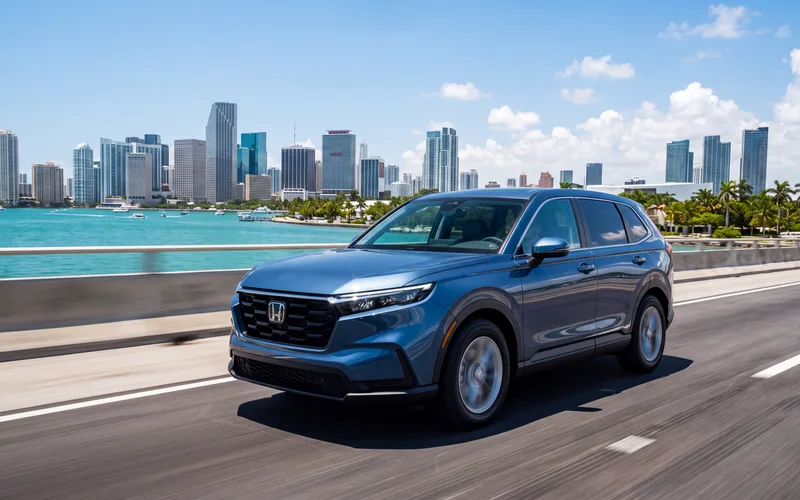 Honda CR-VCompact SUVBetter at: Resale value
Costs more up front but returns 29 MPG combined with AWD, rides quieter, and holds roughly 68% of its value after five years against the Sportage's 53%.
Compare 2.56C+
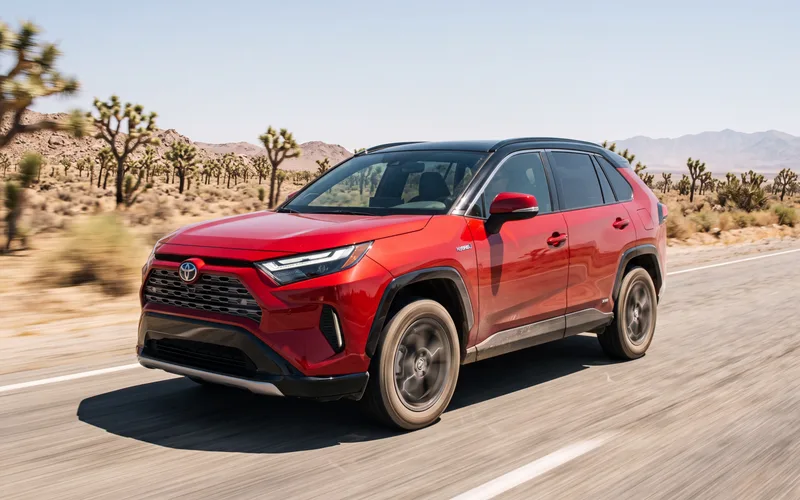 Toyota RAV4Compact SUVBetter at: Efficiency
Hybrid-only for 2026 at 41 MPG combined and about 594 miles of range, with the segment's best reliability record — the obvious answer if the Sportage's 25-MPG base engine is the sticking point.
Compare 2.44C+
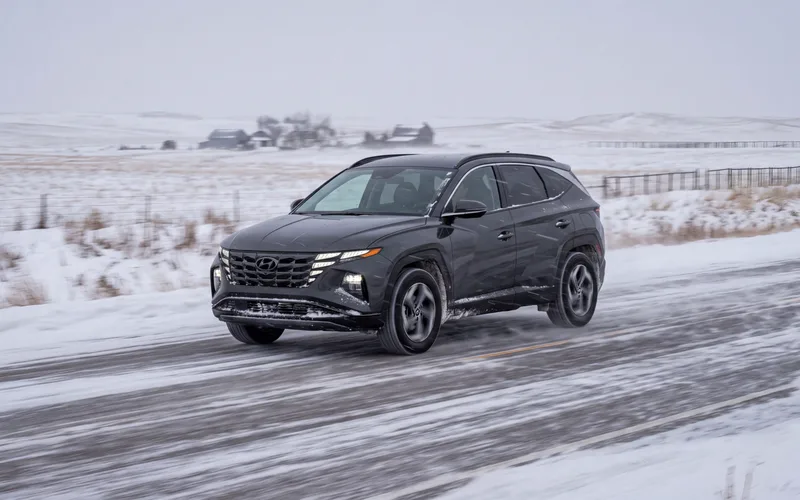 Hyundai TucsonCompact SUVBetter at: Free maintenance
The same vehicle underneath with 3 years/36,000 miles of complimentary scheduled maintenance included, which the Sportage does not offer at all.
CompareHow it's evolved
10 scored model years · 2017–2026
Subject scores by year
Hover or tap a score to see what moved it versus the year before. A corner mark flags a big swing.
| Year | Performance | Efficiency | Safety | Space | Cost | Reliability | Tech | Use-case | Driving | Value |
|---|---|---|---|---|---|---|---|---|---|---|
| 2026 | 37 | 49 | 78 | 57 | 73 | 70 | 77 | 67 | 63 | 76 |
| 2025 | 36 | 46 | 68 | 55 | 68 | 72 | 59 | 64 | 58 | 72 |
| 2024 | 36 | 45 | 69 | 55 | 69 | 69 | 59 | 64 | 58 | 72 |
| 2023 | 34 | 47 | 67 | 55 | 78 | 63 | 59 | 63 | 58 | 73 |
| 2022 | 24 | 57 | 64 | 45 | 81 | 68 | 38 | 47 | 57 | 59 |
| 2021 | 25 | 42 | 65 | 43 | 79 | 66 | 37 | 49 | 58 | 59 |
| 2020 | 27 | 57 | 65 | 41 | 87 | 60 | 39 | 48 | 59 | 64 |
| 2019 | 24 | 52 | 55 | 46 | 84 | 63 | 36 | 49 | 64 | 68 |
| 2018 | 24 | 52 | 51 | 44 | 80 | 59 | 36 | 49 | 57 | 65 |
| 2017 | 29 | 52 | 50 | 45 | 76 | 66 | 39 | 49 | 58 | 70 |
Compare two years
Best fit & conditions
Higher scores mean a better fit for that use case. Learn more about use-case fit →
Subject profile
Trims & configurations
6 trimsScores above reflect the volume trim. Per-trim specs and scores are rolling out — the full lineup:
Academic Probation · NHTSA safety recalls
Jan 26, 2026Electrical system: instrument cluster/panelDue to a software error, the instrument panel display may fail. As such, these vehicles fail to comply with the requirements of Federal Motor Vehicle Safety Standard (FMVSS) numbers 101, "Controls and Displays" and 138, "Tire Pressure Monitoring System."
Defect
Kia America, Inc. (Kia) is recalling certain 2025 Kia K4, 2025-2026 Sorento, Sorento Hybrid, Sorento Plug-In Hybrid Electric (PHEV), 2026 Sportage, Sportage Hybrid, Sportage PHEV, K5, EV9, Carnival, and Carnival Hybrid vehicles. Due to a software error, the instrument panel display may fail. As such, these vehicles fail to comply with the requirements of Federal Motor Vehicle Safety Standard (FMVSS) numbers 101, "Controls and Displays" and 138, "Tire Pressure Monitoring System."
Risk
An instrument panel display that fails to show critical safety information, such as the speedometer, tire pressure, or warning lights, increases the risk of a crash.
Remedy
The instrument panel display software will be updated over-the-air (OTA) or by a dealer, free of charge. Owner notification letters are expected to be mailed March 26, 2026. Owners may contact Kia Customer Service at 1-800-333-4542. Kia's number for this recall is SC361. Vehicle Identification Numbers (VINs) involved in this recall will become searchable on NHTSA.gov on February 9, 2026.
NHTSA campaign 26V046000 ↗Manufacturer no. SC36142,677 vehicles potentially affected (all models in the campaign)Owners notified Mar 13, 2026Filed by Kia America, Inc.Filed as SPORTAGE, SPORTAGE HYBRID, SPORTAGE PHEV
12 recalls on other model years of the Sportage (2017–2025)
Dec 17, 2025Electrical system: instrument cluster/panel · Trailer hitchesDue to a software error, the instrument panel screen may fail. As such, these vehicles fail to comply with the requirements of Federal Motor Vehicle Safety Standard number 101, "Controls and Displays."
Defect
Kia America, Inc. (Kia) is recalling certain 2023-2025 Sportage Plug-In Hybrid Electric (PHEV) and 2024-2025 Sportage vehicles equipped with a 4.2" screen and a Genuine Kia tow hitch harness accessory. Due to a software error, the instrument panel screen may fail. As such, these vehicles fail to comply with the requirements of Federal Motor Vehicle Safety Standard number 101, "Controls and Displays."
Risk
An instrument panel screen that fails to display critical safety information, such as the speedometer or warning lights, can increase the risk of a crash.
Remedy
Dealers will replace the tow hitch harness control module, free of charge. Owner notification letters were mailed February 13, 2026. Owners may contact Kia Customer Service at 1-800-333-4542. Kia's number for this recall is SC359. Vehicle Identification Numbers (VINs) involved in this recall will be searchable on NHTSA.gov beginning December 31, 2025.
NHTSA campaign 25V874000 ↗Manufacturer no. SC3595,046 vehicles potentially affected (all models in the campaign)Owners notified Feb 13, 2026Filed by Kia America, Inc.Filed as SPORTAGE, SPORTAGE PHEVJun 7, 2024Steering: electric power assist systemThe circuit board in the motor-driven power steering assembly may short circuit, resulting in a loss of power steering assist.
Defect
Kia America, Inc. (Kia) is recalling certain 2024 Kia Sportage vehicles. The circuit board in the motor-driven power steering assembly may short circuit, resulting in a loss of power steering assist.
Risk
A loss of power steering assist can increase the risk of a crash.
Remedy
Dealers will replace the motor-driven power steering electric power pack, free of charge. Owner notification letters were mailed July 19, 2024. Owners may contact Kia customer service at 1-800-333-4542. Kia's number for this recall is SC319.
NHTSA campaign 24V422000 ↗Manufacturer no. SC3191,075 vehicles potentially affected (all models in the campaign)Owners notified Jul 19, 2024Filed by Kia America, Inc.Filed as SPORTAGEJan 18, 2024Structure: body: roof and pillarsThe roof molding may loosen and detach.
Defect
Kia America, Inc. (Kia) is recalling certain 2023-2024 Sportage and 2022-2024 Carnival vehicles. The roof molding may loosen and detach.
Risk
A detached roof molding can create a road hazard for other vehicles, increasing the risk of a crash.
Remedy
Dealers will inspect the roof molding and replace or secure it as necessary, free of charge. Owner notification letters were mailed March 15, 2024. Owners may contact Kia customer service at 1-800-333-4542. Kia's number for this recall is SC292.
NHTSA campaign 24V025000 ↗Manufacturer no. SC292101,049 vehicles potentially affected (all models in the campaign)Owners notified Mar 15, 2024Filed by Kia America, Inc.Filed as SPORTAGEJul 31, 2023Power train: automatic transmission: fluid/lubricant: pumpThe electronic controller for the Idle Stop & Go oil pump assembly may contain damaged electrical components that can cause the pump to overheat.
Defect
Kia America, Inc. (Kia) is recalling certain 2023 Soul, Sportage, and 2023-2024 Seltos vehicles. The electronic controller for the Idle Stop & Go oil pump assembly may contain damaged electrical components that can cause the pump to overheat.
Risk
An electric oil pump assembly that overheats increases the risk of a vehicle fire.
Remedy
Owners are advised to park outside and away from structures until the recall repair is complete. Dealers will inspect and replace the electric oil pump controller, as necessary, free of charge. Owner notification letters are expected to be mailed September 28, 2023. Owners may contact Kia customer service at 1-800-333-4542. Kia's number for this recall is SC275.
NHTSA campaign 23V531000 ↗Manufacturer no. SC27539,765 vehicles potentially affected (all models in the campaign)Owners notified Sep 28, 2023Filed by Kia America, Inc.Filed as SPORTAGEJun 7, 2023Service brakes, hydraulic: power assistThe brake booster diaphragm may become misaligned and cause an internal vacuum leak, which can result in a loss of power brake assist.
Defect
Kia America, Inc. (Kia) is recalling certain 2023 Sportage vehicles. The brake booster diaphragm may become misaligned and cause an internal vacuum leak, which can result in a loss of power brake assist.
Risk
A loss of power brake assist can extend the distance required to stop, increasing the risk of a crash.
Remedy
Dealers will inspect and replace the brake booster as necessary, free of charge. Owner notification letters were mailed July 21, 2023. Owners may contact Kia customer service at 1-800-333-4542. Kia's number for this recall is SC272.
NHTSA campaign 23V410000 ↗Manufacturer no. SC27298,944 vehicles potentially affected (all models in the campaign)Owners notified Jul 21, 2023Filed by Kia America, Inc.Filed as SPORTAGEApr 26, 2023Electrical system: instrument cluster/panelKia America, Inc. (Kia) is recalling certain 2023 Sportage, Sportage Hybrid, Sportage Plug-in Hybrid, Niro Hybrid, Niro Plug-in Hybrid, Soul, and Telluride vehicles equipped with a digital instrument cluster containing a 4.2" LCD screen.  The instrument cluster may fail to display any information when the vehicle is started.  As such, these vehicles fail to comply with the requirements of Federal Motor Vehicle Safety Standard numbers 101, "Control and Displays," and 138, "Tire Pressure Monitoring Systems."
Defect
Kia America, Inc. (Kia) is recalling certain 2023 Sportage, Sportage Hybrid, Sportage Plug-in Hybrid, Niro Hybrid, Niro Plug-in Hybrid, Soul, and Telluride vehicles equipped with a digital instrument cluster containing a 4.2" LCD screen.  The instrument cluster may fail to display any information when the vehicle is started.  As such, these vehicles fail to comply with the requirements of Federal Motor Vehicle Safety Standard numbers 101, "Control and Displays," and 138, "Tire Pressure Monitoring Systems."
Risk
A blank instrument cluster display will not show critical information, such as tire pressure, warning messages, and warning lights, increasing the risk of a crash.
Remedy
Dealers will update the instrument cluster software, free of charge. Owner notification letters were mailed May 26, 2023. Owners may contact Kia customer service at 1-800-333-4542. Kia's number for this recall is SC270.
NHTSA campaign 23V298000 ↗Manufacturer no. SC270108,936 vehicles potentially affected (all models in the campaign)Owners notified May 26, 2023Filed by Kia America, Inc.Filed as SPORTAGE, SPORTAGE HYBRID, SPORTAGE PHEVNov 28, 2022Air bags: side/window: curtainThe side curtain air bags may have been twisted during installation.
Defect
Kia America, Inc. (Kia) is recalling certain 2023 Sportage vehicles. The side curtain air bags may have been twisted during installation.
Risk
A twisted air bag can deploy improperly, increasing the risk of injury.
Remedy
Dealers will inspect and reinstall the side curtain air bags as necessary, free of charge. Owner notification letters were mailed December 28, 2022. Owners may contact Kia customer service at 1-800-333-4542. Kia's number for this recall is SC257.
NHTSA campaign 22V878000 ↗Manufacturer no. SC25776,918 vehicles potentially affected (all models in the campaign)Owners notified Dec 28, 2022Filed by Kia America, Inc.Filed as SPORTAGESep 19, 2022Trailer hitchesDebris and moisture accumulation on the tow hitch harness module printed circuit board (PCB) may cause an electrical short, which can result in a fire.
Defect
Kia America, Inc. (Kia) is recalling certain 2016-2022 Sorento, 2021-2022 Sorento Hybrid (HEV), 2022-2023 Sorento Plug-In Hybrid (PHEV), and 2017-2022 Sportage vehicles equipped with a tow hitch harness installed as original equipment, or purchased as an accessory through a Kia dealership. Debris and moisture accumulation on the tow hitch harness module printed circuit board (PCB) may cause an electrical short, which can result in a fire.
Risk
A fire while parked or driving can increase the risk of injury.
Remedy
Owners are advised to park outside and away from structures until the recall repair is complete. Dealers will inspect the vehicle, and, as necessary, replace the fuse and/or tow hitch harness module, free of charge. Owner notification letters were mailed August 11, 2023. Owners may contact Kia customer service at 1-800-333-4542. Kia's number for this recall is SC249.
NHTSA campaign 22V703000 ↗Manufacturer no. SC24970,887 vehicles potentially affected (all models in the campaign)Owners notified Jul 27, 2023Filed by Kia America, Inc.Filed as SPORTAGEAug 29, 2022Electrical system: alternator/generator/regulatorThe alternator battery positive terminal nut may loosen, which can result in an engine stall or an electrical surge.
Defect
Kia America, Inc. (Kia) is recalling certain 2023 Sportage vehicles. The alternator battery positive terminal nut may loosen, which can result in an engine stall or an electrical surge.
Risk
An engine stall increases the risk of a crash, and an electrical surge increases the risk of a fire.
Remedy
Dealers will inspect and tighten the alternator battery positive terminal nut, as necessary, free of charge. Owner notification letters were mailed September 23, 2022. Owners may contact Kia customer service at 1-800-333-4542. Kia's number for this recall is SC248.
NHTSA campaign 22V651000 ↗Manufacturer no. SC24819,701 vehicles potentially affected (all models in the campaign)Owners notified Sep 23, 2022Filed by Kia America, Inc.Filed as SPORTAGEMar 4, 2021Service brakes, hydraulic: antilock/traction control/electronic limited slip: control unit/moduleThe electrical circuit in the Hydraulic Electronic Control Unit (HECU) may short-circuit, which can cause a fire in the engine compartment.
Defect
Kia Motors America (Kia) is recalling certain 2017-2021 Sportage and Cadenza vehicles. The electrical circuit in the Hydraulic Electronic Control Unit (HECU) may short-circuit, which can cause a fire in the engine compartment.
Risk
An engine compartment fire can increase the risk of injury.
Remedy
Owners are advised to park outside and away from structures as a precaution until the recall repair is complete. Kia will notify owners, and dealers will replace certain fuses in the electrical junction box. Vehicles equipped with an electronic parking brake (EPB) will also receive a HECU software update. Repairs will be performed free of charge. The recall began on April 30, 2021. Owners may contact Kia customer service at 1-800-333-4542. Kia's number for this recall is SC206.
NHTSA campaign 21V137000 ↗Manufacturer no. SC206379,931 vehicles potentially affected (all models in the campaign)Owners notified Apr 30, 2021Filed by Kia Motors AmericaFiled as SPORTAGEDec 19, 2018Engine · Fuel system, gasoline: delivery: hoses, lines/piping, and fittingsThe high pressure fuel pipe that connects to the fuel pump outlet may have been damaged, misaligned or improperly torqued during the engine replacement procedure, possibly causing a fuel leak.
Defect
Kia Motors America (Kia) is recalling certain 2011-2017 Optima, 2012-2017 Sorento and 2011-2018 Sportage vehicles that previously received an engine replacement under recall number 17V-224, warranty, or the Knock Sensor Detection System (KSDS) Product Improvement Campaign. The high pressure fuel pipe that connects to the fuel pump outlet may have been damaged, misaligned or improperly torqued during the engine replacement procedure, possibly causing a fuel leak.
Risk
A fuel leak in the presence of an ignition source can increase the risk of a fire.
Remedy
Kia has notified owners, and dealers will inspect and replace the fuel pipe, as necessary, free of charge. The recall began January 17, 2019. Owners may contact Kia customer service at 1-800-333-4542. Kia's number for this recall is SC172.
NHTSA campaign 18V907000 ↗Manufacturer no. SC17271,653 vehicles potentially affected (all models in the campaign)Owners notified Jan 17, 2019Filed by Kia Motors AmericaFiled as SPORTAGENov 30, 2016Electrical system · Trailer hitchesThe affected vehicles are equipped with an accessory trailer hitch wiring harness that, due to a malfunction of the tow hitch module, may result in the trailer brake lights being constantly illuminated. As such, these vehicles fail to comply with the requirements of Federal Motor Vehicle Safety Standard (FMVSS) number 108, " Lamps, Reflective Devices, and Associated Equipment."
Defect
Kia Motors America (Kia) is recalling certain model year 2016-2017 Sorento vehicles manufactured October 27, 2014, to August 25, 2016, and 2017 Sportage vehicles manufactured December 10, 2015, to August 26, 2016. The affected vehicles are equipped with an accessory trailer hitch wiring harness that, due to a malfunction of the tow hitch module, may result in the trailer brake lights being constantly illuminated. As such, these vehicles fail to comply with the requirements of Federal Motor Vehicle Safety Standard (FMVSS) number 108, " Lamps, Reflective Devices, and Associated Equipment."
Risk
If the trailer brake lights stay illuminated while being used, other drivers may be confused, increasing the risk of a crash.
Remedy
Kia will notify owners, and dealers will replace the trailer tow hitch harness, free of charge. The recall began January 18, 2017. Owners may contact Kia customer service at 1-800-333-4542. Kia's number for this recall is SC142.
NHTSA campaign 16V862000 ↗Manufacturer no. SC14210,212 vehicles potentially affected (all models in the campaign)Owners notified Jan 19, 2017Filed by Kia Motors AmericaFiled as SPORTAGE
Source: NHTSA Office of Defects Investigation recall database, model years 2017–2026. Recalls are listed by model year as the manufacturer filed them; whether a specific car is affected depends on its VIN — check a VIN at nhtsa.gov ↗. NHTSA model names matched to this page: SPORTAGE, SPORTAGE HYBRID, SPORTAGE PHEV.
Detailed scoring by subject
1Performance & PowertrainThe Sportage's lowest-graded category.0.43F
Volume LX/EX trims run the naturally aspirated 2.5L GDI four rated at 187 hp, unchanged through the fifth-generation (NQ5) run including the 2026 facelift, which reworked styling and the cabin rather than the gas engine. Replaces a placeholder value of 357.7 hp that was far outside anything the Sportage offers.
The 2.5L makes 178 lb-ft and needs revs to find it — typical for a non-turbo compact-SUV four and well behind the turbo and hybrid alternatives in the class. Replaces a placeholder value of 390.1 lb-ft.
Instrumented runs of the 2.5L AWD Sportage land in the mid-8-second range, at the slow end of the compact-SUV field; the hybrid and PHEV are roughly a second and a half quicker. Figure is carried from fifth-generation testing since the 2026 facelift left the gas powertrain and gearing alone.
The 2.5L is smooth and predictable at light throttle but grows coarse and vocal when worked, and it has to be worked given the modest torque; the 1.6T hybrid is the more refined choice, with well-managed engine-on transitions. Scored mid-band rather than the placeholder's 80, which implied luxury-grade delivery this drivetrain does not deliver.
The 8-speed torque-converter automatic shifts cleanly and holds gears sensibly instead of hunting, and the hybrid's 6-speed automatic is a real advantage over the CVTs used by several compact-SUV rivals — no drone under acceleration. Falls short of the top band only because downshift response to a sudden throttle request is unhurried.
Kia rates the Sportage at 2,000 lbs across gas, hybrid and PHEV — enough for a small utility trailer or a pair of jet skis, but near the bottom of the SUV normalization band. The placeholder's 6,180 lbs was a mid-size-SUV figure this platform has never been rated for.
AWD is optional on every gas and hybrid trim rather than gated to the top of the range, standard on X-Pro and PHEV, and the system adds a locking center differential plus snow/mud/sand terrain modes — more capability than the basic on-demand setups that define the middle band. Held below 80 because there is no low range or true torque vectoring.
The X-Pro trim is a genuine light-duty off-road package — roughly 8.3 in of ground clearance, all-terrain tires and the locking center diff — which puts the Sportage ahead of most pavement-bound compact crossovers. It stops well short of the top band: unibody construction, no lockers, no skid-plate armor and no low range.
Three genuinely distinct powertrains — 2.5L gas, 1.6T full hybrid and 1.6T plug-in hybrid with roughly 30 miles of electric range — covering budget, efficiency and electrified-commuter buyers. That is broader than most compact-SUV rivals and clears the top band; only a full BEV variant is missing from the nameplate.
2Efficiency & RangeOne of the Sportage's weakest categories.1.24D
The representative 2.5L GDI AWD configuration returns 25 MPG combined — thirsty for a 2026 compact SUV and a point behind its Hyundai Tucson twin (26), well behind the CR-V AWD (29) and less than two-thirds of the hybrid-only RAV4 (41). The 43 MPG Sportage Hybrid FWD is the standout number in the lineup, but it is an optional powertrain rather than the volume one.
City is the 2.5L's worst showing: a naturally aspirated engine with no electric assist and an 8-speed torque-converter automatic gives 23 MPG in stop-and-go AWD form, trailing the CR-V 1.5T AWD (27) and roughly half the RAV4 hybrid's 45. The gap to Kia's own Sportage Hybrid FWD (42) is the single largest efficiency delta on the configurator.
Highway economy of 28 MPG for the 2.5L AWD is mid-pack at best — the tall, boxy NQ5 body costs it against the CR-V AWD (31) and its own Tucson twin (30), though FWD buyers see a useful 32 MPG. The Hybrid's 44 MPG highway (FWD) is genuinely class-leading for a non-plug-in compact SUV.
A 14.3-gallon tank at 25 MPG combined yields roughly 358 miles between fills — short of the Tucson's ~372, the CR-V's ~406 and well short of the RAV4's ~594. The Sportage Hybrid's smaller 13.7-gallon tank paired with 43 MPG delivers about 589 miles, one of the longest one-tank ranges in the compact SUV class.
At the EPA's standard 15,000 mi/yr on regular unleaded, the 25 MPG volume configuration burns about 600 gallons a year — roughly $2,340, on the expensive side for a compact SUV and about $90/yr more than its Tucson twin. Choosing the Hybrid FWD instead cuts that by nearly $1,000/yr, easily the biggest running-cost lever in the lineup.
Every 2026 Sportage powertrain — the 2.5L GDI, the 1.6T hybrid and the 1.6T plug-in hybrid — runs on regular 87-octane unleaded with no premium recommendation, and the PHEV adds cheap overnight home charging on a standard 120V outlet or a Level 2 wallbox. There are no costly or complicated energy requirements anywhere in the range.
3SafetyThe Sportage's best-graded category.3.28B+
The fifth-generation (NQ5) Sportage has carried a 5-star NHTSA overall rating since its 2023 launch on the same N3 platform and crash structure as the Hyundai Tucson; the 2026 facelift is a styling and interior update that leaves the body-in-white unchanged, so the rating carries forward. Frontal is the weak leg at 4 stars.
The NQ5 Sportage has held Top Safety Pick rather than TSP+, with Good results across the legacy crashworthiness battery but Acceptable in the updated moderate-overlap (rear-passenger) and updated side tests, and a headlight rating that varies by trim — the combination that keeps it out of the plus tier.
Kia Drive Wise is close to complete on the base LX: forward collision-avoidance with pedestrian and cyclist detection, lane keeping and lane following (centering), driver attention warning, blind-spot and rear cross-traffic collision-avoidance assist, and full stop-and-go Smart Cruise Control are all standard rather than trim-gated — unusually broad for a mainstream compact SUV's entry price.
Solid daytime vehicle-to-vehicle and pedestrian avoidance from the shared Hyundai/Kia FCA hardware, but the system lands mid-pack rather than Superior under the tougher current IIHS front crash prevention protocol, where higher closing speeds and nighttime pedestrian scenarios expose it.
Blind-spot and rear cross-traffic coverage includes active braking/steering intervention rather than warning only, and it is standard from the base trim; Safe Exit Assist and the camera-based Blind-Spot View Monitor in the gauge cluster arrive on upper trims. Broader coverage than most compact SUVs offer at the entry price.
Lane Following Assist holds the center competently on well-marked highways and is standard across the range; press commentary describes it as usable and non-intrusive but notes mild ping-ponging on curves and faded markings versus the best-in-class systems.
Full-speed-range Smart Cruise Control with stop-and-go is standard on every trim, which is rare at this price, and Highway Driving Assist layers lane centering onto it on mid and upper trims. HDA2 on the Prestige trims adds lane-change assist and smoother curve handling.
No hands-free highway system is offered on the Sportage at any trim. Highway Driving Assist 2 is a hands-on lane-centering aid with a torque-sensing wheel check, not a BlueCruise or Super Cruise equivalent.
The 2026 facelift fits new vertical LED headlamps across the range, but the NQ5 has historically split Good-rated projector units on upper trims against Acceptable reflector units on volume trims — the classic pattern that costs an IIHS award. High Beam Assist is standard on mid trims and up.
The NQ5's upright, boxy greenhouse gives a large glass area, a tall side window line and a near-vertical tailgate, so natural sightlines are better than the sloped-roof norm in this segment; moderately thick D-pillars are the main compromise, and Surround View plus Blind-Spot View Monitor compensate on upper trims.
Rear-seat space is the Sportage's headline strength — class-leading rear legroom and a wide, square door aperture make seat installation and buckling a child easy, and the outboard LATCH anchors sit in accessible seatback slots rather than buried in the seat bight.
4Space & ComfortOne of the Sportage's weakest categories.1.84C-
Two-row compact SUV: five-passenger seating on every 2026 trim (LX, EX, SX, SX Prestige, X-Line, X-Pro) and every powertrain (2.5L gas, 1.6T hybrid, PHEV). No third row has ever been offered on the NQ5 Sportage.
Per prompt guidance the without-sunroof figure is used for cross-vehicle comparability; the available panoramic roof on EX and above costs roughly 1.5 in. Mid-pack for the compact SUV class. The 2026 facelift reworked the dash, displays and console but not the body structure or seating package, so the dimension carries over from 2023-2025.
Common across trims and powertrains, and identical to the platform-sibling Hyundai Tucson. Mid-pack for the segment — the NQ5's long 108.5-in wheelbase pays its packaging dividend to the second row rather than the front.
Near the top of the compact SUV segment. The upright roofline and squared-off rear glass give second-row occupants unusually generous head clearance; the without-sunroof figure is used per prompt guidance.
Class-leading second-row legroom, matching the Tucson and clear of the CR-V (41.0 in), RAV4 and Rogue. Reclining rear seatbacks make it genuinely usable for adults on long trips — the Sportage's strongest packaging attribute and a headline claim of the NQ5 generation.
Two-row compact SUV — no third row is offered on any 2026 Sportage trim or powertrain, so it lands in the prompt's 'no third row' band (0-49). Buyers needing a third row step up to the Sorento or Telluride in Kia's own lineup.
The volume gas trim carries 39.5 cu ft behind the second row — among the best in the compact SUV class, marginally ahead of the CR-V (39.3) and the Tucson (38.7). The plug-in hybrid gives up floor depth to its 13.8-kWh pack and drops to roughly 34.5 cu ft.
Folding the 60/40 second row opens 74.1 cu ft in the gas car — competitive with the Tucson and behind the CR-V's 76.5. The wide, square tailgate opening and near-flat load floor make the volume more usable than the raw number suggests; the hybrid loses a fraction and the PHEV noticeably more.
Strong everyday storage, at the top of the competitive band without a segment-redefining feature. The 2026 facelift reworks the center console around a column-mounted shifter on the hybrid, freeing a large open tray and a pass-through shelf beneath, and adds dual wireless charging plus extra USB-C ports on upper trims. Deep door bins, a covered console bin, a usable underfloor cargo well and standard 60/40 folding seats round it out — better organized than the RAV4, short of a Ford-style fold-flat or onboard-power feature.
Comfortable for most without reaching segment-leading. Front seats are broad and reasonably supportive on long stints, and the reclining second row paired with class-leading legroom is a genuine strength for rear passengers. Base LX cloth seats are flatter and manual-only; a power driver's seat with lumbar arrives on EX, memory and ventilation on SX Prestige.
Composed and comfort-biased over most surfaces, absorbing expansion joints and patched asphalt well, with adequate rather than tight body control and some float over larger heaves. The 19-inch wheels on SX/SX Prestige introduce impact harshness that LX/EX on 17s and 18s avoid, and the X-Pro's all-terrain tires trade further road polish for trail capability.
Around segment average. The 2026 refresh added sound-deadening and thicker glass that improve highway isolation over the 2023-2025 cars, but coarse-surface road noise still reaches the cabin and the 2.5-liter gas four is vocal under hard acceleration through its 8-speed. The 1.6T hybrid is the quieter pick at part throttle, though its engine start-up is audible.
A clear Sportage strength and a Kia hallmark: heated front seats and dual-zone automatic climate arrive early in the range (EX), with ventilated front seats, heated steering wheel and heated rear outboard seats available on SX Prestige, plus remote start with climate pre-conditioning. Rear-seat air vents are standard, and the 2026 refresh keeps physical climate controls rather than burying them in the new dual 12.3-in display. Comfort content per dollar beats the CR-V, which limits its heated wheel to one top trim and offers no ventilated seats.
5Cost of OwnershipGrades above the middle of the scale.2.95B-
The facelifted 2026 Sportage (fifth-gen NQ5, mid-cycle refresh) opens with the LX FWD at roughly $28,700 plus about $1,395 freight, keeping it among the cheapest ways into the compact-SUV class — well under the CR-V LX ($32,315) and RAV4, and a shade below its Tucson platform twin ($30,700). Replaces a placeholder value.
EX is the Sportage's volume trim and the great majority of buyers take AWD (about +$1,800), which lands the typically-equipped car near $33,700 delivered — under the CR-V EX-L ($36,850) and level with the Tucson SEL AWD ($34,000). Replaces a placeholder value.
The 2.5L naturally-aspirated four is a simple, durable powertrain and parts pricing is mainstream, but Kia — unlike Hyundai — includes NO complimentary scheduled maintenance in the US, so every oil change and rotation is out of pocket from day one. That pushes the Sportage above the Tucson (~$5,400) and CR-V (~$5,800) despite near-identical hardware to the Hyundai.
Depreciation is the Sportage's clear cost-of-ownership weakness. Kia residuals have climbed a long way since the 2023 redesign, but they still trail the class benchmarks — the CR-V holds ~68% and the RAV4 more — while incentive spend and fleet volume keep the Sportage a little below the compact-SUV average.
Kia's 5-year/60,000-mile basic warranty tops the normalization band outright and is the longest basic coverage in the mainstream compact-SUV class — every Japanese rival here (CR-V, RAV4, Forester, Rogue) stops at 3 years/36,000 miles.
The headline 10-year/100,000-mile powertrain warranty tops the normalization band and doubles what Honda, Toyota, Subaru, Nissan and Mazda offer in this segment. Hybrid and PHEV buyers get matching 10-year/100,000-mile coverage on the high-voltage battery.
This is where Kia gives back what the warranty wins. Unlike its corporate sibling, Kia includes NO complimentary scheduled maintenance in the US — owners pay for the first oil change — leaving 5-year/60,000-mile roadside assistance and a Kia Connect trial as the whole package. That is squarely the 'basic roadside only' band, and it sits far below the Tucson's 3-year/36,000-mile free service (90), ToyotaCare's 2 yr/25,000 mi (80) and even Honda Service Pass (55). Replaces a placeholder value.
$33,700 volume-trim price minus its estimated resale value after 5 years (53% retained, or about $17,861) leaves about $15,839 in depreciation. Add the projected $6,100 in 5-year maintenance and repairs, and owning this vehicle for 5 years costs about $21,939 in total.
6Reliability & QualityGrades above the middle of the scale.2.71B-
The 2026 Sportage sits at a mature point in the fifth-generation (NQ5) run — roughly the fourth US model year — so the mechanical package has accumulated real owner data and third-party predictions land in the average-to-slightly-above band. The offsetting risk is that 2026 is the facelift year: the redesigned dash and panoramic display are new hardware, and infotainment/electronics reworks reliably drive early-year complaint volume even when the drivetrain carries over unchanged.
Kia is the stronger half of the Hyundai Motor Group pairing on quality studies: it has been a perennial top finisher in J.D. Power's Initial Quality Study, frequently leading or near-leading the mass-market brands, and lands at or modestly above industry average in the three-year Vehicle Dependability Study. Consumer Reports brand rankings are less flattering — mid-field rather than top tier — and the group still carries reputational drag from the Theta II engine and ABS-module campaigns of the last decade, which is what keeps this out of the 80s.
The NQ5 Sportage's recall exposure comes mostly from broad Hyundai-Kia campaigns rather than model-specific defects — the trailer-hitch wiring-harness fire actions that swept multiple Kia SUVs, plus assorted electrical and restraint-system items — with the older ABS/HECU fire-risk campaigns confined to earlier platforms. That is a busier-than-average docket with a fire-risk flavor, which caps the score, but none of it points at the 2026 car's core mechanicals, and the Sportage sits outside the immobilizer/theft population that hit pre-2022 Kias.
The Sportage's strength here is conservative hardware choice: the volume 2.5L Smartstream naturally-aspirated four pairs with a conventional 8-speed torque-converter automatic, and the 1.6T hybrid and PHEV use a 6-speed torque-converter automatic rather than a CVT or dual-clutch — sidestepping the two transmission families that generate the most durability complaints in this class. The 2.5 GDI is a clean-sheet replacement for the troubled Theta II with no systemic red flags, but the Smartstream family is still relatively young and the group's direct-injection history keeps it short of the proven-to-200k band.
The 2026 facelift reworked the cabin around a panoramic curved display and restored physical climate switchgear in place of the pre-facelift shared touch toggle bar, and the Sportage's interior reads a clear step above the mainstream compact-SUV median for design ambition and touch-surface quality. Hard plastics persist in the lower door and console zones and on the volume LX/EX trims, which is expected at the price but keeps it out of the class-leading band.
Assembly quality is Kia's most dependable strength — the brand consistently outperforms its long-term dependability standing in initial-quality measures, and the NQ5 Sportage carries no systemic rattle or panel-alignment complaint pattern. The one caution is that 2026 is the first year of the facelifted interior, so the early-production teething typical of a redesigned dash and display stack has not yet been worked through.
Kia's US network of roughly 775-800 franchised dealers covers metro and suburban markets adequately but is thinner than Hyundai's and materially thinner than Chevrolet, Ford, Toyota and Honda — a real difference in rural markets. Service satisfaction sits around the mainstream average, and the group's sustained recall campaign volume has at times strained dealer service capacity and parts scheduling.
The Sportage is one of the highest-volume compact SUVs in the US and shares its platform, 2.5L engine, 8-speed automatic and 1.6T hybrid hardware with the Hyundai Tucson and Santa Fe, so OEM parts are widely stocked and independent shops are comfortable with the mechanicals. Routine repair costs sit at or slightly below the mainstream compact-SUV average; the aftermarket is narrower than the RAV4/CR-V ecosystem, which is what holds this out of the 80s.
7Technology & InfotainmentOne of the Sportage's strongest categories.3.21B+
The 2026 model year brings the NQ5 facelift, which replaces the pre-facelift split of an 8-inch base screen and a 12.3-inch upper-trim screen with a single panoramic curved display pairing a 12.3-inch touchscreen and a 12.3-inch cluster across the range.
The facelift moves the Sportage onto Kia's ccNC software — quick, logically laid out and among the better mainstream systems — but it keeps a touch-capacitive climate/audio control bar rather than restoring the physical knobs its Tucson platform-mate regained, which costs it a few points on daily usability.
Wireless Apple CarPlay and Android Auto are standard across the lineup on the facelifted car, which also resolves the pre-facelift quirk where choosing the navigation-equipped large screen forced buyers back to wired-only projection.
Connected native navigation with live traffic and over-the-air map updates comes with the 12.3-in system, and the ccNC natural-language assistant handles climate, audio and destination entry conversationally — strong, but not the equal of the Google built-in systems in the Equinox and Rogue.
The standard six-speaker system is unremarkable, while the optional Harman Kardon eight-speaker premium setup on Prestige trims is a genuinely competent branded upgrade — a rung above the CR-V's audio but not a class-defining system.
A 12.3-inch fully digital, configurable cluster is standard as the left half of the panoramic curved display, and it doubles as the screen for the Blind-Spot View Monitor camera feed on higher trims.
The ccNC platform supports over-the-air updates for infotainment software and maps and extends OTA to a number of vehicle control modules, but the Sportage does not get the regular feature-adding whole-vehicle updates that define the top band.
The Kia Access app covers remote start with climate preconditioning, lock/unlock, vehicle locate and status, and Digital Key 2 phone-as-key is offered on upper trims — but Kia Connect reverts to a paid subscription after the complimentary trial, where Hyundai now bundles the equivalent Bluelink+ at no cost.
USB-C data and charge ports are standard front and rear and a wireless charging pad arrives from EX upward, but there is no household-style AC outlet on the gas or hybrid trims, which keeps it out of the top band.
Proximity entry with push-button start and remote start are broadly standard, the hands-free Smart Power Liftgate arrives at EX, and Digital Key 2 lets a phone or smartwatch serve as the key on upper trims.
A rearview camera is standard with front and rear parking sensors on most of the range, and the Prestige trims add a Surround View Monitor, the Blind-Spot View Monitor camera feed and Remote Smart Parking Assist — genuine parking automation that most compact rivals do not offer at all.
A windshield-projected head-up display is offered but restricted to the Prestige trims at the top of the range, so the volume EX and X-Line buyer cannot get it — squarely the "limited to top trims" band.
8Use-Case FitMid-pack among this car's ten categories.2.50C+
Family logistics are the fifth-generation (NQ5) Sportage's best trick: 41.3 in of rear legroom is class-leading, the rear doors open wide on a long 108.5-in wheelbase, the second row reclines, and 39.5 cu ft behind it swallows a full-size stroller without folding anything. Held just under the top band and one point under the mechanically identical Tucson (80) because the rear seat sits fairly high off the load floor and LATCH anchors are recessed rather than exposed.
The safety proposition is strong where it matters to families on a budget — the $30k LX already carries forward collision-avoidance with pedestrian and cyclist detection, lane keeping and centering, blind-spot and rear cross-traffic avoidance, stop-and-go adaptive cruise, and rear occupant alert, with a 5-star NHTSA overall result behind it. It stays out of the top band because the Sportage holds Top Safety Pick rather than TSP+, with only Acceptable results in the updated moderate-overlap (rear-passenger) and side tests.
Four adults travel well: reclining rear seatbacks, standard rear air vents and seatback USB-C charging, tri-zone-capable climate on upper trims, and enough cargo room to keep luggage aboard with all seats occupied. Cabin quietness is the limiter — the NQ5 lets in more road and wind noise on coarse pavement than the CR-V or RAV4, which is what keeps this in the mid-70s rather than the 80s.
Light steering, a high seating position with good forward sightlines, and an 8-speed torque-converter automatic that shifts cleanly instead of droning like the CVTs in the Rogue and CR-V make the Sportage easy to live with in traffic. It gives up ground to the CR-V and RAV4 (both 80) because the 187-hp 2.5L needs revs to move a 3,600-lb crossover, going coarse and loud exactly when you ask for a gap in traffic.
The volume 2.5L AWD's 25 MPG combined is a weak number for a 2026 compact SUV — four MPG behind the CR-V AWD and well behind the hybrid-only RAV4 — and Kia, unlike Hyundai, includes no complimentary scheduled maintenance, so oil changes are out of pocket from day one. Regular fuel, cheap mainstream consumables and the optional 43-MPG hybrid keep it from falling further; buyers who take the Hybrid FWD would score in the high 80s here.
The NQ5 is one of the larger compact SUVs at about 183.5 in long on a 108.5-in wheelbase, and its 39.4-ft turning circle is genuinely wide for the class — three-point turns that a CR-V takes in one. A standard rearview camera and rear parking sensors help, but the surround-view monitor and parking collision-avoidance that would fix it are locked to the top trims, so the volume EX buyer works with less.
A 2,000-lb tow rating and roughly 1,100 lb of payload put the Sportage at the bottom of what counts as work-capable — enough for a small utility trailer, a pair of jet skis or a landscaping load of mulch, not for a skid steer or a loaded dump trailer. The 187-hp naturally aspirated four is the real constraint: it has no torque reserve under load, and there is no bed, only a sealed cargo hold.
The volume powertrain is the durable choice — a naturally aspirated 2.5L and a conventional torque-converter 8-speed with no turbo, no CVT and no dual-clutch to cook under repeated loads — and Kia's 10-year/100,000-mile powertrain warranty backs it. What it lacks is a fleet track record: the Sportage is a retail crossover with cloth seats on the LX rather than a rubber-floor work spec, and the NQ5's Theta III / 8AT combination has no hard-duty history behind it.
Work provisions are the basics and nothing more: cargo tie-down hooks, a 12V cargo-area outlet, an underfloor cargo bin and standard roof side rails from EX up. There is no 110V household outlet, no vehicle-to-load power even on the hybrid and PHEV, no factory upfit catalog, and the carpeted cargo floor is not a surface you want to load wet or dirty gear onto repeatedly.
Supportive front seats, a class-leading back seat that reclines, and Highway Driving Assist's lane centering on upper trims make this a competent interstate car. Two things hold it to the middle of the band: the gas AWD model's ~358-mile tank range is short for the class, and the cabin is noisier at 75 mph than the CR-V or RAV4. The Hybrid FWD flips the range argument entirely at roughly 589 miles a tank.
The X-Pro is a real light-adventure package rather than a decal job: 17-in wheels wrapped in all-terrain rubber, about 8.3 in of ground clearance, AWD with a center-differential lock and terrain modes, tow prep and roof rails. That is enough for washboard forest roads, a trailhead in the rain or a loaded bike rack — genuinely more capable than the Tucson XRT's appearance-led treatment — while the 2,000-lb tow limit still rules out a real toy hauler.
Among the most accommodating holds in the compact class: 39.5 cu ft behind the second row and 74.1 cu ft with it folded, through a wide, square tailgate opening with a nearly flat floor and useful underfloor bins. Roof rails from EX up and an accessory hitch cover the overflow. The PHEV is the exception — its battery lifts the load floor and costs roughly five cubic feet.
9Driving ExperienceMid-pack among this car's ten categories.2.23C
The fifth-generation (NQ5) Sportage is tuned for calm rather than agility: MacPherson-strut front and multi-link rear suspension deliver secure, predictable cornering with noticeable body roll and early-limit understeer, well short of the Mazda CX-5/CX-50 or VW Tiguan benchmark. Replaces the placeholder 57 with a considered mid-band score matching its mechanical twin, the Hyundai Tucson (61 here).
The electric rack is accurate and consistently weighted off-center but transmits almost nothing from the road, and weight builds artificially in Sport mode rather than with cornering load. Precise enough to place the car confidently, numb enough to keep it out of the upper band.
Stopping power is adequate and fade-free in normal use, but the pedal has long travel and a soft initial bite, and the hybrid's regen-to-friction handoff is detectable rather than seamless. Mid-pack 60-0 performance for a compact SUV; the placeholder 82 implied a genuine class strength the Sportage does not have.
The volume 2.5L GDI four paired with a conventional 8-speed automatic is smooth and predictable at light throttle, with clean shifts and none of the drone a CVT rival produces, though tip-in response is unhurried given 178 lb-ft. The 1.6T hybrid's 6-speed automatic manages engine-on transitions well but is not invisible at low speed.
Cruising refinement is good, but the naturally aspirated 2.5L turns coarse and vocal above roughly 4,000 rpm — and because it has to be revved to make progress, that character surfaces often on merges and grades. Little vibration reaches the wheel or pedals.
On the 108.5-inch NQ5 wheelbase the Sportage turns in a shade under 38 feet on the 17- and 18-inch wheels fitted to volume LX/EX trims — mid-pack for a compact SUV, and materially tighter than the 39.4 ft placeholder this replaces.
A genuine strength: a tall hip point, deep upright windshield and large greenhouse give excellent forward and quarter sightlines, the doors open wide for easy ingress, and the 2026 facelift keeps physical climate controls and a redesigned console rather than burying functions in the touchscreen. Held at the band edge only because the base LX seat is manual-adjust.
The Sportage is competent, comfortable and entirely uninvolving — modest torque, numb steering and comfort-first damping add up to transport rather than entertainment, and there is no performance variant in the US lineup to lift the ceiling. Nobody takes the long way home in one; the placeholder 67 overstated its appeal.
10Value & Market PositionOne of the Sportage's strongest categories.3.18B
The 2026 mid-cycle refresh pushed Kia's panoramic curved twin 12.3-inch display setup (digital cluster + touchscreen) down the range and pairs it with a full standard ADAS suite — forward collision-avoidance with pedestrian/cyclist detection, lane keeping and lane following assist, blind-spot collision warning, rear occupant alert, safe exit warning and driver attention warning — plus wireless Apple CarPlay/Android Auto and LED headlights on the volume LX/EX trims. That is more standard content than a base RAV4 or CR-V at a lower entry price, though heated seats, power liftgate and the 360-degree camera still require moving up the range.
Sportage is one of the segment's stronger bang-for-buck plays: it undercuts RAV4 and CR-V on entry price while delivering class-leading rear legroom and cargo volume, three powertrain choices (2.5L gas, 1.6T hybrid, 1.6T PHEV) and Kia's 10-year/100,000-mile powertrain warranty. It is marked down from the top band because the 187-hp base 2.5L is the weakest engine among mainstream rivals for the money, and PHEV pricing climbs into the low-$40,000s where the value advantage narrows.
One of the broadest lineups in the compact SUV class: LX through EX, X-Line, SX, SX Prestige and rugged X-Pro / X-Pro Prestige variants, offered across gas, hybrid and plug-in hybrid drivetrains with FWD or AWD on the gas cars. That spans a sub-$30,000 entry point to a loaded PHEV in the $40,000s with genuine off-road-flavored options — wider spacing than Tucson, RAV4 or CR-V.
A solid top-ten compact SUV with a rising trajectory since the NQ5 generation arrived, and Kia's best-selling US nameplate — but volume sits well behind RAV4, CR-V, Equinox and Rogue, and modestly behind its Tucson platform-mate. Steady strong seller rather than segment leader.
Kia's image has climbed substantially — strong design leadership, the EV9/EV6 halo, and consistently good initial-quality survey placement have moved it well past its old budget-brand perception. It still trails Toyota and Honda on resale value and default-choice status among mainstream shoppers, which caps it in the neutral-to-positive band.
Kia is a consistently promotional brand: Sportage typically carries subvented APR or lease support, and the plug-in hybrid in particular tends to see aggressive lease-side capital cost reductions. Real transaction prices land meaningfully below MSRP without the model showing signs of desperation pricing, which is a clear buyer benefit.
2026 is the mid-cycle refresh year for the fifth-generation (NQ5) Sportage, which launched for the US as a 2023 model. The update brings restyled front and rear fascias with vertical Star Map LED lighting signatures, a reworked dashboard and center console, and the newer ccNC infotainment architecture with OTA updates — so buyers get current-generation platform tech with no redesign risk for several years.
Reviewers consistently rate the Sportage as one of the better-value, roomiest and best-equipped compact SUVs, and it is a regular fixture on 'best compact SUV' shortlists and Car and Driver's Editors' Choice list. It rarely wins outright comparison tests, though — the sluggish 187-hp base 2.5L, uninvolving chassis and the refresh's touch-sensitive control surfaces routinely cost it against the CR-V, RAV4 and CX-5. No 10Best or NACTOY hardware.