
The verdict
A struggling compact luxury suv, strong on technology and held back by efficiency.
The 2026 Discovery Sport is a going-out-of-business special: Land Rover deleted the trim ladder, packed everything into one $49,900 Landmark Edition, and confirmed production ends in December 2026. What you get for the money is genuinely appealing — a fixed panoramic roof, Meridian audio, adaptive cruise, a 3D surround camera with see-through-the-hood Ground View, real off-road hardware and an optional third row, all standard or cheap. What you also get is 20 MPG combined on premium fuel ($3,800 a year), a 4-year/50,000-mile warranty with no separate powertrain coverage, roughly 42% value retention after five years, and a brand that finished third-from-last in J.D. Power's 2026 dependability study. Buy it because you want the Land Rover experience at compact-SUV money and plan to lease or trade before the warranty ends — not because you want a cheap car to own.
Jump to scoresStrengths
- Real off-road ability no rival in the class can match
- One trim means nothing is hidden behind an upsell
- Cameras and visibility that make it easy to place
What holds it back
- 20 MPG on premium fuel — the worst number on the car
- Depreciation and repair costs make this expensive to own
- Land Rover's reliability record, and no warranty cushion
Top alternatives
Cars shoppers cross-shop with the Land Rover Discovery Sport 2.31C+
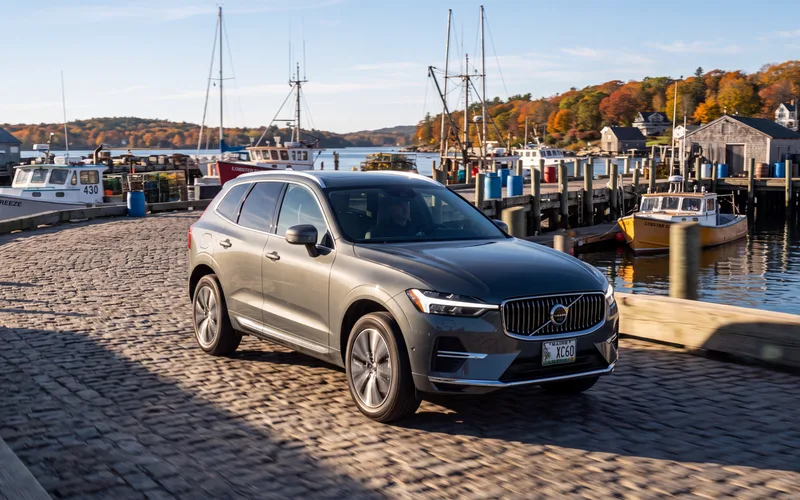 Volvo XC60Compact Luxury SUVBetter at: Reliability & efficiency
Delivers the same European-luxury feel and distinctive design with a better-finished cabin, plug-in hybrid efficiency and real crash-test credentials, without the Land Rover reliability and depreciation penalty.
Compare 2.74B-
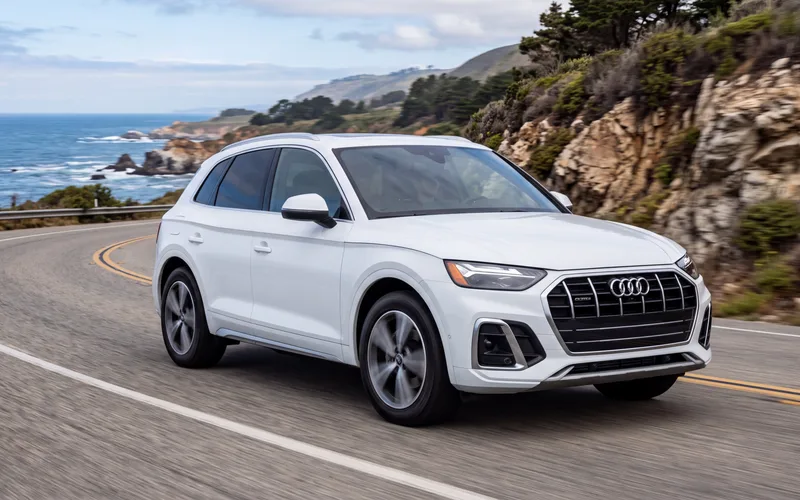 Audi Q5Compact Luxury SUVBetter at: All-around polish
Similar money buys a fundamentally newer vehicle with a quicker, smoother powertrain, better infotainment and roughly $500 a year less in fuel — the well-rounded pick if off-road ability isn't the point.
Compare 2.63C+
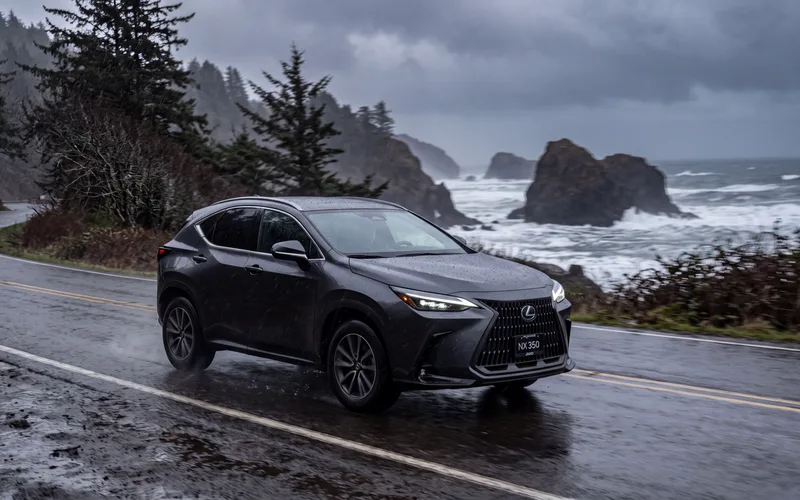 Lexus NXCompact Luxury SUVBetter at: Ownership cost
For buyers who care most about what the car costs to keep, the NX hybrid roughly doubles the fuel economy on regular gas and comes from the brand that leads J.D. Power dependability.
CompareProduction history
Best fit & conditions
Higher scores mean a better fit for that use case. Learn more about use-case fit →
Subject profile
Academic Probation · NHTSA safety recalls
No NHTSA safety recall is on record for the 2026 Land Rover Discovery Sport. Other model years of the Discovery Sport have 13 — listed below.
13 recalls on other model years of the Discovery Sport (2017–2018, 2020–2025)
Sep 17, 2026Electrical system: propulsion system: dc/dc converterThe DC-DC converter may malfunction due to an electrical overload that can occur during high power demand. Additionally, a software error can cause the DC-DC converter to stop functioning at vehicle start-up under certain circumstances. Failure of the DC-DC converter will result in the loss of 12-Volt system charging and can lead to complete loss of drive power and exterior lighting.
Defect
Jaguar Land Rover North America, LLC (Land Rover) is recalling certain 2019-2024 Land Rover Range Rover Sport, 2020-2024 Land Rover Range Rover Evoque, Land Rover Range Rover, Land Rover Discovery Sport, Land Rover Defender, 2021-2024 Land Rover Range Rover Velar, Jaguar E-Pace, F-Pace, and Land Rover Discovery vehicles. The DC-DC converter may malfunction due to an electrical overload that can occur during high power demand. Additionally, a software error can cause the DC-DC converter to stop functioning at vehicle start-up under certain circumstances. Failure of the DC-DC converter will result in the loss of 12-Volt system charging and can lead to complete loss of drive power and exterior lighting.
Risk
A loss of drive power increases the risk of a crash.
Remedy
Dealers will update the vehicle software, free of charge. Interim letters notifying owners of the safety risk are expected to be mailed November 13, 2026. Additional letters will be sent once the final remedy is available. Owners may contact Land Rover's customer service at 800-637-6837. Land Rover's number for this recall is E008. This recall expands previous NHTSA recall number 26V248.
NHTSA campaign 26V599000 ↗Manufacturer no. E00823,677 vehicles potentially affected (all models in the campaign)Filed by Jaguar Land Rover North America, LLCFiled as DISCOVERY SPORTApr 17, 2026Electrical system: propulsion system: dc/dc converterInsufficient electrical load balancing during times of high demand can lead to a current overload condition and malfunction of the DCDC converter. A failure of the DC-DC converter will result in a loss of 12-Volt system charging and can lead to complete loss of drive power and exterior lighting.
Defect
Jaguar Land Rover North America, LLC (Land Rover) is recalling certain 2021-2024 Land Rover Range Rover Velar and Land Rover Discovery, 2020-2023 Land Rover Range Rover Evoque, 2019-2024 Land Rover Range Rover Sport, 2020-2024 Land Rover Range Rover, 2020 Land Rover Discovery Sport, 2020-2024 Land Rover Defender, 2021-2024 Jaguar F-Pace, and 2021-2022 Jaguar E-Pace mild-hybrid electric vehicles (MHEVs). Insufficient electrical load balancing during times of high demand can lead to a current overload condition and malfunction of the DCDC converter. A failure of the DC-DC converter will result in a loss of 12-Volt system charging and can lead to complete loss of drive power and exterior lighting.
Risk
A loss of drive power increases the risk of a crash.
Remedy
Dealers will update the central software, free of charge. Interim letters notifying owners of the safety risk were mailed June 17, 2026. Additional letters will be sent once the final remedy is available. Owners may contact Land Rover's customer service at 800-637-6837. Land Rover's numbers for this recall are D126 and H575.
NHTSA campaign 26V248000 ↗Manufacturer no. D126 H575170,169 vehicles potentially affected (all models in the campaign)Filed by Jaguar Land Rover North America, LLCFiled as DISCOVERY SPORTOct 16, 2025Power train: automatic transmission: gear position indication (prndl)Moisture may have entered the gear shift module (GSM) during assembly, which can cause the gear shift position indicator light to fail. As such, these vehicles fail to comply with the requirements of Federal Motor Vehicle Safety Standard (FMVSS) number 101, "Controls and Displays."
Defect
Jaguar Land Rover North America, LLC (Land Rover) is recalling certain 2025 Range Rover, Range Rover Sport, Discovery Sport, and 2026 Range Rover Evoque, and Jaguar F-Pace vehicles. Moisture may have entered the gear shift module (GSM) during assembly, which can cause the gear shift position indicator light to fail. As such, these vehicles fail to comply with the requirements of Federal Motor Vehicle Safety Standard (FMVSS) number 101, "Controls and Displays."
Risk
A gear shift position indicator that fails to illuminate can make it difficult to identify the correct transmission gear position, increasing the risk of a crash.
Remedy
Dealers will replace the GSM, free of charge. Owner letters were mailed December 2, 2025. Owners may contact Land Roverâs customer service at 1-800-637-6837. Land Rover's numbers for this recall are D054 and H566.
NHTSA campaign 25V705000 ↗Manufacturer no. D054 H566293 vehicles potentially affected (all models in the campaign)Owners notified Dec 2, 2025Filed by Jaguar Land Rover North America, LLCFiled as DISCOVERY SPORTJan 16, 2025Back over prevention: software · Equipment: electrical: infotainment: video (touch)screen/monitor/unitThe touchscreen in the center console may go blank at vehicle startup, resulting in the rearview camera image not displaying as intended. As such, these vehicles fail to comply with the requirements of Federal Motor Vehicle Safety Standard (FMVSS) number 111, "Rear Visibility."
Defect
Jaguar Land Rover North America, LLC (Land Rover) is recalling certain 2023 Discovery Sport, 2023-2024 Defender, and 2023 Range Rover Evoque vehicles. The touchscreen in the center console may go blank at vehicle startup, resulting in the rearview camera image not displaying as intended. As such, these vehicles fail to comply with the requirements of Federal Motor Vehicle Safety Standard (FMVSS) number 111, "Rear Visibility."
Risk
A rearview camera that does not display an image can reduce the driver's rear view, increasing the risk of a crash.
Remedy
Dealers will update the touchscreen software, free of charge. Owner notification letters were mailed March 3, 2025. Owners may contact Land Rover's customer service at 1-800-637-6837. Land Rover's number for this recall is N972.
NHTSA campaign 25V016000 ↗Manufacturer no. N97228,370 vehicles potentially affected (all models in the campaign)Owners notified Mar 3, 2025Filed by Jaguar Land Rover North America, LLCFiled as DISCOVERY SPORTSep 12, 2024Back over prevention: sensing system: camera · Forward collision avoidance: sensing system: cameraThe Near Field Sensing Module (NFSM) may overheat and cause the 3D surround camera images, including the rearview camera image, not to display.
Defect
Jaguar Land Rover North America, LLC (Land Rover) is recalling certain 2024 Defender, Discovery Sport, Range Rover, Range Rover Evoque, Range Rover Velar, and Range Rover Sport vehicles. The Near Field Sensing Module (NFSM) may overheat and cause the 3D surround camera images, including the rearview camera image, not to display.
Risk
A rearview camera image that does not display can decrease the driver's visibility, increasing the risk of injury or crash.
Remedy
Dealers will replace the NFSM, free of charge. Owner notification letters were mailed October 24, 2024. Owners may contact Land Rover customer service at 1-800-637-6837. Land Rover's number for this recall is N927.
NHTSA campaign 24V678000 ↗Manufacturer no. N927180 vehicles potentially affected (all models in the campaign)Owners notified Oct 24, 2024Filed by Jaguar Land Rover North America, LLCFiled as DISCOVERY SPORTFeb 29, 2024Structure: bodyThe lower A-pillar bolt on the right side may be improperly fastened, which can result in reduced structural strength of the body structure.
Defect
Jaguar Land Rover North America, LLC (Land Rover) is recalling certain 2024 Land Rover Discovery Sport vehicles. The lower A-pillar bolt on the right side may be improperly fastened, which can result in reduced structural strength of the body structure.
Risk
A body structure with reduced structural strength may not adequately protect passengers in a crash, increasing the risk of injury.
Remedy
Dealers will inspect and tighten the right side, lower A-pillar bolt, as necessary, free of charge. Owner notification letters were mailed April 16, 2024. Owners may contact Land Rover customer service at 1-800-637-6837. Land Rover's number for this recall is N871.
NHTSA campaign 24V163000 ↗Manufacturer no. N87147 vehicles potentially affected (all models in the campaign)Owners notified Apr 16, 2024Filed by Jaguar Land Rover North America, LLCFiled as DISCOVERY SPORTJul 21, 2022Seat belts: pretensionerThe driver and front passenger seat belt pretensioners may be damaged, which can cause the seat belts to not properly restrain occupants.
Defect
Jaguar Land Rover North America, LLC (Land Rover) is recalling certain 2022-23 Land Rover Defender, Discovery, Discovery Sport and 2022 Range Rover Sport and Range Rover Velar vehicles. The driver and front passenger seat belt pretensioners may be damaged, which can cause the seat belts to not properly restrain occupants.
Risk
Improperly restrained occupants have an increased risk of injury during a crash.
Remedy
Dealers will inspect and replace the front seat belt assemblies, as necessary, free of charge. Owner notification letters were mailed September 16, 2022. Owners may contact Land Rover customer service at 1-800-637-6837. Land Rover's number for this recall is N720.
NHTSA campaign 22V523000 ↗Manufacturer no. N7204,927 vehicles potentially affected (all models in the campaign)Owners notified Sep 16, 2022Filed by Jaguar Land Rover North America, LLCFiled as DISCOVERY SPORTAug 26, 2021Seat belts: front: retractor · Seat belts: rear/other: retractorThe seat belt automatic locking retractors may deactivate early, which can prevent the child restraint system from securing properly.
Defect
Jaguar Land Rover North America, LLC (Land Rover) is recalling certain 2021 Range Rover, 2022 Range Rover Sport, 2020-2021 Range Rover Velar, Discovery Sport, 2020-2022 Discovery, and Defender vehicles. The seat belt automatic locking retractors may deactivate early, which can prevent the child restraint system from securing properly.
Risk
An unsecured child restraint system can increase the risk of injury during a crash.
Remedy
Dealers will inspect and replace the seat belt assemblies as necessary, free of charge. Owner letters were mailed October 20, 2021. Owners may contact Land Rover customer service at 1-800-637-6837. Land Rover's number for this recall is N630.
NHTSA campaign 21V668000 ↗Manufacturer no. N63032,687 vehicles potentially affected (all models in the campaign)Owners notified Oct 20, 2021Filed by Jaguar Land Rover North America, LLCFiled as DISCOVERY SPORTDec 3, 2020Electrical system: instrument panel: speedometer/odometer · Electrical system: softwareA software error may cause the instrument cluster to randomly alternate the speedometer and odometer units between Miles Per Hour (MPH) and Kilometers Per Hour (KM/H) without driver input to the display unit. As such, these vehicles fail to comply with the requirements of the Federal Motor Vehicle Safety Standard (FMVSS) number 101, "Control and Displays."
Defect
Jaguar Land Rover North America, LLC (Land Rover) is recalling certain 2020 Discovery Sport and Range Rover Evoque vehicles. A software error may cause the instrument cluster to randomly alternate the speedometer and odometer units between Miles Per Hour (MPH) and Kilometers Per Hour (KM/H) without driver input to the display unit. As such, these vehicles fail to comply with the requirements of the Federal Motor Vehicle Safety Standard (FMVSS) number 101, "Control and Displays."
Risk
The changing displays may cause driver distraction or confusion and possibly result in excessive speed, which can increase the risk of a crash.
Remedy
Land Rover will notify owners, and dealers will update the vehicle software, free of charge. The recall began January 19, 2021. Owners may contact Land Rover customer service at 1-800-637-6837. Land Rover's number for this recall is N516.
NHTSA campaign 20V751000 ↗Manufacturer no. N51623 vehicles potentially affected (all models in the campaign)Owners notified Jan 19, 2021Filed by Jaguar Land Rover North America, LLCFiled as DISCOVERY SPORTNov 5, 2020Electrical system: softwareThe 48 volt electrical system may experience an overload event, causing a failure of the Metal Oxide Semiconductor Field Effect Transistor (MOSFET) and result in a DCDC converter electrical short-circuit.
Defect
Jaguar Land Rover North America, LLC (Land Rover) is recalling certain 2020 Land Rover Discovery Sport and Range Rover Evoque MHEV vehicles. The 48 volt electrical system may experience an overload event, causing a failure of the Metal Oxide Semiconductor Field Effect Transistor (MOSFET) and result in a DCDC converter electrical short-circuit.
Risk
An electrical short-circuit increases the risk of a fire.
Remedy
Land Rover will notify owners, and dealers will update the vehicle software, free of charge. Owners are advised to exit the vehicle when it is parked and park outside away from buildings or structures until the repair is complete. The recall began December 8, 2020. Owners may contact Land Rover customer service at 1-800-369-1000. Land Rover's number for this recall is N503.
NHTSA campaign 20V683000 ↗Manufacturer no. N5033,048 vehicles potentially affected (all models in the campaign)Owners notified Dec 8, 2020Filed by Jaguar Land Rover North America, LLCFiled as DISCOVERY SPORTFeb 1, 2018Fuel system, gasoline: fuel injection system: fuel railThe fuel rail end caps may leak, possibly resulting in fuel vapor or liquid fuel leaking into the engine bay.
Defect
Jaguar Land Rover North America, LLC (Land Rover) is recalling certain 2018 Land Rover Range Rover Evoque, Range Rover Velar, and Land Rover Discover Sport vehicles equipped with a 2.0L gasoline engine. The fuel rail end caps may leak, possibly resulting in fuel vapor or liquid fuel leaking into the engine bay.
Risk
A fuel leak in the presence of an ignition source such as hot engine or exhaust components can increase the risk of a fire.
Remedy
Land Rover will notify owners, and dealers will replace the fuel rail, free of charge. The recall began on March 8, 2018. Owners may contact Land Rover customer service at 1-800-637-6837. Land Rover's number for this recall is N138.
NHTSA campaign 18V087000 ↗Manufacturer no. N1388,211 vehicles potentially affected (all models in the campaign)Owners notified Mar 8, 2018Filed by Jaguar Land Rover North America, LLCFiled as DISCOVERY SPORTDec 29, 2016Seat belts: pretensionerThe affected vehicles have seatbelt pretensioners that may not function properly in the event of a crash.
Defect
Jaguar Land Rover North America, LLC (Land Rover) is recalling certain model year 2017 Land Rover Discovery Sport vehicles and 2016-2017 Land Rover Range Rover and Range Rover Sport vehicles. The affected vehicles have seatbelt pretensioners that may not function properly in the event of a crash.
Risk
If the front seat seatbelt pretensioners do not function properly, the seat occupants may not be adequately restrained in the event of a crash, increasing the risk of injury.
Remedy
Land Rover will notify owners, and dealers will inspect the front seat belt assemblies, replacing them as necessary, free of charge. The recall began February 20, 2017. Owners may contact Land Rover customer service at 1-800-637-6837. Land Rover's number for this recall is P095.
NHTSA campaign 16V942000 ↗Manufacturer no. P09513,500 vehicles potentially affected (all models in the campaign)Owners notified Apr 24, 2017Filed by Jaguar Land Rover North America, LLCFiled as DISCOVERY SPORTDec 9, 2016Suspension: front: control arm: lower armThe affected vehicles have front lower control arm fasteners that may fail due to an assembly error, possibly resulting in separation of the steering knuckle.
Defect
Jaguar Land Rover North America, LLC (Land Rover) is recalling certain model year 2016-2017 Land Rover Discovery Sport vehicles manufactured May 30, 2016, to August 24, 2016, and 2016-2017 Range Rover Evoque vehicles manufactured June 7, 2016, to August 26, 2016. The affected vehicles have front lower control arm fasteners that may fail due to an assembly error, possibly resulting in separation of the steering knuckle.
Risk
If the fasteners were to fail causing the knuckle to separate, vehicle handling may be affected, increasing the risk of a crash.
Remedy
Land Rover will notify owners, and dealers will replace the hardware that connects the front lower control arm to the knuckle, free of charge. The recall began on January 27, 2017. Owners may contact Land Rover customer service at 1-800-637-6837. Land Rover's number for this recall is Q650/Q651.
NHTSA campaign 16V889000 ↗Manufacturer no. Q650/Q651220 vehicles potentially affected (all models in the campaign)Owners notified Jan 27, 2017Filed by Jaguar Land Rover North America, LLCFiled as DISCOVERY SPORT
Source: NHTSA Office of Defects Investigation recall database, model years 2017–2026. Recalls are listed by model year as the manufacturer filed them; whether a specific car is affected depends on its VIN — check a VIN at nhtsa.gov ↗. NHTSA model names matched to this page: DISCOVERY SPORT.
Detailed scoring by subject
1Performance & PowertrainGrades below the middle of the scale.1.02D
For 2026 the US lineup collapses to a single Landmark Edition with one engine, the P250 2.0-liter turbocharged Ingenium four, so the volume trim and the range maximum are the same figure.
The P250's peak torque arrives at just 1,300 rpm, which is what makes a 246-hp four feel adequate in a 4,000-plus-lb SUV around town.
Land Rover's own claim for the five-seat Landmark is 7.3 seconds; the 5+2 third-row configuration adds weight and slips to 7.5. Mid-pack for a compact luxury SUV and well behind turbo-six or EV rivals.
The Ingenium 2.0T pulls cleanly from low revs thanks to torque at 1,300 rpm, but it is the least polished part of the car: reviewers consistently note a coarse, gruff note when extended and a beat of turbo lag from a standstill. Acceptable rather than luxury-grade, behind the smoother units in the BMW X3, Audi Q5 and Mercedes GLC.
The ZF 9-speed automatic shifts smoothly when left alone and its very low first gear helps off-road, but it is slow to respond to a sudden request for a downshift and can shuffle between its many closely-spaced ratios. A known weak point of this JLR application rather than a fault unique to 2026.
The 2,000 kg European rating carries over to the US spec sheet as 4,409 lbs when the Towing Pack is fitted — strong for a compact SUV, where many rivals stop at 3,500 lbs or tow nothing at all.
All-wheel drive is standard on every 2026 Discovery Sport — there is no FWD version in the US — and it comes with Terrain Response 2, All Terrain Progress Control and Hill Descent Control, plus torque vectoring on the Active Driveline setup. Only the absence of a true low-range transfer case keeps it out of the top band.
Genuinely more capable off-pavement than any compact luxury crossover rival: 8.35 in of ground clearance, a 23.6 in wading depth, 25° approach and 31° departure angles, and Land Rover's full terrain-mode suite. But it is a unibody crossover on road tires with no low range, no locking differentials and no dedicated off-road trim, so it sits below the Defender/Wrangler tier.
For 2026 Land Rover consolidated the US range into a single Landmark Edition with a single engine — the P250 2.0T. The P300e plug-in hybrid and the diesel Ingenium engines sold in Europe are not offered in the US, so American buyers get one take-it-or-leave-it powertrain with no electrified option.
2Efficiency & RangeThe Discovery Sport's lowest-graded category.0.00F
2026 is the Discovery Sport's final model year and the lineup collapses to a single Landmark Edition, so the 246-hp P250 2.0L turbo four with the 9-speed automatic and standard AWD is the only US configuration — EPA rates it at 20 MPG combined. That is poor for a compact SUV of any kind: a 2.0-litre four returning full-size-SUV economy, penalized by the L550's weight, permanent AWD and the old PTA-platform drivetrain, with no MHEV assistance in the US spec.
EPA city rating is 19 MPG, near the bottom of the SUV band. Stop-start is fitted but there is no hybrid assist to recover braking energy, so urban duty is where the Discovery Sport's efficiency deficit is widest — it matches a Defender 110 in town while being two segments smaller.
23 MPG highway is the vehicle's best figure but still weak — the boxy L550 body, 8.3 in of ground clearance and full-time AWD leave it well short of the 27–30 MPG highway that lighter compact luxury rivals manage, and below its own platform-mate Range Rover Evoque (27 MPG highway).
A 17.7-gallon tank at the EPA's 20 MPG combined works out to roughly 354 miles between fills — mediocre, and notably short of the larger Discovery's ~500 miles, which uses a 23.8-gallon tank to compensate for similarly poor economy. Small tank plus poor economy is the worst combination for range, and the Discovery Sport has both.
EPA puts annual fuel cost at $3,800 — roughly 750 gallons of premium a year — which sits above the top of the SUV normalization band and therefore scores zero. It is the same annual bill EPA assigns the far larger Defender 110, and about $500/yr worse than an Audi Q5 or Mercedes GLC in the same segment.
EPA classifies the 2026 Discovery Sport as a premium-gasoline vehicle, and the P250 Ingenium's 91-octane requirement is what drives the $3,800 annual bill at only 20 MPG. There is no regular-fuel trim, no E85 or diesel alternative in the US, and no charging path to cheaper home energy — the owner is locked into the most expensive pump on the island for every mile.
3SafetyOne of the Discovery Sport's strongest categories.2.53C+
NHTSA has published no 5-Star Safety Ratings for the L550 Discovery Sport in any US model year, and 2026 is a pure carry-over of the 2019-facelift PTA-platform car with only trim consolidation (S and Dynamic SE replaced by a single Landmark Edition). The estimate is anchored on the nameplate's 2022 Euro NCAP five-star result under a current protocol, not on any published US test; low US sales volume is the reason both agencies skip it.
The Discovery Sport holds no IIHS award and has no published IIHS crashworthiness results in any model year, so it cannot reach the award band. What lifts it slightly above its untested Land Rover siblings is that its structural evidence is current rather than expired: a 2022 Euro NCAP five-star result with 84% adult and a class-leading 89% child score, tested under a far newer protocol than the Discovery's superseded 2017 run. That test still flagged genuine faults — the seat-mounted side thorax airbag was judged not to have deployed correctly in the pole impact, getting trapped behind interior trim and earning marginal chest protection, and the car has no far-side occupant-to-occupant counter-measures. It is, however, excluded from the JLR driver-airbag clockspring recall and stop-sale that swept the Defender, Discovery and Range Rover in mid-2026.
The strongest item in the category and the clearest benefit of the 2026 trim consolidation: with a single Landmark Edition there is no trim walk to hide equipment behind, so every car leaves the factory with emergency braking, adaptive cruise control, Lane Keep Assist, Blind Spot Assist, Rear Traffic Monitor, Driver Condition Monitor, traffic sign recognition with adaptive speed limiter, front and rear parking sensors, 3D Surround Camera, ClearSight Ground View and the ClearSight interior rear-view mirror. Adaptive cruise in particular was withheld until the upper Dynamic SE trim in prior model years and is now universal. Held below the top of the band only because there is no rear AEB, junction assist or safe-exit function.
IIHS has run no front crash prevention test on the Discovery Sport, so there is no Superior/Advanced rating for either the vehicle-to-vehicle or the pedestrian protocol and no US nighttime pedestrian data. The available evidence is Euro NCAP's 2022 assessment, which is recent enough to mean something: the AEB performed well in car-to-car scenarios and strongly against cyclists, but pedestrian results were only adequate with some outright avoidance failures, notably in reversing scenarios, for a 71% vulnerable-road-user score. Scored a notch above the Defender and Range Rover (70) on the strength of the newer test protocol and well above the Discovery (65), whose only evidence is from 2017.
Blind Spot Assist is standard on the sole 2026 trim and intervenes with a corrective steering input plus flashing icon and audible alert rather than only lighting a mirror telltale, which places it in the active-intervention band, and Rear Traffic Monitor is likewise standard. It stops short of full marks because rear coverage is alert-only, there is no safe-exit assist for rear occupants, and no trailer-aware blind-spot extension despite the 4,409 lb tow rating.
Lane Keep Assist is standard for 2026, but it is a departure-correction system that nudges at the lane edge rather than true centering; sustained centering requires JLR's Steering Assist function bundled with adaptive cruise, which US materials for the Landmark Edition do not separately confirm. Euro NCAP's 85% safety-assist score indicates the lane-support system meets current European requirements, but reviewers of JLR's implementation describe intervention that announces itself rather than blending in.
Adaptive cruise is standard for 2026, a real upgrade over prior model years where it was reserved for the Dynamic SE and above, and JLR's system is full-speed-range with stop-and-go, which suits the car's commuter brief. It lands mid-band rather than high because there is no integrated highway-assist mode layering navigation-linked speed or lane-change support on top, and the standard adaptive speed limiter works from traffic-sign recognition rather than mapped data.
JLR offers no hands-free highway driving system on the 2026 Discovery Sport, and with a single trim there is no options route to one either. Steering Assist, where fitted, is a hands-on lane-centering aid with a torque-sensing wheel that nags and disengages if the driver lets go, so the car sits in the no-hands-free band against compact luxury rivals offering BlueCruise, Super Cruise or equivalent.
IIHS has published no headlight rating for the Discovery Sport, so there is no Good/Acceptable/Marginal grade to anchor on. The Landmark Edition gets LED headlights with signature DRLs and automatic high-beam assist as standard — adequate hardware, and at least it is universal now that there is one trim — but Matrix/Pixel LED beam segmentation is not confirmed on the 2026 US spec, which is what the German compact-luxury rivals fit. Scored in the middle band: capable auto high beam standard, premium beam-shaping absent.
A genuine strength and the best-supported item outside ADAS breadth. The Discovery Sport keeps the upright greenhouse, tall side and rear glass and command driving position the nameplate is built around, and for 2026 the camera compensation that used to sit inside a Technology Pack — 3D Surround Camera, ClearSight Ground View that effectively sees through the bonnet, and the ClearSight interior rear-view mirror that replaces the glass view with a roof-camera feed — is all standard. Docked only for the chunky door mirrors that obstruct the view at junctions and the second- and third-row headrests that chop up the straight-back view in seven-seat cars.
Cars.com's Car Seat Check found the Discovery Sport excelled, crediting LATCH anchors that sit under removable plastic covers and are easy to use, doors that open extra wide, and second-row seats that both slide and recline — a convertible seat installed easily in both orientations without moving the front passenger seat forward in rear-facing mode. It falls short of the Discovery's score because this is a compact platform: three-across is tight, and the third row that would add two more seating positions is a $1,500 option with a cramped, tether-only bench rather than the four complete LATCH sets its bigger sibling carries as standard.
4Space & ComfortGrades below the middle of the scale.1.02D
The 2026 US lineup is the single Landmark Edition, sold as a five-seater with the 5+2 third row a factory option; five is the volume configuration and matches the registry.
The sole 2026 US trim carries the fixed panoramic roof as standard, so 40.2 in is the figure for the configuration actually sold; the 39.5 in standard-roof number is published but not orderable in the US.
Front legroom is short by SAE measure even against compact-luxury rivals — a consequence of the L550's upright packaging that prioritizes the second and optional third rows.
The tall, boxy roofline gives the second row more headroom than most compact luxury SUVs, unchanged by the 2026 trim simplification.
Second-row legroom is a genuine strength for the size, helped by the sliding and reclining 60:40 bench that lets riders trade legroom against cargo.
Having an optional third row at all sets it apart from the Q5/X3/GLC/NX set, but it is a token 5+2 bench with roughly 25.6 in of effective legroom and 34.4 in of headroom that Land Rover itself positions for children, and only 6.9 cu ft of cargo remains behind it.
Cargo behind the second row is adequate for the compact luxury class but well short of mainstream SUVs, and the underfloor spare/third-row packaging limits the load floor.
Maximum cargo volume is modest in absolute terms — the compact footprint and the rear multi-link/spare-wheel packaging cap what the folded cabin can swallow.
Competent rather than clever: a deep center console, underfloor load-bay storage, a sliding/reclining second row and standard wireless charging cover the basics, but there is no standout packaging trick and the optional third row eats the spare-wheel well.
Rear seats draw praise as unusually roomy and comfortable for the size, but Consumer Reports faults the front chairs for weak lateral support, and the 2026 US simplification drops ventilated seats and Windsor leather entirely from the range.
Divided verdicts: UK testers call comfort the car's forte on smaller wheels, while Consumer Reports finds the US car brittle over broken pavement. The 2026 switch to standard 19-in wheels (21s dropped) helps, but the passive suspension still transmits ruts and ripples.
Wind and road noise are well contained at highway speed, but the 2.0-liter Ingenium four is coarse when worked and the nine-speed's downshifts arrive with audible engine flare — average for the class, not library-quiet.
With one trim, the comfort kit that mattered is now standard — heated power front seats, heated steering wheel, dual-zone climate with second-row vents, fixed panoramic roof, power liftgate and CO2-monitoring air purification. The ceiling is lower than rivals' though: no ventilated seats, no three-zone climate and no rear seat heating available in the US for 2026.
5Cost of OwnershipOne of the Discovery Sport's weakest categories.0.36F
For 2026 Land Rover collapsed the Discovery Sport (L550, still the 2019-facelift PTA-platform car) to a single Landmark Edition that replaces the old S and Dynamic SE trims, so base and entry price are the same car: $49,900 plus $1,275 destination. That lands in the upper-middle of the SUV price band and well above mainstream compact-SUV entry points, though it undercuts most compact luxury rivals' loaded grades.
With one trim, the volume car is a Landmark carrying the options most buyers take — the $1,500 third-row pack and a comfort/cold-climate pack — landing near $54,000 delivered. A fully loaded example runs to roughly $58,000 before destination, so the practical spread is narrow by luxury-SUV standards.
The first five years look better than the Land Rover reputation suggests because the 4-year/50,000-mile factory warranty absorbs most of the window — CarEdge puts the five-year figure roughly $1,100 below the luxury-SUV average. The bill arrives later: costs climb from $677 in year one to $1,575 in year five and the ten-year total more than triples, with a coin-flip chance of a major repair by year ten.
Depreciation is the Discovery Sport's defining ownership cost and the reason this category scores where it does. Every major projection puts five-year retention in the low 40s — several points worse than the luxury compact SUV average and roughly $31,000 of value lost on a volume-trim car — driven by soft Land Rover residuals and the brand's reliability record.
Land Rover's New Vehicle Limited Warranty runs 4 years/50,000 miles, which is the German-luxury norm on years but short on mileage next to Genesis or the Korean brands. It covers the whole car including powertrain, and roadside assistance runs alongside it.
Land Rover publishes no extended powertrain coverage: engine and transmission fall under the same 4-year/50,000-mile limited warranty as everything else. Against a segment band that starts at 5 years that is the floor, and it matters more here than on most brands given the Ingenium four's repair history.
There is no included scheduled maintenance on a 2026 Discovery Sport — Land Rover sells service as a Prepaid Maintenance Plan instead, and the old EliteCare package that bundled 5 yr/60,000 mi of service has long since left the US lineup. What is included is useful but basic: 24-hour Land Rover Roadside Assistance for the full 4-year/50,000-mile warranty period with towing to the nearest retailer and trip-interruption benefits, plus a Pivi Pro connected-services data trial. That is 'basic roadside only' territory, behind luxury rivals that still cover at least the first service or two.
$54,000 volume-trim price minus its estimated resale value after 5 years (42% retained, or about $22,680) leaves about $31,320 in depreciation. Add the projected $5,347 in 5-year maintenance and repairs, and owning this vehicle for 5 years costs about $36,667 in total.
6Reliability & QualityOne of the Discovery Sport's weakest categories.0.81F
Consumer Reports expects the 2026 Discovery Sport to be less reliable than the average new vehicle, a prediction driven by Land Rover's brand history since the L550 has too thin a survey base of its own. Eleven years on the same platform has not translated into a settled reliability record — infotainment, electrical and transmission-shift complaints persist across the post-2019 facelift cars.
Land Rover is a fixture in the bottom handful of every major US dependability study, and 2026 was no exception: 274 PP100 in the J.D. Power VDS, better only than Volvo and Volkswagen, and second-worst overall in Consumer Reports' 2026 brand rankings. Electrical and electronic faults are the brand's signature complaint category, which is exactly what Discovery Sport owners report.
Recent-model-year Discovery Sport recalls have been frequent but individually minor and mostly compliance-related rather than systemic — a software fix, a bolt torque check, a shift-module swap. The heavier hit is the TSB side, where infotainment, electrical-gremlin and water-ingress bulletins are a running pattern for this generation rather than isolated events.
The US-market P250 pairs the 2.0-liter Ingenium turbo four (246 hp, 48-volt mild hybrid) with the ZF 9HP nine-speed. The petrol Ingenium sidesteps the notorious timing-chain and oil-dilution failures that plague the diesel version not sold here, but the family still carries thermostat-housing coolant leaks and piston-cooling-jet solenoid faults, and the ZF 9HP has a mixed durability and shift-quality reputation across every brand that fits it. Better than the engine's diesel sibling, well short of a proven high-mileage powertrain.
The cabin is genuinely plush for the money — dense soft-touch surfaces, tasteful trim finishers, standard DuoLeather seating and a Meridian system at $49,900 — and clearly a step above mainstream compact SUVs. It falls short of class-leading, though: the design is eleven years old at its core, low-touch zones use obvious hard plastics, and the Volvo XC60 and current X3/GLC cabins read as richer and more modern.
Assembly is presentable when new but does not hold up as well as the segment norm: owners of this generation report interior squeaks and rattles, trim wear, and — more seriously — water leaks around the sunroof and doors that then take out electronics. Land Rover's bottom-tier standing in initial-quality and dependability studies reflects the same build-consistency problem.
Land Rover's US retailer network is small compared with BMW, Mercedes-Benz or Lexus — concentrated in affluent metros and thin across rural and secondary markets, which matters more than usual for a brand whose vehicles visit the shop as often as these do. The sales experience scores well; the service side is where the brand is weaker, absent from the premium leaders in the dealer-service study and singled out by owners in dependability research.
This is the Discovery Sport's worst reliability-side attribute. Upkeep runs roughly triple the industry norm, parts are largely dealer-channel with a thin independent aftermarket, and JLR-competent independent shops are scarce enough that owners are effectively captive to franchise labor rates. The 4-year/50,000-mile warranty covers the early years, but out-of-warranty ownership is expensive and the odds of a major repair inside ten years are better than even.
7Technology & InfotainmentThe Discovery Sport's best-graded category.3.10B
The floating curved-glass 11.4-inch Pivi Pro touchscreen arrived with the MY2024 interior update (replacing the 10.25-inch Touch Pro unit) and carries into 2026 unchanged; with the lineup consolidated to one trim it is the only screen offered.
Pivi Pro is a clear generational improvement — fast boot, sharp graphics, permanent sidebars that put ~90% of tasks within two taps — but reviewers of the current car report the software is less responsive than it was now that more functions are crammed into it, and the MY2024 declutter deleted the old rotary climate controls, making temperature and settings fiddly on the move. Solidly mid-pack for a compact luxury SUV: better than Acura's RDX or Cadillac XT5 setups, not the equal of BMW's X3 iDrive or Audi's Q5 MMI.
Both phone-projection platforms are standard, and Pivi Pro runs them wirelessly — a later SOTA release also mirrors Google Maps / Apple Maps guidance into the digital cluster. With a single trim there is no upsell tier, so every 2026 Discovery Sport gets it. Held just below the top band because Land Rover's own 24MY spec copy lists wireless CarPlay explicitly while describing Android Auto without the qualifier, so wireless Android Auto rests on brand documentation rather than a model-specific spec line.
Pivi Pro includes connected navigation with live traffic and online routing, and built-in Amazon Alexa handles genuine natural-language requests rather than fixed command strings — a real advantage over the canned voice systems in the Lexus NX or Acura RDX. It stops short of the top band because the native maps interface is a generation behind the Google-based systems in GM and Volvo rivals, and most owners still default to CarPlay for guidance.
A branded Meridian system is standard rather than optional on the 2026 Landmark Edition — unusual at this price — and a Meridian Surround upgrade is available for buyers who want more. Clean, well-balanced sound that reviewers rate as strong for the class, though it does not reach the reference-grade Burmester/Bowers & Wilkins tier available in a GLC or Volvo XC60.
The 12.3-inch Interactive Driver Display is standard on the only 2026 trim, fully digital and configurable, and now accepts CarPlay/Android Auto map guidance via software update. Crisp and legible; graphics styling is a touch dated against Audi's Virtual Cockpit but the capability is all there.
Land Rover's Software-Over-The-Air system goes beyond maps: it updates infotainment and multiple vehicle modules in the background, and some recall remedies are now delivered remotely. It falls short of the top band because JLR ships these on an occasional cadence and they rarely add meaningful new functionality the way Tesla, Rivian or Polestar releases do.
The Land Rover Remote app covers the core set — remote engine start, lock/unlock, vehicle locator, status and alerts — but the richer Remote Premium tier is subscription-gated once the included term lapses, there is no phone-as-key/Apple Wallet key on this platform, and JLR's app has a long-standing reputation for flaky logins and slow command response.
USB-C outlets are provided in each seating row (including the optional third row, which gets its own) and the MY2024 console redesign added a wireless charging pad with far better front stowage. No household-style AC outlet is offered, which keeps it out of the top band.
Proximity keyless entry with automatic lock/unlock, push-button and app-based remote start, a powered tailgate and HomeLink are all part of the 2026 package, and Land Rover's waterproof Activity Key wristband remains a genuinely useful extra. No smartphone-as-key option, which is what separates it from the best in the segment.
The strongest part of the Discovery Sport's tech case: a 3D Surround Camera is standard on the 2026 Landmark Edition rather than a top-trim extra, and ClearSight Ground View — which composites a view of the terrain hidden under the nose onto the touchscreen — is a class-unique aid that helps as much in a tight parking structure as off-road. Park sensors and a ClearSight camera rear-view mirror (Technology Pack) round it out.
A head-up display is offered on the one trim the 2026 car comes in, bundled into the Technology Pack alongside the ClearSight mirror — so every buyer can specify it, but nobody gets it without paying for the pack. The unit itself is a modest conventional projection display, not the large augmented-reality type now appearing in German rivals.
8Use-Case FitOne of the Discovery Sport's strongest categories.2.10C
The upright, boxy L550 body gives tall, square door openings, and the 40/20/40 second row slides and reclines with 38.1 in of legroom — unusually generous for a compact luxury SUV — so rear-facing seats fit without punishing the front passenger. The 32.2 cu ft load bay swallows a full-size stroller, and the optional $1,500 third row folds flat into the floor when not in use.
Because 2026 collapses to a single Landmark Edition trim, families get the full ADAS suite at the entry price — AEB, blind-spot assist with cross-traffic, adaptive cruise, lane keep, 3D Surround Camera and ClearSight GroundView are all standard rather than trim-walked. The gap is verification: neither NHTSA nor IIHS publishes any rating for the Discovery Sport in any recent model year, so buyers have no US crash data to check.
The second row is the strong point — Consumer Reports calls it 'unusually spacious and comfortable for a vehicle of this size' — backed by two-zone climate with second-row vents, second- and third-row USB ports, a fixed panoramic roof and Cabin Air Purification Plus. Against that, CR's road test faults a brittle ride over broken pavement, there is no rear-seat entertainment, and with the third row up cargo shrinks to a few small bags.
A commanding upright seating position, light steering, standard adaptive cruise and the best-in-class camera set make traffic duty easy, but the powertrain undercuts it: reviewers consistently criticize the ZF nine-speed's kickdown hesitation and the 2.0-liter four's coarseness under load, and the brittle suspension transmits city pavement into the cabin.
This is the Discovery Sport's worst use case by a wide margin: 20 MPG combined on required premium fuel puts EPA's annual fuel bill at $3,800, or $8,000 more than an average new vehicle over five years, and consumables are no relief — RepairPal pegs annual maintenance and repair at $1,780 against roughly $650 industry-wide. Insurance adds about $2,350 a year on top.
A genuinely compact footprint, upright glasshouse and low beltline give excellent natural sightlines, and the 2026 Landmark makes the whole camera suite standard — 3D Surround Camera, ClearSight GroundView that shows the ground beneath the nose, and a ClearSight camera rear-view mirror — plus automatic park assist. Only the 39.1 ft turning circle keeps it out of the top band.
The 4,409 lb tow rating with the $1,050 Towing Pack is respectable for a compact crossover and covers a small boat, a pair of jet skis or a light utility trailer. Beyond that it is not a work tool: unibody construction, a 246 hp four that is strained hauling near its limit, no published payload headroom, no bed, and carpeted luxury load surfaces.
Land Rover finished third-from-last in the 2026 J.D. Power dependability study and Consumer Reports predicts the Discovery Sport to be less reliable than the average new car, with documented gear-shift-module moisture ingress and sunroof/door water leaks that damage electronics. There is no fleet or trade presence to draw on and the cabin is trimmed for luxury duty, not abuse.
Provisions are consumer-grade rather than work-grade: standard roof rails rated around 165 lb, load-space tie-down points, a factory tow pack and a reasonable Land Rover Gear accessory catalogue of rails, boxes and rubber load mats. There is no AC inverter or bed outlet, no washable work interior, and nothing resembling an upfitter ecosystem.
Roughly 354 miles between fills, well-contained wind and road noise and supportive seats make it a competent tourer, and adaptive cruise with lane keep is standard for the first time on the base trim. It falls short of the segment's best on two counts: Consumer Reports finds the ride brittle over highway expansion joints, and there is no hands-free or centering highway assist to cut driver load.
This is what the Discovery Sport is actually for, and it is a clear class outlier: standard AWD with Terrain Response 2, All-Terrain Progress Control, Hill Descent Control and Wade Sensing, 8.35 in of ground clearance and a 23.6 in wading depth that no compact luxury rival approaches. Add 4,409 lb of towing for toys and standard roof rails and it genuinely enables trailhead and back-road use, stopping short only of Defender-grade rock work — there is no low-range transfer case.
At 32.2 cu ft behind the second row and 60.0 cu ft with it folded, the Discovery Sport is among the roomiest compact luxury SUVs — U.S. News reckons eight carry-ons behind row two. The square opening, 40/20/40 folding second row that also slides and reclines, third row that stows flat into the floor, underfloor spare well, standard roof rails and factory hitch cover most bulky-gear cases.
9Driving ExperienceMid-pack among this car's ten categories.1.87C-
US and UK testers split sharply on this chassis, and the truth sits between them: the L550's multi-link rear axle does control wheel movement well, but the car is heavy (~4,000+ lbs), tall, on all-season tires, and defaults to early understeer with real body roll. Its 2014-vintage bones are the oldest in the compact luxury segment, and no 2026 change addresses them, so it trails the BMW X3, Porsche Macan and Alfa Stelvio by a wide margin while staying secure and predictable in normal use.
The weakest single element of the driving experience, and the one point on which every reviewer agrees. The electric rack is light and low-effort with essentially no feedback, geared quickly enough (2.43 turns lock-to-lock) to feel at odds with the body's slower responses, and it self-centers eagerly enough to feel artificial at speed. Easy to park, uninformative everywhere else.
Hardware is sound and the tuning draws no complaints — vented discs all round (325 mm front / 300 mm rear) with ABS, emergency brake assist and autonomous emergency braking standard, and reviewers describe the pedal as well-modulated. It sits in the adequate band rather than higher because no instrumented US 60–0 figure is published for the current car and there is no evidence of the short, firm-pedal stopping performance that earns a top-band score in this segment.
The P250's 269 lb-ft from 1,300 rpm makes it tractable in traffic, but the calibration is the problem: a beat of turbo lag off idle, and a ZF 9-speed programmed for economy that holds a tall gear then drops several at once when you finally ask for thrust. Consistent with the 58/55 already recorded for powertrain refinement and transmission behavior in Category 1.
Quiet and unobtrusive at a steady cruise — the facelift's NVH work cut tire and suspension noise — but the gas Ingenium four turns coarse and loud the moment it is extended, which the economy-biased transmission makes a routine event rather than an occasional one. Audible but not offensive at part throttle; unrefined for a luxury badge under load.
Mid-pack for a compact SUV rather than the tight circle the exterior footprint suggests — the 107.9-inch wheelbase and the widened facelift track work against it, and standard 19-inch wheels (20s optional) do not help. Fine in a parking garage, unremarkable in a three-point turn.
The car's clearest dynamic strength and a genuine Land Rover trademark: a tall, commanding seat with a squared-off hood you can place precisely, deep side glass and a tall rear window for real all-round visibility, large well-bolstered front seats with 12-way power and memory, and the ClearSight camera mirror and Ground View system covering what the body hides. Held out of the top band by three real irritants — the MY2024 declutter deleted the rotary climate knobs, Consumer Reports finds the touchscreen mounted too far from the driver, and the driver's footwell is awkwardly shaped for the left foot.
Despite the name, nothing here rewards a longer route home: 7.3 seconds to 60 from a coarse four-cylinder, numb steering, an economy-minded transmission and body roll under load. What character it has is off-road credibility — Terrain Response 2, 8.35 in of clearance, 23.6 in wading depth — which is satisfying on a trail but does not translate to on-road enjoyment. Enthusiast outlets are explicit that it is competent, not entertaining.
10Value & Market PositionGrades below the middle of the scale.1.25D
The sole 2026 Landmark Edition bundles content that rivals charge thousands for — fixed panoramic roof, Meridian audio, 11.4-inch Pivi Pro, 12.3-inch digital cluster, 3D Surround and ClearSight Ground View cameras, ClearSight interior mirror, adaptive cruise, heated seats and AWD — all at $49,900, only $1,000 above the 2025 S. Below the very top band because a base Mercedes GLC or BMW X3 still counters with newer core hardware even if it options up the same kit.
At $51,175 delivered the Discovery Sport asks GLC/X3/Q5 money for a 2014-vintage L550 platform with a single 246-249 hp turbo four, 7.3-sec 0-60 and class-trailing value retention (53.6% five-year depreciation vs 48.8% luxury-compact-SUV average). The optional third row at $1,500 and genuine Terrain Response off-road hardware are real per-dollar differentiators, which keeps it out of the poor-value basement.
For 2026 Land Rover deleted the entire trim ladder — the S, SE and Dynamic SE walk-up is gone and Landmark is the only build, with one P250 gas engine and AWD only. Configuration choice collapses to a $1,500 third row plus dealer-installed Beach Days / Snow Days / Road Trip accessory bundles, which is a take-it-or-leave-it lineup by segment standards.
US volume has collapsed from a 12,337-unit peak in 2019 to 2,801 in 2025 (with a 2024 model-year gap in which effectively none were delivered), a rounding error against 50,000-plus-unit segment leaders like the X3 and Q5. The nameplate is now formally on its way out, so the trajectory is terminal rather than merely soft.
Land Rover carries real aspirational pull and design cachet — the Discovery Sport was JLR's global best-seller from 2017 — but the badge's long-running dependability reputation and weak value retention cut against it, and the Discovery sub-brand itself is being wound down in favor of Defender-branded product. Net: a positive but not halo-grade brand effect.
Buyers get subvented 4.9% APR for 12-60 months plus a $1,000 conquest 'welcome credit' for owners of Audi Q3-Q6, BMW X1-X4, Mercedes GLA/GLB/GLC or Macan, but no cash rebate, and the advertised lease ($639/month for 36 months with $6,495 due at signing) is unremarkable for a run-out model. Occasional modest incentives rather than the clearance pricing a final model year might imply.
The L550 generation dates to late 2014 and its only major update was the 2019 PTA-platform facelift, making 2026 a 12-year-old design running seven years past its refresh. Worse for buyers, Land Rover has confirmed 2026 as the final model year with production ending in December — this is not redesign risk, it is a certainty, and there is no direct successor announced.
Reviewers consistently place it behind the class benchmarks — U.S. News scores it 7.3/10 and calls the competition better, The Car Connection rates the outgoing car 5.8/10, and criticism centers on the dated cabin, fiddly touchscreen climate controls and unremarkable powertrain. No 10Best, NACTOY or IIHS-driven award credentials, and it has never been the pick in a comparison test.