

The verdict
A struggling mid-size luxury suv, strong on technology and held back by ownership.
The 2026 Range Rover Velar is the prettiest way to spend $63,175, and that is close to the whole argument for it. The cabin is genuinely lovely, the standard-equipment list at the $61,600 P250 S is unusually generous for the class — 3D surround camera, navigation, Meridian audio, adaptive cruise with lane centering, heated 14-way seats — and the tech scores better here than anywhere else on the car. Everything to do with keeping it costs you: 23 MPG combined on required premium works out to roughly $3,300 a year, insurance runs near $2,900, and five-year resale lands under 40% of sticker, the worst number on the entire scorecard. With a battery-electric replacement confirmed for 2027 and nine model years on this design, a 2026 Velar is a beautiful, well-equipped, expensive-to-own goodbye to an outgoing generation.
Jump to scoresStrengths
- Tech and cabin electronics punch above the price
- Cameras and parking aids you normally pay extra for
- A quiet, comfortable long-distance cruiser
What holds it back
- Depreciation and running costs are brutal
- Fuel economy is poor and premium is required
- Land Rover's reliability record follows the car
Top alternatives
Cars shoppers cross-shop with the Land Rover Range Rover Velar 2.79B-
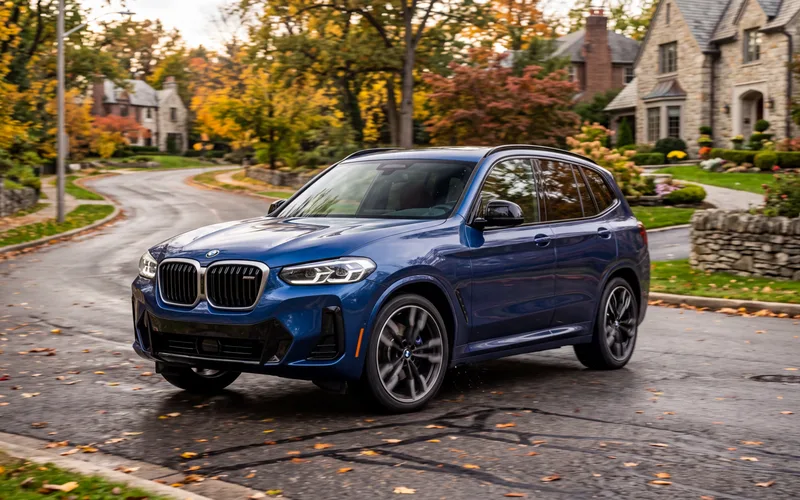 BMW X3Compact Luxury SUVBetter at: All-round value
Same money buys a quicker, better-driving, more practical mid-size luxury SUV with real crash-test data and dramatically better resale.
Compare 2.65C+
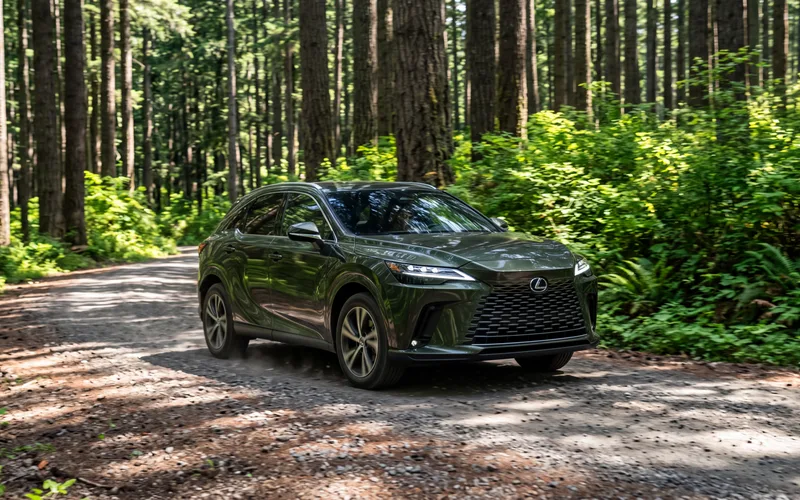 Lexus RXMid-Size Luxury SUVBetter at: Reliability
If the Land Rover reliability record worries you at all, the RX is the same segment with top-tier dependability and roughly 36 MPG hybrid economy.
Compare 2.69C+
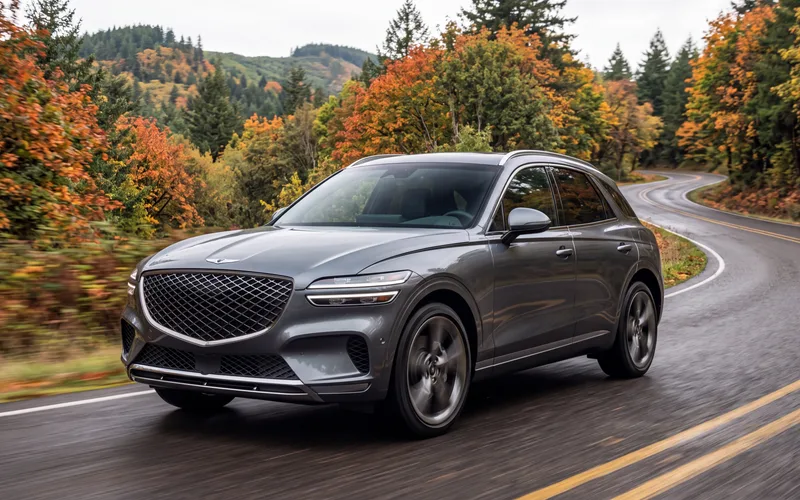 Genesis GV70Compact Luxury SUVBetter at: Warranty coverage
Costs less, matches the standard equipment, and backs it with a 10-year/100,000-mile powertrain warranty instead of the Velar's four years.
CompareProduction history
Best fit & conditions
Higher scores mean a better fit for that use case. Learn more about use-case fit →
Subject profile
Academic Probation · NHTSA safety recalls
May 12, 2026Seat belts: front: warning light/devicesThe seat belt warning system may not activate the audible warning chime as intended. As such, these vehicles fail to conform with the requirements of Federal Motor Vehicle Safety Standard number 208, "Occupant Crash Protection."
Defect
Jaguar Land Rover North America LLC (Land Rover) is recalling certain 2026 Land Rover Range Rover Velar, Range Rover Sport, and Range Rover vehicles. The seat belt warning system may not activate the audible warning chime as intended. As such, these vehicles fail to conform with the requirements of Federal Motor Vehicle Safety Standard number 208, "Occupant Crash Protection."
Risk
A seat belt chime that fails to alert occupants that they are unbuckled can increase the risk of injury during a crash.
Remedy
Dealers will replace the audio amplifier, free of charge. Owner letters were mailed July 10, 2026. Owners may contact Land Rover's customer service at 800-637-6837. Land Rover's number for this recall is D105.
NHTSA campaign 26V297000 ↗Manufacturer no. D10576 vehicles potentially affected (all models in the campaign)Owners notified Jul 7, 2026Filed by Jaguar Land Rover North America, LLCFiled as RANGE ROVER VELAR
12 recalls on other model years of the Range Rover Velar (2018–2024)
Sep 17, 2026Electrical system: propulsion system: dc/dc converterThe DC-DC converter may malfunction due to an electrical overload that can occur during high power demand. Additionally, a software error can cause the DC-DC converter to stop functioning at vehicle start-up under certain circumstances. Failure of the DC-DC converter will result in the loss of 12-Volt system charging and can lead to complete loss of drive power and exterior lighting.
Defect
Jaguar Land Rover North America, LLC (Land Rover) is recalling certain 2019-2024 Land Rover Range Rover Sport, 2020-2024 Land Rover Range Rover Evoque, Land Rover Range Rover, Land Rover Discovery Sport, Land Rover Defender, 2021-2024 Land Rover Range Rover Velar, Jaguar E-Pace, F-Pace, and Land Rover Discovery vehicles. The DC-DC converter may malfunction due to an electrical overload that can occur during high power demand. Additionally, a software error can cause the DC-DC converter to stop functioning at vehicle start-up under certain circumstances. Failure of the DC-DC converter will result in the loss of 12-Volt system charging and can lead to complete loss of drive power and exterior lighting.
Risk
A loss of drive power increases the risk of a crash.
Remedy
Dealers will update the vehicle software, free of charge. Interim letters notifying owners of the safety risk are expected to be mailed November 13, 2026. Additional letters will be sent once the final remedy is available. Owners may contact Land Rover's customer service at 800-637-6837. Land Rover's number for this recall is E008. This recall expands previous NHTSA recall number 26V248.
NHTSA campaign 26V599000 ↗Manufacturer no. E00823,677 vehicles potentially affected (all models in the campaign)Filed by Jaguar Land Rover North America, LLCFiled as RANGE ROVER VELARApr 17, 2026Electrical system: propulsion system: dc/dc converterInsufficient electrical load balancing during times of high demand can lead to a current overload condition and malfunction of the DCDC converter. A failure of the DC-DC converter will result in a loss of 12-Volt system charging and can lead to complete loss of drive power and exterior lighting.
Defect
Jaguar Land Rover North America, LLC (Land Rover) is recalling certain 2021-2024 Land Rover Range Rover Velar and Land Rover Discovery, 2020-2023 Land Rover Range Rover Evoque, 2019-2024 Land Rover Range Rover Sport, 2020-2024 Land Rover Range Rover, 2020 Land Rover Discovery Sport, 2020-2024 Land Rover Defender, 2021-2024 Jaguar F-Pace, and 2021-2022 Jaguar E-Pace mild-hybrid electric vehicles (MHEVs). Insufficient electrical load balancing during times of high demand can lead to a current overload condition and malfunction of the DCDC converter. A failure of the DC-DC converter will result in a loss of 12-Volt system charging and can lead to complete loss of drive power and exterior lighting.
Risk
A loss of drive power increases the risk of a crash.
Remedy
Dealers will update the central software, free of charge. Interim letters notifying owners of the safety risk were mailed June 17, 2026. Additional letters will be sent once the final remedy is available. Owners may contact Land Rover's customer service at 800-637-6837. Land Rover's numbers for this recall are D126 and H575.
NHTSA campaign 26V248000 ↗Manufacturer no. D126 H575170,169 vehicles potentially affected (all models in the campaign)Filed by Jaguar Land Rover North America, LLCFiled as RANGE ROVER VELARSep 12, 2024Back over prevention: sensing system: camera · Forward collision avoidance: sensing system: cameraThe Near Field Sensing Module (NFSM) may overheat and cause the 3D surround camera images, including the rearview camera image, not to display.
Defect
Jaguar Land Rover North America, LLC (Land Rover) is recalling certain 2024 Defender, Discovery Sport, Range Rover, Range Rover Evoque, Range Rover Velar, and Range Rover Sport vehicles. The Near Field Sensing Module (NFSM) may overheat and cause the 3D surround camera images, including the rearview camera image, not to display.
Risk
A rearview camera image that does not display can decrease the driver's visibility, increasing the risk of injury or crash.
Remedy
Dealers will replace the NFSM, free of charge. Owner notification letters were mailed October 24, 2024. Owners may contact Land Rover customer service at 1-800-637-6837. Land Rover's number for this recall is N927.
NHTSA campaign 24V678000 ↗Manufacturer no. N927180 vehicles potentially affected (all models in the campaign)Owners notified Oct 24, 2024Filed by Jaguar Land Rover North America, LLCFiled as RANGE ROVER VELARJun 17, 2024Engine and engine cooling: engine: oil/lubrication: filter/screenThe oil filter housing can crack and leak oil into the engine compartment.
Defect
Jaguar Land Rover North America, LLC (Land Rover) is recalling certain 2023-2024 Defender, 2024 Discovery, Range Rover, Range Rover Sport, and Range Rover Velar vehicles. The oil filter housing can crack and leak oil into the engine compartment.
Risk
An oil leak in the presence of an ignition source such as hot engine or exhaust components, can increase the risk of a fire.
Remedy
Dealers will replace the filter housing, oil filter, and o-rings, free of charge. Owner notification letters were mailed June 27, 2024. Owners may contact Land Rover customer service at 1-800-637-6837. Land Rover's number for this recall is N908.
NHTSA campaign 24V450000 ↗Manufacturer no. N9082,013 vehicles potentially affected (all models in the campaign)Owners notified Jun 27, 2024Filed by Jaguar Land Rover North America, LLCFiled as RANGE ROVER VELARFeb 2, 2023Engine and engine cooling: engine: oil/lubricationThe engine cam carrier oil channel may be blocked, which can lead to an oil leak.
Defect
Jaguar Land Rover North America, LLC (Land Rover) is recalling certain 2019-2023 Range Rover Sport, 2020-2023 Range Rover, Defender, 2022-2023 Discovery, and 2023 Range Rover Velar vehicles. The engine cam carrier oil channel may be blocked, which can lead to an oil leak.
Risk
An oil leak in the presence of an ignition source can increase the risk of a fire.
Remedy
Dealers will inspect and replace the engine cam carrier and related components as necessary, free of charge. Owner notification letters were mailed March 29, 2023. Owners may contact Land Rover customer service at 1-800-637-6837. Land Rover's number for this recall is N763.
NHTSA campaign 23V044000 ↗Manufacturer no. N7636,724 vehicles potentially affected (all models in the campaign)Owners notified Mar 29, 2023Filed by Jaguar Land Rover North America, LLCFiled as RANGE ROVER VELARAug 4, 2022Electrical system: adasThe vehicles were manufactured without an Audio Amplifier Module (AAM), and therefore will not provide audio safety features, such as seat belt reminders, turn signal sounds, and Advanced Driver Assistance System (ADAS) warnings.
Defect
Jaguar Land Rover North America, LLC (Land Rover) is recalling certain 2022 Land Rover Range Rover Velar vehicles. The vehicles were manufactured without an Audio Amplifier Module (AAM), and therefore will not provide audio safety features, such as seat belt reminders, turn signal sounds, and Advanced Driver Assistance System (ADAS) warnings.
Risk
Missing audio safety features, such as seat belt reminders, turn signal sounds, and Advanced Driver Assistance System (ADAS) warnings, can increase the risk of a crash or injury.
Remedy
Dealers will install the missing AAM, free of charge. Owner notification letters were mailed September 27, 2022. Owners may contact Land Rover's customer service at 1-800-637-6837. Land Rover's number for this recall is N725.
NHTSA campaign 22V581000 ↗Manufacturer no. N72562 vehicles potentially affected (all models in the campaign)Owners notified Sep 27, 2022Filed by Jaguar Land Rover North America, LLCFiled as RANGE ROVER VELARJul 21, 2022Seat belts: pretensionerThe driver and front passenger seat belt pretensioners may be damaged, which can cause the seat belts to not properly restrain occupants.
Defect
Jaguar Land Rover North America, LLC (Land Rover) is recalling certain 2022-23 Land Rover Defender, Discovery, Discovery Sport and 2022 Range Rover Sport and Range Rover Velar vehicles. The driver and front passenger seat belt pretensioners may be damaged, which can cause the seat belts to not properly restrain occupants.
Risk
Improperly restrained occupants have an increased risk of injury during a crash.
Remedy
Dealers will inspect and replace the front seat belt assemblies, as necessary, free of charge. Owner notification letters were mailed September 16, 2022. Owners may contact Land Rover customer service at 1-800-637-6837. Land Rover's number for this recall is N720.
NHTSA campaign 22V523000 ↗Manufacturer no. N7204,927 vehicles potentially affected (all models in the campaign)Owners notified Sep 16, 2022Filed by Jaguar Land Rover North America, LLCFiled as RANGE ROVER VELARAug 26, 2021Seat belts: front: retractor · Seat belts: rear/other: retractorThe seat belt automatic locking retractors may deactivate early, which can prevent the child restraint system from securing properly.
Defect
Jaguar Land Rover North America, LLC (Land Rover) is recalling certain 2021 Range Rover, 2022 Range Rover Sport, 2020-2021 Range Rover Velar, Discovery Sport, 2020-2022 Discovery, and Defender vehicles. The seat belt automatic locking retractors may deactivate early, which can prevent the child restraint system from securing properly.
Risk
An unsecured child restraint system can increase the risk of injury during a crash.
Remedy
Dealers will inspect and replace the seat belt assemblies as necessary, free of charge. Owner letters were mailed October 20, 2021. Owners may contact Land Rover customer service at 1-800-637-6837. Land Rover's number for this recall is N630.
NHTSA campaign 21V668000 ↗Manufacturer no. N63032,687 vehicles potentially affected (all models in the campaign)Owners notified Oct 20, 2021Filed by Jaguar Land Rover North America, LLCFiled as RANGE ROVER VELARFeb 25, 2021Exterior lighting: headlights · Exterior lighting: lighting control module: softwareThe Auto High Beam (AHB) system does not indicate through the instrument cluster when the high beams are illuminated automatically. As such, these vehicles fail to comply with the requirements of Federal Motor Vehicle Safety Standard (FMVSS) number 108, "Lamps, Reflective Devices, and Associated Equipment."
Defect
Jaguar Land Rover North America, LLC. (Land Rover) is recalling certain 2018-2020 Range Rover, Range Rover Sport, Discovery, and Range Rover Velar vehicles. The Auto High Beam (AHB) system does not indicate through the instrument cluster when the high beams are illuminated automatically. As such, these vehicles fail to comply with the requirements of Federal Motor Vehicle Safety Standard (FMVSS) number 108, "Lamps, Reflective Devices, and Associated Equipment."
Risk
The driver may be unaware that the high beams are illuminated, reducing visibility for oncoming traffic, and increasing the risk of a crash.
Remedy
Land Rover will notify owners, and dealers will update the vehicle software, free of charge. The recall began April 7, 2021. Owners may contact Land Rover customer service at 1-800-637-6837. Land Rover's number for this recall is N556.
NHTSA campaign 21V117000 ↗Manufacturer no. N55626,805 vehicles potentially affected (all models in the campaign)Owners notified Apr 7, 2021Filed by Jaguar Land Rover North America, LLCFiled as RANGE ROVER VELARJan 17, 2019EngineThe affected vehicles are equipped with V6 or V8 engines whose crankshaft pulley retaining bolt may fracture possibly resulting in engine failure.
Defect
Jaguar Land Rover North America, LLC (Land Rover) is recalling certain 2019 Range Rover, Range Rover Sport, Range Rover Velar and Discovery vehicles. The affected vehicles are equipped with V6 or V8 engines whose crankshaft pulley retaining bolt may fracture possibly resulting in engine failure.
Risk
Engine failure can increase the risk of crash.
Remedy
Land Rover has notified owners, and dealers will replace the crankshaft pulley center retaining bolt, free of charge. The recall began February 12, 2019. Owners may contact Land Rover customer service at 1-800-637-6837. Land Rover's number for this recall is N276.
NHTSA campaign 19V040000 ↗Manufacturer no. N2762,587 vehicles potentially affected (all models in the campaign)Owners notified Feb 12, 2019Filed by Jaguar Land Rover North America, LLCFiled as RANGE ROVER VELARMar 1, 2018Visibility: defroster/defogger/hvac systemThe air inlet door linkages for the ventilation system may detach, preventing the system from clearing fog or condensation from the windshield and windows.
Defect
Jaguar Land Rover North America, LLC (Land Rover) is recalling certain 2018 Range Rover Velar vehicles. The air inlet door linkages for the ventilation system may detach, preventing the system from clearing fog or condensation from the windshield and windows.
Risk
If condensation or fog cannot be cleared, the driver's visibility may be affected, increasing the risk of a crash.
Remedy
Land Rover will notify owners, and dealers will update the vehicle software to control the length of movement of the ventilation actuator arm, free of charge. The recall began on April 16, 2018. Owners may contact Land Rover customer service at 1-800-637-6837. Land Rover's number for this recall is N143.
NHTSA campaign 18V139000 ↗Manufacturer no. N1437,090 vehicles potentially affected (all models in the campaign)Owners notified Apr 16, 2018Filed by Jaguar Land Rover North America, LLCFiled as RANGE ROVER VELARFeb 1, 2018Fuel system, gasoline: fuel injection system: fuel railThe fuel rail end caps may leak, possibly resulting in fuel vapor or liquid fuel leaking into the engine bay.
Defect
Jaguar Land Rover North America, LLC (Land Rover) is recalling certain 2018 Land Rover Range Rover Evoque, Range Rover Velar, and Land Rover Discover Sport vehicles equipped with a 2.0L gasoline engine. The fuel rail end caps may leak, possibly resulting in fuel vapor or liquid fuel leaking into the engine bay.
Risk
A fuel leak in the presence of an ignition source such as hot engine or exhaust components can increase the risk of a fire.
Remedy
Land Rover will notify owners, and dealers will replace the fuel rail, free of charge. The recall began on March 8, 2018. Owners may contact Land Rover customer service at 1-800-637-6837. Land Rover's number for this recall is N138.
NHTSA campaign 18V087000 ↗Manufacturer no. N1388,211 vehicles potentially affected (all models in the campaign)Owners notified Mar 8, 2018Filed by Jaguar Land Rover North America, LLCFiled as RANGE ROVER VELAR
Source: NHTSA Office of Defects Investigation recall database, model years 2018–2026. Recalls are listed by model year as the manufacturer filed them; whether a specific car is affected depends on its VIN — check a VIN at nhtsa.gov ↗. NHTSA model names matched to this page: RANGE ROVER VELAR.
Detailed scoring by subject
1Performance & PowertrainGrades below the middle of the scale.1.51D
The 2026 Velar is a carry-over year of the L560 generation (2023 facelift, per Wikipedia) and keeps the two-engine US lineup; the volume P250 turbo four makes 247 hp, modest output for a mid-size luxury SUV even before the Velar's roughly 4,500 lb curb weight is accounted for.
The P250's 269 lb-ft arrives on a flat turbo plateau from about 1,300 rpm — adequate for daily driving, but the lowest torque figure among the base engines of its German mid-size rivals and well short of the P400's 405 lb-ft.
Land Rover quotes 7.1 seconds to 60 mph for the volume P250 — unremarkable in a segment where base Q5, X3 and GLC models run in the low 6s — while the optional P400 six cuts it to a genuinely quick 5.2 seconds.
The volume P250 four is smooth enough in normal driving but reviewers consistently describe it as lazy off the line and audibly strained when worked hard — a mismatch with the Velar's luxury cabin. The optional P400 inline-six with 48V assist is genuinely silky and would rate in the 80s; this score reflects the volume engine with the upgrade path noted.
Every 2026 Velar uses the ZF 8HP eight-speed automatic, the benchmark torque-converter unit; reviewers praise it for quick, well-timed and largely imperceptible shifts and sensible gear selection, with steering-wheel paddles for manual control.
The Velar's 2,500 kg (5,511 lb) rating is strong for a unibody luxury crossover and beats the usual 4,400–5,000 lb German competition, though it is well short of body-on-frame rivals and the larger Land Rovers.
All-wheel drive with Terrain Response driving modes is standard on every 2026 Velar trim — no FWD or RWD version exists — and the system adds torque vectoring by braking, hill descent control and All Terrain Progress Control. It falls short of the top band only because the transfer case is single-speed with no low range and there is no locking differential.
More capable than most luxury crossovers — 8.4 in of clearance on coils, up to 9.9 in with the optional electronic air suspension, roughly 25 in of wading depth, plus Terrain Response, HDC and ATPC — but this is the road-biased Range Rover: no low range, no lockers or skid plates, no off-road trim, and street tires with long overhangs on 20–22 in wheels.
US buyers get two gas choices only — the P250 turbo four and the P400 mild-hybrid inline-six. There is no full hybrid, no PHEV (the P400e is a European-market powertrain) and no EV variant, so the lineup covers mainstream needs but offers nothing meaningfully electrified.
2Efficiency & RangeOne of the Range Rover Velar's weakest categories.0.82F
2026 is a carry-over year for the L560 Velar (facelifted in 2023, per Wikipedia), and the volume configuration is the P250 S at $61,600 with the 247-hp 2.0L Ingenium turbo-four and 8-speed automatic — EPA-rated 23 MPG combined. That is the best figure in Land Rover's 2026 US range but still weak against the 18–45 MPG SUV band, because the Velar carries full-time AWD and ~4,500 lb of aluminium-bodied crossover on a non-hybrid four.
22 MPG city is poor against the 16–48 MPG SUV band, though it is the strongest city rating any 2026 Land Rover posts — the Evoque manages 20 and the Discovery 19. The P250 has no electrification at all (no 48V belt-integrated starter-generator, unlike the Evoque's four), so stop-and-go driving gets nothing back beyond ordinary stop-start.
Highway is the Velar's best cycle and the one place the car's brief pays off — Land Rover built it as the on-road Range Rover with a low roofline, flush door handles and the line's slipperiest body, and 26 MPG is the reason total range clears 490 miles. It is still only mid-low against the 20–42 MPG SUV band, and behind mainstream mid-size rivals.
A large 21.6-gallon tank turns mediocre economy into genuinely useful touring range — EPA puts the P250 at 497 miles, well above the middle of the 230–600 mi SUV band and nearly 110 miles further than the smaller Evoque. This is the only item in the category where the Velar is clearly competitive; the trade is a $110 fill-up.
EPA's own estimate is $3,300 a year — roughly 650 gallons of premium — which sits above the top of the 700–3,200 $/yr SUV band and scores out at the floor. Low MPG and a mandatory premium grade compound each other; EPA calculates the Velar spends $5,500 more on fuel over five years than the average 2026 vehicle (28 MPG). The P400 is worse still at $3,600/yr and a $7,000 five-year penalty.
Every 2026 Velar powertrain is a premium-gasoline vehicle on its EPA label, and Land Rover specifies a 91 AKI minimum for the Ingenium engines — running regular risks knock and reduced output, so this is a requirement rather than a preference. There is no regular-fuel, E85, diesel or plug-in option to escape to, and no home-charging path at all. Scored alongside the Discovery (24) and just below the Evoque (30), whose label reads as premium-recommended; well below the Range Rover Sport (38), which at least offers a PHEV that can be charged cheaply at home.
3SafetyOne of the Range Rover Velar's strongest categories.2.21C
NHTSA has never crash-tested the Range Rover Velar; the latest model year in its database (2024) returns 'Not Rated' for every test. Scored at the segment-neutral 4-star estimate used for untested vehicles.
No IIHS crashworthiness testing exists for the Velar in any model year, so there is no award and no US crash data. The only structured result is a 2017 Euro NCAP test whose rating has since expired and which flagged marginal rear-passenger chest protection.
The volume P250 S carries emergency braking, adaptive cruise with steering assist, lane keep assist, driver condition monitor, front/rear parking sensors and — new for 2026 — a 3D surround camera as standard, but blind-spot assist and rear traffic monitor are not standard until the next trim up, a notable omission at a $61,600 base price.
No IIHS front crash prevention rating exists. The only tested evidence is Euro NCAP's 2017 assessment, which found the AEB avoided collisions at almost all low-speed test speeds and at highway speeds, but that is an expired result under a superseded protocol with no nighttime-pedestrian component.
Land Rover's Blind Spot Assist intervenes with steering correction rather than only warning, and Rear Traffic Monitor covers cross-traffic — a capable pairing, but both are trim-gated above the base S rather than standard across the range.
Lane keep assist is standard and the Steering Assist function bundled with adaptive cruise adds genuine lane centering — ahead of the Evoque, which offers keeping only — but JLR's steering assist draws consistent reviewer criticism for its calibration rather than praise.
Full-speed-range adaptive cruise with stop-and-go and integrated Steering Assist is standard on the volume trim, a complete highway-assist package by segment standards; it lands mid-pack because reviewers describe the steering-assist integration as merely adequate rather than polished.
No hands-free highway system is offered on any 2026 Velar trim; Steering Assist is a hands-on system requiring continuous wheel torque. JLR ships no equivalent to BlueCruise or Super Cruise in the US.
The base S ships plain LED headlights with signature DRL and auto high beam assist; the slimmed Pixel LED units introduced with the 2026 grille restyle are an upgrade on higher trims, so the volume configuration gets the weaker lighting. No IIHS headlight rating exists to confirm real-world reach.
The Velar is the style-led Range Rover — a high beltline, fast roofline and shallow rear glass make natural sightlines the worst in the Land Rover SUV range, well behind the upright Discovery. Making the 3D Surround Camera standard on every 2026 trim compensates meaningfully but does not fix the direct view.
Two full sets of easily located lower anchors in the rear outboard positions plus a center top tether cover the normal two-seat case, but the sloping roofline and five-seat-only cabin make rear-facing installs and three-across tighter than in the boxier Discovery.
4Space & ComfortOne of the Range Rover Velar's weakest categories.0.95F
The Velar is a strictly two-row, five-passenger SUV across all four 2026 trims — front buckets plus a 40:20:40 split-fold rear bench.
US-market spec tables for the 2026 Velar list 38.19 in of front headroom as delivered — the fixed panoramic roof is standard equipment, so the with-roof figure is the one buyers actually get.
Front legroom is identical across all 2026 trims; at 40.3 in it sits at the low end of the mid-size SUV band despite the Velar's 113.1-in wheelbase, because the low, sporty seating position eats into the measurement.
Second-row headroom of 38.0 in is mid-pack for the segment — the rakish, fast roofline costs less than its looks suggest, though reviewers still note the roof 'slightly limits headroom' for tall passengers.
37.2 in of second-row legroom is adequate but unremarkable for a mid-size luxury SUV, and reviewers consistently flag it: bulky front seatbacks mean six-footers sitting behind six-footers run short.
The Velar has no third row and never has — it is a two-row, five-seat SUV by design, so buyers needing six or seven seats must step up to the Discovery or Range Rover Sport.
30.9 cu ft behind the rear seats is well below mid-size luxury SUV norms — the sloping tailgate and style-first packaging cost real usable volume relative to boxier rivals.
Folding the 40:20:40 bench opens 62.7 cu ft — enough for typical two-person hauling but modest against boxier mid-size luxury SUVs that clear 70 cu ft.
The 40:20:40 split-fold bench, underfloor load-bay stowage, wireless charging pad and power socket pack cover the basics, but the Velar's minimalist cabin is repeatedly criticized for stingy small-item storage — the armrest bin is small with an awkward split lid.
Even base S trim gets 14-way power, heated, leather front seats with lumbar fine-tuning that reviewers call comfortable for hours, and Autobiography adds ventilation and massage — but the tight rear bench keeps this out of the top band.
The Velar is tuned for comfort and rides quietly and confidently on the optional air suspension in Comfort mode, but on the standard coil setup with the large wheels most buyers order the ride is noticeably firm — good, not segment-leading.
Noise isolation is a genuine Velar strength — road noise is well contained at highway speed — held just short of the top band by wind flutter around the large mirrors and a raspy note from the P250 four-cylinder under load.
Heated 14-way power front seats, a heated steering wheel, dual-zone climate with Cabin Air Purification Plus and ambient lighting are all standard on the $61,600 base S — strong standard content, though ventilated/massaging seats, heated rear seats and four-zone climate stay optional or Autobiography-only.
5Cost of OwnershipThe Range Rover Velar's lowest-graded category.0.00F
2026 is a late-life carry-over year for the L560 Velar in its post-2023-facelift form, so pricing rather than new content is the story. The entry S with the P250 Ingenium four lists at $61,600 before a $1,575 destination charge — $63,175 delivered, near the top of the SUV price band and roughly $12,000 above the Evoque that shares the showroom.
The P250 S is the volume car, but dealer stock is almost never a stripped S — inventory listings cluster at $67,500–$68,050 as equipped, because the packs most buyers want (cold climate, driver assist, upgraded wheels, black exterior) are options rather than trim content. That puts a real-world Velar S essentially at the ceiling of the SUV price band before any six-cylinder is considered.
The five-year window is the flattering one: at ~$1,108/yr the Velar's scheduled maintenance and expected repairs are only 6% of its five-year cost of ownership, and most of that window sits inside the warranty. The brand-level record is the caveat — Land Rover's repair frequency and severity are the real exposure once the 4-year/50,000-mile coverage lapses.
Depreciation is the Velar's dominant ownership cost and its worst number by a wide margin — three independent residual sources agree it keeps under 42% of sticker at five years, against a 40–70% SUV band. An announced 2027 electric successor gives the outgoing petrol Velar no residual support.
Land Rover's 4-year/50,000-mile New Vehicle Limited Warranty is a year longer than the German luxury standard, but it is a single combined term rather than a basic-plus-powertrain stack. Mid-band for the segment.
There is no extended powertrain warranty: the same 4-year/50,000-mile limited warranty covers the P250/P400 Ingenium engine and ZF eight-speed, so drivetrain coverage expires with everything else — the shortest possible reading against a 5–10 year band. Longer coverage is a paid product.
Roadside assistance for the full 4-year/50,000-mile warranty term with trip-interruption benefits is real value, and Pivi Pro ships with over-the-air software updates — but there is no included scheduled maintenance at all, on a brand where a dealer service visit is expensive. That is a basic-roadside-only package, squarely mid-band.
$67,700 volume-trim price minus its estimated resale value after 5 years (39% retained, or about $26,403) leaves about $41,297 in depreciation. Add the projected $5,542 in 5-year maintenance and repairs, and owning this vehicle for 5 years costs about $46,839 in total.
6Reliability & QualityGrades near the bottom of the scale.0.97F
Consumer Reports predicts the 2026 Velar will be less reliable than other new cars and bases that call explicitly on Land Rover's brand history, since the low-volume Velar generates little model-specific survey data of its own. J.D. Power's 77/100 consumer rating is the counter-signal but sits only in that scale's 'average' band, and 2026 is a carry-over year of the facelifted L560 rather than a re-engineered one, so nothing in the update changes the outlook.
Land Rover is a perennial bottom-dweller in dependability studies — 274 problems per 100 vehicles in the 2026 J.D. Power VDS against an industry average of 204 and a study-leading 151, with only Volvo and Volkswagen finishing worse. RepairPal ranks the brand 31st of 32 for reliability, and Consumer Reports places it in the bottom tier year after year; electrical and electronic faults are the recurring driver.
The Velar's own recent record is the cleanest in the Land Rover range — one minor 2026 campaign (a seat-belt warning chime that may not sound) and zero for 2025 — which is why this sits above its Range Rover Sport and Evoque siblings. The generation behind it is still not clean, though: 2021-2024 Velars are caught in the DC/DC converter recall that can cause loss of drive power and exterior lighting, alongside two engine oil/lubrication campaigns, a rear-camera recall and an ADAS/audio-amplifier recall — an electrical-fault pattern rather than isolated defects.
The volume P250's 2.0L Ingenium turbo four is the better half of a mixed family — the petrol Ingenium avoids the timing-chain stretch and oil-dilution failures that plague the 2.0L diesel, and the ZF 8-speed behind it is thoroughly proven — but it is still a JLR Ingenium unit in a brand with a bottom-tier dependability record, and two of the Velar's recent recalls were engine oil/lubrication campaigns. The optional P400 3.0L inline-six MHEV is the more robust choice; neither has the high-mileage track record that would justify an upper-band score.
The Velar's cabin is the reason the car won World's Most Beautiful Car and remains among the richest in the mid-size luxury class — minimalist design, genuinely upscale leather, metal and optional Kvadrat textile trim, with 14-way power front seats standard for 2026. It lands below its Range Rover Sport sibling because the 2023 facelift's deletion of the second touchscreen left a large satin-finish plastic blank panel on the console that reviewers single out as not looking like a $60,000-plus surface.
Assembly quality is a relative bright spot — owner reviews describe the car as very well built, and NHTSA owner complaints are near-nonexistent for the recent model years (two for 2024, none for 2025 or 2026), though the Velar's low sales volume makes that a weak signal rather than proof. The drag is the same one that hurts every JLR product in initial-quality surveys: the screen-dependent Pivi Pro interface with almost no physical controls draws consistent criticism, and infotainment faults count as defects in these studies.
About 202 US retailers across 48 states is workable for a luxury brand but noticeably thinner than BMW's or Mercedes' networks, leaving secondary-metro and rural owners real distance to authorized service — a meaningful gap for a vehicle this dependent on dealer-level diagnostics. Land Rover's sales experience rates well; the after-sale side is the documented weak point, with poor dealership-experience ratings called out as a contributor to the brand's dependability standing.
All three of this item's failure modes apply: parts are effectively dealer-only with almost no aftermarket, JLR's warehouse consolidation and parts-system outage have left owners waiting ten weeks and more, and the running cost is high in absolute terms — roughly $17,650 over ten years with a 51% chance of a repair over $500. It scores marginally above the larger Range Rovers only because the Velar is smaller and air suspension is not standard across the range, sparing base cars the signature four-figure air-spring failure.
7Technology & InfotainmentThe Range Rover Velar's best-graded category.3.21B+
The 2026 Velar is a carry-over of the L560 as facelifted for 2024, which replaced the old dual-screen Touch Pro Duo setup with a single floating 11.4-inch curved-glass Pivi Pro panel. It is standard on all four 2026 trims with no bigger unit anywhere in the range, and 11.4 inches now reads as mid-pack in the mid-size luxury class where 13–14 inch panels and pillar-to-pillar arrays are common — that is what holds the normalized score near the middle of the 7–15.5 in SUV band.
Pivi Pro is a genuine generational improvement on JLR's old InControl Touch — it runs off its own always-on power supply so the interface is live almost immediately, graphics are sharp, and the permanent side rails keep most functions within two taps. The Velar's post-facelift cabin also kept physical rotary controllers below the screen for climate and drive modes rather than burying everything in touch menus. It sits in the low 70s rather than higher because JLR software still carries an uneven reliability reputation — Velar owner forums run continuous Pivi Pro freeze and black-screen threads, several tied to specific software releases — and because the system lacks the app breadth and processing polish of BMW's iDrive or Mercedes' MBUX at this price.
Both projection platforms are standard and both run wirelessly on every 2026 trim including the $61,600 base S — no upsell tier, no subscription, and the standard wireless charging pad means the phone stays untethered while projecting. Held just below the 90s only by the JLR-wide pattern of intermittent CarPlay/USB dropouts reported on Pivi Pro cars.
For 2026 Land Rover made the navigation system standard across the Velar range rather than a trim-gated extra, and Pivi Pro's connected nav does the useful things — live traffic, online routing, self-learning destination prediction and what3words entry. Embedded Amazon Alexa handles genuine natural-language requests without a phone once the owner signs in. It stops short of the top band because the assistant is Alexa plus a command grammar rather than the conversational in-house assistants Mercedes and BMW now ship, the connected data behind live traffic eventually needs a paid renewal, and most owners still default to CarPlay/Android Auto for routing.
Audio is the Velar's clearest tech strength. A branded Meridian system is standard on the base S rather than an option, the Autobiography steps up to Meridian 3D Surround, and the Velar is one of the few vehicles offered with the Meridian Signature system — 23 speakers plus subwoofer and roughly 1,700W with Trifield 3D processing and dedicated height channels at the sun visors and rear roof lining. Very little in the mid-size luxury class listens better at the top end; it lands at 86 rather than the 90s because Signature is a costly extra confined to upper configurations and the standard system, while good, is a straightforward Meridian setup.
A 12.3-inch fully digital Interactive Driver Display is standard on every 2026 Velar — configurable, high-definition, and able to run full-screen navigation as well as media, driver-assist and terrain readouts rather than being a digital skin over fixed dials. It is a good cluster held out of the upper 80s only by size: the Range Rover and Range Rover Sport now use a 13.7-inch panel, and several rivals pair their clusters with wider curved-display architectures.
Land Rover's Software-Over-The-Air system is standard on Pivi Pro vehicles and reaches past the head unit — it updates infotainment plus multiple vehicle modules in the background over Wi-Fi or the embedded data connection, and JLR has used it to deliver feature additions such as CarPlay/Android Auto map guidance mirrored to the driver display. It stays in the mid-70s because the Velar's SOTA scope is narrower than the 63-module implementation on the newer Range Rover platform, releases are occasional refinement drops rather than the publicized feature packages that define the top band, and some Pivi Pro faults on JLR cars have themselves followed OTA releases.
The Land Rover Remote / InControl app covers the expected core set — remote lock/unlock, remote engine start and climate preconditioning, vehicle locate with beep-and-flash, door and fuel status, journey history and Guardian Mode theft alerting. It sits in the high 60s because the richer remote tier lapses into a paid connected-services subscription after the included term, app responsiveness has a persistently mediocre reputation among JLR owners, and there is no true phone-as-key: JLR's answer is a UWB smart key and the wearable Activity Key, not an Apple/Google Wallet credential of the sort BMW, Mercedes, Genesis and Cadillac offer in this class.
Wireless device charging is standard on every 2026 trim including the base S — the MY2024 console redesign made room for it — and USB-C outlets are fitted front and rear, so both rows of this five-seater are covered. It lands in the mid-70s rather than higher because the Velar is a two-row vehicle with a modest port count by current standards, there is no household AC outlet, and Land Rover does not publish the high-wattage fast-charge figures that mark out the top band.
Keyless convenience is broad for 2026: proximity entry with push-button start, a powered tailgate, flush deployable door handles that present themselves on approach, and — new for this model year — remote start as standard equipment across the range rather than a trim-gated feature, with app-based preconditioning alongside it. Gesture tailgate operation and the wearable Activity Key are available. It stops short of the top band only because there is no phone-as-key credential.
The strongest part of the Velar's convenience-tech case. A 3D Surround Camera is standard on the base S rather than a top-trim upgrade, joined by Park Assist — and for 2026 the automated parking system became standard equipment across the range. Land Rover's ClearSight Ground View, which composites the terrain hidden under the nose onto the touchscreen, remains one of the better parking and low-speed maneuvering aids in the class. It sits at 86 rather than the 90s because image resolution is good rather than best-in-class and there is no remote/summon-style parking from outside the car as on the Range Rover Sport.
For 2026 the head-up display moved up the Velar range: Land Rover's own trim walk lists it from the Belgravia Edition upward, and that trim opens at $63,800 — only $2,200 above the base S — so effectively every buyer above the entry configuration gets a windshield-projected display without an options hunt, and several 2026 model-year summaries describe it as standard equipment across the range. It sits at 80 rather than higher because the official spec table still does not show it on the base S, leaving a small trim gate, and the display itself is a conventional projected unit rather than the large augmented-reality systems that define the top band.
8Use-Case FitMid-pack among this car's ten categories.1.95C-
Two full LATCH sets in the rear outboard seats, a 40:20:40 bench and 30.9 cu ft behind row two cover the everyday stroller-and-two-kids case, and the powered tailgate plus deployable door handles that present on approach help with full hands. But the Velar is the style-led Range Rover — five seats only, no third row, and a fast roofline with a high beltline that makes lifting a rear-facing seat over the sill and buckling a child in the middle position more awkward than in the boxier Discovery Sport.
The trim families actually buy — the $61,600 S — ships AEB, full-range adaptive cruise with Steering Assist, lane keep, driver condition monitor, front/rear sensors and a 3D surround camera, which is a genuinely complete standard suite. It is held back by two things: blind-spot assist is trim-gated above the base car, and neither NHTSA nor IIHS has ever crash-tested a Velar in any model year, so a family buying one is doing so with no US crash data at all.
For four people over a long day the Velar is strong: one of the quieter cabins in the class, 14-way heated front seats reviewers call comfortable for hours, 37.2 in of rear legroom, a standard Meridian system, and 30.9 cu ft of luggage room with everyone aboard. The catch is that every rear amenity is an option — four-zone climate, heated rear seats, and the Rear Seat Convenience Pack with tablet mounts and WiFi all cost extra, so a standard S is a quiet cruiser with a fairly plain back seat.
A well-sorted ZF 8-speed, full stop-and-go adaptive cruise standard, light steering and a hushed cabin make this an easy, low-fatigue car in traffic — reviewers describe it as a composed if unexciting everyday cruiser. Two things keep it out of the top band: the volume P250 four is merely adequate and the least refined part of the powertrain, and the ride is firm on the standard large wheels unless you pay for air suspension.
This is the Velar's worst commuting attribute by a wide margin. 23 MPG combined on required premium works out to roughly $3,300 a year at EPA's 15,000-mile assumption, insurance runs near $2,900, and consumables are punishing — 21-inch tires, dealer-only parts with essentially no aftermarket, and JLR parts-supply problems that lengthen every repair.
The camera hardware is the saving grace — a 3D Surround Camera and Park Assist are standard on the base S, which is unusual at this price and makes tight spots manageable. The car itself fights you: 188.9 inches long with a 39.2-foot turning circle, and the fast roofline and shallow rear glass give the Velar the worst natural sightlines in the Land Rover SUV range.
A properly equipped Velar tows 5,291 lbs with the P250 and 5,511 lbs with the P400 — enough for a small trailer, a pair of jet skis or a two-horse float, and more than the Evoque or Discovery Sport manage. Everything else says no: unibody with no bed, 30.9 cu ft of luggage space, no payload-oriented configuration, and a 247-hp four doing the hauling on the volume trim.
Nothing about the Velar is built for abuse. Land Rover sits near the bottom of every dependability study, Consumer Reports predicts the 2026 car will be less reliable than other new cars, and the cabin is leather and suede rather than wear-friendly. There is no fleet or trade reputation to lean on. The one point in its favor is a genuinely clean recent recall record for this nameplate specifically.
Provisions are recreational, not vocational. Land Rover's US accessory catalogue for the Velar under Carrying & Towing lists cross bars, a roof box, ski/snowboard, aqua-sports and bike carriers — leisure gear — with no work-focused upfit ecosystem, no onboard AC power, no washdown surfaces and a leather interior that punishes dirty cargo. Loadspace rails with tie-down points and a 12V socket are the extent of the work-friendly hardware.
The Velar's best-argued use case. A hushed cabin, 14-way heated front seats good for hours, standard Meridian audio, roughly 497 miles of range from the 21.6-gallon tank on the P250, and standard full-range adaptive cruise with Steering Assist add up to a very capable mile-eater. It stops short of the class benchmark because the ride is firm on the standard large wheels without the optional air springs, and Land Rover offers no hands-free highway system to cut driver load further.
Even the road-biased Range Rover carries real hardware: permanent AWD, Terrain Response with hill descent control and low-friction launch, 8.4 inches of clearance, a 650 mm (25.6 in) wading depth with air suspension, and ~5,500 lbs of towing for a boat or toy hauler. But it is deliberately the least off-road-focused Land Rover — a low seating position, a sport-tuned chassis, and 21-inch road tires on the trims most people buy mean it is a gravel-road and trailhead car, not a trail car.
A 40:20:40 rear bench gives you the useful center pass-through for skis while keeping two rear seats usable, the powered tailgate opens onto a wide flat floor, and factory roof rails feed a complete Land Rover carrier catalogue — box, bike, ski and watersports mounts. The volume itself is the limit: 30.9 cu ft behind the seats and 62.7 cu ft folded is mid-pack for a mid-size SUV, and the sloping roofline caps how tall an item you can actually stack.
9Driving ExperienceOne of the Range Rover Velar's strongest categories.2.14C
The Velar is the on-road-biased Range Rover and behaves like it: the D7a aluminum platform, a low-for-a-Land-Rover seating position and 19-inch wheels on the volume P250 S give it minimal body roll and secure grip, and it is clearly better sorted than the Discovery Sport or Evoque. But every US review lands on 'composed, not engaging' — it is a step behind the X3/X5, Macan and Stelvio, and the volume trim rides on passive coils with air suspension reserved for upper trims.
The most consistently criticized part of the car. The rack is quick and accurate enough to place the Velar confidently, but it is light and heavily assisted with essentially no feedback, and at least one US tester found it needed constant small corrections. Sits at the bottom of the 'precise enough but numb' band alongside its Land Rover siblings.
Stopping power is adequate for a 4,130-lb SUV and no reviewer reports long stops or fade, but pedal modulation is the weak point — testers describe a soft, inconsistent pedal that takes effort to stop smoothly. That is squarely the 'adequate stopping power; soft or grabby pedal' band, and a step below the instrumented-verified brakes of the platform-mate Evoque.
The ZF 8-speed is the strong half — smooth, unobtrusive shifts in normal driving. The volume P250 2.0L Ingenium four is the weak half: 247 hp in a 4,130-lb body means a Land Rover-estimated 7.1 seconds to 60, with noticeable turbo lag on tip-in from a stop. The optional P400 inline-six mild hybrid is markedly better calibrated (5.2 s to 60), but it is a $7,000 upgrade and not the volume configuration.
At a cruise the Velar's isolation is a genuine strength — the cabin is one of the calmer ones in the segment and the powertrain is barely present. Under load the base four-cylinder gives the game away, turning coarse and unrefined when extended, which is what keeps this out of the 80+ band the six-cylinder Land Rovers earn.
39.2 ft on the 113.1-inch wheelbase — mid-pack-to-poor within the SUV normalization band and a modest everyday liability in parking structures, though tighter than the Range Rover Sport (41.1 ft), Discovery (40.7 ft) and most mid-size luxury rivals.
The seat and the view forward are good — Land Rover's 'Sports Command' position is high by car standards, the 14-way power front seats are standard even on the S, and the chunky wheel with rotary controls and solid stalks is well judged. Two real deductions: the 2023 facelift deleted the physical rotary climate controls, burying HVAC in the 11.4-inch touchscreen, and the Velar's coupe-ish roofline, high beltline and thick rear pillars make it the worst Range Rover for over-the-shoulder visibility.
Handsome, calm and expensive-feeling, but the volume P250 supplies no sound worth hearing, no steering feedback and 7.1-second acceleration. The Velar is a car people buy with their eyes; it is a design-led cruiser rather than something you take the long way home in. The P400 inline-six adds real thrust and a better noise, but the base car is firmly in the 'pleasant but forgettable' band.
10Value & Market PositionMid-pack among this car's ten categories.1.71C-
The volume P250 S at $61,600 includes grained leather, heated front seats, heated steering wheel, panoramic roof, 14-way memory front seats, 360-degree surround camera, Pivi Pro navigation and adaptive cruise control — content BMW and Mercedes typically bundle into paid packages. Air suspension, massage seats and premium audio remain gated behind Autobiography, and Land Rover's a-la-carte option pricing is steep.
Content at the $61,600 entry point is fair, but the ladder gets expensive fast — the 395-hp P400 six is a $7,000 upcharge and Autobiography reaches $78,900 against rivals that drive better and cost less to keep. Owners themselves flag value as the Velar's weakest attribute, and five-year retention near 38% erodes the real cost of ownership.
Four named 2026 trims (S, Belgravia Edition, Autobiography, Belgravia Edition Satin) spanning $61,600–$80,900 with two powertrains and extensive wheel/leather/exterior-film personalization — a real spread for a single body style. Gaps: one body only, no PHEV or diesel in the US, and the 2026 reshuffle dropped Dynamic SE/Dynamic HSE to limited availability, thinning the mid-range.
US volume has collapsed from a 2019–2021 peak around 15,000 units a year to 6,370 in 2025, with 2,800 delivered in the first half of 2026 — a run rate under 6,000 in a segment where the BMW X5 and Lexus RX move multiples of that. The Velar is a niche style play, not a segment force.
The Range Rover badge carries genuine aspiration and the Velar's shape still trades on its 2018 World Car Design win — showroom desire is not the problem. What drags the score is the reputational tax underneath it: Land Rover sits second-from-last in Consumer Reports' brand rankings and near the bottom of the 2026 JD Power dependability study, which owners price in at resale.
Buyers get real help without fire-sale signals: up to $2,000 lease cash, 1.9% APR with a financing bonus up to $2,000 through Land Rover Financial Group, and dealer lease specials well under the segment average. Transaction data shows the S changing hands slightly below sticker, so there is negotiating room — though no meaningful purchase cash-back exists.
This is still the original 2017 Velar on JLR's D7a aluminum platform, nine model years old and running out its life on a MY2024 facelift; 2026 adds only camera, parking-assist and wade-sensing tweaks plus a trim reshuffle. JLR has confirmed the successor is a battery-electric Velar on the EMA platform entering production in 2027, so a 2026 buyer is buying the last of an outgoing generation.
Reviewers respect the cabin and the styling but rank the Velar low in a deep class — US News places it 19th among luxury midsize SUVs, and Consumer Reports faults unintuitive controls, a stiff ride and mediocre economy. It is essentially never the pick of a comparison test, and its last significant hardware is a design award from 2018.