

The verdict
A capable luxury gt, strong on reliability and held back by efficiency.
The 2024 Lexus LC 500 is a grand tourer bought with the heart: a 471-hp naturally aspirated V8, an interior that reads as class-leading at any price, and Lexus's best-in-industry reliability and dealer-service record behind it. 2024 is also the year it got materially better to live with — the disliked touchpad gave way to a standard 12.3-inch touchscreen with wireless CarPlay, and a surround-view camera, parking sensors and Lexus Safety System+ 2.5 all became standard. The bill is steep and constant: $99,300 to start, 18 MPG combined on required premium ($4,300 a year in fuel), a 5.4 cu ft trunk and a rear bench that is a shelf rather than a seat. Buy it as a beautiful, supremely comfortable two-seat road-trip car and it makes sense; ask it to be practical, efficient or the sharpest thing on a back road and it won't be.
Jump to scoresStrengths
- Lexus reliability and ownership credentials, in a segment where that's rare
- One of the best interiors sold at any price
- A V8 that sounds and behaves better than the turbo competition
What holds it back
- Fuel economy is the worst in this catalog's coupe pool
- Six-figure money with a hard depreciation bill
- A 5.4 cu ft trunk and rear seats that don't work
Top alternatives
Cars shoppers cross-shop with the Lexus LC 3.05B
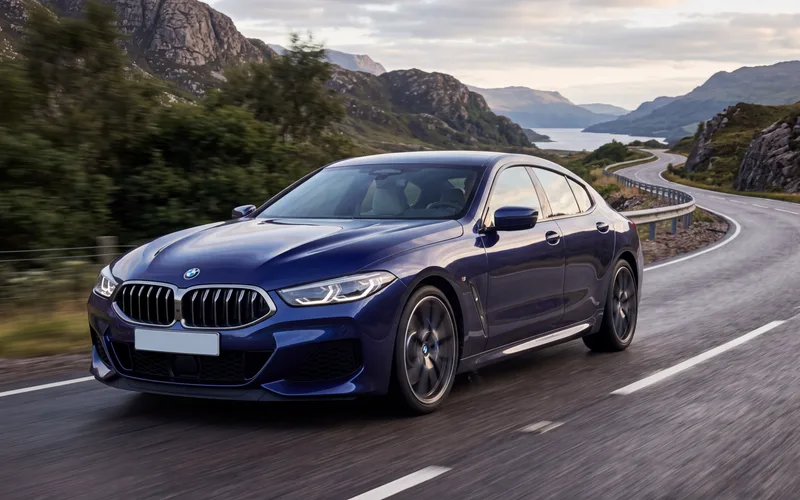 BMW 8 SeriesLuxury GTBetter at: All-weather usability
Nearly the same money buys all-wheel drive, 523 hp in M850i form and nearly triple the trunk space, making it the usable-every-day version of this idea.
Compare 2.72B-
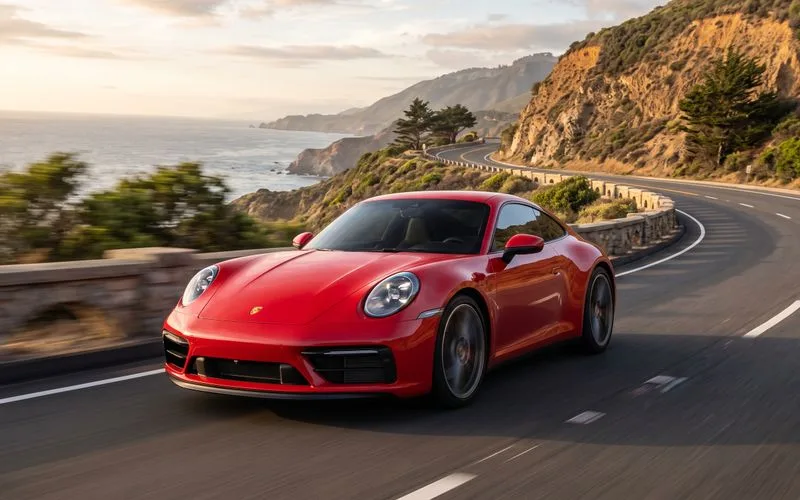 Porsche 911Sports CarBetter at: Driving & resale
If the driving matters more than the décor, the 911 is sharper in every dynamic measure and holds its value far better over five years.
Compare 2.74B-
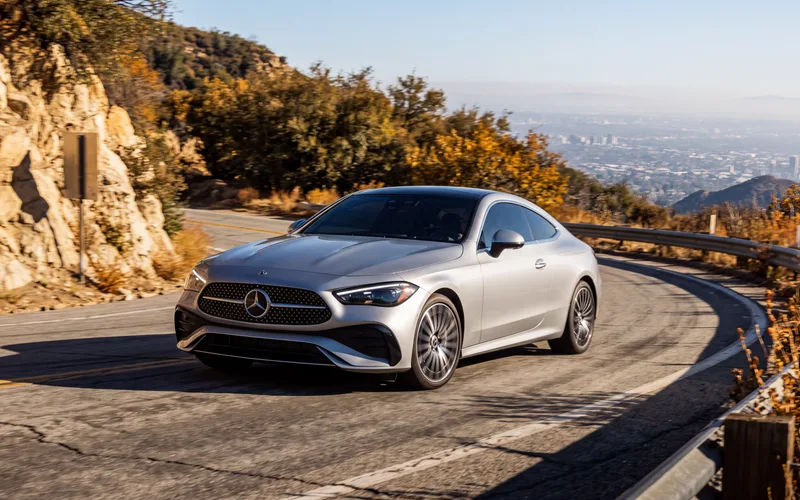 Mercedes-Benz CLE CoupeLuxury CoupeBetter at: Value & practicality
About half the price for a luxury coupe with real rear seats, a 14.8 cu ft trunk and available all-wheel drive, if the LC's compromises stop making sense.
CompareHow it's evolved
9 scored model years · 2018–2026
Subject scores by year
Hover or tap a score to see what moved it versus the year before. A corner mark flags a big swing.
| Year | Performance | Efficiency | Safety | Space | Cost | Reliability | Tech | Use-case | Driving | Value |
|---|---|---|---|---|---|---|---|---|---|---|
| 2026 | 74 | 10 | 61 | 51 | 16 | 87 | 72 | 28 | 73 | 65 |
| 2025 | 74 | 10 | 64 | 46 | 30 | 87 | 73 | 31 | 78 | 67 |
| 2024 | 73 | 9 | 63 | 46 | 16 | 86 | 72 | 31 | 79 | 67 |
| 2023 | 74 | 13 | 57 | 49 | 34 | 88 | 52 | 26 | 76 | 65 |
| 2022 | 74 | 13 | 57 | 49 | 34 | 87 | 52 | 26 | 76 | 64 |
| 2021 | 74 | 13 | 57 | 48 | 35 | 88 | 52 | 26 | 76 | 66 |
| 2020 | 74 | 13 | 57 | 48 | 41 | 83 | 49 | 25 | 75 | 65 |
| 2019 | 74 | 13 | 59 | 48 | 42 | 81 | 49 | 25 | 75 | 64 |
| 2018 | 74 | 14 | 54 | 46 | 41 | 83 | 43 | 25 | 75 | 66 |
Compare two years
Best fit & conditions
Higher scores mean a better fit for that use case. Learn more about use-case fit →
Subject profile
Academic Probation · NHTSA safety recalls
Oct 30, 2025Back over prevention: display functionPlease see the recall report for a complete list of models. A software error may cause the rearview camera to freeze or display a blank screen when the vehicle is in reverse. As such, these vehicles fail to comply with the requirements of Federal Motor Vehicle Safety Standard (FMVSS) number 111, "Rear Visibility."
Defect
Toyota Motor Engineering & Manufacturing (Toyota) is recalling certain 2022-2026 Toyota, Lexus, and Subaru Solterra vehicles equipped with a Panoramic View Monitor (PVM) system. Please see the recall report for a complete list of models. A software error may cause the rearview camera to freeze or display a blank screen when the vehicle is in reverse. As such, these vehicles fail to comply with the requirements of Federal Motor Vehicle Safety Standard (FMVSS) number 111, "Rear Visibility."
Risk
A rearview camera that fails to display an image can reduce the driver's view behind the vehicle, increasing the risk of a crash.
Remedy
Dealers will update the parking assist software, free of charge. Owner letters were mailed January 2, 2026. Owners may contact Toyota's customer service at 1-800-331-4331. Toyota's numbers for this recall are 25TB13 and 25LB06. Subaru's number for this recall is WRE25.
NHTSA campaign 25V744000 ↗Manufacturer no. 25TB13/25LB06/WRE251,024,407 vehicles potentially affected (all models in the campaign)Owners notified Dec 5, 2025Filed by Toyota Motor Engineering & ManufacturingFiled as LC, LC HYBRIDFeb 21, 2024Back over prevention: display functionDue to incorrect programming of the parking-assist electronic control unit (ECU) software, the rearview camera image may not immediately display within a couple of seconds after the shifter is placed into reverse. As such, these vehicles fail to comply with the requirements of Federal Motor Vehicle Safety Standard number 111, "Rear Visibility."
Defect
Toyota Motor Engineering & Manufacturing (Toyota) is recalling certain 2023 Mirai, Lexus LS500, LS500H, 2023-2024 Lexus ES250, ES300H, ES350, 2024 Lexus LC500, and LC500H vehicles equipped with a Panoramic View Monitor (PVM) system. Due to incorrect programming of the parking-assist electronic control unit (ECU) software, the rearview camera image may not immediately display within a couple of seconds after the shifter is placed into reverse. As such, these vehicles fail to comply with the requirements of Federal Motor Vehicle Safety Standard number 111, "Rear Visibility."
Risk
A rearview camera that fails to display an image can reduce the driver's rear view, increasing the risk of a crash.
Remedy
Dealers will update the parking assist ECU software, free of charge. Owner notification letters were mailed April 10, 2024. Owners may contact Toyota customer service at 1-800-331-4331. Toyota's numbers for this recall are 24TA01 and 24LA01.
NHTSA campaign 24V124000 ↗Manufacturer no. 24TA01 / 24LA0118,616 vehicles potentially affected (all models in the campaign)Owners notified Apr 10, 2024Filed by Toyota Motor Engineering & ManufacturingFiled as LC, LC HYBRID
4 recalls on other model years of the LC (2018–2020)
Nov 4, 2020Fuel system, gasoline: delivery: fuel pumpThe low-pressure fuel pump inside the fuel tank may fail.
Defect
Toyota Motor Engineering & Manufacturing (Toyota) is recalling certain 2018-2019 4Runner, 2019-2020 Avalon, 2019 Corolla Hatchback, 2017-2019 Highlander, 2018-2020 Camry, 2020 Corolla, 2018-2019 Land Cruiser, 2017-2020 Tacoma, 2019-2020 RAV4, 2019-2020 Sequoia, 2017-2020 Sienna, 2019-2020 Tundra, 2018-2020 Lexus ES350, 2017 Lexus GS200t, 2017-2019 Lexus GS350, 2019 Lexus GS300, 2018-2020 Lexus LC500h, 2019-2020 Lexus LS500, 2018-2019 Lexus GX460, 2017 Lexus IS200t, 2019 Lexus IS300, 2019 Lexus IS350, 2018-2020 Lexus LC500, 2018 Lexus LS500, 2019 Lexus LS500h, 2018-2019 Lexus LX570, 2017 Lexus RC200t, 2019 Lexus RC300, RC350, 2017 and 2019-2020 Lexus RX350, 2018-2020 RX350L, 2019 Lexus UX200, 2018-2019 Lexus NX300 vehicles. The low-pressure fuel pump inside the fuel tank may fail.
Risk
If the fuel pump fails, the engine can stall while driving, increasing the risk of a crash.
Remedy
Toyota will notify owners, and dealers will replace the fuel pump assembly with an improved one, free of charge. Owners of specific models were notified that remedy parts were available starting January 21, 2021. Owners of other models will be notified as remedy parts become available. Remedy parts should be available for all affected vehicles by late March 2021. Owners may contact Toyota customer service at 1-888-270-9371 or Lexus customer service at 1-800-255-3987. Note: This recall is an expansion of recall 20V-012. Toyota's number for this recall is 20TA02. Lexus' number for this recall is 20LA01.
NHTSA campaign 20V682000 ↗Manufacturer no. 20TA02, 20LA011,525,742 vehicles potentially affected (all models in the campaign)Owners notified Jan 21, 2021Filed by Toyota Motor Engineering & ManufacturingFiled as LC HYBRID, LC500Jan 13, 2020Fuel system, gasoline: delivery: fuel pumpToyota Motor Engineering & Manufacturing (Toyota) recalled certain 2018-2019 4Runner, Highlander, Camry, Land Cruiser, Sequoia, Sienna, Tacoma and Tundra, and Lexus RC 300, RC 350, GS 350, GX 460, IS 300, LC 500, LS 500, LX 570, RX 350L, and 2019 Toyota Avalon and Corolla, and certain Lexus NX 300, and ES 350 vehicles on January 13, 2020. On March 4, 2020, Toyota expanded the recall to include certain 2014-2015 Toyota 4Runner and Land Cruiser, 2018 Avalon, Corolla, 2014 FJ Cruiser, 2017 Sienna and Lexus 2018 ES 350, 2018-2019 GS 300, 2013-2014 GS350, 2014-2015 GX 460, IS 350 and LX 570, 2014 IS F, 2018-2019 IS 350, LC 500H and LS 500H, 2013-2015 LS 460, 2015 NX 200T and RC350, 2017 RC 200T and RX 350. Toyota also removed the 2018-2019 Toyota 4Runner and Land Cruiser and 2018-2019 Lexus GX 460 and LX 570 and 2019 NX300 from inclusion in this recall. On March 19, 2020, Toyota expanded the recall to include 2015 Lexus GS350 vehicles. The low-pressure fuel pump inside the fuel tank may fail.
Defect
Toyota Motor Engineering & Manufacturing (Toyota) recalled certain 2018-2019 4Runner, Highlander, Camry, Land Cruiser, Sequoia, Sienna, Tacoma and Tundra, and Lexus RC 300, RC 350, GS 350, GX 460, IS 300, LC 500, LS 500, LX 570, RX 350L, and 2019 Toyota Avalon and Corolla, and certain Lexus NX 300, and ES 350 vehicles on January 13, 2020. On March 4, 2020, Toyota expanded the recall to include certain 2014-2015 Toyota 4Runner and Land Cruiser, 2018 Avalon, Corolla, 2014 FJ Cruiser, 2017 Sienna and Lexus 2018 ES 350, 2018-2019 GS 300, 2013-2014 GS350, 2014-2015 GX 460, IS 350 and LX 570, 2014 IS F, 2018-2019 IS 350, LC 500H and LS 500H, 2013-2015 LS 460, 2015 NX 200T and RC350, 2017 RC 200T and RX 350. Toyota also removed the 2018-2019 Toyota 4Runner and Land Cruiser and 2018-2019 Lexus GX 460 and LX 570 and 2019 NX300 from inclusion in this recall. On March 19, 2020, Toyota expanded the recall to include 2015 Lexus GS350 vehicles. The low-pressure fuel pump inside the fuel tank may fail.
Risk
If the fuel pump fails, the engine can stall while driving, increasing the risk of a crash.
Remedy
Toyota will notify owners, and dealers will replace the fuel pump, free of charge. The recall began May 4, 2020. Owners may contact Toyota customer service at 1-888-270-9371 or Lexus customer service at 1-800-255-3987. Toyota's numbers for this recall are 20TB02 and 20TA02 for Toyota vehicles and 20LB01 and 20LA01 for Lexus vehicles.
NHTSA campaign 20V012000 ↗Manufacturer no. 20TB02/20TA02/20LB011,830,752 vehicles potentially affected (all models in the campaign)Owners notified May 1, 2020Filed by Toyota Motor Engineering & ManufacturingFiled as LC HYBRID, LC500Jul 24, 2019Electronic stability control (esc) · Service brakesThe brake booster pump may fail causing a deactivation of the Vehicle Stability Control system and a loss of braking assist. As such, these vehicles fail to comply with the requirements of Federal Motor Vehicle Safety Standard (FMVSS) number 126, "Electronic Stability Control Systems."
Defect
Toyota Motor Engineering & Manufacturing (Toyota) is recalling certain 2019 Lexus LS500, LC500, ES300h, UX250h, LS500h, Toyota Prius, RAV4 HV, 2019-2020 Toyota Prius Prime, and 2020 Corolla HV vehicles. The brake booster pump may fail causing a deactivation of the Vehicle Stability Control system and a loss of braking assist. As such, these vehicles fail to comply with the requirements of Federal Motor Vehicle Safety Standard (FMVSS) number 126, "Electronic Stability Control Systems."
Risk
Deactivation of the vehicle stability control system or a loss of braking assist increases the risk of a crash.
Remedy
Toyota will notify owners, and dealers will inspect and, if necessary, replace the brake booster pump, free of charge. The recall began September 20, 2019. Toyota owners may contact Toyota customer service at 1-888-270-9371 and Lexus owners may contact Lexus customer service at 1-800-255-3987. Toyota's numbers for this recall are K1L/K0L. Lexus' numbers for this recall are K2F/KLF.
NHTSA campaign 19V544000 ↗Manufacturer no. K1L/K0L, K2F/KLF6,925 vehicles potentially affected (all models in the campaign)Owners notified Sep 20, 2019Filed by Toyota Motor Engineering & ManufacturingFiled as LC500Feb 14, 2018Fuel system, gasoline: delivery: fuel pumpSpecific operating conditions may result in damage to the pulsation damper in one of the high pressure fuel pumps, possibly causing a fatigue crack in the fuel pump cover.
Defect
Toyota Motor Engineering & Manufacturing (Toyota) is recalling certain 2016-2018 Lexus GS F, 2018 LC500, and 2015-2018 Lexus RC F vehicles, equipped with 5.0L V8 2UR-GSE engines with two high pressure fuel pumps. Specific operating conditions may result in damage to the pulsation damper in one of the high pressure fuel pumps, possibly causing a fatigue crack in the fuel pump cover.
Risk
A cracked cover may leak fuel, which, in the presence of an ignition source, can increase the risk of a fire.
Remedy
Toyota will notify owners, and dealers will replace the high pressure fuel pumps, free of charge. The recall is expected to begin April 2, 2018. Owners may contact Lexus customer service 1-800-255-3987. Toyota's numbers for this recall are J2B and JLB.
NHTSA campaign 18V107000 ↗Manufacturer no. J2B/JLB9,905 vehicles potentially affected (all models in the campaign)Owners notified Apr 5, 2018Filed by Toyota Motor Engineering & ManufacturingFiled as LC500
Source: NHTSA Office of Defects Investigation recall database, model years 2018–2026. Recalls are listed by model year as the manufacturer filed them; whether a specific car is affected depends on its VIN — check a VIN at nhtsa.gov ↗. NHTSA model names matched to this page: LC, LC HYBRID, LC500.
Detailed scoring by subject
1Performance & PowertrainOne of the LC's strongest categories.2.95B-
The 2024 LC 500 carries the same naturally aspirated 2UR-GSE 5.0L V8 the nameplate launched with — 471 hp is near the top of the coupe band and the gas LC is the volume/representative configuration.
398 lb-ft is strong for the segment, though naturally aspirated delivery means the peak arrives high in the rev range rather than off idle the way a turbocharged rival's does.
Quick but not class-leading — the LC is tuned as a grand tourer on the LS-derived GA-L platform at roughly 4,340 lb, so it trails lighter sports coupes despite a 471-hp V8.
A large naturally aspirated V8 with no turbocharger and no hybrid handoff to manage: reviewers consistently describe linear, lag-free throttle response and a willing rev range to the 7,300 rpm redline, which is exactly the delivery this item's top band describes.
The 10-speed Direct-Shift automatic is one of the quicker conventional autos on sale and is decisive in Sport S+ with magnesium paddles, but with ten closely spaced ratios it can be slow to settle on a gear in the relaxed drive modes.
No all-wheel drive is offered on any LC trim or body style for 2024 — the GA-L platform car is rear-wheel drive only, so this scores in the bottom band by definition.
Two genuinely distinct powertrains, one of them electrified: the 5.0L V8 LC 500 and the LC 500h Multi Stage Hybrid (3.5L V6, 354 hp combined). That covers the mainstream of this segment but stops short of the top band — no turbo, PHEV or EV variant.
2Efficiency & RangeThe LC's lowest-graded category.0.00F
A 4,340-lb GT with a naturally aspirated 5.0L V8 on premium fuel sits at the very bottom of the gas-coupe band — 18 MPG combined is 5.6 gal/100 mi.
Big-displacement natural aspiration with no hybrid assist and no cylinder deactivation is worst-case in stop-start use; 16 MPG is the floor of the coupe city band.
The tall tenth gear does give the LC a respectable cruise figure relative to its city number, but 24 MPG still lands at the bottom edge of the coupe highway band.
A deliberately large 21.7-gallon tank rescues the touring range from the thirsty engine — 391 miles is mid-pack rather than poor, and is the one cat2 item where the LC scores.
Premium fuel plus 18 MPG combined puts annual energy cost well above the top of the coupe band; the EPA label itself flags the gap against an average new vehicle.
Premium unleaded is required, not merely recommended, for the high-compression 2UR-GSE V8 — and the penalty compounds because every fill is 21.7 gallons of the most expensive grade.
3SafetyMid-pack among this car's ten categories.2.22C
NHTSA has never crash-tested the Lexus LC in any year of the second generation (2018-2026) — it is a low-volume halo coupe well below the volume threshold NCAP prioritizes — so no overall star rating exists for 2024. The value is a segment-norm estimate, not a published figure.
The LC appears on no IIHS Top Safety Pick or TSP+ list and has no published crashworthiness results for 2024 — the Institute does not routinely test coupes at this volume. Scored mid-band rather than low because there are no known structural concerns: the GA-L platform is shared with the IIHS-tested LS, and the LC carries a full airbag complement including knee and side-curtain coverage.
For 2024 every LC ships with Lexus Safety System+ 2.5 standard — Pre-Collision System with pedestrian and cyclist detection (7-110 mph), Risk Avoidance Emergency Steer Assist, Left Turn Oncoming Vehicle Detection and Braking, All-Speed Dynamic Radar Cruise Control, Lane Tracing Assist, Lane Departure Alert with Steering Assist and Road Sign Assist — alongside standard Blind Spot Monitor with Rear Cross-Traffic Alert, a standard Panoramic View Monitor and standard Intuitive Parking Assist. Nothing safety-relevant sits behind a trim walk. Held below 90 only because 2.5 is not LSS+ 3.0: no front cross-traffic alert, no lane-change assist, no curve-speed management.
No IIHS front crash prevention result exists for the LC, so this is judged on system content rather than a test score. The 2024 car's PCS is a full LSS+ 2.5 implementation — pedestrian and cyclist detection, an unusually wide 7-110 mph operating window, intersection support via Left Turn Oncoming Vehicle Detection/Braking, and Emergency Steer Assist — which is meaningfully more than an alert-plus-brake baseline. Kept in the upper half of the adequate band rather than the 80s because nighttime pedestrian performance is unverified and the LC runs a 2018-era sensor set.
Blind Spot Monitor with Rear Cross-Traffic Alert is standard, and for 2024 it is backed by a standard Panoramic View Monitor and Intuitive Parking Assist — material compensation on a car whose rear-quarter sightlines are among the worst in the catalog. Held out of the 80s because the coverage is alert-only: no rear cross-traffic braking intervention, no Safe Exit Assist, and no lane-change assist.
Lane Departure Alert with Steering Assist (active above 32 mph) and Lane Tracing Assist are both standard, and LTA centers the car whenever radar cruise is engaged. It is a functional hands-on centering aid rather than a confident one: the 2.5-generation implementation nudges and corrects, and reviewers of Lexus models on this suite report wander on curves and frequent hands-on-wheel prompts.
All-Speed Dynamic Radar Cruise Control with stop-and-go is standard and pairs with Lane Tracing Assist for combined highway assist — exactly the capability that matters on a GT built for long interstate days, and Lexus radar cruise is consistently praised for smooth gap transitions. Short of the 80s because the 2.5 suite lacks curve-speed reduction and lane-change assist, so the integration is a step behind the LS and the newer 3.0 cars.
No hands-free highway system is offered on any 2024 LC configuration. Lexus Teammate with Advanced Drive exists in the corporate portfolio (launched on the LS 500h) but was never extended to the LC, and LSS+ 2.5 is hands-on only by design.
The LC's triple-beam LED headlamps are signature standard equipment rather than a trim upgrade, and Intelligent High Beam arrives with LSS+ 2.5 — so the volume configuration is the good configuration, which is what this item rewards. Capped below the 80s because IIHS has never rated LC headlights and the triple-beam units are a fixed-projector design without the steerable BladeScan array offered on the LS.
Natural sightlines are poor — a very low seating position behind a long hood, a heavily raked windshield, thick C-pillars and a shallow rear window leave large rear and rear-quarter blind zones. What lifts 2024 out of the bottom band is that the camera compensation is comprehensive and standard: a Panoramic View Monitor stitching front, rear and side feeds, plus Intuitive Parking Assist and BSM, rather than a reversing camera alone.
The LC is a 2+2 whose rear seats are vestigial in practice: lower LATCH anchors sit buried in tightly bolstered cushions, access means tilting and sliding a heavy power front seat through a single long coupe door, and there is so little rear legroom that a rear-facing seat forces the front occupant unreasonably far forward. Anchors exist, so it is not a zero, but this is among the hardest configurations in the catalog to actually fit a child seat in.
4Space & ComfortGrades below the middle of the scale.1.10D
The LC coupe is a 2+2 — four belted positions, but the rear pair is a token bench rather than a usable second row. Four seats sits at the bottom of the coupe band.
37.2 in is modest but genuinely adequate for the body style — the low-slung roofline costs less headroom than the LC's silhouette suggests because the seats are mounted very low in the GA-L chassis.
42.0 in is mid-band for the segment and enough that a 6-foot-plus driver fits comfortably — reviewers consistently rate the LC's front accommodation as long-haul capable.
32.2 in sits at the very bottom of the coupe band — the fastback roofline drops hard over the rear bench, so an adult's head meets the backlight before the seat is even adjusted.
The published 32.5 in flatters the car badly: it is measured with the front seat forward, and reviewers report the front seatback touching the rear cushion once the driver's seat is set for a six-footer. The band scores the number, but the practical space is far less.
5.4 cu ft is near the floor of the coupe band and among the smallest trunks in the catalog — about two carry-on wheeled bags, with no fold-down or pass-through expansion published.
Interior stowage is sparse even by coupe standards: a shallow center bin under the integrated grab handle, a small glovebox, thin door pockets, and — the omission reviewers singled out in 2024 — no wireless phone charging pad on a six-figure car that now ships wireless CarPlay. No underfloor storage, no onboard AC power, no fold-flat surfaces.
The front seats are a genuine highlight — eight-way power with a two-part shoulder-draping backrest, heated and ventilated as standard, and repeatedly described as all-day comfortable with real bolstering. This item covers rear seats too, and there the LC has essentially nothing usable, which is what keeps it out of the 80s.
Standard adaptive variable suspension on the LS-derived GA-L platform delivers what is consistently called a silky, composed ride despite newly standard 21-inch forged wheels for 2024 — plush without float, and with little body roll. This is the clearest thing the LC does better than its sports-car-leaning rivals.
Near-library quiet at highway speed — testers report no road sizzle on brushed concrete or aggregate asphalt and no perceptible wind rush at the windshield or mirrors. The V8's voice is piped in deliberately under throttle, which is character rather than intrusion; lift off and the cabin goes silent again.
Heated and ventilated leather-trimmed front seats and dual-zone automatic climate control are standard for 2024, and the new 12.3-inch interface restored a physical climate button plus dedicated seat heat/vent controls. Held out of the top band because the richer items are optional or absent: the heated steering wheel and wiper de-icer live in the Touring package, there is no rear climate zone or massage function, and remote climate pre-conditioning is subscription-gated through the Lexus app.
5Cost of OwnershipOne of the LC's weakest categories.0.00F
Lexus's own 2024 LC press material gives a starting MSRP of $99,300 including destination for the LC 500 coupe — roughly double the $55,000 top of the coupe pricing band, so this item floors regardless of the exact figure.
The V8 LC 500 coupe is the volume configuration and it rarely leaves a dealer stripped: the Touring Package (semi-aniline leather, Alcantara headliner, 13-speaker Mark Levinson audio, All-Weather Package) and Sport Package (Alcantara inserts, Torsen limited-slip differential, rear performance damper, performance brakes) are each $4,000, and premium paint adds $595. Well past the $58,000 band ceiling, so the item scores zero.
Published projections disagree by more than 3x because they differ on how much tire and wear spend to attribute — CarEdge models $2,609 over five years, KBB's 2024-model-year cost-to-own $8,577. The 4-year/50,000-mile warranty absorbs genuine repairs for most of the window and Lexus's service pricing is the mildest among six-figure GTs, but this is still a low-volume naturally aspirated V8 on 21-inch staggered rubber where a tire set alone runs past $1,500; $7,000 is the defensible reading between the two.
The LC retains better than its German six-figure rivals — low production volume, Lexus reliability perception and enduring demand for a naturally aspirated V8 all help — but the forward and retrospective sources split hard, so this is the conservative midpoint of them rather than either extreme. Measured retention on actual five-year-old cars reflects the 2021–2023 used-market bubble and is unlikely to repeat; KBB's forward projection is the pessimistic end typical of its six-figure-luxury model.
Lexus's US basic coverage is 4 years or 50,000 miles, unchanged for 2024 — matching the German luxury norm (BMW, Mercedes-Benz, Audi and Porsche all sit at 4/50) and beating the 3/36 that Ford and Chevrolet give the Mustang and Corvette, but short of the segment leaders. Mid-band.
Six years/70,000 miles on the V8 volume trim beats every German rival in this segment, which publish no separate powertrain term at all beyond their 4-year basic coverage — but it still sits near the bottom of the 5–10 year band against the 10-yr/100,000-mi leaders. Hybrid buyers get materially longer coverage on the electrified hardware.
Included scheduled maintenance is short — 1 year/10,000 miles, covering only the first two services at 6 months/5,000 miles and 12 months/10,000 miles — but the surrounding ownership package is genuinely strong: 4 years of unlimited-mileage roadside assistance and, because the LC sits at the top of the Lexus range, the Encore Elite tier with complimentary loaners, service pickup and delivery, and 24/7 concierge support.
$106,000 volume-trim price minus its estimated resale value after 5 years (55% retained, or about $58,300) leaves about $47,700 in depreciation. Add the projected $7,000 in 5-year maintenance and repairs, and owning this vehicle for 5 years costs about $54,700 in total.
6Reliability & QualityThe LC's best-graded category.3.85A+
2024 is the seventh year of the LC's single 2018- generation, so the platform, 5.0L V8 and 10-speed automatic carry seven model years of field history with no new mechanical content. Unlike the pure carry-over years around it, though, 2024 is a change year for the electrical architecture: the touchpad-controlled Remote Touch system is replaced by the standard 12.3-inch Lexus Interface touchscreen, with Panoramic View Monitor and Intuitive Parking Assist made standard — new first-year software that proved to be exactly where the year's defects landed. Held a couple of points below the adjacent carry-over years for that reason; the other caveat is data thinness, since the LC is a very low-volume halo GT and Consumer Reports carries no model-specific predicted-reliability rating for it.
Lexus is the benchmark dependability brand and its standing at the 2024 model year was as strong as it has ever been — first of all brands in J.D. Power's Vehicle Dependability Study for a second consecutive year, and first of all brands in Consumer Reports' contemporaneous survey. No premium or mass-market rival matched that multi-year record.
Two NHTSA campaigns touch the 2024 LC, and both are the same failure in the same newly standardized hardware: the Panoramic View Monitor's rearview camera not displaying promptly, then freezing or blanking, in reverse — FMVSS 111 non-compliances remedied by a free dealer software update, with no parts replaced. That is more recall activity than the adjacent model years carry, and it is a direct consequence of 2024 being the year the PVM and the new touchscreen went standard, so the deduction is real. Nothing systemic touches the powertrain, structure or fire risk, and the generation's more serious actions — the 2018-2020 low-pressure fuel pump campaigns and a 2019 ESC/brake item — predate this model year entirely.
Unchanged for 2024 and among the most durable performance powertrains sold. The LC 500's 2UR-GSE 5.0L naturally aspirated V8 (471 hp) uses Yamaha-developed heads, forged internals, titanium intake valves and D-4S port-plus-direct injection that sidesteps the intake-valve carbon buildup afflicting direct-only turbo rivals, with a documented 150k-200k-mile record across the IS 500, RC F and GS F. It pairs with Aisin's Direct Shift-10AT torque-converter automatic shared with the LS 500, a conventional design with none of the dual-clutch or CVT failure modes in this class. The only historical blemish is the low-pressure fuel pump campaign, remedied on earlier cars and not affecting 2024 production.
The LC cabin is routinely called one of the best-executed interiors at any price — semi-aniline leather and Alcantara across the door and side panels, hand-stitched details, the glass-backed door pull, machined metal switchgear and magnesium paddles, with essentially no cost-down plastic in a touch zone. For a roughly $100K GT it reads as class-leading rather than merely competitive. 2024 adds a Rioja Red leather scheme and a Dark Rose interior color, and the move to the 12.3-inch touchscreen removes the widely criticized touchpad controller without changing the material palette.
The LC is assembled in deliberately low volume at Toyota's Motomachi plant — the LFA line — under the takumi inspection regime, and reviewers consistently report tight, repeatable panel gaps and a rattle-free structure across the generation. Scored a notch below the adjacent model years because Lexus's initial-quality standing specifically at the 2024 study was second among premium brands rather than first, and because the year's new infotainment hardware is a features-and-controls surface that the study weights heavily.
Roughly 245 Lexus stores cover the US — thinner than a mass-market brand, but dense for a luxury marque and far broader than Porsche or the exotic GT alternatives — and service satisfaction is best-in-class, with Lexus taking the premium-brand top spot in J.D. Power's Customer Service Index for a third consecutive year. The deductions are that rural buyers can be a long drive from a franchise and that LC-specific expertise concentrates at larger stores; within the premium car segment specifically, Lexus placed third rather than first that year.
The weak link in an otherwise exceptional ownership case. The LC is a halo GT built in the low thousands per year, so its body panels, glass, lighting, active rear wing and interior trim are model-unique, dealer-dependent and slow to source, with effectively no aftermarket and little salvage depth; consumables price accordingly, and 2024 makes the 21-inch forged wheels standard on the coupe while replacing the spare with a tire repair kit. It is not a disaster — the 2UR-GSE V8, the Aisin 10-speed and much of the electronics are shared with the LS 500 and IS 500 and flow through Toyota's parts network, Lexus labor and parts price below the Germans', and low failure frequency keeps visits rare — but per-visit cost sits well above the class norm.
7Technology & InfotainmentGrades above the middle of the scale.2.88B-
2024 is the change year for LC infotainment: the standard screen grows to 12.3 inches and moves within reach as a true touchscreen, which is mid-to-upper band for the segment though short of the 14-inch-plus panels in newer rivals.
The Lexus Interface swap is the single biggest usability change in the LC's life — it retires the widely disliked Remote Touch touchpad for a fast, direct-touch UI with a persistent climate shortcut and physical seat heat/vent keys. Kept in the 70s rather than the 80s because testers flag the panel's image quality (weak black levels, soft album art) as below BMW and Mercedes benchmarks, and the screen sits deep in a fixed binnacle rather than close to the driver.
Both wireless Apple CarPlay and wireless Android Auto are standard on every 2024 LC grade — top-band by the item's own definition. Not a full 100 only because there is no wireless charging pad to keep a projecting phone alive on a long drive.
The 2024 system brings the 'Hey Lexus' natural-language assistant, which handles navigation, climate and audio requests conversationally, and cloud navigation with live traffic and Google points-of-interest data. Short of the top band because the cloud nav and the richer Drive Connect functions run on a trial and then a subscription, so the always-on capability is not permanent equipment.
A 12-speaker system is standard and the optional 13-speaker, 915-watt Mark Levinson upgrade is consistently praised as genuinely excellent rather than a token badge — and it is inexpensive relative to the car, roughly $1,220 standalone or bundled into the Touring package.
Every LC gets the LFA-derived TFT cluster whose physical bezel ring slides sideways to uncover secondary readouts — a genuinely distinctive, well-rendered display that changes layout with drive mode. Marked down because it is a 2018-era single-pod design: smaller and less freely configurable than the wide dual-panel clusters BMW and Mercedes now fit, and 2024 brought no change to it.
The new Lexus Interface brought over-the-air updating to the LC for the first time in 2024, but the scope is the multimedia stack and maps rather than whole-vehicle software — there is no record of OTA-delivered powertrain, chassis or driver-assist changes on this car. That is squarely the middle band.
The Lexus App covers the core set — remote start and climate, lock/unlock, vehicle locate, status and Wi-Fi Connect hotspot for up to five devices — and the 2024 interface added remote app support tied to the new head unit. It stays mid-band because the useful functions are Remote Connect/Drive Connect subscriptions after their trial periods, and no phone-as-key digital key is offered on the LC.
This is the LC's weakest technology point and reviewers said so plainly in 2024: no wireless charging pad at all on a car that now ships wireless phone projection, so the phone driving CarPlay has to be tethered anyway. USB data and power ports are present up front, but there is no rear-row provision worth the name and no household AC outlet.
Smart Access proximity entry with push-button start is standard, and remote start comes through the Lexus App rather than the fob. It does not reach the top band because there is no phone-as-key, no hands-free trunk release, and the remote functions depend on an active connected-services subscription.
2024 made the Panoramic View Monitor — a stitched front/rear/side surround view — and Intuitive Parking Assist with front and rear sensors standard on every grade, which is exactly what the item's top band asks for and genuinely material on a car with this much blind rear quarter. Held at 80 rather than higher because there is no automated parking function and the camera resolution is a step behind newer systems.
A color head-up display projecting navigation guidance and driving information is offered on the 2024 LC, orderable as a standalone option as well as inside packages — so it is broadly attainable rather than locked to a halo trim. It stays in the middle band because it is not standard on the volume configuration and is a conventional windshield projection rather than an augmented-reality unit.
8Use-Case FitOne of the LC's weakest categories.0.01F
About as hard as family logistics gets: two very long, heavy doors, a power front seat that must be tilted and slid to reach the back, LATCH anchors buried in tightly bolstered cushions, and so little usable rear space that a rear-facing seat pushes the front occupant unreasonably forward. A stroller does not fit in a 5.4 cu ft trunk.
The equipment side is genuinely strong and cheap to get: Lexus Safety System+ 2.5 is standard on every 2024 LC, as are blind spot monitoring with rear cross-traffic alert, the Panoramic View Monitor and Intuitive Parking Assist — nothing safety-relevant sits behind a trim walk. What holds this to mid-band is that the credentials are unverified (NHTSA and IIHS publish no crash results for the LC) and there is no rear-occupant reminder or usable rear seating for the alert to protect.
For four-plus occupants this is close to unusable: the rear bench has 32.2 in of headroom and effectively no legroom behind a tall driver, there is no rear climate zone, no rear vents or amenities, and the trunk holds roughly two carry-ons before the seats have to be pressed into service as luggage shelves.
More relaxing in traffic than any of its sports-car rivals: the naturally aspirated V8 pulls smoothly from idle with no turbo lag, the 10-speed's shifts are described as near-imperceptible, standard adaptive dampers keep the ride supple on 21s, and all-speed radar cruise with stop-and-go is standard. The cost is ergonomic — a very low seating position, long doors that need wide parking bays, and poor over-the-shoulder sightlines.
Expensive per mile in every direction: 18 MPG combined on required premium fuel works out to roughly $4,300 a year at 15,000 miles, and the consumables are luxury-grade — staggered 21-inch performance tires and large brakes now standard on every grade. Only the LC 500h hybrid escapes this, and it is not the configuration being scored.
Mixed: the turning circle is genuinely tight for the footprint at about 35.4 ft curb-to-curb, and 2024 made a stitched surround-view camera plus front and rear parking sensors standard. Against that, the car is 187.4 in long and 75.6 in wide with a very low nose vulnerable to curbs and driveway aprons, doors long enough to be awkward in a standard bay, and shallow rear glass that makes unaided reversing guesswork.
Not a work vehicle in any sense: Lexus publishes no tow rating for the LC in the US, there is no bed or load floor, and the entire cargo allowance is a 5.4 cu ft trunk with no fold-through. Payload is two people and a weekend bag.
The underlying hardware is unusually sound — the 2UR-GSE V8 and the GA-L platform are shared with the LS and have a good long-term record, and Lexus build quality is a real asset. But this item asks about abuse tolerance in a work context, and the LC is the opposite: leather and Alcantara surfaces, low-profile 21-inch tires, minimal ground clearance and no fleet presence at all.
Essentially nothing: no onboard AC power, no bed or tie-downs, no hitch or rack ecosystem, no washable surfaces, and for 2024 even the spare tire is gone in favor of a repair kit. The Lexus accessory catalog for the LC is cosmetic and protective, not functional.
This is the mission the LC was built for and the single thing it does best. Front seats rated as all-day comfortable with heat and ventilation standard, a cabin testers describe as free of road sizzle and wind rush at speed, an adaptive-damped ride that stays composed on broken interstate, roughly 390 miles between fills, and standard all-speed radar cruise with lane tracing to take the edge off the miles. Kept out of the top few points because only two of the four seats are usable for a long day and luggage room caps the trip.
Strictly pavement-bound. Rear-wheel drive only with no AWD offered on any LC configuration, a low front splitter and minimal ground clearance, staggered 21-inch summer-biased tires, no published tow or roof rating, and no camping-friendly provisions — no AC outlet, no flat-folding anything.
Among the most restrictive in the catalog: a 5.4 cu ft trunk with an awkward shallow opening, no published fold-down or pass-through to extend it, no roof rails or hitch, and no underfloor bin. The rear bench is the only overflow space and it is small enough that soft bags are the only realistic gear.
9Driving ExperienceOne of the LC's strongest categories.3.39B+
Composed and flat rather than sharp: standard adaptive variable suspension keeps body roll minimal and the car planted, and 2024 brought retuned front and rear suspension plus standard 21-inch forged wheels. But at roughly 4,340 lb on the LS-derived GA-L platform, reviewers land consistently on 'more competent than truly athletic' — the optional Dynamic Handling Package with rear-wheel steering, variable-ratio steering and a Torsen limited-slip is what makes it genuinely agile, and that is not the volume configuration.
Accurate and quick off-center — 2.6 turns lock to lock with well-judged weighting — but the feedback is the recurring criticism. Reviewers split between calling it good control for a luxury cruiser and calling it remote, and the consistent verdict is that it tells the driver less about the front tires than a sports-car rival's rack does.
Strong hardware with a soft pedal: the LC's large discs are described as powerful and capable of repeated hard stops, and pedal response is linear and confident from highway speed. What keeps it out of the 80s is the near-universal wish for a firmer pedal — the tune is calibrated for luxury smoothness, and one tester reported fade after sustained high-speed use, with the upgraded pads reserved for the Dynamic Handling Package.
A naturally aspirated 5.0L V8 with no turbo to spool and no hybrid handoff to manage, paired to a 10-speed whose shifts testers call near-imperceptible in normal driving — the tip-in is linear from idle and the engine pulls cleanly to its 7,300 rpm redline. Held just below the very top because ten closely spaced ratios can leave the transmission hunting for a gear in the relaxed drive modes.
The 2UR-GSE is one of the best-sounding engines still on sale and the LC is engineered around delivering it — a hard-edged wail under load through sound tubing and active exhaust, then near-silence on a light throttle at cruise, with no coarseness or vibration through the controls. This item rewards exactly that: pleasant under load, quiet when it should be.
Genuinely tight for a 187-inch, 113-inch-wheelbase car and better than the LC's footprint suggests — the one urban metric where this GT beats expectations. Note the figure aggregators print as a 'turning circle' of 17.7 ft is Lexus's minimum radius; doubled, it matches the 35 ft curb-to-curb diameter cars.com publishes.
The driver's environment is a standout — eight-way power seats with a wide adjustment range, a wheel shaped with varying cross-sections for grip, an integrated console grab handle, and controls testers rate as well placed, with 2024 restoring a physical climate button and direct seat heat/vent keys. Points come off for what the body style costs: a low hip point that makes ingress and egress a drop-and-climb, and restricted rear-quarter sightlines.
The LC's appeal is character rather than lap time, and on that measure it is unusually strong: an atmospheric V8 with a genuinely great voice, a cabin that makes every drive feel like an occasion, and the kind of coverage where reviewers openly say they love it. Not higher because the chassis rewards flow rather than attack — enthusiasts recommend it as a GT, not as the sharpest thing on a back road.
10Value & Market PositionMid-pack among this car's ten categories.2.51C+
2024 is the year the LC's equipment case improved most: the 12.3-inch Lexus Interface touchscreen with over-the-air updates, wireless Apple CarPlay and Android Auto, Panoramic View Monitor, Intuitive Parking Assist and Lexus Safety System+ 2.5 all became standard across the line, on top of semi-aniline leather, adaptive variable suspension, triple-beam LED headlights and the motorized sliding-ring digital cluster. It stays out of the top band because the content a six-figure GT buyer actually wants is still packaged: Mark Levinson audio, the Torsen limited-slip differential, the carbon-fiber roof, rear-wheel steering and the head-up display are all extra-cost.
This is the LC's weakest commercial argument. At $99,300 delivered and roughly $106,000 as typically built it offers 471 hp, 4.4 s to 60 mph, rear-wheel drive only and about 4,340 lb, while an M850i xDrive gives 523 hp and all-wheel drive for similar money and a Corvette delivers far more capability for well under half the outlay — Edmunds' own verdict is that the LC 'is easily outpaced by all of its main rivals.' What keeps it out of the poor-value band is real: a class-benchmark interior, the best reliability and dealer-service standing in this coupe set, the mildest running costs among six-figure GTs and better residuals than its German rivals.
Two genuinely different powertrains — the 5.0L V8 LC 500 and the 3.5L Multi Stage Hybrid LC 500h — across coupe and convertible bodies, with $4,000 Touring and Sport Packages and the Dynamic Handling Package layered on, an Inspiration Series special edition, and for 2024 the Bespoke Build customization program extended to the Convertible for the first time. That is broad for a halo GT and materially wider than the single-configuration 8 Series Coupe. It stops short of the top band because every choice is a variation on one expensive theme: rear-wheel drive only, no manual, no F variant, and a ~$99,000–$118,000 band with no lower entry point.
The LC is a deliberately low-volume halo car and sells like one: 1,464 US deliveries in calendar 2024 across coupe and convertible, down about 17% from 1,761 in 2023, in a flagship-coupe segment that is contracting industry-wide. Acceptance among the buyers it targets is genuine and Lexus has kept the car in the catalog for seven model years by this point, but the item measures sales strength and trajectory, and both are weak — Porsche moved more than 14,000 911s in the same year.
Lexus is a strong, genuinely well-liked luxury brand with high owner loyalty built on dependability and the best service reputation in the business, and the LC itself is the most admired object the brand has produced since the LFA — a concept car that reached production essentially intact and still stops traffic. It lands below its German rivals here because Lexus's equity is comfort, quality and service rather than performance aspiration, and in the six-figure two-door bracket that is exactly the currency that moves metal.
Scored for buyer benefit, the LC's slow sales work in the shopper's favor: there is no allocation game or market adjustment of the kind attached to a 911 or an AMG GT 63, cars sit on lots, and a patient buyer transacts below MSRP. What holds it back from the top band is that Lexus publishes essentially no factory cash or subvented APR on the model — the discount has to be negotiated out of the dealer rather than handed over by the manufacturer, and leasing a car with the LC's depreciation curve is expensive regardless of the money factor.
2024 is the seventh model year of the Z100 generation launched for 2018, but it is also the year of the car's most substantive update since the 2021 chassis revisions: the conversion to Lexus Interface with a standard 12.3-inch touchscreen retired the remote-touchpad system that was the single most-criticized part of the car, and Lexus Safety System+ 2.5 became standard. Body, platform, powertrain and dash architecture are untouched, so this is still a late-cycle car with no successor announced — but a buyer in 2024 was buying the freshest version of it, not the tail end.
Reviewers are close to unanimous that the LC is one of the most beautiful and best-built cars on sale, and 2024's infotainment fix was received as removing its last serious functional complaint. What keeps it out of the top band is equally consistent: it rarely wins a comparison test. Against a 911 or an M850i it is marked down for mass, filtered steering, the hesitant 10-speed in relaxed driving, token rear seats, a small trunk and poor economy — admired more than it is recommended.