

The verdict
A capable luxury gt, strong on reliability and held back by efficiency.
The 2026 Lexus LC is a rolling concept car you can actually buy — arguably the most beautiful cabin in the business, a 471-hp naturally aspirated V8 that sounds better than anything the Germans will sell you, and Lexus dependability behind it. It is also deeply impractical: 18 MPG combined on premium fuel, a 5.4 cu ft trunk, rear seats that are a parcel shelf with belts, and roughly $102,000 to start with no all-wheel drive at any price. Buy it because you love how it looks, sounds and feels on a long road — not because it makes any rational case against a BMW 8 Series or a Porsche 911. Nine model years into one generation, it is a late-cycle car, which means real discounts today and a steep depreciation curve tomorrow.
Jump to scoresStrengths
- An interior that costs six figures and looks it
- One of the last great naturally aspirated V8s
- Lexus reliability and the best service experience in luxury
What holds it back
- It drinks, and only the expensive stuff
- The rear seats are storage, not seats
- A 5.4 cu ft trunk is the car's defining compromise
Top alternatives
Cars shoppers cross-shop with the Lexus LC 3.05B
3.05B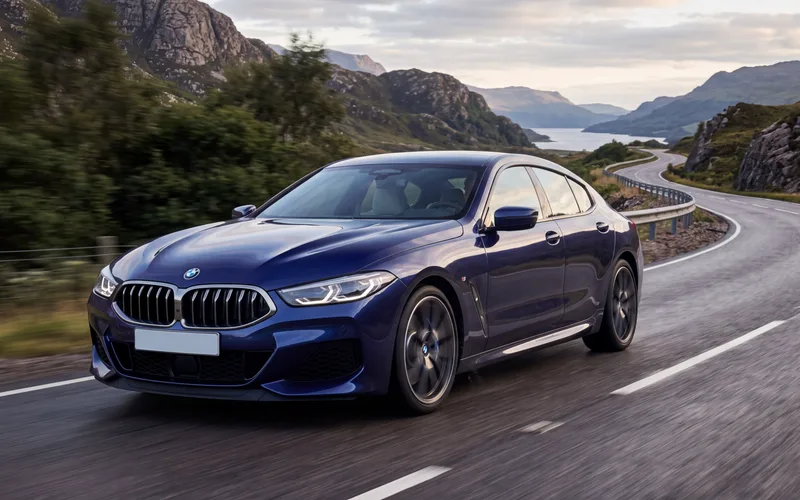 BMW 8 SeriesLuxury GTBetter at: All-weather usability
Nearly the same money buys all-wheel drive, 523 hp in M850i form and nearly triple the trunk space, making it the usable-every-day version of this idea.
Compare 2.72B-
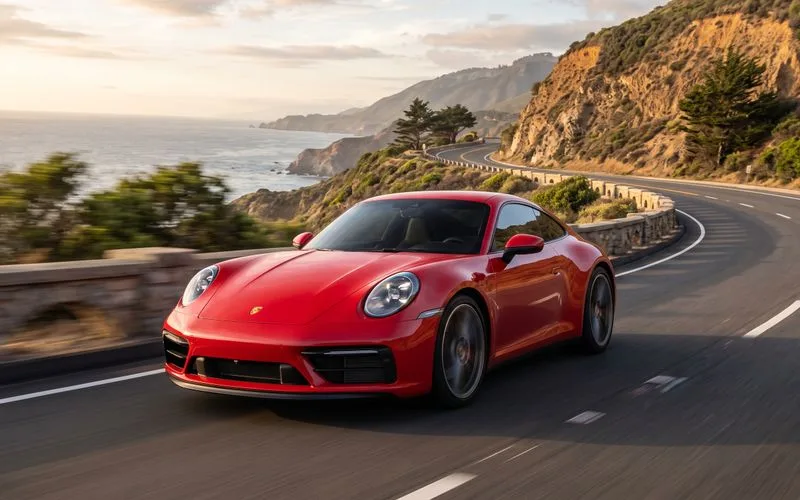 Porsche 911Sports CarBetter at: Driving & resale
If the driving matters more than the décor, the 911 is sharper in every dynamic measure and holds its value far better over five years.
Compare 2.74B-
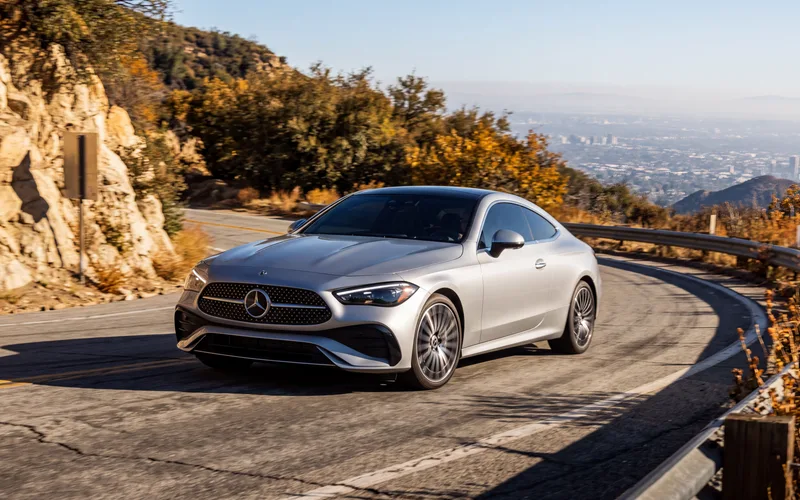 Mercedes-Benz CLE CoupeLuxury CoupeBetter at: Value & practicality
About half the price for a luxury coupe with real rear seats, a 14.8 cu ft trunk and available all-wheel drive, if the LC's compromises stop making sense.
CompareHow it's evolved
9 scored model years · 2018–2026
Subject scores by year
Hover or tap a score to see what moved it versus the year before. A corner mark flags a big swing.
| Year | Performance | Efficiency | Safety | Space | Cost | Reliability | Tech | Use-case | Driving | Value |
|---|---|---|---|---|---|---|---|---|---|---|
| 2026 | 74 | 10 | 61 | 51 | 16 | 87 | 72 | 28 | 73 | 65 |
| 2025 | 74 | 10 | 64 | 46 | 30 | 87 | 73 | 31 | 78 | 67 |
| 2024 | 73 | 9 | 63 | 46 | 16 | 86 | 72 | 31 | 79 | 67 |
| 2023 | 74 | 13 | 57 | 49 | 34 | 88 | 52 | 26 | 76 | 65 |
| 2022 | 74 | 13 | 57 | 49 | 34 | 87 | 52 | 26 | 76 | 64 |
| 2021 | 74 | 13 | 57 | 48 | 35 | 88 | 52 | 26 | 76 | 66 |
| 2020 | 74 | 13 | 57 | 48 | 41 | 83 | 49 | 25 | 75 | 65 |
| 2019 | 74 | 13 | 59 | 48 | 42 | 81 | 49 | 25 | 75 | 64 |
| 2018 | 74 | 14 | 54 | 46 | 41 | 83 | 43 | 25 | 75 | 66 |
Compare two years
Best fit & conditions
Higher scores mean a better fit for that use case. Learn more about use-case fit →
Subject profile
Academic Probation · NHTSA safety recalls
No NHTSA safety recall is on record for the 2026 Lexus LC. Other model years of the LC have 6 — listed below.
6 recalls on other model years of the LC (2018–2020, 2024–2025)
Oct 30, 2025Back over prevention: display functionPlease see the recall report for a complete list of models. A software error may cause the rearview camera to freeze or display a blank screen when the vehicle is in reverse. As such, these vehicles fail to comply with the requirements of Federal Motor Vehicle Safety Standard (FMVSS) number 111, "Rear Visibility."
Defect
Toyota Motor Engineering & Manufacturing (Toyota) is recalling certain 2022-2026 Toyota, Lexus, and Subaru Solterra vehicles equipped with a Panoramic View Monitor (PVM) system. Please see the recall report for a complete list of models. A software error may cause the rearview camera to freeze or display a blank screen when the vehicle is in reverse. As such, these vehicles fail to comply with the requirements of Federal Motor Vehicle Safety Standard (FMVSS) number 111, "Rear Visibility."
Risk
A rearview camera that fails to display an image can reduce the driver's view behind the vehicle, increasing the risk of a crash.
Remedy
Dealers will update the parking assist software, free of charge. Owner letters were mailed January 2, 2026. Owners may contact Toyota's customer service at 1-800-331-4331. Toyota's numbers for this recall are 25TB13 and 25LB06. Subaru's number for this recall is WRE25.
NHTSA campaign 25V744000 ↗Manufacturer no. 25TB13/25LB06/WRE251,024,407 vehicles potentially affected (all models in the campaign)Owners notified Dec 5, 2025Filed by Toyota Motor Engineering & ManufacturingFiled as LC, LC HYBRIDFeb 21, 2024Back over prevention: display functionDue to incorrect programming of the parking-assist electronic control unit (ECU) software, the rearview camera image may not immediately display within a couple of seconds after the shifter is placed into reverse. As such, these vehicles fail to comply with the requirements of Federal Motor Vehicle Safety Standard number 111, "Rear Visibility."
Defect
Toyota Motor Engineering & Manufacturing (Toyota) is recalling certain 2023 Mirai, Lexus LS500, LS500H, 2023-2024 Lexus ES250, ES300H, ES350, 2024 Lexus LC500, and LC500H vehicles equipped with a Panoramic View Monitor (PVM) system. Due to incorrect programming of the parking-assist electronic control unit (ECU) software, the rearview camera image may not immediately display within a couple of seconds after the shifter is placed into reverse. As such, these vehicles fail to comply with the requirements of Federal Motor Vehicle Safety Standard number 111, "Rear Visibility."
Risk
A rearview camera that fails to display an image can reduce the driver's rear view, increasing the risk of a crash.
Remedy
Dealers will update the parking assist ECU software, free of charge. Owner notification letters were mailed April 10, 2024. Owners may contact Toyota customer service at 1-800-331-4331. Toyota's numbers for this recall are 24TA01 and 24LA01.
NHTSA campaign 24V124000 ↗Manufacturer no. 24TA01 / 24LA0118,616 vehicles potentially affected (all models in the campaign)Owners notified Apr 10, 2024Filed by Toyota Motor Engineering & ManufacturingFiled as LC, LC HYBRIDNov 4, 2020Fuel system, gasoline: delivery: fuel pumpThe low-pressure fuel pump inside the fuel tank may fail.
Defect
Toyota Motor Engineering & Manufacturing (Toyota) is recalling certain 2018-2019 4Runner, 2019-2020 Avalon, 2019 Corolla Hatchback, 2017-2019 Highlander, 2018-2020 Camry, 2020 Corolla, 2018-2019 Land Cruiser, 2017-2020 Tacoma, 2019-2020 RAV4, 2019-2020 Sequoia, 2017-2020 Sienna, 2019-2020 Tundra, 2018-2020 Lexus ES350, 2017 Lexus GS200t, 2017-2019 Lexus GS350, 2019 Lexus GS300, 2018-2020 Lexus LC500h, 2019-2020 Lexus LS500, 2018-2019 Lexus GX460, 2017 Lexus IS200t, 2019 Lexus IS300, 2019 Lexus IS350, 2018-2020 Lexus LC500, 2018 Lexus LS500, 2019 Lexus LS500h, 2018-2019 Lexus LX570, 2017 Lexus RC200t, 2019 Lexus RC300, RC350, 2017 and 2019-2020 Lexus RX350, 2018-2020 RX350L, 2019 Lexus UX200, 2018-2019 Lexus NX300 vehicles. The low-pressure fuel pump inside the fuel tank may fail.
Risk
If the fuel pump fails, the engine can stall while driving, increasing the risk of a crash.
Remedy
Toyota will notify owners, and dealers will replace the fuel pump assembly with an improved one, free of charge. Owners of specific models were notified that remedy parts were available starting January 21, 2021. Owners of other models will be notified as remedy parts become available. Remedy parts should be available for all affected vehicles by late March 2021. Owners may contact Toyota customer service at 1-888-270-9371 or Lexus customer service at 1-800-255-3987. Note: This recall is an expansion of recall 20V-012. Toyota's number for this recall is 20TA02. Lexus' number for this recall is 20LA01.
NHTSA campaign 20V682000 ↗Manufacturer no. 20TA02, 20LA011,525,742 vehicles potentially affected (all models in the campaign)Owners notified Jan 21, 2021Filed by Toyota Motor Engineering & ManufacturingFiled as LC HYBRID, LC500Jan 13, 2020Fuel system, gasoline: delivery: fuel pumpToyota Motor Engineering & Manufacturing (Toyota) recalled certain 2018-2019 4Runner, Highlander, Camry, Land Cruiser, Sequoia, Sienna, Tacoma and Tundra, and Lexus RC 300, RC 350, GS 350, GX 460, IS 300, LC 500, LS 500, LX 570, RX 350L, and 2019 Toyota Avalon and Corolla, and certain Lexus NX 300, and ES 350 vehicles on January 13, 2020. On March 4, 2020, Toyota expanded the recall to include certain 2014-2015 Toyota 4Runner and Land Cruiser, 2018 Avalon, Corolla, 2014 FJ Cruiser, 2017 Sienna and Lexus 2018 ES 350, 2018-2019 GS 300, 2013-2014 GS350, 2014-2015 GX 460, IS 350 and LX 570, 2014 IS F, 2018-2019 IS 350, LC 500H and LS 500H, 2013-2015 LS 460, 2015 NX 200T and RC350, 2017 RC 200T and RX 350. Toyota also removed the 2018-2019 Toyota 4Runner and Land Cruiser and 2018-2019 Lexus GX 460 and LX 570 and 2019 NX300 from inclusion in this recall. On March 19, 2020, Toyota expanded the recall to include 2015 Lexus GS350 vehicles. The low-pressure fuel pump inside the fuel tank may fail.
Defect
Toyota Motor Engineering & Manufacturing (Toyota) recalled certain 2018-2019 4Runner, Highlander, Camry, Land Cruiser, Sequoia, Sienna, Tacoma and Tundra, and Lexus RC 300, RC 350, GS 350, GX 460, IS 300, LC 500, LS 500, LX 570, RX 350L, and 2019 Toyota Avalon and Corolla, and certain Lexus NX 300, and ES 350 vehicles on January 13, 2020. On March 4, 2020, Toyota expanded the recall to include certain 2014-2015 Toyota 4Runner and Land Cruiser, 2018 Avalon, Corolla, 2014 FJ Cruiser, 2017 Sienna and Lexus 2018 ES 350, 2018-2019 GS 300, 2013-2014 GS350, 2014-2015 GX 460, IS 350 and LX 570, 2014 IS F, 2018-2019 IS 350, LC 500H and LS 500H, 2013-2015 LS 460, 2015 NX 200T and RC350, 2017 RC 200T and RX 350. Toyota also removed the 2018-2019 Toyota 4Runner and Land Cruiser and 2018-2019 Lexus GX 460 and LX 570 and 2019 NX300 from inclusion in this recall. On March 19, 2020, Toyota expanded the recall to include 2015 Lexus GS350 vehicles. The low-pressure fuel pump inside the fuel tank may fail.
Risk
If the fuel pump fails, the engine can stall while driving, increasing the risk of a crash.
Remedy
Toyota will notify owners, and dealers will replace the fuel pump, free of charge. The recall began May 4, 2020. Owners may contact Toyota customer service at 1-888-270-9371 or Lexus customer service at 1-800-255-3987. Toyota's numbers for this recall are 20TB02 and 20TA02 for Toyota vehicles and 20LB01 and 20LA01 for Lexus vehicles.
NHTSA campaign 20V012000 ↗Manufacturer no. 20TB02/20TA02/20LB011,830,752 vehicles potentially affected (all models in the campaign)Owners notified May 1, 2020Filed by Toyota Motor Engineering & ManufacturingFiled as LC HYBRID, LC500Jul 24, 2019Electronic stability control (esc) · Service brakesThe brake booster pump may fail causing a deactivation of the Vehicle Stability Control system and a loss of braking assist. As such, these vehicles fail to comply with the requirements of Federal Motor Vehicle Safety Standard (FMVSS) number 126, "Electronic Stability Control Systems."
Defect
Toyota Motor Engineering & Manufacturing (Toyota) is recalling certain 2019 Lexus LS500, LC500, ES300h, UX250h, LS500h, Toyota Prius, RAV4 HV, 2019-2020 Toyota Prius Prime, and 2020 Corolla HV vehicles. The brake booster pump may fail causing a deactivation of the Vehicle Stability Control system and a loss of braking assist. As such, these vehicles fail to comply with the requirements of Federal Motor Vehicle Safety Standard (FMVSS) number 126, "Electronic Stability Control Systems."
Risk
Deactivation of the vehicle stability control system or a loss of braking assist increases the risk of a crash.
Remedy
Toyota will notify owners, and dealers will inspect and, if necessary, replace the brake booster pump, free of charge. The recall began September 20, 2019. Toyota owners may contact Toyota customer service at 1-888-270-9371 and Lexus owners may contact Lexus customer service at 1-800-255-3987. Toyota's numbers for this recall are K1L/K0L. Lexus' numbers for this recall are K2F/KLF.
NHTSA campaign 19V544000 ↗Manufacturer no. K1L/K0L, K2F/KLF6,925 vehicles potentially affected (all models in the campaign)Owners notified Sep 20, 2019Filed by Toyota Motor Engineering & ManufacturingFiled as LC500Feb 14, 2018Fuel system, gasoline: delivery: fuel pumpSpecific operating conditions may result in damage to the pulsation damper in one of the high pressure fuel pumps, possibly causing a fatigue crack in the fuel pump cover.
Defect
Toyota Motor Engineering & Manufacturing (Toyota) is recalling certain 2016-2018 Lexus GS F, 2018 LC500, and 2015-2018 Lexus RC F vehicles, equipped with 5.0L V8 2UR-GSE engines with two high pressure fuel pumps. Specific operating conditions may result in damage to the pulsation damper in one of the high pressure fuel pumps, possibly causing a fatigue crack in the fuel pump cover.
Risk
A cracked cover may leak fuel, which, in the presence of an ignition source, can increase the risk of a fire.
Remedy
Toyota will notify owners, and dealers will replace the high pressure fuel pumps, free of charge. The recall is expected to begin April 2, 2018. Owners may contact Lexus customer service 1-800-255-3987. Toyota's numbers for this recall are J2B and JLB.
NHTSA campaign 18V107000 ↗Manufacturer no. J2B/JLB9,905 vehicles potentially affected (all models in the campaign)Owners notified Apr 5, 2018Filed by Toyota Motor Engineering & ManufacturingFiled as LC500
Source: NHTSA Office of Defects Investigation recall database, model years 2018–2026. Recalls are listed by model year as the manufacturer filed them; whether a specific car is affected depends on its VIN — check a VIN at nhtsa.gov ↗. NHTSA model names matched to this page: LC, LC HYBRID, LC500.
Detailed scoring by subject
1Performance & PowertrainOne of the LC's strongest categories.3.01B
The volume LC 500 uses the naturally aspirated 5.0L 2UR-GSE V8 rated 471 hp at 7,100 rpm — unchanged across the Z100 generation since its 2018 launch, so 2026 is a carryover figure. The LC 500h multi-stage hybrid (3.5L V6 plus electric) is rated 354 hp combined.
Peak twist of 398 lb-ft arrives high at 4,800 rpm, characteristic of the naturally aspirated V8 — strong on paper but delivered further up the tach than the turbocharged German GTs it competes against. Value corrected from the placeholder's 398.6 to the real 398 lb-ft; the resulting score is unchanged.
Lexus quotes 4.4 s for the LC 500 coupe and instrumented tests of the generation have landed in the 4.2–4.5 s range; the heavier hybrid LC 500h runs closer to 4.9 s. Quick, but the LC is tuned as a grand tourer rather than a stopwatch special and trails the 8 Series and AMG GT.
The naturally aspirated 5.0L V8 is one of the last of its kind and a genuine highlight — zero turbo lag, linear response all the way to a 7,300 rpm redline, and an intake and exhaust note reviewers routinely single out as the car's best feature. Marked just below the AMG GT because peak torque sits high so it needs revs to feel truly urgent, and the hybrid's engine-to-motor transitions are less seamless than the V8's delivery.
The 10-speed Direct Shift automatic is smooth and snaps off quick, well-timed changes in Sport S+, but in Normal mode reviewers consistently note hesitancy, slow kickdown and hunting among its ten closely spaced ratios — behavior that leaves it clearly behind the ZF 8-speed benchmark the BMWs use. The LC 500h's multi-stage hybrid transmission is more unusual still, simulating ten ratios via a four-speed automatic behind the planetary hybrid unit.
The LC is rear-wheel drive only across every trim and body style — no AWD has ever been offered on the platform, so there is no answer to BMW xDrive, Porsche's Carrera 4 or AMG 4Matic+. Scored alongside the other strictly RWD coupes in the dataset (Mustang, GR Supra, BRZ); the available Torsen limited-slip differential helps traction but does not change the drivetrain layout.
Two genuinely distinct powertrains — the 5.0L V8 and the 3.5L multi-stage hybrid — one of them electrified, which places the LC well ahead of single-engine rivals like the 8 Series Coupe, GR Supra and BRZ. It stops short of the top band because there is no plug-in, no EV variant and no higher-output F performance model. Confidence is LOW specifically because 2026 US availability of the LC 500h could not be verified against a current order guide; if the hybrid has been dropped for 2026 this item falls toward the 8 Series' single-powertrain score of 40.
2Efficiency & RangeThe LC's lowest-graded category.0.00F
The volume trim is the LC 500 coupe with the naturally aspirated 5.0L 2UR-GSE V8 (471 hp) and 10-speed automatic — a large-displacement, high-revving engine with no cylinder deactivation, carried into 2026 unchanged. The LC 500h multi-stage hybrid is far thriftier but is the low-volume choice.
A ~4,300 lb GT hauled by a 5.0L V8 posts one of the weakest city numbers in the luxury-coupe set. The LC 500h's multi-stage hybrid transforms this figure, nearly doubling it.
Tall 10th-gear cruising and a slippery GT body lift the highway figure well clear of the city number, which suits the LC's grand-touring brief — but 25 MPG still trails turbocharged rivals like the BMW 840i (29 hwy).
A generous 21.7-US-gallon tank partly offsets the thirsty V8, giving usable if unremarkable touring range; the hybrid stretches the same tank past 600 miles, which is the more convincing GT proposition.
EPA standard 15,000 mi/yr at 18 MPG combined burns roughly 833 gallons of premium, putting the LC 500 among the most expensive cars to fuel in the segment — worse than the M850i xDrive. Choosing the hybrid cuts the bill by about a third.
Both LC powertrains require premium unleaded (91 octane or higher) — the 2UR-GSE V8 runs a 12.3:1 compression ratio and the hybrid's Atkinson-cycle V6 is likewise premium-specified. No E85, no diesel, no plug-in charging to fall back on, so every mile is bought at the most expensive pump grade.
3SafetyMid-pack among this car's ten categories.2.11C
The LC is a low-volume halo coupe and has not been crash-tested by NHTSA in any year of the second generation (2018–2026), so no overall star rating exists; the value is a segment-norm estimate. Live nhtsa.gov / SafetyRatings API lookup was unavailable on this run (no network egress).
No IIHS crashworthiness results or Top Safety Pick award for the LC in any year of the current generation — the Institute does not routinely test halo coupes at this volume. Scored mid-band rather than low because there are no known structural concerns: the GA-L platform underpins the IIHS-tested LS, and the LC carries a full airbag complement including knee and rear side-curtain coverage.
Lexus Safety System+ 2.5 is standard on the LC — Pre-Collision System with pedestrian detection, Full-Speed Range Dynamic Radar Cruise Control, Lane Departure Alert with Steering Assist, Lane Tracing Assist, Intelligent High Beams and Road Sign Assist — and Blind Spot Monitor with Rear Cross-Traffic Alert is standard rather than optional. Nothing safety-relevant is locked behind a trim walk (the LC 500 is effectively one trim family), which is why it clears 80.
No IIHS front crash prevention result exists for the LC. Toyota/Lexus Pre-Collision System implementations of this era generally earn Superior vehicle-to-vehicle and Advanced daytime pedestrian ratings, but the LC runs the older LSS+ 2.5 sensor set on a 2018-era electrical architecture, so nighttime pedestrian performance is the weak link — placing it in the middle of the adequate-daytime band.
Blind Spot Monitor with Rear Cross-Traffic Alert is standard, which matters more than usual given the LC's severely limited rear-quarter sightlines. Held in the alert-only band: no rear cross-traffic braking intervention, no Safe Exit Assist, and no Panoramic View Monitor offered to compensate.
Lane Departure Alert with Steering Assist and Lane Tracing Assist are standard within LSS+ 2.5. LTA works as a hands-on centering aid but the 2.5-generation implementation is a nudge-and-correct system rather than confident centering, and reviewers of Lexus models on this suite describe wander on curves and frequent hand-on-wheel nags.
Full-Speed Range Dynamic Radar Cruise Control with stop-and-go is standard, and Lexus's radar cruise is consistently praised for smooth following and gap transitions on long GT drives — the LC's core use case. Short of the 80s because the 2.5 suite lacks curve-speed reduction and lane-change assist, and the combined highway-assist behaviour is less integrated than the LS or the newer 3.0 cars.
No hands-free highway system is offered on any 2026 LC configuration. Lexus Teammate with Advanced Drive exists in the corporate portfolio (introduced on the LS 500h) but has never been extended to the LC, whose LSS+ 2.5 suite is hands-on only.
The LC's triple-beam LED headlamps are standard signature equipment rather than a trim upgrade, and Intelligent High Beams come with LSS+ 2.5 — so the volume configuration is the good configuration, which is what this item rewards. Capped below the 80s because IIHS has never rated LC headlights and the triple-beam units are a fixed-projector design without the steerable adaptive beam of the LS's BladeScan.
The LC's concept-car proportions cost it here: a long hood with a very low seating position, heavily raked windshield, thick C-pillars and a shallow rear window leave large rear and rear-quarter blind zones. Standard BSM and the reversing camera cover part of it, but no Panoramic View Monitor is offered, so there is no comprehensive camera compensation.
The LC is a 2+2 whose rear seats are vestigial in practice — lower LATCH anchors buried in tightly bolstered cushions, access only by tilting and sliding a heavy power front seat through a single long coupe door, and so little rear legroom that a rear-facing seat pushes the front occupant unreasonably far forward. Anchors exist, so it is not a zero, but this is among the hardest configurations in the catalog to actually fit a child seat in.
4Space & ComfortGrades below the middle of the scale.1.43D
The LC coupe is a 2+2 GT with a fixed four-seat layout, unchanged across the Z100 generation; four seats sits at the bottom of the 4-5 coupe band, matching the BMW 8 Series and Mercedes CLE Coupe. Replaces a placeholder that invented a fractional 4.7-seat capacity.
A 53.0-inch-tall GT roofline yields modest front headroom — low in the 36-40 in coupe band and well under the 8 Series (39.1 in) and CLE (40.3 in). The optional carbon-fiber roof trims it further.
Front legroom lands mid-band for the segment and is competitive with the 8 Series and CLE Coupe (both 42.1 in) — the front compartment is the one part of the LC's cabin sized for real adults.
The fastback roof cuts hard into the rear seats — rear headroom falls below the bottom of the 35-39 in coupe band, so the item floors at 0. The placeholder's 38.0 in was implausible for this body.
Rear legroom sits just above the floor of the 32-42 in coupe band — token 2+2 accommodation, though nominally better on paper than the 8 Series (29.5 in). Adults cannot sit behind an adult-set front seat.
The LC's trunk is its single most-criticized practical flaw — roughly a third of the 8 Series' and CLE's 14.8 cu ft and far below the 10 cu ft floor of the coupe band, so the item scores 0. The hybrid gives up more still to its battery pack.
Cabin storage is sparse by design: a shallow center console, small door pockets, no underfloor tricks, and a tiny trunk with no meaningful passthrough. The rear bench doubles as the de facto luggage shelf. Scored below the 8 Series (62) and CLE (65), which at least offer folding rear seatbacks and conventional bins.
The front seats are among the best in any GT — deeply padded, well-bolstered, heated and ventilated, and repeatedly praised for all-day touring comfort inside one of the industry's best-executed interiors. Held just under the 8 Series and CLE (88 each) only because the rear seats are effectively unusable for people, and this item weighs front and rear together.
The LC is tuned as a genuine grand tourer rather than a sports car — adaptive variable suspension over a multi-link setup delivers a supple, well-damped ride with good body control. Slightly firm on the 21-inch wheels and the Performance package, which keeps it from the top of the band.
Extensive sound insulation and acoustic glass make the LC very quiet at a highway cruise, with the hybrid quieter still. Marked just below the 8 Series (92) because the 5.0-liter V8's intake and exhaust note is deliberately channeled into the cabin — pleasant, but not library-silent.
As a six-figure flagship the LC carries a rich standard comfort set — dual-zone automatic climate, heated and ventilated power front seats, heated steering wheel, semi-aniline leather and Alcantara trim — with little left to option. Capped below the 90 earned by the four-zone 8 Series because a 2+2 GT offers no rear climate zone and rear occupants get essentially nothing.
5Cost of OwnershipOne of the LC's weakest categories.0.00F
The LC is a six-figure luxury GT, roughly double the top of the coupe pricing band, so it floors this item regardless of the exact figure. Value carried forward from the last confirmed LC 500 coupe pricing (~$98,850 base + ~$1,150–$1,350 destination on the 2024–2025 cars) plus a typical single-year adjustment.
The V8 LC 500 coupe is the volume configuration and it rarely leaves a dealer stripped — the common build adds a package plus Mark Levinson audio, putting typical delivered price near $109,000. Far above the $58,000 band ceiling, so the item scores zero.
Cheaper to keep than its German six-figure GT rivals — Lexus service pricing, long intervals and strong parts availability — but still a low-volume V8 coupe on 21-inch staggered rubber, where a tire set alone runs well over $1,500 and brake service is expensive.
Six-figure luxury GTs depreciate hard and the LC is no exception — used demand is thin at its price point. It holds up better than its German rivals on the strength of Lexus reliability perception, low production volume and the enduring appeal of a naturally aspirated V8, but it is nowhere near sports-car residuals.
Lexus's standard US basic coverage is 4 years or 50,000 miles — matching the luxury norm (BMW, Mercedes and Audi all sit at 4 years) but short of the segment leaders.
Six years/70,000 miles on the V8 volume trim beats the German rivals' 4-year powertrain terms but still sits near the bottom of the 5–10 year band. Hybrid buyers get materially longer coverage on the electrified hardware.
Included scheduled maintenance is short — 1 year/10,000 miles, covering only the first two services — but the surrounding ownership package is genuinely strong: 4 years of unlimited-mileage roadside assistance and, because the LC sits at the top of the Lexus range, the Encore Elite program with complimentary loaners, service pickup and delivery, and concierge support.
$109,000 volume-trim price minus its estimated resale value after 5 years (47% retained, or about $51,230) leaves about $57,770 in depreciation. Add the projected $7,000 in 5-year maintenance and repairs, and owning this vehicle for 5 years costs about $64,770 in total.
6Reliability & QualityThe LC's best-graded category.3.92A+
The 2026 LC is the ninth model year of a single Z100 generation that launched for 2018 and was lightly revised for 2021 — no new platform, engine, gearbox or electrical architecture to introduce first-year faults, which is the strongest structural prior available for this item. Scored at the top of the coupe field (911 84, GR Supra 77, 8 Series 72) on Lexus's dependability record and a fully debugged carryover design, but held below the compact IS (89) for two reasons: LC volume is small enough that Consumer Reports rarely gathers a full survey sample for it, and the car carries more failure surface than an IS — adaptive dampers, a large glass/carbon roof option, active aero and, on the 500h, the complex Multi Stage Hybrid transaxle.
Lexus is a permanent fixture in the top tier of US dependability research — habitually first or second in J.D. Power's Vehicle Dependability Study and top-five in Consumer Reports' brand rankings. Scored identically to the 2026 IS and LS since this is a brand-wide attribute, and a notch below the 93 recorded on the 2026 ES because CR's 2026 survey places Lexus third behind Toyota and Subaru rather than sweeping both major studies outright.
The Z100 LC has run one of the cleanest NHTSA records of any car in this coupe set — no fire, ADAS, structural or engine-replacement campaigns of the kind that have hit German rivals, and Lexus TSB volume is low by class standards, helped by low production volume and a slow-changing spec. Held just short of the top of the band because early model years of the generation were swept into the industry-wide 2020 Denso low-pressure fuel-pump action that spanned much of the Toyota/Lexus range, and because no live NHTSA query was possible to confirm the 2026 car is campaign-free.
The volume LC 500 has the most durable powertrain in this coupe segment: the 2UR-GSE 5.0-liter naturally aspirated V8 — no turbochargers, and D-4S port-plus-direct injection that avoids the intake carbon problem of pure direct injection — paired with Aisin's 10-speed torque-converter automatic shared with the LS 500 and LX. The UR V8 family has been in production since the mid-2000s across the LS 460, GX, Tundra and the F cars with no chronic failure mode, and the LC's state of tune is unstressed relative to its displacement. Scored above the GR Supra's B58 (87) and far above the turbocharged German V8s; held out of the mid-90s only because the alternative LC 500h Multi Stage Hybrid adds a genuinely complex four-speed-plus-eCVT transaxle with no equivalent high-mileage sample, and because its 2026 US availability could not be confirmed.
The LC's cabin is the most acclaimed interior Lexus has built and one of the best in this dataset at any price — semi-aniline leather and Alcantara, hand-stitched door architecture with the signature sail panel and glass-backed door pull, magnesium paddles, machined switchgear and knurled drive-mode dials, with essentially no low-rent surface within reach. It sits just below the S-Class (96) and above the 8 Series (90), the LS (91) and the far plainer 911 (73). Held off the mid-90s because the infotainment hardware and some secondary switchgear are shared with much cheaper Lexus models, which a six-figure GT price does not fully excuse.
The best fit-and-finish score in this dataset. The LC is built in low volume at Toyota's Motomachi plant — the same operation that assembled the LFA — under the brand's takumi inspection regime, on a body and line that have had nine model years to converge. Panel gaps are tight and repeatable, there is essentially no squeak-and-rattle thread in owner reports or long-term tests, and Lexus consistently posts top-tier initial-quality results. Scored above the LS (93), the IS (90) and the 8 Series (86).
Coverage is thinner than BMW's or Mercedes-Benz's at roughly 240 US stores, but Lexus is the industry reference point for luxury service satisfaction, regularly leading or placing top-three in J.D. Power's Customer Service Index, with loaners and pickup-and-delivery standard practice — and low-volume flagship buyers sit at the front of that queue. Scored identically to the 2026 ES, IS and LS since the network is brand-wide, and above the 8 Series (78) and 911 (85).
The weak spot in an otherwise exceptional ownership case. The LC is a halo car built in the low thousands per year, so its body panels, glass, lighting, active rear wing and interior trim are model-unique, dealer-dependent, expensive and effectively unserved by an aftermarket or a deep salvage supply; 21-inch tires and large brakes add running cost. It still clears the German GT field (8 Series 55) because the 2UR-GSE V8 and Aisin 10-speed are shared with other Lexus models, the LC uses conventional coil springs with adaptive dampers rather than the air suspension that is the LS's documented big-ticket failure, Lexus parts and labor price below the Germans', and independent shops will take the work. Scored a shade under the LS (68), which has genuine Toyota-truck powertrain commonality, and far below the parts-common IS (84).
7Technology & InfotainmentGrades above the middle of the scale.2.90B-
The LC dropped its 10.3-inch non-touch display and console Remote Touch touchpad in the MY2024 multimedia change, adopting the Lexus Interface stack behind a 12.3-inch touchscreen, and carries that unchanged into 2026 with no larger screen offered. Replaces the placeholder value of 12.1 in, which is not a size Lexus ships.
Lexus Interface is a real generational gain over what the LC used to run — quick cloud-backed software, a sensible home/menu structure, and retained physical volume and climate controls — but the screen is grafted into a dash architecture designed for a touchpad, so it sits deep and low and is a genuine stretch from the driver's seat in a car with a fixed, reclined GT driving position.
The Lexus Interface conversion brought wireless Apple CarPlay and wireless Android Auto as standard equipment across the LC range with no wired-only trim — and on a GT whose native maps are subscription-dependent, phone projection is what most owners actually use day to day.
The 'Hey Lexus' cloud natural-language assistant handles climate, media, and destination entry conversationally and is a clear step past the old embedded command grammar, but Lexus Interface leans on Drive Connect cloud navigation, which reverts to a paid subscription once the included trial lapses — so a six-figure GT can end up with no working native maps.
The available Mark Levinson Reference Surround system — roughly 13 speakers and 915 watts — is very strong in a cabin this small and well sealed, and the standard Pioneer system is competent. It is a real strength, but it is the compact Mark Levinson configuration, not the flagship one.
A fully digital TFT meter with the LFA-derived motorized sliding ring — the central dial physically slides aside to expose secondary menus — is standard on every LC rather than trim-gated. Distinctive and beautifully legible, but it is a small, narrow display with far less reconfigurability than BMW's Curved Display or the newest Mercedes clusters.
Moving to Lexus Interface gave the LC genuine over-the-air multimedia and map updates through its embedded telematics unit, which the pre-2024 car did not have — but these remain infotainment-scope updates, not the whole-vehicle, feature-adding OTA campaigns BMW, Mercedes, and Tesla run, and that will not change on a platform in its final years.
The Lexus app covers the core set — remote start and climate precondition, lock/unlock, vehicle locate, status and alerts — but Remote Connect and Safety Connect revert to paid subscriptions after the included trial, and the LC is not among the Lexus models confirmed to offer Digital Key phone-as-key.
This is the weakest part of the LC's tech package and a direct consequence of the packaging: a very tight console in a 2+2 whose rear seats are token, a small number of front ports on a 2018-era interior architecture, no household AC outlet, and no meaningful rear-seat charging provision. Even if the MY2024 update refreshed the connectors, the port count stays low.
Smart Access proximity entry with push-button start is standard and remote start runs through both the key fob and the Lexus app, but there is no phone-as-key option and, as a low GT coupe with a shallow trunk, none of the hands-free liftgate or soft-close convenience that lifts luxury sedans and SUVs into the top band.
A rear camera is standard and Intuitive Parking Assist with front and rear clearance sonar is available, which matters a great deal in a car with a long hood, high beltline, and poor over-the-shoulder visibility — but the LC's options sheet is thin and a Panoramic View Monitor surround camera is not a confirmed LC feature the way it is on the ES, LS, and Lexus SUVs. There is no automated parking.
A large color head-up display projecting speed, tachometer, navigation, and driver-assist status is offered on the LC and suits the car's low, fixed seating position well, keeping the driver's eyes up on a GT meant for long distances. Held out of the top band because it is bundled into upper equipment packages rather than fitted to the base configuration.
8Use-Case FitOne of the LC's weakest categories.0.00F
A 2+2 GT with 32.5 in of rear legroom and 34.0 in of rear headroom behind long, heavy doors: a rear-facing seat will not fit without pushing the front passenger seat to its stop, and every install means leaning over a tumbled front seat. Replaces a placeholder that scored this like a family crossover.
Lexus Safety System+ with pre-collision, lane tracing and all-speed adaptive cruise is standard, and blind-spot monitoring with rear cross-traffic alert comes on every LC — but the car carries no NHTSA or IIHS crashworthiness ratings at all, has no rear-door occupant alert case, and there is no family-affordable trim to speak of at roughly $102k.
The front two seats are genuinely excellent for a long day, but the rear pair is a parcel shelf with seatbelts and the 5.4 cu ft trunk cannot hold luggage for four people — a family of four cannot physically take this car on a road trip.
The LC is tuned as a comfort-first GT rather than a hard sports car: the 10-speed automatic and 5.0L V8 are unusually smooth at low speed, the ride stays composed, and the cabin is quiet enough to make traffic painless. It loses ground on ingress/egress over a wide sill into a low seat, mediocre over-shoulder visibility, and a nose low enough to demand care at driveways and speed humps.
The volume LC 500 returns 18 MPG combined and requires premium, working out to roughly $3,600 a year at 15,000 miles, on top of about $3,000 a year to insure and staggered 20-inch performance rubber that is expensive to replace. The LC 500h's 29 MPG combined is the one mitigating option, but it is neither the volume trim nor cheap to buy.
Roughly 187 in long and 76 in wide with a very low nose, a high rear deck and thick rear pillars, plus doors long enough to be awkward in a normal parking bay. The standard rear camera helps and the turning circle is reasonable for the wheelbase, but the surround-view camera is an option rather than standard equipment.
No US tow rating, no bed, no meaningful payload allowance and a 5.4 cu ft trunk that will not take a stepladder, a toolbox or a sheet of anything. Scored in the low band per the prompt's instruction to score absent capability rather than omit the item.
Mechanically this is one of the more durable things in the segment — the naturally aspirated 2UR-GSE V8 and Lexus assembly quality are proven over the generation — but the item measures fitness for abuse, and the LC is entirely luxury-oriented: leather and Alcantara surfaces, low clearance, no wear-friendly interior option and zero fleet history.
No onboard AC inverter, no bed or cargo tie-down system beyond token trunk hooks, no factory hitch, no roof rack provision and no washable surfaces anywhere in the cabin. There is no upfit ecosystem for a $100k GT coupe.
This is what the LC is actually for: excellent long-haul seats, a genuinely quiet cabin, a compliant GT ride, full-speed adaptive cruise with lane tracing to cut fatigue, a head-up display, and roughly 390 miles of range from the V8 (about 630 from the hybrid). The only real limits are that it can only carry two people's worth of luggage and that every fill-up is premium.
Rear-wheel drive only with no AWD option anywhere in the range, minimal ground clearance, low-profile performance tires on 20- or 21-inch wheels, no roof rails or tow rating for toys, and no camping-friendly provisions — no household outlet, no flat-folding anything. Pavement-bound in the most literal sense.
5.4 cu ft is among the smallest trunks sold in the US and drops to roughly 4.7 cu ft on the hybrid, the rear seatbacks do not fold or pass through, and there are no roof rails, no factory hitch and no underfloor storage. The vestigial rear seat doubling as a parcel shelf is the only flexibility on offer. The placeholder's 91 was the single worst-calibrated number in this category.
9Driving ExperienceOne of the LC's strongest categories.2.98B-
On the GA-L platform with adaptive variable suspension, the LC is genuinely composed — flat body control, strong lateral grip (instrumented skidpad results for the generation sit near 0.95 g on the 21-inch summer setup) and a rear-drive balance that never feels nervous. It is held to the middle of the coupe field because it is a grand tourer first: roughly 4,300 lb of curb weight and a long 113-in wheelbase mean it resists direction changes in a way the GR Supra, 911 and even the 8 Series do not, and reviewers consistently describe it as rewarding to flow rather than to hustle.
The electric rack is accurate, consistently weighted and builds effort naturally off center, which makes the LC easy to place on a road — one of the better Lexus setups. It stops well short of the top band because feedback is filtered out in the usual Lexus way; reviewers routinely call it precise but numb, with little of the surface texture a 911 or GR Supra transmits.
The LC 500 runs large ventilated discs with six-piston front calipers and stops a heavy GT convincingly, with firm, progressive pedal feel and no fade complaints in road testing; instrumented 70-0 mph results for the generation land in the low 150-ft range. Marked below the top band because the LC 500h's regen-blended electronically controlled braking is less linear at low speed than the V8 car's conventional hydraulics, and there is no carbon-ceramic option to raise the ceiling.
The naturally aspirated 5.0L V8 itself is close to flawless in calibration — no turbo lag, perfectly linear tip-in, and clean response all the way to redline (scored 89 for refinement in cat1). What pulls this item down is the 10-speed automatic: in Normal mode reviewers consistently report hesitancy, slow kickdown and hunting among ten closely spaced ratios, so the car as a system is less impeccably calibrated than the engine alone. The LC 500h's multi-stage hybrid is smooth in isolation but its engine-to-motor handoffs are less seamless still.
This is the LC's signature strength: an acoustically engineered intake and exhaust that reviewers regularly name among the best-sounding remaining naturally aspirated V8s, paired with a very well isolated cabin (cabin quietness scored 87 in cat4) so the noise that reaches the driver is the intended kind. No vibration issues through the wheel or pedals. Just short of the ceiling because the sound is partly piped and enhanced rather than purely mechanical, and the hybrid variant is far less characterful under load.
No authoritative 2026 Lexus spec sheet was reachable in this scoring run, so the figure is estimated rather than sourced. The LC's 113.0-in wheelbase is long for a coupe and its staggered 245/275-section tires on 20- or 21-inch wheels limit steering lock, which places it in the same low-maneuverability band as the GT coupes it competes with rather than near the compact sports cars.
The seat itself is excellent — a low, hip-point-perfect GT position with a wide adjustment range and seats scored 84 in cat4 — and the MY2024 move to Lexus Interface put a 12.3-inch touchscreen within reach in place of the old console touchpad, fixing what had been the car's worst interaction problem. It stays mid-band because the packaging around the driver is uncompromising: a very low roofline and wide sills make ingress and egress genuinely awkward, over-the-shoulder visibility is poor (outward visibility scored 50 in cat3), and the tight console leaves few places to put anything.
The LC earns its long-way-home score on character rather than pace — the V8's sound and free-revving delivery, the sense of occasion in the cabin, and styling that still draws attention nearly a decade in make it a car owners drive for its own sake. It falls short of the enthusiast-favorite band because the mass and GT tuning blunt the interactive edge: it is more satisfying to cruise fast in than to work hard, and there is no manual, no F variant and no track-focused setup to reach for.
10Value & Market PositionMid-pack among this car's ten categories.2.42C+
The LC 500 arrives genuinely luxurious at its ~$102,000 as-delivered price — semi-aniline leather, heated and ventilated power seats, adaptive variable suspension, triple-beam LED headlights, the standard motorized sliding-ring digital cluster, the 12.3-inch Lexus Interface touchscreen with wireless CarPlay and Android Auto, and Lexus Safety System+ across the board. It sits below the 8 Series because the content a six-figure GT buyer actually wants is packaged rather than included: Mark Levinson audio, the head-up display, the Torsen limited-slip differential, 21-inch forged wheels and the carbon roof are all extra-cost, and a surround-view camera is not offered at any price.
This is the LC's weakest commercial argument. At roughly $102,000 base and $109,000 as typically built, it delivers 471 hp, 4.4 s to 60 mph, rear-wheel drive only and about 4,300 lb — while the M850i xDrive offers 523 hp and AWD for similar money, a 911 Carrera is a categorically better driver's tool, and a Corvette delivers far more capability for half the outlay. The car's own scorecard reinforces the point: efficiency scored 18.8, space and comfort 40.2, use-case fit 28.1. What keeps it out of the poor-value band is real and quantifiable — a class-best interior (93 material quality, 94 fit and finish), the top reliability and dealer-service scores in this coupe set, the lowest running costs among six-figure GTs, and better residuals than its German rivals.
Two genuinely different powertrains — the 5.0L V8 LC 500 and the 3.5L multi-stage hybrid LC 500h — across two body styles, coupe and convertible, with Touring, Sport and Performance packages layered on top and periodic Inspiration Series special editions. That is broad for a halo GT and materially wider than the single-configuration 8 Series Coupe. It stops short of the top band because the choices are all variations on one expensive theme: rear-wheel drive only, no manual, no F performance variant, and a price band roughly $102,000–$115,000 with no lower entry point for a tighter budget.
The LC is a deliberately low-volume halo car and sells like one — US deliveries have run in the low four figures annually across coupe and convertible since launch, peaking in the model's first year and drifting downward since, and 2026 is the ninth model year of a single generation in a flagship-coupe segment that is contracting industry-wide. Acceptance among the buyers it targets is real, and Lexus has kept the car in the catalog for nearly a decade, which is itself a signal. But the item measures sales strength and trajectory, and both are weak.
Lexus is a strong, genuinely well-liked luxury brand with high owner loyalty, built on dependability and the best service reputation in the business — and the LC itself is the most admired object the brand has produced since the LFA, a concept car that reached production essentially intact and still stops traffic nine years on. The reason it lands below its German rivals here is that Lexus's equity is comfort, quality and service rather than performance aspiration, and in the six-figure two-door bracket that is exactly the currency that moves metal. An AMG or Porsche badge carries a halo at this price that a Lexus badge, for all the brand's strengths, does not.
Scored for buyer benefit, the LC's slow sales work in the shopper's favor. Cars sit on lots, Lexus Financial Services runs subvented lease and APR programs on the model, and there is no allocation game or market adjustment of the kind that attaches to a 911 or an AMG GT 63 — a patient buyer transacts below MSRP. It falls short of the top band because Lexus is disciplined about cash on the hood, and because leasing a car with the LC's depreciation curve is expensive no matter how good the money factor is.
2026 is the ninth model year of the Z100 generation, which launched for 2018 and has never had a proper mid-cycle redesign — the 2021 changes were suspension and tuning revisions, and the MY2024 update swapped the head unit and display for Lexus Interface without touching the body, platform, powertrain or dash architecture. The design has aged unusually gracefully and the infotainment fix removed the car's worst dated element, but this is a late-cycle car on a nine-year-old platform with no announced successor and a real prospect of quiet discontinuation, which is exactly the replacement risk this item asks buyers to price in.
Reviewers are close to unanimous that the LC is one of the most beautiful and best-built cars on sale — its interior is a standing benchmark and the naturally aspirated V8's sound is singled out in nearly every review — and that praise has held steady across the whole generation rather than fading with the car's age. What keeps it out of the top band is equally consistent: it rarely wins a comparison test. Against a 911 or an M850i it is marked down for weight, filtered steering, the hesitant 10-speed in normal driving, thin rear seats, a small trunk and poor economy, and the usual verdict is that you buy it for how it looks and sounds rather than how it drives. Admired more than it is recommended.