
The verdict
A mixed-report subcompact luxury suv, strong on efficiency and held back by performance.
The 2026 Lexus UX 300h is the cheapest, thriftiest, most dependable way into a luxury badge — 43 MPG combined on regular 87-octane, roughly $1,150 a year in fuel, a starting price near $38,400, and the best reliability record of any brand in the segment. What you give up is space and pace: 17.1 cu ft of cargo is less than most compact hatchbacks, the second row's 33.1 inches of legroom is the tightest in the class, and 196 hp takes about 7.9 seconds to reach 60 mph while the engine drones. Think of it as a beautifully built, exceptionally cheap-to-run luxury hatchback on stilts, sized for one or two people and their groceries. If that's your life, nothing else in the class runs this cheaply; if you regularly carry adults, car seats, or luggage, step up to a Lexus NX or shop a BMW X1.
Jump to scoresStrengths
- Costs Corolla money to run, out of a Lexus dealership
- The most dependable car in the segment, by a wide margin
- Made for cities — and it shows every day
What holds it back
- Smallest cargo hold in the class — by a lot
- Zero towing, zero off-road ability, zero work provision
- One slow powertrain, take it or leave it
Top alternatives
Cars shoppers cross-shop with the Lexus UX 2.65C+
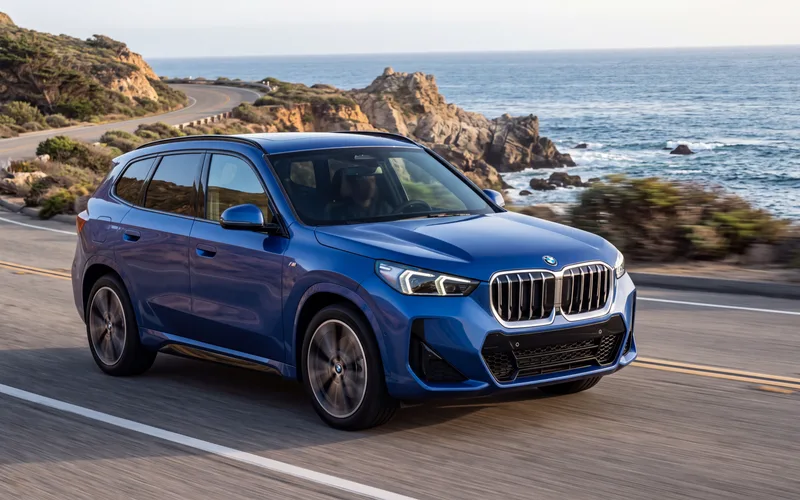 BMW X1Subcompact Luxury SUVBetter at: Space and pace
The default cross-shop: it fixes the UX's two biggest flaws — 37 inches of rear legroom and 25.7 cu ft of cargo, plus a 6.2-second 0–60 — for a few thousand dollars more up front and noticeably more to run.
Compare 2.63C+
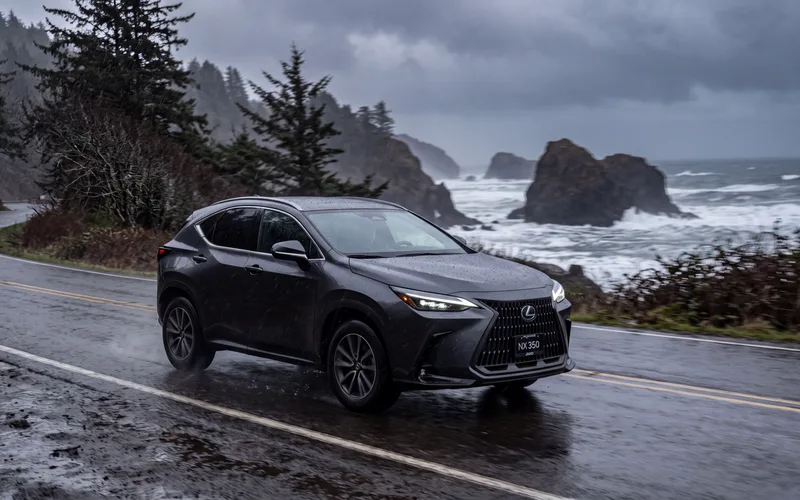 Lexus NXCompact Luxury SUVBetter at: Usable space
The same Lexus reliability, hybrid efficiency and dealer experience in a car with usable rear seats, real cargo room and a tow rating — the natural step up if the UX simply feels too small.
Compare 2.19C
2.19C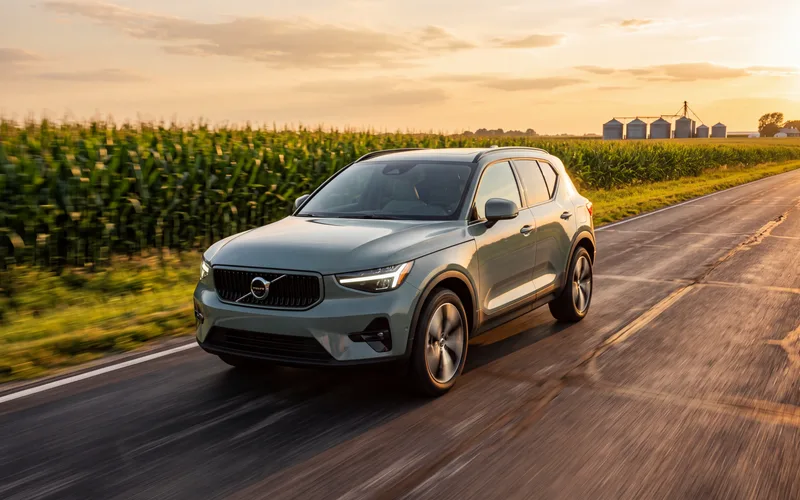 Volvo XC40Subcompact Luxury SUVBetter at: Interior design
For buyers drawn to the UX's size but put off by its dated, plastic-heavy cabin, the XC40 offers far more distinctive design and smarter interior storage at a similar price.
CompareHow it's evolved
4 scored model years · 2023–2026
Subject scores by year
Hover or tap a score to see what moved it versus the year before. A corner mark flags a big swing.
| Year | Performance | Efficiency | Safety | Space | Cost | Reliability | Tech | Use-case | Driving | Value |
|---|---|---|---|---|---|---|---|---|---|---|
| 2026 | 26 | 87 | 75 | 38 | 62 | 87 | 72 | 53 | 71 | 72 |
| 2025 | 26 | 85 | 73 | 36 | 66 | 83 | 66 | 52 | 69 | 64 |
| 2024 | 23 | 84 | 75 | 37 | 66 | 89 | 67 | 52 | 69 | 69 |
| 2023 | 23 | 84 | 79 | 35 | 64 | 89 | 63 | 52 | 68 | 68 |
Compare two years
Best fit & conditions
Higher scores mean a better fit for that use case. Learn more about use-case fit →
Subject profile
Academic Probation · NHTSA safety recalls
No NHTSA safety recall is on record for the 2026 Lexus UX. Other model years of the UX have 4 — listed below.
4 recalls on other model years of the UX (2019, 2025)
May 27, 2026Electrical system: instrument cluster/panelThe instrument panel cluster combination meter may fail to display certain warnings or indicators. As such, these vehicles fail to comply with the requirements of Federal Motor Vehicle Safety Standard (FMVSS) number 101, "Control and Displays" and in addition, for the subject Mirai vehicles, FMVSS 305, "Electric-powered vehicles: Electrolyte Spillage and Electrical Shock Protection."
Defect
Toyota Motor Engineering & Manufacturing (Toyota) is recalling certain 2025 Lexus UX Hybrid, 2024 Lexus GX, Toyota Mirai, and 2024-2025 Toyota Land Cruiser Hybrid vehicles. The instrument panel cluster combination meter may fail to display certain warnings or indicators. As such, these vehicles fail to comply with the requirements of Federal Motor Vehicle Safety Standard (FMVSS) number 101, "Control and Displays" and in addition, for the subject Mirai vehicles, FMVSS 305, "Electric-powered vehicles: Electrolyte Spillage and Electrical Shock Protection."
Risk
An instrument panel display that fails to show critical safety information, such as engine coolant temperature or electrical charge increases the risk of a crash or injury.
Remedy
Dealers will update the combination meter software through an over-the-air (OTA) update, free of charge. Owner notification letters were mailed July 23, 2026. Owners may contact Toyota's customer service at 1-800-331-4331. Toyota's numbers for this recall are 26LB06, 26LA06, 26TB10, and 26TA10.
NHTSA campaign 26V341000 ↗Manufacturer no. See attached Part57381,893 vehicles potentially affected (all models in the campaign)Owners notified Jul 23, 2026Filed by Toyota Motor Engineering & ManufacturingFiled as UX HYBRIDAug 8, 2024Electrical system: wiringCertain wires in the engine room wire harness that supply power to the motor generator electronic control unit (MG ECU) may become fractured and separate, which can result in a loss of power.
Defect
Toyota Motor Engineering & Manufacturing (Toyota) is recalling certain 2025 Lexus UX300h vehicles. Certain wires in the engine room wire harness that supply power to the motor generator electronic control unit (MG ECU) may become fractured and separate, which can result in a loss of power.
Risk
A loss of drive power can increase the risk of a crash.
Remedy
Dealers will replace the engine room main wire harness, free of charge. Owner letters were mailed December 6, 2024. Owners may contact Toyota customer service at 1-800-331-4331. Toyota's numbers for this recall are 24LB07 and 24LA07.
NHTSA campaign 24V587000 ↗Manufacturer no. 24LB07, 24LA07141 vehicles potentially affected (all models in the campaign)Owners notified Dec 6, 2024Filed by Toyota Motor Engineering & ManufacturingFiled as UX HYBRIDNov 4, 2020Fuel system, gasoline: delivery: fuel pumpThe low-pressure fuel pump inside the fuel tank may fail.
Defect
Toyota Motor Engineering & Manufacturing (Toyota) is recalling certain 2018-2019 4Runner, 2019-2020 Avalon, 2019 Corolla Hatchback, 2017-2019 Highlander, 2018-2020 Camry, 2020 Corolla, 2018-2019 Land Cruiser, 2017-2020 Tacoma, 2019-2020 RAV4, 2019-2020 Sequoia, 2017-2020 Sienna, 2019-2020 Tundra, 2018-2020 Lexus ES350, 2017 Lexus GS200t, 2017-2019 Lexus GS350, 2019 Lexus GS300, 2018-2020 Lexus LC500h, 2019-2020 Lexus LS500, 2018-2019 Lexus GX460, 2017 Lexus IS200t, 2019 Lexus IS300, 2019 Lexus IS350, 2018-2020 Lexus LC500, 2018 Lexus LS500, 2019 Lexus LS500h, 2018-2019 Lexus LX570, 2017 Lexus RC200t, 2019 Lexus RC300, RC350, 2017 and 2019-2020 Lexus RX350, 2018-2020 RX350L, 2019 Lexus UX200, 2018-2019 Lexus NX300 vehicles. The low-pressure fuel pump inside the fuel tank may fail.
Risk
If the fuel pump fails, the engine can stall while driving, increasing the risk of a crash.
Remedy
Toyota will notify owners, and dealers will replace the fuel pump assembly with an improved one, free of charge. Owners of specific models were notified that remedy parts were available starting January 21, 2021. Owners of other models will be notified as remedy parts become available. Remedy parts should be available for all affected vehicles by late March 2021. Owners may contact Toyota customer service at 1-888-270-9371 or Lexus customer service at 1-800-255-3987. Note: This recall is an expansion of recall 20V-012. Toyota's number for this recall is 20TA02. Lexus' number for this recall is 20LA01.
NHTSA campaign 20V682000 ↗Manufacturer no. 20TA02, 20LA011,525,742 vehicles potentially affected (all models in the campaign)Owners notified Jan 21, 2021Filed by Toyota Motor Engineering & ManufacturingFiled as UX200Jul 24, 2019Electronic stability control (esc) · Service brakesThe brake booster pump may fail causing a deactivation of the Vehicle Stability Control system and a loss of braking assist. As such, these vehicles fail to comply with the requirements of Federal Motor Vehicle Safety Standard (FMVSS) number 126, "Electronic Stability Control Systems."
Defect
Toyota Motor Engineering & Manufacturing (Toyota) is recalling certain 2019 Lexus LS500, LC500, ES300h, UX250h, LS500h, Toyota Prius, RAV4 HV, 2019-2020 Toyota Prius Prime, and 2020 Corolla HV vehicles. The brake booster pump may fail causing a deactivation of the Vehicle Stability Control system and a loss of braking assist. As such, these vehicles fail to comply with the requirements of Federal Motor Vehicle Safety Standard (FMVSS) number 126, "Electronic Stability Control Systems."
Risk
Deactivation of the vehicle stability control system or a loss of braking assist increases the risk of a crash.
Remedy
Toyota will notify owners, and dealers will inspect and, if necessary, replace the brake booster pump, free of charge. The recall began September 20, 2019. Toyota owners may contact Toyota customer service at 1-888-270-9371 and Lexus owners may contact Lexus customer service at 1-800-255-3987. Toyota's numbers for this recall are K1L/K0L. Lexus' numbers for this recall are K2F/KLF.
NHTSA campaign 19V544000 ↗Manufacturer no. K1L/K0L, K2F/KLF6,925 vehicles potentially affected (all models in the campaign)Owners notified Sep 20, 2019Filed by Toyota Motor Engineering & ManufacturingFiled as UX HYBRID
Source: NHTSA Office of Defects Investigation recall database, model years 2019–2026. Recalls are listed by model year as the manufacturer filed them; whether a specific car is affected depends on its VIN — check a VIN at nhtsa.gov ↗. NHTSA model names matched to this page: UX HYBRID, UX200.
Detailed scoring by subject
1Performance & PowertrainThe UX's lowest-graded category.0.00F
The 2026 UX is sold in the US solely as the UX 300h: a 2.0L Atkinson-cycle four (M20A-FXS) paired with Toyota's fifth-generation hybrid system for 196 hp combined. That is up from the 181 hp UX 250h it replaced for 2025, but still near the bottom of the SUV horsepower band — no F SPORT or performance variant adds output.
Lexus publishes engine torque only — 139 lb-ft from the Atkinson 2.0L — as is standard for power-split hybrids where no combined torque figure is quoted. Following the convention used elsewhere in this dataset, the engine peak is the scored value and motor torque is noted rather than summed.
Lexus quotes about 7.9 seconds to 60 mph for the UX 300h, a meaningful improvement on the outgoing UX 250h's mid-8-second run but still slow for a luxury crossover — the Audi Q3 (5.5 s) and BMW X1 xDrive28i (6.2 s) are in a different class of urgency.
The hybrid system is quiet, smooth and seamless in city and steady-cruise driving — EV-mode pull-away and engine hand-offs are unobtrusive, and the extra 15 hp of the 300h eased the strain the 250h showed. Under hard throttle the Atkinson four still revs high and flat with the coarse, buzzy note reviewers consistently flag, which keeps it out of the 80+ band.
The planetary power-split eCVT never hunts for gears and delivers utterly smooth, stepless response — a structural advantage over the low-speed lurch that afflicts the dual-clutch rivals (X1, GLA, Q3). It loses points for the classic elastic-band effect: revs flare and hold under demand, and simulated 'steps' only partly mask the drone.
Lexus publishes no US towing capacity for the UX and offers no factory tow package — the vehicle is not intended to tow, unlike the European-market UX which carries a modest braked rating. Scored as a genuine zero (not-capable) rather than missing data.
AWD is optional across the whole 2026 trim ladder via Lexus's electric E-Four rear motor — no driveshaft, engaging automatically at launch and on slip. That is broad availability with basic operation: no low range, no locking differentials, no terrain-mode dial, and the rear motor contributes only at lower speeds.
The UX is a raised hatchback on Toyota's GA-C car platform — roughly 6 inches of ground clearance, road-biased tires, no skid plates, no off-road drive mode, no dedicated trim. Its e-AWD helps on a wet driveway or in light snow and nothing beyond that, leaving it below even the pavement-oriented GLA and Q3 in off-road provision.
One powertrain, take it or leave it: every 2026 UX is a 196-hp UX 300h hybrid, with FWD or AWD the only meaningful drivetrain choice. The gas-only UX 200 left the US lineup after 2022 and there is no PHEV, no turbo option and no performance tune — the electric UX 300e is not sold in the US.
2Efficiency & RangeThe UX's best-graded category.3.93A+
For 2026 the UX is sold in the US only as the UX 300h, whose fifth-generation 2.0L hybrid system returns roughly 43 MPG combined in front-drive form — near the very top of the SUV normalization band (18–45) and the best figure of any non-plug-in luxury SUV in this dataset. The optional rear e-motor AWD costs about 1 MPG combined.
City is where the power-split hybrid does its best work — 45 MPG FWD sits at the top of the 16–48 SUV band and beats every gas or mild-hybrid rival in the subcompact luxury class. Stop-and-go commuting is the UX's strongest efficiency case.
41 MPG highway is exceptional for the segment — the SUV band tops out at 42 — helped by the UX's small frontal area, low curb weight (~3,600 lbs) and Atkinson-cycle engine. Unusually for a hybrid, highway and city figures are close enough that the car is efficient on either duty cycle.
The UX's headline efficiency is undercut by a very small 10.6-gallon fuel tank, so total range lands near 450 miles — good, but well short of what 43 MPG would deliver with a normal-sized tank, and only mid-pack against an SUV band running 230–600 miles. This is the one place the UX's efficiency fails to translate into an ownership advantage.
At EPA's standard 15,000 mi/yr the UX burns roughly 350 gallons of regular, putting annual fuel spend near $1,150 — among the lowest of any combustion vehicle in the dataset and roughly half what a turbocharged German subcompact luxury rival on premium costs to feed. Only EVs run cheaper.
The UX 300h runs on 87-octane regular — no premium requirement, no diesel or DEF, no charging infrastructure to arrange. That is a real differentiator in a luxury segment where the BMW X1, Audi Q3 and Mercedes GLA all want premium, and it compounds with the UX's low consumption. The 10.6-gallon tank makes each fill cheap even if visits come slightly more often.
3SafetyOne of the UX's strongest categories.3.06B
NHTSA has never published an overall star rating for the Lexus UX (ZA10), a low-volume model it has not selected for NCAP testing; the 5-star estimate is carried from its GA-C/TNGA-C platform siblings, which consistently earn 5 stars overall.
The UX posted Good results across the legacy IIHS crashworthiness battery and earned Top Safety Pick early in the generation, but it has not been put through the updated side and moderate-overlap-rear-passenger tests and carries no current award, which caps it in the middle band.
Lexus Safety System+ 3.0 is standard on every 2026 UX 300h trim and bundles AEB with pedestrian/bicyclist/motorcycle detection and intersection support, full-speed adaptive cruise, lane departure with steering assist, lane centering, road sign assist and Proactive Driving Assist; blind-spot monitoring with rear cross-traffic alert is also standard, so nothing core is paywalled behind a trim walk — a clear advantage over German rivals that option adaptive cruise.
The Pre-Collision System rated Superior in IIHS legacy vehicle-to-vehicle and daytime pedestrian front crash prevention, and LSS+ 3.0 adds motorcycle detection and intersection turning support; the UX has not been run through the tougher 2023-onward higher-speed front crash prevention protocol, so nighttime pedestrian performance is unverified.
Blind Spot Monitor and Rear Cross-Traffic Alert are standard rather than optional, which is what lifts this above mid-pack, but coverage is alert-only — there is no rear cross-traffic braking intervention as offered on larger Lexus models.
Lane Tracing Assist holds the lane competently on well-marked highways and Proactive Driving Assist adds gentle steering and braking support around corners, but reviewers consistently describe Toyota/Lexus lane centering as busier and more prone to wander between the lines than the best German or Korean systems.
Full-Speed Range Dynamic Radar Cruise Control works down to a stop and resumes cleanly, with curve speed management smoothing corner entry; paired with Lane Tracing Assist it makes a well-integrated highway assist, and it is standard rather than a package option.
No hands-free highway system is offered on the UX at any trim or option level — Lexus Teammate Advanced Drive remains restricted to the flagship LS and select RZ/LX configurations, so the UX tops out at hands-on lane centering.
Standard LED headlights with automatic high beams cover the volume Premium trim adequately, but the better-rated triple-beam LED units with the Adaptive High-beam System are reserved for upper trims — the split-by-trim pattern that kept the UX off recent Top Safety Pick lists.
The UX's coupe-influenced roofline, high beltline and thick rear pillars produce a small back window and real over-the-shoulder blind zones; standard blind-spot monitoring compensates, but the Panoramic View Monitor that would fill the gap is an upper-trim item rather than standard.
The UX is among the tightest packages in the subcompact luxury class — roughly 33 inches of rear legroom means a rear-facing seat forces the front passenger well forward, and the narrow rear door aperture makes installation awkward; two sets of lower anchors are set into the seat bight rather than being easy-access.
4Space & ComfortOne of the UX's weakest categories.0.50F
The UX is a two-row, five-passenger subcompact crossover across every 2026 trim (UX 300h Premium/Luxury/F Sport Design/F Sport Handling); there is no six- or seven-seat configuration. Replaces the placeholder 6.5-seat figure, which was not a real UX configuration.
Front headroom is adequate but near the bottom of the SUV band — the UX's low, hatch-like roofline costs it against boxier subcompact luxury rivals. The optional moonroof takes roughly another 0.7 in.
Front legroom is the UX's most competitive interior dimension — front occupants are genuinely accommodated even though everything behind them is not. Still only modestly above the SUV band floor.
Rear headroom sits barely above the SUV band floor; the sloping roof and raised rear cushion put taller adults close to the headliner, and the moonroof erodes what little margin exists.
33.1 in is among the tightest second rows in the subcompact luxury SUV class — well behind the BMW X1 (~37 in) and Mercedes GLB, and the single most-criticized packaging trait of the UX. Adults sit knees-to-seatback behind a tall front passenger.
The UX is a strictly two-row, five-seat crossover — no third row is offered on any 2026 trim, and the 103.9 in wheelbase leaves no packaging room for one. Scored in the low band per the item's rule for two-row SUVs rather than omitted. The prior placeholder score of 76 implied a usable third row that does not exist.
Cargo space behind the second row falls below the bottom of the SUV normalization band (25 cu ft), so the item clamps to zero — an accurate reflection that the UX carries hatchback-sized luggage volume while being priced and sold as an SUV. Hybrid battery packaging under the rear floor is part of the cost.
Even with the 60/40 rear seats folded the UX offers roughly 39 cu ft — well under the 55 cu ft SUV band floor, so the item clamps to zero. Lexus does not publish a seats-folded figure for the UX, so this rests on independent measurement.
Everyday storage is functional but unremarkable and constrained by the small footprint: a shallow center console bin, modest door pockets, wireless charging and USB-C ports on most trims, and 60/40 folding rear seats — but no underfloor cargo storage (hybrid hardware), no frunk, and no standout packaging trick. Mid-band rather than the placeholder's 88, which implied class-leading innovation the UX does not have.
Front seats are a genuine strength — well-bolstered, nicely padded NuLuxe or leather chairs tuned for long-stint comfort, with eight-way power and available heating/ventilation. The score is held out of the top band by the rear bench, where the tight 33.1 in legroom and upright cushion make adults uncomfortable well before the front occupants are, and the item weighs front and rear together.
The UX rides in the traditional Lexus register — compliant, well-damped, and settled over broken pavement, with a stiff GA-C body structure keeping secondary motions in check. It stops short of the top band because the short wheelbase makes sharp expansion joints more noticeable than in larger luxury crossovers, and the F Sport Handling trim's firmer tune and 18-in wheels trade some of that suppleness away.
Sound isolation is good for a subcompact — acoustic front glass and thorough sealing keep wind and road noise below class average at highway speed, and EV-mode running at low speed is near-silent. The clear demerit is the eCVT-coupled 2.0-liter four, which drones audibly under hard acceleration or on a long grade, keeping this out of the library-quiet band.
Comfort equipment is strong up front — dual-zone automatic climate control standard, heated front seats standard or near-standard, with ventilated front seats and a heated steering wheel available on higher trims, plus remote climate start through the Lexus app. It falls short of the top band because rear passengers get no climate controls and the second row is short on amenities, so the richness is front-seat-only.
5Cost of OwnershipMid-pack among this car's ten categories.2.15C
The UX is the cheapest way into a Lexus and one of the least expensive luxury SUVs sold in the US, which scores well against the $25k–$65k SUV band. Figure is MY2025 pricing (UX 300h from $36,490 + $1,175 destination) carried forward with a typical single-digit model-year increase — 2026 pricing was not verifiable in this run.
Premium with AWD is the volume configuration in this segment — buyers rarely take the stripped FWD base, and AWD carries a ~$1,600 premium. Still lands roughly $4k–$5k under a comparably equipped BMW X1 or Mercedes GLA.
The UX runs a Toyota TNGA-C hybrid powertrain shared with the Corolla Cross/C-HR family — no turbo, no dual-clutch, regen braking that spares the friction brakes — so parts and service are far cheaper than German rivals, though Lexus dealer labor rates put it above a Toyota. Sits well below the Audi Q3 (~$7,600) and BMW X1 (~$8,200) and far below the Mercedes GLA.
Lexus is one of the strongest brands for residuals and Toyota hybrids hold value especially well, which lifts the UX above every German rival in the class. It is held back from Toyota-tier retention by heavy lease penetration feeding off-lease supply and by soft demand for slow-selling subcompact luxury crossovers.
Lexus's standard 4-year/50,000-mile basic coverage matches the luxury norm (BMW, Mercedes, Audi, Acura all at 4/50k) and beats parent-brand Toyota's 3/36k.
The headline 6-year/70,000-mile powertrain term is mid-pack and scores low against the 5–10 year band, but it understates real coverage on this car: as a hybrid-only model the UX also carries 8 yr/100k on hybrid components and 10 yr/150k on the traction battery, which covers the expensive parts well past the powertrain term.
The included-maintenance period is short — 1 year/10,000 miles, covering only the first two scheduled services, behind BMW's 3 yr/36k and even Toyota's 2 yr/25k ToyotaCare. What lifts it above the Mercedes GLA is the surrounding coverage: 4 years of unlimited-mileage roadside assistance with trip-interruption support, and long Safety Connect/Service Connect trial terms.
$42,500 volume-trim price minus its estimated resale value after 5 years (57% retained, or about $24,225) leaves about $18,275 in depreciation. Add the projected $5,600 in 5-year maintenance and repairs, and owning this vehicle for 5 years costs about $23,875 in total.
6Reliability & QualityOne of the UX's strongest categories.3.92A+
The UX is a mature ZA10-generation design (US since MY2019) built on the Corolla/C-HR GA-C platform, and has consistently earned above-average to top predicted-reliability marks from Consumer Reports plus strong J.D. Power quality-and-reliability ratings. The only drag is that the UX 300h powertrain and Lexus Interface infotainment introduced in the 2025 refresh have a short field record, and 2026 is a carryover of that configuration.
Lexus is the benchmark brand in US dependability, finishing first or second in J.D. Power's Vehicle Dependability Study in most of the last ten years and first or second in Consumer Reports' annual brand reliability rankings over the same period. This is the strongest brand track record available in the subcompact luxury SUV segment, well clear of Audi, Mercedes-Benz, Mini and Alfa Romeo.
The ZA10 UX has an unusually clean NHTSA record for a seven-year-old nameplate — a small number of recalls, mostly shared Toyota-group campaigns rather than UX-specific defects (notably the Denso low-pressure fuel pump campaign that swept many 2019 Toyota/Lexus models, which affected the gasoline UX 200). No systemic powertrain, fire or driver-assist recall pattern. Held below the top of the band because the refreshed 2025-onward UX 300h has too little exposure to call its own record clean yet.
The UX 300h pairs a 2.0L Atkinson-cycle four with Toyota's fifth-generation hybrid system and a planetary eCVT — the same architecture family as the Corolla Hybrid and Prius, which has one of the best high-mileage durability records of any powertrain sold in the US: no clutch packs, no belt, no turbo, and regenerative braking that spares the friction brakes. The lithium-ion pack carries a 10-year/150,000-mile warranty. Short of the very top only because the fifth-generation system is newer than the 181-hp fourth-gen unit it replaced in the 2025 refresh.
As the entry point to the Lexus range the UX cabin is competently trimmed — NuLuxe synthetic leather, damped switchgear, a genuinely good steering wheel — but reviewers consistently note more hard plastic in the lower door cards and console than the price implies, and the 2019-vintage architecture reads dated next to a BMW X1 or Volvo XC40 interior. Good, not class-leading for a luxury-priced subcompact.
Japanese-built assembly quality is a genuine UX strength: tight and even panel gaps, consistent trim alignment, and a rattle- and squeak-free structure that reviewers single out even when criticizing the materials. Deleting the widely disliked Remote Touch touchpad in favor of the 2025 Lexus Interface touchscreen also removes the interface complaint that most dragged Lexus down in initial-quality surveys.
Lexus runs roughly 240 US dealers — far thinner on the ground than a Toyota or Honda network, so rural owners may drive further — but service satisfaction is the best in the business, with Lexus repeatedly leading or placing at the top of J.D. Power's luxury Customer Service Index. Loaner cars, complimentary first-year maintenance and Toyota's parts logistics behind the counter make the ownership experience a clear segment strength.
The UX benefits from heavy component sharing with the Corolla/C-HR/Prius family, so wear items are cheap and universally stocked and independent-shop familiarity is high — third-party ownership-cost estimates put the UX among the least expensive luxury vehicles to maintain. It falls short of the top band because Lexus-badged body, trim and electronic parts plus dealer labor rates run well above Toyota equivalents, and the enthusiast aftermarket for a hybrid subcompact crossover is thin.
7Technology & InfotainmentGrades above the middle of the scale.2.86B-
The 12.3-inch Lexus Interface touchscreen is standard across the 2026 UX 300h lineup; the 8-inch base unit used through 2024 was dropped when the UX 300h replaced the UX 250h for 2025. Large for a subcompact, but short of the 14-inch-plus units in premium rivals.
Lexus Interface is a large improvement over the old Remote Touch trackpad — quick response, a sane home/tile layout, and retained physical volume and climate controls. It still trails the best in the class on graphics polish and menu depth for vehicle settings.
Wireless Apple CarPlay and wireless Android Auto are both standard on every 2026 UX 300h grade, with no trim gating — squarely in the top band. Held just below 90 because there is only one wireless-charge pad to keep a projecting phone fed.
The 'Hey Lexus' Intelligent Assistant handles natural-language climate, audio and destination requests well, and cloud navigation is genuinely current on traffic and POI data. Docked because the cloud nav and full assistant capability sit behind a Drive Connect subscription once the trial lapses.
The base six-speaker system is unremarkable, but the available Mark Levinson premium setup is one of the better factory systems at this price and lifts the ceiling well above segment norm.
The UX carries a modest 7-in/8-in TFT multi-information display rather than the full 12.3-inch reconfigurable cluster fitted to the NX and RX; F SPORT grades add the LFA-style moving meter ring but not more screen. This is the clearest place the UX shows its entry-level position.
Lexus supports over-the-air updates for the multimedia system and map data, plus some vehicle-module updates, but does not ship the feature-adding whole-vehicle OTA cadence of Tesla, Rivian, or the Korean EV platforms. Solidly mid-band.
The Lexus App covers remote start/climate, lock/unlock, vehicle status and locate reliably, and Digital Key is offered on current Lexus models. The score is capped mid-band because Remote Connect reverts to a paid subscription after the trial — rivals increasingly bundle this for the ownership period.
Front USB-C ports and an available wireless charging pad cover the basics, but rear-seat power is minimal and there is no household AC outlet — a real limitation in a subcompact where the back seat is already the compromise.
Smart Key proximity entry with push-button start is standard, and remote start works from both fob and app. A power rear liftgate — hands-free on upper grades — is available rather than standard, which keeps this out of the top band.
Backup camera is standard and the Panoramic View Monitor plus front/rear parking sensors with automatic braking are available, which is competitive. No automated parking assist is offered, unlike the Advanced Park systems further up the Lexus range.
A color head-up display is offered on the UX but only through upper grades and option packages, not on the volume configuration — the definition of the mid band. Size and content are modest next to the large HUDs in the NX and RX.
8Use-Case FitOne of the UX's weakest categories.1.55D
The UX has the tightest family packaging in the subcompact luxury class: 33.1 in of rear legroom means a rear-facing convertible seat pushes the front passenger seat uncomfortably far forward, and the 17.1 cu ft cargo hold swallows a full-size stroller only with little room to spare. Small rear door apertures and a low roofline make lifting a toddler into a seat a stooping job rather than the step-in transfer a taller crossover allows.
Families do not have to climb the trim ladder for safety: Lexus Safety System+ 3.0 is standard on every 2026 UX grade including the base Premium, with full-speed adaptive cruise, lane tracing, pre-collision with pedestrian detection, blind-spot monitoring, rear cross-traffic alert and a rear-seat reminder. It falls short of the top band because IIHS results are mixed rather than award-winning — headlight ratings vary by trim and there is no current Top Safety Pick — and NHTSA has never published an overall star rating for the UX.
With four aboard for several hours the UX runs out of both space and amenities: 33.1 in of rear legroom is knees-to-seatback for adults, there are no rear air vents, and rear-seat device power is thin even on upper grades. Worse, the 17.1 cu ft hold cannot carry four people's luggage without folding a seat, which is exactly the trade a family road trip cannot make — the front seats and quiet hybrid cruise are genuinely pleasant, but only for two.
This is the mission the UX was built for. The fifth-generation Toyota hybrid system pulls away and creeps in silent EV mode, the eCVT never hunts for gears in stop-and-go, the steering is light, the ride is soft-edged, and full-speed-range adaptive cruise handles the crawl. Two things keep it out of the top of the band: the 2.0L Atkinson four gets coarse and loud when you actually demand the 196 hp, and rear-three-quarter visibility is restricted enough that lane changes lean on the blind-spot monitor.
At 43 MPG combined on regular 87-octane the UX 300h is close to the cheapest luxury vehicle in America to commute in — roughly $1,150 a year in fuel at 15,000 miles, which is Corolla Hybrid money out of a Lexus dealership. Consumables reinforce it: regenerative braking stretches pad life, Lexus is repeatedly the cheapest luxury brand to maintain, and the first year of scheduled service is included. Insurance at roughly $2,050/yr is the only ordinary line item.
The UX's small footprint is its best practical asset — roughly 177 in long on a 103.9 in wheelbase with a tight turning circle on the standard 17-in wheels, so it slots into street spaces that defeat an X3 or GLC. The deduction is for sightlines rather than size: the tapering rear glass and thick D-pillars mean the standard backup camera does real work, and the Panoramic View Monitor that would fix it is an upper-grade option rather than standard.
The UX is not a work vehicle in any sense the item measures. Lexus assigns it no US tow rating at all and offers no factory hitch or tow package, cargo volume behind the seats is 17.1 cu ft — hatchback territory — and the 196 hp hybrid is tuned for economy, not for hauling load. The small non-zero score reflects only that a flat load floor will carry light tools or samples.
Mechanically the UX would survive work abuse better than most things in this price bracket — it runs the Toyota Hybrid System eCVT shared with the Corolla Hybrid and Prius, one of the most durably proven powertrains sold, from the brand that leads J.D. Power dependability. What holds it to the middle of the band is fitment, not engineering: there are no wear-friendly interior options, no rubber-floor or vinyl-seat configuration, low ground clearance, and no fleet or trade presence to draw a hard-use track record from.
Essentially nothing here is provisioned for work. There is no 120V AC outlet in the cabin or cargo bay, no bed and no hitch to upfit against, only basic cargo-area tie-down loops, carpeted surfaces throughout with no washable option, and an accessory catalogue built around crossbars and cargo nets rather than racks, drawers or ladder gear.
For one or two people the UX is a competent tourer: roughly 456 miles between fill-ups from a small 10.6-gallon tank, supportive front seats, a settled ride, and full-speed adaptive cruise with lane tracing that takes the strain out of an interstate stint. It stops short of the top band because the four-cylinder drones under sustained highway load and on grades, there is no hands-free assist, and the 17.1 cu ft hold constrains how much a long trip can actually carry.
The UX is a pavement car with crossover styling. It sits on the GA-C unibody platform with car-like ground clearance, no off-road drive modes, no skid protection, and an E-Four AWD system that is a slip-limited traction aid — an electric rear motor for wet pavement, not a system for a washboard forest road. The zero tow rating rules out a small trailer or a hitch-mounted bike rack, leaving roof crossbars as the only way to carry toys.
Cargo flexibility is the UX's hardest limit. At 17.1 cu ft behind the seats and roughly 39 cu ft with the 60/40 rear bench folded, it carries less than most compact hatchbacks, and hybrid battery packaging under the rear floor eliminates the underfloor bin that rivals use for wet or bulky gear. With no hitch available, a bike or cargo rack has to go on the roof, and long items must be loaded through a low, narrow hatch aperture.
9Driving ExperienceGrades above the middle of the scale.2.82B-
The UX rides on the stiff GA-C (TNGA-C) platform with a short 103.9-in wheelbase and a low, hatchback-like center of gravity, so it corners flatter and feels more tied-down than its ride height suggests — but grip is limited by eco-biased tires and the chassis is tuned for isolation rather than engagement. Secure and tidy, not entertaining; the F SPORT Handling grade's adaptive dampers sharpen body control without changing the character.
Electric assist is accurately geared and consistently weighted, and the small footprint makes it feel quick off-center, but feedback is filtered out in the usual Lexus manner. Precise enough to place confidently, numb about what the front tires are doing.
Stopping power is adequate for a roughly 3,600 lb subcompact crossover and fade is a non-issue at these speeds, but the electronically blended regenerative system gives the pedal the soft, slightly inconsistent initial travel typical of Toyota/Lexus power-split hybrids — the main knock against an otherwise unremarkable brake package.
The fifth-generation hybrid system is the UX's best dynamic trait in daily use: engine start/stop is nearly imperceptible, EV-to-engine handoffs are seamless, and the drive motor's instant torque masks the modest 196 hp in town. It loses points on outright response — about 7.9 s to 60 mph, and the eCVT flares revs ahead of road speed when asked for a full-throttle pass.
Near-silent under electric power and at a steady cruise, but the power-split transaxle holds the four-cylinder at high, constant revs under hard acceleration and the resulting drone is the most-cited complaint about driving the UX. Vibration through the controls is well isolated; it is the noise character, not roughness, that costs points here.
The short wheelbase and compact GA-C front end give the UX one of the tightest turning circles of any SUV in this dataset — a real everyday advantage in parking garages and U-turns, and something Lexus markets. The larger F SPORT wheel-and-tire package widens it by roughly two feet.
Front seats are supportive with a wide adjustment range, and the 2025 interior update moved the UX to the 12.3-in touchscreen while keeping physical climate controls, retiring the awkward Remote Touch trackpad. Working against it: a low, car-like hip point that undercuts the commanding sightline SUV buyers expect, plus thick rear pillars and a shallow rear window that pinch over-the-shoulder visibility.
The UX is an easy, pleasant, unusually maneuverable city car, and the tight turning circle plus light controls make it satisfying in traffic — but with 196 hp, a droning eCVT and steering tuned for calm, nobody takes the long way home in one. Pleasant but forgettable, and the F SPORT grades are appearance-and-damper packages rather than a performance variant.
10Value & Market PositionGrades above the middle of the scale.2.86B-
The UX 300h Premium opens the segment at roughly $36.5–37.2K plus ~$1,175–1,200 destination — several thousand under an X1, GLA or the redesigned Q3 — yet arrives with the 12.3-in touchscreen made standard in the 2025 changeover, wireless CarPlay/Android Auto, Lexus Safety System+ 3.0, LED lighting, NuLuxe upholstery and a power driver's seat. Hybrid propulsion is standard rather than an upcharge, which is the single biggest content-for-price advantage in the class.
Cheapest entry into the luxury subcompact class, standard hybrid returning low-40s combined MPG, Lexus service and resale, and a 196-hp powertrain that is adequate if unexciting — a genuinely strong value case. It falls short of standout because the practical give-back is large: class-trailing cargo volume, a tight rear seat, hard cabin plastics on lower grades and no EV or PHEV option at any price.
Four grades — Premium, F SPORT Design, F SPORT Handling and Luxury — with FWD or E-Four AWD on each, spanning roughly $37.7K to the mid-$40Ks, which is broader than a one-trim Q3 or two-trim X1. Breadth is capped by a single powertrain, no performance variant in the US, and option content largely bundled into grade rather than freely configurable.
A steady but distinctly mid-pack seller: the UX is Lexus's entry model and sells in the mid-teens of thousands annually in the US, well behind the brand's own RX and NX and behind segment volume leaders like the BMW X1 and the Mercedes GLA/GLB pair. The 2025 move to UX 300h supported volume rather than transforming it.
Lexus is a top-tier US luxury brand with an unusually loyal following, built on a dependability and customer-service reputation that repeatedly tops J.D. Power studies and on class-leading resale. The image skews toward trust and refinement rather than the performance aspiration BMW and Porsche trade on, which is why it sits just under those brands rather than above them.
Lexus runs a comparatively disciplined incentive program — nothing like the cash-on-the-hood support Stellantis or Mercedes put behind slow subcompacts — but as the brand's entry model the UX regularly carries subvented lease programs, and its strong residuals make those leases genuinely cheap for buyers. Occasional-to-decent buyer benefit rather than a standout.
The ZA10 UX has been on sale since MY2019 on the GA-C platform, making it one of the oldest architectures in the segment by 2026 — eight model years without a full redesign. It is not stale in the showroom, though: a 2023 facelift brought Lexus Interface, and MY2025 replaced the UX 250h with the 196-hp UX 300h and standardized the 12.3-in screen. Mid-cycle-plus, with real redesign risk for a 2026 buyer.
Reviewers consistently credit the UX for build quality, ride refinement, low running costs and now-competitive hybrid efficiency, and it does well in reliability- and value-driven awards. It just as consistently loses comparison tests on the things the segment is judged by — smallest-in-class cargo hold, cramped rear seat, unhurried acceleration and eCVT drone — and lands mid-to-lower in subcompact luxury rankings without major editorial hardware.