
The verdict
A mixed-report subcompact luxury suv, strong on safety and held back by performance.
The 2026 Volvo XC40 is the safety-and-design pick in the subcompact luxury SUV class: every trim, even the ~$44,095 base Core, includes automatic emergency braking that watches for pedestrians, cyclists and large animals, blind-spot monitoring that steers you back, and cross-traffic alert that brakes for you — content rivals still charge for. It is also the oldest car in its class, and it shows in the places that cost money: 25 MPG combined on premium fuel, 20.7 cu ft of cargo behind the rear seats (the smallest here), a 9-inch center screen, and roughly 44% resale value after five years. Buy it for the seats, the visibility, the Google-based infotainment and the 3-year/36,000-mile included maintenance. Skip it if fuel bills, cargo room or trade-in value are what you actually care about.
Jump to scoresStrengths
- A full safety suite on every trim, not just the expensive ones
- Google built-in is the best infotainment in the class
- Included maintenance and heavy deal support
What holds it back
- Thirsty, on premium fuel, with no hybrid escape hatch
- Resale value is the worst part of owning one
- The smallest cargo hold in the segment
Top alternatives
Cars shoppers cross-shop with the Volvo XC40 2.65C+
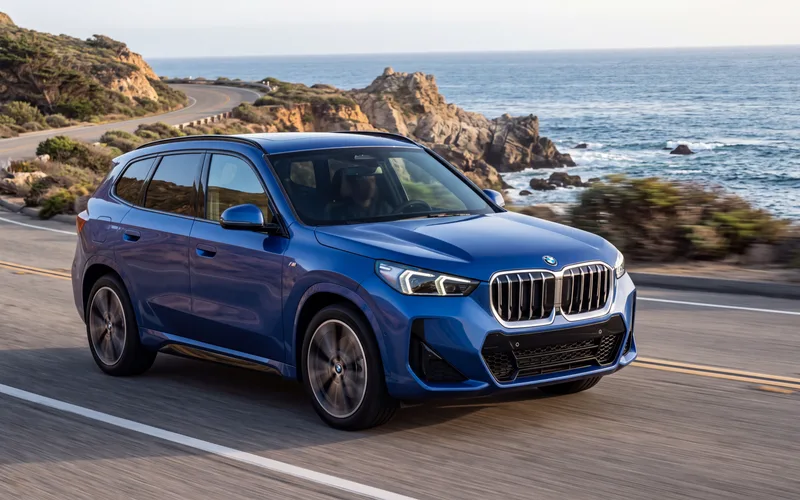 BMW X1Subcompact Luxury SUVBetter at: All-round value
Costs less to start, uses less fuel, holds 25% more cargo and drives noticeably better — the default cross-shop for anyone considering an XC40.
Compare 2.21C
2.21C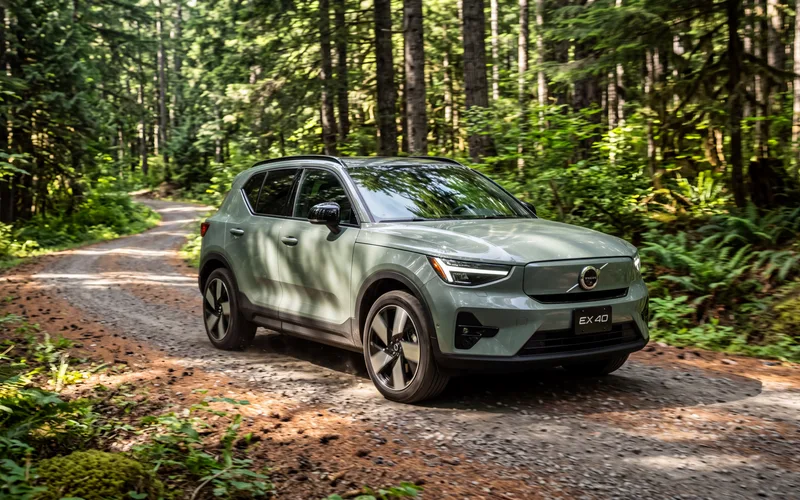 Volvo EX40Subcompact Luxury SUVBetter at: Running costs
The same car with an electric powertrain, fixing the XC40's worst score — efficiency — for buyers who can charge at home.
Compare 2.43C+
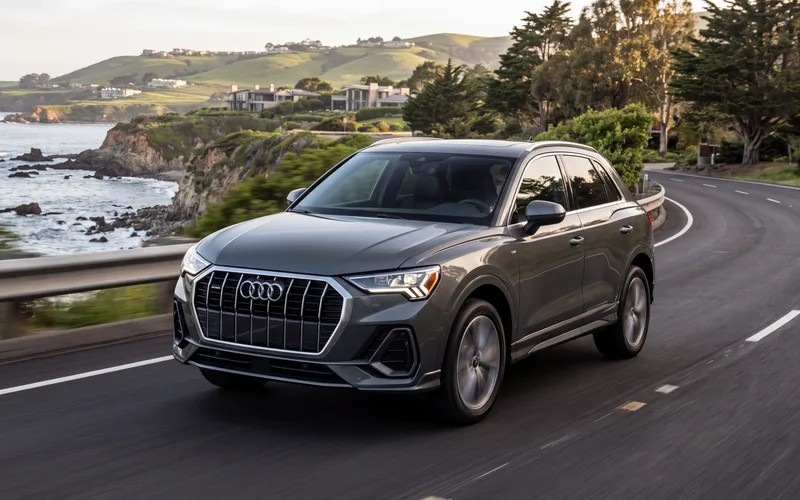 Audi Q3Subcompact Luxury SUVBetter at: Newer design
Fully redesigned for 2026 with a much larger screen and quattro all-wheel drive standard, at a similar price to a car that's been on sale since 2019.
CompareHow it's evolved
8 scored model years · 2019–2026
Subject scores by year
Hover or tap a score to see what moved it versus the year before. A corner mark flags a big swing.
| Year | Performance | Efficiency | Safety | Space | Cost | Reliability | Tech | Use-case | Driving | Value |
|---|---|---|---|---|---|---|---|---|---|---|
| 2026 | 43 | 45 | 79 | 44 | 45 | 63 | 75 | 60 | 66 | 65 |
| 2025 | 44 | 43 | 76 | 43 | 48 | 61 | 66 | 59 | 65 | 70 |
| 2024 | 46 | 44 | 72 | 42 | 56 | 61 | 67 | 57 | 65 | 69 |
| 2023 | 47 | 43 | 75 | 45 | 57 | 61 | 66 | 59 | 66 | 70 |
| 2022 | 46 | 38 | 78 | 46 | 60 | 63 | 52 | 58 | 65 | 65 |
| 2021 | 46 | 38 | 78 | 45 | 62 | 62 | 53 | 57 | 65 | 67 |
| 2020 | 44 | 38 | 70 | 46 | 65 | 64 | 52 | 57 | 65 | 71 |
| 2019 | 44 | 44 | 55 | 46 | 66 | 60 | 52 | 57 | 65 | 71 |
Compare two years
Best fit & conditions
Higher scores mean a better fit for that use case. Learn more about use-case fit →
Subject profile
Academic Probation · NHTSA safety recalls
No NHTSA safety recall is on record for the 2026 Volvo XC40. Other model years of the XC40 have 14 — listed below.
14 recalls on other model years of the XC40 (2019–2025)
Dec 23, 2025Back over prevention: softwareThe rearview camera image may not display when the vehicle is placed in reverse. As such, these vehicles fail to comply with the requirements of Federal Motor Vehicle Safety Standard number 111, "Rear Visibility."
Defect
Volvo Car USA, LLC (Volvo Car) is recalling certain 2021-2025 XC40, 2022 V90, 2022-2024 C40BEV, 2022-2025 S90, V90CC, XC60, 2023-2025 S60, V60, V60CC, XC90, and 2025 EC40, and EX40 vehicles. The rearview camera image may not display when the vehicle is placed in reverse. As such, these vehicles fail to comply with the requirements of Federal Motor Vehicle Safety Standard number 111, "Rear Visibility."
Risk
A rearview camera image that does not display reduces the driver's view behind the vehicle, increasing the risk of a crash.
Remedy
The software will be updated by a dealer or through an over-the-air (OTA) update, free of charge. Owner notification letters were mailed February 24, 2026. Owners may contact Volvo Carâs customer service at 1-800-458-1552. Volvo Car's number for this recall is R10333. Vehicle Identification Numbers (VINs) involved in this recall will be searchable on NHTSA.gov beginning February 16, 2026. This recall replaces previous NHTSA recall number 25V282. Vehicles previously repaired under recall 25V282 will need to have the new remedy performed.
NHTSA campaign 25V908000 ↗Manufacturer no. R10333413,151 vehicles potentially affected (all models in the campaign)Owners notified Mar 2, 2026Filed by Volvo Car USA, LLCFiled as XC40Jun 12, 2025Service brakes · Service brakes, hydraulic: power assist: electric: control module: softwareIn certain driving scenarios while coasting down a hill and using "B" mode or "One Pedal Drive," the vehicle may lose brake function.
Defect
Volvo Car USA, LLC (Volvo Car) is recalling certain 2023 Volvo C40 BEV, 2025 EC40, 2023-2024 XC40 BEV, 2020-2026 XC90 PHEV, 2022-2026 XC60 PHEV, 2023-2025 S60 PHEV, 2024-2025 V60 PHEV, and 2025-2026 EX40 and 2025 S90 PHEV vehicles. In certain driving scenarios while coasting down a hill and using "B" mode or "One Pedal Drive," the vehicle may lose brake function.
Risk
A loss of brake function increases the risk of a crash.
Remedy
Owners are advised not to use "B" Mode (for plug-in hybrid vehicles) or "One Pedal Drive" (for pure electric vehicles) until the repair has been completed. The brake module software will be updated over-the-air (OTA) or by a dealer, free of charge. Owner notification letters were mailed July 15, 2025. Owners may contact Volvo Car's customer service at 1-800-458-1552. Volvo Car's number for this recall is R10329.
NHTSA campaign 25V392000 ↗Manufacturer no. R1032911,469 vehicles potentially affected (all models in the campaign)Owners notified Jul 15, 2025Filed by Volvo Car USA, LLCFiled as XC40, XC40BEVMay 8, 2025Back over prevention: softwareThe rearview camera image may not display when the vehicle is placed in reverse. As such, these vehicles fail to comply with the requirements of Federal Motor Vehicle Safety Standard number 111, "Rear Visibility."
Defect
Volvo Car USA, LLC (Volvo Car) is recalling certain 2021-2025 XC40, 2022 V90, 2022-2025 S90, V90CC, C40, XC60, 2023-2025 S60, V60, V60CC, XC90, and 2025 EC40 and EX40 vehicles. The rearview camera image may not display when the vehicle is placed in reverse. As such, these vehicles fail to comply with the requirements of Federal Motor Vehicle Safety Standard number 111, "Rear Visibility."
Risk
A rearview camera image that does not display reduces the driver's view of what is behind the vehicle, increasing the risk of a crash.
Remedy
The software will be updated by a dealer or through an over-the-air (OTA) update, free of charge. Owner notification letters were mailed June 27, 2025. Owners may contact Volvo Car customer service at 1-800-458-1552. Volvo Car's number for this recall is R10320.
NHTSA campaign 25V282000 ↗Manufacturer no. R10320413,151 vehicles potentially affected (all models in the campaign)Owners notified Jun 27, 2025Filed by Volvo Car USA, LLCFiled as XC40Jan 10, 2024Electrical system: softwareA diagnostic error in the Central Electronic Module (CEM) software may cause the left rear turn signal indicator to not function.
Defect
Volvo Car USA, LLC (Volvo Car) is recalling certain 2024 XC40 vehicles. A diagnostic error in the Central Electronic Module (CEM) software may cause the left rear turn signal indicator to not function.
Risk
A nonfunctioning exterior turn signal may not notify other drivers of a turning vehicle, increasing the risk of a crash.
Remedy
The CEM software will be updated by a dealer or through an over-the-air (OTA) update, free of charge. Owner notification letters were mailed February 16, 2024. Owners may contact Volvo Car customer service at 1-800-458-1552. Volvo Car's number for this recall is R10256.
NHTSA campaign 24V010000 ↗Manufacturer no. R1025617,409 vehicles potentially affected (all models in the campaign)Owners notified Feb 16, 2024Filed by Volvo Car USA, LLCFiled as XC40Mar 22, 2023Electrical systemA diagnostic trouble code (DTC) may be falsely detected for the emergency call system (e-call) and display "e-Call Service Required" in the driver information module (DIM).
Defect
Volvo Car USA, LLC (Volvo Car) is recalling certain 2023 S60, V60CC, XC60, XC90, XC40, and C40 vehicles. A diagnostic trouble code (DTC) may be falsely detected for the emergency call system (e-call) and display "e-Call Service Required" in the driver information module (DIM).
Risk
The false warning message could prevent the detection of an actual e-call system failure, which could delay an emergency response during a crash, increasing the risk of injury.
Remedy
Dealers will update the telematics and connectivity antenna module (TCAM) software, free of charge. Owner notification letters are expected to be mailed May 16, 2023. Owners may contact Volvo Car's customer service 1-800-458-1552. Volvo Car's number for this recall is R10225.
NHTSA campaign 23V188000 ↗Manufacturer no. R10225393 vehicles potentially affected (all models in the campaign)Owners notified Apr 21, 2023Filed by Volvo Car USA, LLCFiled as XC40Jan 19, 2023Service brakes, hydraulicA diagnostic error in the Brake Control Module 2 (BCM2) may cause a loss of Antilock Brake System (ABS), Electronic Stability Control (ESC), and traction control.
Defect
Volvo Car USA, LLC (Volvo Car) is recalling certain 2023 S60, V60, V60CC, V90CC, XC60, XC90, XC40, and C40 vehicles. A diagnostic error in the Brake Control Module 2 (BCM2) may cause a loss of Antilock Brake System (ABS), Electronic Stability Control (ESC), and traction control.
Risk
A reduction in brake support functions can increase the risk of a crash.
Remedy
Volvo will release an over-the-air (OTA) BCM2 software update, free of charge. Owner notification letters are expected to be mailed March 15, 2023. Owners may contact Volvo Car customer service at 1-800-458-1552. Volvo Car's number for this recall is R10217.
NHTSA campaign 23V012000 ↗Manufacturer no. R1021727,457 vehicles potentially affected (all models in the campaign)Owners notified Feb 27, 2023Filed by Volvo Car USA, LLCFiled as XC40Apr 28, 2022Vehicle speed control: accelerator pedalWater may enter the cable harness, corroding the accelerator pedal sensor (APS) circuit.
Defect
Volvo Car USA, LLC (Volvo Car) is recalling certain 2021-2022 XC40 BEV vehicles. Water may enter the cable harness, corroding the accelerator pedal sensor (APS) circuit.
Risk
A corroded APS circuit may send corrupted signals, causing unintended acceleration, a lack of acceleration, or a loss of drive power, increasing the risk of a crash.
Remedy
Dealers will inspect for corrosion, install a cable splice to prevent water intrusion and, as necessary, replace the connector terminal and APS, free of charge. Owner notification letters were mailed June 20, 2022. Owners may contact Volvo Car at 1-800-458-1552. Volvo Car's number for this recall is R10170.
NHTSA campaign 22V288000 ↗Manufacturer no. R101705,351 vehicles potentially affected (all models in the campaign)Owners notified Jun 20, 2022Filed by Volvo Car USA, LLCFiled as XC40BEVNov 12, 2021Engine · Structure: frame and membersA bolt that secures the cross-member bracket for the electrical motor in the engine compartment may be loose or missing.
Defect
Volvo Car USA, LLC (Volvo) is recalling certain 2021 XC40 BEV vehicles. A bolt that secures the cross-member bracket for the electrical motor in the engine compartment may be loose or missing.
Risk
A loose or missing bolt may decrease the structural protection of the vehicle, increasing the risk of injury during a crash.
Remedy
Dealers will replace the cross-member bracket and install new bracket bolts, free of charge. Owner notification letters were mailed December 16, 2021. Owners may contact Volvo customer service at 1-888-458-1552. Volvo's number for this recall is R10128.
NHTSA campaign 21V881000 ↗Manufacturer no. R101284 vehicles potentially affected (all models in the campaign)Owners notified Dec 16, 2021Filed by Volvo Car USA, LLCFiled as XC40Sep 1, 2021Seat belts · Seat belts: front: retractor · Seat belts: rear/other: retractorThe seat belt automatic locking retractors may deactivate early, which can prevent the child restraint system from securing properly. As such, these vehicles fail to comply with the requirements of Federal Motor Vehicle Safety Standard number 208, "Occupant Crash Protection."
Defect
Volvo Car USA, LLC (Volvo Car) is recalling certain 2021 XC40, XC 40 Recharge, V60CC, V90, V90CC, XC90, and 2021-2022 V60, XC60, S60 vehicles. The seat belt automatic locking retractors may deactivate early, which can prevent the child restraint system from securing properly. As such, these vehicles fail to comply with the requirements of Federal Motor Vehicle Safety Standard number 208, "Occupant Crash Protection."
Risk
An unsecured child restraint system can increase the risk of injury during a crash.
Remedy
Dealers will inspect and replace the seat belt assemblies, as necessary, free of charge. Owner notification letters were mailed October 13, 2021. Owners may contact Volvo Car customer service at 1-888-458-1552. Volvo Car's number for this recall is R10111.
NHTSA campaign 21V682000 ↗Manufacturer no. R1011119,149 vehicles potentially affected (all models in the campaign)Owners notified Oct 12, 2021Filed by Volvo Car USA, LLCFiled as XC40Feb 24, 2021Electrical system: propulsion system: traction battery: management system/energy control module (bms/becm): softwareThe Battery Energy Control Module (BECM) microprocessor may reset and cause the high voltage system to disconnect.
Defect
Volvo Car USA, LLC (Volvo Car) is recalling certain 2021-2022 XC40 Recharge vehicles. The Battery Energy Control Module (BECM) microprocessor may reset and cause the high voltage system to disconnect.
Risk
A disconnected high voltage system can cause a loss of drive power, increasing the risk of a crash.
Remedy
Volvo Car will notify owners, and dealers will install a software update, free of charge. The recall began March 30, 2021. Owners may contact Volvo Car customer service at 1-888-458-1552. Volvo Car's number for this recall is R10078.
NHTSA campaign 21V109000 ↗Manufacturer no. R100782,278 vehicles potentially affected (all models in the campaign)Owners notified Mar 30, 2021Filed by Volvo Car USA, LLCFiled as XC40Mar 12, 2020Forward collision avoidance: automatic emergency braking · Forward collision avoidance: software: pedestrian/cyclist/object/obstacle/ recognitionDue to a software/hardware incompatibility, the Automatic Emergency Brake (AEB) system may not detect obstacles and engage as intended.
Defect
Volvo Cars USA LLC (Volvo Cars) is recalling certain 2019-2020 S60, V60, V60 Cross Country, S90L, V90, V90 Cross Country, XC40, XC60, and XC90 vehicles. Due to a software/hardware incompatibility, the Automatic Emergency Brake (AEB) system may not detect obstacles and engage as intended.
Risk
If the automatic emergency braking system does not engage as intended, it can increase the risk of a crash.
Remedy
Volvo will notify owners, and dealers will update the Active Safety Domain Master (ASDM) software, free of charge. The recall began April 9, 2020. Owners may contact Volvo customer service at 1-800-458-1552. Volvo's number for this recall is R29998.
NHTSA campaign 20V144000 ↗Manufacturer no. R29998121,605 vehicles potentially affected (all models in the campaign)Owners notified Apr 9, 2020Filed by Volvo Car USA LLCFiled as XC40Nov 13, 2018Electrical system: softwareThe software installed in the Vehicle Connectivity Module (VCM) may have an error causing the Telematics and Driver Support Systems to function improperly. As a result, the GPS will not provide location information to emergency personnel in the event of an emergency.
Defect
Volvo Car USA LLC (Volvo) is recalling certain 2017-2019 Volvo XC90, S90, V60, V60 Cross Country, V90, XC40, XC60, and V90 Cross Country vehicles. The software installed in the Vehicle Connectivity Module (VCM) may have an error causing the Telematics and Driver Support Systems to function improperly. As a result, the GPS will not provide location information to emergency personnel in the event of an emergency.
Risk
If the GPS location is not provided to emergency personnel it can inhibit emergency response in the event of a crash or injury.
Remedy
Volvo will notify owners, and dealers will correct the software, free of charge. The recall began December 26, 2018. Owners may contact Volvo customer service at 1-800-458-1552. Volvo's number for this recall is R39917.
NHTSA campaign 18V800000 ↗Manufacturer no. R3991717,548 vehicles potentially affected (all models in the campaign)Owners notified Dec 26, 2018Filed by Volvo Car USA LLCFiled as XC40Aug 22, 2018Service brakes, hydraulic: pedals and linkagesThe brake pedals may not have been correctly riveted, allowing the pedal to move out of position, possibly reducing braking performance.
Defect
Volvo Car USA LLC (Volvo) is recalling certain 2019 Volvo XC40 vehicles. The brake pedals may not have been correctly riveted, allowing the pedal to move out of position, possibly reducing braking performance.
Risk
Reduced braking performance can increase the risk of a crash.
Remedy
Volvo has notified owners advising them to stop driving their vehicle. Cars will be inspected on-site or towed to dealers and the brake pedals will be replaced as necessary, free of charge. Volvo began contacting their owners on August 23, 2018. Owners may contact Volvo customer service at 1-800-458-1552. Volvo's number for this recall is R59899.
NHTSA campaign 18V554000 ↗Manufacturer no. R5989971 vehicles potentially affected (all models in the campaign)Owners notified Oct 12, 2018Filed by Volvo Car USA LLCFiled as XC40Aug 15, 2018Seats: mid/rear assemblyThe rear seats may not have rear seat back lock strikers, allowing the seat back to move forward during certain hard braking conditions or a crash.
Defect
Volvo Cars USA LLC (Volvo) is recalling certain 2019 Volvo XC40 vehicles. The rear seats may not have rear seat back lock strikers, allowing the seat back to move forward during certain hard braking conditions or a crash.
Risk
If the seat back moves forward during hard braking or in a crash, it can increase the risk of injury.
Remedy
Volvo will notify owners, and dealers will inspect the vehicles and install the seat back lock strikers if they are missing, free of charge. The recall began October 12, 2018. Owners may contact Volvo customer service at 1-800-458-1552. Volvo's number for this recall is R89898.
NHTSA campaign 18V535000 ↗Manufacturer no. R8989827 vehicles potentially affected (all models in the campaign)Owners notified Oct 12, 2018Filed by Volvo Car USA LLCFiled as XC40
Source: NHTSA Office of Defects Investigation recall database, model years 2019–2026. Recalls are listed by model year as the manufacturer filed them; whether a specific car is affected depends on its VIN — check a VIN at nhtsa.gov ↗. NHTSA model names matched to this page: XC40, XC40BEV.
Detailed scoring by subject
1Performance & PowertrainThe XC40's lowest-graded category.0.88F
The 2026 XC40 carries the single B5 powertrain — a 2.0L turbocharged inline-four with a 48V integrated starter-generator — rated 247 hp, unchanged since the B-badged lineup replaced T4/T5 for MY2022. With the electric variant split off as the separate EX40 nameplate, there is no higher-output XC40 to raise the range max.
Peak torque of 258 lb-ft arrives low and holds across a wide plateau, which is what makes the XC40 feel brisker in town than its output suggests. Mid-pack for a subcompact luxury SUV and well short of the torque-rich EVs in the segment.
Instrumented tests of the B5 AWD have clustered around 6.2–6.5 seconds, quick enough to feel energetic but roughly a second and a half behind the dual-motor EVs that now define the quick end of this segment.
The B5 is smooth and quiet at cruise and the 48V system fills some of the low-rpm gap, but reviewers consistently note a beat of turbo lag from rest and an audibly coarse note when the four-cylinder is worked hard — a step behind the segment's better sixes and its electric siblings.
The 8-speed automatic shifts cleanly once moving but is the XC40's most-criticized dynamic trait: low-speed take-up can be hesitant or clunky, particularly on a stop-start restart. There is no meaningful manual mode and no paddles on volume trims.
Rated at 3,500 lbs when equipped with the accessory hitch — competitive for a subcompact luxury SUV and enough for a small camper or a pair of jet skis, but nothing more.
All-wheel drive is available across the range rather than locked to a top trim, but it is a conventional reactive on-demand system — no low range, no locking differentials, and no selectable terrain modes beyond an off-road drive mode that mostly recalibrates throttle and hill descent.
Ground clearance of roughly 8.3 inches is respectable for the class and hill descent control is included, but the XC40 is unambiguously pavement-oriented: no skid plates, no lockers, no dedicated off-road trim, and road-biased tires on every configuration.
Effectively a single-powertrain nameplate for 2026: the B5 mild hybrid in front- or all-wheel drive, with no second engine, no plug-in hybrid, and no full-hybrid option. The battery-electric version left the nameplate entirely when the XC40 Recharge was renamed EX40, so a buyer who wants an electrified XC40 is shopping a different model.
2Efficiency & RangeGrades near the bottom of the scale.0.99F
The 2026 XC40 carries over the B5 powertrain — 2.0L turbo I4 with 48V mild-hybrid integrated starter-generator, 247 hp, 8-speed automatic — unchanged since the 2022.5 update, so the EPA rating of 25 MPG combined for the volume B5 AWD trim carries forward. That sits well below the 28 MPG BMW X1 xDrive28i and Mercedes GLA 250 4MATIC that define the segment's mid-band.
23 MPG city for the volume B5 AWD trim. The 48V mild hybrid enables engine-off coasting and smoother stop-start but never drives the wheels, so city economy lands only marginally above a conventional 2.0T and 2 MPG behind the X1 and GLA.
30 MPG highway for B5 AWD — the XC40's tall, boxy profile and standard all-wheel drive cost it 3–4 MPG against the slipperier X1 (34) and GLA (33). Highway is the vehicle's relatively strongest fuel-economy figure against the SUV normalization band.
A small ~14.2-gallon tank paired with a middling 25 MPG combined yields roughly 355 miles — short for the class and about 45 miles behind the BMW X1's ~400 miles on a near-identical tank, purely because of the efficiency gap.
At 15,000 mi/yr and 25 MPG combined the XC40 burns ~600 gallons of premium, roughly $275/yr more than the 28-MPG X1 and GLA ($2,300 each in this dataset). One of the weaker energy-cost figures among subcompact luxury SUVs, though Volvo's premium-recommended-not-required policy lets an owner trim the bill by running regular.
Volvo recommends 91-octane premium for rated output but permits 87-octane regular with reduced performance — genuinely more flexible than the BMW X1 (30) and Mercedes GLA (25), whose 2.0T engines list premium as required. That places it squarely in the 50–79 'premium recommended but not required' band; it falls short of 80+ because rated output and the EPA figures both assume premium.
3SafetyThe XC40's best-graded category.3.36B+
NHTSA has not published a 2026-specific overall rating for the XC40; the value is inferred at the generation level from the 536-platform XC40's crash record, which includes a 5-star Euro NCAP result (97% adult occupant protection) for this body structure. This is the single largest lever in the category and should be replaced with a verified NHTSA figure before publication.
The XC40 has a strong crashworthiness history and has held IIHS Top Safety Pick status in earlier years of this generation, but the architecture dates to 2019 (2023 facelift) and the tougher post-2023 criteria — updated side test and the moderate overlap test's rear-passenger metric — have cost awards across this segment. Scored in the upper part of the 'mostly Good with some Acceptable' band rather than the award band because current award status could not be confirmed.
Volvo makes an unusually deep suite standard on every XC40 trim: City Safety AEB with vehicle, pedestrian, cyclist and large-animal detection, lane keeping aid, lane departure warning, run-off road mitigation and protection, oncoming lane mitigation, driver alert control, road sign information, rear collision warning, and BLIS blind-spot with steer assist plus cross-traffic alert with autobrake. Held below 90 because adaptive cruise with Pilot Assist is a trim/package item rather than standard on the base Core.
City Safety is one of the longest-running AEB systems in the industry and covers vehicle, pedestrian, cyclist and large-animal targets day and night — hardware and coverage that historically earned Superior vehicle-to-vehicle and Advanced/Superior pedestrian results. Scored at the bottom of the top band because the 2024-revised IIHS front crash prevention test (higher closing speeds, night pedestrian) has downgraded many previously Superior systems and the XC40's result under it is unconfirmed.
Both halves of this item are standard and both intervene rather than merely alert: BLIS adds steer assist to nudge the car back when a lane change conflicts, and Cross Traffic Alert includes autobrake. That combination sits clearly in the top band for a subcompact luxury SUV.
Lane departure warning and Lane Keeping Aid are standard, and Pilot Assist adds true centering on Plus/Ultra, but reviewer consensus on Volvo's implementation is that it is conservative — it hands back on faded markings and through tighter highway curves, and wanders more than the best German or Korean systems. Functional and trustworthy, not class-leading.
Pilot Assist is a full-speed-range adaptive cruise with stop-and-go that integrates steering assistance into a single system, so the highway-assist story is coherent. It loses points for the rough edges reviewers consistently report — late and occasionally abrupt braking on cut-ins, and a cautious following model — which keeps it below the refined systems in this segment.
No hands-free highway driving is offered on the XC40 at any trim. Pilot Assist is explicitly a hands-on system with a torque-sensing wheel nag; Volvo's unsupervised Ride Pilot ambitions are tied to the EX90's lidar hardware and are not available on this vehicle. Scored in the 0-49 'no hands-free option' band, above zero only because the hands-on assist that exists is competent.
LED headlights with Volvo's Thor's Hammer signature are standard across the range, and Active Bending Lights with adaptive high beam come on the upper trims — a better-than-average baseline for the class. Held just under the top band because IIHS headlight ratings for the XC40 are typically trim-dependent and the specific 2026 ratings could not be confirmed.
The XC40's upright, boxy shape is a genuine safety asset — a tall greenhouse, a high seating position and a squared-off hood give unusually good forward and quarter sightlines for a subcompact SUV, and reviewers routinely single this out. The rising beltline and thick D-pillars pinch the rear three-quarter view, and the 360-degree camera that compensates for it is an upper-trim/option item rather than standard.
Two sets of outboard lower anchors and three top tethers in a body whose square door apertures and upright roof make seats easier to drop in than the sloped-roof rivals, plus Volvo's optional integrated rear booster cushion — a real differentiator for older kids. But this is still a subcompact: three-across is a squeeze and a rear-facing seat pushes hard on front legroom, which caps it in the 'workable with space compromises' band.
4Space & ComfortOne of the XC40's weakest categories.0.94F
The 2026 XC40 is a strictly two-row, five-passenger subcompact SUV; no third row or captain's-chair configuration is offered on any trim.
Published front headroom for the CMA-platform XC40, unchanged since the 2023 facelift and carried into 2026. Adequate but mid-pack for the segment; the standard panoramic roof on Plus/Ultra costs roughly half an inch.
Front legroom sits near the bottom of the SUV normalization band — a consequence of the XC40's short 106.4-in wheelbase and upright packaging. Tall drivers fit, but there is less seat travel than in a BMW X1 or Mercedes GLB.
Rear headroom is the XC40's best passenger-space figure — the boxy roofline and upright rear glass preserve head clearance that swoopier subcompact rivals give up.
36.1 in is competitive for a subcompact luxury SUV — better than the Audi Q3 and Lexus UX — but well short of the three-row-adjacent Mercedes GLB, and knee room tightens quickly when front occupants slide back.
The XC40 has no third row and never has — it is a two-row, five-seat subcompact SUV with no seven-seat variant in any market. Scored in the low band per the item's rule that a missing third row is a low score, not an omission.
Roughly 20.7 cu ft behind the rear seats falls below the 25 cu ft floor of the SUV normalization band, so it scores zero against the broader SUV field — expected for a subcompact, but the hold is genuinely small even against segment rivals. The tall, square shape and folding load floor make it more usable than the number alone suggests.
57.5 cu ft with the rear bench folded is only just above the SUV band's 55 cu ft floor, so it scores near the bottom against SUVs generally. Within the subcompact luxury class it is roughly par with the BMW X1 and ahead of the Lexus UX.
Small-item storage is the XC40's signature engineering trick and is unchanged for 2026: Volvo relocated the door speakers to a dash-mounted air-ventilated subwoofer specifically to free up oversized door bins that swallow a laptop, and adds a removable console trash bin, an underfloor cargo cubby, a folding load-floor divider with bag hooks, and a fold-out grocery hook. That is standout packaging cleverness for the class, not merely competitive.
Volvo's front seats are a long-standing class benchmark — orthopedically shaped, well bolstered, with power lumbar and extendable cushions on upper trims, and reviewers routinely call out multi-hour comfort. The rear bench is flatter and shorter in the cushion, which keeps this at the bottom of the top band rather than the seats themselves being a weakness.
Ride is the XC40's clearest comfort compromise. The short wheelbase and firm damping produce a busy, occasionally sharp response over broken pavement, and the 19- and 20-in wheels on Plus/Ultra trims make it worse; body control is fine and it never floats, but the X1 and GLB ride more settled. Volvo offers no adaptive dampers or air suspension on the XC40.
Well isolated for a subcompact — wind noise is well suppressed and the B4/B5 mild-hybrid four is muted at cruise — but coarse-surface road roar reaches the cabin more than in larger Volvos, and there is no acoustic-laminated side glass or active noise cancellation at this price point. Good, not library-quiet.
Strong cold-weather kit — heated front seats, heated steering wheel and heated washer nozzles standard or in the widely-taken Climate package, with dual-zone automatic climate control and rear vents standard and heated rear seats available. Ventilated front seats are not offered at all on the XC40, and the rear is vents-only with no separate zone, which caps this below the top band.
5Cost of OwnershipOne of the XC40's weakest categories.0.97F
The 2026 XC40 carries over the B5 247-hp 2.0T mild-hybrid, front-drive only in the US, in Core/Plus/Ultra trims; base Core lands in the mid-$44K range with destination. Real value replaces the placeholder, which had assumed a $63,000 base.
Plus is the volume trim — it adds the panoramic roof, heated seats/wheel, power tailgate and 19-inch wheels, and most retail cars leave with metallic paint and the Climate package. That puts real transaction configuration near $48.5K.
Volvo's 3-year/36,000-mile complimentary factory scheduled maintenance absorbs most routine service through year three, but out-of-warranty repair and parts costs for the turbo/48V mild-hybrid drivetrain run well above the subcompact-SUV norm, keeping the five-year figure in the upper half of the luxury band.
This is the XC40's weakest ownership metric. Volvo residuals trail the segment, and the gas XC40 is a late-life design on a 2018-vintage platform sold heavily on lease and incentive alongside its own electric EX40 sibling — all of which pushes five-year retention into the low 40s, near the bottom of the SUV band.
Volvo's US new-vehicle limited warranty is 4 years/50,000 miles — a year longer than mainstream brands and level with BMW, Audi and Mercedes-Benz. Mid-band, not a differentiator.
Volvo does not publish a longer powertrain warranty in the US — the engine and drivetrain are covered by the same 4-year/50,000-mile term as the rest of the car. That falls below the bottom of the 5–10 year band and scores zero, the same outcome as its German rivals.
Volvo bundles 3 years/36,000 miles of factory scheduled maintenance — coverage BMW, Mercedes-Benz and Audi no longer include on these models — plus 4 years of roadside assistance and a multi-year Google built-in services/data trial. Multi-year included maintenance with real perks puts it in the top band, short of 90+ only because there is no charging credit or concierge tier.
$48,500 volume-trim price minus its estimated resale value after 5 years (44% retained, or about $21,340) leaves about $27,160 in depreciation. Add the projected $7,600 in 5-year maintenance and repairs, and owning this vehicle for 5 years costs about $34,760 in total.
6Reliability & QualityMid-pack among this car's ten categories.2.26C
The XC40 is consistently one of Volvo's stronger reliability performers — the gas B-series mild hybrid avoids the T8 plug-in hybrid's complexity, and by 2026 the CMA platform is eight years into production with most hardware faults shaken out. Predictions land around average rather than top-tier because the recurring complaint pattern (Android Automotive infotainment freezes/reboots, 12V electrical faults) is a model-level issue, not just a brand one.
Volvo is a genuine bottom-third brand in three-year dependability studies and has been for several consecutive years, dragged down by electrical and infotainment problems across the range. Consumer Reports brand rankings have been kinder recently — bottom half rather than bottom — which is why this sits at the boundary of the mid-pack band rather than deep in the low one.
Typical recall volume for the generation with nothing systemic on the powertrain or structure, but the TSB record is not clean: the Google-based infotainment system has generated repeated software service actions, and Volvo has run fleet-wide campaigns touching this platform (rearview-camera display failure, low-voltage battery-management software, drive-power-loss software). Scored mid-band because the issues are real and recurring but overwhelmingly software and non-catastrophic.
The 2.0L VEA turbo four is a mature design with roughly a decade of service and no catastrophic failure mode, paired with an Aisin eight-speed automatic that has a solid record. It is held back from the proven band by known maintenance liabilities — timing-belt replacement as a scheduled major service, PCV system faults, and direct-injection carbon buildup — and the 48V integrated starter-generator adds a low-stress but non-zero failure vector.
The XC40 cabin is a consistent review highlight for its price: distinctive Scandinavian design, felt-lined door bins, convincing textiles and leatherette, and switchgear that feels better than the segment norm. It falls short of class-leading because reviewers regularly note hard plastics in the lower cabin and doors relative to a BMW X1 or Audi Q3, particularly on the base Core trim.
Ghent-built Volvos assemble well — tight and consistent panel gaps, solid door closure, few rattle or squeak complaints in long-term testing. Held below the top band because Volvo's initial-quality standing is below average, though that penalty is driven far more by infotainment usability complaints than by physical assembly defects.
Volvo runs roughly 280 US dealers — materially thinner than BMW, Mercedes-Benz or Lexus — with coverage concentrated on the coasts and major metros, so rural and interior-US owners face long drives for warranty and dealer-only service. Service satisfaction is middling rather than poor, which keeps this in the adequate-coverage band.
This is the weakest element of XC40 ownership. Parts pricing is European-luxury and the supply channel is largely OE and dealer-controlled, with a thin independent aftermarket compared with the German brands. Estimated annual maintenance and repair costs run meaningfully above the all-brand average, and the scheduled timing-belt service is a large one-time bill that mainstream rivals do not carry.
7Technology & InfotainmentOne of the XC40's strongest categories.3.06B
The XC40 carries Volvo's 9-inch portrait center display standard across Core/Plus/Ultra, with no larger option anywhere in the range. That is the smallest main screen in the subcompact luxury SUV class in 2026 — BMW's X1 runs a 10.7-inch curved panel and Volvo's own EX30 a 12.3-inch unit.
Google built-in (Android Automotive OS) is among the better-organized systems in the segment — quick boot, sensible tile layout, Google Maps as the native map, and OTA-delivered improvements. It loses points for the small 9-inch canvas and for routing climate and most vehicle settings through the touchscreen with almost no physical controls.
Wireless Apple CarPlay is standard across the range, and Android Auto is supported on Google built-in cars after Volvo added it by over-the-air update. Projection windows into a portion of the portrait screen rather than filling it, which is a minor usability tax versus landscape rivals.
Google Assistant and native Google Maps are the class benchmark — natural-language destination entry, live traffic, and POI search that owners actually use instead of bypassing for phone projection. This is the strongest part of the XC40's tech package.
The Harman Kardon 13-speaker, roughly 600-watt premium system is very good and comes on the Ultra trim, but the base 8-speaker setup is merely adequate and the XC40 never gets the Bowers & Wilkins system offered further up the Volvo range.
A 12.3-inch full-digital driver display is standard on every trim and renders Google Maps directly in the cluster, which is genuinely useful. Configurability is narrower than Audi's Virtual Cockpit — Volvo offers a few fixed layouts rather than free customization.
Volvo pushes whole-vehicle over-the-air updates that have added real features to cars already in customers' hands — Apple CarPlay and Android Auto support both arrived this way. Cadence is a step behind Tesla but comfortably ahead of most European rivals in this class.
The Volvo Cars app covers the expected ground — remote lock/unlock, locate, remote start and climate preconditioning, and digital key sharing — but it has drawn persistent owner complaints for slow or unreliable command response, which keeps it out of the top band.
USB-C ports front and rear with wireless phone charging on the upper trims is competitive but not generous — there is no household AC outlet, and port count is modest against rivals that fit four or more USB-C plus an inverter.
Keyless Drive with proximity entry and push-button start is standard, a hands-free power tailgate is available on upper trims, and phone-as-key works through the Volvo Cars app digital key. Falls short of the top band because the hands-free liftgate is not standard across the range.
Rear camera is standard and a 360-degree surround view with front/rear sensors and Park Assist Pilot is available, but the surround-view image is visibly lower resolution than what BMW, Mercedes and Genesis now fit, and 360 is gated to the top trim or an option pack rather than being widely available.
No head-up display is offered on the current XC40 — the feature was available on early cars but was dropped from the US range and has not returned; the 12.3-inch cluster is the only driver-facing display. Scored in the low band per the item's 'not offered' guidance.
8Use-Case FitMid-pack among this car's ten categories.2.05C
The XC40's upright, boxy body is a real family asset: square door apertures and a tall roofline make dropping a seat into the rear bench easier than in the sloped-roof Q3 or GLA, the door bins swallow bottles and bags, and Volvo's optional integrated rear booster cushion is a genuine class-unique feature for older kids. It is held back by the smallest cargo hold of the peer set — 20.7 cu ft is a squeeze for a stroller plus a week's gear — and by a 106.4-in wheelbase that means a rear-facing seat pushes hard on front legroom. Scored above the Audi Q3 (68) for access and the booster option, below the BMW X1 (78) whose 25.7 cu ft hold and extra rear legroom make daily logistics easier.
This is the XC40's strongest use-case argument. Every trim — including the base Core that price-sensitive families actually buy — gets City Safety AEB with pedestrian, cyclist and large-animal detection, BLIS blind-spot monitoring with steer assist, and cross-traffic alert with autobrake, plus run-off-road and oncoming-lane mitigation. Rivals gate half of that behind option packs. Kept just under the X1's 88 only because current IIHS award status under the tougher post-2023 criteria could not be confirmed and Pilot Assist is not fitted to Core.
Volvo's front seats are a long-haul benchmark, but the second row is where family road trips are actually endured and the XC40's rear bench is flat with a short cushion, gets vents rather than its own climate zone, and offers no rear entertainment. The bigger constraint is luggage: 20.7 cu ft with all four seats occupied does not cover four people's bags, and the firm, busy ride over broken pavement plus audible coarse-surface road roar add fatigue. Comfortable for a weekend, compromised for a week.
The B5's 258 lb-ft plateau starting at 1,800 rpm and the 48V starter-generator make stop-and-go smooth and the restarts nearly imperceptible, and the high H-point with a tall glasshouse gives the commanding, low-effort sightlines that make city driving relaxing. Two things keep it out of the top band: reviewers consistently report a beat of turbo lag from rest, and routing climate and most vehicle settings through the small 9-inch portrait touchscreen with almost no physical controls is a daily irritation rather than a one-time one.
The weakest link in the XC40's commuter case. 25 MPG combined on premium fuel works out to roughly $2,575 a year at 15,000 miles, and with the electric variant split off as the separate EX40 nameplate there is no hybrid or plug-in XC40 to commute in — the buyer who wants cheap miles has to leave the nameplate. Volvo's 3-year/36,000-mile complimentary scheduled maintenance is a real offset that neither BMW nor Audi include on these models, which is the only reason this clears the 0-49 band's midpoint.
A subcompact footprint under 175 inches, a squared-off hood you can place precisely, and the tall upright greenhouse that gives the XC40 its unusually good quarter sightlines make this an easy car to thread through a city and slot into tight spaces. It matches the Audi Q3 rather than beating it because the 360-degree surround-view camera and Park Assist Pilot are gated to the top trim or an option pack, and reviewers describe the surround-view image as visibly dated next to BMW and Genesis.
Not a work vehicle, and scored in the low band accordingly — no bed, no meaningful payload headroom, and 20.7 cu ft of enclosed cargo behind the rear seats. It lands at the top of that low band rather than the bottom because the 3,500-lb rating with the factory tow package is genuinely useful for a subcompact luxury SUV and clears the Audi Q3 by a wide margin, and the B5's low-rpm torque holds up better under load than the output suggests.
A luxury-oriented interior with no wear-friendly or rubber-floor trim option, a turbocharged 2.0T paired with a 48V mild-hybrid system that adds complexity rather than robustness, and no US fleet or commercial presence to establish a hard-use track record. Volvo's below-average brand repair-cost and reliability standing compounds the risk. Scored just under the X1 and Q3, which share the same luxury-crossover limitations without the mild-hybrid complexity.
No 120V household outlet is offered anywhere in the range, there is no upfit ecosystem, and the interior is carpet and textile with no washable-surface option. What exists is consumer-grade cargo management rather than work provisions — tie-down hooks, a folding load-floor divider with bag hooks, an underfloor cubby and a fold-out grocery hook — plus roof rails and a factory hitch. That is enough to keep it level with its direct rivals and no more.
The front seats are the best part of the case — orthopedically shaped with power lumbar and extendable cushions on upper trims, and routinely singled out for multi-hour comfort. Around them the tourer credentials thin out: roughly 355 miles between fills, a firm short-wheelbase ride that gets busy on broken interstate concrete, coarse-surface road roar with no acoustic glass or active noise cancellation, and Pilot Assist adaptive cruise that is both conservative in its interventions and absent from the base Core trim. A good four-hour car, not a great ten-hour one.
Squarely in the 'handles gravel roads and bike racks fine' band. All-wheel drive is available, roof rails support a box or bike carrier, and the 3,500-lb tow rating is the best in the peer set for pulling a small trailer or a pair of watercraft. But there are no terrain modes, no skid plates, no low-range and no meaningful approach angle, the rear seats fold 60/40 rather than truly flat for sleeping, and the absence of any household outlet rules out serious camping use.
The XC40 punches above its cubic feet — the tall square hold, folding load-floor divider with bag hooks, underfloor cubby and laptop-capable door bins make the space that exists unusually usable, and roof rails plus a factory hitch extend it. But the raw numbers are the smallest in the peer set at 20.7 and 57.5 cu ft, the bench folds 60/40 rather than 40/20/40, and bulky items like a bike with the front wheel on or a full-size dog crate simply do not go in. Clever, not capacious.
9Driving ExperienceOne of the XC40's strongest categories.2.44C+
The CMA-platform XC40 is secure and predictable but sits tall and is tuned for comfort over agility — more body roll and slower direction changes than the BMW X1 or Mercedes GLA, with grip limited by the all-season tires on the volume B5 AWD. Composed and easy rather than engaging, which places it mid-band among subcompact luxury SUVs.
Accurate and easy to place, but the electric assist is light and largely feedback-free even in the firmer of its selectable settings — the XC40's weakest dynamic trait and a step behind the GLA's better-weighted rack.
Pedal action is firm and progressive with no regen blending to muddy it — the B5's 48V system recuperates only lightly. Stopping distances test mid-pack for the class rather than short, so it earns solid everyday confidence without standing out.
Smooth at a steady cruise, but drivability calibration is the XC40's most-criticized trait: a beat of turbo lag off the line, hesitant low-speed take-up from the 8-speed automatic, and an abrupt stop/start restart the 48V system only partly masks. Scored consistent with this vehicle's cat1 powertrain-refinement (68) and transmission-behavior (62) marks.
Volvo's sound insulation keeps the 2.0-liter four subdued at cruise, but the engine turns coarse and thrummy when worked hard and there is no acoustic sweetness to it — audible but inoffensive, a touch behind the GLA's better-isolated four.
A 37.4-ft curb-to-curb circle on a 106.4-in wheelbase is mid-pack for a subcompact luxury SUV — tighter than the BMW X1's 38.7 ft and level with the Mercedes GLA, easy enough in parking structures without being a standout.
A genuine strength: a high, upright H-point, deep glass and slim pillars give some of the best outward visibility in the class, and the power seats with extendable cushions plus a tilt/telescoping wheel suit a wide range of body sizes. Held back from the top band because the Google built-in system moves climate and most vehicle settings into the touchscreen, leaving few physical controls.
Pleasant and characterful to sit in, but not to drive quickly — numb steering, a comfort-tuned chassis and a hesitant gearbox mean it never invites the long way home. Its appeal is design, seats and visibility rather than driving enjoyment, placing it below the GLA and X1 on this measure.
10Value & Market PositionMid-pack among this car's ten categories.2.40C+
The XC40's standard content is front-loaded on safety and software: every trim gets City Safety AEB with pedestrian/cyclist/large-animal detection, BLIS with steer assist, Cross Traffic Alert with autobrake, Lane Keeping Aid, a 12.3-inch digital cluster, Google built-in with wireless CarPlay, LED headlights and Keyless Drive — plus 3 years/36,000 miles of factory scheduled maintenance that Audi and BMW no longer include. It misses the top band because Core is visibly de-contented on comfort: panoramic roof, heated seats/wheel, power tailgate, wireless charging and Pilot Assist all live on Plus/Ultra or in packages, so the advertised entry price is not the car most buyers want.
At roughly $44.1K to start and ~$48.5K as typically configured, the XC40 asks BMW X1 and Audi Q3 money while giving up things those cars include: all-wheel drive is simply not offered on the US gas XC40, the 9-inch center screen is the smallest in the class, there is no head-up display, and the cargo hold and rear seat are mid-pack at best. Add the segment's weakest five-year retention (~44%) and the content-for-price case is below average — the safety suite and included maintenance keep it from falling further.
Three well-spaced trims (Core/Plus/Ultra) spanning roughly $44K to $51K with package flexibility is a reasonable ladder, but the lineup underneath is a single configuration: one engine, one transmission, front-wheel drive only. There is no AWD option, no plug-in hybrid (the T5/T8 Recharge is gone), and no performance variant — a real gap in a class where snow-belt buyers treat AWD as a default and where the electric alternative is a separate model line (EX40) rather than a trim of this one.
The XC40 was Volvo's US volume leader early in this generation, but by 2026 it is a late-cycle car whose own showroom now contains two newer alternatives in the EX30 and EX40, and Volvo's overall US volume has been soft. It remains a recognized, steadily-selling nameplate rather than a slow mover, but it trails the BMW X1 and Mercedes GLB in segment share and its trajectory is downward.
Volvo owns one of the clearest brand stories in the business — safety, Scandinavian design, understated taste — and it converts into genuine repeat-purchase loyalty and cross-shop consideration against the Germans. It sits a tier below BMW, Mercedes-Benz and Audi in aspirational pull and in the badge premium that props up residuals, which is exactly where the XC40's weak resale shows the image ceiling.
This is the XC40's strongest value lever. Volvo is a lease-heavy brand with subvented captive financing, and a late-life gas model sold alongside its own newer electric replacement is exactly the profile that attracts standing lease support, loyalty and conquest cash, and negotiable dealer stock. Buyers routinely transact well under MSRP — a real benefit even though the discounting reflects the model's weak residual position.
The XC40 is the oldest design in the subcompact luxury class in 2026: the CMA-platform car launched for MY2019 and its only significant update was the MY2023 front-end and powertrain facelift, leaving a 2018-vintage architecture, a 9-inch screen and no head-up display against an all-new 2026 Audi Q3 and a 2023-generation BMW X1. Replacement risk is concrete rather than theoretical — Volvo's newer small SUVs (EX30, EX40) already occupy the space and the gas car reads as a run-out product.
The XC40's trophy case is real but dated — 2018 European Car of the Year and 2019 North American Utility of the Year, both won at launch. Current-day verdicts are warm rather than decisive: reviewers still single out the interior design, seat comfort, outward visibility and standard safety suite, then dock it for the small screen, touch-heavy controls, mediocre fuel economy, unremarkable acceleration off the line and a rear seat and cargo hold that trail the class. It is a recommended-but-not-recommended-first car in most current subcompact luxury SUV rankings.