
The verdict
A mixed-report mid-size suv, strong on safety and held back by reliability.
Overall 2.47 (C+) across 10 graded subjects. Its strongest is safety at 3.95 (A+), its weakest reliability & quality at 1.52 (D). 8 of 10 subjects grade at C− or better.
Jump to scoresStrengths
- Safety
- Driving Experience
- Technology & Infotainment
What holds it back
- Reliability & Quality
- Space & Comfort
- Performance & Powertrain
Top alternatives
Cars shoppers cross-shop with the Mazda CX-70 2.46C+
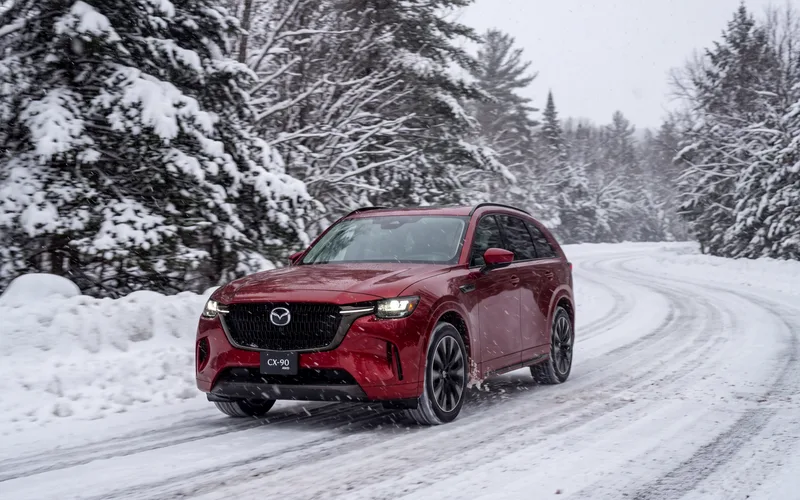 Mazda CX-90Mid-Size SUVBetter at: Seating flexibility
Same engine, platform and interior for typically less money, with two extra seats the CX-70 simply doesn't offer.
Compare 2.79B-
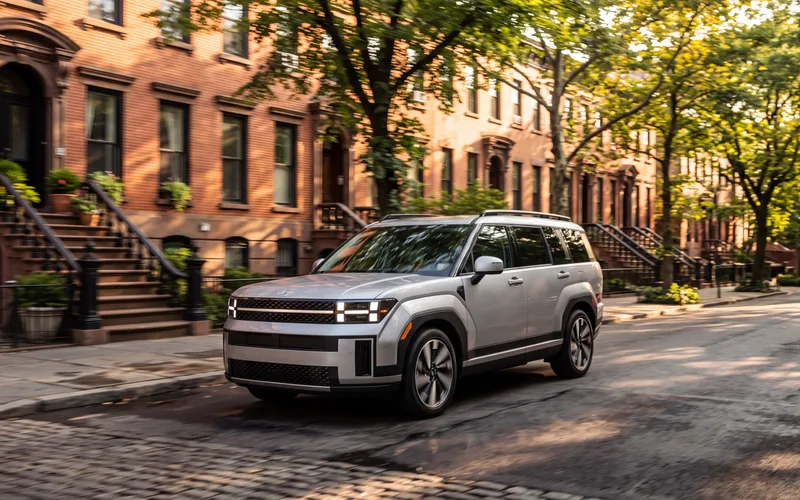 Hyundai Santa FeMid-Size SUVBetter at: Value and warranty
Costs less, offers a hybrid and an optional third row, and doubles the warranty — the sensible-money answer to the same brief.
Compare 2.63C+
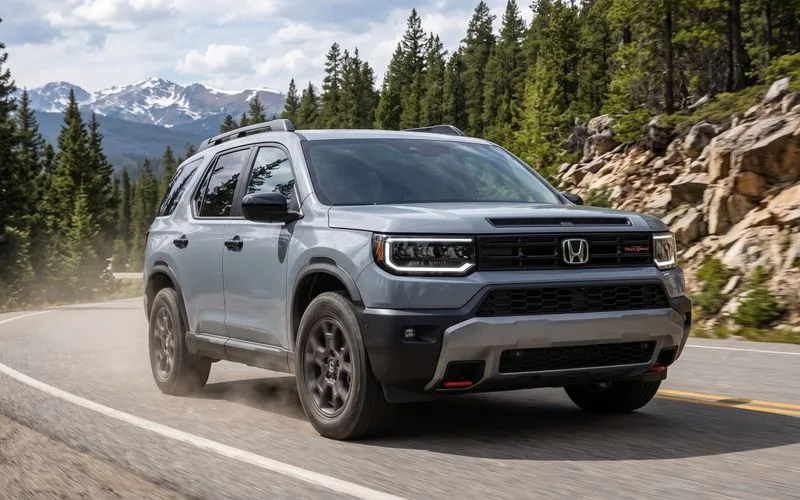 Honda PassportMid-Size SUVBetter at: Dependability
The other premium-feeling two-row mid-size SUV, but on proven hardware with a much better reliability outlook.
CompareSubject scores by year
Hover or tap a score to see what moved it versus the year before. A corner mark flags a big swing.
| Year | Performance | Efficiency | Safety | Space | Cost | Reliability | Tech | Use-case | Driving | Value |
|---|---|---|---|---|---|---|---|---|---|---|
| 2026 | 54 | 62 | 81 | 54 | 44 | 58 | 70 | 67 | 76 | 68 |
| 2025 | 55 | 58 | 87 | 53 | 56 | 53 | 73 | 68 | 74 | 71 |
Compare two years
Best fit & conditions
Higher scores mean a better fit for that use case. Learn more about use-case fit →
Subject profile
Academic Probation · NHTSA safety recalls
Sep 2, 2025Electrical system: body control module: software · Electrical system: instrument panel: fuel gauge: fuel level float/sensor/sending unitThe fuel gauge in the instrument cluster may display an inaccurate fuel reading.
Defect
Mazda North American Operations (Mazda) is recalling certain 2024-2025 CX-90 and 2025 CX-70 mild hybrid electric vehicles (MHEV). The fuel gauge in the instrument cluster may display an inaccurate fuel reading.
Risk
An inaccurate fuel gauge may result in the vehicle unexpectedly running out of fuel and stalling, increasing the risk of a crash.
Remedy
Dealers will update the body control module (BCM) software, free of charge. Owner notification letters were mailed October 24, 2025. Owners may contact Mazda customer service at 1-800-222-5500 Option 6. The manufacturer's number for this recall is 78251. The information in your report suggests that Mazda may have been aware of this issue more than five business days before filing a report with NHTSA. Please be reminded that under Federal law, this agency is to be notified of all safety defect and/or noncompliance decisions within five business days. 49 CFR 573.6 Significant civil penalties can be assessed for this violation.
NHTSA campaign 25V568000 ↗Manufacturer no. 7825I104,854 vehicles potentially affected (all models in the campaign)Owners notified Oct 24, 2025Filed by Mazda North American OperationsFiled as CX-70Oct 31, 2024Electrical system: propulsion system: inverter · Electrical system: softwareImproper inverter software may cause the malfunction indicator lights to illuminate, and a loss of drive power may occur while in electric vehicle (EV) mode.
Defect
Mazda North American Operations (Mazda) is recalling certain 2024 CX-90 and 2025 CX-70 plug-in hybrid electric vehicles. Improper inverter software may cause the malfunction indicator lights to illuminate, and a loss of drive power may occur while in electric vehicle (EV) mode.
Risk
Loss of drive power increases the risk of a crash.
Remedy
Dealers will install improved inverter software, free of charge. Owner notification letters were mailed December 19, 2024. Owners may contact Mazda customer service at 1-800-222-5500 Option 6. Mazda's number for this recall is 7024J.
NHTSA campaign 24V817000 ↗Manufacturer no. 7024J14,902 vehicles potentially affected (all models in the campaign)Owners notified Dec 19, 2024Filed by Mazda North American OperationsFiled as CX-70Oct 31, 2024Engine and engine cooling: engine: engine control module (ecu/ecm) · Power train: automatic transmission: control module (tcm/pcm/tecm)The powertrain control module (PCM) and engine control modules (ECM) software may cause malfunction indicator lights to illuminate and a loss of drive power.
Defect
Mazda North American Operations (Mazda) is recalling certain 2024 CX-90 and 2025 CX-70 vehicles. The powertrain control module (PCM) and engine control modules (ECM) software may cause malfunction indicator lights to illuminate and a loss of drive power.
Risk
Loss of drive power increases the risk of a crash.
Remedy
Dealers will reprogram the PCM and ECM software, free of charge. Owner notification letters were mailed December 19, 2024. Owners may contact Mazda customer service at 1-800-222-5500 Option 6. Mazda's number for this recall is 7024J.
NHTSA campaign 24V815000 ↗Manufacturer no. 7024J31,488 vehicles potentially affected (all models in the campaign)Owners notified Dec 19, 2024Filed by Mazda North American OperationsFiled as CX-70Oct 31, 2024Electrical system: software · Structure: interior panels: dashboardDuring vehicle startup, the defroster, seat belt warning, 360° view monitor functions, and the PHEV high-voltage battery cooling system may not function properly.
Defect
Mazda North American Operations (Mazda) is recalling certain 2024-2025 CX-90 and 2025 CX-70 vehicles equipped with a Dash Electrical Supply Unit (ESU). During vehicle startup, the defroster, seat belt warning, 360° view monitor functions, and the PHEV high-voltage battery cooling system may not function properly.
Risk
An ESU that does not function properly, increases the risk of a crash.
Remedy
Dealers will reprogram the Dash ESU with improved software, free of charge. Owner notification letters were mailed December 18, 2024. Owners may contact Mazda customer service at 1-800-222-5500 Option 6. Mazda's number for this recall is 7124J.
NHTSA campaign 24V814000 ↗Manufacturer no. 7124J80,915 vehicles potentially affected (all models in the campaign)Owners notified Dec 18, 2024Filed by Mazda North American OperationsFiled as CX-70
Source: NHTSA Office of Defects Investigation recall database, model years 2025–2026. Recalls are listed by model year as the manufacturer filed them; whether a specific car is affected depends on its VIN — check a VIN at nhtsa.gov ↗. NHTSA model names matched to this page: CX-70.
Detailed scoring by subject
1Performance & PowertrainOne of the CX-70's weakest categories.1.72C-
The regular-fuel 3.3 Turbo Preferred is the representative volume trim. Mazda also offered a higher-output Turbo S and a 323-hp PHEV for this debut model year.
The volume 3.3 Turbo delivers its 332 lb-ft peak at a low 2,000 rpm, giving this large SUV useful low-speed thrust.
The 280-hp Preferred is adequately quick rather than sporty; instrumented testing largely covered the stronger Turbo S, so the volume-trim figure relies on KBB's trim-specific listing.
The turbo inline-six provides strong, polished power and an appealing sound, but reviewers note initial hesitation and more noise under hard acceleration than the premium positioning suggests.
The eight-speed automatic is generally serviceable, but inconsistent response and delayed downshifts keep it near the middle of the segment rather than among the best conventional automatics.
Properly equipped gas models reach 5,000 pounds, a useful mid-size-SUV rating; the Preferred itself lacks the Premium trim's Towing mode.
Rear-biased i-Activ AWD is standard on every CX-70, supported by Sport and Off-Road modes plus hill-descent control; it lacks a true low range or locking differentials.
Standard AWD, an Off-Road mode, hill-descent control, and 8.0–8.1 inches of clearance support light trail use. Road tires, modest angles, and no dedicated rugged trim, skid-plate package, locker, or low range limit harder use.
A broad launch lineup offered two turbo inline-six outputs plus a distinct plug-in hybrid, all with AWD. That gives shoppers regular-fuel value, higher gas performance, or electric commuting capability.
2Efficiency & RangeMid-pack among this car's ten categories.1.88C-
The mild-hybrid inline-six earns a respectable 25 mpg combined on regular fuel in the volume trim.
The regular-fuel standard-output engine has a one-mpg city advantage over the premium-fuel Turbo S.
Both output levels achieve the same 28-mpg EPA highway rating.
EPA's API does not publish a total-range value for this gas record, so combined range is calculated from the verified 18.5-gallon capacity and 25-mpg combined rating.
The volume trim's regular-fuel requirement materially lowers annual cost versus the premium-fuel Turbo S despite identical combined mpg.
The 280-hp volume powertrain is designed to deliver its full stated output on widely available regular gasoline. Only the optional Turbo S and PHEV recommend premium.
3SafetyThe CX-70's best-graded category.3.95A+
The gas-powered 2025 CX-70 AWD earned NHTSA's maximum five-star overall vehicle score in its first model year.
The 2025 CX-70 is an IIHS Top Safety Pick+ and earns Good ratings in the small-overlap front, updated moderate-overlap front, and updated side tests. The gas CX-70's updated moderate-overlap result comes from an actual 3.3 Turbo Preferred test and includes Good rear-passenger protection.
Every gas CX-70 includes the five core systems: automatic emergency braking, adaptive cruise with stop-and-go, lane-departure prevention, blind-spot monitoring, and rear cross-traffic alert. The volume 3.3 Turbo S Premium adds a notably broader set including lane centering, active blind-spot intervention, junction AEB, and rear automatic braking.
IIHS gives the standard system a Good pedestrian rating with strong nighttime performance, but its newer vehicle-to-vehicle 2.0 result is only Acceptable because it did not fully avoid the 43-mph passenger-car target tests.
Blind-spot monitoring and rear cross-traffic alert are standard throughout the lineup, while the volume Turbo S Premium adds steering-based Blind Spot Assist, front cross-traffic alert, rear automatic braking with pedestrian detection, and Vehicle Exit Warning. This is exceptionally broad coverage, although it is not marketed as trailer-aware blind-spot monitoring.
Standard lane-departure prevention is supplemented on the volume Turbo S Premium by Cruising & Traffic Support lane centering. Review testing describes the centering as smooth and dependable through curves, with clear disengagement warnings rather than unexplained dropouts.
Full-speed Mazda Radar Cruise Control with Stop & Go is standard, and the volume Turbo S Premium integrates it with Cruising & Traffic Support lane centering. Reviewers found it smooth and consistent in traffic, though occasional late braking approaching a complete stop keeps it below the best systems.
The 2025 CX-70 offers no hands-free highway-driving system; Cruising & Traffic Support is a hands-on assistance feature.
The volume Turbo S Premium's curve-adaptive LED projector headlights earn an IIHS Good rating and include high-beam assist. Lower 3.3 Turbo Preferred, Premium, and Premium Plus trims use non-adaptive projectors rated Acceptable, so performance is not uniform across the gas range.
Natural forward visibility is generally workable, but the long, wide body and rear-quarter structure create meaningful blind zones. The volume Turbo S Premium compensates effectively with front and rear parking sensors, a 360-degree monitor with See-Through View, and a rear camera with dynamic guidelines.
IIHS awards the rare Good+ LATCH ease rating, and hands-on car-seat testing found covered lower anchors and clearly marked tethers easy to access. Two seats install very easily and three nearly fit, though booster-buckle placement prevents a perfect usability score.
4Space & ComfortOne of the CX-70's weakest categories.1.58D
Every 2025 CX-70 is a five-seat, two-row SUV; buyers needing a third row must choose the CX-90.
The volume 3.3 Turbo S Premium provides competitive front headroom despite its standard panoramic moonroof.
Front legroom is adequate but not exceptional for a vehicle with this large exterior footprint.
Second-row headroom is comfortably adult-usable.
The second row has generous adult legroom, one of the main benefits of the two-row layout.
No 2025 CX-70 trim offers a third row, so it scores in the required low band for this SUV item.
The broad, squared cargo hold is useful for a two-row SUV, though not class-leading relative to the vehicle's length.
Maximum volume is competitive but merely mid-pack for such a long mid-size SUV.
Door bins, a covered console, underfloor cargo compartments and remote rear-seat releases cover daily needs, but there is no standout console or onboard-power solution.
The S Premium's supportive power seats and strong driving position suit long trips, though several reviewers find the cushions firm.
Excellent body control comes with a taut, sometimes busy ride, especially on the volume trim's 21-inch wheels.
Wind and road noise are well isolated at speed, although the inline-six becomes audible under hard acceleration.
The popular S Premium is richly equipped with heated and ventilated front seats, heated rear seats and steering wheel, three-zone climate and rear sunshades.
5Cost of OwnershipMid-pack among this car's ten categories.1.75C-
The gas CX-70 starts with the well-equipped 280-hp 3.3 Turbo Preferred; Mazda's published $40,445 MSRP excludes the model-year destination charge.
TrueCar identifies the 3.3 Turbo S Premium as the popular and recommended trim. Its delivered price is premium-brand territory, although it includes the 340-hp inline-six and AWD.
CarEdge's CX-70-specific projection is exceptionally low for the segment and explicitly combines scheduled maintenance, wear items, and expected repairs. The model is new, so this remains a projection rather than a long history of observed costs.
CarEdge projects 37% depreciation, or 62.6% retention, from a typically equipped CX-70. This is favorable, though necessarily modeled because 2025 was the nameplate's first year.
Mazda's basic warranty sits at the minimum of the SUV normalization band and trails the five-year coverage offered by several rivals.
The conventional powertrain warranty is the segment-floor five years and 60,000 miles; the scored gas mild-hybrid trim receives no longer term.
Mazda includes no complimentary scheduled maintenance, keeping this in the low band. The package is softened by roadside assistance and a three-year Connected Services trial with remote functions, emergency calling, and vehicle-health alerts.
$53,905 volume-trim price minus its estimated resale value after 5 years (62.6% retained, or about $33,745) leaves about $20,160 in depreciation. Add the projected $2,649 in 5-year maintenance and repairs, and owning this vehicle for 5 years costs about $22,809 in total.
6Reliability & QualityThe CX-70's lowest-graded category.1.52D
The first-year CX-70 has already produced below-average owner-survey results. J.D. Power is less severe than Consumer Reports but still places quality and reliability only in its Fair band, so the combined evidence belongs below 50.
Mazda's established vehicles retain a strong long-term reputation, but current new-car evidence is sharply mixed because its new Large Product Group SUVs have underperformed. A top-three J.D. Power dependability result and mid-pack Consumer Reports new-car ranking balance to an above-average but not top-tier score.
Three of the four listed CX-70 campaigns apply to the scored gas mild-hybrid, including possible loss of drive power and a fuel-reading defect that can cause a stall; only the inverter campaign is PHEV-only. Multiple software campaigns plus bulletins for no-start and transmission-related concerns are excessive for one model year and include meaningful safety consequences.
The volume 3.3 Turbo Preferred uses a still-new and mechanically complex inline-six, 48-volt mild-hybrid system, and Mazda-designed eight-speed automatic. Its CX-90 head start supplies some field experience, but there is not yet a high-mileage record, and early loss-of-power, no-start, and rough-shift evidence prevents an average-or-better durability judgment.
Material richness is a defining CX-70 advantage: even against its premium positioning, reviewers consistently describe generous padding, high-quality controls, and near-luxury presentation. It stops short of the 90s because some supporting plastics remain mainstream-grade and lower trims lack the flagship upholstery and trim.
The CX-70 presents well when new, but assembly consistency did not hold up in a prominent yearlong test. Numerous cabin rattles and squeaks on that vehicle, alongside only Fair initial quality/reliability from verified owners, outweigh otherwise positive first impressions.
Mazda offers nationwide franchised warranty support and has upgraded many facilities, but its U.S. footprint is materially thinner than Toyota's or Honda's and can mean longer trips outside metro areas. The improving showroom program supports an adequate rather than weak score.
Routine maintenance pricing is reasonable for a premium-positioned SUV, but this Japan-built first-year nameplate and its unique mild-hybrid inline-six/eight-speed drivetrain have limited aftermarket and salvage depth. That creates more dealer-parts exposure than Mazda's older high-volume models and leaves complex out-of-warranty repairs uncertain.
7Technology & InfotainmentOne of the CX-70's strongest categories.2.97B-
The volume Turbo S Premium uses Mazda's largest 2025 CX-70 center display.
Mazda Connect is quick and clean with useful physical controls, but its rotary-controller emphasis and restricted touch operation frustrate phone-projection users.
Wireless Apple CarPlay and Android Auto are standard on the scored S Premium and offered across the 2025 lineup.
Alexa Built-in improves natural-language voice tasks, while Mazda Online Navigation is functional but most owners will favor phone maps.
The S Premium's 12-speaker Bose Centerpoint system is a meaningful upgrade and benefits from the quiet cabin.
A crisp 12.3-inch configurable digital instrument display is standard on the representative trim.
Mazda supports infotainment and navigation updates over the air, but not broad whole-vehicle feature or powertrain updates.
MyMazda supplies remote start, locks, status and vehicle finder during a three-year trial, but lacks phone-as-key and becomes subscription-based.
The S Premium includes front and rear USB-C ports plus wireless charging, but no household AC outlet or useful onboard power export.
Advanced keyless entry, app-based remote start and a hands-free power liftgate make the S Premium convenient, though it has no digital key.
The volume trim has front/rear sensors and a useful 360-degree monitor with See-Through View, but no automated parking.
Mazda's informative windshield-projected Active Driving Display is standard on the representative S Premium trim.
8Use-Case FitMid-pack among this car's ten categories.2.58C+
Wide rear access, roomy second-row seating, easy anchors and 39.6 cu ft of occupied-seat cargo make two-child duty easy; the fixed two-row layout limits larger families.
A five-star NHTSA rating, IIHS Top Safety Pick+ performance and broad standard ADAS make this a class-leading family safety package.
Four or five occupants get generous rear room, a quiet upscale cabin, rear heat and shades, and ample luggage space; firm ride quality and no third row cap the score.
The refined inline-six, good driving position and standard driver aids reduce fatigue, but low-speed transmission hesitation and the taut 21-inch-wheel ride are daily annoyances.
The gas CX-70's 25 mpg combined is respectable for its size, but premium fuel for the 340-hp S Premium and large tires make it costlier than hybrid rivals.
A 201.6-inch body is cumbersome in town, though the 38.1-foot turning diameter and S Premium's surround camera and sensors mitigate its bulk.
A 5,000-lb tow ceiling, strong torque and 75.3 cu ft of enclosed cargo handle moderate recreational work, but this luxury-leaning unibody SUV is no serious work tool.
The new inline-six, 48-volt system and wet-clutch automatic lack a long work-duty record, while the Nappa-leather cabin has no wear-friendly fleet configuration.
Roof rails, tie-downs, hitch accessories and a powered liftgate cover basics, but there is no bed, onboard AC power, washable trim or meaningful commercial upfit ecosystem.
A quiet cabin, supportive seats, stable chassis, adaptive cruise and roughly 463 miles of combined range make it a strong tourer, tempered by firm ride quality.
Standard rear-biased AWD, Off-Road mode, hill descent, about eight inches of clearance, rails and 5,000-lb towing suit trailheads and small campers, not technical terrain.
A broad 39.6-cu-ft hold expands to 75.3 cu ft, aided by split-folding remote-release seats, underfloor storage, rails and hitch availability.
9Driving ExperienceOne of the CX-70's strongest categories.3.03B
Rear-biased AWD, strong body control and Kinematic Posture Control make the CX-70 unusually balanced and engaging for a large mainstream SUV.
Accurate, naturally weighted steering and confident straight-line tracking are standouts, though effort can feel heavy in low-speed maneuvers.
Braking performance is strong and fade-free, but the soft pedal and long travel keep feel below the chassis standard.
The inline-six is smooth and forceful, but the first-year wet-clutch eight-speed hesitates, reacts late and can shift abruptly at low speeds.
The inherently balanced inline-six is refined and characterful with little vibration, though it becomes louder than expected under hard acceleration.
The turning diameter is reasonable for a 201.6-inch SUV but not especially city-friendly.
A natural seating position, broad adjustment, head-up display and physical climate controls work well; the long hood and rotary infotainment controller add minor friction.
A rear-drive-biased chassis, characterful 340-hp inline-six and unusually communicative controls make this one of the rare family SUVs enthusiasts can enjoy.
10Value & Market PositionGrades above the middle of the scale.2.79B-
The base Preferred is unusually complete: leather, heated power front seats, moonroof, 12.3-inch display, wireless smartphone integration and charging, adaptive cruise, lane keeping, blind-spot monitoring, 280-hp inline-six and AWD are standard. Few similarly priced mainstream rivals combine that cabin content with this powertrain hardware.
Rear-biased AWD, a turbo inline-six, premium cabin materials and strong cargo utility offer near-luxury substance for the money. Value is capped because equivalent CX-70 and CX-90 trims cost the same despite the CX-90 providing a third row, while Edmunds finds the CX-70 smaller and typically costlier than comparable midsize SUVs.
Seven trims span two gas outputs and a PHEV, with five gas choices from Preferred through Turbo S Premium Plus. Choice is good but not exceptional because all versions are five-seat AWD automatics, with no cheaper Select trim, front-wheel drive, or stand-alone option packages.
The launch generated modest rather than mainstream-midsize volume: 10,678 U.S. deliveries in 2024 versus 54,676 for its CX-90 sibling. Later discounting and a 29% January 2026 decline reinforce that the market never strongly embraced the two-row derivative.
Mazda has a strong enthusiast, design, interior-quality and safety halo that supports its premium aspirations, although it lacks the status and dealer experience of a true luxury marque. The CX-70's rear-drive-biased platform and inline-six reinforce the favorable image.
Buyer benefit is excellent on remaining 2025 inventory: transaction data show unusually large average discounts, with enough negotiability to overcome part of the questionable original pricing. The score stops short of maximum because availability is now thin and the discounts partly reflect slow sales and leftover status.
This is the first CX-70 model year and the first year of its generation, with current longitudinal Large Product Group architecture and electrified powertrains. It is closely derived from the 2024 CX-90 rather than clean-sheet unique, preventing a perfect freshness score.
Reviewers praise handling, cabin quality, cargo room and safety, and the CX-70 earned IIHS TOP SAFETY PICK+ plus U.S. News family recognition. It was not a major comparison or SUV-of-the-Year winner, however, and repeated criticism targets its CX-90 duplication, firm ride, low-speed powertrain behavior and weak value logic.