

The verdict
A mixed-report mid-size suv, strong on safety and held back by reliability.
Overall 2.53 (C+) across 10 graded subjects. Its strongest is safety at 3.62 (A-), its weakest reliability & quality at 1.50 (D). 8 of 10 subjects grade at C− or better.
Jump to scoresStrengths
- Safety
- Value & Market Position
- Driving Experience
What holds it back
- Reliability & Quality
- Performance & Powertrain
- Efficiency & Range
Top alternatives
Cars shoppers cross-shop with the Mazda CX-90 2.79B-
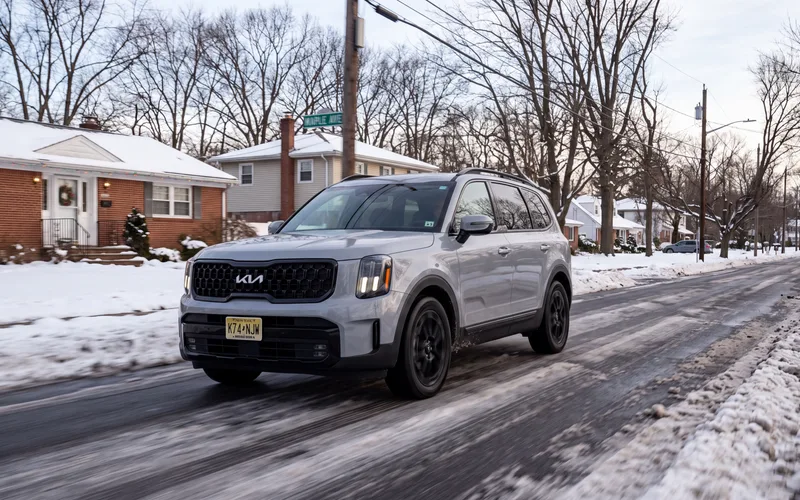 Kia TellurideMid-Size SUVBetter at: Family practicality
It gives you the usable third row, the cargo space behind it and the 10-year powertrain warranty that the CX-90 can't match, for similar money.
Compare 2.88B-
 Toyota Grand HighlanderMid-Size SUVBetter at: Efficiency
Hybrid versions run roughly ten MPG better and come with Toyota's reliability record and included maintenance, which is exactly where the CX-90 is weakest.
Compare 2.43C+
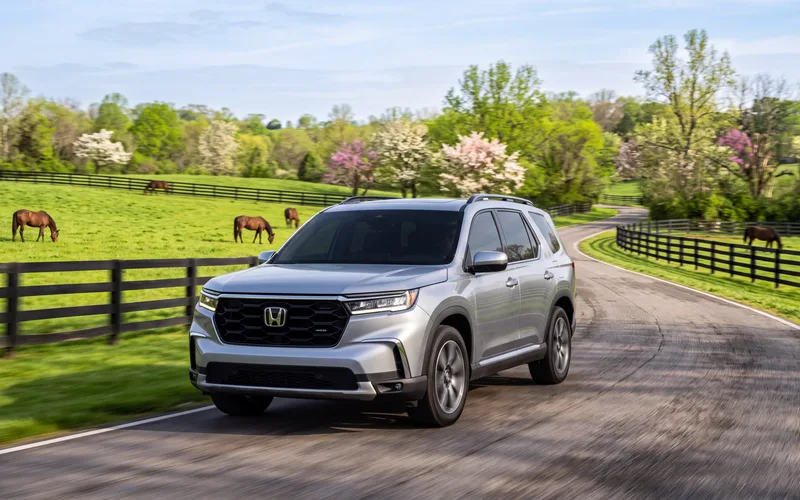 Honda PilotMid-Size SUVBetter at: Cargo space
A larger, more sensible three-row with cheaper long-term running costs for buyers who don't care that the CX-90 is more fun to drive.
CompareSubject scores by year
Hover or tap a score to see what moved it versus the year before. A corner mark flags a big swing.
| Year | Performance | Efficiency | Safety | Space | Cost | Reliability | Tech | Use-case | Driving | Value |
|---|---|---|---|---|---|---|---|---|---|---|
| 2026 | 54 | 59 | 81 | 67 | 50 | 51 | 67 | 67 | 75 | 73 |
| 2025 | 54 | 57 | 83 | 65 | 59 | 52 | 69 | 67 | 71 | 82 |
| 2024 | 56 | 62 | 84 | 64 | 53 | 50 | 56 | 66 | 69 | 83 |
Compare two years
Best fit & conditions
Higher scores mean a better fit for that use case. Learn more about use-case fit →
Subject profile
Academic Probation · NHTSA safety recalls
Sep 2, 2025Electrical system: body control module: software · Electrical system: instrument panel: fuel gauge: fuel level float/sensor/sending unitThe fuel gauge in the instrument cluster may display an inaccurate fuel reading.
Defect
Mazda North American Operations (Mazda) is recalling certain 2024-2025 CX-90 and 2025 CX-70 mild hybrid electric vehicles (MHEV). The fuel gauge in the instrument cluster may display an inaccurate fuel reading.
Risk
An inaccurate fuel gauge may result in the vehicle unexpectedly running out of fuel and stalling, increasing the risk of a crash.
Remedy
Dealers will update the body control module (BCM) software, free of charge. Owner notification letters were mailed October 24, 2025. Owners may contact Mazda customer service at 1-800-222-5500 Option 6. The manufacturer's number for this recall is 78251. The information in your report suggests that Mazda may have been aware of this issue more than five business days before filing a report with NHTSA. Please be reminded that under Federal law, this agency is to be notified of all safety defect and/or noncompliance decisions within five business days. 49 CFR 573.6 Significant civil penalties can be assessed for this violation.
NHTSA campaign 25V568000 ↗Manufacturer no. 7825I104,854 vehicles potentially affected (all models in the campaign)Owners notified Oct 24, 2025Filed by Mazda North American OperationsFiled as CX-90Oct 31, 2024Electrical system: software · Structure: interior panels: dashboardDuring vehicle startup, the defroster, seat belt warning, 360° view monitor functions, and the PHEV high-voltage battery cooling system may not function properly.
Defect
Mazda North American Operations (Mazda) is recalling certain 2024-2025 CX-90 and 2025 CX-70 vehicles equipped with a Dash Electrical Supply Unit (ESU). During vehicle startup, the defroster, seat belt warning, 360° view monitor functions, and the PHEV high-voltage battery cooling system may not function properly.
Risk
An ESU that does not function properly, increases the risk of a crash.
Remedy
Dealers will reprogram the Dash ESU with improved software, free of charge. Owner notification letters were mailed December 18, 2024. Owners may contact Mazda customer service at 1-800-222-5500 Option 6. Mazda's number for this recall is 7124J.
NHTSA campaign 24V814000 ↗Manufacturer no. 7124J80,915 vehicles potentially affected (all models in the campaign)Owners notified Dec 18, 2024Filed by Mazda North American OperationsFiled as CX-90
9 recalls on other model years of the CX-90 (2024)
Oct 31, 2024Electrical system: propulsion system: inverter · Electrical system: softwareImproper inverter software may cause the malfunction indicator lights to illuminate, and a loss of drive power may occur while in electric vehicle (EV) mode.
Defect
Mazda North American Operations (Mazda) is recalling certain 2024 CX-90 and 2025 CX-70 plug-in hybrid electric vehicles. Improper inverter software may cause the malfunction indicator lights to illuminate, and a loss of drive power may occur while in electric vehicle (EV) mode.
Risk
Loss of drive power increases the risk of a crash.
Remedy
Dealers will install improved inverter software, free of charge. Owner notification letters were mailed December 19, 2024. Owners may contact Mazda customer service at 1-800-222-5500 Option 6. Mazda's number for this recall is 7024J.
NHTSA campaign 24V817000 ↗Manufacturer no. 7024J14,902 vehicles potentially affected (all models in the campaign)Owners notified Dec 19, 2024Filed by Mazda North American OperationsFiled as CX-90Oct 31, 2024Electrical system: propulsion system: traction battery: management system/energy control module (bms/becm): software · Power train: automatic transmission: control module (tcm/pcm/tecm)The engine may not restart after the idling stop feature (i-stop) turns off the engine due to a software issue.
Defect
Mazda North American Operations (Mazda) is recalling certain 2024 CX-90 vehicles. The engine may not restart after the idling stop feature (i-stop) turns off the engine due to a software issue.
Risk
An engine that fails to restart increases the risk of a crash.
Remedy
Dealers will reprogram the powertrain control module (PCM) and the battery energy control module (BECM) software, free of charge. Owner notification letters were mailed December 19, 2024. Owners may contact Mazda customer service at 1-800-222-5500 Option 6. Mazda's number for this recall is 7024J.
NHTSA campaign 24V816000 ↗Manufacturer no. 7024J38,926 vehicles potentially affected (all models in the campaign)Owners notified Dec 19, 2024Filed by Mazda North American OperationsFiled as CX-90Oct 31, 2024Engine and engine cooling: engine: engine control module (ecu/ecm) · Power train: automatic transmission: control module (tcm/pcm/tecm)The powertrain control module (PCM) and engine control modules (ECM) software may cause malfunction indicator lights to illuminate and a loss of drive power.
Defect
Mazda North American Operations (Mazda) is recalling certain 2024 CX-90 and 2025 CX-70 vehicles. The powertrain control module (PCM) and engine control modules (ECM) software may cause malfunction indicator lights to illuminate and a loss of drive power.
Risk
Loss of drive power increases the risk of a crash.
Remedy
Dealers will reprogram the PCM and ECM software, free of charge. Owner notification letters were mailed December 19, 2024. Owners may contact Mazda customer service at 1-800-222-5500 Option 6. Mazda's number for this recall is 7024J.
NHTSA campaign 24V815000 ↗Manufacturer no. 7024J31,488 vehicles potentially affected (all models in the campaign)Owners notified Dec 19, 2024Filed by Mazda North American OperationsFiled as CX-90May 16, 2024Forward collision avoidance: automatic emergency brakingThe brakes may activate suddenly due to the automatic braking system falsely detecting certain objects while driving.
Defect
Mazda North American Operations (Mazda) is recalling certain 2024 CX-90 vehicles. The brakes may activate suddenly due to the automatic braking system falsely detecting certain objects while driving.
Risk
Unexpected braking increases the risk of a crash.
Remedy
Dealers will reprogram the vehicle control module (VCM) with updated software, free of charge. Owner notification letters were mailed July 12, 2024. Owners may contact Mazda customer service at 1-800-222-5500 Option 6. Mazda's number for this recall is 6724E.
NHTSA campaign 24V349000 ↗Manufacturer no. 6724E9,914 vehicles potentially affected (all models in the campaign)Owners notified Jul 12, 2024Filed by Mazda North American OperationsFiled as CX-90Jan 18, 2024SteeringAn assembly issue with the worm gear in the steering system may result in a sudden loss of power steering assist.
Defect
Mazda North America Operations (Mazda) is recalling certain 2024 CX-90 vehicles. An assembly issue with the worm gear in the steering system may result in a sudden loss of power steering assist.
Risk
Loss of power steering assist while driving increases the risk of a crash.
Remedy
Dealers will replace the spring engaging the worm gear and reapply grease to the gear teeth, free of charge. Owner notification letters were mailed March 6, 2024. Owners may contact Mazda customer service at 1-800-222-5500 Option 6. Mazda's number for this recall is 6524A.
NHTSA campaign 24V022000 ↗Manufacturer no. 6524A43,454 vehicles potentially affected (all models in the campaign)Owners notified Mar 6, 2024Filed by Mazda North American OperationsFiled as CX-90Oct 26, 2023Power train: automatic transmission: control module: softwareDue to a software error, the engine and electric motor may shut down unexpectedly, which can result in a loss of drive power.
Defect
Mazda North American Operations (Mazda) is recalling certain 2024 CX-90 plug-in hybrid electric (PHEV) vehicles. Due to a software error, the engine and electric motor may shut down unexpectedly, which can result in a loss of drive power.
Risk
A loss of drive power can increase the risk of a crash.
Remedy
Dealers will update the powertrain control module and engine control module software, free of charge. Owner notification letters were mailed December 20, 2023. Owners may contact Mazda customer service at 1-800-222-5500 Option 6. Mazda's number for this recall is 6323J.
NHTSA campaign 23V719000 ↗Manufacturer no. 6323J4,252 vehicles potentially affected (all models in the campaign)Owners notified Dec 20, 2023Filed by Mazda North American OperationsFiled as CX-90Oct 26, 2023Back over prevention: sensing system: camera · Forward collision avoidance: sensing system: camera · Lane departure: sensing system: cameraDue to a software error, the rearview, front, and/or side camera images may not appear on the display. As such, these vehicles fail to comply with the requirements of Federal Motor Vehicle Safety Standard number 111, "Rear Visibility."
Defect
Mazda North American Operations (Mazda) is recalling certain 2024 CX-90 and MAZDA3 vehicles. Due to a software error, the rearview, front, and/or side camera images may not appear on the display. As such, these vehicles fail to comply with the requirements of Federal Motor Vehicle Safety Standard number 111, "Rear Visibility."
Risk
A camera that does not display an image can reduce the driver's view, increasing the risk of a crash or injury.
Remedy
Dealers will update the view monitor control module software, free of charge. Owner notification letters were mailed December 20, 2023. Owners may contact Mazda customer service at 1-800-222-5500 Option 6. Mazda's number for this recall is 6223J.
NHTSA campaign 23V718000 ↗Manufacturer no. 6223J11,903 vehicles potentially affected (all models in the campaign)Owners notified Dec 20, 2023Filed by Mazda North American OperationsFiled as CX-90Aug 4, 2023Back over prevention: warnings: external/pedestrian alert · Forward collision avoidance: warnings: external/pedestrian alertSoftware in the Approaching Vehicle Audible System (AVAS) Information Sound Box (ISB) amplifier may be missing, which can cause inaccurate, external pedestrian warning sounds. As such, these vehicles fail to comply with the requirements of Federal Motor Vehicle Safety Standard number 141, "Minimum Sound Requirements for Hybrid Electric Vehicles."
Defect
Mazda North American Operations (Mazda) is recalling certain 2024 CX-90 vehicles. Software in the Approaching Vehicle Audible System (AVAS) Information Sound Box (ISB) amplifier may be missing, which can cause inaccurate, external pedestrian warning sounds. As such, these vehicles fail to comply with the requirements of Federal Motor Vehicle Safety Standard number 141, "Minimum Sound Requirements for Hybrid Electric Vehicles."
Risk
Inaccurate external warning sounds may confuse pedestrians about the direction of an approaching vehicle, increasing the risk of a crash or injury.
Remedy
Dealers will update the AVAS ISB amplifier software, free of charge. Owner notification letters were mailed September 18, 2023. Owners may contact Mazda customer service at 1-800-222-5500 Option 6. Mazda's number for this recall is 6123H.
NHTSA campaign 23V553000 ↗Manufacturer no. 6123H17,600 vehicles potentially affected (all models in the campaign)Owners notified Sep 18, 2023Filed by Mazda North American OperationsFiled as CX-90Jun 15, 2023Steering: critical fasteners · Suspension: critical fastenersSome steering and suspension bolts may be missing or improperly tightened, which can cause the steering intermediate shaft, the front anti-lock brake system wheel speed sensor harnesses, or the front upper control arms to detach, resulting in a loss of vehicle control.
Defect
Mazda North American Operations (Mazda) is recalling certain 2024 CX-90 vehicles. Some steering and suspension bolts may be missing or improperly tightened, which can cause the steering intermediate shaft, the front anti-lock brake system wheel speed sensor harnesses, or the front upper control arms to detach, resulting in a loss of vehicle control.
Risk
A loss of vehicle control increases the risk of a crash.
Remedy
Dealers will inspect and tighten or replace the steering and suspension bolts, as necessary, free of charge. Owner notification letters were mailed July 14, 2023. Owners may contact Mazda customer service at 1-800-222-5500 Option 6. Mazda's number for this recall is 5923F.
NHTSA campaign 23V429000 ↗Manufacturer no. 5923F18 vehicles potentially affected (all models in the campaign)Owners notified Jul 14, 2023Filed by Mazda North American OperationsFiled as CX-90
Source: NHTSA Office of Defects Investigation recall database, model years 2024–2026. Recalls are listed by model year as the manufacturer filed them; whether a specific car is affected depends on its VIN — check a VIN at nhtsa.gov ↗. NHTSA model names matched to this page: CX-90.
Detailed scoring by subject
1Performance & PowertrainOne of the CX-90's weakest categories.1.65D
The volume 3.3 Turbo uses the standard-output mild-hybrid inline-six; the Turbo S is the range maximum.
The standard-output 3.3 Turbo makes strong low-rpm torque for a three-row SUV.
This is an instrumented result for a 2025 CX-90 with the representative 280-hp 3.3 Turbo powertrain.
The inline-six is authoritative and polished once moving, but initial hesitation and uneven cold response keep it well short of premium-class leaders.
The eight-speed is smooth in normal motion but low-speed clutch engagement can be clunky and inconsistent.
The maximum applies to Turbo Premium Sport and Turbo S configurations with Mazda Genuine Towing Accessories.
Rear-biased i-Activ AWD is standard throughout, with Kinematic Posture Control and expanded Mi-Drive modes on upper trims.
Standard AWD and roughly eight inches of clearance support dirt-road use, but there is no dedicated off-road trim, low range, locker, or substantial underbody hardware.
The lineup offers two outputs of a turbo inline-six mild hybrid plus a distinct plug-in hybrid, all with AWD.
2Efficiency & RangeOne of the CX-90's weakest categories.1.84C-
The standard-output 3.3 Turbo returns the same combined rating across its trims.
The 48-volt mild-hybrid system contributes to a strong city rating for a gasoline three-row SUV.
The representative 280-hp powertrain is rated at 28 mpg highway.
The combined range is the EPA combined economy applied to the 18.5-gallon tank and rounded to the conventional label increment.
This is the EPA-style 15,000-mile annual estimate for the regular-fuel 3.3 Turbo.
The volume 3.3 Turbo is designed for ordinary 87-octane gasoline, avoiding a premium-fuel cost penalty.
3SafetyThe CX-90's best-graded category.3.62A-
The 2025 U.S.-market CX-90 AWD earned NHTSA's maximum overall rating.
The 2025 CX-90 is an IIHS Top Safety Pick+ and earns Good ratings in the small-overlap front, updated moderate-overlap front, and updated side tests.
Every 2025 gas trim, including the volume 3.3 Turbo Preferred, has all five core systems: AEB, stop-and-go adaptive cruise, lane-keep assist, blind-spot monitoring, and rear cross-traffic alert.
Standard Smart Brake Support is Good in IIHS pedestrian testing, including strong nighttime avoidance, though the newer vehicle-to-vehicle 2.0 test is Acceptable rather than Good.
Blind-spot monitoring, rear cross-traffic alert, and Vehicle Exit Warning are standard, but the volume Preferred's systems are primarily warnings; active Blind Spot Assist arrives with Premium Sport.
Lane-departure warning and lane-keep assist are standard and functional, but true lane centering via Cruising & Traffic Support is above the volume Preferred trim and reviewers find its curve behavior intrusive.
The volume Preferred gets full-speed Mazda Radar Cruise Control with Stop & Go, but integrated lane-centering highway assistance is reserved for Premium Sport and above and trails segment leaders in refinement.
No 2025 CX-90 trim offers a hands-free highway-driving system; even Cruising & Traffic Support remains a hands-on driver-assistance feature.
The volume Preferred has Acceptable-rated LED projectors with automatic high beams; only the Turbo S Premium variants' curve-adaptive lamps earn Good, so performance varies by trim.
The upright three-row driving position and standard rear camera provide adequate sightlines, but the long body has meaningful blind zones and the compensating 360-degree See-Through View is restricted to Premium Plus rather than the volume trim.
IIHS awards its exceptional Good+ rating, with three complete LATCH positions and two more tether-only positions; the main minor drawback is short buckle stalks for booster-age children.
4Space & ComfortMid-pack among this car's ten categories.2.37C+
The volume 3.3 Turbo Preferred uses an eight-passenger bench-seat configuration, with a seven-seat option.
The published standard-roof measurement is used as directed; Preferred's moonroof reduces actual clearance slightly.
Front legroom is adequate but not generous for a midsize three-row SUV.
Second-row headroom is generous by SUV standards, though the Preferred moonroof trims it modestly.
Second-row legroom is competitive even though the packaging prioritizes driving proportions over maximum cabin space.
The three-seat third row works for children and short adult trips, but 30.4 inches of legroom and difficult access keep it below family-hauler leaders.
Cargo space behind row two is modest for the vehicle's exterior size.
Maximum capacity trails the roomiest three-row midsize SUVs.
Six USB-C ports and useful everyday bins help, but the driver-focused console and narrow cabin packaging provide no standout storage solution.
Supportive power-adjustable front seats and leather upholstery feel upscale, while tight third-row dimensions limit all-row comfort.
The 19-inch-wheel Preferred is composed and comfortable at speed, but the chassis remains firmer over sharp impacts than class leaders.
The premium-leaning cabin is well isolated in normal cruising, though the inline-six can sound less refined under load and some road noise remains.
Preferred includes heated leather front seats, three-zone climate control, third-row vents and second-row shades; ventilation and heated rear seats require higher trims.
5Cost of OwnershipMid-pack among this car's ten categories.1.94C-
The entry gas CX-90 combines a comparatively accessible midsize three-row price with standard AWD and a 280-hp inline-six mild-hybrid powertrain.
The Turbo Preferred is the representative volume gas trim, adding leather, heated front seats, a sunroof, the 12.3-inch touchscreen, wireless smartphone integration and parking sensors without moving into the costly performance/luxury tiers.
CarEdge's model-level estimate is below the framework's normal SUV range, though the CX-90's short history makes any five-year projection less certain than one for an established nameplate.
Projected retention is modestly better than the midsize-SUV average, but the CX-90 is still a young nameplate with limited observed five-year transaction history.
Mazda's basic coverage is the mainstream minimum and trails brands offering four- or five-year protection.
Five years and 60,000 miles is standard mainstream coverage but well behind Hyundai and Kia's 10-year/100,000-mile term.
There is no factory-paid scheduled maintenance, but Mazda includes 3-year/36,000-mile roadside assistance and a one-year Connected Services trial. Those useful but basic perks keep it near the top of the no-maintenance band.
$42,600 volume-trim price minus its estimated resale value after 5 years (56.9% retained, or about $24,239) leaves about $18,361 in depreciation. Add the projected $2,639 in 5-year maintenance and repairs, and owning this vehicle for 5 years costs about $21,000 in total.
6Reliability & QualityThe CX-90's lowest-graded category.1.50D
The 2025 gas CX-90 receives a below-average verdict from Consumer Reports based on an owner survey specific to this model year, while J.D. Power's carry-over 70/100 quality-and-reliability rating is only average. The direct owner-survey result outweighs the more favorable but inherited J.D. Power estimate.
Mazda has strong older-vehicle dependability credentials but its recent standing is mixed rather than top-five consistent: it placed near the top in the 2025 VDS, then fell below the industry average in 2026 as newer platforms aged. That supports a mid-pack score, with the CX-90's model-specific weakness assessed separately.
NHTSA lists two safety recalls for the 2025 vehicle, and both can affect safe operation: one disables or disrupts several warning, visibility and camera functions, while the other can cause an unexpected fuel-starvation stall. Numerous powertrain software bulletins and service programs across this young generation reinforce that this is heavier-than-typical early-life activity, even though the 2025 model avoids several launch-year-only recalls.
The volume 3.3 Turbo Preferred's inline-six, 48-volt mild-hybrid system and wet-clutch eight-speed were clean-sheet designs introduced one model year earlier, so they have no meaningful high-mileage record. Repeated control-module updates for shift shock, low-speed drivability and mild-hybrid faults make the early evidence worse than merely unproven, although most documented remedies are software-based rather than proof of universal mechanical failure.
The volume 3.3 Turbo Preferred provides leather upholstery and an unusually rich, restrained cabin for its roughly $41,000 base price. Multiple professional reviews place its soft-touch surfaces, design and perceived quality ahead of mainstream three-row rivals, while reserving Nappa leather and the most elaborate textile trim for higher grades.
Professional assessments of physical assembly are favorable, but recurring owner reports of rattles, squeaks, leaks and electronic glitches keep the CX-90 well below the class-leading band. The result is generally solid visible craftsmanship undermined by inconsistent early-life execution on this still-new platform.
Mazda's dealer-service satisfaction is competitive, but its U.S. footprint is notably thinner than Honda's or Toyota's and is more metro-centered. That is adequate rather than exceptional support for a vehicle whose recalls and drivability fixes often require dealer software work.
Routine support benefits from Mazda's established distribution, but this Japan-built model's longitudinal inline-six, 48-volt system and unique wet-clutch transmission have little aftermarket depth and are not shared with Mazda's high-volume transverse models. KBB's projected maintenance and repair bill is substantial, so ownership support is closer to premium-car cost than Mazda's inexpensive brand average.
7Technology & InfotainmentMid-pack among this car's ten categories.2.67C+
The volume Preferred gained Mazda's larger display for 2025.
The rotary controller reduces reach distractions but layered menus and touch operation limited to phone projection make daily use less intuitive than rivals.
Both wireless systems are standard on the representative Preferred, though the base Select remains wired.
Basic voice command is available, but native Mazda Navigation starts at Premium Sport, so most Preferred owners will use phone projection.
The standard eight-speaker system is adequate, while a desirable 12-speaker Bose system is available one trim higher.
Preferred retains a seven-inch TFT within conventional gauges; the fully digital 12.3-inch cluster starts at Premium Sport.
Online updates cover Mazda Connect and map-related services, not regular feature-adding whole-vehicle software releases.
MyMazda supplies useful remote start, lock/unlock, hazards, vehicle finder and send-to-car functions, but no phone key and remote services can be subscription-gated.
Preferred has six USB-C ports—two in every row—and wireless charging, an unusually complete device-power setup; an AC outlet requires Premium Plus.
Advanced proximity entry, push-button start, app-based remote start and a power liftgate cover the essentials, but there is no phone-as-key and hands-free liftgate is higher-trim only.
Front and rear sensors became standard on Preferred for 2025, but surround view and advanced cross-traffic braking remain Premium Plus equipment.
Mazda's informative Active Driving Display is available, but only from Premium Sport rather than on the volume Preferred.
8Use-Case FitMid-pack among this car's ten categories.2.50C+
Eight seats, a sliding/folding second row, rear shades and usable stroller space suit families, but narrow third-row access and only 14.9 cu ft behind it add friction.
Excellent crash performance and a broad standard driver-assistance suite reach the affordable trims, including rear-seat alert.
Three-zone climate, third-row vents, shades and six USB-C ports help, but firm ride, tight row three and limited luggage room with all seats raised constrain long trips.
Good visibility aids, adaptive cruise and supportive controls reduce fatigue, but the large footprint, awkward shifter and occasional rolling-stop hesitation detract in traffic.
At 25 mpg combined on regular fuel, the mild-hybrid inline-six is efficient for a large AWD three-row SUV but cannot match hybrid rivals.
Parking sensors help, but the 200.8-inch body and 41.2-foot turning circle make urban maneuvering cumbersome; 360-degree view costs extra.
The torquey 280-hp/332-lb-ft inline-six, AWD and up-to-5,000-pound tow rating handle moderate trailers, though it remains a passenger-focused crossover.
The new longitudinal mild-hybrid platform has useful mechanical headroom but little fleet history, and the leather, premium-oriented cabin is not designed for abuse.
Roof rails, a hitch accessory and cargo tie-down utility cover basics, but there is no meaningful onboard power, washable interior or commercial upfit ecosystem on Preferred.
Supportive seating, 28-mpg highway economy, an 18.5-gallon tank and standard adaptive cruise make it a strong tourer, offset by firm impacts and third-row limitations.
Standard rear-biased AWD, 8.0 inches of clearance, roof rails and up-to-5,000-pound towing support gravel roads and outdoor toys, though it is not a technical off-roader.
Split-folding rows, roof rails and hitch availability provide multiple options, but 40.0/74.2-cu-ft cargo figures trail more space-efficient rivals.
9Driving ExperienceOne of the CX-90's strongest categories.2.78B-
Rear-biased AWD, sophisticated suspension and KPC deliver standout body control and agility for a three-row SUV.
Sharp, naturally weighted steering communicates grip and is a defining class-leading strength.
Conventional gas-model brakes provide predictable daily control, but available reviews do not establish benchmark stopping performance or pedal feel.
The inline-six is fundamentally smooth and strong, but low-speed hesitation and occasional transmission roughness prevent luxury-grade polish.
The inline-six has an appealing architecture and cruises smoothly, but its sound under load can be unexpectedly coarse for the premium positioning.
The long-wheelbase CX-90 needs nearly the full width of the SUV normalization range.
An eight-way power driver seat, lumbar support, clear sightlines and physical controls create a driver-centered cockpit, though the electronic shifter and infotainment layers are awkward.
Its rear-biased balance, communicative steering and turbo inline-six give the CX-90 unusual character and engagement among mainstream three-row SUVs.
10Value & Market PositionOne of the CX-90's strongest categories.3.58A-
Even the $39,500 delivered Select includes AWD, seating for eight, a power liftgate, three-zone climate control, adaptive cruise, blind-spot monitoring and lane-keeping assist. The volume Preferred adds leather, heated seats, a sunroof, wireless phone integration and parking sensors at $42,600 delivered.
A 280-hp turbo inline-six mild hybrid, standard rear-biased AWD, three rows and premium cabin presentation for roughly $42,600 in Preferred form is standout hardware for mainstream-SUV money. Tight third-row and cargo packaging keep it from dominating on pure family utility.
Nine 2025 trims span $38,045-$56,650 before destination, with regular-output and high-output inline-six gas variants plus three PHEVs and six-, seven- or eight-passenger layouts. That breadth is exceptional, although the many overlapping configurations can be confusing.
The CX-90 quickly became a healthy-volume three-row entry: U.S. sales rose to 54,676 in 2024 and held at 55,156 in 2025. It is not a segment leader, but stable annual volume above 50,000 demonstrates strong acceptance for a new premium-positioned Mazda.
Mazda carries a strong enthusiast and design reputation and the longitudinal inline-six platform gives the CX-90 genuine near-luxury credibility. The badge still lacks the status of established premium makes, which limits its image ceiling at upper-trim prices.
During the 2025 model year, subsidized financing, cash support and meaningful dealer discounts were commonly available, materially improving buyer value. The deals were strong without the gas model requiring the extreme lease support seen on some slow-selling EVs and PHEVs.
The 2025 is only the second model year of the generation launched for 2024 and gains meaningful packaging, seating and safety-tech revisions plus the new Premium Sport trim. It remains very fresh, though it is not an all-new 2025 redesign.
The current CX-90 won Car and Driver's five-way three-row SUV comparison and earned an Editors' Choice designation, with reviewers repeatedly praising steering, handling, powertrain character and cabin quality. Criticism of ride, transmission behavior and cramped third-row/cargo space prevents a higher score.