

The verdict
A mixed-report subcompact luxury suv, strong on technology and held back by space.
The 2026 Countryman is the practical Mini — a 175-inch, five-seat crossover built alongside the BMW X1 in Leipzig, sharing that car's 241-hp turbo four and standard ALL4 all-wheel drive for roughly $2,000 less. You buy it for the character: the circular OLED cabin, the quick steering, the easy-to-park boxy body, and the fact that a fully electric SE ALL4 sits in the same showroom. You pay for it in running costs — 26 MPG combined on required premium fuel, about $7,800 in five-year maintenance and repair, a powertrain warranty that stops dead at 4 years/50,000 miles, and roughly 45% resale retention at five years. It is a style-and-driving buy in a segment where the X1 quietly does the sensible things better.
Jump to scoresStrengths
- Tech that punches above the price
- Still the fun one in the segment
- All-wheel drive standard, and dead easy to park
What holds it back
- The long-term ownership math is the worst part of this car
- Small car space, measured against every SUV
- Mediocre mileage on required premium fuel
Top alternatives
Cars shoppers cross-shop with the Mini Countryman 2.65C+
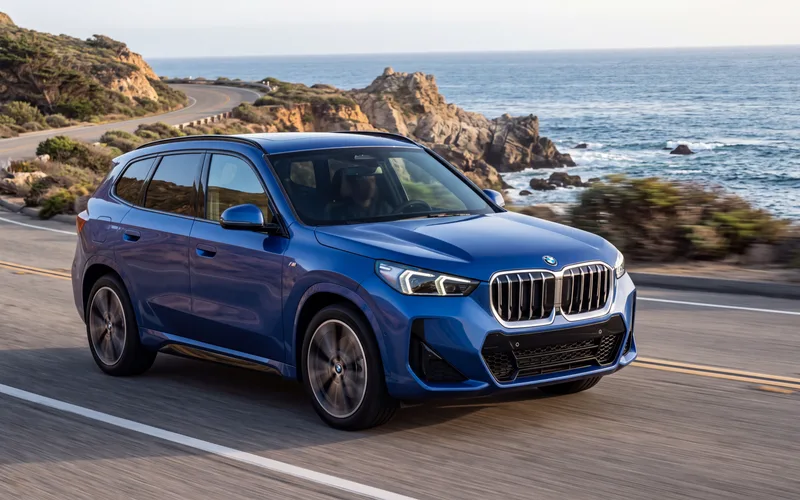 BMW X1Subcompact Luxury SUVBetter at: All-round value
The same engine, platform and all-wheel-drive hardware in a more practical, better-rated package with a 3,500-lb tow rating and stronger resale, for about $2,000 more.
Compare 2.26C
2.26C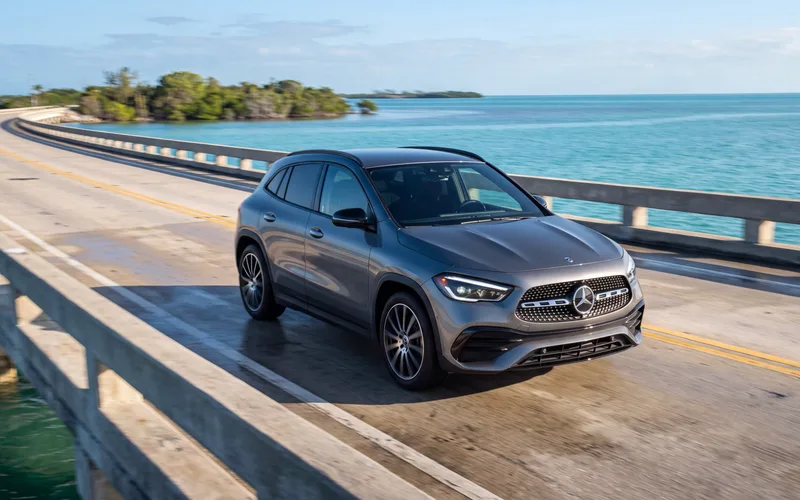 Mercedes-Benz GLASubcompact Luxury SUVBetter at: Daily comfort
Smoother in daily traffic with conventional physical controls and 28 MPG, if you can live with a 15.4 cu ft cargo hold.
Compare 2.19C
2.19C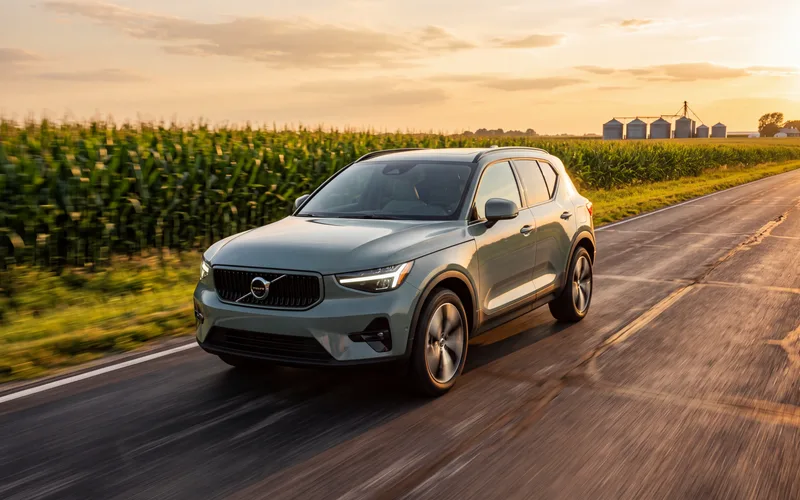 Volvo XC40Subcompact Luxury SUVBetter at: Proven safety
Real IIHS crash credentials and standard highway driver aids where the Countryman has neither, plus a tow rating.
CompareProduction history
Best fit & conditions
Higher scores mean a better fit for that use case. Learn more about use-case fit →
Subject profile
Academic Probation · NHTSA safety recalls
Oct 21, 2025Seat belts: rear/other: retractorThe housing pin in the rear (left and/or right) seat belt retractors may have been damaged during production, resulting in the retractor not locking the seat belt as intended. As such, these vehicles fail to comply to Federal Motor Vehicle Safety Standard number 209, "Seat Belt Assemblies."
Defect
BMW of North America, LLC is recalling certain 2026 2 Series Gran Coupe, X1, X2, and Mini Countryman S ALL4 vehicles. The housing pin in the rear (left and/or right) seat belt retractors may have been damaged during production, resulting in the retractor not locking the seat belt as intended. As such, these vehicles fail to comply to Federal Motor Vehicle Safety Standard number 209, "Seat Belt Assemblies."
Risk
A damaged seat belt retractor may not properly restrain an occupant during a crash, increasing the risk of injury.
Remedy
Dealers will replace the rear (left and/or right) seat belts, free of charge. Owner notification letters were mailed December 18, 2025. Owners may contact BMW customer service at 1-800-525-7417. Vehicle Identification Numbers (VINs) involved in this recall became searchable on NHTSA.gov December 12, 2025.
NHTSA campaign 25V717000 ↗1,024 vehicles potentially affected (all models in the campaign)Owners notified Dec 18, 2025Filed by BMW of North America, LLCFiled as COUNTRYMAN S ALL4Sep 17, 2025Seat belts: front: retractorThe torsion bar in both front seat belt retractors may have been damaged during production.
Defect
BMW of North America, LLC is recalling certain 2025-2026 X1 and X2, MINI Cooper Convertible, MINI Cooper, Mini Countryman S ALL4, and 2025 MINI Countryman SE ALL4 vehicles. The torsion bar in both front seat belt retractors may have been damaged during production.
Risk
A damaged seat belt retractor may not properly restrain an occupant during a crash, increasing the risk of injury.
Remedy
Dealers will replace both front seat belt retractors, free of charge. Owner notification letters were mailed November 13, 2025. Owners may contact BMW customer service at 1-800-525-7417. Vehicle Identification Numbers (VINs) will be searchable on NHTSA.gov on November 7, 2025.
NHTSA campaign 25V616000 ↗1,571 vehicles potentially affected (all models in the campaign)Owners notified Nov 13, 2025Filed by BMW of North America, LLCFiled as COUNTRYMAN S ALL4, COUNTRYMAN SE ALL4
11 recalls on other model years of the Countryman (2017–2021, 2025)
Jul 1, 2026Electronic stability control (esc) · Service brakes, hydraulic: power assist: electric: control moduleThe integrated brake (IB) system may malfunction and result in a loss of power brake assist or cause the Antilock Brake (ABS) and Dynamic Stability Control (DSC) systems to not function properly.
Defect
BMW of North America, LLC (BMW) is recalling certain 2025 Mini Cooper S, Mini Countryman S All4, X2, 2024 Rolls-Royce Spectre, 2023-2025 i7, 7 Series, X7, 2024-2025 i5, 5 Series, 2023-2024 XM, X1, 2024-2025 X6, and X5 vehicles. The integrated brake (IB) system may malfunction and result in a loss of power brake assist or cause the Antilock Brake (ABS) and Dynamic Stability Control (DSC) systems to not function properly.
Risk
A loss of power brake assist can extend the distance required to stop the vehicle. Additionally, malfunctioning ABS and/or DSC systems can cause a loss of vehicle control. Either of these scenarios can increase the risk of a crash.
Remedy
The Integrated brake system will be inspected and, if necessary, replaced, free of charge. Owner notification letters are expected to be mailed August 21, 2026. Owners may contact BMW customer service at 1-800-525-7417 or Rolls-Royce customer service at 1-877-877-3735. Vehicle Identification Numbers (VINs) involved in this recall will become searchable on NHTSA.gov beginning August 21, 2026. Vehicles previously repaired under recall 24V739 or 24V104 will need to have the new remedy completed.
NHTSA campaign 26V422000 ↗428 vehicles potentially affected (all models in the campaign)Owners notified Aug 25, 2026Filed by BMW of North America, LLCFiled as COUNTRYMAN S ALL4Sep 25, 2024Structure: bodyThe bolts that connect the front body structure to the vehicle chassis may not have been tightened properly.
Defect
BMW of North America, LLC (BMW) is recalling certain 2023-2024 228i, 228i xDrive, and 2025 MINI Countryman S ALL4 vehicles. The bolts that connect the front body structure to the vehicle chassis may not have been tightened properly.
Risk
A loose front body structure may not adequately protect occupants in a crash, increasing the risk of injury.
Remedy
Dealers will inspect and if necessary, tighten the front structure bolts, free of charge. Owner notification letters were mailed November 18, 2024. Owners may contact BMW Customer Service at 1-800-525-7417.
NHTSA campaign 24V711000 ↗7 vehicles potentially affected (all models in the campaign)Owners notified Nov 18, 2024Filed by BMW of North America, LLCFiled as COUNTRYMAN S ALL4Sep 18, 2024Electronic stability control (esc): control module · Service brakes, hydraulic: antilock/traction control/electronic limited slip: control unit/modulePlease refer to the recall report for the complete list of models. The welds in the servomotor of the integrated brake control module may break, causing a loss of power brake assist and rear brake function. In addition, the Antilock Brake System (ABS) and Dynamic Stability Control (DSC) system may not function.
Defect
BMW of North America (BMW) is recalling certain 2023-2024 X1, 2024-2025 X5, 2025 X6, 2023-2025 X7, 740i, 760i, 2024 XM, 530i, 540i, i7, 750e, X2, 2024-2025 i5, 2024 Rolls Royce Spectre, 2025 MINI Countryman S ALL4, JCW Countryman ALL4, and 2025 MINI Hardtop 2 Door (Cooper, Cooper S) vehicles. Please refer to the recall report for the complete list of models. The welds in the servomotor of the integrated brake control module may break, causing a loss of power brake assist and rear brake function. In addition, the Antilock Brake System (ABS) and Dynamic Stability Control (DSC) system may not function.
Risk
A loss of brake power assist or rear brake function can result in extended stopping distance. A loss of ABS or DSC can cause a loss of vehicle handling and control. Either of these scenarios can increase the risk of a crash.
Remedy
Dealers will replace the integrated brake system, free of charge. Owner notification letters were mailed November 13, 2024. Owners can contact BMW Customer Service at 1-800-525-7417.
NHTSA campaign 24V697000 ↗309 vehicles potentially affected (all models in the campaign)Owners notified Nov 13, 2024Filed by BMW of North America, LLCFiled as COUNTRYMAN S ALL4, JCW COUNTRYMAN ALL4May 15, 2024Air bags: side/window: thorax · Structure: interior panels: doorThe armrest support bracket on the rear side door panel may be improperly secured, allowing the armrest to detach during an air bag deployment.
Defect
BMW of North America, LLC (BMW) is recalling certain 2025 MINI Countryman S ALL4 and JCW Countryman ALL4 vehicles. The armrest support bracket on the rear side door panel may be improperly secured, allowing the armrest to detach during an air bag deployment.
Risk
A detached armrest can strike a rear seat occupant or prevent the thorax air bag from deploying properly, increasing the risk of injury.
Remedy
Dealers will replace the left and right rear side door panels, free of charge. The vehicles have not been sold from dealer inventory and therefore no owner letters will be mailed. Owners may contact BMW customer service at 1-800-525-7417.
NHTSA campaign 24V340000 ↗9 vehicles potentially affected (all models in the campaign)Owners notified May 14, 2024Filed by BMW of North America, LLCFiled as COUNTRYMANFeb 12, 2024Electronic stability control (esc) · Service brakes, hydraulic: power assist: electric: control modulePlease see the recall report for a complete list of models and model years. The integrated brake (IB) system may malfunction and result in a loss of power brake assist or cause the Antilock Brake (ABS) and Dynamic Stability Control (DSC) systems to not function properly.
Defect
BMW of North America, LLC. (BMW) is recalling certain 2023-2025 BMW, MINI, and Rolls-Royce vehicles. Please see the recall report for a complete list of models and model years. The integrated brake (IB) system may malfunction and result in a loss of power brake assist or cause the Antilock Brake (ABS) and Dynamic Stability Control (DSC) systems to not function properly.
Risk
A loss of power brake assist can extend the distance required to stop the vehicle. Additionally, malfunctioning ABS and/or DSC systems can cause a loss of vehicle control. Either of these scenarios can increase the risk of a crash.
Remedy
Dealers will replace the integrated brake system, free of charge. Owner notification letters were mailed between June and December 2024. Owners may contact BMW customer service at 1-800-525-7417 or Rolls Royce customer service at 1-877-877-3735.
NHTSA campaign 24V104000 ↗266,716 vehicles potentially affected (all models in the campaign)Owners notified Jun 28, 2024Filed by BMW of North America, LLCFiled as COUNTRYMANJul 21, 2021Seat beltsThe passenger seat belt Automatic Locking Retractor (ALR) may deactivate early, before the webbing fully retracts. As such, these assemblies fail to comply with the requirements of Federal Motor Vehicle Safety Standard number 208, "Occupant Crash Protection."
Defect
BMW of North America, LLC (BMW) is recalling certain 2021 2 Series (230i, 230i xDrive, M240i, M240i xDrive), 330e, 330e Xdrive, 4 Series Coupe (430i, 430i xDrive, M440i xDrive) M4 Coupe, M4 Competition Coupe, BMW 4 Series Convertible (430i, M440i), BMW X1 sDrive28i, xDrive28i, 2 Series Gran Coupe (228i, 228i xDrive, M235i xDrive), M2 Competition Coupe, 330i, 330i xDrive, M340i, M340i xDrive, M3, M3 Competition, 530i, 530i xDrive, 540i, 540i xDrive, MINI Hardtop 2 Door (Cooper, CooperS, JCW), X2 sDrive28i, X2 xDrive28i, X2 M35i, Z4 sDrive30i, Z4 M40i, MINI Hardtop 2 Door (Cooper SE), MINI Convertible (Cooper, Cooper S, JCW), MINI Clubman (Cooper S, Cooper S All4, JCW), MINI Countryman (Cooper, Cooper All4, Cooper S, Cooper S All4, JCW All4), Rolls Royce Ghost, MINI Countryman (Cooper S E All4), Rolls Royce Phantom, Rolls Royce Cullinan, and Toyota Supra vehicles. The passenger seat belt Automatic Locking Retractor (ALR) may deactivate early, before the webbing fully retracts. As such, these assemblies fail to comply with the requirements of Federal Motor Vehicle Safety Standard number 208, "Occupant Crash Protection."
Risk
During a crash, a seat belt retractor that does not function as intended increases the risk of injury.
Remedy
Dealers will inspect the seat belt retractors (including the seat belts) and, if necessary, replace the retractors, free of charge. Owner notification letters were mailed on September 3, 2021. Owners may contact BMW customer service at 1-800-525-7417; 1-866-825-1525 (MINI); 1-877-877-3735 (Rolls Royce); and 1-888-270-9371 (Toyota).
NHTSA campaign 21V554000 ↗21,537 vehicles potentially affected (all models in the campaign)Owners notified Sep 3, 2021Filed by BMW of North America, LLCFiled as COUNTRYMANSep 30, 2020Electrical system: propulsion system: traction batteryDebris may have entered one or more of the hybrid battery cells during their production.
Defect
BMW of North America, LLC (BMW) is recalling certain 2020-2021 530e, 530e xDrive, 530e iPerformance and X3 xDrive30e and MINI Cooper Countryman All4 SE, 2020 BMW i8, and 2021 330e, 330e xDrive, 745Le xDrive and X5 xDrive45e vehicles. Debris may have entered one or more of the hybrid battery cells during their production.
Risk
The debris could result in a short-circuit, increasing the risk of fire or injury.
Remedy
BMW will inspect and, if necessary, replace the battery module free of charge. The remedy is currently being developed. Until the remedy is completed, drivers are instructed to not charge their vehicles. Drivers are instructed to not drive in manual mode, sport mode, and to not use the shift paddles. Owners were notified of the safety risk October 23, 2020. The recall began November 24, 2020. Owners may contact BMW customer service at 1-800-525-7417.
NHTSA campaign 20V601000 ↗4,509 vehicles potentially affected (all models in the campaign)Owners notified Nov 24, 2020Filed by BMW of North America, LLCFiled as COUNTRYMANAug 18, 2020Electrical system: 12v/24v/48v battery · Electrical system: propulsion system: traction batteryLoose welding beads may form a conductive path between the hybrid battery cells which could lead to a short-circuit.
Defect
BMW of North America, LLC (BMW) is recalling certain 2021 330e and X5 xDrive45e, 2020-2021 X3 xDrive30e, and 2020 MINI Countryman SE ALL4 vehicles. Loose welding beads may form a conductive path between the hybrid battery cells which could lead to a short-circuit.
Risk
A short-circuited hybrid battery may increase the risk of a fire.
Remedy
BMW will notify owners, and dealers will inspect and, if necessary, replace the battery modules, free of charge. BMW issued owners an interim notification on October 16, 2020. Although potentially affected BMW owners received interim owner notification letters, all potentially affected BMW owner vehicles have been remedied; therefore, BMW Final owner notification letters will not be necessary. Owners may contact BMW customer service at 1-800-525-7417.
NHTSA campaign 20V490000 ↗713 vehicles potentially affected (all models in the campaign)Owners notified Oct 12, 2020Filed by BMW of North America, LLCFiled as COUNTRYMANAug 23, 2018Fuel system, gasoline: delivery: fuel pumpThese vehicles may be missing a crash protection plate near the high pressure fuel pump, which may result in a fuel leak in the event of a crash.
Defect
BMW of North America, LLC (BMW) is recalling certain 2017-2019 MINI Cooper Countryman vehicles. These vehicles may be missing a crash protection plate near the high pressure fuel pump, which may result in a fuel leak in the event of a crash.
Risk
Without the crash protection plate, in the event of a crash, the fuel pump can become damaged, causing a fuel leak and increasing the risk of a fire.
Remedy
MINI will notify owners, and dealers will install a crash protection plate, free of charge. Interim owner notification letters were mailed on October 22, 2018. Owners will receive a second notification when the repair is available. Owners may contact MINI customer service at 1-866-825-1525.
NHTSA campaign 18V557000 ↗9,953 vehicles potentially affected (all models in the campaign)Owners notified Oct 22, 2018Filed by BMW of North America, LLCFiled as COUNTRYMANJul 11, 2018Engine and engine cooling: engineThe crankshaft sensor may be equipped with incorrect firmware, preventing the sensor from properly processing input from the crankshaft reluctor ring, possibly resulting in a vehicle stall. On September 12, 2018, BMW expanded the recall to a total of 5,309 vehicles including certain 2018-2019 BMW 540d xDrive, 230i M240i, M240i xDrive, X2 sDrive28i, X2 xDrive28i, X1 sDrive28i, X1 xDrive28i, 330i, 330i xDrive, 340i, 340i xDrive, 330i xDrive Gran Turismo, 530i, 530i xDrive, 540i, 540i xDrive, 530e, 530e xDrive, 640i xDrive Gran Turismo, 330e, 2019 430i Gran Coupe, 430i xDrive Gran Coupe, 440i Gran Coupe, 440i xDrive Gran Coupe, 430i, 430i xDrive, 440i, 440i xDrive, 740i, 740i xDrive, MINI Cooper, Cooper S, JCW, MINI Countryman (Cooper, Cooper All4, Cooper S, Cooper S All4, JCW All4), and MINI Clubman (Cooper, Cooper S, Cooper All4, Cooper S All4, JCW All4) vehicles.
Defect
BMW of North America, LLC (BMW) is recalling certain 2018 BMW 540d xDrive vehicles. The crankshaft sensor may be equipped with incorrect firmware, preventing the sensor from properly processing input from the crankshaft reluctor ring, possibly resulting in a vehicle stall. On September 12, 2018, BMW expanded the recall to a total of 5,309 vehicles including certain 2018-2019 BMW 540d xDrive, 230i M240i, M240i xDrive, X2 sDrive28i, X2 xDrive28i, X1 sDrive28i, X1 xDrive28i, 330i, 330i xDrive, 340i, 340i xDrive, 330i xDrive Gran Turismo, 530i, 530i xDrive, 540i, 540i xDrive, 530e, 530e xDrive, 640i xDrive Gran Turismo, 330e, 2019 430i Gran Coupe, 430i xDrive Gran Coupe, 440i Gran Coupe, 440i xDrive Gran Coupe, 430i, 430i xDrive, 440i, 440i xDrive, 740i, 740i xDrive, MINI Cooper, Cooper S, JCW, MINI Countryman (Cooper, Cooper All4, Cooper S, Cooper S All4, JCW All4), and MINI Clubman (Cooper, Cooper S, Cooper All4, Cooper S All4, JCW All4) vehicles.
Risk
A vehicle stall can increase the risk of a crash.
Remedy
BMW will notify owners, and dealers will replace the crankshaft sensor, free of charge. The recall began September 6, 2018. Owners may contact BMW customer service at 1-800-525-7417.
NHTSA campaign 18V465000 ↗5,309 vehicles potentially affected (all models in the campaign)Owners notified Sep 6, 2018Filed by BMW of North America, LLCFiled as COUNTRYMANSep 17, 2017Trailer hitchesThe vehicles may have inadequate structure points for the trailer hitch mounting, causing the hitch to sag under to certain loads and possibly separate from the vehicle.
Defect
Curt Manufacturing LLC (Curt) is recalling certain Class 1 trailer hitches, part number 11451, sold for installation on 2016-2018 Mini Cooper Clubman and Countryman vehicles. The vehicles may have inadequate structure points for the trailer hitch mounting, causing the hitch to sag under to certain loads and possibly separate from the vehicle.
Risk
If the trailer hitch sags or separates from the vehicle, there would be an increased risk of a crash.
Remedy
Curt will notify owners, and dealers will provide a replacement hitch, free of charge. The recall began on October 20, 2017. Owners may contact Curt customer service at 1-800-798-0813.
NHTSA campaign 17E051000 ↗166 vehicles potentially affected (all models in the campaign)Owners notified Oct 20, 2017Filed by Curt Manufacturing LLCFiled as COUNTRYMAN
Source: NHTSA Office of Defects Investigation recall database, model years 2017–2026. Recalls are listed by model year as the manufacturer filed them; whether a specific car is affected depends on its VIN — check a VIN at nhtsa.gov ↗. NHTSA model names matched to this page: COUNTRYMAN, COUNTRYMAN S ALL4, COUNTRYMAN SE ALL4, JCW COUNTRYMAN ALL4.
Detailed scoring by subject
1Performance & PowertrainOne of the Countryman's weakest categories.0.85F
Volume trim is the Countryman S ALL4, using BMW's 2.0L TwinPower turbo B48 four at 241 hp — the same output as the platform-mate BMW X1 xDrive28i. The JCW ALL4 (312 hp) and dual-motor SE ALL4 EV (313 hp) sit above it.
The S ALL4's B48 makes 295 lb-ft on a broad 1,500–4,500 rpm plateau, which is what the car actually feels like off the line; the electric SE ALL4 tops the range at 364 lb-ft.
MINI's factory claim for the S ALL4 is 6.1 seconds; instrumented tests of this powertrain typically run a couple of tenths quicker, so the manufacturer figure is the conservative choice.
The B48 is a well-sorted, quiet turbo four with strong midrange and little lag once moving, but it is noticeably coarser than the segment's best under hard use and there is a beat of turbo/clutch lag from rest. Matches the BMW X1 (68) that shares the engine; the SE ALL4 EV variant is smoother still.
The 7-speed dual-clutch shifts quickly and holds gears sensibly when pushed, but shares the low-speed jerkiness and creep hesitation that reviewers flag on this transmission in parking and stop-and-go traffic. Held in line with the X1's rating for identical hardware.
MINI USA publishes no towing capacity for the Countryman and does not offer a factory trailer hitch in the US market, so a US buyer has no manufacturer-sanctioned tow rating to work with. European-market Countryman ALL4 models carry a braked rating (roughly 3,900 lbs), but that rating does not transfer to the US car.
Every 2026 Countryman sold in the US is ALL4 all-wheel drive — S ALL4, JCW ALL4 and the dual-motor SE ALL4 — with no front-drive variant to walk down to. Operation is basic on-demand/dual-motor torque split with no low range or terrain modes, which caps it below the top band.
Despite the raised-crossover styling and standard ALL4, the Countryman is a pavement car: roughly 6.9 inches of ground clearance, road-biased tires, no skid plates, lockers or dedicated off-road trim. Light snow and gravel are the realistic limit.
Three distinct choices under one nameplate — a 241 hp turbo four, a 312 hp JCW version of it, and a fully electric dual-motor SE ALL4 — which is unusually broad for a subcompact luxury SUV where most rivals sell gas only or EV only. No hybrid or PHEV is offered in the US, which keeps it out of the top band.
2Efficiency & RangeGrades below the middle of the scale.1.17D
Volume trim is the 2026 Countryman S ALL4 — 241-hp 2.0L turbo four, 7-speed DCT, standard ALL4 all-wheel drive on the third-generation U25 platform, carried over from its 2025 US launch with no powertrain change for 2026 — rated around 26 MPG combined. That is unremarkable for a subcompact crossover: the mechanically related BMW X1 xDrive28i does better because the Countryman is taller, boxier and heavier, and neither offers any hybrid assist.
City is the Countryman's weakest cycle — a turbo four with auto stop/start but no electrification, hauling AWD hardware and a roughly 3,900 lb curb weight, lands in the low 20s and near the bottom of the SUV city band alongside conventional gas crossovers rather than the hybrids that anchor the top.
The highway figure is the gas Countryman's best result — tall DCT top gears and a modest frontal area for the class put it right at the middle of the SUV highway band, a genuinely usable cruising economy even though it takes premium fuel to get there.
A roughly 14.3-gallon (54-litre) tank paired with 26 MPG combined works out near 370 miles — low-mid in the SUV band, adequate for commuting but well short of the 450-plus-mile cruisers in the class. The electric SE ALL4 is far more limited at about 212 miles of EPA range from its ~66 kWh pack.
At EPA's standard 15,000 miles a year the gas Countryman burns roughly 577 gallons, and the premium-fuel requirement pushes the bill toward $2,420 — a weak result in the SUV band and one of the clearer running-cost penalties of buying the small premium crossover rather than a mainstream hybrid one.
MINI specifies premium 91-octane for the BMW-derived 2.0L turbo four in both the Countryman S ALL4 and the JCW, a standing 50-70 cents per gallon penalty over regular that compounds the car's already mediocre mileage. No E85 or diesel option exists. Scored just below mid-band rather than at the floor because the Countryman SE ALL4 offers a cheap home-charging alternative in the very same vehicle.
3SafetyMid-pack among this car's ten categories.2.39C+
NHTSA has not published an NCAP overall rating for the third-generation (U25) Countryman; Mini's low US volume means its models are rarely selected for testing. Estimated at 4 stars from the mechanically related BMW X1 (U11), which shares the same platform, body structure and restraint system and rates 4 stars overall.
No IIHS award for the current-generation Countryman — the U25 has not been through the IIHS battery, so it carries no Top Safety Pick or TSP+ status. Scored in the middle band rather than the low band because its structural twin, the BMW X1, is a Top Safety Pick+ with Good ratings across updated moderate overlap, small overlap and updated side, which is strong evidence for the shell itself even though the Countryman has no ratings of its own.
The volume Countryman S ALL4 comes standard with Active Driving Assistant — forward collision warning with automatic emergency braking including pedestrian and cyclist detection, lane departure warning, blind-spot detection, rear cross-traffic alert and speed limit info — plus a rear camera and park distance control. Adaptive cruise with Stop & Go and lane centering are bundled into the optional Driving Assistant Plus package rather than standard, which keeps this out of the top band.
The Countryman runs BMW's current camera-plus-radar front crash prevention hardware, which rates Good on both the updated vehicle-to-vehicle and the pedestrian (day and night) IIHS tests in the X1. Scored well below the X1's 92 because the Countryman itself has no IIHS front crash prevention result — calibration and sensor placement are Mini-specific even where the hardware is shared.
Blind-spot detection and rear cross-traffic alert are standard across the 2026 Countryman range, with cross-traffic warning extended to the front on cars fitted with the Parking Assistant Plus package. Coverage is alert-led rather than actively steering the car back, so it sits just below the top band.
Lane departure warning is standard; true lane centering (Steering and Lane Control Assistant, with hands-on Traffic Jam Assist) requires the Driving Assistant Plus package. When fitted it is the well-regarded BMW system — steady and unfussy in its lane rather than ping-ponging — but making it optional on the volume trim caps the score.
Active Cruise Control with Stop & Go is a refined full-speed-range system with smooth resume and sensible gap control, and it pairs with lane centering for a competent hands-on highway assist. It is an option package rather than standard equipment on the volume S ALL4, which is the main deduction.
Mini offers no hands-free highway driving on any 2026 Countryman. BMW Group's Highway Assistant is reserved for larger BMW models and is not extended to the Mini range — the most the Countryman offers is hands-on Traffic Jam Assist within Driving Assistant Plus.
Full-LED headlights with automatic high beam are standard across the 2026 range, with adaptive matrix LED units available higher up the option list. No IIHS headlight rating exists for this generation, so a Good result across trims cannot be claimed — the older F60 Countryman's headlights rated only Marginal to Acceptable on volume trims under the legacy protocol.
The upright, boxy U25 body gives a high seating position, a deep windshield and slim front pillars — genuinely good forward and three-quarter sightlines for the class. The rear window is shallow and the D-pillars are thick, but a rearview camera is standard and surround-view is available to compensate.
The third-generation Countryman grew substantially over the outgoing car, with a sliding rear bench and wide-opening rear doors, so two child seats fit without the contortions the previous generation demanded. Two outboard LATCH positions with top tethers; three-across remains tight on a subcompact footprint, and the anchors sit recessed in the seat bight.
4Space & ComfortThe Countryman's lowest-graded category.0.78F
The U25 Countryman is a five-seat two-row SUV across every 2026 US trim (S ALL4, SE ALL4 electric, JCW ALL4); no six- or seven-seat configuration has ever been offered. Scores low only because the SUV band spans 4-8 seats and includes three-row family haulers.
The U25 rides on the same BMW FAAR platform as the X1 (U11) and grew notably taller than the outgoing F60, giving it genuinely generous front headroom for a subcompact - the boxy roofline is the packaging payoff. Figure is the published no-sunroof measurement; the optional panoramic roof costs roughly an inch.
Front legroom is merely adequate rather than expansive - the Countryman spends its 175.0-in length on rear seat and cargo space more than on front-row stretch-out room, and lands near the bottom of the SUV band which tops out at full-size rigs.
The upright tailgate and flat roof carry good headroom all the way to the second row, which is where the U25's boxy proportions pay off most against sleeker rivals like the Lexus UX and Volvo EX30.
The 106.8-in wheelbase yields a rear seat that genuinely fits adults for medium trips - a clear improvement over the F60 - and the sliding bench lets owners trade legroom against cargo. Still mid-pack against the SUV band, which spans everything up to three-row minivan-adjacent packaging.
There is no third row. The Countryman is a two-row, five-seat subcompact SUV and has never offered a third row in any generation, so this item scores in the bottom band by definition rather than by execution.
Roughly 25 cu ft behind the second row is a big step up from the old Countryman and competitive for a subcompact, but it sits right at the floor of an SUV normalization band calibrated from subcompacts up to full-size three-rows - hence the near-zero normalized score despite respectable in-class practicality.
Folding the 40/20/40 bench opens a near-flat load floor of roughly 56 cu ft - usable for a subcompact SUV, but again barely above the 55 cu ft floor of the SUV band, which reaches to 100 cu ft for full-size utilities.
Competitive everyday storage with a couple of genuinely clever touches: the sliding, reclining 40/20/40 rear bench trades legroom for cargo, and moving all controls to the circular OLED display frees an open shelf beneath the floating console. Offset by Mini's style-first cabin - modest door pockets and a small glovebox - which keeps it out of the standout band.
Standard sport seats are well-bolstered and supportive on long stints, with knit textile/Vescin upholstery and available adjustable thigh support on upper trims. The rear bench is flatter and leaves taller adults slightly knees-up, which holds this to the upper half of the mid band rather than the 80+ tier.
The U25 is the most compliant Countryman yet - the longer wheelbase takes the edge off - but Mini still tunes for go-kart body control, and on the 19- and 20-inch wheels most buyers take, broken pavement comes through firm and busy. The JCW is firmer still.
Meaningfully better isolated than the F60 it replaced, and the SE ALL4 electric is genuinely hushed at a cruise. The gas S ALL4 gives up some ground with 2.0-liter turbo drone under load and road noise on the larger wheels, so this lands as average-plus rather than segment-leading.
Dual-zone automatic climate control is standard and heated front seats plus a heated steering wheel are standard or packaged on the trims most buyers take, with remote preconditioning on the SE electric. No ventilated seats and no separate rear climate zone at any price keeps it in the mid band.
5Cost of OwnershipOne of the Countryman's weakest categories.1.12D
The U25 Countryman opens on the S ALL4 — there is no front-drive or three-cylinder entry model in the US, so the 241-hp 2.0L with standard ALL4 is the floor of the range. Even so it undercuts the mechanically related BMW X1 xDrive28i by roughly $2,000 delivered, which makes purchase price the strongest line in this vehicle's cost picture. Replaces a placeholder value.
The S ALL4 is both the entry and the volume trim, but almost nobody takes it stripped — MINI's Signature/Iconic ladder plus the near-obligatory paint, wheel and Driver Assistance packs push real transactions into the mid-$40Ks. That is a few thousand under a comparably equipped X1 and roughly level with an Audi Q3 or Mercedes GLA.
This is the Countryman's real ownership tax. It runs BMW's B48 turbo four with ALL4 hardware through a MINI dealer network with premium labor rates and a long-standing above-average repair-frequency record, and it takes premium fuel besides. Years one through three are cushioned by MINI Ultimate Care, but years four and five — after the 4-yr/50k warranty lapses — are where the cost lands, and turbo, cooling and electrical items are the recurring complaints. Slightly cheaper than the X1 ($8,200 in this dataset) on smaller consumables, but well above any mainstream subcompact crossover.
The weakest line in the category by a wide margin. MINI has ranked among the faster-depreciating US brands for years — a shrinking dealer footprint, a small and shrinking buyer pool, and well-publicised repair-cost anxiety all compress used demand. Standard AWD and the fresh U25 styling help a little, and the Countryman holds up better than the Cooper Hardtop, but it still gives up roughly six points of retention to the X1 and lands near the bottom of the SUV band. The electric SE ALL4 depreciates faster still.
MINI follows BMW Group terms — a 4-year/50,000-mile New Passenger Car Limited Warranty. Mid-band: a year longer than the mainstream 3/36 standard and matching every German rival in this segment, but the 50,000-mile cap bites for high-mileage drivers and it is nowhere near Genesis or Hyundai/Kia.
MINI publishes no powertrain warranty extending past the bumper-to-bumper term, so the B48 engine, DCT and ALL4 hardware all fall out of coverage at 4 years/50,000 miles. Against a band that expects 5–10 years this sits at the floor, and it compounds the maintenance-cost problem above: the expensive components are unprotected exactly when they start to fail. Only the electric SE ALL4's high-voltage battery gets the federally mandated 8-year/100,000-mile coverage.
MINI Ultimate Care covers roughly 3 years/36,000 miles of scheduled maintenance — oil services, filters, brake fluid — alongside 4 years of unlimited-mileage roadside assistance and a MINI Connected services trial, with the electric SE ALL4 adding a public-charging credit. That is a genuinely valuable package in a segment where Audi and Mercedes have largely dropped included maintenance, and it neutralises the first three years of premium-brand dealer rates. Held below the top band because the term is three years rather than multi-year-plus, and because it expires a year before the warranty does.
$45,500 volume-trim price minus its estimated resale value after 5 years (45% retained, or about $20,475) leaves about $25,025 in depreciation. Add the projected $7,800 in 5-year maintenance and repairs, and owning this vehicle for 5 years costs about $32,825 in total.
6Reliability & QualityMid-pack among this car's ten categories.2.32C+
Mixed signals that land mid-band. The U25 Countryman is only in its second US model year, so owner-survey depth is thin, but it shares its FAAR platform, B48 engine and 7-speed DCT with the BMW X1 (U11), whose predicted reliability has run average-to-above-average — a meaningful hardware advantage over the Cooper Hardtop. Offsetting that, the Countryman is the most electronics-dense Mini yet on the first-generation MINI Operating System 9 stack, and Mini's model-level CR predicted-reliability history sits at or below average rather than above it.
Mini is a mid-pack dependability brand — not a leader and not a problem brand. Consumer Reports brand report cards have given Mini respectable top-half finishes in several recent years, but J.D. Power Vehicle Dependability results have typically sat at or slightly below the industry average, nowhere near the consistent top-5 the 80+ band requires and clearly behind parent BMW's stronger recent luxury finishes (BMW scored 77 on this item). The long-run record still carries drag from the early Prince-engine era, partly offset by the shift to BMW-group modular hardware.
Typical activity rather than a clean sheet. The U25 generation is young enough that its own campaign record is short, but it inherits BMW-group component exposure — Mini has repeatedly been swept into broad BMW Group supplier campaigns covering braking-system electronics, airbag suppliers and fuel-system parts — and the shared B48 driveline carries well-documented TSB themes (oil-filter-housing and coolant gasket leaks, direct-injection carbon buildup). Nothing systemic or catastrophic has emerged on this generation, which keeps it in the average band rather than below it.
Proven but not bulletproof. The Countryman S/JCW use BMW's 2.0L B48 turbo four, in production since 2014 across millions of BMW and Mini vehicles with a well-understood high-mileage record — the strongest powertrain provenance in the Mini lineup — though it carries recognized oil-filter-housing gasket, coolant leak and carbon-buildup weak points. The softer link is the 7-speed dual-clutch that replaced the torque-converter automatic in this generation, which has less long-term data behind it. The electric Countryman SE's dual-motor drive and roughly 66 kWh pack are BMW-group current-generation hardware with no red flags but little accumulated mileage.
A genuine strength, held back by the premium price bar. The cabin leads with a 9.4-inch circular OLED display, a knitted recycled-textile dashboard and door treatment in place of leather, and retained physical toggle switchgear — a distinctive, well-executed material story reviewers consistently single out. It falls short of class-leading because richness is not uniform: the larger SUV body exposes more ordinary hard plastic in the lower doors, console and rear cabin than the Cooper Hardtop does, and the Premium price class puts it against Audi Q3 and Volvo interiors.
Above segment average on assembly, pulled back by software. This is the first Countryman built at BMW Group Plant Leipzig rather than the VDL Nedcar contract plant, and BMW-plant assembly consistency is a real advantage — tight panel fit and little rattle criticism. The offset is MINI Operating System 9: a first-generation Android-based stack that has drawn glitch and lag complaints, with climate and core functions migrated into the touchscreen and no standard instrument cluster — exactly the pattern that penalizes vehicles in initial-quality measurement.
The clearest ownership weakness, and a brand-level fact rather than a model one. MINI USA operates on the order of 100-110 franchised dealers nationwide — an order of magnitude thinner than mainstream rivals and well under parent BMW's roughly 350 points — so buyers outside major metros can face a long drive for warranty and EV-certified service work. Most Mini service points are co-located with or affiliated to BMW facilities, which keeps technician training and facility quality respectable and holds this out of the bottom band, but coverage density alone caps it near the bottom of the segment set.
Mini carries BMW-grade parts pricing without BMW-grade parts logistics. Published repair-cost trackers have long placed Mini's average annual repair cost well above the all-brand average with an above-average rate of major repairs, and Mini's labor rates follow BMW's. The Countryman does better than the bespoke Cooper on one axis — heavy component sharing with the BMW X1 broadens the parts pool — but ALL4 all-wheel-drive hardware and the SE's high-voltage components are expensive and largely dealer-channel. An active Mini enthusiast aftermarket keeps this out of the worst band.
7Technology & InfotainmentThe Countryman's best-graded category.2.86B-
The third-generation Countryman (U25 gas / U25 EV, carried into MY2026 unchanged) uses MINI's signature 9.4 in (240 mm) circular OLED as the sole center display on every trim; there is no larger option. Measured on the diagonal it is small for the segment, and the round format wastes usable area versus a rectangular screen of the same diagonal.
MINI Operating System 9 (Android Automotive-based) is quick and the OLED is vivid, and MINI kept a physical toggle bar for ignition, gear selection, parking brake, volume and Experience Modes. Reviewers consistently ding the menu depth, the climate controls living on-screen, and the round shape squeezing map and CarPlay content — charming but fussier than the rectangular systems in the X1 and Q3.
Wireless Apple CarPlay and wireless Android Auto are standard on every US Countryman trim, with no wired-only base configuration. Held below the 90s because the circular display renders projection in a letterboxed area rather than using the full screen.
The MINI Intelligent Personal Assistant is the BMW Group natural-language system (with the 'Spike' avatar) and handles conversational climate, navigation and media requests well. Native connected navigation includes live traffic and, on the Countryman SE, EV charging-stop route planning — good, though many owners still default to phone projection.
A Harman Kardon premium system is offered on upper Countryman trims/packages and is a clear step up from the standard setup, but it is a mid-tier branded option rather than a Bowers & Wilkins or Burmester-class flagship. The base system is adequate without being memorable.
The current-generation Countryman deletes the instrument cluster entirely — there is no display of any kind behind the steering wheel. Driver information comes only from the head-up display and the central round OLED, so on this item's terms (a configurable digital gauge display) the car scores in the low band by design. The HUD is credited separately at 7.3.3.
The Countryman uses BMW Group Remote Software Upgrade, which delivers whole-vehicle over-the-air updates — infotainment, driver assistance and vehicle functions — rather than maps-only patches, and has added features to OS 9 cars post-delivery.
The MINI App covers remote lock/unlock, vehicle locator, cabin preconditioning, send-to-car destinations and — on the Countryman SE — charge scheduling and status, and Digital Key Plus adds UWB phone-as-key with passive entry. A polished BMW-derived app; some connected services move to a paid subscription after the included trial.
USB-C ports front and rear plus a wireless charging shelf beneath the floating center display cover the basics for a five-seat SUV, but there is no household AC outlet and the port count is modest against rivals that spread fast USB-C more generously.
Comfort Access keyless entry with push-button start, plus Digital Key Plus (UWB) letting a compatible iPhone, Apple Watch or Samsung phone act as the key and be shared with other drivers. The Countryman also offers a power tailgate with hands-free operation, which the hatch and convertible do not.
Rear camera and front/rear park distance control are standard, with a surround-view camera, Parking Assistant and Reversing Assistant (retraces the last stretch of reverse travel) available in the parking package. Image quality is good and the automation is genuinely useful; the best kit sits above the volume trim.
Because the Countryman has no instrument cluster, MINI fits a head-up display across the range as the primary driver display — speed, navigation, assistance and media information. It is a combiner (flip-up glass) unit rather than a large windshield-projected image, which caps it short of the very top of the band, but standard fitment on the volume trim is a real advantage.
8Use-Case FitMid-pack among this car's ten categories.1.92C-
The U25's boxy body is a genuine family asset — square rear door apertures, a tall roofline and a high H-point make dropping a seat onto the bench easier than in the sloped-roof Q3 or GLA, and the sliding/reclining 40/20/40 rear bench is a flexibility trick none of its rivals offer, letting you buy back legroom for a rear-facing seat or claw it back for cargo. 25.3 cu ft behind the second row swallows a full-size stroller plus bags, beating the Q3 (23.7), GLA (15.4) and XC40 (20.7). Held below the BMW X1's 78 because the Countryman has no IIHS LATCH ease-of-use rating of its own, the two outboard anchors sit recessed in the seat bight, and three-across on a 175-in footprint is still a squeeze.
Two things keep this in the middle band. First, the U25 Countryman carries no crash-test credentials of its own — neither NHTSA nor IIHS has published ratings for this generation, so a family shopping on safety has nothing to verify beyond the fact that the structural twin BMW X1 is a Top Safety Pick+. Second, the equipment split: Active Driving Assistant (AEB with pedestrian and cyclist detection, lane departure warning, blind-spot detection, rear cross-traffic alert, rear camera, park distance control) is standard on every trim, but adaptive cruise with Stop & Go and lane centering sit inside the optional Driving Assistant Plus package — exactly the 'key features cost extra' case the 50-79 band describes. Well below the X1's 88 and Volvo XC40's 86, both of which pair real IIHS awards with standard highway ADAS.
Better than most of the subcompact luxury set on the things that matter with the family aboard — the sliding bench and 25.3 cu ft mean you can carry four people's luggage without folding anything, and 38.6 in of rear headroom under the flat roof beats the sloped-roof rivals. What limits it is endurance rather than space: MINI still tunes for body control, so on the 19- and 20-inch wheels most buyers take the ride stays firm and busy over broken pavement for hours at a time, the rear bench is flat and leaves taller adults slightly knees-up, and there is no separate rear climate zone or rear entertainment at any price. Lands just above the XC40 and Q3, clearly below the X1's more compliant, roomier second row.
The fundamentals are good — a 175.0-in footprint, light quick steering, a commanding upright seating position with deep windshield and slim front pillars, and 295 lb-ft from 2.0 liters that makes the car feel effortless off the line, with standard ALL4 for bad weather. Three things keep it out of the 80s: BMW Group's 7-speed dual-clutch retains the low-speed shuffle reviewers flag on the shared X1, the firm damping makes urban potholes an event, and the Countryman deletes the instrument cluster and physical climate controls entirely in favor of the round OLED display, so routine adjustments become a menu dive in traffic. Below the X1 (72), which shares the drivetrain but not the all-or-nothing interface.
26 MPG combined on required premium works out to roughly $2,420 a year at 15,000 miles, which is unremarkable, and the bigger problem sits behind it: MINI's above-average repair frequency, BMW-tier dealer labor and a 4-yr/50,000-mi warranty with no separate powertrain term push five-year maintenance and repair to around $7,800. Three years of complimentary scheduled maintenance genuinely cushions the early ownership period, and buyers with home charging can sidestep the fuel line entirely by taking the SE ALL4 electric — a hedge the XC40 lost when the EX40 split off. Net: below the X1 and GLA, roughly level with the Q3.
This is the Countryman's strongest use-case argument. At 175.0 in it is one of the shortest SUVs on sale, and the boxy body with its squared-off corners and tall upright glasshouse means you can place all four of them precisely — the forward and three-quarter sightlines are genuinely good for the class. A rear camera and park distance control are standard. It sits below the X1 (87) and GLA (88) rather than with them because the shallow rear window and thick D-pillars restrict the over-shoulder view, surround-view and automated parking cost extra via Parking Assistant Plus rather than coming standard as on the 2026 X1, and the DCT hesitates when creeping in and out of a tight space.
MINI does not rate the Countryman for towing in the US at all — no factory hitch, no published capacity — which puts it behind even the Audi Q3's modest 1,500 lb and far behind the 3,500-lb X1 and XC40. There is no bed, no payload headroom worth quoting, no work-oriented trim, and a premium-fuel turbo paired to a dual-clutch is not the drivetrain you would choose for repeated heavy loads. It sits above the very bottom of the low band only because the cargo hold is a real asset for light trade duty: 25.3 cu ft behind the bench, 56.3 with it folded flat, more than the Q3 manages either way. Corrects a placeholder that had scored this vehicle as mid-band work-capable, which the zero tow rating cannot support.
Everything about the Countryman is chosen for style and driving feel rather than abuse tolerance: knit textile and Vescin upholstery with no wear-friendly or rubber-floor option, a B48 turbo four on premium fuel, a dual-clutch transmission and ALL4 hardware that add complexity rather than robustness, and a documented above-average repair-frequency record through a shrinking dealer network. MINI has no commercial variant and no US fleet presence to establish a track record under hard use. Scored just below the mechanically identical X1 (40) because the same hardware carries a worse repair-cost history and none of BMW's fleet familiarity under the MINI badge.
What exists is consumer gear management, not work provision. Roof rails and MINI's accessory catalog of carriers, boxes and reversible cargo liners cover the rack side reasonably, and there are cargo-floor tie-downs, but there is no 120V household outlet anywhere in the range, no washable-surface or rubber-floor package, and — because MINI publishes no US tow rating — no factory hitch to hang a cargo tray or receiver accessory from, which is the one provision every rival here does have. No commercial upfit ecosystem exists around the Countryman at all.
A competent tourer with two clear endurance limits. Range is fine — a 14.3-gallon tank at 31 MPG highway is roughly 440 miles between stops — and the sport seats are well-bolstered with available thigh-support extension, with cabin isolation meaningfully improved over the outgoing F60. But the firm damping that makes the Countryman fun is the same thing that wears on you over six hours of expansion joints, and adaptive cruise with lane centering is an option package rather than standard equipment, so the fatigue-reduction tech most rivals now include is missing from the volume car as delivered. The SE ALL4 electric is quieter still but its ~212-mile range makes it the worse road-tripper of the two.
Squarely the 'handles gravel roads and bike racks fine' band. ALL4 all-wheel drive is standard on every US trim rather than optional as on the Q3 and GLA, which is a real advantage for trailheads and snow, and the tall body with roof rails takes a box, bikes or skis without complaint. But ground clearance is passenger-car territory at roughly 6.6-6.9 in, the tires are road-biased, and there is no low range, locker or off-road drive mode. The deduction that keeps it below the X1 is the missing tow rating: with no US hitch, hitch-mounted bike racks and small trailers — the two things adventure buyers most often want from a crossover — are simply off the table.
Near the top of the subcompact luxury set for swallowing gear. 25.3 cu ft behind the bench expanding to 56.3 with the 40/20/40 folded comfortably beats the Q3 (23.7/48), GLA (15.4/50.5) and XC40 (20.7), and the hold itself is unusually usable — tall and square under the upright tailgate, near-flat when folded, with the sliding bench letting you trade the last few inches of rear legroom for cargo depth. Roof rails handle what will not fit inside. Just below the X1's 80 on slightly less volume and, more importantly, because the absence of a US hitch rules out hitch cargo trays and receiver-mounted carriers.
9Driving ExperienceOne of the Countryman's strongest categories.2.85B-
The third-generation (U25) Countryman is grippy and composed with quick turn-in and secure ALL4 traction, but it is several inches longer and a few hundred pounds heavier than the outgoing F60, so it leans more and no longer delivers the go-kart agility MINI's marketing promises. Lands just under the mechanically-related BMW X1 (80), which carries similar hardware with a lower roof and center of gravity.
MINI fits a quicker, more heavily weighted rack than the X1 and the Countryman turns in with real precision, but the electric assist is filtered and feedback is largely synthetic — sharp rather than communicative. Rated above the X1 (72) for the quicker ratio and Go-Kart mode weighting, below the class-leading Alfa Tonale (82).
Firm, linear pedal with strong initial bite from BMW-sourced hardware, and the SE ALL4 EV blends regen into friction braking cleanly with a one-pedal option. Marked a touch below the X1 (82) because the Countryman's extra mass lengthens stops on a comparable brake package.
The 241-hp B48 turbo four pulls hard from low revs and tips in crisply, but the 7-speed dual-clutch inherits the low-speed shunt and creep hesitation reviewers flag on this gearbox in parking and stop-and-go traffic. Held just under the X1 (74) because MINI's sportier throttle mapping makes that low-speed hesitation more noticeable.
The B48 is subdued at a cruise but turns thrashy past 5,000 rpm, and the Countryman carries less sound deadening than its BMW sibling while piping synthesized powertrain sound through the MINI Experience Modes — characterful to some, artificial to others. Below the X1 (72) on isolation; the SE ALL4 EV is materially quieter.
The U25 Countryman's longer body and ~106-inch wheelbase give it a turning circle marginally tighter than the platform-mate X1's 38.7 ft but well wide of the subcompact norm — the old F60's ~37.4 ft is gone with the size increase.
The seating position is high and commanding with good forward sightlines and a wide seat/wheel adjustment range, but MINI deleted the instrument cluster entirely — road speed lives on an optional head-up display — and routes climate, drive modes and most vehicle settings through the round 9.4-inch OLED touchscreen, leaving only a small toggle bar of physical switches. That is a genuine daily-use penalty versus the X1 (72) and the button-rich GLA (76).
Even grown up, the Countryman keeps more personality than the segment average — eager throttle in Go-Kart mode, quick steering, distinctive design and cabin theater — and the 312-hp JCW ALL4 is genuinely quick. It is enjoyable rather than special in volume S ALL4 form, so it sits just above the X1 (76) and below the Tonale (80).
10Value & Market PositionOne of the Countryman's strongest categories.2.63C+
The volume S ALL4 includes ALL4 all-wheel drive, the 9.4-inch circular OLED touchscreen with MINI Operating System 9 and built-in navigation, wireless Apple CarPlay/Android Auto, LED headlights, heated front seats, dual-zone climate, power tailgate and a panoramic moonroof at the Signature entry point — content that Mercedes and Volvo still charge for on a GLA or XC40. It stops short of the top band because the fuller driver-assistance suite (Driving Assistant Plus), head-up display, adaptive dampers and Harman Kardon audio all remain paid upgrades.
At roughly $40–41K delivered the S ALL4 carries the same 241-hp B48 turbo four and AWD hardware as a BMW X1 xDrive28i for around $2K less, which is real content-for-money inside the subcompact luxury class. Working against it: rear-seat and cargo space that trail the X1 and GLB at the same price, required premium fuel, above-average MINI repair costs and soft residuals, plus 2026 tariff pressure on a Leipzig-built import — so it lands as fair value, not a bargain.
Three powertrain paths (S ALL4 gas, JCW ALL4 hot version, SE ALL4 dual-motor electric) crossed with the Signature / Signature Plus / Iconic tiers, on top of MINI's unusually deep personalization menu of roof and mirror colors, wheel designs and interior Experience Modes, gives buyers more ways to configure the car than most rivals. The gap is at the bottom: the US never gets the cheaper 1.5T Countryman C sold in Europe and there is no hybrid, so the range effectively starts at a $40K AWD S. The SE's continued US availability for 2026 is uncertain after the federal EV credit and its lease pass-through lapsed in late 2025.
The Countryman is MINI's US volume leader and the third generation lifted its share of the brand's mix, but in absolute terms it is a low-volume niche play — roughly low-teens thousands of units a year against a BMW X1 selling several times that, from a MINI brand that has fallen from its ~66K-unit 2013 US peak to around 30K. Stable rather than collapsing, which keeps it off the floor of the band.
MINI carries a genuinely affectionate, highly distinctive brand identity with an unusually loyal repeat-buyer base, and BMW Group ownership underwrites the engineering credibility. It falls short of the top band because MINI reads as a lifestyle/character brand rather than a status one — it does not confer the badge premium of BMW, Mercedes or Lexus at the same price, and historically weak resale keeps the image from fully translating into value protection.
Low-volume premium subcompacts sitting on dealer lots generally transact under MSRP, and MINI Financial Services has consistently run supported lease and APR programs on the Countryman — good news for a buyer willing to negotiate. Two things cap it: the electric SE lost its main lever when the federal EV credit and its lease pass-through expired at the end of September 2025, and 2026 tariff costs on a German-built import cut into how much margin MINI has to give back.
2026 is only the second US model year of the third-generation U25 Countryman, which arrived for 2025 on a new BMW-shared platform with MINI Operating System 9, the circular OLED interface and a first-ever fully electric Countryman variant. Production also moved to BMW's Leipzig plant with this generation. Redesign risk for a 2026 buyer is essentially nil; it misses the very top only because the generation is no longer brand-new.
Reviews of the U25 Countryman are solid but qualified: critics consistently credit the design, cabin materials, standard AWD and the jump in refinement and rear-seat room, then dock it for burying climate and vehicle functions in the circular OLED screen, for growing heavier and less playful than MINI's go-kart reputation promises, and for pricing that runs into the BMW X1 it is built alongside. It is well regarded but rarely the winner when the buff books line it up against the X1, Q3 or GLB, and it has not taken a major US award such as NACTOY or a Car and Driver 10Best slot.