

The verdict
A struggling compact suv, strong on ownership and held back by performance.
The 2026 Outlander sells one thing no other mainstream compact SUV offers: a standard third row, in a $31,740 package backed by a 10-year/100,000-mile powertrain warranty and a cabin that looks like it costs more than it does. What you trade for that is pace and polish — the new 174-hp 1.5-liter turbo takes 8.4 seconds to reach 60 mph, drones under load, and returns just 27 MPG combined with all-wheel drive, which is ordinary for a gas SUV and poor for anything wearing a hybrid badge. Cargo space is the other casualty: 30.6 cu ft behind the second row trails a CR-V by nearly nine, and only 10.9 cu ft survives with all seven seats up. Buy it for the seats, the warranty and the discounts; skip it if you want the third row to be genuinely usable or the resale value to hold at 52% after five years.
Jump to scoresStrengths
- Best-in-class warranty and included maintenance
- Three rows standard — in a compact SUV
- Big-screen tech standard on the cheapest trim
What holds it back
- The new engine is slow and loud
- Cargo space is small for the size of the car
- Mild-hybrid fuel economy that misses on both counts
Top alternatives
Cars shoppers cross-shop with the Mitsubishi Outlander 2.13C
2.13C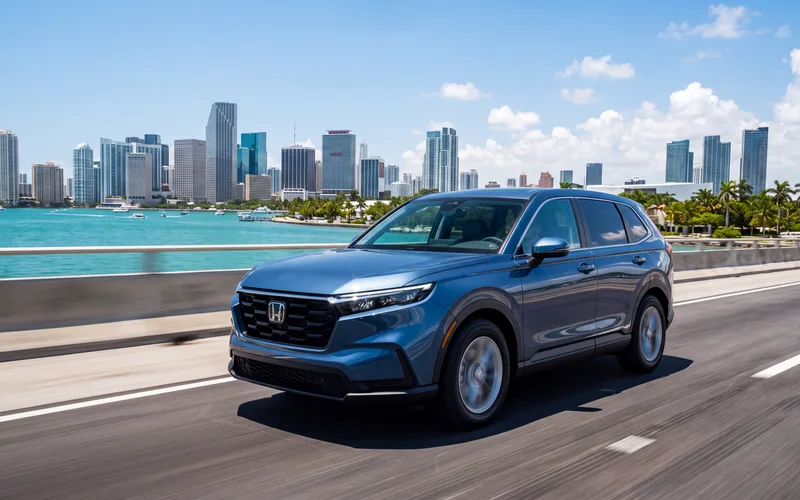 Honda CR-VCompact SUVBetter at: Cargo & refinement
If you can live with five seats, the CR-V gives you far more cargo room, a 40 MPG hybrid and much stronger resale for a modest price premium.
Compare 2.44C+
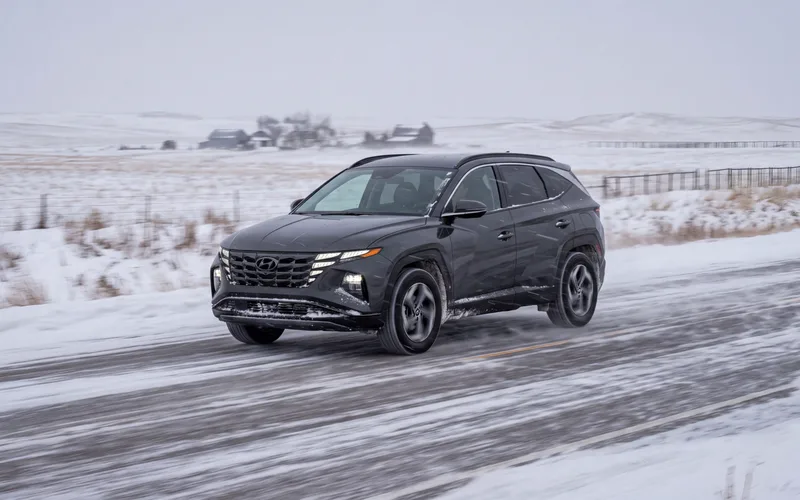 Hyundai TucsonCompact SUVBetter at: Value with polish
Matches the Outlander's warranty pitch and beats it on free maintenance while offering a real hybrid and a quieter, more polished powertrain.
Compare 2.56C+
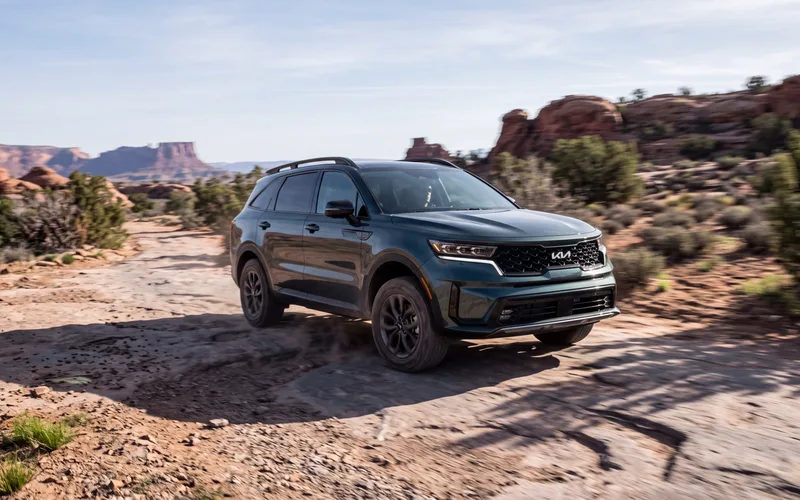 Kia SorentoMid-Size SUVBetter at: Usable third row
The next step up for anyone who needs a third row that adults can actually sit in, plus 3,500 lbs of towing and hybrid or PHEV options.
CompareHow it's evolved
10 scored model years · 2017–2026
Subject scores by year
Hover or tap a score to see what moved it versus the year before. A corner mark flags a big swing.
| Year | Performance | Efficiency | Safety | Space | Cost | Reliability | Tech | Use-case | Driving | Value |
|---|---|---|---|---|---|---|---|---|---|---|
| 2026 | 35 | 58 | 63 | 60 | 76 | 59 | 72 | 62 | 59 | 67 |
| 2025 | 33 | 53 | 69 | 59 | 79 | 59 | 67 | 61 | 61 | 65 |
| 2024 | 30 | 52 | 65 | 60 | 81 | 62 | 55 | 56 | 58 | 64 |
| 2023 | 30 | 52 | 65 | 58 | 75 | 58 | 51 | 55 | 56 | 63 |
| 2022 | 27 | 52 | 82 | 56 | 72 | 51 | 50 | 54 | 54 | 61 |
| 2021 | 28 | 47 | 59 | 41 | 73 | 52 | 38 | 52 | 49 | 47 |
| 2020 | 29 | 54 | 51 | 50 | 68 | 50 | 33 | 48 | 49 | 46 |
| 2019 | 28 | 61 | 59 | 49 | 73 | 50 | 32 | 44 | 49 | 51 |
| 2018 | 30 | 54 | 49 | 48 | 72 | 50 | 28 | 50 | 53 | 55 |
| 2017 | 21 | 55 | 56 | 53 | 82 | 53 | 27 | 48 | 59 | 62 |
Compare two years
Best fit & conditions
Higher scores mean a better fit for that use case. Learn more about use-case fit →
Subject profile
Academic Probation · NHTSA safety recalls
Aug 25, 2026Back over prevention: softwareDue to improper software programming, the Alliance In-Vehicle Infotainment (A-IVI) system may fail to display the rearview camera image when the vehicle is placed in reverse. As such, these vehicles fail to comply with the requirements of Federal Motor Vehicle Safety Standard number 111, "Rear Visibility."
Defect
Mitsubishi Motors North America, Inc. (MMNA) is recalling certain 2025-2026 Outlander and 2026 Outlander PHEV vehicles. Due to improper software programming, the Alliance In-Vehicle Infotainment (A-IVI) system may fail to display the rearview camera image when the vehicle is placed in reverse. As such, these vehicles fail to comply with the requirements of Federal Motor Vehicle Safety Standard number 111, "Rear Visibility."
Risk
A rearview image that does not display properly reduces the driver's view behind the vehicle, increasing the risk of a crash.
Remedy
Dealers will update the A-IVI software, free of charge. Owner notification letters are expected to be mailed September 24, 2026. Owners may contact MMNA customer service at 1-888-648-7820. MMNA's number for this recall is SR-26-002. Vehicle Identification Numbers (VINs) involved in this recall will become searchable on NHTSA.gov on September 9, 2026.
NHTSA campaign 26V549000 ↗Manufacturer no. SR-26-00267,146 vehicles potentially affected (all models in the campaign)Owners notified Sep 24, 2026Filed by Mitsubishi Motors North America, Inc.Filed as OUTLANDER, OUTLANDER PHEV
15 recalls on other model years of the Outlander (2017–2025)
Apr 20, 2026Structure: body: hatchback/liftgate: support device/strutThe liftgate gas spring cylinders may corrode and lose pressure, which can result in a gas spring cylinder rupture or the liftgate falling unexpectedly.
Defect
Mitsubishi Motors North America, Inc. (MMNA) is recalling certain 2018-2022 Outlander PHEV and 2014-2020 Outlander vehicles. The liftgate gas spring cylinders may corrode and lose pressure, which can result in a gas spring cylinder rupture or the liftgate falling unexpectedly.
Risk
A gas spring cylinder rupture or a liftgate falling unexpectedly can increase the risk of injury.
Remedy
MMNA will replace the left and right liftgate gas springs, free of charge. Owner notification letters were mailed June 17, 2026. Owners may contact MMNA customer service at 1-888-648-7820. MMNA's number for this recall is SR-26-001. Vehicle Identification Numbers (VINs) involved in this recall will be searchable on NHTSA.gov June 3, 2026. This recall expands previous NHTSA recall number 25V507.
NHTSA campaign 26V252000 ↗Manufacturer no. SR-26-001108,046 vehicles potentially affected (all models in the campaign)Owners notified Jun 17, 2026Filed by Mitsubishi Motors North America, Inc.Filed as OUTLANDER, OUTLANDER PHEVAug 7, 2025Structure: body: hatchback/liftgate: support device/strutThe liftgate gas spring cylinders may corrode and lose pressure, which can result in a gas spring cylinder rupture or the liftgate falling unexpectedly.
Defect
Mitsubishi Motors North America, Inc. (MMNA) is recalling certain 2018-2022 Outlander PHEV and 2014-2020 Outlander vehicles sold and/or currently registered in Alaska, Connecticut, Delaware, District of Columbia, Illinois, Indiana, Iowa, Kansas, Kentucky, Maine, Maryland, Massachusetts, Michigan, Minnesota, Missouri, North Dakota, Nebraska, New Hampshire, New Jersey, New York, Ohio, Pennsylvania, Rhode Island, South Dakota, Utah, Vermont, West Virginia, and Wisconsin. The liftgate gas spring cylinders may corrode and lose pressure, which can result in a gas spring cylinder rupture or the liftgate falling unexpectedly.
Risk
A gas spring cylinder rupture or a liftgate falling unexpectedly can increase the risk of injury.
Remedy
MMNA will replace the left and right liftgate gas springs, free of charge. Owner notification letters were mailed October 6, 2025. Owners may contact MMNA customer service at 1-888-648-7820. MMNA's number for this recall is SR-25-002
NHTSA campaign 25V507000 ↗Manufacturer no. SR-25-002121,529 vehicles potentially affected (all models in the campaign)Owners notified Oct 6, 2025Filed by Mitsubishi Motors North America, Inc.Filed as OUTLANDER, OUTLANDER PHEVJun 2, 2025Back over prevention: softwareDue to a software error in the in-vehicle infotainment system (A-IVI), the rearview camera image may freeze, or not appear on the display. As such, these vehicles fail to comply with the requirements of Federal Motor Vehicle Safety Standard (FMVSS) number 111, "Rear Visibility."
Defect
Mitsubishi Motors North America, Inc. (Mitsubishi) is recalling certain 2022-2024 Outlander and 2023-2025 Outlander PHEV vehicles. Due to a software error in the in-vehicle infotainment system (A-IVI), the rearview camera image may freeze, or not appear on the display. As such, these vehicles fail to comply with the requirements of Federal Motor Vehicle Safety Standard (FMVSS) number 111, "Rear Visibility."
Risk
A rearview image that does not display properly reduces the driver's view of what is behind the vehicle, increasing the risk of a crash.
Remedy
Dealers will update the A-IVI software, free of charge. Owner notification letters are expected to be mailed June 30, 2025. Mitsubishi's number for this recall is SR-25-001. This recall replaces and expands previous NHTSA recall number 23V345. Vehicles previously repaired under recall 23V345 will need to have the new remedy completed.
NHTSA campaign 25V369000 ↗Manufacturer no. SR-25-001198,940 vehicles potentially affected (all models in the campaign)Owners notified Jun 30, 2025Filed by Mitsubishi Motors North America, Inc.Filed as OUTLANDER, OUTLANDER PHEVJun 6, 2023Back over prevention: display functionDue to a software error in the in-vehicle infotainment system (A-IVI), the backup camera rearview image may not appear on the display. As such, these vehicles fail to comply with the requirements of Federal Motor Vehicle Safety Standard number 111, "Rear Visibility."
Defect
Mitsubishi Motors North America, Inc. (MMNA) is recalling certain 2022-2023 Outlander and 2023 Outlander PHEV vehicles. Due to a software error in the in-vehicle infotainment system (A-IVI), the backup camera rearview image may not appear on the display. As such, these vehicles fail to comply with the requirements of Federal Motor Vehicle Safety Standard number 111, "Rear Visibility."
Risk
A rearview camera that does not display an image can reduce the driver's rear view, increasing the risk of a crash or injury.
Remedy
Dealers will update the A-IVI software, free of charge. Owner notification letters were mailed June 20, 2023. Owners may contact MMNA customer service at 1-888-648-7820. MMNA's number for this recall is SR-23-001. This recall was replaced by NHTSA recall number 25V369.
NHTSA campaign 23V345000 ↗Manufacturer no. SR-23-00189,907 vehicles potentially affected (all models in the campaign)Owners notified Jun 20, 2023Filed by Mitsubishi Motors North America, Inc.Filed as OUTLANDER, OUTLANDER PHEVJul 8, 2022Back over prevention: display functionThe rearview camera may not display the rearview image due to a software error. As such, these vehicles fail to comply with the requirements of Federal Motor Vehicle Safety Standard number 111, "Rear Visibility."
Defect
Mitsubishi Motors North America, Inc. (MMNA) is recalling certain 2022 Outlander vehicles. The rearview camera may not display the rearview image due to a software error. As such, these vehicles fail to comply with the requirements of Federal Motor Vehicle Safety Standard number 111, "Rear Visibility."
Risk
An inoperable rearview camera display reduces the driver's rear view, increasing the risk of a crash.
Remedy
Dealers will update the rearview camera software, free of charge. Owner notification letters were mailed August 1, 2022. Owners may contact MMNA customer service at 1-88-648-7820. MMNA's number for this recall is SR-22-003. This recall was replaced by NHTSA recall number 25V369.
NHTSA campaign 22V470000 ↗Manufacturer no. SR-22-00356,080 vehicles potentially affected (all models in the campaign)Owners notified Aug 1, 2022Filed by Mitsubishi Motors North America, Inc.Filed as OUTLANDERMay 13, 2022Seat belts: front: retractor · Seat belts: rear/other: retractorThe Automatic Locking Retractor (ALR) in the right front, second-row right, and second-row left seat belt assemblies may deactivate before the seat belts are fully retracted, which can result in an unsecured child restraint system. As such, these vehicles fail to comply with the requirements of Federal Motor Vehicle Safety Standard number 208, "Occupant Crash Protection."
Defect
Mitsubishi Motors North America, Inc. (MMNA) is recalling certain 2022 Outlander vehicles. The Automatic Locking Retractor (ALR) in the right front, second-row right, and second-row left seat belt assemblies may deactivate before the seat belts are fully retracted, which can result in an unsecured child restraint system. As such, these vehicles fail to comply with the requirements of Federal Motor Vehicle Safety Standard number 208, "Occupant Crash Protection."
Risk
An unsecured child restraint system can increase the risk of injury during a crash.
Remedy
Dealers will inspect and replace the seat belt assemblies, as necessary, free of charge. Owner notification letters were mailed July 7, 2022. Owners may contact MMNA customer service at 1-88-648-7820. MMNA's number for this recall is SR-22-002.
NHTSA campaign 22V335000 ↗Manufacturer no. SR-22-0022,865 vehicles potentially affected (all models in the campaign)Owners notified Jul 7, 2022Filed by Mitsubishi Motors North America, Inc.Filed as OUTLANDERJan 24, 2022Fuel system, gasoline: delivery: fuel pumpThe commutator and wires inside the fuel pump may be fused incorrectly, potentially causing the fuel pump to fail.
Defect
Mitsubishi Motors North America, Inc. (MMNA) is recalling certain 2022 Outlander vehicles. The commutator and wires inside the fuel pump may be fused incorrectly, potentially causing the fuel pump to fail.
Risk
Fuel pump failure can cause an engine stall, increasing the risk of a crash.
Remedy
Dealers will replace the fuel pump, free of charge. Owner notification letters were mailed March 18, 2022. Owners may contact MMNA customer service at 1-888-648-7820. MMNA's number for this recall is SR-22-001.
NHTSA campaign 22V027000 ↗Manufacturer no. SR-22-00116,616 vehicles potentially affected (all models in the campaign)Owners notified Mar 18, 2022Filed by Mitsubishi Motors North America, Inc.Filed as OUTLANDEROct 18, 2021Structure: body: roof and pillarsMitsubishi Motors North America, Inc. (MMNA) is recalling one 2022 Outlander vehicle. A software programming error with a welding robot may have caused the vehicle's center pillar to be welded incorrectly. As such, these vehicles fail to comply with the requirements of Federal Motor Vehicle Safety Standard (FMVSS) numbers 214, "Side Impact Protection" 210, "Seat Belt Assembly Anchorages" and 216, "Roof Crush Resistance."
Defect
Mitsubishi Motors North America, Inc. (MMNA) is recalling one 2022 Outlander vehicle. A software programming error with a welding robot may have caused the vehicle's center pillar to be welded incorrectly. As such, these vehicles fail to comply with the requirements of Federal Motor Vehicle Safety Standard (FMVSS) numbers 214, "Side Impact Protection" 210, "Seat Belt Assembly Anchorages" and 216, "Roof Crush Resistance."
Risk
In the event of a crash, the reduced strength of the vehicle body may increase the risk of injury.
Remedy
MMNA will repurchase and replace the affected vehicle, free of charge. Owners may contact MMNA customer service at 1-888-648-7820. MMNA's number for this recall is SR-21-009.
NHTSA campaign 21V821000 ↗Manufacturer no. SR-21-0091 vehicles potentially affected (all models in the campaign)Owners notified Oct 19, 2021Filed by Mitsubishi Motors North America, Inc.Filed as OUTLANDERAug 2, 2021Seat belts: front: retractor · Seat belts: rear/other: retractorThe front and second-row passenger seat belt automatic locking retractors may deactivate early, which can prevent the child restraint system from securing properly. As such, these vehicles fail to comply with the requirements of Federal Motor Vehicle Safety Standard number 208, "Occupant Crash Protection."
Defect
Mitsubishi Motors North America, Inc. (MMNA) is recalling certain 2022 Outlander vehicles. The front and second-row passenger seat belt automatic locking retractors may deactivate early, which can prevent the child restraint system from securing properly. As such, these vehicles fail to comply with the requirements of Federal Motor Vehicle Safety Standard number 208, "Occupant Crash Protection."
Risk
An unsecured child restraint system can increase the risk of injury during a crash.
Remedy
Dealers will inspect, and replace as necessary, the right front seat belt assembly, and the right and left second-row seat belt assemblies, free of charge. Owner letters were mailed September 28, 2021. Owners may contact MMNA customer service at 1-888-648-7820. MMNA's number for this recall is SR-21-007.
NHTSA campaign 21V596000 ↗Manufacturer no. SR-21-0073,735 vehicles potentially affected (all models in the campaign)Owners notified Sep 28, 2021Filed by Mitsubishi Motors North America, Inc.Filed as OUTLANDERJul 13, 2020Seat belts: rear/other: buckle assemblyThe second-row center seat belt buckle may interfere with the right-side seat belt buckle when the seat backs are folded down. The interference may cause the right-side seat belt buckle cover to come off, making the buckle latch inoperable and unable to restrain an occupant.
Defect
Mitsubishi Motors North America, Inc. (MMNA) is recalling certain 2014-2019 Outlander and 2018-2019 Outlander PHEV vehicles. The second-row center seat belt buckle may interfere with the right-side seat belt buckle when the seat backs are folded down. The interference may cause the right-side seat belt buckle cover to come off, making the buckle latch inoperable and unable to restrain an occupant.
Risk
An unrestrained occupant has an increased risk of injury in the event of a crash.
Remedy
MMNA will notify owners, and dealers will modify the second-row center seat belt buckle cover, install a new warning label to the second-row seat support base, and provide a new warning label insert for the owner's manual, free of charge. The recall began September 1, 2020. Owners may contact MMNA customer service at 1-888-648-7820. Mitsubishi's number for this recall is SR-20-004.
NHTSA campaign 20V403000 ↗Manufacturer no. SR-20-004177,000 vehicles potentially affected (all models in the campaign)Owners notified Sep 1, 2020Filed by Mitsubishi Motors North America, Inc.Filed as OUTLANDER, OUTLANDER PHEVMay 18, 2020Seat belts: rear/otherThe seat belt for the right side second-row seat may have been assembled incorrectly.
Defect
Mitsubishi Motors North America, Inc. (MMNA) is recalling certain 2019-2020 Outlander and 2019 Outlander PHEV vehicles. The seat belt for the right side second-row seat may have been assembled incorrectly.
Risk
An incorrectly assembled seat belt may not properly restrain the occupant, increasing the risk of injury in a crash.
Remedy
MMNA will notify owners, and dealers will inspect the right side second-row seat belt and replace it as necessary, free of charge. This recall began June 17, 2020. Owners may contact MMNA customer service at 1-888-648-7820. MMNA's number for this recall is SR-20-002.
NHTSA campaign 20V280000 ↗Manufacturer no. SR-20-0023,241 vehicles potentially affected (all models in the campaign)Owners notified Jun 17, 2020Filed by Mitsubishi Motors North America, Inc.Filed as OUTLANDER, OUTLANDER PHEVSep 14, 2018Electrical system: software · Electronic stability control (esc) · Forward collision avoidance: adaptive cruise control · Service brakes, hydraulic: antilock/traction control/electronic limited slipThe software for the Hydraulic Unit Electronic Control Unit (ECU) may be incorrect, possibly preventing the intervention of a safety system such as automatic emergency braking, Anti-lock Braking (ABS), Electronic Stability Control (ESC), or the Brake Auto Hold (BAH) function when any of these systems are in use.
Defect
Mitsubishi Motors North America, Inc. (MMNA) is recalling certain 2018 Mitsubishi Outlander Sport vehicles equipped with a Forward Collision Mitigation (FCM) system and 2018 Mitsubishi Outlander PHEV and Eclipse Cross vehicles and 2017-2018 Outlander vehicles equipped with an Adaptive Cruise Control (ACC) system and/or an Electric Parking Brake (EPB) system. The software for the Hydraulic Unit Electronic Control Unit (ECU) may be incorrect, possibly preventing the intervention of a safety system such as automatic emergency braking, Anti-lock Braking (ABS), Electronic Stability Control (ESC), or the Brake Auto Hold (BAH) function when any of these systems are in use.
Risk
If the safety systems do not function as intended, it can increase the risk of a crash.
Remedy
MMNA will notify owners, and dealers will update the Hydraulic Unit-ECU software, free of charge. The recall began October 16, 2018. Owners may contact MMNA customer service at 1-888-648-7820. MMNA's number for this recall is SR-18-008.
NHTSA campaign 18V621000 ↗Manufacturer no. SR-18-00858,916 vehicles potentially affected (all models in the campaign)Owners notified Oct 16, 2018Filed by Mitsubishi Motors North America, Inc.Filed as OUTLANDER, OUTLANDER PHEVSep 14, 2018Electrical system: software · Forward collision avoidance: software: pedestrian/cyclist/object/obstacle/ recognitionDue to incorrect software, the FCM-ECU (Electronic Control Unit) may apply braking for longer than needed, even after a pedestrian is no longer detected.
Defect
Mitsubishi Motors North America (MMNA) is recalling certain 2018 Mitsubishi Outlander PHEV, Outlander Sport, 2018-2019 Eclipse Cross, and 2017-2018 Outlander vehicles equipped with a Forward Collision Mitigation (FCM) system that detects pedestrians. Due to incorrect software, the FCM-ECU (Electronic Control Unit) may apply braking for longer than needed, even after a pedestrian is no longer detected.
Risk
If the FCM-ECU software activates the brake for longer than necessary, the driver may react by applying additional braking. The resulting rapid deceleration of the vehicle can increase the risk of a rear-end collision.
Remedy
MMNA will notify owners, and dealers will reprogram the FCM-ECU software with updated software, free of charge. The recall is began October 16, 2018. Owners may contact MMNA customer service at 1-888-648-7820. MMNA's number for this recall is SR-18-007.
NHTSA campaign 18V620000 ↗Manufacturer no. SR-18-0079,166 vehicles potentially affected (all models in the campaign)Owners notified Oct 16, 2018Filed by Mitsubishi Motors North America, Inc.Filed as OUTLANDER, OUTLANDER PHEVSep 5, 2018Equipment: other: labels · Wheels: rimThe Certification Label lists an incorrect rear wheel rim size. As such, these vehicles fail to comply with the requirements of Federal Motor Vehicle Safety Standard (FMVSS) number 110, "Tire Selection and Rims."
Defect
Mitsubishi Motors North America, Inc. (MMNA) is recalling certain 2018-2019 Mitsubishi Outlander vehicles equipped with 18-inch alloy wheels. The Certification Label lists an incorrect rear wheel rim size. As such, these vehicles fail to comply with the requirements of Federal Motor Vehicle Safety Standard (FMVSS) number 110, "Tire Selection and Rims."
Risk
The incorrect rim size information on the label can cause the operator to replace the rim with an incorrect rim size, increasing the risk of a crash.
Remedy
MMNA will notify owners and send them a corrected certification label, free of charge. Owners can also choose to have the label replaced by a dealer, free of charge. The recall began September 26, 2018. Owners may contact MMNA customer service at 1-888-648-7820. MMNA's number for this recall is SR-18-006.
NHTSA campaign 18V591000 ↗Manufacturer no. SR-18-00614,791 vehicles potentially affected (all models in the campaign)Owners notified Sep 26, 2018Filed by Mitsubishi Motors North America, Inc.Filed as OUTLANDERSep 29, 2017Electrical system: starter assembly: relayThese vehicles may have defective relays that can result in an engine stall, reduced engine power or the engine overheating.
Defect
Mitsubishi Motors North America, Inc. (MMNA) is recalling certain 2015-2017 Outlander, 2015-2016 Lancer and Outlander Sport, and 2015 Lancer Evolution vehicles. These vehicles may have defective relays that can result in an engine stall, reduced engine power or the engine overheating.
Risk
If the engine stalls, there is an increased the risk of a crash.
Remedy
MMNA will notify owners, and dealers will replace the affected relays, free of charge. The recall began October 24, 2017. Owners may contact MMNA customer service at 1-888-648-7820. MMNA's number for this recall is SR-17-005.
NHTSA campaign 17V609000 ↗Manufacturer no. SR-17-005132,552 vehicles potentially affected (all models in the campaign)Owners notified Oct 24, 2017Filed by Mitsubishi Motors North America, Inc.Filed as OUTLANDER
Source: NHTSA Office of Defects Investigation recall database, model years 2017–2026. Recalls are listed by model year as the manufacturer filed them; whether a specific car is affected depends on its VIN — check a VIN at nhtsa.gov ↗. NHTSA model names matched to this page: OUTLANDER, OUTLANDER PHEV.
Detailed scoring by subject
1Performance & PowertrainThe Outlander's lowest-graded category.0.27F
For 2026 Mitsubishi replaced the 2.5L naturally aspirated four (181 hp) with a Mitsubishi-developed 1.5L turbo four backed by a 48-volt belt-driven starter-generator, standard on every gas trim including the volume SE. Output actually drops 7 hp versus 2025, leaving the Outlander near the bottom of the compact-SUV power range; the separate PHEV is the power trim at 297 hp.
The turbo-plus-48V setup is the one place the new powertrain gains on the old 2.5L — 206 lb-ft versus 181, delivered across a broad 3,000–4,000 rpm plateau rather than at a single high peak, which is what makes the car feel livelier around town.
Instrumented testing puts the 4,034-lb mild-hybrid Outlander at 8.4 seconds to 60 mph and 16.5 seconds at 83 mph in the quarter — slower than most compact-SUV rivals and unchanged in character from the outgoing 2.5L despite the torque gain.
The 48V system meaningfully improves low-speed manners — reviewers call the stop/start among the smoothest in the class and note the engine feels livelier and quieter at part throttle than the old 2.5L. Ask for real acceleration, though, and the small turbo four flares to high rpm and gets coarse, so it lands mid-pack rather than high.
The CVT uses simulated step ratios that keep revs settled at a cruise, but it is still a CVT behind a modest turbo four: hard throttle produces the familiar flare-and-drone before the ratio catches up. Acceptable, not competitive with the class's better conventional automatics.
With the factory hitch the gas Outlander is rated at 2,000 lbs — enough for a small utility trailer or a pair of jet skis, and well behind the 3,500-lb ratings offered by turbocharged rivals like the CX-50 and Sportage/Tucson. The PHEV, despite far more power, is rated lower still at 1,500 lbs.
S-AWC is offered on every 2026 gas trim and is standard equipment on the Ralliart and Trail Edition as well as on the PHEV, so all-wheel drive is genuinely available across the range rather than gated to the top. The system is more sophisticated than the segment norm, adding Active Yaw Control torque vectoring and six selectable drive modes; the only thing holding it out of the top band is that it remains a paid option on the mainstream ES/LE/SE/SEL trims and there is no low range.
The 2026 line now includes a genuine light-duty off-road trim — the Trail Edition pairs standard S-AWC with 8.4 in of ground clearance, a front skid plate, P235/60R18 all-terrain tires and side/corner/fender protectors — which lifts it out of the purely pavement-oriented band the pre-Trail-Edition lineup occupied. It stays mid-band rather than high because it remains a unibody crossover with no low-range transfer case, no locking differentials and only modest clearance versus true trail rigs.
Two distinct and both electrified powertrains: the new 1.5T 48V mild hybrid across the entire gas range and a genuinely different 297-hp plug-in hybrid with 45 miles of electric range and standard S-AWC. There is no third choice — no conventional full hybrid, no larger engine, no BEV — and the Ralliart and Trail Edition are appearance/hardware trims rather than powertrain variants, so it covers mainstream needs well without reaching the top band.
2Efficiency & RangeOne of the Outlander's weakest categories.1.89C-
The 2026 refresh drops the old 2.5L for a new 1.5L turbo (Mitsubishi's 4B40) with a 48-volt belt-driven starter-generator, moving the AWD Outlander from 26 to 27 MPG combined — a real but small gain that still leaves it behind the CR-V and roughly level with the Tucson 2.5 AWD. The PHEV is the efficiency story in this lineup at 73 MPGe.
City is where the 48V system actually earns its keep — up 2 MPG from the 2025 2.5L's 24, thanks to smoother stop/start and low-speed electric assist off the belt-driven starter-generator. It is still only a mild hybrid that cannot drive the car on electricity, so it comes nowhere near the two-motor full hybrids that post 38–43 MPG in town.
Highway economy is flat year over year at 30 MPG AWD — the 48V assist does almost nothing at a steady cruise, and the smaller turbo engine still has to push the same frontal area and roughly 4,000 lb of curb weight. Mid-pack for a compact SUV.
Total range works out to 392 miles for the AWD gas car, up about 15 miles from 2025 purely on the efficiency gain since the 14.5-gallon tank carries over. That sits below the midpoint of the 230–600 mi SUV band — the modest tank, not the engine, is the limiter.
EPA's standard 15,000 mi/yr estimate lands at $2,300 for the AWD gas Outlander — only about $50 better than the 2025 2.5L, and a costly figure for a compact SUV. Buyers who want the running-cost win in this lineup have to step up to the PHEV and charge it regularly.
Nothing about running this car is expensive or complicated: the 1.5L turbo is rated on regular 87-octane with no premium recommendation for full output, and the PHEV takes regular as well while adding cheap overnight Level 1/2 home charging. The only asterisk is that the PHEV's DC fast-charge port remains CHAdeMO — a connector that has all but disappeared from US public networks, and one fitted only to SEL and Black Edition trims — which is irrelevant to the volume gas trim and to home charging.
3SafetyMid-pack among this car's ten categories.2.23C
The 2026 Outlander carries a 4-star NHTSA overall rating — 4 stars frontal, 5 side, 4 rollover — while the AWD-only PHEV is separately rated 5 stars overall. The volume gas-side trim is the 4-star result, so that is the value scored.
The 2026 Outlander was freshly rated by IIHS and still earned no award: the updated moderate overlap front test — the rear-passenger evaluation — comes back Marginal on restraint performance even though structure and driver protection are Good. Mitsubishi did revise the front structure and passenger-side knee airbag for 2026 to improve passenger-side small overlap, but that change does not touch the result that blocks the award.
The base ES already includes Forward Collision Mitigation with pedestrian detection, highway-speed AEB, blind-spot warning with lane change assist, rear cross-traffic alert, rear AEB, driver attention alert, auto high beams, rear parking sensors and 11 airbags — standard blind-spot coverage on the cheapest trim beats most compact SUVs. It falls short of a full suite because adaptive cruise waits for the LE and lane keeping/centering for the SE.
Forward Collision Mitigation with pedestrian detection is standard on every trim and the system has historically rated Superior for both vehicle-to-vehicle and daytime vehicle-to-pedestrian performance, but there is still no published result under the harder updated front crash prevention protocol that weights nighttime pedestrian scenarios.
Blind Spot Warning with Lane Change Assist, rear cross-traffic warning and reverse automatic emergency braking are standard on every trim including the base ES, which is ahead of class norm — but coverage stays alert-only, with no active steering intervention and no safe-exit warning.
Lane Keep Assist, Lane Departure Prevention and lane centering arrive only with MI-PILOT Assist on the SE and above, so the two cheapest trims — including the new-for-2026 LE that does get adaptive cruise — go without centering entirely. Reviewers describe the steering assist as gentle and dependent on clearly visible markings rather than confidently self-centering.
MI-PILOT Assist pairs full-range adaptive cruise with Stop & Go and Navi-link, which reads map data to slow for curves, ramps and interchanges — a genuinely useful feature at this price — and for 2026 plain adaptive cruise drops one trim to the new LE. It is still held back by the base ES having no adaptive cruise at all and by a system reviewers rate competent rather than polished.
No hands-free highway system is offered at any trim or price. MI-PILOT Assist is explicitly a hands-on system requiring continuous steering-wheel contact and driver engagement.
IIHS rates the Outlander's LED headlights Good with no trim-dependent downgrade — the usual place compact SUVs lose points — and automatic high beams are standard from the base ES, with all exterior lighting now LED. A minor glare finding on low beams keeps it short of the top of the band.
Reviewers found sightlines helpful and the footprint manageable for a three-row vehicle, with a genuinely useful surround-view camera in tight spaces — but that camera only starts at the LE, and third-row packaging thickens the rear pillars relative to two-row rivals.
IIHS rates the LATCH hardware Good for ease of use — two complete sets in the outboard second-row positions plus a center tether anchor — and the sliding second row gives up to 39.9 inches of legroom behind wide rear door openings, so a rear-facing seat does not force the front passenger forward.
4Space & ComfortMid-pack among this car's ten categories.2.04C
Three-row 7-passenger seating is standard across the entire 2026 Outlander lineup — ES, LE, SE, Trail Edition, Ralliart and SEL — and unusually for a plug-in hybrid, all three PHEV trims carry the third row as standard too. That is two seats more than the compact-SUV norm (CR-V, RAV4, Tucson, Rogue are all five-seaters).
First-row headroom of 40.6 in measured without the panoramic glass roof, which is the figure the framework asks for; trims fitted with the panoramic roof (SEL) give up roughly two inches. Carried over unchanged for 2026 — the greenhouse was untouched by the 1.5T mild-hybrid swap.
First-row legroom of 41.7 in sits in the bottom half of the SUV band — the Outlander gives its length to the second and third rows rather than the front, so front occupants get merely adequate stretch-out room by class standards.
Second-row headroom of 39.1 in is near the top of the SUV normalization band and a genuine strength — the tall, boxy roofline the fourth-generation Outlander adopted pays off directly here.
The sliding, reclining 40/20/40 second row opens to 39.9 in of legroom, a mid-size figure in a compact-SUV footprint and among the best in the class — Consumer Reports singles out its leg and foot room. The catch is that it trades directly against the third row.
Having a third row at all is a real point of difference in the compact class, but by measurement it is token seating: 18.7 in of legroom and 34.5 in of headroom, so it works for small children on short hops and nothing more. Reviewers single out headroom as the worse of the two problems, and using row three costs both cargo space and second-row travel.
This is the price of the third row: with row three folded the Outlander holds 30.6 cu ft, well short of two-row compact rivals (CR-V ~39, RAV4 ~37) because the folded third-row seatbacks and the deeper rear structure eat into the floor. With all seven seats up, only 10.9 cu ft remains — grocery-run territory.
64.3 cu ft with both rear rows down sits in the lower quarter of the SUV band — competitive with two-row compacts but nowhere near the three-row mid-size SUVs the seating count invites comparison with. The load floor is flat once folded, which helps usability more than the raw number suggests.
The 2026 update is specifically a storage update: Mitsubishi redesigned the center console with repositioned cupholders, a reshaped wireless charging pad and an armrest bin 45% larger than before. Add large door pockets, a 40/20/40 split second row, rear USB-C ports and an available AC outlet and it is comfortably above class average — but there is no headline innovation on the order of a giga console or underfloor frunk, so it stays out of the top band.
Raised from 68: the 2026 Consumer Reports road test finds the front seats grippy and supportive with their suede sections, and first-drive reviews consistently praise thigh and shoulder support and well-defined seatback bolsters — better than the earlier read on this generation. The second row is roomy and reclines; what keeps it out of the top band is the third row, which is a comfort liability rather than an asset.
Lowered from 70: Mitsubishi retuned dampers, springs, bushings and stabilizer bars plus the steering map, and some reviewers do report a flat, relaxed ride — but the 2026 Consumer Reports road test is blunt that the gas model 'smacks harshly over bumps' on its 20-inch wheels and still trails the Rogue it shares a platform with for ride and refinement. The PHEV is the better-riding of the two, still stiff but less harsh.
Lowered from 76: 2026 adds sound-deadening material, better seals and quieter cabin surfaces, and the cabin is clearly calmer than budget-leaning rivals — but Consumer Reports pins elevated wind noise on the large sunroof, and the class benchmarks (CR-V) remain quieter. The PHEV, running on electric power, is the quieter of the two powertrains; the 1.5T with CVT makes itself heard under load.
The upper half of the range is genuinely well equipped for a mainstream compact — SE brings heated front seats, heated steering wheel and wireless charging, and SEL adds ventilated front seats, heated second-row seats, three-zone automatic climate control, a panoramic roof and rear window sunshades. It loses points at the bottom: the base ES goes without heated seats or wireless charging entirely, so the good stuff starts a trim or two up.
5Cost of OwnershipThe Outlander's best-graded category.3.19B
Mitsubishi's 2026 Outlander pricing-and-packaging release puts the ES FWD at $29,995 plus $1,745 destination, one of the cheapest ways into a three-row-capable compact SUV even after a $600 model-year increase. Re-scored from placeholder against the real 2026 price sheet.
SE S-AWC is the representative volume configuration — it carries the equipment most buyers want (heated seats, power liftgate, adaptive cruise) with Mitsubishi's signature S-AWC all-wheel drive. SE and SEL both rose about $2,000 for 2026, eroding some of the Outlander's traditional price advantage.
Among the cheaper compact SUVs to keep running: simple 1.5T mild-hybrid mechanicals, inexpensive parts, and 2 yr / 30,000 mi of included maintenance that absorbs the early service visits. Comes in below the RAV4 (~$5,200) and CR-V (~$5,800) already scored in this dataset.
The weak link in the Outlander's cost case. It sheds value roughly eight points faster than the compact-SUV average and some 16 points faster than a RAV4 or CR-V, which claws back much of the low sticker price by year five. Trimmed a half-point below the iSeeCars figure for 2026's price increases and Mitsubishi's thin dealer/brand demand.
Best-in-class basic coverage, matching Hyundai/Kia and running two full years longer than the 3 yr / 36,000 mi that Toyota, Honda, Mazda, Nissan and Subaru all offer. This is the core of Mitsubishi's value pitch.
Tops the normalization band outright. The catch is transferability — the 10-year term is original-owner only, so a second owner drops to the 5 yr / 60,000 mi basic term, which is part of why the resale figure above stays soft.
A genuinely strong package: 2 yr / 30,000 mi of included maintenance (more miles than ToyotaCare's 25,000) paired with 5 yr / unlimited-mile roadside assistance that matches Hyundai's and more than doubles Toyota's two years. Scored above the RAV4 (75) for the longer roadside term but below the Tucson (90), whose 3 yr / 36,000 mi maintenance covers more services.
$37,540 volume-trim price minus its estimated resale value after 5 years (52% retained, or about $19,521) leaves about $18,019 in depreciation. Add the projected $4,400 in 5-year maintenance and repairs, and owning this vehicle for 5 years costs about $22,419 in total.
6Reliability & QualityOne of the Outlander's weakest categories.1.98C-
Consumer Reports predicts about-average reliability for the 2026 Outlander and U.S. News lists a 75/100 predicted score (its 'Average' band), but both predictions extrapolate from 2023-2024 cars that used the old 2.5L — 2026 swaps in an all-new 1.5T mild-hybrid, which resets the first-year risk clock and pulls this below the average-predicting mainstream rivals.
Mitsubishi's dependability standing is erratic rather than consistently bad: it topped the mass-market field in the 2024 J.D. Power VDS, then fell to 26th at 256 PP100 in 2025, far worse than that study's industry average. Consumer Reports carries too few Mitsubishi models to rank the brand at all, so there is no second data stream to steady the read.
Fourth-generation recall activity is typical in count and mild in severity — no fire, powertrain, or airbag campaigns — but the rearview-camera software defect needed a second, expanded campaign in 2025 after the 2023 fix proved incomplete, and complaint patterns around CVT shudder and false forward-collision braking sit behind the formal recall record.
The volume 2026 gas Outlander runs an all-new, Mitsubishi-designed 1.5L turbo with the brand's first 48V BISG mild-hybrid system — zero US mileage history — bolted to a CVT lineage that already draws documented shudder and cold-shift complaints in this generation. The PHEV's 2.4L MIVEC twin-motor hardware is genuinely proven since 2013, and the 10-year/100,000-mile powertrain warranty is real backing, but the representative powertrain is unproven.
Cabin materials are the Outlander's strongest quality argument and punch above a $31,740 starting price — reviewers repeatedly call the interior richer than the badge implies, with semi-aniline quilted leather available on upper trims. Held short of the top band because the volume ES/SE trims carry noticeably more hard plastic than the near-luxury range-toppers reviewers praise.
Assembly quality reads as generally solid with no pattern of panel-gap or rattle complaints in owner or press reports, and 2026 adds sound deadening plus a redesigned center console. Mitsubishi's mid-pack initial-quality standing and the CVT drone reviewers still call out under load keep it out of the top band.
This is the Outlander's clearest ownership liability: Mitsubishi entered 2026 with roughly 299 US stores, down from 355 in 2019 and still contracting, against roughly 1,000-1,240 for Honda and Toyota — many metros have no convenient Mitsubishi service point at all. Historical customer-service scores are respectable, but density, not politeness, is what fails here.
Running repair costs land right at the compact-SUV norm and the ten-year outlook beats the SUV average, which is the good news. The offset is structural: aftermarket depth is far thinner than for a RAV4 or CR-V, the new-for-2026 1.5T and 48V hardware will be dealer-only for years, and a 300-store network makes parts logistics slower than the sticker cost suggests.
7Technology & InfotainmentOne of the Outlander's strongest categories.2.90B-
The 2026 Outlander makes the 12.3-inch Smartphone-link Display Audio screen standard across the entire lineup rather than reserving it for upper trims, so the volume trim and the base trim get the same display.
Reviewers call the updated software more intuitive than earlier Mitsubishi systems, with sharp graphics and plain-language labeling instead of safety-system acronyms, and Mitsubishi retains physical climate controls; the knock is noticeable lag when moving between menus.
Both wireless Apple CarPlay and wireless Android Auto are standard on every 2026 trim including the $29,995 ES — a stronger position than most compact-SUV rivals that still make the base trim wired-only.
Built-in TomTom-based navigation with ADAS map data is standard on all trims, which is unusual at this price, but the native voice system is command-based rather than natural-language and most owners default to Siri or Google Assistant through phone projection.
An eight-speaker system is standard and the Dynamic Sound Yamaha Ultimate 12-speaker premium system is available on the SE Tech package and the SEL Premium package — a credible branded upgrade, though it sits behind expensive option packages rather than being standard on an upper trim.
ES and LE run a smaller 7-inch information display between conventional gauges; the crisp 12.3-inch configurable full-digital cluster is standard on SEL and optional on the volume SE only through the Tech package, so it is an upper-trim feature.
For 2026 the Outlander gains embedded AT&T 5G that carries over-the-air updates beyond maps — Mitsubishi cites software, safety-system and security-patch delivery without a dealer visit — but it is not the regular feature-adding whole-vehicle OTA cadence of the best EV-era systems.
My Mitsubishi Connect covers the core remote set — remote start, lock/unlock, horn and lights, vehicle finder, parental controls and service scheduling — with a two-year included trial before paid renewal, but there is no phone-as-key and the app is unremarkable next to Hyundai/Kia and Toyota equivalents.
Front USB-C is standard on every trim, wireless charging arrives at LE and is standard on SE and above, and rear ports come with the higher trims; the gas volume trim has no household outlet, though the PHEV adds 1500W AC power supply.
Push-button start is standard lineup-wide but proximity keyless entry starts at LE/SE rather than ES, a power liftgate arrives at SE with a hands-free height-adjustable version on SEL, and remote start comes via the Connect app; no phone-as-key is offered.
A 360-degree multi-view camera is standard from SE upward — i.e. on the volume trim, not just the top one — with front parking sensors available and a digital rearview camera mirror in the SEL Premium package; there is no automated parking system.
A large 10.8-inch full-color head-up display exists but is locked to the $3,050 Premium Package on the top SEL trim, putting it out of reach of the volume SE buyer.
8Use-Case FitMid-pack among this car's ten categories.2.19C
Standard three-row seating for seven is close to unique among mainstream compact SUVs, and the 40:20:40 sliding second row plus an IIHS "Good" LATCH ease-of-use rating makes seat installs and daily loading straightforward. Held back by only 10.9 cu ft behind the third row — a stroller plus a week's gear means folding row three — and by the power liftgate not arriving until the SE trim.
Crashworthiness is strong and the base ES already carries forward collision mitigation with pedestrian detection, blind-spot warning, rear cross-traffic alert, lane departure warning and rear automatic braking — better standard content than most base compact SUVs. But the 2026 Outlander is absent from IIHS's 2026 award list after years of Top Safety Pick wins, side torso/pelvis protection is only Acceptable, and MI-PILOT Assist (adaptive cruise with lane centering) is withheld until the SE.
Rear amenities are good for the money — a dedicated second-row climate zone with dual vents, two USB-C ports, a 120V AC outlet, plus heated outboard seats and pull-up sunshades on upper trims — and 2026 added sound deadening for a quieter cabin. The ceiling is the packaging: 18.7 in of third-row legroom is children-only, and with all seven seats occupied there are just 10.9 cu ft left for luggage.
Reviewers consistently call out a plush suspension, well-weighted steering, comfortable supportive front seats and a quiet cabin — easy, low-fatigue traffic manners for the price. The new 174-hp 1.5T mild-hybrid is smoother off the line than the old 2.5L thanks to the 48V assist, but the CVT still drones under throttle and Consumer Reports says refinement trails the class leaders.
The volume gas trim's 28 mpg combined is ordinary for a compact SUV and poor for anything wearing a hybrid badge — Mitsubishi's 48V system is a mild hybrid, so it lands nowhere near the 39–40 mpg CR-V and RAV4 hybrids that commuters cross-shop. Cheap consumables and below-average shop costs help, and the PHEV's 45 miles of EV range covers most commutes outright, but that variant starts $13k higher.
Compact-SUV footprint, an upright greenhouse and good outward visibility make it easy enough to place in traffic and parking structures. The ~36 ft turning circle is wider than class norms — a consequence of packaging a third row on this wheelbase — and the 360-degree camera plus front parking sensors are SE-and-up, leaving the base ES with just a reversing camera.
A unibody family crossover with a 2,000 lb maximum tow rating and no meaningful payload headroom — enough for a small utility trailer, a pair of jet skis or a landscape load, and marginally better than a CR-V or Rogue, but nowhere near a work tool. The 30.6 cu ft behind the second row is small because the third row eats the space, and the 174-hp CVT powertrain works hard under any real load.
The 10-year/100,000-mile powertrain warranty is the strongest backstop in the segment and the Nissan-shared CMF-C/D platform is proven, but nothing here reads as fleet-tough: the 1.5T mild-hybrid is brand new for 2026 with no service history, Mitsubishi sits near the bottom of J.D. Power's dependability study, and a shrinking dealer network makes downtime harder to resolve. Only the Trail Edition offers wear-friendly water-resistant upholstery.
Provisions are consumer-grade: a second-row 120V AC outlet, standard roof rails, basic cargo tie-downs and a 2,000 lb accessory hitch, with no commercial upfit ecosystem behind them. The one genuine work asset is PHEV-only — dual 1,500W AC outlets that can run corded tools or a jobsite compressor off the 22.7 kWh pack — but that is a $43k-plus variant rather than the volume trim being scored.
A solid, unglamorous mile-eater: 2026 added sound deadening, front seats are comfortable with available ventilation, and MI-PILOT Assist's adaptive cruise plus lane centering meaningfully cuts highway fatigue. Range is fine rather than exceptional — roughly 400 miles between fills on 28 mpg combined, 420 miles for the PHEV — and the lane-centering hardware is not available on the base ES.
8.3 in of ground clearance is at the top of the compact-SUV range, and S-AWC with selectable drive modes is more sophisticated than the reactive AWD most rivals use — genuinely competent on gravel, snow and forest-service roads. The Trail Edition adds skid plates, body protectors and wipe-clean seats for a camping-oriented buyer, but the 2,000 lb tow ceiling and lack of low range cap what toys it can bring.
Configurability is good — a 40:20:40 sliding second row that passes long items through while keeping two seats usable, a flat-folding third row, underfloor storage and standard roof rails. Raw volume is the weak point: 64.3 cu ft maximum and 30.6 cu ft behind the second row both sit well below the class benchmarks, because the third row consumes space five-seat rivals give to cargo.
9Driving ExperienceMid-pack among this car's ten categories.1.98C-
Secure and predictable rather than engaging: a wide stance and well-tuned suspension keep body roll moderate and controlled, and S-AWC torque vectoring adds cornering confidence, but soft body motions and a pronounced front-to-back pitch keep it well short of the class athletes. Scored below the segment's handling leaders and near the mainstream compact-SUV midpoint.
The steering revisions carried over from the prior model year give the 2026 car real on-center precision and at least some weight, an improvement reviewers consistently credit — but it remains light and short on genuine feedback, landing in the 'precise enough but numb' band.
Stopping power is average for the class and smooth stops are easy to modulate, but the pedal is soft and the suspension's rebound pitch after a stop undermines confidence. The PHEV's stronger 2026 regen blends well and adds a usable one-pedal mode, though it hands back to the friction brakes at about 15 mph.
The 2026 model year replaces the 2.5L naturally aspirated four with a 174-hp/206-lb-ft turbocharged 1.5L (4B40) and a 48-volt mild-hybrid system, and the combination with the CVT is the vehicle's weakest dynamic trait: turbo lag on tip-in and a CVT that flares revs before delivering. The 48V system does smooth restarts and adds low-speed assist, and the separate PHEV powertrain is markedly better, but the volume gas trim is scored here.
The new turbo 1.5L is measurably coarser than the 2.5L it replaces — noisy cold, a high-pitched whine under acceleration, and a sustained CVT drone at high rpm, plus a low-frequency highway hum. Added cabin insulation helps at cruise but does not mask the powertrain under load, placing this in the intrusive band. The PHEV is notably quieter.
36.1 ft curb-to-curb for the volume 20-inch-wheel configuration (SE and above), tightening to 34.8 ft on the 18-inch wheels fitted to ES and LE. Mid-pack for a compact SUV and unchanged by the 2026 powertrain swap.
A clear strength. The elevated seating position gives good sightlines in every direction, the 8-way power driver's seat with power lumbar covers a wide range of body sizes, and Mitsubishi kept physical controls for the functions that matter instead of burying them in the touchscreen.
Comfortable and competent but emotionally inert, and the 2026 engine change makes it more so: a droning, 8.4-second powertrain and light, distant steering leave nothing to seek out a back road for. The Ralliart trim arriving later in 2026 is a styling and accessory package, not a chassis or powertrain upgrade.
10Value & Market PositionOne of the Outlander's strongest categories.2.50C+
The base ES is unusually well stocked for the money: a 12.3-inch touchscreen with navigation and wireless CarPlay/Android Auto, dual-zone auto climate, LED lighting, 18-in alloys, a full active-safety suite and — uniquely in the compact class — a standard third row, all under $32,000 delivered. It falls short of the top band only because adaptive cruise (MI-PILOT) waits for the SE and AWD is an $1,800 extra.
Content-for-price is genuinely strong at the bottom of the range — three rows, a big screen and a class-best warranty for compact-SUV money — but the proposition thins out as you climb, with the SEL Black Edition near $44k and the PHEV opening at $43,245 against rivals that deliver more refinement for the same outlay. The 2026 downsizing to a 174-hp 1.5T also means less performance per dollar than the 2.5L it replaced.
One of the widest ladders in the segment: seven gas trims spanning roughly $31.7k to $44k, FWD or S-AWC on most, plus a parallel PHEV line — and 2026 adds three new rungs (LE, Ralliart, SEL Black Edition) while dropping Platinum. Buyers get value, rugged, sporty-look and loaded flavors plus two electrification levels, which is more configuration choice than CR-V or Tucson offer.
The Outlander is a marginal player in America's largest segment and is shrinking: about 35,900 US sales in 2025 was a roughly 21% drop year over year, and Q1 2026 fell another ~23%, against CR-V and RAV4 volumes an order of magnitude higher. Its obscurity is concrete enough that Cars.com left it out of a compact-SUV comparison test on volume grounds.
Mitsubishi is among the weakest mainstream badges in the US — thin dealer coverage, declining brand value and depreciation well behind the Japanese mainstream — and that drags on the Outlander's residuals and cross-shopping. The long warranty and a well-regarded dealer experience keep it out of the basement, but nobody buys this car for the badge.
Scored as buyer benefit, this is the Outlander's strongest card: large stacked cash rebates, a loyalty bonus and long-term 0% financing are routinely on the table, and nobody pays MSRP. Leases are the weak spot, since soft residuals make the monthly math unattractive relative to the cap-cost discount.
The fourth generation launched for 2022 and has had two substantive consecutive updates — a 2025 mid-cycle refresh of the styling, interior materials, sound deadening and chassis tuning, then an all-new mild-hybrid powertrain plus three new trims for 2026 — so the platform is mid-cycle but the product is current with no redesign imminent.
Reviewers respect the cabin, the warranty and the standard third row but consistently rank it behind the CR-V, RAV4, Tucson and CX-5, and the 2026 powertrain swap drew pointed criticism for noise and refinement rather than praise. It holds decent aggregate scores and strong crash ratings but has no comparison-test wins or major awards to point to.