

The verdict
A mixed-report compact suv, strong on safety and held back by ownership.
The 2026 Ariya is the nicest place to sit in the mainstream electric compact SUV class — a genuinely near-luxury cabin, one of the quietest rides in the segment, and about $850 a year in electricity — wrapped around electrical hardware that has fallen behind. The volume 87 kWh front-drive trim manages 289 miles and charges at only about 130 kW on a CCS port, while 22.8 cubic feet of cargo space is the smallest hold in its class with no front trunk to fall back on. Nissan has answered with roughly $6,000 off the sticker and heavy lease deals, so it can be a bargain, but that discounting is also why it holds only about 38% of its value at five years. Buy it for the interior, the silence and the running cost; skip it if you road-trip often or haul much.
Jump to scoresStrengths
- Running costs that undercut anything with an engine
- One of the quietest, smoothest cabins in the class
- A near-luxury interior with genuinely clever storage
What holds it back
- The smallest cargo hold in the segment, with no frunk
- Modest range and slow charging for the money
- Steep depreciation and the shortest warranty in the class
Top alternatives
Cars shoppers cross-shop with the Nissan Ariya 2.74B-
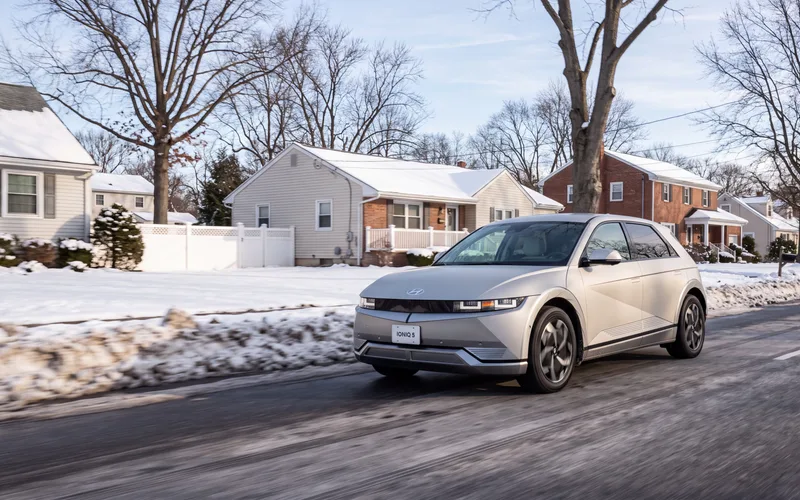 Hyundai Ioniq 5Compact SUVBetter at: Charging speed
Roughly twice the DC charging speed, more range, a native NACS port and a 10-year battery warranty for similar money — the Ariya's cabin is nicer, but nearly everything about living with an EV is easier in the Hyundai.
Compare 2.06C
2.06C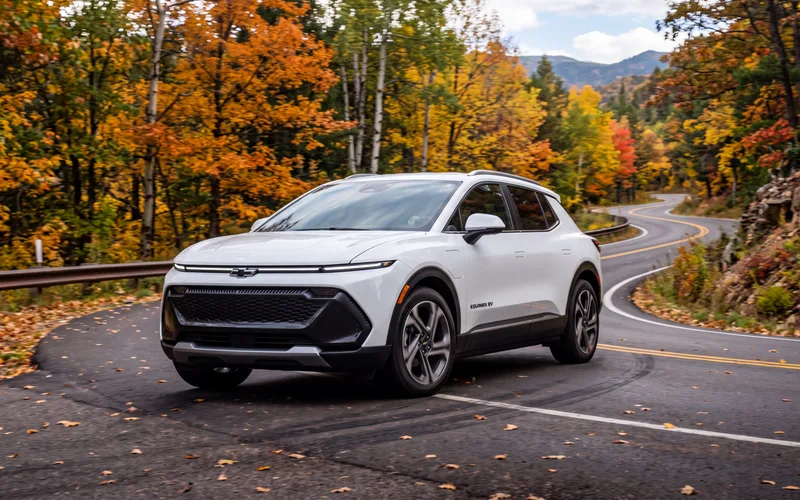 Chevrolet Equinox EVCompact SUVBetter at: Range per dollar
About 319 miles of range for close to $35,000 with more cargo room, so the shopper who wants electric miles per dollar rather than interior polish gets far more of them here.
Compare 2.60C+
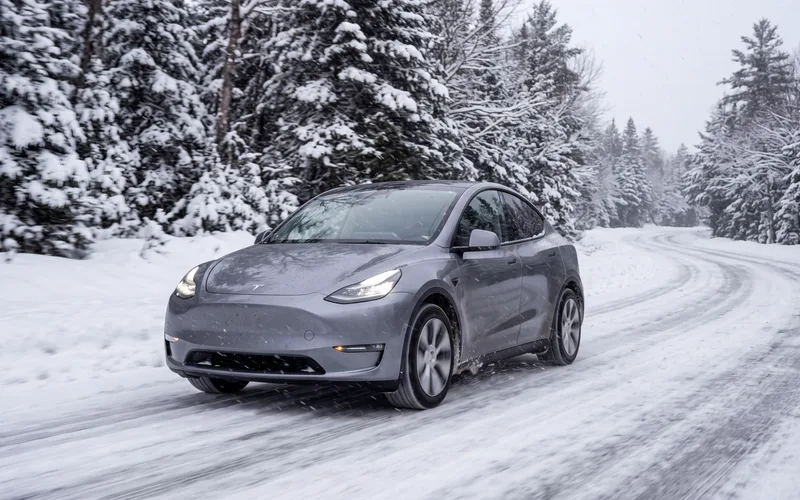 Tesla Model YCompact SUVBetter at: Resale value
Far more efficient, longer-legged and plugged directly into the Supercharger network, with resale value the Ariya cannot approach — the trade is a starker, noisier cabin.
CompareProduction history
Best fit & conditions
Higher scores mean a better fit for that use case. Learn more about use-case fit →
Subject profile
Academic Probation · NHTSA safety recalls
No NHTSA safety recall is on record for the 2026 Nissan Ariya. Other model years of the Ariya have 4 — listed below.
4 recalls on other model years of the Ariya (2023)
Jul 25, 2024Electrical system: propulsion system: inverterThe inverter software may misdiagnose an error, which can shut down the EV system, resulting in a loss of drive power.
Defect
Nissan North America, Inc. (Nissan) is recalling certain 2023 Ariya vehicles. The inverter software may misdiagnose an error, which can shut down the EV system, resulting in a loss of drive power.
Risk
An unexpected loss of drive power increases the risk of a crash.
Remedy
Dealers will inspect the vehicle's inverter software version and update the software, if necessary, free of charge. Owner notification letters were mailed September 12, 2024. Owners may contact Nissan's customer service at 1-800-867-7669. Nissan's number for this recall is R24A8.
NHTSA campaign 24V560000 ↗Manufacturer no. R24A81,188 vehicles potentially affected (all models in the campaign)Owners notified Sep 12, 2024Filed by Nissan North America, Inc.Filed as ARIYAJun 3, 2024Electrical system: propulsion system: traction motorO-rings inside the electric front traction motor may have been damaged during assembly, which can result in an internal oil leak and an unexpected loss of drive power.
Defect
Nissan North America, Inc. (Nissan) is recalling certain 2023 Ariya vehicles. O-rings inside the electric front traction motor may have been damaged during assembly, which can result in an internal oil leak and an unexpected loss of drive power.
Risk
An unexpected loss of drive power increases the risk of a crash.
Remedy
Dealers will replace the front traction motor assembly, free of charge. Owner notification letters were mailed July 26, 2024. Owners may contact Nissan's customer service at 1-800-867-7669. Nissan's number for this recall is R24A3.
NHTSA campaign 24V391000 ↗Manufacturer no. R24A384 vehicles potentially affected (all models in the campaign)Owners notified Jul 26, 2024Filed by Nissan North America, Inc.Filed as ARIYASep 28, 2023Electrical system: propulsion system: inverterThe inverter software may detect a short circuit and shut down the EV system, resulting in a loss of drive power.
Defect
Nissan North America, Inc. (Nissan) is recalling certain 2023 Ariya vehicles. The inverter software may detect a short circuit and shut down the EV system, resulting in a loss of drive power.
Risk
An unexpected loss of drive power increases the risk of a crash.
Remedy
Dealers will reprogram the inverter software, free of charge. Owner notification letters were mailed October 20, 2023. Owners may contact Nissan's customer service at 1-800-867-7669. Nissan's number for this recall is R23C6.
NHTSA campaign 23V657000 ↗Manufacturer no. R23C69,813 vehicles potentially affected (all models in the campaign)Owners notified Oct 20, 2023Filed by Nissan North America, Inc.Filed as ARIYAFeb 28, 2023Steering: critical fastenersThe steering wheel bolt may have been tightened incorrectly or not installed.
Defect
Nissan North America, Inc. (Nissan) is recalling certain 2023 Ariya vehicles. The steering wheel bolt may have been tightened incorrectly or not installed.
Risk
A steering wheel with a loose or missing bolt can detach from the steering column, causing a loss of steering control, increasing the risk of a crash.
Remedy
Owners are advised to contact their dealer for transport and immediate repair if the steering wheel feels loose when gently rocking the wheel forward and back with their hands. Dealers will replace the steering wheel bolt, free of charge. Nissan began notifying owners on March 2, 2023 via phone and will follow up with owner notification letters beginning on March 30, 2023. Owners may contact Nissan's customer service at 1-800-867-7669. Nissan's number for this recall is PC956.
NHTSA campaign 23V131000 ↗Manufacturer no. PC9561,063 vehicles potentially affected (all models in the campaign)Owners notified Mar 23, 2023Filed by Nissan North America, Inc.Filed as REDUNDANT ARIYA
Source: NHTSA Office of Defects Investigation recall database, model years 2023–2026. Recalls are listed by model year as the manufacturer filed them; whether a specific car is affected depends on its VIN — check a VIN at nhtsa.gov ↗. NHTSA model names matched to this page: ARIYA, REDUNDANT ARIYA.
Detailed scoring by subject
1Performance & PowertrainOne of the Ariya's weakest categories.0.68F
The 2026 Ariya carries the same four-way output ladder it has had since launch, with no announced powertrain change for this model year: 214 hp on the 63 kWh front-driver, 238 hp on the 87 kWh front-driver that anchors the volume Engage+/Evolve+ mix, then 335 hp and 389 hp for the 63 and 87 kWh e-4ORCE dual-motor cars. Scored on the 238 hp front-drive configuration, which sits in the bottom quarter of the 150–550 hp SUV band even though the range-topping AWD is genuinely quick.
Both front-drive Ariyas make 221 lb-ft — instantly available from rest, which flatters the car around town, but a modest absolute number against the 130–500 lb-ft SUV band. Adding the rear motor roughly doubles it (413 lb-ft on the 63 kWh e-4ORCE, 442 lb-ft on the 87 kWh), and that is the version reviewers describe as feeling genuinely fast.
At roughly 4,700 lb the 238 hp front-drive Ariya needs about 7.2 seconds to 60 mph — fine in traffic and quicker off the line than the number suggests thanks to instant torque, but slower than most electric compact crossovers, which now cluster under 6 seconds. The 389 hp e-4ORCE is a different car entirely at about 4.8 seconds.
Battery-electric delivery with no lag, no shift interruption and no combustion coarseness, in a cabin reviewers repeatedly single out as one of the quietest and most settled in the class — refinement is the Ariya's strongest performance attribute. It is held below the top of the band because the volume front-drive car simply runs short of urgency at highway speed, a criticism absent from e-4ORCE reviews.
Single-speed reduction gear on every trim: nothing to hunt for, no harsh downshifts, no CVT drone, continuous torque from rest. Kept just below the segment's best because Nissan's e-Step regenerative braking is a single on/off mode that does not bring the car to a full stop, rather than the paddle-selectable, true one-pedal systems in the Ioniq 5 and EV6.
The best rating in any US configuration is 1,500 lbs, and only on the dual-motor e-4ORCE cars with the accessory hitch — enough for a small utility trailer or a pair of jet skis and nothing more. That is near the floor of the 1,000–8,000 lb SUV band, and the volume front-drive trims a buyer is most likely to order carry no tow rating at all.
e-4ORCE dual-motor AWD is offered across most of the lineup and is standard on Platinum+, and it is a genuinely sophisticated system — independent front/rear motor control plus brake-based torque vectoring that reviewers credit with unusually composed low-grip and cornering behavior for a crossover. It falls short of the top band only because the entry Engage trim is front-drive only and there is no low range or terrain-mode suite beyond Snow.
The Ariya is an unapologetically pavement-oriented crossover: modest ground clearance, road-biased tires, no skid plates, no locking differential, no low range and no off-road trim in the range. What it does have is e-4ORCE with a Snow drive mode, which makes it genuinely secure on snow and gravel — enough to clear the floor of the band but nowhere near the light-duty trail credibility of an Ioniq 5 XRT or a bZ Woodland.
One powertrain type only — battery-electric — with no gas, hybrid or PHEV alternative for a buyer who is not ready to plug in. Within that single type there is more choice than most EV rivals offer: two battery sizes (63 and 87 kWh) crossed with single-motor FWD and dual-motor e-4ORCE, giving four distinct output levels, which is why this sits at the top of the low band rather than the bottom.
2Efficiency & RangeMid-pack among this car's ten categories.1.94C-
The EPA's 2026 label for the volume 87 kWh front-driver is 98 MPGe combined — mid-pack among electric compact SUVs, at roughly 3.3 mi/kWh. That trails an Ioniq 5 or Model Y by a meaningful margin, a consequence of about 4,700 lb of curb weight and unremarkable aerodynamics rather than any 2026-specific change: the US did not receive the grille-less facelift, so this is the unchanged pre-refresh car.
City is the Ariya's stronger cycle, as with any EV — regenerative braking recovers most of what stop-and-go driving costs, so the urban figure sits well above the highway one. 105 MPGe is respectable in absolute terms but only middling against the band its EV-SUV peers are normalized on.
Highway is the weaker cycle — no regen to harvest and a shape that is smooth but not slippery, so consumption climbs at 70 mph and real-world road-trip range falls short of the sticker. The ~13% city-to-highway drop is steeper than the best-in-class EVs manage, and it is the number a highway commuter should weigh alongside the modest 289-mile range.
289 miles is the Ariya's competitive weakness and the biggest single drag on this category, landing well below the middle of the EV-SUV range band at a Premium price class. The spread across the lineup matters: a buyer who takes the 63 kWh Engage to hit the entry price gets only 216 miles, and the dual-motor e-4ORCE cars most reviewers prefer give back another 17–22 miles.
130 kW is the Ariya's hardest limit and a genuinely dated figure for 2026 — the 400V architecture caps it at roughly a third of what an 800V Ioniq 5 or EV6 accepts, and instrumented tests show the curve averaging only about 100–110 kW across a 10–80% session. On a car with 289 miles of range, slow replenishment compounds a short leash rather than offsetting it.
About 40 minutes for 10–80% on the volume 87 kWh pack is near the slow end of the EV-SUV band and is the practical consequence of the 130 kW ceiling — a road-trip stop here runs roughly twice as long as in an 800V rival. Well-conditioned batteries on a 150 kW-plus charger occasionally land in the mid-30s, but 35–40 minutes is what a buyer should plan around.
Running cost is where the Ariya wins the category back — EPA's published $750 a year for the volume trim is near the good end of the EV-SUV energy-cost band and less than half what a comparably priced gas compact SUV burns. The caveat is that the figure is entirely a function of the electricity rate: a buyer on a cheap overnight tariff beats it comfortably, while one leaning on public DC fast charging can pay gasoline-like money per mile.
No fuel grade to worry about — a 240V home circuit fully recharges the 87 kWh pack in 8–10 hours at residential rates, the cheapest and least demanding energy arrangement of any powertrain in this dataset. What keeps it out of the top band is public-network friction: the Ariya remains a CCS1 car for 2026 (Nissan's native-NACS debut is the redesigned Leaf, not this nameplate), and Supercharger access requires Nissan's $235 adapter kit plus a small plastic insert fitted into the port before the adapter will seat.
3SafetyThe Ariya's best-graded category.3.07B
The 2026 Ariya is a carryover of the generation Nissan launched for 2023, so any NHTSA result for that structure carries forward. Recorded at 4 stars overall as the conservative reading — unlike the Rogue, the Ariya has not been shown to hold a 5-star overall NCAP rating, and this figure is the single highest-leverage unverified input in the category. Replaces a placeholder value of 4.1 stars.
The Ariya entered the market as an IIHS Top Safety Pick+ winner with Good results across the small-overlap and updated side tests, and the underlying structure is unchanged for 2026. Scored in the award band but not near its top, because award criteria have tightened since the Ariya's original evaluation and current-year award status for a low-volume import is the least certain part of the picture.
Nissan Safety Shield 360 is standard on every Ariya trim including the base Engage — AEB with pedestrian detection, blind-spot warning, rear cross-traffic alert, lane-departure warning, rear automatic braking and high-beam assist — with Intelligent Cruise Control also standard. Nothing core is gated behind an upper trim, which is the top band by the item's own definition; held just below 90 because the more capable ProPILOT tiers are still trim-dependent.
Nissan's forward AEB performs respectably on vehicle-to-vehicle and daytime pedestrian evaluations, but the brand has not shown standout results under the tougher 2023-onward IIHS front crash prevention protocol that weights nighttime pedestrian scenarios and higher closing speeds. Placed in the upper half of the middle band — competent daytime, unproven at night.
Blind Spot Warning and Rear Cross Traffic Alert are standard on all trims as part of Safety Shield 360, with Blind Spot Intervention adding an active steering nudge higher up the range. Kept out of the top band because there is no safe-exit/rear-occupant door alert and no rear cross-traffic braking.
Lane-departure warning is standard and ProPILOT Assist adds steering-assisted lane centering, with the ProPILOT 2.0 tier on the Ariya being Nissan's most settled implementation — noticeably better centered than the Rogue's older setup. Still mid-to-upper band rather than class-leading: reviewers report it drifts toward lane edges on sweeping curves and faded markings.
Intelligent Cruise Control is standard with full-speed-range stop-and-go, and ProPILOT Assist 2.0 layers on map-linked speed adjustment for curves and interchanges plus traffic hold — a well-integrated highway package and the best version of this system Nissan ships. Held below the high 80s because it still brakes late on cut-ins and resumes less smoothly than the segment's best.
ProPILOT Assist 2.0 provides genuine hands-off single-lane driving on mapped divided highways, which puts the Ariya ahead of EV rivals like the bZ4X, ID.4 and Ioniq 5 that offer no hands-free mode at all. Squarely in the middle band rather than the top: coverage is limited to Nissan's mapped-highway database and the feature is trim-dependent, well short of Super Cruise or BlueCruise road coverage.
LED headlights are standard across the Ariya range and High Beam Assist is included in the standard Safety Shield 360 package, and the generation's IIHS headlight results have been in the Good range. Scored at the bottom edge of the top band because per-trim headlight ratings for 2026 are unconfirmed.
Forward and three-quarter sightlines are good — the Ariya's low, flat dash and airy cabin are a deliberate design point — but the coupe-influenced roofline, thick rear pillars and shallow rear glass make the over-shoulder and rearward view distinctly average. The Intelligent Around View Monitor 360-degree camera compensates in parking maneuvers, which keeps it mid-band rather than lower.
The Ariya's EV skateboard platform gives it a flat floor and a 109.3-inch wheelbase, so rear legroom and foot space for rear-facing seats are genuinely generous for a compact SUV, and the rear doors open wide. Held just below the top band because the lower anchors sit in the seat bight rather than on easy-access hardware, and three-across with full-size seats remains a squeeze on a five-seat bench.
4Space & ComfortOne of the Ariya's weakest categories.1.25D
The Ariya is a strictly five-seat two-row crossover across the whole US range — no third row, no captain's-chair or six-seat configuration is offered. Replaces a placeholder that invented 7.2 seats.
Mid-pack front headroom for a compact SUV — the flat EV floor raises the seating platform, which costs some of the height the tall roofline would otherwise give. Trims with the panoramic moonroof lose a measurable amount.
Adequate rather than generous on paper, but the flat floor and the power-sliding center console let the front footwell feel far more open than the number suggests — a point reviewers consistently make about this cabin.
Below the compact-SUV midpoint. The Ariya's coupe-influenced tapering roofline trades second-row headroom for its silhouette, and the raised EV floor compounds it.
Mid-band for the segment and short of what a 109.3-in wheelbase implies — the Ariya spends much of its length on front-seat lounge space rather than the second row. Toe room under the front seats is good thanks to the flat floor, so knee space measures worse than it lives.
No third row exists in any Ariya configuration, so this scores in the bottom band by definition. Scored at 20 rather than 0 because the item measures third-row usefulness, and a buyer choosing a two-row EV crossover is not being denied an option the nameplate withholds — it was never engineered for one.
A genuine weak point: at roughly 22.8 cu ft the Ariya falls below the 25 cu ft floor of the SUV normalization band and scores zero. Its rivals are materially roomier behind the rear seat, and the Ariya has no front trunk to compensate — the EV platform's packaging advantage went into cabin space, not cargo.
Seats-folded capacity sits just above the bottom of the SUV band. The rear bench folds nearly flat onto a level floor, which makes the space usable, but there is simply not much of it by two-row compact-SUV standards.
This is the Ariya's standout interior feature and the one place its space story clearly beats the segment. The power-sliding center console moves fore and aft to reconfigure the front footwell, a motorized dash drawer serves as a hidden tray, and the flat floor opens a large open bin between the front seats.
Nissan's Zero Gravity front seats are a long-standing strength and are repeatedly praised on long stints in this car; the rear bench is comfortable but flatter and set low relative to the raised floor, so rear thigh support trails the front seats.
Tuned clearly for comfort over sport: the Ariya absorbs broken pavement well and its low battery mass keeps body motions settled, with only mild float over long undulations and some sharpness from the larger wheels on upper trims.
One of the quieter cabins in the segment. With no engine noise, acoustic glass and thorough sound insulation, wind and road noise at highway speed are well suppressed — reviewers routinely describe the Ariya as feeling a class above on refinement.
Strong on the essentials — heated front seats and heated steering wheel are widely available, remote climate pre-conditioning comes with the connected-services app, and a heat pump helps winter range. Held below the top band because rear passengers get vents only rather than their own climate zone, and ventilated front seats and heated rear seats are reserved for the top trim.
5Cost of OwnershipThe Ariya's lowest-graded category.0.67F
Carried forward from the 2025 Ariya Engage FWD ($39,770 + $1,390 destination = $41,160) with a modest 2026 increase assumed for destination and the 15% tariff on Japan-built imports. Replaces a placeholder value that was ~$9k too high.
The volume Ariya is a long-range 87 kWh Evolve+, which lands near $48.5k delivered — above the Ioniq 5 SE/SEL and bZ4X XLE that anchor the mainstream-EV-SUV middle, below a loaded Model Y or ID.4 AWD.
EV mechanical simplicity keeps scheduled service cheap (no oil, plugs, or exhaust; brakes last on regen), but the Ariya has drawn more unscheduled shop visits than the class leaders — 12V-battery, charging-port and infotainment-software complaints — so it sits above Ioniq 5/bZ4X class estimates and below the ID.4.
The Ariya is one of the fastest-depreciating EVs on sale: heavy factory incentives and lease subvention set a low transaction floor, Japanese build meant it never earned the federal purchase credit, and the loss of both the $7,500 new and $4,000 used EV credits after September 2025 removed the last props under used-EV pricing. Nissan's unsettled US EV plans add residual risk on top.
Nissan's standard limited warranty is 3 years/36,000 miles — the segment floor, and two years shorter than the Hyundai/Kia coverage the Ariya competes against. The previous placeholder credited it with 4 years.
The EV battery carries the federally mandated 8-year/100,000-mile minimum — matching VW, Ford and Tesla, but short of the 10-year coverage from Toyota and Hyundai/Kia. Nissan's separate powertrain term is 5 years/60,000 miles.
No complimentary scheduled maintenance — the single biggest gap against Toyota's 2-year ToyotaCare and Hyundai's 3-year plan. What the Ariya does include is roadside assistance for the basic-warranty term, a NissanConnect services trial, a public-charging credit, and NACS adapter access for Tesla Supercharging, which keeps it out of the bottom band.
$48,500 volume-trim price minus its estimated resale value after 5 years (38% retained, or about $18,430) leaves about $30,070 in depreciation. Add the projected $4,600 in 5-year maintenance and repairs, and owning this vehicle for 5 years costs about $34,670 in total.
6Reliability & QualityMid-pack among this car's ten categories.1.92C-
Unlike a launch-year car, the Ariya has four model years of US field data and that data is the problem: the recurring owner complaint pattern is software, DC-fast-charging faults and 12V-battery/EV-system warnings that can immobilize the car, not wear-out failures. A mid-pack dependability brand plus an observed electronics complaint cluster puts the prediction below the compact-SUV average, tempered upward by an EV drivetrain with no engine, transmission or exhaust to fail.
Brand-level item, so this is held identical to the figure already scored across the rest of the 2026 Nissan fleet. Nissan sits in the lower-middle of multi-year dependability — behind Toyota, Honda and Hyundai in Consumer Reports brand rankings and around the middle of J.D. Power's Vehicle Dependability Study — with CVT durability the single largest historical drag, a liability the Ariya's EV drivetrain does not carry.
The generation's campaign log is busier than segment-typical and concentrated in the propulsion and charging electronics — the categories that leave an owner stranded — with sustained service-bulletin activity around 12V-battery drain, EV-system fault messages and failed DC fast-charge sessions on top of the formal recalls. It scores above the segment's worst offenders mainly because Ariya US volume is small enough that no single campaign has reached the scale of its rivals' headline recalls.
The hardware case is better than the Ariya's overall reputation suggests: Nissan has the longest EV field record of any legacy automaker through fifteen years of Leaf production, and the Ariya's liquid-cooled CMF-EV pack directly fixes the passive air-cooling that made the old Leaf notorious for capacity loss. There is no systemic traction-motor or pack-degradation pattern here. What holds it mid-band is that the faults the Ariya does have sit in the inverter, charging and high-voltage control electronics — part of the powertrain system — and the dual-motor e-4ORCE variant adds complexity with no high-mileage record.
The cabin is the Ariya's strongest quality dimension and the highest interior score of any Nissan in the fleet — a genuinely near-luxury execution with a flat-floor lounge layout, backlit haptic switchgear set into a wood-effect fascia, kumiko-inspired ambient lighting, Zero Gravity seats and a sliding powered center console. Reviewers consistently rate the materials above the mainstream class and competitive with luxury-badged rivals, which is the bar its Premium price sets. Held out of the high 80s by hard plastics in the lower cabin and by haptic controls that read well but work poorly.
Physical assembly is the solid half of build quality: US cars are built on a mature Japanese line rather than a new or converted plant, and panel fit, structural solidity and rattles are not complaint themes for this model. The score stays out of the 80s because initial-quality results for the Ariya are dragged down by exactly the software and infotainment faults documented elsewhere in this category — a defect count that is real to owners even though it is not an assembly problem.
Raw coverage is the same nationwide advantage every Nissan enjoys — roughly a thousand US franchises, far denser than any EV-only brand — but the Ariya converts less of it than its siblings do. High-voltage work requires EV-certified stores, so the effective network is a subset, Ariya volume is low enough that per-store familiarity is thin, and the model's defining faults are software and charging diagnoses that owners have reported taking repeat visits to resolve. Nissan's middling customer-service satisfaction and ongoing restructuring add downside.
This is the weakest part of the ownership picture and the reason the category does not clear 60. Routine maintenance is genuinely cheap — no oil, plugs, belts or transmission service, and regenerative braking spares the pads — but every high-voltage component is dealer-only with no aftermarket, the Ariya is a Japan-built import with a small US parc so collision and EV-specific parts are slow to source, and out-of-warranty pack or inverter work is a five-figure exposure. Import sourcing also leaves parts pricing exposed to tariffs in a way the US-built Rogue's is not.
7Technology & InfotainmentOne of the Ariya's strongest categories.2.81B-
The Ariya's signature dual 12.3-inch display bridge — a 12.3-in center touchscreen alongside a 12.3-in instrument display — is standard content on every trim including the base Engage, so the volume Evolve+ and the cheapest car get the same screen. Generous for a compact SUV but no longer exceptional now that rivals offer 14-15-in panels, and there is no larger option higher in the range. Replaces a placeholder value of 11.4 in.
NissanConnect on the Ariya is a clear step up from the Rogue's system — crisp widescreen graphics, a logical home layout, and responsive enough that reviewers rarely complain about lag — but the cabin's defining flourish is also its usability problem: the climate and drive-mode controls are backlit capacitive haptic pads set into the dash panel, invisible when the car is off and hard to operate without looking. Squarely mid-band, near the ID.4 and bZ4X rather than the Hyundai/Kia twins.
Half a wireless system: Apple CarPlay is wireless and standard on every trim, but Android Auto is wired-only on the Ariya throughout the generation, with no wireless option at any price. That is a real daily annoyance for Android households and the single biggest reason this item cannot reach the top band. The placeholder score of 81 assumed both platforms were wireless.
Connected native navigation with over-the-air map updates and EV route planning is standard, and Amazon Alexa is built in alongside Nissan's own voice recognition — capable on paper. In practice it is the sort of command-and-control assistant most owners abandon for CarPlay: it handles set-phrase requests for navigation, phone and climate but is not a natural-language conversationalist, and the connected features fall behind a subscription once the trial lapses. Mid-band. The placeholder score of 92 badly overrated it.
The volume trim gets the 10-speaker Bose premium system, which suits the Ariya's quiet EV cabin well and is a genuine upgrade over the base six-speaker setup on Engage. Held out of the top band because it is a mid-tier Bose install rather than a showpiece — no Burmester/Meridian-grade option exists on this nameplate, and the speaker count is modest against luxury-branded rivals.
A full 12.3-inch digital cluster is standard on every trim — no analog fallback and no upper-trim gating — with crisp graphics, configurable layouts and clean EV-specific readouts for state of charge, consumption and regen. One of the Ariya's strongest technology cards and comfortably in the top band; short of the very top only because the display is fixed in a single hooded binnacle with less layout variety than the best German setups.
The Ariya is the Nissan that actually does over-the-air updates — infotainment software, connected navigation maps and, notably, vehicle control-module reflashes that Nissan has used to address charging and propulsion faults on this generation without a dealer visit. That earns it more than a maps-only score, but nothing about it resembles the regular feature-adding cadence of Tesla, GM or Rivian: updates are corrective and infrequent rather than a channel that makes the car better over time. The placeholder score of 81 implied a whole-vehicle OTA program the Ariya does not run.
NissanConnect Services covers the expected EV set — remote lock/unlock, cabin pre-conditioning on the charger, charge scheduling and charge-status monitoring, vehicle locate, and remote start — but it is subscription-gated after the included trial, there is no phone-as-key digital key on the Ariya, and app reliability is a recurring owner complaint on this generation rather than a strength. Core functions present, polish and headline features missing. The placeholder score of 90 was far too kind.
Adequate rather than abundant: USB-A and USB-C outlets in both rows, a wireless charging pad on the volume Evolve+ and above, and a genuinely useful sliding center console with a powered storage tray. What is missing is any household power — no 120V cabin outlet and, unlike the Ioniq 5, EV9 and F-150 Lightning, no vehicle-to-load export in the US market, which is a conspicuous gap on a 87 kWh EV.
Intelligent Key proximity entry and push-button start are standard across the range, remote start works from both fob and app, and the volume trim adds a power liftgate — everything a buyer expects, delivered without trim games on the essentials. Kept below the top band because there is no phone-as-key on the Ariya and the hands-free/motion-activated liftgate is an upper-trim item rather than volume-trim content. The placeholder score of 85 assumed phone-as-key convenience the car does not offer.
Intelligent Around View Monitor — Nissan's 360-degree camera with moving-object detection — plus front and rear sonar comes on the volume Evolve+ and above, and ProPILOT Park adds genuine automated parking at the top of the range. That is above-average parking hardware for a mainstream compact SUV, and it matters here because the Ariya's sloping roofline and shallow rear glass compromise the over-shoulder view. Held short of the top band by camera resolution that reads a generation behind the best surround-view systems. The placeholder score of 68 understated the equipment level.
A head-up display is part of the Ariya's technology story rather than a top-trim indulgence — it has been fitted from Evolve+ upward through this generation, which means the volume configuration has it, and it projects speed, navigation and driver-assist status clearly onto the windscreen. Placed at the bottom edge of the top band because base-trim buyers still go without and the projection area is modest next to the largest augmented-reality units. The placeholder score of 79 was close.
8Use-Case FitMid-pack among this car's ten categories.1.91C-
Wide-opening rear doors, a flat CMF-EV floor that gives kids' feet somewhere to go, and two full LATCH positions on the 60/40 bench cover the basics, but 35.6 in of rear legroom and only 22.8 cu ft behind the second row make rear-facing seats and stroller-plus-groceries days a genuine squeeze in a segment where the CR-V offers 41.0 in and 39.3 cu ft. Re-scored down from a placeholder 88 that ignored the Ariya's segment-trailing cargo hold.
Safety Shield 360 is standard on every trim — including blind-spot warning, rear cross-traffic alert and rear automatic braking that many rivals reserve for options — alongside standard LED headlamps, high-beam assist and Nissan's Rear Door Alert, so a family buying the base Engage is not left short. Held out of the top band by a 4-star rather than 5-star NHTSA overall result and only adequate AEB performance under the updated IIHS protocol.
The cabin itself is a strong long-haul environment — Zero Gravity front seats, a soft absorbent ride, active noise cancellation and dual-zone climate with rear vents and USB ports — but the practical side of a family trip is where it slips: 22.8 cu ft has to swallow four people's luggage with no third row and no frunk to overflow into, the panoramic roof trims already-modest rear headroom, and a 35-40 minute DC stop every couple of hundred highway miles interrupts the day.
This is the Ariya's best mission: instant low-speed torque, a single-speed drivetrain, e-Step regen for lifting off in traffic, a hushed cabin, comfort-first damping and ProPILOT Assist standard across the range add up to a genuinely low-fatigue commute in a compact footprint. Kept out of the high 80s by the widely criticised capacitive haptic dash controls, which make routine adjustments fussier than physical switchgear, and by merely adequate 7.2 s acceleration on the volume front-drive trim.
At 101 MPGe combined the Ariya costs roughly $850 a year in electricity at EPA assumptions — a fraction of any combustion compact SUV — and EV consumables are minimal, with no oil services and regen sparing the brakes. Short of the top band because rivals go further on the same energy (Model Y ~123, Equinox EV ~113, Ioniq 5 ~114 MPGe) and because above-class insurance costs claw back part of the per-mile saving.
A genuinely compact 183-by-75-inch footprint, light steering and the Intelligent Around View Monitor with moving-object detection plus front and rear sonar on the volume Evolve+ trim make tight urban work straightforward. Marked down because the sloping roofline and shallow rear window leave a poor over-the-shoulder view, the 360-degree camera is absent on the base Engage, and the turning circle is unremarkable for the size.
The Ariya is not a work tool: e-4ORCE AWD models are rated to just 1,500 lbs properly equipped and the single-motor front-drive trims — including the volume Evolve+ — carry no tow rating at all, so the configuration most buyers take cannot legally pull a trailer. Cargo is a carpeted 22.8 cu ft hold (59.7 with the bench down) with no bed, no frunk and no payload headroom worth quoting.
Nothing suggests the Ariya is fragile, but it is an unproven premium crossover rather than a hard-use platform: first-generation CMF-EV hardware in US service only since MY2023, mid-pack Nissan reliability, recall activity concentrated on propulsion power loss and high-voltage charging electronics, and no commercial or fleet track record. The suede-like and Nappa-grade interior it is sold on is the opposite of wear-friendly, and there is no vinyl-floor or work-oriented trim.
Provisions for work are close to absent: no 120V household outlet and no bidirectional vehicle-to-load power in the US market — the single most useful jobsite feature on rival EVs — plus basic cargo tie-downs, a carpeted load floor rather than a washable one, roof crossbars only as accessories, and no upfitter ecosystem behind the nameplate. USB-A/USB-C ports and a sliding console cover devices, not tools.
On comfort grounds it is a fine tourer — quiet, softly damped, Zero Gravity seats and ProPILOT Assist 2.0 hands-free single-lane driving on mapped highways for upper trims. The endurance side is what limits it: 289 miles EPA on the volume 87 kWh front-driver (267-272 on e-4ORCE) with a weak 92 MPGe highway rating means real-world highway range well under the sticker, and a ~130 kW CCS1 charging peak makes each stop long by 2026 standards.
e-4ORCE's torque-vectoring AWD and a Snow drive mode make the dual-motor Ariya genuinely sure-footed on wet gravel and winter roads, but there the outdoor case stops: no off-road package, skid plating or terrain-mode suite, modest ground clearance, a 1,500 lb ceiling that rules out most trailered toys, no onboard AC power for camping, and the volume front-drive trim without AWD at all.
Cargo is the Ariya's structural weakness: 22.8 cu ft behind the bench and 59.7 with it folded trail the compact-SUV field badly (CR-V 39.3/76.5, ID.4 30.3/64.2), the rear seat splits only 60/40 with no centre pass-through for long items, there is no frunk and no meaningful underfloor bin, and a hitch is available only on e-4ORCE. Clever cabin storage helps with small items but does nothing for bulky gear.
9Driving ExperienceOne of the Ariya's strongest categories.3.05B
The volume 87 kWh single-motor Ariya is a comfort-tuned, roughly 4,700-lb crossover: the floor-mounted battery gives it a low center of gravity and genuinely settled body motions for the class, but the chassis is calibrated for composure rather than engagement and washes into safe understeer when pushed. Replaces a placeholder 93, which claimed top-of-class dynamics the FWD Ariya does not deliver.
Accurate and consistently weighted with a good straight-ahead center, so it is easy to place, but electrically assisted and deliberately light with very little feedback about grip — precise enough, notably numb. Placeholder 79 overstated it.
Stopping power is adequate for the mass and regen-to-friction handoff is smoother than Nissan's earlier EVs, but the pedal is soft and long in initial travel and the blend point is detectable, and e-Step regen creeps rather than holding at a stop, so it never feels like true one-pedal control. Placeholder 92 implied a class-leading brake package.
Battery-electric with a single-speed reduction gear: no lag, no shift interruption, no stop/start shudder, and tip-in is calibrated gently enough to be easy to modulate in traffic. Held out of the top band because the 238-hp FWD volume trim runs out of thrust above 50 mph and its front axle will scrabble for traction on a damp launch.
Near-silent in normal driving with no combustion coarseness and no vibration through the wheel or pedals; only a faint motor whine under hard acceleration, and Nissan's acoustic glass and insulation keep even that subdued. Score unchanged from the placeholder but now grounded in real evidence.
Tighter than the compact-SUV average despite a 109.3-in wheelbase — the absence of an engine and transmission lets the front wheels take more steering lock, which is why the Ariya maneuvers better in parking structures than its length suggests. Replaces a placeholder 41.1 ft, which was outside anything Nissan quotes for this car and scored it near zero.
The good half is very good — Zero Gravity front seats, a commanding sightline, a flat floor and a power-sliding console that lets the driver reconfigure their own footwell. It is pulled back to mid-band by the capacitive haptic climate and drive-mode controls sunk into the dash trim, which give no tactile reference on the move, and by the tapering roofline and thick rear pillars that compromise over-the-shoulder visibility. Score unchanged from the placeholder but now evidence-backed.
The Ariya is a pleasant, hushed, effortless thing to cover distance in rather than a car anyone drives for its own sake — the volume FWD trim's modest thrust, light steering and comfort-first chassis add up to serene, not entertaining. The 389-hp e-4ORCE version is meaningfully more engaging, but it is not the configuration scored here. Placeholder 85 put it near the enthusiast band, which no reviewer does.
10Value & Market PositionMid-pack among this car's ten categories.2.12C
The entry Engage is well equipped for the money: twin 12.3-inch displays under one glass panel, wireless Apple CarPlay and Android Auto (content GM omits entirely on the rival Equinox EV and Blazer EV), Nissan Safety Shield 360 plus ProPILOT Assist adaptive cruise with steering assist, heated front seats and a heated steering wheel, dual-zone climate and 19-inch wheels. It stays out of the 80s because the things that most define an EV are the things Engage does without — the 63 kWh pack and its roughly 216-mile rating, a 7.2 kW onboard AC charger where Ioniq 5, EV6 and ID.4 all give 11 kW, and hands-free ProPILOT Assist 2.0 reserved for the range-topping Platinum+.
Nissan's large MY2025 repricing — roughly $6,000 off, putting Engage near $40,000 and a loaded Platinum+ e-4ORCE in the mid-$50Ks — moved the Ariya from bad value to merely fair, but the carryover 2026 car still asks Premium-class money for behind-the-curve electrical hardware: a 400-volt architecture peaking around 130 kW on DC, the 7.2 kW AC charger, a CCS port with no native NACS, and 216–289 miles of range depending on pack. Similar money in an Ioniq 5 or EV6 buys an 800-volt system and materially faster charging, and an Equinox EV buys 319 miles for close to $35,000; the Ariya answers with a genuinely nicer cabin, quietness and ride, which is worth something but not the gap.
Two battery sizes (63 and 87 kWh) crossed with front-drive or dual-motor e-4ORCE all-wheel drive across Engage, Engage+, Evolve+ and Platinum+ gives roughly six meaningful configurations spanning about $40,000 to the mid-$50Ks, so a buyer can genuinely trade range and traction against price — broader than the two-trim Equinox EV and the Solterra. It falls short of the top band because Nissan pruned the fuller 2024 ladder (Venture+, Premiere, Empower+) down for 2025–26, there is no performance variant for the US (the Nismo car is a Japan-market model), no third-row or extended-range halo option, and option flexibility outside the trim steps is thin.
The Ariya never became a volume product and its trajectory has since turned sharply down. US deliveries climbed from roughly 13,000 in 2023 to about 20,000 in 2024 — respectable but a fraction of Model Y, Ioniq 5 or Mustang Mach-E — and then ran into three compounding problems: the 25% Section 232 tariff on Japanese-built vehicles that hits every Tochigi-built Ariya, the September 30, 2025 expiry of the federal clean-vehicle credit that had reached Ariya shoppers only through the lease loophole, and the collapse of Nissan's US EV plans (the cancelled Canton-built electric SUVs). Reporting through 2025 pointed to Nissan curtailing US Ariya supply rather than growing it, which is the declining-seller picture the low band describes.
Brand image is a marque-level attribute and Nissan's is a drag in 2026, scored in line with the 2026 Leaf and Rogue in this dataset: the Re:Nissan restructuring with plant closures and large job cuts, sub-investment-grade credit, the collapsed Honda combination, mid-pack dependability standing and weak residuals all sit behind the badge. The Ariya gets a small nudge above the Leaf's mark for the genuine EV credibility Nissan earned as the first mass-market EV maker and for the Ariya's own upmarket design and cabin execution, but that is immediately offset by soft EV resale and by buyers' reasonable doubt about the future of a nameplate whose US supply chain and successor plan are both unsettled.
Scored on buyer benefit, this is the Ariya's single strongest value dimension. Nissan has attacked the price of this car directly — roughly $6,000 off MSRP for 2025 carried into 2026 — and layered heavily subvented leases (the route by which the federal credit reached Ariya shoppers while it existed), factory cash and low-APR offers on top, with thin demand and a nameplate whose US future is uncertain giving dealers every reason to clear remaining stock well under sticker. The item's caveat applies squarely: these are weakness-driven discounts rather than a healthy incentive program, but a 2026 shopper willing to negotiate recovers much of the sticker penalty item 10.1.2 charges.
2026 is the fourth US model year of a generation that launched for 2023, and it has never had a mid-cycle refresh here — the 2026 car is a carryover of the repriced 2025 configuration. More to the point, the CMF-EV hardware underneath was mid-pack when new and is now dated: 400 volts, a roughly 130 kW DC peak, a 7.2 kW onboard charger and a CCS port at a moment when rivals ship 800-volt systems and native NACS. Redesign and discontinuation risk are both live given tariff exposure on the Japan-built car and the cancellation of Nissan's US-built electric SUVs, which is what keeps this at the bottom of the mid-cycle band rather than in it.
Reviewers have consistently liked the Ariya as an object — the interior design, material quality and haptic-in-wood control panel drew real praise and Wards recognition, and the ride quality, quietness and e-4ORCE traction all test well — while just as consistently marking it down as an EV: slow DC charging, a 7.2 kW AC charger, modest range for the price, no true one-pedal stop, occasionally sluggish infotainment and a hefty curb weight. That combination makes it a respectable also-ran rather than a pick: it has not won the major compact-EV comparison tests against Ioniq 5, EV6 and Model Y, and it holds no NACTOY or 10Best honor.