

The verdict
A struggling mid-size truck, strong on reliability and held back by performance.
The 2026 Frontier is the old-school pick in the mid-size truck aisle: a 310-hp naturally aspirated V6 and a conventional 9-speed automatic in every trim, no turbo, no hybrid, no CVT — and the cheapest way into the segment at roughly $34,000 to start and about $40,000 for the volume SV Crew Cab 4x4. That simplicity buys smooth, lag-free power and genuinely inexpensive ownership, and it comes with the best standard safety content in the class, since blind-spot warning and rear cross-traffic alert are fitted to even the base S. The bill arrives at the fuel pump and in the back seat: 19 MPG combined in 4x4 is the worst in the segment, 33.2 inches of rear legroom is the tightest, and there is no lane centering anywhere in the lineup. Buy it if you want a straightforward truck for the least money; look elsewhere if you carry passengers in back or care about efficiency.
Jump to scoresStrengths
- The cheapest way into a mid-size truck — by a wide margin
- Cheap to fuel up and insure, with a genuinely big tank
- A smooth V6 that never makes you wait for boost
What holds it back
- The thirstiest truck in the mid-size class
- One engine, one transmission, no hybrid anywhere
- The tightest back seat in the segment
Top alternatives
Cars shoppers cross-shop with the Nissan Frontier 2.12C
2.12C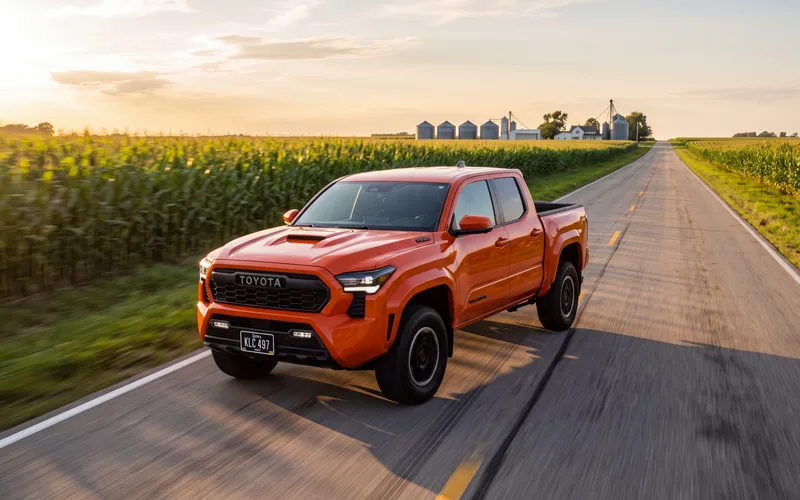 Toyota TacomaMid-Size TruckBetter at: Resale value
Costs about $5,500 more but returns it in roughly 73% five-year resale, a hybrid option, better fuel economy and standard lane centering.
Compare 1.99C-
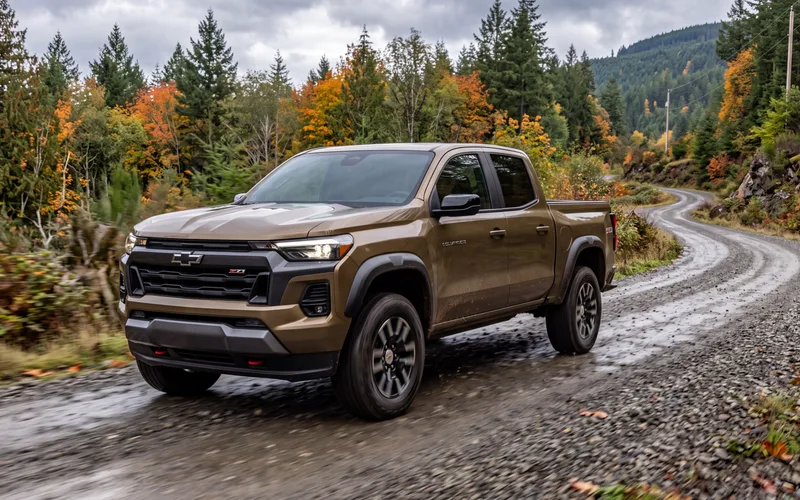 Chevrolet ColoradoMid-Size TruckBetter at: Capability and tech
Similar money for meaningfully more truck — 7,700 lbs of towing, an 11.3-inch Google built-in screen standard, and available Super Cruise.
Compare 1.87C-
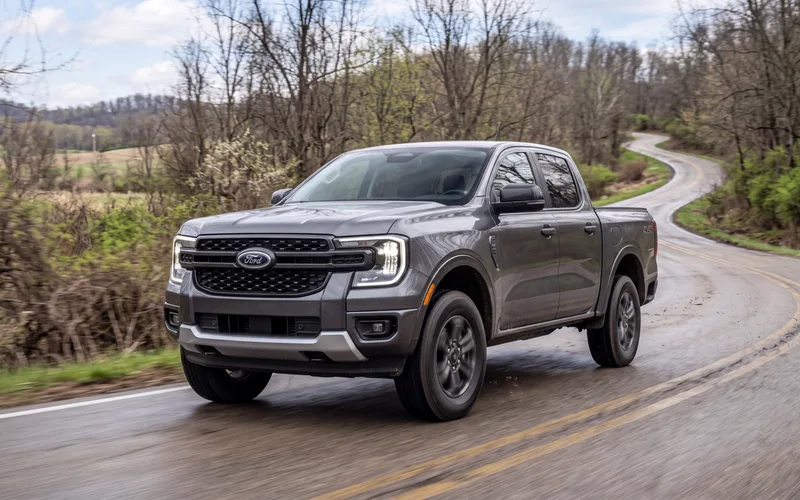 Ford RangerMid-Size TruckBetter at: All-round polish
About $1,300 more to start for 7,500 lbs of towing, 21 MPG combined, more rear legroom and the segment's best lane-centering assist.
CompareProduction history
Best fit & conditions
Higher scores mean a better fit for that use case. Learn more about use-case fit →
Subject profile
Trims & configurations
5 trimsScores above reflect the volume trim. Per-trim specs and scores are rolling out — the full lineup:
Academic Probation · NHTSA safety recalls
Jan 20, 2026Latches/locks/linkages: doors: latchThe door strikers may have been improperly welded and break, allowing the door to open while moving. As such, these vehicles fail to comply with the requirements of Federal Motor Vehicle Safety Standard number 206, "Door Locks and Door Retention Components."
Defect
Nissan North America, Inc. (Nissan) is recalling certain 2025 Altima, Sentra, 2025-2026 Frontier, and 2026 Kicks vehicles. The door strikers may have been improperly welded and break, allowing the door to open while moving. As such, these vehicles fail to comply with the requirements of Federal Motor Vehicle Safety Standard number 206, "Door Locks and Door Retention Components."
Risk
A door that opens unexpectedly while the vehicle is in motion increases the risk of injury or a crash.
Remedy
Dealers will replace the door strikers, free of charge. Owner notification letters were mailed March 17, 2026. Owners may contact Nissan's customer service at 800-647-7261. Nissan's numbers for this recall are PD185 and PMA61. Vehicle Identification Numbers (VINs) involved in this recall will be searchable on NHTSA.gov beginning January 28, 2026.
NHTSA campaign 26V023000 ↗Manufacturer no. PD185, PMA6126,432 vehicles potentially affected (all models in the campaign)Owners notified Mar 13, 2026Filed by Nissan North America, Inc.Filed as FRONTIER
14 recalls on other model years of the Frontier (2017–2025)
Aug 7, 2025Engine and engine cooling: engine: engine control module (ecu/ecm): software · Exterior lighting: lighting control module: softwareDue to a software logic error, the daytime running lights may dim unexpectedly when the idle start-stop feature cycles the engine from off to on. As such, these vehicles fail to comply with the requirements of Federal Motor Vehicle Safety Standard number 108, "Lamps, Reflective Devices, and Associated Equipment."
Defect
Nissan North America, Inc. (Nissan) is recalling certain 2025 Nissan Frontier vehicles. Due to a software logic error, the daytime running lights may dim unexpectedly when the idle start-stop feature cycles the engine from off to on. As such, these vehicles fail to comply with the requirements of Federal Motor Vehicle Safety Standard number 108, "Lamps, Reflective Devices, and Associated Equipment."
Risk
Daytime running lights that dim unexpectedly may cause confusion to other vehicles or pedestrians, increasing the risk of a crash.
Remedy
Dealers will update the engine control module software, free of charge. Owner notification letters were mailed September 17, 2025. Owners may contact Nissan's customer service at 800-647-7261. Nissan's number for this recall is R25C3.
NHTSA campaign 25V508000 ↗Manufacturer no. R25C313,719 vehicles potentially affected (all models in the campaign)Owners notified Sep 17, 2025Filed by Nissan North America, Inc.Filed as FRONTIERJun 4, 2025Back over prevention: softwareThe center information display unit may display a blank screen when shifted into reverse. As such, these vehicles fail to comply with Federal Motor Vehicle Safety Standard (FMVSS) number 111, "Rear Visibility."
Defect
Nissan North America, Inc. (Nissan) is recalling certain 2025 Frontier and Kicks vehicles. The center information display unit may display a blank screen when shifted into reverse. As such, these vehicles fail to comply with Federal Motor Vehicle Safety Standard (FMVSS) number 111, "Rear Visibility."
Risk
A rearview image that does not display can reduce the driver's view of what is behind the vehicle, increasing the risk of a crash.
Remedy
Dealers will update the software on the vehicleâs center information display, free of charge. Owner notification letters were mailed July 10, 2025. The manufacturer numbers for this recall are PD152 and PMA48.
NHTSA campaign 25V324000 ↗Manufacturer no. PD152, PD153, PMA4879,755 vehicles potentially affected (all models in the campaign)Owners notified Jul 10, 2025Filed by Nissan North America, Inc.Filed as FRONTIERAug 6, 2024Exterior lighting: headlightsThe right-side headlight assemblies may have missing or illegible headlight aim markings, which can result in improperly aimed headlights. As such, these vehicles fail to comply with the requirements of Federal Motor Vehicle Safety Standard number 108, "Lamps, Reflective Devices, and Associated Equipment."
Defect
Nissan North America, Inc. (Nissan) is recalling certain 2024 Nissan Frontier vehicles. The right-side headlight assemblies may have missing or illegible headlight aim markings, which can result in improperly aimed headlights. As such, these vehicles fail to comply with the requirements of Federal Motor Vehicle Safety Standard number 108, "Lamps, Reflective Devices, and Associated Equipment."
Risk
Improperly aimed headlights can result in insufficient illumination of the road, decreasing the driver's visibility and increasing the risk of a crash.
Remedy
Dealers will inspect and replace the right-side headlight as necessary, free of charge. Owner notification letters were mailed September 20, 2024. Owners may contact Nissan customer service at 1-800-867-7669. Nissan's number for this recall is PD121.
NHTSA campaign 24V582000 ↗Manufacturer no. PD1211,119 vehicles potentially affected (all models in the campaign)Owners notified Sep 20, 2024Filed by Nissan North America, Inc.Filed as FRONTIERJun 26, 2024Steering: linkages · Suspension: front: control arm: lower ball jointThe front right-side lower link may have been manufactured with an oversized ball joint, which can result in corrosion and ball joint separation from the front right-side lower link.
Defect
Nissan North America, Inc. (Nissan) is recalling certain 2024 Frontier vehicles. The front right-side lower link may have been manufactured with an oversized ball joint, which can result in corrosion and ball joint separation from the front right-side lower link.
Risk
Ball joint separation can cause a loss of steering control, increasing the risk of a crash.
Remedy
Dealers will replace the front right-side lower link, free of charge. Owner notification letters were mailed August 15, 2024. Owners may contact Nissan's customer service at 1-800-867-7669. Nissan's number for this recall is PD109.
NHTSA campaign 24V479000 ↗Manufacturer no. PD1095,929 vehicles potentially affected (all models in the campaign)Owners notified Aug 15, 2024Filed by Nissan North America, Inc.Filed as FRONTIERFeb 27, 2024Air bags: frontal: driver side: inflator moduleDue to a manufacturing issue, the driver's air bag inflator may absorb moisture, and cause the air bag to deploy improperly.
Defect
Nissan North America, Inc. (Nissan) is recalling certain 2024 Titan, Frontier, Infiniti QX60, Pathfinder, 2023-2024 Sentra, Versa, Kicks, Infiniti QX50, and 2023 Rogue vehicles. Due to a manufacturing issue, the driver's air bag inflator may absorb moisture, and cause the air bag to deploy improperly.
Risk
An air bag that deploys improperly may not protect the driver as intended during a crash, increasing the risk of injury.
Remedy
Dealers will replace the front driver's air bag assembly, free of charge. Owner notification letters were mailed April 10, 2024. Owners may contact Nissan customer service at 1-800-867-7669. Nissan's numbers for this recall are PD103, PD104, and PMA34.
NHTSA campaign 24V154000 ↗Manufacturer no. PD103, PD104, PMA34351 vehicles potentially affected (all models in the campaign)Owners notified Apr 10, 2024Filed by Nissan North America, Inc.Filed as FRONTIERApr 17, 2023Tires: beadThe tires may have a tear in the inner bead which can cause a rapid loss of tire pressure.
Defect
Nissan North America, Inc. (Nissan) is recalling certain 2023 Titan and Frontier vehicles. The tires may have a tear in the inner bead which can cause a rapid loss of tire pressure.
Risk
A rapid loss of tire pressure while driving can lead to a loss of vehicle control, increasing the risk of a crash.
Remedy
Dealers will replace all four road tires, or inspect and replace the spare tire assembly, as necessary, free of charge. Owner notification letters are expected to be mailed June 10, 2023. Owners may contact Nissan's customer service at 1-800-867-7669. Nissan's number for this recall is PC973 and PC974.
NHTSA campaign 23V273000 ↗Manufacturer no. PC973, PC9744,249 vehicles potentially affected (all models in the campaign)Owners notified Jun 7, 2023Filed by Nissan North America, Inc.Filed as FRONTIEROct 13, 2022Back over prevention: display functionThe in-vehicle infotainment (IVI) system may continuously reboot when the vehicle is restarted, which can result in an inoperative rearview display. As such, these vehicles fail to comply with the requirements of Federal Motor Vehicle Safety Standard number 111, "Rear Visibility."
Defect
Nissan North America, Inc. (Nissan) is recalling certain 2022 Titan, Titan XD, Frontier, and 2021-2022 Rogue vehicles. The in-vehicle infotainment (IVI) system may continuously reboot when the vehicle is restarted, which can result in an inoperative rearview display. As such, these vehicles fail to comply with the requirements of Federal Motor Vehicle Safety Standard number 111, "Rear Visibility."
Risk
An inoperative rearview camera display reduces the driver's rear visibility, increasing the risk of a crash.
Remedy
The IVI software will be updated by a dealer, or through an over-the-air (OTA) update, free of charge. Owner notification letters are expected to be mailed November 18, 2022. Owners may contact Nissan's customer service at 1-800-867-7669. Nissan's numbers for this recall are R22B8, R22C1, and PC923/25.
NHTSA campaign 22V772000 ↗Manufacturer no. R22B8 R22C1 PC923/2527,388 vehicles potentially affected (all models in the campaign)Owners notified Dec 9, 2022Filed by Nissan North America, Inc.Filed as FRONTIERSep 7, 2022Power train: automatic transmissionThe transmission parking pawl may not engage when the vehicle is shifted into park, which can result in a vehicle rollaway.
Defect
Nissan North America, Inc. (Nissan) is recalling certain 2020-2023 Titan, 2020-2022 Frontier, and 2023 Z vehicles. The transmission parking pawl may not engage when the vehicle is shifted into park, which can result in a vehicle rollaway.
Risk
A vehicle rollaway increases the risk of a crash.
Remedy
Owners are advised to apply the parking brake every time they park their vehicle. Dealers will perform the applicable repairs below, free of charge: Â Model Year 2020-2022 Frontier vehicles: reprogram Transmission Control Module (TCM) Â Model Year 2020-2022 Titan vehicles: reprogram TCM and Engine Control Module (ECM) Â Model Year 2023 Titan vehicles: reprogram TCM Â Model Year 2023 Z vehicles: reprogram TCM. Owner notification letters were mailed October 28, 2022. Owners may contact Nissan's customer service at 1-800-867-7669.
NHTSA campaign 22V671000 ↗Manufacturer no. R22A9 R22B1/2/3197,230 vehicles potentially affected (all models in the campaign)Owners notified Oct 28, 2022Filed by Nissan North America, Inc.Filed as FRONTIERJul 21, 2022Back over prevention: sensing system: camera · Equipment: electrical: infotainment: softwareWhen the Sirius XM subscription is set to "Not Subscribed," it may cause the infotainment head unit to reboot, resulting in an inoperative rearview camera. As such, these vehicles fail to comply with the requirements of Federal Motor Vehicle Safety Standard number 111, "Rear Visibility."
Defect
Nissan North America, Inc. (Nissan) is recalling certain 2021-2022 Rogue, 2022 Frontier, Pathfinder, and Titan rental vehicles. When the Sirius XM subscription is set to "Not Subscribed," it may cause the infotainment head unit to reboot, resulting in an inoperative rearview camera. As such, these vehicles fail to comply with the requirements of Federal Motor Vehicle Safety Standard number 111, "Rear Visibility."
Risk
An inoperative rearview camera display reduces the driver's rear visibility, increasing the risk of a crash.
Remedy
The Infotainment system software will be updated by a dealer, or through an over-the-air (OTA) update, free of charge. Owner notification letters are expected to be mailed July 29, 2022. Owners may contact Nissan's customer service at 1-800-867-7669. Nissan's number for this recall is R22A5 PC901 PC902.
NHTSA campaign 22V527000 ↗Manufacturer no. R22A5 PC901 PC90210,477 vehicles potentially affected (all models in the campaign)Owners notified Jul 29, 2022Filed by Nissan North America, Inc.Filed as FRONTIERJun 24, 2022Power train: automatic transmissionThe transmission parking pawl may not engage when the vehicle is shifted into park, which can result in a vehicle rollaway.
Defect
Nissan North America, Inc. (Nissan) is recalling certain 2020-2022 Frontier and Titan vehicles. The transmission parking pawl may not engage when the vehicle is shifted into park, which can result in a vehicle rollaway.
Risk
A vehicle rollaway increases the risk of a crash.
Remedy
Owners are advised to apply the parking brake every time they park their vehicle. Dealers will replace the transmission parking pawl pin, free of charge. Owner notification letters were mailed November 2022. Owners may contact Nissan's customer service at 1-800-867-7669. Nissan's number for this recall is R22A2 R22A3.
NHTSA campaign 22V457000 ↗Manufacturer no. R22A1180,176 vehicles potentially affected (all models in the campaign)Owners notified Nov 30, 2022Filed by Nissan North America, Inc.Filed as FRONTIERDec 9, 2021Seat belts: critical fastenersThe seat belt bracket mounting bolts on the left-rear seat may have been incorrectly tightened. As such, these vehicles fail to comply with the requirements of Federal Motor Vehicle Safety Standard numbers 207, "Seating Systems," 209, "Seatbelt Assemblies," and 210, "Seat Belt Assembly Anchorages."
Defect
Nissan North America, Inc. (Nissan) is recalling certain 2022 Frontier vehicles. The seat belt bracket mounting bolts on the left-rear seat may have been incorrectly tightened. As such, these vehicles fail to comply with the requirements of Federal Motor Vehicle Safety Standard numbers 207, "Seating Systems," 209, "Seatbelt Assemblies," and 210, "Seat Belt Assembly Anchorages."
Risk
During a crash, a loose seat belt bracket may break, causing a loss of seat belt restraint and increasing the risk of injury.
Remedy
Dealers will replace the bolts on the left-rear seat and repair any damaged threads as necessary, free of charge. Owner notification letters were January 27, 2022. Owners may contact Nissan customer service at 1-800-867-7669. Nissan's number for this recall is PC856.
NHTSA campaign 21V958000 ↗Manufacturer no. PC856425 vehicles potentially affected (all models in the campaign)Owners notified Jan 27, 2022Filed by Nissan North America, Inc.Filed as FRONTIERNov 22, 2021Fuel system, gasoline: storage · Trailer hitchesThe tow hitch was not installed, compromising the structural integrity of the fuel tank in the event of a rear crash. As such, these vehicles fail to comply with the requirements of Federal Motor Vehicle Safety Standard number 301, "Fuel System Integrity."
Defect
Nissan North America, Inc. (Nissan) is recalling certain 2022 Frontier Crew Cab Long Bed trucks. The tow hitch was not installed, compromising the structural integrity of the fuel tank in the event of a rear crash. As such, these vehicles fail to comply with the requirements of Federal Motor Vehicle Safety Standard number 301, "Fuel System Integrity."
Risk
During a crash, the leaf spring could contact the fuel tank, causing a fuel leak and increasing the risk of a fire or injury.
Remedy
Dealers will install the tow hitch and harness kit, free of charge. Owner notification letters were mailed December 16, 2021. Owners may contact Nissan customer service at 1-800-867-7669. Nissan's number for this recall is PC855.
NHTSA campaign 21V917000 ↗Manufacturer no. PC85522 vehicles potentially affected (all models in the campaign)Owners notified Dec 16, 2021Filed by Nissan North America, Inc.Filed as FRONTIERSep 12, 2019Back over prevention: sensing system: cameraAdditionally included are 2019 Nissan GT-R and Taxi and Infiniti QX50, QX60, Q70, Q70L vehicles. The back-up camera and display settings can be adjusted such that the rear view image is no longer visible and the system will retain that setting the next time the vehicle is placed in reverse. As such, these vehicles fail to comply with the requirements of Federal Motor Vehicle Safety Standard (FMVSS) number 111, "Rear Visibility."
Defect
Nissan North America, Inc. (Nissan) is recalling certain 2018-2019 Nissan Altima, Armada, Frontier, Kicks, Leaf, Maxima, Murano, NV, NV200, Pathfinder, Rogue, Rogue Sport, Sentra, Titan, Titan Diesel, Versa Note and Versa Sedan vehicles, as well as Infiniti Q50, Q60, QX30 and QX80 vehicles. Additionally included are 2019 Nissan GT-R and Taxi and Infiniti QX50, QX60, Q70, Q70L vehicles. The back-up camera and display settings can be adjusted such that the rear view image is no longer visible and the system will retain that setting the next time the vehicle is placed in reverse. As such, these vehicles fail to comply with the requirements of Federal Motor Vehicle Safety Standard (FMVSS) number 111, "Rear Visibility."
Risk
The lack of an image in the back-up camera display increases the risk of a crash.
Remedy
Nissan will notify owners in phases, having dealers update the back-up camera settings software, free of charge. The recall began November 11, 2019 and all affected VINs should be activated. Owners may contact Nissan customer service at 1-800-867-7669 or INFINITI customer service at 1-800-662-6200.
NHTSA campaign 19V654000 ↗1,228,830 vehicles potentially affected (all models in the campaign)Owners notified Nov 11, 2019Filed by Nissan North America, Inc.Filed as FRONTIERAug 21, 2018Electrical system: ignitionIn these models, over time, the weight on the key ring and road conditions or some other jarring event may cause the ignition switch to move out of the run position to the accessory position, turning off the engine.
Defect
Nissan North America, Inc. (Nissan) is recalling certain 2017 Nissan NV200, Sentra, NV3500 Van, NV3500 Bus, NV200 Taxi, NV1500, NV2500 Van, Chevrolet City Express, 2017-2018 Frontier, Versa Note, and Versa Sedan vehicles that have a mechanical (physical) key ignition system. In these models, over time, the weight on the key ring and road conditions or some other jarring event may cause the ignition switch to move out of the run position to the accessory position, turning off the engine.
Risk
If the vehicle stalls, it can increase the risk of a crash.
Remedy
Nissan will notify owners, and dealers will inspect the production information on the ignition switch, and replace it as necessary, free of charge. The recall began October 1, 2018. Owners may contact Nissan customer service at 1-800-867-7669.
NHTSA campaign 18V551000 ↗153,047 vehicles potentially affected (all models in the campaign)Owners notified Oct 1, 2018Filed by Nissan North America, Inc.Filed as FRONTIER
Source: NHTSA Office of Defects Investigation recall database, model years 2017–2026. Recalls are listed by model year as the manufacturer filed them; whether a specific car is affected depends on its VIN — check a VIN at nhtsa.gov ↗. NHTSA model names matched to this page: FRONTIER.
Detailed scoring by subject
1Performance & PowertrainThe Frontier's lowest-graded category.0.63F
Every 2026 Frontier — S through PRO-4X — runs the same 3.8L VQ38DD naturally aspirated V6 rated at 310 hp, so the volume SV Crew Cab and the range-topping trims share one output figure with no range to note. That is a strong number among mid-size trucks, but the truck band tops out at 800 hp to accommodate full-size and electric pickups, so it normalizes low.
The naturally aspirated V6 makes 281 lb-ft and makes it high in the rev range, at 4,400 rpm — the Frontier's weakest specification on paper. Turbocharged mid-size rivals deliver more twist lower down (Tacoma 317 lb-ft, Ranger 310 lb-ft), and against a truck band running to 800 lb-ft this lands near the floor.
Instrumented tests of the current-generation Frontier cluster around 7.0–7.2 seconds for four-wheel-drive Crew Cabs, which is competitive with the mid-size field and quicker than the outgoing Frontier, but ordinary against a band anchored by 2.5-second electric pickups.
The naturally aspirated V6 is the Frontier's most likable component: linear, lag-free throttle response and a smooth, free-revving character that reviewers repeatedly contrast favorably with the coarse turbo fours now dominating the segment. The offset is that it does its best work high in the rev range — there is little low-end shove, so it has to be worked hard when loaded, and direct injection makes it audibly gruff near redline.
The 9-speed automatic is standard across the range and generally well sorted — smooth, sensibly spaced ratios that keep the peaky V6 in its powerband, with reviewers noting only occasional slowness to kick down at part throttle. No manual is offered. Confidence is held at LOW because 2026-specific calibration or hardware changes could not be checked.
With the Max Tow Package the Frontier is rated to 6,720 lbs, right in the mid-size mainstream — ahead of the Ridgeline's 5,000 lbs, roughly level with the Tacoma, and short of the Colorado/Canyon and Ranger at 7,500 lbs. The truck band spans 2,000–14,000 lbs to cover half-tons, so a mid-size rating sits well below the midpoint.
Maximum payload of about 1,610 lbs trails most of the mid-size field — Tacoma (~1,709 lbs), Colorado (~1,684 lbs) and Ranger (~1,805 lbs) all carry more, and the volume 4x4 Crew Cab configuration comes in below the headline figure. Against a truck band reaching 3,400 lbs this is a genuine weak point rather than a normalization artifact.
The Frontier covers the basics and stops there: the Max Tow Package brings a Class IV receiver, 7-pin connector, transmission cooler, tow mode and trailer sway control, and higher trims add the Intelligent Around View Monitor with hitch guidance. What is missing is the modern layer rivals now fit — no factory-integrated trailer brake controller, no trailer backup steering assist, no trailer profiles or blind-spot extension. Toyota and Ford both do more here, which is why this lands at the bottom of the mid band.
Part-time four-wheel drive with a two-speed transfer case and genuine low range is available across essentially the whole lineup and is standard on PRO-4X, which also adds an electronic locking rear differential. It is proper truck hardware rather than a light-duty AWD system; it falls short of the top band only because it is an option on most trims and there is no full-time or torque-vectoring mode for on-road use.
The PRO-4X is a credible factory off-road trim — Bilstein off-road shocks, electronic locking rear differential, skid plates, hill descent control and all-terrain tires on roughly 9.4 inches of ground clearance — and for 2026 the retro-styled Hardbody Edition builds on that same package. It is a step below the segment's specialists, though: no front locker or disconnecting sway bar as on a Gladiator Rubicon, no ZR2-style spool-valve dampers or Trailhunter-grade overlanding hardware, and no widened track.
One engine, one transmission, no alternatives: the 3.8L V6 and 9-speed automatic are the entire lineup, with no turbo four, no diesel, no hybrid and no electrified variant of any kind. This is the most literal reading of the bottom band's take-it-or-leave-it description, and it is where the Frontier has fallen furthest behind — Tacoma offers a hybrid, Ranger offers two turbo engines plus a Raptor V6, and even the Maverick is hybrid-standard.
2Efficiency & RangeOne of the Frontier's weakest categories.0.87F
The D41 Frontier carries a single powertrain — the 3.8L VQ38DD V6 (310 hp) with a 9-speed automatic — across every 2026 trim, so economy varies only by drive type: roughly 17/22/19 city/hwy/combined in 4x4 and 18/24/20 in 4x2. That puts it at the bottom of the mid-size field, below the turbo-four Ranger (21 combined 4WD) and Tacoma (21 combined 4x4) and level with the Colorado/Canyon 4WD.
A naturally aspirated 3.8-liter V6 hauling roughly 4,600 lb is the worst-case city configuration in the segment — no turbo-four, no hybrid assist, and no cylinder deactivation to fall back on in stop-and-go driving.
The tall 9-speed automatic recovers some ground at cruise, but 22 MPG highway in 4x4 still trails the Ranger (24) and Tacoma (23) and matches the Colorado's 4WD figure.
Thirst is partly offset by tankage: the Frontier's 21.1-gallon tank is the largest in the mid-size class (vs 18.8 gal on the Ranger and 18.2 gal on the Tacoma), so real-world touring range lands near 400 miles despite the worst combined rating in the segment.
At EPA's standard 15,000 mi/yr the 4x4 Frontier burns roughly 790 gallons a year — among the highest running costs in the mid-size class, though regular-grade fuel keeps it from being worse. Effectively tied with the Colorado 4WD and about $250/yr costlier than a Tacoma.
Nissan specifies regular 87-octane unleaded for the 3.8L V6 across the entire Frontier range, including the PRO-4X — there is no premium-fuel trim, no diesel, and no DEF system to maintain. Simple, cheap fueling is the one clear efficiency-adjacent strength here, and the 21.1-gallon tank means fewer stops.
3SafetyGrades below the middle of the scale.1.68D
The third-generation (D41) Frontier carries a 4-star NHTSA overall rating for the Crew Cab — the ordinary result for a tall body-on-frame mid-size pickup, where strong frontal and side scores are pulled down by rollover resistance. 2026 is a carryover year behind the 2025 refresh with no structural change, so the rating stands. Replaces the placeholder 4.4-star value.
The D41 Frontier holds no IIHS Top Safety Pick in any year of its run. Good results under the original protocols are undercut by a sub-Good grade in the updated moderate overlap front test, which weights second-row occupant protection — the test that swept awards away from the mid-size pickup class. The placeholder 58 implied a cleaner sheet than the truck has.
Nissan Safety Shield 360 is standard on every 2026 Frontier including the base S — notably, blind-spot warning and rear cross-traffic alert are fleet-wide, content that Ford and Chevrolet still gate behind trim walks. The offsets are real, though: adaptive cruise is not standard on the base trim and there is no lane-centering assist anywhere in the range, only lane departure warning.
Nissan's AEB with pedestrian detection is a competent but previous-generation setup: solid daytime vehicle-to-vehicle behavior, with none of the intersection-turn or low-light pedestrian coverage that newer rivals' systems advertise. Standard rear automatic braking is a genuine plus the Ranger and Colorado do not match fleet-wide.
Blind Spot Warning and Rear Cross Traffic Alert are standard on every trim — the best availability of any mid-size truck in this dataset, since rivals reserve them for mid-tier trims or option packages. What keeps it out of the top band is that the coverage is alert-only, with no steering or braking intervention and no trailer-length extension.
This is the Frontier's clearest driver-assistance deficit: lane departure warning is standard, but the only corrective function is the optional Intelligent Lane Intervention nudge, and no version of the truck offers lane centering. With ProPILOT Assist absent from the Frontier line, there is nothing to hold the truck in its lane on the highway. The placeholder 61 credited capability the truck does not have.
Intelligent Cruise Control is a capable full-speed-range radar system on the volume SV and above, working well with the 9-speed automatic in stop-and-go traffic, but it is not standard on the base S and — with no lane centering in the range — it never combines into a highway assist. It is adaptive cruise on its own, not a driving-assistance layer.
No hands-free highway driving is available on the Frontier at any trim or price, and Nissan has no hands-free system in the US market to offer it — the company's most advanced driver assistance, ProPILOT Assist, is hands-on and is not fitted to the Frontier regardless. The placeholder 64 was badly overstated.
The 2025 refresh brought LED headlamps across the Frontier range and High Beam Assist is standard within Safety Shield 360, which avoids the Marginal halogen units that still drag down some rivals — but IIHS evaluations of this generation have not returned a Good rating, landing in the Marginal-to-Acceptable range depending on trim and beam pattern. The placeholder 77 implied a Good result the truck has not earned.
The Frontier's upright, deliberately boxy cab is an asset here — a relatively low beltline for the class, large flat glass and squared-off fenders make the truck's corners easy to place, and reviewers consistently rate the forward view better than the high-cowl half-tons. Thick rear pillars and the bed still create real rearward blind zones, and the 360-degree camera that would compensate is an upper-trim item rather than standard.
Scored on the volume Crew Cab, which has proper rear doors, two outboard LATCH positions and three top tethers — workable, but the anchors sit buried in the seat bight and need digging, and at roughly 33 inches of rear legroom the upright bench is tight for a rear-facing seat and cramped for three across. The placeholder 72 was generous for a truck of this size.
4Space & ComfortOne of the Frontier's weakest categories.1.01D
The volume Frontier is the Crew Cab with two front buckets and a three-across rear bench, seating five; the two-door King Cab drops to four via small fold-up jump seats.
Front headroom of 39.9 in is mid-pack for a mid-size truck — the same figure as the Colorado, a little under the Ranger's 41.0 in and the Canyon's 40.4 in.
At 43.9 in the Frontier gives front occupants more stretch-out room than the Tacoma (41.8 in) or Ridgeline (40.9 in) and is within a whisker of the Ranger (43.7 in), trailing only the 44.9 in Colorado/Canyon pair.
Rear headroom of 38.4 in sits at the bottom of the mid-size crew-cab pack — level with the Colorado and just under the Tacoma (38.5 in) and Ridgeline (38.8 in), well behind the Ranger's 39.8 in.
The Frontier's 33.2 in of rear legroom is the tightest back seat in the mid-size class — below the Tacoma (33.7 in), Ranger (34.6 in), Colorado/Canyon (34.7 in), Ridgeline (36.7 in) and Gladiator, and the single biggest drag on this category.
The volume Crew Cab's 5-ft bed measures 59.5 in at the floor, a touch shorter than the Tacoma's 60.3 in and the Colorado/Canyon's 61.7 in; unlike those two, the Frontier at least still offers a 6-ft bed with the crew cab.
Derived from Nissan's published bed box dimensions rather than a quoted volume figure, so treat it as approximate; it lands just under the Tacoma's 39.5 cu ft and well behind the Ranger (43.5) and Colorado/Canyon (41.9).
Competent rather than clever: a usefully deep center console, flip-up rear seat cushions with an under-seat storage bin, and the genuinely handy Utili-track bed channel system with movable tie-down cleats, plus an available 120V bed outlet. There is no in-bed trunk, no lockable underfloor box and no generator-grade onboard power.
Nissan's Zero Gravity front seats are a standout in this class and draw consistent praise for long-haul support, but the rear bench is upright, thinly padded and short on legroom, which caps the score below what the fronts alone would earn.
The D41 rides on a heavily revised version of the previous-generation frame and it shows — composed and settled on the highway, but busy and prone to rear-axle patter over broken pavement when the bed is empty. PRO-4X models with Bilstein dampers gain off-road control at the cost of more on-road bounce.
Average for the class: highway wind noise is well contained and the 3.8L V6 is smooth when cruising, but it gets vocal under load and PRO-4X models add noticeable all-terrain tire roar.
Heated front seats and a heated steering wheel are available from SV upward and standard on PRO-4X and SL, and remote start is widely fitted, but no Frontier trim offers ventilated seats or rear climate controls and dual-zone automatic climate is reserved for the upper trims.
5Cost of OwnershipMid-pack among this car's ten categories.1.85C-
The Frontier remains one of the two cheapest ways into a mid-size truck, opening around $34,000 with destination for the S King Cab 4x2 — essentially level with the Chevrolet Colorado WT and roughly $1,300 under a Ranger XL. Carried from 2025 facelift pricing with a modest year-over-year walk; live 2026 pricing could not be verified in this run.
Frontier volume sits in the SV Crew Cab, which lands near $40,000 in 4x4 form — undercutting a comparable Tacoma SR5 Double Cab 4x4 by roughly $5,500 and a Colorado LT Crew 4WD by about $2,000. Price is the Frontier's clearest argument in the segment.
The naturally aspirated 3.8L VQ38DD V6 and 9-speed automatic are conventional, well-understood hardware with inexpensive parts and no turbo or hybrid content to service, so per-visit costs stay low. What hurts the total is that Nissan bundles no complimentary maintenance, so all five years are out of pocket — unlike the Tacoma, where ToyotaCare absorbs the first two.
Frontier residuals are respectable in absolute terms, helped by a low starting price and steady used-truck demand, but the nameplate does not command the Tacoma's premium and sits closer to the domestic mid-sizers. Roughly 60% retention puts it above the Colorado, Canyon and Ridgeline but a long way under Toyota.
Nissan's New Vehicle Limited Warranty is the segment-standard 3 years or 36,000 miles — matching Toyota, Ford, Chevrolet, GMC and Honda, and conferring no advantage.
Powertrain coverage is 5 years or 60,000 miles, again the segment floor. There is no hybrid or EV content anywhere in the Frontier line, so no extended battery or electrified-component coverage applies.
Nissan includes no complimentary scheduled maintenance on the Frontier — the first oil change is the buyer's — which puts it in the bottom band alongside the Ridgeline and behind every rival that bundles even a token service plan. Roadside assistance runs with the 3 yr / 36,000 mi basic warranty and NissanConnect adds a trial of connected services, but those are table stakes rather than real value.
$40,000 volume-trim price minus its estimated resale value after 5 years (60% retained, or about $24,000) leaves about $16,000 in depreciation. Add the projected $5,900 in 5-year maintenance and repairs, and owning this vehicle for 5 years costs about $21,900 in total.
6Reliability & QualityThe Frontier's best-graded category.2.55C+
The D41 Frontier is a mechanically conservative design now five model years into its run — naturally aspirated V6, conventional torque-converter automatic, body-on-frame — and that maturity plus simplicity is the strongest reliability argument in its favor against rivals fielding newer turbocharged fours. What holds it to the middle of the band is the model-level survey record: Nissan's own predicted-reliability marks sit around average rather than top tier, and the 2025 refresh introduced new interior electronics whose owner-data track record is still thin.
Nissan's multi-year standing in J.D. Power VDS and Consumer Reports brand reliability rankings has been mid-pack — roughly the middle third of ~30 brands — with the brand's weakest results concentrated in the Xtronic CVT passenger-car and crossover lines rather than the trucks. This is a brand-level input scored consistently with other Nissan entries in the dataset.
The D41 generation has accumulated a normal spread of recall campaigns across its 2022-2026 model years, weighted toward assembly and electronics items rather than powertrain or fire risk. Nothing systemic on the scale of an engine-replacement or transmission-failure campaign attaches to this truck, which keeps it in the ordinary middle band rather than the penalty zone.
This is the Frontier's single strongest reliability asset and the item that most separates it from the rest of the Nissan lineup. The 3.8L VQ38DD is a late member of the long-running VQ V6 family, naturally aspirated and without the variable-compression complexity of the brand's turbo fours, and it drives a conventional 9-speed automatic rather than an Xtronic CVT — removing the single largest source of Nissan's high-mileage repair reputation.
The cabin is a large improvement over the decade-old D40 it replaced, and the 2025 update's larger center display modernized the dashboard, but material richness remains the Frontier's weakest quality dimension. Reviewers consistently flag broad expanses of hard plastic on the doors, dash top and console — including in touch-frequent zones where mid-size rivals now use padded surfaces — and a switchgear feel that reads a price class below the truck's sticker.
Assembly quality is a clear step ahead of perceived material quality: the Frontier is built on a mature body-on-frame line at Canton, Mississippi, and does not carry the rattle, squeak or panel-alignment complaints that dog weaker entries in this segment. It lands solidly in the mid band — consistent, unremarkable assembly rather than a standout.
Coverage is a genuine strength — roughly a thousand Nissan franchises give effectively nationwide reach including rural markets, which matters for a work truck. Service satisfaction is the offsetting factor: Nissan's customer service standing has run at or modestly below the mainstream industry average rather than with the leaders, so the item sits in the upper-middle band instead of the top.
The Frontier is close to a best case for cheap ownership repair: high-volume mainstream parts, a VQ V6 shared across two decades of Nissan and Infiniti applications, and a body-on-frame layout that keeps common collision and wear items inexpensive. It also escapes the brand's biggest repair-cost liability — there is no CVT to replace — which is why it scores above the Rogue on this item despite sharing a dealer network. The aftermarket is healthy though narrower than the Tacoma's.
7Technology & InfotainmentGrades below the middle of the scale.1.61D
The D41 Frontier carries an 8.0-inch NissanConnect touchscreen as standard equipment including on the volume SV trim, with the larger 12.3-inch display added by the 2025 refresh reserved for upper trims and option packages. Scored on the 8.0-inch standard unit per the volume-trim rule, which sits at the very bottom of the truck normalization band.
NissanConnect on the Frontier is simple and quick enough for basic tasks and keeps real volume/tuning knobs and physical HVAC dials, which reviewers consistently credit. Against it: the standard 8.0-inch unit has visibly dated graphics and low resolution relative to GM's Google-based system in the Colorado/Canyon and Toyota's Audio Multimedia in the Tacoma.
Wireless Apple CarPlay is standard across the Frontier range, but Android Auto is wired on the standard 8.0-inch head unit and only goes wireless with the larger available display. That split — one platform wireless everywhere, the other tied to an option — lands mid-band rather than at the top.
Frontier voice control is command-based rather than natural-language, and built-in navigation only arrives with the larger display and NissanConnect package — the standard SV configuration has none. Most owners default to CarPlay/Android Auto maps.
A 6-speaker system is standard, with the 10-speaker Fender Premium Audio System available on upper trims — a genuinely competitive branded upgrade in this class, comparable to JBL in the Tacoma or Bose in the Canyon.
The Frontier uses a part-analog cluster with a color Advanced Drive-Assist Display between the dials on SV and above; no full-digital gauge cluster is offered at any trim. That absence of an upgrade path puts it below rivals that at least offer a full-digital option.
The Frontier has no whole-vehicle over-the-air update program — Nissan's OTA capability is concentrated in its newer EV and crossover architectures. Connected-services head units can pull map and infotainment data over the air, but feature-adding vehicle software updates are not part of the ownership experience.
NissanConnect Services covers the core remote set — remote start/stop, lock/unlock, vehicle locator, alerts — on a trial that converts to a paid subscription. There is no phone-as-key on the Frontier, and owner sentiment on app reliability and login friction is middling.
Front USB-A and USB-C ports are standard with rear ports on Crew Cab bodies, and wireless phone charging is available on upper trims. Onboard household power is limited compared with rivals that offer in-bed AC outlets, so device-power provisioning is adequate rather than generous.
Nissan Intelligent Key with proximity entry and push-button start plus remote engine start are standard from SV upward, covering the volume configuration, while the base S trim keeps a conventional key. No phone-as-key is offered.
A rear camera is standard and Nissan's Intelligent Around View Monitor — including an off-road view — is available, but it is confined to upper trims rather than the volume SV, and there is no automated parking.
No head-up display is offered on any 2026 Frontier trim. This is the segment norm rather than a Frontier-specific shortfall — no mainstream mid-size truck offers one — but the item measures availability, so it scores in the low band.
8Use-Case FitMid-pack among this car's ten categories.2.04C
The volume Crew Cab has four full doors and a fold-up rear cushion with an under-seat bin, but 33.2 in of rear legroom is the tightest back seat in the mid-size class and the upright, fixed-backrest bench leaves a rear-facing seat fighting the front passenger for room. Lower anchors are buried in the seat bight rather than on easy-access hardware, and there are only two outboard LATCH positions.
Safety Shield 360 is standard on every trim including the base S, so blind-spot warning, rear cross-traffic alert and rear automatic braking are fleet-wide content that Ford and Chevrolet still gate behind a trim walk, and Nissan's Rear Door Alert covers the rear-occupant reminder. Against that, the D41 has never earned an IIHS Top Safety Pick, NHTSA overall is 4 stars, adaptive cruise skips the base trim, and there is no lane centering anywhere in the range.
Nissan's Zero Gravity front seats are among the best in the class for multi-hour stints and the bed keeps the family's luggage out of the cabin, but the second row is the weakest in the segment for both legroom and headroom, no Frontier trim offers rear climate controls, and the unladen leaf-sprung ride is busy over broken pavement. Rear amenities amount to vents and charging ports on the Crew Cab.
The naturally aspirated 3.8L V6 is the Frontier's quiet advantage in traffic — 310 hp delivered linearly with no turbo lag or low-speed shift shudder, paired to a 9-speed that behaves itself, which is more than the turbo-four Tacoma or the Ranger can claim. Good outward visibility and the Zero Gravity driver's seat cut fatigue, but the firm unladen ride, the base S trim's missing adaptive cruise and the absence of any lane centering hold it to the middle of the band.
A single thirsty V6 with no electrified option gives the Frontier roughly 19 MPG combined in the volume 4x4 configuration — the bottom of the mid-size class alongside the Colorado and Canyon and about $250/yr worse than a Tacoma. Regular unleaded, broad VQ-family parts commonality and mid-pack insurance keep the per-mile figure from being worse, but Nissan includes no complimentary scheduled maintenance.
The deliberately boxy cab is a genuine urban asset — a relatively low beltline, large flat glass and squared-off fenders make the corners easy to place, and the volume Crew Cab short-bed body is not among the longest mid-sizers. A rear camera is standard, but the Intelligent Around View Monitor that would really help in tight spots is an upper-trim item rather than volume-trim equipment, and this is still a body-on-frame truck with a wide arc.
The Frontier is a competent light-to-moderate work truck rather than a class leader: 6,720 lbs of towing with the Max Tow Package sits mid-pack, and payload of about 1,610 lbs is the weakest of the body-on-frame mid-sizers. What lifts it is bed flexibility no rival matches — a 6-ft bed is still available with the four-door Crew Cab — and a V6 that pulls without waiting for boost. Towing electronics are thin, with no integrated trailer brake controller.
Mechanically this is the conservative choice in the segment — a naturally aspirated VQ-family V6 with no turbochargers and no CVT, behind a torque-converter 9-speed, on a mature frame derived from the long-lived previous generation. That is exactly the recipe that holds up under hard use, and the base S's hard-wearing cabin suits it. Nissan's mid-pack brand dependability record and modest fleet presence stop it short of the Tacoma's reputation.
The Utili-track channel system with movable tie-down cleats is the best factory bed-management hardware in the mid-size class, and a factory accessory catalog of dividers, racks and boxes clips straight into the rails. A 120V bed outlet, spray-in liner and bed lighting are available, and the 6-ft bed option covers longer materials. Missing are generator-grade onboard power, a lockable in-bed box, and the deep commercial upfit ecosystem GM and Ford put behind their trucks.
Two real touring strengths: the Zero Gravity front seats are the segment's most comfortable over a long day, and the largest fuel tank in the class offsets the worst combined economy to land at roughly 400 miles between stops — competitive touring range from an uncompetitive engine. The V6 cruises smoothly without turbo drone, but the ride stays firm, the cabin has no acoustic glass or active noise cancellation, and the driver-assist layer is adaptive cruise alone with no lane centering to share the workload.
The PRO-4X is a genuine factory off-road trim, not an appearance package — Bilstein shocks, an electronic locking rear differential, skid plates, hill descent control and all-terrain tires on about 9.4 in of clearance — and for 2026 the retro Hardbody Edition builds on it. Part-time 4WD with real low range is available across most of the lineup, and the open bed plus 6,720 lbs of towing handles bikes, boats and camping loads. It stops short of the segment's specialists: no front locker, no disconnecting sway bar, no spool-valve dampers, no widened track and no overlanding-grade halo trim.
This is where the Frontier's packaging pays off. The Utili-track rails let tie-down points move to wherever the load actually is instead of living at four fixed corners, and the Frontier is the only mid-sizer here that will still sell a 6-ft bed behind a four-door Crew Cab — a straightforward advantage for kayaks, lumber and long gear over the 5-ft-only Tacoma, Colorado, Canyon and Ranger. Inside, the fold-up rear cushion opens an under-seat bin for items that need to stay dry. There is no lockable in-bed trunk for valuables.
9Driving ExperienceOne of the Frontier's strongest categories.2.33C+
The third-generation (D41) Frontier is the most old-school mid-size pickup on sale: an updated version of the previous truck's body-on-frame chassis with a leaf-sprung live rear axle, and it drives like it. Reviewers consistently report noticeable body roll in corners, modest grip, and a jittery, hoppy rear end over broken pavement when the bed is empty. It is stable and honest at speed but never composed, and the PRO-4X's Bilstein dampers buy off-road articulation rather than on-road body control.
Slow, heavy and low on precision. The rack needs a lot of lock for a given input, on-center definition is soft enough that the truck wanders slightly on the highway, and there is little useful information about front grip. The upside of the heft is that it never feels artificially light, but it is a workaday truck rack by any modern measure.
Stopping power is sufficient for the truck's mass and towing duty, but the hardware and tuning are the segment's plainest — rear drums on the volume configuration, a long and soft pedal, and 70-mph stops that reviewers place mid-pack to slightly long for a mid-size pickup. Fade resistance on repeated stops is adequate rather than reassuring.
This is the Frontier's clearest dynamic strength and the item where it beats every mainstream mid-size rival. The naturally aspirated 3.8L VQ38DD V6 (310 hp / 281 lb-ft) paired with the 9-speed automatic delivers completely linear tip-in with no turbo lag, no hybrid handoffs to fumble, and no low-speed hesitation — the failure modes that cost the Tacoma, Ranger and Colorado points here simply do not exist. The 9-speed can be a beat slow to kick down for a passing gear, which is the only meaningful complaint.
The VQ V6 is the best-sounding engine in the mid-size class — smooth, free-revving and genuinely pleasant under load, with none of the coarse thrash or drone the segment's turbo fours produce. It does have to be revved to reach peak torque at 4,400 rpm, so it is frequently audible, and the Frontier's cabin isolation is not good enough to keep it fully in the background. Pleasant but present, rather than quiet.
Good for a mid-size crew cab, because the Frontier is a short truck — the volume Crew Cab 5-ft bed rides a ~126-inch wheelbase, several inches shorter than the Tacoma, Ranger and Colorado. Buyers who step up to the 6-ft-bed Crew Cab give up nearly five feet of turning diameter on the ~140-inch wheelbase, which is a real parking-lot penalty.
Better than the truck's dynamics suggest. The upright, high-set seating position and boxy greenhouse give genuinely good sightlines, the Zero Gravity front seats are among the segment's best for long stints, and the dash keeps real knobs and hard buttons for climate and audio instead of burying them in the touchscreen. It is held back by a steering column with limited reach adjustment on lower trims and a tight rear compartment even in Crew Cab form.
The Frontier's appeal is character rather than dynamics. The willing, good-sounding V6, the honest analog feel of the controls, the PRO-4X's real off-road ability and the retro Hardbody Edition's period styling all give it more personality than the spec sheet implies. But there is no manual gearbox, no open-air trick, nothing engaging about the way it corners, and it lacks the enthusiast and aftermarket following that carries the Tacoma and Gladiator.
10Value & Market PositionOne of the Frontier's strongest categories.2.55C+
The 2025 facelift moved the Frontier from sparse to merely competitive: every 2026 trim gets the 310 hp 3.8L V6, a 9-speed automatic, an 8-inch touchscreen with wireless Apple CarPlay and Android Auto, and Nissan Safety Shield 360 (automatic emergency braking with pedestrian detection, blind-spot warning, rear cross-traffic alert, lane-departure warning, rear AEB, high-beam assist). What holds the score under the segment midpoint is what stays optional — adaptive cruise control is not standard on the base S, the 12.3-inch display and 360-degree camera are reserved for upper trims, and the S remains a genuinely plain work-spec truck inside.
This is the Frontier's strongest argument in the segment and the reason to buy one: it is the cheapest route to a mid-size truck with a big naturally aspirated V6, with 310 hp standard on every trim including the entry S, opening around $34,000 with destination and an SV Crew Cab 4x4 near $40,000. That undercuts a comparably equipped Tacoma SR5 Double Cab 4x4 by roughly $5,500 and a Colorado LT Crew 4WD by about $2,000, and the PRO-4X delivers a locking rear differential, Bilstein dampers and skid plates for meaningfully less than a TRD Off-Road Tacoma.
Six trims — S, SV, PRO-X, PRO-4X, SL and the retro Hardbody Edition — spanning a plain work-spec truck to a leather-lined SL and a genuine off-road PRO-4X, with rear- or four-wheel drive across most of the range. Body-style flexibility is a real advantage over the crew-cab-only Colorado and Canyon: buyers can still get a King Cab with the six-foot bed, or a Crew Cab with either the five- or six-foot bed. It falls short of the Tacoma's much wider ladder, which adds a hybrid powertrain, a manual transmission and a broader spread of off-road grades.
The Frontier is a solid, stable mid-size seller — roughly 75,000 to 85,000 units a year, trading third place with the Colorado and comfortably ahead of the Ranger, Gladiator and Ridgeline, but a distant second to a Tacoma that moves better than twice its volume. The current generation lifted Frontier volume well above the decade-old D40's late years and has held it there, which reads as market acceptance rather than momentum: a steady seller, not a riser.
Nissan is the weakest brand asset among the mainstream mid-size truck players. The company's well-publicized financial strain, a CVT reputation that colors buyer perception of the whole lineup even though the Frontier uses a conventional 9-speed automatic, and heavy reliance on incentive and fleet volume all pull down residuals and cross-shopper confidence. The Frontier has a small, genuinely loyal following that values its simplicity, and Nissan's truck history is real, but none of it carries the halo Toyota or Chevrolet bring to the same showroom visit.
Scored from the buyer's side, and this is where the Frontier does best in the category. Nissan is among the most aggressive discounters in the US market, and the Frontier routinely carries stacked customer cash, subvented NMAC financing and lease support on top of ordinary dealer negotiability — a truck that regularly transacts well under sticker rather than at or above it. The same incentive intensity is what erodes resale value, so it is a genuine buyer benefit bought with a residual-value penalty.
2026 is the fifth model year of the D41 generation (launched for 2022) and the second year on the 2025 facelift, which brought revised front-end styling, the larger available 12.3-inch display and expanded standard driver-assist content — so the truck sits squarely mid-cycle rather than aging out. What keeps it below the Colorado is the architecture underneath: the D41 is a heavily updated evolution of the D40 frame rather than a clean-sheet platform, and the lineup still has no hybrid or turbo-four answer to the Tacoma and Ranger.
Reviewers respect the Frontier without recommending it: the consistent verdict praises an honest, rugged, mechanically straightforward truck with a strong V6 and a sharp price, then places it mid-pack or lower in mid-size comparison tests behind the Tacoma, Ranger and Colorado. The recurring criticisms are structural rather than fixable by trim — poor fuel economy from the naturally aspirated V6 with no hybrid or turbo alternative, a class-trailing tow rating, a plain interior, and ride and refinement that lag newer rivals. It has collected no major award on the order of the Colorado's MotorTrend Truck of the Year.