

The verdict
A mixed-report mid-size suv, strong on safety and held back by efficiency.
The 2026 Pathfinder is the value play in the three-row class: $38,995 to start (thousands below a Pilot or Telluride), a 5-star NHTSA rating with IIHS Top Safety Pick+, eight-passenger seating standard, and a 6,000-lb tow rating that beats most rivals by about 1,000 lbs. This year's refresh finally fixes the screens — a 12.3-inch touchscreen with wireless CarPlay and Android Auto is now standard on every trim, including the base S. What you give up is efficiency and long-term cost: 23 MPG combined with no hybrid option at any price, about $2,700 a year in fuel, a class-minimum 3yr/36k warranty, and depreciation that runs well ahead of the segment average. Buy it if the sticker price, the car-seat flexibility, and the tow rating matter more than the fuel bill and the resale check five years out.
Jump to scoresStrengths
- Crash ratings and standard driver aids that don't cost extra
- One of the best three-rows for car seats
- Genuinely big up front and in the second row
What holds it back
- 23 MPG and no hybrid at any price
- Steep depreciation and a bare-minimum warranty
- The third row is for kids, and cargo behind it is tight
Top alternatives
Cars shoppers cross-shop with the Nissan Pathfinder 2.79B-
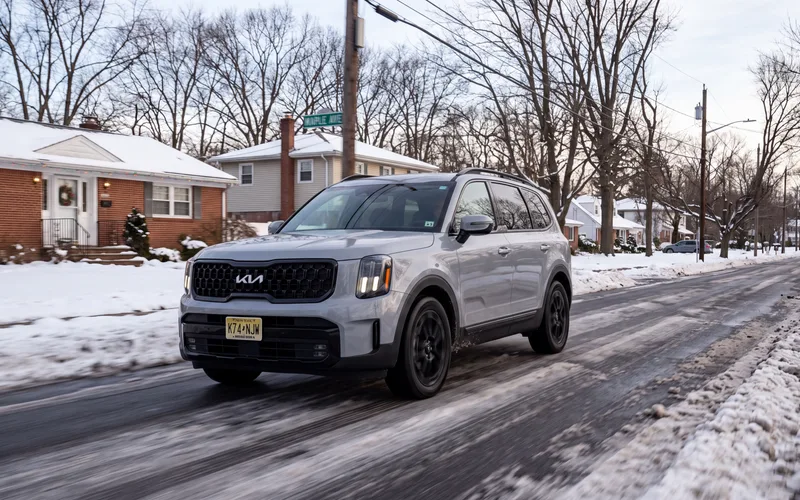 Kia TellurideMid-Size SUVBetter at: Interior space
For a few thousand dollars more it delivers the roomier second and third rows, softer ride and 10-year powertrain warranty that the Pathfinder's low price is paying for.
Compare 2.88B-
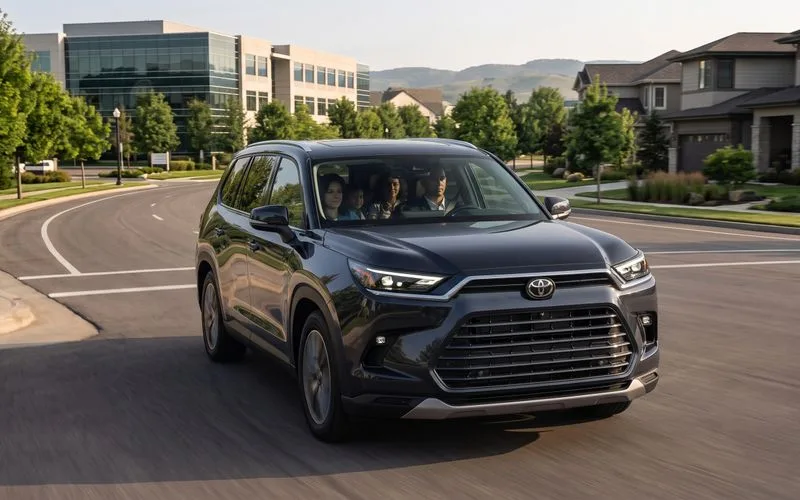 Toyota Grand HighlanderMid-Size SUVBetter at: Fuel economy
Its hybrid powertrains cut the Pathfinder's roughly $2,700 annual fuel bill by close to half while adding a third row adults can actually use.
Compare 2.43C+
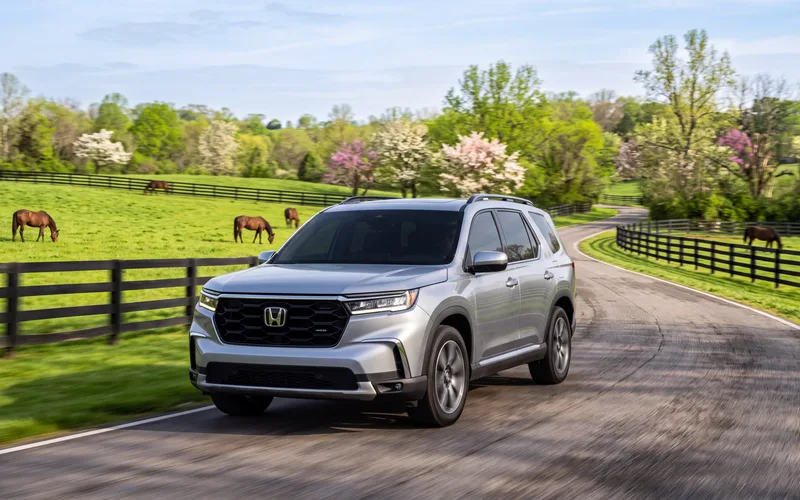 Honda PilotMid-Size SUVBetter at: Resale value
A similar gas V6 three-row with better third-row packaging and stronger resale, which claws back most of its higher sticker price over five years.
CompareHow it's evolved
9 scored model years · 2017–2026
Subject scores by year
Hover or tap a score to see what moved it versus the year before. A corner mark flags a big swing.
| Year | Performance | Efficiency | Safety | Space | Cost | Reliability | Tech | Use-case | Driving | Value |
|---|---|---|---|---|---|---|---|---|---|---|
| 2026 | 52 | 47 | 80 | 69 | 48 | 71 | 68 | 68 | 67 | 71 |
| 2025 | 52 | 45 | 79 | 69 | 49 | 70 | 52 | 64 | 65 | 67 |
| 2024 | 53 | 45 | 78 | 69 | 50 | 68 | 52 | 67 | 67 | 71 |
| 2023 | 53 | 45 | 80 | 69 | 51 | 67 | 54 | 67 | 64 | 69 |
| 2022 | 52 | 45 | 79 | 69 | 52 | 64 | 53 | 66 | 64 | 67 |
| 2020 | 46 | 48 | 60 | 65 | 53 | 60 | 33 | 62 | 56 | 57 |
| 2019 | 46 | 48 | 60 | 67 | 53 | 58 | 33 | 62 | 56 | 58 |
| 2018 | 46 | 48 | 56 | 67 | 53 | 57 | 32 | 61 | 56 | 58 |
| 2017 | 46 | 48 | 49 | 66 | 56 | 57 | 30 | 60 | 55 | 62 |
Compare two years
Best fit & conditions
Higher scores mean a better fit for that use case. Learn more about use-case fit →
Subject profile
Academic Probation · NHTSA safety recalls
No NHTSA safety recall is on record for the 2026 Nissan Pathfinder. Other model years of the Pathfinder have 12 — listed below.
12 recalls on other model years of the Pathfinder (2017–2019, 2022–2025)
Mar 19, 2025Service brakes, hydraulic: foundation components: disc: caliperOne or both front brake caliper assemblies may have reduced strength and could break. As such, these vehicles fail to comply with the requirements of Federal Motor Vehicle Safety Standard number 135, "Light Vehicle Brake Systems."
Defect
Nissan North America, Inc. (Nissan) is recalling certain 2025 Murano, Pathfinder, and INFINITI QX60 vehicles. One or both front brake caliper assemblies may have reduced strength and could break. As such, these vehicles fail to comply with the requirements of Federal Motor Vehicle Safety Standard number 135, "Light Vehicle Brake Systems."
Risk
A broken front brake caliper can cause a loss of front brake function, increasing the risk of a crash.
Remedy
Dealers will inspect and replace the front brake caliper assemblies as necessary, free of charge. Owner notification letters were mailed May 9, 2025. Owners may contact Nissan's customer service at 800-647-7261 or INFINITI's customer service at 1-800-662-6200. Nissan's numbers for this recall are PD137 and PD138.
NHTSA campaign 25V173000 ↗Manufacturer no. PD137, PD1381,430 vehicles potentially affected (all models in the campaign)Owners notified May 9, 2025Filed by Nissan North America, Inc.Filed as PATHFINDERMar 5, 2024Seat belts: pretensionerThe lap belt pretensioner in the left-side front seat belt assembly may be improperly secured, due to a missing rivet. As such, these vehicles fail to comply with the requirements of Federal Motor Vehicle Safety Standard numbers 208 "Occupant Crash Protection," 209 "Seat Belt Assemblies," and 210 "Seat Belt Assembly Anchorages."
Defect
Nissan North America, Inc. (Nissan) is recalling certain 2024 Pathfinder and Infiniti QX60 vehicles. The lap belt pretensioner in the left-side front seat belt assembly may be improperly secured, due to a missing rivet. As such, these vehicles fail to comply with the requirements of Federal Motor Vehicle Safety Standard numbers 208 "Occupant Crash Protection," 209 "Seat Belt Assemblies," and 210 "Seat Belt Assembly Anchorages."
Risk
An unsecured lap belt pretensioner will not properly restrain an occupant during a crash, increasing the risk of injury.
Remedy
Dealers will inspect and replace the left-side front lap seat belt pretensioner assemblies as necessary, free of charge. Owner notification letters were mailed April 18, 2024. Owners may contact Nissan customer service at 1-800-867-7669. Owners may contact Infiniti customer service at 1-800-662-6200. Nissan's numbers for this recall are PD106 and PD107.
NHTSA campaign 24V176000 ↗Manufacturer no. PD106, PD10712,019 vehicles potentially affected (all models in the campaign)Owners notified Apr 18, 2024Filed by Nissan North America, Inc.Filed as PATHFINDERFeb 27, 2024Air bags: frontal: driver side: inflator moduleDue to a manufacturing issue, the driver's air bag inflator may absorb moisture, and cause the air bag to deploy improperly.
Defect
Nissan North America, Inc. (Nissan) is recalling certain 2024 Titan, Frontier, Infiniti QX60, Pathfinder, 2023-2024 Sentra, Versa, Kicks, Infiniti QX50, and 2023 Rogue vehicles. Due to a manufacturing issue, the driver's air bag inflator may absorb moisture, and cause the air bag to deploy improperly.
Risk
An air bag that deploys improperly may not protect the driver as intended during a crash, increasing the risk of injury.
Remedy
Dealers will replace the front driver's air bag assembly, free of charge. Owner notification letters were mailed April 10, 2024. Owners may contact Nissan customer service at 1-800-867-7669. Nissan's numbers for this recall are PD103, PD104, and PMA34.
NHTSA campaign 24V154000 ↗Manufacturer no. PD103, PD104, PMA34351 vehicles potentially affected (all models in the campaign)Owners notified Apr 10, 2024Filed by Nissan North America, Inc.Filed as PATHFINDERApr 13, 2023Seats: critical fastenersThe driver's powered seat may not be fully secured to the seat frame, causing the seat frame welds to detach from the rear inboard seat bracket.
Defect
Nissan North America, Inc. (Nissan) is recalling certain 2023 Rogue, Pathfinder, and Infiniti QX60 vehicles. The driver's powered seat may not be fully secured to the seat frame, causing the seat frame welds to detach from the rear inboard seat bracket.
Risk
An unsecured seat with broken welds may not properly restrain an occupant during a crash, increasing the risk of injury.
Remedy
Dealers will inspect the driver's seat rail clearance, and if necessary, replace the driver's seat cushion frame, free of charge. Owner notification letters are expected to be mailed June 10, 2023. Owners may contact Nissan's customer service at 1-800-867-7669. Nissan's number for this recall is PC966, PC967.
NHTSA campaign 23V268000 ↗Manufacturer no. PC966, PC96712,400 vehicles potentially affected (all models in the campaign)Owners notified Jun 9, 2023Filed by Nissan North America, Inc.Filed as PATHFINDERJul 21, 2022Back over prevention: sensing system: camera · Equipment: electrical: infotainment: softwareWhen the Sirius XM subscription is set to "Not Subscribed," it may cause the infotainment head unit to reboot, resulting in an inoperative rearview camera. As such, these vehicles fail to comply with the requirements of Federal Motor Vehicle Safety Standard number 111, "Rear Visibility."
Defect
Nissan North America, Inc. (Nissan) is recalling certain 2021-2022 Rogue, 2022 Frontier, Pathfinder, and Titan rental vehicles. When the Sirius XM subscription is set to "Not Subscribed," it may cause the infotainment head unit to reboot, resulting in an inoperative rearview camera. As such, these vehicles fail to comply with the requirements of Federal Motor Vehicle Safety Standard number 111, "Rear Visibility."
Risk
An inoperative rearview camera display reduces the driver's rear visibility, increasing the risk of a crash.
Remedy
The Infotainment system software will be updated by a dealer, or through an over-the-air (OTA) update, free of charge. Owner notification letters are expected to be mailed July 29, 2022. Owners may contact Nissan's customer service at 1-800-867-7669. Nissan's number for this recall is R22A5 PC901 PC902.
NHTSA campaign 22V527000 ↗Manufacturer no. R22A5 PC901 PC90210,477 vehicles potentially affected (all models in the campaign)Owners notified Jul 29, 2022Filed by Nissan North America, Inc.Filed as PATHFINDERFeb 24, 2022Seats: critical fastenersThe second-row seat track may be missing a mounting bolt. As such, these vehicles fail to comply with the requirements of Federal Motor Vehicle Safety Standard number 210, "Seat Belt Assembly Anchorages."
Defect
Nissan North America, Inc. (Nissan) is recalling certain 2022 INFINITI QX60 and Nissan Pathfinder vehicles. The second-row seat track may be missing a mounting bolt. As such, these vehicles fail to comply with the requirements of Federal Motor Vehicle Safety Standard number 210, "Seat Belt Assembly Anchorages."
Risk
A missing mounting bolt may allow the seat track to move during a crash, increasing the risk of injury.
Remedy
Dealers will inspect the second-row seat track and install a new mounting bolt as necessary, free of charge. Owner notification letters were mailed April 13, 2022. Owners may contact Nissan customer service at 1-800-867-7669. Nissan's numbers for this recall are PC867 and PC868.
NHTSA campaign 22V111000 ↗Manufacturer no. PC867 PC86821 vehicles potentially affected (all models in the campaign)Owners notified Apr 13, 2022Filed by Nissan North America, Inc.Filed as PATHFINDERSep 23, 2021Seats: critical fasteners · Seats: mid/rear assemblyThe second-row seat back frames may have insufficient welds that could separate.
Defect
Nissan North America, Inc. (Nissan) is recalling certain 2022 Pathfinder vehicles. The second-row seat back frames may have insufficient welds that could separate.
Risk
Seat backs with separated welds may fail to adequately restrain occupants during a crash, increasing the risk of injury.
Remedy
Dealers will inspect and replaced the seat assemblies as necessary, free of charge. Owner notification letters were mailed November 17, 2021. Owners may contact Nissan customer service at 1-800-867-7669. Nissan's numbers for this recall are PC845, PC846, and PC847.
NHTSA campaign 21V743000 ↗Manufacturer no. PC845 PC846 PC8475,895 vehicles potentially affected (all models in the campaign)Owners notified Nov 17, 2021Filed by Nissan North America, Inc.Filed as PATHFINDERSep 23, 2021Seats: mid/rear assembly: head restraintThe third-row headrests may have an improper weld or misaligned internal components, which can allow the headrest to move or detach. As such, these vehicles fail to comply with the requirements of Federal Motor Vehicle Safety Standard number 202, "Head Restraints."
Defect
Nissan North America, Inc. (Nissan) is recalling certain 2022 Pathfinder vehicles. The third-row headrests may have an improper weld or misaligned internal components, which can allow the headrest to move or detach. As such, these vehicles fail to comply with the requirements of Federal Motor Vehicle Safety Standard number 202, "Head Restraints."
Risk
Headrests that move or detach may not adequately restrain occupants in a crash, increasing the risk of injury.
Remedy
Dealers will replace all three third-row seat headrests, free of charge. Owner notification letters were mailed November 17, 2021. Owners may contact Nissan customer service at 1-800-867-7669. Nissan's number for this recall is PC844.
NHTSA campaign 21V742000 ↗Manufacturer no. PC844 / PC85310,082 vehicles potentially affected (all models in the campaign)Owners notified Nov 17, 2021Filed by Nissan North America, Inc.Filed as PATHFINDERSep 10, 2021Latches/locks/linkages: hood: latchInsufficient welds may allow the secondary hood latch retainer bracket to detach from the front bumper assembly. As such, these vehicles fail to comply with the requirements of Federal Motor Vehicle Safety Standard number 113, "Hood Latch System."
Defect
Nissan North America, Inc. (Nissan) is recalling certain 2022 Pathfinder vehicles. Insufficient welds may allow the secondary hood latch retainer bracket to detach from the front bumper assembly. As such, these vehicles fail to comply with the requirements of Federal Motor Vehicle Safety Standard number 113, "Hood Latch System."
Risk
A detached secondary hood latch may allow the hood to open if the primary hood latch is not engaged, obstructing the driver's view and increasing the risk of a crash.
Remedy
Dealers will inspect and replace the secondary hood latch bracket as necessary, free of charge. Owner notification letters were mailed November 17, 2021. Owners may contact Nissan customer service at 1-800-867-7669. Nissan's number for this recall is PC840.
NHTSA campaign 21V706000 ↗Manufacturer no. PC8403,030 vehicles potentially affected (all models in the campaign)Owners notified Nov 17, 2021Filed by Nissan North America, Inc.Filed as PATHFINDERNov 8, 2019Service brakes, hydraulic: antilock/traction control/electronic limited slipThese vehicles were previously recalled and unrepaired, or inspected and determined to not need a repair, under recall number 18V-601. In addition, this recall expands the previous population. The Anti-lock Brake System (ABS) actuator pumps may allow brake fluid to leak onto an internal circuit board.
Defect
Nissan North America, Inc. (Nissan) is recalling certain 2015-2018 Nissan Murano, 2016-2018 Nissan Maxima, and 2017-2019 Nissan Pathfinder and Infiniti QX60 vehicles. These vehicles were previously recalled and unrepaired, or inspected and determined to not need a repair, under recall number 18V-601. In addition, this recall expands the previous population. The Anti-lock Brake System (ABS) actuator pumps may allow brake fluid to leak onto an internal circuit board.
Risk
A brake fluid leak on the circuit board may result in an electrical short, increasing the risk of a fire.
Remedy
Nissan will notify owners, and dealers will replace the ABS actuator, free of charge. Owners will receive a second notice when remedy parts become available, currently expected to be during summer 2020. Owners may contact Nissan customer service at 1-800-867-7669. Note: If the ABS warning light remains illuminated for more than 10 seconds after engine start up, owners are advised to park the vehicle outdoors away from other vehicles or structures and to not drive the vehicle.
NHTSA campaign 19V807000 ↗391,479 vehicles potentially affected (all models in the campaign)Owners notified Dec 16, 2019Filed by Nissan North America, Inc.Filed as PATHFINDERSep 12, 2019Back over prevention: sensing system: cameraAdditionally included are 2019 Nissan GT-R and Taxi and Infiniti QX50, QX60, Q70, Q70L vehicles. The back-up camera and display settings can be adjusted such that the rear view image is no longer visible and the system will retain that setting the next time the vehicle is placed in reverse. As such, these vehicles fail to comply with the requirements of Federal Motor Vehicle Safety Standard (FMVSS) number 111, "Rear Visibility."
Defect
Nissan North America, Inc. (Nissan) is recalling certain 2018-2019 Nissan Altima, Armada, Frontier, Kicks, Leaf, Maxima, Murano, NV, NV200, Pathfinder, Rogue, Rogue Sport, Sentra, Titan, Titan Diesel, Versa Note and Versa Sedan vehicles, as well as Infiniti Q50, Q60, QX30 and QX80 vehicles. Additionally included are 2019 Nissan GT-R and Taxi and Infiniti QX50, QX60, Q70, Q70L vehicles. The back-up camera and display settings can be adjusted such that the rear view image is no longer visible and the system will retain that setting the next time the vehicle is placed in reverse. As such, these vehicles fail to comply with the requirements of Federal Motor Vehicle Safety Standard (FMVSS) number 111, "Rear Visibility."
Risk
The lack of an image in the back-up camera display increases the risk of a crash.
Remedy
Nissan will notify owners in phases, having dealers update the back-up camera settings software, free of charge. The recall began November 11, 2019 and all affected VINs should be activated. Owners may contact Nissan customer service at 1-800-867-7669 or INFINITI customer service at 1-800-662-6200.
NHTSA campaign 19V654000 ↗1,228,830 vehicles potentially affected (all models in the campaign)Owners notified Nov 11, 2019Filed by Nissan North America, Inc.Filed as PATHFINDERSep 7, 2018Service brakes, hydraulic: antilock/traction control/electronic limited slipThe Anti-Lock Brake (ABS) actuator pumps may allow brake fluid to leak onto an internal circuit board.
Defect
Nissan North America, Inc. (Nissan) is recalling certain 2015-2017 Nissan Murano, 2016-2017 Nissan Maxima, 2017-2018 Nissan Pathfinder, and 2017 Infiniti QX60 vehicles. The Anti-Lock Brake (ABS) actuator pumps may allow brake fluid to leak onto an internal circuit board.
Risk
A brake fluid leak on the circuit board may result in an electrical short, increasing the risk of a fire.
Remedy
Nissan will notify owners, and dealers will inspect the serial number on the ABS actuator, replacing it as necessary, free of charge. The recall began October 29, 2018. Owners may contact Nissan customer service at 1-800-867-7669. Note: When brake fluid has leaked onto the circuit board, the ABS warning lamp will remain illuminated for more than 10 seconds after engine start up. If this occurs, owners are advised to park the vehicle outdoors away from other vehicles or structures and to not drive the vehicle.
NHTSA campaign 18V601000 ↗215,124 vehicles potentially affected (all models in the campaign)Owners notified Oct 29, 2018Filed by Nissan North America, Inc.Filed as PATHFINDER
Source: NHTSA Office of Defects Investigation recall database, model years 2017–2026. Recalls are listed by model year as the manufacturer filed them; whether a specific car is affected depends on its VIN — check a VIN at nhtsa.gov ↗. NHTSA model names matched to this page: PATHFINDER.
Detailed scoring by subject
1Performance & PowertrainOne of the Pathfinder's weakest categories.1.48D
The 2026 facelift (R53, unveiled 13 Nov 2025) is a styling/interior refresh only — the naturally aspirated 3.5L VQ35DD V6 carries over unchanged at 284 hp on regular fuel across S, SV, SL and Platinum. Volume SV trim scored here; Rock Creek is retuned to 295 hp on 91 octane.
Peak torque of the volume SV trim's standard 3.5L V6 is 259 lb-ft at 4,800 rpm — mid-pack for a mid-size three-row, and notably peakier than the turbo fours and turbo V6s in the Explorer, CX-90 and Grand Cherokee.
Independent testing of the carry-over V6/9-speed powertrain returns roughly 6.9–7.0 s for FWD/AWD mainstream trims, with the taller-tired Rock Creek timed at 7.5 s. Adequate but slower than the turbocharged Explorer, CX-90 and Grand Cherokee.
The naturally aspirated V6 is one of the Pathfinder's genuine strengths — linear throttle response with no turbo lag, no hybrid handoffs to manage, and a smooth, pleasant note under load. It gives up low-end punch to turbocharged rivals, which keeps it out of the top band.
The ZF-sourced 9-speed automatic (which replaced the problematic Jatco CVT with the R53 generation) shifts smoothly and never hunts, and paddle shifters sharpen response; reviewers still note downshifts that arrive a beat late when left in Drive.
Best-in-class-matching 6,000 lb rating with the factory tow package — standard on Rock Creek and Platinum, optional via the Premium Package on SV and SL. Base trims without the package are rated 3,500 lbs.
Nissan's Intelligent 4x4 with a seven-position drive-mode selector is a $2,000 option on every trim and standard on Rock Creek — broad availability with real terrain modes and hill descent control, but no low range or locking differential to reach the top band.
The Rock Creek grade is a real if modest off-road trim — 7.7 in of clearance (vs 7.1 in elsewhere), off-road-tuned suspension, 265/60R18 all-terrain tires, hill descent control and standard AWD. Long wheelbase, shallow 18.8°/22.8° approach/departure angles and no low-range gearing keep it firmly light-duty next to a 4Runner or Wrangler.
One engine, take it or leave it: the 3.5L V6 is the only powertrain for 2026, with no hybrid, PHEV or turbo-four alternative — a growing liability in a segment where the Highlander, Grand Highlander, Sorento, Santa Fe and CX-90 all offer electrified variants, and where Nissan's own QX60 cousin has moved to a turbo four.
2Efficiency & RangeThe Pathfinder's lowest-graded category.1.11D
The 2026 facelift is a styling/interior update only — the naturally aspirated 3.5L VQ35DD V6 (284 hp) and ZF 9-speed automatic carry over, so combined economy stays at 23 MPG, mid-pack-to-thirsty for a mid-size three-row and well behind hybrid-equipped rivals like the Grand Highlander.
21 MPG city for the volume SV in either drive configuration; with no hybrid assist and a ~4,400 lb curb weight, stop-and-go economy is a clear weak point versus hybrid three-rows that manage the mid-30s.
Highway is the Pathfinder's best showing — the 9-speed's tall top gears let the V6 turn low revs at cruise — but 27 MPG still trails the segment's hybrid and turbo-four entries.
The 18.5-gallon tank paired with 23 MPG combined yields roughly 426 miles between fills — a genuinely useful road-trip range and the strongest spec in this category, even though it comes from tank size rather than efficiency.
At 23 MPG combined the Pathfinder burns about 652 gallons a year under EPA's standard assumptions, landing near $2,700 — a few hundred dollars a year worse than a hybrid three-row and one of the larger running-cost penalties in the mid-size class.
Regular 87-octane unleaded is all the VQ35DD asks for across every trim including Platinum — no premium requirement, no diesel or DEF, no charging infrastructure to arrange. The per-mile cost is high because of consumption, not because of an expensive fuel grade.
3SafetyThe Pathfinder's best-graded category.3.46B+
NHTSA rates the 2026 Pathfinder 5 stars overall, with 5 stars side, 4 stars frontal and 4 stars rollover — the top overall result for the mid-size SUV class.
The 2026 Pathfinder carries IIHS TOP SAFETY PICK+ — the top award under the tougher 2026 criteria, which require Good in the updated moderate overlap (second-row dummy) and small overlap tests, Acceptable or better updated side, a Good pedestrian front-crash-prevention result and Acceptable/Good headlights on every trim.
Nissan Safety Shield 360 is standard on every 2026 grade — AEB with pedestrian detection, blind-spot warning, rear cross-traffic alert, lane-departure warning, rear automatic braking and high-beam assist — plus Intelligent Forward Collision Warning that watches two vehicles ahead. Only the lane-centering layer (ProPILOT Assist) is tied to SV and above rather than the base S, keeping it just short of a perfect breadth score.
IIHS rates the Pathfinder's standard pedestrian front crash prevention Good — the level required for a 2026 TSP+ — covering the daytime and nighttime pedestrian scenarios that sink most rivals. Vehicle-to-vehicle AEB with forward collision warning is standard on all grades.
Blind Spot Warning and Rear Cross Traffic Alert are standard on every grade with rear automatic braking behind them, but the coverage is essentially alert-based — there is no safe-exit occupant alert and no trailer-aware blind-spot extension despite the 6,000-lb tow rating.
Lane-departure warning and lane intervention are standard, and ProPILOT Assist adds lane centering from SV up, but reviewers find the centering only convincing on straight, clearly marked highway — it overcorrects through curves rather than tracking smoothly.
ProPILOT Assist pairs full-speed-range Intelligent Cruise Control with stop-and-go — it will brake to a standstill in traffic and resume — and integrates steering assist for a competent single-pedal-free highway experience, but it remains the hands-on 1.0-generation system without navigation-linked speed adaptation on volume trims.
No hands-free highway driving is offered on the 2026 Pathfinder at any trim. ProPILOT Assist is the hands-on 1.0 system requiring continuous steering-wheel contact; Nissan's hands-off ProPILOT Assist 2.x is not part of the Pathfinder lineup even on Platinum.
LED headlights are standard on every grade and rate Acceptable-or-better across the lineup — the bar for the 2026 TSP+ — but the IIHS detail shows real weakness: good visibility on the right straightaway but only fair on the left, fair on sharp curves and inadequate on the gradual left curve, so this is competent rather than class-leading illumination.
The upright, boxy fifth-generation body gives an elevated seating position with good forward and side sightlines and decent rearward views for a three-row, and the 2026 refresh upgrades the camera net: an HD Intelligent Around View Monitor gaining a 180-degree Front Wide View and an Invisible Hood View for placing the front wheels.
Car seats are a genuine Pathfinder strength: the LATCH AND GLIDE second row tips and slides forward for third-row access with a child seat still installed, the standard eight-seat bench allows multiple seats across, and the doors open wide onto a tall, square opening.
4Space & ComfortMid-pack among this car's ten categories.2.67C+
The R53 Pathfinder is standard as an 8-seater with a second-row bench; second-row captain's chairs drop it to 7 and are standard on Platinum. The 2026 facelift did not change seating layout.
Nissan publishes first-row headroom separately for moonroof-equipped cars; the no-moonroof figure is used per scoring rules. Best-in-segment territory and unchanged by the 2026 refresh.
44.3 in of front legroom is at the top of the mid-size three-row band; carried over unchanged into the 2026 facelift.
Second-row headroom of 39.6 in without the panoramic roof is near the top of the SUV band; the pano roof costs about 1.2 in.
The Pathfinder's 35.5 in of second-row legroom is the weakest number in the passenger-space set and trails the class leaders by roughly six inches (Telluride/Palisade ~42 in, Highlander 41 in). The EZ FLEX bench slides, so the figure trades against third-row space rather than adding to it.
A genuine third row rather than a token bench — EZ FLEX tip-and-slide access works even with a child seat installed in the second row — but 28.0 in of legroom and a low, thin cushion force a knees-up posture. Adults fit only if the second row gives up its already-short 35.5 in, so it lands squarely in the kid-friendly band.
45.0 cu ft with the third row folded is mid-pack-to-modest for a mid-size three-row and well short of the boxier rivals; 16.6 cu ft behind the raised third row is enough for a grocery run but not a family's luggage.
80.5 cu ft with the second and third rows down is competitive but not class-leading; the long 79.8-inch load floor is a practical strength.
Thoughtful everyday storage without a headline innovation: a divided center-console bin with adjustable sections, an open shelf ahead of the front passenger, a lower tray under the center stack, molded bottle pockets in all doors, and a hidden underfloor compartment behind the third row. The 2026 refresh upgrades the wireless charger to 15 W with a cooling fan, but there is no giga-console or onboard-power party trick.
Nissan's Zero Gravity front seats are a consistent review highlight for long-haul support, and the second row (especially the captain's chairs) is comfortable; Platinum adds quilted semi-aniline leather with new quilting for 2026. The third row's thin, low cushion is what keeps this out of the top band.
Body control is solid and the Pathfinder feels confident on the highway, but the firmer tuning transmits constant small jitters on broken pavement and sharp bumps produce audible suspension thumps — noticeably less plush than the Palisade or Telluride benchmarks in this class.
Road and wind noise are well suppressed at highway speed on the road-tire trims, though the V6 is audible under load and the Rock Creek's all-terrain tires add a constant drone on pavement. Good for the segment, short of the acoustically-glazed leaders.
Tri-zone automatic climate control with rear vents is standard on every trim including the base S — a real strength — with heated front seats from SV, remote start and leather from SL, heated second-row seats and a heated wheel in packages, and ventilated front seats plus quilted semi-aniline leather on Platinum. Ventilation and the heated wheel being package/top-trim items keeps it out of the top band.
5Cost of OwnershipOne of the Pathfinder's weakest categories.1.22D
The facelifted 2026 Pathfinder opens at $37,500 plus a $1,495 destination charge for the S FWD, a modest increase over 2025 that still undercuts a base Ford Explorer.
SV is the volume trim — it adds heated front seats, power liftgate and the full driver-assist suite over the S; the ~$42,400 figure reflects the real FWD/AWD mix rather than the FWD-only sticker.
CarEdge puts scheduled maintenance at about $524/yr through the first five years (~$2,620); adding a modest allowance for wear items and repairs falling outside the 3/36 basic warranty lands near $4,300, which is ordinary for a naturally aspirated V6 three-row.
The Pathfinder depreciates faster than its own segment — iSeeCars measures 52.9% loss over five years against a 46.3% midsize-SUV average, and CarEdge is bleaker still at 60%. Weak residuals are this scorecard's single biggest ownership-cost penalty.
Nissan's bumper-to-bumper coverage is the mainstream class minimum, matching Toyota, Honda and Ford but well short of Hyundai/Kia's 5-year basic term.
Five years/60,000 miles on the 3.5L V6 and ZF nine-speed is the segment floor — half the 10-year/100,000-mile powertrain term Hyundai and Kia offer three-row rivals.
Nissan includes 3-year/36,000-mile roadside assistance and a NissanConnect services trial, but no complimentary scheduled maintenance at all — prepaid maintenance is a paid add-on. That trails Toyota's two years of ToyotaCare on the Highlander and BMW/Jaguar-style multi-year plans, landing at the bottom of the roadside-only band.
$42,400 volume-trim price minus its estimated resale value after 5 years (45% retained, or about $19,080) leaves about $23,320 in depreciation. Add the projected $4,300 in 5-year maintenance and repairs, and owning this vehicle for 5 years costs about $27,620 in total.
6Reliability & QualityOne of the Pathfinder's strongest categories.2.83B-
Consumer Reports predicts about-average reliability for the 2026 Pathfinder based on 2023–2025 data plus brand scores, while J.D. Power's combined quality-and-reliability rating is a stronger 82–83/100; RepairPal is the drag, ranking it 17th of 26 midsize SUVs with above-average repair severity.
Nissan's 2026 showing is genuinely strong — 6th in the Consumer Reports brand reliability ranking (up from 12th) and 10th in the J.D. Power VDS at 194 PP100, above the industry average after a nine-position jump — but this is a recent turnaround rather than the consistent top-5 record the top band requires.
The R53 generation has drawn repeated assembly-defect recalls across 2022–2025 — second-row seat-back welds, a missing seat-track bolt, hood latch retainer welds, a driver's seat frame weld, a missing seat-belt pretensioner rivet, a moisture-affected driver airbag inflator, and front brake calipers of reduced strength. None are systemic powertrain failures, but several are safety-critical and the pattern points at build consistency rather than one-off supplier misses.
The 2026 carries over the 284 hp VQ35DD 3.5L V6 — a long-running VQ-family engine in service since 2017, whose main known wear item is typical GDI carbon buildup — paired with the ZF 9-speed automatic that replaced Nissan's problem-prone Jatco CVT for the fifth generation. The ZF unit is a widely deployed, well-regarded design; reported issues are calibration-level (harsh 2–3 upshifts, gear hunting) and addressed by dealer reflash rather than hardware failure.
Reviewers rate the cabin as solid and appropriate to its near-$40,000 entry price — soft-touch dash surfaces, a clean squared-off design, and a new standard 12.3-inch screen for 2026 — with Platinum adding new quilting, wood-tone trim and semi-aniline leather. Competitive for a mainstream three-row, but not ahead of the Telluride/Palisade benchmark.
Initial-quality data is the Pathfinder's strongest reliability signal: Nissan ranks 2nd among mass-market brands in the 2026 J.D. Power IQS and the Pathfinder itself placed third (tied) in its upper-midsize SUV segment in the 2025 study, with reviewers calling out excellent fit and finish. Held below the top band by the generation's run of weld and fastener recalls.
Roughly 1,050 US Nissan dealers give near-universal nationwide coverage, and service satisfaction is a brand strength — 2nd among mass-market SUV/minivan owners in the 2026 J.D. Power Customer Service Index, after holding the overall top spot in the 2024 study.
Running costs come in under segment norms — $542/year against a $573 midsize-SUV average, and $8,178 over ten years, about $334 better than the SUV average — on a high-volume nameplate with abundant parts and deep aftermarket support. The offset is that Pathfinder repairs skew more severe than average when they do occur.
7Technology & InfotainmentMid-pack among this car's ten categories.2.62C+
The 2026 facelift makes a 12.3-inch center touchscreen standard across S, SV, Rock Creek, SL and Platinum — there is no longer a small-screen base trim, so the volume trim gets the maximum available size.
The refreshed dashboard pairs the big standard screen with a retained physical control module (audio/hazard/camera between the center vents) and separate tri-zone climate controls, which reviewers credit for keeping daily tasks off the touchscreen. Menus are logical and legible but the NissanConnect graphics and processing are functional rather than class-leading, landing it mid-pack against Hyundai/Kia three-rows.
Both wireless Apple CarPlay and wireless Android Auto are newly standard on every 2026 grade including the base S — previously wireless CarPlay was limited to upper trims and Android Auto was wired.
Google built-in supplies a natural-language voice assistant on the new system, but Nissan dropped factory navigation for 2026 — mapping is expected to come from CarPlay/Android Auto, so buyers without a connected phone have no onboard route guidance.
The 13-speaker Bose premium system is competent but locked to the range-topping Platinum (from $50,945), leaving S through SL buyers on an unremarkable base setup — a narrower path to good sound than rivals that offer branded audio a trim or two lower.
The 12.3-inch full-digital cluster is newly standard on SL and Platinum for 2026, but S and SV — which cover the volume of sales — keep conventional gauges with a smaller information display between them.
Nissan provides free over-the-air updates that run automatically over the vehicle's own connection, but scope is infotainment/system software and maps-style content rather than the whole-vehicle, feature-adding updates that top-scoring systems ship.
The MyNISSAN app covers the core set — remote engine start, remote lock/unlock, My Car Finder, remote vehicle status, vehicle health reports — but the useful remote functions sit in the Premium/Premium Plus tiers that require a paid subscription once the trial lapses, and there is no phone-as-key digital key.
USB-A and USB-C outlets are spread across all three rows, and the redesigned Qi2 wireless pad is a genuine upgrade — 15 watts (triple the old 5W), magnetic alignment and an active cooling fan. It falls short of the top band because the wireless charger and the extra USB pairs arrive on SL and above rather than being standard fleet-wide.
Proximity entry with push-button start and remote start (SV and up) cover the everyday conveniences, and a power liftgate is fitted from SV through SL with a motion-activated version on Platinum — but hands-free liftgate access is top-trim-only and Nissan offers no phone-as-key on the Pathfinder.
The 2026 refresh brings an HD Enhanced Intelligent Around View Monitor with a 180-degree Front Wide View and an Invisible Hood View that renders the ground beneath the nose — genuinely useful and better resolution than the outgoing system. It is held back from the top band by being unavailable on S and SV and by the absence of automated parking.
A head-up display is offered but restricted to the Platinum trim at the top of a five-grade range, so no volume-trim buyer can get one at any price short of the $50,945 flagship.
8Use-Case FitMid-pack among this car's ten categories.2.62C+
One of the segment's best car-seat vehicles: EZ FLEX second-row seats with LATCH AND GLIDE tip and slide forward even with a child seat installed, lower anchors are easy to reach, and eight-passenger seating is standard so a third car seat is not a package upgrade. Wide rear door openings and 45.0 cu ft behind the second row swallow strollers.
The safety kit families need is standard on the trims families buy — Safety Shield 360 (AEB with pedestrian detection, blind-spot warning, rear cross-traffic alert, lane-departure warning, rear automatic braking) plus ProPILOT Assist on every 2026 grade including the base S, backed by 5-star NHTSA overall. Held back only because the 2026 refresh has not yet been fully rated by IIHS (the 2022–2025 cars were Top Safety Pick+).
Tri-zone automatic climate is standard on every trim and three-row USB power, rear sunshades, heated second-row seats and a removable second-row console are available, but the third row is a kids-only 28.0 in of legroom and only 16.6 cu ft remains behind it — less than a Pilot or Grand Highlander, so a fully loaded seven-up trip means a roof box.
The 3.5L V6 paired with the ZF nine-speed (the CVT is long gone) is smooth and unstressed in stop-and-go, and ProPILOT Assist is now standard on every grade for traffic slogs. Reviewers consistently flag a firmer-than-average ride and numb steering, and the Rock Creek's all-terrain tires make both worse.
23 MPG combined on regular unleaded works out to roughly $2,700 a year at EPA's 15,000-mile assumption — acceptable for a V6 three-row but well behind hybrid rivals, and there is still no electrified Pathfinder for 2026. Consumables are cheap and the dealer network is dense, which keeps this from falling further.
At 197.7 in long and 77.9 in wide with a ~38.8 ft turning circle it is a full-size-feeling footprint in a garage or a city block, but squared-off styling gives genuinely good sightlines and the 2026 surround-view camera adds Front Wide View and Invisible Hood View to make tight work manageable.
6,000 lb of towing is the top of the mainstream unibody three-row class (most rivals stop at 5,000) and payload runs to about 2,000 lb, but that rating requires the tow package — S/SV/SL are only 3,500 lb as delivered — and a crossover with no bed and a mid-pack V6 is a light-duty work tool, not a truck substitute.
The direct-injected VQ35 V6 is a long-proven engine and the ZF nine-speed swapped out the Jatco CVT that damaged this nameplate's reputation in the R52 years, but the R53 is a unibody family crossover with a 3yr/36k basic warranty and no meaningful fleet or commercial track record under sustained abuse.
Basics only: four cargo-area tie-down hooks standard, underfloor storage, roof rails and a Class III hitch through accessories, and a 12V cargo outlet on the Rock Creek Premium package. There is no onboard 120V AC power, no washable rubber-floor work interior, and no upfit ecosystem beyond consumer accessories.
Roughly 425 miles between fill-ups on regular fuel, roomy first- and second-row seats, and ProPILOT Assist now standard on every grade make it a solid interstate cruiser. Cabin quietness and ride compliance are merely good rather than class-leading, and the seats lack the long-haul plushness of a Telluride or Grand Highlander.
Intelligent 4x4 with a seven-mode terrain selector is available across the range, and the Rock Creek turns it into a real trailhead vehicle — 7.7 in of clearance, all-terrain tires, hill descent control, a 220 lb tubular roof rack rated for a hard-shell tent and the full 6,000 lb tow rating. Standard trims sit at just 7.1 in of clearance with road tires, so the capability is trim-dependent.
80.5 cu ft with both rows down on a nearly 80-inch-long flat floor, 45.0 cu ft behind row two, split-folding third row, under-floor storage, roof rails and hitch options cover most gear runs. The limit is the 16.6 cu ft behind a raised third row — fine for a stroller, not for seven people's luggage.
9Driving ExperienceMid-pack among this car's ten categories.2.53C+
The R53 Pathfinder's firmer chassis tune pays off in corners — quick responses, well-checked body roll, and a sense of being smaller than its footprint — placing it above the Highlander/Pilot/Telluride group but short of the Explorer and Grand Cherokee. The 2026 facelift is cosmetic and interior-focused, so the dynamic character carries over unchanged.
Steering is a genuine strong point for the class — quick off-center with a natural heft that most mainstream three-rows lack — but it is still an electrically assisted family-SUV rack that communicates little of the road surface.
A 167-ft stop from 70 mph is a competitive result for a ~4,500-lb three-row SUV, and no 2026 review flags soft or grabby pedal calibration. Held below the 80s because there is no evidence of repeat-stop fade testing, and the prior model year saw a front-caliper strength recall.
The naturally aspirated 3.5L VQ35DD (284 hp / 259 lb-ft; 295 hp on Rock Creek) is linear and lag-free — smoother than the turbo fours it competes against — but the ZF 9-speed remains the weak link, with documented hesitation and 'shift shock' during multi-gear downshifts stemming from its dog-clutch 4th and 7th gears.
The V6 stays muted in normal driving and the cabin is well isolated from powertrain noise, with only moderate wind rustle at highway speed; the Rock Creek's all-terrain tires are the notable exception and are loud enough to dominate what is otherwise a quiet cabin.
37.4 ft curb-to-curb, quoted identically across S, SV, SL, Rock Creek and Platinum — mid-pack for a mid-size three-row SUV and helped in practice by the quick steering rack.
A commanding, truck-like seating position with a genuinely well-sorted control layout — the 2026 update keeps a separate physical climate panel with real buttons and knobs below the new standard 12.3-inch touchscreen. Forward and side sightlines are good; the third-row headrests compromise the straight-back view.
Competent and pleasant rather than engaging — the smooth V6 and quick steering give it more character than a Highlander, but the firm-yet-jittery ride, unremarkable transmission and total absence of a performance variant mean no reviewer treats it as a driver's choice.
10Value & Market PositionOne of the Pathfinder's strongest categories.2.82B-
The 2026 facelift makes a 12.3-inch touchscreen with wireless Apple CarPlay/Android Auto standard on every trim (replacing the 8- and 9-inch units), and the $37,500 base S still includes tri-zone automatic climate, proximity entry, LED headlights, 18-inch alloys, eight-passenger seating and Safety Shield 360 — content rivals ask $4,000-$6,000 more to match. It stops short of the top band because the S keeps a manual liftgate, manual front seats, cloth trim and a six-speaker stereo.
Cheapest entry point among mainstream three-rows while bundling a 284-hp V6 and a 6,000-lb tow rating roughly 1,000 lb above most rivals, and the 2026 screen upgrade arrived for a modest $410-$1,100 price bump. Held out of the standout band because reviewers consistently read the interior and drivetrain as behind class — The Drive's verdict was "you're paying less, but you're getting less" — and there is still no hybrid, so the price advantage is partly recovered at the pump.
Five well-spaced trims (S, SV, SL, Rock Creek, Platinum) each offered in 2WD or 4WD spanning roughly $37.5k-$51.8k, with seven- and eight-seat layouts and an off-road-flavored Rock Creek covering a distinct buyer. The gap is powertrain choice — one 3.5L V6 across the whole range, with no hybrid or PHEV where Toyota, Honda, Kia and Hyundai all offer electrified variants.
One of the segment's fastest risers: calendar 2025 volume climbed 25.6% to roughly 94,000 units — the nameplate's best year since the R53 launched — capped by a record fourth quarter up 33.1%, and Nissan reports retail sales still surging into 2026. Short of the top band only because absolute volume still trails Explorer, Highlander, Telluride and Pilot.
Nissan is a functional rather than aspirational badge in this segment, and the Pathfinder's residuals bear that out — 52.9% five-year depreciation against a 46.3% midsize-SUV average, well behind Toyota, Honda and Kia three-rows. The brand's 2026 dependability rebound (up nine spots to above industry average, sixth in Consumer Reports' 2026 reliability survey) keeps this from scoring lower.
Strong buyer-side support without looking like fire-sale pricing: 0% APR for 60 months, up to $3,500 cash back plus a financing bonus of up to $2,000, and advertised leases from $379/month, with transactions running about 4% under MSRP. Rising sales mean the discounts are promotional muscle rather than a sign of stock nobody wants.
The R53 generation is in its fifth model year but just took a substantive mid-cycle refresh for 2026 — new front and rear fascias, egg-crate grille, satin badging, restyled dashboard, standard 12.3-inch screen and a 12.3-inch cluster on SL and above — so showroom appeal is current. Underneath, the 3.5L V6, 9-speed automatic and the platform carry over unchanged from 2022 with no electrified option, which is what keeps this mid-pack.
Reviewers rate it competent but never the class pick — U.S. News places it 16th among midsize SUVs and Edmunds' test team scored the 2026 car 6.4/10, with first drives calling the update welcome but unremarkable. Its award record is real but concentrated in safety and family use (IIHS Top Safety Pick+ carried into 2026, IIHS/Consumer Reports Best New Vehicle for Teens, Cars.com Best Cars for Car Seats) rather than comparison-test wins.