

The verdict
A struggling sports car, strong on driving and held back by efficiency.
The 2026 Nissan Z is one of the last cheap ways to buy 400 horsepower, rear-wheel drive and a real six-speed manual — roughly $45,400 to get in the door, about $55,600 for the Performance trim most buyers should choose. It is genuinely fun on a good road and unusually easy to buy at or below sticker while the Supra and GR86 still command full price. What you give up is everything around the driving: two seats, 6.9 cubic feet of cargo, 20 MPG on required premium, a cabin full of parts-bin switchgear, and a warranty that stops at the industry minimum. Buy it as a second car or a committed enthusiast's daily — not as your only vehicle.
Jump to scoresStrengths
- It delivers on the fun it promises
- 400 horsepower for mid-$40K money
- You can actually negotiate on one
What holds it back
- It drinks premium fuel, and a lot of it
- Two seats and almost nowhere to put anything
- Ownership costs land at the bottom of the class
Top alternatives
Cars shoppers cross-shop with the Nissan Z 2.30C+
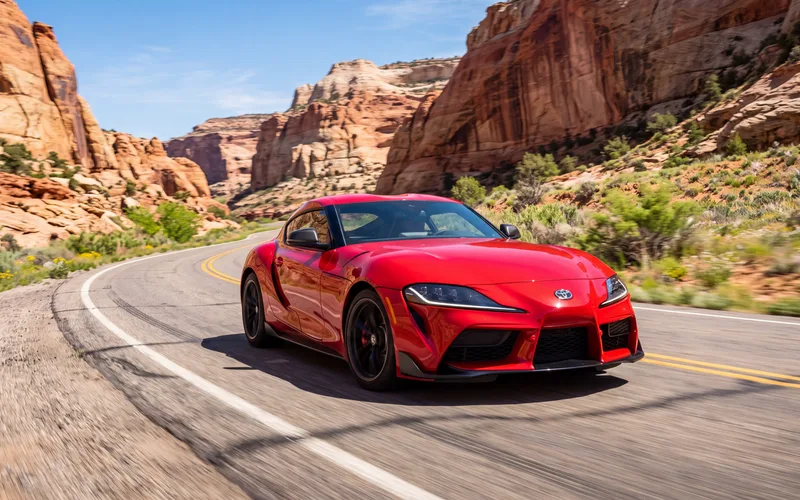 Toyota GR SupraSports CarBetter at: Refinement
The direct rival for the same buyer — sharper handling, adaptive dampers, a far better cabin and much stronger resale, if you can absorb roughly $12,000 more up front.
Compare 2.47C+
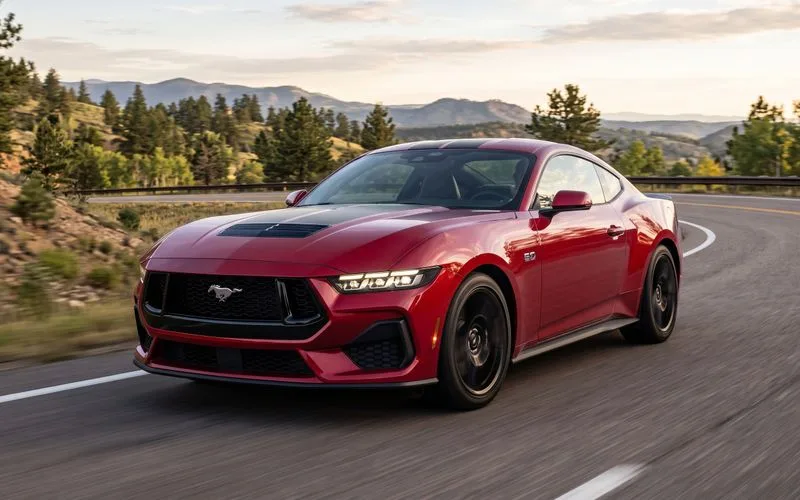 Ford MustangSports CarBetter at: Practicality
If you need rear seats, real trunk space or a V8 soundtrack, the Mustang covers the Z's biggest practical and sensory gaps at similar money.
Compare1.93C-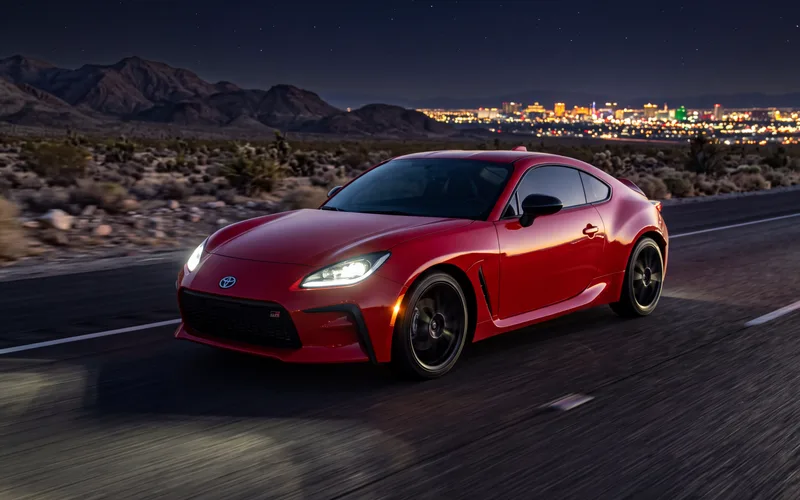 Toyota GR86Sports CarBetter at: Cost to own
Roughly $13,000 cheaper with better fuel economy, free scheduled maintenance and outstanding resale — the sensible choice if you can live with 228 hp.
CompareProduction history
Best fit & conditions
Higher scores mean a better fit for that use case. Learn more about use-case fit →
Subject profile
Academic Probation · NHTSA safety recalls
No NHTSA safety recall is on record for the 2026 Nissan Z. Other model years of the Z have 2 — listed below.
2 recalls on other model years of the Z (2023–2024)
Oct 24, 2024Electrical system: wiring · Structure: body: bumpersThe connectors for the right-side pedestrian detection sensors may be reversed in the front bumper harness, which can prevent the pop-up engine hood from activating as intended.
Defect
Nissan North America, Inc. (Nissan) is recalling certain 2023-2024 Nissan Z vehicles. The connectors for the right-side pedestrian detection sensors may be reversed in the front bumper harness, which can prevent the pop-up engine hood from activating as intended.
Risk
A pop-up engine hood that does not activate in a pedestrian crash can increase the risk of injury.
Remedy
Dealers will replace the front bumper harness, free of charge. Owner notification letters were mailed December 11, 2024. Owners may contact Nissan customer service at 1-800-867-7669. Nissan's number for this recall is R24B6.
NHTSA campaign 24V798000 ↗Manufacturer no. R24B64,036 vehicles potentially affected (all models in the campaign)Owners notified Dec 11, 2024Filed by Nissan North America, Inc.Filed as ZOct 26, 2023Structure: body: bumpersThe fasteners in the left-side front bumper reinforcement clip may loosen, which can prevent the pop-up engine hood from activating.
Defect
Nissan North America, Inc. (Nissan) is recalling certain 2023-2024 Nissan Z vehicles. The fasteners in the left-side front bumper reinforcement clip may loosen, which can prevent the pop-up engine hood from activating.
Risk
A pop-up engine hood that does not activate and raise the rear end of the hood in a frontal pedestrian crash, can increase the risk of injury.
Remedy
Dealers will tighten the fasteners, free of charge. Owner notification letters were mailed December 7, 2023. Owners may contact Nissan's customer service at 1-800-867-7669. Nissan's number for this recall is R23C8.
NHTSA campaign 23V725000 ↗Manufacturer no. R23C8988 vehicles potentially affected (all models in the campaign)Owners notified Dec 7, 2023Filed by Nissan North America, Inc.Filed as Z
Source: NHTSA Office of Defects Investigation recall database, model years 2017–2026. Recalls are listed by model year as the manufacturer filed them; whether a specific car is affected depends on its VIN — check a VIN at nhtsa.gov ↗. NHTSA model names matched to this page: Z.
Detailed scoring by subject
1Performance & PowertrainMid-pack among this car's ten categories.2.11C
The 2026 Z carries the RZ34 generation's 3.0L VR30DDTT twin-turbocharged DOHC V6 at 400 hp, unchanged in every year of the generation; the NISMO's retuned version of the same engine makes 420 hp. Scored on the 400 hp figure that covers the volume Sport and Performance trims. That is a genuinely strong number for the coupe band — more than the GR Supra (382 hp) and a base 911 Carrera (388 hp) — and it is the single strongest part of this car's case.
350 lb-ft available from 1,600 rpm all the way to 5,600 rpm is a broad, usable plateau that gives the Z real flexibility in any gear. It trails the GR Supra's 368 lb-ft and the Mustang GT's V8, but comfortably clears a base 911 Carrera (331 lb-ft) and every naturally aspirated four-cylinder sports coupe in the segment.
Nissan does not publish an official 0–60 figure, so this is scored on instrumented magazine testing of the 400 hp car: roughly 4.5 seconds for the manual and about 4.3 for the nine-speed automatic, with the 420 hp NISMO around 4.0. Quick in absolute terms, but a step behind the GR Supra (3.9 s), 911 Carrera and Corvette — the Z's roughly 3,500–3,600 lb curb weight and traction-limited launch eat into its power advantage.
The VR30DDTT delivers a genuinely muscular, deep mid-range and pulls hard to redline, and it is smooth once on boost — but it does not match the class benchmarks on delivery or character. Reviewers consistently flag a soft, laggy first inch of throttle off idle (most noticeable pulling away in first gear with the manual) and a coarse, muted, unmemorable engine note that lets the car down against the naturally aspirated flat-six and V8 rivals and the near-lag-free BMW B58 in the GR Supra. Solidly upper-middle of the segment rather than top tier: below the AMG GT, Corvette and Supra, clearly above the underpowered BRZ/GR86 pair.
Two adequate gearboxes rather than two great ones. The standard six-speed manual — with an EXEDY high-performance clutch and downshift rev-matching that can be switched off — is the enthusiast's pick and the reason many buyers choose this car over a Supra, but its throw is longer and its gate notchier than the best units in the class. The optional nine-speed automatic (a torque-converter Jatco unit with launch control and paddles) is decisive enough in Sport mode but is not in the same league as the ZF 8HP for shift speed or logic, and draws criticism for slurred low-speed behaviour and occasional hesitation. Credit for offering a real three-pedal option at all — increasingly rare — but below the Supra's ZF-plus-manual pairing.
Rear-wheel drive only, on every trim, with no all-wheel-drive variant offered at any point in the RZ34 generation or in any market. That is an intentional sports-car layout rather than an oversight, but this item measures all-weather drivetrain capability and the Z sits at the bottom of the band: traction hardware amounts to a mechanical clutch-type limited-slip differential on the Performance and NISMO trims plus stability control, and the base Sport trim does without the mechanical LSD entirely. Marginally below the GR Supra, which at least fits an active limited-slip differential as standard across its range, and well behind the 911 (Carrera 4/4S) and Corvette E-Ray, which do sell all-wheel drive.
One engine across the entire lineup. Every 2026 Z runs the same 3.0L twin-turbo V6, differentiated only by a state of tune — 400 hp on Sport and Performance, 420 hp on the NISMO — which is a trim variation, not a distinct powertrain. There is no four-cylinder, no V8, and no hybrid, plug-in hybrid or EV variant, and none has ever been offered in the generation. The manual/automatic choice earns a few points over single-gearbox rivals, but transmissions are not powertrains. Bottom band, a shade above the GR Supra only because the NISMO's higher-output tune gives buyers a second meaningful power level.
2Efficiency & RangeThe Z's lowest-graded category.0.00F
A 400 hp twin-turbo V6 in a roughly 3,500 lb rear-drive coupe with no electrification of any kind returns about 20 MPG combined with the manual and 22 with the automatic. Scored on the 6-speed manual to match the representative configuration used in Category 1. Either figure sits at or below the bottom of the coupe normalization band (22 MPG), so this scores zero — the Z is thirstier than a GR86 or BRZ (22 MPG) and close to a base Corvette Stingray (19 MPG) despite giving up two cylinders and a lot of performance to it.
City economy is where the Z is weakest — 18 MPG for the manual, 19 for the automatic. There is no hybrid assist and no cylinder deactivation to soften stop-and-go running, and the turbocharged V6 is working against real mass. Below the coupe band floor of 20 MPG, so a zero; among the coupes scored so far only the V8 muscle and sports cars (Corvette Stingray at 16, Mustang GT at 15) rate worse.
The manual's tall sixth gear still only manages about 24 MPG on the highway; the 9-speed automatic's extra ratios are worth a real 4 MPG here, at roughly 28. Even the automatic figure barely clears the coupe band floor of 26 MPG, and the manual falls under it for a zero. The GR Supra (29 MPG highway with the 8AT) and the EcoBoost Mustang (33) are meaningfully better cruisers on fuel.
A 16.4-gallon (62-liter) tank and 20 MPG combined works out to roughly 328 miles between fills for the manual, about 361 for the automatic, and drops toward 250 in hard driving. That is genuinely short-legged for a car sold partly on its grand-touring credentials. It does beat the small-tank BRZ/GR86 pair (~290 mi) and the GR Supra (~343 mi on a 13.7-gallon tank), but trails the Mustang EcoBoost (~416 mi) by a wide margin.
At the EPA's standard 15,000 miles a year the manual burns about 750 gallons of premium — roughly $3,110 annually, or about $2,830 for the automatic. That is above the top of the coupe band ($2,800, where lower is better), so it scores zero. The premium-only requirement is what pushes it over: the same mileage on regular would save several hundred dollars a year. Among the coupes scored so far only the Corvette (~$3,450) costs more to feed.
Premium 91-octane is required, not merely recommended — the VR30DDTT's boost and compression leave no headroom for regular, and Nissan specifies premium across the range. There is no E85 capability, no diesel and no home-charging alternative, so an owner has no way to opt into cheaper energy. Bottom band, in line with the Corvette (22) and GR Supra (20); the EcoBoost Mustang (45) and BRZ (55) rate better because premium is advisory rather than mandatory on those cars.
3SafetyGrades below the middle of the scale.1.61D
NHTSA has published no overall, frontal, side or rollover rating for the RZ34 Nissan Z in any model year since its 2023 US launch; low-volume sports coupes are routinely skipped by NCAP. Estimated at the segment-typical 4 stars per the same convention applied to the untested Corvette, GR Supra and BRZ.
IIHS has not crash-tested the RZ34 Z, so there is no Top Safety Pick award and no individual crashworthiness results to weigh — neither a demonstrated strength nor a known deficiency. Scored at the same untested-but-no-known-concerns level used for the GR Supra and BRZ.
Nissan Safety Shield 360 is standard across the Z range — AEB with pedestrian detection, blind spot warning, rear cross traffic alert, lane departure warning, rear automatic braking and high beam assist — which is unusually complete standard equipment for a sports coupe. It falls short of the top band because there is no lane-keeping intervention or centering at any price and adaptive cruise is tied to the automatic transmission.
Standard Intelligent Forward Collision Warning plus AEB with pedestrian detection, and standard rear automatic braking — a complete-on-paper system. Scored mid-band because IIHS has run no front crash prevention test on the Z, so daytime pedestrian and nighttime performance are unmeasured for this specific car.
Blind Spot Warning and Rear Cross Traffic Alert are standard on every Z trim rather than trim-gated, which matters in a car with thick rear pillars and a shallow back window. Held below the top band because both are alert-only — no active steering or braking intervention, and no safe-exit alert.
The Z offers Lane Departure Warning only — an audible/visual alert with no steering intervention — and no lane centering at any trim level, since ProPILOT Assist is not available on this platform. That places it in the crude-or-absent band, well behind rivals that at least provide corrective steering.
Intelligent Cruise Control is a full-speed-range radar system on 9-speed automatic cars, but manual-transmission Zs — a large share of sales in this model — get conventional fixed-speed cruise only. There is no highway-assist layer combining ACC with lane centering, so the system stops at distance-keeping.
No hands-free highway driving system is offered on the Z at any trim. Nissan's ProPILOT Assist hands-off capability is reserved for Ariya and Rogue-class models and has never been extended to the Z.
LED projector headlights with the signature twin-element daytime running lamps are standard across the range, and High Beam Assist is standard via Safety Shield 360. No adaptive or curve-responsive function is offered, and IIHS has published no headlight rating for the Z, so the score sits at the segment default.
The front-engine layout and relatively low cowl give reasonable forward sightlines, but the Z's thick rear three-quarter pillars, high beltline and shallow rear glass create a substantial over-the-shoulder blind zone. Compensation is limited to a standard rear-view camera — there is no surround-view system — leaving the standard blind spot warning to do the real work.
4Space & ComfortGrades near the bottom of the scale.0.60F
The RZ34 Z is a strict two-seat coupe across Sport, Performance and NISMO — there is no 2+2 configuration, unlike the 300ZX 2+2 of earlier generations.
Mid-pack front headroom for a sports coupe — a shade under the GR Supra's 38.3 in and a shade over the Corvette's 37.9 in. No sunroof is offered on any Z trim, so there is no headliner penalty on upper trims.
Genuinely good front legroom and one of the Z's real packaging strengths, beating both the GR Supra (42.2 in) and the Corvette (42.8 in). Tall drivers are limited more by seat-height adjustment and steering-column travel than by legroom.
The smallest cargo hold of any coupe in the dataset, below the coupe band's 10 cu ft floor and therefore scoring 0. The Z carries over the 370Z's shallow hatch area with a structural strut brace intruding on the load floor, and there is no folding rear seat to extend it.
Sparse and awkward even by two-seat sports car standards: the Z has no conventional glovebox, relying on two small lidded bins on the rear bulkhead behind the seats, a shallow center console box and thin door pockets. Cupholder placement aft of the shifter fouls the driver's arm in the manual car.
The volume Performance trim's leather-and-suede seats with 8-way power for the driver are supportive over long stints and a clear improvement on the 370Z's flat cushions. Marked down for a seating position that sits high for a sports car and short seat travel for taller drivers; the NISMO's heavily bolstered buckets trade comfort for lateral grip.
The Z uses fixed-rate dampers on every trim — no adaptive suspension is offered anywhere in the lineup — and the volume Performance trim's 19-inch wheels on Bridgestone Potenza S007 rubber leave it firm and busy over broken pavement. Body control is fine; compliance is not. The Sport trim on 18s is noticeably more settled.
One of the Z's weakest comfort traits. It sits on a heavily revised version of Nissan's long-serving FM platform, and highway road roar over coarse surfaces is a persistent complaint, compounded by wide summer tires and a large unlined hatch cavity resonating directly behind the occupants' heads.
The volume Performance trim covers the basics with dual-zone automatic climate control and heated seats standard, but the comfort list stops there. Ventilated seats, a heated steering wheel and memory seating are unavailable at any price, and the base Sport trim does without heated seats entirely.
5Cost of OwnershipOne of the Z's weakest categories.0.38F
The RZ34 opens with the Sport trim in the mid-$44K range before a ~$1,350 destination charge, putting the entry Z roughly $13K above a GR86/BRZ and ~$12K below a GR Supra 3.0. Pricing has crept up every year since the $39,990 launch of the 2023 car and 2026 continues that drift with no structural change to the lineup.
The Performance trim is the volume seller and the one reviewers uniformly recommend — it adds the mechanical limited-slip differential, larger brakes, 19-inch wheels and the sport-tuned suspension the Sport does without — but it carries a ~$10K premium that lands the typical transaction near the top of the coupe pricing band. Only the manual/9AT choice is cost-neutral.
The VR30DDTT twin-turbo V6 requires premium fuel and carries turbo-era service exposure, and the Performance trim's 255/275-section summer tires are a recurring several-thousand-dollar consumable. Nissan parts and labor are cheaper than the Supra's BMW-sourced hardware, so the Z should sit between the naturally aspirated GR86 (~$5,400) and the GR Supra (~$6,500).
Two forces pull in opposite directions: a low-volume enthusiast coupe with an available manual holds value well above a mainstream Nissan, but Nissan's brand residuals are weak and the Z has needed real incentives since inventory built up in 2024–25. Mid-50s retention places it above the Mustang (~52%) and far below the Supra (~76%) and GR86 (~86%), whose Toyota badge and supply constraint the Z does not share.
Nissan's new-vehicle limited warranty is the industry-standard 3-year/36,000-mile basic term — the segment floor, matching Toyota, Subaru and Ford, with no sports-car-specific extension.
Nissan covers the powertrain for 5 years/60,000 miles — the same floor its Japanese rivals offer, and notably short of the 10-year/100,000-mile coverage a Hyundai/Kia buyer gets, which matters more than usual on a twin-turbocharged engine.
Nissan includes no complimentary scheduled maintenance — every oil change on the Z is out of pocket from day one, unlike a GR86 buyer's two years of ToyotaCare. What the Z does get is roadside assistance tied to the basic warranty term and a NissanConnect connected-services trial, which is basic coverage rather than a real perk. Scored just below the Mustang and BRZ (38), both of which pair the same no-maintenance posture with a longer or equal roadside term, and far below the GR86/Supra (78).
$55,600 volume-trim price minus its estimated resale value after 5 years (55% retained, or about $30,580) leaves about $25,020 in depreciation. Add the projected $5,900 in 5-year maintenance and repairs, and owning this vehicle for 5 years costs about $30,920 in total.
6Reliability & QualityOne of the Z's strongest categories.2.42C+
Mixed-signal, thin-data case that lands in the lower half of the average band. The RZ34 Z is a low-volume model, so Consumer Reports rarely accumulates enough survey responses to publish a confident predicted-reliability rating for it, and J.D. Power's model-level quality figures for the Z are largely estimated from brand and segment norms rather than earned from a deep sample. What signal does exist is not flattering: the twin-turbo V6 carries a mixed service history from its Infiniti applications and the 9-speed automatic has drawn owner complaints specific to this car, against a brand that grades mid-pack. Scored below the naturally aspirated mainstream sports coupes in this dataset (Corvette 72, BRZ 73, Mustang 75) and above the AMG GT (58).
Brand-level item, held identical to the figure already carried for the 2026 Rogue, Altima, Sentra, Versa and Frontier in this dataset — a sports car does not get a different Nissan than a sedan does. Nissan sits in the lower-middle of multi-year dependability studies: consistently mid-pack in J.D. Power's Vehicle Dependability Study and mid-to-low in Consumer Reports brand rankings, never top-5 and never bottom-third. That is squarely the middle of the 50-79 band.
The cleanest item in this category and the main thing holding the score out of the 50s. The RZ34 has accumulated a comparatively light recall record across its 2023-2026 run — component- and software-level campaigns rather than anything systemic — helped by low production volume and by an underlying FM platform and body structure that have been in service for two decades. Service bulletins cluster around the 9-speed automatic's shift behavior rather than around anything structural. Scored above the Corvette and Mustang (both 62), which have carried heavier campaign counts this generation, and below the Supra (80).
Genuinely mixed history, which is the definition of this band. The 3.0L VR30DDTT twin-turbo V6 has been in production since roughly 2016 in the Infiniti Q50/Q60 Red Sport, so it is not an unproven design — but its service record there included documented turbocharger coolant and oil-feed line problems and scattered oil-consumption reports, and it remains a hot, complex, forced-induction unit relative to the naturally aspirated V8s and flat-four in this comparison set. The 6-speed manual, an evolution of the 370Z unit, is the durable half of the drivetrain; the 9-speed automatic is a conventional torque-converter JATCO shared with Frontier and Pathfinder but has drawn Z-specific shift-quality and limp-mode complaints. Scored well below the proven NA units in this dataset (Mustang Coyote 85, Corvette LT2 76, Supra B58 87) and modestly below the AMG M177 (74).
The weakest item in the category and the most consistently criticized aspect of the car. This item is explicitly scored relative to price, and the Z is a Premium-class coupe carrying switchgear, door-panel plastics and HVAC controls lifted from far cheaper Nissan and older Infiniti parts bins — a complaint that has appeared in essentially every major review of the RZ34 since launch. The triple-pod dash motif and the Alcantara-trimmed surfaces on the upper trims earn back some credit, and the driving-position hardware is good, but the ambience does not read like a car of this price. Scored below the BRZ (60), which uses cheap materials at roughly half the price, and far below the Corvette (80) and AMG GT (76).
Assembly quality is clearly ahead of perceived material quality — the distinction that separates this item from 6.2.1. The Z is built at Nissan's Tochigi plant in Japan, the same low-volume line that assembles the GT-R and Nissan's larger rear-drive cars, and panel fit, structural solidity and the absence of rattle complaints reflect that. By 2026 the body has been in production four model years with no pattern of misalignment or initial-quality complaints. Scored above the domestic sports coupes (Corvette 70, Mustang 68, BRZ 66) and below the AMG GT (80) and Supra (82).
Coverage is not the problem — Nissan runs roughly a thousand US franchises, so a Z owner is within reach of a warranty dealer almost anywhere, a real advantage over the boutique networks some sports cars depend on. Two things hold it to the middle of the band: Nissan's service satisfaction scores have persistently trailed the industry average, and the Z is a low-volume specialty car that a generalist Nissan service department may see only a handful of times a year, so drivetrain-specific expertise is thinner than the raw dealer count suggests. Held marginally below the mainstream Nissans in this dataset (Rogue and Frontier at 72) for that reason, and below the domestic performance networks (Mustang 82, Corvette 80).
The category's clear strength and the single item that most separates the Z from the European sports cars it is cross-shopped against. Routine wear parts are ordinary Nissan-priced and widely stocked, the VR30DDTT and much of the chassis hardware are shared with the Infiniti Q50/Q60, and the Z nameplate carries one of the largest enthusiast aftermarkets of any sports car, which keeps both parts and independent-shop expertise abundant. What keeps it out of the 80s is that turbocharger, charge-cooling and 9-speed-automatic work is materially more expensive than the naturally aspirated repairs its rivals need, and low production volume means some body and trim pieces are dealer-only. Comparable to the BRZ and Corvette (both 78), far above the AMG GT (42).
7Technology & InfotainmentGrades below the middle of the scale.1.52D
The RZ34 offers a 9.0-inch NissanConnect touchscreen on the Performance and NISMO trims and an 8.0-inch unit on the entry Sport, unchanged since the generation's 2023 launch. Scored on the 9.0-inch screen because cat5 establishes Performance as the volume seller; nine inches is still small for a $55K car in 2026, where mainstream crossovers ship 12.3-inch displays.
NissanConnect here is plain but sensibly arranged, and the Z keeps genuine hard controls — rotary climate dials, a volume knob and physical shortcut keys — so daily operation never forces a menu dive. Marked down for dated graphics, middling screen resolution and processing speed that reviewers describe as adequate rather than quick; it is the weakest-feeling part of an otherwise characterful cabin.
Wireless Apple CarPlay is standard, but Android Auto is wired-only on every Z trim — the same asymmetry that runs across this generation of Nissan head units. That is the definition of the middle band: one platform gets the modern experience, roughly half of US phone owners still have to plug in.
The volume Performance trim does get embedded navigation as standard with its 9.0-inch system, which is better than the Supra's base car or any GR86, but the base Sport has no native maps at all. Voice control is the older command-list implementation rather than a natural-language assistant, so most owners default to CarPlay — squarely the middle band.
The volume Performance trim carries a standard 8-speaker Bose Premium system with speakers built into the seat headrests plus active noise cancellation and active sound enhancement — a genuinely good setup for a two-seat cabin and well above the no-branded-option GR86/BRZ twins. Short of the top band because eight speakers and a mid-tier Bose tune do not match the 12-speaker JBL or Burmester systems in pricier rivals.
A 12.3-inch fully digital TFT cluster is standard on every Z trim including the base Sport, with selectable layouts and a Sport mode that places the redline at the top of the dial so the shift point sits at 12 o'clock — developed with input from professional drivers. This is the strongest single element of the Z's tech package and clearly beats the Supra's 8.8-inch cluster and the GR86's 7.0-inch TFT.
There is no whole-vehicle over-the-air update program on the Z — Nissan's OTA effort is concentrated in its newer EV and crossover architectures, and the RZ34's low-volume head unit sees little software attention. Connected navigation cars can take map and infotainment updates, which is why this sits above a GR86 rather than at the floor, but nothing here adds features after purchase.
NissanConnect Services through the MyNISSAN app covers the expected core set — remote lock/unlock, vehicle locator, alarm notification and maintenance alerts — on a complimentary trial that converts to a paid subscription. It sits below the rest of the Nissan lineup because remote engine start is fob-based and unavailable with the 6-speed manual, which is a large share of Z sales, and there is no phone-as-key.
Device power is thin even by two-seat-coupe standards: a USB-A and a USB-C port in the console area plus a 12-volt outlet, with no wireless charging pad offered on any trim and no AC outlet. In a cabin reviewers already criticize for sparse storage, there is nowhere good to put a phone while it charges.
Nissan Intelligent Key proximity entry with push-button ignition is standard on all three 2026 trims including the base Sport, which is better coverage than the BRZ's entry grade. Held to the middle band because remote engine start is key-fob-only and not available on manual cars, there is no phone-as-key, and a coupe has no powered-liftgate convenience to earn points for.
A rear-view camera is standard and Safety Shield 360 brings blind spot warning, rear cross traffic alert and rear automatic braking across the range — meaningful in a car with a thick C-pillar and poor over-shoulder visibility. But Nissan's Around View Monitor surround camera is not offered on the Z at any price, there is no front sonar and no parking automation, so this stays in the lower-middle band.
No head-up display is offered on any 2026 Z trim, including the roughly $67K NISMO, and none is available as a dealer accessory. This is a real omission in a performance car where speed and shift-point data projected on the glass has obvious value — the Supra makes one standard on its volume trim, which is most of why it out-scores the Z in this category.
8Use-Case FitOne of the Z's weakest categories.0.00F
The Z is a strict two-seater with no rear bench, no LATCH or top-tether anchors, and no way to carry a child seat outside the front passenger position. Replaces a placeholder score that had assumed family-hauler competence this body style cannot have.
Safety Shield 360 is standard on every 2026 Z trim — AEB with pedestrian detection, blind-spot warning, rear cross-traffic alert, lane-departure warning, rear automatic braking and high-beam assist — which is broader standard content than most sports coupes carry. It is capped well below the family band by the absence of any rear seating, no published NHTSA or IIHS ratings, no lane centering, and adaptive cruise being tied to the 9-speed automatic.
Two seats and 6.9 cu ft of cargo means a family road trip is off the table — the Z carries two people and roughly a weekend's soft luggage. Cabin noise and the absence of a glovebox further limit its long-haul family case.
The VR30DDTT's 350 lb-ft plateau from 1,600 rpm and the available 9-speed automatic make the Z genuinely tractable in stop-and-go traffic, and full physical climate controls help. Firm fixed-rate damping, a noisy cabin, thick rear pillars and no glovebox keep it in the mid band rather than the relaxing-daily-driver range.
20 MPG combined on required 91-octane premium works out to roughly $3,110 a year at 15,000 miles, before wide performance tires and a sports-coupe insurance premium. This is an expensive way to commute even by sports-car standards.
At roughly 172 in long and 73 in wide the Z has a compact urban footprint essentially identical to the GR Supra's, and a rear-view camera is standard. Poor over-the-shoulder visibility past the long hood and high tail, plus the absence of any 360-degree camera, mean tight spots take care.
Nissan publishes no towing capacity for the Z in the US market, and a two-seat cabin with 6.9 cu ft behind the seats rules out meaningful payload or work duty. The vehicle simply is not a work tool.
The Z uses a conventional steel unibody and a VR30DDTT V6 with a long service history in the Infiniti Q50/Q60, so the hardware is more workaday than its exotic-material rivals. Against that, roughly 4 in of ground clearance, summer performance tires on Performance and NISMO, and a leather-and-suede interior are all wrong for abuse, and Nissan's mid-pack reliability standing gives no fleet-proven track record.
There is no 120V outlet, no roof rails, no factory hitch and no tie-down provision beyond a cargo net, and Nissan's Z accessory catalog is styling- and performance-oriented rather than work-oriented.
A 16.4-gallon tank gives roughly 328 miles between stops with the manual and 361 with the automatic — better legs than the small-tank BRZ and GR86 — and the Performance's power-adjustable seats hold up well over a day. Sustained road noise, firm damping and the lack of adaptive cruise on manual cars all cost it on fatigue over a genuinely long haul.
The Z is rear-wheel drive only in every 2026 configuration, sits roughly 4 in off the ground, has no roof rails or roof-load rating, no tow rating for toys, and wears summer performance rubber on Performance and NISMO. It is pavement-bound with essentially no outdoor provision.
The hatchback liftgate gives a usefully wide opening, but there are only 6.9 cu ft behind the seats, no rear seats to fold for overflow, a strut brace crossing the cargo bay, and no glovebox — so bulky or oddly shaped gear is a real problem.
9Driving ExperienceThe Z's best-graded category.3.23B+
The RZ34 Z carries into 2026 unchanged: a short-wheelbase (100.4 in) rear-drive coupe on double-wishbone front / multilink rear suspension, with the volume Performance trim adding a mechanical limited-slip differential and 19-inch RAYS forged wheels on 255/40 front, 275/35 rear rubber. Grip and body control are strong for the class, but reviewers consistently place its cornering precision and rough-road composure a step behind the GR Supra and Cayman, so it sits below the Supra's 84.7 and just under the Corvette/911 tier rather than at it.
The Z's electrically assisted rack is quick, accurately weighted and well-centered, but the near-universal criticism across reviews is that it filters out road texture — precise without much genuine feedback. That is squarely the 50-79 'precise enough but numb' band and trails the segment's feel benchmarks.
The volume Performance trim runs uprated Akebono brakes — roughly 14-inch front rotors with four-piston calipers, 13.8-inch rears with two-piston calipers — giving a firm, well-modulated street pedal and stopping distances in the mid-150-foot range from 70 mph. Confidence is LOW because those distances are recalled rather than re-verified, and the base Sport trim's smaller brakes are a known weak point under sustained track use.
The 3.0L VR30DDTT twin-turbo V6 makes 400 hp and 350 lb-ft with peak torque from about 1,600 rpm, so midrange response is strong and the engine is mechanically smooth. It loses points for noticeable off-boost lag at tip-in and for a 9-speed automatic whose shift calibration drew criticism early in the generation; the 6-speed manual's clutch and shift action are a genuine strength.
This is the Z's weakest refinement dimension by critical consensus: the turbocharged V6 is free of harshness or driveline vibration, but its note is muted and characterless under load, and reviewers routinely call it out as a letdown in a car otherwise built around sensory engagement. Audible but inoffensive — mid-band, and below naturally aspirated rivals that sell partly on sound.
Nissan publishes a curb-to-curb turning diameter of approximately 34.1 ft for the Z, a consequence of the 100.4-inch wheelbase and compact 172.4-inch overall length — near the tight end of the coupe band. Confidence is LOW: the figure is recalled from the spec sheet rather than re-verified, and the 19-inch Performance/NISMO wheel-and-tire package may widen it slightly versus the 18-inch Sport.
The Z gets the fundamentals right — a low hip point, well-bolstered seats, a clean primary control layout and the three-pod gauges atop the dash — but it carries real compromises: a tilt-only steering column with no telescoping adjustment, which limits how many drivers can find an ideal relationship to the wheel and pedals, plus thick C-pillars and shallow rear glass that hurt over-the-shoulder visibility. Comfortable for most with notable reaches, not excellent for all sizes.
Front-engine, rear-drive, 400 hp, a well-regarded six-speed manual with rev-matching on the Performance trim, and a limited-slip differential add up to a car enthusiasts actively recommend and that rewards taking the long way home. It lands in the 80-100 band but not at its top, because the muted engine note and merely-good steering feel keep it short of the Supra/Corvette level of sensory reward.
10Value & Market PositionOne of the Z's strongest categories.2.34C+
For a car opening around $45K delivered, the base Z Sport is thin: cloth seats, 18-inch alloys, an 8-inch touchscreen and no mechanical limited-slip differential — the LSD, the larger four-piston front brakes, the 19-inch RAYS forged wheels, heated leather/synthetic-suede seats, the 9-inch screen with navigation and the 9-speaker Bose system all sit behind the roughly $10,000 jump to Performance. The genuine offset is safety: Safety Shield 360 (AEB with pedestrian detection, blind spot warning, rear cross-traffic alert, rear automatic braking, lane departure warning, high beam assist) is standard on every trim rather than trim-gated, and the 12.3-inch digital cluster and wireless Apple CarPlay/Android Auto are standard too.
Power and drivetrain per dollar is the Z's whole argument and it is a strong one — 400 hp and 350 lb-ft from the twin-turbo 3.0L VR30DDTT, rear-wheel drive and a standard six-speed manual for roughly $45K delivered, where a GR Supra 3.0 asks around $57K for 382 hp and a Porsche 718 costs far more again. Roughly 4.5 seconds to 60 mph for mid-$40Ks is close to the best horsepower-per-dollar in the segment. It falls short of a top-band score because the content around the powertrain is dated — hard interior plastics and Z34-era switchgear, an 8-inch base screen, no LSD until Performance — so the money buys an engine and a drivetrain rather than a complete modern car.
Three real trims spanning roughly $45K to $67K — Sport, Performance and the 420-hp NISMO — plus the Heritage Edition appearance treatment on Performance, is a wider and better-spaced ladder than the GR Supra's, and Sport and Performance each offer a six-speed manual or nine-speed automatic. The ceiling is still low: one engine family across the whole range, rear-wheel drive only with no AWD offered anywhere in the generation, one body style with no convertible, and the NISMO is automatic-only, so the enthusiast who wants the most power cannot have the manual.
The Z comfortably outsells the GR Supra and has settled into the low-to-mid four figures annually in the US, but that is a niche number in absolute terms and the trajectory has been downward since the generation's 2023 launch year, once the initial order-bank surge cleared. Acceptance is real but narrow — the car sells to a committed enthusiast audience rather than to the broader sports-coupe market a Mustang reaches, and Nissan's own retail difficulties have not helped showroom traffic.
The Z nameplate itself is a genuine asset — a 50-plus-year lineage from the 240Z that gives this car heritage credibility almost nothing else in the segment can claim, and the RZ34's retro-referencing design trades on it deliberately. The badge on the hood is the problem: Nissan's brand equity sits well below Toyota's or Honda's, its residual values trail the mainstream Japanese average, and the company's public financial restructuring has weakened perception further. Strong nameplate, weak corporate halo, which nets out at neutral rather than aspirational.
This is the Z's strongest showing in the category and a real, if slightly backhanded, buyer benefit. The early-launch market adjustments are long gone; slow turn on a niche coupe, a brand that discounts aggressively across its lineup, and Nissan's need to move metal mean Z stock generally sits on lots and transacts at or below MSRP with subvented APR support commonly available — the opposite of the GR Supra and GR86, where allocation scarcity keeps buyers paying sticker. The NISMO is the exception and holds firmer.
2026 is the fourth model year of the RZ34, which launched for 2023 and has had no mid-cycle refresh — squarely mid-cycle by the calendar. What pulls it to the bottom of that band is that the generation was itself a heavy re-skin rather than a clean-sheet car: it carries over the FM platform architecture, core chassis hard points and much of the switchgear from the Z34 370Z, so the underpinnings are considerably older than the four years on the badge. Against that, replacement risk for a 2026 buyer is low — Nissan has no announced successor and, given its capital constraints, a redesign is not imminent.
Reviews of the RZ34 have been warm but qualified, and remarkably consistent across outlets: praise for the engine's mid-range muscle, the value of 400 hp at this price, the retro-referencing design and the decision to keep a manual, set against criticism of the dated cabin, a manual shifter and nine-speed automatic that neither rise to class benchmark, and a chassis reviewers repeatedly find less polished and less communicative than a GR86, BRZ or Cayman. In group tests the Z is typically the likeable pick rather than the winner, and it has not collected a major class award — no 10Best, no NACTOY win — which is exactly the well-reviewed-but-rarely-the-choice profile of this band.