

The verdict
A mixed-report sports car, strong on driving and held back by efficiency.
The 2026 GR Supra is a farewell lap for one of the best-driving sports cars Toyota has ever sold: 382 hp from a BMW-built turbo inline-six, 0-60 mph in 3.9 seconds, a still-available six-speed manual, and a chassis that pulls 1.00 g and stops from 70 mph in 147 feet. It is also a strict two-seater with a 10.2 cu-ft trunk, 25 mpg on required premium fuel, a 13.7-gallon tank that caps range near 343 miles, and a base price of $58,300 delivered that climbs past $70,000 for the limited MkV Final Edition. What makes it unusual among sports cars is what happens after you buy it — Toyota reliability, a 76% five-year resale figure that is among the best on the market, and a car that costs roughly $21,200 to own over five years. Buy it as a second car for the joy of driving; do not ask it to be your only car.
Jump to scoresStrengths
- Genuinely great chassis, brakes and turning circle
- The B58 turbo six is the best part of the car
- Depreciation barely touches it
What holds it back
- It is expensive to buy and thinly warrantied
- Two seats, 10.2 cu ft, and nowhere to put your phone
- Thirsty, and the tank is too small
Top alternatives
Cars shoppers cross-shop with the Toyota GR Supra 2.81B-
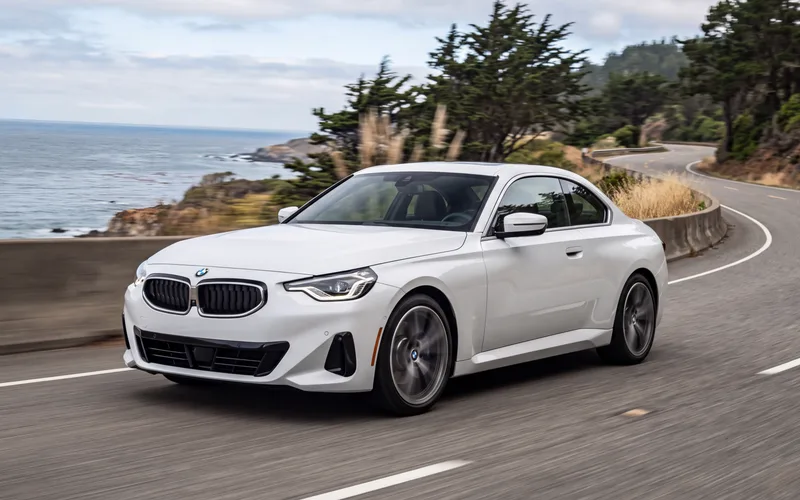 BMW 2 SeriesLuxury CoupeBetter at: Everyday usability
The M240i gives you the same 382 hp inline-six and ZF eight-speed in a car with back seats, a real trunk, optional all-wheel drive and newer infotainment, usually for less money.
Compare 1.92C-
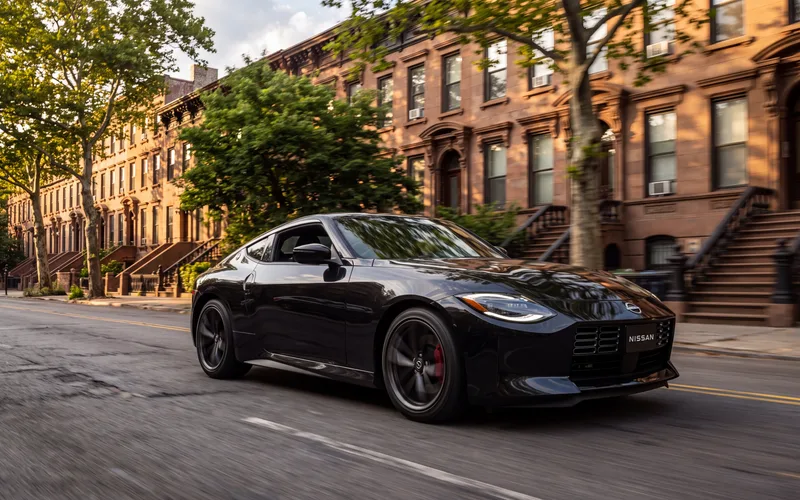 Nissan ZSports CarBetter at: Price
A 400 hp twin-turbo rear-drive coupe with a standard manual for roughly $14,000 less, if you can accept slower acceleration and much steeper depreciation.
Compare 2.01C
2.01C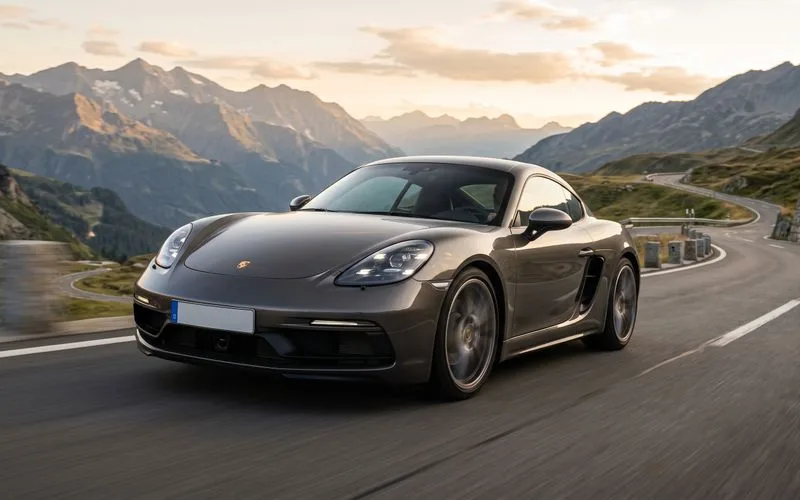 Porsche 718 CaymanSports CarBetter at: Steering feel
Step up in budget and the mid-engine Cayman delivers the steering feel and balance that reviewers say the Supra still lacks, plus more total luggage space.
CompareHow it's evolved
7 scored model years · 2020–2026
Subject scores by year
Hover or tap a score to see what moved it versus the year before. A corner mark flags a big swing.
| Year | Performance | Efficiency | Safety | Space | Cost | Reliability | Tech | Use-case | Driving | Value |
|---|---|---|---|---|---|---|---|---|---|---|
| 2026 | 66 | 23 | 52 | 45 | 61 | 80 | 60 | 31 | 85 | 61 |
| 2025 | 66 | 27 | 52 | 46 | 51 | 79 | 60 | 31 | 85 | 62 |
| 2024 | 70 | 27 | 50 | 46 | 57 | 77 | 59 | 31 | 84 | 65 |
| 2023 | 70 | 27 | 51 | 46 | 58 | 75 | 59 | 31 | 84 | 66 |
| 2022 | 69 | 23 | 51 | 43 | 61 | 75 | 58 | 31 | 83 | 63 |
| 2021 | 69 | 23 | 51 | 44 | 61 | 75 | 57 | 30 | 84 | 68 |
| 2020 | 62 | 28 | 49 | 44 | 62 | 72 | 56 | 30 | 83 | 69 |
Compare two years
Best fit & conditions
Higher scores mean a better fit for that use case. Learn more about use-case fit →
Subject profile
Academic Probation · NHTSA safety recalls
No NHTSA safety recall is on record for the 2026 Toyota GR Supra. Other model years of the GR Supra have 12 — listed below.
12 recalls on other model years of the GR Supra (2020–2023)
Jan 30, 2026Electrical system: starter assemblyPlease see the recall report for a complete list of all models. The engine starter may overheat and catch fire due to wear on an internal component.
Defect
BMW of North America, LLC (BMW) is recalling certain 2021-2023 Toyota Supra, 2022-2023 2 Series Coupe, 2021-2024 5 Series (xDrive), 2021-2022 Z4, 2022-2024 4 Series (Gran Coupe), 2021-2024 4 Series (Convertible and xDrive Convertible), 2021-2023 4 Series (Coupe), 2021-2024 3 Series, 2021-2023 X4, 2021-2024 X3 vehicles. Please see the recall report for a complete list of all models. The engine starter may overheat and catch fire due to wear on an internal component.
Risk
Fire increases the risk of injury.
Remedy
Dealers will replace the engine starter, free of charge. Owner notification letters were mailed July 21, 2026. Owners may contact BMW customer service at 1-800-525-7417 or Toyota's customer service at 1-800-331-4331. Vehicle Identification Numbers (VINs) involved in this recall will be searchable on NHTSA.gov beginning March 24, 2026.
NHTSA campaign 26V056000 ↗87,394 vehicles potentially affected (all models in the campaign)Owners notified Mar 27, 2026Filed by BMW of North America, LLCFiled as SUPRASep 23, 2025Electrical system: starter assembly: relayThe engine starter relay may corrode, causing the relay to overheat and short circuit.
Defect
BMW of North America, LLC (BMW) is recalling certain 2019-2021 BMW 330i, 2019-2022 BMW Z4, 2020-2022 BMW 530i, X3, X4, Toyota Supra, 2021-2022 BMW 430i, 430i Convertible, and 2022 BMW 230i vehicles. The engine starter relay may corrode, causing the relay to overheat and short circuit.
Risk
A short circuit in the starter relay may increase the risk of a fire.
Remedy
Owners are advised to park their vehicles outside and away from structures until the remedy is complete. Dealers will replace the engine starter, free of charge. Owner notification letters were mailed February 6, 2026. Owners may contact BMW customer service at 1-800-525-7417. Vehicle Identification Numbers (VINs) involved in this recall became searchable on NHTSA.gov November 14, 2025.
NHTSA campaign 25V636000 ↗199,674 vehicles potentially affected (all models in the campaign)Owners notified Feb 6, 2026Filed by BMW of North America, LLCFiled as SUPRAJul 23, 2024Equipment: other: labelsThe load carrying capacity modification label may display inaccurate added weight values. As such, these vehicles fail to comply with the requirements of Federal Motor Vehicle Safety Standard number 110, "Tire Selection and Rims."
Defect
Gulf States Toyota, Inc. (GST) is recalling certain Toyota 2023 GR Supra, 2024 4 Runner, Corolla, Grand Highlander, Grand Highlander Hybrid, Land Cruiser Hybrid, Tacoma, Tacoma Hybrid, 2023-2024 BZ4X, Corolla Cross Hybrid, GR Corolla, GR86, Highlander, Highlander Hybrid, Prius, Prius Prime, Sequoia Hybrid, Tundra, Tundra Hybrid, Venza Hybrid, 2023-2025 Crown, and 2025 Camry Hybrid vehicles equipped with GST accessories. The load carrying capacity modification label may display inaccurate added weight values. As such, these vehicles fail to comply with the requirements of Federal Motor Vehicle Safety Standard number 110, "Tire Selection and Rims."
Risk
A vehicle with an incorrect maximum capacity weight value may be overloaded, which can increase the risk of a crash.
Remedy
GST will mail new labels to owners, free of charge. Owner notification letters were mailed September 16, 2024. Owners may contact GST customer service at 1-800-444-1074. GST's number for this recall is 24R2.
NHTSA campaign 24V548000 ↗Manufacturer no. 24R233,848 vehicles potentially affected (all models in the campaign)Owners notified Sep 16, 2024Filed by Gulf States Toyota, Inc.Filed as GR SUPRADec 6, 2023Power train: automatic transmission: control module (tcm/pcm/tecm)The weld seam of the integrated transmission control unit's cover may not have been manufactured properly, which could allow automatic transmission oil to leak into the transmission control unit.
Defect
BMW of North America, LLC (BMW) is recalling certain 2023 Toyota GR Supra, 3 Series Sedan (330i xDrive, M340i xDrive, M3), 5 Series Sedan (530i, 530i xDrive, M5), 4 Series Gran Coupe (430i, 430i xDrive), 4 Series Coupe (430i, 430i xDrive, M440i xDrive), 4 Series Convertible (430i, 430i xDrive, M440i xDrive), 8 Series Coupe (840i, M850i xDrive, M8), 8 Series Convertible (840i, M850i xDrive, M8), 8 Series Gran Coupe (850i xDrive, M8), X3 SAV (X3 xDrive30i, X3M), X4 SAV (X4 xDrive30i), X5 SAV (X5 xDrive40i, X5 M50i, X5M), X6 SAV (X6 xDrive40i, X6 M50i, X6M), and Z4 sDrive30i, Z4 M40i vehicles. The weld seam of the integrated transmission control unit's cover may not have been manufactured properly, which could allow automatic transmission oil to leak into the transmission control unit.
Risk
Transmission oil that leaks into the control unit can lead to a seizure of the transmission gears, causing a sudden loss of drive power and increasing the risk of a crash.
Remedy
Dealers will replace the transmission mechatronics module and the automatic transmission fluid, as necessary, free of charge. Owner notification letters were mailed January 26, 2024. Owners may contact BMW customer service at 1-800-525-7417.
NHTSA campaign 23V821000 ↗Manufacturer no. Toyota - 23TA14552 vehicles potentially affected (all models in the campaign)Owners notified Jan 26, 2024Filed by BMW of North America, LLCFiled as SUPRAAug 2, 2021EngineDuring engine start, the engine management software may cause loss of braking assist. Full mechanical braking (without assist) remains available.
Defect
BMW of North America, LLC (BMW) is recalling certain 2020 M340i, M340i xDrive, 540i, 540i xDrive, X3 M40i, 2020-2021 X4 M40i, 745Le xDrive, 2019-2021 Z4 M40i, and 2020-2021 Toyota Supra vehicles. During engine start, the engine management software may cause loss of braking assist. Full mechanical braking (without assist) remains available.
Risk
Loss of braking assist can increase the risk of a crash.
Remedy
Dealers will update the engine management software, free of charge. Owner notification letters were mailed on September 17, 2021. Owners may contact BMW customer service at 1-800-525-7417.
NHTSA campaign 21V598000 ↗50,024 vehicles potentially affected (all models in the campaign)Owners notified Sep 17, 2021Filed by BMW of North America, LLCFiled as SUPRAJul 21, 2021Seat beltsThe passenger seat belt Automatic Locking Retractor (ALR) may deactivate early, before the webbing fully retracts. As such, these assemblies fail to comply with the requirements of Federal Motor Vehicle Safety Standard number 208, "Occupant Crash Protection."
Defect
BMW of North America, LLC (BMW) is recalling certain 2021 2 Series (230i, 230i xDrive, M240i, M240i xDrive), 330e, 330e Xdrive, 4 Series Coupe (430i, 430i xDrive, M440i xDrive) M4 Coupe, M4 Competition Coupe, BMW 4 Series Convertible (430i, M440i), BMW X1 sDrive28i, xDrive28i, 2 Series Gran Coupe (228i, 228i xDrive, M235i xDrive), M2 Competition Coupe, 330i, 330i xDrive, M340i, M340i xDrive, M3, M3 Competition, 530i, 530i xDrive, 540i, 540i xDrive, MINI Hardtop 2 Door (Cooper, CooperS, JCW), X2 sDrive28i, X2 xDrive28i, X2 M35i, Z4 sDrive30i, Z4 M40i, MINI Hardtop 2 Door (Cooper SE), MINI Convertible (Cooper, Cooper S, JCW), MINI Clubman (Cooper S, Cooper S All4, JCW), MINI Countryman (Cooper, Cooper All4, Cooper S, Cooper S All4, JCW All4), Rolls Royce Ghost, MINI Countryman (Cooper S E All4), Rolls Royce Phantom, Rolls Royce Cullinan, and Toyota Supra vehicles. The passenger seat belt Automatic Locking Retractor (ALR) may deactivate early, before the webbing fully retracts. As such, these assemblies fail to comply with the requirements of Federal Motor Vehicle Safety Standard number 208, "Occupant Crash Protection."
Risk
During a crash, a seat belt retractor that does not function as intended increases the risk of injury.
Remedy
Dealers will inspect the seat belt retractors (including the seat belts) and, if necessary, replace the retractors, free of charge. Owner notification letters were mailed on September 3, 2021. Owners may contact BMW customer service at 1-800-525-7417; 1-866-825-1525 (MINI); 1-877-877-3735 (Rolls Royce); and 1-888-270-9371 (Toyota).
NHTSA campaign 21V554000 ↗21,537 vehicles potentially affected (all models in the campaign)Owners notified Sep 3, 2021Filed by BMW of North America, LLCFiled as SUPRANov 12, 2020Fuel system, gasoline: storage: tank assemblyThe weld between the fuel tank halves may have been insufficiently welded, causing the weld to fail.
Defect
BMW of North America, LLC (BMW) is recalling certain 2020-2021 Z4 and 2020-2021 Toyota Supra vehicles. The weld between the fuel tank halves may have been insufficiently welded, causing the weld to fail.
Risk
The failed weld may allow fuel to leak, increasing the risk of a fire in the presence of an ignition source.
Remedy
BMW will notify owners, and dealers will replace the fuel tank, free of charge. The recall began December 18, 2020. Owners may contact BMW customer service at 1-800-525-7417 or Toyota customer service at 1-888-270-9371.
NHTSA campaign 20V700000 ↗Manufacturer no. Toyota: 20TB1649 vehicles potentially affected (all models in the campaign)Owners notified Dec 18, 2020Filed by BMW of North America, LLCFiled as SUPRAAug 27, 2020Exterior lighting: headlightsThe headlamps are able to be adjusted horizontally. As such, these vehicles fail to comply with the requirements of Federal Motor Vehicle Safety Standard number 108, "Lamps, Reflective Devices and Associated Equipment."
Defect
BMW of North America, LLC (BMW) is recalling certain 2019-2020 Z4 sDrive30i, Z4 M40i and 2020 Toyota Supra vehicles. The headlamps are able to be adjusted horizontally. As such, these vehicles fail to comply with the requirements of Federal Motor Vehicle Safety Standard number 108, "Lamps, Reflective Devices and Associated Equipment."
Risk
Should the headlamps be adjusted horizontally, there could be increased glare and reduced visibility for oncoming drivers, or reduced visibility for the vehicle operator, thereby increasing the risk of a crash.
Remedy
BMW will notify owners, and dealers will inspect the headlamp vertical and horizontal adjustment plugs, correcting them as necessary, free of charge. The recall began December 23, 2020. BMW owners may contact BMW customer service at 1-800-525-7417 or Toyota owners may contact Toyota customer service at 1-888-270-9371.
NHTSA campaign 20V516000 ↗4,265 vehicles potentially affected (all models in the campaign)Owners notified Dec 23, 2020Filed by BMW of North America, LLCFiled as SUPRAJun 15, 2020Steering: linkages: tie rod assemblyIn certain driving conditions, such as high temperatures and rough road surfaces, a steering gear tie rod may become damaged, possibly resulting in a fractured tie rod.
Defect
BMW of North America, LLC (BMW) is recalling certain 2019 Z4 sDrive30i, 2019-2020 330i xDrive, M340i and M340i xDrive, 2020 X3M and X4M, and Toyota Supra vehicles. In certain driving conditions, such as high temperatures and rough road surfaces, a steering gear tie rod may become damaged, possibly resulting in a fractured tie rod.
Risk
A damaged or fractured tie rod may affect vehicle handling and control, increasing the risk of a crash.
Remedy
BMW and Toyota will notify owners, and dealers will replace the steering gear tie rods, free of charge. The recall began August 14, 2020. Owners may contact BMW customer service at 1-800-525-7417 or Toyota customer service at 1-888-270-9371.
NHTSA campaign 20V355000 ↗Manufacturer no. Toyota: 20TA092,779 vehicles potentially affected (all models in the campaign)Owners notified Aug 14, 2020Filed by BMW of North America, LLCFiled as SUPRANov 27, 2019Exterior lighting: headlightsThe headlight control units may fail causing a loss of one or both of the headlights.
Defect
BMW of North America, LLC (BMW) is recalling certain 2020 Z4 M40i, Z4 sDrive30i, 330i and 330i xDrive vehicles as well as 2020 Toyota Supra vehicles. The headlight control units may fail causing a loss of one or both of the headlights.
Risk
Headlight failure can reduce the driver's visibility, increasing the risk of a crash.
Remedy
BMW will notify owners, and dealers will replace the headlight control units, free of charge. The recall is expected to begin January 17, 2020. Owners may contact BMW customer service at 1-800-525-7417 or Toyota customer service at 1-888-270-9371.
NHTSA campaign 19V850000 ↗Manufacturer no. Toyota - 19TA20245 vehicles potentially affected (all models in the campaign)Owners notified Jan 24, 2020Filed by BMW of North America, LLCFiled as SUPRASep 27, 2019Back over prevention: sensing system: cameraThe back-up camera and display settings can be adjusted such that the rear view image is no longer visible and the system will retain that setting the next time the vehicle is placed in reverse. As such, these vehicles fail to comply with the requirements of Federal Motor Vehicle Safety Standard (FMVSS) number 111, "Rearview Mirrors."
Defect
BMW of North America, LLC (BMW) is recalling certain 2018 540d, 2018-2020 530i, 530i xDrive, 540i, 540i xDrive, M550i xDrive, M5, 530e, 530e xDrive, X3 sDrive, X3 xDrive, X3 M40i, X3 M, and 2019-2020 X4 xDrive, X4 M40i, X4 M, X7 xDrive, X7 M50i, 740Li, 740Li xDrive, 750Li, 750Li xDrive, 8 Series Convertible and Coupe 840i, 840i xDrive, M850i xDrive, X5 sDrive, X5 xDrive, X5 M50i, X6 xDrive, X6 M50i, 330i, 330i xDrive, M340i, M340i xDrive, Z4 sDrive, Z4 M40i, 740Le xDrive and 745Le xDrive, 2018-2019 640i xDrive Gran Turismo and Rolls-Royce Phantom, 2019 M850i xDrive Gran Coupe and Rolls-Royce Cullinan and 2020 Toyota Supra vehicles. The back-up camera and display settings can be adjusted such that the rear view image is no longer visible and the system will retain that setting the next time the vehicle is placed in reverse. As such, these vehicles fail to comply with the requirements of Federal Motor Vehicle Safety Standard (FMVSS) number 111, "Rearview Mirrors."
Risk
The lack of an image in the back-up camera display increases the risk of a crash.
Remedy
BMW will notify owners, and dealers will update the back-up camera software, free of charge. The recall began November 8, 2019. Owners may contact BMW customer service at 1-800-525-7417 or Rolls-Royce at 1-877-877-3735. Toyota owners may contact Toyota customer service at 1-888-270-9371.
NHTSA campaign 19V684000 ↗257,473 vehicles potentially affected (all models in the campaign)Owners notified Nov 8, 2019Filed by BMW of North America, LLCFiled as SUPRASep 12, 2019Seat belts: frontThe driver's seat belt guide loop mount may have been improperly welded.
Defect
BMW of North America, LLC (BMW) is recalling certain 2020 Toyota Supra vehicles. The driver's seat belt guide loop mount may have been improperly welded.
Risk
In the event of a crash, the mount could become damaged and the seat belt may not properly restrain the driver, increasing their risk of injury.
Remedy
Owners have been notified, and Toyota dealers will inspect the seat belt guide loop mount. If the mount is defective, the vehicle will be replaced, free of charge. The recall began October 16, 2019. Owners may contact the Toyota Customer Experience Center at 1-888-270-9371. Toyota's number for this recall is K0R.
NHTSA campaign 19V653000 ↗Manufacturer no. K0R7 vehicles potentially affected (all models in the campaign)Owners notified Sep 13, 2019Filed by BMW of North America, LLCFiled as SUPRA
Source: NHTSA Office of Defects Investigation recall database, model years 2020–2026. Recalls are listed by model year as the manufacturer filed them; whether a specific car is affected depends on its VIN — check a VIN at nhtsa.gov ↗. NHTSA model names matched to this page: GR SUPRA, SUPRA.
Detailed scoring by subject
1Performance & PowertrainOne of the GR Supra's strongest categories.2.47C+
For 2026 — the MkV's final model year — every US GR Supra runs the BMW-sourced B58 3.0L twin-scroll turbo inline-six at 382 hp, shared by the 3.0, 3.0 Premium and MkV Final Edition. The 255 hp 2.0L turbo four is gone from the US lineup, so there is no longer a low-output variant. Note the 429 hp A90 Final Edition is a 300-unit Japan/Europe car and is NOT the US MkV Final Edition, which keeps the standard 382 hp tune.
368 lb-ft on a plateau from 1,800 to 5,000 rpm is a genuinely deep, flat torque curve for a sports coupe and materially more than the Nissan Z (350 lb-ft) or a base Porsche 911 Carrera (331 lb-ft). It is the main reason the car feels quick in any gear rather than only near redline.
Toyota rates the automatic 3.0 at 3.9 seconds to 60 mph and the six-speed manual at 4.2 seconds; Car and Driver's instrumented testing of the 382 hp car beat both at 3.7 s (auto) and 3.9 s (manual), so the official figure is conservative. Scored on the 3.9 s manufacturer number for the volume 8AT configuration — quicker than the Nissan Z (~4.5 s) and Mustang GT, and within a few tenths of a base 911 Carrera.
The B58 is one of the benchmark turbo sixes on sale: reviewers consistently describe near-zero lag below 3,000 rpm, a linearity unusual for a boosted engine, and a hard mid-range surge from 4,000 to 6,000 rpm, all with inherent inline-six smoothness. That puts it at the top of this segment alongside the AMG GT and BMW 8 Series; the only knocks are piped/enhanced cabin sound and an exhaust note reviewers find less charismatic than a naturally aspirated V8 or flat-six.
The volume configuration's ZF 8HP eight-speed automatic is the class reference — fast, decisive, never hunting, with well-judged paddle response and launch control — and the optional six-speed manual (retained through the final model year, with rev-matching and a purpose-designed 200 g shift knob) is satisfying if a step behind the best short-throw units from Honda or Porsche. Two genuinely good gearboxes, which is more choice than most rivals offer.
Rear-wheel drive only — no AWD has ever been offered on the MkV Supra in any market or trim, and none arrives for the final 2026 year. That is a deliberate sports-car choice rather than a defect, but on this item it is a bottom-band result: rivals like the Porsche 911 (Carrera 4/4S) and Corvette (E-Ray) do offer all-wheel drive, and all-weather traction here is limited to the active limited-slip rear differential and stability control.
One engine, take it or leave it: the 2026 lineup is the 382 hp turbo six across all three trims after the 255 hp 2.0L four-cylinder was dropped from the US range, and no hybrid, PHEV or EV variant existed at any point in the car's life. The manual-or-automatic choice earns a handful of points over single-gearbox rivals, but transmissions are not powertrains — and 2026 is narrower than 2020–2024, when the four-cylinder was still sold.
2Efficiency & RangeThe GR Supra's lowest-graded category.0.00F
For 2026 the four-cylinder 2.0 is gone and every GR Supra runs the 382-hp B58 3.0L turbo inline-six, rated 25 mpg combined with the volume eight-speed automatic and 21 mpg with the six-speed manual. That is near the floor of the 22–60 mpg coupe band, though it beats the GR Corolla and most V8 muscle rivals.
22 mpg city for the automatic reflects a 3,400-lb rear-drive coupe with a large-displacement turbo six; the manual's shorter gearing and lack of coasting drop it to 19 mpg.
Tall top gears in the ZF eight-speed give 29 mpg highway, the Supra's best number and respectable for a 382-hp sports car, but still well below the 26–58 mpg coupe band midpoint set by hybrid GTs like the Lexus LC 500h.
The 13.7-gallon tank is small even by sports-car standards, so 25 mpg combined yields only about 343 miles between fills — roughly 290 miles for the manual, and less than that if the car is driven the way it invites. Weak against the 280–650 mi coupe band.
At EPA label assumptions — 15,000 mi/yr, 55/45 city/highway — 25 mpg combined burns about 600 gallons a year, and the mandatory premium grade pushes the bill to roughly $2,600. Near the expensive end of the $600–$2,800 coupe band, and only about $100 better than the GR Corolla.
Premium 91-octane unleaded is required, not merely recommended, for the turbocharged B58 — squarely in the 0–49 band. There is no E85, diesel, or plug-in alternative, and the 13.7-gallon tank means the premium surcharge is paid often.
3SafetyGrades below the middle of the scale.1.50D
NHTSA has never run NCAP testing on the A90 GR Supra in any model year, 2026 included — normal for a low-volume two-seat sports car. Estimated at 4 stars from the shared BMW G29 structure and the car's full airbag complement, with no tested result to lean on.
IIHS has not crash-tested the GR Supra in the A90 generation, so there is no Top Safety Pick award and not a single individual Good crashworthiness result on record. Untested with no known structural concerns and a modern BMW-engineered body earns the low end of the mid band rather than the untested-with-concerns floor.
Standard across the 3.0, 3.0 Premium and MkV Final Edition: Pre-Collision System with Pedestrian Detection, Lane Departure Warning with Steering Assist, Automatic High Beams and Speed Limit Information. Adaptive cruise, blind-spot monitoring and rear cross-traffic alert are all locked behind the $1,195 Driver Assist Package on every trim — and cannot be ordered at all with the six-speed manual — a thinner standard suite than a GR86 costing half as much.
The Pre-Collision System with Pedestrian Detection is standard on all trims and uses the BMW-derived camera/radar hardware that earns Acceptable-to-Good vehicle-to-vehicle results elsewhere in that lineup, but the Supra itself has no IIHS front crash prevention result. Competent-modern-system credit without any measured avoidance data, and nothing confirming nighttime pedestrian performance.
Blind Spot Monitor and Rear Cross-Traffic Alert are standard on no 2026 trim — they arrive only with the optional Driver Assist Package, and manual-transmission cars cannot have them at any price. Coverage is alert-only with no steering or braking intervention and no surround-view camera is offered; the package's parking sensors with braking are the sole active rear system. A serious gap on a car with this much rear-quarter blindness.
Lane Departure Warning with Steering Assist is standard on every trim and provides a corrective nudge above 30 mph when markings are detected, but there is no lane-centering function at any option level — the Supra offers neither BMW's Active Lane Keeping nor Toyota's Lane Tracing Assist, so nothing will hold the car mid-lane on a highway.
Full-Speed Range Dynamic Radar Cruise Control is smooth and stop-and-go capable on the ZF eight-speed, reflecting its BMW-sourced underpinnings — but it is a $1,195 option rather than standard equipment and is entirely unavailable with the no-cost six-speed manual. There is no highway-assist mode pairing it with lane centering.
No hands-free highway driving is available on the 2026 GR Supra in any trim or package. Toyota's hands-off capability (Lexus Teammate) is confined to Lexus flagships, and neither the Supra nor its BMW Z4 twin has the camera and mapping hardware such a system requires.
Six-lens auto-leveling LED headlights with integrated DRLs and standard Automatic High Beams are fitted to every trim, so there is no trim-based lighting penalty. Held to the middle of the band because IIHS has never rated Supra headlights and no steering-responsive adaptive function is offered at any price.
Forward sightlines over the low cowl are fine, but rearward and over-the-shoulder visibility is among the worst in the segment: a shallow hatch window, heavy rear buttresses, thick interior trim around the backlight, and a large blind zone behind the quarter window. Compensation is minimal — a backup camera is the only standard aid, parking sensors and blind-spot monitoring are optional, and no surround-view camera exists.
4Space & ComfortOne of the GR Supra's weakest categories.1.02D
The A90 GR Supra is a strict two-seater across the 2026 lineup (3.0, 3.0 Premium, MkV Final Edition) — no rear bench, just a carpeted parcel shelf and suspension brace behind the seats.
38.3 in of front headroom is generous for a low-roof sports coupe, helped by the fact that no sunroof is offered on any 2026 trim so there is no headliner intrusion.
42.2 in of front legroom sits mid-pack for the coupe band — enough for tall drivers, though the 54.4 in shoulder room and high, close-set center tunnel make the cabin feel tighter than the number suggests.
10.2 cu ft is at the very bottom of the coupe band — less than a Porsche 718 Cayman's combined trunks or a BMW M2's boot. The liftgate opening and a pass-through to the cabin make the space usable for two soft bags, but longer items have to rest on the exposed rear-suspension brace.
Among the worst small-item storage in the segment: no true console bin (the cupholders occupy where an armrest box would be, and a drink in them fouls the infotainment controller), a small glovebox, shallow door pockets, and an undersized wireless charging pad that won't take a large phone. The trunk pass-through is the only clever touch.
14-way power-adjustable heated sport seats with driver memory are standard on every 2026 trim and reviewers praise the lateral support, but the aggressive bolsters pinch broader shoulders and the non-perforated leather (Alcantara/leather on the Final Edition) traps heat on long summer drives with no ventilation available.
Adaptive Variable Sport suspension is standard and keeps the short-wheelbase A90 composed enough to daily-drive, but the ride is firm and sharp impacts hit hard because occupants sit almost over the rear axle. The MkV Final Edition trades away some compliance with added camber, stiffer bushings and anti-roll bar, and a new underbody brace.
Average isolation for a sports coupe — noticeable road and wind noise at highway speed, and the standard active exhaust (plus piped induction sound in Sport) is deliberately audible rather than suppressed.
The essentials are standard on every 2026 trim — dual-zone automatic climate control, heated 14-way power seats with memory, wireless charging, and a head-up display from 3.0 Premium up — but there are no ventilated seats, no heated steering wheel, and no remote pre-conditioning anywhere in the lineup.
5Cost of OwnershipMid-pack among this car's ten categories.2.14C
The entry 2026 GR Supra 3.0 opens near $58,300 with Toyota's ~$1,195 delivery/processing/handling fee included — roughly $2,000 above the outgoing 2025 car and well past the top of the coupe pricing band, so the item bottoms out.
The 3.0 Premium — leather, 12-speaker JBL, head-up display — is the volume Supra and lists around $61,450 delivered, above the coupe band ceiling of $58,000.
Toyota dealer service and two years of ToyotaCare help, but the BMW B58 powertrain, premium-fuel requirement and staggered 19-inch performance tires push running costs above mainstream sports-coupe levels; mid-pack among premium coupes and clearly cheaper than a 911.
The Supra is among the strongest value-holders on the market, and 2026 being the final model year of the A90 — with the limited MkV Final Edition sending it off — should if anything firm residuals further.
Standard Toyota bumper-to-bumper coverage — the industry floor, no better than a GR86 or Mustang and far short of Hyundai/Genesis-style terms.
5-year/60,000-mile powertrain coverage is the segment minimum, which matters more than usual here because the engine and transmission are BMW-sourced units serviced through Toyota.
ToyotaCare covers scheduled service for 2 years/25,000 miles with 2 years of unlimited-mileage roadside assistance, and every GR model adds a one-year NASA membership including a free High Performance Driving Event — genuinely useful for this car's buyers and well ahead of the nothing-included Mustang and BRZ.
$61,450 volume-trim price minus its estimated resale value after 5 years (76% retained, or about $46,702) leaves about $14,748 in depreciation. Add the projected $6,500 in 5-year maintenance and repairs, and owning this vehicle for 5 years costs about $21,248 in total.
6Reliability & QualityOne of the GR Supra's strongest categories.3.46B+
Signals point above average but are thin: the Supra sells in numbers too small for Consumer Reports to publish a reliably-sampled predicted-reliability rating in most years, so the read rests on the A90's seven-model-year track record (2020–2026) with no systemic failure mode, a mature BMW B58/ZF-8HP driveline, and 2026 being a final-year carryover with zero new-model risk. Held below the mechanically comparable BMW 2/4 Series (80) only because the model-specific data is sparse, not because the evidence is negative.
Toyota is the #1 brand in Consumer Reports' 2026 predicted-reliability rankings and finishes well ahead of the industry average in the 2026 J.D. Power VDS despite slipping to 8th — top-tier by CR, upper-mid by JDP. Scored at the brand level as the item specifies; the fact that the Supra's actual hardware is BMW's (a mid-pack dependability record) is priced into 6.1.4 and 6.3.2 rather than discounted here.
Typical-to-light recall activity for the generation with nothing systemic: the campaigns that exist concentrate on early 2020–2021 build cars (backup-camera display compliance, a fuel-delivery action shared with BMW, fastener/assembly items) and are small in scope given tiny Supra volumes. No powertrain, fire or safety-system pattern has emerged across 2020–2026, and the 2026 car is a carryover of a settled design. Marked down from the previous placeholder's optimistic 90 because early-A90 activity was real, not clean.
The 2026 Supra runs BMW's B58 3.0L turbo inline-six with either the ZF 8HP automatic or the BMW-sourced six-speed manual — the same combination already scored 87 on the M240i and M440i in this dataset, and it earns the same number here because it is the same hardware. The B58 has one of the best high-mileage reputations of any modern turbo six and the ZF 8HP is among the most proven automatics in the industry; the known wear items are gaskets and cooling-system plastics rather than anything structural.
The cabin is essentially BMW Z4 architecture — good switchgear feel, leather-trimmed seats and Alcantara accents on 3.0 Premium and the MkV Final Edition — but it is a parts-bin environment with visible hard plastics on the console sides and lower dash, and against a $58,300–$70,545 window reviewers routinely call it adequate rather than special for the money. Ranked below the BMW 2/4 Series (84), which deliver a richer cabin at similar or lower prices.
Assembly by Magna Steyr in Graz, Austria — the contract builder behind the BMW Z4, Mercedes G-Class and Jaguar I-Pace — is a genuine strength: tight, consistent panel fit, a solid-feeling structure, and no generation-wide pattern of rattles or misalignment. Placed slightly ahead of the BMW 2 Series (80) and well ahead of the GR86 (68), which draws real owner rattle complaints.
Roughly 1,200 US Toyota dealerships plus two years of included ToyotaCare maintenance give the Supra far better coverage than any European sports coupe, but the discount versus the GR86's 88 is specific and real: the driveline, electronics and many service parts are BMW's, and owners regularly report Toyota service departments with limited Supra-specific experience and parts that must be special-ordered.
Split verdict that lands below segment-normal. Mechanical and wear parts benefit from the B58's enormous BMW and aftermarket supply (ECS, Burger Motorsports, Dodson and a deep Supra tuner scene) and Toyota dealer labor rates undercut BMW's — but Supra-specific body panels, glass and trim are low-volume Austrian-built items that are expensive and slow to source, and running costs sit at premium-coupe rather than Toyota levels. Scored just above the BMW 2/4 Series (66) on labor rates alone.
7Technology & InfotainmentMid-pack among this car's ten categories.2.05C
The 8.8-inch center touchscreen is standard on every 2026 trim — 3.0, 3.0 Premium and MkV Final Edition — with no larger display offered; it is unchanged since the A90's 2020 launch and small for a $58k+ car in 2026.
Supra Command is BMW iDrive 7 under Toyota graphics: logical menus, quick responses, and a center-console rotary controller plus shortcut buttons that make it usable at speed — a genuine strength versus most Toyota units. Marked down because it is a generation behind the iDrive 8 in the BMW M2/Z4 it shares hardware with, on a smaller screen.
Wireless Apple CarPlay is standard across the 2026 range, but Android Auto is not offered in any form — wired or wireless — leaving roughly half of US phone owners with Bluetooth only. Half-credit: best-in-class execution for iPhone users, nothing at all for Android.
Native navigation with real-time traffic is standard via Supra Connect and inherits BMW's competent map engine, including send-to-car destinations from the phone app. Voice recognition is the older command-list iDrive 7 implementation rather than a natural-language assistant, so most owners default to CarPlay.
A 10-speaker HiFi system is standard and the 12-speaker JBL surround system is standard on the volume 3.0 Premium and Final Edition — a strong, well-reviewed setup for a two-seat cabin. Short of the best-in-class Burmester/Bowers systems in pricier rivals.
A full-digital 8.8-inch cluster is standard on all trims, with a center-mounted speedometer ringed by the tachometer and a clear, sports-car-appropriate layout. Held back by limited configurability and graphics reviewers call plain for the price.
Supra Connect delivers over-the-air updates to the Audio Multimedia system and map data only — no whole-vehicle software updates that add features or revise powertrain/chassis behavior. Squarely in the infotainment-only band.
The standalone Supra Connect app (not the regular Toyota app) covers remote lock/unlock, vehicle finder, headlight flash, horn, cabin ventilation and send-to-nav on iOS and Android. No remote engine start and no phone-as-key, and service continues only on a paid subscription after the trial — a point of documented owner friction.
The Qi wireless charging tray is standard on the volume 3.0 Premium, but wired power is a single legacy USB-A port plus a 12-volt outlet, with no USB-C anywhere and no AC outlet. Sparse and technically dated by 2026 standards even allowing for a two-seat cabin.
Smart Key proximity entry with push-button start is standard, and the app adds remote lock/unlock and vehicle locate. No remote engine start is offered on any trim and there is no phone-as-key or digital key; the fixed trunk lid means no hands-free liftgate function.
A rear-view camera with parking guide lines is standard and rear parking sensors are fitted, which matters in a car with severe over-shoulder blind spots. But no surround-view camera is available on any 2026 trim and there is no automated parking assist — bottom of the mid band.
A color head-up display showing speed and navigation prompts is standard on the volume 3.0 Premium and on the MkV Final Edition, though unavailable on the base 3.0. Useful and crisply rendered, but a comparatively small projection area with limited configurability.
8Use-Case FitOne of the GR Supra's weakest categories.0.00F
The A90 GR Supra is a strict two-seater in every 2026 trim — there is no rear bench, no LATCH lower anchors or top tethers anywhere in the car, and the owner's manual bars both rear- and forward-facing child seats from the front passenger seat because of the airbag. A booster-age child riding shotgun is the only family configuration the car permits, which is materially less capable than the nominal 2+2 rear seats of a GR86 or BRZ.
There is no family safety case to make: neither NHTSA nor IIHS has ever crash-tested the A90 Supra, so there are no ratings at any 2026 price point, and the driver aids families lean on are optional rather than standard — blind-spot monitor, rear cross-traffic alert and full-speed adaptive cruise all sit inside the $1,195 Driver Assist Package and cannot be ordered at all on the six-speed manual. Standard content is limited to pre-collision braking, lane-departure warning with steering assist and auto high beams; there is no lane centering and no rear-occupant alert (nothing behind the seats to alert about).
A family road trip is physically impossible — two seats, 10.2 cu ft of trunk, no rear amenities of any kind, and no second row to fit a third occupant into. The front seats are genuinely comfortable for a long day, but for a family the car tops out at one adult plus one passenger and a pair of soft bags.
The Supra dailies better than most two-seat sports cars: the 382-hp B58 pulls from idle so the ZF eight-speed rarely has to work, Adaptive Variable Sport dampers are standard and Normal mode keeps the ride tolerable, and reviewers consistently call it usable as an everyday car. Against that, rearward visibility is one of its worst traits, small-item storage is deficient, adaptive cruise is a paid option (and unavailable on the manual), and rough pavement hits hard because occupants sit almost over the rear axle.
25 mpg combined is respectable for 382 hp and beats a V8 Mustang, but every mile is paid for in required 91-octane premium (~$2,600/yr at EPA assumptions), roughly $2,800/yr in insurance for a two-seat performance coupe, and staggered 19-inch performance tires that wear fast and cost premium money to replace. Cheaper to commute in than an AMG GT, clearly dearer than a GR86 or BRZ.
The footprint is genuinely city-friendly — 172.5 in long on a stubby 97.2-in wheelbase with a tight 34.1-ft turning circle — so it threads and U-turns better than most performance cars. What drags it down is everything you cannot see: a shallow hatch window, heavy rear buttresses and a large over-the-shoulder blind zone, with a backup camera as the only standard aid (parking sensors sit inside the optional package and no surround-view camera is offered at any price), plus 4.5 in of ground clearance and front tire spats that make steep driveways and curbs a real hazard.
Toyota publishes no towing rating for the GR Supra in the US and it is not sold with a factory hitch — the car is not a tow vehicle in any configuration. Cargo is a single 10.2 cu ft trunk, there is no bed, no payload rating worth quoting, and no second row to load. Nothing here is work-capable.
A $58k–$70k premium coupe with leather or Alcantara trim, 4.5 in of ground clearance, a low front splitter with added tire spats on the Final Edition, and staggered performance rubber — none of it tolerant of jobsite abuse, and there is no fleet or commercial history to point to. The BMW B58 six and ZF eight-speed are proven, high-mileage-capable units, which is the only reason this sits above the floor.
Essentially no work provisions: no 120V onboard power outlet, no bed or bed-access features, no factory roof rails or hitch, no washable surfaces, and only token trunk tie-downs. Clamp-on accessory roof racks exist but attach to a fixed roof on a car with no meaningful published load rating for them.
This is the Supra's strongest mission outside pure driving: reviewers call it a keen highway cruiser whose ride is not overly stiff, the 14-way power sport seats stay comfortable past three hours, and 29 mpg highway is real. But the 13.7-gallon tank caps range at roughly 343 miles with the automatic and about 290 with the manual, forcing more stops than any rival GT; adaptive cruise is an option and cannot be had on the manual, there is no lane centering to reduce fatigue, road and wind noise are noticeable, and 10.2 cu ft limits a long trip to soft bags.
Pavement-bound by design: 4.5 in of ground clearance with a low splitter and front tire spats, rear-wheel drive only with no AWD option, staggered summer-biased performance tires, no tow rating for a trailer or toy hauler, no factory roof rails, and no 120V power or flat-folding space for camping. A gravel forest road is already asking a lot of it.
The hatch-style liftgate and a pass-through into the cabin make the 10.2 cu ft trunk more usable than the volume implies — it swallows two soft bags easily and long items can extend forward — but there are no seats to fold at all, no roof rails, no hitch and no underfloor storage, and long items must rest directly on the exposed rear-suspension tower brace. Roughly on par with a GR86, which is smaller but can fold its rear seatbacks flat.
9Driving ExperienceThe GR Supra's best-graded category.3.77A
A short 97.2-inch wheelbase, near-50/50 rear-drive balance, standard Adaptive Variable Suspension and an active limited-slip rear differential give the Supra genuine top-band composure — instrumented skidpad grip of 1.00 g is above the GR86 (~0.90 g) and reviewers consistently describe it as remarkably well-balanced with tight body control. Scored just below the GR86 and 911 because the base 3.0/3.0 Premium do not get the 2026 MkV Final Edition's added negative camber, stronger front anti-roll bar, stiffer bushings and retuned dampers, which reviewers say are what finally make the chassis feel fully dialed in.
This is the Supra's long-standing weak point and it is not fixed on the volume trims for 2026: the electric rack is quick and accurate off-center, but reviewers describe it as light and short on genuine feedback — a criticism inherited from its BMW hardware. Only the MkV Final Edition gets the recalibrated EPS tune, so the 3.0 and 3.0 Premium land in the "precise enough but numb" band, below the AMG GT (75), 911 (77) and the cheaper GR86 (82).
Four-piston Brembo front calipers are standard across the 2026 range and instrumented stops of 147 ft from 70 mph (297 ft from 100 mph) are strong for a 3,400-lb coupe. Reviewers report a firm, easily modulated pedal that bites hard and resists fade over repeated hard stops; the MkV Final Edition's larger 14.7-inch front rotors add margin beyond the already-good baseline.
The best-calibrated drivetrain in this comparison set: the BMW-sourced B58 turbo inline-six is inherently balanced and delivers near-linear response with almost no lag below 3,000 rpm, and the volume 8-speed ZF automatic shifts decisively without hunting. Tip-in is well judged in every drive mode and there is no hybrid transition or stop/start roughness to penalize — matching the 90 awarded for powertrain refinement in cat1.
An inline-six is naturally free of the coarseness that drops the GR86's flat-four (54) and the Z's V6 (64) down the field, and the exhaust delivers a genuinely pleasant note with overrun pops. Held below the 911 (86) and AMG GT (87) because the in-cabin sound is artificially augmented rather than purely mechanical — a consistent reviewer criticism — and there is some exhaust drone at steady highway speed.
34.1 ft curb-to-curb is exceptionally tight — a direct benefit of the 97.2-inch wheelbase and the shortest in this coupe set, well inside the GR86 (35.4 ft), Nissan Z (36.7 ft) and Porsche 911 (38.6 ft). It makes U-turns and parking-garage maneuvering easy despite the poor sightlines. Corrects the prior placeholder figure of 37.8 ft.
The seating position itself is excellent — low-slung, well-bolstered, with a wide power seat and tilt/telescoping range and BMW-derived controls falling naturally to hand — but outward visibility is one of the car's defining weaknesses, with a long hood, high beltline, tiny rear quarter windows, thick rear pillars and a narrow backlight creating large blind spots. Add awkward ingress/egress over a wide sill under a low double-bubble roof and it lands below the Nissan Z (75) and GR86 (74), well short of the far more usable 911 (87).
A genuinely enthusiast-recommended car in its farewell year: rear drive, a 382 hp turbo six with real mid-range shove, an available six-speed manual with rev-matching, and a playful, high-grip chassis that reviewers describe as properly quick and lively while still civil enough to daily. Kept below the 911 (92) and GR86 (91) because the light steering and synthesized soundtrack blunt the sense of connection — several 2026 reviewers concluded the cheaper GR86 and GR Corolla deliver a better sense of fun despite less power.
10Value & Market PositionMid-pack among this car's ten categories.2.09C
The base 2026 3.0 arrives well-equipped for a rear-drive sports coupe — 382-hp turbo I6, adaptive variable sport suspension, active rear differential, 19-inch wheels, auto-leveling LED headlights, 8.8-inch touchscreen with wireless Apple CarPlay/Android Auto, and Toyota Safety Sense driver aids — but heated Alcantara/leather seats, head-up display, navigation, wireless charging and the 12-speaker JBL system are all held back for the 3.0 Premium.
At roughly $57.5K base / $60.7K Premium the Supra badly undercuts a Porsche 718 Cayman on power-per-dollar (382 hp, ~3.9 sec to 60) and offers the six-speed manual as a no-cost option, but it is thousands more than a 480-hp Mustang GT or a $44K Nissan Z, and buyers pay a premium for a two-seat cabin with a small trunk and BMW iDrive-7-era infotainment that is now several generations old.
The 2026 lineup is down to three trims — 3.0, 3.0 Premium and the 1,300-unit MkV Final Edition — on a single powertrain, single body style, rear-drive only, with the 2.0 four-cylinder dropped after 2024; the manual-vs-automatic choice is essentially the only meaningful configuration decision, well behind the coupe/convertible and multi-engine spreads of the Mustang or Corvette.
US volume is small and well off the 6,830-unit 2021 peak — 2,652 in 2023 and 2,615 in 2024 — though the trajectory reversed with 2,953 sold in 2025 (+12.9%) and a farewell-year surge in early 2026, so the Supra ends as a niche seller that is at least no longer in free-fall.
The Supra nameplate carries genuine legend status and the GR performance sub-brand is well established, while Toyota's reputation for reliability and strong resale is among the best in the industry — the only real drag on image is the persistent enthusiast complaint that the A90 is a rebodied BMW Z4.
There are effectively no cash incentives beyond the $500 military and $500 college rebates, and final-model-year collectibility has firmed pricing further — the Final Edition is transacting well above its ~$69K MSRP, and even ordinary 3.0 Premium cars are discounted only nominally.
2026 is the last model year of the A90 — production ends in spring 2026 after seven years on sale with no full redesign since the 2020 launch — and the platform, powertrain and BMW iDrive-7-era cabin all date to that debut; buyers face a discontinued model whose successor arrives only after a hiatus.
The Supra has been consistently well reviewed since its 2020 Car and Driver 10Best win, and reviewers still praise the B58's thrust, chassis grip, manual option and build quality, but it has rarely been the outright pick in comparison tests against the Porsche 718 Cayman and BMW M2, and 2026 Final Edition verdicts range from warm farewells to complaints that the car has aged out.