

The verdict
A mixed-report compact luxury suv, strong on technology and held back by ownership.
The 2026 Polestar 4 is a fast, beautifully finished, exceptionally quiet electric crossover with a Google-powered 15.4-inch cabin and 544 hp for $64,300 as equipped — and it is also the last Polestar the US government will let the brand sell here, which changes everything about buying one. Right now that means fire-sale money ($25,000 off a cash purchase, or a $499/mo lease), and it also means a projected 5-year ownership cost around $52,000, driven almost entirely by depreciation nobody can confidently predict. Add the smallest cargo hold in the class at 18.6 cu ft and a rear camera in place of a rear window that several US reviewers found genuinely unpleasant, and this becomes a lease-it-cheap car rather than a buy-and-keep car. If you can live with the trunk and the mirror, the discount buys a lot of car; if you plan to own it to 100,000 miles across a 32-store service network, look hard at the alternatives.
Jump to scoresStrengths
- Best-in-class technology, standard on every trim
- Serious speed with none of the drama
- One of the quietest, best-finished cabins at any price near this
What holds it back
- Depreciation is the story of owning this car
- The brand is leaving the US market
- The smallest trunk in the class
Top alternatives
Cars shoppers cross-shop with the Polestar Polestar 4 2.60C+
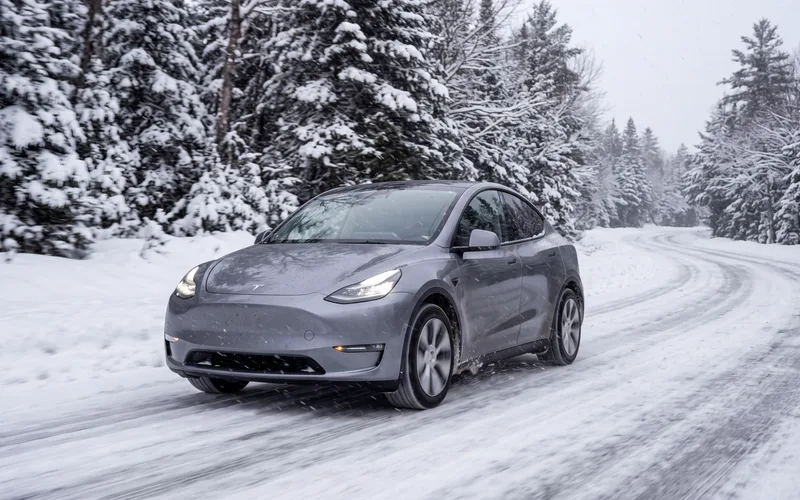 Tesla Model YCompact SUVBetter at: Resale value
Similar money buys far better resale, native Supercharger access and a service network that will still be here in five years, with more usable cargo space.
Compare 2.54C+
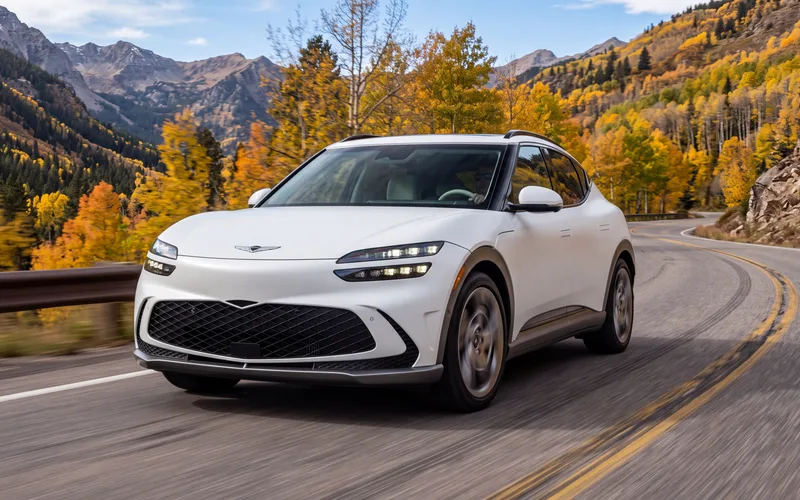 Genesis GV60Compact Luxury SUVBetter at: Fast charging
An 800-volt EV that fast-charges in roughly 18 minutes instead of 30, with a long warranty and a dealer network that isn't winding down.
Compare 2.73B-
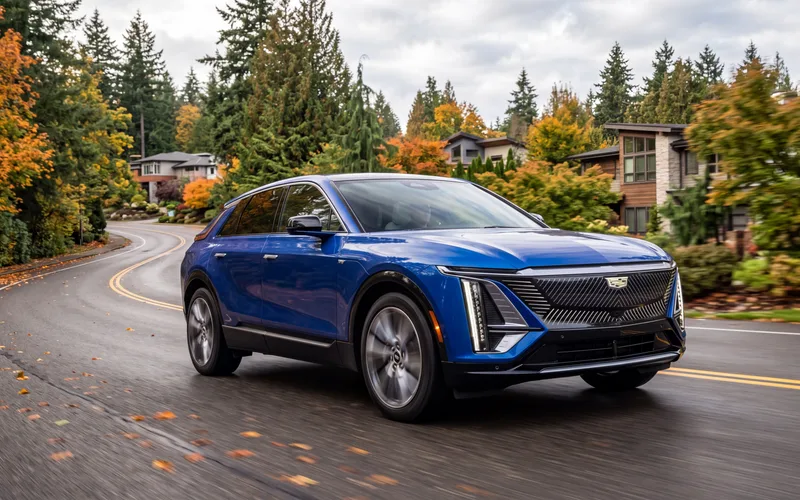 Cadillac LyriqMid-Size Luxury SUVBetter at: Cargo space
Nearly 8 more cubic feet behind the rear seats, a real rear window instead of a camera, and a dealer in most cities.
CompareProduction history
Best fit & conditions
Higher scores mean a better fit for that use case. Learn more about use-case fit →
Subject profile
Academic Probation · NHTSA safety recalls
No NHTSA safety recall is on record for the 2026 Polestar Polestar 4. Nothing is on record for any 2026 Polestar 4 either.
Source: NHTSA Office of Defects Investigation recall database, model years 2026. Recalls are listed by model year as the manufacturer filed them; whether a specific car is affected depends on its VIN — check a VIN at nhtsa.gov ↗.
Detailed scoring by subject
1Performance & PowertrainOne of the Polestar 4's strongest categories.2.80B-
2026 is the first US model year for the Polestar 4 — not a carry-over — with North American cars built by Renault Korea in Busan rather than in China. Scored on the Long range Dual motor (400 kW combined) as the volume AWD configuration, consistent with how dual-motor EV crossovers are represented elsewhere in this dataset; the RWD Rear motor entry car makes 272 hp.
Combined front + rear peak torque for the Dual motor, far beyond the top of the SUV normalization band. The single-motor car gives up half of it.
Manufacturer 0–60 mph figure for the volume Dual motor — quick enough that Polestar calls the 4 the fastest production car it has built. Wikipedia's 3.8 s is the 0–100 km/h equivalent, not a contradiction.
Twin permanent-magnet motors deliver instantly with no combustion or hybrid handover, and reviewers single out how composed the delivery is rather than how violent — a car that lays down 544 hp linearly instead of snapping. Held below the top band because the Polestar 4 does without the Polestar 3's rear-axle torque vectoring, so the AWD split is comparatively basic, and the front-motor disconnect in Range mode is a transition the P3's rear-axle version does not have to make.
Single-speed reduction gear at each axle — nothing to shift, hunt or drone. The only driveline transition is the front motor's disconnect clutch, which drops the car to rear drive in Range mode and re-engages when the driver asks for power or grip; reviewers do not report feeling it.
3,500 lbs with the optional tow package on the Dual motor — mid-pack for the segment and matching the Polestar 3's US rating, but well short of what the same platform is rated for in Europe. The single-motor car is capped at 2,000 lbs.
AWD is standard on the Dual motor and Dual motor Performance Pack — two of the three US configurations, and reachable for $6,500 over the base car rather than restricted to a loaded top trim. Operation is straightforward, though: a front motor that disconnects for efficiency and re-engages on demand, with no rear-axle torque vectoring (unlike the Polestar 3), no low range and no terrain modes.
A coupe crossover with no off-road pretension at all: 6.5 in (166 mm) of front ground clearance, no skid plates, no lockers, no low range and no terrain modes, on 20- to 22-inch wheels wearing summer or performance rubber. Clearance is a full 1.4 in below the Polestar 3's and among the lowest of any SUV-badged vehicle in the catalog.
Battery-electric only on Geely's dedicated SEA platform, with a single 100 kWh pack shared across the range — no gas, hybrid or PHEV alternative and not even a second battery size. The two configurations are one motor or two; the Performance Pack is a chassis and wheel upgrade rather than a distinct powertrain, so buyers get a power-versus-range choice and nothing more. Narrower than the Polestar 3, which at least splits 92 kWh RWD against 106 kWh AWD.
2Efficiency & RangeMid-pack among this car's ten categories.2.62C+
The volume Long Range Single Motor is EPA-rated 95 MPGe combined, a figure polestar.com and fueleconomy.gov agree on exactly and which is unchanged for 2026. Mid-pack among EV SUVs: the coupe-SUV body carries a 100 kWh cell-to-pack battery on a 400-volt architecture and consumes roughly 355 Wh/mi, where the most efficient compact electric SUVs are nearer 280.
EPA city rating of 100 MPGe for the rear-drive Single Motor. Regenerative braking makes the city cycle the car's strongest efficiency case, and the single rear motor avoids the parasitic loss of a permanently engaged front axle — but 100 MPGe is unremarkable against EV SUVs that post 130-plus.
EPA highway rating of 90 MPGe, roughly 375 Wh/mi. The fastback roofline and the deleted rear window — replaced by a roof-mounted camera feeding a digital mirror — help aerodynamics more than a conventional SUV shape would, which is why the highway figure holds up better against the EV SUV band than the city number does; the 20- to 22-inch wheels give some of that back at speed.
310 miles is adequate but unremarkable for a luxury EV in 2026 — up 10 miles from the 2025 car's 300, with the 100 kWh pack and 400V architecture carried over unchanged for the model year. Choosing AWD costs real range (280 mi) and the Performance version drops to 255 mi.
Polestar quotes up to 200 kW DC for every 2026 Polestar 4 — respectable but no longer competitive now that 800-volt rivals accept 240–350 kW. The 4 kept its 400V architecture for 2026 while the larger Polestar 3 moved to 800V, and testers see far less than the peak in practice: InsideEVs logged 89–125 kW at a Tesla Supercharger and Autoblog reports an average nearer 140 kW across a session.
The manufacturer-quoted 30 minutes from 10 to 80% is mid-pack — usable on a road trip but well off the 18–22 minutes the 800-volt competition (including Polestar's own 3) manages, a direct consequence of the 4 retaining a 400V pack for 2026. Real-world sessions run longer still: InsideEVs needed nearly 40 minutes for 14–75%.
EPA puts annual energy cost at $800 at 15,000 miles a year for the Single Motor — good within the EV field and roughly a quarter of what a similarly quick combustion compact luxury SUV burns in premium fuel. Off-peak home charging would undercut even this; heavy reliance on public DC fast charging would not.
No fuel grade to think about and $800/yr of EPA-rated energy, with an 11 kW onboard AC charger that fills the 100 kWh pack overnight in about 11 hours — the cheap, uncomplicated home-charging case the top band describes, and where the great majority of miles get replenished. Raised from 78 on calibration: the prior score double-counted the 400V architecture, which items 2.2.4 and 2.2.5 already penalize at weight 2 each, leaving the 4 below slower-charging CCS1 peers like the Cadillac Lyriq (190 kW/40 min) and Nissan Ariya (130 kW/40 min). What legitimately belongs here is the port ecosystem, and there the 4 is identical to the Polestar 3: a CCS1 inlet in 2026 with Tesla Supercharger access only via a NACS adapter Polestar sells for about $230 through a Service Point rather than including it the way corporate sibling Volvo does — so it lands with the 3, a notch under the adapter-included Volvo EX40.
3SafetyGrades above the middle of the scale.2.77B-
NHTSA has never crash-tested the Polestar 4 under NCAP and carries no record for it in any model year, so no star rating exists; the estimate rests on the car's own strong Euro NCAP adult-occupant result, with no US-tested structural sibling to lean on the way the Polestar 3 has in the Volvo EX90.
IIHS publishes no ratings and no award for the Polestar 4, and unlike the Polestar 3 there is no US-market structural twin holding a Top Safety Pick+ to borrow confidence from — the only third-party crashworthiness verification is European.
For 2026 Polestar folded the $1,500 Pilot Pack into the base price of every US car, so adaptive cruise, Pilot Assist and lane change assist join an already complete standard set — AEB across vehicle/cyclist/pedestrian scenarios, lane keeping, blind-spot with steering assist, cross-traffic with brake support and a 360° camera — leaving nothing safety-related behind a paywall.
Euro NCAP found the AEB responded well to pedestrians, cyclists and motorcyclists, but there is no IIHS front crash prevention rating of any kind, and the 79% safety-assist score sits below the Polestar 3's — held down by a driver-monitoring system that scored zero and a lane-support failure in the motorcyclist-path test.
Both systems are standard and both intervene rather than merely warn — blind-spot monitoring adds steering assist and cross-traffic alert adds brake support — with Exit Assist covering door openings, though Euro NCAP judged that dooring function to be information-only rather than active.
Lane keeping aid and departure warning are standard and Pilot Assist's centering drew praise from at least one US reviewer, but the same Volvo-derived system that reviewers and owners fault for dropping out on inconsistent lane markings underpins this car, and Euro NCAP's lane-support score was short of full marks.
Adaptive cruise is now standard on every US car and reviewers rate it outstanding, and Pilot Assist adds indicator-triggered lane changes, but the combined highway assist is only as good as its lane element — the weakest part of the package.
There is no hands-free highway system at any price — Pilot Assist is a hands-on, driver-supervised lane-centering assist requiring continuous steering-wheel contact.
LED headlights with automatic high-beam dipping are standard across the range, but IIHS has never rated them, and the Pixel LED adaptive matrix function that would lift this into the top band ships inactive on US cars pending an NHTSA compliance test procedure.
The Polestar 4 has no rear window at all — rearward vision is entirely camera-dependent, and while the roof-mounted HD camera technically shows a wider field than a mirror could, US reviewers were near-unanimous that the fixed-focus screen causes eye strain and disorientation and that reversing without over-the-shoulder vision is genuinely unnerving.
Deleting the rear window let engineers push the header beam back, and the resulting 37.6 inches of rear legroom over a flat floor makes bulky rear-facing seats unusually easy to install without shoving the front seats forward — offset by lower anchors hidden behind backrest covers, outboard-only positions, and the inability to glance back at a child through a mirror that only ever shows the road behind.
4Space & ComfortOne of the Polestar 4's weakest categories.0.97F
The 2026 Polestar 4 Coupe is a strict two-row five-seater across the whole US lineup — Long range Single motor (Rear motor) and Long range Dual motor both seat five, with no six- or seven-seat option.
Polestar publishes no SAE interior dimensions for the 4, and cars.com, iSeeCars and Edmunds all list front headroom as unavailable. Estimated from the car's unusually low 60.4-in overall height, offset by a standard full-length panoramic glass roof whose design removes the usual header trim, and by reviewers who consistently describe front head and leg room as generous.
Estimated from the 118.1-in wheelbase — longer than the larger Polestar 3's — combined with the flat SEA-platform floor and an 8-way power driver's seat (12-way with the Plus pack, adding a leg-cushion extension); the same-brand Polestar 2 already measures about 42.2 in on a 13-in shorter wheelbase.
The fastback roofline on a 60.4-in-tall body is the 4's real packaging cost, only partly recovered by deleting the rear window — which let Polestar move the C-pillar and rear header rearward — and by the low bench. Reviewers call rear headroom adequate for six-footers but tight for anyone taller, and Autocar's own tape measure returned 880 mm, a low figure by its methodology.
Rear legroom is the 4's standout dimension: a 118.1-in wheelbase carrying only two rows, a flat BEV floor, and a rear bench moved back into the space freed by the missing rear window. Multiple reviewers report six-footers sitting behind six-footers with room to spare, and the Plus pack adds electrically reclining rear seatbacks.
There is no third row on any 2026 Polestar 4 — it is a five-seat two-row coupe crossover, and the fastback roof rules one out. Scored in the low band per the rubric for a missing third row, in line with the other two-row luxury SUVs in the set (Polestar 3 10, Cadillac Lyriq 12, BMW iX 15).
Polestar's own 18.6 cu ft — and that figure already counts the underfloor compartment — is far below the SUV band and one of the smallest holds among compact luxury SUVs; the coupe roofline and shallow 19.3-in load height are the reason, and the 0.5 cu ft frunk adds essentially nothing.
Even folded flat the 4 falls just under the bottom of the SUV band and trails two-row luxury EV rivals badly (Cadillac Lyriq 60.8, BMW iX 77.9 cu ft) — the sloping tailgate caps the usable box despite a long 73.9-in folded load floor.
Adequate rather than inventive: an underfloor bin under the load floor, a flat BEV floor, 60/40 folding seatbacks, a covered console with wireless charging and USB-C outlets, and a rear armrest that carries a touchscreen with the Plus pack. Against that, the 0.5 cu ft (15 L) frunk is the smallest in the segment and is barely usable for a charge cable, and there is nothing on the order of a Model X-style megaconsole or onboard AC power.
Seats are one of the 4's clearest strengths — Volvo-grade cushioning with good long-haul support front and rear, and a rear bench that can be electrically reclined for a lounge-like posture. The score is held out of the mid-80s because the volume Long range Dual motor gets only 8-way driver / 6-way passenger adjustment, with 12-way seats and the reclining rear backs behind the $5,500 Plus pack and ventilation/massage behind the $3,700 Nappa upgrade on top of that.
The volume US trims ride on passive dampers — active ZF continuously-controlled dampers come only with the Performance Pack — and the tuning is firm. Reviewers call it comfortable enough for a cross-country drive at a cruise, but the springs are stiff enough to get bouncy on broken pavement, and on the Performance Pack's 22-in wheels ride quality is explicitly criticised. That puts it well behind the air-sprung Polestar 3 and mid-pack for a compact luxury SUV.
Isolation is a genuine segment high point: the solid rear bulkhead that replaces the rear window, UV- and noise-reducing laminated panoramic glass and thorough sound deadening give a cabin reviewers describe as astoundingly quiet, quiet enough for rear passengers to fall asleep. The only intrusion noted is a little wind rustle off the mirrors above 60 mph.
Standard kit is solid — two-zone climate, an energy-saving heat pump, heated front seats, the full-length panoramic roof and app-scheduled preconditioning that warms the cabin quickly — but the heated steering wheel, heated rear seats and three-zone climate with the rear touchscreen all sit behind the $5,500 Plus pack, and ventilated/massaging front seats need the $3,700 Nappa upgrade above that. That is the same pay-to-play structure as the Polestar 3 and stingier than a Mercedes EQB or Genesis GV70 at similar money.
5Cost of OwnershipThe Polestar 4's lowest-graded category.0.00F
2026 is the first US model year for the Polestar 4, and the rear-drive entry car opens at $56,400 before a $1,400 destination charge — $57,800 delivered. That sits deep in the upper half of the $25,000–$65,000 SUV pricing band, but it is genuinely aggressive for the segment: it undercuts its own Polestar 3 sibling by $11,100 and lands close to a Tesla Model Y Long Range while offering 310 miles of range and Volvo-derived hardware. Note that MSRP is nearly fictional right now — Polestar is running $25,000 off purchase through 2026-08-31 as it liquidates US inventory ahead of the market exit.
The AWD Long range Dual motor is the volume configuration — the car Polestar advertises, leases against and the one KBB tracks for cost-to-own, while the rear-drive single motor is a price leader. At $64,300 delivered it is near the top of the $27,000–$68,000 SUV band and the item scores accordingly. The Pilot pack (Pilot Assist, lane-change assist) is standard on all 2026 trims, but the Plus pack still costs $5,500 and the Performance Pack another $4,500, which is how a Polestar 4 reaches $74,300.
Comfortably better than the SUV midpoint. A BEV service schedule with no oil, plugs or transmission work keeps scheduled costs low, and Polestar's US program includes the first 3 years/30,000 miles of scheduled maintenance, so the owner's early visits are free. KBB's projection is used as published rather than discounted for that complimentary period, because the offset runs the other way too: with Polestar exiting the US new-car market, a roughly 32-store service network and out-of-warranty parts supply for a Korea/China-built car are a real cost risk a two-year-old dataset cannot yet show.
The defining cost of owning this car and the single fact a buyer most needs to know — it floors the item and drags the whole category down. Four forces stack: KBB already projects a 2025 Polestar 4 to shed $39,666 to a $16,634 residual (≈30% of a $56,300 sticker) and models $54,982 of depreciation on the 2026 car; the $7,500 federal credit expired 2025-09-30, pulling the floor out from under used luxury-EV pricing; Polestar is dumping $25,000 off a $57,800 car to clear inventory, which sets the real transaction price ~44% under MSRP and collapses retention measured against sticker; and decisively, the Commerce Department's Connected Vehicle Rule bars Polestar from selling MY2027 vehicles, so the 4 becomes an orphan built in Korea and China with a shrinking US service network. The estimate is set below the published forecasts because those forecasts largely predate the exit.
Polestar's standard 4-year/50,000-mile coverage for manufacturing and material defects — a year longer than the German luxury norm, a year short of Hyundai/Genesis and Kia, landing squarely mid-band. Polestar has publicly committed to honoring existing warranties in full after the US sales ban, which matters more than usual for a brand on its way out.
The federally mandated 8-year/100,000-mile battery term, which is class-standard rather than class-leading, but Polestar extends it to the electric motors as well and backs it with an explicit 70% state-of-health floor — a clearer promise than most rivals put in writing, and better than Volvo, where drive units fall under the shorter 4-year basic warranty.
A solid included-ownership package that clears the bar for the upper-middle band without reaching the top of it. Three years/30,000 miles of complimentary scheduled maintenance covers the whole early service window, and it sits alongside 4 years of 24/7 roadside assistance with recovery, 36 months of Connected Services Plus, over-the-air software updates for life, 12-year corrosion cover and a NACS adapter in the box for Supercharger access. Three things hold it down: the Polestar 4's own US pages advertise the warranty and roadside terms but do not themselves spell out the free-maintenance period, there is no charging credit in the current US package, and the perks are only as good as the network delivering them — with Polestar exiting the US new-car market, roughly 32 retailers remain and service coverage is geographically thin, though Polestar has committed to keeping service and software support running for existing owners.
$64,300 volume-trim price minus its estimated resale value after 5 years (27% retained, or about $17,361) leaves about $46,939 in depreciation. Add the projected $5,243 in 5-year maintenance and repairs, and owning this vehicle for 5 years costs about $52,182 in total.
6Reliability & QualityOne of the Polestar 4's weakest categories.1.40D
No published predicted-reliability rating exists — Consumer Reports lists the 2026 Polestar 4 as "NA" and excludes Polestar from its brand rankings for insufficient sample — so the signal is the model's own global field record since November 2023. That record is free of mechanical red flags but shows a consistent pattern of software and driver-assistance faults, and 2026 is the nameplate's first US model year from a brand-new assembly source.
Polestar sits at the bottom of the industry on the one large-sample quality study that covers it and is absent from the other for lack of data. There is no multi-year US dependability record showing improvement, and the recall history of the Polestar 2 and Polestar 3 reinforces the pattern rather than offsetting it.
The Polestar 4 carries zero NHTSA recall campaigns — a genuinely clean sheet, and a sharp contrast with the six that hit the 2025 Polestar 3 and the camera recall on the Polestar 2. The caveat is exposure rather than evidence: US deliveries only began in fall 2025 at low volume, so a clean record here reflects a short observation window, and NHTSA complaints on driver-assistance false positives have already started to appear.
The 400V SEA hardware is the most widely fielded electric powertrain family Polestar sells — the same CATL cell-to-pack battery and architecture run under Zeekr and Volvo models in far higher volume than Polestar's own — and no propulsion-related recall or systemic failure has surfaced in nearly three years of production. It is still an unproven design at high mileage with no US long-term data, which caps it well short of the top band.
The cabin is the car's clearest strength and reads as genuinely premium for a compact luxury EV — soft-touch surfaces across every high-traffic zone, credible switchgear and material choices that make the recycled alternatives feel like an upgrade rather than a compromise. Reviewers rate it above both the Polestar 2 and the larger Polestar 3.
Physical assembly is a strength: reviewers describe the car as tightly and consistently screwed together, and unlike the Polestar 3 it carries no assembly-defect recalls. What holds the score back is that the brand's initial-quality standing is driven by software and electronics defects, which IQS counts as quality problems, and owners report a chassis-alignment fault out of the box.
Roughly 32 US locations is among the thinnest networks of any brand sold here, and it is now winding down: the Commerce Department's connected-vehicle denial makes 2026 the last US model year Polestar can sell, leaving retailers with no new-car business. Polestar has pledged continued service access, parts and OTA support, but a 2026 buyer cannot confirm a long-term service point across most of the country, and the two NHTSA complaints on file both cite dealers unable to resolve the fault.
Routine upkeep is modest for a luxury EV and largely covered early on, but everything beyond that is a risk: parts are dealer-only with essentially no aftermarket, the car is imported from a contract plant in South Korea with no US-built Volvo twin to share a parts pipeline with, insurance runs high for the class, and the brand's US market exit puts genuine supply and turnaround uncertainty behind out-of-warranty repairs.
7Technology & InfotainmentThe Polestar 4's best-graded category.3.73A
A landscape 15.4-inch center display is standard on every 2026 Polestar 4 — Long Range Single Motor and Long Range Dual Motor alike — with no smaller screen on any trim. It is among the largest center screens in the compact luxury SUV class.
Android Automotive on a Snapdragon Cockpit platform drives a fast, high-resolution landscape screen with Google's stack native to it, and Polestar has demonstrably improved the car by software. It is held back by near-total touchscreen dependence — reviewers single out having to adjust the exterior mirrors through the center screen — and by a native menu structure several testers called unintuitive, with voice commands that take a beat to act.
Wireless Apple CarPlay is standard on every trim, but Android Auto is not offered on the Polestar 4 — Polestar added it to the Polestar 3 in a 2026 release and the Polestar 4's 2026 release notes (P4.2.9 through P4.2.13) never introduce it. Android owners are expected to use the native Google built-in stack instead of phone projection, which covers most of the same ground but is not the same as mirroring their phone.
Google built-in gives native Google Maps with battery-aware EV routing plus Google Assistant and, new for 2026, Gemini for natural-language requests — the rare native stack owners prefer over phone projection. The Polestar 4 is also first to market with Google Maps live lane guidance, drawn from the car's own forward cameras.
The Harman Kardon upgrade is genuinely strong — 12 speakers and 1,320 watts, or 16 speakers and 1,400 watts with the headrest drivers in the Nappa upgrade — but it is locked inside the $5,500 Plus pack, and the standard system is a plain 8-speaker setup that is modest for a $58k luxury EV.
A crisp 10.2-inch full-digital driver display (1920x532) is standard on every trim. It is wider and sharper than the Polestar 3's 9-inch unit, but it stays deliberately minimal in the Volvo idiom, without the layout configurability of the clusters in a BMW X3 or Genesis GV60.
Polestar ships whole-vehicle over-the-air updates that change how the car drives, not just its maps — a 2026 OTA reworked steering, suspension, stability control, propulsion and driver assistance, and Edmunds re-tested the car specifically because of it. Polestar has confirmed OTA support continues for US owners even though US sales end after the 2026 model year.
The Polestar app covers the expected remote set — lock/unlock, scheduled climate preconditioning, vehicle locate, charge status and scheduling — and connected services are included rather than subscription-gated. Digital key is narrower than on the Polestar 3: Apple Wallet works today, with Google and Samsung devices listed only as a future introduction.
Four USB-C ports serve both rows and one of the rear pair is a genuinely fast 60 W outlet — enough to charge a laptop — with a 15 W wireless pad standard rather than optional. Against that, there is a single 12 V socket, no household AC outlet, and no vehicle-to-load export on the US car.
The full keyless suite is standard: an ultra-wideband key plus NFC key card, flush e-latch handles that deploy on unlock, a soft-closing power tailgate, and phone-as-key through Apple Wallet. Only the hands-free foot sensor for the tailgate is pack-gated, and Google/Samsung digital key has not shipped yet.
Parking hardware is standard rather than pack-gated: a 360-degree camera with 3D view, 12 ultrasonic sensors front/rear/sides, an HD rear camera and the 8.9-inch digital rear-view mirror that replaces the missing rear window, with semi-automated Park Assist Pilot in the Pilot pack. The cameras are load-bearing rather than a bonus here, and reviewers flag that road grime or a failed lens leaves the rear view dark.
The 14.7-inch head-up display with a dedicated snow mode is one of the largest offered in any SUV and can be ordered on any trim, but it comes only inside the $5,500 Plus pack — so a base-spec volume car leaves the showroom without one.
8Use-Case FitGrades below the middle of the scale.1.56D
Better than the coupe-SUV silhouette suggests: deleting the rear window let engineers push the header beam rearward, giving up to 37.6 in of second-row legroom over a flat floor, so bulky rear-facing seats go in without shoving the front seats into the dash. What caps it is that the same design removes any way to glance back at a child — the digital mirror only ever shows the road behind — the trunk is the smallest in the segment at 18.6 cu ft, LATCH lower anchors hide behind backrest covers, and only the two outboard positions take a seat.
The equipment side is close to ideal for 2026 — Polestar folded the $1,500 Pilot Pack into the base price, so every US car leaves with adaptive cruise, Pilot Assist, AEB for vehicles/cyclists/pedestrians, blind-spot with steer assist, cross-traffic with brake support, a 360° camera, seven airbags and a rear-occupant alert, with nothing safety-related behind a pack. The crash-verification side is the gap: NHTSA has never tested it, IIHS publishes no ratings or award, the adaptive matrix headlights ship inactive in the US, and the missing rear window costs real outward visibility — so families buying on published US credentials have nothing to read.
Rear passengers get a genuinely restful place to sit — segment-best legroom, a flat floor, a full-length panoramic roof and a cabin quiet enough that reviewers report back-seat occupants falling asleep. The problem is what the family brings with them: 18.6 cu ft behind the seats is the smallest hold in the compact luxury SUV class and a 0.5 cu ft frunk adds nothing, so four people's luggage is a genuine squeeze. Rear amenities are also mostly paid extras — three-zone climate, heated rear seats, the rear armrest touchscreen and reclining backrests all sit inside the $5,500 Plus pack, and the fastback roof leaves rear headroom tight for tall adults.
The powertrain and isolation make an easy commuter — silent, linear 544 hp with adjustable one-pedal drive and driver-profile creep settings, standard adaptive cruise and Pilot Assist, and a driving position reviewers call spot on. Three things stop it being relaxing: the digital rear-view mirror forces the eye to refocus and drew eye-strain and disorientation complaints from multiple US testers, nearly every control including the exterior mirrors lives in the touchscreen, and the volume trims' passive dampers get bouncy on broken pavement. A 2026 OTA that reworked steering, suspension and stability control measurably improved it.
Per-mile energy cost is close to the best available: 95 MPGe combined on the rear-drive car with an EPA annual energy bill of $800 at 15,000 miles, roughly a quarter of what a comparably quick combustion luxury SUV burns, and off-peak home charging on the 11 kW onboard charger undercuts even that. Consumables are the drag — there is no oil or transmission service and the first 3 years/30,000 miles are complimentary, but insurance runs about $2,800/yr on the volume Dual motor, 20-to-22-inch tires on a 5,192 lb car are expensive, and parts are dealer-only from a thin network.
The hardware is all there — a tight 38.2 ft curb-to-curb turning circle, a standard 360° camera with 3D view, 12 ultrasonic sensors and semi-automated Park Assist Pilot — but this is the item the missing rear window hurts most. US reviewers repeatedly described backing out of spaces as nerve-wracking with no rear three-quarter view and a fixed-focus mirror screen, and road grime or a failed lens leaves the rear view dark. At 190.5 in long and 84.2 in wide across the mirrors it is also physically bigger than its compact billing implies.
Not a work vehicle in any meaningful sense. The volume Dual motor tows 3,500 lbs only after a $1,895 tow package, the rear-drive car is capped at 2,000 lbs, and there is no bed, no low range and no published payload headroom on a 5,192 lb curb weight. The cargo hold that would have to stand in for a bed is 18.6 cu ft with a 19.3 in load height under a sloping tailgate — it will not take sheet goods, a jobsite generator or anything tall.
A luxury coupe crossover with no fleet history and the weakest quality signal of any brand measured: Polestar posted 313 PP100 against a 192 industry average in J.D. Power's Initial Quality Study, Consumer Reports has too little data to rate it, and 2026 is the nameplate's first US year from a brand-new assembly source. Interiors are 3D-knit fabric or Nappa leather rather than wipe-down surfaces, and the service network that would have to keep a working vehicle running is roughly 32 US locations and winding down after the Connected Vehicle Rule denial.
Essentially no work provisions. Onboard power is a single 12 V socket in the load area — there is no household AC outlet and no vehicle-to-load export on the US car despite the 100 kWh pack, which is the one thing an EV could have offered a jobsite. A semi-electric towbar and a genuine roof rack are orderable, and the 60 W rear USB-C will run a laptop, but there are no proper tie-down tracks, no washable interior option and no upfit ecosystem of any kind.
A strong tourer on the two things that matter most at a cruise — the cabin is one of the quietest in the segment thanks to the solid rear bulkhead and laminated glass, and the seats drew ache-free full-day verdicts — backed by standard adaptive cruise and Pilot Assist and a real-world range that beats its EPA number. What keeps it out of the top band is the charging stop and the payload: the 400 V architecture peaks at 200 kW and averages nearer 140 kW for a 30-minute 10–80% fill where 800 V rivals take 22, AWD range drops to 280 miles, luggage space for four is tight, and Pilot Assist's lane centering drops out on inconsistent markings.
Pavement-bound. 6.5 inches of front ground clearance is among the lowest of any SUV-badged vehicle in the catalog — a full 1.4 in under the Polestar 3 — and there are no terrain modes, no low range, no skid plates and no lift setting, on 20-to-22-inch wheels wearing summer or performance rubber. Credit for AWD on two of three configurations, an orderable roof rack and towbar for bikes or a small trailer, and 73.9 in of folded load length that would take a sleeping platform; against that there is no AC outlet or V2L to power a camp, and the low nose limits even a rutted trailhead approach.
The weakest packaging in the compact luxury SUV set. 18.6 cu ft behind the seats and 54.2 cu ft folded both trail two-row EV rivals badly, and the sloping tailgate caps the box at a 19.3-inch load height, so bulky gear has to lie flat rather than stack. The redeeming details are real but modest: a 60/40 fold that opens up a long 73.9-inch floor, an underfloor bin already counted in the published figures, and orderable roof bars and a towbar for anything that will not fit inside. The 0.5 cu ft frunk barely holds a charging cable.
9Driving ExperienceOne of the Polestar 4's strongest categories.3.31B+
A genuinely composed, low-slung chassis: reviewers describe it as planted and nimble in a way its 5,192 lb curb weight has no right to be, helped by a very low center of gravity, a 118.1 in wheelbase and a rear-biased dual-motor layout, and a Performance Pack car has been measured at 0.96 g on the skidpad. Held out of the top band because the volume Dual motor rides on passive dampers rather than the Performance Pack's active ZF CCD units — testers who drove the passive car report stiff springs that get bouncy on broken pavement while the adaptive car is 'much more controlled' — and because the 4 goes without the Polestar 3's rear-axle torque vectoring and air springs, so the sharpest version of this chassis is an option, not the standard car.
Accurate and quick, with three selectable weights (light / standard / firm) and no traditional drive modes to bundle them into — testers who leave it in firm call the response precise and confident, and one first-drive reached for a Porsche comparison. It sits in the upper half of the middle band rather than the top because the precision is not matched by feedback: another reviewer of the same Performance Pack car called the steering 'somewhat anesthetized' and preferred the lightest mode even when driving hard, which is the familiar Polestar trait — geared and weighted well, communicating little.
Strong stopping power and a well-blended regen handover: 169 ft from 70 mph for a 5,192 lb SUV is a good result, and reviewers consistently describe the friction/regen blend as smooth and predictable with fine control over deceleration. The deductions are that the volume Dual motor gets ordinary 2-piston silver calipers on 364 mm front discs — the Brembo 4-piston, 392 mm setup is Performance Pack only — and that one-pedal drive has no coasting zone, so it is effectively all-or-nothing, with low-speed brake modulation the one thing testers find trickier to judge.
Two permanent-magnet motors on single-speed reduction gears, so there is no shift, no stop/start and no hybrid handover to calibrate around — just immediate, linear response, quick enough that an instrumented test beat Polestar's own 3.7 s claim by half a second. Reviewers single out how smoothly it lays the power down rather than how violently. Just short of the ceiling: the front-motor disconnect and the regen calibration are the only transitions in the car, and Polestar has already shipped a software update to address owner complaints about regen behavior.
Essentially silent from the driveline with no motor whine under load and no vibration through the controls — and the 4 has a structural advantage its rivals do not, since the solid rear bulkhead that replaces the rear window seals the cabin off from the drive unit behind it. Reviewers call the result astoundingly quiet; the only intrusions anyone reports are wind rustle off the mirrors above 60 mph and, on the Performance Pack's 22-in summer tires, road roar — neither of them powertrain noise.
Mid-pack for the SUV band and a slight improvement on the larger Polestar 3's 38.8 ft, but the 118.1-in wheelbase — longer than the Polestar 3's — and 20- to 22-inch wheels keep it from feeling handy in parking structures. Identical across both US motor configurations.
The seat itself is one of the car's strengths — a wide adjustment range, a spot-on driving position and enough room that a six-foot-one driver does not need the seat all the way back. Everything around it is compromised. There is no rear window at all, so rearward vision is entirely a roof-camera feed whose fixed focal distance is a real problem for anyone in reading glasses and which testers say costs depth perception when parking and washes out in glare, rain or snow. On top of that the 4 inherits Polestar's worst habit: mirror aim, steering-column adjustment and even the glovebox release live in the 15.4-inch touchscreen and fiddly touch-sensitive wheel pads, with no hardware control. That is the same complaint that pulled the Polestar 3 down to 62, plus the missing rear glass.
Fast enough to be a genuine event — Polestar's own quickest production car, and quicker still when instrumented — wrapped in a chassis that reviewers keep comparing to Porsches and a cabin quiet enough to make long drives effortless. It lands in the low end of the top band rather than higher because the character is cool and clinical rather than theatrical: the steering does not talk back, the volume car's passive dampers trade ride for body control without the reward of an adaptive setup, and the missing rear window is a constant reminder that this is a design statement first and a driver's car second.
10Value & Market PositionMid-pack among this car's ten categories.1.98C-
Standard kit covers the tech basics well — 15.4-in Android Automotive with Google built-in and Apple CarPlay, panoramic glass roof, heat pump, 360-degree camera, 20-in wheels, wireless charging, four USB-C, and (new for 2026) the Pilot Pack's Pilot Assist and Lane Change Assist at no charge. But a $56,400 luxury EV that makes buyers pay $5,500 for the Plus Pack to get a power liftgate, heated steering wheel, 12-way power seats, heated rear seats, tri-zone climate and auto-dimming mirrors is stingy next to Cadillac Optiq, Genesis GV60 or Lexus RZ, which include most of that at base.
At sticker ($56,400 RWD / $62,900 AWD before the $1,400 destination) the 4 is merely fair — J.D. Power notes it costs more than key rivals without being clearly more comfortable or sportier. At real 2026 transaction prices it is a bargain: 544 hp and 280 miles (or 272 hp and 310 miles) for effectively low-$30Ks to low-$50Ks once Polestar's incentives land. Scored between the two because the discount is what carries it — the underlying MSRP-to-content ratio is unremarkable, and the brand's forced US exit undercuts long-term value.
A European-style short menu: two powertrains (Long Range Single Motor RWD, Long Range Dual Motor AWD) on one 102-kWh battery, with breadth coming from packs rather than trims — Plus ($5,500), Pro ($2,500) and a Performance Pack limited to the dual motor. That spans roughly $56K to the mid-$70Ks with genuine option flexibility, but there is no cheaper standard-range entry point, no third-row or long-wheelbase variant, and no low-cost work-spec rung.
Among the weakest market positions of any SUV in this dataset. Polestar sold just 1,895 vehicles in the US across its entire lineup in H1 2026, down 42% year over year, and the 4 only began US deliveries in December 2025 — so its US volume is a rounding error against compact-luxury-SUV leaders. The Commerce Department's Connected Vehicle Rule denial ends US sales after MY2026 entirely, so the trajectory is termination, not growth.
Polestar carries real design credibility and Volvo/Geely engineering pedigree, and the 4 has collected design honors — but in the US the brand has thin recognition, a sparse Polestar Space retail and service footprint, persistent financial-health headlines, and now a government-forced market exit. Being told the brand will stop selling cars in your country next year is about as direct a drag on desirability and residual confidence as a badge can carry, even with service, parts, warranty and OTA support pledged to continue.
Scored on buyer benefit, this is close to the best deal environment on any luxury EV: $25,000 off a cash purchase, or 0% APR for 60 months with an $18,000 bonus, or a lease with $19,000 baked in at $499/mo for 27 months with $1,000 down — plus a $1,000 loyalty bonus. It is unmistakably fire-sale pricing driven by the 2027 US ban, which is why it stops short of the top of the band, but a shopper walking in today captures enormous value.
The car itself is new to America — global production started November 2023, US sales opened June 2025 and deliveries December 2025 — and 2026 brings meaningful updates: +10 miles of EPA range on both versions, Pilot Assist made standard, and reworked option packs. Against that, the SEA platform's 400V/200 kW architecture already trails the 800V Hyundai/Kia and GM rivals, and for US buyers the nameplate has no future: MY2026 is the last one sold here, and the new Polestar 4 SUV body style announced in February 2026 will not be offered in the US.
Reviews are polarized and, on balance, below par for the segment. Edmunds rated it 6.3/10 and called it a concept car pushed into production early, faulting the windowless rear, the button-free cabin and the Performance Pack's harsh ride; J.D. Power found little tangible benefit for practical buyers; The Drive called it a mixed bag. Design juries have been kinder — a 2026 Green Good Design award and a 5-star Euro NCAP result at 86% overall — but it wins design prizes, not comparison tests, and it is absent from the 2026 IIHS Top Safety Pick list.