

The verdict
A struggling mid-size suv, strong on safety and held back by reliability.
Overall 1.81 (C-) across 10 graded subjects. Its strongest is safety at 3.00 (B), its weakest reliability & quality at 0.57 (F). 5 of 10 subjects grade at C− or better.
Jump to scoresStrengths
- Safety
- Value & Market Position
- Space & Comfort
What holds it back
- Reliability & Quality
- Technology & Infotainment
- Efficiency & Range
Top alternatives
Cars shoppers cross-shop with the Subaru Ascent 2.88B-
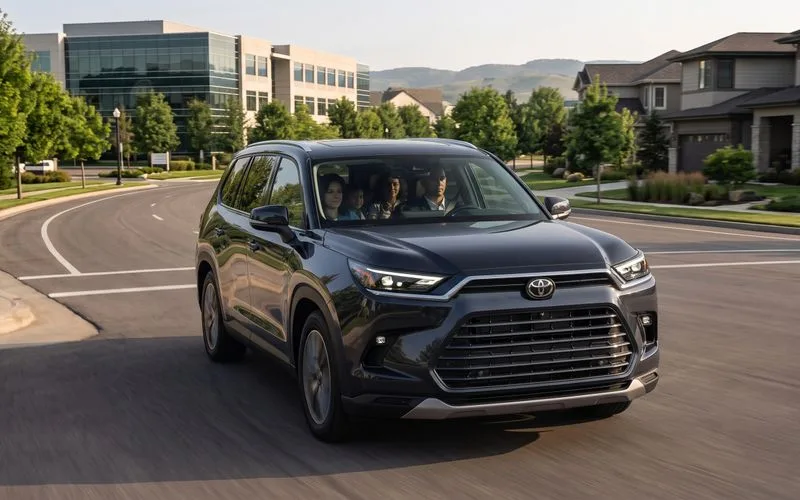 Toyota Grand HighlanderMid-Size SUVBetter at: Efficiency
The hybrid version returns about 36 MPG combined versus the Ascent's 23, saving roughly $950 a year in fuel while adding space behind the third row and Toyota's reliability record.
Compare 2.79B-
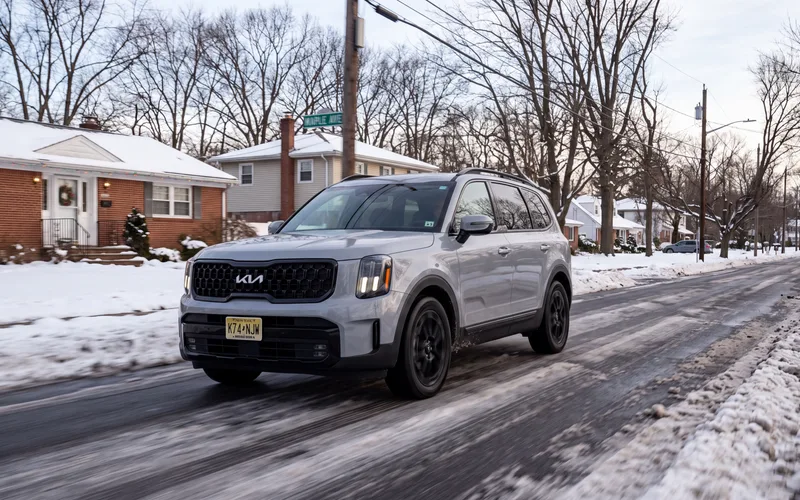 Kia TellurideMid-Size SUVBetter at: Interior & warranty
Better cabin materials, a smoother V6, far more second-row legroom, and a 10-year/100,000-mile powertrain warranty that doubles Subaru's coverage.
Compare 2.43C+
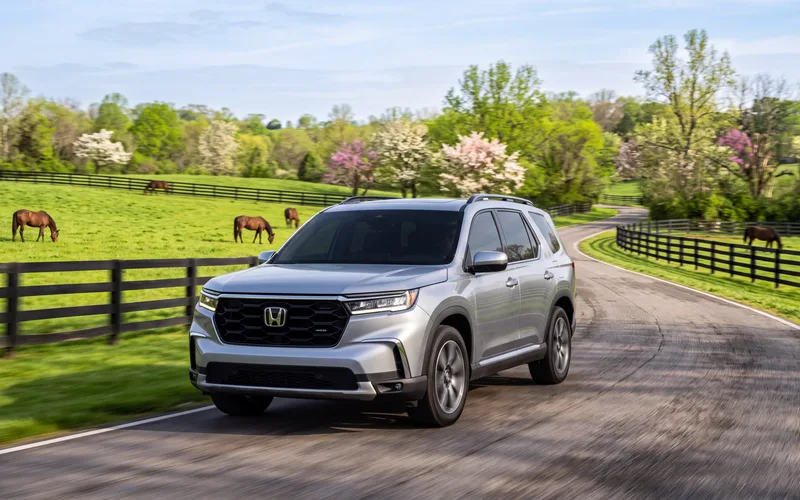 Honda PilotMid-Size SUVBetter at: Powertrain
A 285-hp V6 with a 10-speed automatic delivers the quiet, responsive powertrain the Ascent's turbo-boxer-and-CVT never quite manages, with more usable cargo room behind row three.
CompareHow it's evolved
8 scored model years · 2019–2026
Subject scores by year
Hover or tap a score to see what moved it versus the year before. A corner mark flags a big swing.
| Year | Performance | Efficiency | Safety | Space | Cost | Reliability | Tech | Use-case | Driving | Value |
|---|---|---|---|---|---|---|---|---|---|---|
| 2026 | 50 | 49 | 80 | 72 | 51 | 65 | 59 | 72 | 59 | 67 |
| 2025 | 48 | 43 | 80 | 70 | 51 | 74 | 60 | 66 | 59 | 60 |
| 2024 | 48 | 43 | 79 | 70 | 54 | 70 | 57 | 65 | 60 | 64 |
| 2023 | 48 | 43 | 81 | 72 | 55 | 67 | 56 | 68 | 62 | 66 |
| 2022 | 48 | 49 | 78 | 69 | 42 | 40 | 36 | 63 | 56 | 58 |
| 2021 | 47 | 50 | 78 | 71 | 57 | 52 | 41 | 58 | 54 | 68 |
| 2020 | 49 | 49 | 74 | 67 | 59 | 39 | 44 | 62 | 55 | 70 |
| 2019 | 47 | 49 | 73 | 70 | 57 | 45 | 43 | 62 | 49 | 74 |
Compare two years
Best fit & conditions
Higher scores mean a better fit for that use case. Learn more about use-case fit →
Subject profile
Academic Probation · NHTSA safety recalls
Jul 7, 2026Equipment: other: labelsThese vehicles were manufactured with an incorrect Gross Axle Weight Rating (GAWR) on the certification label. As such, these vehicles fail to comply with the requirements of Federal Motor Vehicle Safety Standard (FMVSS) 110, "Tire selection and rims."
Defect
Subaru of America, Inc. (Subaru) is recalling certain 2026 Crosstrek Hybrid, 2025-2026 Forester Hybrid, Forester, and 2019-2026 Ascent vehicles. These vehicles were manufactured with an incorrect Gross Axle Weight Rating (GAWR) on the certification label. As such, these vehicles fail to comply with the requirements of Federal Motor Vehicle Safety Standard (FMVSS) 110, "Tire selection and rims."
Risk
An incorrect GAWR label may lead to an overloaded vehicle, increasing the risk of a crash.
Remedy
Subaru will mail a new certification label to owners, free of charge. Owners may also choose to have a dealer install the new label, free of charge. Letters informing owners of the safety risk were mailed August 27, 2026. Additional letters will be mailed once the remedy is available. Owners may contact Subaru customer service at 1-844-373-6614. Subaru's number for this recall is WRH-26.
NHTSA campaign 26V436000 ↗Manufacturer no. WRH-26541,237 vehicles potentially affected (all models in the campaign)Filed by Subaru of America, Inc.Filed as ASCENTDec 8, 2022Electrical system: wiring: interior/under dashThe ground bolt that secures the ground terminal of the Positive Temperature Coefficient (PTC) heater may have been improperly fastened, which could result in melting of the ground terminal and surrounding components.
Defect
Subaru of America, Inc. (Subaru) is recalling certain 2019-2022 Ascent vehicles. The ground bolt that secures the ground terminal of the Positive Temperature Coefficient (PTC) heater may have been improperly fastened, which could result in melting of the ground terminal and surrounding components.
Risk
A melting ground terminal increases the risk of a fire.
Remedy
Owners are advised to park their vehicle away from structures and to avoid leaving the vehicle unattended while the engine is running. An owner who notices or smells smoke coming from the dash or driver's footwell area should immediately stop operating the vehicle and turn the ignition switch to the "Off" position. Dealers will replace the PTC heater ground bolts and if necessary, replace the ground wire and the connector holder, free of charge. Owner notification letters are expected to be mailed February 6, 2023. Owners may contact Subaru's customer service at 1-844-373-6614. Subaru's number for this recall is WRL-22.
NHTSA campaign 22V907000 ↗Manufacturer no. WRL-22271,694 vehicles potentially affected (all models in the campaign)Owners notified Jan 25, 2023Filed by Subaru of America, Inc.Filed as ASCENTDec 9, 2021Power train: automatic transmission: control module (tcm/pcm/tecm) · Power train: driveline: chain/beltA programming error in the Transmission Control Unit (TCU) may allow the clutch to engage before the drive chain is completely clamped.
Defect
Subaru of America, Inc. (Subaru) is recalling certain 2019-2020 Ascent, 2020 Legacy and Outback vehicles. A programming error in the Transmission Control Unit (TCU) may allow the clutch to engage before the drive chain is completely clamped.
Risk
An improperly secured drive chain may slip and break, causing a loss of drive power and increasing the risk of a crash.
Remedy
Dealers will reprogram the TCU, inspect TCU data for chain slip, and visually inspect the chain guide. If evidence of chain slippage or damage is found, the transmission will be replaced. Repairs will be performed free of charge. Owner notification letters were mailed August 19, 2022. This recall includes all vehicles previously recalled under 19V-855. Vehicles previously recalled under 19V-855 will need to have the new remedy performed for this recall once available. Owners may contact Subaru customer service at 1-844-373-6614. Subaru's number for this recall is WRK-21.
NHTSA campaign 21V955000 ↗Manufacturer no. WRK-21198,255 vehicles potentially affected (all models in the campaign)Owners notified Aug 19, 2022Filed by Subaru of America, Inc.Filed as ASCENTDec 9, 2021Steering: linkages: tie rod assemblyDue to an incorrect tapered hole in the housing, the front tie rod ends may not fit properly. The improper fit can result in the tie rods and housings being deformed during assembly and service replacement if excessive torque is applied.
Defect
Subaru of America, Inc. (Subaru) is recalling certain 2020 Ascent vehicles. Due to an incorrect tapered hole in the housing, the front tie rod ends may not fit properly. The improper fit can result in the tie rods and housings being deformed during assembly and service replacement if excessive torque is applied.
Risk
The tie rods may separate from the housing, causing a loss of steering control and increasing the risk of a crash.
Remedy
Dealers will replace the left and right front tie rod ends and housings, free of charge. Owner notification letters were mailed February 7, 2022. Owners may contact Subaru customer service at 1-844-373-6614. Subaru's number for this recall is WRL-21.
NHTSA campaign 21V954000 ↗Manufacturer no. WRL-211,305 vehicles potentially affected (all models in the campaign)Owners notified Feb 7, 2022Filed by Subaru of America, Inc.Filed as ASCENTJul 29, 2021Fuel system, gasoline: delivery: fuel pumpThe low-pressure fuel pump inside the fuel tank may fail.
Defect
Subaru of America, Inc. (Subaru) is recalling certain 2019-2020 Ascent, 2018 Forester, 2018-2020 Impreza, Legacy, Outback, 2018-2019 BRZ, WRX, and Toyota 86 vehicles. The low-pressure fuel pump inside the fuel tank may fail.
Risk
Fuel pump failure can cause an engine stall while driving, increasing the risk of a crash.
Remedy
Dealers will replace the low-pressure fuel pump, free of charge. Owner notification letters were mailed September 24, 2021. Subaru and Toyota owners may call customer service at 1-844-373-6614. Subaru's number for this recall is WRG-21.
NHTSA campaign 21V587000 ↗Manufacturer no. WRG-21175,968 vehicles potentially affected (all models in the campaign)Owners notified Sep 24, 2021Filed by Subaru of America, Inc.Filed as ASCENT
8 recalls on other model years of the Ascent (2019, 2023)
Sep 21, 2023Power train: driveline: driveshaftThe center support bolts for the driveshaft may loosen, resulting in the disconnection of the front end of the driveshaft.
Defect
Subaru of America, Inc. (Subaru) is recalling certain 2023 Outback, Legacy, Ascent, and Impreza vehicles. The center support bolts for the driveshaft may loosen, resulting in the disconnection of the front end of the driveshaft.
Risk
Separation of the front end of the driveshaft increases the risk of a crash.
Remedy
Dealers will clean the bolt mounting surfaces of the center support brace and install new bolts, free of charge. Owner notification letters were mailed November 20, 2023. Owners may contact Subaru's customer service at 1-844-373-6614. Subaru's number for this recall is WRN-23.
NHTSA campaign 23V647000 ↗Manufacturer no. WRN-234,311 vehicles potentially affected (all models in the campaign)Owners notified Nov 20, 2023Filed by Subaru of America, Inc.Filed as ASCENTJun 1, 2023Suspension: front: control arm: lower armThe left or right front lower control arm may have an improperly tightened ball joint castle nut which can result in retention pin failure and separation of the ball joint from the lower control arm.
Defect
Subaru of America, Inc. (Subaru) is recalling certain 2023 Ascent vehicles. The left or right front lower control arm may have an improperly tightened ball joint castle nut which can result in retention pin failure and separation of the ball joint from the lower control arm.
Risk
Ball joint separation while the vehicle is in motion can cause a loss of vehicle control, increasing the risk of a crash.
Remedy
Dealers will inspect and, if necessary, replace the lower control arm, free of charge. Owner notification letters are expected to be mailed June 30, 2023. Owners may contact Subaru's customer service at 1-844-373-6614. Subaru's number for this recall is WRJ-23.
NHTSA campaign 23V392000 ↗Manufacturer no. WRJ-235 vehicles potentially affected (all models in the campaign)Owners notified Jun 27, 2023Filed by Subaru of America, Inc.Filed as ASCENTApr 7, 2023TiresThe internal tire bead may have been damaged during the wheel mounting process.
Defect
Subaru of America, Inc. (Subaru) is recalling certain 2023 Ascent vehicles equipped with 20-inch wheels. The internal tire bead may have been damaged during the wheel mounting process.
Risk
A damaged tire may experience a sudden loss of air pressure, increasing the risk of a crash.
Remedy
Dealers will replace all four tires, free of charge. Owner notification letters are expected to be mailed June 6, 2023. Owners may contact Subaru's customer service at 1-844-373-6614. Subaru's number for this recall is WRH-23.
NHTSA campaign 23V258000 ↗Manufacturer no. WRH-234,409 vehicles potentially affected (all models in the campaign)Owners notified May 5, 2023Filed by Subaru of America, Inc.Filed as ASCENTApr 16, 2020Fuel system, gasoline: delivery: fuel pumpThe low pressure fuel pump may become inoperative.
Defect
Subaru of America, Inc. (Subaru) is recalling certain 2019 Impreza, Outback, Legacy, and Ascent vehicles. The low pressure fuel pump may become inoperative.
Risk
If the low pressure fuel pump fails, the engine may stall without the ability to restart the vehicle, increasing the risk of a crash.
Remedy
Subaru will notify owners, and dealers will replace the low pressure fuel pump, free of charge. The recall began June 4, 2020. Owners may contact Subaru customer service at 1-844-373-6614. Subaru's number for this recall is WRD-20.
NHTSA campaign 20V218000 ↗Manufacturer no. WRD-20188,207 vehicles potentially affected (all models in the campaign)Owners notified Jun 4, 2020Filed by Subaru of America, Inc.Filed as ASCENTDec 2, 2019Engine and engine cooling: exhaust system: emission control: crankcase (pcv)The aluminum Positive Crankcase Ventilation (PCV) valve can separate, allowing the separated components to enter the engine, resulting in a loss of power while driving.
Defect
Subaru of America, Inc. (Subaru) is recalling certain 2019 Crosstrek, Forester, and Ascent vehicles. The aluminum Positive Crankcase Ventilation (PCV) valve can separate, allowing the separated components to enter the engine, resulting in a loss of power while driving.
Risk
An unexpected loss of power while driving can increase the risk of a crash.
Remedy
Subaru will notify owners, and dealers will inspect and replace the PCV valve, free of charge. If the PCV valve has separated and the components cannot be found, the short block engine will be replaced, free of charge. The recall began January 31, 2020. Owners may contact Subaru customer service at 1-844-373-6614. Subaru's number for this recall is WUW-08.
NHTSA campaign 19V856000 ↗Manufacturer no. WUW-0851,613 vehicles potentially affected (all models in the campaign)Owners notified Jan 31, 2020Filed by Subaru of America, Inc.Filed as ASCENTDec 2, 2019Power train: automatic transmission: control module (tcm/pcm/tecm)The transmission hydraulic sensor may inaccurately measure the hydraulic fluid pressure.
Defect
Subaru of America, Inc. (Subaru) is recalling certain 2019 Ascent vehicles. The transmission hydraulic sensor may inaccurately measure the hydraulic fluid pressure.
Risk
If the fluid pressure is measured higher than its actual value, the hydraulic pressure will be reduced. If this occurs, the transmission drive chain may not have the proper tension, resulting in a loss of drive power and an increased risk of a crash.
Remedy
Subaru will notify owners, and dealers will reprogram the transmission control unit. The hydraulic sensor harness will be replaced on vehicles with certain stored diagnostic trouble codes. In addition, any vehicle confirmed to have experienced low drive chain tension will have the transmission assembly will be replaced. All repairs will be free of charge. The recall began January 31, 2020. Owners may contact Subaru customer service at 1-844-373-6614. Subaru's number for this recall is WUV-07.
NHTSA campaign 19V855000 ↗Manufacturer no. WUV-0776,842 vehicles potentially affected (all models in the campaign)Owners notified Jan 31, 2020Filed by Subaru of America, Inc.Filed as ASCENTJul 10, 2019Power train: driveline: driveshaftThe center support bolts for the driveshaft may loosen, possibly resulting in the front portion of the driveshaft disconnecting.
Defect
Subaru of America, Inc. (Subaru) is recalling certain 2019 Ascent vehicles. The center support bolts for the driveshaft may loosen, possibly resulting in the front portion of the driveshaft disconnecting.
Risk
If the front end of the driveshaft separates, it can increase the risk of a crash.
Remedy
Subaru will notify owners, and dealers will replace the driveshaft assembly, including the center support brace, free of charge. The recall began July 26, 2019. Owners may contact Subaru customer service at 1-844-373-6614. Subaru's number for this recall is WUI-94.
NHTSA campaign 19V519000 ↗Manufacturer no. WUI-94166 vehicles potentially affected (all models in the campaign)Owners notified Jul 26, 2019Filed by Subaru of America, Inc.Filed as ASCENTAug 2, 2018Structure: body: roof and pillarsThese vehicles may be missing spot welds on, or around, the B-Pillar, compromising vehicle strength.
Defect
Subaru of America, Inc. (Subaru) is recalling certain 2019 Subaru Ascent vehicles. These vehicles may be missing spot welds on, or around, the B-Pillar, compromising vehicle strength.
Risk
In the event of a crash, the missing spot welds may compromise the vehicle's strength, increasing the risk of injury.
Remedy
Subaru will notify owners, and dealers will inspect the vehicle to check for missing spot welds. If the welds are missing, the vehicle will be replaced, free of charge. The recall began July 31, 2018. Owners may contact Subaru customer service at 1-844-373-6614. Subaru's number for this recall is WTU-80.
NHTSA campaign 18V508000 ↗Manufacturer no. WTU-80293 vehicles potentially affected (all models in the campaign)Owners notified Jul 31, 2018Filed by Subaru of America, Inc.Filed as ASCENT
Source: NHTSA Office of Defects Investigation recall database, model years 2019–2026. Recalls are listed by model year as the manufacturer filed them; whether a specific car is affected depends on its VIN — check a VIN at nhtsa.gov ↗. NHTSA model names matched to this page: ASCENT.
Detailed scoring by subject
1Performance & PowertrainGrades below the middle of the scale.1.25D
Single-engine lineup for 2020; every Ascent trim shares this powertrain.
Broad, flat torque curve from just above idle, standard on every 2020 Ascent trim.
No 2020-specific Car and Driver/Motor Trend instrumented test located; figure is consistent with the range reported across this unchanged first-generation powertrain (2019-2021).
The turbo flat-4 delivers adequate, linear power for the class with minimal perceptible turbo lag thanks to the low-rpm torque peak, but reviewers note it feels more workmanlike than eager and can sound strained under hard acceleration.
Subaru's Lineartronic CVT with simulated 8-speed manual mode and paddle shifters behaves smoothly in normal driving and mimics stepped shifts reasonably well, but exhibits typical CVT drone under hard acceleration.
Maximum rating across the configuration range, achieved on the volume Premium trim with the optional towing package.
Subaru Symmetrical All-Wheel Drive is standard on every 2020 Ascent trim with no FWD option, paired with dual-function X-Mode (Snow/Dirt and Deep Snow/Mud settings) and Hill Descent Control.
8.7 in of ground clearance (class-competitive) plus X-Mode and Hill Descent Control give genuine light-duty capability, but there is no dedicated off-road trim, skid plating, or locking differential in 2020 (the Wilderness trim arrived years later).
Single powertrain for the entire 2020 model year: the 2.4L turbo flat-4/CVT/AWD combination is the only choice across all trims, with no hybrid, larger-engine, or FWD alternative.
2Efficiency & RangeOne of the Ascent's weakest categories.1.24D
EPA combined rating for the volume 8-passenger configuration; 7-passenger captain's-chair trims rate 1 MPG lower combined.
EPA city rating for the volume 8-passenger configuration.
EPA highway rating for the volume 8-passenger configuration.
EPA-published total range figure for the volume 8-passenger configuration with its 19.3-gallon tank.
EPA's standard-assumption annual fuel cost estimate for the volume 8-passenger configuration.
Despite being turbocharged, the FA24 engine is designed and EPA-rated to run on regular unleaded (87 octane), with no premium requirement or recommendation.
3SafetyThe Ascent's best-graded category.3.00B
NHTSA gave the 2020 Ascent a 5-star overall rating, with 5 stars in frontal and side crash tests and 4 stars in the rollover test — the top of the segment band.
IIHS rated all six crashworthiness tests Good and gave the standard EyeSight front crash prevention system Superior ratings for both vehicle-to-vehicle and pedestrian scenarios, earning the 2020 Ascent a Top Safety Pick award — one tier below TSP+ because the award applies only to the Limited/Touring trims that get the Good-rated LED headlights, while base/Premium keep Poor-rated halogens.
Subaru EyeSight (AEB, adaptive cruise, lane departure/sway warning, lane keep assist, pre-collision throttle management) is standard on every 2020 Ascent trim, but blind-spot monitoring and rear cross-traffic alert are not standard on the base trim, only becoming standard from Premium up.
IIHS rated the standard EyeSight front crash prevention system Superior in both vehicle-to-vehicle testing (avoided collisions at 12 and 25 mph) and pedestrian testing (avoided or significantly reduced impact speed across crossing-child, crossing-adult and parallel-adult scenarios).
Blind-spot monitoring and rear cross-traffic alert are alert-only systems standard from the Premium trim up (three of four trims), with reverse automatic braking and rear cross-traffic braking only available as upgrades on top trims — not standard across the whole range and not active intervention on the volume trim.
Lane keep assist is standard via EyeSight but reviewers describe centering as inconsistent — working reasonably on divided two-lane highways after visibly hunting from edge to edge, but leaning toward oncoming traffic on undivided roads with only brief hands-free capability.
Reviewers praised the standard adaptive cruise control as exceptionally smooth — no abrupt braking or throttle response when traffic ahead slows or a car merges in — benefiting from the high-mounted stereo camera pair, though it stops short of a fuller highway-assist package.
The 2020 Ascent has no hands-free highway driving system; EyeSight requires hands on the wheel and reviewers note lane centering sustains at most a few seconds of unassisted operation before requiring driver input.
IIHS rated the standard halogen headlights on base and Premium trims (the volume configuration) Poor, while only the optional LED curve-adaptive headlights on Limited and Touring earned Good — meaning the headlights on the trims most buyers choose fail IIHS's evaluation.
Reviewers note thick windshield and roof pillars create some blind zones, partly offset by large side mirrors and clear sightlines over the hood; the wider 180-degree front/rear camera view that would help compensate is limited to the top Touring trim.
Cars.com's car-seat check graded the second row 'A' — LATCH anchors easy to find and use, with reclining seats aiding access, and infant, convertible and booster seats all installing smoothly. The third row graded 'B': only one set of lower anchors (driver's side), positioned awkwardly between seatbelt buckles, but three top-tether anchors with generous clearance and a reasonably tall step-in height keep it workable rather than difficult.
4Space & ComfortOne of the Ascent's strongest categories.2.51C+
Subaru's official 2020 spec sheet lists the Ascent as a three-row, 7- or 8-passenger SUV; the volume Premium trim ships with the 8-passenger bench second row.
Volume Premium trim includes the panoramic moonroof standard, which reduces front headroom versus the moonroof-delete figure.
Manufacturer-published figure, consistent across trims.
Second-row headroom on the moonroof-equipped volume trim.
Manufacturer-published second-row legroom figure.
Third row (31.7 in legroom, 36.3 in headroom) fits kids comfortably and adults for shorter trips only; reviewers consistently steer full-size adults away from it on longer drives.
Manufacturer figure for cargo behind the second row with the third row folded flat.
Manufacturer maximum cargo figure with all rear seats folded.
Ascent launched with a family-practicality push including an under-floor cubby for the retractable cargo cover, a household-style 120V outlet, and up to 19 cupholders/multiple bins throughout the cabin.
Front and second-row seats are broadly praised as well-cushioned and supportive for a mainstream three-row; upper trims add heated/ventilated front and heated second-row seats.
Reviewers found the ride gentle and well-cushioned even on the optional 20-inch wheels, without floatiness, though it's not segment-leading.
Road/tire noise intrudes over broken pavement and the turbo boxer's CVT-driven engine drone grows noticeably under hard acceleration, holding this back from segment-best.
Tri-zone automatic climate control is standard fleet-wide; heated front/second-row seats and second-row climate controls arrive on Premium, with a heated wheel and ventilated front seats by Limited/Touring.
5Cost of OwnershipMid-pack among this car's ten categories.1.97C-
Entry-trim MSRP with destination sits mid-pack for a mainstream 3-row mid-size SUV, undercut slightly by standard AWD on every trim being unusual value for the segment.
Premium is the volume trim, adding roof rails, blind-spot monitoring, heated seats and an 8-inch touchscreen over Base for a modest premium.
Projected 5-year maintenance and repair spend is well under the segment band, reflecting Subaru's reputation for low running costs on the Ascent specifically.
Depreciation estimates cluster around 48-50% over 5 years, essentially in line with the 50.1% mid-size SUV segment average — neither a resale standout nor a laggard.
Standard 3-year/36,000-mile basic warranty, the low end of the segment band with no extension for 2020.
5-year/60,000-mile powertrain coverage sits at the short end of the segment band, well behind long-warranty rivals like Hyundai/Kia.
No complimentary scheduled maintenance plan is included; buyers get standard 3-year/36,000-mile roadside assistance bundled with the basic warranty and a complimentary trial of Starlink connected services, but nothing approaching Toyota/Hyundai-style included maintenance.
$35,405 volume-trim price minus its estimated resale value after 5 years (50% retained, or about $17,703) leaves about $17,703 in depreciation. Add the projected $2,803 in 5-year maintenance and repairs, and owning this vehicle for 5 years costs about $20,506 in total.
6Reliability & QualityThe Ascent's lowest-graded category.0.57F
The 2020 Ascent's first two model years (2019-2020) are its worst for predicted reliability, driven overwhelmingly by CVT/transmission complaints and infotainment/electrical gremlins reported to CR's member survey.
Subaru's fleet-wide standing in 2020 was mixed-to-weak in the industry studies that track multi-year dependability, even though the brand's historical reputation (built mostly on Forester/Outback/Impreza) is stronger than these two studies alone suggest.
This generation carries a cluster of safety-relevant recalls rather than one isolated campaign: a CVT transmission-control-unit software error that could let the drive chain slip or break (loss of propulsion), a low-pressure fuel pump that could stall the engine without warning, a PTC heater ground-bolt defect with a fire risk, and a structural B-pillar weld issue.
The Ascent's high-torque chain-driven CVT (TR580/TR690 family) was new for this platform and developed a well-documented pattern of valve-body failures, judder/shudder, harsh engagement and outright chain slippage/breakage in 2019-2020 units, serious enough to draw a class-action lawsuit.
Reviewers generally found the cabin a step up for Subaru at this price point, with soft-touch padding in contact zones and matte-finish plastics elsewhere, though lower dash/door areas still use harder plastics typical of a mainstream mid-size SUV.
Most professional reviews reported solid assembly with nothing rattling or vibrating in testing, but this generation also drew a real thread of owner complaints about panel/door misalignment and other early-build quality issues consistent with a brand-new platform's first year.
Subaru runs a solid, if not the largest, nationwide dealer footprint and has historically scored well on dealer-service satisfaction, giving Ascent owners reasonably convenient access to warranty and recall work despite the model's above-average shop visits.
Routine parts and maintenance pricing sit in normal mainstream-SUV territory, but the CVT failures common to this model year push the odds and cost of a major repair above what "normal" would otherwise imply.
7Technology & InfotainmentOne of the Ascent's weakest categories.0.94F
Volume Premium trim carries the 8.0-inch STARLINK Multimedia Plus screen; base trim uses a smaller 6.5-inch unit.
This generation of STARLINK was widely criticized by reviewers of the era for laggy touch response and a cluttered menu structure compared to segment leaders.
Apple CarPlay and Android Auto are standard across all 2020 Ascent trims, but only via wired USB connection — Subaru did not offer wireless projection on this generation.
Built-in navigation is available on Limited/Touring but most owners default to CarPlay/Android Auto maps; voice control is functional but unremarkable for the era.
Touring trim's 14-speaker, 792-watt Harman Kardon system is a genuine premium upgrade; base/Premium audio is adequate but unremarkable.
The 2020 Ascent uses analog gauges with a small multi-information color LCD between them rather than a configurable full-digital cluster on any trim.
2020-era STARLINK had no meaningful over-the-air whole-vehicle or infotainment software update capability; connected services were limited to Safety/Security telematics.
STARLINK Safety & Security app provides remote lock/unlock, remote start, vehicle locate and alerts, but requires a paid subscription after the initial trial period.
Up to six USB ports and a household-style 120V outlet are available across the cabin, but the 2020 Ascent does not offer a wireless charging pad.
Proximity keyless entry and push-button start are standard from Premium up, with remote engine start available; base trim uses a traditional key.
A standard rearview camera is fitted fleet-wide, with front/rear parking sensors and reverse automatic braking on Limited/Touring, but no 360-degree surround camera was offered this generation.
No head-up display was offered on any 2020 Ascent trim.
8Use-Case FitMid-pack among this car's ten categories.2.21C
Wide rear door openings, a low liftover height (32.0 in), a bench second row with easy tip-and-slide third-row access, and abundant LATCH points make daily kid/gear duty easy.
EyeSight (forward collision warning, automatic emergency braking, lane-departure/keep, adaptive cruise) is standard on every trim including base, earning IIHS Top Safety Pick for 2020 — short of Top Safety Pick+ only because standard headlights fell short of 'Good'.
Tri-zone climate, second-row climate controls and USB ports on Premium+ trims support multi-hour family trips well, though third-row amenities and cushioning remain thin for older kids/teens.
Standard AWD, a smooth low-speed CVT calibration, and a comfortable driving position make the Ascent relaxed in daily traffic despite its size.
EPA-estimated 21/27/23 mpg (18-in wheels) is roughly average-to-below-average for a three-row mainstream SUV of this era (Highlander/Palisade posted similar or slightly better combined figures).
At 196.8 in long with a 38.0 ft turning circle, the Ascent is sizable for tight urban parking; a standard rearview camera helps but there's no 360-degree view to compensate.
Base trim is limited to 2,000 lb towing, but Premium/Limited/Touring reach 5,000 lb with Trailer Stability Assist — solid for a crossover, well short of body-on-frame work SUVs.
The 2019-2020 Ascent's CVT and early electrical issues (including a low-pressure fuel pump recall) are well documented, undercutting confidence in sustained hard-use duty compared to fleet-proven rivals.
A household 120V outlet and standard roof rails are useful, but the Ascent lacks dedicated tie-downs or an upfit ecosystem beyond typical crossover cargo accessories.
A 19.3-gal tank at 27 mpg highway yields roughly 500 miles of highway range, and standard EyeSight adaptive cruise eases fatigue, though cabin noise on rough pavement is a mild demerit.
Standard Symmetrical AWD with X-MODE, 8.7 in of ground clearance, and standard roof rails make the Ascent a genuine light-adventure enabler for a mainstream three-row crossover.
86.5 cu ft of max cargo volume with both rear rows folded, standard roof rails, and available hitch/towing hardware give strong gear-hauling flexibility.
9Driving ExperienceGrades below the middle of the scale.1.68D
Standard AWD with torque-vectoring via brakes gives the Ascent sure-footed grip, but its size and mass make it feel large and prone to lumbering through corners rather than agile.
Electric power steering is accurate and reasonably weighted for easy daily use but delivers little genuine road feedback, typical of the segment.
13.1-in front / 13.0-in rear ventilated discs with Brake Assist, Active Torque Vectoring and Auto Vehicle Hold provide adequate, confidence-inspiring stops for a mainstream three-row, without standing out as segment-best.
The 260-hp turbo boxer pairs with a CVT that delivers adequate, generally smooth response around town, though throttle tip-in and CVT drone under hard acceleration keep it from feeling polished.
Engine noise is described as growing from a muted hum to a loud groan under load, compounded by an audible CVT whine noted by owners — a genuine weak point versus quieter three-row rivals.
Manufacturer-published curb-to-curb turning circle.
A commanding, SUV-typical seating height, clear sightlines and straightforward control layout make the Ascent easy to get comfortable in, with easy ingress/egress across rows.
The Ascent is competent and pleasant but engineered squarely for family-hauling comfort rather than driver engagement; reviewers describe it as capable rather than exciting.
10Value & Market PositionOne of the Ascent's strongest categories.2.72B-
Base trim includes standard AWD, Subaru EyeSight (adaptive cruise, forward collision/AEB, lane-departure warning), tri-zone climate control, 6.5-inch touchscreen with Apple CarPlay/Android Auto, and 2nd/3rd row split-folding seats — few direct rivals bundle AWD and a full driver-assist suite at the base price.
Standard AWD across every trim (a segment rarity where rivals often charge a few thousand extra), 8-passenger capacity, and X-MODE off-road traction add up to strong content-for-price even though the turbo-4 gives up some refinement to V6 rivals.
Four trims (Base, Premium, Limited, Touring) span a reasonable $32K-$45K spread, but there is a single 2.4L turbo powertrain, no engine choice, and only a 7- vs 8-seat (bench vs captain's chair) configuration option — narrower breadth than rivals offering multiple engines or hybrid variants.
67,623 units sold in 2020, a solid mid-pack volume for the 3-row mid-size segment (behind Highlander/Explorer/Pilot but well ahead of niche rivals), though down 17.5% from the Ascent's strong 2019 debut year, partly reflecting COVID-era production constraints across the industry.
Subaru carries a strong, loyal following built on AWD-for-all and outdoorsy branding, with above-average owner loyalty rates, though it lacks the aspirational pull of a luxury or performance-image brand.
Real-world 2020 purchase reports show 9-15% off MSRP via dealer discounts, VIP/loyalty pricing, and manufacturer financing offers (0.9% APR for 72 months), giving buyers meaningful room to negotiate without desperation-level markdowns.
2020 is the second model year of an all-new generation that debuted for MY2019 on Subaru's current global platform, so the Ascent is at its freshest with no redesign risk on the horizon.
The 2020 Ascent earned an IIHS Top Safety Pick (not the Plus tier, since curve-adaptive LED headlights were optional rather than standard that year) and Parents Magazine's "Best for Big Families" nod; reviewers consistently call it a solid, well-rounded family SUV but stop short of naming it a comparison-test winner over Highlander/Pilot/Telluride.