

The verdict
A mixed-report mid-size suv, strong on safety and held back by efficiency.
Overall 2.49 (C+) across 10 graded subjects. Its strongest is safety at 3.43 (B+), its weakest efficiency & range at 0.85 (F). 7 of 10 subjects grade at C− or better.
Jump to scoresStrengths
- Safety
- Reliability & Quality
- Space & Comfort
What holds it back
- Efficiency & Range
- Performance & Powertrain
- Cost of Ownership
Top alternatives
Cars shoppers cross-shop with the Subaru Ascent 2.88B-
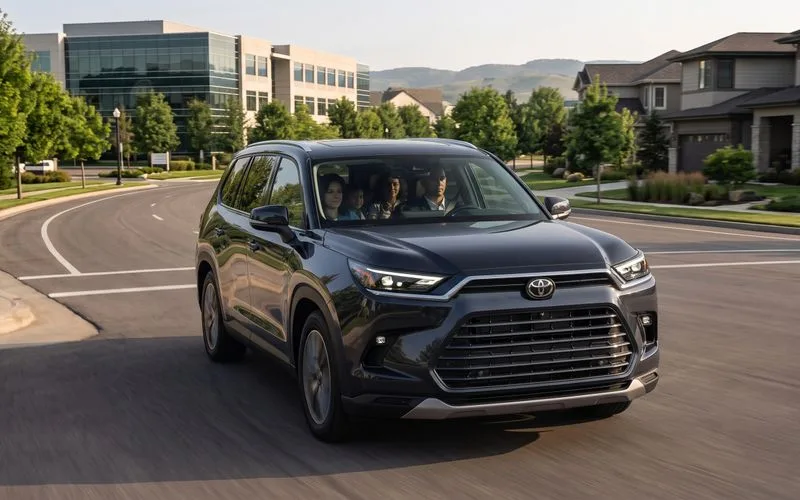 Toyota Grand HighlanderMid-Size SUVBetter at: Efficiency
The hybrid version returns about 36 MPG combined versus the Ascent's 23, saving roughly $950 a year in fuel while adding space behind the third row and Toyota's reliability record.
Compare 2.79B-
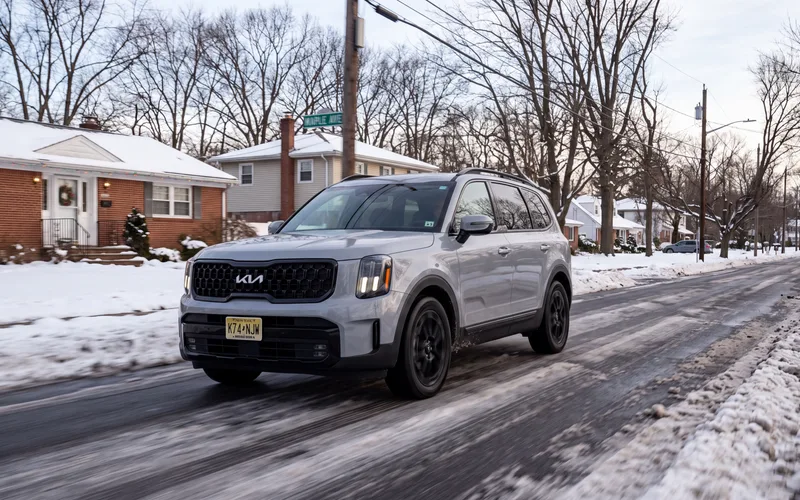 Kia TellurideMid-Size SUVBetter at: Interior & warranty
Better cabin materials, a smoother V6, far more second-row legroom, and a 10-year/100,000-mile powertrain warranty that doubles Subaru's coverage.
Compare 2.43C+
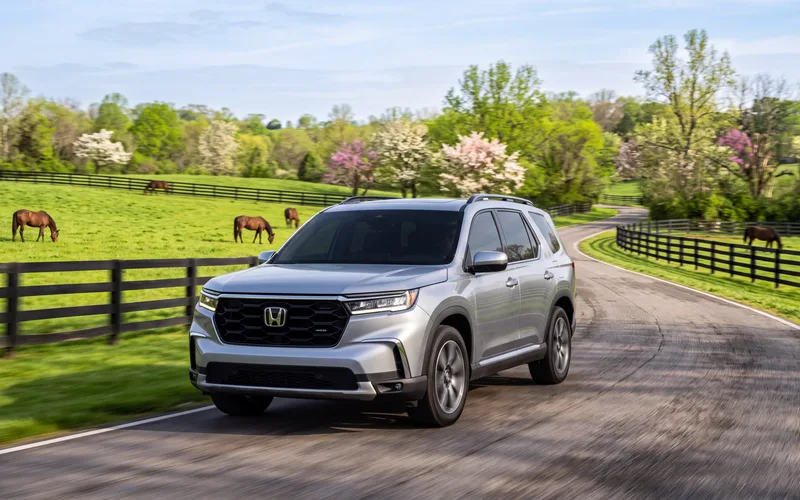 Honda PilotMid-Size SUVBetter at: Powertrain
A 285-hp V6 with a 10-speed automatic delivers the quiet, responsive powertrain the Ascent's turbo-boxer-and-CVT never quite manages, with more usable cargo room behind row three.
CompareHow it's evolved
8 scored model years · 2019–2026
Subject scores by year
Hover or tap a score to see what moved it versus the year before. A corner mark flags a big swing.
| Year | Performance | Efficiency | Safety | Space | Cost | Reliability | Tech | Use-case | Driving | Value |
|---|---|---|---|---|---|---|---|---|---|---|
| 2026 | 50 | 49 | 80 | 72 | 51 | 65 | 59 | 72 | 59 | 67 |
| 2025 | 48 | 43 | 80 | 70 | 51 | 74 | 60 | 66 | 59 | 60 |
| 2024 | 48 | 43 | 79 | 70 | 54 | 70 | 57 | 65 | 60 | 64 |
| 2023 | 48 | 43 | 81 | 72 | 55 | 67 | 56 | 68 | 62 | 66 |
| 2022 | 48 | 49 | 78 | 69 | 42 | 40 | 36 | 63 | 56 | 58 |
| 2021 | 47 | 50 | 78 | 71 | 57 | 52 | 41 | 58 | 54 | 68 |
| 2020 | 49 | 49 | 74 | 67 | 59 | 39 | 44 | 62 | 55 | 70 |
| 2019 | 47 | 49 | 73 | 70 | 57 | 45 | 43 | 62 | 49 | 74 |
Compare two years
Best fit & conditions
Higher scores mean a better fit for that use case. Learn more about use-case fit →
Subject profile
Academic Probation · NHTSA safety recalls
Jul 7, 2026Equipment: other: labelsThese vehicles were manufactured with an incorrect Gross Axle Weight Rating (GAWR) on the certification label. As such, these vehicles fail to comply with the requirements of Federal Motor Vehicle Safety Standard (FMVSS) 110, "Tire selection and rims."
Defect
Subaru of America, Inc. (Subaru) is recalling certain 2026 Crosstrek Hybrid, 2025-2026 Forester Hybrid, Forester, and 2019-2026 Ascent vehicles. These vehicles were manufactured with an incorrect Gross Axle Weight Rating (GAWR) on the certification label. As such, these vehicles fail to comply with the requirements of Federal Motor Vehicle Safety Standard (FMVSS) 110, "Tire selection and rims."
Risk
An incorrect GAWR label may lead to an overloaded vehicle, increasing the risk of a crash.
Remedy
Subaru will mail a new certification label to owners, free of charge. Owners may also choose to have a dealer install the new label, free of charge. Letters informing owners of the safety risk were mailed August 27, 2026. Additional letters will be mailed once the remedy is available. Owners may contact Subaru customer service at 1-844-373-6614. Subaru's number for this recall is WRH-26.
NHTSA campaign 26V436000 ↗Manufacturer no. WRH-26541,237 vehicles potentially affected (all models in the campaign)Filed by Subaru of America, Inc.Filed as ASCENT
12 recalls on other model years of the Ascent (2019–2023)
Sep 21, 2023Power train: driveline: driveshaftThe center support bolts for the driveshaft may loosen, resulting in the disconnection of the front end of the driveshaft.
Defect
Subaru of America, Inc. (Subaru) is recalling certain 2023 Outback, Legacy, Ascent, and Impreza vehicles. The center support bolts for the driveshaft may loosen, resulting in the disconnection of the front end of the driveshaft.
Risk
Separation of the front end of the driveshaft increases the risk of a crash.
Remedy
Dealers will clean the bolt mounting surfaces of the center support brace and install new bolts, free of charge. Owner notification letters were mailed November 20, 2023. Owners may contact Subaru's customer service at 1-844-373-6614. Subaru's number for this recall is WRN-23.
NHTSA campaign 23V647000 ↗Manufacturer no. WRN-234,311 vehicles potentially affected (all models in the campaign)Owners notified Nov 20, 2023Filed by Subaru of America, Inc.Filed as ASCENTJun 1, 2023Suspension: front: control arm: lower armThe left or right front lower control arm may have an improperly tightened ball joint castle nut which can result in retention pin failure and separation of the ball joint from the lower control arm.
Defect
Subaru of America, Inc. (Subaru) is recalling certain 2023 Ascent vehicles. The left or right front lower control arm may have an improperly tightened ball joint castle nut which can result in retention pin failure and separation of the ball joint from the lower control arm.
Risk
Ball joint separation while the vehicle is in motion can cause a loss of vehicle control, increasing the risk of a crash.
Remedy
Dealers will inspect and, if necessary, replace the lower control arm, free of charge. Owner notification letters are expected to be mailed June 30, 2023. Owners may contact Subaru's customer service at 1-844-373-6614. Subaru's number for this recall is WRJ-23.
NHTSA campaign 23V392000 ↗Manufacturer no. WRJ-235 vehicles potentially affected (all models in the campaign)Owners notified Jun 27, 2023Filed by Subaru of America, Inc.Filed as ASCENTApr 7, 2023TiresThe internal tire bead may have been damaged during the wheel mounting process.
Defect
Subaru of America, Inc. (Subaru) is recalling certain 2023 Ascent vehicles equipped with 20-inch wheels. The internal tire bead may have been damaged during the wheel mounting process.
Risk
A damaged tire may experience a sudden loss of air pressure, increasing the risk of a crash.
Remedy
Dealers will replace all four tires, free of charge. Owner notification letters are expected to be mailed June 6, 2023. Owners may contact Subaru's customer service at 1-844-373-6614. Subaru's number for this recall is WRH-23.
NHTSA campaign 23V258000 ↗Manufacturer no. WRH-234,409 vehicles potentially affected (all models in the campaign)Owners notified May 5, 2023Filed by Subaru of America, Inc.Filed as ASCENTDec 8, 2022Electrical system: wiring: interior/under dashThe ground bolt that secures the ground terminal of the Positive Temperature Coefficient (PTC) heater may have been improperly fastened, which could result in melting of the ground terminal and surrounding components.
Defect
Subaru of America, Inc. (Subaru) is recalling certain 2019-2022 Ascent vehicles. The ground bolt that secures the ground terminal of the Positive Temperature Coefficient (PTC) heater may have been improperly fastened, which could result in melting of the ground terminal and surrounding components.
Risk
A melting ground terminal increases the risk of a fire.
Remedy
Owners are advised to park their vehicle away from structures and to avoid leaving the vehicle unattended while the engine is running. An owner who notices or smells smoke coming from the dash or driver's footwell area should immediately stop operating the vehicle and turn the ignition switch to the "Off" position. Dealers will replace the PTC heater ground bolts and if necessary, replace the ground wire and the connector holder, free of charge. Owner notification letters are expected to be mailed February 6, 2023. Owners may contact Subaru's customer service at 1-844-373-6614. Subaru's number for this recall is WRL-22.
NHTSA campaign 22V907000 ↗Manufacturer no. WRL-22271,694 vehicles potentially affected (all models in the campaign)Owners notified Jan 25, 2023Filed by Subaru of America, Inc.Filed as ASCENTDec 9, 2021Power train: automatic transmission: control module (tcm/pcm/tecm) · Power train: driveline: chain/beltA programming error in the Transmission Control Unit (TCU) may allow the clutch to engage before the drive chain is completely clamped.
Defect
Subaru of America, Inc. (Subaru) is recalling certain 2019-2020 Ascent, 2020 Legacy and Outback vehicles. A programming error in the Transmission Control Unit (TCU) may allow the clutch to engage before the drive chain is completely clamped.
Risk
An improperly secured drive chain may slip and break, causing a loss of drive power and increasing the risk of a crash.
Remedy
Dealers will reprogram the TCU, inspect TCU data for chain slip, and visually inspect the chain guide. If evidence of chain slippage or damage is found, the transmission will be replaced. Repairs will be performed free of charge. Owner notification letters were mailed August 19, 2022. This recall includes all vehicles previously recalled under 19V-855. Vehicles previously recalled under 19V-855 will need to have the new remedy performed for this recall once available. Owners may contact Subaru customer service at 1-844-373-6614. Subaru's number for this recall is WRK-21.
NHTSA campaign 21V955000 ↗Manufacturer no. WRK-21198,255 vehicles potentially affected (all models in the campaign)Owners notified Aug 19, 2022Filed by Subaru of America, Inc.Filed as ASCENTDec 9, 2021Steering: linkages: tie rod assemblyDue to an incorrect tapered hole in the housing, the front tie rod ends may not fit properly. The improper fit can result in the tie rods and housings being deformed during assembly and service replacement if excessive torque is applied.
Defect
Subaru of America, Inc. (Subaru) is recalling certain 2020 Ascent vehicles. Due to an incorrect tapered hole in the housing, the front tie rod ends may not fit properly. The improper fit can result in the tie rods and housings being deformed during assembly and service replacement if excessive torque is applied.
Risk
The tie rods may separate from the housing, causing a loss of steering control and increasing the risk of a crash.
Remedy
Dealers will replace the left and right front tie rod ends and housings, free of charge. Owner notification letters were mailed February 7, 2022. Owners may contact Subaru customer service at 1-844-373-6614. Subaru's number for this recall is WRL-21.
NHTSA campaign 21V954000 ↗Manufacturer no. WRL-211,305 vehicles potentially affected (all models in the campaign)Owners notified Feb 7, 2022Filed by Subaru of America, Inc.Filed as ASCENTJul 29, 2021Fuel system, gasoline: delivery: fuel pumpThe low-pressure fuel pump inside the fuel tank may fail.
Defect
Subaru of America, Inc. (Subaru) is recalling certain 2019-2020 Ascent, 2018 Forester, 2018-2020 Impreza, Legacy, Outback, 2018-2019 BRZ, WRX, and Toyota 86 vehicles. The low-pressure fuel pump inside the fuel tank may fail.
Risk
Fuel pump failure can cause an engine stall while driving, increasing the risk of a crash.
Remedy
Dealers will replace the low-pressure fuel pump, free of charge. Owner notification letters were mailed September 24, 2021. Subaru and Toyota owners may call customer service at 1-844-373-6614. Subaru's number for this recall is WRG-21.
NHTSA campaign 21V587000 ↗Manufacturer no. WRG-21175,968 vehicles potentially affected (all models in the campaign)Owners notified Sep 24, 2021Filed by Subaru of America, Inc.Filed as ASCENTApr 16, 2020Fuel system, gasoline: delivery: fuel pumpThe low pressure fuel pump may become inoperative.
Defect
Subaru of America, Inc. (Subaru) is recalling certain 2019 Impreza, Outback, Legacy, and Ascent vehicles. The low pressure fuel pump may become inoperative.
Risk
If the low pressure fuel pump fails, the engine may stall without the ability to restart the vehicle, increasing the risk of a crash.
Remedy
Subaru will notify owners, and dealers will replace the low pressure fuel pump, free of charge. The recall began June 4, 2020. Owners may contact Subaru customer service at 1-844-373-6614. Subaru's number for this recall is WRD-20.
NHTSA campaign 20V218000 ↗Manufacturer no. WRD-20188,207 vehicles potentially affected (all models in the campaign)Owners notified Jun 4, 2020Filed by Subaru of America, Inc.Filed as ASCENTDec 2, 2019Engine and engine cooling: exhaust system: emission control: crankcase (pcv)The aluminum Positive Crankcase Ventilation (PCV) valve can separate, allowing the separated components to enter the engine, resulting in a loss of power while driving.
Defect
Subaru of America, Inc. (Subaru) is recalling certain 2019 Crosstrek, Forester, and Ascent vehicles. The aluminum Positive Crankcase Ventilation (PCV) valve can separate, allowing the separated components to enter the engine, resulting in a loss of power while driving.
Risk
An unexpected loss of power while driving can increase the risk of a crash.
Remedy
Subaru will notify owners, and dealers will inspect and replace the PCV valve, free of charge. If the PCV valve has separated and the components cannot be found, the short block engine will be replaced, free of charge. The recall began January 31, 2020. Owners may contact Subaru customer service at 1-844-373-6614. Subaru's number for this recall is WUW-08.
NHTSA campaign 19V856000 ↗Manufacturer no. WUW-0851,613 vehicles potentially affected (all models in the campaign)Owners notified Jan 31, 2020Filed by Subaru of America, Inc.Filed as ASCENTDec 2, 2019Power train: automatic transmission: control module (tcm/pcm/tecm)The transmission hydraulic sensor may inaccurately measure the hydraulic fluid pressure.
Defect
Subaru of America, Inc. (Subaru) is recalling certain 2019 Ascent vehicles. The transmission hydraulic sensor may inaccurately measure the hydraulic fluid pressure.
Risk
If the fluid pressure is measured higher than its actual value, the hydraulic pressure will be reduced. If this occurs, the transmission drive chain may not have the proper tension, resulting in a loss of drive power and an increased risk of a crash.
Remedy
Subaru will notify owners, and dealers will reprogram the transmission control unit. The hydraulic sensor harness will be replaced on vehicles with certain stored diagnostic trouble codes. In addition, any vehicle confirmed to have experienced low drive chain tension will have the transmission assembly will be replaced. All repairs will be free of charge. The recall began January 31, 2020. Owners may contact Subaru customer service at 1-844-373-6614. Subaru's number for this recall is WUV-07.
NHTSA campaign 19V855000 ↗Manufacturer no. WUV-0776,842 vehicles potentially affected (all models in the campaign)Owners notified Jan 31, 2020Filed by Subaru of America, Inc.Filed as ASCENTJul 10, 2019Power train: driveline: driveshaftThe center support bolts for the driveshaft may loosen, possibly resulting in the front portion of the driveshaft disconnecting.
Defect
Subaru of America, Inc. (Subaru) is recalling certain 2019 Ascent vehicles. The center support bolts for the driveshaft may loosen, possibly resulting in the front portion of the driveshaft disconnecting.
Risk
If the front end of the driveshaft separates, it can increase the risk of a crash.
Remedy
Subaru will notify owners, and dealers will replace the driveshaft assembly, including the center support brace, free of charge. The recall began July 26, 2019. Owners may contact Subaru customer service at 1-844-373-6614. Subaru's number for this recall is WUI-94.
NHTSA campaign 19V519000 ↗Manufacturer no. WUI-94166 vehicles potentially affected (all models in the campaign)Owners notified Jul 26, 2019Filed by Subaru of America, Inc.Filed as ASCENTAug 2, 2018Structure: body: roof and pillarsThese vehicles may be missing spot welds on, or around, the B-Pillar, compromising vehicle strength.
Defect
Subaru of America, Inc. (Subaru) is recalling certain 2019 Subaru Ascent vehicles. These vehicles may be missing spot welds on, or around, the B-Pillar, compromising vehicle strength.
Risk
In the event of a crash, the missing spot welds may compromise the vehicle's strength, increasing the risk of injury.
Remedy
Subaru will notify owners, and dealers will inspect the vehicle to check for missing spot welds. If the welds are missing, the vehicle will be replaced, free of charge. The recall began July 31, 2018. Owners may contact Subaru customer service at 1-844-373-6614. Subaru's number for this recall is WTU-80.
NHTSA campaign 18V508000 ↗Manufacturer no. WTU-80293 vehicles potentially affected (all models in the campaign)Owners notified Jul 31, 2018Filed by Subaru of America, Inc.Filed as ASCENT
Source: NHTSA Office of Defects Investigation recall database, model years 2019–2026. Recalls are listed by model year as the manufacturer filed them; whether a specific car is affected depends on its VIN — check a VIN at nhtsa.gov ↗. NHTSA model names matched to this page: ASCENT.
Detailed scoring by subject
1Performance & PowertrainOne of the Ascent's weakest categories.1.20D
Every 2025 Ascent trim uses the same direct-injection turbocharged 2.4L FA24F flat-four; there is no output split across the range, so the volume Premium and the top Onyx Edition Touring make identical power.
Peak torque arrives at just 2,000 rpm and holds across a wide plateau, which is what makes a 2.4L four workable in a 4,600-lb three-row; the figure is common to all trims.
Carry-over FA24F powertrain, so figures from recent model years apply; instrumented runs land just either side of 7.0 seconds, mid-pack for a mainstream three-row and quicker than the naturally aspirated V6 rivals it replaced.
The turbo four is quiet at cruise and its 2,000-rpm torque plateau makes part-throttle response feel effortless, but reviewers consistently note a beat of turbo lag from rest and a coarse, thrashy note when the CVT holds high revs under full load.
The Lineartronic CVT with 8-speed stepped manual mode is smooth and well-matched to the engine's flat torque curve in normal driving, but it produces the characteristic drone under hard acceleration and its simulated ratios are a workaround rather than a fix.
5,000 lbs is the highest rating Subaru has ever given a vehicle and it applies across the 2025 trim range rather than being locked to a tow package on upper trims; strong for a unibody three-row, well short of a body-on-frame SUV.
Symmetrical All-Wheel Drive is standard on every 2025 trim — there is no front-drive Ascent at any price — and it is backed by X-MODE with Hill Descent Control, dual-function (Snow/Dirt plus Deep Snow/Mud) on the upper trims. It falls short of a perfect score only for the absence of a low range or locking differential.
8.7 inches of ground clearance beats most three-row crossovers and X-MODE with Hill Descent Control handles snow, gravel and mud competently, but there is no Wilderness-grade Ascent: no low range, no locker, no skid plates, and the Onyx Edition's 20-inch wheels and street tires push the other way.
One engine, one transmission, one drivetrain across all six 2025 trims — the 2.4L turbo four with Lineartronic CVT and standard AWD. No hybrid, no plug-in, no alternative engine anywhere in the range, at a time when most mid-size three-rows offer at least an electrified option.
2Efficiency & RangeThe Ascent's lowest-graded category.0.85F
Subaru dropped the Base trim for 2025, making Premium the entry point and the volume seller; it carries the 22-MPG rating, while the heavier upper trims on larger wheels drop to 21. Every Ascent is AWD, so there is no front-drive figure to quote.
The turbo four's city figure is ordinary for a ~4,600-lb three-row with standard all-wheel drive, and there is no hybrid variant to lift it.
Highway economy is the Ascent's better side of the ledger and is what underpins Subaru's "over 500 miles of highway range" claim, but it still trails the front-drive-capable rivals in the segment.
A 19.3-gallon tank — unchanged since the nameplate launched — paired with the 22-MPG combined rating gives roughly 425 miles between fills, respectable rather than class-leading for a family three-row.
EPA's estimate at standard assumptions puts the Ascent toward the costlier end of the mid-size three-row field, a direct consequence of 22 MPG combined with no electrified option to fall back on.
Despite being turbocharged and direct-injected, the FA24F is rated on 87-octane regular unleaded with no premium recommendation, so the per-gallon penalty other turbo three-rows carry does not apply here.
3SafetyThe Ascent's best-graded category.3.43B+
The 2025 Ascent carries NHTSA's top overall result, with five stars in both the frontal and side barrier tests; only the rollover measure — where a tall three-row crossover is always penalized — comes back at four stars.
A 2025 IIHS Top Safety Pick — Subaru's eighth consecutive year for the Ascent — with Good in small overlap front on both driver and passenger sides and Good in the updated side test, but only Acceptable in the updated moderate overlap front test with the rear-seat dummy. That single Acceptable is exactly what separates it from the TSP+ the Solterra earned the same year, so it sits below the all-Good threshold.
Subaru deleted the stripped base trim for 2025, so the entry Premium carries the full suite: EyeSight with the new Wide-Angle Mono Camera (pre-collision braking, full-range adaptive cruise with lane centering, lane departure), Blind-Spot Detection with Lane Change Assist, Rear Cross-Traffic Alert, Reverse Automatic Braking and the newly standard Emergency Stop Assist. Nothing on the core AEB/ACC/LKA/BSM/RCTA list is a trim upgrade — it loses points only because the 360-degree surround-view monitor and DriverFocus attention monitoring start at Limited.
IIHS rates the Ascent's pedestrian front crash prevention Good, and the underlying runs are strong rather than borderline: collisions avoided outright in both daytime crossing-child trials and in the nighttime crossing-adult trials on high and low beams. The one soft spot is the nighttime parallel-adult scenario, where the system avoided the impact on high beams but failed to slow at all on low beams at both 25 and 37 mph — a real-world-relevant gap that keeps it out of the top band.
Blind-Spot Detection with Lane Change Assist and Rear Cross-Traffic Alert are standard on every 2025 trim, and Reverse Automatic Braking adds genuine intervention rather than just a chime when backing out. It stops short of the top of the band because the blind-spot side is alert-only — no steering countermeasure — and there is no safe-exit alert for rear passengers.
Lane departure warning, lane keep assist and lane centering (tied to adaptive cruise) are standard, and the 2025 switch to EyeSight's Wide-Angle Mono Camera widens the field of view. But Cars.com's test drivers found the lane departure assist and the collision warning noticeably over-eager, and switching the nagging features off leaves a dashboard warning light that cannot itself be dismissed — functional assistance with rough edges rather than the quiet confidence the top band describes.
Advanced Adaptive Cruise Control with Lane Centering is standard across the range and works through the full speed range including stop-and-go, and 2025 adds Emergency Stop Assist, which brings the vehicle to a halt if the driver becomes unresponsive. It is a capable, well-integrated system rather than a refined one — there is no branded highway-assist mode, and the same over-sensitive collision warning that bothers reviewers rides along with it.
Subaru offers no hands-free highway system on any 2025 Ascent trim. EyeSight is a hands-on lane-centering assist and the DriverFocus camera on upper trims exists to enforce attention, not to enable hands-off operation — nothing comparable to BlueCruise, Super Cruise or ProPILOT Assist 2.0 is available at any price.
IIHS rates the headlights Good across every 2025 trim — no trim-dependent downgrade, which is the single most common way a three-row crossover loses its award. Steering Responsive LED headlights with High Beam Assist are standard from the entry Premium up, so the volume buyer gets the curve-adaptive units rather than paying up for them.
A low beltline, large glass area and high seating position give the Ascent better natural sightlines than most three-rows, helped by small triangular quarter windows ahead of the doors. Thick windshield pillars are the recurring complaint, and camera compensation is uneven — the 360-degree surround-view monitor and the smart rear-view mirror are Limited-and-up equipment, so the volume Premium relies on the standard rear camera alone.
IIHS rates LATCH ease of use Good and credits the Ascent with extra anchor positions beyond the required minimum, and the eight-passenger bench configuration allows three child seats abreast in the second row with additional anchors in the third. The offset is packaging: the cabin is roughly two inches narrower than segment rivals, so three-across is achievable but tight, and the third row is genuinely kid-only.
4Space & ComfortOne of the Ascent's strongest categories.2.73B-
The 2025 volume trim is the Premium, which is now the entry model after the Base trim was dropped, and it is offered in both 8-passenger bench and 7-passenger captain's-chair configurations — eight seats is the maximum for the mainstream three-row class.
The volume Premium has no moonroof, so it gets the full 41.2 in — near the top of the mid-size SUV band and a direct payoff of the Ascent's tall, upright greenhouse.
42.2 in is mid-pack for the three-row segment — ahead of the Pilot (41.0) and Telluride (41.4) but behind the Palisade (44.1). Adequate rather than notable.
40.0 in of second-row headroom sits at the top of the mid-size SUV normalization band; the flat roofline gives the Ascent genuinely class-leading rear head space on the moonroof-free Premium.
38.6 in trails the Palisade and Telluride (42.4 each) and the Highlander (41.0) because the Ascent positions its second row forward to preserve an unusually usable third row; the sliding bench lets owners rebalance rows two and three.
A real, kid-usable third row rather than a token one — 31.7 in of legroom beats the Highlander (28.0) and matches the Telluride/Palisade (31.4) — but 36.2 in of headroom, a low cushion with little thigh support and a tight aperture keep adults to short hops. The volume Premium's bench requires a tilt-and-slide; the walk-through belongs to the captain's-chair trims.
Subaru's own 2025 spec sheet publishes 43.5 cu ft with the third row folded — short of the Palisade (45.8), Highlander (48.4) and Atlas (55.5). The tighter number in daily family use is the 17.8 cu ft behind row three, among the smallest in the class.
75.6 cu ft is the figure Subaru publishes on both the spec sheet and the consumer site, and it is modest for a 196.8-in three-row — the Palisade, Telluride and Pilot all clear 86 cu ft. An 82.9-in load floor with everything folded partly offsets the volume deficit for long items.
Storage is a signature Ascent strength: up to 19 cupholders, a deep center console with a sliding tray, oversized door bins, seatback pockets in both rear rows, an underfloor cargo well and standard cargo tie-downs. It stays out of the 80+ band only because nothing here is an innovation — no frunk, no 120V outlet, no fold-flat front passenger seat.
Front seats are consistently praised as supportive over long stints, and for 2025 the entry Premium gains an 8-way power driver's seat plus standard heated fronts; the reclining, sliding second row is comfortable for adults. Held out of the top band by a flat, low third-row cushion and no thigh-support extension anywhere in the range.
Soft spring tuning, a 113.8-in wheelbase, a stiff Subaru Global Platform shell and 8.7 in of clearance give absorbent impact isolation that reviewers call a strength; the volume Premium's 18-in wheels on 245/60 tires ride noticeably better than the 20-in/245-50 setup on Onyx, Limited, Bronze and Touring.
Steady-state cruising refinement is acceptable, but road and wind noise are specifically called out as notable in 2025 reviews, and the turbo-boxer plus CVT drones coarsely whenever the vehicle is asked to accelerate or climb — the Ascent's most consistently cited refinement flaw.
Deleting the Base trim for 2025 lifted the floor: every 2025 Ascent now has tri-zone automatic climate with second-row independent controls and vents, heated front seats, heated mirrors and a wiper de-icer as standard, plus keyless access with push-button start. Ventilated front seats, a heated steering wheel and heated second-row seats remain Limited/Touring-and-up, keeping it below the 80+ band.
5Cost of OwnershipOne of the Ascent's weakest categories.1.43D
Subaru eliminated the outgoing Base trim for 2025, so Premium becomes the entry point and the entry price steps up accordingly; Subaru's own release frames the increase as just $340 for comparable content.
With Base deleted, Premium is simultaneously the entry trim and the volume seller, and it arrives already carrying the previously optional Convenience Package plus the 11.6-inch multimedia system, so 'typically equipped' and 'as listed' are effectively the same car.
The boxer four's timing-chain layout and Subaru's 6,000-mile service interval keep scheduled work routine, but dealer-rate labor on a horizontally opposed engine is not cheap and the spread between dealer-retail and owner-basis estimates is roughly 2:1.
The Ascent is the weakest retainer in Subaru's lineup: it does not carry the Outback/Crosstrek cult premium, and softening demand for the aging first generation pushes residuals below the segment's Toyota and Kia benchmarks.
Subaru's limited warranty is the segment's floor term — matched by Toyota and Honda, but half the length of the Hyundai/Kia coverage that direct rivals like the Telluride and Palisade carry.
5/60 is the mainstream default and the bottom of the framework's band; with a single gas powertrain there is no hybrid or battery coverage to extend it, unlike the Highlander and Pilot hybrids' 8–10 year component terms.
Subaru of America does not run a national included-maintenance program — "Maintain the Love" complimentary maintenance is a regional/retailer offer (typically 1 yr/12,000 mi, 2 yr/24,000 mi in some markets) rather than a factory entitlement, so a buyer cannot count on it. What is guaranteed is the 3-year/36,000-mile roadside assistance and three years of MySubaru (STARLINK) Safety connected services, which is longer roadside coverage than ToyotaCare's two years but with none of the scheduled service.
$40,215 volume-trim price minus its estimated resale value after 5 years (51% retained, or about $20,510) leaves about $19,705 in depreciation. Add the projected $6,419 in 5-year maintenance and repairs, and owning this vehicle for 5 years costs about $26,124 in total.
6Reliability & QualityOne of the Ascent's strongest categories.3.02B
Consumer Reports predicts about-average reliability for the Ascent and lists it among its Recommended Subarus, but it trails the above-average Forester/Outback/Crosstrek and the class-leading Palisade and Grand Highlander. U.S. News puts its reliability at 80/100 — mid-pack for mid-size SUVs. 2025 is a mature, well-sorted year deep into the 2019 generation with no redesign risk, which lifts it above the segment median.
Subaru is a genuine top-tier reliability brand right now, not a mid-pack one: it placed second overall in Consumer Reports' 2025 reliability rankings (score 63, behind only Toyota's 66) and topped CR's Auto Brand Report Card for the second consecutive year. J.D. Power's VDS is the softer of the two signals — Subaru fell outside the 2025 top ten but registered 181 PP100 in the 2026 study, good for roughly sixth. Held below the 85+ band because the two major studies disagree on how high it ranks.
The 2025 Ascent's recall record is exceptionally clean: NHTSA's own database returns exactly one campaign against it, 26V436000, an incorrect Gross Axle Weight Rating printed on the certification label — a sticker replacement with no mechanical defect. The generation's real recall burden was front-loaded onto the 2019–2020 launch years (nine and five campaigns, including the B-pillar spot welds, PCV valve, Denso fuel pump and driveshaft), and none of those carry into 2025. NHTSA complaint volume for the year is likewise low and diffuse, with no cluster above two per component.
The weakest link in an otherwise strong reliability case. The 2.4L FA24DIT turbo boxer has settled into a decent record — owners commonly report 200k-mile service with maintenance — but it carries a known oil-seepage pattern at the PCV hose joint and an early PCV recall on the 2019–2020 cars. The bigger question is the high-torque TR730 Lineartronic CVT, which handles substantially more torque than Subaru's other CVTs in a ~4,700-lb three-row; owners report hesitation from a stop, harsh Park-to-Drive engagement, and a thin but real thread of complete failures under 60,000 miles. Neither component has the high-mileage résumé of a Honda J35 or Toyota 2GR V6.
Reviewers land consistently on 'agreeably average' — a durable, function-first cabin with some soft-touch surfaces and dash-covering pleather, but visible hard plastics that cheapen the impression at a ~$40k starting price. It does not reach the perceived richness of the Palisade, Telluride, Grand Highlander or CX-90. Materials improve up the range, with StarTex in the new Bronze and Onyx Editions and perforated leather in Touring trims, but the volume Premium trim is the one being scored.
Assembly at Subaru of Indiana Automotive in Lafayette is solid and consistent, and by 2025 the Ascent is six years into its production run with the launch-year body issues long resolved — the 2018 missing-spot-weld campaign covered just 293 vehicles and never recurred. Panel gaps and interior assembly are tight, with only scattered rattle complaints rather than a systemic pattern.
A standout strength. Subaru of America ranked highest among mass-market brands in the J.D. Power 2025 U.S. Customer Service Index, topping every Voice of the Customer measure — service initiation, service advisor, service facility, vehicle pick-up and service quality — and repeated at the top of the mass-market SUV category in 2026 with 887 of 1,000. Held short of the 90s only because the ~640-retailer network is meaningfully thinner than Toyota's or Chevrolet's and skews toward the Northeast, Pacific Northwest and Colorado, leaving parts of the South and Southwest with longer drives.
Parts are readily available through a 640-retailer network and Subaru enjoys unusually strong enthusiast aftermarket support as a brand, but Ascent-specific aftermarket is thin next to a Highlander or Pilot, and running costs sit above the industry norm. RepairPal puts Subaru at $617 average annual repair cost and 3.5/5 overall, 14th of 32 brands, with repair frequency low (0.3 shop visits per year) — the cost per visit, not the number of visits, is what pulls this down. Turbo and boxer-specific service items add labor cost relative to a transverse V6.
7Technology & InfotainmentMid-pack among this car's ten categories.2.05C
The portrait 11.6-inch STARLINK Multimedia Plus display became standard across the whole 2025 line, so the volume Premium gets the largest screen the Ascent offers; 11.6 in is respectable but no longer large by 2025 mid-size SUV standards.
The 11.6-in tablet runs an updated STARLINK build for 2025 and keeps genuinely useful hardware — a volume knob and physical temperature buttons flanking the screen — but the system still absorbs climate, X-MODE and vehicle settings into menus and is regularly described as slower to respond than the best in the class.
Both wireless Apple CarPlay and wireless Android Auto are standard on every 2025 trim including the entry Premium — a headline 2025 change and squarely in the top band.
Built-in navigation is not available on the volume Premium at all — the STARLINK Multimedia Navigation system starts at Limited — and STARLINK's command-based voice recognition handles basic audio/phone/climate requests without the natural-language fluency of the best systems, so most owners default to CarPlay or Android Auto for maps.
The volume Premium's standard system is an unremarkable six-speaker setup, but a genuinely strong 14-speaker Harman Kardon QuantumLogic surround system with a dedicated center channel and subwoofer is available from Limited up, which is a competitive premium option for the class.
No 2025 Ascent trim offers a configurable full-digital gauge display — the instrument binnacle is conventional analog dials with a small colour information display, supplemented by the separate multi-function display atop the dash. This is the Ascent's clearest technology deficit against the Palisade, Telluride and Pilot, all of which offer 12.3-in digital clusters.
New for 2025, the STARLINK system can pull software updates wirelessly rather than requiring a dealer visit — real progress, but the scope is infotainment/maps rather than the whole-vehicle, feature-adding OTA that earns the top band.
MySubaru with STARLINK Safety and Security Plus covers the core set — remote start with climate, remote lock/unlock, vehicle locator, automatic collision notification and SOS — but the useful remote functions sit behind a paid subscription after the trial and there is no phone-as-key or digital key sharing.
Dual third-row USB-A ports became standard for 2025, so all three rows are now served, and Limited-and-up cars carry up to six ports with USB-C in the front rows. It stays mid-band because the volume Premium has the thinnest allocation, wireless phone charging is Limited-and-up, and no trim offers a 120V household outlet.
Folding the old Convenience Package into the entry Premium made Keyless Access with Push-Button Start and a power rear gate standard on every 2025 Ascent, with remote engine start available through the app. Short of the top band because there is no hands-free kick-activated liftgate and no phone-as-key.
Reverse Automatic Braking became standard across the line for 2025 alongside the rear camera, which is a meaningful parking-safety addition on the entry trim — but the Surround View Monitor and front-view camera start at Limited, so the volume Premium parks a 196.8-in SUV on a rear camera alone without front sensors.
No head-up display is offered on any 2025 Ascent trim, including the $51,415 Onyx Edition Touring — a feature the Palisade, Telluride and Grand Highlander all make available.
8Use-Case FitMid-pack among this car's ten categories.2.47C+
Family logistics are the Ascent's core competence: wide, square door openings on a 71.6-in-tall body, a second row that slides and reclines to clear space for rear-facing seats, LATCH provision that this vehicle's safety scoring rates highly, eight-passenger capacity on the volume Premium and 19 cupholders. The limit is the 17.8 cu ft behind row three, which a double stroller fills.
The 2025 Ascent is close to a best case for a family buying the cheapest trim: five-star NHTSA overall, and for 2025 Blind-Spot Detection with Lane Change Assist, Rear Cross-Traffic Alert, Reverse Automatic Braking, Emergency Stop Assist and Emergency Lane Keep Assist all became standard across the line, on top of EyeSight with adaptive cruise and lane centering. Nothing important is paywalled above the $40,215 entry point.
Tri-zone climate with independent second-row controls and vents is standard on every 2025 trim, third-row USB-A ports were added for 2025, and second-row space is generous. Held back because with all three rows occupied there is only 17.8 cu ft for luggage, rear-seat entertainment is not offered, and the Cabin Connect intercom is an upper-trim item.
Light 13.5:1 steering, a tall upright seating position with excellent sightlines, a CVT that is genuinely smooth at low speed, and standard EyeSight adaptive cruise with lane centering make stop-and-go duty low-effort. Auto Vehicle Hold is standard. The only real daily irritants are the screen-based climate menus and the powertrain's noise when hurried.
22 MPG combined on regular fuel and roughly $2,800 a year is unremarkable for a 2025 three-row and looks poor beside the hybrid options families now cross-shop — a Highlander Hybrid or Grand Highlander Hybrid nearly halves the fuel bill, and no Ascent trim offers any electrification.
A 196.8-in body with a 38.0-ft turning circle is ordinary for the class, and while the tall glasshouse gives unusually good outward visibility for a big SUV, the volume Premium has to manage on a rear camera with no front or rear parking sensors and no surround view — those start at Limited.
The 5,000-lb tow rating is genuinely strong for a unibody crossover with a 2.4-litre four and matches the Pilot and Telluride, but there is no bed, no payload headroom worth quoting, and a CVT that reviewers do not associate with sustained heavy hauling — this is trailer-a-boat-on-weekends capability, not a work tool.
The Subaru Global Platform shell and the 2.4T boxer have a solid consumer reliability record and the brand's service network is broad, but the Ascent has no commercial-fleet history and the Lineartronic CVT — the subject of the nameplate's most publicised early-life trouble — is the component a hard-use buyer would worry about.
Standard roof rails and cargo tie-downs plus Subaru's deep accessory catalogue cover light-duty needs, and StarTex water-repellent upholstery on the Onyx trims is genuinely wipe-clean, but there is no onboard AC power on any trim, no bed, and nothing resembling an upfit ecosystem.
A 19.3-gal tank at 26 MPG highway gives roughly 500 highway miles between stops, the seats are praised over long stints, the long wheelbase soaks up interstate expansion joints, and EyeSight's adaptive cruise with lane centering is standard on the volume trim. Road and wind noise plus boxer/CVT drone on grades keep it out of the top band.
This is the Ascent's second natural mission: Symmetrical AWD with X-MODE standard on every trim, dual-function X-MODE with Deep Snow/Mud on Onyx, Bronze, Limited and Touring, 8.7 in of ground clearance, 5,000 lb of towing for a small trailer, and standard roof rails feeding the largest rack-accessory catalogue in the mainstream market. Short of the top band only because it is a road-biased crossover with an 17.6-degree approach angle, not a body-on-frame off-roader.
Folding both rear rows opens an 82.9-in load floor 45.9 in. wide between the wheel housings at a low 32.0-in liftover, with underfloor storage and standard roof rails and a factory hitch to take overflow. What holds it mid-band is raw volume — 75.6 cu ft is 10-plus cubic feet behind the Palisade, Telluride and Pilot.
9Driving ExperienceMid-pack among this car's ten categories.2.00C
Secure, predictable handling for a three-row family SUV: the low-mounted boxer keeps the centre of gravity down, the Subaru Global Platform shell is stiff, and Active Torque Vectoring trims understeer — but 4,449 lb on soft springs means body roll and early push, and nothing about it is agile.
The electric rack is quick enough at 13.5:1 and 2.6 turns lock-to-lock and is easy to place, but it is light and largely mute — little on-centre definition and no effort build-up as cornering load rises. Typical numb family-SUV steering.
Large ventilated discs at all four corners — 13.1 in front, 13.0 in rear — with Brake Assist and brake override give adequate, repeatable stopping power for a 4,400-lb SUV, but the pedal is soft off the top and published 70-0 mph results for this generation sit mid-pack around 180 ft.
277 lb-ft available from 2,000 rpm suits a CVT well and part-throttle response is smooth and lag-free, but the Lineartronic still flares revs and holds them under real load, and its eight simulated ratios mask rather than eliminate the elastic feel. Carried over unchanged for 2025.
Cruising refinement is fine and liquid-filled engine mounts keep vibration out of the controls, but the turbo-boxer plus CVT drone at wide-open throttle is coarse and monotone, and it is the single most consistently cited flaw of this powertrain.
Subaru publishes 38.0 ft curb-to-curb for the 2025 Ascent — squarely mid-pack for a 196.8-in three-row mid-size SUV.
One of the Ascent's genuine strengths: a tall greenhouse with thin pillars and a big quarter window, an upright commanding seating position with 41.2 in of headroom, easy ingress at a 71.6-in body height, retained physical temperature and volume controls, and an 8-way power driver's seat now standard on the entry Premium. The main demerit is climate and X-MODE functions living inside the touchscreen.
Competent and unobjectionable but entirely uninvolving — numb steering, a droning CVT and a chassis tuned for isolation mean nobody takes the long way home in an Ascent. It is a well-executed appliance, which is exactly the brief.
10Value & Market PositionMid-pack among this car's ten categories.2.07C
Every 2025 Ascent includes Symmetrical AWD, EyeSight, and — new for 2025 — Blind-Spot Detection with Lane Change Assist and Rear Cross-Traffic Alert plus Emergency Stop Assist across the whole line, while the Premium entry trim now carries the formerly optional Convenience Package and the 11.6-inch multimedia system. Rivals routinely charge $1,500–2,000 for AWD alone, though the Ascent still withholds leather, ventilated seats and the surround-view camera to upper trims.
On price the Ascent undercuts the class — Cars.com's seven-SUV comparison had it as the cheapest entry — and standard AWD plus a 5,000-lb tow rating is a lot of capability for the money. What it cannot answer for is content per dollar higher up: a narrower cabin, a kids-only third row, the segment's worst measured fuel economy in that same test, and no hybrid at any price mean rivals deliver more usable vehicle for similar outlay.
Six trims spanning $40,215 to $51,415 with two new-for-2025 additions (Bronze Edition, Onyx Edition Touring) and a 7- or 8-passenger choice on Premium and Limited is a well-spaced ladder. It is held back by having exactly one drivetrain answer — one engine, one CVT, AWD only — where most of the class offers at least a hybrid and an FWD/AWD split.
The Ascent has been sliding since its 2019 debut year and 2025 was its weakest since launch, down roughly a fifth year over year and far behind the Telluride, Pilot and the two Highlanders. Volume is still real rather than negligible, but the trajectory is clearly downward and continued falling through early 2026.
Subaru carries one of the strongest owner-loyalty and brand-affinity positions among mainstream makes, built on standard AWD, safety credentials and an outdoors identity that transfers cleanly to a three-row family car. It is a well-liked brand rather than an aspirational one, and the halo is thinner on the Ascent than on the Outback or Crosstrek — which is part of why its residuals trail the brand average.
Subaru does not put large national cash rebates on the Ascent, but falling volume and an aging generation make dealers negotiable, subsidized low-APR financing is routinely available on the model line, and the $500 educator and military programs stack on top. Real buyer benefit is there without being desperation pricing — but it is meaningfully less than the outright cash on the hood at some rivals.
2025 is the seventh model year of the first-generation Ascent launched for 2019, on the same platform, engine and CVT it debuted with; the only significant intervention was the 2023 facelift. For a 2025 buyer the replacement risk is concrete — a substantially updated 2026 car with a 13.1-inch portrait screen was already on the way, with a full next-generation redesign expected shortly after.
Reviewers respect the Ascent's safety record, visibility, standard AWD and pricing, and the awards it does win are safety awards — its eighth straight IIHS Top Safety Pick (the plus went to the Solterra, not the Ascent) and a KBB safest-cars listing. In head-to-head comparisons it loses: Cars.com placed it dead last among seven three-row SUVs, and Edmunds' summary judgment is that a buyer who wants a modern three-row should look elsewhere.