

The verdict
A mixed-report compact suv, strong on safety and held back by performance.
The 2024 Solterra is the safest, most trail-ready small electric SUV you can buy for the money — an IIHS Top Safety Pick+ with five NHTSA stars, standard dual-motor all-wheel drive and 8.3 inches of ground clearance — wrapped around an electric package that was already behind the segment when it was new. A 227-mile EPA range, a 100 kW fast-charge ceiling and just 23.8 cubic feet of cargo make it a poor road-tripper and a mediocre hauler, and because the Japan-built car never qualified for the $7,500 federal purchase credit, Subaru sold it on huge lease and dealer cash that gutted resale — a 2024 Solterra is already worth about half its $46,340 sticker. That collapse is exactly why it makes sense used: as a second-hand commuter and snow car it is a bargain, and as a new-car purchase it never was.
Jump to scoresStrengths
- Best-in-class safety, and none of it is locked behind a trim
- Genuinely cheap to fuel and service
- Real Subaru capability, not a badge job
What holds it back
- Short range and slow charging — the deal-breaker
- Brutal depreciation and thin ownership perks
- Small cargo hold with no frunk to make up for it
Top alternatives
Cars shoppers cross-shop with the Subaru Solterra 2.74B-
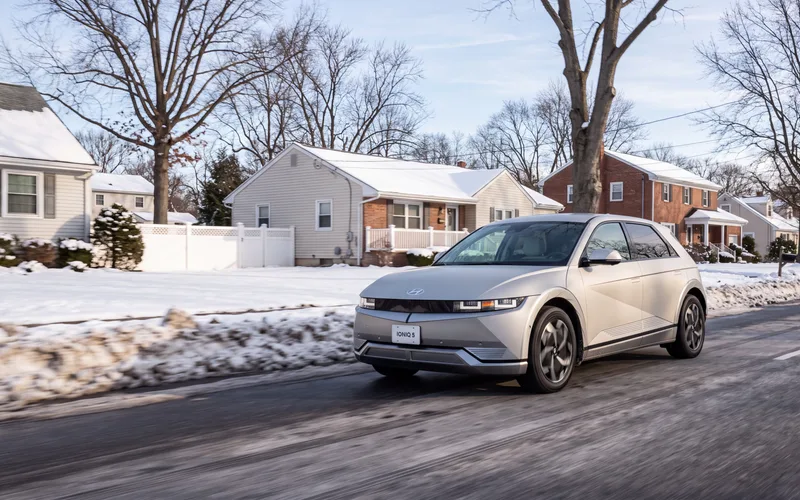 Hyundai Ioniq 5Compact SUVBetter at: Fast charging
More range, nearly twice the charging speed, more cargo room and better resale for similar money — the benchmark any compact EV SUV shopper should drive before committing.
Compare 2.30C+
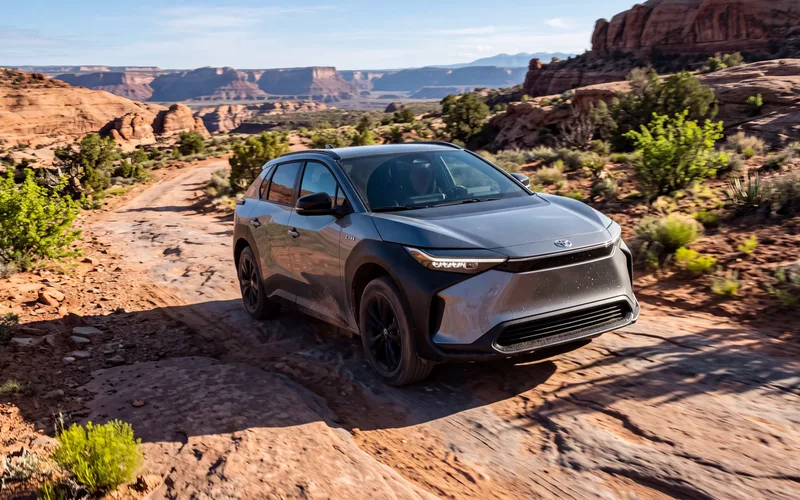 Toyota bZ4XCompact SUVBetter at: Warranty
The same car mechanically, but with a cheaper front-drive entry point, 10-year EV component coverage and included scheduled maintenance.
Compare 2.06C
2.06C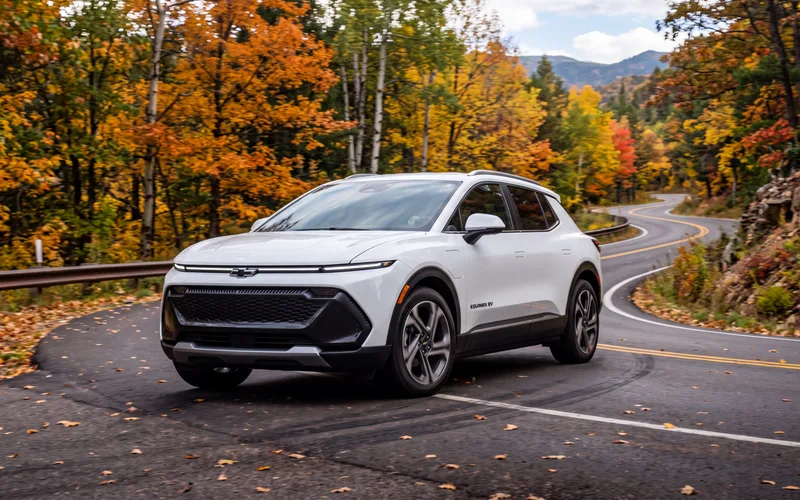 Chevrolet Equinox EVCompact SUVBetter at: Range per dollar
Undercuts the Solterra on price while delivering more range and a bigger cargo hold, with US assembly opening the door to incentives.
CompareSubject scores by year
Hover or tap a score to see what moved it versus the year before. A corner mark flags a big swing.
| Year | Performance | Efficiency | Safety | Space | Cost | Reliability | Tech | Use-case | Driving | Value |
|---|---|---|---|---|---|---|---|---|---|---|
| 2026 | 63 | 65 | 76 | 42 | 48 | 62 | 72 | 69 | 69 | 66 |
| 2025 | 41 | 57 | 85 | 43 | 46 | 70 | 58 | 60 | 69 | 62 |
| 2024 | 41 | 57 | 85 | 43 | 43 | 64 | 61 | 60 | 71 | 60 |
| 2023 | 40 | 52 | 81 | 44 | 42 | 55 | 59 | 56 | 71 | 58 |
Compare two years
Best fit & conditions
Higher scores mean a better fit for that use case. Learn more about use-case fit →
Subject profile
Academic Probation · NHTSA safety recalls
Oct 30, 2025Back over prevention: display functionPlease see the recall report for a complete list of models. A software error may cause the rearview camera to freeze or display a blank screen when the vehicle is in reverse. As such, these vehicles fail to comply with the requirements of Federal Motor Vehicle Safety Standard (FMVSS) number 111, "Rear Visibility."
Defect
Toyota Motor Engineering & Manufacturing (Toyota) is recalling certain 2022-2026 Toyota, Lexus, and Subaru Solterra vehicles equipped with a Panoramic View Monitor (PVM) system. Please see the recall report for a complete list of models. A software error may cause the rearview camera to freeze or display a blank screen when the vehicle is in reverse. As such, these vehicles fail to comply with the requirements of Federal Motor Vehicle Safety Standard (FMVSS) number 111, "Rear Visibility."
Risk
A rearview camera that fails to display an image can reduce the driver's view behind the vehicle, increasing the risk of a crash.
Remedy
Dealers will update the parking assist software, free of charge. Owner letters were mailed January 2, 2026. Owners may contact Toyota's customer service at 1-800-331-4331. Toyota's numbers for this recall are 25TB13 and 25LB06. Subaru's number for this recall is WRE25.
NHTSA campaign 25V744000 ↗Manufacturer no. 25TB13/25LB06/WRE251,024,407 vehicles potentially affected (all models in the campaign)Owners notified Dec 5, 2025Filed by Toyota Motor Engineering & ManufacturingFiled as SOLTERRASep 4, 2025Visibility: defroster/defogger/hvac systemDuring certain HVAC system faults, such as electrical compressor failure, the defroster and defogger system may become inoperative.
Defect
Toyota Motor Engineering & Manufacturing (Toyota) is recalling certain 2023-2025 bZ4X, Lexus RZ, and Subaru Solterra vehicles. During certain HVAC system faults, such as electrical compressor failure, the defroster and defogger system may become inoperative.
Risk
An inoperative defroster and defogger system can decrease the driver's visibility under certain driving conditions, increasing the risk of a crash.
Remedy
Dealers will update the HVAC control ECU software, free of charge. Dealers will also inspect the electrical compressor, and replace it, if necessary, free of charge. Owner notification letters were mailed October 17, 2025. Owners may contact Toyota's customer service at 1-800-331-4331. Toyota's numbers for this recall are 25TB07 and 25TA07. Lexus' numbers for this recall are 25LB04 and 25LA04. Subaru's number for this recall is WRD-25.
NHTSA campaign 25V577000 ↗Manufacturer no. 25TB07,25LB04,WRD2594,320 vehicles potentially affected (all models in the campaign)Owners notified Oct 17, 2025Filed by Toyota Motor Engineering & ManufacturingFiled as SOLTERRA
3 recalls on other model years of the Solterra (2023, 2026)
Jun 18, 2026Electrical system: propulsion systemThe electronic control unit (ECU) that controls the high voltage battery may experience a fault, resulting in a loss of drive power.
Defect
Toyota Motor Engineering & Manufacturing (Toyota) is recalling certain 2026 Toyota BZ, Lexus RZ, and Subaru Solterra battery electric vehicles. The electronic control unit (ECU) that controls the high voltage battery may experience a fault, resulting in a loss of drive power.
Risk
An unexpected loss of drive power increases the risk of a crash.
Remedy
Dealers will update the battery ECU software, free of charge. Owner notification letters were mailed August 17, 2026. Owners may contact Toyota's customer service at 1-800-331-4331. Toyota's numbers for this recall are 26LA07 and 26TA11. Subaru's number for this recall is WRG26.
NHTSA campaign 26V393000 ↗Manufacturer no. 26LA07 26TA11 WRG2620,991 vehicles potentially affected (all models in the campaign)Owners notified Aug 17, 2026Filed by Toyota Motor Engineering & ManufacturingFiled as SOLTERRAFeb 9, 2023Wheels: hubImproperly tightened hub bolts may loosen and cause the wheels to detach from the vehicle.
Defect
Subaru of America, Inc. (Subaru) is recalling certain 2023 Solterra vehicles. Improperly tightened hub bolts may loosen and cause the wheels to detach from the vehicle.
Risk
Wheel detachment while driving can result in a loss of vehicle control, increasing the risk of a crash.
Remedy
Owners are advised not to drive their vehicle until the repair has been completed. Dealers will inspect and tighten the hub bolts, if necessary, free of charge. Owner notification letters are expected to mailed March 1, 2023. Owners may contact Subaru's customer service at 1-844-373-6614. Subaru's number for this recall is WRE-23.
NHTSA campaign 23V064000 ↗Manufacturer no. WRE-231,182 vehicles potentially affected (all models in the campaign)Owners notified Feb 21, 2023Filed by Subaru of America, Inc.Filed as SOLTERRAJun 23, 2022Wheels: hubThe hub bolts on the wheels may loosen, causing a wheel to detach from the vehicle after low-mileage use.
Defect
Toyota Motor Engineering & Manufacturing (Toyota) is recalling certain 2023 Subaru Solterra and Toyota BZ4X vehicles. The hub bolts on the wheels may loosen, causing a wheel to detach from the vehicle after low-mileage use.
Risk
A wheel detaching from a moving vehicle can result in a loss of vehicle control, increasing the risk of a crash.
Remedy
Owners are advised not to drive their vehicles until they are repaired. Dealers will replace the hub bolts and wheels, free of charge. Letters notifying owners of the safety risk were mailed June 27, 2022. A second letter will be sent once the remedy is available. Owners may contact Toyota's customer service at 1-800-331-4331.
NHTSA campaign 22V444000 ↗Manufacturer no. 22TA06661 vehicles potentially affected (all models in the campaign)Owners notified Nov 30, 2022Filed by Toyota Motor Engineering & ManufacturingFiled as SOLTERRA
Source: NHTSA Office of Defects Investigation recall database, model years 2023–2026. Recalls are listed by model year as the manufacturer filed them; whether a specific car is affected depends on its VIN — check a VIN at nhtsa.gov ↗. NHTSA model names matched to this page: SOLTERRA.
Detailed scoring by subject
1Performance & PowertrainThe Solterra's lowest-graded category.0.73F
The 2024 Solterra is a mid-generation update of the 2023 car (first generation, launched 2023) and carries the dual-motor AWD powertrain over unchanged — one output figure across Premium, Limited and Touring, with no single-motor or high-output variant offered.
Combined output of the two permanent-magnet motors, identical on every 2024 trim; delivered instantly from a standstill, though the peak figure is modest against 2024 electric compact SUVs.
Instrumented figure for the 215-hp dual-motor car; brisk by gas compact-SUV standards but slow for a 2024 EV, and testers note the shove tapering off well before highway speed.
Single-speed EV delivery is quiet, lag-free and free of driveline shunt, but the calibration is deliberately soft and thrust fades noticeably above 45 mph, so it falls short of the immediate, sustained response the top band describes.
Single-speed reduction drive with nothing to hunt for or shift, and 2024 is the year Subaru added steering-wheel regen paddles, giving real control over deceleration; S-Pedal Drive still will not hold the car to a complete stop, which keeps it below true one-pedal systems.
Subaru publishes no SAE tow rating and offers no factory tow package for the US-market 2024 Solterra, so the honest value is zero rated capacity; aftermarket hitches exist but carry only third-party ratings.
Dual-motor Symmetrical All-Wheel Drive is standard on all three 2024 trims — there is no front-drive version — and it is backed by dual-function X-MODE with terrain settings, Grip Control and Downhill Assist, which is genuine sophistication rather than basic slip-and-grip.
8.3 inches of ground clearance leads small electric SUVs and X-MODE with Grip Control makes it credible on snow, dirt and forest roads, but there is no off-road trim, no locker, no low range and no skid plating over a floor-mounted battery, and 227 miles of range limits how far from a charger it can venture.
One powertrain only — the 215-hp dual-motor battery-electric setup with the 72.8 kWh pack — across all three 2024 trims, with no output variants, no single-motor option and no combustion alternative; the higher-output XT came only with the 2026 redesign.
2Efficiency & RangeMid-pack among this car's ten categories.1.82C-
EPA combined rating for the volume Premium trim on 18-inch wheels; the 20-inch wheels fitted to Limited and Touring cost two MPGe.
EPA city MPGe for the volume Premium trim — regenerative braking makes stop-and-go the Solterra's strongest cycle, as with every EV.
EPA highway MPGe for the Premium trim; the city-to-highway gap is wide even by EV standards, reflecting the tall crossover body and standard dual-motor AWD.
EPA range on a full charge of the 72.8 kWh pack for the volume Premium trim — well short of the 250–300+ miles most 2024 compact electric SUVs deliver, and the defining weakness of this generation.
Peak DC acceptance of the 72.8 kWh pack, and it tapers early — a low ceiling against 2024 rivals accepting 150–250 kW; the step to roughly 150 kW and a NACS port came with the 2026 car.
Manufacturer-quoted best case, and 2024 is the year this improved: an upgraded battery conditioning system cut cold-weather charging by up to 80 minutes in some conditions, addressing the launch car's most criticized flaw.
EPA estimate at standard assumptions and national-average electricity prices — roughly a third of what a comparable gas compact SUV costs to fuel, and the Solterra's clearest running-cost advantage.
Cheap to run on home electricity, but keeping it charged is less convenient and less subsidized than in rivals: a 6.6 kW onboard AC charger needs roughly 9–11 hours for a full Level 2 top-up (half the rate of 11 kW competitors), the CCS Combo 1 port has no native Supercharger access, and the Japan-built 2024 car does not qualify for the $7,500 federal purchase credit — only the leasing route.
3SafetyThe Solterra's best-graded category.3.79A
NHTSA tested the 2024 Solterra AWD directly and awarded the maximum overall rating; only the rollover sub-score and the driver-side frontal sub-score fall short of five stars, which is typical for a crossover.
The 2024 Solterra is an IIHS TOP SAFETY PICK+ with Good in every crashworthiness test, including the updated moderate overlap front (rear-passenger) and updated side evaluations that IIHS added to the 2024 award criteria.
2024 is the year the Solterra's driver-assist content jumped: the base Premium carries AEB with pedestrian detection, full-speed Dynamic Radar Cruise Control with Lane Tracing, lane departure warning and prevention, blind-spot monitoring, newly added Front Cross-Traffic Alert, rear cross-traffic with rear automatic braking, Active Lane Change Assist and DriverFocus — nothing core is locked behind a trim walk.
Toyota Safety Sense 3.0 hardware earns Good in the IIHS pedestrian front crash prevention evaluation — avoiding a collision in most scenarios and merely reducing impact speed in the 25 mph night crossing runs — and cleared the vehicle-to-vehicle bar required for TSP+.
Blind-spot monitoring, Active Lane Change Assist and rear cross-traffic alert are standard on every 2024 trim, Front Cross-Traffic Alert is added for 2024, and the rear system escalates to automatic braking rather than alerting only — comprehensive coverage without a trim walk.
Lane departure warning and Lane Departure Prevention are standard and operate on their own, but Lane Tracing Assist — the actual centering function — engages only with Dynamic Radar Cruise Control active, so there is no standalone centering, and TSS-based centering is competent rather than the confident, reviewer-trusted kind.
Dynamic Radar Cruise Control is a standard full-speed-range system with stop-and-go that pairs with Lane Tracing and now Active Lane Change Assist, extending into supervised low-speed hands-free operation in congestion — a well-integrated highway package, though TSS 3.0's following behavior draws routine rather than standout praise.
Hands-Free Driving is new for 2024 and is genuine hands-off steering, but it operates only up to 25 mph in stop-and-go congestion — a traffic-jam feature, not open-highway hands-free driving on the order of BlueCruise or Super Cruise.
IIHS rates the 2024 Solterra's headlights Good — a prerequisite for its TSP+ award, which requires acceptable-or-better headlights as standard equipment — with LED units and automatic high beams standard from the base Premium up.
Thick A-pillars, a high beltline and the absence of a rear wiper give the Solterra real blind zones, and the camera that would compensate — the 360-degree Panoramic View Monitor — is not offered on the volume Premium trim, leaving base buyers with mirrors and a backup camera only.
IIHS rates the 2024 Solterra's LATCH hardware Good for ease of use — better than most compact SUVs, where Acceptable or Marginal is the norm — with clear anchor access in the outboard rear positions, though a compact-SUV rear bench still makes three seats across a squeeze.
4Space & ComfortOne of the Solterra's weakest categories.0.86F
The Solterra is a strictly five-seat two-row compact SUV — there is no third-row or six-seat configuration on any 2024 trim.
Figure for the volume Premium trim, which has no glass roof; only the Touring's panoramic roof costs the two-tenths of an inch. Adequate but unremarkable for a compact SUV with a battery floor.
A genuinely roomy front compartment — the flat EV floor and long 112.2-inch wheelbase let the seats sit well back, and reviewers repeatedly note that large and tall adults fit comfortably.
Mid-pack second-row headroom for the segment; the Premium's solid roof is the better of the two figures, and the raked tail costs the Touring nearly an inch.
Middling on paper for a compact SUV, but the flat floor and high-mounted cushion make it feel better than the number — reviewers describe good thigh support and room for two adults, three only for short trips.
There is no third row — the Solterra is a two-row, five-seat SUV in every 2024 configuration, so it cannot serve buyers who need occasional 6–7 seat capacity.
The weakest part of the package: 23.8 cu ft sits below the compact-SUV norm, and unlike most dedicated EVs the Solterra has no frunk to recover the lost space, so there is nowhere to stow charging cables out of the cargo bay.
Even fully folded the hold is small for a compact SUV — 63.5 cu ft against rivals in the 70s — a consequence of the short 73.0-inch maximum load length and the sloping roof.
The floating console with its open pass-through shelf, the two-position cargo deck board and the underfloor storage tray are genuinely useful, and every trim gets door bottle holders plus a rear armrest with cupholders — but there is no frunk, no onboard AC outlet and no standout storage innovation, and the Premium goes without even a retractable cargo cover.
Reviewers consistently praise the front chairs for long-stint comfort and space, and the rear bench earns marks for thigh support and backrest angle — but the volume Premium trim gets only 6-way manual front seats with no power adjustment and no lumbar control, which is what holds it out of the top band.
A strength: the four-wheel independent setup with internal rebound springs shows unusual composure over broken pavement with little secondary motion, and the volume Premium's 18-inch 235/60 tires ride better than the 20-inch Limited/Touring, which testers found jittery on smooth roads.
No engine noise at all and quiet around town, but this is not a hushed EV at speed — testers report more road and wind noise on the highway than expected despite the acoustic windshield, and one comparison put it clearly above a Mustang Mach-E for cabin noise.
Dual-zone automatic climate, rear-seat vents, heated front seats and a windshield wiper de-icer are standard on every 2024 trim, and remote pre-conditioning runs through the app — but the volume Premium goes without the heated steering wheel, heated rear outboard seats and heated mirrors that only start at Limited, and ventilated seats are Touring-only.
5Cost of OwnershipOne of the Solterra's weakest categories.0.85F
Premium is both the entry grade and the volume trim, and Subaru held 2024 pricing flat against 2023 despite the charging and EyeSight upgrades — but $46,340 delivered still sits in the upper half of the compact-SUV band, and the Japan-built car cannot use the $7,500 federal purchase credit to close that gap.
The Solterra has no drivetrain ladder — every 2024 trim is the same 215-hp dual-motor AWD on the same 72.8 kWh pack — so the volume configuration is simply the base Premium, which is also the trim EPA rates at the model's best 227-mile range on 18-inch wheels.
No oil, no exhaust, no transmission service and regen-assisted brake wear give the Solterra a light service ledger — tire rotations, cabin filters, brake fluid and tires are most of it — though the tall AWD crossover chews tires faster than a car and out-of-warranty high-voltage work is the tail risk the projections cannot price.
This is the worst line on the car and the reason a cheap-to-service EV is still expensive to own: shut out of the federal purchase credit, the 2024 moved on $7,500 lease pass-throughs and five-figure dealer cash, and used values were repriced underneath it almost immediately — KBB already showed a 2024 Solterra down roughly half its delivered price inside two years.
Standard Subaru coverage and the segment floor — Hyundai and Kia hand their electric crossovers 5 yr / 60,000 mi of basic coverage for less money.
The traction battery and electric-drive components carry the federal-minimum 8 yr / 100,000 mi and the coverage transfers with the car — it matches the class rather than beating it, and Subaru publishes no separate capacity-retention commitment of the kind Toyota attaches to the mechanically identical bZ4X.
Subaru of America publishes no factory complimentary scheduled-maintenance program for MY2024, so every service visit is out of pocket from delivery; what is included is 24-hour roadside assistance for the 3 yr / 36,000 mi warranty term plus the standard STARLINK/MySubaru Safety Plus connected-service trial. The gap that matters here is against its own twin: every 2024 Toyota bZ4X came with a year of complimentary EVgo charging, while Subaru's $400 EVgo credit or home-charger installation credit was announced for 2023 Solterra customers and is not documented as continuing into the 2024 model year — any free charging or maintenance a 2024 buyer got was a dealer promotion, not a factory program.
$46,340 volume-trim price minus its estimated resale value after 5 years (40% retained, or about $18,536) leaves about $27,804 in depreciation. Add the projected $4,900 in 5-year maintenance and repairs, and owning this vehicle for 5 years costs about $32,704 in total.
6Reliability & QualityOne of the Solterra's strongest categories.2.33C+
Both major predictors put the 2024 Solterra below average: Consumer Reports rates it less reliable than other cars of its model year — the lowest-ranked vehicle in Subaru's own lineup and the only one CR marks below average — and the J.D. Power-derived predicted-reliability figure lands at 67/100, inside the "Fair" band. The trouble spots are consistent across sources and specific to this generation's electronics: repeated 12V auxiliary-battery drains, an electric HVAC compressor failure pattern, slow DC charging and infotainment/CarPlay faults.
Subaru took the #1 spot outright in Consumer Reports' 2024 Annual Auto Reliability Survey — its first ever — displacing Lexus and Toyota. J.D. Power's 2024 VDS is more measured, placing Subaru at 181 PP100 against a 190 industry average: better than typical but well behind Toyota's 147 and outside the mass-market top five. The qualifier for this particular car is that the Solterra is a Toyota-engineered BEV built by Toyota, not a product of the boxer/CVT lineup that earned Subaru that standing.
The 2024 model year escapes the two hub-bolt wheel-detachment campaigns that hit the 2023 launch cars and carries only two campaigns of its own, both software-remedy rather than structural: the Panoramic View Monitor rearview-camera freeze and the HVAC failsafe that can disable the defroster/defogger. What keeps it out of the clean band is complaint volume that is still elevated for a second-year car — 25 NHTSA reports against just 2 for the 2025 — and the unrecalled 12V parasitic-drain pattern that is being litigated as a design defect across exactly the 2023-2025 range.
The dual-motor eAxle and 71.4 kWh pack shared with the Toyota bZ4X had roughly two years of field data by this model year with no systemic motor or high-voltage battery failure pattern, and Toyota's deliberately conservative charge curve and thermal strategy favor pack longevity. 2024 specifically adds an improved battery conditioning system that cuts 10-80% DC charging to about 35 minutes and shortens cold-weather charging by up to 80 minutes — a durability-positive change to the system most implicated in owner complaints. Held below the upper band by how little high-mileage history existed at this point, by the recurring 12V/DC-DC charging-system fault, and by Subaru covering EV components 8 years/100,000 miles where Toyota extends drive components to 10 years/150,000 miles.
This is the pre-facelift cabin reviewers were consistently hard on, and 2024 asks full pre-cut money for it — $44,995 to $51,995, a year before Subaru dropped the entry price by $6,500. Hard plastic runs high enough to reach the A-pillars at eye level, the door handles feel plasticky, and gloss-black trim covers the console, stack and armrests exactly where hands land. The soft woven fabric on the dash and passenger-facing surfaces, plus Subaru-specific standard content the Toyota does not get (heated steering wheel, ventilated front seats on upper trims), keep it out of the bottom band.
Assembly is a strength even where material choice is not: the Solterra is built alongside the bZ4X at Toyota's Motomachi plant in Japan, the facility Toyota reserves for models needing tighter tolerances, and press reviews of this generation praise build quality while criticizing materials. It sits below the top band because initial-quality complaints for this specific year are real rather than absent — CR's owner reports for the 2024 include dashboard rattles on rough roads that worsen with age and a body panel that came loose in a car wash, on top of the electronics faults that dominate the complaint file.
Subaru's network is roughly half Toyota's size and thins out badly in the Sun Belt and Plains, but the service experience inside it is among the best in the mass market — Subaru placed second among mass-market SUV/minivan brands in the 2024 J.D. Power Customer Service Index, a point behind Buick, before taking the outright top spot the following year. The real limiter is EV exposure rather than density: the Solterra is a low-single-digit share of Subaru's US sales, so per-store hands-on familiarity with this platform lags the Forester and Outback, and the faults owners actually report (12V drain, HVAC compressor) are ones dealers were still learning to diagnose in 2024.
Routine running costs are genuinely low — no oil, plugs or belts, and regenerative braking stretches pad and rotor life well past 60,000 miles — but every Solterra-specific EV part is dealer-only with essentially no aftermarket, and Subaru's parts distribution for a Toyota-built BEV it sells in tiny numbers is slower and dearer than for its core models. The electric HVAC compressor implicated in the 25V577 campaign and the high-voltage pack and eAxle are all OEM-only, and out-of-warranty work on them is expensive on a nameplate this low-volume in only its second year of supply.
7Technology & InfotainmentMid-pack among this car's ten categories.2.11C
The $44,995 Premium — the trim scored here — is stuck with the small 8.0-inch Subaru Multimedia head unit, a screen size that looked dated against 2024 electric rivals; the 12.3-inch display costs a $3,500 step up to Limited.
The Toyota-developed Subaru Multimedia system has sharp graphics and responds quickly to touch and voice, and Subaru kept real knobs for volume and tuning — but the touch-capacitive climate and audio pads draw routine complaints, the display is slow to wake at startup, and owners report CarPlay-triggered screen freezes.
Both wireless Apple CarPlay and wireless Android Auto are standard on every 2024 trim including the base Premium, with no wired-only tier and no subscription — the best-case arrangement, and the strongest single element of the Solterra's tech package.
Intelligent Assistant is a natural-language, cloud-backed assistant that controls climate, radio and phone and is standard on all trims, and cloud-based navigation is built into both head units — but the maps run on a SubaruConnect subscription (roughly $16/month after the trial), which pushes many owners back to phone projection.
The volume Premium makes do with a plain six-speaker system that reviewers find merely adequate, while the genuinely strong upgrade — Harman Kardon's 576-watt 11-speaker setup — is bundled into Limited and Touring and cannot be optioned onto the base car.
A full-colour 7.0-inch configurable LCD cluster is standard on every trim with speed, state of charge, power flow and range — but it is small by 2024 standards and its low, far-forward mounting to be read over rather than through the steering wheel is a polarizing layout that some drivers find partly obscured.
The Solterra does receive over-the-air software updates through Solterra Connect over its embedded AT&T 4G LTE link, and Subaru publishes firmware updates for the car — but the practical scope has been multimedia, maps and bug fixes rather than the recurring whole-vehicle, feature-adding releases the top band describes.
The SubaruConnect/Solterra Connect app covers the EV essentials — remote start with climate pre-conditioning, lock/unlock with confirmation, vehicle locate, charge status and charge scheduling — and adds a phone-based Digital Key, but the remote functions sit behind a paid subscription once the trial lapses and Digital Key is not offered on the volume Premium.
Five illuminated ports — a front USB-A plus two front USB-C and two rear USB-C — cover both rows on every trim, which is solid, but Qi wireless charging starts at Limited and there is no household AC outlet and no vehicle-to-load export on the US 2024 car.
Keyless entry with push-button start is standard across the line and phone-as-key exists in the form of Digital Key — but both Digital Key and the power rear gate with height memory begin at Limited, so the volume Premium buyer gets a manual tailgate and a conventional fob.
The hardware at the top of the range is good — a 360-degree Panoramic View Monitor plus Advanced Park automated parking, and a camera-fed digital rearview mirror on Touring — but none of it reaches the volume Premium, which leaves that trim with a plain reversing camera on a car whose thick pillars and missing rear wiper already restrict the view.
No head-up display is offered on any 2024 Solterra trim; the low, far-forward digital cluster is Subaru's substitute for one, but it is a fixed dash-mounted screen rather than a projected display.
8Use-Case FitMid-pack among this car's ten categories.2.04C
IIHS rates the LATCH hardware Good — better than most compact SUVs — and the wide door openings, flat floor, reclining 60/40 rear seatbacks, rear vents and rear USB-C ports make daily kid logistics easy; what holds it back is 23.8 cu ft of cargo with the seats up, which a stroller plus a week's gear fills quickly.
The strongest use-case case the Solterra makes: an IIHS TOP SAFETY PICK+ with five NHTSA stars, and — critically for families shopping the cheap trim — the whole EyeSight suite including AEB with pedestrian detection, blind-spot monitoring, front and rear cross-traffic alert and rear automatic braking is standard on the $44,995 Premium.
The cabin itself is well set up for a family — comfortable seats, rear vents and USB-C, quiet enough to talk between rows — but a 227-mile EPA range, roughly 200 miles at 75 mph and a 35-minute best-case fast charge turn a long family drive into a stop-planning exercise, and luggage room with all five seats occupied is tight.
This is what the Solterra is best at: silent lag-free motor delivery, four paddle-selectable regen levels plus S-Pedal Drive, Brake Hold that holds the car at lights, and — new for 2024 — low-speed hands-free Traffic Jam Assist up to 25 mph standard on every trim, all of which strips fatigue out of a commute.
104 MPGe combined and an EPA-estimated $700 a year in energy at 15,000 miles is far cheaper per mile than any gas compact SUV, and EV consumables are minimal — no oil changes, and the paddle regen means the friction brakes barely wear.
A 36.7-foot turning circle with a quick 14.1:1 rack and 2.8 turns lock-to-lock makes the Solterra genuinely easy to thread and park for a 184.6-inch SUV — the catch is that the 360-degree camera and Advanced Park are Limited-and-up, so the volume Premium parks on mirrors and a reversing camera with no rear wiper.
Subaru publishes no US tow rating and offers no factory hitch for the 2024 Solterra, there is no bed, and 23.8 cu ft of enclosed cargo is small even by compact-SUV standards — it has essentially no work brief beyond carrying a toolbag.
Subaru's brand reputation for toughness is real and the StarTex wipe-clean upholstery on Limited and Touring survives dirty hands, but this is a unibody EV crossover with no fleet history, a floor-mounted battery with no skid plating, and the volume Premium wears cloth — nothing about it is validated for hard commercial use.
Standard roof rails with fixed cross-bar mounting points and a cargo underfloor tray are the extent of it — there is no onboard AC power or vehicle-to-load export, no hitch, no bed access hardware and no upfit ecosystem, and the 176-lb dynamic roof limit caps what can ride up top.
The chassis and seats are set up well for miles — composed ride, comfortable front chairs, standard full-speed radar cruise with lane tracing — but range is the binding constraint: 227 miles EPA falls to roughly 200 at 75 mph and lower again in cold, and a 100 kW peak with a 35-minute best-case 10–80% is slow enough that real-world stops run 40–50 minutes.
Better equipped for dirt than any rival small EV: 8.3 inches of clearance, dual-motor Symmetrical AWD standard on every trim, dual-function X-MODE with Grip Control and Downhill Assist, and standard roof rails for a box or bikes — but with no tow rating, no low range or locker and only ~227 miles of range, it is a trailhead vehicle rather than a backcountry one.
The pieces are there — reclining 60/40 flat-folding seatbacks, an underfloor tray, a two-position cargo deck board and standard roof rails with fixed cross-bar mounts — but the volumes are simply small for the class at 23.8/63.5 cu ft, the roofline is raked, there is no frunk for cables and no factory hitch for a rack.
9Driving ExperienceOne of the Solterra's strongest categories.2.82B-
The floor-mounted 72.8 kWh pack gives a low centre of gravity and testers describe the Solterra as feeling almost sporty through corners, helped by a fully independent chassis and Active Cornering Assist that brakes the inside front wheel for sharper turn-in — but 4,354 lbs and all-season tires keep it secure and neutral rather than genuinely engaging.
A quick 14.1:1 variable-ratio rack at 2.8 turns lock-to-lock gives fast, accurate responses, and reviewers specifically single out the Solterra for offering more steering feel than most EVs, with weight that builds naturally off centre — good by class standards without reaching the genuinely communicative top band.
Ventilated discs at all four corners and dual-piston front calipers deliver short, consistent panic stops in instrumented testing with pedal feel testers rate as good, and the four paddle-selected regen levels blend cleanly — the deduction is that even the strongest setting slows the car to about 5 mph and then creeps, so it never quite holds to a stop.
Two permanent-magnet motors through single-ratio reduction transaxles means no shifts, no stop/start and no driveline shunt, and tip-in is smooth and immediate off the line at 6.1 sec to 60 mph — but the calibration is soft and thrust fades noticeably at speed, with 50–70 mph taking 3.7 sec, so mid-range response does not match the top band.
With no engine there is nothing to drone or shudder: the motors are near-silent under load with only faint inverter whine at full throttle, and there is no vibration through the pedals or wheel — the cabin noise that reviewers do criticise is road and wind, not the powertrain.
A tight circle for a 184.6-inch SUV, helped by the quick 14.1:1 rack and the short front overhang the e-Global Platform allows — one of the Solterra's genuine everyday advantages.
The Solterra's defining ergonomic quirk is the low-set instrument panel meant to be read over rather than through the wheel, which several reviewers find awkward and which forces an unusual wheel position for some drivers; the volume Premium compounds it with 6-way manual seats, no power lumbar and only a manual tilt/telescoping column, though large door openings and a commanding seat height help.
Pleasant and more engaging than its compliance-EV reputation suggests — the steering has feel and the chassis is composed — but 215 hp that tapers above 45 mph, a 6.1-second 0–60 and no performance variant leave it firmly in the competent-appliance band rather than something enthusiasts seek out.
10Value & Market PositionMid-pack among this car's ten categories.2.01C
The base Premium is better equipped than the bZ4X XLE it is built alongside: dual-motor AWD and X-MODE are standard rather than a $2,080 option, and heated front seats, dual-zone automatic climate, LED headlights, an 8.0-inch touchscreen with wireless Apple CarPlay/Android Auto, EyeSight and — new for 2024 — roof rails, a paddle-equipped steering wheel and DriverFocus all come at the base price Subaru declined to raise. It stays mid-band because the content is spread thin over a $46,340 ask: the 12.3-inch screen, heated steering wheel, power seats, wireless charging, Harman Kardon audio and the 360-degree camera all require the $49,840 Limited, and rivals were bundling more at lower EV price points.
At $46,340 delivered the Solterra asks near-luxury money for 227 miles of EPA range, 215 hp, a 6.6 kW onboard AC charger and a 100 kW DC ceiling — figures the segment had already moved past in 2024 — and it is the most expensive way into this platform, costing about $1,900 more than a bZ4X XLE FWD and $1,190 more than the AWD version of the same car. The decisive penalty is the federal credit: assembled in Japan, it was ineligible for the $7,500 purchase credit that a US-built ID.4, Equinox EV or Model Y carried, so on out-the-door price a cash buyer faced a five-figure gap against rivals that also went farther and charged faster.
Three grades — Premium, Limited, Touring — spread $46,340 to $53,340, which is a reasonable equipment ladder, but there is exactly one mechanical configuration behind it: one 72.8 kWh battery, one 215-hp dual-motor AWD driveline, no FWD or long-range or performance choice, and no way to buy the model's best range with the Limited's equipment because the 20-inch wheels that come with it cost five miles. Freestanding options amount to little more than paint and accessories, so budget flexibility means climbing grades rather than configuring a car.
2024 was the Solterra's best year — 12,447 US deliveries, up about 40 percent on 2023, with monthly records through the spring and summer — so the trajectory was genuinely positive. But the absolute figure is small: it is Subaru's lowest-volume nameplate, roughly a quarter of a Mustang Mach-E, and the growth was bought with lease subvention rather than earned by demand, which is why it reads as a modest riser rather than a market success.
Subaru is a genuinely beloved mainstream brand with among the highest owner-loyalty rates in the US and an outdoor/AWD identity that a compact electric crossover should trade on directly — the badge helps this car more than the car helps the badge. What holds the score to the upper-middle band is that the Solterra itself is transparently a rebadged Toyota bZ4X built by Toyota in Japan, with no Subaru boxer engine and no Subaru symmetrical-AWD hardware behind it, so the nameplate carries little of the brand's own engineering credibility with informed shoppers.
Judged on buyer benefit — which is what this item asks — the 2024 Solterra was one of the best-supported vehicles on the market. Subaru passed the $7,500 commercial-lease credit through and stacked $2,500 in retailer lease cash on top for as much as $10,000 off MSRP, while cash buyers saw $5,000 in dealer cash and 0% APR for 72 months stackable with $5,000 in retailer finance cash. It is held just short of the ceiling because these were plainly clearance-grade subsidies on a slow-moving EV, they varied sharply by region and month, and the same discounting is what wrecked the car's residuals.
2024 is the second model year of the generation launched for 2023, and unlike a coasting sophomore year it brought real engineering: upgraded battery conditioning that charges up to 80 minutes faster in the cold, a 35-minute 10–80% DC claim, expanded EyeSight with hands-free low-speed driving and active lane change assist, DriverFocus, a new steering wheel with regen paddles and standard roof rails — at unchanged prices. No successor had been shown when the car was on sale. It sits mid-band because the underlying e-TNGA architecture, its 100 kW charging ceiling and its CCS port were already a generation behind 800-volt Hyundai/Kia rivals the day it launched, so "current" is not the same as current-tech.
The 2024 Solterra reviewed as pleasant but never the pick of its class — comfortable, quiet, well-built and genuinely capable off pavement for a compact EV, with range, a 6.1-second 0–60 and the 100 kW charging ceiling cited as the disqualifiers in essentially every write-up. What lifts it above its bZ4X twin is a real award: IIHS named it a 2024 TOP SAFETY PICK+ with good ratings in every published test and a superior pedestrian front-crash-prevention rating, which the 2024 bZ4X did not earn. No comparison-test wins and no NACTOY or 10Best recognition keep it out of the upper band.