

The verdict
A mixed-report compact suv, strong on safety and held back by space.
The 2026 refresh fixes almost everything people complained about in the old Solterra: power jumps from 215 to 338 hp, EPA range climbs to 288 miles, towing goes from 1,500 to 3,500 lbs, and a native Tesla-style NACS port finally opens up 15,000+ Superchargers. What it does not fix is the packaging — 27.7 cu ft of cargo behind the back seat is one of the smallest holds in the compact SUV class — or the resale, which has been bottom-quartile among EVs at roughly 42% retained after five years. Buy it if standard dual-motor AWD, 8.3 inches of ground clearance and X-Mode matter more to you than outright space or long-term value, and lean hard on the heavy incentives Subaru is putting on the hood. Cross-shop the Ioniq 5 before you sign: it charges nearly twice as fast and holds its value better.
Jump to scoresStrengths
- Standard all-wheel drive with real trail credibility
- Genuinely cheap to run
- Full safety kit standard on the base trim
What holds it back
- The cargo hold is the smallest thing about it
- Depreciation is brutal
- Range and charging are mid-pack, not competitive
Top alternatives
Cars shoppers cross-shop with the Subaru Solterra 2.74B-
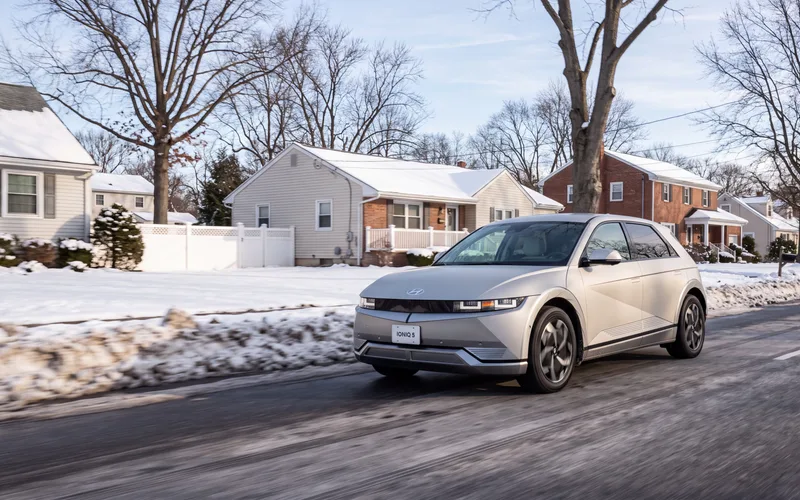 Hyundai Ioniq 5Compact SUVBetter at: Fast charging
More range, nearly twice the charging speed, more cargo room and better resale for similar money — the benchmark any compact EV SUV shopper should drive before committing.
Compare 2.30C+
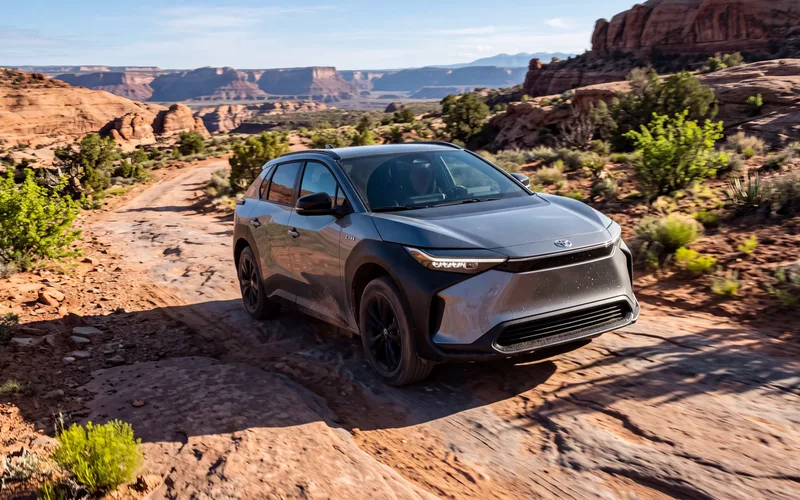 Toyota bZ4XCompact SUVBetter at: Warranty
The same car mechanically, but with a cheaper front-drive entry point, 10-year EV component coverage and included scheduled maintenance.
Compare 2.06C
2.06C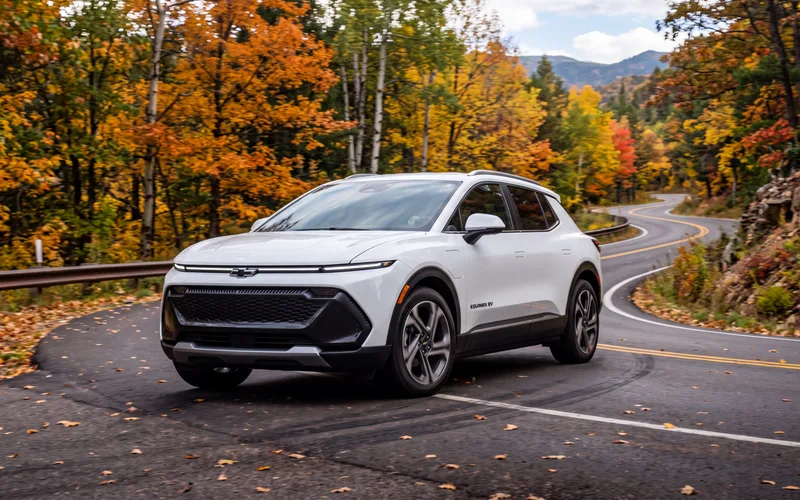 Chevrolet Equinox EVCompact SUVBetter at: Range per dollar
Undercuts the Solterra on price while delivering more range and a bigger cargo hold, with US assembly opening the door to incentives.
CompareSubject scores by year
Hover or tap a score to see what moved it versus the year before. A corner mark flags a big swing.
| Year | Performance | Efficiency | Safety | Space | Cost | Reliability | Tech | Use-case | Driving | Value |
|---|---|---|---|---|---|---|---|---|---|---|
| 2026 | 63 | 65 | 76 | 42 | 48 | 62 | 72 | 69 | 69 | 66 |
| 2025 | 41 | 57 | 85 | 43 | 46 | 70 | 58 | 60 | 69 | 62 |
| 2024 | 41 | 57 | 85 | 43 | 43 | 64 | 61 | 60 | 71 | 60 |
| 2023 | 40 | 52 | 81 | 44 | 42 | 55 | 59 | 56 | 71 | 58 |
Compare two years
Best fit & conditions
Higher scores mean a better fit for that use case. Learn more about use-case fit →
Subject profile
Academic Probation · NHTSA safety recalls
Jun 18, 2026Electrical system: propulsion systemThe electronic control unit (ECU) that controls the high voltage battery may experience a fault, resulting in a loss of drive power.
Defect
Toyota Motor Engineering & Manufacturing (Toyota) is recalling certain 2026 Toyota BZ, Lexus RZ, and Subaru Solterra battery electric vehicles. The electronic control unit (ECU) that controls the high voltage battery may experience a fault, resulting in a loss of drive power.
Risk
An unexpected loss of drive power increases the risk of a crash.
Remedy
Dealers will update the battery ECU software, free of charge. Owner notification letters were mailed August 17, 2026. Owners may contact Toyota's customer service at 1-800-331-4331. Toyota's numbers for this recall are 26LA07 and 26TA11. Subaru's number for this recall is WRG26.
NHTSA campaign 26V393000 ↗Manufacturer no. 26LA07 26TA11 WRG2620,991 vehicles potentially affected (all models in the campaign)Owners notified Aug 17, 2026Filed by Toyota Motor Engineering & ManufacturingFiled as SOLTERRA
4 recalls on other model years of the Solterra (2023–2025)
Oct 30, 2025Back over prevention: display functionPlease see the recall report for a complete list of models. A software error may cause the rearview camera to freeze or display a blank screen when the vehicle is in reverse. As such, these vehicles fail to comply with the requirements of Federal Motor Vehicle Safety Standard (FMVSS) number 111, "Rear Visibility."
Defect
Toyota Motor Engineering & Manufacturing (Toyota) is recalling certain 2022-2026 Toyota, Lexus, and Subaru Solterra vehicles equipped with a Panoramic View Monitor (PVM) system. Please see the recall report for a complete list of models. A software error may cause the rearview camera to freeze or display a blank screen when the vehicle is in reverse. As such, these vehicles fail to comply with the requirements of Federal Motor Vehicle Safety Standard (FMVSS) number 111, "Rear Visibility."
Risk
A rearview camera that fails to display an image can reduce the driver's view behind the vehicle, increasing the risk of a crash.
Remedy
Dealers will update the parking assist software, free of charge. Owner letters were mailed January 2, 2026. Owners may contact Toyota's customer service at 1-800-331-4331. Toyota's numbers for this recall are 25TB13 and 25LB06. Subaru's number for this recall is WRE25.
NHTSA campaign 25V744000 ↗Manufacturer no. 25TB13/25LB06/WRE251,024,407 vehicles potentially affected (all models in the campaign)Owners notified Dec 5, 2025Filed by Toyota Motor Engineering & ManufacturingFiled as SOLTERRASep 4, 2025Visibility: defroster/defogger/hvac systemDuring certain HVAC system faults, such as electrical compressor failure, the defroster and defogger system may become inoperative.
Defect
Toyota Motor Engineering & Manufacturing (Toyota) is recalling certain 2023-2025 bZ4X, Lexus RZ, and Subaru Solterra vehicles. During certain HVAC system faults, such as electrical compressor failure, the defroster and defogger system may become inoperative.
Risk
An inoperative defroster and defogger system can decrease the driver's visibility under certain driving conditions, increasing the risk of a crash.
Remedy
Dealers will update the HVAC control ECU software, free of charge. Dealers will also inspect the electrical compressor, and replace it, if necessary, free of charge. Owner notification letters were mailed October 17, 2025. Owners may contact Toyota's customer service at 1-800-331-4331. Toyota's numbers for this recall are 25TB07 and 25TA07. Lexus' numbers for this recall are 25LB04 and 25LA04. Subaru's number for this recall is WRD-25.
NHTSA campaign 25V577000 ↗Manufacturer no. 25TB07,25LB04,WRD2594,320 vehicles potentially affected (all models in the campaign)Owners notified Oct 17, 2025Filed by Toyota Motor Engineering & ManufacturingFiled as SOLTERRAFeb 9, 2023Wheels: hubImproperly tightened hub bolts may loosen and cause the wheels to detach from the vehicle.
Defect
Subaru of America, Inc. (Subaru) is recalling certain 2023 Solterra vehicles. Improperly tightened hub bolts may loosen and cause the wheels to detach from the vehicle.
Risk
Wheel detachment while driving can result in a loss of vehicle control, increasing the risk of a crash.
Remedy
Owners are advised not to drive their vehicle until the repair has been completed. Dealers will inspect and tighten the hub bolts, if necessary, free of charge. Owner notification letters are expected to mailed March 1, 2023. Owners may contact Subaru's customer service at 1-844-373-6614. Subaru's number for this recall is WRE-23.
NHTSA campaign 23V064000 ↗Manufacturer no. WRE-231,182 vehicles potentially affected (all models in the campaign)Owners notified Feb 21, 2023Filed by Subaru of America, Inc.Filed as SOLTERRAJun 23, 2022Wheels: hubThe hub bolts on the wheels may loosen, causing a wheel to detach from the vehicle after low-mileage use.
Defect
Toyota Motor Engineering & Manufacturing (Toyota) is recalling certain 2023 Subaru Solterra and Toyota BZ4X vehicles. The hub bolts on the wheels may loosen, causing a wheel to detach from the vehicle after low-mileage use.
Risk
A wheel detaching from a moving vehicle can result in a loss of vehicle control, increasing the risk of a crash.
Remedy
Owners are advised not to drive their vehicles until they are repaired. Dealers will replace the hub bolts and wheels, free of charge. Letters notifying owners of the safety risk were mailed June 27, 2022. A second letter will be sent once the remedy is available. Owners may contact Toyota's customer service at 1-800-331-4331.
NHTSA campaign 22V444000 ↗Manufacturer no. 22TA06661 vehicles potentially affected (all models in the campaign)Owners notified Nov 30, 2022Filed by Toyota Motor Engineering & ManufacturingFiled as SOLTERRA
Source: NHTSA Office of Defects Investigation recall database, model years 2023–2026. Recalls are listed by model year as the manufacturer filed them; whether a specific car is affected depends on its VIN — check a VIN at nhtsa.gov ↗. NHTSA model names matched to this page: SOLTERRA.
Detailed scoring by subject
1Performance & PowertrainMid-pack among this car's ten categories.2.24C
2026 refresh brings a new dual-motor AWD powertrain rated at 338 hp combined across all trims (Premium, Limited, Touring, XT), up from 215 hp on the pre-refresh car.
Combined peak torque for the refreshed dual-motor AWD system is reported around 415 lb-ft; Subaru does not publish a single combined figure in every source.
Manufacturer targets a 0–60 mph time of roughly 4.9 seconds for the refreshed 338 hp dual-motor Solterra, a major improvement over the ~6.5 s of the outgoing model.
Dual-motor EV with instant, seamless torque delivery and no shifts; reviewers of the pre-refresh car praised smoothness, and the added power removes the earlier feeling of sluggishness at highway speeds.
Single-speed reduction gear typical of EVs — no shifts to hunt, no CVT drone, seamless linear delivery. Nothing to detract from the EV drivetrain experience.
Refreshed Solterra is rated to tow up to 3,500 lbs when properly equipped, a meaningful jump over the outgoing car's 1,500 lb limit and competitive with rival compact EV SUVs.
Symmetrical dual-motor AWD is standard on every 2026 Solterra trim — Subaru's core brand promise — with X-Mode terrain programs layered on top. No FWD-only variant is offered.
8.3 in ground clearance, dual-function X-Mode (Snow/Dirt and Deep Snow/Mud), Grip Control low-speed crawl, and standard AWD give it credible light off-road ability — better than most EV crossovers but well short of a Wrangler or 4Runner. The new XT trim adds cladding but no lockers or true off-road hardware.
Single EV powertrain across the entire lineup — no gas, hybrid, or PHEV alternative. Trim choices only vary equipment, not propulsion.
2Efficiency & RangeMid-pack among this car's ten categories.2.42C+
The 2026 facelift pairs the new 74.7 kWh pack with silicon-carbide eAxle motors, and EPA rates the volume Premium AWD at 120 MPGe combined — near the top of the EV-SUV band, though standard-AWD packaging keeps it behind FWD-based rivals.
Regenerative braking and the upgraded heat-pump/inverter package give the Premium AWD 131 MPGe in the city, well up the EV-SUV city band.
109 MPGe highway is close to the ceiling of the EV-SUV highway band — unusually strong for a standard-AWD crossover with 8.3 in of ground clearance.
The 74.7 kWh battery lifts EPA range to 288 mi on the volume Premium AWD — a ~25% gain over the 2025 car — but that still sits in the lower half of the 200–400 mi EV-SUV band, behind Ioniq 5, Model Y and EV6.
The 2026 refresh roughly doubles the old CATL-pack AWD car's ~100 kW ceiling, but 150 kW on a 355V architecture is mid-pack: the 800V Ioniq 5/EV6/GV60 accept 235–350 kW.
Subaru's own 2026 model-year page now quotes about 28 minutes for 10–80%, superseding the conservative "less than 35 minutes" of the April 2025 debut release, and an independent NACS Supercharger test returned 27 minutes — so the real figure is materially better than previously recorded, even though the 150 kW ceiling keeps it behind the 18–25 minute 800V leaders.
EPA puts annual electricity cost at $650 on 28 kWh/100 mi, near the best end of the EV-SUV cost band and a fraction of what a comparable gas compact SUV burns — assuming home charging rather than public DC rates.
No fuel grade to worry about, and the 2026 car fixes the outgoing model's two real energy-cost complaints: an 11 kW onboard AC charger (up from 6.6 kW) for meaningfully faster Level 2 home charging, and a standard NACS port with Plug & Charge that opens the Tesla Supercharger network. Nudged up from the prior score because the confirmed ~28-minute 10–80% makes public charging less of a penalty than the debut figure implied; still held out of the 90s because buyers without a garage face L2 installation cost and pricier public-DC energy.
3SafetyThe Solterra's best-graded category.3.16B
NHTSA testing on the shared Toyota e-TNGA platform (bZ4X/Solterra) returned a 4-star overall rating for the pre-refresh generation; the 2026 refresh does not alter structure, so the rating is expected to carry forward until retested.
The current-generation Solterra earned IIHS Top Safety Pick+ with Good ratings in the updated moderate overlap, small overlap, and updated side tests; the 2026 mid-cycle refresh does not touch the structure so the award should carry.
Subaru EyeSight is standard on every Solterra trim (Premium, Limited, Touring), bundling pre-collision braking, adaptive cruise with lane centering, lane departure/sway warning, and lead-vehicle start alert. Blind-Spot Detection with Rear Cross-Traffic Alert and Steering Responsive LED headlights are also standard from the base trim, making the standard suite as complete as any mainstream EV competitor.
EyeSight consistently earns Superior/Advanced marks in IIHS vehicle-to-vehicle front crash prevention; recent testing on the platform showed Good in the updated daytime vehicle-to-pedestrian evaluation, though nighttime pedestrian performance is not class-leading.
Blind-Spot Detection and Rear Cross-Traffic Alert are standard on the base Premium trim, with Safe Exit Assist available; alerts are visual and audible without active braking intervention.
EyeSight lane centering and lane departure/sway warning are standard and reviewers describe centering as smooth and confident on marked highways, though it can wander on faded lines and lacks the polish of Ford BlueCruise or Hyundai HDA2.
EyeSight adaptive cruise offers full-speed-range operation with stop-and-go and integrates with lane centering; reviewers note smooth following-distance management, with occasional late braking noted in earlier iterations.
Subaru does not offer any hands-free highway driving system on the 2026 Solterra; EyeSight remains a hands-on lane-centering ACC system, with no equivalent to Ford BlueCruise, GM Super Cruise, or Tesla Autopilot.
Steering Responsive LED headlights with automatic high beam assist are standard on every trim; IIHS rated the current-generation Solterra headlights Good, though not adaptive matrix beam.
Reasonably upright greenhouse and low beltline give decent forward and side sightlines; thick rear pillars and small rear window limit rearward visibility. A 360° surround camera is available on Limited/Touring trims.
Rear doors open reasonably wide and LATCH anchors are marked, though IIHS notes anchors are somewhat recessed in the seat bight, requiring some digging. Bench width supports two seats easily; three-across is tight.
4Space & ComfortThe Solterra's lowest-graded category.0.80F
Solterra is a two-row compact SUV seating five in a 2+3 layout across all trims; the 2026 refresh made no packaging changes.
Interior packaging carried over unchanged in the 2026 refresh; e-TNGA platform figure matches Toyota bZ4X spec sheet.
Cabin dimensions unchanged in the 2026 refresh; matches Toyota bZ4X figure from the shared e-TNGA platform.
Two-row cabin unchanged in the 2026 refresh; the fixed panoramic roof (standard on most trims) trims about 0.8 in from the second row.
Second-row legroom carried over from prior model years; the 2026 refresh made no packaging changes to the rear bench.
The Solterra is a strictly two-row, five-seat compact SUV with no third row on any trim, placing it in the 'no third row' band.
Interior packaging carried over in the 2026 refresh; a small cargo hold for a compact SUV, matching the bZ4X twin.
Max cargo volume with 60/40 rear bench folded is unchanged from prior model years; usable but well short of top compact-SUV rivals.
Competitive but not standout — floating center console with underbin passthrough, decent door bins, flat rear cargo floor; no in-frunk storage (frunk is service-only) and no Pro Power-style outlets or fold-flat innovations.
Front buckets are well-shaped and supportive for daily use with 8-way power on volume trims; rear-bench cushions are flat and the seating position is knees-up because of the underfloor battery, hurting long-haul comfort. The 2026 refresh brings standard heated fronts and available ventilated seating.
Softer tune than the Toyota twin — Subaru damps expansion joints and broken pavement well thanks to the low, heavy battery pack; body control gets slightly wallowy on switchbacks but daily ride is composed and comfortable.
EV silence at low speeds is excellent with no engine intrusion; some wind noise off the mirrors and tire roar on coarse pavement above 65 mph keep it short of segment leaders (Ariya, EQB) but ahead of the noisier Ioniq 5.
The 2026 refresh makes heated front seats and heated steering wheel standard on all trims, with heat-pump climate control (helpful for winter range), remote pre-conditioning via app, and available ventilated front seats plus heated rear seats on upper trims; rear vents included. Just short of segment leaders that add massage or dual-zone rear climate.
5Cost of OwnershipOne of the Solterra's weakest categories.1.19D
2026 refresh carries a modest price uptick vs 2025's Premium AWD ($39,840 incl. dest.); AWD is standard as with all Subarus.
Limited is the volume trim (heated leather-trim seats, upgraded audio, wireless CarPlay); Touring tops the range near $49k.
EV drivetrain has no oil changes, spark plugs, or transmission service; brake pads last longer thanks to regen — partially offset by tire wear from ~4,900 lb curb weight.
Solterra has been among the worst EVs for depreciation, hit by heavy dealer discounting and used-EV oversupply; the 2026 refresh (NACS, more range) helps a bit but doesn't reset residuals.
Standard Subaru New Vehicle Limited Warranty; matches Toyota bZ4X but shorter than Hyundai/Kia/Genesis (5 yr).
Subaru's EV battery/drivetrain coverage meets the federal 8-year floor but trails Toyota's 10-yr/150k EV coverage on the mechanically identical bZ4X.
No included scheduled maintenance (unlike ToyotaCare on the bZ4X sibling); coverage is limited to 3-yr roadside assistance, a STARLINK connected-services trial, and a modest EV charging credit tied to the new NACS port.
$44,915 volume-trim price minus its estimated resale value after 5 years (42% retained, or about $18,864) leaves about $26,051 in depreciation. Add the projected $4,000 in 5-year maintenance and repairs, and owning this vehicle for 5 years costs about $30,051 in total.
6Reliability & QualityOne of the Solterra's weakest categories.2.20C
Consumer Reports rated the previous-generation Solterra Below Average for predicted reliability, and the 2026 model is a significant refresh with a new larger CATL battery pack, revised motors, native NACS port, and new infotainment — first-model-year risk stacks on top of a weak baseline. J.D. Power EV data for this platform is thin.
Subaru sits mid-pack in Consumer Reports brand reliability rankings (typically 10th–15th) and hovers near the industry average in J.D. Power VDS. Solid versus domestic and European rivals, but behind Toyota/Lexus/Mazda leaders — and the Solterra doesn't get to lean on Toyota's brand-level dependability rank.
The Solterra's launch was defined by the 2022 wheel-hub-bolt recall that halted sales for months and included buybacks, followed by multiple software campaigns and additional smaller recalls through the 2024 model year. The 2026 refresh addresses known issues, but the campaign density on this nameplate has been noticeably worse than segment norms.
The Solterra's dual permanent-magnet EV powertrain is shared with the Toyota bZ4X — Toyota's first mass-market BEV drivetrain, with no systemic long-term failure pattern reported but only a few years of field data. The 2026 pack moves to a larger CATL cell (a proven supplier) while the motor architecture carries over. No red flags, but unproven at 150k+ miles.
The 2026 refresh reworks the dashboard around a larger central touchscreen and upgrades several touch points, but the cabin still uses mainstream-grade materials with hard plastics in lower zones — competitive with an Ioniq 5 or ID.4 but well behind the Ariya and Mach-E, and short of what buyers expect at Solterra's premium price point.
The Solterra is assembled alongside the bZ4X at Toyota's Motomachi plant in Japan — a facility with a strong JDP Initial Quality track record. Panel gaps and interior assembly on the prior generation were tight and consistent; press reviews rarely called out rattles or misalignment.
Subaru operates roughly 630 US dealerships — noticeably sparser than Toyota, Honda, Ford, or Chevrolet, and thin in the Sun Belt and Plains. EV-specific service capability is still developing across the Subaru dealer body; the Solterra is a low-share model that many stores see infrequently, so technician familiarity with the platform lags mainstream models.
Low-volume shared-platform EV parts are dealer-only and more expensive than mainstream Subaru components — high-voltage battery service, motor components, and NACS-port hardware are all specialty items. Aftermarket support is thin. Routine EV service (tires, brakes, cabin filter) is normal, but any powertrain or collision repair skews well above the segment norm.
7Technology & InfotainmentOne of the Solterra's strongest categories.2.87B-
The 2026 refresh replaces the previous 8.0/12.3-inch head units with a single 14-inch center touchscreen standard across Premium, Limited, and Touring/XT trims (shared with the refreshed Toyota bZ4X).
The new Toyota Audio Multimedia platform on the 14-inch screen is a big step up from the sluggish pre-refresh system — cleaner layout, faster response, and retained physical climate controls — but reviewers still peg it as competent rather than class-leading.
Wireless Apple CarPlay and wireless Android Auto are standard on every 2026 Solterra trim as part of the refresh, matching best-in-segment practice.
Cloud-based native navigation with traffic and a 'Hey Toyota'-style voice assistant come via the shared Toyota Audio Multimedia stack; functional and cloud-updated, but most owners still default to CarPlay/Android Auto maps.
Six-speaker base system is adequate; the available Harman Kardon 11-speaker premium system on higher trims is well-regarded but not a segment standout compared with Bose in the Ariya or Meridian in the ID.4.
The refresh keeps a full-digital driver display standard, repositioned closer to a conventional location behind the wheel with clearer EV-focused readouts; sharp and configurable but smaller than the panoramic clusters in the Ioniq 5 or ID.4.
OTA updates for infotainment, maps, and select vehicle systems are supported through the Toyota Audio Multimedia platform, but Solterra hasn't demonstrated the whole-vehicle feature-add OTA cadence of Tesla, Rivian, or Ford.
MySubaru app with STARLINK Safety & Security and EV-specific features (remote climate precondition, charge status, charge scheduling, lock/unlock) covers the core basics after the trial period but is subscription-gated and lacks a phone-as-key.
Multiple USB-C data/charging ports front and rear plus standard wireless phone charger on the volume Premium trim and above; no household AC outlet or true vehicle-to-load power like the Ioniq 5.
Proximity key with push-button start is standard and remote start/lock/climate work through MySubaru; a full phone-as-key digital key isn't offered, keeping it a rung below the best in class.
Rear-view camera and rear parking sensors are standard; a Panoramic View Monitor (surround-view camera) and front sensors are available on upper Limited/Touring trims, but resolution and parking automation trail luxury EVs and Kia/Hyundai peers.
No head-up display is offered on any 2026 Solterra trim, matching the twin Toyota bZ4X and putting it behind rivals like the Ioniq 5, EV6, and Mustang Mach-E that offer HUDs.
8Use-Case FitMid-pack among this car's ten categories.2.64C+
Two-row 5-seat compact SUV with reasonably wide rear door openings, but IIHS flags LATCH anchors as recessed deep in the seat bight (Marginal/Acceptable ease-of-use); the knees-up rear seating position from the underfloor battery complicates rear-facing car seats, and the 27.7 cu ft cargo hold is one of the smallest in the segment for stroller-plus-family duty.
EyeSight (pre-collision braking, adaptive cruise with lane centering, lane departure/sway warning), Blind-Spot Detection with Rear Cross-Traffic Alert, Steering Responsive LED headlights, and rear-seat reminder are standard from the base Premium trim, and the current-gen platform holds IIHS Top Safety Pick+; only knock at family price points is the NHTSA 4-star overall (front 4/side 5) carried from prior testing.
Rear passengers get 35.3 in legroom and heated outboard cushions on Touring, but the flat, knees-up rear bench and lack of a rear climate zone or entertainment provisions hurt multi-hour comfort; 285 mi Premium/Limited range drops noticeably with a full load on the highway, and cargo behind row 2 (27.7 cu ft) fills quickly with four people's luggage.
EV silence, instant-torque smoothness, S-Pedal Drive one-pedal mode added in the 2026 refresh, standard EyeSight full-range adaptive cruise with lane centering, and a supple ride tune make it a genuinely relaxing daily driver; 360° camera on Limited/Touring plus a compact 184.6 in length keep everyday errands low-stress.
EPA-estimated ~$850/yr electricity cost on the volume Premium AWD, no oil changes or spark plugs, and NACS access to the Tesla Supercharger network drop per-mile running costs well below any ICE compact SUV; the ~4,900 lb curb weight does chew tires faster than a Forester.
Overall length (184.6 in) is manageable but the 39.9 ft turning circle is mediocre for the segment and thick rear pillars limit rearward visibility; a 360° surround camera is standard on Limited/Touring which mostly rescues tight-parking confidence, though base Premium buyers rely on a plain rearview.
3,500 lb tow rating with the optional tow package (up from 1,500 lb pre-refresh) and 338 hp dual-motor AWD give it light-to-moderate work headroom for a trailer or utility rack, but the small 63.5 cu ft max cargo bay, sedan-like liftover, and steep range hit under load keep it well shy of a proper work tool.
Simple EV drivetrain and Subaru's generally solid mechanical reputation should hold up under regular use, but the Solterra is comfort-oriented (soft-touch dash, cloth/leather-trim seats, no rubber-floor package) and has no fleet track record for hard commercial duty.
Very few work-focused provisions: no V2L / bidirectional AC output at any trim (unlike Ioniq 5 or F-150 Lightning), no in-frunk storage (frunk is sealed), no factory pass-through, standard tie-downs and roof rails only. A factory-supported hitch comes with the optional tow package.
285 mi Premium/Limited AWD range (dropping to ~260 on XT) plus NACS Supercharger access and 150 kW DC fast charging (10–80% in ~35 min) make it a workable mile-eater; front seat comfort and EyeSight ACC/centering reduce fatigue, but the knees-up rear seating position and range trailing the 300+ mi tier (Ariya, ID.4, EV6 long-range) keep it out of segment-leader territory.
Standard symmetrical dual-motor AWD, 8.3 in ground clearance, dual-function X-Mode (Snow/Dirt and Deep Snow/Mud) with Grip Control low-speed crawl, standard roof rails, and the new 3,500 lb tow rating make it one of the more legitimately outdoor-capable compact EV SUVs; the new XT trim adds cladding and rugged styling, and NACS access relieves Supercharger anxiety on trail-town road trips.
60/40 folding rear seat and standard roof rails cover basic gear-hauling, but with only 63.5 cu ft max cargo, no frunk storage, no fold-flat front-passenger seat, and shallow underfloor storage, it's out-cargoed by most compact SUV rivals and can't swallow a bike or bulky camping gear whole without a rack.
9Driving ExperienceOne of the Solterra's strongest categories.2.68C+
Retuned suspension and stiffer body structure for the 2026 refresh sharpen turn-in and reduce the pre-refresh model's roll, but the Solterra is still a comfort-biased EV SUV rather than an athlete — grip is secure and body control acceptable, on par with the Toyota bZ4X twin and behind the Ioniq 5 / EV6 / Mach-E.
Steering is accurate and appropriately weighted after the 2026 recalibration, but feedback remains numb — typical of the segment and unchanged from the bZ4X sibling. Precise enough for parking-lot to freeway use but no communication of what the front tires are doing.
Addition of true one-pedal driving mode for 2026 substantially improves regen blending and low-speed control versus the awkward pre-refresh transition. Stopping distances remain typical for a ~4,600 lb EV SUV with all-season tires; pedal feel is progressive.
2026 dual-motor AWD is now standard at ~338 hp (up from 215 hp), dropping 0-60 into the low-5s and eliminating the pre-refresh model's biggest complaint. Delivery is instant, linear, and vibration-free — an EV strength that Subaru's calibration now takes full advantage of.
Near-silent at cruise with only faint motor whine under hard acceleration; no ICE noise or driveline vibration. Slightly behind luxury EVs (Lyriq, EQE) on ultimate hush but excellent for the mainstream compact EV SUV class.
Shares e-TNGA platform and 112.2 in wheelbase with Toyota bZ4X; curb-to-curb figure carries over from the sibling.
Distinctive high-mounted digital instrument cluster viewed over (not through) the steering wheel remains polarizing — some drivers cannot find a position where the wheel rim does not obscure it. Seat adjustment and outward visibility are otherwise good, and the raised commanding view suits the brand.
The 338 hp refresh makes the Solterra genuinely quick in a straight line and adds real shove for merges and passing that the old 215 hp version lacked. Character is still pragmatic rather than playful — no unique sound, modest chassis engagement — but the 2026 model earns 'pleasant' where the outgoing car was 'forgettable'.
10Value & Market PositionMid-pack among this car's ten categories.2.49C+
Subaru bundles more as standard than most EV rivals: AWD dual-motor across every trim, full EyeSight ADAS suite (adaptive cruise, lane centering, AEB), heated front seats, and heated steering wheel from the base Premium — matching content that costs extra on a base Ioniq 5 or ID.4.
The 2026 refresh (larger ~74.7 kWh battery, up to ~285 mi range, ~150 kW DC fast charging, native NACS port, more powerful dual motors) closes the historical value gap, but a mid-$40Ks starting MSRP still trails Hyundai Ioniq 5 and Kia EV6 on outright range-and-charging-per-dollar, and the Solterra loses the federal EV tax credit as a Japan-built import.
Three trims (Premium, Limited, Touring) all with the same AWD dual-motor powertrain and a single battery — no RWD/long-range/performance split like Ioniq 5 or Model Y offer. Adequate step-up but limited flexibility for budgets or use cases.
Solterra has been one of the slower-selling compact EVs since launch — annual US volume in the single-digit thousands, dwarfed by Model Y, Mustang Mach-E, ID.4 and Ioniq 5. The 2026 refresh should help but market acceptance is still weak.
Subaru enjoys strong brand loyalty and a well-liked outdoorsy/AWD image, but the Solterra has struggled to translate that halo — it lacks the trail credibility of Forester/Outback and buyers see it as a Toyota bZ4X in Subaru clothing rather than a true Subaru EV.
Weak demand plus loss of the federal EV tax credit on the Japan-built Solterra has driven Subaru to aggressive lease incentives and cash-on-hood — commonly several thousand off MSRP and sub-$300 lease specials — a real win for buyers even if it signals brand weakness.
The 2026 model year brings the platform's first major mid-cycle update: revised styling, larger battery pack, more powerful motors, faster DC fast charging, and — critically — a native NACS (Tesla) charging port for Supercharger access. Effectively a new-generation EV in a 2022-vintage shell.
The 2023-2025 Solterra drew consistently middling reviews and did not win major segment awards, routinely finishing behind Ioniq 5, EV6 and Model Y in comparison tests on range, charging and tech. The 2026 refresh addresses the main complaints but hasn't accumulated a track record of comparison wins or 10Best/Top Pick honors yet.