

The verdict
A mixed-report compact suv, strong on safety and held back by ownership.
The 2026 Model Y is still the default electric compact SUV: 121 MPGe combined and roughly $650 a year in electricity, 327 miles of EPA range on the volume Premium AWD, and effortless plug-and-charge access to the Supercharger network that no rival matches. The 2025 "Juniper" refresh fixed the harsh ride and noisy cabin that dogged the old car, and the new $39,990 Standard trim finally gives the lineup a real entry price now that the $7,500 federal credit is gone. What you trade away is ownership economics and interface sanity — insurance runs near $3,000 a year, five-year resale has slumped to roughly 46% of sticker, repairs are slow and expensive through a thin service network, and there is no CarPlay, no gauge cluster, and no head-up display at any price. Buy it for the powertrain, the software, and the charging; look hard at the Ioniq 5 or Equinox EV if you want a conventional cabin, cheaper insurance, or a dealer down the street.
Jump to scoresStrengths
- Cheapest compact SUV on the road to actually run
- The easiest EV in America to road-trip
- Software and connected features nobody has caught up to
What holds it back
- The money you save on fuel goes back out on insurance and depreciation
- No CarPlay, no gauge cluster, no head-up display
- Build quality and the service experience are the weak link
Top alternatives
Cars shoppers cross-shop with the Tesla Model Y 2.74B-
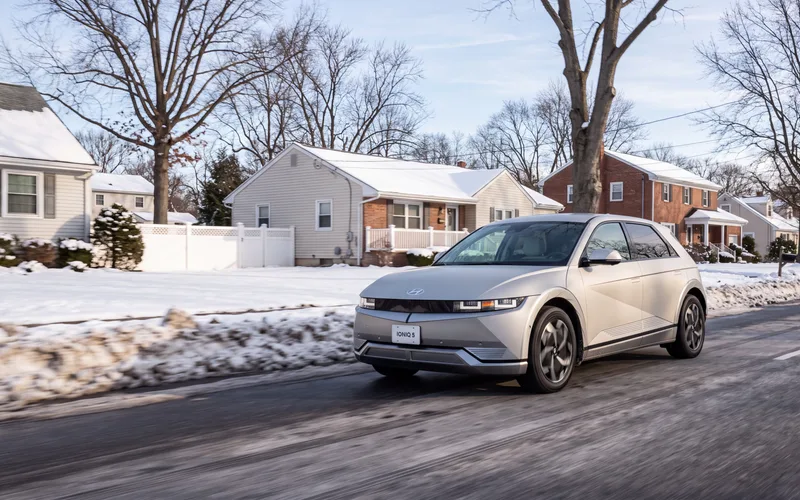 Hyundai Ioniq 5Compact SUVBetter at: Interior quality
The best all-around alternative for a shopper who wants an electric compact SUV with a genuinely nicer interior, physical controls, CarPlay, and a gauge cluster — at the cost of range and cargo space.
Compare 2.06C
2.06C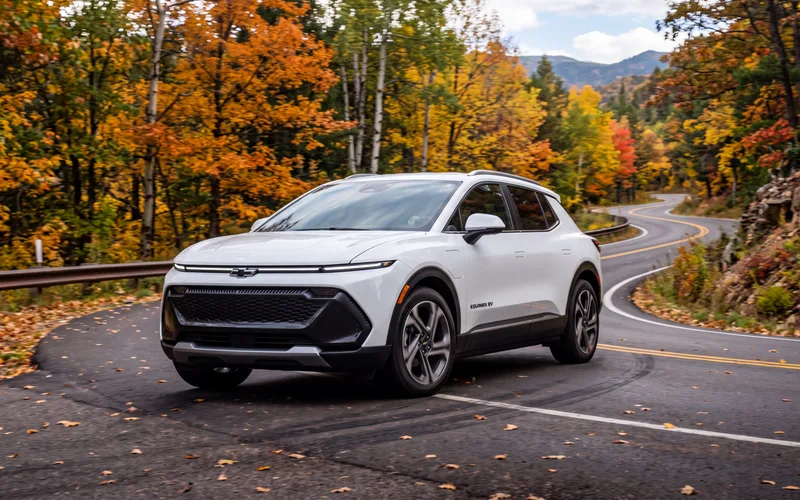 Chevrolet Equinox EVCompact SUVBetter at: Price
Delivers nearly identical range for roughly $6,000 less than the cheapest Model Y, with conventional controls and a nationwide dealer network for service.
Compare 2.56C+
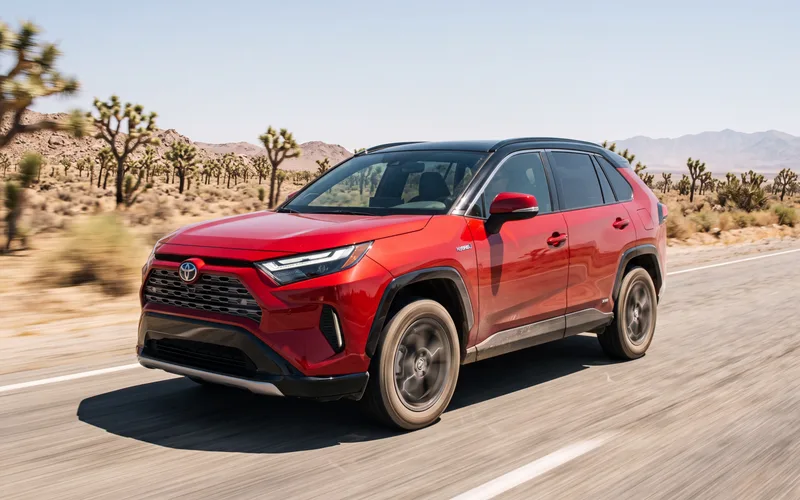 Toyota RAV4Compact SUVBetter at: Ownership costs
The obvious hedge for anyone without reliable home charging — hybrid efficiency without any charging logistics, plus much cheaper insurance and a far stronger reliability record.
CompareProduction history
Best fit & conditions
Higher scores mean a better fit for that use case. Learn more about use-case fit →
Subject profile
Trims & configurations
3 trimsScores above reflect the volume trim. Per-trim specs and scores are rolling out — the full lineup:
Academic Probation · NHTSA safety recalls
Aug 31, 2026Suspension: critical fasteners · Suspension: frontOne or more front suspension lateral link fasteners may not have been properly tightened, allowing the lateral link to loosen or separate from the sub-frame.
Defect
Tesla, Inc. (Tesla) is recalling certain 2026 Model Y vehicles. One or more front suspension lateral link fasteners may not have been properly tightened, allowing the lateral link to loosen or separate from the sub-frame.
Risk
A lateral link separation could shift the wheel alignment, causing a loss of vehicle control and increasing the risk of a crash.
Remedy
Tesla Service will tighten or replace the fasteners and check wheel the alignment, free of charge. In addition, Tesla Service will replace any related parts that may have been damaged as necessary. Owner notification letters are expected to be mailed October 30, 2026. Owners may contact Tesla customer service at 1-877-798-3752. Tesla's number for this recall is SB-26-31-004.
NHTSA campaign 26V558000 ↗Manufacturer no. SB-26-31-00419 vehicles potentially affected (all models in the campaign)Filed by Tesla, Inc.Filed as MODEL YJul 7, 2026Air bags: knee bolster · Structure: body: bumpersThe vehicles were originally built for a foreign market and do not have knee air bags, may not be equipped with certain interior safety countermeasures, and may not have been tested for bumper impact resistance procedures. As such, these vehicles fail to comply with the requirements of Federal Motor Vehicle Safety Standard numbers, 208, "Occupant Crash Protection," 201, "Occupant Protection in Interior Impact," and Part 581, "Bumper Standards."
Defect
Tesla, Inc. (Tesla) is recalling certain 2026 Model Y and 2024 Model 3 vehicles. The vehicles were originally built for a foreign market and do not have knee air bags, may not be equipped with certain interior safety countermeasures, and may not have been tested for bumper impact resistance procedures. As such, these vehicles fail to comply with the requirements of Federal Motor Vehicle Safety Standard numbers, 208, "Occupant Crash Protection," 201, "Occupant Protection in Interior Impact," and Part 581, "Bumper Standards."
Risk
A noncompliant vehicle may have reduced occupant protections, increasing the risk of injury during a crash.
Remedy
Tesla will repurchase noncompliant vehicles currently registered in the United States, free of charge. Owner notification letters are expected to be mailed September 5, 2026. Owners may contact Tesla customer service at 1-877-798-3752 or [email protected]. Tesla's number for this recall is SB-26-00-004.
NHTSA campaign 26V445000 ↗Manufacturer no. SB-26-00-00415 vehicles potentially affected (all models in the campaign)Filed by Tesla, Inc.Filed as MODEL YMay 18, 2026Equipment: other: labelsThe certification label may not have been installed. As such, these vehicles fail to comply with the requirements of 49 C.F.R. Part 567, "Certification."
Defect
Tesla, Inc. (Tesla) is recalling certain 2025-2026 Model Y vehicles. The certification label may not have been installed. As such, these vehicles fail to comply with the requirements of 49 C.F.R. Part 567, "Certification."
Risk
Missing weight information provided by the label may lead to unintentionally overloading the vehicle, increasing the risk of a crash.
Remedy
Tesla Service will inspect and install a certification label as necessary, free of charge. Owner notification letters were mailed July 17, 2026. Owners may contact Tesla customer service at 1-877-798-3752. Tesla's number for this recall is SB-26-19-002.
NHTSA campaign 26V315000 ↗Manufacturer no. SB-26-19-00214,575 vehicles potentially affected (all models in the campaign)Owners notified Jul 17, 2026Filed by Tesla, Inc.Filed as MODEL YOct 10, 2025Electrical system: propulsion system: fuses, relays, contacts, and shuntsThe battery pack contactors may fail, causing a loss of drive power.
Defect
Tesla, Inc. (Tesla) is recalling certain 2025 Model 3 and 2026 Model Y vehicles. The battery pack contactors may fail, causing a loss of drive power.
Risk
A loss of drive power can increase the risk of a crash.
Remedy
Tesla Service will replace the battery pack contactors, free of charge. Owner notification letters were mailed December 9, 2025. Owners may contact Tesla customer service at 1-877-798-3752. Tesla's number for this recall is SB-25-16-005.
NHTSA campaign 25V690000 ↗Manufacturer no. SB-25-16-00512,963 vehicles potentially affected (all models in the campaign)Owners notified Dec 9, 2025Filed by Tesla, Inc.Filed as MODEL YOct 1, 2025Electrical system: wiring · Exterior lighting: back up lightsThe reverse lights may fail to illuminate while the vehicle is in reverse, due to a defect in the wiring. As such, these vehicles fail to comply with the requirements of Federal Motor Vehicle Safety Standard (FMVSS) number 108, "Lamps, Reflective Devices, and Associated Equipment."
Defect
Tesla, Inc. (Tesla) is recalling certain 2026 Model Y vehicles. The reverse lights may fail to illuminate while the vehicle is in reverse, due to a defect in the wiring. As such, these vehicles fail to comply with the requirements of Federal Motor Vehicle Safety Standard (FMVSS) number 108, "Lamps, Reflective Devices, and Associated Equipment."
Risk
Reverse lights that fail to illuminate reduce visibility and may not alert pedestrians or other drivers that the vehicle is backing up, increasing the risk of a crash.
Remedy
Tesla Service will replace the reverse lights and reverse facia harness, free of charge. Owner notification letters were mailed November 26, 2025. Owners may contact Tesla customer service at 1-877-798-3752. Tesla's number for this recall is SB-25-17-011.
NHTSA campaign 25V658000 ↗Manufacturer no. SB-25-17-011260 vehicles potentially affected (all models in the campaign)Owners notified Nov 26, 2025Filed by Tesla, Inc.Filed as MODEL YJul 28, 2025Electrical system: hornThe ring terminal of the horn ground wire may be improperly secured, allowing the circuit to open and preventing the horn from sounding.
Defect
Tesla, Inc. (Tesla) is recalling certain 2026 Model Y vehicles. The ring terminal of the horn ground wire may be improperly secured, allowing the circuit to open and preventing the horn from sounding.
Risk
An inoperable horn may prevent the driver from alerting other drivers as needed, increasing the risk of a crash.
Remedy
Tesla service will replace the steering wheel, free of charge. Owner notification letters were be mailed September 23, 2025. Owners may contact Tesla customer service at 1-877-798-3752. Tesla's number for this recall is SB-25-17-009.
NHTSA campaign 25V490000 ↗Manufacturer no. SB-25-17-0096 vehicles potentially affected (all models in the campaign)Owners notified Sep 23, 2025Filed by Tesla, Inc.Filed as MODEL YJun 18, 2025Seats: critical fastenersThe fasteners attaching the seat back to the seat bottom may have been improperly tightened.
Defect
Tesla, Inc. (Tesla) is recalling certain 2026 Model 3 and Model Y vehicles. The fasteners attaching the seat back to the seat bottom may have been improperly tightened.
Risk
The seat may not properly restrain the occupant, increasing the risk of injury during a crash.
Remedy
Tesla Service Centers will inspect and tighten or replace the seat assembly fasteners as necessary, free of charge. Owner notification letters were mailed August 16, 2025. Owners may contact Tesla customer service at 1-877-798-3752. Tesla's number for this recall is SB-25-13-003.
NHTSA campaign 25V410000 ↗Manufacturer no. SB-25-13-00348 vehicles potentially affected (all models in the campaign)Owners notified Aug 16, 2025Filed by Tesla, Inc.Filed as MODEL YMay 29, 2025Visibility: windshield wiper/washer: linkagesThe hose connector may block the windshield washer nozzles, preventing washer fluid from reaching the windshield. As such, these vehicles fail to comply with the requirements of Federal Motor Vehicle Safety Standard (FMVSS) number 104, "Windshield Wiping and Washing Systems."
Defect
Tesla, Inc. (Tesla) is recalling certain 2026 Model Y vehicles. The hose connector may block the windshield washer nozzles, preventing washer fluid from reaching the windshield. As such, these vehicles fail to comply with the requirements of Federal Motor Vehicle Safety Standard (FMVSS) number 104, "Windshield Wiping and Washing Systems."
Risk
The inability to clean the windshield reduces the driverâs visibility and increases the risk of a crash.
Remedy
Tesla service will inspect and replace the wiper arm elbow connector as necessary, free of charge. Owner notification letters were mailed July 25, 2025. Owners may contact Tesla customer service at 1-877-798-3752. Tesla's number for this recall is SB-25-20-001.
NHTSA campaign 25V359000 ↗Manufacturer no. SB-25-17-006172 vehicles potentially affected (all models in the campaign)Owners notified Jul 25, 2025Filed by Tesla, Inc.Filed as MODEL Y
35 recalls on other model years of the Model Y (2020–2025)
Aug 4, 2026Exterior lighting: headlightsThe headlight low beams may be too bright and exceed the maximum light output. As such, these vehicles fail to comply with the requirements of Federal Motor Vehicle Safety Standard (FMVSS) number 108, "Lamps, Reflective Devices, and Associated Equipment."
Defect
Tesla, Inc. (Tesla) is recalling certain 2017-2023 Model 3 and 2020-2023 Model Y vehicles. The headlight low beams may be too bright and exceed the maximum light output. As such, these vehicles fail to comply with the requirements of Federal Motor Vehicle Safety Standard (FMVSS) number 108, "Lamps, Reflective Devices, and Associated Equipment."
Risk
Headlight low beams that are too bright can reduce visibility for oncoming drivers, increasing the risk of a crash.
Remedy
Tesla Service will replace the headlights, free of charge. Interim owner notification letters explaining the safety risk were be mailed October 3, 2026. Another notice will be sent once the repair becomes available. Owners may contact Tesla customer service at 1-877-798-3752. Tesla's number for this recall is SB-24-17-003.
NHTSA campaign 26V507000 ↗Manufacturer no. SB-24-17-00320,349 vehicles potentially affected (all models in the campaign)Filed by Tesla, Inc.Filed as MODEL YMay 4, 2026Back over prevention: softwareThe rearview camera image may be delayed when the vehicle is placed in reverse. As such, these vehicles fail to comply with the requirements of Federal Motor Vehicle Safety Standard number 111, "Rear Visibility."
Defect
Tesla, Inc. (Tesla) is recalling certain 2017, 2021-2023 Model 3, 2020-2023 Model Y, 2021-2023 Model S, and Model X vehicles operating software version 2026.8.6. The rearview camera image may be delayed when the vehicle is placed in reverse. As such, these vehicles fail to comply with the requirements of Federal Motor Vehicle Safety Standard number 111, "Rear Visibility."
Risk
A delayed rearview image reduces the driver's view behind the vehicle, increasing the risk of a crash.
Remedy
Tesla has released an over-the-air (OTA) software update, free of charge. Owner notification letters were mailed July 3, 2026. Owners may contact Tesla customer service at 1-877-798-3752. Tesla's number for this recall is SB-26-00-001.
NHTSA campaign 26V283000 ↗Manufacturer no. SB-26-00-001218,868 vehicles potentially affected (all models in the campaign)Owners notified Jul 3, 2026Filed by Tesla, Inc.Filed as MODEL YFeb 14, 2025Steering: electric power assist systemThe printed circuit board for the electronic power steering assist may experience an overstress condition, causing a loss of power steering assist when the vehicle reaches a stop and then accelerates again.
Defect
Tesla, Inc. (Tesla) is recalling certain 2023 Model 3 and Model Y vehicles operating software prior to 2023.38.4. The printed circuit board for the electronic power steering assist may experience an overstress condition, causing a loss of power steering assist when the vehicle reaches a stop and then accelerates again.
Risk
A loss of power steering assist can require greater steering effort, especially at low speeds, increasing the risk of a crash.
Remedy
Tesla has released an over-the-air (OTA) software update, free of charge. Owner notification letters were mailed March 25, 2025. Owners may contact Tesla customer service at 1-877-798-3752. Tesla's number for this recall is SB-25-00-004.
NHTSA campaign 25V092000 ↗Manufacturer no. SB-25-00-004376,241 vehicles potentially affected (all models in the campaign)Owners notified Mar 25, 2025Filed by Tesla, Inc.Filed as MODEL YJan 6, 2025Back over prevention: software · Electrical systemThe computer circuit board may short, resulting in the loss of the rearview camera image. As such, these vehicles fail to comply with the requirements of Federal Motor Vehicle Safety Standard (FMVSS) number 111, "Rear Visibility."
Defect
Tesla, Inc. (Tesla) is recalling certain 2024-2025 Model 3, Model S, 2023-2025 Model X, and Model Y vehicles. The computer circuit board may short, resulting in the loss of the rearview camera image. As such, these vehicles fail to comply with the requirements of Federal Motor Vehicle Safety Standard (FMVSS) number 111, "Rear Visibility."
Risk
A rearview camera that does not display an image reduces the driver's rear view, increasing the risk of a crash.
Remedy
Tesla released an over-the-air (OTA) software update, free of charge. Tesla will also identify any vehicles that experienced a circuit board failure, or stress that may lead to a circuit board failure, and replace the affected computers, free of charge. Owner notification letters were mailed March 7, 2025. Owners may contact Tesla customer service at 1-877-798-3752. Tesla's number for this recall is SB-25-00-001.
NHTSA campaign 25V002000 ↗Manufacturer no. SB-25-00-001239,382 vehicles potentially affected (all models in the campaign)Owners notified Mar 7, 2025Filed by Tesla, Inc.Filed as MODEL YDec 17, 2024Tires: pressure monitoring and regulating systemsThe tire pressure monitoring system (TPMS) warning light may not remain illuminated between drive cycles, failing to warn the driver of low tire pressure. As such, these vehicles fail to comply with the requirements of Federal Motor Vehicle Safety Standard number 138, "Tire Pressure Monitoring Systems."
Defect
Tesla, Inc. (Tesla) is recalling certain 2024 Cybertruck, 2017-2025 Model 3, and 2020-2025 Model Y vehicles. The tire pressure monitoring system (TPMS) warning light may not remain illuminated between drive cycles, failing to warn the driver of low tire pressure. As such, these vehicles fail to comply with the requirements of Federal Motor Vehicle Safety Standard number 138, "Tire Pressure Monitoring Systems."
Risk
Driving with improperly inflated tires increases the risk of a crash.
Remedy
Tesla released an over-the-air (OTA) software update, free of charge. Owner notification letters were mailed February 15, 2025. Owners may contact Tesla customer service at 1-877-798-3752. Tesla's number for this recall is SB-24-00-018.
NHTSA campaign 24V935000 ↗Manufacturer no. SB-24-00-018696,281 vehicles potentially affected (all models in the campaign)Owners notified Feb 15, 2025Filed by Tesla, Inc.Filed as MODEL YNov 22, 2024Seats: front assembly: reclinerThe weld attaching the seat recliner mechanism to the front seat backs may fail.
Defect
Tesla, Inc. (Tesla) is recalling certain 2024 Model Y vehicles. The weld attaching the seat recliner mechanism to the front seat backs may fail.
Risk
The seat back frame may not properly restrain the occupant during a crash, increasing the risk of injury.
Remedy
Tesla service will replace the seat assembly, free of charge. Owner notification letters were mailed January 21, 2025. Owners may contact Tesla customer service at 1-877-798-3752. Tesla's number for this recall is SB-24-13-004.
NHTSA campaign 24V886000 ↗Manufacturer no. SB-24-13-00427 vehicles potentially affected (all models in the campaign)Owners notified Jan 21, 2025Filed by Tesla, Inc.Filed as MODEL YJul 24, 2024Electrical system: software · Latches/locks/linkages: hood: latchThe hood latch assembly may fail to detect an unlatched hood condition after the hood has been opened.
Defect
Tesla, Inc. (Tesla) is recalling certain 2021-2024 Model 3, Model S, Model X, and 2020-2024 Model Y vehicles. The hood latch assembly may fail to detect an unlatched hood condition after the hood has been opened.
Risk
An unlatched hood can fully open, obstructing the driver's view and increasing the risk of a crash.
Remedy
Tesla has released an over-the-air (OTA) software update, free of charge. Owner notification letters were mailed September 24, 2024. Owners may contact Tesla customer service at 1-877-798-3752. Tesla's number for this recall is SB-24-00-012.
NHTSA campaign 24V554000 ↗Manufacturer no. SB-24-00-0121,849,638 vehicles potentially affected (all models in the campaign)Owners notified Sep 22, 2024Filed by Tesla, Inc.Filed as MODEL YMay 28, 2024Seat belts: front: warning light/devicesIn the event of an unbelted driver, the seat belt warning light and audible chime may not activate as intended. As such, these vehicles fail to comply with the requirements of Federal Motor Vehicle Safety Standard number 208, "Occupant Crash Protection."
Defect
Tesla, Inc. (Tesla) is recalling certain 2012-2024 Model S, 2015-2024 Model X, 2017-2023 Model 3, and 2020-2023 Model Y vehicles. In the event of an unbelted driver, the seat belt warning light and audible chime may not activate as intended. As such, these vehicles fail to comply with the requirements of Federal Motor Vehicle Safety Standard number 208, "Occupant Crash Protection."
Risk
A seat belt warning system that fails to alert occupants of an unbelted seat belt can increase the risk of injury during a crash.
Remedy
Tesla will release an over-the-air (OTA) software update. Owner notification letters were mailed July 26, 2024. Owners may contact Tesla customer service at 1-877-798-3752. Tesla's number for this recall is SB-24-00-008.
NHTSA campaign 24V376000 ↗Manufacturer no. SB-24-00-008125,233 vehicles potentially affected (all models in the campaign)Owners notified Jul 26, 2024Filed by Tesla, Inc.Filed as MODEL YFeb 27, 2024Electrical system: software · Forward collision avoidance: warnings: external/pedestrian alertA factory reset muted the Pedestrian Warning System (PWS) sounds. As such, these vehicles fail to comply with the requirements of Federal Motor Vehicle Safety Standard number 141, "Minimum Sound Requirements for Hybrid and Electric Vehicles."
Defect
Tesla, Inc. (Tesla) is recalling certain 2013, 2018-2021 Model S, 2020-2021 Model X, 2018-2022 Model 3, and 2020-2022 Model Y vehicles. A factory reset muted the Pedestrian Warning System (PWS) sounds. As such, these vehicles fail to comply with the requirements of Federal Motor Vehicle Safety Standard number 141, "Minimum Sound Requirements for Hybrid and Electric Vehicles."
Risk
Pedestrians may be unaware of an approaching vehicle if the PWS sounds are muted, increasing the risk of a crash.
Remedy
Tesla released an over-the-air (OTA) software update, release 2023.44.30.14, free of charge. Owner notification letters were mailed April 27, 2024. Owners may contact Tesla customer service at 1-877-798-3752. Tesla's number for this recall is SB-24-00-006.
NHTSA campaign 24V153000 ↗Manufacturer no. SB-24-00-0066,557 vehicles potentially affected (all models in the campaign)Owners notified Apr 27, 2024Filed by Tesla, Inc.Filed as MODEL YJan 30, 2024Electrical system: instrument cluster/panelAn incorrect font size is displayed on the instrument panel for the Brake, Park, and Antilock Brake System (ABS) warning lights. As such, these vehicles fail to comply with the requirements of Federal Motor Vehicle Safety Standard number 105, "Hydraulic and Electric Brake Systems" and 135, "Light Vehicle Brake Systems."
Defect
Tesla, Inc. (Tesla) is recalling certain 2012-2023 Model S, 2016-2024 Model X, 2017-2023 Model 3, 2019-2024 Model Y, and 2024 Cybertruck vehicles. An incorrect font size is displayed on the instrument panel for the Brake, Park, and Antilock Brake System (ABS) warning lights. As such, these vehicles fail to comply with the requirements of Federal Motor Vehicle Safety Standard number 105, "Hydraulic and Electric Brake Systems" and 135, "Light Vehicle Brake Systems."
Risk
Warning lights with a smaller font size can make critical safety information on the instrument panel difficult to read, increasing the risk of a crash.
Remedy
Tesla began releasing an over-the-air (OTA) software update, free of charge. Owners may contact Tesla customer service at 1-877-798-3752. Tesla's number for this recall is SB-24-00-003.
NHTSA campaign 24V051000 ↗Manufacturer no. SB-24-00-0032,193,869 vehicles potentially affected (all models in the campaign)Owners notified Feb 21, 2024Filed by Tesla, Inc.Filed as MODEL YJan 22, 2024Back over prevention: sensing system: cameraSoftware instability may prevent the rearview camera image from displaying.
Defect
Tesla, Inc. (Tesla) is recalling certain 2023 Model S, X, and Y vehicles equipped with full self-driving computer 4.0 and running a software release version 2023.44.30 through 2023.44.30.6 or 2023.44.100. Software instability may prevent the rearview camera image from displaying.
Risk
A rearview image that does not display while in reverse decreases the driver's visibility and increases the risk of a crash.
Remedy
Tesla has released an over-the-air (OTA) software update, free of charge. Owner notification letters were mailed March 22, 2024. Owners may contact Tesla customer service at 1-877-798-3752. Tesla's number for this recall is SB-24-00-002.
NHTSA campaign 24V035000 ↗Manufacturer no. SB-24-00-002199,575 vehicles potentially affected (all models in the campaign)Owners notified Mar 22, 2024Filed by Tesla, Inc.Filed as MODEL YDec 12, 2023Electrical system: adas: driver monitoring: softwareTesla, Inc. (Tesla) is recalling 2012-2023 Model S, 2016-2023 Model X, 2017-2023 Model 3, and 2020-2023 Model Y vehicles equipped with all versions of Autosteer leading up to the version(s) that contains the recall remedy. In certain circumstances when Autosteer is engaged, the prominence and scope of the feature's controls may not be sufficient to prevent driver misuse of the SAE Level 2 advanced driver-assistance feature.
Defect
Tesla, Inc. (Tesla) is recalling 2012-2023 Model S, 2016-2023 Model X, 2017-2023 Model 3, and 2020-2023 Model Y vehicles equipped with all versions of Autosteer leading up to the version(s) that contains the recall remedy. In certain circumstances when Autosteer is engaged, the prominence and scope of the feature's controls may not be sufficient to prevent driver misuse of the SAE Level 2 advanced driver-assistance feature.
Risk
In certain circumstances when Autosteer is engaged, and the driver does not maintain responsibility for vehicle operation and is unprepared to intervene as necessary or fails to recognize when Autosteer is canceled or not engaged, there may be an increased risk of a crash.
Remedy
Tesla will release an over-the-air (OTA) software update, free of charge. Owner notification letters were mailed February 10, 2024. Owners may contact Tesla customer service at 1-877-798-3752. Tesla's number for this recall is SB-23-00-008.
NHTSA campaign 23V838000 ↗Manufacturer no. SB-23-00-0082,031,220 vehicles potentially affected (all models in the campaign)Owners notified Feb 10, 2024Filed by Tesla, Inc.Filed as MODEL YJul 14, 2023Forward collision avoidance: sensing system: cameraThe forward-facing camera may be misaligned, causing some of the active safety features such as emergency braking, forward collision warning, and lane assist to become unavailable without alerting the driver.
Defect
Tesla, Inc. (Tesla) is recalling certain 2023 Model S, Model X, and Model Y vehicles. The forward-facing camera may be misaligned, causing some of the active safety features such as emergency braking, forward collision warning, and lane assist to become unavailable without alerting the driver.
Risk
Safety features that are unavailable without any warning to the driver may increase the risk of a crash.
Remedy
Tesla Service will inspect and adjust the pitch angle, as necessary, free of charge. Owner notification letters were mailed September 12, 2023. Owners may contact Tesla customer service at 1-877-798-3752. Tesla's number for this recall is SB-23-17-006.
NHTSA campaign 23V489000 ↗Manufacturer no. SB-23-17-0061,337 vehicles potentially affected (all models in the campaign)Owners notified Sep 12, 2023Filed by Tesla, Inc.Filed as MODEL YJun 19, 2023Electrical system: propulsion system: traction batteryThe pyrotechnic battery disconnect may be defective.
Defect
Tesla, Inc. (Tesla) is recalling certain 2023 Model 3 and Model Y vehicles. The pyrotechnic battery disconnect may be defective.
Risk
A defective battery disconnect may not isolate the vehicle's high voltage battery after a crash or fault detection, increasing the risk of electrical shock and injury.
Remedy
Tesla Service will replace the pyrotechnic battery disconnect, free of charge. Owner notification letters were mailed August 18, 2023. Owners may contact Tesla customer service at 1-877-798-3752. Tesla's number for this recall is SB-23-16-005.
NHTSA campaign 23V434000 ↗Manufacturer no. SB-23-16-00526 vehicles potentially affected (all models in the campaign)Owners notified Aug 18, 2023Filed by Tesla, Inc.Filed as MODEL YMay 30, 2023Steering: steering wheel/handle bar · Steering: critical fastenersThe steering wheel fastener may be loose.
Defect
Tesla, Inc. (Tesla) is recalling certain 2022-2023 Model Y vehicles. The steering wheel fastener may be loose.
Risk
A loose fastener may allow the steering wheel to disconnect from the steering column, which can cause a loss of steering control and increase the risk of a crash.
Remedy
Tesla Service will inspect and replace the fastener as necessary, free of charge. Owner notification letters were be mailed July 28, 2023. Tesla's number for this recall is SB-23-32-001.
NHTSA campaign 23V385000 ↗Manufacturer no. SB-23-32-001137 vehicles potentially affected (all models in the campaign)Owners notified Jul 28, 2023Filed by Tesla, Inc.Filed as MODEL YFeb 27, 2023Seat belts: rear/other: anchorage · Seats: critical fastenersThe bolts securing the second-row seat back frames may not have been securely tightened.
Defect
Tesla, Inc. (Tesla) is recalling certain 2022-2023 Model Y vehicles. The bolts securing the second-row seat back frames may not have been securely tightened.
Risk
A loose seat frame bolt may reduce the seat belt system's performance, increasing the risk of injury during a crash.
Remedy
Tesla Service Centers will inspect and tighten the bolts as necessary, free of charge. Owner notification letters are expected to be mailed April 25, 2023. Owners may contact Tesla customer service at 1-877-798-3752. Tesla's number for this recall is SB-23-13-001.
NHTSA campaign 23V130000 ↗Manufacturer no. SB-23-13-0013,470 vehicles potentially affected (all models in the campaign)Owners notified Apr 25, 2023Filed by Tesla, Inc.Filed as MODEL YFeb 15, 2023Steering: automated/adaptive steeringIn addition, the system may respond insufficiently to changes in posted speed limits or not adequately account for the driver's adjustment of the vehicle's speed to exceed posted speed limits.
Defect
Tesla, Inc. (Tesla) is recalling certain 2016-2023 Model S, Model X, 2017-2023 Model 3, and 2020-2023 Model Y vehicles equipped with Full Self-Driving Beta (FSD Beta) software or pending installation. The FSD Beta system may allow the vehicle to act unsafe around intersections, such as traveling straight through an intersection while in a turn-only lane, entering a stop sign-controlled intersection without coming to a complete stop, or proceeding into an intersection during a steady yellow traffic signal without due caution. In addition, the system may respond insufficiently to changes in posted speed limits or not adequately account for the driver's adjustment of the vehicle's speed to exceed posted speed limits.
Risk
FSD Beta software that allows a vehicle to exceed speed limits or travel through intersections in an unlawful or unpredictable manner increases the risk of a crash.
Remedy
Tesla will release an over-the-air (OTA) software update, free of charge. Owner notification letters were mailed April 15, 2023. Owners may contact Tesla customer service at 1-877-798-3752. Tesla's number for this recall is SB-23-00-001.
NHTSA campaign 23V085000 ↗Manufacturer no. SB-23-00-001362,758 vehicles potentially affected (all models in the campaign)Owners notified Apr 15, 2023Filed by Tesla, Inc.Filed as MODEL YDec 5, 2022Suspension: critical fasteners · Suspension: front · Suspension: subframe/mounting bracketThe front suspension lateral link fasteners may not have been properly attached to the sub-frame.
Defect
Tesla, Inc. (Tesla) is recalling certain 2023 Model Y vehicles. The front suspension lateral link fasteners may not have been properly attached to the sub-frame.
Risk
A loose fastener can allow the lateral link to separate from the sub-frame, causing instability and increasing the risk of a crash.
Remedy
Tesla Service will tighten or replace the fasteners as necessary, free of charge. Owner notification letters were mailed February 7, 2023. Owners may contact Tesla customer service at 1-877-798-3752. Tesla's number for this recall is SB-22-31-002.
NHTSA campaign 22V895000 ↗Manufacturer no. SB-22-31-00226 vehicles potentially affected (all models in the campaign)Owners notified Feb 7, 2023Filed by Tesla, Inc.Filed as MODEL YNov 15, 2022Exterior lighting: tail lightsOne or both taillights may intermittently fail to illuminate.
Defect
Tesla, Inc. (Tesla) is recalling certain 2023 Model 3 and 2020-2023 Model Y vehicles. One or both taillights may intermittently fail to illuminate.
Risk
A taillight that fails to illuminate may reduce the visibility of the vehicle, increasing the risk of a crash.
Remedy
Tesla has released an over-the-air (OTA) software update, free of charge. Owner notification letters were mailed January 14, 2023. Owners may contact Tesla customer service at 1-877-798-3752. Tesla's number for this recall is SB-22-00-016.
NHTSA campaign 22V844000 ↗Manufacturer no. SB-22-00-016321,628 vehicles potentially affected (all models in the campaign)Owners notified Jan 14, 2023Filed by Tesla, Inc.Filed as MODEL YSep 19, 2022Visibility: power window devices and controlsThe window automatic reversal system may not react correctly after detecting an obstruction. As such, these vehicles fail to comply with the requirements of Federal Motor Vehicle Safety Standard number 118, "Power-Operated Window Systems."
Defect
Tesla, Inc. (Tesla) is recalling certain 2017-2022 Model 3, 2020-2022 Model Y, and 2021-2022 Model S and Model X vehicles. The window automatic reversal system may not react correctly after detecting an obstruction. As such, these vehicles fail to comply with the requirements of Federal Motor Vehicle Safety Standard number 118, "Power-Operated Window Systems."
Risk
A closing window may exert excessive force by pinching a driver or passenger before retracting, increasing the risk of injury.
Remedy
Tesla will perform an over-the-air (OTA) software update of the automatic window reversal system, free of charge. Owner notification letters were mailed March 31, 2032. Owners may contact Tesla customer service at 1-877-798-3752. Tesla's number for this recall is SB-22-00-013.
NHTSA campaign 22V702000 ↗Manufacturer no. SB-22-00-0131,096,762 vehicles potentially affected (all models in the campaign)Owners notified Mar 31, 2023Filed by Tesla, Inc.Filed as MODEL YMay 9, 2022Electrical system: adas: driver monitoring: camera/sensor · Forward collision avoidance: automatic emergency braking · Lane departure: lane keep: automatic steeringThe fisheye and narrow camera cable terminals were incorrectly installed in the cable harness connector, resulting in swapped camera views.
Defect
Tesla, Inc. (Tesla) is recalling certain 2020-2021 Model 3 and 2021 Model Y vehicles. The fisheye and narrow camera cable terminals were incorrectly installed in the cable harness connector, resulting in swapped camera views.
Risk
Swapped camera views can prevent the vehicle's cameras from detecting crossing objects and high-curvature lane lines, impairing the Autosteer and Automatic Emergency Braking (AEB) performance, and increasing the risk of a crash.
Remedy
Tesla Service will correct the swapped terminals and recalibrate the cameras, free of charge. Owner notification letters were mailed July 8, 2022. Owners may contact Tesla customer service at 1-877-798-3752. Tesla's number for this recall is SB-22-17-007.
NHTSA campaign 22V317000 ↗Manufacturer no. SB-22-17-0077 vehicles potentially affected (all models in the campaign)Owners notified Jul 8, 2022Filed by Tesla, Inc.Filed as MODEL YMay 3, 2022Back over prevention: display function · Equipment: electrical: infotainment: video (touch)screen/monitor/unitThe infotainment central processing unit (CPU) may overheat during the preparation or process of fast-charging, causing the CPU to lag or restart.
Defect
Tesla, Inc. (Tesla) is recalling certain 2021-2022 Model S, Model X, and 2022 Model 3 and Model Y vehicles operating certain firmware releases. The infotainment central processing unit (CPU) may overheat during the preparation or process of fast-charging, causing the CPU to lag or restart.
Risk
A lagging or restarting CPU may prevent the center screen from displaying the rearview camera image, gear selection, windshield visibility control settings, and warning lights, increasing the risk of a crash.
Remedy
Tesla will perform an over-the-air (OTA) software update that will improve CPU temperature management, free of charge. Owner notification letters were mailed July 1, 2022. Owners may contact Tesla customer service at 1-877-798-3752. Tesla's number for this recall is SB-22-00-009.
NHTSA campaign 22V296000 ↗Manufacturer no. SB-22-00-009129,960 vehicles potentially affected (all models in the campaign)Owners notified Jul 1, 2022Filed by Tesla, Inc.Filed as MODEL YApr 12, 2022Electrical system: software · Forward collision avoidance: warnings: external/pedestrian alertThe Boombox function allows sounds to be played through an external speaker while the vehicle is in motion, which may obscure the Pedestrian Warning System (PWS) sounds. As such, these vehicles fail to comply with the requirements of Federal Motor Vehicle Safety Standard number 141, "Minimum Sound Requirements for Hybrid and Electric Vehicles."
Defect
Tesla, Inc. (Tesla) is recalling certain 2020-2022 Model Y, Model X, Model S, and 2017-2022 Model 3 vehicles. The Boombox function allows sounds to be played through an external speaker while the vehicle is in motion, which may obscure the Pedestrian Warning System (PWS) sounds. As such, these vehicles fail to comply with the requirements of Federal Motor Vehicle Safety Standard number 141, "Minimum Sound Requirements for Hybrid and Electric Vehicles."
Risk
Pedestrians may be unaware of an approaching vehicle if the PWS sounds are obscured, increasing the risk of a crash.
Remedy
Tesla will perform an over-the-air (OTA) software update that will disable the Boombox functionality when the vehicle is in Drive, Neutral and Reverse modes, including Summon and Smart Summon, free of charge. Owner notification letters were mailed June 6, 2022. Owners may contact Tesla customer service at 1-877-798-3752. Tesla's number for this recall is SB-22-00-003. Note: This recall supersedes recall 22V-063. Vehicles configured with Summon or Smart Summon and already remedied under 22V-063 will need to have the new remedy software installed.
NHTSA campaign 22V235000 ↗Manufacturer no. SB-22-00-003594,894 vehicles potentially affected (all models in the campaign)Owners notified Jun 6, 2022Filed by Tesla, Inc.Filed as MODEL YFeb 4, 2022Electrical system: software · Forward collision avoidance: warnings: external/pedestrian alertThe Boombox function allows sounds to be played through an external speaker while the vehicle is in motion, which may obscure the Pedestrian Warning System (PWS) sounds. As such, these vehicles fail to comply with the requirements of Federal Motor Vehicle Safety Standard number 141, "Minimum Sound Requirements for Hybrid and Electric Vehicles."
Defect
Tesla, Inc. (Tesla) is recalling certain 2020-2022 Model S, Model X, Model Y, and 2017-2022 Model 3 vehicles. The Boombox function allows sounds to be played through an external speaker while the vehicle is in motion, which may obscure the Pedestrian Warning System (PWS) sounds. As such, these vehicles fail to comply with the requirements of Federal Motor Vehicle Safety Standard number 141, "Minimum Sound Requirements for Hybrid and Electric Vehicles."
Risk
Pedestrians may be unaware of an approaching vehicle if the PWS sounds are obscured, increasing the risk of a crash.
Remedy
Tesla will perform an over-the-air (OTA) software update that will disable the Boombox functionality when the vehicle is in Drive, Neutral and Reverse modes, free of charge. Owner notification letters are expected to be mailed April 5, 2022. Owners may contact Tesla customer service at 1-877-798-3752. Tesla's number for this recall is SB-22-00-003. Note: This recall has been superseded by Recall 22V-235. Tesla's number for the new recall is SB-22-00-003.
NHTSA campaign 22V063000 ↗Manufacturer no. SB-22-00-003578,607 vehicles potentially affected (all models in the campaign)Owners notified Apr 12, 2022Filed by Tesla, Inc.Filed as MODEL YFeb 2, 2022Electrical system: software · Visibility: defroster/defogger/hvac system: air handler/chamber, ducts, and valvesA software error may cause a valve in the heat pump to open unintentionally and trap the refrigerant inside the evaporator, resulting in decreased defrosting performance. As such, these vehicles fail to comply with the requirements of Federal Motor Vehicle Safety Standard number 103, "Windshield Defrosting and Defogging Systems."
Defect
Tesla, Inc. (Tesla) is recalling certain 2021-2022 Model 3, Model S, Model X, and 2020-2022 Model Y vehicles. A software error may cause a valve in the heat pump to open unintentionally and trap the refrigerant inside the evaporator, resulting in decreased defrosting performance. As such, these vehicles fail to comply with the requirements of Federal Motor Vehicle Safety Standard number 103, "Windshield Defrosting and Defogging Systems."
Risk
Decreased defrosting performance may reduce the driver's visibility, increasing the risk of a crash.
Remedy
Tesla will perform an over-the-air (OTA) software update, free of charge. Owner notification letters were mailed April 1, 2022. Owners may contact Tesla customer service at 1-877-798-3752. Tesla's number for this recall is SB-22-18-002.
NHTSA campaign 22V050000 ↗Manufacturer no. SB-22-18-00226,681 vehicles potentially affected (all models in the campaign)Owners notified Apr 1, 2022Filed by Tesla, Inc.Filed as MODEL YFeb 1, 2022Electrical system: software · Seat belts: frontThe audible chime may not activate when the vehicle starts and the driver has not buckled their seat belt. As such, these vehicles fail to comply with the requirements of Federal Motor Vehicle Safety Standard number 208, "Occupant Crash Protection."
Defect
Tesla, Inc. (Tesla) is recalling certain 2021-2022 Model S and Model X, 2017-2022 Model 3, and 2020-2022 Model Y vehicles. The audible chime may not activate when the vehicle starts and the driver has not buckled their seat belt. As such, these vehicles fail to comply with the requirements of Federal Motor Vehicle Safety Standard number 208, "Occupant Crash Protection."
Risk
The driver may be unaware that their seat belt is not fastened, increasing the risk of injury during a crash.
Remedy
Tesla will perform an over-the-air (OTA) software update, free of charge. Owner notification letters were mailed April 1, 2022. Owners may contact Tesla customer service at 1-877-798-3752. Tesla's number for this recall is SB-22-00-002.
NHTSA campaign 22V045000 ↗Manufacturer no. SB-22-00-002817,143 vehicles potentially affected (all models in the campaign)Owners notified Apr 1, 2022Filed by Tesla, Inc.Filed as MODEL YJan 27, 2022Steering: automated/adaptive steeringThe "rolling stop" functionality available as part of the Full Self-Driving (Beta) software may allow the vehicle to travel through an all-way stop intersection without first coming to a stop.
Defect
Tesla, Inc. (Tesla) is recalling certain 2016-2022 Model S and Model X, 2017-2022 Model 3, and 2020-2022 Model Y vehicles. The "rolling stop" functionality available as part of the Full Self-Driving (Beta) software may allow the vehicle to travel through an all-way stop intersection without first coming to a stop.
Risk
Failing to stop at a stop sign can increase the risk of a crash.
Remedy
Tesla will perform an over-the-air (OTA) software update that disables the "rolling stop" functionality, free of charge. Owner notification letters were mailed March 28, 2022. Owners may contact Tesla customer service at 1-877-798-3752. Tesla's number for this recall is SB-22-00-001.
NHTSA campaign 22V037000 ↗Manufacturer no. SB-22-00-00153,822 vehicles potentially affected (all models in the campaign)Owners notified Mar 28, 2022Filed by Tesla, Inc.Filed as MODEL YNov 21, 2021SuspensionThe front and rear suspension knuckles may fracture, causing the suspension links to separate.
Defect
Tesla, Inc. (Tesla) is recalling certain 2020-2022 Model Y vehicles. The front and rear suspension knuckles may fracture, causing the suspension links to separate.
Risk
Suspension links that separate can reduce vehicle stability and control, increasing the risk of a crash.
Remedy
Tesla Service will inspect and replace the knuckles as necessary, free of charge. Owner notification letters were mailed January 18, 2022. Owners may contact Tesla customer service at 1-877-798-3752. Tesla's number for this recall is SB-21-31-004.
NHTSA campaign 21V912000 ↗Manufacturer no. SB-21-31-004826 vehicles potentially affected (all models in the campaign)Owners notified Jan 18, 2022Filed by Tesla, Inc.Filed as MODEL YOct 29, 2021Forward collision avoidance: automatic emergency braking · Forward collision avoidance: sensing system: camera · Forward collision avoidance: warnings · Forward collision avoidance: softwareA communication error may cause false forward-collision warning (FCW) or unexpected activation of the automatic emergency brake (AEB) system.
Defect
Tesla, Inc. (Tesla) is recalling certain 2017-2021 Model S, Model 3, Model X, and 2020-2021 Model Y vehicles operating software version 2021.36.5.2. A communication error may cause false forward-collision warning (FCW) or unexpected activation of the automatic emergency brake (AEB) system.
Risk
Unexpected activation of the AEB system may cause the car to stop suddenly, increasing the risk of a crash.
Remedy
Tesla Service has released an over-the-air (OTA) software update, free of charge. The recall began October 25, 2021. Owners may contact Tesla customer service at 1-877-798-3752. Tesla's number for this recall is SB-21-00-004.
NHTSA campaign 21V846000 ↗Manufacturer no. SB-21-00-00411,728 vehicles potentially affected (all models in the campaign)Owners notified Oct 25, 2021Filed by Tesla, Inc.Filed as MODEL YOct 25, 2021Suspension: critical fasteners · Suspension: frontThe front suspension lateral link fasteners may loosen, allowing the lateral link to separate from the sub-frame.
Defect
Tesla, Inc. (Tesla) is recalling certain 2020-2021 Model Y and 2019-2021 Model 3 vehicles. The front suspension lateral link fasteners may loosen, allowing the lateral link to separate from the sub-frame.
Risk
A lateral link separation could shift the wheel alignment, causing instability and increasing the risk of a crash.
Remedy
Tesla Service will tighten or replace the lateral link fasteners as necessary, free of charge. Owner notification letters were mailed December 20, 2021. Owners may contact Tesla customer service at 1-877-798-3752. Tesla's number for this recall is SB-21-31-003.
NHTSA campaign 21V835000 ↗Manufacturer no. SB-21-31-0032,791 vehicles potentially affected (all models in the campaign)Owners notified Dec 20, 2021Filed by Tesla, Inc.Filed as MODEL YMay 25, 2021Seat belts · Seat belts: critical fastenersOne or both fasteners that secure the front seat shoulder belt to the b-pillar may not be properly attached.
Defect
Tesla, Inc. (Tesla) is recalling certain 2018-2020 Model 3 and 2019-2021 Model Y vehicles. One or both fasteners that secure the front seat shoulder belt to the b-pillar may not be properly attached.
Risk
An improperly attached fastener may prevent the seat belt system from performing as designed, increasing the risk of injury.
Remedy
Tesla Service will inspect and repair both fasteners if necessary, free of charge. Owner notification letters were mailed July 23, 2021. Owners may contact Tesla customer service online by visiting www.tesla.com/support/contact or by calling 1-877-79-TESLA (or 1-877-798-3752). Tesla's number for this recall is SB-21-20-001.
NHTSA campaign 21V389000 ↗Manufacturer no. SB-21-20-0015,530 vehicles potentially affected (all models in the campaign)Owners notified Jul 23, 2021Filed by Tesla, Inc.Filed as MODEL YMay 25, 2021Seat belts: critical fasteners · Seat belts: rear/other: retractorOne or both fasteners that secure the left and right second row seat belt retractors may not be properly attached.
Defect
Tesla, Inc. (Tesla) is recalling certain 2019-2021 Model Y vehicles. One or both fasteners that secure the left and right second row seat belt retractors may not be properly attached.
Risk
Improperly attached fasteners may prevent the seat belt retention system from performing as designed, increasing the risk of injury.
Remedy
Tesla Service will inspect and replace both fasteners if necessary, free of charge. Owner notification letters were mailed July 23, 2021. Owners may contact Tesla customer service online by visiting www.tesla.com/support/contact or by calling 1-877-79-TESLA (or 1-877-798-3752). Tesla's number for this recall is SB-21-20-002.
NHTSA campaign 21V388000 ↗Manufacturer no. SB-21-20-0022,166 vehicles potentially affected (all models in the campaign)Owners notified Jul 23, 2021Filed by Tesla, Inc.Filed as MODEL YMay 25, 2021Service brakes, hydraulic: critical fasteners · Service brakes, hydraulic: foundation components: disc: caliperThe brake caliper bolts may be loose, allowing the brake caliper to separate and contact the wheel rim.
Defect
Tesla, Inc. (Tesla) is recalling certain 2019-2021 Model 3 and 2020-2021 Model Y vehicles. The brake caliper bolts may be loose, allowing the brake caliper to separate and contact the wheel rim.
Risk
Contact with the rim may cause a loss of tire pressure, increasing the risk of a crash.
Remedy
Tesla Service will inspect and tighten, or replace the caliper bolts as necessary, free of charge. Owner notification letters were mailed July 23, 2021. Owners may contact Tesla customer service online by visiting www.tesla.com/support/contact or by calling 1-877-79-TESLA (or 1-877-798-3752). Tesla's number for this recall is SB-21-33-002.
NHTSA campaign 21V387000 ↗Manufacturer no. SB-21-33-0025,974 vehicles potentially affected (all models in the campaign)Owners notified Jul 23, 2021Filed by Tesla, Inc.Filed as MODEL YNov 17, 2020Suspension: front: control armThe bolts connecting the front upper control arm and steering knuckle may have not been properly tightened, allowing the upper control arm to detach from the steering knuckle.
Defect
Tesla, Inc. (Tesla) is recalling certain 2020 Model Y vehicles. The bolts connecting the front upper control arm and steering knuckle may have not been properly tightened, allowing the upper control arm to detach from the steering knuckle.
Risk
A detached upper control arm can cause the wheels to lean in or out, decreasing the driver's ability to steer and increasing the risk of a crash.
Remedy
Tesla will notify owners, and dealers will inspect, and as necessary, tighten the bolts, free of charge. The recall began January 15, 2021. Owners may contact Tesla customer service at 1-877-798-3752. Tesla's number for this recall is SB-20-31-012.
NHTSA campaign 20V709000 ↗Manufacturer no. SB-20-31-012401 vehicles potentially affected (all models in the campaign)Owners notified Jan 15, 2021Filed by Tesla, Inc.Filed as MODEL YSep 30, 2020Exterior lighting · Exterior lighting: brake lightsA software error prevents the illumination of trailer brake lights. As such, these vehicles fail to comply with the requirements of Federal Motor Vehicle Safety Standard number 108, "Lamps, Reflective Devices, and Associated Equipment."
Defect
Tesla, Inc. (Tesla) is recalling certain 2020 Model Y vehicles equipped with a global rear lamp and tow package configuration. A software error prevents the illumination of trailer brake lights. As such, these vehicles fail to comply with the requirements of Federal Motor Vehicle Safety Standard number 108, "Lamps, Reflective Devices, and Associated Equipment."
Risk
Trailer brake lights that fail to illuminate during braking increase the risk of a crash.
Remedy
Tesla will notify owners, and has released the firmware update over-the-air (OTA) to vehicles as of September 23, 2020. Owners may contact Tesla customer service at 1-877-798-3752. Tesla's number for this recall is SB-20-00-002.
NHTSA campaign 20V609000 ↗Manufacturer no. SB-20-00-0022,567 vehicles potentially affected (all models in the campaign)Owners notified Sep 23, 2020Filed by Tesla, Inc.Filed as MODEL Y
Source: NHTSA Office of Defects Investigation recall database, model years 2020–2026. Recalls are listed by model year as the manufacturer filed them; whether a specific car is affected depends on its VIN — check a VIN at nhtsa.gov ↗. NHTSA model names matched to this page: MODEL Y.
Detailed scoring by subject
1Performance & PowertrainMid-pack among this car's ten categories.2.14C
Premium AWD (the renamed Long Range AWD, and the Model Y's long-standing volume configuration) is credited with roughly 384 hp combined from its dual-motor setup. Tesla does not publish horsepower for the Model Y, so this is the widely used third-party figure rather than a manufacturer rating.
Combined output of the front and rear motors on the dual-motor Premium AWD is commonly cited at 376 lb-ft, available from a standstill. As with horsepower, Tesla does not publish a torque figure.
Tesla quotes 4.6 s for the dual-motor Premium AWD; instrumented tests of the Juniper-generation Long Range AWD have come in slightly quicker (low 4s) because Tesla's figure includes a rollout allowance. The conservative manufacturer number is used here.
Dual-motor EV delivery is instant and completely seamless — no lag, no shift interruption, and no combustion coarseness at any speed, which is the top of this item's band. Held just short of the ceiling because Tesla's one-pedal regen calibration is fixed and abrupt for some drivers, with no adjustable regen level offered.
Single-speed reduction gear on each axle means there are no shifts to time, no hunting, and no CVT drone — power is continuous from rest to top speed. Scores at the top of the band by construction; a small deduction only for the absence of any driver-selectable ratio or manual mode.
With Tesla's factory tow package the Model Y is rated at 3,500 lbs, which is respectable for a compact crossover but well short of the segment's best. The hitch is a paid option and is not offered on every trim, and real-world range falls sharply under load.
Dual-motor AWD is available on Premium and standard on Performance, but the Standard and Premium RWD trims are rear-drive only, so AWD is a mid-and-up proposition rather than standard equipment. The system itself is sophisticated — independent front and rear motors allow instant, fully electronic torque split with no transfer case — but there is no low range or terrain-mode suite.
The Model Y is an unambiguously pavement-oriented crossover: roughly 6.6 in of ground clearance, low-rolling-resistance tires, an exposed underfloor battery pack, and no skid plates, lockers, or crawl control. Unlike the Mach-E with its Rally variant, Tesla offers no lifted or off-road-oriented Model Y trim at all, placing it below that peer.
Battery-electric is the only powertrain — no gas, hybrid, or PHEV option exists, so a buyer who is not ready for an EV has nothing to choose from. There is meaningful spread in output and range across the four configurations (Standard RWD, Premium RWD, Premium AWD, Performance), which lifts it slightly within the low band, but it is one powertrain type by definition.
2Efficiency & RangeOne of the Model Y's strongest categories.3.00B
The dual-motor long-range car — sold as Premium AWD since Tesla's October 2025 trim restructuring, still listed by the EPA under its old Long Range AWD name — remains the volume configuration and is rated 123 MPGe combined, near the top of the EV SUV band. 2026 is not a carry-over: the Juniper refresh reached full-year production and the lineup was reshuffled around it.
City is the Model Y's strongest EPA cycle — regenerative braking and no idle draw make stop-and-go its best case — though the dual-motor AWD trails its own RWD siblings, which rate 142–148 MPGe city.
Highway MPGe sits below the city figure, the normal EV pattern as aerodynamic load replaces regen opportunity, but the Juniper refresh's reworked nose, wheels and rear diffuser hold it above the top of the EV SUV highway band, so the item clamps to 100.
327 EPA miles from a 79 kWh usable pack is solidly mid-pack rather than class-leading among 2026 electric SUVs — it beats the Mustang Mach-E AWD and Ariya but gives up 30 miles to its own Premium RWD sibling, which is the range leader of the lineup at 357 miles.
250 kW is a strong but no longer exceptional peak in 2026 — the 800-volt Hyundai/Kia E-GMP rivals accept more on a 350 kW stall — and the Model Y's real advantage is the density and reliability of the Supercharger network it plugs into rather than the headline number.
Tesla publishes no 10–80% figure — it markets charging as miles-added-in-15-minutes — and the derived estimates converge near 25–28 minutes while one instrumented measurement is materially slower, so the number is a consensus rather than a spec. The 400-volt architecture holds 250 kW only briefly and tapers below 100 kW around half charge.
EPA puts annual electricity cost at $600 for the Premium AWD at standard assumptions, near the bottom of the EV SUV cost band and an $8,000 five-year saving against the average new vehicle. That figure assumes residential rates — owners who rely on Supercharging rather than home charging will pay materially more.
No fuel grade to worry about: 11.5 kW Level 2 refills the pack overnight (EPA quotes 8 hours on 240V) and the Model Y still has the least friction of any public-charging story in the US — a native NACS port with plug-and-charge billing on the Supercharger network, plus automatic route planning and battery preconditioning, no adapter and no third-party app. Scored just below the Model 3 (96), which is cheaper to run at $550/yr, and above the Ioniq 5 (94) and EV6 (95), which reach the same network through an adapter; the Premium AWD gives up the V2L/V2H bidirectional charging those two have standard, which on the Model Y is Performance-only.
3SafetyThe Model Y's best-graded category.3.74A
The Model Y has held a 5-star NHTSA overall rating across its generation, and the low-mounted battery pack gives it one of the lowest rollover risk figures NHTSA has measured for an SUV. Rating for the post-refresh (2025-2026 'Juniper') car is carried from the current-generation test.
Top Safety Pick+ caliber crashworthiness: Good in small overlap front (driver and passenger), the updated moderate overlap front test with a rear occupant, the updated side test, roof strength and head restraints. Sits just under the very best luxury EV SUVs (BMW iX 88.1) and above the ID.4 (83.9) on crash results.
Every trim — including the cheaper Standard added for 2026 — gets Autopilot (traffic-aware cruise plus Autosteer lane centering), AEB, forward collision warning, lane departure avoidance and emergency lane departure avoidance as standard, which is broader than most rivals offer on a base trim. Held below the top of the band because blind-spot warning is screen-based rather than a mirror indicator and there is no true rear cross-traffic braking.
Tesla Vision AEB rates strongly in IIHS front crash prevention including the pedestrian tests at night, and clears the bar the updated vehicle-to-vehicle evaluation sets for a TSP+ award. Trimmed from the top of the band by the well-documented phantom-braking complaints and NHTSA scrutiny of the camera-only approach.
Blind-spot warning is standard but presented as a red arc on the centre touchscreen plus an optional chime and a side-repeater camera feed when signalling — it asks the driver to look inboard rather than at the mirror, where nearly every rival puts a lit indicator. Cross-traffic coverage is alert-level only with no autonomous braking, and there is no safe-exit alert.
Autosteer is among the smoothest and most confident lane-centering systems on sale — reviewers consistently rate it above the segment for holding the middle of the lane without ping-ponging, and it is standard rather than a trim upgrade. Lane departure avoidance and emergency lane departure avoidance back it up.
Traffic-Aware Cruise Control is a full-speed-range system with stop-and-go that pairs with Autosteer into a genuinely well-integrated highway assist, standard on every trim. Docked for occasional unprompted deceleration events that reviewers and owners still report on the vision-only stack.
FSD (Supervised) offers by far the broadest road coverage of any consumer driver-assist system — it is not geofenced to mapped highways the way BlueCruise and Super Cruise are — and cabin-camera attention monitoring has replaced constant steering-wheel torque nags. Held short of the top because Tesla still classes it as supervised rather than hands-free, it carries an ~$8,000 (or subscription) price, and it is under active NHTSA investigation.
The refreshed lightbar headlamps are standard equipment across the range with automatic high beam, and clear the Acceptable-or-better bar a TSP+ award requires — but the Model Y's IIHS headlight results have historically landed at Acceptable rather than Good, so it does not reach the top band.
Forward and three-quarter sightlines are good thanks to a low cowl and the glass roof, but the small, steeply raked rear window over a high beltline leaves a real rear blind zone — and the Model Y still has no rear wiper, so that view degrades in rain. Camera compensation is only partial: the refresh added a front bumper camera, but Tesla shows individual feeds rather than a stitched surround view, and vision-based park assist is less precise than the ultrasonic sensors it replaced.
Wide-opening rear doors, a flat floor and a broad bench make the Model Y genuinely easy to load seats into and workable for three across, but the lower anchors sit recessed in the seat bight and take some digging, which keeps it out of the top band.
4Space & ComfortOne of the Model Y's weakest categories.2.02C
The refreshed ("Juniper") Model Y is a strict five-seater in the US across all 2026 trims; the old 7-seat option died with the pre-refresh car and the stretched six-seat Model Y L has been a China-market variant.
The Juniper refresh carried over the Model Y greenhouse, and 41.0 in of front headroom is generous for a compact SUV thanks to the tall, upright EV packaging.
Front legroom of 41.8 in is mid-pack for the compact SUV segment — adequate but short of the 43-in-plus figures posted by the Ioniq 5 and other dedicated-EV-platform rivals.
At 39.4 in the Model Y's second row is near the top of the compact SUV band; the fixed glass roof is bonded above the header rather than intruding into it, so headroom does not suffer the way it does in rivals with a conventional sunroof cassette.
40.5 in of second-row legroom is a genuine strength and one of the best figures among two-row compact SUVs, helped by the skateboard battery's flat floor and the absence of a transmission tunnel.
No third row is available on any 2026 US Model Y, so this item scores at the bottom of the band by definition; buyers who need seven seats have to step up to the Model X.
The behind-seat hold is average for the class in raw volume, but the wide, square opening under the power liftgate and the deep sub-trunk well make it more usable than the number implies. Published figures for this car vary (roughly 30–34 cu ft) depending on whether the sub-trunk is counted.
With the 60/40 rear seats folded — power-folding on Premium and Performance — the Model Y opens up to a near-flat 76.2 cu ft, comfortably ahead of the Mustang Mach-E's 59 cu ft and competitive with larger two-row EVs.
This is one of the Model Y's strongest suits: a 4.1 cu ft frunk, a deep lockable sub-trunk well behind the second row, a completely flat floor with a cavernous center console housing dual wireless phone chargers, and power-folding rear seats on Premium and up. The main demerits are the screen-actuated glovebox and the general absence of physical controls.
The refresh brought better-padded front seats with ventilation standard on Premium, plus power-reclining and heated rear seats, but reviewers still note modest thigh support up front and a fairly low, flat rear cushion; the textile-trimmed Standard trim gives up ventilation entirely.
The Juniper refresh's retuned suspension and frequency-dependent dampers fixed the pre-refresh Model Y's most-criticized trait — the ride is now composed and far less brittle — though it stays firm over sharp-edged impacts on the 20-in wheels, and the Performance is stiffer still despite its adaptive dampers.
Acoustic glass all round and substantially more sound deadening in the refresh, combined with a silent powertrain, make this one of the quieter compact SUVs at highway speed — wind noise around the mirrors is the main remaining intrusion.
Heated front and rear seats, heated steering wheel, a heat pump, app-based remote preconditioning, Dog Mode and Cabin Overheat Protection are broadly available, and Premium trims add ventilated front seats plus a rear touchscreen with its own climate control. Only the entry Standard trim, which deletes the rear screen and seat ventilation, holds the score back from the top of the band.
5Cost of OwnershipThe Model Y's lowest-graded category.1.31D
The Model Y Standard, introduced in October 2025 as Tesla's answer to the expiry of the $7,500 federal EV credit, drops the entry price to $39,990 before fees — a large cut from the pre-Standard $44,990 floor and a mid-pack result against the compact-SUV band.
The dual-motor Long Range/Premium AWD remains the volume configuration — buyers overwhelmingly step up from the Standard for the larger pack, AWD and the full Juniper interior — and at just over $50k it lands in the upper half of the compact-SUV price band.
Tesla's service schedule is unusually thin — no oil, no transmission service, no spark plugs, with only cabin filters, brake-fluid testing, tire rotation and an A/C desiccant service called out — so routine spend is among the lowest in the segment, partly offset by expensive tires and costly out-of-warranty body repair.
Model Y residuals have fallen hard from their 2022-2023 peak: repeated factory price cuts, the end of the $7,500 federal credit, a soft used-EV market and 2025 brand-demand turbulence all reset used values, and the $39,990 Standard now caps what a used Long Range can command.
Tesla's 4-year/50,000-mile bumper-to-bumper term beats the 3-year/36,000-mile mainstream norm but trails the 5-year coverage offered by Hyundai and Kia's EV rivals.
Eight years of battery and drive-unit coverage with a 70% minimum capacity retention guarantee is the standard EV term — solid, but matched by essentially every EV rival rather than a differentiator.
There is no complimentary scheduled maintenance of any kind and no standing free-charging credit — Supercharging is pay-per-use. What buyers get is roadside assistance for the 4-year/50,000-mile warranty term, a 30-day Premium Connectivity trial (then a monthly subscription), standard Autopilot, and genuinely substantive over-the-air feature updates, placing it at the floor of the 'basic roadside only' band.
$50,380 volume-trim price minus its estimated resale value after 5 years (46% retained, or about $23,175) leaves about $27,205 in depreciation. Add the projected $4,200 in 5-year maintenance and repairs, and owning this vehicle for 5 years costs about $31,405 in total.
6Reliability & QualityOne of the Model Y's weakest categories.1.87C-
Signals genuinely conflict: Consumer Reports has moved the Model Y up to roughly average predicted reliability after several below-average years, while J.D. Power's dependability and initial-quality studies keep Tesla near the bottom of the industry. The Juniper generation is only in its second model year for 2026, so the data behind any prediction is thin, and the failure pattern is lopsided — the drivetrain holds up well while body hardware, climate control, in-car electronics and trim generate most of the complaints.
Tesla's multi-year standing sits in the bottom third of the industry: J.D. Power's Vehicle Dependability Study has placed the brand at or near the bottom of the ranked field for several consecutive years, and Consumer Reports' brand rankings have put Tesla in the lower half to lower third over the same span. Scored at the top of the bottom-third band rather than deeper into it because CR has occasionally had Tesla mid-pack on the strength of the 3 and Y specifically.
Tesla runs a far higher absolute count of NHTSA recall campaigns than segment norm, but the large majority are remedied over the air with no shop visit, which materially lowers the owner burden compared with a mechanical recall of the same nominal severity. Held mid-band rather than higher because several campaigns have been substantive rather than cosmetic — Autosteer/FSD driver-monitoring, seat-belt anchorage, steering and rearview-camera actions among them — and because NHTSA has scrutinized Tesla's electronic door releases, an issue addressed with hardware changes rather than software.
This is the Model Y's clear strength in the category. The 3/Y-platform drive units and 2170-cell packs used in the volume Premium AWD have a genuine high-mileage record — rideshare and commuter cars past 200,000–300,000 miles with pack degradation typically in the ~10–15% range and no wear-item drivetrain service at all. Deducted from the top of the band for the heat-pump/octovalve failures that plagued 2021–2022 cars in cold weather and for the comparatively newer 4680 structural packs in some Austin-built cars.
The Juniper refresh was a real upgrade — wraparound ambient light strip, more soft-touch surfaces, better textiles, acoustic glass and ventilated front seats — and the cabin now reads as competitive rather than sparse. It still falls short of class-leading for a $50k premium-class crossover: hard plastics persist in lower-touch zones, the vegan-leather upholstery does not match the hides in a Genesis GV60 or Volvo XC40, and the total absence of an instrument cluster and of physical switchgear is a perceived-quality deduction for many buyers, not just an ergonomic one.
Assembly consistency remains the Model Y's most persistent quality criticism — uneven panel gaps, paint defects, misaligned trim and delivery-day punch lists are still commonly reported, and Tesla's initial-quality standing reflects it. Juniper measurably improved the car's solidity and quietness, which is why this lands just inside the 'generally solid with scattered complaints' band rather than below it, but 'scattered' understates how routine delivery inspection has become for this nameplate.
Physical coverage is thin by mainstream standards — on the order of 200 US service centers against roughly 1,200 dealers for Toyota or Honda — so owners outside major metros can face long drives and multi-week appointment waits, and Tesla-certified collision repair is scarcer still. The offset is real and unique: a large mobile service fleet resolves many jobs at the owner's home or workplace, and app-based scheduling with no dealer intermediary is genuinely well liked. Net is adequate-with-caveats, sitting at the floor of the mid band.
Squarely in the low band. Structural parts are effectively dealer-only, backorders on collision components are routinely measured in weeks, and the large single-piece rear casting makes even moderate rear-end damage disproportionately expensive to repair — a major driver of the Model Y's elevated total-loss rate and of the near-segment-worst insurance cost already scored in category 5. The independent-shop ecosystem that keeps repair costs down on a RAV4 or CR-V barely exists here; the healthy aftermarket is largely cosmetic and accessory parts, not the structural or electronic components that actually drive repair bills.
7Technology & InfotainmentMid-pack among this car's ten categories.2.66C+
The refreshed ("Juniper") Model Y carried into 2026 uses a 15.4-inch center touchscreen, up from 15.0 in on the pre-refresh car, and it is standard across Standard, Premium and Performance. It sits at the top of the compact-SUV band.
Tesla's system remains the segment reference for raw speed, graphics quality, map rendering and app breadth, and the Juniper update kept a real turn-signal stalk rather than the Model 3's steering-wheel buttons. It loses points for routing climate, wipers, mirrors and gear selection through the screen with almost no physical controls.
Tesla offers neither Apple CarPlay nor Android Auto, wired or wireless, on any 2026 Model Y trim — an omission by design, not a trim gap. Native Spotify/Apple Music/Tidal apps plus Bluetooth audio and calling blunt the loss slightly, which is why this is not a floor score.
Native navigation is a genuine strength — live traffic plus an EV trip planner that pre-conditions the battery and routes around Supercharger congestion, which owners use rather than bypass. Voice command coverage is broad and the Grok assistant added by OTA gives natural-language conversation, though its control over vehicle functions is limited.
The volume Premium trim carries a 15-speaker system with subwoofer and dedicated amplifier that reviewers rate as strong despite carrying no audio brand name. The score is held back because the cheaper Standard trim drops to a basic seven-speaker setup with no premium upgrade path.
The Model Y has no instrument cluster of any kind — speed, range and driver-assist state are rendered in the corner of the center touchscreen, well off the driver's natural sightline. This item measures a configurable gauge display in front of the driver, and there is none at any trim or price.
Tesla remains the industry benchmark for over-the-air updates: whole-vehicle software covering powertrain, braking, driver assistance, infotainment and new features, delivered frequently and free over the car's own connection. Legacy rivals are still mostly infotainment-and-maps OTA.
The Tesla app is the class benchmark — phone-as-key, remote climate and defrost, charge scheduling and limit control, vehicle location, Sentry Mode live camera view and remote Summon, all free with no subscription for core functions. Only in-car streaming and live traffic sit behind the Premium Connectivity fee.
Fast USB-C is standard in both rows and the Juniper console adds dual wireless charging pads that hold two phones at once, which is better provisioning than most compact SUVs. It falls short of the top band because there is no 120V household outlet anywhere in the vehicle.
Phone-as-key over Bluetooth is the standard primary key with NFC card keys as backup, giving walk-up unlock and walk-away lock with nothing in hand, plus a standard power liftgate on the volume trim. It misses the very top only because a conventional key fob is a paid accessory and there is no kick-activated hands-free liftgate.
The Juniper refresh added a front bumper camera, which materially improved close-quarters parking visibility over the pre-refresh car, and the eight-camera suite feeds high-resolution views plus an Autopark function. It stays mid-band because Tesla deleted ultrasonic parking sensors in favor of Tesla Vision, so there are no proximity sensors and no true stitched bird's-eye view of the sort Korean and Japanese rivals fit.
No head-up display is offered on any 2026 Model Y trim, at any price, as an option or otherwise. The absence stings more than usual here because the car also has no instrument cluster, so nothing at all is presented in the driver's forward sightline.
8Use-Case FitGrades above the middle of the scale.2.75B-
Family logistics are a genuine strength: wide, near-square rear door apertures, a completely flat floor from the skateboard platform, and 40.5 in of second-row legroom — one of the best figures among two-row compact SUVs — make buckling kids and fitting three seats across unusually easy. A standard power liftgate, power-folding 60/40 rear seats on the volume Premium trim, a deep lockable sub-trunk well and a 4.1 cu ft frunk swallow strollers without disturbing luggage. Held out of the top of the band because the lower LATCH anchors sit recessed in the seat bight and take digging, and because routine tasks like adjusting climate for the kids run through the touchscreen.
The safety proposition holds up on the trim a budget-conscious family actually buys: NHTSA 5 stars overall with one of the lowest measured SUV rollover risks, Top Safety Pick+ caliber crashworthiness, and Autopilot (traffic-aware cruise plus Autosteer), AEB, forward collision warning and lane departure avoidance all standard on the $39,990 Standard rather than gated behind a package. Cabin-radar child-presence detection plus Dog Mode and Cabin Overheat Protection go beyond the usual rear-seat reminder chime. Deducted for a screen-only blind-spot warning with no mirror indicator, no rear cross-traffic braking, no safe-exit alert, and headlights that have rated Acceptable rather than Good.
Second-row provisioning is above segment norm on the volume Premium trim — an 8.0 in rear touchscreen with its own climate control and streaming, heated and newly power-reclining rear seatbacks, rear USB-C, and a quiet cabin thanks to the Juniper refresh's acoustic glass and added deadening. Cargo stays usable with all five aboard: 34.3 cu ft behind the second row plus the 4.1 cu ft frunk for the overflow. Kept below the top band because front seats still draw criticism for thigh support, the ride is firm on the 20-inch wheels, five seats is the hard ceiling with no third row anywhere in the lineup, and the entry Standard trim deletes the rear screen entirely.
This is the Model Y's strongest mission. Instant, seamless dual-motor delivery with no shifts, one-pedal driving that removes most brake-pedal work in stop-and-go, full-speed-range Traffic-Aware Cruise Control with stop-and-go paired to class-leading Autosteer lane centering — standard on every trim, not a package — phone-as-key walk-up entry, app-based remote preconditioning, and no fuel stops in a home-charging routine. Short of the ceiling because wipers, mirrors, climate and gear selection all live on the touchscreen with almost no physical switchgear, and the fixed, aggressive regen calibration has no adjustable level.
Per-mile running cost is about as low as a compact SUV gets: roughly 121 MPGe combined and a class-best 129 MPGe city — exactly the stop-and-go duty cycle a commute is — works out near $650/yr in energy on home charging, and consumables are minimal with no oil, plugs or transmission service and regen doing most of the braking. Trimmed from the ceiling because tires are expensive and wear fast on a 4,400 lb EV, and commuters without home charging pay materially more on Superchargers than the home-charging figure implies.
Manageable with camera help rather than easy. The footprint is ordinary for a compact SUV and the quick electric steering helps, but the deficits are all in the parking maneuver itself: a shallow, steeply raked rear window over a high beltline, no rear wiper to keep it clear, no ultrasonic proximity sensors since Tesla moved to Tesla Vision, and individual camera feeds rather than the stitched bird's-eye view Korean and Japanese rivals fit at this price. The Juniper refresh's added front bumper camera is a real improvement in close quarters, and Autopark handles parallel spots, but reviewers still report Tesla Vision distance estimates as less precise than the sensors they replaced.
Not meaningfully a work tool. The 3,500 lb tow rating requires the extra-cost factory tow package, is not offered across the range, and covers a small utility trailer or a pair of jet skis rather than real work loads — and towing roughly halves usable range, so a loaded run turns into a charging exercise. There is no bed, no published payload figure to plan against, no low range and no locking differentials. The 76.2 cu ft of flat-floor cargo with the seats folded plus a lockable frunk do make it a credible light-duty hauler for a trades-adjacent user, which is what keeps it off the floor.
The drivetrain is the one part of this that genuinely is proven — Model 3/Y drive units and 2170 packs have a real high-mileage rideshare record past 200,000–300,000 miles with roughly 10–15% pack degradation and no wear-item service. Everything around it is not built for abuse: assembly consistency remains the nameplate's most persistent criticism, there is no rubber-floor or vinyl-seat wear package, the low 6.6 in ride height leaves an exposed underfloor battery pack vulnerable on rough ground, and a thin service network with weeks-long collision-parts backorders means downtime is expensive when something does break.
Almost nothing here is aimed at work. There is no 120V household outlet anywhere in the vehicle and no vehicle-to-load export, so no tool runs off the pack; there are no bed features, no rail or track system, and only basic cargo hooks rather than proper tie-downs. Roof crossbars and the hitch are extra-cost accessories on a car with a modest roof load limit, and no upfitter ecosystem exists around the platform the way it does around a Transit Connect or even a Trailblazer. Surfaces are carpet and vegan leather with no washable alternative. The lockable frunk and sub-trunk well — secure, weather-sealed storage for tools — are the only real work-relevant provisions.
A strong tourer with one structural limit. Autosteer plus full-speed-range TACC is among the least fatiguing highway-assist pairings on sale and is standard rather than optional, the Juniper refresh's acoustic glass makes this one of the quieter compact SUVs at 70 mph, and the native trip planner with automatic battery preconditioning and congestion-aware routing over a plug-and-charge NACS Supercharger network makes the stops themselves close to frictionless — a real advantage over every non-Tesla EV in the segment. What holds it out of the top band is the 327 mi EPA figure on the volume Premium AWD (well under that at a 75 mph cruise), which still means stopping roughly every three hours against a gas SUV's 450-mile tank, plus front seats reviewers fault for thigh support and a ride that stays firm on the 20-inch wheels.
Fine for gravel roads, trailheads and bike racks; not an off-pavement vehicle. Roughly 6.6 in of ground clearance, low-rolling-resistance tires, an exposed underfloor pack and no skid plates, lockers, terrain modes or all-terrain tire option — and unlike the Mach-E with its Rally variant, Tesla offers no rugged Model Y trim at all. Dual-motor AWD is available but is a step-up rather than standard equipment. The offsetting strengths are real and specific to an EV: Camp Mode runs climate and the touchscreen off the main pack overnight, the folded second row leaves a near-flat surface long enough to sleep on, and 3,500 lbs of tow capacity covers a small camper or a pair of watercraft. The absence of any 120V outlet or V2L export is a meaningful gap for campsite power.
Among the most flexible gear-haulers in the compact-SUV class. 76.2 cu ft opens up behind a power liftgate with a wide, square aperture; the 60/40 rear seats power-fold from the cargo bay to a near-flat floor on the volume Premium trim; and the packaging adds storage a conventional crossover simply does not have — a deep lockable under-floor well behind the second row for wet or valuable gear plus a 4.1 cu ft frunk that keeps dirty items away from the cabin. A hitch is available for bike and cargo racks and accessory crossbars mount to the glass roof. Short of the ceiling because the split is 60/40 rather than 40/20/40 with no pass-through for long items, roof rails are an accessory rather than standard with a modest load limit, and the tapering roofline caps how tall a load can be.
9Driving ExperienceOne of the Model Y's strongest categories.3.01B
The 'Juniper' refresh carried into 2026 retuned dampers and bushings and stiffened the body structure, fixing the pre-refresh car's busy, brittle body control; the skateboard battery gives a very low center of gravity, wide track and flat cornering attitude, so the volume Premium AWD is quick-witted and grippy for a ~4,400 lb compact SUV. It stops short of the class's genuinely engaging chassis because the mass and numb helm keep it competent rather than playful.
The variable-ratio rack is quick and accurate with three selectable weight settings (Comfort/Standard/Sport), so placing the car is easy and precise, but the weighting is synthetic and road feedback is almost entirely filtered out — the most consistent dynamic criticism of Tesla's steering across the lineup. That places it in the upper-middle of the 50-79 'precise but numb' band rather than the 80+ feedback tier.
Stopping power is strong for the class — roughly 165-175 ft from 70 mph on all-season tires for the dual-motor car, with the 21-in-shod Performance trim materially shorter — and the pedal is firm and consistent with no long-travel mush. The deduction is for calibration rather than capability: Tesla runs one-pedal regen with no reduced-regen setting, and the regen-to-friction handoff is noticeably less linear when the pack is cold or near full charge.
A single-speed dual-motor EV with no shifts, no stop/start and no driveline shunt — tip-in is linear and immediate and the calibration is among the best in the segment, with roughly 4.6s to 60 mph in the volume Premium AWD and about 3.3s in the Performance. Held just below the top of the band because strict one-pedal operation takes acclimation and can feel abrupt at parking-lot speeds.
Near-silent in normal driving, and the refresh specifically targeted NVH with acoustic laminated glass all round and added sound deadening, making the 2026 car audibly quieter than the pre-refresh Model Y. Only a faint inverter/motor whine intrudes under full throttle, and no vibration reaches the controls.
Tesla's published Model Y turning circle is 39.8 ft curb-to-curb, and the refresh kept the 113.8-in wheelbase and front-end hard points, so the figure carries over to 2026. That is poor for a compact SUV — near the wide end of the segment's 34-42 ft band and a real everyday annoyance in tight parking structures.
The physical driving position is genuinely good — commanding crossover hip point, low cowl and a deep windshield that give outstanding forward sightlines, wide power seat adjustment, and ventilated fronts on Premium — but the control interface is the weak point in the segment. There is no instrument cluster at all, gear selection lives on the touchscreen, and wipers, mirrors and vent aim are buried in menus, forcing eyes off the road for tasks rivals handle with a switch.
The volume Premium AWD is seriously fast in a straight line and its responses are clean, but the experience is defined by silent, effortless thrust rather than character — numb steering, no soundtrack and a heavy, sealed-off feel mean few drivers take the long way home in one. Pleasant and impressive rather than enthusiast-recommended; the 3.3s Performance trim is the one with real appeal, and it is not the configuration being scored.
10Value & Market PositionGrades above the middle of the scale.2.84B-
The volume Premium trim (formerly Long Range, ~$45k RWD / ~$49k AWD) is well equipped: 15.4-in center display, glass roof, heated and ventilated front seats, heated rear seats and steering wheel, 8-in rear touchscreen, 15-speaker audio, power liftgate, ambient light bar, and Autopilot (traffic-aware cruise + Autosteer) standard. Two structural gaps cap the score: there is still no Apple CarPlay or Android Auto at any price, and the driver-assist capability buyers actually want (FSD/Supervised) remains an ~$8,000 option rather than standard content. The new-for-2026 Standard trim is visibly decontented — cloth seats, body-colored metal roof in place of the glass panel, no rear screen, 7 speakers, no ventilated seats, manual steering-column and mirror adjustment, less sound deadening — so the $39,990 entry price buys noticeably less than the headline suggests.
On the hard numbers the Model Y is still one of the strongest value propositions in the electric compact-SUV class: roughly 320 miles of EPA range for $39,990 in Standard RWD form, ~325+ miles and low-4-second 0-60 in Premium AWD, class-leading efficiency in mi/kWh, and native Supercharger access that rivals reached only recently and still use via adapters. Performance AWD delivers roughly 3.3-second 0-60 in the high-$50k range, which is genuinely cheap speed. What holds this to merely good is that expiry of the $7,500 federal clean-vehicle credit on 30 Sep 2025 raised the effective out-the-door cost for every buyer by that amount — the 2026 car costs meaningfully more in real terms than an identical 2025 car — plus interior materials, ride refinement, and the missing phone mirroring that rivals include for less.
2026 is the broadest Model Y lineup yet — Standard RWD, Premium RWD, Premium AWD and Performance AWD span roughly $40k to $57k, and the Standard trim finally gives the car a genuine entry point. But Tesla's direct-sales model is deliberately configurator-thin: no option packages, a handful of paint colors (most at extra cost), two wheel choices per trim, and no interior-trim or seating flexibility. The seven-seat third-row option was dropped from the US Model Y with the refresh, removing the one genuinely differentiating configuration. Rivals offer more ways to land on a specific budget: Ioniq 5 spans SE/SEL/Limited/XRT across two battery packs, and EV6 and Mustang Mach-E similarly ladder battery and drivetrain choices across more rungs.
The Model Y remains the best-selling electric vehicle in the United States by a wide margin and one of the highest-volume SUV nameplates of any powertrain — the default answer in its segment and the benchmark every rival is measured against. The trajectory, however, is clearly negative rather than rising: Tesla's US and global volumes fell through 2025 amid brand backlash and intensifying competition, the 30 Sep 2025 credit deadline pulled a large slug of demand forward into Q3 2025, and the quarters since have been visibly softer. Enormous installed acceptance, declining momentum.
Tesla is the most polarizing mass-market brand in the US right now. On the positive side it retains a real technology halo, the strongest charging network, high owner loyalty, and an OTA-update culture rivals still imitate. Against that, brand favorability and purchase-consideration measures fell sharply through 2025 as CEO Elon Musk's political activity triggered protests, showroom vandalism and organized boycotts, with the damage concentrated precisely among the coastal, higher-income, EV-intending buyers who make up the Model Y's core market. Resale values — historically a Tesla strength — softened materially over the same period. Net: a strong brand carrying an unusual amount of self-inflicted drag, roughly neutral overall.
Tesla sells direct at fixed prices, so there is no dealer haggling — but with demand soft post-credit the company has been unusually aggressive with factory-level buyer benefits: subsidized low-to-zero APR financing, sharp lease multiples, free Supercharging promotions, and discounted demo/existing inventory. That is real money for buyers without desperation-pricing stigma, and it partly offsets the loss of the $7,500 federal credit. Remaining state programs (e.g. Colorado's EV credit, which the Model Y's price keeps it eligible for) add further upside in some markets. Scored LOW confidence because Tesla's promotional terms change month to month and current offers could not be verified for this run.
The 'Juniper' refresh reached US customers during 2025, so the 2026 car sits in the early part of its updated life cycle — new front and rear light-bar fascias, a substantially reworked interior, quieter cabin, revised suspension tuning and the 15.4-in display. 2026 adds news of its own with the Standard trim and the Performance variant filling out the range. The reason this is not higher is that Juniper is a heavy mid-cycle refresh rather than a new generation: the underlying platform dates to the 2020 launch and shares its architecture with the 2017-vintage Model 3, and it now sits alongside newer ground-up EV platforms (E-GMP, Ultium) from rivals. No replacement is imminent, so buyers face little near-term redesign risk.
Reviewers consistently rate the Model Y a strong overall package — efficiency, real-world range, cargo volume, powertrain responsiveness, software polish and the Supercharger network draw near-universal praise, and the Juniper refresh was widely credited with addressing the previous car's biggest complaint, the harsh ride. It remains a default recommendation. But it is no longer the automatic comparison-test winner it once was: outlets regularly hand the class win to the Ioniq 5 or EV6 on interior quality, ride refinement and usability, and the missing CarPlay/Android Auto, minimalist control layout and inconsistent panel fit are recurring criticisms. Consumer Reports reliability and recommendation status have fluctuated. No recent major hardware awards on the order of NACTOY or 10Best.