

The verdict
A capable mid-size suv, strong on safety and held back by efficiency.
Overall 2.77 (B-) across 10 graded subjects. Its strongest is safety at 3.41 (B+), its weakest efficiency & range at 1.28 (D). 8 of 10 subjects grade at C− or better.
Jump to scoresStrengths
- Safety
- Space & Comfort
- Value & Market Position
What holds it back
- Efficiency & Range
- Performance & Powertrain
- Driving Experience
Top alternatives
Cars shoppers cross-shop with the Toyota Grand Highlander 2.79B-
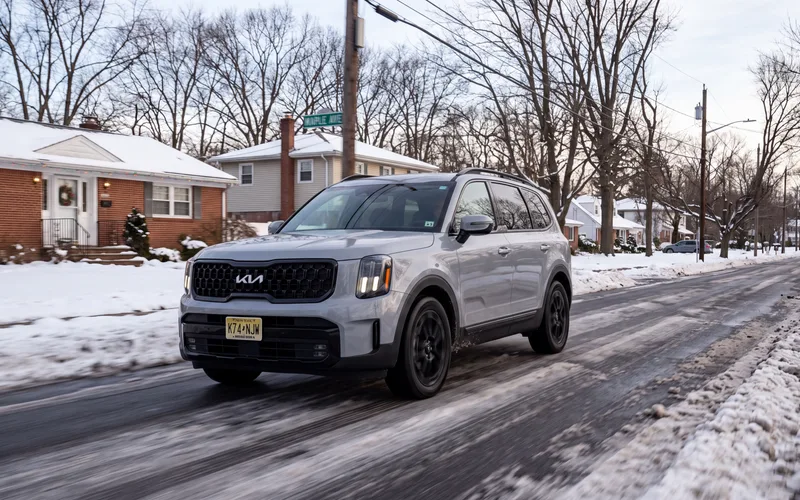 Kia TellurideMid-Size SUVBetter at: Warranty & value
The most direct cross-shop — comparable space and a nicer cabin for similar money, with double the bumper-to-bumper warranty and an IIHS award the Toyota does not have.
Compare 2.43C+
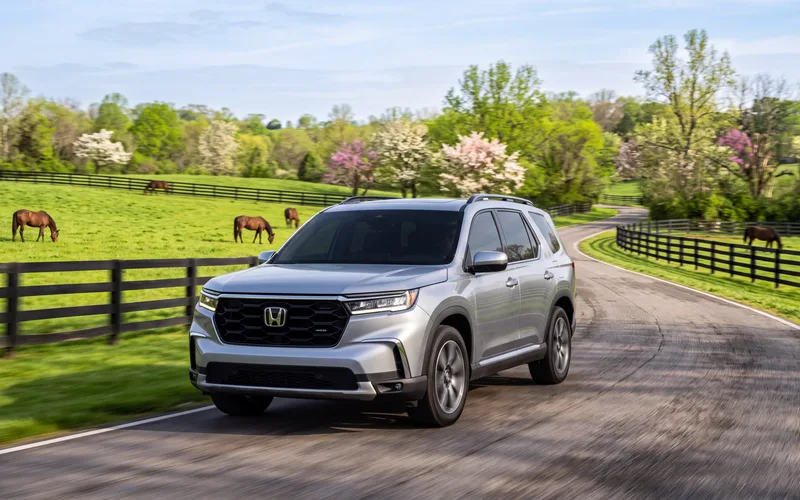 Honda PilotMid-Size SUVBetter at: Engine refinement
Offers a smoother, quicker 285-hp V6 and a third row nearly as good, for buyers who care more about how it drives than what it drinks.
Compare 3.02B
3.02B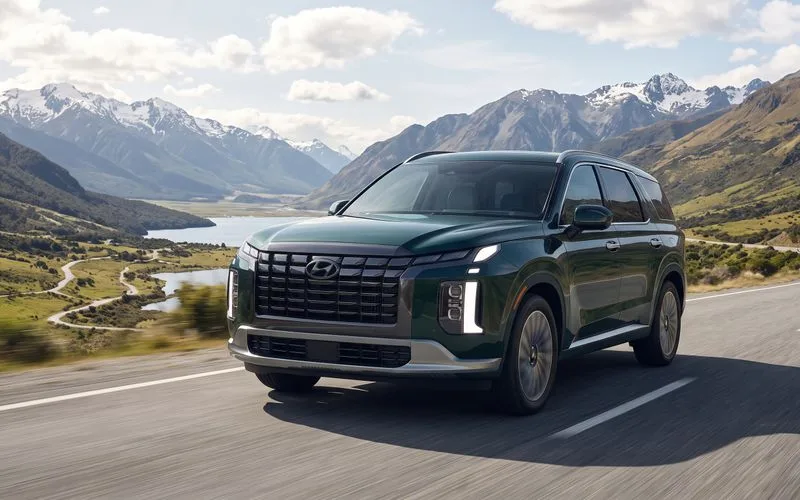 Hyundai PalisadeMid-Size SUVBetter at: Interior quality
Delivers a plusher, quieter interior with premium comfort features standard several trims earlier, plus Hyundai's long warranty.
CompareSubject scores by year
Hover or tap a score to see what moved it versus the year before. A corner mark flags a big swing.
| Year | Performance | Efficiency | Safety | Space | Cost | Reliability | Tech | Use-case | Driving | Value |
|---|---|---|---|---|---|---|---|---|---|---|
| 2026 | 51 | 95 | 81 | 80 | 62 | 76 | 70 | 74 | 62 | 77 |
| 2025 | 50 | 49 | 80 | 79 | 63 | 78 | 71 | 72 | 60 | 78 |
| 2024 | 50 | 49 | 80 | 79 | 63 | 71 | 70 | 71 | 63 | 76 |
Compare two years
Best fit & conditions
Higher scores mean a better fit for that use case. Learn more about use-case fit →
Subject profile
Trims & configurations
4 trimsScores above reflect the volume trim. Per-trim specs and scores are rolling out — the full lineup:
Detailed scoring by subject
1Performance & PowertrainOne of the Grand Highlander's weakest categories.1.33D
2024 is the Grand Highlander's second model year and its first full year in driveways — an all-new nameplate on the stretched GA-K platform introduced for 2023, so nothing is carried over from a predecessor. The volume XLE runs the T24A-FTS 2.4L turbo four at 265 hp, which is modest against an SUV band that reaches 550 hp; the 362 hp Hybrid MAX at the top of the range is a genuine class standout but is not the configuration most buyers take.
The turbo four's torque plateau opens at 1,700 rpm and holds to 3,600, which is what lets a four-cylinder pull a 5,000 lb trailer and a loaded three-row body without feeling strained. Mid-band for the segment. The 2.5L hybrid's 175 lb-ft engine figure is the weak point of the lineup, and the Hybrid MAX's 400 lb-ft the high point.
Seven and a half seconds is adequate rather than quick for a three-row mid-size, and it is the number that matters here because the 2.4L turbo is the volume powertrain and standard on the volume XLE grade. Toyota's own press material publishes all three figures, so the spread is manufacturer-stated rather than inferred: the economy hybrid is slightly slower at 7.8 s, while the Hybrid MAX is a different car against the stopwatch — Toyota claims 6.3 s and MotorWeek's instrumented run beat that at 5.6 s, among the quickest in the class.
Effective but not polished. The 2.4T builds boost early and pulls cleanly in ordinary driving, then turns raspy and coarse when worked hard — the secondary-imbalance roughness that comes with asking a large four to move a 4,500 lb three-row, and a recurring criticism at this price point. The Hybrid MAX is the refined member of the family, with strong low- and mid-range shove and an unusually pleasant exhaust note, which lifts the lineup average above the standard Highlander's.
Three different transmissions, all competent, none flawless. The Direct Shift-8AT behind the volume 2.4T is unobtrusive in normal driving but Consumer Reports found it slightly rough in the lower gears; the hybrid's ECVT is seamless in traffic and only objectionable at full throttle. The Hybrid MAX's 6-speed torque-converter automatic is the highlight — real step-off shift feel instead of CVT slur, and short enough gearing that six ratios never leave it flat. Held level with the 2025 car, which carries identical hardware, and a point above the standard Highlander for the Hybrid MAX 6AT's presence in the range.
Five thousand pounds is the mid-size three-row benchmark, matching Highlander, Pilot and Telluride — enough for a mid-size travel trailer or a boat, well short of a body-on-frame SUV. The catch is that buyers who choose the 2.5L hybrid for its economy give up 1,500 lbs of it, a trade the Hybrid MAX does not ask for.
All-wheel drive reaches every trim and every powertrain in the 2024 lineup — Dynamic Torque Control AWD optional on gas XLE/Limited and standard on Platinum, Electronic On-Demand AWD optional on Hybrid XLE and standard on Hybrid Limited, and full-time electronic AWD standard on both Hybrid MAX grades — with Multi-Terrain Select layered on the gas AWD models. Sophisticated for a unibody crossover, but no low range and no true torque vectoring keeps it out of the top band.
Pavement-oriented by design. Eight inches of ground clearance plus Multi-Terrain Select's Mud & Sand / Rock & Dirt modes will handle a gravel forest road or a snowed-in driveway, and the Hybrid Limited adds a Trail mode, but there is no dedicated off-road grade in the 2024 lineup, no locking differential, no low range and no underbody protection — the stretched GA-K unibody is a FWD-based car platform. Rated marginally above the standard Highlander for the terrain modes.
Three genuinely distinct powertrains — a 265 hp turbo gas four, a 245 hp economy hybrid, and the 362 hp Hybrid MAX performance hybrid — spanning value, efficiency and pace across seven configurations. That is broader than almost any mainstream three-row rival and clearly ahead of the standard Highlander's narrower menu. Two points below the 2025 car, which spreads the same three powertrains over more trim permutations once LE and Hybrid Nightshade arrive; no PHEV or EV variant keeps it off the top of the band.
2Efficiency & RangeThe Grand Highlander's lowest-graded category.1.28D
The representative configuration is the XLE with the 2.4L T24A-FTS turbo four and AWD, EPA-rated 23 MPG combined — thirsty even for a mid-size three-row, because the Grand Highlander is longer, taller and wider than the Highlander on the same GA-K platform. The 2.5L hybrid lifts that to 36 MPG combined, a 57% gain, but remains an extra-cost powertrain rather than the standard one.
City is where the turbo four is weakest — no electric assist to move roughly 4,500 lb off the line — and it gives up 16 MPG to the 2.5L hybrid in exactly the school-run and errand driving three-row families do most. Near the bottom of the SUV band.
The 8-speed automatic's tall top gears make the highway cycle the turbo four's best case, and it is the one cycle where the gas engine is genuinely competitive — 27 MPG against the hybrid's 32 AWD, and identical to the Hybrid MAX. Road-trip economy is respectable; the hybrid's advantage is overwhelmingly a city-cycle advantage.
EPA publishes 409 miles of total range for the AWD 2.4T on its 17.8-gallon tank — a normal travel day's driving and mid-pack for the segment, but the hybrid covers 619 miles on a smaller 17.2-gallon tank, a 210-mile difference that matters more on a three-row family road trip than almost any other spec here.
At EPA's standard 15,000 miles a year the turbo four burns about 652 gallons of regular, roughly $2,150 — ordinary for a three-row this size, but about $775 a year more than the same vehicle as a hybrid, which recovers the hybrid XLE's $1,600 price premium in barely two years.
Every powertrain — turbo gas, 2.5L hybrid and the 362 hp Hybrid MAX — runs on 87-octane regular with no premium recommendation, no diesel or E85 complication and no charging to arrange. The simplest and cheapest energy story available short of home charging.
3SafetyThe Grand Highlander's best-graded category.3.41B+
NHTSA never completed a full 2024 Grand Highlander program: frontal and side-barrier crash were not tested for either the FWD or AWD body style, so the 2024 model year carries no overall star rating of its own — only a 4-star rollover result and a 5-star side pole. The 5 stars recorded here is the same-generation figure, from NHTSA's later test of the structurally identical AWD car; the value is honest for the AS10 generation but was not published while the 2024 was on sale.
The Grand Highlander's launch year missed Top Safety Pick outright: the driver-side small overlap front came back Acceptable on both structure and restraints/dummy kinematics, with IIHS reporting the safety cage 'somewhat compromised' and the driver dummy's head rolling off the left edge of the front airbag toward the gap before the curtain. Everything else IIHS rated for 2024 is Good — passenger-side small overlap, moderate overlap and the updated side test — but the moderate overlap result is the ORIGINAL test, not the updated rear-passenger version, and there is no seat belt reminder rating for the year, so the 2024 sheet is both thinner and weaker than the same car's later record.
Raised from 85: Toyota's own 2024 press kit confirms every item on the core list — AEB, full-speed adaptive cruise, lane keeping/centering, blind spot monitor AND rear cross-traffic alert — is standard on all three 2024 grades rather than merely on most of them, and TSS 3.0 additionally bundles Proactive Driving Assist and an Emergency Driving Stop System that halts the car if the driver stops responding. Nothing safety-critical is trim-locked, which is the top band; the deduction is that rear automatic braking is optional and the parking-assist and camera upgrades climb with trim.
The standard TSS 3.0 pre-collision system earns Good — the top grade — in the IIHS pedestrian front crash prevention evaluation, and the underlying test log is flawless: collisions avoided in every day and night scenario, including the parallel-adult night runs at 25 and 37 mph on low beams, which is where weaker systems fail. The only reason this is not higher is that IIHS published no vehicle-to-vehicle front crash prevention rating for the 2024 model year, so half the AEB picture is untested rather than proven.
Blind Spot Monitor with Rear Cross-Traffic Alert is standard on every 2024 grade including the volume XLE, which beats much of the three-row segment at the entry price. Coverage stops at alerts, though: there is no rear cross-traffic braking and no safe-exit assist anywhere in the range, rear automatic braking is an option, and the parking assist with automatic braking that would compensate around a vehicle this long starts at Limited.
Lane Tracing Assist centering and Lane Departure Alert with Steering Assist are standard on every 2024 grade, backed by an Emergency Driving Stop System, and reviewers of the launch cars describe the whole assist package as working together unusually well with no ping-ponging noted. It is a confident highway system rather than a class-leading one — tight two-lane curves remain the limit for this generation of Toyota's centering.
Full-Speed Range Dynamic Radar Cruise Control is standard with four selectable following distances and works down to a stop and back, and TSS 3.0 layers on Proactive Driving Assist, which applies gentle braking and steering into curves and behind slower traffic even with cruise off. Reviewers found the speed and gap management smooth to the point of being unnoticeable — a well-integrated conventional highway assist, short only of the branded hands-on systems that hold a lane more assertively.
Traffic Jam Assist does permit genuine hands-off driving with the driver-monitor camera confirming eyes on the road, so this is not a zero — but it is capped below 25 mph, limited to mapped limited-access roadways, restricted to the single top grade, and gated behind an active Drive Connect subscription. Measured against Super Cruise or BlueCruise, which drive the whole highway, it is a stop-and-go convenience feature rather than a hands-free highway system.
Raised from 58: IIHS rates the LED projector headlights Acceptable across all trims, but the full measurement sheet shows the demerit is almost entirely GLARE, not reach — low-beam visibility was graded good on both sides of the straightaway and good in all four curve tests, with the Acceptable driven by low beams exceeding the glare threshold on the two right-hand curves. High beams are only fair on the straightaway and on the sharp curves and the lamps are not curve-adaptive, so this stays mid-band; standard high-beam assist recovers some of the left-curve shortfall.
The Grand Highlander's upright, boxier body gives it deeper side glass and large third-row windows, and the raised third-row cushion lets those passengers see over the middle row, so the natural sightlines are better than the regular Highlander's. Camera compensation for the extra length is the weak point on the volume car: the 360-degree Panoramic View Monitor is confined to Limited and Platinum for 2024 and the digital rearview mirror is Platinum-only, leaving an XLE with a plain backup camera and mirrors.
IIHS rates LATCH ease of use Good on the XLE, with three rear positions carrying complete hardware, and the second row is the strong part — lower anchors sit only 0-2 cm deep and attach at 8-11 lbs of force, well inside the easy band, and a no-cost eight-passenger bench is available on XLE and Limited if a family needs three-across. Two real annoyances keep it out of the top band: every top tether in the car sits in the middle seatback alongside hardware IIHS flags as confusable, and the third row's lower anchors are deeper and stiffer (one could not even be force-measured) with fixed head restraints fighting booster fit.
4Space & ComfortOne of the Grand Highlander's strongest categories.3.39B+
In this launch-generation 2024 configuration Toyota lists 7-passenger seating with second-row captain's chairs as standard on every grade, with the 60/40 split sliding/reclining second-row bench available as an option that takes it to eight. Maximum capacity of the volume XLE is therefore 8.
41.5 in of front headroom without the moonroof sits near the top of the mid-size SUV band — the Grand Highlander is taller than the standard Highlander and the first row shows it. Per the item's instruction the non-moonroof figure is used; the panoramic roof costs 1.5 in.
Front legroom of 41.7 in is the one interior dimension where the Grand Highlander is merely average — lower third of the SUV band, and actually a fraction behind the smaller Highlander's 42.0 in, because the stretched wheelbase was spent on rows two and three rather than the front seats.
Second-row headroom of 40.2 in tops out the SUV normalization band; the boxy roofline and near-flat second-row floor let adults sit upright in the middle row with room to spare.
Second-row legroom of 39.5 in is generous but deliberately short of the standard Highlander's 41.0 in — Toyota routed the extra wheelbase to the third row, which gains roughly 5.8 in over the regular Highlander. That trade is the entire point of the model and still leaves the middle row roomy for adults.
This is the best third row in the mainstream mid-size class and the reason the model was introduced for 2024: 33.5 in of legroom and 37.2 in of headroom, a bench mounted high enough off the floor to support thighs rather than fold occupants into a squat, with recline, sliding headrests, dedicated third-row vents, USB-C charging and cupholders back there. Six-foot adults genuinely fit, and 20.6 cu ft of cargo remains behind it so using all three rows doesn't mean leaving luggage home. It stops short of the top of the band because the row is comfortable for two rather than three — testers found three-across cramped — and access is via a tumbling second row rather than a minivan's sliding door.
With the third row folded the Grand Highlander opens up 57.9 cu ft — roughly ten cubic feet more than the standard Highlander and squarely in three-row-benchmark territory, though full-size body-on-frame SUVs still clear it comfortably.
97.5 cu ft with both rear rows down is near the ceiling of the SUV band and beats plenty of full-size three-rows; the 60/40 second-row bench and third row fold flat, so the volume is genuinely usable rather than a paper figure.
Storage was engineered as a selling point rather than an afterthought, and onboard AC power reaches further down the 2024 range than a spot check suggests: every grade above the volume XLE carries 120V outlets — gas Limited and Platinum get two auxiliary outlets, while Hybrid Limited and both Hybrid MAX grades get a 1500W-shared pair sited at the rear of the console and in the luggage area. Standard on all seven trims are 13 cup and bottle holders, seven USB-C ports, two 12V outlets, Qi wireless charging, a soft-touch roll-top center console with a removable utility tray and second-row retractable sunshades, with an underfloor bin behind the third row and fold-flat rear rows. Onboard power plus flat floors puts this just into the standout band; it doesn't go higher because the XLE most buyers take is the one grade without the AC outlets.
The 2024 range has no low-rent entry grade — the LE arrived only for 2025 — so the volume XLE already carries SofTex-trimmed front, second AND third-row seats, heated front seats, a 10-way power driver's seat with power lumbar and an 8-way power passenger seat as standard, with leather and ventilation from Limited up. Reviewers found the front chairs comfortable on long drives and the optional second-row captain's chairs nearly as good. It sits in the upper half rather than the top band because the third-row cushion, while mounted higher than the standard Highlander's, still forces a knees-up posture for taller passengers on long stints.
Launch-year testers consistently called the ride plush and composed — large and small imperfections smoothed over by a compliant suspension, with little of the porpoising typical of tall, heavy crossovers and no float at higher speeds. It lands mid-band rather than at the top because the damping struggles with high-frequency inputs on rutted pavement, letting impacts reach the cabin, and the 20-inch wheels on Platinum and Hybrid MAX firm things up further.
Acoustic noise-reducing glass is standard on the windshield and front side windows of all seven 2024 trims, and first-drive reviews described a level of refinement that would not feel out of place in an entry-level Lexus. It is held to the middle of the band by two things: reviewers rate road and ambient noise isolation only average — the larger wheels on upper trims making it worse — and the 2.4-liter turbo four sounds coarse under hard acceleration. A widely reported 2024-model-year owner complaint of a low-frequency cabin boom over bumps caps it further. Confidence is MEDIUM because the sources genuinely disagree on how quiet this cabin is.
Three-zone automatic climate control with a separate second-row control panel and both second- AND third-row vents is standard on every 2024 grade — the single most important comfort feature in a three-row and not something every rival makes standard. Because 2024 has no LE entry grade, the range floor is unusually rich: the volume XLE already includes heated front seats, wireless charging and second-row retractable sunshades; Limited adds a heated leather steering wheel, heated-and-ventilated front seats with driver memory and heated second-row outboard seats; Platinum adds heated-and-ventilated second-row outboard seats plus the power panoramic roof, with remote climate pre-conditioning via Remote Connect.
5Cost of OwnershipMid-pack among this car's ten categories.2.22C
2024 is the Grand Highlander's launch model year, and the range opens on the XLE — the cheaper LE grade does not arrive until 2025, so the 2024 price of admission is roughly $2,100 above what the same nameplate asks a year later. At $44,405 delivered this is a Premium-priced three-row that starts about $5,100 above the regular Highlander LE and well clear of the Palisade and Telluride entry points.
XLE is the volume grade in a three-grade launch-year lineup, and AWD — the common choice in a family three-row — adds $1,600, putting the representative 2024 car at about $46,000 delivered. Worse still for real-world cost: 2024 was the year Grand Highlanders routinely transacted above sticker, so the effective price many buyers paid was thousands higher than this figure.
Scheduled service on the turbocharged 2.4-liter four and 8-speed automatic is ordinary and Toyota's parts economics are good, but this is a heavy, higher-priced three-row on large tires at mid-size-SUV labor rates, and being the launch model year adds real shop time — a 145,000-vehicle curtain-airbag noncompliance recall plus first-year powertrain-hesitation, electrical and moonroof complaints put the 2024 slightly worse than the settled 2025/2026 cars. Sources diverge sharply because KBB/Edmunds price dealer-retail scheduled service while CarEdge and YourMechanic reflect what owners actually spend.
This is the Grand Highlander's decisive ownership-cost advantage and single-handedly lifts the category above the cheaper regular Highlander: it is projected to hold nearly 70% of value at five years, ~16 points better than the mid-size SUV average and the best residual of any three-row SUV. Unusually for a projection, the 2024 model year already has two years of real market evidence behind it — 2024 XLEs still retail within a few hundred dollars of their original delivered price — though the nameplate is too young for genuine five-year data.
Standard Toyota coverage and the industry floor — and a thinner cushion than usual on a first-model-year vehicle, since the 2024's launch-production teething shows up inside exactly this window. The Hyundai Palisade and Kia Telluride, the two rivals every Grand Highlander shopper also drives, both hand over 5 yr / 60,000 mi basic.
The gas XLE scored here gets the segment-minimum 5 yr / 60,000 mi — half the 10 yr / 100,000 mi Hyundai and Kia give three-row buyers, and a thin margin behind a turbocharged four asked to move a 4,700 lb three-row in its first year of production. Choosing the 2.5-liter hybrid or Hybrid MAX buys materially longer coverage on the electrified hardware, which does not apply to the representative gas trim.
ToyotaCare covers factory-scheduled service for 2 yr / 25,000 mi with 2 years of unlimited-mileage roadside assistance — real savings on the first several visits, but a short window with no extended connected-services package and no charging credit on a nameplate with no plug-in variant. Mid-band, identical to the rest of the Toyota range: better than the brands that include nothing, well short of the multi-year programs that earn 80+.
$46,005 volume-trim price minus its estimated resale value after 5 years (69.6% retained, or about $32,019) leaves about $13,986 in depreciation. Add the projected $6,500 in 5-year maintenance and repairs, and owning this vehicle for 5 years costs about $20,486 in total.
6Reliability & QualityGrades above the middle of the scale.2.81B-
The weakest year of the nameplate's predictions, because 2024 is the launch model year with no history behind it. Consumer Reports rates the 2024 Grand Highlander only "about average" versus other cars from the same model year — a full band below the "much more reliable than average" it later gave the 2025 car — and J.D. Power scores it 76/100, the middle of its "Average" range. The hybrid fares better than the gas car in CR's data, but 230 NHTSA complaints in year one is an order of magnitude above the 34 logged against 2025.
Toyota's own standing is the strongest thing this scorecard has going for it. In the J.D. Power 2024 VDS, Lexus ranked highest overall at 135 PP100 and Toyota was the top mass-market brand at 147 PP100 against a 190 PP100 industry average, with Toyota Motor Corporation taking nine model-level awards. Consumer Reports' 2024 brand report card put Toyota third behind Subaru and Lexus — top-five, but not first, which keeps this just under the ceiling.
The worst recall year of the generation and the reason this category lands below Toyota's norm. Four campaigns reach the 2024 model year, headlined by a 145,254-vehicle curtain-airbag recall that was an outright FMVSS 226 ejection-mitigation noncompliance — accompanied by a June 2024 stop-sale, and owners reported waiting months afterward because replacement airbag assemblies were unavailable. Two later software recalls (instrument-panel warning display, Panoramic View Monitor camera freeze) reach back into 2024 as well, and TSB activity is broad: hood flutter, transmission calibration, wind noise and moonroof rattle. Held out of the failing band because none of it is a fire or engine-failure defect, but this is elevated well past "typical."
Split reputation, tilted slightly worse than later years by first-year calibration trouble. The 2.5-liter A25A-FXS hybrid with eCVT (XLE and Limited) is the proven Highlander/Camry/RAV4 unit with a long high-mileage record. The 2.4-liter T24A-FTS turbo four in the gas models and Hybrid MAX had only been in service since 2021, pairs with an 8-speed automatic that drew transmission-calibration bulletins in its first year, and powertrain sits among the top three complaint categories for 2024 with owners reporting hesitation and clunking. Newer powertrain with real but non-systemic flags.
Toyota puts soft-touch or upholstered material on most of the surfaces occupants actually touch, but the painted plastics and faux wood draw specific criticism as not justifying the price — a real weak spot for a vehicle in the Premium class. The volume XLE uses SofTex rather than the genuine leather of Limited and Platinum, and reviewers repeatedly frame the cabin as functional Atlas-rival territory rather than the entry-luxury feel a Telluride, Palisade or CX-90 delivers at similar money.
The launch year shows it. Structural assembly at Toyota's Indiana plant is sound and reviewers found panel gaps tight, but 2024 generated a dense pattern of build and sealing defects: a hood that flutters and vibrates at highway speed serious enough to earn its own TSB, A-pillar and mirror wind noise, panoramic-moonroof rattle, owner reports of the moonroof glass shattering spontaneously with a gunshot-like bang, and infotainment screens going black. CarComplaints ranks body/paint among the model year's worst categories, and J.D. Power's 2024 IQS did not place Toyota among the leaders.
The footprint is a genuine strength — roughly 1,200 franchised Toyota dealers across all 50 states put a warranty repair within easy reach almost anywhere, and every 2024 Grand Highlander includes ToyotaCare scheduled maintenance for 2 years/25,000 miles with 2 years of roadside assistance. Marked down from the high-80s Toyota would otherwise earn because this specific model year's service experience was compromised: after the June 2024 stop-sale and airbag recall, owners reported months of waiting with no repair available.
Sharing the GA-K platform, the 2.5-liter hybrid system and the Indiana assembly line with the high-volume Highlander, Sienna and Lexus TX keeps most components in wide circulation and familiar to independent shops, and Toyota's measured service costs run below the mid-size SUV average. Held further below the top band than later years because year one is the thinnest possible aftermarket, RepairPal had too little data to rate the model, the turbo and Hybrid MAX hardware is dealer-oriented, and the recall parts backorder demonstrated that launch-year supply was not there.
7Technology & InfotainmentGrades above the middle of the scale.2.77B-
In its launch model year the Grand Highlander fits the same 12.3-inch Toyota Audio Multimedia touchscreen to every grade, including the base XLE — there is no small base head unit and no upgrade panel. That is the single sharpest tech separation from the regular 2024 Highlander, which still shipped an 8.0-inch screen on LE/XLE.
Toyota Audio Multimedia is one of the better mass-market systems and the Grand Highlander gets it in full 12.3-inch form on every grade, with a retained physical volume knob and real three-zone climate switchgear that reviewers credit for on-the-move usability. Held below the top band by a menu structure that takes acclimation, the loss of a physical Home button and split-screen view versus older Toyota systems, and launch-year software teething on an all-new nameplate.
Wireless Apple CarPlay and wireless Android Auto are standard on all seven 2024 configurations — no wired-only entry grade and no option-package gate — bundled with a Wi-Fi Connect hotspot and integrated Apple Music/Amazon Music streaming. This is the top of the band and the vehicle's clearest tech win against rivals that reserve wireless projection for upper trims.
Drive Connect is standard on every 2024 grade and bundles a genuine natural-language "Hey, Toyota" Intelligent Assistant, Cloud Navigation with Google POI data and live Destination Assist. The score is capped because all of it rides on a one-year trial that then converts to a paid subscription with no embedded offline maps to fall back on — most owners let it lapse and navigate through phone projection, which is exactly the 50-79 description.
The volume XLE and Hybrid XLE make do with a six-speaker system, and the 11-speaker JBL Premium Audio with subwoofer and amplifier is standard from Limited upward with no way to option it onto an XLE — so most buyers of the representative grade never get branded audio. The JBL itself rates as good rather than class-leading next to the Harman and Bose systems in Palisade and Telluride.
Split by trim in a way that penalizes the representative configuration: the XLE and Hybrid XLE get a combination meter with analog gauges and only a 7-inch color multi-information display, while the 12.3-inch digital meter with selectable gauge screens is standard from Limited up and unavailable below it. That is the textbook "full digital on upper trims only" case.
Toyota Audio Multimedia accepts over-the-air updates, but their scope is the multimedia head unit and map data rather than whole-vehicle software. Powertrain, ADAS and camera/parking ECU work on this generation — including the Grand Highlander's own recall remedies — is dealer-installed rather than pushed remotely, which places it in the lower half of the infotainment-only band.
The Toyota app covers the core set — lock/unlock, remote start/stop, last-parked location, vehicle status, guest-driver monitoring, plus smartwatch support — and Digital Key phone-as-key capability is standard on every grade, with Safety Connect and Service Connect carrying 10-year trials. What pulls it to mid-band is the subscription model: Remote Connect and the Digital Key it gates lapse after one year, and since MY2023 Toyota no longer sells Remote Connect standalone, so keeping app remote start means buying a bundle.
A genuine strength and much of the reason this vehicle exists: seven USB-C ports (six charging, one media) plus two 12V outlets and Qi wireless charging are standard on every grade including the base XLE, distributed so all three rows are served — the exact gap the same-year Highlander left open. Household AC power is available too, two 120V outlets on gas Limited/Platinum and a 1500W-shared pair on the hybrids, which pushes this near the ceiling; only the XLE's lack of an AC outlet keeps it off the top.
Smart Key proximity entry on all doors and the liftgate with push-button start is standard fleet-wide, a power liftgate with jam protection is standard on every grade (height-adjustable and foot-activated hands-free from Limited up), and Digital Key phone-as-key capability is listed as standard on all seven configurations — full keyless convenience with phone-as-key available, the bottom of the top band. Not higher because both Digital Key and app-based remote start revert to a paid Remote Connect plan after the one-year trial.
The weakest area for the representative grade: the XLE gets a washer-equipped backup camera and Blind Spot Monitor with Rear Cross-Traffic Alert but no parking sensors at all, since Front and Rear Parking Assist with Automatic Braking starts at Limited. The four-camera Panoramic View Monitor with 360-degree overhead and Curb View is optional on Limited and standard only on Platinum and Hybrid MAX Platinum, is not offered on XLE at any price, and the digital rearview mirror is likewise a Platinum-only item. No automated parking system is offered anywhere in the lineup.
A 10-inch color head-up display with Road Sign Assist and navigation exists and is well regarded, but it is standard on Platinum and Hybrid MAX Platinum only and cannot be optioned onto any lower grade — so no realistic volume-trim buyer can get one. That is squarely "HUD limited to top trims," toward the bottom of the band given how narrow the availability is.
8Use-Case FitGrades above the middle of the scale.2.84B-
The Grand Highlander exists specifically to fix the Highlander's family shortfall, and it does: wide rear door apertures with a molded step, standard second-row captain's chairs that slide and tilt for third-row access without uninstalling a seat, an optional 8-passenger sliding/reclining bench at the same trim levels, IIHS-Good child-seat anchors, and 20.6 cu ft behind the third row — a genuine stroller bay where the regular Highlander leaves 16.0. Standard second-row sunshades, three-zone climate, seven USB-C ports and 13 cup/bottle holders round out daily kid logistics.
Toyota Safety Sense 3.0 and Blind Spot Monitor with Rear Cross-Traffic Alert are standard on every 2024 grade including the entry XLE, so families do not pay up for the core suite, and IIHS rates the child-seat anchors and pedestrian front crash prevention Good. What holds it back is the 2024 model year's own record: IIHS gave the Grand Highlander no award because the driver-side small overlap front result was only Acceptable, headlights are Acceptable rather than Good, and NHTSA never completed an overall rating for 2024.
Among the best three-rows in the class for a fully loaded multi-hour drive: 33.5 in of third-row legroom and 37.2 in of headroom seat adults rather than tokens, three-zone automatic climate with both second- and third-row vents is standard on every trim, and — the part that actually matters on a family trip — 20.6 cu ft remains behind the third row with all eight aboard, more than a Pilot or Palisade leaves. Rear amenities stop short of a rear entertainment screen, and the cabin is quiet rather than Lexus-quiet.
Undemanding in traffic: a compliant, well-damped suspension, light electric steering, a commanding seating position with sightlines reviewers single out as good, a 12.3-in touchscreen standard on every grade, and TSS 3.0's full-speed radar cruise plus Proactive Driving Assist taking the edge off stop-and-go. The hybrid's eCVT is seamless at low speed; the 2.4L turbo that the volume gas trim uses is the sour note, described as gritty and unrefined under throttle.
The 2.5L hybrid is the cheapest way anyone commutes in a vehicle this size — 36 MPG combined FWD (34 AWD) for roughly $1,375 a year at 15,000 miles, and every powertrain in the range including the turbocharged Hybrid MAX runs on regular unleaded. The volume gas XLE is the drag: 23 MPG combined AWD works out near $2,150 a year, and insurance on this nameplate runs high at roughly $2,500 annually, so the cheap-per-mile case depends on buying the hybrid.
This is the price of the Grand Highlander's whole premise. At 201.4 in long and 78.3 in wide on a 116.1 in wheelbase it is longer than a Telluride, a Pilot or a Palisade and awkward in an older garage or a parallel space, and the volume XLE gets only a backup camera — the Panoramic View Monitor is optional on Limited and reserved for Platinum-grade equipment. A roughly 38.1 ft turning circle and genuinely good sightlines keep it manageable rather than unwieldy.
Light-to-moderate duty. The 2.4L turbo and Hybrid MAX both tow 5,000 lbs with a 500 lb tongue rating — the practical ceiling for a unibody three-row, and the Hybrid MAX's 362 hp / 400 lb-ft pulls that load with far more authority than a rival V6 — while 97.5 cu ft of flat cargo floor swallows building supplies. The catch is that the volume-selling 2.5L hybrid drops to 3,500 lbs and a 350 lb tongue, so the thrifty configuration is not the capable one, and there is no bed, no factory tow package and no payload headroom worth the name.
Toyota's brand-level dependability is the best in the mass market and the dealer/parts network behind it is unmatched, and SofTex upholstery on the volume XLE wipes clean after a muddy day. But 2024 is the nameplate's launch year with none of the long-run evidence that earns a fleet reputation: Consumer Reports calls it only about average for its model year, an airbag recall swept 145,254 units, a hood-flutter TSB is open, and the whole range is four-cylinder — a turbocharged T24A-FTS rather than the proven big-displacement six that work buyers trust.
Better provisioned than the regular Highlander but still a family SUV. Silver roof rails are standard on all seven configurations (not XLE-up as on the Highlander), and accessory cross bars, a tow hitch and an all-weather cargo liner cover the basics. The real differentiator is power: hybrid Limited and both Hybrid MAX grades carry two 120V outlets sharing 1500 watts, in the console and the cargo bay — enough to run a compressor or a chop saw at a jobsite. It is not standard on the volume XLE, though, and there is no bed, no upfit ecosystem and no washable-floor option.
A strong mile-eater. The hybrid covers roughly 619 miles between fills on regular unleaded and even the gas AWD manages 409, front seats are well-padded and broadly power-adjustable, the ride is compliant over broken highway, and TSS 3.0 supplies full-speed radar cruise with Lane Tracing Assist and Proactive Driving Assist to cut fatigue — Traffic Jam Assist on Platinum goes further. It falls short of its Lexus TX twin only on isolation: acoustic glass is standard but there is no active noise cancellation for 2024.
Comfortably beyond pavement-bound without pretending to be an off-roader. AWD is available across the range and standard on Platinum and both Hybrid MAX grades, Multi-Terrain Select adds Mud & Sand and Rock & Dirt modes on the upper trims (Trail Mode on the hybrid's E-Four), roof rails are standard on every configuration for boxes and bikes, and the hybrids' 1500W household outlets make it a credible basecamp. But ground clearance is a flat 8.0 in on all seven trims with no skid plates, no all-terrain tire option and no off-road grade, and the thrifty hybrid tows only 3,500 lbs.
Near the top of the mainstream three-row class for swallowing bulky gear: 97.5 cu ft with both rear rows folded beats a Pilot, Telluride or Palisade, 57.9 cu ft behind the second row handles a full family's luggage, and — the figure that separates it from the regular Highlander — 20.6 cu ft survives with all three rows in use. The 60/40 third row folds flat with sliding headrests, the second row folds and slides, roof rails are standard on every trim, and cross bars, a hitch and an all-weather liner are a dealer order away. No power-folding third row is offered for 2024.
9Driving ExperienceOne of the Grand Highlander's weakest categories.2.22C
Secure and unintimidating, but the least willing of the Toyota three-rows to be hurried. 2024 is the Grand Highlander's second model year on the stretched GA-K platform with MacPherson struts front and a multi-link rear — competent hardware tuned firmly for comfort. It tracks straight and never feels unwieldy for something 201.4 in long, yet Consumer Reports found it turns ungainly the moment the pace rises, with body roll arriving earlier than in the smaller Highlander, and MotorWeek measured that roll plus clear understeer in the 4,900 lb Hybrid MAX Platinum. Scored a notch below the regular Highlander (66) because the extra length and mass cost it agility, and well below the class benchmark CX-90 (74.5).
Better judged than the average Toyota rack, though still short of genuine feedback. Reviewers split in a telling way: MotorWeek reads the light effort and soft responses as evidence the tuning targets highway calm, while J.D. Power credits Toyota with weighting the electric assist so it is "neither too heavy nor too light" and Consumer Reports goes as far as "natural steering feel." Accurate, consistent and easy to place, with no meaningful road texture coming back through the wheel — mid-band, but a few points clear of the numb regular Highlander (57) on the strength of two sources volunteering praise rather than tolerance.
The standout dynamic strength. MotorWeek's instrumented average of 115 ft from 60 mph is a genuinely short stop for a 4,900 lb three-row — the segment norm sits in the mid-120s to mid-130s — and it came with straight, consistent, fade-free repeat runs rather than a single lucky figure. Pedal feel is firm and progressive, and the hybrid grades blend regen into friction braking without the soft dead travel that afflicts many two-mode systems. Only noticeable nose dive under hard application keeps it out of the top band.
Strong response, imperfect polish. The volume XLE's T24A-FTS 2.4T has its full 310 lb-ft available from 1,700 rpm, so tip-in is prompt and there is no turbo-lag hole in ordinary driving, but the Direct Shift-8AT shifts slightly roughly in the lower gears and the engine feels strained when extended. The 2.5L hybrid's ECVT is the smoothest in traffic, with imperceptible engine start/stop, and the Hybrid MAX's 6-speed torque-converter automatic gives real shift definition instead of CVT slur. Averaged over the volume gas configuration this is mid-band, consistent with the 60 awarded for powertrain refinement in cat1.
The weakest link in the driving experience, and the one criticism that recurs across every source. Cabin isolation is acceptable at a cruise and there is no objectionable vibration through the wheel or pedals, but the 2.4L four sounds coarse and gritty under load — the secondary-imbalance harshness that follows this engine across Toyota's range — and Consumer Reports pairs it with highway wind noise as the pair of faults undercutting refinement. The Hybrid MAX's dual exhaust is the one pleasant voice in the lineup. Rated marginally above the regular Highlander (55) for the larger body's extra sound deadening.
Toyota's own 2024 spec table prints one figure, 19.03 ft, in a row labeled "Turning circle diameter (curb-to-curb)," and that label is wrong — 19 ft is narrower than the vehicle is long (201.4 in / 16.8 ft), so it is the radius. The same-year Highlander brochure settles it by printing both rows: radius 18.7 ft and diameter 37.4 ft, exactly 2×. Doubling gives the Grand Highlander a true diameter of 38.1 ft, which is coherent with its 116.1-in wheelbase sitting between the Highlander's 112.2 in (37.4 ft) and the Sienna's 120.5 in (38.3 ft). Mid-band for the SUV range of 34–42 ft — unchanged across all seven configurations, so the 20-inch wheel packages cost nothing here. Confidence is MEDIUM rather than HIGH because the figure is derived from a mislabeled manufacturer row rather than read directly; the aggregator sites that publish "19.0 ft" are propagating Toyota's error verbatim.
A real strength and the clearest evidence that this platform was designed around the driver's working day. The commanding seating position pairs with thin front pillars for genuinely good sightlines — rare in a three-row this large — and Toyota kept hard controls for the functions that matter, with knobs for volume, climate and drive mode that need no glance to operate alongside the 12.3-inch screen. The available digital rearview mirror preserves the view aft with the cargo hold packed to the ceiling. Held below the top band by two specific gaps owners raise: limited steering-wheel telescoping and thin thigh support for tall drivers, and a driver's seat on lower grades whose manual adjustment is fore/aft only.
Engineered for the school run, not the long way home. The chassis has no appetite for pace, the steering returns nothing to enjoy, and the volume 2.4T's soundtrack is a reason to shift early rather than late — J.D. Power's nomination of it as "the most engaging" of the three engines is faint praise within a family of appliances. The Hybrid MAX is the one configuration with any character, mixing a 5.6-second run to 60 mph with an actual exhaust note, but it is a low-volume top-trim choice and cannot lift the nameplate far. Pleasant and forgettable, which is the definition of the lower-middle band and where most mainstream three-rows sit.
10Value & Market PositionOne of the Grand Highlander's strongest categories.3.13B
For 2024 the ladder still starts at XLE — there is no LE below it until 2025 — so the entry point is $43,070, but what it includes is genuinely full: a 12.3-inch touchscreen with wireless Apple CarPlay/Android Auto, Toyota Safety Sense 3.0 with the new Proactive Driving Assist, power liftgate, tri-zone climate, wireless charger and USB ports in all three rows. Content-for-content that beats the regular Highlander LE's 8-inch screen comfortably, but Telluride and Palisade open several thousand dollars lower with comparable kit, so this is generous rather than class-leading.
The underlying product case is excellent — an adult-usable third row and cargo hold rivals only claim, three powertrains including a 34-mpg-combined hybrid, and value retention in the top 10% of all 2024 SUVs — but 2024 is the year buyers paid the most for it. With XLE as the floor at $43,070 and widespread dealer market adjustments on top, the effective transaction price sat above the Telluride/Palisade entry while the content advantage did not.
Broad for the class even before the 2025 additions: four grades (XLE, Limited, Platinum and the new-for-2024 Nightshade) crossed with three distinct powertrains — 2.4L turbo gas, 2.5L hybrid and the 362-hp Hybrid MAX — and FWD or AWD, producing seven distinct gas/hybrid configurations from $43K to $58K. Marked below the 2025/2026 car only because the sub-$41K LE entry that fills out the bottom of the range does not exist yet.
A clear riser in its first full calendar year: 71,721 US units in 2024, up 48.3% on the partial 2023 launch year, enough to rank solidly mid-pack-to-upper in the three-row segment while it was still supply-constrained. Not yet the volume leader it becomes in 2025 — Explorer, Palisade and Telluride all outsold it in 2024 — but the trajectory was unambiguous, and it was already cannibalising the regular Highlander.
Among the strongest mainstream brand halos in the US market, and for a family three-row shopper the Toyota reliability-and-resale reputation is itself a reason to buy. It is backed by measurable value retention on this specific model rather than sentiment alone. Trusted rather than aspirational, so it stops short of the top band reserved for genuinely coveted badges.
Scored on buyer benefit, and 2024 is the model's worst year for it — this was peak markup era. Demand outran supply through most of the model year, so many buyers paid MSRP plus mandatory add-ons and some paid well over; the only reliable money on the hood was the flat $500 military and $500 college-grad rebates against unsubvented APRs near 6–7%. Not a zero because discipline was returning late in the year, with a few buyers reporting 3.5–4% off sticker.
About as fresh as a vehicle gets. The Grand Highlander is a first-generation nameplate revealed in February 2023, so 2024 is its second model year, on the current GA-K platform with current multimedia and the newest driver-assist suite — and 2024 is itself a content-expansion year with the Nightshade grade added. Zero redesign risk for a 2024 buyer; the generation runs unchanged through at least 2026.
Strongly received in its first full year — Car and Driver scored it 9.5/10 and Edmunds rated it 8.2/10 gas and 8.4/10 hybrid, with reviewers converging on the third row and cargo hold as class-of-one. Held out of the top band by two concrete results: it finished third in the Cars.com 3-Row SUV Challenge, 18 points behind the winning Palisade, and it failed to earn any IIHS award for 2024 after an Acceptable driver-side small overlap result.