

The verdict
A capable mid-size suv, strong on safety and held back by efficiency.
Overall 2.87 (B-) across 10 graded subjects. Its strongest is safety at 3.47 (B+), its weakest efficiency & range at 1.28 (D). 8 of 10 subjects grade at C− or better.
Jump to scoresStrengths
- Safety
- Space & Comfort
- Value & Market Position
What holds it back
- Efficiency & Range
- Performance & Powertrain
- Driving Experience
Top alternatives
Cars shoppers cross-shop with the Toyota Grand Highlander 2.79B-
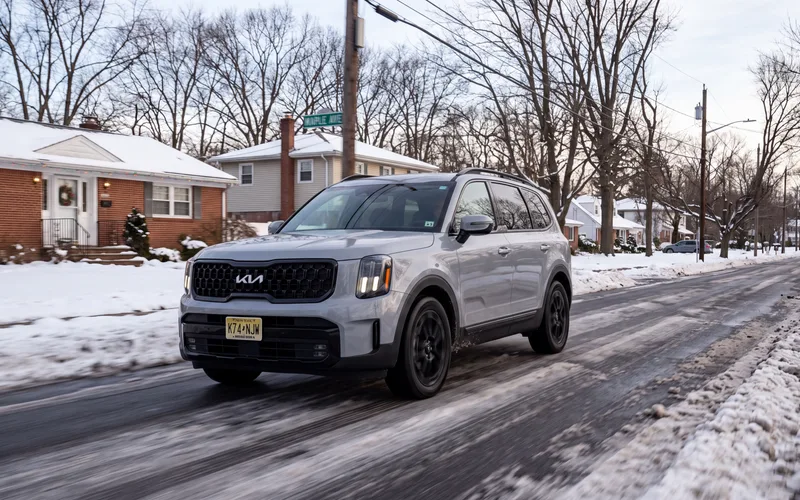 Kia TellurideMid-Size SUVBetter at: Warranty & value
The most direct cross-shop — comparable space and a nicer cabin for similar money, with double the bumper-to-bumper warranty and an IIHS award the Toyota does not have.
Compare 2.43C+
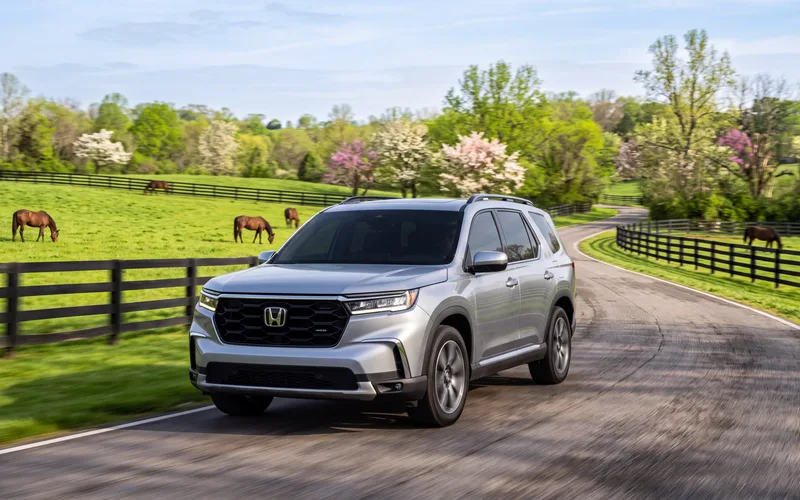 Honda PilotMid-Size SUVBetter at: Engine refinement
Offers a smoother, quicker 285-hp V6 and a third row nearly as good, for buyers who care more about how it drives than what it drinks.
Compare 3.02B
3.02B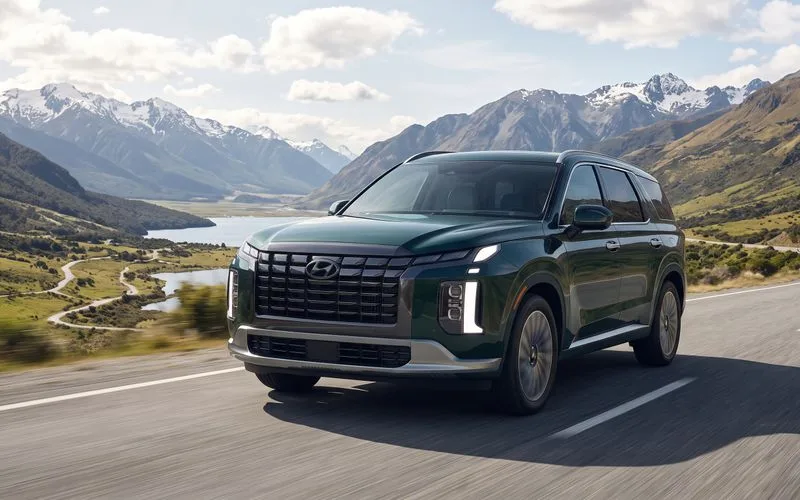 Hyundai PalisadeMid-Size SUVBetter at: Interior quality
Delivers a plusher, quieter interior with premium comfort features standard several trims earlier, plus Hyundai's long warranty.
CompareSubject scores by year
Hover or tap a score to see what moved it versus the year before. A corner mark flags a big swing.
| Year | Performance | Efficiency | Safety | Space | Cost | Reliability | Tech | Use-case | Driving | Value |
|---|---|---|---|---|---|---|---|---|---|---|
| 2026 | 51 | 95 | 81 | 80 | 62 | 76 | 70 | 74 | 62 | 77 |
| 2025 | 50 | 49 | 80 | 79 | 63 | 78 | 71 | 72 | 60 | 78 |
| 2024 | 50 | 49 | 80 | 79 | 63 | 71 | 70 | 71 | 63 | 76 |
Compare two years
Best fit & conditions
Higher scores mean a better fit for that use case. Learn more about use-case fit →
Subject profile
Trims & configurations
4 trimsScores above reflect the volume trim. Per-trim specs and scores are rolling out — the full lineup:
Detailed scoring by subject
1Performance & PowertrainOne of the Grand Highlander's weakest categories.1.33D
The 2025 Grand Highlander is a change year only in trim structure — LE and Hybrid Nightshade were added — while the three powertrains carry over. The volume XLE's standard T24A-FTS 2.4L turbo four makes 265 hp; the range tops out at 362 hp with Hybrid MAX. Modest peak output for the volume trim against an SUV band that runs to 550 hp, though the Hybrid MAX option is genuinely strong for the class.
The turbo four's 310 lb-ft plateau starts at 1,700 rpm, which is what makes a 5,000 lb tow rating and a loaded three-row body workable behind a four-cylinder. Mid-band for the segment; the Hybrid MAX's 400 lb-ft is a class standout but is not the volume configuration.
Toyota's own figure for the volume 2.4L turbo is 7.5 seconds, and Car and Driver's instrumented run of an XLE 2.4T AWD came in quicker at 7.0 s. Adequate rather than quick for a three-row mid-size, but the Hybrid MAX's 6.3 s manufacturer claim (5.6–5.9 s as tested) is among the fastest in the class.
Competent but not polished. The 2.4T pulls hard on early boost yet turns buzzy and coarse when worked, a secondary-imbalance roughness inherent to a large four asked to move a 4,500 lb three-row; the 2.5L hybrid is smoother around town but drones under sustained load. The Hybrid MAX is the refined option in the lineup and lifts the score marginally above the standard Highlander's.
The 8-speed automatic behind the 2.4T is unobtrusive in normal driving with occasional hesitation before a quick downshift, and the hybrid's eCVT is seamless in traffic and only objectionable at full throttle. The Hybrid MAX's 6-speed direct-shift automatic is the highlight — it gives that variant real step-off shift feel instead of CVT slur.
Five thousand pounds is the mid-size three-row benchmark and matches Highlander, Pilot and Telluride — enough for a mid-size travel trailer or a two-boat setup, short of what a body-on-frame SUV manages. Buyers who choose the fuel-economy hybrid give up 1,500 lbs of it.
AWD reaches every trim and every powertrain — optional on gas LE/XLE/Limited, standard on the hybrid LE, standard on Platinum, and standard full-time on Hybrid MAX — with Multi-Terrain Select adding snow/mud/sand modes on gas AWD and Hybrid MAX. Sophisticated for a unibody crossover system, but there is no low range or true torque vectoring, which keeps it out of the top band.
Pavement-oriented by design. Eight inches of ground clearance and Multi-Terrain Select cover a gravel forest road or a snowy driveway, but there is no dedicated off-road grade, no locking differential, no low range and no underbody protection — the GA-K unibody platform is shared with the FWD-based Highlander. Rated marginally above the standard Highlander for the added clearance and terrain modes.
Three genuinely distinct powertrains — a 265 hp turbo gas four, a 245 hp economy hybrid rated 36 MPG combined, and the 362 hp Hybrid MAX performance hybrid — spanning value, efficiency and pace across roughly 13 trim-and-drivetrain permutations. That is broader than almost any mainstream three-row rival, and clearly ahead of the standard Highlander's two-powertrain menu. No PHEV or EV variant keeps it below the top of the band.
2Efficiency & RangeThe Grand Highlander's lowest-graded category.1.28D
The representative configuration used across this scorecard is the XLE with the 2.4L T24A-FTS turbo four and AWD, EPA-rated 23 MPG combined — thirsty even for a mid-size three-row because the Grand Highlander is longer, taller and wider than the Highlander on the same GA-K platform. The 2.5L hybrid transforms the figure to 36 MPG combined, a 57% gain, but it remains an extra-cost powertrain rather than the standard one.
City is where the turbo four is weakest — no electric assist to move roughly 4,500 lb off the line — and it gives up 15 MPG to the 2.5L hybrid in exactly the school-run and errand driving three-row families do most. Near the bottom of the SUV band.
The 8-speed automatic's tall top gears make the highway cycle the turbo four's best case, and it is the one cycle where the gas engine is genuinely competitive — 27 MPG against the hybrid's 32 AWD, and identical to the Hybrid MAX. Road-trip economy is respectable; the hybrid's advantage is overwhelmingly a city-cycle advantage.
EPA publishes 409 miles of total range for the AWD 2.4T on its 17.8-gallon tank — a normal travel day's driving and mid-pack for the segment, but the hybrid covers 619 miles on the same fill, a 210-mile difference that matters more on a three-row family road trip than almost any other spec here.
At EPA's standard 15,000 miles a year the turbo four burns about 652 gallons of regular, roughly $2,150 — ordinary for a three-row this size, but about $775 a year more than the same vehicle as a hybrid, which recovers the hybrid's price premium well inside a typical ownership period.
Every powertrain — turbo gas, 2.5L hybrid and the 362 hp Hybrid MAX — runs on 87-octane regular with no premium recommendation, no diesel or E85 complication and no charging to arrange. The simplest and cheapest energy story available short of home charging.
3SafetyThe Grand Highlander's best-graded category.3.47B+
NHTSA gives the 2025 Grand Highlander a 5-star overall rating on the AWD body style tested, carried by a clean 5-star side sweep (5 barrier front and rear, 5 side pole) that offsets a 4-star frontal result. The FWD variant carries no rating, so the overall figure describes the AWD configuration this scorecard scores.
The Grand Highlander earns Good in the two hardest current tests — the updated moderate overlap front (which loads a rear-seat dummy) and the updated side impact — but an Acceptable driver-side small overlap keeps it off the Top Safety Pick list for a second straight cycle, because the structure around the passenger compartment let in too much intrusion even though dummy injury measures were fine. One structural shortfall in an otherwise Good crashworthiness sheet places it in the upper half of the no-award band rather than the award band.
Toyota Safety Sense 3.0 is standard on every 2025 grade including the new entry LE, and it is a full suite rather than a token one: pre-collision with pedestrian, cyclist and motorcycle detection, full-speed-range adaptive cruise, Lane Departure Alert with steering assist, Lane Tracing Assist centering, Road Sign Assist and Proactive Driving Assist. Blind Spot Monitor with Rear Cross-Traffic Alert is also standard from the LE up, so nothing on the core list is trim-locked — the only reason it is not higher is that the parking-camera and cross-traffic *braking* upgrades still climb with trim.
IIHS rates the system Good — the top grade — in both the vehicle-to-vehicle and the pedestrian front crash prevention evaluations, with collisions avoided in the night pedestrian scenarios that separate good AEB from adequate AEB. This is the strongest part of the Grand Highlander's safety case and it is standard equipment, not an option.
Blind Spot Monitor and Rear Cross-Traffic Alert are standard on every trim including the LE, which is better than most of the segment does at the entry price. Coverage stays alert-only, though — there is no cross-traffic braking intervention or safe-exit assist, and the Panoramic View Monitor and digital rearview mirror that would compensate around a vehicle this long are reserved for upper grades.
Lane Tracing Assist centering plus Lane Departure Alert with steering assist are standard, and reviewers describe highway behavior as steady and predictable with no ping-ponging. The limit is sharp curves on two-lane roads, where the system loses confidence — good enough for the commute and the road trip, short of the class best.
Full-Speed Range Dynamic Radar Cruise Control is standard and works to a stop and back, and TSS 3.0 adds Proactive Driving Assist, which applies gentle braking and steering into curves and behind traffic without the cruise engaged. Reviewers call the speed adjustment smooth and undramatic; it is a well-integrated conventional highway assist rather than a distinctive one.
Traffic Jam Assist does allow genuine hands-off operation with driver-monitor supervision, so this is not a zero — but it is capped at 25 mph, works only on mapped limited-access freeways, and is confined to the Platinum and Hybrid MAX Platinum grades. Against Super Cruise or BlueCruise, which drive the whole highway, it is a stop-and-go convenience rather than a hands-free highway system.
IIHS rates the LED projector headlights Acceptable, and that rating applies to every trim — there is no Good-rated setup anywhere in the lineup to step up to. High-beam assist is standard, which helps in practice, but a range-wide Acceptable is a real gap for a vehicle sold on family safety and is one of two things holding the category down.
The Grand Highlander's upright, boxier greenhouse gives it deeper side glass and a more usable third-row window than the regular Highlander, and the high seating position and squared rear end make it easy to place. Camera compensation for the extra length is the catch: the Panoramic View Monitor and digital rearview mirror that clear the rear blind zone are upper-trim items, so a volume XLE relies on a standard backup camera and mirrors.
IIHS rates LATCH ease of use Good, with three rear positions carrying complete hardware, and Cars.com graded the second row an A — lower anchors exposed rather than buried in the seat bight, and a rear-facing convertible fitting with no cost to front passenger legroom. The one limit is configuration rather than design: second-row captain's chairs mean no 3-across in the second row, though the new 2025 LE's eight-passenger bench restores that option.
4Space & ComfortOne of the Grand Highlander's strongest categories.3.34B+
The Grand Highlander is a three-row SUV that seats eight with the 60/40 split second-row bench and seven when the captain's chairs are fitted; the new-for-2025 LE grade makes the eight-passenger bench standard equipment, and the volume XLE offers both layouts.
Front headroom of 41.5 in without the moonroof sits near the top of the mid-size SUV band — the Grand Highlander is taller than the standard Highlander and it shows in the first row. Per the item's instruction the non-moonroof figure is used; the panoramic roof on Platinum costs 1.5 in.
Front legroom of 41.7 in is the one interior dimension where the Grand Highlander is merely average — it lands in the lower third of the SUV band and is actually a fraction behind the smaller Highlander's 42.0 in, because the stretched wheelbase was spent on rows two and three rather than the front seats.
Second-row headroom of 40.2 in tops out the SUV normalization band; the boxy roofline and near-flat second-row floor mean adults sit upright in the middle row with room to spare.
Second-row legroom of 39.5 in is generous but deliberately short of the standard Highlander's 41.0 in — Toyota gave the extra wheelbase to the third row, which gains 5.5 in over the regular Highlander. That trade is the whole point of the model and it still leaves the middle row roomy for adults.
This is the best third row in the mainstream mid-size class and the reason the model exists: 33.5 in of legroom and 37.2 in of headroom, a bench mounted high enough off the floor to support thighs rather than fold occupants into a squat, plus dedicated air vents, a USB-C port, two cupholders and a device cubby back there. Adults genuinely fit — a 6-ft-4-in reviewer reported being comfortable — and 20.6 cu ft of cargo remains behind it, so using all three rows doesn't mean leaving luggage home. It falls short of a perfect score only because the cushion still sits low enough that very tall passengers ride knees-up on multi-hour stints, and access is via a tumbling second row rather than a minivan's sliding door.
With the third row folded the Grand Highlander opens up 57.9 cu ft — roughly ten cubic feet more than the standard Highlander and enough to put it in three-row-benchmark territory, though full-size body-on-frame SUVs still clear it comfortably.
97.5 cu ft with both rear rows down is near the ceiling of the SUV band and beats plenty of full-size three-rows — Toyota markets it as fitting seven carry-on suitcases even with the third row up, and the fold-flat floor makes the volume genuinely usable.
Storage is a deliberate selling point rather than an afterthought: 13 cup and bottle holders, seven USB-C charge ports spread across all three rows, a deep center console with a shelved pass-through, an underfloor bin behind the third row, second-row sunshades and a wireless charger from the XLE up. It stops short of the 80+ band because none of it is a genuine innovation — there is no onboard AC power, no in-floor stowing seat and no signature party trick, just an unusually thorough execution of the ordinary things.
Front seats draw consistent praise on long drives and the volume XLE gets a 10-way power driver's seat, 8-way power passenger seat and heated SofTex front chairs as standard, with the second-row captain's chairs described as nearly as good. It sits in the upper half rather than the top band because the third-row cushion is mounted low enough to force a knees-up posture on long stints, and the base LE drops to a 4-way manual passenger seat.
Composed and plush at cruising speed — owners repeatedly call the ride smooth for something this large — but the damping is the weakest part of the comfort case. Edmunds' road-trip evaluation found the suspension unable to keep up with high-frequency inputs on rutted pavement, letting impacts and interior panel rattles reach the cabin, and the Hybrid MAX's 20-inch wheels firm things up further. That is a mid-band result: better than harsh, short of the segment leaders.
Acoustic front glass and thorough sound deadening keep wind and powertrain noise well suppressed at highway speed — cruising refinement is a clear step up from the standard Highlander. Road and ambient noise isolation is only average, though, and a recurring owner complaint describes a low-frequency booming resonance at low speeds, which caps this below the platform-twin Lexus TX's more thoroughly isolated cabin.
Three-zone automatic climate control with second- AND third-row vents is standard on every grade including the new LE — the single most important comfort feature in a three-row, and not something every rival makes standard. Heated front seats and a wireless charger arrive at the volume XLE, a heated steering wheel plus heated-and-ventilated front seats and heated second-row seats at Limited, and ventilated second-row seats at Platinum, with remote climate pre-conditioning through the Toyota app. Rich availability across the range lands it at the bottom of the top band.
5Cost of OwnershipMid-pack among this car's ten categories.2.22C
The new-for-2025 LE grade is the change that matters most to this line: it slots below the XLE that previously opened the range and cuts the Grand Highlander's entry sticker by roughly $2,500. At $42,310 delivered it is still a Premium-priced three-row, about $1,300 above the regular Highlander LE and well clear of the Palisade/Telluride entry points.
XLE is the volume grade — it adds SofTex upholstery and heated front seats over the LE for a modest walk-up — and AWD, a common choice in a three-row family SUV, adds $1,600, putting the representative car in the mid-$46,000s delivered. That is a lot of money for a mainstream badge, and the hybrid grades most buyers gravitate toward push past $48,000.
The turbocharged 2.4-liter four and 8-speed automatic need ordinary service and Toyota's defect record keeps the repair line small inside the warranty years, but this is a longer, heavier, higher-priced three-row serviced at mid-size-SUV labor rates, so the ledger lands a shade worse than the regular Highlander and just past mid-band. Sources diverge sharply because Edmunds prices dealer-retail scheduled service while CarEdge/YourMechanic reflect what owners actually spend.
This is the Grand Highlander's decisive ownership-cost advantage and the reason it out-scores the cheaper regular Highlander here: it is projected to hold nearly 70% of its value at five years, about 16 points better than the mid-size SUV average and the strongest residual of any three-row SUV. Demand has outrun supply since launch — the nameplate sold at or above sticker for its first two years — so the projection rests on real market behavior, but the model only launched in 2023 and no actual five-year data exists yet.
Standard Toyota coverage and the industry floor — the Hyundai Palisade and Kia Telluride, the two rivals every Grand Highlander shopper also drives, both hand over 5 yr / 60,000 mi basic.
The gas XLE scored here gets the segment-minimum 5 yr / 60,000 mi — half the 10 yr / 100,000 mi Hyundai and Kia give three-row buyers, and a thin margin behind a turbocharged four that is asked to move 4,700 lb. Choosing the 2.5-liter hybrid or Hybrid MAX buys materially longer coverage on the electrified hardware, which does not apply to the representative gas trim.
ToyotaCare covers factory-scheduled service for 2 yr / 25,000 mi with 2 years of unlimited-mileage roadside assistance — real savings on the first several visits, but a short window with no extended connected-services package and no charging credit on a nameplate with no plug-in variant. Mid-band, same as the rest of the Toyota range: better than the brands that include nothing, well short of the multi-year programs that earn 80+.
$46,680 volume-trim price minus its estimated resale value after 5 years (69.6% retained, or about $32,489) leaves about $14,191 in depreciation. Add the projected $6,300 in 5-year maintenance and repairs, and owning this vehicle for 5 years costs about $20,491 in total.
6Reliability & QualityGrades above the middle of the scale.3.30B+
Consumer Reports rates the 2025 Grand Highlander in its top band — "much more reliable than other cars from the same model year" — a step up from the plain "more reliable than average" it gives the 2026 car, and U.S. News lists predicted reliability of 82/100 ("Great" on the J.D. Power scale). Held out of the 90s because J.D. Power's own quality-and-reliability score for the 2025 Grand Highlander is 76/100, only "Average," and the nameplate is just in its second full model year with limited owner history.
Toyota is the mass-market dependability benchmark — first in Consumer Reports' 2025 brand reliability rankings ahead of Subaru and Lexus, and comfortably better than the industry average in J.D. Power's three-year dependability study. Short of the ceiling only because J.D. Power places Toyota outside the top five on VDS even as Toyota Motor Corporation takes the most model-level awards.
A cleaner recall year than the 2024 launch: all three 2025 campaigns are software or labeling actions — instrument-panel startup display, Panoramic View Monitor rearview camera freeze, and an inaccurate load-carrying-capacity label — with none of the hardware safety defects that hit 2024 (the 145,254-vehicle curtain-airbag campaign does not reach the 2025 model year). Kept in the middle of the band by broad, if minor, TSB and complaint activity carried over from the generation: highway wind noise, panoramic-moonroof rattle, and transmission shudder/shift-quality bulletins including TSB 0028-25.
Split reputation across the lineup. The 2.5-liter A25A-FXS hybrid with eCVT — the Highlander/Camry/RAV4 unit, and the powertrain of the new-for-2025 LE and Hybrid Nightshade trims — is among the most proven high-mileage designs on sale. The 2.4-liter T24A-FTS turbo four used in the gas models and Hybrid MAX has only been in service since 2021 and pairs with an 8-speed automatic carrying documented shudder and shift-quality bulletins plus owner reports of RPM surging and hesitant acceleration on 2025 cars. Newer powertrain with real but non-systemic flags.
Toyota puts soft-touch material where hands land on the dash, door tops and armrest, but hard and glossy plastics dominate elsewhere and the faux-wood trim draws specific criticism — a weak spot on a vehicle in the Premium price class. The new-for-2025 LE trim, with cloth seats and unlined bins, sits at the bottom of that range; Limited and Platinum leather narrows the gap without closing it against a Palisade or Telluride at comparable money.
Structural assembly is good — a second full year of production at Toyota's Indiana plant, alongside Highlander, Sienna and Lexus TX, yields tight panel gaps and a solid-feeling cabin per reviewers. What holds it back is a recognizable sealing-and-trim complaint pattern rather than sloppy assembly: highway wind noise around the A-pillar and mirrors, and buzz/rattle from the panoramic moonroof and headliner, both addressed by dealers with weatherstrip reseating and added padding.
One of the densest service footprints in the country — roughly 1,240 franchised Toyota dealers across all 50 states means a warranty repair is rarely far away — and every 2025 Grand Highlander includes two years of scheduled maintenance plus roadside assistance. Just short of the top of the band because Toyota's service-satisfaction scores rate solidly rather than exceptionally against mass-market rivals.
Sharing the GA-K platform, the 2.5L hybrid system and the Indiana assembly line with the high-volume Highlander and Lexus TX keeps Grand Highlander components in wide circulation and familiar to independent shops, and Toyota's measured repair costs run below the mid-size SUV average. Held below the top band because RepairPal still has too little Grand Highlander-specific data to rate it, the aftermarket for a two-year-old nameplate is thin, and the turbo and Hybrid MAX hardware is dealer-oriented.
7Technology & InfotainmentGrades above the middle of the scale.2.78B-
Toyota fits the same 12.3-inch Toyota Audio Multimedia touchscreen to all five 2025 grades, including the new-for-2025 entry LE — there is no smaller base screen and no larger upgrade, so the volume XLE gets the full-size display.
Toyota Audio Multimedia is one of the better mass-market systems — a large, legible 12.3-inch display, cloud-backed responsiveness, and a retained physical volume knob plus hard climate controls, which reviewers single out as making it easy to use on the move. Held out of the top band by a menu structure owners say takes acclimation and by scattered owner reports of software glitches on 2025 cars.
Wireless Apple CarPlay and wireless Android Auto are standard on every 2025 grade including the new base LE — no wired-only entry trim and no option-package gate, which is the top of the band and a genuine advantage over rivals that reserve wireless projection for upper trims.
The "Hey Toyota" Intelligent Assistant is a genuine natural-language system that handles audio, climate and navigation destinations well, and Cloud Navigation adds Google POI search. The score is capped because both are bundled into Drive Connect, which is a one-year trial and then a paid subscription — most owners let it lapse and fall back to phone projection, which is exactly the 50-79 description.
The volume XLE makes do with a 7-speaker base system (LE gets 6) — the 11-speaker JBL Premium Audio with Clari-Fi is standard only from Limited upward and is not available lower down, so most buyers never get it. The JBL itself rates as good rather than class-leading, with Platinum owners describing it as merely adequate for a premium-priced system.
Split by trim in a way that penalizes the representative configuration: LE and the volume XLE get only a 7-inch color multi-information display flanked by analog gauges, while the full 12.3-inch digital cluster is reserved for Limited, Nightshade and Platinum. That is the textbook "full digital on upper trims only" case.
Toyota Audio Multimedia supports over-the-air updates, but their scope is the multimedia head unit and map data — not whole-vehicle software. Powertrain, ADAS and camera/parking ECU software, including the 2025 Grand Highlander's own recall remedies, are dealer-installed rather than pushed remotely, which places this in the lower half of the infotainment-only band.
The Toyota app covers the core functions — remote start, lock/unlock, vehicle status, plus Digital Key phone-as-key offered across grades — and Safety Connect and Service Connect carry long trials. What pulls it to mid-band is the subscription model: Remote Connect and Digital Key lapse after the one-year trial, and since MY2023 Toyota no longer sells Remote Connect standalone, so keeping app-based remote start means buying a $15/month bundle.
A genuine strength and one of the reasons the Grand Highlander exists: seven USB-C ports (six power, one media) standard on every grade including the base LE, distributed so all three rows are served, with a Qi wireless charging pad from XLE upward. Short of the ceiling only because there is no household-style AC outlet.
Smart Key proximity entry with push-button start is standard fleet-wide, a power liftgate is standard from the base LE up (hands-free kick sensor on Limited and Platinum), and Digital Key phone-as-key is offered on every grade — full keyless convenience with phone-as-key available, which is the bottom of the top band. Not higher because the hands-free liftgate and continued Digital Key access both cost extra.
Rear camera and front/rear parking sensors with Parking Support Brake are standard, but the four-camera Panoramic View Monitor is standard only on Platinum and reaches the Limited via an option package — so the volume XLE parks on the rear camera alone. The digital rearview mirror is similarly a top-trim item, and the system drew a 2025 recall for a software fault that could freeze the rearview image.
A 10-inch color head-up display exists and is well regarded, but it is standard on Platinum and Hybrid MAX Platinum only and cannot be optioned onto any lower grade — so no realistic volume-trim buyer can get one. That is squarely "HUD limited to top trims," toward the bottom of that band given how narrow the availability is.
8Use-Case FitGrades above the middle of the scale.2.88B-
Near-benchmark family logistics: tall square door openings, second-row captain's chairs that slide/fold forward for third-row access, Good IIHS LATCH ease-of-use, and 20.6 cu ft behind the third row that swallows a stroller with all eight seats occupied. Held back only by third-row child-seat fit, where fixed head restraints interfere.
Toyota Safety Sense 3.0 is standard on every grade including the new entry LE, and the AWD car earns NHTSA's 5-star overall — so families buying the cheap trim are not paying extra for the important gear. It misses a Top Safety Pick because driver-side small overlap and headlights are only Acceptable.
This is the mission the Grand Highlander was built for: an adult-usable third row, three-zone climate with second- and third-row vents standard, seven USB-C ports and 13 cup holders, and — the class differentiator — 20.6 cu ft of luggage space still available behind row three. Only the absence of any rear-seat entertainment option keeps it off the ceiling.
Low-effort in traffic — the 2.5L hybrid in particular pulls away silently on electric, and TSS 3.0's full-speed radar cruise with Proactive Driving Assist handles stop-and-go — but the 2.4T is audibly coarse under load and the suspension gets busy over high-frequency urban bumps.
Score depends heavily on the powertrain chosen: the 2.5L hybrid returns 36 MPG combined FWD / 34 AWD on regular gas — extraordinary for an eight-seat SUV, roughly $1,375/yr — while the volume 2.4T manages only 23–24 combined. Toyota-cheap consumables and a $441 brand-average annual repair cost help; above-average insurance does not.
The 'Grand' in the name is a parking-garage liability: 201.4 in long and 78 in wide puts it among the largest unibody three-rows, and the surround-view camera and digital rearview mirror that would offset it are Platinum-grade equipment. A 38 ft curb-to-curb circle and honest outward visibility keep it manageable rather than unwieldy.
A GA-K unibody crossover with no bed, but the 5,000 lb rating on gas and Hybrid MAX grades plus 97.5 cu ft of flat load floor covers genuine light-duty hauling — a small trailer, a lumber run, a job's worth of tools. Buyers who pick the 2.5L hybrid drop to 3,500 lb, and there is no payload headroom to speak of.
Toyota's durability reputation and the well-proven A25A-FXS hybrid system argue for it, but the 2.4L T24A-FTS turbo is a comparatively new unit under load, the semi-luxury soft-touch interior is not wear-friendly, and the Grand Highlander has no fleet or commercial track record to point at.
Few work-oriented provisions: the 1500W/120V inverter that would actually run tools is confined to the Hybrid MAX Platinum, the tow hitch is a dealer accessory rather than a factory option on most grades, roof rails are trim-dependent, and there is no washable-surface or upfit ecosystem behind it.
One of the best mile-eaters in the mainstream three-row class: Edmunds' own long-term car became the staff road-trip default, the cabin is quiet on acoustic glass, and the hybrid's 619-mile FWD range means fewer stops than almost anything in the segment. TSS 3.0 lane centering and full-speed radar cruise cut driver fatigue.
Comfortably beyond pavement without pretending to be a 4Runner: AWD across the range, Multi-Terrain Select on gas AWD and Hybrid MAX, Downhill Assist on all but XLE, 5,000 lb for a camper and a 1500W inverter for a campsite. But 8.0 in of clearance, no low range and road tires cap it at forest roads and trailheads.
Class-leading on the number that matters most for a loaded family trip — 20.6 cu ft still free behind an occupied third row — plus flat-folding second and third rows to 97.5 cu ft, a deep well behind row three, roof rails and a hitch accessory. Long, wide and square, so bulky items actually fit.
9Driving ExperienceOne of the Grand Highlander's weakest categories.2.05C
2025 is a chassis carry-over year — per Wikipedia the only changes are the added LE and Hybrid Nightshade trims — so the GA-K platform with its fully independent suspension is unchanged. It is secure, stable and forgiving at the limit with a plush, well-damped ride, but reviewers consistently flag early body roll and an ungainly feel once the pace rises, and at 201 in long and 4,290–4,830 lbs it is less tidy than the shorter Highlander.
The electric rack is accurate and consistent, and its light effort is what makes a vehicle this long easy to thread through a school pickup line — but it is heavily isolated with essentially no road feedback, and reviewers call it overly light for anyone who enjoys driving. Mid-band, matching the standard Highlander's rack character.
Braking is described as confident with predictable pedal response and no fade complaints attached to this generation, and moderate nose dive under hard stops is normal for a comfort-tuned three-row. What keeps it just above mid-band rather than higher is the hybrid variants' regen-to-friction handoff, which draws the usual mixed notes, and the absence of published instrumented 70–0 mph figures to corroborate.
Calibration is clean — no shudder, tidy tip-in, unobtrusive stop/start — but the volume 2.4L turbo four gets buzzy and strained when asked to move 4,400+ lbs, reviewers note it runs out of steam at highway speed or with a full load, and the 2.5L hybrid's eCVT dulls any sense of urgency. The Hybrid MAX with its Direct Shift 6-speed automatic is the genuinely well-resolved option and lifts the item, but it is not the volume configuration.
The clearest dynamic weakness. Cruising refinement is good, but every powertrain in the lineup is a four-cylinder asked to haul a big three-row, and the T24A-FTS turbo is repeatedly called noisy and coarse under load while the hybrid's eCVT drones on climbs and full-throttle merges. Rated slightly below the standard Highlander because the extra mass makes the same engine work harder for the same result.
Toyota publishes 38.06 ft curb-to-curb for every 2025 Grand Highlander configuration — the figure does not change with trim or wheel diameter. That is mid-to-lower-band for an SUV and about eight inches wider than the shorter Highlander's circle, the predictable cost of a 116.1-in wheelbase, though reviewers note it still never feels minivan-huge in a parking structure.
A genuine strength. The elevated seating position, low cowl and thin front pillars give good forward sightlines, the power front seats offer wide adjustment with well-placed armrests and plenty of headroom, controls sit high and within easy reach, and the available digital rearview mirror preserves rearward vision with the cargo hold loaded. Held out of the top band by thick B- and C-pillars, and by taller drivers wanting more telescoping reach and thigh-cushion adjustment.
Engineered to be an appliance and succeeds at it. Nothing in the volume configuration rewards a detour — light numb steering, early body roll, a coarse four-cylinder soundtrack and eCVT slur — and reviewers frame it as a comfort-first family hauler rather than something to enjoy. The Hybrid MAX is meaningfully more entertaining, but it is a top-two-trim option, so the volume car lands just below the standard Highlander.
10Value & Market PositionOne of the Grand Highlander's strongest categories.3.31B+
2025 is the year Toyota added the LE trim below XLE, and it is unusually well equipped for an entry three-row: the 12.3-inch touchscreen, power liftgate, tri-zone automatic climate, wireless Apple CarPlay/Android Auto, 8-passenger second-row bench, heated outer mirrors with blind-spot monitors and Toyota Safety Sense 3.0 are all standard. That is a materially better base spec than the regular Highlander LE (8-inch screen), but heated/leatherette seats, power passenger seat and the premium audio still start at XLE and above, so Palisade and Telluride still bundle more comfort content at a similar price.
Not the cheapest way into a three row — the $40,860 LE undercuts nothing (Telluride opens at $37,885, Palisade at $41,035) and Platinum/Hybrid MAX trims run past $54K–$58.8K — but what the money buys is the genuinely adult-usable third row and cargo hold that rivals only claim, a 36-mpg-combined hybrid, and the best resale retention in the mid-size class. Depreciation is the quiet half of value here and it swings the equation from par to clearly favourable.
One of the widest ladders in the segment, and 2025 is the year it got widest: five grades (LE, XLE, Limited, Platinum, plus the new Hybrid Nightshade) crossed with three distinct powertrains — 2.4L turbo gas, 2.5L hybrid, and the 362-hp Hybrid MAX — and FWD or AWD, spanning roughly $41K to $59K with no obvious hole in the range.
The clearest fast-riser in the three-row class: US volume nearly doubled in calendar 2025 to 136,801 units, which puts it at or near the top of the mid-size three-row segment in its second full year on sale and ahead of Telluride, Palisade, Pilot and Explorer individually. Demand is outrunning supply rather than the reverse.
About as strong as mainstream brand equity gets. For family-SUV shoppers the Toyota reliability-and-resale halo is itself a purchase reason, and it is backed by data rather than sentiment — Toyota has taken KBB's Best Resale Value brand honours in 10 of the last 13 years. Short of the aspirational premium marques, but no drag anywhere.
Scored on buyer benefit, and this is the model's weakest card. Toyota runs thin incentive spend and the Grand Highlander turns faster than the national average, so there is little leverage: the reliably available money is a $500 military and $500 college rebate plus region-specific APR/lease programs, with dealer discounts in the low thousands at best and hybrids transacting close to sticker.
A first-generation nameplate introduced for North America in February 2023, so 2025 is only its second or third model year — current platform, current multimedia, current driver-assist suite, and no redesign risk anywhere near a 2025 buyer. 2025 is additionally a content-expansion year (new LE and Hybrid Nightshade grades) rather than a stand-still one; per Wikipedia 2026 then carried over unchanged.
Very strong but not unanimous. The Grand Highlander Hybrid was named Edmunds Top Rated SUV for 2025 — the single best award available to it — and Car and Driver scores the model 9.5/10, with reviewers converging on the same verdict that the third row and cargo space are class-of-one. Held back from the top band by Consumer Reports faulting powertrain refinement and perceived quality for the price, a mid-pack #8 placing in KBB's best-3-row ranking, and the IIHS award the model has not earned.