

The verdict
A capable mid-size suv, strong on efficiency and held back by performance.
The 2026 Grand Highlander is the three-row SUV for people who actually use the third row. Toyota stretched the Highlander into a 201.4-inch body with 33.5 inches of third-row legroom and 20.6 cubic feet of cargo still behind it, so eight people and their luggage fit at the same time — the compromise that sinks most mid-size rivals. The 2.5-liter hybrid is the one to buy at 34 MPG combined AWD and roughly 605 miles of range, and it costs about $700 a year less in fuel than the 265-hp gas turbo. The trade-offs are a coarse four-cylinder that needs 7 to 8 seconds to reach 60 mph, an entry price near $43,155 that has crept past the mainstream, and a stubborn Acceptable IIHS small-overlap result that keeps it off the Top Safety Pick list for a third year.
Jump to scoresStrengths
- A third row adults can actually sit in — with cargo room left over
- Hybrid economy no other eight-seater matches without a plug
- Full safety-tech suite standard on the cheapest trim
What holds it back
- The volume engine is slow and sounds it
- Misses IIHS Top Safety Pick again, and the headlights are the reason twice over
- Short warranty against the Korean competition
Top alternatives
Cars shoppers cross-shop with the Toyota Grand Highlander 2.79B-
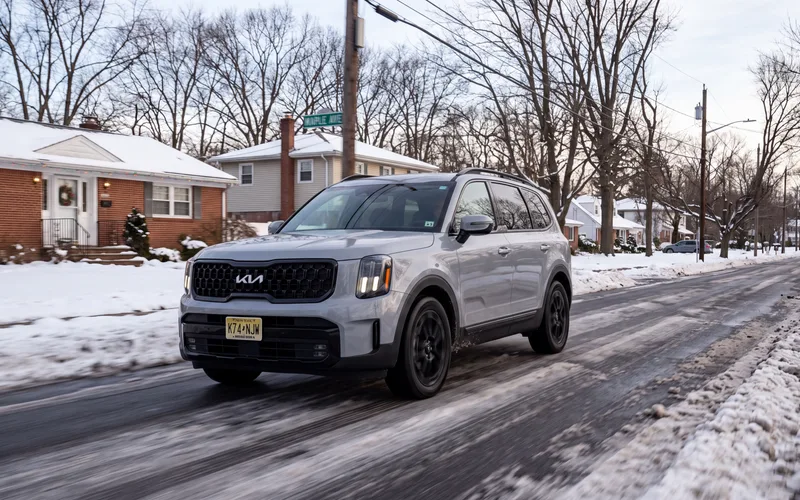 Kia TellurideMid-Size SUVBetter at: Warranty & value
The most direct cross-shop — comparable space and a nicer cabin for similar money, with double the bumper-to-bumper warranty and an IIHS award the Toyota does not have.
Compare 2.43C+
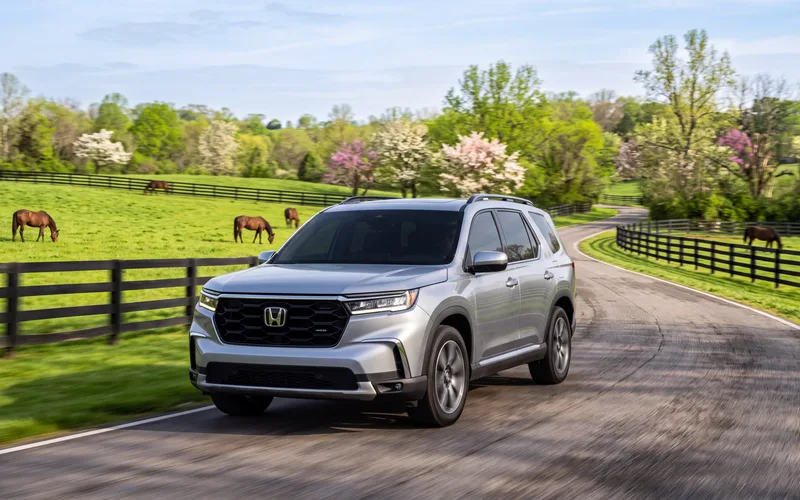 Honda PilotMid-Size SUVBetter at: Engine refinement
Offers a smoother, quicker 285-hp V6 and a third row nearly as good, for buyers who care more about how it drives than what it drinks.
Compare 3.03B
3.03B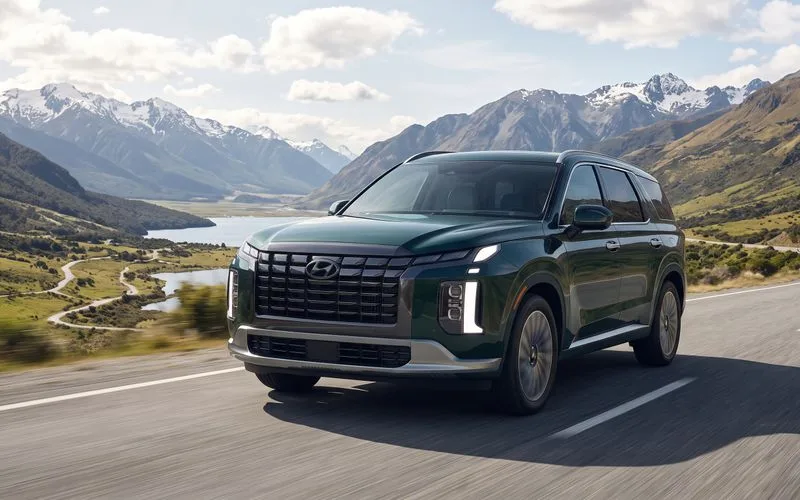 Hyundai PalisadeMid-Size SUVBetter at: Interior quality
Delivers a plusher, quieter interior with premium comfort features standard several trims earlier, plus Hyundai's long warranty.
CompareSubject scores by year
Hover or tap a score to see what moved it versus the year before. A corner mark flags a big swing.
| Year | Performance | Efficiency | Safety | Space | Cost | Reliability | Tech | Use-case | Driving | Value |
|---|---|---|---|---|---|---|---|---|---|---|
| 2026 | 51 | 95 | 81 | 80 | 62 | 76 | 70 | 74 | 62 | 77 |
| 2025 | 50 | 49 | 80 | 79 | 63 | 78 | 71 | 72 | 60 | 78 |
| 2024 | 50 | 49 | 80 | 79 | 63 | 71 | 70 | 71 | 63 | 76 |
Compare two years
Best fit & conditions
Higher scores mean a better fit for that use case. Learn more about use-case fit →
Subject profile
Trims & configurations
4 trimsScores above reflect the volume trim. Per-trim specs and scores are rolling out — the full lineup:
Academic Probation · NHTSA safety recalls
Sep 17, 2026Steering: linkages: knuckle: spindle: armDue to a manufacturing error, the front steering knuckles may crack and break, which can result in a loss of vehicle steering control.
Defect
Toyota Motor Engineering & Manufacturing (Toyota) is recalling certain 2026 Lexus TX350, RX350 Hybrid, RX350, RX500 Hybrid, TX500 Hybrid, Toyota Grand Highlander, and Grand Highlander Hybrid vehicles. Due to a manufacturing error, the front steering knuckles may crack and break, which can result in a loss of vehicle steering control.
Risk
A loss of vehicle steering control increases the risk of a crash.
Remedy
Dealers will inspect and replace the front steering knuckles, as necessary, free of charge. Owner notification letters are expected to be mailed November 2, 2026. Owners may contact Toyota's customer service at 1-800-331-4331. Toyota's numbers for this recall are 26TA19 and 26LA09.
NHTSA campaign 26V598000 ↗Manufacturer no. 26TA19 / 26LA09617 vehicles potentially affected (all models in the campaign)Filed by Toyota Motor Engineering & ManufacturingFiled as GRAND HIGHLANDER, GRAND HIGHLANDER HYBRIDJul 8, 2026Power train: axle assemblyThe rear axle carriers may have been manufactured with insufficient material strength and could break.
Defect
Toyota Motor Engineering & Manufacturing (Toyota) is recalling certain 2026 Lexus TX Plug-In Hybrid, TX Hybrid, TX, Toyota Grand Highlander Hybrid, and Grand Highlander vehicles. The rear axle carriers may have been manufactured with insufficient material strength and could break.
Risk
A broken rear axle carrier can cause a sudden loss of vehicle stability and control, increasing the risk of a crash.
Remedy
Dealers will inspect the rear axle carrier sub-assembly code, and replace the sub-assemblies as necessary, free of charge. Owner notification letters were mailed September 8, 2026. Owners may contact Toyota's customer service at 1-800-331-4331. Toyota's numbers for this recall are 26TB13, 26TA13, 26LB08, and 26LA08.
NHTSA campaign 26V437000 ↗Manufacturer no. 26TB13 26TA13 26LB085,408 vehicles potentially affected (all models in the campaign)Owners notified Sep 3, 2026Filed by Toyota Motor Engineering & ManufacturingFiled as GRAND HIGHLANDER, GRAND HIGHLANDER HYBRIDMar 24, 2026Equipment: other: labelsThe load carrying capacity modification label may display inaccurate added weight values. As such, these vehicles fail to comply with the requirements of Federal Motor Vehicle Safety Standard number 110, "Tire Selection and Rims."
Defect
Toyota Motor Engineering & Manufacturing (Toyota) is recalling certain 2024-2025 Toyota Tundra, Tacoma Hybrid, Tacoma, RAV4 Hybrid, Land Cruiser Hybrid, Lexus GX550, 2024-2026 Tundra Hybrid, 2025 Sequoia Hybrid, Crown Signia, Grand Highlander, Lexus TX500 Hybrid, Lexus NX350 Hybrid, 2025-2026 Grand Highlander Hybrid, and Lexus TX350 vehicles. The load carrying capacity modification label may display inaccurate added weight values. As such, these vehicles fail to comply with the requirements of Federal Motor Vehicle Safety Standard number 110, "Tire Selection and Rims."
Risk
A vehicle with an incorrect maximum capacity weight value may be overloaded, which can increase the risk of a crash.
Remedy
Dealers will replace the load carrying capacity modification label, free of charge. Owner letters were mailed May 26, 2026. Owners may contact Toyota's customer service at 1-800-331-4331. Toyota's numbers for this recall are 26LB04, 26LA04, 26TB07, and 26TA07.
NHTSA campaign 26V179000 ↗Manufacturer no. See attached Part5738,230 vehicles potentially affected (all models in the campaign)Owners notified May 22, 2026Filed by Toyota Motor Engineering & ManufacturingFiled as GRAND HIGHLANDER, GRAND HIGHLANDER HYBRIDOct 30, 2025Back over prevention: display functionPlease see the recall report for a complete list of models. A software error may cause the rearview camera to freeze or display a blank screen when the vehicle is in reverse. As such, these vehicles fail to comply with the requirements of Federal Motor Vehicle Safety Standard (FMVSS) number 111, "Rear Visibility."
Defect
Toyota Motor Engineering & Manufacturing (Toyota) is recalling certain 2022-2026 Toyota, Lexus, and Subaru Solterra vehicles equipped with a Panoramic View Monitor (PVM) system. Please see the recall report for a complete list of models. A software error may cause the rearview camera to freeze or display a blank screen when the vehicle is in reverse. As such, these vehicles fail to comply with the requirements of Federal Motor Vehicle Safety Standard (FMVSS) number 111, "Rear Visibility."
Risk
A rearview camera that fails to display an image can reduce the driver's view behind the vehicle, increasing the risk of a crash.
Remedy
Dealers will update the parking assist software, free of charge. Owner letters were mailed January 2, 2026. Owners may contact Toyota's customer service at 1-800-331-4331. Toyota's numbers for this recall are 25TB13 and 25LB06. Subaru's number for this recall is WRE25.
NHTSA campaign 25V744000 ↗Manufacturer no. 25TB13/25LB06/WRE251,024,407 vehicles potentially affected (all models in the campaign)Owners notified Dec 5, 2025Filed by Toyota Motor Engineering & ManufacturingFiled as GRAND HIGHLANDER, GRAND HIGHLANDER HYBRID
3 recalls on other model years of the Grand Highlander (2024–2025)
Sep 11, 2025Electrical system: instrument cluster/panelDue to an error in the instrument panel software at vehicle startup, the instrument panel may fail to display vehicle speed, brake system, and tire pressure warning lights.
Defect
Toyota Motor Engineering & Manufacturing (Toyota) is recalling certain 2023-2024 Toyota Venza, 2023-2025 RAV4 Prime, RAV4, Highlander, GR Corolla, Crown, 2024-2025 Lexus TX, LS, Toyota Tacoma, Grand Highlander, and 2025 Lexus RX, Toyota Crown Signia, Camry, RAV 4 Plug-in Hybrid (PHEV), and 4 Runner vehicles. Due to an error in the instrument panel software at vehicle startup, the instrument panel may fail to display vehicle speed, brake system, and tire pressure warning lights.
Risk
An instrument panel display that does not show critical information can increase the risk of a crash or injury.
Remedy
Dealers will update the instrument panel software over-the-air (OTA) for non-PHEV vehicles, free of charge. For PHEV vehicles, dealers will inspect the instrument panel assembly, and either replace it, or update the software, free of charge. Owner letters were mailed December 5, 2025. Additional letters will be sent, anticipated in May 2026. This is a phased recall. Owners may contact Toyota's customer service at 1-800-331-4331. Toyota's numbers for this recall are 25TB08 and 25TA08. Lexus' numbers for this recall are 25LB05 and 25LA05.
NHTSA campaign 25V595000 ↗Manufacturer no. See Part 573 Report591,377 vehicles potentially affected (all models in the campaign)Owners notified Dec 5, 2025Filed by Toyota Motor Engineering & ManufacturingFiled as GRAND HIGHLANDERJul 23, 2024Equipment: other: labelsThe load carrying capacity modification label may display inaccurate added weight values. As such, these vehicles fail to comply with the requirements of Federal Motor Vehicle Safety Standard number 110, "Tire Selection and Rims."
Defect
Gulf States Toyota, Inc. (GST) is recalling certain Toyota 2023 GR Supra, 2024 4 Runner, Corolla, Grand Highlander, Grand Highlander Hybrid, Land Cruiser Hybrid, Tacoma, Tacoma Hybrid, 2023-2024 BZ4X, Corolla Cross Hybrid, GR Corolla, GR86, Highlander, Highlander Hybrid, Prius, Prius Prime, Sequoia Hybrid, Tundra, Tundra Hybrid, Venza Hybrid, 2023-2025 Crown, and 2025 Camry Hybrid vehicles equipped with GST accessories. The load carrying capacity modification label may display inaccurate added weight values. As such, these vehicles fail to comply with the requirements of Federal Motor Vehicle Safety Standard number 110, "Tire Selection and Rims."
Risk
A vehicle with an incorrect maximum capacity weight value may be overloaded, which can increase the risk of a crash.
Remedy
GST will mail new labels to owners, free of charge. Owner notification letters were mailed September 16, 2024. Owners may contact GST customer service at 1-800-444-1074. GST's number for this recall is 24R2.
NHTSA campaign 24V548000 ↗Manufacturer no. 24R233,848 vehicles potentially affected (all models in the campaign)Owners notified Sep 16, 2024Filed by Gulf States Toyota, Inc.Filed as GRAND HIGHLANDER, GRAND HIGHLANDER HYBRIDJun 20, 2024Air bags: side/window: curtainThe driver and passenger side curtain air bags may not unroll as intended and could partially deploy outside of an open window. As such, these vehicles fail to comply with the requirements of Federal Motor Vehicle Safety Standard number 226, "Ejection Mitigation."
Defect
Toyota Motor Engineering & Manufacturing (Toyota) is recalling certain 2024 Toyota Grand Highlander, Grand Highlander Hybrid, Lexus TX350, TX500 Hybrid, and TX550 Hybrid+ vehicles. The driver and passenger side curtain air bags may not unroll as intended and could partially deploy outside of an open window. As such, these vehicles fail to comply with the requirements of Federal Motor Vehicle Safety Standard number 226, "Ejection Mitigation."
Risk
An improper deployment of the side curtain air bag can reduce occupant protection during a crash, increasing the risk of injury.
Remedy
Dealers will replace the driver and passenger curtain shield air bag assemblies, free of charge. Owner letters were mailed November 4, 2024. Owners may contact Toyota customer service at 1-800-331-4331. Toyota's numbers for this recall are 24TB09/24TA09 and Lexus' numbers are 24LB05/24LA05.
NHTSA campaign 24V461000 ↗Manufacturer no. 24TB09,24TA09,24LB05145,254 vehicles potentially affected (all models in the campaign)Owners notified Nov 4, 2024Filed by Toyota Motor Engineering & ManufacturingFiled as GRAND HIGHLANDER, GRAND HIGHLANDER HYBRID
Source: NHTSA Office of Defects Investigation recall database, model years 2024–2026. Recalls are listed by model year as the manufacturer filed them; whether a specific car is affected depends on its VIN — check a VIN at nhtsa.gov ↗. NHTSA model names matched to this page: GRAND HIGHLANDER, GRAND HIGHLANDER HYBRID.
Detailed scoring by subject
1Performance & PowertrainThe Grand Highlander's lowest-graded category.1.43D
The volume XLE trim's standard powertrain is the turbocharged 2.4-liter T24A-FTS four-cylinder at 265 hp; the 2.5L hybrid makes 245 hp combined and the top Hybrid MAX 362 hp. Unchanged for 2026.
Peak torque of the XLE's standard 2.4L turbo four is 310 lb-ft, delivered low in the rev range — strong for a four-cylinder three-row and the reason the gas car tows 5,000 lbs.
Car and Driver recorded 7.0 seconds for the 2.4L turbo AWD XLE, the same mechanical package carried into 2026; the Hybrid MAX is roughly a second and a half quicker while the 245-hp 2.5L hybrid is the slowest of the three.
The 2.4L turbo pulls hard from low revs with only mild lag and the hybrid's engine/motor handoffs are typically seamless, but reviewers consistently flag the four-cylinder's coarse, gruff note under hard acceleration — a step behind the V6s and inline-sixes in Telluride, Pilot and CX-90.
The gas model's 8-speed automatic shifts smoothly and rarely hunts in normal driving, though it can be slow to kick down when merging; the 2.5L hybrid's eCVT is drone-prone under load and the Hybrid MAX's 6-speed is the crispest of the three.
Properly equipped gas and Hybrid MAX models are rated at 5,000 lbs, competitive for a mid-size three-row crossover; the mainstream 2.5L hybrid drops to 3,500 lbs, so buyers who tow need to choose the powertrain deliberately.
All-wheel drive is optional across the gas and 2.5L hybrid range and standard on Hybrid MAX and Platinum, so no buyer is locked out of it — but the systems are conventional on-demand/electronic units with no low range, locking differentials, or meaningful terrain-mode depth.
A GA-K unibody family hauler with about 8.0 inches of ground clearance, road-biased tires, no skid plates, no low range and no off-road trim — there is no TRD Off-Road or Trailhunter version of the Grand Highlander. Snow and gravel roads are the realistic limit.
Three genuinely distinct powertrains — 265-hp 2.4L turbo gas, 245-hp 2.5L hybrid tuned for economy, and the 362-hp Hybrid MAX — covering budget, efficiency and performance buyers. It stops short of the top band only because there is no PHEV or EV variant.
2Efficiency & RangeThe Grand Highlander's best-graded category.4.00A+
The volume configuration is the 2.5L hybrid — it outsold the gas 2.4T by 20,532 to 13,895 units in Q1 2026 — and in the AWD form most three-row family buyers choose it is EPA-rated 34 MPG combined. That is roughly 45% better than the gas turbo in the same body and near the top of what a 5,000-lb-class three-row returns without a plug.
City is where the eCVT hybrid earns its keep — 36 MPG against 21 for the gas turbo in the same vehicle, a 71% gain in exactly the school-run and suburban-errand driving this SUV is bought for. It is the highest city figure available in the non-plug-in three-row class.
Highway is the hybrid's narrowest advantage — 32 MPG versus 27 for the gas AWD — because a large-frontal-area three-row at 70 mph is fighting drag, not stop-start losses. Still a strong absolute number for the segment and the reason this is a genuinely long-legged road-trip vehicle.
A 17.8-gallon tank at 34 MPG combined puts roughly 605 miles between fills, and the FWD hybrid clears 640 — best-in-class for a three-row SUV and enough to make most one-day family drives a single-stop trip. This is the single strongest efficiency attribute of the vehicle.
At EPA's 15,000-mile standard the hybrid burns about 441 gallons of regular a year, roughly $700 less than the same vehicle with the gas turbo — enough to repay the hybrid's price premium inside a normal ownership period. Costs are computed on the same ~$3.30/gal basis used for every other vehicle in this dataset so the figures stay comparable.
Every Grand Highlander powertrain runs on 87-octane regular with no premium recommendation and no output penalty, and no version needs charging hardware or a home electrical upgrade. That is the least demanding energy setup available short of an EV with cheap home charging, which is the only thing keeping this out of the mid-90s.
3SafetyOne of the Grand Highlander's strongest categories.3.53A-
NHTSA awards the 2026 Grand Highlander the full 5-star overall rating, with 5 stars in side impact and 4 stars in both frontal crash and rollover.
Good in the updated moderate overlap front and updated side tests, but only Acceptable in the driver-side small overlap front — structural intrusion around the occupant compartment — which disqualifies it from any Top Safety Pick award for a third straight year.
Toyota Safety Sense 3.0 is standard on every 2026 trim including the base LE — pre-collision with pedestrian detection, full-speed-range dynamic radar cruise, lane departure alert with steering assist, lane tracing (centering), proactive driving assist, road sign assist and automatic high beams — and Blind Spot Monitor with Rear Cross-Traffic Alert is standard across the range too, so nothing core is trim-locked.
Earns Good — the top grade — in both of IIHS's tougher current front crash prevention evaluations, vehicle-to-vehicle 2.0 and pedestrian, the latter covering nighttime scenarios; the standard system carried Superior day and night pedestrian ratings under the prior protocol.
Blind Spot Monitor and Rear Cross-Traffic Alert are standard on every trim with mirror-mounted indicators and audible warning, but coverage is alert-only unless you climb to trims with Parking Assist with Automatic Braking; there is no safe-exit alert for rear passengers.
Lane Departure Alert with Steering Assist plus Lane Tracing Assist centering is standard and reliably keeps the SUV between the lines on highway cruising, but reviewers report it gives up on sharper curves and needs driver steering input to hold the line.
Full-Speed Range Dynamic Radar Cruise Control with stop-and-go is standard on every trim and works with Lane Tracing Assist as a combined highway assist; Proactive Driving Assist adds low-speed smoothing. Competent and well integrated, but not as polished in the resume/curve-speed behavior as the best systems in the class.
Traffic Jam Assist allows genuine hands-off steering, braking and acceleration with driver-monitor camera supervision, but only below 25 mph on mapped limited-access highways, only on upper trims, and only with an active Drive Connect subscription — a congestion aid rather than the broad hands-free highway coverage of BlueCruise or Super Cruise.
IIHS rates the headlights only Acceptable on every trim — no Good-rated setup is offered anywhere in the range — citing glare and visibility shortfalls; automatic high beams are standard, which helps but does not offset the base rating.
The boxy, upright body gives a tall greenhouse, large side glass and a genuinely usable third-row window line — good natural sightlines by three-row SUV standards — but the thick rear pillars and long tail create real rear-quarter blind zones, and the Panoramic View Monitor that compensates for them is standard only on Platinum grades and optional on Limited.
IIHS rates LATCH ease of use Good, and the second row scores well with exposed lower anchors and ample legroom for rear-facing seats; marks come off for tethers buried in the seatback carpet, a third row with only one set of anchors and fixed head restraints that fight boosters, and captain's chairs that rule out three-across in the second row.
4Space & ComfortOne of the Grand Highlander's strongest categories.3.43B+
The Grand Highlander is a dedicated three-row SUV offering eight-passenger seating with the second-row bench (standard on LE) and seven with the captain's chairs fitted on XLE and above, which is the top of the SUV normalization band.
Front headroom of 41.5 in without the moonroof is near the top of the SUV band — the Grand Highlander is taller than the regular Highlander and it shows in first-row airiness.
Front legroom of 41.7 in is the one dimension where the Grand Highlander is merely average — the stretched wheelbase was spent on the second and third rows rather than the driver's footwell.
Second-row headroom of 40.2 in sits at or above the top of the SUV normalization band; even the moonroof-equipped 38.5 in figure is competitive for the class.
39.5 in of second-row legroom is strong for a mid-size three-row and, unlike most rivals, it does not have to be surrendered to make the third row habitable — the 116.1-in wheelbase gives both rows real space.
This is the vehicle's reason for existing: 33.5 in of third-row legroom and 37.2 in of headroom with a seat cushion mounted higher off the floor than the regular Highlander's, rated for three across and repeatedly confirmed by reviewers as genuinely adult-usable for real trips rather than short hops. Only the Pilot and Traverse post comparable numbers.
57.9 cu ft behind the second row is solidly above the segment midpoint, and the 20.6 cu ft still available behind an occupied third row is the more meaningful family number — enough for a full complement of passengers plus luggage.
97.5 cu ft with both rear rows folded is near minivan territory and close to the top of the SUV band, beating the regular Highlander by a wide margin.
Toyota designed the cabin around family logistics: 13 cup/bottle holders including a mega-cup-sized center stack holder, a large console with a sliding lid usable with the armrests down, a passenger-side pocket sized for a small bag, seven USB-C ports, an available Qi charger, and an underfloor bin behind the third row. Short of a genuinely novel feature like a giga console or frunk, but among the best-executed conventional packages in the class.
Front seats are consistently praised for long-haul comfort with 10-way power driver adjustment from XLE up, and the second-row captain's chairs are described as nearly as good; the third row's higher-mounted cushion avoids the knees-up posture that ruins most rivals' back rows. Not the plushest in class — upper-trim quilted seating aside, cushioning is supportive rather than luxurious.
The long-wheelbase GA-K platform delivers a plush, settled ride that reviewers and owners single out for road-trip duty, with body motions well controlled for the size; 20-inch wheels on Limited/Nightshade/Platinum add a little sharpness over broken pavement but never harshness.
Acoustic glass and sound-deadening keep highway wind and road noise low, and it is quieter than a Pilot, but Edmunds' professional review notes it is not best-in-class at blocking road and ambient noise and it trails the Palisade/Telluride pair. The naturally aspirated 2.5-liter hybrid also drones under hard acceleration.
Tri-zone automatic climate control with second- and third-row vents is standard across the line — the right call for a three-row — and XLE adds heated front seats and second-row sunshades. The premium items are gated higher than rivals: heated and ventilated front seats start at Limited, and the heated steering wheel is Limited/Platinum only, where Hyundai and Kia hand those out earlier.
5Cost of OwnershipOne of the Grand Highlander's weakest categories.2.16C
2026 is a pure carry-over year for the Grand Highlander (Wikipedia: "For the 2026 model year, the Grand Highlander remained unchanged"), so the LE trim added in 2025 remains the entry point and pricing steps only with inflation. Entry pricing is high for a mainstream three-row — roughly $2,500 above a 2026 Highlander LE — which is the cost of the longer, taller body.
XLE is the volume grade — it adds heated power front seats, wireless charging and second-row sunshades over LE — and AWD is the dominant mix in a three-row family SUV, so XLE AWD gas is the representative configuration. Mid-pack for the class: below a comparably equipped Pilot or Ascent Touring, above a Telluride EX.
The 2.4L T24A-FTS and 8-speed automatic are shared, high-volume Toyota hardware with long service intervals, and the first two years of scheduled service are free under ToyotaCare. Sources disagree on method, so this sits above CarEdge's maintenance-only figure and well below KBB's dealer-rate estimate — still in the cheap third of the SUV band (3,000–9,500).
The Grand Highlander is one of the strongest residual performers among mainstream three-rows — persistent above-MSRP demand since launch, Toyota's reliability reputation, and no direct-size rival outside the Lexus TX. Discounted below the two headline estimates because the nameplate only dates to 2023, so any five-year figure is projection rather than observed resale.
Toyota's standard 36-month/36,000-mile basic coverage is the floor of the 3–5 year band, so it normalizes to 0 — a real competitive weakness against Hyundai/Kia's 5 yr/60,000 mi on the Palisade and Telluride, which are this car's closest cross-shops.
The gas XLE scored as representative carries Toyota's 60-month/60,000-mile powertrain coverage — bottom of the 5–10 year band, hence 0. Buyers who take the 2.5L hybrid or Hybrid MAX get materially better protection, but that coverage does not apply to the volume gas configuration.
ToyotaCare covers 2 years/25,000 miles of factory-scheduled maintenance plus 2 years of unlimited-mileage roadside assistance, and connected services (Safety Connect, Remote Connect, Drive Connect) ship with trial periods. Genuinely multi-year and standard on every trim, but shorter than Hyundai's 3 yr/36,000 mi plan and thinner on perks than luxury rivals — upper-middle of the guidance band, not top tier.
$47,525 volume-trim price minus its estimated resale value after 5 years (64% retained, or about $30,416) leaves about $17,109 in depreciation. Add the projected $4,400 in 5-year maintenance and repairs, and owning this vehicle for 5 years costs about $21,509 in total.
6Reliability & QualityGrades above the middle of the scale.3.18B
Consumer Reports predicts the 2026 Grand Highlander will be more reliable than the average new car, based on 2024–2025 owner data, and U.S. News lists a predicted reliability score of 82/100 ("Great" on the J.D. Power scale). Held below the top band because the nameplate is only in its third full year and its owner data still carries the wind-noise, moonroof-rattle and 8AT shift-quality complaints that generated TSBs.
Toyota leads Consumer Reports' 2026 brand reliability ranking outright (edging past Subaru), and ranks 7th of all brands at 185 PP100 in the 2026 J.D. Power VDS against a 204 PP100 industry average, with sibling Lexus No. 1 overall at 151 PP100 for a fourth straight year. Top-tier by CR, strong-but-not-top-5 by JDP, so just under the ceiling.
Busier than a Toyota buyer expects: the 2024 launch year drew four recalls including a 145,254-vehicle curtain-airbag campaign shared with the Lexus TX, 2025 added two (parking-assist software, instrument-panel display blanking), and 2026 carries one rear-axle-carrier recall covering roughly 5,400 vehicles. TSB activity is broad if not severe — hood flutter (0111-24), transmission calibration (0065-24), A-pillar/mirror wind noise and moonroof rattle fixes. Typical-to-elevated activity, nothing systemic or fire/powertrain-catastrophic.
Split reputation across the two powertrains offered. The 2.5-liter A25A-FXS hybrid with eCVT is the proven Highlander/Camry unit with a long high-mileage record, but the 2.4-liter T24A-FTS turbo (gas and Hybrid MAX) only arrived in 2021 and has drawn timing-chain-stretch and premium-fuel-sensitivity concerns plus an 8-speed automatic with documented harsh 1-2/2-3 shifts and 40–60 mph torque-converter shudder addressed by recalibration. Newer powertrain, no red flags severe enough to drop it below the mid band.
Materials are the recognized soft spot on a vehicle carrying a Premium price class. U.S. News flags cheap interior materials, CarGurus points to glossy hard plastic and unlined storage bins as how the LE hits its price, and KBB owner reviews repeat the complaint. Limited and Platinum trims with genuine leather close much of the gap, but the volume XLE's SofTex-and-hard-plastic mix is competitive rather than class-leading.
Assembly is solid in structure but the sealing and trim details generated a recognizable pattern of complaints: highway wind noise from the driver-side A-pillar and mirror requiring weatherstrip reseating and added foam tape, moonroof rattle traced to insufficient headliner padding and loose harness clips, and hood flutter fixed with expandable foam. Toyota's 2026 initial-quality standing is respectable but not among the leaders — Lexus took the premium podium at 156 PP100 while Ford led the mass market at 152 PP100.
One of the densest service footprints in the US — roughly 1,200 Toyota dealers nationwide means minimal travel to a warranty repair almost anywhere, and two years/25,000 miles of ToyotaCare scheduled maintenance comes standard. Service satisfaction is good rather than best-in-class: the 2026 J.D. Power CSI puts the mass-market average at 865 with MINI (887), Subaru (886) and Buick (882) on top, and Toyota scoring 864 in the truck segment.
Toyota's parts logistics and independent-shop familiarity are among the best in the industry, and the shared GA-K platform with the Highlander and Lexus TX keeps components in wide circulation. RepairPal puts Grand Highlander maintenance at roughly $197 a year (thin data for a young nameplate) and the closely related Highlander at $489 annually versus a $573 mid-size SUV average. Held short of the top band because turbo and hybrid-specific hardware is dealer-oriented and the aftermarket for this nameplate is still young.
7Technology & InfotainmentGrades above the middle of the scale.2.74B-
The 12.3-inch Toyota Audio Multimedia touchscreen is standard across the entire 2026 Grand Highlander range, including the base LE — there is no smaller base unit and no larger optional one, so the volume XLE figure is also the maximum.
Toyota Audio Multimedia is quick and easy to learn, and the Grand Highlander keeps real knobs for volume/tuning plus physical climate controls rather than burying them in the screen — a genuine advantage over touch-heavy rivals. It falls short of the top band because reviewers flag the absence of a home screen and the lack of split-screen views, which forces constant menu-hopping and wastes the 12.3-inch panel.
Wireless Apple CarPlay and wireless Android Auto are standard on every grade including the base LE, with no wired-only tier and no subscription attached — the top band for this item and one of the vehicle's clearest tech wins.
The 'Hey Toyota' Intelligent Assistant handles genuinely natural-language requests for climate, audio and destinations and was singled out by reviewers as a strength. It sits below the top band because native navigation is Cloud Navigation delivered through the Drive Connect subscription — there is no embedded offline map database — so once the trial lapses most owners revert to phone projection.
The base six-speaker system on LE/XLE is merely adequate for a $44k three-row, and the 11-speaker JBL Premium upgrade on Limited and Platinum is a competent but unremarkable branded system next to the Bose and Harman setups in Palisade and Telluride.
The volume XLE gets a part-analog cluster with a 7-inch driver information display; the full 12.3-inch digital cluster is reserved for Limited and Platinum. That is squarely the 'partial digital / full digital on upper trims only' band, though the Limited being a high-volume grade keeps it from scoring lower.
Toyota Audio Multimedia accepts over-the-air updates for infotainment software, voice recognition and map data over Wi-Fi or the built-in data connection, but the Grand Highlander has no whole-vehicle OTA architecture that adds powertrain, chassis or driver-assist capability after delivery — infotainment/maps-only is the middle band.
The Toyota app covers the core set — remote start/climate, lock/unlock, locate, vehicle status — and Digital Key is offered, but it is in-app only on the Grand Highlander (no Apple Wallet car key, unlike the 2026 RAV4) and reverts to a paid Remote Connect subscription after a one-year trial, which is the main drag on an otherwise competent app.
Seven USB-C ports are standard on every grade and reach all three rows, Qi wireless charging is standard from XLE up, and a 1,500-watt household AC outlet is available on Hybrid and Hybrid MAX Limited/Platinum. Only the powertrain-and-trim gating of the AC outlet keeps it out of the very top of the band.
Smart Key proximity entry with push-button start is standard, the hands-free power liftgate arrives as early as the XLE rather than being a top-trim item, and Digital Key phone-as-key is offered — strong convenience coverage. It stops short of the top band because phone-as-key is subscription-tied after the trial and lacks Apple Wallet support.
A rear camera is standard and front/rear parking assist with automatic braking is widely available, but the Panoramic View Monitor with 360-degree overhead and curb view is standard only on Platinum and optional on Limited — the volume XLE cannot get it — and automated parking plus the digital rearview mirror are Platinum-exclusive.
A 10-inch color head-up display is standard on the range-topping Platinum and not offered on LE, XLE or Limited, so no volume-trim buyer can get one — the 'HUD limited to top trims' band.
8Use-Case FitGrades above the middle of the scale.2.99B-
Purpose-built family logistics: wide rear door openings, second-row seats that tilt-and-slide for third-row access (and slide forward even with a forward-facing seat LATCH-installed), exposed second-row lower anchors, plus a rare third-row LATCH position. Held back from the top band by top tethers buried in the seatback carpet, a third row whose fixed head restraints compromise convertible/booster fit, and no three-across in captain's-chair builds.
Toyota Safety Sense 3.0 (adaptive cruise, lane-keeping, automatic emergency braking) plus blind-spot monitoring is standard all the way down to the $42k LE, which is exactly what families buy, and NHTSA gives it five stars overall. But it is not an IIHS award winner: only an Acceptable driver-side small overlap result, and it again fell short of a 2026 Top Safety Pick — a real gap against Telluride/Palisade/Pilot-class rivals that do win awards.
This is the Grand Highlander's whole reason for existing: an adult-usable third row (33.5 in of legroom) with 20.6 cu ft of cargo still behind it, so a full load of people and their luggage travel together — the compromise that sinks most three-row mid-sizers. Second row gets its own climate controls, vents, USB-C, power outlet and pull-down sunshades, and the cabin is quiet at cruise.
The 2.5-liter hybrid's eCVT makes stop-and-go traffic seamless and the suspension absorbs potholes and expansion joints without harshness, so fatigue stays low. Commanding outward visibility and light steering offset the bulk; it simply never feels agile, and the 2.4T's 8-speed is a step less smooth than the hybrid at crawl speeds.
A 34–36 mpg combined three-row SUV is an outlier — the hybrid commutes for roughly the per-mile fuel cost of a compact crossover while seating eight, on regular unleaded with Toyota's cheap, long-proven hybrid consumables (regenerative braking spares the pads). Only the gas 2.4T version, and the thirsty 27-mpg Hybrid MAX, pull the sub-category down.
At 201.4 in long and 78.3 in wide this is a genuinely large vehicle that eats a whole city parking space and demands care in structure ramps and tight lots. The 38.1-ft turning circle is actually good for the footprint and the tall glasshouse helps, but the 360-degree camera that makes it easy is a higher-trim item rather than standard.
A unibody family crossover with a 5,000-lb ceiling on the gas and Hybrid MAX versions — and only 3,500 lb on the volume 2.5 hybrid most buyers take home — is a light-duty tool at best: fine for a small utility trailer or a pair of jet skis, useless for a skid steer or a loaded dump trailer. Big enclosed cargo volume is its one real work asset; there is no bed, no meaningful payload headroom, and no heavy-duty cooling or towing package.
Toyota's durability reputation and above-average predicted reliability are real, and the 2.5L hybrid system is one of the most road-proven powertrains in existence. But this is a leather-and-carpet family SUV with no fleet presence, no wash-out interior option, and a comparatively young turbocharged T24A-FTS engine in the gas versions — it should survive hard use, it just has not been proven doing it.
The available 1500-watt inverter is a genuinely useful jobsite feature — enough to run a compressor, chop saw or laptop bank from the cargo area — and roof rails, a dealer hitch and cargo tie-downs cover the basics. Everything else is missing: no bed, no rack/upfit ecosystem, no washable surfaces, and the inverter is confined to upper hybrid trims rather than the work-priced LE.
One of the best mile-eaters in the mainstream three-row class: composed and quiet at highway speed, seats that stay comfortable for hours in all three rows, and a hybrid that clears 550-plus miles between fill-ups on a single tank. Toyota Safety Sense 3.0's adaptive cruise and lane tracing take the edge off long stints; only the absence of a true hands-free highway system keeps it out of the very top.
Solidly capable for the way most families actually get outdoors — 8.0 in of clearance, available AWD, roof rails for a box or boards, 5,000 lb of tow for a small camper on gas trims, and an available 1500W outlet plus flat-folding rear rows that make it a workable car-camping platform. It is still a road-biased crossover with no low range, no locker and no skid plates; trailheads yes, Rubicon no.
Exceptional gear flexibility for a mid-size: 20.6 cu ft behind the third row swallows a road trip's worth of luggage with eight aboard, 57.9 cu ft with the third row down handles bulky items, and 97.5 cu ft total rivals full-size SUVs. Underfloor storage, a power liftgate from the base LE, 60/40 folding rows, roof rails and hitch availability round it out; only a genuinely flat load floor with the seats folded is missing.
9Driving ExperienceOne of the Grand Highlander's weakest categories.2.17C
The Grand Highlander stretches the GA-K platform into a genuinely large three-row, and it drives like it: secure, composed and easy to place in normal use, with a compliant suspension that Edmunds notes avoids feeling floaty at speed, but with early body roll and a clear unwillingness to be hurried once the pace rises. Reviewers explicitly rate it less agile than the smaller Highlander, which puts it just below that car despite better overall polish.
The electric rack (2.9 turns lock-to-lock) is accurate and consistent, and its light effort is a real asset in a vehicle this large — parking lots and tight streets are far less work than the footprint suggests. Feedback is essentially absent and weight build-up off-center is minimal, so it is precise-but-numb: solidly mid-band, a touch above the Highlander only because the lightness pays off more in a bigger body.
Braking is the strongest of the dynamic traits. Reviewers consistently describe strong, confident stops with a firm and predictable pedal for a ~4,600-5,000 lb three-row, and Toyota's long-running HSD regen blending on the 2.5 hybrid and Hybrid MAX does not produce the grabby or dead-travel pedal that afflicts several rivals. Above the mid-band but short of the top band without a corroborated instrumented 60-0 or 70-0 figure.
Averaged across the volume gas and 2.5 hybrid trims this is competent rather than polished. The 2.4L T24A-FTS (265 hp / 310 lb-ft) with the 8-speed automatic shifts crisply and has useful low-end torque, but Edmunds measured 8.0 sec 0-60 for an AWD example — slower than most V6 rivals — and it runs short of breath at highway speed with a full load. The 2.5L hybrid eCVT is seamless in stop/start and transitions, while Hybrid MAX (available on Limited/Platinum, ~5.6 sec 0-60) is the quick one but carries documented owner reports of low-speed hesitation and rough shifts on early cars.
A split verdict that lands mid-band. At a steady interstate cruise the cabin is genuinely quiet — owners and reviewers call it notably hushed, quieter than the V6 Highlanders it replaced — but under full throttle the four-cylinder is audibly coarser than a V6, and the hybrid's eCVT drones on hill climbs and hard acceleration. No objectionable vibration through the controls.
Toyota publishes a 5.8 m curb-to-curb turning radius for the 2026 Grand Highlander — 38.1 ft diameter — matching the figure listed for the same body since launch. That is mid-to-low in the SUV band (34-42 ft) and about half a foot worse than the shorter Highlander, the expected cost of the longer wheelbase and body.
This is the Grand Highlander's clearest dynamic strength and a big part of why it out-ranks its own Highlander sibling. The seating position is commanding, the glass area is large and the A-pillars thin enough that Edmunds calls forward visibility good through corners, step-in height is easy for a vehicle this size, physical HVAC and volume controls survive alongside the 12.3-in touchscreen, and the available camera rearview mirror preserves rearward vision with the cargo hold packed. Held out of the top band only by a telescoping wheel and thigh-cushion adjustment that tall drivers find short on travel.
The Grand Highlander is engineered as family transport and reads that way from the driver's seat: numb steering, soft body control, a coarse four under load and an 8-second 0-60 in volume gas form leave nothing to enjoy for its own sake. Hybrid MAX's 5.6-second thrust adds real punch on Limited/Platinum, but it buys speed rather than character, and no trim in the 2026 range (LE, XLE, Limited, Nightshade, Platinum) is aimed at a driver — Nightshade is an appearance package only.
10Value & Market PositionGrades above the middle of the scale.3.25B+
Even the base LE arrives with 8-passenger seating, power liftgate, 12.3-inch touchscreen, heated mirrors with blind-spot monitors and the full Toyota Safety Sense 3.0 suite; blind-spot monitor with rear cross-traffic alert is standard on every trim. Generous for the class, though a ~$42K entry price means rivals like Palisade and Telluride match the content rather than trailing it by thousands.
The core value case is strong: substantially more third-row and cargo room than the regular Highlander for only a modest price step, plus a 36-mpg-class hybrid option, which is exactly what reviewers single out. Value thins at the top of the range, where a Hybrid MAX Platinum runs to roughly $59.6K and Palisade/Telluride undercut it on content per dollar.
Five grades (LE, XLE, Limited, Nightshade, Platinum) span three distinct powertrains — 2.4L turbo gas, 2.5L hybrid, and turbocharged Hybrid MAX — with FWD standard and AWD optional on LE/XLE/Limited, AWD standard on Platinum, and 7- or 8-passenger seating. That is unusually wide coverage from a ~$42K family hauler to a near-$60K flagship.
Grand Highlander sales nearly doubled in 2025 to a best-ever 136,801 units, up 90.7% year over year, putting it at or near the top of the three-row mid-size segment barely two years after launch. That is both segment-leading volume and the fastest trajectory in the class.
Toyota carries one of the strongest mainstream brand halos in the US — reliability reputation and buyer loyalty that directly support resale — and the Grand Highlander holds value well, shedding roughly 30% over five years. It is trusted rather than aspirational, so it stops short of the top band reserved for genuinely coveted badges.
Subvented financing and advertised leases exist but are modest — this is a hot-selling model Toyota does not need to discount. Buyers get low-rate APR and small conquest-style rebates rather than meaningful cash on the hood.
The first-generation Grand Highlander launched in February 2023 and 2026 is an explicit carry-over year with no changes, putting it mid-cycle at roughly year three or four. The underlying tech — TSS 3.0, 12.3-inch multimedia, turbo and Hybrid MAX powertrains — is still current, but the newness premium has worn off and updates are anticipated for 2027.
Consistently well reviewed and decorated for family duty — Cars.com Best Family Car of 2026 for the hybrid, KBB Best Mid-Size SUV — but it ranks near rather than at the top of the class and misses IIHS Top Safety Pick on an Acceptable small-overlap result. Reviewers also flag an 8.0-second 0–60 as slow against V6 rivals.